Birdingonthe.NetRecent Postings from
> Home > Mail |
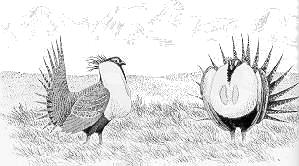
Greater Sage Grouse,©Tony Disley |
|
21 Nov Bird Jobs -- November 20, 2007 [Cheryl Trine ] 11 Nov Bird Jobs -- November 11, 2007 [Cheryl Trine ] 31 Oct Bird Jobs -- October 30, 2007 [Cheryl Trine ] 16 Oct Bird Jobs -- October 15, 2007 [Cheryl Trine ] 02 Oct Bird Jobs -- October 1, 2007 [Cheryl Trine ] 15 Sep Bird Jobs -- September 15, 2007 [Cheryl Trine ] 22 Aug Bird Jobs -- August 22, 2007 [Cheryl Trine ] 17 Aug Bird Jobs -- August 17, 2007 [Cheryl Trine ] 25 Jul Bird Jobs -- July 25, 2007 [] 17 Jul Bird Jobs -- July 17, 2007 [Cheryl Trine ] 26 Jun Bird Jobs -- June 26, 2007 [Cheryl Trine ] 6 Jun Bird Jobs - June 5, 2007 [] 16 May Bird Jobs -- May 16, 2007 [Cheryl Trine ] 30 Apr Bird Jobs -- April 30, 2007 [Cheryl Trine ] 16 Apr Bird Jobs -- April 15, 2007 [Cheryl Trine ] 12 Apr Bird Jobs -- [Cheryl Trine ] 29 Mar Bird Jobs -- March 28, 2007 [Cheryl Trine ] 18 Mar Bird Jobs -- [Cheryl Trine ] 14 Mar Bird Jobs -- March 13, 2007 [Cheryl Trine ] 13 Mar Bird Jobs -- March 12, 2007 (Resent because of incorrect email addresses) [Cheryl Trine ] 13 Mar Bird Jobs -- March 12, 2007 [Cheryl Trine ] 12 Mar Bird Jobs -- March 11, 2007 [Cheryl Trine ] 21 Feb Bird Jobs -- February 21,2007 [Cheryl Trine ] 20 Feb Bird Jobs -- February 19, 2007 [Cheryl Trine ] 15 Feb Bird Jobs -- February 14, 2007 [Cheryl Trine ] 14 Feb Bird Jobs -- February 13, 2007 [Cheryl Trine ] 05 Feb Bird Jobs -- February 4, 2007 [Cheryl Trine ] 28 Jan Bird Jobs -- January 28, 2007 [Cheryl Trine ] 28 Jan Bird Jobs -- [Cheryl Trine ] 26 Jan Bird Jobs -- January 25, 2007 [Cheryl Trine ] 23 Jan Bird Jobs -- January 22, 2007 [Cheryl Trine ] 18 Jan Bird Jobs -- January 14, 2007 [Cheryl Trine ] 12 Jan Bird Jobs -- [Cheryl Trine ] 10 Jan Bird Jobs -- January 10, 2007 [Cheryl Trine ] 10 Jan Bird Jobs -- January 9, 2007 [Cheryl Trine ] 29 Dec Bird Jobs -- December 28k 2006 [Cheryl Trine ] 21 Dec Bird Jobs -- December 21, 2006 [Cheryl Trine ] 20 Dec Bird Jobs -- December 20, 2007 [Cheryl Trine ] 17 Dec Bird Jobs -- December 17, 2006 [Cheryl Trine ] 13 Dec No Subject [] 11 Dec Bird Jobs -- December 10, 2007 [Cheryl Trine ] 03 Dec Bird Jobs -- December 3, 2006 [Cheryl Trine ] 22 Nov Bird Jobs -- November 21, 2006 [Cheryl Trine ] 16 Nov Bird Jobs -- November 15, 2006 [Cheryl Trine ] 15 Nov Bird Jobs -- November 14, 2006 [Cheryl Trine ] 01 Nov Bird Jobs -- November 1, 2006 [Cheryl Trine ] 29 Oct Bird Jobs -- October 29, 2006 [Cheryl Trine ] 15 Oct Bird Jobs -- October 15, 2006 [Cheryl Trine ] 13 Oct Bird Jobs -- 12 October 2006 [Cheryl Trine ] 24 Sep Bird Jobs -- September 24, 2006 [Cheryl Trine ] 14 Sep Bird Jobs -- September 13, 2006 [Cheryl Trine ] 08 Sep Bird Jobs --September 7, 2006 [Cheryl Trine ] INFO 21 Nov <a href="#"> Bird Jobs -- November 20, 2007</a> [Cheryl Trine ] <br> Subject: Bird Jobs -- November 20, 2007 From: Cheryl Trine <ctrine AT andrews.edu> Date: Wed, 21 Nov 2007 00:41: EDITOR’S NOTE: To prevent the harvesting of email addresses in this list, all email addresses have had the ' AT ' sign replaced with ' AT '. To reduce the possibility of typing in the wrong address when responding, please cut and paste the whole address and then replace the ' AT ' with ' AT '. *********** WESTERN BLUEBIRD FIELD INTERNSHIPS 2008: Carmel Valley, California: Field assistants needed for an ongoing long-term study of the behavioral ecology of the western bluebird at Hastings Reservation in upper Carmel Valley, California. Hastings is a field station run by the Museum of Vertebrate Zoology, UC Berkeley and this study has been ongoing since 1983. Current work focuses on behavioral ecology, particularly delayed dispersal and the importance of nepotism in winter family groups. Interns for the project must be avid hikers, comfortable tromping around in the wilderness to monitor nests and happy to sit in blinds during the mornings watching behavior. Self-discipline and genuine interest in field biology as a career are helpful. Prior experience with birds is desirable but not required; self-motivation, enthusiasm for the questions and ability to tackle the rigors of fieldwork are a must. We are particularly interested in candidates who believe they would like to go to graduate school in behavioral ecology or field ornithology. Positions start in Mar or Apr 2008 and continue through mid-Jul with the possibility of an extended stint for more focused individuals wishing to participate fully in a research project leading to publication. We offer a small living stipend ($800/month) along with housing. The experience is designed to be one of total immersion six days a week. Send or e-mail a resume along with the names, phone numbers, and e-mail addresses of at least two references to DR. JANIS DICKINSON, Cornell Lab of Ornithology, 159 Sapsucker Woods Road, Ithaca, NY 14850 (EM: jld84 AT cornell.edu, URL: http://www.dnr.cornell.edu/citizenscience/). FIELD ASSISTANTS (2) needed for field surveys of wintering bird communities along the Snake and Columbia Rivers in Washington and Oregon. Duties include conducting both morning and afternoon surveys at numerous disjunct sites. This is a short-term 2-week position with employment dates approximately 28 Jan through 8 Feb. Applicants should be very familiar with wintering bird communities in the region, reliable, in good physical condition, and able to work independently sometimes in remote locations. Salary will be $100/day and housing will be provided. Prefer applicants with their own vehicle, and mileage compensation will be provided. Please email a short description of experience and interest, a CV or resume, and names and contact information (including email) of at least two references to RICHARD FISCHER (EM: Richard.A.Fischer AT erdc.usace.army.mil, PH:). RESEARCH TECHNICIANS- 3 technician positions are available for Ivory-billed Woodpecker searchers in the Choctawhatchee River on the Florida Panhandle. 2 POINT COUNT TECHNICIANS. Point count experience and thorough knowledge of sounds of southeastern birds are required. Duties include point counts, data entry into Access and Excel, and searching for ivorybills. 1 HABITAT TECHNICIAN. A knowledge of southeastern bottomland trees is important. Knowledge of birds is a plus. Duties include recording habitat measurements, keeping detailed notes, and data entry into Access and Excel. For all positions, previous experience navigating by GPS unit and kayaking is helpful. The field season will extend from the beginning of Jan to the end of Apr . Possibility of rotating into summer tech positions at Auburn. Pay is $ per month depending on experience. Housing is provided. Send resumes via email to (EM: brianrolek AT gmail.com) or mail to BRIAN ROLEK 331 Funchess Hall, Auburn University, AL 36849. CREW LEADER (1) and SEASONAL FIELD BIOLOGIST (12) needed 1 Mar through 30 Jun, 2008 for federally endangered golden-cheeked warbler (GCWA) surveys. Surveys will occur throughout their breeding range in central Texas, leading to improved estimates of GCWA distribution, abundance, and habitat associations. Duties include: point count surveys for GCWAs on both private and public land, extensive traveling within the state, interacting with private landowners, vegetation sampling, data entry. CREW LEADER duties will include the above along with schedule daily surveys, maintain quality control, help with crew training and other project logistics. ALL on crew will work in pairs, 5-6 days per week, beginning work in early morning (~0500). Requirements: experience in wildlife biology or closely related field; highly responsible and self-motivated; able to accurately collect field data with strong attention to detail; maintain positive attitude in adverse conditions (e.g., chiggers, rattlesnakes, feral pigs, mountain lions, cows, poison ivy, daily temperatures over 90̊F, intense sun, navigating through thick and thorny brush); able to operate 4X4 trucks; good physical condition, eyesight and hearing. Must be comfortable working on private ranches and interacting with landowners. Must supply your own binoculars and camping equipment. CREW LEADER requirements include the above along with prior supervisory experience and at least 3 seasons of field work. Of ALL applicants, preference will be given to those with point count experience, previous field work experience, able to navigate with compass and handheld GPS unit, and possess a B.S. or B.A. in wildlife biology or closely related field. Because surveys expand across central Texas, the crew will rotate between field houses, trailers, and campgrounds throughout the season (no pets). Work vehicles and camping fees provided. Salary is $/month (D.O.E.) for Field Biologist, $2500/month for Crew Leader. This is a great opportunity to increase birding skills and take part in the endeavor to improve our understanding of this endangered species. Submit cover letter, resume (including GPA), and contact information for 3 references to JULIE GROCE at [EM: juliegroce AT tamu.edu (preferred)], or JULIE GROCE, 2258 Texas A&M University, 215 Old Heep Bldg., College Station, Texas, . Send email attachments in word or PDF format, label attachments with your last name, and write "Crew Leader" or "Field biologist" in the subject line of the email. Application deadline is 5 Jan 2008 but positions will be filled as suitable applicants are identified. VOLUNTEER FIELD ASSISTANT: four to five volunteers needed from 1 Dec 2007 to middle Feb 2008 (a minimum stay of 35 days within the period will be preferred) for a long-term monitoring project at Reserva de la Biosfera "Parque Costero Sur" (MAB-UNESCO), northeast of Buenos Aires, Argentina on Red Crested Cardinal (Paroaria coronata). We collect information on reproductive success, foraging behavior, chick growth rates, population trends and behavior ecology. Field work will consist of territory spot mapping, nest monitoring, census, banding, conducting behavioral observations, and vegetation measurements. Volunteers will live at a rustic field camp 25 km from the nearest town. Applicants must get along well with others, be willing to work hard, and be self motivated. Good physical condition, ability to make careful observations, and knowledge of Spanish preferred. We provide lodging and required equipment. Volunteers must provide their own airfare to Bs As, Argentina, and transportation from Bs. As. to La Plata (55 km. Volunteers are required to pay a fee ($ 60 USD/week) to cover food & lodging and help defray costs to project. TO APPLY: Please send a cover letter, time available and resume to LUCIANO N. SEGURA (EM: paroaria AT fcnym.unlp.edu.ar). FIELD ASSISTANTS (2-3) needed to assist in a study of space use in Clark’s Nutcracker in Washington State. Primary duties include assisting in trapping and radio tracking nutcrackers, as well as nest searching and data entry. Study sites are in the Cascade Range east of Mount Rainier. Assistants should expect to work in cold and snowy conditions, rugged terrain, and remote areas. This position requires that assistants be in excellent physical condition when they arrive. Two positions are 10 weeks long, beginning 10 Mar and ending 16 May; one position is 29 weeks long beginning 10 Mar and ending 26 Sep. Shared housing, field vehicle, and a stipend of $300-350 per week provided. If interested please send a cover letter, resume, and the names and contact information for 3 references to TERESA LORENZ, Olympic National Forest, 1835 Black Lake Blvd. SW Suite A, Olympia, WA 98512 (EM: teresalorenz AT fs.fed.us). Applications will be reviewed as they are received and positions will remain open until filled. AVIAN CONSERVATION FIELD ASSISTANTS (3-6) needed for avian conservation work on the endangered Puaiohi with the Kauai Forest Bird Recovery Project. This endemic Hawaiian songbird, also known as the Small Kauai Thrush, has an estimated population size of just 300-600 and inhabits the extremely wet, beautiful and rugged high-elevation forest of the Alakai Wilderness on the island of Kauai, near one of the wettest places in the world. The field work will involve a range of research and management approaches, and participants will have a rare opportunity to work on an endangered tropical species in the U.S. while gaining valuable research skills. Field work will focus on monitoring the breeding season activities of wild Puaiohi and related work. The field work is very physically challenging, requiring an 8 mile hike to the main field site by way of steep slopes, tangled forest and stream crossings. Daily activities consist mainly of hiking in and along stream courses often in rainy and chilly weather. Helicopters are used to resupply field camp and on rare occasions for personnel transport; basic aviation safety training is available. All applicants must be physically fit, able to navigate rugged and complex terrain (using GPS and maps), and be able to detect birds by color-bands and sounds. Experience working with songbirds is required, nest-monitoring experience preferred. Abundant enthusiasm for conserving Hawaii's native species is essential, as are self-motivation, the ability to work well in a small team or solo, a positive attitude, and willingness to live in a remote permanent camp for several days at a time. Careful data collection is a must, and when not in the field duties will include data entry and organization, report writing, maintenance of field equipment and living quarters, and other work around the office. Standard work schedule is 10 days work and 4 off. Positions are limited to 20 weeks' employment, and so will have staggered start dates beginning around 1 Mar through 1 May. Compensation is $1280/mo plus housing. Must have a valid drivers license, project vehicles may be used for limited transportation on Kauai. Must provide own travel to Kauai. To apply, send resume, cover letter and contact information for 3 references by email to puaiohijobs AT gmail.com Be sure to specify the dates you are available, your preferred start dates and flexibility. Inquiries preferred via email, or contact PAULINE ROBERTS at , Kauai Forest Bird Recovery Project, P.O. Box 458, Waimea, HI 96796. Consideration of applications will begin 3 Dec, none considered after 15 Jan. NATURALISTS/ENVIRONMENTAL EDUCATORS - Are you interested in spending a summer in one of America’s most beautiful and rugged wilderness areas? Are you seeking a rewarding and fulfilling job teaching others about science and natural history? Denali National Park & Preserve consists of six million acres of wilderness. Recognized primarily for its large mammals, the park is also host to an incredible diversity of subarctic plants & migratory birds. The park also contains unique geologic formations, glacial features, and North America’s highest peak, Denali. The spectacular mountain scenery and wildlife viewing opportunities draw thousands of visitors each summer. The Murie Science and Learning Center is situated at the entrance to Denali National Park. The Center has a stimulating and nurturing working environment that is dedicated to introducing visitors to this fascinating and unique ecosystem. We are currently seeking experienced naturalists and environmental educators for a summer of learning, exploration, and sharing. The Center is a cooperative of partners working with the National Park Service and these positions will be employed through the primary non-profit partner, Alaska Geographic. Instructional staff will be involved in programs ranging from one hour to multi-day field courses. In a typical day staff will give a one-hour indoor science presentation in the morning and then lead a half-day bus/walking excursions to the Savage River. Additional Responsibilities: * Work as a guide on multi-day field seminars in the park. 2008 topics include: World of Wolves, Bears of Denali, Field Journaling, Ecology of Birds, Science of Fly-fishing…and more!; * Assist guest instructors by playing the lead role in group management, driving, safety, leave-no-trace practices, cooking, and cleaning at a remote field camp in the park; * Host evening speaking events; * Assist in the development of program content and hands-on activities; * Assist with maintenance of program equipment and field camp. Benefits: * Pay rate dependent upon experience, starting at $136 per day; * Flexibility in your schedule, allowing for occasional long weekends; * Gain leadership experience in a remote field setting; * Work with a dynamic staff dedicated to science and education; * Learn from and work with field scientist in Denali; * Live, work, learn, and play in a spectacular wilderness setting! Qualifications Include: * Enthusiasm for teaching & life-long learning opportunities; * Positive, team-oriented attitude; * Excellent communication and group management skills; * Naturalist or Science Education experience; * Knowledge of wildlife research and the natural history; * Experience teaching and/or working with adult populations; * Minimum of Basic First Aid and CPR certifications (training may be provided). The season begins 5 May and ends 19 Sep. We will consider applicants for a partial summer season. Housing may be available. To learn more about the Murie Science and Learning Center, visit our website at http://www.murieslc.org. To Apply Email a letter of interest and resume with the contact information of three references to (EM: employment AT murieslc.org). For further information email or call the MSLC (PH:). The application deadline is 1 Feb 2008. Applications will be accepted after this date if all the positions have not been filled. The Murie Science and Learning Center is an equal opportunity employer. SEABIRD ISLAND SUPERVISORS, INTERNS and VOLUNTEERS needed for several Audubon-managed Maine coast sanctuaries. We operate seven island research stations that include active and former restoration sites now managed for Atlantic Puffins, Black Guillemots, Razorbills, Arctic, Common, Least and Roseate Terns, Laughing Gulls, Common Eiders, Leach’s Storm-Petrels and wading birds. Current work includes, but is not limited to: seabird diet studies, productivity monitoring, chick growth, seabird survival, recruitment and dispersal studies and predator management. Details: Positions require primitive camping and working on offshore islands. Supervisors work on one island for the duration of the field season. Volunteers and rotating interns will spend a minimum of 14 days at a field station before returning to the mainland. Rotating interns will move between 3 or more field sites throughout the summer. Island research teams are comprised of 2 to 6 people and are determined by island size, seabird colony composition and workload. Days are long (0600 to 2000 hrs) and all participants live in or near the bird colonies in rustic conditions (no electricity or running water; composting toilet only) and work 7 days/week. FOOD provided for all positions. Worker’s compensation insurance for Supervisors and Interns only. Volunteers should have their own insurance coverage. All staff must provide their own binoculars, sleeping bag, sleeping pad and 2-person tent. SUPERVISOR responsibilities include: managing multiple concurrent seabird studies, drafting a daily work and staff schedule, training staff on essential field and computer skills, overseeing data collection and management, conducting visitor education, protecting the site from human disturbance and predator management. Applicants for the position should have an M.S. in natural resources (or a B.S. with similar experience). Hunting and trapping experience is desirable. Bird banding and small boat handling experience is required. Availability should be from early May through 15 Aug. Stipend: $325 or $425/wk depending on assignment. INTERNS will participate in all aspects of seabird research, monitoring and management and may work on more than one island over the course of the field season. Most internships begin on 22 May and end on 15 Aug (two or more interns are needed beginning May 1). Applicants should have field research experience and be an undergraduate in a related field or have a B.S. in biology, natural resources or the equivalent. Stipend: $200/wk. VOLUNTEERS will assist with field studies on puffins, terns and other species. Must be over 18 years old and available for a minimum of two weeks between Jun 1 and Jul 30 with exact dates to be negotiated depending on schedule openings. Volunteers contributing $1500 or more will receive preference for available openings. Visit http://www.projectpuffin.org for further details. All candidates must submit the application posted on our website (click on the “Get Involved” link) and include a resume. Applications accepted from 1 Jan through 7 Feb for stipend positions and 1 Jan through 15 Mar for volunteers. Email (EM: rborzik AT audubon.org) or mail to: ROSALIE BORZIK, Audubon – Dept BJL, Seabird Restoration Program, 159 Sapsucker Woods Road, Ithaca NY 14850. MOJAVE DESERT SEASONAL STAFF–PRBO Conservation Science seeks 3 seasonal staff biologists to participate in long-term, all-species breeding bird research at the Amargosa Canyon, near Death Valley, California. Primary field duties will include spot-mapping, nest-searching and monitoring, vegetation assessments, and managing Brown-headed Cowbird traps. Applicants should have prior nest-searching experience, and be willing to work long hours in demanding habitats. Prior survey experience with Willow Flycatchers and/or Bell’s Vireos is a plus. The Amargosa Canyon is a California Audubon Important Bird Area, and hosts a wide variety of breeders and migrants to ogle and master. The positions’ durations are 1 Apr - 1 Aug 2008, and earn $1800-$2100/month. Housing is provided. To apply, e-mail a one-page maximum cover letter briefly detailing your past experiences and future goals, as well as a resume to CHRIS McCREEDY: (EM: cmccreedy AT prbo.org). SONORAN DESERT SEASONAL STAFF AND INTERNSHIP POSITIONS WITH PRBO. PRBO Conservation Science is seeking 3-5 motivated xerophiles to assist with all-species breeding and migratory landbird surveys throughout Sonoran Desert Thorn Woodland habitats of the Lower Colorado River Valley. This is a long-term study of a California Audubon Important Bird Area, with a challenging array of Sonoran Desert residents and western Neotropical migrants to master. Primary field duties will include point counting, nest-searching and monitoring, and vegetation assessments. Prior bird surveying experience a plus, and applicants must be willing to work long hours/camp in the field. 4WD or AWD vehicle also a plus (lots of sandy washes to survey). Housing is provided. Point counting positions begin 1 Mar 2008, extend through 15 May 2008, and earn $1050/month. Nest searching positions begin 1 Feb 2008, extend through 31 May 2008, and earn $800-$1600/month, depending on experience. To apply, e-mail a one-page maximum cover letter briefly detailing your past experiences and future goals to CHRIS McCREEDY: (EM: cmccreedy AT prbo.org). TEMPORARY FIELD POSITION, North Carolina Wildlife Resources Commission, Wildlife Diversity Program–We will hire a Waterbird Technician to monitor, conduct research on and manage populations of colonial nesting waterbirds, piping plovers, other shorebirds, and possibly other species. Primary duties will be to assist the Waterbird Biologist in planning and conducting aerial and ground surveys of inland wading bird colonies. The technician will also assist with posting nesting areas, surveying for and monitoring nesting piping plovers and conducting surveys for migrating shorebirds. Equipment maintenance, data entry and analysis and report writing will be required. The technician may also be called on to help with other Wildlife Diversity projects. The job will begin 1 Mar and end 31 Aug 2008. Work hours are not standard, due to the nature of the projects. Work weeks in excess of 40 hours are possible and some overnight travel will be required. The employee’s duty station will be in the Jacksonville/Morehead City, NC area. Pay will be $12.25/hr. The employee will receive monthly payments beginning approximately 15 Apr 2008 and ending on 15 Sep 2008. The Wildlife Resources Commission will deduct taxes. A vehicle and other necessary equipment will be provided, and the employee will be reimbursed for lodging and meals when overnight stays away from the duty station are necessary. Housing will not be provided. Qualifications: A four-year degree in marine biology, ornithology, zoology, wildlife biology or a closely related curriculum and some work experience in a wildlife-related position are required. A related Master's Degree may substitute for work experience. Must be willing to work from small planes and boats. Familiarity with Southeastern U.S. waterbirds and experience with aerial surveys and boat operation is beneficial. The candidate must be able to work well independently and as part of a team and have strong organization skills. Applications: Send a letter of interest, names and phone numbers of three references and State Application (http://www.osp.state.nc.us/jobs/gnrlinfo.htm#app) to: SUSAN E. CAMERON, Waterbird Biologist, NC Wildlife Resources Commission, 253 White Oak Bluff Rd., Stella, NC 28582 [EM: camerons AT coastalnet.com, PH: (during business hours)]. DEADLINE: Applications must be received by 15 Jan 2008. MONITOR SEABIRDS ON THE ALASKA MARITIME NATIONAL WILDLIFE REFUGE–Wildlife Technicians (Up to 10) needed early May to mid-Sep 2008 for seabird work on Alaska Maritime National Wildlife Refuge. Location: Buldir (w. Aleutians), Kasatochi (c. Aleutians), Aiktak (e. Aleutians), Chowiet (Semidi Is, AK penin) and Pribilof Islands (St Paul & St. George, c. Bering Sea). Living conditions on Buldir, Kasatochi, Aiktak and Chowiet are primitive and crew live in small cabins. Crews in the Pribilof islands live in small villages with airservice. Weather at all locations is usually cold and wet. The successful candidate is the type of person looking for an extremely remote experience with a like-minded crew of energetic, well-conditioned and knowledgeable people. Project: On-going program, monitoring breeding chronology, reproductive success, population changes, adult survival, and food habits of up to 15 species of seabirds (including storm-petrels, cormorants, kittiwakes, murres, pigeon guillemots, auklets, and puffins depending on the location). When: Approximately early May to mid-Sep 2008 (about 18 weeks), but depends on study site location. Commitment: Full-time. Some workdays are long as data collection pertains to diurnal and nocturnal bird activities. Only applicants that are available for the entire period (early May to mid-Sep) should apply, as transport to and from the island is via a research vessel with a fixed schedule. We are unable to accommodate you if you have weddings to attend or are still in classes when we depart. Skills: Prefer applicants with (or working toward) a degree in wildlife biology or related field and with some field experience. All applicants should be in excellent physical condition as the work is physically demanding, and should be able to live and work happily with a small group of people in an extremely remote and isolated environment. Applicants should be able to tolerate adverse weather and spartan living conditions. Seabird and boating experience helpful. Appropriate safety training will be provided. Compensation: Approximately $16-18/hour (GS-5 to GS-7), depending on experience. All food and housing are provided, as is transportation between Anchorage and your island. While in the field, you will receive one day of overtime per week, plus a $3/day stipend. How to Apply: You must apply to the Alaska Seasonal Biological Science Technician (Avian) job announcement at http://usajobs.opm.gov during the expected opening date of Jan 2008; We do not currently know when the announcement will appear online. Send an email expressing interest and we will place your name on a mailing list and notify you when we know the opening dates and web address. Apply to each grade level (GS 4-7) for which you wish to be considered. Only US citizens are eligible for paid positions. Non-US citizens should consider volunteering if still interested (See next announcement). Applicants will be considered in the order of their application scores for all seasonal Avian positions Alaska-wide. Email a current resume to: Jeff Williams and Heather Renner (EM: heather_renner AT fws.gov), Wildlife Biologists, Alaska Maritime National Wildlife Refuge. ALEUTIAN ISLANDS SEABIRDS–VOLUNTEERS (1) needed early May to mid-Sep 2008 for seabird work in Alaska’s Aleutian Islands and Chowiet Island (off the Alaska Peninsula). Location: Buldir (1 position), island is located in the western Aleutian Islands. Chowiet (1 position) is in the Semidi group off the Alaska Peninsula. Living conditions on all islands are primitive and the weather is usually cold and wet. Project: On-going program monitoring breeding chronology, reproductive success, population changes, adult survival, and food habits of up to 15 species of seabirds (including storm-petrels, cormorants, kittiwakes, murres, pigeon guillemots, auklets, and puffins). When: Early May to mid-Sep 2008 (about 18 weeks). Chowiet crew will start in late Apr. Commitment: Full-time. Some workdays are long as data collection pertains to diurnal and nocturnal bird activities. Only applicants that are available for the entire period (early May to mid-Sep) should apply, as transport to and from the island is via a research vessel with a fixed schedule. Skills: This is a great opportunity for someone in school (but available for the full time period), someone looking to build their resume, and foreign nationals from countries other than the US who are not available for paid positions. Prefer applicants with (or working toward) a degree in wildlife biology or related field and with some field experience, but not necessary. All applicants should be in excellent physical condition as the work is physically demanding, and should be able to live and work happily with a small group of people in an extremely remote and isolated environment. Applicants should be able to tolerate adverse weather and spartan living conditions. Seabird and boating experience helpful. Appropriate safety training will be provided. Compensation: Round-trip transportation within the USA will be provided. All food and housing are also provided. In addition, you will receive a $3/day stipend while you are in the field. How to Apply: Email a current resume to: JEFF WILLIAMS (EM: jeff_williams AT fws.gov) and HEATHER RENNER Wildlife Biologists, Alaska Maritime National Wildlife Refuge. Please state in your email that you are interested in the Volunteer position and your availability dates. WESTERN SNOWY PLOVER MONITORS – The San Luis Obispo Coast District of California State Parks is seeking applicants for Western Snowy Plover monitors. The primary responsibilities include Western Snowy Plover monitoring (nest searches, recording data, GPSing nest sites, tracking nest fates, collecting predator information, recording color band combinations, etc); fence, sign and nest exclosure installation; public outreach; report writing; and other duties as necessary. Must be in good physical condition – position requires walking up to six miles per day in soft sand. A valid driver's license and good driving record are required. The positions will start mid Feb and continue through Oct 2008. Starting pay is $9.98/hr. To apply send a California State application (STD 678 -- available online at http://www.spb.ca.gov/jobs/stateapp.htm) and a list of references to: REGENA ORR, California State Parks, 2 State Park Rd, Morro Bay, CA 93442. Application deadline is 15 Jan 2008. For further information email Regena Orr (EM: rorr AT hearstcastle.com). SMITHSONIAN RESEARCH TRAINING PROGRAM, 26 May 2008 – 1 Aug 2008. Application Deadline: 1 Feb 2008. The Research Training Program is a museum-based, in-residence program exclusively for currently enrolled, English proficient, college-level undergraduate students interested in a career in the biological, geological or anthropological sciences. Through a competitive review process approximately 20 outstanding students from around the world are selected each year to participate. Students partner with a Smithsonian scientist to investigate a natural history research topic as well as participate in a series of lectures, workshops, demonstrations, behind-the-scenes tours, and field trips that focused on exploring natural history science and developing the skills necessary to become effective researchers. Students, in collaboration with their Smithsonian research advisor, develop and test a scientific hypothesis and communicate the results through written manuscripts plus oral and poster presentations. Research is conducted in-residence at the Smithsonian's National Museum of Natural History in Washington, DC utilizing the vast research facilities and collection of the Museum including 126 million natural history specimens. Comments RTP participant Sheena Ketchum: “The RTP lectures and tours provided me with a completely rounded and hands-on natural history education that is impossible to obtain anywhere else. Only here, and only through the RTP, over a course of ten weeks, could I have held a stone hand axe from Olduvai Gorge, touched a Mars meteorite, examined a 8,000 year-old skeleton from North America, played with a Clovis Point, worn a giant sapphire ring, held an atlatl, seen a coelacanth, picked up a piece of the world's mantle, seen specimens collected by historical figures such as: Theodore Roosevelt and Charles Darwin, had ¾ of a pound of gold thrown at me, ran my finger along the KT Boundary, smelled fossilized dung, seen the "Soap Man" and other mummies, examined Hopewellian beads made out of a meteorite, touched pieces of the Burgess Shale, seen countless type specimens, viewed the shrunken heads of the Jivaro, held a 4.56 billion-year-old meteorite, visited the rare books collection, seen a giant squid, experienced "museum time" first hand, as well as countless other experiences.” Participants are provided stipend ($3,000), plus housing and travel. Detailed information and application materials are available electronically at: http://www.nmnh.si.edu/rtp/ For more information contact: MARY SANGREY, Director, Research Training Program, Head, Office of Academic Services (PH:, FX: , EM: sangreym AT si.edu, URL: http://www.nmnh.si.edu/rtp/ and http://www.nmnh.si.edu/rtp/other_opps/. Mail to: 10th Street & Constitution Avenue, NW, P.O. Box 37012, MRC 106 NHB, Room 59A, National Museum of Natural History, Smithsonian Institution, Washington, D.C. . AVIAN TAXONOMY AND NEOTROPICAL BIRDS SPECIALIST – 07821. Position is 1-yr term appt with renewal dependent on funding. DESCRIPTION: Located at the Imogene Powers Johnson Center for Birds and Biodiversity in the 220-acre Sapsucker Woods sanctuary, the Cornell Lab of Ornithology is the world's leading resource for conservation, research, education, and citizen science focused on birds. The lab is a vibrant unit within Cornell's College of Agriculture & Life Sciences, where several full-time faculty teach undergraduate courses, advise graduate students, and manage world-class, mission-driven programs. Our management and staff are committed to the highest standards of ethics and excellence in all areas of our work, and our Board leadership includes faculty from Cornell and other universities, successful entrepreneurs and managers from the business and non-profit sectors, and conservation-minded citizens from the U.S. and beyond. The position has two primary responsibilities. The taxonomy component is expected to occupy no more than half time, and over the long term may drop to about one-third time. The key responsibility is to maintain direct contact with current ornithological literature, and the global network of taxonomic specialists, so that the Lab’s world-wide avian database remains up-to-date based on new discoveries and evolving nomenclature at all taxonomic levels. Among other uses, this database will represent a dynamically updated version of the Clement’s Checklist of Birds of the World. The Neotropical Birds component of this position should occupy from 50% to 67% of the time. The intent is to create an information-rich website approximately comparable to the existing Birds of North American Online site, focusing on the remaining Western Hemisphere taxa (i.e., birds of Middle America, South America, and the Caribbean). The site is likely to focus at the outset on birds of special conservation concern, and/or geographic groups of taxa for which web-ready content is readily available. Responsible for generating and posting quarterly updates to the database, with assistance from the Lab’s Communication team. In addition, this database serves all the Lab’s mission-critical projects and programs (e.g., eBird and other citizen-science projects, digital collections and catalogs of the Macaulay Library, online reference information such as BNA-Online, All About Birds, etc.). Because ongoing literature surveys are essential to carry out this work, the appointee will flag articles and issues of concern to the two standing committees of the American Ornithologists’ Union responsible for maintaining up-to-date Western Hemisphere checklists (Committee on Classification and Nomenclature and South American Classification Committee). Recruit specialist volunteers from the global community to write or edit scholarly biographies of Neotropical birds, and will amplify these accounts by integrating appropriate rich-media assets (e.g., clips from the Macaulay Library). This online project will deliver scholarly biological information to students, professionals, interested laypersons, and government agencies worldwide, especially to those in Latin America who have limited access to other scholarly ornithological materials. The intent is to make this comprehensive online resource available at no cost to users. In the course of accomplishing the above duties, the Research Associate may engage in primary research leading to peer-reviewed scientific publications, but only as appropriate for timely and scholarly execution of the position’s two principal objectives. Opportunities exist to be associated with the Cornell Museum of Vertebrates, which is co-located with the Lab of Ornithology in the Johnson Ctr for Birds and Biodiversity. REQUIREMENTS include a PhD, significant expertise in interpreting the avian systematics literature, deep knowledge of Neotropical birds, broad international contacts with experts in these fields, and management/organizational skills necessary to accomplish development of a major new online resource project. Send a letter of application, complete resume, list of references and academic transcripts to: SUSAN TAGGART, Cornell Lab of Ornithology, 159 Sapsucker Woods Rd, 283A Johnson Ctr for Birds & Biodiversity, Ithaca, NY 14850. Inquiries about position specifics can be directed to STEVE KELLING, Cornell Lab of Ornithology, Ithaca, NY 14850. (PH:; EM: stk2 AT cornell.edu). Review of applicants will continue until the position is filled. GRADUATE STUDENT POSITION studying satin bowerbirds–I am seeking graduate students interested in participating in a long term study of satin bowerbirds. This is an ongoing study that has produce numerous interesting and important papers in sexual selection and the evolution of display. Outstanding opportunities exist for behavioral, physiological, and molecular studies set in the context of understanding the mate choice process in a system in which there is very interesting and complicated behavior. If interested please contact GERALD BORGIA, Department of Biology, University of Maryland, College Park, MD (PH:, EM: borgia AT umd.edu). Please see my web site at http://www.life.umd.edu/biology/borgialab/ Two FIELD TECHNICIAN positions available to assist M.S. student with a research project at Fort Hood military installation, located in the hill country of central Texas. The positions will run from 1 Apr – 1 Jul 2008 (dates somewhat flexible). This project focuses on the effects of military training on stress response in Northern Cardinals. Responsibilities will include nest searching and monitoring, capturing individuals for blood sampling and transmitter attachment, conducting observations of parental care, as well as a variety of other duties. In addition, technicians will be responsible for keeping extensive, detailed records and may be required to perform a small amount of data entry. Pay is $2100/month and workers must provide their own housing. Applicants need to have a bachelor’s degree by date of hire, a valid driver's license, and a good driving record. Applicants should also be in good physical condition and have good eyesight and hearing. Technicians must start work before sunrise, walk long distances, and endure harsh field conditions including intense sun, heat, chiggers, fire ants, cactus, snakes, and poison ivy. Preference will be given to positive, self-motivated applicants who have field experience in nest searching and monitoring, the ability to navigate in the field using a map, compass, and GPS, and experience operating 4X4 vehicles off road. To Apply: please send resume, cover letter, and contact information for 3 references including email addresses to DOUG BARRON (EM: dbarron5 AT uiuc.edu). Positions will be offered to qualified applicants as they apply. TENURE-TRACK POSITION IN BEHAVIOURAL ECOLOGY/ANIMAL BEHAVIOUR– The Department of Psychology at Memorial University of Newfoundland (URL: http://www.mun.ca/psychology) invites applications for a tenure-track position in Behavioural Ecology/Animal Behaviour at the rank of Assistant Professor (VPA-PSYC-). Preference will be given to applicants whose research has a strong field component and focuses on local marine and/or terrestrial species. The successful candidate will have a Ph.D. in Psychology or a closely related discipline and is expected to contribute to the interdisciplinary Cognitive and Behavioural Ecology graduate programme. Applicants should send (1) a curriculum vitae; (2) a statement of research interests, including selected reprints; (3) a statement of their teaching interests and evidence of effective teaching; and (4) the names and contact information of three referees to DR. IAN NEATH, Head, Department of Psychology, Memorial University of Newfoundland, St. John's, NL, A1B 3X9. Electronic submissions may be sent via e-mail (EM: ineath AT mun.ca). The appointment will begin on 1 Jul 2008, or as soon as possible thereafter. The closing date for the position is 25 Jan 2008. All qualified candidates are encouraged to apply; however, Canadians and permanent residents will be given priority. Memorial University is committed to employment equity and encourages applications from qualified women and men, visible minorities, aboriginal people and persons with disabilities. Informal inquiries are welcomed. Memorial University is the largest university in Atlantic Canada. As the province's only university, Memorial plays an integral role in the education and cultural life of Newfoundland and Labrador. Offering diverse undergraduate and graduate programmes to almost 18,000 students, Memorial provides a distinctive and stimulating environment for learning in St. John's, a very safe, friendly city with great historic charm, a vibrant cultural life, and easy access to a wide range of outdoor activities. Memorial University is part of a lively and engaging scientific, arts, and engineering community which maintains an inventory of available positions for qualified partners. Partners of candidates for this position are invited to include their resume for possible matching with other job opportunities. APPLIED SCIENTIST I–Field Biologist – Grassland and Riparian Birds. The Nature Conservancy Fort Hood, Texas. Job number: 400001. Salary grade: 6. Salary: $37,700. FLSA Status: exempt. Basic Qualifications: *Graduate degree in science-related field and 1 year experience, or the equivalent combination of education and experience. *Experience collecting, manipulating, analyzing and interpreting scientific data and preparing reports of findings. *Experience working with Microsoft Office Suite Software. *Experience communicating clearly via written, spoken and graphical means in English (and other relevant languages). *Experience coordinating multiple projects with several variables, setting realistic deadlines and managing timeframes. Essential Functions: The Nature Conservancy, through a cooperative agreement with the Department of Defense, will be establishing a multi-year monitoring program for grassland and riparian birds at Fort Hood, Texas. Many of these birds are species of conservation concern. The Field Biologist will assist the Project Scientist in setting up and managing the monitoring program, surveying grassland and riparian songbirds, other research activities (e.g., arthropod and vegetation sampling in grassland habitats), preparation of annual reports, and other duties as assigned. This is a full-time position with initial funding for 1.5 years. Required Knowledge and Skills: *Graduate degree in science-related field and 1-2 years experience, or the equivalent combination. *Ability to collect, manipulate, analyze, and interpret scientific data and prepare reports of findings. *Managing time and diverse activities under deadlines while delivering quality results. *Working knowledge of common software applications (e.g.; Word, Excel, Web browsers) and ability to use provided computer technology to enhance the quality of work. Experience with ArcGIS desirable. *Communicating clearly via written, spoken and graphical means in English and other relevant languages. *Ability to operate 4WD vehicles off-road in remote areas; experience using GPS and map reading/navigation skills. Complexity/problem Solving: *Ability to coordinate multiple projects with several variables, setting realistic deadlines and managing timeframes. *Compiles and organizes scientific data with attention to detail. *Analyzes situations, evaluates alternatives and implements solutions. *Interprets guidelines, evaluates information and modifies processes to adapt to changing circumstances. Discretion/latitude/decision-making: *Work affords opportunity to act independently on assigned tasks. *Makes independent decisions based on analysis, experience and judgment. *Performs tasks with minimal Supervision. Responsibility/oversight – Financial and Supervisory: *May help develop work plans and project budgets. *May negotiate and contract with Vendors. Communications/interpersonal Contacts: *Ability to work cooperatively with a number of staff and external parties, sometimes under pressure, in order to complete project work and goals in a timely manner. *Provide a variety of information to staff and others, contributing to conservation projects and assisting workflow throughout the organization. *Work and communicate effectively with a diverse group of people, including scientists, preserve staff and others, providing and obtaining needed information. *Ability to write grants and researching proposals. Working Conditions/physical Effort: The Applied Scientist I may work in variable weather conditions, at remote locations, on difficult and hazardous terrain and under physically demanding circumstances. These conditions may:* require physical exertion and/or muscular strain; *present possibility of injury; *require long hours in isolated settings. To apply, please submit a cover letter, resume, and a list of at least three references. Electronic submissions are encouraged (please include job title in subject line of the e-mail). Application deadline is 16 Dec 2007. DR. RICHARD KOSTECKE, Project Scientist, The Nature Conservancy, P.O. Box 5190, Fort Hood, TX 76544, PH:, FX:, tncfthood AT hotmail.com). WILDLIFE BIOLOGISTS (4) – Tetra Tech EC, Inc. is a U.S. based leading consulting, engineering, remediation, restoration, and construction firm. We provide our clients with a full range of traditional and innovative services, that are delivered cost effectively, timely and in compliance with applicable regulations and requirements. We distinguish ourselves to our clients by proactively incorporating, Client Service Quality®, Do It Right®, and Shared Vision® principles through our work processes, operating procedures, and execution methods. We consistently meet or exceed client expectations. For projects small or large, we work together with our clients to achieve a shared vision of the project objectives: scope, budget, schedule, and level of quality. We currently have 4 openings for Wildlife Biologist at the following office locations: Boston (Massachusetts), Seattle (Washington), Santa Ana (California), and Denver (Colorado). The Boston and Denver-based positions may be interdisciplinary Wildlife/Wetland Biologist positions. With the continuous growth of our natural resources consulting practice, we are seeking qualified individuals to join our successful results-oriented team. Description: The successful candidates will support in the following areas, but not limited to: wildlife surveys and habitat evaluation, biological resources-specific impact analysis and land use-related mitigation and monitoring plans, land and resource management planning, regulatory compliance/permitting processes and documentation, client-agency liaison for regulatory compliance/permitting, and proposal development, project/task management (i.e., scope, schedule, budget, and quality), and client relationships management. Requirements: • Master’s degree in applicable field (biological science, wildlife ecology/management, environmental biology, natural resources, or a closely related discipline) is highly desired; at least 4 years of professional work experience related to wildlife species and habitats and ecological assessment methodologies; regional work experience with wildlife species and habitats (both species taxonomy and habitat ecology) in the Northeast (Boston-based position), Pacific Northwest (Seattle-based position), California and/or Southwest (Santa Ana-based position), or Rocky Mountains and/or Midwest (Denver-based position) ecosystems essential; prior experience in the environmental consulting business and energy infrastructure projects or land/resource use planning highly desired. • Technical proficiency and demonstrated experience in the following areas are essential: (1) wildlife identification and survey (esp. birds, bats, and other taxa) methodologies; (2) vegetation communities (upland, riparian, and wetlands) and habitat classification and inventory; (3) wildlife species-habitat ecology and related research and monitoring; and (4) biological resources-related information synthesis and interpretations, and technical reports. • Working knowledge in the following specialized areas is highly desirable: (1) land use-related environmental impact analysis and agency consultation for regulatory compliance/permitting (esp. NEPA, ESA, CWA, and State equivalents), and (2) biological resources-related mitigation design and monitoring and evaluation plan. • Strong problem-solving skills, demonstrable technical writing/editing ability, good interpersonal communication and oral presentation skills, and exceptional attention to details, planning and organizing, and quality (both work processes and products). Tetra Tech EC, Inc. is an Equal Opportunity Employer and we value team-oriented workplace and workforce diversity. We invite resumes from all interested parties including women, minorities, veterans and persons with disabilities. Tetra Tech offers their employees a comprehensive compensation package and the opportunity to work on large scale government projects. To Apply: Qualified candidates should apply on line or e-mail a letter of interest (incl. specific salary requirement) and resume (incl. 3 references with current contact information) to Tetra Tech EC (EM: western.region2 AT tteci.com). Please indicate in your letter which office(s) you would like to be considered. Resumes will be accepted until the positions are filled. Salary will be commensurate with qualifications and experience. GRADUATE ASSISTANTSHIP (Biology M.S.) - at Boise State University. A position is available for a motivated and independent graduate student to study the effects of coastal engineering and recreation on Snowy Plover breeding habitat selection in the Florida Panhandle. This position is ideal for a student with interests in landscape ecology, conservation, barrier islands, GIS, quantitative habitat modeling, and/or habitat restoration. Field work will focus on habitat measurement and disturbance sampling. There will be very little direct field work with birds and a whole lot of walking on the beach. The position starts 20 Jan 2008 (spring semester). The Biology Master’s Program at BSU is a well supported 3 year program. For more information, visit http://www.boisestate.edu/biology/MAbiology.htm. The student will spend his/her first year in Boise, Idaho to prepare a project proposal and train in GIS and habitat modeling. Then, during the next 2 years, the student will spend half the year in Florida and half in Boise. Housing in Florida is provided. The student will receive a modest research assistantship and funds to cover tuition. To Apply: send via email in a single file attachment (include your last name in the file name): a letter of interest that includes research interests and career goals, resume with the names and contacts for 3 references, copies of transcripts (or undergraduate GPA) and GRE scores to JULIE HEATH (EM: julieheath AT boisestate.edu). Application deadline is 17 Dec 2007. MASTER'S GRADUATE RESEARCH ASSISTANTSHIP - Funding is available for a Master's Graduate Research Assistantship in the Department of Biological Sciences at Tarleton State University, Stephenville, Texas to study the effects of wind turbine operation on Black-capped Vireo productivity and nest site characteristics. The successful applicant will begin fieldwork in Mar 2008 and begin course work in the fall 2008 semester. The student will work on a large-scale controlled experiment. One year of pre-construction data is available and the student will collect two years of post-construction data. In addition to the main project objectives, the student will be encouraged to develop additional research questions. Qualifications: Bachelor's degree in wildlife science, ecology, biology, or closely related fields. A strong work ethic, good verbal and written communication skills, ability to work independently, ability to work in a collaborative atmosphere. Experience with Black-capped Vireos (nest monitoring, banding) preferred, experience working with other vireo species or shrub-nesting songbirds highly desired. Stipend includes $18,000 for 12 months plus benefits and cost of tuition. Project is pending and appointment is contingent upon funding. To Apply: Send or email a cover letter stating interests, experience, and career goals; resume/cv (including the contact information for 3 references), copies of transcripts and GRE scores. Submit to: DR. PHIL SUDMAN, Tarleton State University, Department of Biological Sciences, Box T-0100, Stephenville, TX 76402 (EM: sudman AT tarleton.edu). HAWKCOUNTER needed to conduct the second official, full-season raptor migration count at Bradbury Mountain State Park in south-central Maine from 15 Mar – 15 May. Applicants must be adept at identifying eastern hawks, falcons, and eagles at a distance. This site is popular with birding and non-birding visitors, so good communication skills are a must, along with an enthusiasm for repeatedly answering, “How do you know you’re not counting the same birds?” Expect some brutally cold, windy, and slow days early on, with busy days of Northern Goshawks (hopefully) and Broad-winged Hawks, among others, as the season progresses. A stipend of $1250/month will be provided, plus free housing. Counter must be able to provide own transportation for the 3-mile commute between the count site and housing. There is the potential to share the season with another counter. Please send cover letter, resume, and 3 reference contacts to JEANNETTE AND DEREK LOVITCH (EM: wildbirdcenter AT yarmouthbirds.com), or Bradbury Mtn Raptor Research Project, Wild Bird Center, 500 Route One, Suite 9, Yarmouth, ME 04096. Open until filled. SEASONAL FIELD BIOLOGIST, Agency: Texas A&M University; Location: Central Texas. Job Description: Seasonal Field Biologists (up to 20 needed), early Mar to mid-Jul. Our goal is to contribute to wildlife conservation through public-private partnerships. This project focuses on monitoring songbirds, including the federally endangered black-capped vireo and golden-cheeked warbler, and their response to habitat management. Work will be conducted almost exclusively on private land where primary land uses are cattle grazing and management for wildlife. Seasonal field biologists will be expected to work 5 to 6 days per week. Field biologists will assist with both broad-scale monitoring project as well as several graduate student research projects that may include point count surveys, nest searching, predator sampling, behavioral observation, radio telemetry, and other varied approaches. Duties include: conducting point count surveys for all avian species, nest searching, territory mapping, vegetation sampling, radio telemetry, color-banding, predator trapping, and data entry. Requirements: experience in wildlife biology or closely related field; ability to accurately collect and process field data with strong attention to detail; begin work very early in the morning (0500); maintain a positive attitude in adverse environmental conditions such as fire ants, chiggers, rattlesnakes, feral pigs, mountain lions, cows, poison ivy, normal daily temperatures of over 90̊F, intense sun, navigating through thick and thorny brush; ability to operate 4X4 trucks; patience and focus needed to quietly observe and follow nesting birds for hours at a time; good eyesight and hearing; must be comfortable working on private ranches and interacting with landowners; must supply your own binoculars. Preference will be given to applicants with experience: identifying birds by sight and sound, nest searching, identifying plants, navigating using handheld GPS unit, using Microsoft Access, Excel, ArcMap; possess a B.S. or B.A. in wildlife biology or closely related field. Pay: starting at $1,600/month Housing (including utilities) will be provided in Gatesville, TX. Positions will be filled as suitable applicants are identified. Please write “Seasonal field biologist” in the subject line of your email and include your last name in the file attachment. Submit cover letter, resume (including GPA), and contacts for 3 references (preferably email address) to: SHANNON FARRELL, (EM: slfarrell AT tamu.edu). If you can not submit an application by email, please mail it to: Shannon Farrell, Graduate Assistant, 210 Nagle Hall, TAMU 2258, College Station, TX . FIELD ORNITHOLOGISTS (12) needed from about 10 May-10 Jul for the 2nd Pennsylvania Breeding Bird Atlas. Boost your resume by participating in an innovative new Atlas effort, with challenging protocols and sampling techniques never before used in a statewide Atlas effort! Carnegie Museum of Natural History and the Pennsylvania Game Commission will be hiring field ornithologists to conduct point counts and other special surveys for both diurnal and nocturnal birds across Pennsylvania. Applicants MUST BE highly proficient at identifying all eastern birds by sight and, especially, by song. Preferred applicants will have experience using a GPS unit, reading and using topographic maps, and have good computer and Internet skills. Applicants must be willing to work long days, work well with others, and be willing and able to camp. Pay will be commensurate with experience, ranging from $/mo plus a travel allowance. To apply please send cover letter and resume, with the names, phone numbers, and email addresses of three references to (EM: applicant AT pabirdatlas.org). When applying, please include a detailed cover letter describing jobs and/or experiences you have had identifying birds by song. Applications will be accepted until the positions are filled. PH.D. GRADUATE RESEARCH ASSISTANTSHIP is available to investigate the relative importance of fire and mountain pine beetle infestations on population and resource selection of Black-backed Woodpeckers. Student will undertake a radio-tracking project to study movements and resource selection of Black-backed Woodpeckers in the Black Hills, South Dakota. The student will develop a population model to compare woodpecker demographics in burned and mountain pine beetle infestation sites. Candidates must have a M.S. in wildlife science, biology, or a closely related discipline, a GPA > 3.2, and combined verbal and quantitative GRE scores > 1100. Ability to work with a diversity of natural resource professionals, and an interest in wildlife/habitat relationships and quantitative techniques are essential. Stipend includes annual salary of $14,688, a tuition waiver, and research funds. Position is available Jan 2008 and review of applications begins immediately and continues until the position is filled. Submit a cover letter including a description of work experience and career goals, CV, copies of transcripts and GRE scores (unofficial at this time are acceptable), and the names and contact information of 3 references to JOSHUA MILLSPAUGH or DYLAN KESLER, Department of Fisheries and Wildlife Sciences, University of Missouri, 302 Natural Resources Building, Columbia, MO 65211. Email (EM: MillspaughJ AT missouri.edu or KeslerD AT missouri.edu). FISH & WILDLIFE BIOLOGICAL SCIENTIST III position, #, available. Work with a team of biologists in the reintroduction of whooping cranes to Central Florida. Candidate may become involved with research on another avian species or group of species in the future. Examples of Work: Track birds using radio telemetry from the ground and from the air in small fixed-wing aircraft. Conduct captures/banding of cranes. Develop, maintain and analyze data sets, including locational and behavioral data. Write reports and scientific papers. Present papers at professional meetings. Rigorous field work. Salary: $1533.22 Biweekly with Benefits. Position Closing date 16 Dec 2007. For minimum qualifications, additional requirements, and to apply, go to People First web site at: http://peoplefirst.myflorida.com/ . In addition to applying on-line, applicants should submit a cover letter and cv to (EM: marty.folk AT myfwc.com). Certain veterans and spouses of veterans receive preference in employment by the state as provided by Chapter 295, Florida Statutes, and are encouraged to apply. FWC is an Equal Opportunity/Affirmative Action/ADA Employer. FIELD ASSISTANTS (2) needed 15 Mar through Jun or Jul (depending upon funding) to assist in surveys for the Florida grasshopper sparrow, a federally endangered subspecies endemic to the dry prairie of south-central Florida, within Kissimmee Prairie Preserve State Park. The preserve contains the last large contiguous remnant of Florida dry prairie, a globally imperiled community type, and the last large sub-population of the sparrow. Primary duties will include conducting annual point count and pre- and post fire presence/absence surveys. The possibility exists to help with other resource management activities and additional sparrow research as time and the need allows. Qualifications include well developed birding skills, previous field experience with grassland birds, binocular proficiency (must own good quality binoculars), motivation and strong work ethic, and the ability to work both independently and as a member of a team. Candidates should be proactive about working in typical Florida field conditions which include high heat and humidity, strong sun/UV, isolation, insects, venomous snakes and frequent lightening. Housing will be provided on-site in a small bunkhouse. The preserve is a great place for those that want to bird south-central Florida, and is located in relative proximity to some great birding spots. Salary is $12/hour. Email cover letter, resume and references as a word attachment to (EM: paul.miller AT dep.state.fl.us) by 15 Jan 2008. MOUNTAIN PLOVER PROJECT ASSISTANT – Rocky Mountain Bird Observatory. The Rocky Mountain Bird Observatory’s Prairie Partners Program in cooperation with the Colorado Division of Wildlife (CDOW) will be conducting surveys for Mountain Plover (Charadrius montanus) nests in agricultural fields in eastern Colorado. The Mountain Plover is a species of conservation concern. We will be working with private landowners and managers throughout eastern Colorado to assist with conservation efforts of this grassland species. In an effort to reduce nest disturbance and/or loss, biologists will locate and mark Mountain Plover nests on private farm lands to help landowners avoid nests during spring agricultural activities. Nests will be monitored to determine their success. In preparation for the field season the Mountain Plover project manager and assistant will contact private landowners to secure locations of fields to be surveyed, prepare and send announcements and press releases to newspapers and radio stations, organize the landowner and survey databases, and prepare for the field season, including training of field biologists. The assistant will take a lead role in database management, communications with media, and office support for field biologists. The assistant will also help with conducting surveys on private land for Mountain Plover nests on an as need basis. The assistant position requires strong database management skills; experience with ACCESS and EXCEL is preferred. The assistant also needs to have strong written and oral communication skills and be well organized. A familiarity with prairie habitats, birds, and an ability to work with diverse groups of people including private landowners is desired. A basic knowledge of farming is also preferred. Applicants with an agricultural or wildlife background, especially experience in database management, communication, and wildlife surveying techniques and/or nest searching and monitoring, are encouraged to apply. Experience reading county road and plat ownership maps, and using GPS units is desired. The ability to drive a 4-wheel drive vehicle and an all-terrain vehicle (ATV) is required. Applicants must be 21 years of age upon first day of work and have a valid driver’s license. Housing and a vehicle will be provided while the assistant is conducting field surveys. The assistant position will run from 1 Mar through 31 Jul 2008 with possible extension to the end of Aug. Salary will be $2,150 per month. Application deadline is 15 Jan 2008. The position will be filled as soon as a suitable applicant is identified. Please send your cover letter and resume along with contact information for 3 references by email to: ROSS LOCK (EM: ross.lock AT rmbo.org). Please contact Ross with questions regarding the project via email. RMBO is a non-profit conservation based organization dedicated to the conservation of Rocky Mountain, Great Plains and Intermountain West birds and the habitats upon which they depend through research, monitoring, education, and outreach. Prairie Partners is a program developed by RMBO to address prairie conservation through voluntary working partnerships with landowners and resource professionals. To learn more about Rocky Mountain Bird Observatory, visit our website at http://www.rmbo.org. MOUNTAIN PLOVER FIELD BIOLOGISTS – Rocky Mountain Bird Observatory, 4 - 6 Positions Available. The Rocky Mountain Bird Observatory’s Prairie Partners Program in cooperation with the Colorado Division of Wildlife (CDOW) will be conducting surveys for Mountain Plover (Charadrius montanus) nests in agricultural fields in eastern Colorado. Four to six field biologist positions are available. The Mountain Plover is a species of conservation concern. We will be working with private landowners and managers throughout eastern Colorado to assist with conservation efforts of this grassland species. In an effort to reduce nest disturbance and/or loss, biologists will locate and mark Mountain Plover nests on private farm lands to help landowners avoid nests during spring agricultural activities. Nests will be monitored to determine their success. The biologists will work in rural areas in eastern Colorado. The positions require knowledge of prairie habitats, birds, and organizational and communication skills, along with ability to work with diverse groups of people including private landowners. A basic knowledge of farming is also preferred. Applicants with an agricultural or wildlife background, especially experience in wildlife surveying techniques and/or nest searching and monitoring, are encouraged to apply. Experience reading county road and plat ownership maps, and using GPS units is desired. The ability to drive a 4-wheel drive vehicle and an all-terrain vehicle (ATV) is required. Applicants must be 21 years of age upon first day of work and have a valid driver’s license. Housing will be provided where biologists will be required to stay throughout the field season. Binoculars and a bird identification book must be provided by the employee. Vehicles will be provided. The positions will run from 7 Apr through 20 Jun 2008. The salary is $5,000.00, payable in increments, for the duration of the field season. Application deadline is 1 Feb 2008. Positions will be filled as soon as suitable applicants are identified. Please send your cover letter and resume along with contact information for 3 references by email to ROSS LOCK (EM: ross.lock AT rmbo.org). Please contact Ross with questions regarding the project via email. RMBO is a non-profit conservation based organization dedicated to the conservation of Rocky Mountain, Great Plains and Intermountain West birds and the habitats upon which they depend through research, monitoring, education, and outreach. Prairie Partners is a program developed by RMBO to address prairie conservation through voluntary working partnerships with landowners and resource professionals. To learn more about Rocky Mountain Bird Observatory, visit our website at http://www.rmbo.org. TENURED POSITION– The School of Biological Sciences invites applications for a tenured position as Lecturer in Terrestrial Ecology in the Evolution, Ecology and Behaviour Section. We are particularly interested in applicants whose research involves plants or plant/animal interactions, although a record of outstanding achievement and a promising research program are more important than the specific research area. You will be expected to collaborate with other researchers as well as establish your own research portfolio which attracts funding and graduate students. You will also be expected to teach broadly in the area of ecology in the school's academic programme at both undergraduate and graduate levels. The School of Biological Sciences currently employs 180 staff and supervises 120 PhD students. The school has modern laboratories and facilities (see SBS web site: http://www.sbs.auckland.ac.nz/), and the applicant would have easy access to a wide range of New Zealand's unique biota and habitats. The University is situated in the heart of Auckland, a modern lively city with a beautiful harbour and beaches, a warm climate and access to many outdoor activities. Location Auckland, New Zealand. Term of Contract: Permanent. Closing Date: 31 Jan 2008. URL: http://www.vacancies.auckland.ac.nz/positiondetail.asp?p=5694. ENVIRONMENTAL MONITORING POSITIONS / SENIOR PARK AIDE (approx. 6) with California Department of Parks and Recreation, Oceano Dunes State Park in San Luis Obispo County, needed approximately 15 Feb to late Sep 2008. General duties include: Conduct Monitoring of Western snowy plover and California least tern adults, nests, chicks and broods, Read color band data, Collect data on the status and trends of native plants and animals, Work with the public, Work with interdisciplinary team, and nest exclosure fence and sign installation and maintenance. APPLICATANTS SHOULD HAVE the FOLLOWING QUALITIES: Work well as an individual and in a team setting, Be flexible and open minded, Work well with the public, Be able to work under harsh environmental conditions (heavy wind, sand, sun exposure), Be able to take direction, Have a clean Drivers license and be able to operate a 4-wheel drive vehicle, Have a background in Environmental Sciences with birding experience, Have experience in report writing and/or GIS/GPS technology. SALARY: $11.52/hour with one week paid sick and vacation time after six months. Housing is not provided. The position is a seasonal full time position (1500 hours/ per year). Weekend, holiday and night shifts will be required. You will receive full training and work with some of the best experts in the field! If you are interested, please submit a Standard State Application (URL: http://www.spb.ca.gov/jobs/documents/capp.pdf) to: RONNIE GLICK, Senior Environmental Scientist, Oceano Dunes State Vehicular Recreation Area, 340 James Way Suite 270, Pismo Beach, CA 93449. Applications will be accepted until 15 Jan 2008 or until the position is filled. For more information contact: (PH:, EM: rglick AT parks.ca.gov)INFO 11 Nov <a href="#"> Bird Jobs -- November 11, 2007</a> [Cheryl Trine ] <br> Subject: Bird Jobs -- November 11, 2007 From: Cheryl Trine <ctrine AT andrews.edu> Date: Sun, 11 Nov 2007 22:11: EDITOR’S NOTE: To prevent the harvesting of email addresses in this
list, all email addresses have had the ' AT ' sign replaced with ' AT '. To
reduce the possibility of typing in the wrong address when responding,
please cut and paste the whole address and then replace the ' AT ' with
' AT '.
***********
TECHNICIANS – I am looking for technicians (2) to work full-time from
late Mar to late Jul in the south-central Texas grasslands (Navarro,
Ellis, Anderson, and Lee counties). Pay is approximately $800 bi-weekly
or about $10/hr, 40hrs/week. Housing will be provided. Person must be in
good shape, and enthusiastic about birds. Job requirements will involve
point-count censusing, nest searching, vegetation sampling, and being
able to properly collect and enter data. GPS experience is a plus, but
not required. Expect to begin work early in the morning, around 5:00AM.
Good hearing and ability to detect birds by song is imperative as we
will be working in grasslands. Will also be working with ranchers, so
charisma is a plus. Valid driver’s license is required as there is
driving involved. The applicant should have a B.S. or B.A. in Biology,
Ecology, Wildlife Sciences, or a related field. Preference will be given
to those with prior birding and nest searching experience. Be ready for
long days in the hot Texas sun, biting insects (fire ants, mosquitoes,
chiggers, etc.), snakes, and little shade. Must bring your own
binoculars. Please submit a Cover Letter, Resume, and 3 references,
preferably via e-mail to: CHRIS LITUMA (EM: cmlituma AT yahoo.co), or
mail them to: Chris Lituma Graduate Assistant, 215 Old Heep Building,
2258 TAMU, College Station , TX
SAGE GROUSE FIELD ASSISTANTS (7) needed for study in Eastern Nevada. We
are studying the effects of a new transmission line installed in Sage
Grouse habitat. All positions start 1 Mar with variable end times
ranging from 30 Apr to 31 Jul. We will be night trapping Sage Grouse,
radio-collaring & tracking hens, and conducting lek observations &
raptor surveys throughout the breeding season. We will also be
monitoring nests, gathering vegetation data, brood trapping, and
conducting brood surveys during the later part of the season. Successful
applicants must be self-motivated, able to work independently and in
teams, and be willing to work long hours under diverse field conditions.
Experience with bird handling, banding, & identification, plant
identification, ATVs, and driving in back country conditions preferred.
$374 per week with food and field camp provided. Send resume and contact
information (name, title, phone number, & email) for three references to
ERIK BLOMBERG at the University of Rhode Island (EM: eblomberg AT
mail.uri.edu).
TENURE-TRACK AVIAN ECOLOGIST– We seek a colleague who is highly
committed to teaching bright, motivated undergraduates - in lecture,
field, laboratory, and research venues - at a nationally ranked
department in a liberal arts college with a strong sense of community.
Teaching responsibilities include co-participation in our core ecology
course, an upper level course in ornithology, plus two other upper-level
specialty courses. The following are essential attributes: commitment to
collaborative student-faculty research, to periodic leadership of trips
to the tropics, and to sharing a broad understanding of natural history.
Earlham has a long tradition in ornithology. Ph. D required, post-doc
preferred, and we will begin reading applications on Dec. 1. Send cover
letter, curriculum vitae, teaching philosophy and research statements,
and arrange to have three letters of reference sent to: DR. BRENT SMITH,
Dept. of Biology, Earlham College, Richmond, IN 47374. (URL:
http://www.earlham.edu/~biol/). Earlham continues to build a community
that reflects the gender and racial diversity of society and therefore
we particularly encourage applications from African-Americans, other
ethnic minorities and women. Earlham also is eager to solicit
applications from members of the Religious Society of Friends (Quakers).
RESEARCH ASSISTANT: Behavioral ecologist Patuxent Wildlife Research
Center (URL: http://www.pwrc.usgs.gov) is seeking a research assistant
skilled at database management and statistical analyses from
approximately 1 Dec – 1 Mar with possible extension. Qualifications:
M.S. in Wildlife Science/Management, Ecology, Biology, Zoology or
closely related field. Stipend: $7,200. Free on-site, shared housing may
be available. There is also a possibility of some field work on captive
screech owls. Please send a cover letter, resume, and contact
information for three references to CALDWELL HAHN (EM: chahn AT usgs.gov).
AVIAN POSITIONS (8) Needed to work with canopy species in the forested
rolling hills of SE Ohio near the town of Athens. The project will focus
on searching for nests of Cerulean Warblers, Scarlet Tanagers, and
Eastern Wood-Pewees, mist-netting and re-sighting color-banded birds,
and transect surveys of mature forest species. Other work will include
spot-mapping, point counts, behavioral observations, and vegetation
work. Experience with any of these a plus. FIELD TECHNICIANS (4–5) must
be able to use parental behavior to locate nests often high in the
forest canopy and re-sight colored leg bands on small birds moving
through foliage. Preference will be given to applicants with prior nest
searching experience and/or extensive avian field work ( 2 field
seasons). SURVEYOR (1) must be able to identify eastern forest birds by
both sight and sound. FIELD ASSISTANTS (2–3) will assist with checking
nests, spot-mapping and behavioral observations. Applicants must be
willing to spend long days in the field hiking over often steep terrain.
Everyone will have an opportunity to learn different aspects of the
project. Positions run from mid Apr to mid Aug 2008 with some
flexibility to start and end dates. Housing and work vehicle are
provided. Pay $300–$400 per week depending on experience. Email
(preferably) a cover letter and resume plus the email addresses and
phone numbers of three references to FELICITY NEWELL (EM:
felicity.newell AT gmail.com) or send to Ohio State University, 210
Kottman Hall, 2021 Coffey Road, Columbus, Ohio 43210. Applications will
be accepted until positions are filled.
MS PROJECT LEADER–The National Wildlife Research Center (NWRC) of the
U.S. Department of Agriculture, Animal and Plant Health Inspection
Service, Wildlife Services (USDA/APHIS/WS) is recruiting a Research
Project and field station leader/administrator for its Starkville,
Mississippi field research station. The field station conducts research
to develop information and tools for managing avian depredations on
aquaculture production systems and natural resources (URL:
http://www.aphis.usda.gov/ws/nwrc/research/aquaculture/index.html). The
research entails a variety of species and objectives to learn more about
foraging ecology and impact of fish-eating birds; their local, regional,
and migratory movements; their role in the epidemiology of fish
diseases; and development of information and tools for managing their
impacts. The successful candidate plays a leading role in determining
fruitful avenues of research for the 7-10 person NWRC research team, and
in interacting with a broad range of internal and external stakeholders.
The position is located on the campus of Mississippi State University
(MSU). As a result, there is a considerable opportunity for regular
interaction with MSU and the Jack H. Berryman Institute, as well as with
the USDA/APHIS/WS state office. The successful candidate is expected to
qualify for faculty status in the MSU Department of Wildlife and
Fisheries. The position will be advertised both as a Supervisory
Research Wildlife Biologist (GS-486) and as a Supervisory Research
Biologist (GS-401). The salary ranges from $63,417 to $75,414 plus
benefits, depending on the qualifications of the successful candidate.
Interested candidates should contact DR. MARK E. TOBIN (EM: , EM: Mark.E.Tobin AT aphis.usda.gov).
MS OPPORTUNITY in School of Environment and Natural Resources, The Ohio
State University, Columbus, Ohio. Funding supports a study of
post-fledging ecology and survival of songbirds using riparian forests
across rural and urban landscapes in central Ohio. Study involves avian
surveys, target-banding, nest-monitoring, survey of nest predators, and
radio-telemetry of post-fledging birds. Applicants should have
demonstrated academic excellence (>3.3 GPA and >1200 V+Q GREs strongly
preferred) and strong written and oral communication skills. Prior field
ornithological experience is required. Support package consists of a
combination of teaching (2 quarters per year) and research
assistantships (2 qtrs/yr). Fellowship support may be possible for
outstanding applicants. Assistantship includes a stipend (~$1475/mos for
MS), tuition, and benefits. Position begins in Spring 2008. If
interested, please send cover letter, curriculum vitae, and contact info
for 3 references to DR. AMANDA D. RODEWALD (EM: rodewald.1 AT osu.edu)
by 28 Nov 2007.
IMPORTANT BIRD AREAS PROGRAM COORDINATOR, VIRGINIA, Audubon Important
Bird Areas, Division/Department: Science, Location: Richmond, Virginia,
Supervisor: Important Bird Areas Program Director, Status: Exempt.
Purpose of the Position: The Virginia Important Bird Areas Program
Coordinator will be responsible for implementing the Important Bird
Areas (IBA) Program in Virginia. The IBA Program works to identify,
prioritize, monitor, and engage a broad community of stakeholders in the
conservation of sites essential for birds. As Audubon’s centerpiece
conservation program the IBA program integrates science, education, and
policy to deliver site-based conservation. This is an integral part of
the organization’s mission to conserve and restore natural ecosystems,
focusing on birds, other wildlife, and their habitats, for the benefit
of humanity and the earth’s biological diversity. Essential Functions:
Key components of the IBA Program include the identification and
prioritization of sites, the development of conservation strategies for
IBAs, and the engagement of volunteer groups in implementing these
strategies at IBAs. To date, the IBA Program in Virginia has identified
a set of IBAs and is in the process of prioritizing these sites, in
coordination with the national IBA office. The program has engaged
numerous volunteers, local communities, and partners in conservation
activities at some of these sites. The IBA Coordinator will be charged
with coordinating with the VA IBA Technical Committee (VATC), the VA IBA
Steering Committee, and the national IBA office in continuing these
activities and moving forward with the next phases of the program.
Primary Duties: IBA Coordinator will be responsible for the following
specific activities: * Prioritize Virginia IBAs, based on Global and
Continental Criteria, in coordination with the national IBA office; *
Engage chapters and other volunteer groups in developing IBA Adoption
Groups at sites across the state; * Work with private landowners, local
governments, land trusts, IBA Adoption groups, and conservation partners
to develop and implement conservation strategies and practices on IBAs
through the IBA Site Assessment process; * Promote awareness and
involvement in the IBA Program and individual IBAs through IBA
recognition events, presentations, the IBA newsletter, and other
outreach to local communities and partners throughout the state; * Work
closely with key partners to ensure that IBAs are integrated with bird
and habitat conservation programs throughout the state and with other
Audubon programs; * Ensure that data for all IBAs are maintained and
updated in the IBA Database and made available on Audubon’s web site and
the VA IBA web site. Job Description—IBA Coordinator Additional
Functions: Conduct review of VA IBAs identified to date, identifying
gaps in sites and existing data; develop field surveys to fill data
gaps; conduct additional outreach and education activities including
public presentations, written articles for popular literature and
outreach to media on the importance of IBAs; work with development staff
on fundraising through proposals to foundations and government agencies,
donor visits and special events. Strong interpersonal skills and the
ability to meet deadlines are essential. Travel statewide by personal
vehicle which will include overnights and weekends. Other duties as
assigned. Measurement of Performance: Annual Performance Management Plan
(PMP) Relationships: Internal: Work with national IBA staff and the
Virginia Audubon Council. Strong interrelationships with other Audubon
programs and administrative staff. External: Strong relationship with
staff from the Virginia Department of Game and Inland Fisheries and
other Virginia state agencies. Extensive contact with Audubon chapters,
Virginia Society of Ornithology clubs, private landowners, federal
agencies (e.g., U.S. Fish & Wildlife Service, National Park Service,
National Resource Conservation Service), community leaders, conservation
organizations, donors, media, and volunteers. Equipment: Standard office
equipment (i.e., phone, fax, copier, MS Windows operating system
computer, etc.). Familiarity if not expertise with Microsoft Software
products and ESRI software. Qualifications: B.S. degree is required,
M.S. preferred, in conservation biology, wildlife biology, ornithology,
natural resources, or equivalent. Minimum three to five years
professional experience preferred. Ability to work with minimal
supervision. Keen interest in bird conservation, experience in avian
monitoring and inventory methodologies desired. Excellent public
speaking and writing skills, familiarity with a variety of software
programs, ability to organize and manage complex projects with a variety
of partners, and a willingness to travel. Fundraising experience is a
plus. Contact: To apply send via e-mail a cover letter stating interest,
curriculum vitae, and contact information for three references to: JOHN
CECIL, Director, Important Bird Areas Program, National Audubon Society
(EM: jcecil AT audubon.org)
ENVIRONMENTAL STUDIES AND BIOLOGY FACULTY POSITION--Warren Wilson
College seeks an individual to fill a new faculty position in
Environmental Studies and Biology. This is a full-time, continuing
position in an extended contract system that provides a salary
commensurate with experience and begins 1 Aug 2008. Candidates for this
position must have an earned doctorate and a record of excellence in
teaching, preferably in an undergraduate liberal arts college.
Responsibilities will include teaching Conservation and Wildlife
Biology, Introduction to Environmental Studies, Ecology, Research
Design, an upper division course in the area of the candidates
specialty, General Biology, participation within the first-year seminar
program, Warren Wilson WorldWide (study abroad program), and advising
senior research projects. Applicants who can complement existing
expertise in the departments are preferred. Successful candidates will
demonstrate teaching excellence and will teach the equivalent of six,
4-credit courses per year. We seek individuals with the following
characteristics: a solid academic background, a committed interest in
our triad of academic study, work, and service; and a desire to teach
regularly in the College-wide general education program. Highly
desirable is a second-language proficiency and experience in off-campus
and international learning. Warren Wilson College is an independent
liberal arts college located on a beautiful 1135-acre campus in the Blue
Ridge Mountains on the edge of Asheville, North Carolina. Asheville
offers an excellent living environment and many scientific resources in
the area including the Pisgah National Forest, Highlands Biological
Station, Bent Creek Experimental Forest, and the National Climatic Data
Center (NCDC). Interested candidates should submit a cover letter,
curriculum vitae, official graduate transcripts, and three letters of
reference to DR. JOHN CASEY, Interim Vice President for Academic
Affairs, Warren Wilson College, P.O. Box 9000, Asheville, NC ,
or submit to (EM: academic AT warren-wilson.edu). Review of applications
will begin 1 Dec 2007, and continue until the position is filled. We
desire a diverse faculty and a community that reflects a global outlook.
WWC does not discriminate on the basis of race, color, creed, religion,
national or ethnic origin, gender, age, marital status, disability, or
sexual orientation.
CALL FOR PROPOSALS – NESCent Postdoctoral Fellows, Sabbatical Scholars,
Working Groups and Catalysis Groups. The National Evolutionary Synthesis
Center (NESCent) is now accepting proposals for postdoctoral fellows,
sabbatical scholars, working groups and catalysis meetings. Proposals
for postdoctoral fellowships are accepted at the 1 Dec deadline only.
Proposals for sabbatical scholars, working groups and catalysis meetings
are accepted twice a year, with 15 Jun and 1 Dec deadlines. Proposals
for short-term visitors are considered four times a year, with deadlines
on 1 Jan, 1 Apr, 1 Jul and 1 Sep. For more information, please see our
website at https://www.nescent.org/science/proposals.php.
AVICULTURIST–The National Avian Research Center (NARC), now part of the
Environment Agency – Abu Dhabi (EAD) a Governmental Agency based in Abu
Dhabi, United Arab Emirates is recruiting one Aviculturist for its
houbara bustard breeding unit. NARC mission and strategy: NARC was
established in 1989, with the special mission to promote bustard and
falcon conservation and reconcile the tradition of Arab falconry with a
sustainable use of the resources. The NARC strategy supports eradication
of houbara poaching, management of hunting activities, and management of
wild populations as well as captive breeding of houbara for restocking
depleted populations, reinforcement and re-introduction, or put and
take. NARC is currently developing new captive breeding facilities in
the desert close to Sweihan town (UAE) to produce houbara bustards in
large numbers. Job description: The Aviculturist will be part of a team
responsible for the day to day management of houbara bustards held in
NARC captive collection. The Aviculturist will work under the
supervision of a Senior Aviculturist. Main responsibilities include: -
Implement aviculture techniques and supervise day to day management of
bustard collection at NARC. - Supervise incubation, chick rearing and
breeding of houbara bustards. - Perform semen collection and assessments
as well as artificial insemination. - Work with and supervise a team of
bird keepers and technicians - Instruct in the proper care and handling
of Bustard Collection. - Train new personnel as well as scheduling
staff. - Maintain department records, analyze data and write reports.
The successful applicant will be expected to work effectively in a team
environment and actively support and implement NARC policies, procedures
and protocols to ensure the highest standards of care for the
collection. Working environment: NARC is situated in a remote, isolated
desert location of the Abu Dhabi Emirate at 30 min minimum of the
closest town. The seasonal nature of much of NARC’s work means that
certain times of the year will require very intensive working so the
successful candidate must demonstrate flexibility regarding work
schedules. Candidate profile: The successful candidate should hold a BSc
or equivalent in wildlife management, avian production, zoo biology, or
related field and 2 years working experience. The candidate should be
familiar with most common computer software including Microsoft access.
The successful candidate possesses strong communication and
interpersonal skills and the ability to work and communicate within a
multi cultural environment. The successful candidate will be fluent in
English. Arabic would be an asset.The successful candidate is expected
to start before the end of 2007. Deadline for application: 01 Dec 2007.
Interested candidates should send their CV, a letter explaining their
professional experience, copy of their highest diploma, passport copy
and a letter of two referees either by fax: (FX: ),
online (UR: http://www.ead.ae) or email (EM: recruitment AT ead.ae).
SPRING MIGRATION TECHNICIAN POSITIONS AVAILABLE (5) to assist in the
study of Neartic-Neotropical landbird migrants at a stopover site on the
Lower Colorado River in SW Arizona , 17 Mar - 20 May 2008 . BANDER (1)
will manage mist-netting efforts. MUST have experience with
mist-netting, knowledge of Neartic-Neotropical landbird migrants, and
experience with bleeding birds preferred. BANDING ASSISTANTS (2) will
assist in mist-netting large numbers of migratory birds and conducting
foraging observations. POINT COUNT ASSISTANT (1) will conduct daily
point counts and foraging observations, and potential to assist with
mist-netting. Experience with western Neartic-Neotropical migrants
preferred. RADIO-TRACKING ASSISTANT (1) will assist in radio-tracking
and conducting behavioral observations of Wilson 's Warblers. Applicants
are required to work 6 days a week, be in good physical condition, work
and live harmoniously in close company with others, be meticulous in
detail of data collection and recording, and maintain a good attitude
under difficult field conditions. Pay rate will be $400/ week for the
bander and $350/ week for all other positions. Housing will be provided.
Please send letter of interest (indicate position applying for), resume,
and email address and phone number of 3 references to KRISTINA PAXTON–
email preferred (EM: kristina.paxton AT gmail.com), 118 College Drive
Box 5018, Department of Biological Sciences, The University of Southern
Mississippi, Hattiesburg, MS 39406.
FIELD ASSISTANTS (up to 12) needed for ongoing population studies of the
endangered Least Bell’s Vireo, Southwestern Willow Flycatcher, and other
riparian birds in San Diego County, California. Duties include surveying
coastal riparian habitat for vireos and flycatchers, nest monitoring,
resighting color banded birds, and vegetation sampling. Additional
duties (approximately 20% time) include capturing and banding riparian
birds at two MAPS stations. Employment dates for the Least Bell’s Vireo
projects are 17 Mar – mid-Aug 2008, and for the Southwestern Willow
Flycatcher project are 12 May – mid-Aug 2008. Applicants must be U.S.
citizens, and must be reliable, in good physical condition, able to work
independently in sometimes remote locations, and able to maintain a
positive attitude under beautiful but sometimes challenging field
conditions that can include dense vegetation, poison oak, rattlesnakes,
and biting insects. Applicants must also possess a valid driver’s
license, be able to operate 4WD vehicles, and be willing occasionally to
use their personal vehicle for travel to field sites when necessary if
government vehicles are temporarily unavailable (mileage reimbursed at
$0.485/mile). Preference will be given to applicants holding current
endangered species permits authorizing surveying and nest-monitoring of
Least Bell’s Vireo and/or Southwestern Willow Flycatcher, or with field
experience with these or similar species. Experience handling and
banding passerines is also preferred. Housing is available at the San
Diego State University Santa Margarita Ecological Reserve ($8/day; no
pets). Salary ranges from $15-$17/hour depending on experience. Please
submit a cover letter describing interest and qualifications, a CV or
resume, your specific dates of availability, and the names and contact
information (including email) of at least two references. Mail/fax/email
applications to BARBARA KUS, USGS Western Ecological Research Center,
San Diego Field Station, 4165 Spruance Road, Suite 200, San Diego, CA
92101 ({PH , FX:, EM: barbara_kus AT usgs.gov).
Applications will be accepted until positions are filled, but no later
than 4 Jan 2008.
AVIAN INTERN at the Alaska SeaLife Center. We are seeking Avian interns
in our Avian Department during our spring and summer sessions. The
Alaska SeaLife Center is a non-profit organization located in Seward,
Alaska and is dedicated to understanding and maintaining the marine
ecosystem of Alaska through research, rehabilitation, conservation, and
public education. This position introduces basic animal care and
husbandry techniques. Interns are responsible for assisting in the daily
care and maintenance of the Center’s avian collection and avian
exhibits. This position also participates in daily educational talks
and/or tours. Duties include: daily animal diet preparations, routine
cleaning of animal exhibits, kitchen and work areas; making daily
observations and noting the health and condition of the exhibit birds
noting changes in behavior and appearance; unloading periodic deliveries
of frozen food and maintaining freezer; participating in daily
educational talks and/or tours; maintaining written and computer
records; assisting in pool cleanings and water quality testing;
assisting the avian staff in current research projects and data
collection. Requirements: applicants must be currently enrolled in an
accredited college or university with a primary study in the field of
Biology, Zoology, Psychology, or other animal related field. Recent
college graduates, within the last two years, may also apply. These
positions are available during our spring session (Apr – Jun) and summer
session (May – Aug/Sep) and require a minimum commitment of 12 weeks
although 16 weeks is preferred. Proof of current, within one year,
Tuberculosis skin test and Tetanus booster, or physician’s exemption is
required. These are unpaid positions; housing and a food stipend are
provided to those participating in our intern program. Applications are
due by 1 Jan (for the spring session) and 1 Feb (for summer session).
For more information and to obtain an application form, please visit our
website at http://www.alaskasealife.org or contact JENELLE GILDING (PH: , EM: volunteer_intern AT alaskasealife.org).
NEST-SEARCHERS (6) and mist-netter (1) that are U.S. citizens are needed
to help investigate evolution of life history traits of Neotropical
passerines in Yacambu Park in the Andes of Venezuela. The field season
is 10 Mar through 1 Jul 2008. Nest searcher duties include: nest
searching and monitoring, videotaping of parental activities at nests,
measurement of egg mass and nestling growth and development. Netting
duties include: mist-netting and target-netting banding of adult birds.
Experience finding and monitoring passerine nests and ability to work in
inclement weather conditions, lots and lots rain, are required for the
position. Compensation will include: $1000/month, shared-housing at the
field site and up to $800 for travel expenses to the study site. The
work schedule is 12 days working followed by 2 or 3-day breaks. Review
of applications will begin on 15 Dec 2007 and proceed until all
positions are filled. Please send a cover letter stating interest and
relevant experience and a resume with contact information for three
references to: ANIA MAJEWSKA, Montana Cooperative Wildlife Research
Unit, University of Montana, 205 Natural Science, Missoula MT 59812,
USA, preferably by e-mail to (EM: Ania.Majewska AT mso.umt.edu).
VOLUNTEER FIELD ASSISTANT: volunteers needed from 15 Mar to 20 May 2008
for a research project on migratory shorebirds in The Netherlands. The
project is part of the research on Animal Ecology from the University of
Groningen. We collect data on the timing of migration, habitat use,
reproductive behaviour and survival in a population of color-marked
Ruffs (Philomachus pugnax). The Ruff combines extremes in migratory
behavior with an extravagant mating system. Our project involves several
graduate students working on (1) mark-recapture analyses of radio-marked
and color-banded birds, (2) seasonal variation in ecological immunology
of the male morphs, (3) sexual segregation in habitat use and timing of
migration, (4) genetic population structure. Volunteer will assist with
bird banding, blood sampling, monitoring color-banded birds and data
entry. Field work area is in southwest Friesland, a characteristic Dutch
meadow area in the north of The Netherlands. Volunteer and students will
live in the small, rustic village below the old sea dyke of Lake
IJsselmeer. Applicants must have good social skills, a driver license
and experience with bird observations. Command of Dutch or Frisian is
not necessary ;-). We provide housing and field equipment. Volunteers
must pay own airfare and living expenses (3-4 Euro per day). A small
refund of these costs might be possible (depending on pending grant
applications). Applicants must be prepared for cold conditions requiring
warm outdoor gear, including thermowear, hats, and gloves. TO APPLY:
Please send a resume/CV, a cover letter addressing any relevant
experience, time available and two references with e-mail addresses
to(EM: y.i.verkuil AT rug.nl). For further info see:
http://www.rug.nl/biologie/onderzoek/onderzoekgroepen/dieroecologie/onderzoek/researchstudies/migratimmune
PH.D. ASSISTANTSHIP in shorebird ecology at University of Alaska,
Fairbanks. I am seeking a self-motivated and experienced doctoral
student to conduct research on spatial and temporal use of lagoons by
postbreeding shorebirds on Alaska’s North Slope. Research will involve
living at a remote, tent-based field camp from mid-Jul through early Sep
over 3 years. Fieldwork will involve capturing and marking birds (color
bands and VHF telemetry) to quantify movements and determine tenure
times, collecting and analyzing invertebrate food samples, and examining
spatial and temporal habitat preferences. The candidate must demonstrate
a strong work ethic, ability to work independently, and ability to live
in a remote camp in seriously inclement weather. Research experience
with capturing, handling, tracking, and identifying shorebirds is
preferred. Experience working in an arctic environment is highly
desirable. Good organizational ability and verbal/written communication
skills are essential. An M.S. in Biology/Wildlife Science is required.
The project will entail significant collaboration with agency biologists
to accomplish shared fieldwork and project goals. A Ph.D. stipend, plus
tuition and fees will be provided for 2+ years; additional funding may
be available. Starting date is Sep 2008; preliminary fieldwork this
coming summer is a possibility. To apply, please send an email that
includes a letter stating career goals, resume, scanned copies of
transcripts and GRE scores, and contact information for three references
to DR. ABBY POWELL, Alaska Cooperative Fish and Wildlife Research Unit,
University of Alaska, Fairbanks, (EM: ffanp AT uaf.edu).
TWO FIELD INTERNS are needed for the Tropical Monitoring Avian
Productivity and Survivorship (TMAPS) Program. The Institute for Bird
Populations (IBP) is seeking two bird banding interns from 24 Mar to 19
Jul 2008 to operate constant effort mist-netting and banding stations on
Saipan, in the Northern Mariana Islands. Field conditions include high
heat and humidity; exposure to intense sunlight; rocky, sharp, and
rugged terrain; regular exposure to bees and wasps, and possibly other
unpleasant tropical insects and critters. The position entails working a
minimum of 6 out of every 10 days, depending on weather and logistical
considerations. We are looking for enthusiastic, self-motivated
individuals with some experience working independently in the field, and
a solid background in mist-netting, bird banding, and ageing and sexing
landbirds using plumage characteristics. A valid passport and driver’s
license are required. We particularly encourage previous MAPS interns to
apply. The successful applicant will be expected to learn the MAPS
protocol during an intensive training session in central California
beginning 24 Mar. After training and travel to Saipan, the interns will
be responsible for setting up and operating 6 TMAPS mist-netting
stations, liaising with the CNMI DFW (Commonwealth of the Northern
Mariana Islands’ Division of Fish and Wildlife) contacts on Saipan, and
submitting monthly progress reports to IBP’s main office. Roundtrip
airfare to Saipan from San Francisco and free shared housing will be
provided in addition to a per diem of $22 for 90 days in the field,
totaling $1,980 for the season. These positions are an opportunity to
expand your experience working independently in the field, and
individuals in these positions frequently have the opportunity to step
into supervisory field biologist positions with IBP during subsequent
seasons. To apply, please send a resume, cover letter, and the names and
email addresses of three references to AMY FINFERA, The Institute for
Bird Populations, P.O. Box 1346, Point Reyes Station, CA 94956.( FX , PH , EM: afinferaATbirdpop.org). Applications
will be accepted until suitable candidates are found.
FIELD TECHNICIANS (3) needed 24 Mar - 25 Jun 2008 for study of bird
communities along forested tributaries in the Appalachian Mountains of
Pennsylvania and West Virginia. One study area includes New River Gorge
National River (NERI) in southern West Virginia, and the other includes
Delaware Water Gap National Recreation Area (DEWA) in northeastern
Pennsylvania. This project is part of a long-term monitoring program
being developed for the National Park Service to investigate the impacts
of acidification, over-browsing by white-tailed deer, and urbanization
on park ecosystem integrity. Duties will include point-counts, and
streamside transect surveys of bird species that are sensitive to
ecosystem modifications, with special emphasis on Louisiana Waterthrush.
Previous field research experience and ability to identify eastern
forest songbirds by ear is required. Patience, humbleness, alertness,
close attention to detail, making thorough field notes, and enthusiasm
for hiking many kilometers of mountain streams are essential. Personal
vehicle preferred, but not required. Reimbursement for mileage, housing,
and a total stipend of $4,050 will be provided. Send a cover letter
stating your interests with your preference (if any) for working at NERI
or DEWA, a resume that includes dates of relevant experience, and
contact information for three references that can describe your
abilities in the field to DR. BRADY MATTSSON, Warnell School of Forestry
and Natural Resources, University of Georgia, Athens, GA 30602.
Positions will be filled as soon as suitable applicants are found.
Please write “NPS application” on the subject line of your email (EM:
bjmatt AT uga.edu).
GRADUATE ASSISTANTSHIPS FOR CANADIAN STUDENTS in behavioral ecology. I
am looking for motivated students to join my research group at the
University of Windsor to conduct PhD-level graduate research on the
behavioral ecology of vocal communication in birds. Research projects
are open-ended, but will involve extensive field work studying wild bird
populations in northern Ontario, Canada or in Guanacaste, Costa Rica.
Field research will involve applying innovative research technologies
such as interactive playback, multi-speaker playback, and multi-channel
array recording to study communication and mating strategies of wild
birds. Field work will be complemented by laboratory work and course
work in the Department of Biological Sciences at the University of
Windsor in Ontario, Canada. Lab-based tools include Canada’s most
comprehensive sound analysis laboratory, a genetics laboratory, and
advanced GIS facilities. Funding will be provided though teaching
assistantships, research assistantships, or scholarships from the
University of Windsor. Qualifications: Applicants must be Canadian
citizens. Applicants must have a Bachelor's degree in biology or
psychology, experience with field ornithology or field biology, a love
of working outdoors in fairly remote locations, and a strong work ethic.
Experience with mist-netting and re-sighting color-banded birds is a
strong asset. Starting Dates: Field work will begin in Spring 2008. Lab
and course work will begin in Sep 2008. Contact Information: Interested
applicants should send an email to DR. DANIEL MENNILL (EM: dmennill AT
uwindsorDOTca). More details about these positions can be found at
http://www.uwindsor.ca/dmennill.
"SPRING MIGRATION WATCH" POSITION AVAILABLE: The New Jersey Audubon
Society’s Sandy Hook Bird Observatory is looking for an experienced
hawkwatcher/birder for a two-month position counting diurnal migratory
birds (primarily loons, cormorants, herons, egrets, ibis, raptors, and
passerines) at Sandy Hook, NJ from 15 Mar - 15 May 2008. Expect a
nine-hour workday with six days on, one day off. Housing is provided at
Sandy Hook by the National Park Service. Applicants should have a
thorough knowledge of field identification of most eastern birds,
excellent interpretive skills, and a willingness to interact with
birders and the general public. Expect windy and often cold conditions.
Count totals vary from 3,000 to 5,000 hawks per season, plus thousands
of other migrants. $2000 plus housing. Please respond with a resume and
references to SCOTT BARNES c/o NJ Audubon-Sandy Hook Bird Observatory,
P.O. Box 553, Sandy Hook, NJ 07732 (EM: scott.barnes AT njaudubon.org,
URL: http://www.njaudubon.org, PH:).
CREW LEADER (1) and RESEARCH TECHNICIANS (5) needed 15 Apr 2008 – 21 Jul
2008 to investigate avian nesting success and productivity in created
snags on commercial forests near Cottage Grove, OR (Lane and Douglas
Counties). Duties include monitoring use and nesting success for all
avian species using created snags; monitoring productivity with wireless
cavity cameras; vegetation sampling, including stand cruises to estimate
snag densities; and data entry/proofing. Position requires traversing
young (< 12 years) and older (> 50 years) commercial forest stands;
working in variable weather conditions; and ability to identify bird
species by sight. Work schedule is 40 hours/week, Monday-Friday, and
involves driving on logging road systems using 4WD trucks. Crew leader
participates in field work and is responsible for safety, crew
supervision, delegating tasks, managing databases,
communication/coordination with principal investigators, and
daily/seasonal logistics. Principal investigators will locate housing
near Cottage Grove, OR, and pay $500/month of rent. Crew members will be
responsible for balance of monthly rent and utility bills. The community
and surrounding area are a mixture of public and privately owned
forests, agriculture, and exurban development. The heavily forested
landscape is typical of the western Oregon Cascades. Eugene/Springfield,
OR, are 25 minutes away by major highway. QUALIFICATIONS: Applicants
with B.S. in wildlife science, biology, ecology, or natural resources
preferred, but not required. Top applicants will have a strong
commitment to safety, excellent interpersonal communication skills, and
previous experience with nest monitoring studies. Successful applicants
will be enthusiastic, hard-working, able to communicate and work safely
both independently and with other field technicians, be in good physical
condition (hike 5-6 miles/day), emotionally stable, and be able to
accurately record data in the field. Valid driver’s license and
pre-employment drug screen required. Top applicants will be interviewed
and hired prior to the final deadline, so early applications are
strongly encouraged. Applicants must provide a letter of interest (250
words or less), 1-2 page resume, and 3 references (with current phone
and email contact info) via email by 20 Jan 2008. Please send the cover
letter, resume, and references as a single Microsoft Word file named as
"LastName_FirstName_Snag". Salary: $13/hour (technicians); $16/hour
(crew leader). Employees safely completing the full term of the project
employment period (15 Apr – 21 Jul 2008) will be awarded a bonus ($600
technicians and $750 for crew leader). Last Date to Apply: 25 Jan 2008.
Contact: MATT HANE, Weyerhaeuser Company (EM: matt.hane AT
weyerhaeuser.com, PH:)
M.SC. / PH.D. PROJECTS ON FOREST BIRDS – New Brunswick, Canada. Graduate
students are sought to participate in two ongoing studies on forest bird
response to different harvest treatments in Acadian and boreal forests
of New Brunswick, Canada. Both projects are conducted in collaboration
with forestry companies and involve the collection of demographic data
on songbird or woodpecker species. Banding and radio-tracking will also
be pursued on focal species. The study areas are located in remote
locations of northern New Brunswick, but camp facilities are provided by
partner companies. Candidates must be in good physical condition, they
must have prior experience in avian ecology, and they must be eligible
for a NSERC Industrial Postgraduate Scholarship. Knowledge of French is
not required. For more details, please contact MARC-ANDRÉ VILLARD,
PH.D., Canada Research Chair in Landscape Conservation, Université de
Moncton, Moncton, NB. (PH: / 4292, EM: marc-andre.villard
AT umoncton.ca, URL: http://www.umoncton.ca/conservation).
SHOREBIRD/WATERFOWL TECHNICIAN need from early Jan through the first
week of May (start and end dates flexible). Duties: You will help a
graduate student conduct surveys and time activity budgets on
wintering/migrating shorebirds and waterfowl in managed impoundments and
natural marshes. Surveys are done from blinds and kayaks. Most equipment
is provided. Work will take place at the Nemours Wildlife Foundation
(URL: http://www.nemourswildlifefoundation.org) and the ACE Basin
National Wildlife Refuge in Yemassee, SC. Free housing on a 10,000-acre
plantation and a work vehicle are provided. You will have the
opportunity to help out on other projects such as prescribed burning,
herbicide application, leading visiting groups around (once or twice in
the season), and possibly handling birds. Qualifications: Preference
will be given to someone who can ID shorebirds, however if you are a
competent birder yet unfamiliar with shorebirds, I will still consider
you. You must be independent and have a strong work ethic. Temperatures
range from very cold to very hot, humid, and buggy. You must also be
patient for the time activity budgets and tolerant of down time when
there aren't a lot of birds in the plots. Please send a resume and
letter of interest with "Avian Technician" in the subject line. Please
describe your bird ID skills. Contact info: GRETCHEN E. NAREFF (EM:
nareffg AT warnell.uga.edu).
FIELD ASSISTANTS–We are seeking 8 highly motivated ornithologists to
participate in a large-scale experimental study that investigates how
avian communities respond to juniper-pinyon pine invasions. Primary
study sites are replicated in isolated but scenic areas of Utah, Nevada,
and Idaho. (Additional avian census sampling occurs in northeastern CA
and eastern Oregon). Focal species include gray flycatcher, dusky
flycatcher, sage thrasher, sage sparrow, vesper sparrow, brewer’s
sparrow, black-throated sparrow, and green-tailed towhee. Sampling
protocol consists of point counts, territory mapping, behavioral
observation, nest searching, target-netting and color-banding, and also
vegetation sampling. Preference will be given to energetic,
detail-oriented candidates with experience in songbird point-count
surveys, nest-searching, territory mapping and mist-netting. GIS
experience is also desirable for navigation and site selection purposes.
This is a physically demanding job, involving hiking and camping in
rugged terrain for 8 to 10 days and long extended hours during some
periods of this research. Remote field conditions include exposure to
wind, dust, heat, cold, and intense sun at elevations exceeding 5,000
feet. The 8 positions are full-time, temporary employment, at the
following stations: 1) 30 miles south of Tooele, Utah, 2) 35 miles
southwest of Eureka, Nevada, 3) 60 miles south of Marsing, Idaho. We are
seeking one crew leader at the GG-7 level ($17.13/hour plus $18 field
per diem) starting 2 Apr to approximately 1 Sep 2008, and seven GG-6
field technicians ($15.42/hour plus $18 field per diem) starting 2 -15
Apr to approximately 1 Sep 2008. For the GG-7 position, applicants need
2 years and 9 months of field experience, or five years of
sub-professional work experience, or five years of college with courses
related to the work of the position to be filled (with 18 hours of
graduate level coursework). In addition, incumbent must be experienced
in bird banding, at least 3 months, and surveying songbirds, at least 3
months. For the GG-6 position, applicants need 1 year and 9 months of
field experience or 4 years of college with courses related to the work
of the position to be filled, plus 3 months songbird survey experience.
For inquiries related to the positions, please contact KEVIN GLUECKERT
(PH:; EM: kglueckert AT usgs.gov) or MATTHIAS LEU (EM: ). To apply, please send: 1) cover letter indicating
position, grade (GG-6 or GG-7), and location applying for; 2) resume
including professional experience (** PLEASE ** indicate starting and
ending dates with hours per week worked for each position), 3) three
references, and 4) copies of academic transcripts (unofficial
transcripts are acceptable). Application can be sent via mail to RHONDA
DART (PH:), USGS, Snake River Field Station, 970 Lusk St.,
Boise ID 83706, or via email (EM: rhonda_dart AT usgs.gov). Applications
must be received by 17 Dec 2007.
COLONIAL WATERBIRD FIELD ASSISTANTS (2) needed approximately Mar-Jul
2008 (exact dates flexible/TBA) to study TERNS AND BLACK SKIMMERS on
barrier islands along the Gulf coast of Louisiana. A beautiful place to
be in the summer! The project will involve nest monitoring, habitat
sampling, predator transects, and behavioral observations. We will be
working on islands that currently host large mixed-species breeding
colonies of seabirds, as well as on islands where we will attempt to
establish new colonies with the aid of decoys and sound recordings.
Qualifications: Ability to spend long hours in the field under hot and
humid conditions, patience, and ability to live amicably in remote field
housing with 3 other researchers required. Prior field work, especially
with colonial seabirds preferred; boat handling experience a major plus.
Pay rate will be $8/hour and housing will be provided. Please send
letter of interest, resume, and names, phone numbers, and emails of 3
references to: CECILIA LEUMAS (EM: cleuma1 AT lsu.edu). Applications
will be accepted until 1 Jan or until positions are filled.
RESEARCH ASSISTANTS (5) needed for study of riparian bird communities in
the desert southwest. The primary objective of the study is to quantify
the extent to which ground and surface water levels influence the
abundance, diversity, and reproductive success of breeding birds
inhabiting low-elevation riparian woodlands in southeastern Arizona.
Study sites include biologically diverse areas such as Rincon Creek,
Cienega Creek, Arivaca Creek, Hot Springs Creek, and the San Pedro
River. Duties will include: conducting point-count surveys, locating and
monitoring nests, sampling vegetation and surface water, sampling aerial
arthropods, and measuring nestling growth rates. Applicants should be in
good physical condition, have a valid drivers license (and clean driving
record), and be willing to work long hours in the field. Preference
given to applicants with experience locating nests and identifying
southwestern birds by sight and sound, especially during point-count
surveys. Ability to withstand hot conditions desirable. Positions will
run from approximately late-Mar to Aug. $1,750/month with housing
provided near Tucson. Additional housing (or car camping) provided at
other field sites. This is a great opportunity to gain experience with
numerous avian field research techniques and work in some of the most
beautiful areas of the southwestern U.S. Send resume (with names, phone
numbers, and email addresses of 3 references) by email (preferred) or by
mail to: DOMINIC LAROCHE, Arizona Cooperative Fish and Wildlife Research
Unit, 325 Biological Sciences East, University of Arizona, Tucson AZ
85721 (EM:: dlaroche AT email.arizona.edu).
SEASONAL FIELD BIOLOGIST--Agency: Texas A&M University, Location:
South-central Texas. Job Description: Seasonal Field Biologists (up to
6) needed, early Mar to late Jun. This project focuses on monitoring the
federally endangered golden-cheeked warbler and its response to highway
and construction noise and disturbance. Work will be conducted on
privately-owned land. Seasonal field biologists will be expected to work
5 to 6 days per week. Duties include: conducting point count and
transect surveys for all avian species, nest searching, behavioral
observations, acoustic sampling, possibly some vegetation sampling, and
data entry. Requirements: experience in wildlife biology or closely
related field; ability to accurately collect field data with strong
attention to detail; begin work early in the morning (0500); maintain a
positive attitude in adverse environmental conditions such as fire ants,
steep terrain, normal daily temperatures of over 90̊F, intense sun,
navigating through thick and thorny brush; ability to operate 4X4
trucks; patience and focus needed to quietly observe and follow birds
for long periods of time; good eyesight and hearing; must be comfortable
working on private land and occasionally interacting with landowners;
must supply your own binoculars. Preference will be given to applicants
with experience: identifying birds by sight and sound, nest searching,
navigating using handheld GPS unit, using Microsoft Access, Excel,
ArcMap; possess a B.S. or B.A. in wildlife biology or related field.
Pay: $1,600/month Housing will be provided near Leakey, TX. Positions
will be filled as suitable applicants are identified. Please write
“Seasonal field biologist” in the subject line of your email and include
your last name in the file attachment. Submit cover letter, resume
(including GPA), and contacts for 3 references (preferably by email) to:
MELISSA LACKEY (EM: melissalackey AT neo.tamu.edu). If you can not
submit an application by email, please mail it to: MELISSA LACKEY,
Graduate Assistant, 210 Nagle Hall, TAMU 2258, College Station, TX
.
INFO 31 Oct <a href="#"> Bird Jobs -- October 30, 2007</a> [Cheryl Trine ] <br>
Subject: Bird Jobs -- October 30, 2007From: Cheryl Trine <ctrine AT andrews.edu> Date: Wed, 31 Oct 2007 01:04: EDITOR’S NOTE: To prevent the harvesting of email addresses in this list, all email addresses have had the ' AT ' sign replaced with ' AT '. To reduce the possibility of typing in the wrong address when responding, please cut and paste the whole address and then replace the ' AT ' with ' AT '. *********** AVIAN FIELD BIOLOGISTS (3) needed from 4 February through early-Aug to assist in the research and population monitoring of the San Clemente Loggerhead Shrike Recovery Program, a federally endangered, endemic species on San Clemente Island (SCI), CA. SCI is the southernmost of the California Channel Islands, located 68 miles off the coast of San Diego. Duties include: 1) Nest searching and monitoring; 2) Shrike Banding; 3) Field identification and re-sighting of color-banded birds; and 4) Data management in ArcView GIS, Access, and Excel. Qualifications: We are seeking enthusiastic biologists with strong research backgrounds who are committed to conservation and applied ecology. The successful candidate will have earned a B.S. in wildlife biology, zoology, ecology, or a related natural resources degree and have knowledge and experience in avian biology. Applicants should have experience conducting nest searching and monitoring, behavioral observations, and color band re-sighting. Applicants with endangered species monitoring and/or passerine banding experience are preferred. A valid driver’s license is required and experience operating manual full-sized 4-wheel drive trucks over rocky and muddy roads is preferred. All employment offers are contingent on the insurability of the applicant by IWS, so applicants will be asked to provide information to verify their driving records. Applicants should be in excellent physical condition and be comfortable hiking in steep, rocky, cactus-covered terrain. There are several other research groups on island, so applicants should enjoy living as part of a small research community; employees will need to maintain a professional attitude at all times while working with Institute staff, military personnel and members of other organizations who may have varying missions, opinions, and personalities. Additional information regarding IWS research on SCI and photos of the island are available at http://www.iws.org. SCI is owned and operated by the U.S. Navy as a training facility, and personnel will be required to follow established military protocols and rules. Compensation: Approximately $1900/month (based on an hourly rate of $8.77). Also included are housing and food while on island and transportation to and from SCI on a twin-engine propeller plane flying out of the Coronado Naval Base in San Diego. No off-island housing is provided. To Apply: Send a cover letter, resume, and the names and contact information (phone number, e-mail, and work address) for at least 3 professional references to JAMES BRADLEY (EM: Bradley AT iws.org - email applications preferred) or 2515 Camino del Rio S, Ste. 334, San Diego, CA, 92108. Please note “SCLS Field Biologist Application” in the subject heading. Application deadline is 30 Nov 2007. For questions, please email; phone inquiries will not be accepted. DIRECTOR OF EDUCATION - 07568 – Description: The Senior Extension Associate will serve as one of ten programmatic directorships based at the Cornell Lab of Ornithology (CLO). Lead, direct, and manage the Lab’s Education Program, which is dedicated to engaging citizens of all ages in learning about birds and their environments, becoming citizen scientists, and participating in environmental conservation. Provide vision, budget management, and supervision for CLO’s education projects and project staff. Provide leadership in securing funding for Education Program and projects based at the Lab. Communicate with scientific, educational, and public audiences about values, outcomes, and best practices in both formal and informal education. Work with CLO’s Communication and Marketing staff to promote innovative educational products and projects. Develop strong collaborative relations with other programs at the Lab, and with colleagues elsewhere at Cornell and at cooperating institutions. Exercise visionary leadership to develop and deliver world-class projects that engage millions of people in appreciating and learning about birds, watching and studying birds in the field, and contributing to biodiversity conservation worldwide. Take full advantage of educational opportunities provided by the Internet, including developing online communities and delivering educational, citizen science, and conservation projects to broad, culturally diverse audiences. Strengthen and oversee existing CLO education projects (e.g. Home Study Course in Bird Biology; BirdSleuth, a middle-school curriculum focused on citizen science and independent research; The Physics of Bird Behavior, a K-12 initiative to teach physics using bird biology) and expand programs in educator and “ambassador” training. Lead an education council comprising representatives from various CLO programs to ensure synergy among projects. Provide leadership in the greater educational community, and represent CLO at educational workshops and conferences nationally and internationally. Requirements: Position requires a Master's degree in education or related field, PhD preferred. While the emphasis is on education, a science background is required. A minimum of 5 years' involvement with mission-oriented educational projects and tools is required, as are demonstrated leadership, management, and interpersonal skills. Prior grant writing and budgetary management experience necessary. The successful candidate will demonstrate ability to pair educational tools with resource materials to teach key concepts relating to bird biology, scientific inquiry, and conservation to varied audiences. Qualifications range from understanding of social and educational aspects of the Internet to a solid background in pedagogy. Qualified applicant must have an interest in birds and conservation. Application procedure: Send a letter of application, complete resume, list of references and academic transcripts to: SUSAN TAGGART, Cornell Lab of Ornithology, 159 Sapsucker Woods Road, Johnson Center Birds & Biodiversity, Ithaca, NY 14850. Inquiries about position specifics can be directed to DR. JOHN FITZPATRICK, Cornell Lab of Ornithology, Ithaca, NY 14850. (PH: ; EM: jwf7 AT cornell.edu). Review of applications will continue until the position is filled. DOCTORAL ASSISTANTSHIP - Ph.D. research assistantship will be available spring/summer 2008 to study movements, habitat selection, and survival of the Scaly-naped Pigeon (Patagioneas squamosa) and Plain Pigeon (Patagioneas inornata wetmorei) in Puerto Rico. This study will examine hypotheses related to the population and spatial ecology of two insular sympatric forest-dwelling pigeon species. The study will also address conservation efforts for the Scaly-naped Pigeon (game species) and the Plain Pigeon (endangered species) in private lands and associated forest habitats of Puerto Rico. Qualifications: Completion of M.S. in zoology, ecology, conservation biology, wildlife management or related field. Upper percentile undergraduate and graduate course transcripts and GRE scores required. Experience with avian capture and handling, and radiotelemetry preferred but not mandatory. Fluency in Spanish also not mandatory but highly desirable. Salary: $22,000 including tuition and fringe benefits Application: Send letter of interest, resume, copy of academic transcripts, GRE scores, and 3 references to: DR. FRANCISCO J. VILELLA, USGS Cooperative Fish and Wildlife Research Unit, Box 9691, Department of Wildlife and Fisheries, Mississippi State University, Mississippi State, MS 39762 (PH:, FX:, EM: fvilella AT cfr.msstate.edu). LANDBIRD BANDING PROGRAM COORDINATOR needed at the Powdermill Avian Research Center: Powdermill Nature Reserve is the 2,200 acre field station of Carnegie Museum of Natural History and is located in the mountains of southwestern Pennsylvania. It has been the site of a professionally staffed, year-round bird-banding program since 1961. The program, which has generated a database containing nearly 700,000 banding records of 200 species, has had just three principal banders in its 46-year history. We are currently seeking a highly experienced and motivated individual to serve as the program's fourth Landbird Banding Program Coordinator, a.k.a., Bander-in-Charge. This individual will be responsible for all daily banding activities, including supervising banding assistants and volunteers, tending mist nets, entering and cataloguing data, interacting with the public, and maintaining the program's website. Applicants must have extensive experience with extracting birds from mist nets and with the in-hand identification, ageing, and sexing of North American birds (especially Eastern birds). The successful candidate will be organized, meticulous at recording data, and have excellent written and oral communication skills. We are especially interested in applicants who have experience with mark-recapture, trend, and other statistical analyses using banding data sets, an advanced degree in biology or a related field, and a relevant professional publication record. The position is full-time and offers great opportunities to publish using our long-term database in collaboration with other Powdermill scientific staff. See http://www.powdermill.org and http://www.westol.com/~banding for more information about Powdermill and the banding program. Position start date is flexible in early 2008. Pay and benefits commensurate with experience. To apply send your curriculum vitae, along with a cover letter and contact information for at least three references to: ROBERT MULVIHILL, (EM: robert.mulvihill AT gmail.com) or 1847 Route 381, Rector, PA 15677 USA (email preferred). Applications must be received by 15 Nov 2007. The Carnegie Museum of Natural History is an equal opportunity employer. FIELD ASSISTANTS (1–2) needed to study the ecology of the Coastal Plain Swamp Sparrow on their newly discovered winter range on the Inner Banx of North Carolina. Research will be directed by a PhD student and last from early Jan–early Apr 2008. Modern yet retro housing provided on Mattamuskeet National Wildlife Refuge, home to an incredible diversity and abundance of wintering birds, including thousands of Tundra Swans. $500/month stipend provided. Duties will include banding, bleeding, radio-tracking, and performing behavioral trials on Swamp Sparrows. Applicant must have experience extracting birds from mist nets and be willing to work in chilly weather. Please send a cover letter and resume (including the names, phone numbers, and e-mail addresses of 3 references) to RAY DANNER (EM Raydanner AT vt.edu). For more information, visit http://filebox.vt.edu/users/rdanner/. GOLDEN-CHEEKED WARBLER SEASONAL FIELD BIOLOGISTS (16)–Supervisor: Conservation Biologist. Location: Fort Hood, Texas. Application deadline: 11 Jan 2008 or until filled (positions will be offered to qualified applicants as they apply) Starting/ending dates: 25 February - 18 Jun 2008 Starting salary: $869.23/biweekly (housing not provided) SUMMARY OF POSITION: The Nature Conservancy, in cooperation with the Department of Defense, is conducting a long-term monitoring project on the federally endangered golden-cheeked warbler. The study takes place at Fort Hood, an 87,890-ha military post. Seasonal Field Biologists gather data used to assess population trends, examine possible causes of those trends, and estimate abundance. Primary duties for 12 seasonal field biologists include resighting color-banded golden-cheeked warblers, target mist-netting them using playback of recorded vocalizations, banding them and determining their age and sex, territory delineation, nest searching and monitoring, searching for fledglings, completing and verifying data sheets, and maintaining a field journal, work vehicle, and other field equipment. Primary duties for 2 of the other seasonal field biologists will include conducting point count surveys, completing and verifying data sheets, and maintaining a field journal, work vehicle, and other field equipment. Primary duties for the remaining 2 seasonal field biologists include conducting distance sampling surveys, completing and verifying data sheets, and maintaining a field journal, work vehicle, and other field equipment. Seasonal field biologists must provide their own housing and transportation to work. DUTIES: 1. Locate birds banded in previous seasons and record their locations using GPS units. 2. Target mist-net golden-cheeked warblers using playback of recorded vocalizations; extract them from nets, band them and determine their age and sex. 3. Locate and identify breeding pairs and record their locations using GPS units. 4. Locate and monitor nests and fledglings and record their locations using GPS units. 5. Maintain a field journal, GPS unit, cell phone and work vehicle; complete data sheets; verify accuracy of data input by data entry technician. 6. In addition to number 5 listed above, two seasonal field biologists will conduct point-count surveys of all bird species and 2 others will conduct distance sampling surveys for golden-cheeked warblers. QUALIFICATIONS: 1. Must possess a valid driver's license, and have a good driving record. 2. A four-year degree in Biology, Ecology, Wildlife Management, Zoology, or equivalent experience. 3. A strong ornithological background preferably with field experience in accurately resighting color-banded birds, mist-netting and banding birds, delineating territories, nest searching and monitoring, locating birds with binoculars, and identifying birds by sight and sound. 4. Reliable, positive attitude, self-motivated, good communication skills, willingness to learn new skills as well as to refine existing ones, and the ability to work independently and as a member of a team. 5. Good physical condition and strong work ethic. Must have good hearing and be able to see full spectrum of colors. Must be willing to start work each day before sunrise, walk up and down slopes for hours, and endure harsh field conditions (intense thunderstorms, steep rocky terrain, poison ivy, heat, poisonous snakes, chiggers, scorpions, and Ashe juniper), and work some weekend days. 6. Ability to navigate alone in the field using map, compass, and GPS unit. 7. Ability to operate 4WD standard transmission vehicles both on and off road. 8. Commitment to the conservation of natural diversity and to the goals of The Nature Conservancy. 9. Work vehicle provided, but must have own transportation to and from office. CONTACT, in writing with a cover letter, resume, telephone numbers and email addresses of three references: REBECCA PEAK, Conservation Biologist, The Nature Conservancy, P.O. Box 5190, Fort Hood, TX (EM : tncfthood AT hotmail.com, URL: http://www.nature.org. The Nature Conservancy Is an Equal Opportunity/affirmative Action. FIELD TECHNICIAN (1) needed from approximately 1 Jan to late February/early Mar, 2008 for monitoring and evaluating habitat use of Rusty Blackbirds in eastern Arkansas, western Mississippi, and northeastern Louisiana. Study locations include wildlife refuges, state parks, national forests, and state wildlife management areas in these 3 states. Duties will include presence/absence surveys of Rusty Blackbirds and other species they may be associated with (e.g., Common Grackles, Red-winged Blackbirds, Brewer’s Blackbirds, etc.), vegetation and macro-invertebrate sampling. I seek candidates who possess skills in identifying birds by sight and sound and who are efficient at GPS navigation, but other outstanding candidates will be considered. Local bird and plant identification skills are a plus. Salary is $1,500/month with housing. Applicants must be willing to drive their own vehicle during field work (all work-related travel will be reimbursed). To apply, please email (preferable) or send a cover letter, resume, and names and contact information of 3 references by 1 Dec 2007 to: JASON D. LUSCIER, Department of Biological Sciences – SCEN 632, 1 University of Arkansas, Fayetteville, AR . (EM: jluscie AT uark.edu. PH: ). INTERNSHIP OPPORTUNITIES -- Edwin B. Forsythe National Wildlife Refuge (May to Aug 2008). BIOLOGICAL INTERNSHIP - Coastal Nesting Birds. Two full time interns needed to assist with monitoring coastal nesting birds (federally listed piping plover, least tern, black skimmer, and American oystercatcher), salt marsh restoration, and reforestation management at Edwin B. Forsythe National Wildlife Refuge, Oceanville, NJ. Duties include but are not limited to: collecting vegetative, water, and mosquito samples from refuge salt marsh areas, conducting marsh bird surveys; censusing a variety of beach nesting birds, monitoring productivity from laying to fledging, erecting predator exclosures, posting nest areas and newly acquired refuge lands, data entry, report preparation, light maintenance and educating the public. Interns will be working long hours and some weekends and holidays in adverse conditions. Interns must be in good physical condition, possess valid driver’s license, able to use kayak, canoe and other small non-motorized boats, have good hearing and eyesight to see and hear cryptic piping plovers, have good communication and organizational skills, ability to work well with others, live in close quarters, and be an enthusiastic field worker. Work vehicle and equipment provided. Previous coastal bird experience, familiarity with field research techniques, data collection procedures, and computer skills helpful. Newly remodeled dormitory style housing available. $270.00 weekly stipend + housing. OUTREACH INTERNSHIP. Wednesdays through Sundays. Intern will be stationed on the beach at the edge of a designated Wilderness area on Long Beach Island, NJ to greet visitors and promote a greater understanding of the Edwin B. Forsythe National Wildlife Refuge and the importance of its Holgate Unit. As one of New Jersey’s last undeveloped barrier beaches, Holgate is an important and productive area for beach-nesting birds — including three New Jersey State-endangered beachnesting bird species: the least tern, black skimmer, and the piping plover which is also a federally threatened shorebird. Intern will serve as public use assistant to promote public stewardship of the Refuge’s biodiversity and foster support of wilderness lands and endangered species. Intern will also prepare and present talks and other outreach programs to the general public, develop educational exhibits and represent the refuge at community events. Junior, Senior or graduate student with background in environmental education, interpretation, public affairs, environmental studies or natural resources is desirable. Public speaking/group skills a plus. Able to tolerate heat, biting bugs and humidity. Newly remodeled dormitory style housing available. $270.00 weekly stipend + housing. BIOLOGICAL INTERNSHIP - General. One full time intern needed primarily to assist with invasive plant species inventory, mapping and eradication: Mechanically, biologically, and chemically control invasive plant species within the refuge boundary. Monitor areas treated. Assist with biological surveys: Data collection will follow standardized wildlife inventory/monitoring procedures and may include: vegetation surveys, waterbird surveys, invertebrate sampling, and bathymetry surveys. In addition, assist with water level management actions within refuge impoundments. Other duties as assigned includes, but not limited to maintenance, construction, data entry, and office assistance. Interns may be working long and variable hours in adverse conditions. Applicants must be in good physical condition, possess valid driver’s license, be able to use kayak, canoe and/or other small non-motorized boats, have good communication and organizational skills, ability to work well with others, live in close quarters, and be an enthusiastic field worker. Work vehicle and equipment provided. Familiarity with field research techniques, data collection procedures, and computer skills helpful. Newly remodeled dormitory style housing available. $270.00 weekly stipend + housing. Fax or email resume by 20 Jan to SANDY PERCHETTI, Volunteer Coordinator Edwin B. Forsythe National Wildlife Refuge, PO Box 72, Oceanville, NJ 08231 (PH:; FX:; EM: sandy_perchetti AT fws.gov). WATERFOWL TECHNICIAN – One technician is needed from 1 February through 30 Sep 2008 (dates may change) for a Wood Duck project in the high desert of Nevada. Project goals are to collect data on mortality, production, and movement patterns for the sixth field season of a relatively isolated Wood Duck population. Duties will include daily trapping, banding, collecting morphological measurements, nest monitoring, marking of ducklings, assist in implantation of radios, and radio telemetry. Preferred qualifications include: a strong interest in waterfowl ecology, experience in waterfowl work, an interest in capture-recapture design, a high regard for collecting quality data, and the ability to work alone and independently. Ability to lift up to 70 pounds, work many consecutive days, and climbing ladders is required. Individuals with a desire to capture as many ducks as possible are encouraged to apply. Field site is in and around Fallon, NV, which is an hour east of Reno. Housing is provided, as is use of a vehicle for work duties. Pay will be based on a per diem which will amount to $1000/month. This is a cooperative project between the Stillwater National Wildlife Refuge, University of Nevada Reno, Nevada Waterfowl Association, and Nevada Department of Wildlife. Potential exists for this project to be used as a graduate project (M.S.). Send letter of interest, resume, and contact information for 3 references to Chris Nicolai, University of Nevada Reno, 1000 Valley Rd., Reno, NV 89512. Applications must be received by 30 Nov 2007 to be considered. Candidate selection should be complete by 31 Dec 2007. For further information, contact CHRIS NICOLAI: (EM: nicolai AT unr.nevada.edu). AVICULTURE INTERNS WANTED for the Hawaii Endangered Bird Conservation Program at the Keauhou Bird Conservation Center (KBCC) on the Big Island of Hawaii and the Maui Bird Conservation Center (MBCC) on the island of Maui. Daily tasks include husbandry duties such as: diet preparation, aviary and facility maintenance, behavioral observations of breeding birds, grounds keeping, predator control. Applicant must be able to live with several roommates in a remote area and should show enthusiasm for work with captive endangered Hawaiian birds. Applicant must have a valid driver's license and health insurance. Internships last for a 3-6 month period. Interns receive $20/day stipend plus housing. For more information on internships at KBCC, please send a resume, cover letter and the names and contacts of three references to: ROBBY KOHLEY P.O. Box 39 Volcano, HI 96785 (FX:). For more information on internships at MBCC, please send this information to: AMY POOPATANAPONG, 2375 Olinda Road Makawao, HI 96768 (FX: ). FIELD ASSISTANTS (6-7) needed approximately 1 Mar – 1 May for investigations of the behavior and ecology of Greater Sage-Grouse near the scenic Wind River Range around Lander, Wyoming. The projects are part of a larger effort in Prof. Gail Patricelli’s lab at UC Davis to understand how sexual selection and environmental acoustics shape Sage-Grouse display behaviors- see the lab website for more information (URL: http://www.eve.ucdavis.edu/gpatricelli/). Assistants will use cutting-edge video and audio recording technology to support two projects: 1) an investigation of acoustic signaling, including plasticity of courtship displays and how males choose display sites on leks, and 2) a conservation-oriented investigation of the potential effects of noise from energy development on Sage-Grouse lekking behavior. Duties include maintaining camera and acoustic monitoring equipment, observation of basic courtship behavior, GPS surveying, habitat characterization, and data entry. Assistants must be flexible in their needs and comfortable living and working in close quarters in a remote field station, and able to work in adverse field conditions (mainly COLD). Work will be daily and primarily early in the morning, with some afternoon and night work required as well. Applicants must have a valid driver’s license, basic computer skills, and previous field experience. Previous experience with off-road driving and/or ATV’s is preferred but not required. Assistants will receive a $2500 stipend plus room and board, but need to provide their own transportation to Lander and their own personal gear. Please send a cover letter, resume, and contact info for two (2) references to: ALAN KRAKAUER, Section of Evolution and Ecology, University of California Davis, One Shields Avenue, 2320 Storer Hall, Davis, CA 95616, or preferably by email to (EM: ahkrakauer AT ucdavis.edu). The positions will remain open until filled, and review of applications will begin immediately. PIPING PLOVER AND LEAST TERN FIELD TECHNICIANS (9) - Apr - Aug, 2008. Monitoring the population dynamics of piping plovers and least terns nesting on the Missouri River in South Dakota. Successful candidates will gain experience in the trapping and banding of two endangered species and boat safety and navigation on the Missouri River. Field technicians will be working to improve conservation efforts for the piping plover and least tern. Duties will include, but are not limited to: bird banding and resighting, nest monitoring, behavioral observations, and insect sampling. Qualifications: bachelor’s degree in Wildlife Science, Environmental Science, or a related field, experience with boats, banding, and shorebirds is preferred, but training will be provided. $400 / week and housing provided. Position open until filled with an application deadline of 15 Dec 2007. For more information visit https://filebox.vt.edu/users/jfelio/jfelio.htm. Send resume (electronic applications preferred) including academic background, work experience, overall and major GPA, and contact info for 3 references to: JOY FELIO, Department of Fisheries and Wildlife Sciences, Virginia Tech, Blacksburg, VA (EM: jfelio AT vt.edu). Virginia Tech is an EO/AA employer. SEASONAL FIELD BIOLOGIST–Agency: Texas A&M University, Location: Central Texas. Job Description: Seasonal Field Biologists (12 or more needed), early Mar to mid-Jul. Our goal is to contribute to wildlife conservation through public-private partnerships. This project focuses on monitoring songbirds, including the federally endangered black-capped vireo and golden-cheeked warbler, and their response to habitat management. Work will be conducted almost exclusively on private land where primary land uses are cattle grazing and management for wildlife. Seasonal field biologists will be expected to work 5 to 6 days per week. Field biologists will assist with both broad-scale monitoring project as well as several graduate student research projects that may include point count surveys, nest searching, predator sampling, behavioral observation, radio telemetry, and other varied approaches. Duties include: conducting point count surveys for all avian species, nest searching, territory mapping, vegetation sampling, radio telemetry, color-banding, predator trapping, and data entry. Requirements: experience in wildlife biology or closely related field; ability to accurately collect and process field data with strong attention to detail; begin work very early in the morning (0500); maintain a positive attitude in adverse environmental conditions such as fire ants, chiggers, rattlesnakes, feral pigs, mountain lions, cows, poison ivy, normal daily temperatures of over 90̊F, intense sun, navigating through thick and thorny brush; ability to operate 4X4 trucks; patience and focus needed to quietly observe and follow nesting birds for hours at a time; good eyesight and hearing; must be comfortable working on private ranches and interacting with landowners; must supply your own binoculars. Preference will be given to applicants with experience: identifying birds by sight and sound, nest searching, identifying plants, navigating using handheld GPS unit, using Microsoft Access, Excel, ArcMap; possess a B.S. or B.A. in wildlife biology or closely related field. Pay: starting at $1,600/month. Housing (including utilities) will be provided in Gatesville, TX. Positions will be filled as suitable applicants are identified. Please write “Seasonal field biologist” in the subject line of your email and include your last name in the file attachment. Submit cover letter, resume (including GPA), and contacts for 3 references (preferably email address) to: SHANNON FARRELL (EM: slfarrell AT tamu.edu). If you can not submit an application by email, please mail it to: Shannon Farrell, Graduate Assistant, 210 Nagle Hall, TAMU 2258, College Station, TX . EXPERIENCED BANDERS/RINGERS: required to assist regional influenza surveillance programs in East Asia. The Wildlife Conservation Society - Field Veterinary Program seeks candidates for contract positions to assist with ongoing projects in Cambodia, Vietnam and Indonesia. Successful candidates would be expected to supervise a team of local field staff in a wider program of avian influenza surveillance. Candidates will be required to provide leadership in the safe capture, handling, sampling and marking of wild birds from a variety of taxonomic orders, principally water birds. DUTIES: to include 1) leading a team of local nationals in the safe and ethical capture, handling and sampling of wild birds using multiple techniques; 2) Observe standard personnel safety protocols during the capture and handling of wild birds (training will be provided in personnel safety protocols); 3) Follow protocols in the collection, handling and preservation of biological samples from wild birds (training will be provided in sampling protocols); 4) Train a team of local nationals in bird handling and identification; 5) Maintain field data records and input into electronic format. MINIMUM QUALIFICATIONS: current holder of US Master bander permit, British 'C' permit or equivalent. Ability to work well independently and as a team; good communication skills (fluency in English). Several contract placements are available with a minimum commitment of three months required. Dates are flexible, but Dec to May preferred (dry season). Housing will be provided and travel costs covered. Accommodation in the field may be very basic. With some placements a stipend will be available dependant on experience. Applicants should e-mail a curriculum vitae to MARTIN GILBERT (mgilbert AT wcs.org). For more information on avian influenza programs please visit URL: http://www.gains.org. FIELD TECHNICIANS – Vacancy Number: T11660713C. Four field technicians needed to conduct call-back surveys for King Rail and other secretive marsh birds in brackish and freshwater marshes of VA and NC. Specific duties will include morning and evening call-back surveys with brief documentation of habitat characteristics. The purpose of the surveys is to document the distribution of King Rail relative to macro- and microhabitat characteristics for use in habitat model development and testing (URL: http://www.basic.ncsu.edu/proj/SSP.html). Positions are full-time from 24 Mar – 13 Jun, and will pay $8 per hour. Some weekend hours should be expected as work is weather dependent. Qualifications: Candidates must be physically fit and undaunted by the prospects of heat, humidity, bugs, and mud. Some sites may require canoe/kayak or ATV access. Experienced birders are encouraged to apply but a willingness to learn is most important. Two weeks paid training in marsh bird call-back survey protocol, marsh bird song recognition, GPS, and vegetation id will be provided, but candidates must be able to then work as independent pairs with minimal supervision. Previous marsh-bird survey experience or other marsh terrain experience preferred, but not required. Free housing, work vehicle, and all necessary field gear will be provided. Must have valid drivers license. /A//A/EEO In addition, NC State welcomes all persons without regard to sexual orientation. Effective Apr 1, 2007 final candidates for employment will be subject to criminal and sex offender background checks. Some vacancies will also require credit or motor vehicle checks. All employees will be required to complete federal paperwork to conduct surveys on National Wildlife Refuges. Please send letter of interest (with vacancy number), resume, and contact info. for 3 references (phone/ e-mail address) to ASHTON DREW (EM: cadrew AT ncsu.edu) at North Carolina State University, Department of Zoology, 219A David Clark Labs, Campus Box 7617, Raleigh, NC 27695. E-mail applications are preferred. Additionally, all applicants must complete an NCSU temporary employment application found at: http://www2.ncsu.edu/nccoopunit/downloads/NCSUTempApplication.pdf. Please fax the signed temporary employment application to (FX: ), attention: ASHTON DREW. TWO FIELD ASSISTANT POSITIONS available; mid Mar to late Jun 2008 to study the demographic aspects of small populations of the Cape Sable Seaside Sparrow (Ammodramus maritimus mirabilis) in Everglades National Park. Duties will include: finding and monitoring nests in grassland habitat, resighting color banded birds, point count surveys and territory mapping using GPS. The qualified applicant will be detail-oriented, organized and enthusiastic about working in remote locations with primitive cramped quarters. Previous nest searching experience is preferred, but not required, although a love for watching birds definitely is. Field crew will travel to and from remote campsite via helicopter, or by car and foot to other sites. Applicants must provide own transportation to South Florida and, since public transportation is nonexistent, have their own vehicle for getting around town. A stipend will be provided in the amount of $/month(dependent on experience) + housing in Everglades National Park. This position will be a fantastic opportunity for the right candidates to work with a federally listed endangered species in one of the most beautiful national parks in the US. Deadline for applications: When filled. Send a letter of interest, resume, and names, emails and phone numbers of three references by email(preferred) to MICHELLE DAVIS (EM: vireoojorojo AT hotmail.com), or snailmail to 13851 SW 232 St, Miami FL 33170. FIELD ASSISTANTS (Americorps Internship) Avian Conservation (2) – Agencies: Kaua`i Endangered Seabird Recovery Project & Kaua`i Forest Bird Recovery Project, State of Hawaii Division of Forestry and Wildlife (DOFAW). Location: Kauai, HI . Job description: Two Hawaii Youth Conservation Corps (Americorps) year-round internships are available for avian conservation work with the Kaua`i Endangered Seabird, and Kaua'i Forest Bird Recovery Projects during 2008. Interns will participate in work on both projects. Regular, Full-Time, 1700 hours (10-12 months) in duration. Start date between late Jan-early Mar 2008, to be determined. Must provide own travel to Kauai. Kaua`i Endangered Seabird Recovery Project Duties: Assists in carrying out research and management tasks for the recovery of Kauai's threatened and endangered seabirds, the Newell's shearwater (Puffinus newelli) and Hawaiian petrel (Pterodroma sandwichensis), two burrow nesting colonial seabirds breeding in high elevation Hawaii rainforest. Tasks include assisting with breeding success and relative abundance surveys (including ornithological radar, auditory point counts, night-vision, at-sea counts), research into factors limiting these populations (vegetation and predator surveys, seabird necropsies, stomach contents analyses) plus some management tasks, including predator control. Kaua'i Forest Bird Recovery Project Duties: Will participate in research on the reproduction and life history of the federally endangered Puaiohi (Myadestes palmeri), radio-tracking and monitoring captive-bred Puaiohi after release, basic research on the factors limiting all of Kauai's imperiled native songbirds such as disease and habitat change, and other related activities. Field work includes camping for up to two weeks at a remote field site in the extremely wet, beautiful and rugged high-elevation forest of the Alakai Wilderness, near one of the wettest places in the world. Common Duties: Abundant enthusiasm for conserving Hawaii's native species is essential, as are self-motivation, the ability to work well in a small team or solo, a positive attitude, plus willingness to live in either a remote permanent camp or backpacking for several days at a time. Careful data collection is a must, and when not in the field duties will include data entry and organization, report writing, maintenance of field equipment and living quarters, and other work around the office. Operates a motor vehicle and a variety of equipment for field studies. Some helicopter and small boat travel may be required and basic aviation and boating safety will be provided. Minimum Qualifications: Applicants must have a high school diploma or equivalent. Individuals from 18-30 years of age are encouraged to apply. No previous experience is necessary to become an Americorps intern, however applicants for this particular program a) must be able to hike up to eight (8) miles on obscure trails with thirty to forty (30-40) pound backpack, b) must have some demonstrated experience working in remote areas, including off-trail navigation, c) must possess a valid drivers license, d) must be able to identify individual birds by color bands and sounds, and locate birds by their calls, and e) must have Basic First Aid certificate or be willing to undertake training paid for by Hawaii Youth Conservation Corps. Desirable Qualifications: One to three (1-3) years of (paid or volunteer) experience in biological fieldwork. Experience with one or more of the following: seabird monitoring methods (breeding success, relative abundance), auditory point counts, operating ornithological radar, control methods for predators of seabirds, searching for and observing breeding songbirds, identifying birds by sound and sight, mist-netting and radio-tracking. It is desirable that applicants have some field experience and skills that are directly relevant to the work described above, but it is not expected that any applicant will be familiar with all the duties listed. One - three (1-3) years of a Biological Sciences degree from an accredited college or university. Familiarity with spreadsheets, databases, Microsoft Office and Geographic Information System (GIS) software (Arcview etc.). Experience working with Hawaiian forest birds and/or seabirds. Familiarity with native Hawaiian flora and fauna and local conservation issues. Familiarity with Kauai. Salary: Interns will receive a monthly stipend of $1,200.00 as well as an additional educational award of $4,725.00 upon completion of the program (educational awards can be used for school loans, tuition, and other educational expenses). Other benefits include deferred student loans and if eligible, general health care and child care. Housing is available for the duration of this internship. HOW TO APPLY: Applications are available online (URL: http://www.hawaiiycc.com) or contact SEAN MOURA (EM: sean.moura AT ponopacific.com, PH:). Last date to apply 9 Nov 2007. SEASONAL FIELD BIOLOGISTS (11) needed from 3 Mar to 11 Jul 2008 to conduct a long-term monitoring program on the federally endangered Black-capped Vireo. The work takes place at Fort Hood, an 87,890-ha military installation adjacent to the city of Killeen, Texas. Seasonal Field Biologists will work in 8 intensive study areas as well as other sites to gather data which will be used to analyze population trends and productivity. The primary tasks of 7 crew members will be to locate color-banded birds, find nests, monitor nests, map territories, and band both adults and nestlings. The main duty of 3 crew members will be to conduct distance sampling surveys, but they will participate in all other monitoring activities as time allows (usually 2 full and 3 partial days a week). All crew members will be responsible for keeping extensive, detailed records and for verifying the accuracy of data after it has been entered. Timely and careful completion of records is an essential component of the work. Pay is $1061.51 biweekly and workers must provide their own housing and transportation to work. Applicants must be at least 21 years old by date of hire, have a valid driver’s license, and a good driving record. Applicants must also be in good physical condition, have good hearing, and be able to see the full spectrum of colors. Biologists will start work before sunrise, walk many kilometers, and endure harsh field conditions including intense sun, heat, chiggers, fire ants, cactus, snakes, and abundant poison ivy. Most work will be Monday through Friday, but some weekend work will be expected (approximately 4 weekend days over the entire field season). Strong applicants will (1) have a 4-year degree in Biology, Wildlife Management, Zoology, or equivalent experience, (2) have field experience in finding nests, determining color band combinations, identifying birds by sight and sound, and mist-netting, (3) be self-motivated and have the ability to work independently and a willingness to learn new skills, (4) have the ability to navigate alone in the field using map, compass, and GPS, (5) have experience operating 4WD, standard transmission vehicles both on and off road, and (6) have excellent attention to detail. To apply, send cover letter, resume, and email addresses and/or telephone numbers of three references to DAVID CIMPRICH, The Nature Conservancy, P.O. Box 5190, Fort Hood, TX . Submit application materials via e-mail (EM: tncfthood AT hotmail.com – with “BCVI Crew” as subject heading). Closing date is 21 Dec 2007, but positions will be offered to qualified applicants as they apply - so apply early! GOLDEN-CHEEKED WARBLER SEASONAL FIELD BIOLOGISTS (16)– SUPERVISOR: Conservation Biologist. Location: Fort Hood, Texas. Application deadline: 11 Jan 2008 or until filled (positions will be offered to qualified applicants as they apply). Starting/ending dates: 25 February – 18 Jun 2008. Starting salary: $1061.54/biweekly (housing not provided). Summary of position: The Nature Conservancy, in cooperation with the Department of Defense, is conducting a long-term monitoring project on the federally endangered golden-cheeked warbler on Fort Hood, an 87,890-ha military post. Seasonal Field Biologists assist in collecting data that is used to assess population trends, examine possible causes of those trends, and estimate abundance. Twelve seasonal field biologists will resight color-banded golden-cheeked warblers, target mist-net them using playback of recorded vocalizations, band them and determine their age and sex, delineate territories, search for nests and monitor them. Two of the other seasonal field biologists will conduct point count surveys for all bird species on post. The remaining 2 seasonal field biologists will conduct distance sampling surveys for golden-cheeked warblers. All 16 seasonal field biologists will complete and verify data sheets and maintain a field journal, work vehicle, and other field equipment. Seasonal field biologists must provide their own housing and transportation to work. DUTIES: 1. Locate birds banded in previous seasons and record their locations using GPS units. 2. Target mist-net golden-cheeked warblers using playback of recorded vocalizations; extract them from nets, band them and determine their age and sex. 3. Locate and identify breeding pairs and record their locations using GPS units. 4. Locate and monitor nests and record their locations using GPS units. 5. Maintain a field journal, GPS unit, cell phone and work vehicle; complete data sheets; verify accuracy of data input by data entry technician. 6. In addition to number 5 listed above, two seasonal field biologists will conduct point-count surveys of all bird species and 2 others will conduct distance sampling surveys for golden-cheeked warblers. QUALIFICATIONS: 1. Must possess a valid driver’s license and have a good driving record. 2. A four-year degree in Biology, Ecology, Wildlife Management, Zoology, or equivalent experience.3. A strong ornithological background preferably with field experience in accurately resighting color-banded birds, mist-netting and banding birds, delineating territories, nest searching and monitoring, locating birds with binoculars, and identifying birds by sight and sound. 4. Reliable, positive attitude, self-motivated, good communication skills, willingness to learn new skills as well as to refine existing ones, and the ability to work independently and as a member of a team. 5. Good physical condition and strong work ethic. Must have good hearing and be able to see full spectrum of colors. Must be willing to start work each day before sunrise, walk up and down slopes for hours, and endure harsh field conditions (intense thunderstorms, steep rocky terrain, poison ivy, heat, poisonous snakes, chiggers, scorpions), and work some weekend days. 6. Ability to navigate alone in the field using map, compass, and GPS unit. 7. Ability to operate 4WD standard transmission vehicles both on and off road. 8. Commitment to the conservation of natural diversity and to the goals of The Nature Conservancy. 9. Work vehicle provided, but must have own transportation to and from office. CONTACT with a cover letter, resume, telephone numbers and email addresses of three references: REBECCA PEAK, Conservation Biologist, The Nature Conservancy, P.O. Box 5190, Fort Hood, TX ( EM: tncfthood AT hotmail.com, Web Page: http://www.nature.org). The Nature Conservancy Is an Equal Opportunity/affirmative Action Employer. WILDLIFE BIOLOGIST (PNWR-07-48)- The employee independently plans and conducts literature searches for biological field studies and habitat assessments in addition to project database management, regulatory compliance, agency coordination and develops technical/scientific reports for various environmental studies related to natural gas development and other development projects. Acts as a project manager, deputy project manager or task leader on small- to medium-sized projects. Develops and prepares scope of work and cost estimates and coordinates proposal preparation for small- to medium-sized projects under supervision of senior staff. Responsible for performing billable work on projects per established utilization goal. May perform administrative management duties delegated by a team manager or leader, or supervisor. AMI PATEL, Jones & Stokes, Human Resources, 2600 V Street, Sacramento, CA 95818 (PH:, ext. 3049, FX: , EM: apatel AT jsanet.com, URL: http://www.jonesandstokes.com). NATURALIST/INTERPRETER position at Bentsen-Rio Grande Valley State Park – Bentsen-Rio Grande Valley State Park has a vacancy for a naturalist/interpreter. Duties will include leading and organizing environmental education, school field trips, bird walks, nature tours, night hikes, and other programs; training and supervising volunteers; and assisting with a wide array of other park activities and operations. The Lower Rio Grande Valley is one of the most biodiverse regions of the USA, and Bentsen is a nationally renowned destination for birders and ecotourists. Full-time, permanent position with benefits. Forty-hour work week, flexible schedule, days off other than Saturday and Sunday. Will require work at night, on weekends, or during holidays, and working outdoors in all sorts of weather. For complete requirements, selection criteria, and contact information, see http://www.tpwd.state.tx.us/business/jobs/postings/?page=08_08_093 To apply, download application forms and directions from http://www.tpwd.state.tx.us/business/jobs/application_process.phtml/ Resumes and cover letters are not acceptable as replacements for the official application forms but are welcome in addition to them. All application materials must be received by 19 Nov. Forward Application To: TPWD-Bentsen-Rio Grande Valley State Park - WBC, 2800 South Bentsen Palm Drive, Mission, TX 78572, Attn. GEORGE CORTEZ. TPWD is An Equal Opportunity Employer FIELD ASSISTANT: PYGMY NUTHATCHES--Field assistant needed from 1 Mar-15 Jul for a Cornell graduate student's study of pygmy nuthatch cooperative breeding behavior. The project has two field sites, one at Mt. Pinos, CA, and one at the Rancho Marino Reserve (near Cambria, CA, on the central coast). Transport between the sites will be provided, as will food and housing (no stipend is currently available). Applicants should be strong hikers, comfortable working outdoors, highly observant, and not violently allergic to poison oak (which is common at Rancho Marino). Full color vision and good hearing are also required. Prior experience with birds is not required, but enthusiasm for field research and the ability to sit still for long periods of time are essential. Primary duties will include: monitoring nest boxes, searching for natural cavity nests, conducting nest observations, capturing adult birds, and measuring, banding, and collecting blood from adults and nestlings (I will train you in these skills). Please e-mail a letter of interest, resume, and the names, phone numbers, and e-mail addresses of at least two references to CAITLIN STERN (EM: cas245 AT cornell.edu) ENVIRONMENTAL SERVICES INTERNS (2) are needed to assist the natural resources program at California State Parks, Tehachapi District. Interns will work primarily in 3 parks in the southern San Joaquin Valley and western Mojave Desert. Duties include wildlife monitoring 30%, habitat restoration 30%, habitat protection and monitoring 30%. Tasks include Installing and monitoring burrowing owl nest boxes, Mohave ground squirrel trapping, raptor nest monitoring, Tule elk monitoring, habitat restoration, installing fencing, exotic plant control. Work will be in all weather (hot, dry summers, cold, dry winters, wind) and will usually include physical labor, using hand tools and power tools, and hiking. Schedule and assignments may be compatible with graduate student research. Interns will be required to operate a state vehicle. Minimum Qualifications: Bachelor’s degree or equivalent (call for details). Required Knowledge: general knowledge of plants and wildlife; ability and willingness to learn plant identification, wildlife identification and behavior; ability to work independently. Wage: $11.62 to $13.77 per hour depending on qualifications and experience. 40 hours per week for 9 months (position can be renewed after a 3 month break). Start date flexible approximately between 15 Dec and 15 Jan. To Apply: Submit a Standard State Application (STD-678) for employment (in addition, a brief resume is optional). Applications are available online at http://www.spb.ca.gov, or at: CA State Parks, Tehachapi District Office, 43779 15th Street West, Lancaster, CA (PH:). Return applications by mail to the Tehachapi District Office, must be postmarked no later than16 Nov 2007. Information about Tehachapi parks is available at http://www.parks.ca.gov. See Red Rock Canyon State Park, Colonel Allensworth State Historic Park, and Tule Elk State Reserve. For information, contact CARRIE BEMIS (EM: cbemi AT parks.ca.gov, PH: or ). HAWK COUNTER-BIOLOGIST: Derby Hill Bird Observatory, Sage Creek Road, Mexico, NY. Located at the SE corner of Lake Ontario, Onondaga Audubon Society has employed a professional hawk counter here since 1979. The primary responsibility is to conduct a hawk count and submit records to the HMANA online database daily. Also interacting with visitors to the hawk watch is important, as well as communicating online about the spring migration at Derby Hill. A final report is required. Previous experience as a primary or secondary hawk counter is desirable. Equivalent field experience is acceptable. This is an excellent opportunity for an energetic individual working along a career path in biology, ecology, conservation or allied field where this experience will be beneficial. You’ll need your own binoculars, spotting scope, and transportation. Housing is provided right at the hawk watch and includes a computer with internet access. A $3000 stipend is paid for the season: 1 Mar through 31 May 2008. A cover letter and resume should be sent by 20 Nov 2007 to (EM: Spring2008 AT derbyhill.org) or Derby Hill Search, Onondaga Audubon Society, PO Box 620, Syracuse, NY 13201. EXPERIENCED FIELD ASSISTANTS desired: Seeking two assistants to work in Costa Rica on a study of vocal communication in threatened yellow-naped amazon parrots. The focus of this NSF-funded project is observational and experimental based research on parrot communication. This position also involves nest finding and monitoring, and involvement in a conservation program at local schools. Assistants must be quick-thinking, motivated, hard working, and willing to work in adverse conditions including insects, mud, wind and heat. Last field season was a bad tick year; we frequently found clumps of over 100 baby ticks crawling on us. Field work is 6 days a week and is demanding; expect to work hard. Anyone can apply, but Spanish-speaking ability and experience with tree-climbing, video and audio-recording, animal behavior and/or parrots are a plus. Must be able to work both independently and with a team, as well as with children during a conservation based program. Non-smokers preferred. Under-represented minorities are especially encouraged to apply. Duration of project is early Jan to late Mar. Benefits include $1000 salary, up to $650 towards airfare, free group lodging and many beautiful sunrises with the parrots. Food and health insurance not included. To apply, please send a cover letter, resume, contact info for two references, and a copy of your transcripts. Contact: CHRISTINE DAHLIN, (EM: crdahlin AT nmsu.edu) or mail to 602 Texas Ave, Las Cruces NM 88001. DOCTORAL ASSISTANTSHIP – A Ph.D. research assistantship will be available spring/summer 2008 to study movements, habitat selection, and survival of the Scaly-naped Pigeon (Patagioneas squamosa) and Plain Pigeon (Patagioneas inornata wetmorei) in Puerto Rico. This study will examine hypotheses related to population and spatial ecology of two insular sympatric forest-dwelling pigeon species. The study will also address conservation efforts for the Scaly-naped Pigeon (game species) and the Plain Pigeon (endangered species) in private lands and associated forest habitats of Puerto Rico. Qualifications: Completion of M.S. in zoology, ecology, conservation biology, wildlife management or related field. Upper percentile undergraduate and graduate course transcripts and GRE scores required. Experience with avian capture and radiotelemetry preferred but not mandatory. Fluency in Spanish also not mandatory but highly desirable. Salary: $22,000 including tuition and fringe benefits. Application: Send resume including copy of academic transcripts, GRE scores, and 3 references to DR. FRANCISCO J. VILELLA (EM: fvilella AT cfr.msstate.edu). MULTIMEDIA ASSET MANAGER at the Cornell Lab of Ornithology, Ithaca, New York. Directs and supervises the Media Distribution team in the Macaulay Library at the Cornell Laboratory of Ornithology (CLO). This team services all media distribution requests for audio, video, and still images from the Macaulay Library collections, and designs, builds, and distributes a variety of small-scale audio, still image, and multimedia projects produced by the Macaulay Library. The Production Manager provides project and budget management and oversight for each of these tasks. This position reports to and advises the Director, Macaulay Library, on policy, long-range planning, budgets, and staff matters related to Macaulay Library output functions. As Production Manager, will meet regularly with Marketing Director of CLO to ensure effective coordination and realistic scheduling of contracts negotiated by CLO Marketing Director and time and effort allocation of Media Distribution team. Qualifications Bachelor’s degree; 3 but less than 5 years of relevant experience or equivalent. Candidates must provide evidence of prior success in providing multimedia materials in multiple formats to a diversity of clients. Candidates should have extensive knowledge of birds, bird behavior, and bird vocalizations. Those with additional knowledge about other animal taxa will be favored. Extensive experience with natural history recording, media production, and the internet. Experienced in modern personal computer technology including word processing, spreadsheet, email, the internet, web page design, and digital storage. Candidates should have experience working in both Macintosh and Windows operating system environments. Applicants must demonstrate experience in digital editing and production techniques, digital encoding, and internet media distribution, and must have acute visual and listening skills. Experience managing the manufacturing of media products preferred, and preference will be shown to candidates who have specifically overseen the production of CDs, DVDs, and/or books for mass distribution. Candidates should have experience with managing most or all of the following key parts of the manufacturing process: disc replication (CD or DVD), text editing, graphic design, printing, imaging, and quality control processes. Candidates must also present evidence of success in project management, managing budgets, and meeting deadlines. Applicant must provide ample evidence of successful collaborations and interactions in their career. Preferred skills include, experience recording sounds and/or videos of animals in the field as well as recording/production experience with other media types. Preference will also be given to candidates with prior supervisory experience, strong communication and negotiation skills, and a good team spirit. Applicants must be willing to take additional training in supervisory skills as recommended by senior CLO staff. MARY GUTHRIE, Director of Marketing, Cornell Lab of Ornithology, Macaulay Library, 159 Sapsucker Woods Road, Ithaca, New York, 14850 USA (PH:, FX: , EM: msg21 AT cornell.edu). FIELD BIOLOGISTS (2) needed early Mar through Aug-- The San Francisco Bay Bird Observatory seeks field biologists to work on a gull monitoring study related to the salt pond restoration project. Field work will include trapping, color banding and counting gulls at several salt pond locations. Preference given to local applicants with field experience. This is a part-time (30 to 40 hours/wk), temporary position. Salary is $8-10/hr DOE. A valid driver’s license and personal vehicle are required (mileage is reimbursed). NO HOUSING PROVIDED. General Qualifications: Gull identification skills are desired but not required. Applicant must be able to have a flexible work schedule; have a strong work ethic, appreciation for scientific research, and good communication skills; must be responsible, motivated, able to work independently and keep accurate records; able to conduct reliable work in the field under variable (hot, cold, windy, muddy, etc.) and sometimes tedious conditions, for long periods of time; prone to humor under duress; able to start work early in the morning (at or before sunrise). For more information or to apply send letter (including availability), names and emails of three references and a resume to: DANIELLE LE FER, SFBBO, 524 Valley Way, Milpitas, CA 95035 (EM: dlefer AT sfbbo.org). Applications will be reviewed by early Dec. For more information about the observatory, please visit http://www.sfbbo.org. SFBBO is an EOE. WILDLIFE BIOLOGIST (Wildlife Biologist V, SR 24). Salary $4,112/mo. Hawaii. Statewide coordinator for seabird/waterbird conservation program. Serves as a key member of the State Division of Forestry and Wildlife administrative staff. This position provides staff services for the wildlife non-game and endangered species program. It provides broad program management overview for seabird and waterbird management and recovery programs, including development of operating policies, budgets, program development, program review, coordination, technical expertise and leadership. The position is responsible for providing staff technical review and oversight of the program, coordination of Division involvement in collaborations, and serves as staff lead providing technical expertise in development and review of management and recovery plans. This position also provides field assistance to DOFAW branches for statewide surveys, assistance in field studies, and help in developing field procedures leading to the recovery of indigenous seabirds and waterbirds. Specific program areas include: (1) Federal Endangered Species Act Section 6 statewide endangered wildlife program, (2) Federal State Wildlife Grants Program, (3) Research and management on select statewide non-game projects, with emphasis on seabird and waterbird recovery programs, and (4) Information and education. This position is under the administrative and operational direction of the Wildlife Management Program Specialist (Position No. 15015) who heads the Wildlife Program. Contact SCOTT FRETZ at (PH:) for more information. See Recruitment No. 207265 for additional information and application at http://agency.governmentjobs.com/hawaii/default.cfm?. WILDLIFE BIOLOGIST (Wildlife Biologist IV, SR 22). Salary $3,652/mo. Kauai. Non-game biologist. Major duties as specialist for wetlands and waterbird management. Serves as a key member of the Division of Forestry and Wildlife, Kauai District wildlife staff. Plans, conducts, and instructs others in wetland management and waterbird conservation. Work includes monitoring, assessment and management of threats, management and restoration of habitat. Contact SCOTT FRETZ at (PH:) for more information. See Recruitment No. 207268 for additional information and application at http://agency.governmentjobs.com/hawaii/default.cfm?. VOLUNTEER FIELD ASSISTANTS: PhD Student in need of 1-2 field assistant(s) for research investigating the mechanisms and consequences of avian insectivore declines in Central America between Feb-Aug 2008. I am seeking highly motivated, reliable, and flexible assistant(s) to work with me at Refugio Bartola (Nicaragua), Tirimbina Rainforest Reserve and La Selva Biological Station (Costa Rica), and Barro Colorado Island (Panama). I am investigating the potential roles of several alternative mechanisms (food-limitation, microhabitat selection, and nest predation) in the declines of rainforest understory insectivorous birds, including ruddy-tailed flycatcher (Terenotriccus erythrurus), golden-crowned spadebill (Platyrinchus coronatus), and several antwren species, in rainforest reserves. The field work will be varied, including foraging observations, some mist-netting, nest-searching and observation, and arthropod sampling, but the majority of the work will involve habitat structure data collection. Assistants will be responsible for helping with all aspects of the study, including bird location and observation, arthropod sampling (using pitfall traps, flight intercept traps, visual observations, and sweep-netting), canopy height estimation (using a rangefinder), taking hemispherical photographs, and general data collection and recording. Field work is intensive, involving fairly long days, long hikes and/or bicycle rides on often hilly and slippery terrain with backpacks full of water and field gear. Applicants should have significant progress towards a BS/BA (or higher degree) in Biology, Ecology, or a related field. Previous experience with birds, arthropods, vegetation surveys, or other field work is preferable but not necessary, but a strong interest in fieldwork and the flexibility, durability, and tolerance to deal with occasionally difficult conditions (heat, humidity, biting and stinging insects, snakes, steep terrain) is essential. Knowledge of English is essential and Spanish is helpful but not necessary, as we will mostly be at field stations with other English-speaking researchers; though a willingness to learn will greatly improve your experience. The assistant must be detail-oriented and meticulous in data collection; experience with collecting systematic data in a scientific context is preferred. In general, applicants should be in good physical and mental condition, and able to maintain a positive and humorous attitude towards challenging and tiring work. In exchange for this, applicants will obtain a variety of valuable research skills, and will work in gorgeous locations with excellent birding opportunities. I will be able to cover half of the station fees plus all transportation between field sites. Thus assistants are responsible for transportation to San Jose, Costa Rica, and half of station fees ($5-$15/night, depending on location; includes on-site lodging, food, and access to all facilities – laundry, high-speed internet access at all sites except Bartola). Assistants must obtain necessary vaccinations to work at these sites: typhoid, tetanus, and hepatitis A are required, anti-malarials are optional). Visas are not required for US citizens; citizens of other countries are responsible for obtaining any necessary visas. Ideally, I would like to find applicants who can stay the entire 6-month period. However, I will accept applicants who can commit to at least 2 months. Exceptional applicants may be considered for shorter periods. Please send a resume, letter of interest (describing background, experience, available dates, and future goals), and the names and email addresses of 3 references to: NICOLE MICHEL by email attachment (preferred – EM: nmichel AT tulane.edu) or via snail mail to Dept. of Ecology & Evolutionary Biology, 400 Boggs, Tulane University, New Orleans, LA 70118. Please feel free to contact me at the above email address for further information. Applications must be received by 1 Dec 2007. FIELD BIOLOGISTS (3) needed from 15 Feb through 7 Jul for a monitoring study of the endemic threatened San Clemente Sage Sparrow population on San Clemente Island, California, the southernmost California Channel Island operated by the U.S. Navy. Duties include nest searching and monitoring, territory mapping, passive and target mist-netting and banding nestlings and adults, color-band re-sight surveys, ACCESS data entry, and GIS mapping. This position requires patience and sharp observation skills using spotting scopes and binoculars. Qualifications: Applicants must have a B.S. in a biology-related field, have a valid driver’s license, be able to drive a 4-wheel drive vehicle, and have an easy-going positive attitude with enthusiasm for bird work. Preference will be given to those with relevant field experience nest-searching in scrub or grassland habitat, bird banding, and bird observation. Applicants should be comfortable hiking in rocky and cactus-covered terrain and maneuvering steep slopes. All employment offers are contingent on the insurability of the applicant by IWS so applicants will be asked to provide information to verify their clean driving record. If hired, applicants will need to submit a banding resume to be included on our threatened species and banding permits. There are several other research groups on island, so applicants should enjoy living as part of a small research community Compensation will be approximately $1800/month. Work schedule will be 10 days on-island and 4 days off. Housing, food and transportation while on island, and transportation to and from SCI on a Navy plane flying out of the Coronado Base in San Diego. No off-island housing is provided on your days off. To apply: Please email a cover letter, resume, and contact information (phone and email) for three references to: SARA KAISER, Institute for Wildlife Studies (EM: kaiser AT iws.org). Please indicate ‘Sage Sparrow Biologist Application’ in the subject heading to ensure that your application is received. Applications will be reviewed as they are received and positions will be filled by the end of Dec. FIELD SUPERVISOR (1) needed from 1 Feb through 7 Jul for a monitoring study of the endemic threatened San Clemente Sage Sparrow population on San Clemente Island, California, the southernmost California Channel Island operated by the U.S. Navy. The primary job responsibilities are the supervision and field training of the seasonal field crew including nest searching and monitoring, territory mapping, passive and target mist-netting and banding nestlings and adults, and color-band resight surveys according to established field protocols. This position also requires demonstrated ability using database management in ACCESS and GIS mapping in ArcView. The field supervisor will also be asked to assist in the generation of monthly reports to the Navy, will manage the scheduling and flight manifests of the field crew, assist in the monthly inspection of our field trucks, and will regularly need to communicate with military personnel to request access to restricted areas. This position requires patience and sharp observation skills using spotting scopes and binoculars. Qualifications: Applicants must have a B.S. in a biology-related field but an M.S. is preferred in the absence of 2 – 4 years of professional field experience, have a valid driver’s license, be able to drive a 4-wheel drive vehicle, and have an easy-going positive attitude with enthusiasm for bird work. Preference will be given to someone with relevant field experience nest-searching in scrub or grassland habitat, bird banding, and bird observation. Applicants should be comfortable hiking in rocky and cactus-covered terrain and maneuvering steep slopes. All employment offers are contingent on the insurability of the applicant by IWS so applicants will be asked to provide information to verify their clean driving record. If hired, applicants will need to submit a banding resume to be included on our threatened species and banding permits. There are several other research groups on island, so applicants should enjoy living as part of a small research community. Additional information regarding IWS research on SCI and photos of the island are available at : http://www.iws.org. Compensation will be approximately $2350/month. Work schedule will be 10 days on-island and 4 days off. Housing, food, and transportation while on island, and transportation to and from SCI on a Navy plane flying out of the Coronado Base in San Diego. No off-island housing is provided. To apply: Please email a cover letter, resume, and contact information (phone and email) for two references to: SARA KAISER, Institute for Wildlife Studies (EM: kaiser AT iws.org). Please indicate ‘Sage Sparrow Supervisor Application’ in the subject heading to ensure that your application is received. Applications will be reviewed as they are received and this position will be filled by the end of Dec. SNOWY PLOVER FIELD INTERNSHIP (Mar - Aug 2008), 1-2 full-time assistants for six months, dates may be flexible. Field assistant needed to assist biologists in studies of nesting threatened Western Snowy Plovers in the San Francisco Bay. Intern will have the opportunity to learn survey and nest monitoring techniques, bird identification, and data management. Responsibilities: survey plover nesting areas, track nesting success, and conduct avian predator surveys, clean up equipment and enter data. Must be able to record data accurately and quickly to minimize disturbance. General qualifications: Applicants should have a strong work ethic and appreciation for scientific research; must be responsible, able to work independently and keep organized and detailed records; able to conduct reliable work in the field under harsh conditions, for long periods of time, interested in learning to identify California birds; not afraid of mud and sun, in good physical condition and prone to humor under duress; able to start work early and work for 6-8 hours; have good communication skills. Position involves driving on dirt levees in remote areas with one other person. Preference will be given to local applicants with field experience, and students pursuing wildlife biology, environmental science, or related degrees. Students can receive school credit for internships. Full-time, temporary, no benefits, pay $8-9/hour DOE. Valid driver’s license and vehicle required. Position contingent on funding. For more information see http://www.sfbbo.org/plover.htm. TO APPLY: Send cover letter, resume, and three references (name, e-mail, and daytime phone number) to: DANIELLE LE FER, (EM: dlefer AT sfbbo.org). We will begin reviewing applications in late Nov.INFO 16 Oct <a href="#"> Bird Jobs -- October 15, 2007</a> [Cheryl Trine ] <br> Subject: Bird Jobs -- October 15, 2007 From: Cheryl Trine <ctrine AT andrews.edu> Date: Tue, 16 Oct 2007 00:40: EDITOR�S NOTE: To prevent the harvesting of email addresses in this list, all email addresses have had the ' AT ' sign replaced with ' AT '. To reduce the possibility of typing in the wrong address when responding, please cut and paste the whole address and then replace the ' AT ' with ' AT '. *********** GRADUATE FELLOWSHIP IN SOCIAL BEHAVIOR AND EVOLUTIONARY MODELING--We are seeking self-motivated and creative graduate students to participate in an NSF-funded graduate training program (IGERT). Participants will earn a PhD from one of the participating departments: the School of Biological Sciences and Department of Anthropology at Washington State University, or the Department of Anthropology at the University of Washington. This program offers unique opportunities for biological graduate students interested in social behavior and evolutionary modeling to develop interdisciplinary research projects and interact with anthropologists sharing similar interests. This graduate training program focuses on the evolutionary causes and consequences of animal social behavior, including but not limited to cultural evolution, and a wide diversity of thesis research projects is possible (including theoretical work on phylogenetics, models of morphological and behavioral evolution, and coevolutionary dynamics as well as empirical work on organisms ranging from insects to primates). Students will spend some time at the University of Washington in Seattle as well as at the Washington State University campus in Pullman, Washington. Generous stipend and research support for two years, plus the possibility of a third year of support, will be provided through our continuing NSF grant. Interested students should go to http://depts.washington.edu/ipem/) for more information. Prospective students are also encouraged to contact one or more of the participating faculty directly - in biology these include MIKE WEBSTER (EM: mwebster AT wsu.edu), Mike Alfaro (EM: alfaro AT wsu.edu), RICHARD GOMULKIEWICZ (EM: gomulki AT wsu.edu) and PAUL VERRELL (EM: verrell AT wsu.edu). PhD Position Studying Warbler Reproductive Strategies: Washington State University We are seeking a self-motivated and creative doctoral student to conduct research on sexual selection and mating system in the black-throated blue warbler. The project would involve 10-14 weeks of fieldwork per year at the Hubbard Brook Experimental Forest in New Hampshire, likely beginning in May or Jun 2008, and would continue a 13-year genetic study of the warbler's mating system. The student will be co-advised by Mike Webster (Washington State University) and Scott Sillett (Smithsonian Institution), and will be supported in part by a research assistantship from our National Science Foundation grant. Our current research focuses on examining the consequences of global climate change and food limitation on the breeding ecology and behavior, including individual reproductive strategies, of migratory songbirds; within this broader framework the student will have latitude to develop his/her own thesis topic. Ideal candidates will have a Master's degree and at least one peer-reviewed publication, but we also welcome inquiries from recent college graduates with a strong interest in avian behavioral ecology, field research experience, and a record of academic excellence. If interested, please send a cover letter, CV (including names, phone numbers, and email addresses of three references), and a one-page statement of research interests to DR. MIKE WEBSTER (EM: mwebster AT wsu.edu). We anticipate selecting a Ph.D. candidate by early Mar 2008. PHD POSITION in Avian Sexual Selection and Signaling: Washington State University We are seeking a self-motivated and creative doctoral student to conduct research on reproductive strategies and the evolution of plumage signals in an Australian passerine, the red-backed fairy-wren. Research will involve fieldwork in Australia (approximately 3 or more months per year) as well as genetic and/or hormonal laboratory analyses, and will likely commence during Fall 2008. Possible research projects might involve the influence of social interactions on male hormonal status and plumage, a phylogeographic analysis of plumage color variation and hybridization, or the effects of early life events on male breeding strategies and lifetime fitness. Other thesis topics are possible, so long as they overlap sufficiently with the broader goals of our on-going research. The student will be advised by Mike Webster and/or by Dr. Hubert Schwabl at Washington State University (see webpages at http://sbs.wsu.edu/). Ideal candidates will have a Master's degree and at least one peer-reviewed publication, but we also welcome inquiries from recent college graduates with a strong interest in avian behavioral ecology, field research experience, and a record of academic excellence. If interested, please send a cover letter, CV (including names, phone numbers, and email addresses of three references), and a one-page statement of research interests to DR. MIKE WEBSTER (EM: mwebster AT wsu.edu). We anticipate selecting a Ph.D. candidate by early Mar 2008. FIELD BIOLOGIST needed to conduct research and oversee several projects in south Florida. Primary responsibilities will include conducting winter and breeding-season point counts in pine forests throughout south Florida, establishing survey points for a new study of birds in mangrove forests of south Florida, and supervising up to 8 other employees. Other duties will include scheduling field work for all employees, assuring the quality of data collected, data entry, data management, and other administrative tasks. Incumbent may also assist with bird surveys in mangrove forests, demographic monitoring of Eastern Bluebird population, population surveys for Wild Turkey, and vegetation sampling. For candidates with demonstrable experience in the analysis of ecological data, especially data collected through distance sampling, we may be able to extend this position and offer the opportunity to gain additional experience in data analysis and scientific writing. Some overnight camping may be required, and field conditions during some portions of the season are extremely challenging. All candidates must have previous work experience conducting multi-species bird surveys, documented ability to identify birds of Florida by sight and sound, and prior supervisory experience. Ideal candidates will also have experience with the analysis of distance-sampling data and prior working experience in Florida. This is an excellent opportunity to work in a variety of interesting locations in southern Florida and to gain useful field, office, and supervisory experience. For more information about Ecostudies Institute and our research, visit our website at http://www.ecoinst.org. Position will run from 1 Dec Jun 2008, with possibility of extension for qualified candidates. Pay rate is $2,000 - $2,300 / month, DOE, with housing provided in Homestead, Florida. Application deadline is 2 Nov 2007, but applications will be evaluated as they are received. To apply send statement of interest, resume, and the names, addresses and phone numbers of three references to Dr. JOHN LLOYD (jobs AT ecoinst DOT org). FIELD INTERNS needed for project investigating avian-habitat relationships and the effect of fire on pine rockland bird communities in southern Florida (for additional information on the project visit http://www.ecoinst.org). Primary duties will include conducting vegetation surveys (trees, snags, vegetation cover, etc.) and data entry. Previous field experience is not required, but applicants must have a strong interest in plant or forest ecology or avian conservation, maintain a good driving record, be able to work and live with other team members, and be able to maintain a cheerful disposition while working long hours under sometimes humid, flooded, and buggy conditions. This position will involve overnight camping during the week (all field equipment provided). This is an excellent entry-level position for an individual interested in being involved in a research-oriented environment. Positions run from 1 Dec Mar 2008. Pay rate is $1200/mo, with housing provided (Either in Homestead or in Everglades National Park). Application deadline is 2 Nov 2007, but applications will be evaluated as they are received. To apply send cover letter, resume, and the names, addresses and phone numbers of three references to Dr. JOHN LLOYD (jobs AT ecoinst DOT org). FIELD TECHNICIAN needed for two projects, one investigating avian-habitat relationships and the effect of fire on pine-rockland bird communities in southern Florida and one examining habitat relationships and abundance of birds breeding in mangrove forests in southern Florida (for additional information on both projects visit http://www.ecoinst.org). Primary duties will include conducting point counts of birds wintering in pine forests and of birds breeding in mangrove forests. Additional duties will include assisting with the establishment of survey points in mangrove forests, conducting vegetation surveys, and data entry. All candidates must have previous work experience conducting multi-species bird surveys and documented ability to identify birds of Florida by sight and sound, must have a good driving record, be able to work independently and with others, and be willing to work long hours. This position offers the opportunity to work in two unique and beautiful ecosystems, but field conditions will be physically demanding: hot, humid, flooded, and buggy conditions are the norm. Some overnight camping will be required. Position runs from 1 Dec Jun 2008. Pay rate is $1500/mo, with housing provided in Homestead, Florida. Application deadline is 2 Nov 2007, but applications will be evaluated as they are received. To apply send cover letter, resume, and the names, addresses and phone numbers of three references to Dr. JOHN LLOYD (jobs AT ecoinst DOT org). THE ARIZONA GAME AND FISH DEPARTMENT NEEDS 16 FIELD TECHNICIANS for the Arizona Bald Eagle Nestwatch Program. Private contractors will be hired to monitor breeding bald eagles at 8 to 12 breeding areas throughout Arizona's riparian corridors from 30 Jan - Jun 2008. Contractors will collect bald eagle behavioral data, contact and educate recreating public, and help enforce closures around the breeding area. Previous birding and behavioral data collection experience preferred but not required. For more information on the Arizona Bald Eagle Nestwatch Program, visit the Arizona Game and Fish Department's web page at http://www.azgfd.gov/inside_azgfd/employment_eagle.shtml, the Southwestern Bald Eagle Management Committee�s web page at http://www.swbemc.org/nestwatch_p.html#info, call Kenneth Jacobson (PH: , EM: baldeagl AT azgfd.gov). Application information can be downloaded from the web page, or by writing DONNA BAILLOUX at Arizona Game and Fish Department, 2221 West Greenway Road, Phoenix, Arizona 85023. Applications are available until 29 Nov 2007. EMPLOYMENT OPPORTUNITY � The Gulf Coast Bird Observatory will be conducting a year long Piping Plover census and habitat usage survey along the upper Texas coast from the mouth of the Sabine River (Jefferson County) southwestward to the tip of the Matagorda Peninsula (Matagorda County). This is a length of coastline of approximately 120 miles and consists of both high human use areas and very remote areas that are difficult of access. Surveys will be conducted twice a month and are predicted to require approximately 10 days to complete. Planned start date is 1 Dec 2007. Snowy and Wilson�s Plovers will also be surveyed to determine how the two other small �sand plovers� interact with Piping Plovers when the latter are present. Identified high use habitats will also be evaluated for potential environmental threats and disturbances in the near future. The successful applicant will report to the Research Coordinator at the Gulf Coast Bird Observatory who will coordinate the project. Minimum qualifications include: ability to identify Gulf coast shorebirds throughout their annual plumage cycles, ATV certification that meets USFWS criteria for usage on federal properties, knowledge of the use of GPS technology and a working knowledge of ArcGIS, the ability to work on remote sections of the coast independently in all kinds of weather, usage of small power boats and outboard motors, and a valid driver�s license, =Preferred qualifications: At least a Batchelor�s Degree with a major in biology, ecology, or related field, one or more years of experience working on biological field studies using GIS technology, previous experience working with coastal birds, especially shorebirds. Compensation: The one year contract will pay a stipend of $2000/mo. Presently we are planning on providing housing in a 27 ft. travel trailer. Currently the successful applicant will be expected to use his/her own vehicle, capable of towing a light utility trailer for the ATV, at a compensation rate of $0.48/mile. It may be possible to secure the use of a loaned 4 X 4 pick-up truck for part or the entire project, but this is not assured at this time. Please send a copy of your resume and two references that can be contacted by e-mail to (EM: jarvin AT gcbo.org). FIELD RESEARCH TECHNICIANS (2), Agency: Florida Atlantic University, Location: South Florida/Everglades. Field technicians needed for two OPS positions (Dec to Jun) supporting studies of wading bird prey in the Florida Everglades. Duties include field sampling of fish and macro-invertebrates, GIS and GPS data collection, and fish and macro-invertebrate identification and processing in the lab. Sampling will be conducted by helicopter across the entire Everglades. Technicians will also have the opportunity to participate in other ongoing research projects within the lab. Qualifications: Candidates should have a B.S. in biology, wildlife, fisheries, natural resources or related field. Candidates should be highly motivated, well organized and able to work long hours in subtropical wetland field conditions (heat, insects, alligators, snakes, etc.) while maintaining a positive attitude. Experience that demonstrates accurate data collection and research skills specific to the positions above is desirable. Salary is $2300/month. Position based in Boca Raton, Florida. Applications must be received by 5 Nov 2007 and will be reviewed as they are received. Please include (1) a cover letter highlighting your experience and interest in the project, (2) the names and contact information for at least 3 references, and (3) a r�sume or CV. Send applications to: BRYAN BOTSON (EM: bbotson AT fau.edu), Department of Biological Sciences, Florida Atlantic University, Boca Raton, FL . Email is preferred (MS word or adobe pdf). For more information visit: http://www.science.fau.edu/biology/gawliklab AVIAN FIELD ASSISTANT (1), Agency:*Florida Atlantic University. Location: Lake Okeechobee, Florida. Job Description: OPS position (Jan 7 to May/Jun) supporting studies of wading bird nesting and feeding ecology. Candidate will work closely with graduate student conducting monitoring efforts and dissertation work. Duties include aerial surveys of wading bird colonies, nest monitoring, aquatic prey sampling, behavioral observation of foraging birds, data collection, data entry, and database management. Qualifications: Candidate should have a BS in wildlife biology or a related field, must be highly motivated, and willing to work extensively from small planes and airboats. Candidate should be highly organized, detail-oriented, and willing to work long hours in subtropical wetland field conditions (muck, heat, insects, alligators, snakes, etc.). Preference will be given to candidates that can demonstrate experience with one or more of the following skills: (1) excellent bird identification skills, (2) spatial data management (GIS, GPS, etc.), (3) avian behavioral observations, (4) aquatic fish and invertebrate identification, and (5) sampling from small planes or small watercraft. Salary range: $1,600�$1,800/month + housing. Applications will be accepted until 5 Nov 2007. Please include (1) a cover letter that highlights specific interests and relevant experience, (2) contact information for at least 3 references, and (3) a resume or CV. Send applications to: DAMION MARX (EM: dmarx AT fau.edu). Only *.doc or *.pdf file formats will be accepted. For more information visit: http://www.science.fau.edu/biology/gawliklab/LakeOmain.htm FIELD RESEARCH TECHNICIANS(1), Agency: Florida Atlantic University, Location: South Florida. Field technician needed for one OPS position (3-4 months) supporting experimental studies of wading bird feeding ecology in South Florida (Loxahatchee NWR). Primary duties include behavioral observations and surveys of foraging wading birds, as well as marking small fish for a mark-recapture component of the study. Significant time will be spent on setting up and maintaining the experiment, including manipulating vegetation and moving heavy enclosures throughout the marsh. Non-field duties include video analysis of foraging birds and data entry. Technicians may have the chance to participate in other ongoing research projects in the Everglades, which may include GIS and GPS data collection, aquatic prey sampling, and travel in small planes or helicopters. Qualifications: Applicants should have a BS in biology, wildlife, or related field. Applicants should be extremely organized, motivated, able to work long hours in subtropical wetland field conditions (heat, humidity, insects, alligators), and willing to work early morning hours while maintaining a positive attitude. Salary is $2,300/month. Position based in Boca Raton, Florida. Expected start date early Jan, 2008. Applications must be received by 5 Nov 2007, and should include CV and cover letter, as well as names and contact information for 3 references. For more information visit: http://www.science.fau.edu/biology/gawliklab/index.html. Send applications to: SAMANTHA LANTZ (EM: slantz1 AT fau dot edu), Dept. of Biological Sciences, Florida Atlantic University, Boca Raton, FL 33431. Email is preferred. ENTRY-MID LEVEL WILDLIFE BIOLOGIST / ECOLOGIST � Employer & Work Location: Williams Wildland Consulting, Inc., a small biological consulting business based in Yuba County, California. Work is mostly in Northern California, primarily northern Sierra Nevada and Sacramento Valley, but occasionally elsewhere. Employment Duration: It is expected that this will be a year-round position, but seasonal and/or part-time arrangements may be possible. Job Description: Primary duties include conducting wildlife surveys, botanical surveys, and preparing reports and maps. Wildlife landscaping may be a job component during the fall/winter. Some work, mainly in the summer, may be in remote locations and ultimately done independently (sometimes at night). Field work may require camping or lodging away from home up to 5-8 days. The best candidates will be committed field biologists with demonstrated writing and computer skills. Community and/or professional involvement are encouraged. Candidates for any position MUST possess the following: * excellent character and integrity ; * good observation skills with acute vision and hearing; * good writing skills; * good organizational skills and psychological flexibility; * sufficient humility to enjoy �technician-level� work and labor; *physical durability and fitness; * interest in conservation, research, and education; * overall dedication to excellence; * personal vehicle (access to a 4WD vehicle a plus). Other Desirable Experience or skills: * at least one season of experience surveying for at least one of the following species or groups: frogs, other herpetofauna, spotted owl, great gray owl, northern goshawk, nesting raptors, OR have well-developed birding skills with some raptor ID experience; * solid foundation in plant identification and/or intense interest in learning the California flora; * experience conducting wetland delineations; * B.S./B.A (minimum, or equivalent) with strong academic background and performance; * unique computer skills (e.g., GIS, statistical packages, database software); *good orienteering and navigational skills. Compensation: This will most likely be a salaried position starting at $2,900-$3,500/mo, commensurate with skills. Pay increases with longevity. Health care available after one year. TO APPLY: Send a cover letter discussing job/career/life interests as appropriate, a resume/ curriculum vitae, and at least three references with current emails and phone numbers. Send to BRIAN WILLIAMS, 12845 Honcut Rd., Marysville, CA 95901; (PH:; EM: bwcal AT sprynet.com). Contact Brian for more information. APPLICATION DEADLINE: Open until at least 21 Oct 2007. IVORY-BILLED WOODPECKER SEARCH CREW MEMBER�Job Description: The search crew assists with searches of the Ivory-billed woodpecker in South Carolina. The search crew will work directly with the SC Ivory-billed Coordinator to systematically conduct searches on the ground in Congaree National Park and potentially other locations in SC, if time and resources allow. Crew members will be required to use video and sound equipment, in addition to a GPS unit during their surveys. Search efforts may require long days and will be physically demanding. After each search day, crew members will be required to download and enter field data and maintain care of field equipment. Other duties will include: camping, use of canoe or motorized boat, working with volunteers, and handling autonomous recording units (ARUs) or Reconyx cameras. The field crew will work in variable weather conditions, at remote locations, on difficult and hazardous terrain, and under physically demanding circumstances. Must also be willing to camp with own equipment in remote locations. Average work week will not exceed 40 hours. Qualifications: Associate's degree in natural resources, environmental studies or equivalent combination of education and 0-1 years of experience. Working knowledge of common software applications (e.g. Word, Excel, Web browsers.) GPS and GIS skills preferred. Ability to handle motor boats and canoes or kayaks. Extensive field, camping, and birding experience. Salary: $10/hour, plus housing and limited benefits. If interested please send cover letter, resume, and 3 references: MATTHEW MOSKWIK, The Nature Conservancy, P.O. Box 5475, Columbia, SC 29250 [EM: mmoskwik AT tnc.org (preferred)]. For more information, see the following website: http://www.nature.org/careers/dynamic/natureorg/.html. IVORY-BILLED WOODPECKER SEARCH CREW LEADER�Job Description: The IBWO Search Crew Leader serves as leader and part of a seasonal crew of four whose job it is to assist the SC Ivory-billed Woodpecker Working Group with searches of the Ivory-billed Woodpecker in SC. The IBWO search crew will work directly with the SC Ivory-billed Coordinator to systematically conduct searches on the ground in Congaree National Park and potentially other locations in SC if time and resources allow. Crew members will be required to use video and sound equipment, in addition to a GPS unit during their surveys. Search efforts may require long days and will be physically demanding. After each search day, crew members will be required to download and enter field data and maintain care of field equipment. Other duties will include: camping, use of canoe or motorized boat, organizing and training volunteers, and handling autonomous recording units (ARUs) or Reconyx cameras. The crew leader oversees the three IBWO search crew members and serves as a liaison with the SC Ivory-billed coordinator. He/she is responsible for assuring that the crew meets their work assignments and administrative responsibilities. Qualifications: Associate�s degree in natural resources, environmental studies or equivalent combination of education and 1+ years of experience. Working knowledge of common software applications (e.g. Word, Excel, Web browsers). GPS and GIS skills. Ability to handle motor boats and canoes or kayaks. Extensive field and camping experience and birding skills. Salary: $12/hour plus housing and limited benefits. If interested please send cover letter, resume, and 3 references: MATTHEW MOSKWIK, The Nature Conservancy, P.O. Box 5475, Columbia, SC 29250 [EM: mmoskwik AT tnc.org (preferred)]. For more information, see the following website: http://www.nature.org/careers/dynamic/natureorg/.html. PH.D. ASSISTANTSHIP in Avian Behavioral Ecology, Washington State University�We are seeking a self-motivated and creative doctoral student to conduct research on sexual selection and mating system in the black-throated blue warbler. The project would involve 10-14 weeks of fieldwork per year at the Hubbard Brook Experimental Forest in New Hampshire, likely beginning in May or Jun 2008. This dissertation study would be fully integrated with our long-term, bird research program at Hubbard Brook. The student will be co-advised by Mike Webster (Washington State University) and Scott Sillett (Smithsonian Institution), and will be supported in part by a research assistantship from our National Science Foundation grant. Our current research focuses on examining the consequences of global climate change and food limitation on the breeding ecology, behavior, and individual reproductive decisions of migratory songbirds; within this broader framework, the student will have latitude to develop his/her own thesis topic. Ideal candidates will have a Master's degree and extensive field experience with small passerines, but we also welcome inquiries from recent college graduates with a strong interest in avian behavioral ecology, field research experience with songbirds, and a record of academic excellence. We anticipate selecting a Ph.D. candidate by early Mar 2008. If interested, visit http://nationalzoo.si.edu/goto/btbw_student1 to submit your cover letter, CV (including names, phone numbers, and email addresses of three references), and a one-page statement of research interests. BIRD BANDERS NEEDED. Two banders needed from 1 Jan - 31 Mar 2008 to work on both a region-wide avian influenza sampling project as well as a long-term research project studying over-wintering neo-tropical migrants on the Caribbean island of St. Martin. Duties for this position are two-fold: The avian influenza sampling will take place for ten days each on five different islands in the Caribbean. Duties for this field work include trapping waterbirds and sampling them for avian influenza. Biologists will be responsible for locating wetlands, scheduling trapping sessions, trapping waterbirds, obtaining samples, and getting samples to the required labs. Furthermore, biologists will be working with local island vets during the sampling process. The second part of the position includes banding passerines three days each month, Jan through Mar, in both our dry forest field station and our mangrove forest station. Duties for this position include banding of both migrant and resident birds, upkeep of mist-nets/equipment, willingness to interact with the public at banding sites, and data entry. Previous skills for both projects must include proficiency trapping songbirds, shorebirds, and ducks, including using mist-nets and swim-in traps. Applicants should have previous avian influenza sampling experience. Furthermore, applicants should be able to accurately observe and record age, sex, molt, and health of birds, as well as have familiarity with Pyle Guide. Applicants MUST have prior bird handling experience. Compensation includes a $3,000/mo salary and includes housing/transportation on each Caribbean island. If interested, please email a current CV, cover letter, and three references to ADAM BROWN, (EM: abrown AT epicislands.org) Director of Terrestrial Bird Program, Environmental Protection in the Caribbean (EPIC): http://www.epicislands.org HANDRAISERS for greylag geese in the spring of 2008--We are seeking motivated students, who would like to hand-raise greylag geese (goslings) at the Konrad Lorenz Research Station in Gruenau im Almtal, Upper Austria in the spring of 2008. With these hand-raised goslings, we attempt to examine the cognitive abilities of greylag geese. Work will begin around the middle of Apr, and will continue until the goslings fledge, approximately 3 � 3.5 months later. Handraisers accompany their goslings 24 hrs./7days/week, and live in plain huts in the remote area, where also goose families raise their young. At present, we are capable of paying � 10,00/per person/per day. Hand raising of geese is an exceptionally beautiful experience, however raisers should be able to cope with simple living conditions, as well as possible diseases or deaths of the goslings. A possible visit to the research station beforehand would be an advantage. If you are interested, please send a written application to: DR. ISABELLA SCHEIBER oder BRIGITTE WEI�, Konrad Lorenz Forschungsstelle f�r Ethologie, Fischerau 11, 4645 Gr�nau im Almtal, [PH: , FX: , EM: isabella_scheiber AT t-online.de oder tsitika AT web.de (B.W.)] LOCATION TITLE STARTING SALARY : Lincoln THREATENED AND ENDANGERED AVIAN SPECIES BIOLOGIST�Nebraska Game and Parks Commission, Lincoln, NE. $15.640/Hr.(Temporary Wildlife Biologist II). Position #1118, Research, Analysis and Inventory Section. Application Deadline: 16 Nov 2007. Essential Job Duties: Duties include participation in research and monitoring programs focused on Nebraska's state and/or federally threatened and endangered bird species. Primary responsibility will be managing and coordinating portions of the Interior Least Tern and Piping Plover research program in eastern Nebraska. Specific duties include working closely with collaborators, the Tern and Plover Conservation Partnership, NGPC staff, property owners, and mine personnel, supervising technicians and volunteers, collecting and synthesizing literature, coordinating and conducting seasonal field work, data collection and management, data analysis, GIS analysis, and manuscript and report preparation. Additional duties will include assisting Nongame Bird Program Manager with various tasks and assisting with the promotion of programs through public forums. Required Knowledge, Skills and Abilities: Knowledge of avian ecology and wildlife management principles. Ability to work out of doors in sometimes uncomfortable conditions, work independently, record and maintain detailed and accurate records and databases, present information in usable format both via presentations and manuscripts. Demonstrated experience managing projects and assistants, and analyzing data. Working knowledge of handling and banding wild birds. Highly desirable skills include experience with Microsoft Access, program MARK (or other wildlife software packages), and GIS. Driver's license required. Training and Experience Guideline: Any combination of training and/or experience that provides the required knowledge, skills and abilities. A general qualification guideline is a B.S. degree in biology, ecology, wildlife management or related field plus 2 years experience or a Master's of Science. To Apply: Send Application for Employment to DAS, State Personnel Division, 301 Centennial Mall South, PO Box 94905, Lincoln, NE . Applications must be postmarked/received on or before the application deadline. Please include a curriculum vitae or resume and 3 references with the state application. Questions about the job can be directed to: JOEL JORGENSEN, Nongame Bird Program Manager (PH:, EM: joel.jorgensen AT ngpc.ne.gov). Approximate Start/End Dates: Jan - 31 Dec 2008 GREATER SAGE-GROUSE CREW LEADER (1) AND RESEARCH TECHNICIANS (2) needed 15 Nov Apr 2008 (with possible extension, depending on funding). The Colorado Division of Wildlife is initiating a multi-year research project investigating habitat selection and survival of greater sage-grouse in Moffat Co., NW Colorado. This project builds on a current 3-year PhD study of sage-grouse dispersal in the same region. Major job responsibilities will include; capture and radio-mark greater sage-grouse, track grouse movements using radio telemetry and GPS equipment; record local habitat features (vegetation, snow depth, etc.) at used and available points; regular data entry and proofing; work in highly variable and sometimes harsh conditions; vegetation mapping; daily operation of 4WD ATV�s and pickups on dirt and gravel roads and two-tracks in remote field sites. All 3 positions will be stationed NW of Craig in Moffat County, in NW Colorado. The community and surrounding area are characteristic of the remote, rural western U.S. The primary industries are livestock ranching, natural gas development, coal mining, and hunting. The landscape is typical of arid cold-desert sagebrush-grassland and desert saltbush and ranges in elevation from 5,000 � 7,000 ft. The nearest town (Maybell, CO) is approximately 1 hour away. Applicants should have a B.S. (Natural Resources, Wildlife Biology, Biology) and 1-2 years field experience, although all qualified applicants will be considered. Top applicants will have excellent communication skills (oral and written); computer proficiency (MS Excel, Word, Access, ArcGIS), radio telemetry and GPS experience, ability to work in extreme weather conditions and hike 4-8 miles/day; safely operate a 4-WD pickup and 4-WD ATV; sage-grouse trapping experience; awareness and respect for private land, private landowners, energy industry personnel, and hunters; experience or knowledge of sagebrush communities and plant identification; ability to work with diverse groups and a variety of individuals; ability to deal with remote field work, tight quarters, and sometimes difficult field conditions. Preferred applicants will also have training in vehicle and ATV maintenance; experience working or interacting with private landowners, ranchers, and hunters; basic First Aid, CPR training and certification; outdoor survival skills; experience with winter field work. Salary: $/hour for Research Technicians and $/hour for Crew Leader, depending on experience. Housing is provided in 3 dry-camp RV trailers, with regular access to a fully-equipped field house. Applicants must provide a letter of interest and 1-2 page resume with 3 references (with phone and email contact info) via email by 15 Nov 2007. Please send the cover letter, resume, and references as a single Microsoft Word file named �LastName_FirstName_SGApp�. Applications by regular postal mail also accepted. Top applicants will be considered and hired prior to the deadline, so early applications and applications by email are strongly encouraged. Send to: BRETT WALKER (EM: brett.walker AT state.co.us), or by mail to: Brett Walker, Colorado Division of Wildlife, 711 Independent Avenue, Grand Junction, CO 81505. VOLUNTEER FIELD ASSISTANTS: Four volunteers needed from Dec 2007 to late Mar 2008 (a minimum stay of 45 days within the period will be preferred) for a monitoring project at El Cielo Biosphere Reserve in Northeastern Mexico (Tamaulipas)on Neotropical Migrant and resident birds. I am seeking highly motivated individuals to help on a bird monitoring project on this magnificent Biosphere Reserve in northeastern Mexico (5 hours south into Mexico from Brownsville, TX). Excellent data collection skills necessary, experience conducting field work highly desirable. Some knowledge of Spanish would be helpful. Primary responsibilities involve set up mist-nest, taking birds out of the nets, banding, measuring and weighing the birds, collecting tail feathers from the birds, possible to help with point counts (depending on experience), and sharing all the basic responsibilities of camping (cooking, cleaning, etc). Field work is intensive and will often require long working hours. Additional duties include performing vegetation surveys. Participants will gain experience working in four different major habitats within the Reserve, become familiar with a highly diverse Neotropical Avifauna. Volunteers will be responsible for their own airfare from wherever they live to Brownsville, TX. Transportation form Brownsville, TX to El Cielo Biosphere reserve will be provided. Housing (some camping involved) and food will be provided. Send curriculum vitae or resume, letter of interest (describing background, experience, and future goals), and names and email addresses of two references to RAFAEL BRITO-AGUILAR, Avian Ecology Lab, University of Missouri-Columbia, (EM: rbyq9 AT mizzou.edu), no later than 12 Nov 2007. Se buscan voluntarios para trabajo de campo: Oportunidad para uno o dos voluntarios para trabajo de campo en un proyecto sobre el monitoreo de aves migratorias neotropicales y residentes en la reserva de la Biosfera El Cielo, en Tamaulipas, M�xico. El monitoreo se realizara de finales de Noviembre del 2007 a finales de Marzo del 2008. El tiempo de participaci�n en el proyecto puede ser parcial o total, pero un compromiso de por lo menos 45 d�as de participaci�n es necesario. Estoy buscando personas altamente motivadas (estudiantes o egresados de biolog�a o carrera af�n) y con deseos de aprender, de preferencia con experiencia previa en trabajo de campo (aunque no es indispensable). Las principales responsabilidades son el manejo de redes de niebla para la captura de aves, anillamiento, toma de datos morfom�tricos, colecta de plumas y liberaci�n de los individuos, y muestreo de vegetaci�n. Los voluntarios ser�n responsables del traslado de su lugar de origen a Cd. Victoria, Tamaulipas, de aqu� la transportaci�n ser� ofrecida por el responsable del proyecto. Alojamiento (se acampara en ocasiones) y alimentaci�n ser�n pagados por el responsable del proyecto. Los interesados favor de mandar curriculum vitae, una carta de inter�s (describiendo sus antecedentes profesionales, experiencia y objetivos a futuro), y si es posible nombres y correos electr�nicos de dos referencias personales. Enviar toda la informaci�n solicitada a: RAFAEL BRITO-AGUILAR, (EM: rbyq9 AT mizzou.edu). Fecha l�mite para enviar documentos es el d�a 31 de Octubre del 2007.. IVORY-BILLED WOODPECKER FIELD TEAM LEADER--Description: The Cornell Lab of Ornithology is seeking an experienced and motivated team leader to guide Ivory-billed Woodpecker surveys in Arkansas from 15 Nov 2007 � 30 Apr 2008. The work will involve applying avian survey techniques while camping in remote areas of the Cache and White River basins. Most excursions will include 2-5 days of camping while surveying for the presence of IBWOs. Lodging and transportation will be provided between camping excursions. Leader will direct 4-6 field biologists. Required Qualifications: excellent organizational skills; strong (proven) leaderships skills; ability to design day-to-day search strategies and make decisions; past field experience conducting bird surveys; good bird identification skills; technical experience with computers including Word, Excel, and some familiarity with ArcGIS and GPS downloading is preferred; previous camping experience and ability to withstand difficult field/living conditions; good communications skills and ability to occasionally represent Cornell at meetings with agencies/partners (TNC, USFWS, Arkansas Game & Fish, and others). Salary: $2,800/month + benefits. To apply please send cover letter and resume with 3 references to: MARTIN PIORKOWSKI (EM: mp362 AT cornell.edu ) 159 Sapsucker Wood Road, Ithaca, NY 14850. Email submission of applications is preferred. Deadline for applications is 19 Oct 2007. ENDANGERED SPECIES BIOLOGIST ID# 27596. Pacific Cooperative Studies Unit. Regular, Full-Time, RCUH Non-Civil Service position with the Pacific Cooperative Studies Unit (PCSU), Division of Forestry and Wildlife, Department of Natural Resources, located in Honolulu, Hawaii. Continuation of employment is dependent upon program/operational needs, satisfactory work performance, and availability of funds. Annual Salary: $49,344, commensurate with qualifications. Duties: The Division of Forestry and Wildlife is responsible for planning, designing and implementing programs to provide for the conservation and restoration of wildlife resources of the State of Hawaii. Central to this is a focus on private and other lands that are traditionally not directly managed for conservation by government agencies. Responsible for the consultation, coordination, planning and development related to the implementation of conservation initiatives including safe harbor agreements (SHAs), candidate conservation agreements (CCAs), habitat conservation plans (HCPs), incidental take permits, and coordination and administration of grant programs to assist landowner conservation efforts. Assist landowners in developing conservation agreements and plans is also a key responsibility. Minimum Qualifications: Education: Bachelor�s Degree from an accredited four (4) year college or university in Biology, Botany, Zoology or Field Ecology. Experience: Three to five (3-5) years of progressively responsible professional experience in the field of biology, ecology, field botany, wildlife conservation, and/or research (Master�s Degree from an accredited college or university in related field may substitute for two (2) years of experience; Doctoral Degree from an accredited college or university in related field may substitute for three (3) years of experience). Abil/Know/Skills: Knowledge and expertise in ecology, botany, and wildlife biology sufficient to conduct biological investigations to predict and identify the effects of land use and land management activities on the environment. Sufficiently developed writing and organizational skills to effectively express ideas and concepts. Ability to prepare and write various types of documents such as letters, memoranda, briefings statements, and technical reports. Ability to effectively communicate orally and express technically complex concepts and plans clearly. Desirable Qualifications: Comprehensive knowledge of Federal and State environmental laws, regulations, and regulatory processes. Skill and experience in data presentation, scientific expository style writing, and public speaking. Well-developed ability to work effectively with people from different backgrounds and with different perspectives. Experience in the development of SHAs, HCPs, and CCAs, including drafting and review of SHAs, HCPs, CCAs, environmental assessments, environmental impact statements, and incidental take permits. Experience coordinating development of SHAs, HCPs, CCAs with government and non government agencies and organizations. Master�s Degree from an accredited college or university in Biology, Botany, Zoology or Field Ecology. Inquiries: Scott Fretz (Oahu). Application Requirements: The preferred method of applying for a job is through our on-line application process. Please go to http://www.rcuh.com, click on �Employment� and navigate to �Job Announcements/Apply for a Job.� However, if you do not have access to the Internet, you may apply by submitting resume; cover letter including Recruitment ID#, referral source, narrative of your qualifications for position and salary history; names, phone numbers and addresses of three supervisory references and copy of degree(s)/transcripts/certificate(s) to qualify for position by fax or mail to Director of Human Resources, Research Corporation of the University of Hawaii, 2530 Dole Street, Sakamaki Hall D-100, Honolulu, HI 96822 before the closing date. Closing Date: 31 Oct 2007. EEO/AA Employer. SPRING MIGRATION FIELD ASSISTANTS (4) needed from 1 Apr to 20 May 2008, to study habitat use and movement of passerines during spring migration in western Louisiana. Primary duties will be radio-tracking with some vegetation sampling, insect counts, and data entry. Some experience with radio-tracking or behavioral observations preferred. All individuals are required to work 6 days a week, have the ability to work alone in a remote setting, live well with others, show attention to detail in data collection, and tolerate heat and biting insects. Pay rate will be $325/ week and housing will be provided. Send letter of interest (including available dates), resume, and phone numbers and email addresses of 3 references to EMILY COHEN 118 College Dr. Box 5018, Dept. of Biological Sciences, University of Southern Mississippi, Hattiesburg, MS 39406 or by email: (EM: emlcohen AT hotmail.com). Applications will be accepted until positions filled. For more information see our web page: http://www.usm.edu/mbrg/ftpolk.html. SPRING MIGRATION FIELD ASSISTANT POSITIONS AVAILABLE (3) to assist in study of Nearctic-Neotropical landbird migrants at a stopover hotspot along the northern coast of the Gulf of Mexico (southwest Louisiana) from 23 Mar to 17 May 2008. BANDER/ SITE COORDINATOR (1) will manage mist-netting effort and coordinate other activities. Bander must have experience with netting and knowledge of Nearctic-Neotropical landbird migrants. MIST-NETTING ASSISTANTS (2) will assist with mist-netting a large volume of migrants. All positions require enthusiastic individuals who are willing to work long hours while maintaining a sense of humor in the face of an occasional alligator, a few snakes, no small number of mosquitoes, and a remarkable diversity of spring migrants. Pay rate will be $400/ week for the bander and $325/ week for the assistants and housing will be provided. Send letter of interest (including available dates), resume, and phone numbers and email addresses of 3 references to EMILY COHEN, 118 College Dr. Box 5018, Dept. of Biological Sciences, University of Southern Mississippi, Hattiesburg, MS 39406 or by email: (EM: emlcohen AT hotmail.com). Applications will be accepted until positions filled. For more information see our web page: http://www.usm.edu/mbrg/job.html. TENURE-TRACK POSITION IN BIOLOGY, University of Minnesota, Morris�The University of Minnesota, Morris (UMM) seeks an individual committed to excellence in undergraduate education, to fill a tenure-track position in vertebrate biology beginning 18 Aug 2008. Responsibilities include: teaching a two-year rotation of undergraduate biology courses including upper level electives in vertebrate systematics or natural history and sophomore level human physiology; contributing to the university's general education program; curating and maintaining the discipline's vertebrate collection; advising undergraduates; pursuing a research program that could involve undergraduates; and sharing in the governance and advancement of the biology program as well as the campus at-large. Candidates must hold or expect to receive a Ph.D. in zoology or a closely related field by 18 Aug 2008. Two years experience teaching undergraduate biology is required. (Graduate TA experience is acceptable.) UMM is a nationally-recognized, small, selective, residential, undergraduate liberal arts campus of the University of Minnesota. It has an enrollment of about 1700 students with over 120 faculty members. The campus is located in west-central Minnesota, 160 miles from Minneapolis, in a rural community of 5000 people. The college is organized into four academic divisions, of which Science and Mathematics is one. Disciplines represented in the division are Biology, Chemistry, Computer Science, Geology, Mathematics, Physics and Statistics. The college attracts excellent students many of whom go on to graduate or professional studies. Visit http://www.morris.umn.edu/positions to learn about other open positions at UMM This tenure-track position carries all of the privileges and responsibilities of University of Minnesota faculty appointments. A sound retirement plan, excellent fringe benefits and a collegial atmosphere are among the benefits that accompany the position. Appointment will be at the Assistant Professor level for those having the Ph.D. in hand and at the Instructor level for others. The standard teaching load is twenty credit hours per year. Applications must include a letter of application, resume, transcripts, a teaching statement (in which teaching goals and methods are discussed), a research statement (proposing a research program that is viable at a small liberal arts college and accessible to undergraduates), and three letters of reference. Send applications to: Biology Search Committee Chair, Division of Science and Mathematics, University of Minnesota, Morris, 600 East 4th Street, Morris, MN . Applications will be accepted until the position is filled. Screening begins 7 Jan 2008. Inquiries can be made to TRACEY ANDERSON, Search Committee Chair, at (PH:, EM: anderstm AT morris.umn.edu). The University of Minnesota is committed to the policy that all persons shall have equal access to its programs, facilities, and employment without regard to race, color, creed, religion, national origin, sex, age, marital status, disability, public assistance status, veteran status, or sexual orientation. GRADUATE RESEARCH ASSISTANTSHIP�The USGS South Carolina Cooperative Fish & Wildlife Research Unit at Clemson University has a Graduate Research Assistantship (MS level) available to examine reproductive ecology of Painted Buntings. The research will focus on relating habitat conditions to reproductive ecology on golf courses in South Carolina. The research is being supported by the Wildlife Links Program, National Fish and Wildlife Foundation and is intended to result in the development of habitat management guidelines for golf courses that would benefit Painted Buntings. The selected applicant will be expected to locate bunting nests and track their success throughout the breeding season. Other duties will include tracking radio-collared birds, conducting songbird surveys, and measuring habitat variables at multiple scales (nest tree, patch, territory). All research will be conducted on golf courses and golf course communities and interaction with the public is expected. The successful candidate also will maintain master data sets from all field work, use GIS and appropriate statistical techniques to analyze habitat use and reproductive success data, prepare annual reports, and present results at meetings. Candidates should have a BS or BA in wildlife ecology, zoology, biology or a related field. GPA > 3.0 and GRE scores > 1100 preferred. Student will be supported through a GRA with a salary of ca. 14 k/yr depending upon experience and qualifications and will be a member of the Department of Forestry and Natural Resources at Clemson University. A graduation tuition deferment will be provided. Experience working with songbirds preferred. The selected candidate will begin Jan 2008 with field work commencing Apr-May 2008. Applications should be received by 2 Nov 2007. Candidates should provide a letter of interest, a CV, a list of three references, copies of transcripts (unofficial is acceptable for now), and a copy of your GRE scores directly to PATRICK JODICE (EM: pjodice AT clemson.edu). If needed, the mailing address is SC Cooperative Fish and Wildlife Research Unit, G27 Lehotsky Hall, Clemson University, Clemson, SC, 29634. The home page for Dr. Jodice is http://people.clemson.edu/~pjodice. SPRING INTERNSHIPS 2008: CARMEL VALLEY, CALIFORNIA�Field assistants needed for an ongoing long-term study of the behavioral ecology of the cooperatively breeding acorn woodpecker at Hastings Reservation in upper Carmel Valley, California, a field station run by the Museum of Vertebrate Zoology, UC Berkeley. The study, now in its 35th year, focuses on behavioral ecology, particularly helping behavior and cooperative polyandry. Interns for the project must be avid hikers who are comfortable tromping around in the wilderness and sitting in blinds for up to several hours at a stretch. Prior experience with birds is desirable but not required; self-motivation, enthusiasm for the questions and ability to tackle the rigors of fieldwork are a must. We are particularly interested in undergraduates who might desire an internship of this nature as part of their studies. Positions start in Mar or Apr 2008 and continue through mid-Jul and include a modest stipend ($600/month) along with housing. The experience is designed to be one of total immersion six days a week. Send or e-mail a resume along with the names, phone numbers, and e-mail addresses of at least two references to DR. WALT KOENIG, Hastings Reservation, 38601 E. Carmel Valley Road, Carmel Valley, CA 93924 (EM: koenigwd AT berkeley.edu).INFO 02 Oct <a href="#"> Bird Jobs -- October 1, 2007</a> [Cheryl Trine ] <br> Subject: Bird Jobs -- October 1, 2007 From: Cheryl Trine <ctrine AT andrews.edu> Date: Tue, 02 Oct 2007 00:03: EDITOR�S NOTE: To prevent the harvesting of email addresses in this list, all email addresses have had the ' AT ' sign replaced with ' AT '. To reduce the possibility of typing in the wrong address when responding, please cut and paste the whole address and then replace the ' AT ' with ' AT '. *********** POPULATION VIABILITY ANALYSIS�The Commonwealth of the Northern Marianas Islands (CNMI) is soliciting sealed proposals from qualified firms or individuals to conduct a Population Viability Analysis of the endangered nightingale reed-warbler (Acrocephalus luscinia) and prepare an independent report that will allow CNMI and Federal resource managers to: (1) better identify the main threats faced by the species (and ideally the relative effects each threat has on the population/species); (2) assess the likely effects of different management options; and (3) evaluate the likelihood of the species persistence into the future. Interested parties may receive the complete Request for Proposals and Scope of Work by contacting MS. SONYA DANCOE (EM: spd.dpwtsd AT gmail.com). A Pre-Proposal Conference for this project will be held at 10:00 a.m. local time, 19 Oct 2007 at the DPW Conference Room, Second Floor Joeten Building, Gualo Rai, Saipan. Attendance is mandatory (in person or by conference call) for consideration of a proposal. Proposals must be submitted no later than Monday, 5 Nov 2007. PH.D. GRADUATE RESEARCH ASSISTANTSHIP on Predator Ecology. A collaborative effort among Texas A&M University, College Station (TAMU); Stephen F. Austin State University (SFASU); and the Texas Parks and Wildlife Department is seeking a Ph.D. student to help design and implement a research project aimed at elucidating predator-prey interactions including the testing of relevant theory. The focal prey species is the eastern wild turkey, while the predator assemblage includes many meso-predators. A major interest is the activity patterns of predators of turkey adults, eggs, and young relative to resource states, density of the predators, alternative prey, and related factors (e.g., weather, patch size, vegetation). The primary conservation implication of this work will be to develop viable reintroduction strategies, and coordinate harvest management assessments to maintain a harvestable, viable, and persistent eastern wild turkey population throughout east Texas. The student will attend TAMU, where your mentor will be Dr. Michael L. Morrison, Professor and Caesar Kleberg Chair in Wildlife Ecology and Conservation, Department of Wildlife and Fisheries Sciences. You will also spend substantial time at SFASU, which is in the heart of the study region, and work with Drs. Warren Conway and Christopher Comer, faculty in the Author Temple School of Forestry and Agriculture. Preferred starting date is Jan 2008, although some flexibility is possible to a well qualified candidate. Qualifications: M.S. in Wildlife Science/Management, Ecology, Biology, Zoology or closely related field. A strong work ethic, leadership, and ability to work both independently and as a key element of an interdisciplinary research team required. Good organizational, verbal and written communication skills essential. Research interest/experience with predator ecology, gamebirds, geospatial techniques, wildlife ecology, behavior, and/or physiology preferred. Stipend/Salary: Approximately $20,000 / year for a 12 month assistantship (includes insurance), for 3+ years. Tuition and fees will be paid by the project. To Apply: Send via email in a single file attachment (include your last name in the file name): cover letter stating research interests and career goals; resume, scanned copies of transcripts and GRE scores, any reprints, and names and current email address of 4 references to: (EM: mlmorrison AT ag.tamu.edu). WHOOPING CRANE TRACKING FIELD ASSOCIATE: Duties: Direct day-to-day radiotracking of reintroduced whooping cranes in Wisconsin, on migration, and in Florida; supervise several tracking interns and train them in use of radiotelemetry, GIS, and computer entry of data; assist in database management and production of reports and publications; assist with capture of cranes for transmitter replacement; manage equipment and vehicles; coordinate tracking with landowners as appropriate. Duration: Permanent, full-time. Begins Oct 2007. Salary: $18,000 per year plus benefits. Lodging provided. Qualifications: Bachelor's degree in biology or conservation; physically fit and willing to work outdoors at any time of day and any day of week; valid driver's license, excellent driving record, and ability to drive up to 400 miles per day; ability to problem-solve and work cooperatively with other team members; experience supervising others, good people management skills; experience with radiotelemetry; ability to fly up to 6 hours in small aircraft without becoming airsick; experience with GIS, and/or database management. Sponsor: International Crane Foundation, Baraboo, WI (ULR: http://www.savingcranes.org). AA/EOE. Contact: SARA ZIMORSKI, (EM: sara AT savingcranes.org, PH: ext. 154, FX:). To Apply: EMAIL (1) cover letter stating your interest in the project, (2) resume, (3) college transcripts [may be faxed], and (4) the names, email addresses, and phone numbers of three references to Sara Zimorski. Applications accepted until position is filled. FIELD ASSISTANT needed from 1 Feb through 15 Apr 2008 for a study of bird habitat use and survival in an agricultural/cloud forest interface in Costa Rica (10 km from Monteverde Cloud Forest Reserve). Duties will include extensive mistnetting, taking down and moving net arrays, radio telemetry, recording behavioral observations, and data entry. Work will at times involve navigation in remote locations over difficult terrain in inclement weather, as well as potential exposure to snakes and biting insects. Applicants must have extensive mist-netting and radio telemetry experience, be in good physical condition, have an excellent work ethic, and be able to tolerate living and working in close quarters with others. Preference will be given to Spanish speaking applicants able to visually identify Costa Rican birds. Airfare (≤$500), housing, and stipend of approximately $400/month will be provided. Send a cover letter, resume, and the phone numbers and e-mail addresses of 3 professional references (all in one file) to RICHARD CHANDLER (EM: rchandler AT nrc.umass.edu). Applications will be accepted until 1 Jan 2008 or until the position is filled. FIELD RESEARCH ASSISTANTS (3) needed for projects on the population dynamics of Florida Scrub-Jays (FSJs), Red-cockaded woodpeckers (RCWs) and Florida grasshopper sparrows (FGSs) at the Avon Park Air Force Range. The Avon Park Air Force Range is 100,000-acre military reserve located in south central Florida. The FSJ assistant (11 Feb through 3 Aug 2008) requires independent work in oak scrub habitat, often in remote areas. Duties include nest-searching, monitoring reproductive success, accurately reading color bands during regular censuses, assisting in trapping, banding, and bleeding adults and nestlings, limited data entry, orienting with aerial photos and a compass, and GPS data collection. Applicants should be highly motivated, detail-oriented and observant and have a good sense of direction. The RCW assistant (3 Mar through 1 Sep 2008) requires independent work in longleaf pine habitat, often in remote areas. Duties include monitoring reproductive success, accurately reading color bands during regular censuses, tracking birds through forests and dense, wet undergrowth, climbing trees using sectional ladders, GPS data collection, habitat surveys and conducting maintenance on natural and artificial cavity trees. Applicants should feel comfortable with heights, hauling heavy equipment, and be able to tolerate long hours, high heat and humidity, biting insects and wet conditions. The FGS assistant (3 Mar through 1 Sep 2008) should have good birding skills (species identification by song essential), be highly motivated, and be able to tolerate high heat and humidity. Duties will include conducting point counts, locating and monitoring nests, assisting with mist netting and banding, reading color band combinations, sampling vegetation, and data entry. Previous experience with grassland birds and point counts preferred but not essential. Applicants will have opportunities to assist with other projects. A keen interest in birds is the most important prerequisite, but experience in reading color bands, capturing, handling and banding birds, tolerance for a vast array of snakes and biting insects, and working under hot-humid field conditions will be helpful, though not essential. Salary is $1200 per month plus free housing (NO PETS). Please indicate which position you prefer. Only individuals who are US or Canadian citizens, or have a current US work Visa need apply. Applicants should send a letter of interest and resume with names, phone numbers, and e-mail addresses of three references via email to (EM: hr AT archbold-station.org). Please indicate 'field assistant application' in he subject heading). Applications must be submitted by 20 Oct; early application is encouraged. RAPTOR PROGRAM SPECIALIST � Callaway Gardens Resort, Inc. in Pine Mountain, GA is seeking a specialist for the Birds of Prey program. This live raptor show, offered daily to our guests, provides wildlife education in an outdoor, free-flighted program. The shows are presented by expert trainers who spend hours training and nurturing these birds. The Raptor Program Specialist must have knowledge of raptor care, husbandry, training, and biomedicare. Experience working with raptors in an educational setting is preferred; experience conducting public environmental education is helpful. College level course work in Biology, Ornithology, Animal Science, or related field preferred. Must have a valid driver�s license. Must be able to work weekends and holidays. We offer an excellent benefits package. To apply please visit our website (URL: http://www.callawaygardens.com) for information regarding our application process and to print our application. Completed applications and resume should be mailed to Employment Coordinator, Human Resources, Callaway Gardens, P.O. Box 963, Pine Mountain, GA 31822;or faxed or e-mailed to (FX:; EM: dedmonds AT callawaygardens.com).. FIELD ASSISTANT� Tired of cold weather, 6 hours of light, and watching the bird feeder? We have the answer. Be a field assistant on research studying migratory birds (primarily American redstarts) in Jamaica. Project begins mid-Jan and continues until early May. Assistants can expect long hours in the field, six days per week, wading in mangrove swamp and maneuvering through dense second growth scrub. Competitive applicants will have experience in netting, banding, and bleeding birds. Ability to re-sight small active color-banded birds is also preferred. These positions are voluntary but travel to and from Jamaica as well as food and lodging is provided. Start date is approximately mid-Jan, 2008. Send cover letter, CV, and contact info for 3 references to PETER MARRA, Smithsonian Migratory Bird Center, National Zoological Park, PO Box 37012 MRC 5503 Washington, DC or email (preferred) (EM: marrap AT si.edu). IBA SITE ASSESSMENT COORDINATOR � Purpose of the Position: The Important Bird Areas Program Site Assessment Coordinator will be responsible for leading Audubon�s efforts in developing and implementing the approach to assessing the state, pressure, and response of Important Bird Areas in the U.S. Modeled after BirdLife International�s IBA monitoring framework, Audubon�s site assessment tools will allow for a unified approach to understanding the major threats, bird population status, habitat condition and significant conservation actions occurring at IBAs. This is an essential aspect of the Important Bird Areas Program, which is Audubon�s centerpiece conservation program. This is an integral part of the organization�s mission to conserve and restore natural ecosystems, focusing on birds, other wildlife, and their habitats, for the benefit of humanity and the earth�s biological diversity. Essential Functions: Lead an internal team of Audubon staff, from science, education, and field divisions in the development, testing, and implementation of the IBA Site Assessment approach. This will involve convening and coordinating meetings and workshops, developing and testing field protocols, assisting in the development of the relevant data storage and reporting tools, and assisting with the training of staff and volunteers. The IBA Site Assessment Coordinator will have a keen knowledge of bird conservation issues and partnerships throughout the U.S., will be skilled in basic bird monitoring techniques, habitat assessment techniques, and have an understanding of the threat and conservation action taxonomies as defined by the Conservation Measures Partnership and IUCN. Specifically this position will: * Work with Audubon staff to finalize the IBA Site Assessment protocol. * Ensure that the IBA Site Assessment approach is aligned and integrates with BirdLife International�s monitoring framework, Audubon at Home monitoring efforts, the Christmas Bird Count, the Western Hemisphere Shorebird Reserve Network�s site assessment approach, and other relevant state, federal, and conservation organization site assessment programs. * Be the point of contact for IBA Monitoring and Site Assessment within Audubon. * Develop an IBA Site Assessment implementation time table that includes the testing, finalization and release of the IBA Site Assessment approach. * Work with national and field staff to develop a schedule for conducting IBA site assessment training workshops for staff and volunteers throughout the Important Bird Areas Program (currently active in 48 states). * Work with state and national IBA staff to ensure that IBA Site Assessments are completed for all global IBAs within the next three years. Job Description�Important Bird Areas Program Site Assessment Coordinator. Additional Functions: Other activities that this position will be involved with include: * Assisting with the development of the Important Bird Areas Database. * Assist with the development of web content for the IBA Program�s Site Assessment. * Data entry into the Important Bird Areas Database. * Other duties as assigned. Measurement of Performance: Annual Performance Management Plan (PMP). Relationships: Internal: Director of the Important Bird Areas Program as immediate supervisor. Strong interrelationships with national and state level IBA Program, science, education, and field staff. External: Extensive contact with IBA program partners this includes: Audubon chapter members, state and federal agencies, conservation organizations, donors, media, and volunteers. Equipment: Standard office equipment (i.e., phone, fax, copier, MS Windows operating system computer, etc.). Familiarity if not expertise with Microsoft Excel, Power Point, Word and other desktop applications. Ability to use ArcView GIS software for map presentation. Qualifications: Masters Degree or higher in conservation biology, wildlife management, ornithology, natural resources, or equivalent and at least three years work experience in the conservation profession or related field. Candidate should have a keen interest in and familiarity if not expertise with site-based conservation planning and implementation, bird conservation, avian monitoring, habitat characterization and threat assessment methodologies. The candidate should have exceptional public speaking, public presentation, and writing skills. Additionally, an understanding and appreciation for working for a decentralized organization where excellent communication skills are essential. Ability to organize and coordinate large projects, and an attention to details are essential. Willingness to travel and work weekends and nights as required. Fundraising experience is beneficial. Contact: To apply send via e-mail a cover letter stating interest, curriculum vitae, and contact information for three references to: JOHN CECIL, Director, Important Bird Areas Program, National Audubon Society (EM: jcecil AT audubon.org, PH: x15). DIRECTOR: Bowdoin College invites applications for a position as Director of the Bowdoin Scientific Station on Kent Island, New Brunswick, beginning Spring 2008. This non-tenurable, 12-month position is renewable at five-year intervals. Ph.D. required, postdoctoral experience preferred. The Director is expected to pursue an active summer research program on Kent Island on any aspect of terrestrial or marine science, involve and mentor undergraduates in field research, and serve as a resource for visiting scientists. Responsibilities include seeking external funding to support the field station, recruiting faculty, graduate and undergraduate student researchers, communicating with alumni, and spending at least one semester on campus per year while offering one course in his or her field of interest. Please submit letter of application, curriculum vitae, and a description of your research interests and teaching philosophy. Bowdoin College is accepting electronic submissions or paper submissions; however, electronic submissions are strongly encouraged. To submit electronically, please visit Careers AT Bowdoin (URL: https://careers.bowdoin.edu/applicants/Central?quickFind=50569). Three letters of reference should be sent via e-mail to (EM: acadaffs AT bowdoin.edu) or by mail to: Chair, Bowdoin Scientific Station Director Search Committee, 5800 College Station, Bowdoin College, Brunswick, ME . Paper submissions can be sent to this address as well. Review of applications will begin 1 Nov 2007. Bowdoin is a highly selective liberal arts college on the Maine coast with a diverse student body made up of 25% students of color, 4% International students and approximately 15% first generation college students. For further information about the college and the field station, see our website at http://www.bowdoin.edu/kent-island. FIELD ASSISTANT (1) � Seeking an enthusiastic field technician to aid in graduate research on BARRED OWL communication and geographic variation in owl calls. Research will take place in Florida cypress swamp along the Choctawhatchee River and will also include numerous short visits to various sites in the eastern and central United States. The position will begin in early Jan and last until mid to late Apr, 2008. Living is primarily tent camping and daily activities involve a lot of kayaking through flooded forests and hiking through difficult terrain in all weather conditions. A monthly stipend of $1,200 CAN will be provided. Main duties will involve setting up and maintaining automated listening stations, manually recording owls, conducting observations and playback experiments, and nest searching. Dedication to long periods of research in the field and unusual hours including working at night or very early in the morning is expected. The successful applicant must have a passion for traveling, outdoor research, and wildlife. Good physical condition is required for carrying heavy equipment and long periods of kayaking and hiking. Strong orienteering skills helpful. Preference will be given to applicants with previous wildlife research experience and an interest in behavioral studies. Applicants should have their own camping gear. If interested, EMAIL Karan Odom (odom[AT]uwindsor[DOT]ca) with a cover letter and resume (please include last name at the end in the file name). APPLICATION DEADLINE: Oct 29, 2007, but applications may be reviewed and a decision made prior to this date. FIELD TECHNICIANS (2-3) needed for ongoing wading bird research in the Florida Everglades. One position extends from early Jan through late May 08; 1 - 2 extend from early Feb through late Jun 08. Salary is $1450/mo. plus housing. This project is a team effort, so field teams and duties will fluctuate as needed. Primary duties (~70%) include assisting the Research Coordinator and a Master's student in all aspects of field research including ground surveys by airboat, aerial surveys by fixed-wing aircraft, collection of feathers from nestlings, and monitoring (on foot) species diversity and nesting success of various wading bird species in multiple colonies throughout the Everglades. Non-field duties include equipment maintenance, analysis of aerial photos, and data entry. Technicians must maintain a positive attitude, give priority to safety considerations, be in excellent physical condition in order to contend with difficult working conditions (heat, sun, humidity, stuck boats, mucky soils, gators), work and live harmoniously in close company with coworkers, and show patience with short-notice schedule changes. A valid driver�s license and good driving record are required. Successful candidates will likely have at least 6 months prior field research or management experience. Training is provided, but some preference will be shown for those having experience piloting powerboats, towing and backing trailers, and/or flying in small planes. Application materials must be received by 20 Nov 2007. Specify if you prefer to start in Jan or Feb. Send cover letter, resume, and the names, email addresses and phone numbers of 3 work references in a single email attachment (strongly preferred) or by mail to: JOHN SIMON (EM: jcsimon AT ufl.edu), University of Florida, Dept. of Wildlife Ecology and Conservation, PO Box 110430, Gainesville, FL . ENVIRONMENTAL EDUCATOR/OUTREACH SPECIALIST to conduct programs within New Mexico featuring live birds of prey. We offer a wide variety of age-appropriate programs, ranging from single visit school presentations to year-long, repeat visits to classrooms in rural schools. We also conduct corporate and adult education programs and public outreach booths. Duties include education programs, raptor care, public outreach booths, membership and volunteer coordination. Some weekends and evenings will be required. Some travel will be necessary and applicants must have their own car. Applicants should have a background in biology and/or working with children This is a permanent, full-time position with benefits. Starting salary $23,000. Start date is as soon as the position can be filled with a qualified individual. Please send a cover letter, curriculum vitae, and three references to GAIL GARBER, Hawks Aloft, Inc., PO Box 10028, Albuquerque, NM 87184 or e-mail (EM: gail AT hawksaloft.org). ASSISTANTSHIPS are available for students (both M.Sc. and Ph.D.) in my newly forming lab group in ecology and evolution at the University of Akron beginning in Jan 2008. Both teaching and research assistantships are available, depending on qualifications, and additional funding is available to cover research costs. My primary interests are in the mechanisms and evolution of colorful plumage and antimicrobial defenses in birds (see the papers available on my website (URL; http://nature.berkeley.edu/~mshawkey) for examples), and I use a wide variety of techniques to address questions such as the mechanisms of structural plumage color production and the effects of incubation on microbial assemblages of eggs. I am, however, open to other ideas and taxa. Research projects can be field- or lab-based, or both, and could potentially involve work in the tropics. I will have equipment and training available for spectrometry, molecular work, light and electron microscopy, microbiology and pigment and protein quantification, as well as fieldwork. Our department is rapidly growing and the new Integrated Biosciences Program (http://www.uakron.edu/id/ib) offers exceptional opportunities to those students interested in incorporating elements of the physical sciences into their work. Akron is a nice place to live, with a low cost of living and national parks and cultural amenities nearby. Interested students should be highly motivated, have strong interests in research and ideally be able to begin studies by fall semester 2008. Please introduce yourself to me (MATTHEW SHAWKEY) by email at (EM: mshawkey at nature(dot)berkeley(dot)edu). Let me know what your research interests and experience are, as well as your GPA and GRE scores if available. For further information on the biology department at U. Akron, see http://www.uakron.edu/biology. LANDBIRD PROGRAM DIRECTOR�San Francisco Bay Bird Observatory. The San Francisco Bay Bird Observatory is dedicated to the conservation of birds and their habitats through science and outreach, and to contributing to informed resource management decisions in the San Francisco Bay Area. We �re looking for a senior-level biologist to direct one of our primary programs and join the leadership team of a growing organization in a dynamic and ecologically important area. The Landbird Program is one of the two major program components of the Bird Observatory and the Director is responsible for overseeing the daily activities of professional staff and volunteers related to terrestrial birds. Current projects include avian monitoring in relation to trail development and riparian restoration, and proposed projects targeting grassland birds and their habitat. The Landbird Program Director is responsible for the design and development of research and monitoring projects; staff training and supervision related to standard ornithological techniques; proposal and program development; preparation of technical reports and peer-reviewed publications; establishing collaborations with resource agencies and other partners; and developing and maintaining relationship with funders. The Landbird Program Director is expected to direct research related to long-term banding and mist-netting efforts that measure survival and reproduction of birds in the San Francisco Bay Area. Grant writing experience and field work experience with the Pacific Flyway and San Francisco Bay Area are preferred. Qualifications: Ph.D. in ecology or a related field with an ornithology emphasis, or an M.S. with extensive experience in field ornithology. The successful candidate is a motivated and hard working individual interested in team building and establishing collaborative relationships with other partners to leverage Bird Observatory resources in a non-profit environment. Desired skills include experience training staff and volunteers with standard ornithological field techniques such as bird banding, mist netting, point counts, nest searching, and vegetation survey methods; the design and analysis of experiments and research studies, quantitative data analysis, experiment and study design methods, statistical and spatial data analysis; database management, technical report and publication preparation. Ideal candidates bring skills with survival analysis from banding data using Program MARK or comparable methods preferred for analysis of long-term banding data. Start date: The position is open until filled. Application review will begin 15 Oct 2007. Salary: Begins at $38,000 to $42.000, depending upon experience. Medical and dental benefits provided. The Bird Observatory is an EOE employer. Location: Our office is located in Milpitas, CA, and the focus area of our research is the San Francisco Bay region. More information is available at our web site(URL: http://www.sfbbo.org). To apply: Please send a cover letter, CV and contact information for three references. Email applications are preferred, to (EM: jthanson AT sfbbo.org). Mail to JANET HANSON, Executive Director, San Francisco Bay Bird Observatory, 524 Valley Way, Milpitas, CA 95035. NATURALIST INTERNSHIPS--Become a Naturalist! The Glen Helen Outdoor Education Center is searching for Naturalist Interns to teach students in our school camp program. The Outdoor Education Center is situated in the beautiful Glen Helen Nature Preserve, which spans over 1,000 acres of protected forests, wetlands, and prairies. Geological features include valleys formed by glacial melt waters, cascades, ledges, and the natural spring from which the neighboring village gets its name. Facilities include student dorms, staff housing, day lodge, a small museum, and nationally recognized raptor rehabilitation center. We are recruiting Naturalist Interns for our winter/spring term from Jan through the beginning of Jun. Initial transportation to the Glen is the responsibility of interns, however the village of Yellow Springs is within walking distance and a vehicle during the program is not required. We are not able to host children or pets in our staff housing. International residents are encouraged to apply, though fluent English skills are necessary. Benefits include: * Earn 10 graduate or 12 undergraduate credits through Antioch University � tuition waived * $260/ month stipend * $300 bonus upon completion of the program * Possible extension of internship as an executive intern at end of term review * Opportunity to work with birds of prey at our Raptor Center * Room and board, including vegetarian and vegan friendly meals. Qualifications: * High energy level * Strong love for nature * Enjoys working with children * Minimum one year of college Responsibilities: * Teach environmental education curriculum to visiting school groups as part of the Residential program * Lead educational hikes such as: Critters, Environmental Problem Solving, Stream Study and Raptor Ecology. To apply, please contact: REBECCA JARAMILLO, Outdoor Education Center Assistant Director, 1075 St. Route 343, Yellow Springs, OH 45387 (PH: , FX:, EM: rjaramillo AT antioch-college.edu). Visit us on the web (URL: http://www.glenhelen.org/) to download an application form. Positions are open until filled. Preference is given to early applicants. Antioch University promotes equal opportunity in the recruitment, appointment, retention, and support of all employees.~Through formal and informal processes the College strives to ensure equity and prevents discrimination on the basis of race, color, age, political affiliation, sex, ancestry, religion, national origin, sexual orientation, family status, veteran status, or disability. CANADA'S NEW NOAHS�A professional training and field experience programme in The conservation and management of endangered species. Wildlife Preservation Canada is searching for a �New Noah�, an enthusiastic young Canadian scientist willing to participate in a rigorous ten-month professional training program, with the possibility of a six-month Canadian internship placement to follow, to learn the methods of endangered species management pioneered in Europe by the late author and naturalist Gerald Durrell and in North America by Richard Fyfe and Dr. Tom Cade. CANADA'S NEW NOAHS will be offered scholarship funding to travel and work first on the island of Jersey in the English Channel, at the Trust's International Training Centre. Here they will receive four months of training working along side zoo staff members and receive hands-on experience in the methods of captive breeding and management with the unique collection of endangered animals being bred at the zoological facility of the Durrell Wildlife Conservation Trust. Following this formal training, the New Noah will journey to the island of Mauritius in the Indian Ocean, once the home of the ill-fated Dodo. On Mauritius, they will work for six to seven months as a field assistant to the Trust's on-going in situ field research, captive breeding and re-introduction programs with endangered birds in Mauritius. A six-month Canadian internship placement, working with Canadian endangered species, may follow the return from Mauritius. What does it take to become one of Canada's New Noahs? * Post secondary degree in biology, zoology, veterinary or related studies * A passionate interest in wildlife conservation * A natural talent with animals and experience in observing and caring for them * Ability to work closely with others as part of a team * Ability to work independently when necessary with a minimum of direction * Ability to be flexible and open-minded * Ability to laugh at oneself -- even while struggling to save the world * Excellent health, climbing skills and a love of hiking * Good written and oral communications skills * Fluency in French an advantage, but not a requirement. NOTE: The successful applicant will be expected to be available from Mar, 2008 to Jan 2009 to participate in this program. Application packages for CANADA'S NEW NOAHS are available from: Wildlife Preservation Canada, RR#5, Hwy 6 North, Guelph, ON N1H 6J2 (EM: admin AT wildlifepreservation.ca, URL: http://www.wildlifepreservation.ca). *We prefer to email the application packages to reduce cost and paper use, or they may be downloaded from our website. If you wish to receive the package by post, a fee of $5 will be charged to cover handling charges. Cheques are to be payable to �Wildlife Preservation Canada�. APPLICATION DEADLINE: 30 Nov 2007. ***NO EXCEPTIONS*** RESEARCH INTERNS (3-4) needed for projects examining long-term population dynamics of Florida Scrub-Jays in natural and suburban habitats, in south-central Florida. Interns will contribute to many aspects of these projects but their duties will primarily focus on searching for and monitoring nests, conducting periodic censuses of color-banded birds, and habituating young-of-the-year birds for subsequent trapping. In addition, interns may have opportunities assisting in off-site surveys for banded and unbanded scrub-jays, trapping and banding jays, measuring young, counting acorns and arthropods, etc. Interns are expected to devote a minimum of 50% of their time to our long-term projects and to devote the rest of their time to an independent project on some aspect of the ecology of scrub-jays. Internships offer an opportunity for experience in every aspect of scientific research, from project choice and experimental design to oral and written presentations. Applicants should have a very strong interest in birds, natural history and field biology, the ability to work under hot, humid field conditions, and a strong desire to engage in independent research. Internships include room and board and a $100 weekly stipend and expenses associated with their independent project. Opportunities for graduate research also exist. Most positions begin in mid-late Jan and extend through Jul, but some flexibility exists and at least one position can begin in early-Mar and extend through Sep. Applicants should send a letter, in which you indicate your interests and aspiration and why you seek an internship, a resume or CV, a summary of courses and grades and the names and contact information of three references by 1 Nov 2007, to DR. REED BOWMAN, Avian Ecology Lab, Archbold Biological Station, 123 Main Dr. Venus, FL 33960; (PH: , FX:, EM: rbowman AT archbold-station.org). E-mail applications encouraged. Additional information on these projects can be found at our web site: http://www.archbold-station.org/abs/staff/rbowman/srbowman.htm. VERTEBRATE EVOLUTIONARY ECOLOGIST ASSISTANT PROFESSOR, Tenure-track, Department of Biology, Colorado State University�The Biology Department at Colorado State University requests applications for a Vertebrate Evolutionary Ecologist at the rank of Assistant Professor, to add to a growing group of ecologists and evolutionary biologists. We seek a broadly trained vertebrate biologist who addresses fundamental and integrative questions at the interface of ecology and evolutionary biology. Examples of potential research interests could include studies of adaptation, invasive species, life history strategies, mating systems, phylogeography, speciation, species interactions, or other areas that explore evolutionary processes in natural populations. Competitive candidates would perform interdisciplinary research, with the possibility of applying genomic tools to organismal questions. This tenure-track position involves undergraduate and graduate teaching (approximately 45 percent), research involving undergraduates and graduate students (approximately 45 percent), and service/outreach (approximately 10 percent). Colorado State University provides a highly collaborative and supportive environment with opportunities to interact with faculty in other colleges on campus and to participate in the Graduate Degree Program in Ecology (URL: http://www.colostate.edu/Depts/GDPE/), the Graduate Degree Program in Cell and Molecular Biology (URL: http://www.colostate.edu/Depts/CMB/), the Program of Interdisciplinary Mathematics, Ecology, and Statistics (URL: http://www.primes.colostate.edu/), and the Program in Molecular Plant Biology (URL: http://plant.biology.colostate.edu/),. CSU is also home of the Natural Resource Ecology Laboratory (URL: http://www.nrel.colostate.edu/). For more information about CSU in general and the Biology Department in particular, please visit the Biology Department website (URL: http://www.colostate.edu/Depts/Biology/). Responsibilities: The successful candidate will develop an extramurally funded and innovative research program that interfaces with evolutionary biologists, ecologists, geneticists, molecular biologists and/or physiologists within the department and across the CSU community. Teaching may include courses in evolution, ecology, population biology, conservation biology, and organismal animal biology. Candidates who can enhance the department’s commitment to diversity through research, teaching, and outreach are encouraged to apply. Qualifications: Ph.D. in animal ecology and/or evolutionary biology or related field by the time of appointment. Postdoctoral experience preferred. Salary: Commensurate with education and experience at the rank of Assistant Professor. Position Available: as early as 15 Aug 2008. University and Local Environment: Colorado State University, which has a total enrollment of over 25,000 full-time students, is located in Fort Collins, 60 miles north of Denver. The community of about 125,000 is situated along the beautiful front range of the Rocky Mountains. Other major employers in the community are Hewlett-Packard, LSI Logic, Agilent Technologies, Advanced Energy, Kodak, Anheuser-Busch, and Poudre Valley Hospital. There are also several state and federal research agencies in Fort Collins that contribute to the intellectual environment of the university. These include the State Forest Service, the US Forest Service, the US Geological Survey, the National Wildlife Research Center, the USDA-Agricultural Research Service, the National Park Service and the BLM. The University of Colorado in Boulder, the University of Colorado Health Science Center and Denver University in Denver, and the University of Wyoming in Laramie, are all within a one-hour drive. In addition to the many and varied cultural activities sponsored by the University, the community offers a center for performing arts, a symphony orchestra, repertory theater, choral society, and dance company. The city operates an indoor Olympic-size pool and ice arena, other indoor and outdoor pools, five public golf courses, and sponsors, through its Parks and Recreation Department, a cornucopia of leisure-time activities. Rocky Mountain National Park and Roosevelt National Forest are within 30 miles of Fort Collins. Finally, Fort Collins was recently identified as the best city to live in by Money Magazine. To apply, submit application material (cover letter, C.V., statements of research & teaching interests, contact information for three referees, and up to three representative publications) on-line at http://www.natsci.colostate.edu/searches/Biology/. Applicants should provide names and contact information on line for three references as soon as possible to allow referees time to submit letters by the full consideration deadline indicated below. Referees will receive instruction by e-mail for submitting letters on-line, or may mail them to Vertebrate Evolutionary Ecologist Search Committee, Department of Biology, Colorado State University, Fort Collins CO . Questions concerning position contact: MICHAEL F. ANTOLIN, Professor & VEE Search Chair (EM: Michael.Antolin AT colostate.edu, PH: ). Questions concerning applications contact: MS. GLORIA BALDERRAMA, Search Committee Administrative Assistant (EM: Gloria.Balderrama AT ColoState.EDU, PH:, FX:). Applications received by 31 Oct 2007 will be given full consideration. The search may be extended if suitable candidates are not found. All application materials of semi-finalists will be made available to all faculty in the Department of Biology. Colorado State University is an equal opportunity/affirmative action employer and complies with all Federal and Colorado State laws, regulations, and executive orders regarding affirmative action requirements. The Office of Equal Opportunity and Diversity is located in 101 Student Services. In order to assist Colorado State University in meeting its affirmative action responsibilities, ethnic minorities, women, and other protected class members are encouraged to apply and to so identify themselves. FACULTY POSITION IN EVOLUTIONARY ECOLOGY, Department of Biological Sciences, Purdue University�The Department of Biological Sciences invites applications for a tenure-track faculty position in Evolutionary Ecology. We seek candidates whose research integrates the fields of ecology and evolution with those of neuroscience, developmental biology, physiology, or comparative genomics. We expect to fill an academic-year appointment at the Assistant Professor level; however, appointment at a higher rank will be considered for qualified applicants. The Department of Biological Sciences (URL: http://www.bio.purdue.edu/) has over fifty faculty members directing research in a wide range of fields including bioinformatics, neurobiology, molecular, cellular and developmental biology, and ecology. Descriptions of research programs in the ecology area can be located at http://bilbo.bio.purdue.edu/www-ecology/index.html. In addition to several faculty positions anticipated for the Department, the College of Science at Purdue is hiring faculty in interdisciplinary areas that span multiple departments, including Biological Sciences (URL: http://www.science.purdue.edu/hiring/). Faculty across campus with ecological interests can be found at http://www.purdue.edu/pices/index.htm. The successful Evolutionary Ecologist applicant must have a Ph.D. or equivalent in an appropriate discipline; postdoctoral experience is strongly preferred. Applicants are expected to develop a well-funded research program and to be committed to excellence in undergraduate- and graduate-level teaching. Applications must be submitted electronically, using links found at (URL: https://hiring.science.purdue.edu/hiring/login) and should include a detailed curriculum vitae, the names and addresses of three referees, a summary of the candidate�s research interests, and a one-page teaching statement. Inquiries should be directed to Prof. JEFFREY LUCAS, Chair, Evolutionary Ecology Search Committee, Department of Biological Sciences, Purdue University, 915 W. State St., West Lafayette, IN (EM: jlucas AT purdue.edu). Review of applications will begin on 15 Oct 2007, and will continue until a suitable pool of applicants has been identified. Purdue University is an Equal Opportunity/Equal Access/Affirmative Action employer and is committed to building a diverse faculty of excellence. GRADUATE ASSISTANTSHIPS IN BEHAVIORAL ECOLOGY � at Florida State University, Tallahassee FL. Positions are now available for motivated and creative graduate students (Ph.D. or M.S.) in the research group of Emily DuVal at Florida State University. Current research directions in the lab investigate the evolution of cooperative behavior, the adaptive basis of female mate choice, and the population genetic effects of complex mating systems. For further information, see http://www.bio.fsu.edu/faculty-duval.php and the associated laboratory webpage. Graduate students are encouraged to select their own research projects and develop them with considerable independence, though possibilities exist for developing independent aspects of ongoing research on the social behavior of lance-tailed manakins in Panam�. The Ecology and Evolution program at FSU guarantees five years of funding to all graduate students through a combination of departmental teaching assistantships and tuition waivers and research assistantships ($18,500/year plus tuition). For more information, including links to departmental and application guidelines, visit: (URL: http://bio.fsu.edu/duval/DuVal_opportunities.html#graduate). Application deadline for admission in fall 2008 is 15 Dec 2007. ENDANGERED SPECIES BIOLOGIST � ID# 22340. Pacific Cooperative Studies Unit (PCSU). Regular, Full-Time, RCUH Non-Civil Service position, located at the Division of Forestry and Wildlife, Department of Natural Resources in Honolulu, Hawaii. Continuation of employment is dependent upon program/operational needs, satisfactory work performance, and availability of funds. Minimum Monthly Salary: Commensurate with experience. Duties: The Division of Forestry and Wildlife is responsible for planning, designing and implementing programs to provide for the conservation and restoration of wildlife resources of the State of Hawaii. This position is with the Division Administrative staff and will have responsibilities for consultation, coordination, planning and development related to the implementation of conservation initiatives including safe harbor agreements (SHAs), habitat conservation plans (HCPs), and incidental take permits. These responsibilities require both biological expertise and an ability to conceptualize complex policy issues. Assisting landowners in development conservation agreements and plans is also a key responsibility. Minimum Qualifications: Bachelor�s degree from an accredited four (4) year college or university in Biology, Botany, Zoology or Field Ecology. Two (2) years progressively responsible professional experience in the field of biology, ecology, field botany, wildlife conservation, and/or research. Master�s degree from an accredited college or university in related field may substitute for experience. Knowledge and expertise in ecology, botany, and wildlife biology sufficient to conduct biological investigations to predict and identify the effects of land use and land management activities on the environment. Skill in exercising professional independent judgment and decision-making. Ability to be innovative in carrying out work plans, initiating new projects, and/or finding solutions to improve program efficiency. Sufficiently developed writing and organizational skills to effectively express ideas and concepts. Ability to prepare and write various types of documents such as letters, memoranda, briefings statements, and technical reports. Ability to effectively communicate orally and express technically complex concepts and plans clearly. Ability to meet and deal with the general public, Federal, State, and local officials. The work is usually performed in an office setting. Occasional field work requires physical exertion such as walking over wet, rough, uneven, or muddy surfaces; bending, crawling, stooping, stretching, reaching, and similar activities. Desirable Qualifications: Comprehensive knowledge of Federal and State environmental laws, regulations, and regulatory processes. Skill and experience in data presentation, scientific expository style writing, and public speaking. Well-developed ability to work effectively with people from different backgrounds and with different perspectives. MS or PhD in Biology or related field. Inquiries: DR. SCOTT FRETZ, (PH: or ; EM: scott.fretz AT hawaii.gov). Application Requirements: Send cover letter (note ID#) and referral source with narrative on your qualifications for the position, resume with salary history, the names, phone numbers, and addresses of 3 supervisory references, and copy(ies) of degree(s)/transcripts/certificate(s) used to qualify for position via: 1) EM: rcuhhrapply AT rcuh.com, 2) FX:, or 3) mail: Director of Human Resources, Research Corporation of the University of Hawaii, 2530 Dole Street, Sakamaki Hall D-100, Honolulu, HI 96822. See http://www.rcuh.com for additional information on employment. Closing Date: 19 Oct 2007. EEO/AA Employer. FIELD BIOLOGIST (32hrs/week, nov-may) needed for a study of the transboundary impacts of riparian forest restoration on agricultural systems, pests and pest control on organic walnut farms along creeks in Yolo and Solano Counties, as well as a smaller amount of time on conventional farms and restored riparian forests along the Sacramento River, California. Primary duties include point-count surveys, foraging observations, and data entry and proofing. Work may also consist of assisting with arthropod surveys and feeding experiments. Work is approximately 32 hours per week, most likely structured as 8 days working followed by 6 days off. Salary is approximately $13/hour (hired through UC Santa Cruz). Applicants must be knowledgeable of western birds by sight and sound and have experience with ornithological field research. Applicants must also be sensitive to private landowners' requests and be respectful of the farm and forest lands. Must be able to work independently, have a strong work ethic, and coordinate site visits with many private landowners and government stewards. Must have strong attention to detail for fieldwork and data entry/proofing. Position starts mid-Nov and runs through May, possibly extending through the summer depending on funding. Applicant must commit to work through May. Position would be based in Davis, California (or vicinity). Housing is not supplied in Davis, but will be supplied for trips to the Sacramento River region. Must have a vehicle for use on the project, mileage reimbursed ($.485/mile). Please contact SUZANNE LANGRIDGE, Environmental Studies, University of California, Santa Cruz 95064, sml AT ucsc.edu. Applications accepted until position is filled. PARK RANGER IV, Functional Title: Park Interpreter/Naturalist�Estero Llano Grande State Park. Posting No.: . General Position Description: Under the direction of the Park Manager, at Estero Llano Grande State Park, World Birding Center, the Park Interpreter is responsible for coordinating with the Natural Resource Specialist to develop and implement an outreach program for Estero Llano Grande State Park in Weslaco, TX. Researches, develops, implements, and evaluates interpretive programs, including but not limited to: exhibits, tours, school programs, guided walks, special events, training workshops and seminars based on the interpretive purposes of the WBC and its mission. Assists with the volunteer program. Prepares reports, maintains administrative and interpretive files and assists with visitors service needs including, revenue collection, entrance fee and store sales and periodic grounds and facility maintenance. Coordinates efforts and works with area communities, other WBC sites and all WBC staff. Performs additional duties as assigned. Complies with all Agency, Division, and Branch rules, regulations, and procedures. Working Conditions: (1) Forty hour week includes flexible schedule, with hours other than 8:00a.m. to 5:00p.m. and with days off other than Saturday, Sunday and holidays: (2) Occasional overnight travel required; (3) Duties require outdoor work in all types of weather; (4) Non smoking work environment in all State buildings and vehicles. Minimum Qualifications: Education: Graduation from an accredited four year college or university with a bachelor�s degree. Acceptable Substitutions: One additional year experience interpreting or conducting education programs may substitute for 30 semester hours of the required education, with a maximum substitution of sixty semester hours. Experience: Two years experience interpreting or conducting education programs. Preferred Experience: (1) Experience working with the public; (2) Bilingual in English and Spanish language skills. License/Certifications: Must possess or be able to obtain, within thirty days of employment, a valid class �C� Texas driver�s license. NOTE: Retention of position is contingent on obtaining and maintaining required license. Selection Criteria: Knowledge, Skills and Abilities: (1) Knowledge of natural and cultural resource management; (2) Knowledge of special event planning and implementation; (3) Knowledge of general maintenance techniques; (4) Skill in effective interpretive techniques, program preparation and presentations; (5) Skill in communicating effectively both verbally and in writing with the general public and co-workers; (6) Skill in planning, organizing and implementing public presentations and guided tours for all age groups; (7) Ability to train and serve as a team leader for volunteers; (8) Ability to provide quality customer service in a professional manner; (9) Ability to use a computer and related software such as Power Point, Word and Excel; (10) Ability to work as a member of a team; (11) Ability to conduct work activities in accordance with department's safety program, work rules and standards of behavior; (12) Ability to collect revenues and issue permits; Additional Requirements: (1) Resume and professional references are accepted, but will not serve in lieu of a completed State of Texas Application for Employment; (2) Copy of an official college transcript(s) from an accredited institution must be submitted with the application; (3) A knowledge, skills, and abilities demonstration will be administered at the time of interview.Salary Group: 2698/A13. Salary: $2,516.83/Mo. *Salary may be higher depending upon applicant's qualifications. Closing Date: 19 Oct 2007. Contact: JENNIFER OWEN (PH: 956/, FX: 956/, EM: hr AT tpwd.state.tx.us), Estero Llano Grande State Park, 154-A Lakeview Drive, Weslaco, TX 78596. FORWARD APPLICATION TO: TPWD- Estero Llano Grande State Park, 154-A Lakeview Drive, Weslaco, TX 78596, Attn: Jennifer Owen. VOLUNTEER FIELD ASSISTANT: four to five volunteers needed from 3 Nov 2007 to middle Feb 2008 (a minimum stay of 35 days within the period will be preferred) for a long-term monitoring project at Reserva de la Biosfera "Parque Costero Sur" (MAB-UNESCO), northeast of Buenos Aires, Argentina on Red Crested Cardinal (Paroaria coronata). We collect information on reproductive success, foraging behavior, chick growth rates, population trends and behavior ecology. Field work will consist of territory spot mapping, nest monitoring, census, banding, conducting behavioral observations, and vegetation measurements. Volunteers will live at a rustic field camp 25 km from the nearest town. Applicants must get along well with others, be willing to work hard, and be self motivated. Good physical condition and ability to make careful observations. We provide lodging and required equipment. Volunteers must provide their own airfare to Bs As, Argentina, and transportation from Bs. As. to La Plata (55 km).Volunteers are required to pay a fee ($ 40 USD/week) to cover food & lodging and help defray costs to project. TO APPLY: Please send a cover letter, time available and resume to LUCIANO N. SEGURA (EM: paroaria AT fcnym.unlp.edu.ar) . More information in http://paroaria.blogspot.com.INFO 15 Sep <a href="#"> Bird Jobs -- September 15, 2007</a> [Cheryl Trine ] <br> Subject: Bird Jobs -- September 15, 2007 From: Cheryl Trine <ctrine AT andrews.edu> Date: Sat, 15 Sep 2007 23:32: EDITOR�S NOTE: To prevent the harvesting of email addresses in this list, all email addresses have had the ' AT ' sign replaced with ' AT '. To reduce the possibility of typing in the wrong address when responding, please cut and paste the whole address and then replace the ' AT ' with ' AT '. *********** LECTURESHIP IN EVOLUTIONARY BIOLOGY, School of Biological Sciences, University of Auckland, New Zealand. The School of Biological Sciences invites applications for a tenured position as Lecturer in Evolutionary Biology in the Evolution, Ecology and Behaviour Section. We are particularly interested in applicants whose research involves evolutionary ecology, although a record of outstanding achievement and a promising research program are more important than the specific research area. For more information, please see: http://www.vacancies.auckland.ac.nz/. This position is now advertised online, with application deadline 30 Sep 2007 (URL: http://www.vacancies.auckland.ac.nz/positiondetail.asp?p=5388). MEMBERSHIP MANAGER�Connecticut Audubon Society (CAS) is seeking a Membership Manager. The Membership Manager will focus on direct mail efforts to encourage new members and retain current members. In addition, the Membership Manager will assist other CAS departments with direct mail. The Membership Manager will develop new ways to encourage and retain membership including, but not limited to, assisting with events, partnering with other organizations and engaging volunteers. The Membership Manager will report to the Development Director and will work with all CAS staff in identifying ways to encourage and retain membership. Knowledge of database management systems and bulk direct mail required. Knowledge of Raisers Edge 7, Pitney Bowes Smart mailer a plus. Strong interpersonal skills are needed in engaging volunteers and staff. No phone calls please. Interested applicants can either mail or e-mail their resumes to: ANN O'LEARY, Director of Development, Connecticut Audubon Society, 2325 Burr Street, Fairfield, CT 06824 (EM: aoleary AT ctaudubon.org).. DEVELOPMENT DIRECTOR�HawkWatch International, headquartered in Salt Lake City, Utah, is seeking an experienced Development Director who will lead the conservation organization through a period of transition to further growth. Reporting to the Executive Director, the Development Director will lead the development and implementation of a 3-year fundraising plan in cooperation with staff and board. Assisted by the membership director and grant writer, s/he will manage all development functions, including major gifts, contracts, donor prospecting and research, and fundraising campaigns. Primary Responsibilities: Lead the development, oversight, and implementation of a comprehensive fundraising program that secures significant financial resources from individuals, foundations, government agencies and corporations; * Develop and enhance the fundraising capabilities and involvement of staff and board members in the fundraising process. Must be comfortable �managing up� to Board and Executive Director; * Manage drafting, final packaging and recording of funding proposals and donor reports. Additional Activities: Participate in the development of the organization�s strategic plans and budgets, working with the executive team to establish fundraising goals; *Supervise major donor events in conjunction with staff, board members and volunteers; * Make written and oral presentations to groups and individuals; * Maintain donor database; * Participate in cross-functional teams within the organization; * Serve as the liaison for the Board of Directors� development committee. Preferred Knowledge/Skills: * Bachelor�s degree in marketing, communications or related field and 5 years� related work experience or an equivalent combination of education and experience with at least 3 of those years in major gift fundraising; * Expert knowledge of current and evolving trends in major gift cultivation and solicitation. Knowledge of capital campaigns a plus; * Proven success in asking for and closing major gifts and building and maintaining long-term relationships with fundraising constituents such as individual major donors, foundations, government agencies, and corporations; * Passion for the natural environment and familiarity with conservation issues. The position provides a competitive salary and benefits package with annual incentive based on performance. Applicants should submit a r�sum� and cover letter including salary requirements and references to: CAROLINE GOLDMAN, Executive Director, HawkWatch International, 1800 S. West Temple, #226, Salt Lake City, UT , (EM: eturner AT hawkwatch.org). For more information visit http://www.hawkwatch.org. PROFESSOR AND DIRECTOR: Percy Fitzpatrick Institute of African Ornithology and DST/NRF Centre of Excellence, at The Percy Fitzpatrick Institute, Faculty of Science, University of Cape Town, South Africa. We invite applications for the above tenured position. The FitzPatrick Institute is the premier ornithological research institute in both Africa and the Southern Hemisphere and is dedicated to post graduate studies. Together with only six other research groups in South African science and technology, the Percy FitzPatrick Institute has the status of a national Centre of Excellence. The successful candidate will be expected to provide educational and research leadership in modern approaches to avian biology, particularly studies of living birds. The Institute has strong interests in conservation biology, behavioural ecology, life history evolution, spatial ecology, systematics and biogeography, and the ecology of migration and dispersal. Applicants should have a proven record of internationally recognized scholarship in a field of avian biology and a demonstrated commitment to stimulate research and postgraduate studies. The position requires sound administrative and managerial skills, as the Director will be expected to formulate budgets, control expenditure and co-ordinate the affairs of the Institute. Applicants should have a proven track record of being able to attract funding from a variety of sources, and have the ability to forge strong cross-disciplinary and cross-institutional linkages. The Institute�s Centre of Excellence status requires that the incumbent engages in capacity building, public service and networking. The University offers an attractive remuneration package which includes competitive benefits. Please send a letter of application, your CV (no certificates), a one-page summary of your CV, the names, email and telephone details of 3 contactable referees to: MRS F NHLIZIYO, (Ref:1453), Staff Recruitment and Selection, UCT, Rondebosch 7701, South Africa by 30 Sep 2007, but late applications will be accepted at the discretion of the Chair. (EM: Fiki.Nhliziyo AT uct.ac.za ; PH: ; URL: http://www.uct.ac.za). We are committed to equity in our employment practices. It is our intention to appoint individuals with the aim of meeting our equity objectives. PH.D. RESEARCH ASSISTANTSHIPS� Topic: Wetland Ecosystems in the Great Plains. We have three studies funded by NSF, USDA, and EPA to examine plant and animal communities (primarily amphibians), as well as other ecological services, provided by depressional wetlands. All studies have wide geographic coverage throughout the Great Plains. All studies will afford self motivated students opportunities for designing and implementing their own research, complimentary to the original study design. There will be several field teams of research assistants and technicians, therefore, candidates should be highly motivated, hard working, and capable of working in teams and managing technicians. Salary: $18,000/yr with annual increases, student health benefits, waiver of tuition. ( potential additional $5,000 available for competitive PhD students through the OSU PhD student incentive fund). Qualifications: M.S. in Ecology, Wetland Science, Restoration Ecology, Wildlife Science, or related field. To Apply: Send letter of interest, resume, transcripts, GRE scores, and 3 letters of reference to: LOREN M. SMITH, Department of Zoology, Oklahoma State University, Stillwater, OK 74078 (EM: loren.smith AT okstate.edu). Closing Date: Until suitable candidates are found. RAPTOR TECHNICIAN�The Southeastern Raptor Center, Auburn, Alabama is looking for a technician to assist with the daily responsibilities of the center. The SE Raptor Center takes in birds of prey from all over the Southeast everyday of the year. Tasks range from day to day but would include assisting and supervising the volunteers with feeding and cleaning, data entry, handling and restraining raptors, assisting the veterinary technician with diagnostics, participating in workshops, public presentations, research projects and field trips. Qualifications: Positive attitude, strong work ethic and must be a team player. Must work well with and be respectful of our volunteers who donate their valuable time to the center. Bachelor�s in biology-related field and experience with handling raptors is desired. This job is temporary and will last 12 months. Salary range is $7.00 to $10.00/hr and depends on experience. Applications will be reviewed starting 31 Aug 2007 and until position is filled. Please email a resume, cover letter and 3 references to (EM: crandea AT auburn.edu). EXPERIENCED FIELD ASSISTANT needed Nov - Dec 2007 at Emory University in Atlanta, GA. Main duties will include collecting White-throated Sparrows in mist nets and walk-in traps, baiting the capture sites with food, banding, collecting blood samples and morphometric data, and transporting birds and samples by car from the field site to the university. Must have own car and valid driver's license, and be able to identify sparrows in winter plumage and age them by skull ossification. Experience with DNA extraction and PCR analysis is preferred. Must be self-motivated and work independently. Assistant will be paid approx. $4000 for completed job. Housing is not included, but local short-term housing opportunities are normally not a problem. To apply, send cover letter, cv, and contact information for at least two former supervisors to DR. DONNA MANEY (EM: dmaney AT emory.edu). Applications will be accepted until the position is filled. AVIAN INTERNSHIP: CRANES � The Freeport McMoRan Audubon Species Survival Center (FMASSC) in New Orleans, LA is seeking a crane department intern for spring: late Feb/early Mar, until late May/early Jun (12 consecutive weeks, start dates somewhat flexible). Intern will gain valuable, hands-on experience working with endangered Mississippi sandhill cranes (MSC) and whooping cranes (WC). This position will primarily focus on the artificial insemination of cranes for the purpose of producing fertile eggs for the U.S. Fish and Wildlife Service's propagation and release programs, as well as all other aspects of crane husbandry. Responsibilities include, but are not limited to: assisting in the collection and insemination of adult cranes, feeding, cleaning, care of adults and chicks, maintaining facilities, record keeping, and behavioral observations. Interns may be asked to assist in other animal departments (hoofstock, storks, and domestic cats) as needed, which may include: diet preparation, feeding and cleaning, facility maintenance, behavioral observations, and other related activities. This is an unpaid internship. Housing is available. Qualifications: A strong interest in birds and two years college in conservation biology, wildlife management, or related science, or equivalent practical experience is preferred. Previous experience handling animals, preferably birds, is ideal. Interns expected to work 40-45 hrs/week, including weekends and holidays. Tolerance is needed for working in heavy rain and 90+ degree temperatures for extended periods. Candidate must be willing and able to work very closely with large, somewhat intimidating, territorial birds (will train). Candidate must also be able to work with some visual obstruction around small, mobile chicks. Last Date to Apply: 1 Nov 2007. To Apply: Send or email (hard copy or electronic) cover letter, resume, and references to: MEGAN L. SAVOIE, Crane Program Coordinator, Freeport McMoRan Audubon Species Survival Center (FMASSC), 14001 River Rd., New Orleans, LA, 70131. (EM: mlauber AT auduboninstitute.org). For more information, email or call (PH:). GENETICS LABORATORY MANAGER, Smithsonian Institution�We are recruiting a Laboratory Manager [Biologist] for the Genetics Program of the Smithsonian Institution in Washington, DC. The Genetics Program conducts research and service for both the Center for Conservation and Evolutionary Genetics of the National Zoological Park and the National Museum of Natural History in the fields of population and conservation genetics, and molecular evolution, systematics and ecology. Starting salary range is a GS-9, $46,041-$59,852 per annum (salary is subject to salary level increase pending FY08 Federal budget allocation). The position entails laboratory management and research, and the ideal applicant will have had experience managing a genetics laboratory (i.e., maintenance of laboratory equipment, facilities and frozen tissue collections, and purchasing of supplies and equipment) and conducting and training students and technicians in various molecular genetic methods (including, for example, PCR, DNA sequencing using capillary sequencers, construction of genomic libraries, development of microsatellite and SNP markers, ancient and non-invasive DNA extraction, and microarray procedures). Specific application procedures are available in the position announcement (number 07-JW-293445-JNT-NZP) available from http://www.sihr.si.edu/job.htm. Announcement will open 30 Aug 2007. Applications must be received by 21 Sep 2007, and must reference announcement number 07-JW-293445-JNT-NZP. All applicants will be notified by email or phone when their application is received. The Smithsonian Institution is an Equal Opportunity Employer. For more detailed information about the position please contact ROB FLEISCHER (EM: fleischerr AT si.edu). LEAD WILDLIFE BIOLOGIST�Employer: Albion Environmental, Inc. Location: Dublin (Camp Parks), California. Job Description. Full time Lead Wildlife Biologist to implement Integrated Natural Resources Management Plan (INRMP) and wildlife resources mitigation/monitoring/compliance program at Camp Parks, a military training installation in Alameda Co. in northern California. Also oversee INRMP implementation and other wildlife biologists working in a similar capacity at Ft. Hunter Liggett, a military installation in southern Monterey Co. California. Primary work location is Camp Parks, but will require regular (at least monthly) overnight travel to Ft. Hunter Liggett. Provide technical/scientific guidance and supervision of other wildlife staff including contributions to scientific conferences. Experience. At least five years experience with ecology and conservation of listed and special-status wildlife species (all taxa) in northern California and endangered species regulatory compliance implementation and monitoring. Experience designing and conducting wildlife population studies, analysis and written presentation of population data and synthesis into peer-reviewed scientific journal manuscript form. Demonstrable natural resources project management and employee supervisory experience. At least two years experience supervising coworkers required. Experience working in a wildlife/environmental capacity on a military installation highly desirable. Experience monitoring/managing burrowing owls also desirable. Qualifications. Batchelor�s of Science degree (higher desirable) in wildlife biology/management or terrestrial vertebrate biology. Analytical and scientific report writing and publication highly desirable. Compensation. $69,600 annual salary. Complete benefits package. Submittal. Send CV/resume, contact information for least three professional references and a letter of interest before 10 Oct 2007 to JACK BARCLAY, Albion Environmental, Inc. 1414 Soquel Ave. No. 205, Santa Cruz, CA 95062 or via email (EM: jbarclay AT albionenvironmental.com). Interview required. RESEARCH ASSISTANTS needed for nest studies of Maui Parrotbill, an endangered forest honeycreeper, on Haleakala, Maui, Hawaii. Four positions available for a period of 20 weeks, Jan to May 2008. Maui Parrotbill are rare, little known and nests are extremely difficult to find. This is a field-based research position but assistants will be responsible for both field and office duties. Primary field duties will be: (1) locating and monitoring Maui Parrotbill nests to determine nest success and causes of failure; (2) collecting field data on nest sites and reproductive behavior and re-sighting banded individuals; (3) collecting field data from other Hawaiian honeycreepers. Field duties may also include; (4) maintaining alien predator control grids of rodenticide bait stations and mechanical traps; (5) assisting egg or bird harvesting from selected nests for the captive-propagation program; (6) mist-netting and banding Maui Parrotbill and other forest birds; (7) assisting set up and maintenance of nest monitoring cameras; (8) assisting staff with other ongoing projects. Office duties include, but are not limited to office, vehicle and grounds maintenance, data entry, report writing, administrative clerical work, and preparation and maintenance of field equipment. Field duties are extremely physically challenging. Remote research sites require 9-12 hour hike across Haleakala crater at 5,000-9,000 ft elevation, living and working in small teams in extremely wet (annual rainfall up to 400 inches), cold, muddy and steep rainforest conditions at high elevations. Helicopters will be used to re-supply field camps. Basic aviation safety training is available. Work schedule will include 10-day field trips with alternating days in the office and re-supplying. Preference will be given to applicants with experience of passerine research, nest location and nest studies. Assistants must be able to work and live in small teams in remote field camps in extremely physically demanding conditions, to work independently and responsibly, have a good work ethic, take personal initiative and must have a valid drivers license. Desirable qualifications include a B.S. in ecology, biology, ornithology, botany or similar field; research with endangered birds; mist-netting and banding; small mammal trapping; GIS skills; work with nest cameras; First Aid qualification. Benefits include: $1280 a month, housing and most field equipment, limited transportation on Maui and an opportunity to work in pristine native rainforest and gain field experience in avian conservation with a highly endangered species and ecosystem management. Applicants must provide their own airfare to Kahului, Maui. To apply send a letter of interest, resume, 3 references (with phone numbers and addresses) by 10 Oct 2007 to: HANNA MOUNCE, Maui Forest Bird Recovery Project, 2465 Olinda Rd. Makawao, HI 96768 or email (EM: mounce AT hawaii.edu) with �MAPA job 2008� in the subject heading. For additional information visit our website at http://www.mauiforestbird.org. BANDER TRAINING/DEVELOPMENT WORKSHOPS will again be offered this fall at Powdermill. The workshops will be conducted during the normal daily operation at the Powdermill banding station. Two workshops are being offered this season: Workshop I for advanced banders will be held from Tues. Sept. 25 (arrive evening) - Sun. Sept. 30 (depart following morning banding). Workshop II for beginner banders will be held from Tues. Nov. 6 - Sun. Nov. 11, as above. Each workshop is limited to just four participants, so register soon. These workshops will provide banders with an excellent opportunity to establish or hone their skills at mist net extraction, in-hand ageing and sexing of birds, and comparing and calibrating measurement techniques in an interactive banding lab environment. For more details on each and information on how to register, please visit http://www.westol.com/~banding/Fall_Workshops2007.html. SEEKING MOTIVATED VOLUNTEERS to work on projects involving endangered birds in southern Ecuador with the Jocotoco Conservation Foundation. Successful applicants will work on one or more of the following three projects: (1) radio telemetry of the endangered Jocotoco Antpitta (Grallaria ridgelyi) in the temperate cloud forest of Tapichalaca Biological Reserve in southeastern Ecuador, (2) monitoring artificial nest boxes of the endangered El Oro Parakeet (Pyrrhura orcesi) in Buenaventura Reserve in humid subtropical forest of southwestern Ecuador, or (3) surveys and habitat characterization of the Esmeraldas Woodstar (Chaetocercus berlepschi) on the west coast. See http://www.fjocotoco.org and http://www.birdlife.org. All positions provide experience with tropical field work in extremely diverse and sometimes remote areas, the opportunity to contribute to the conservation of endangered species, and experience with the Spanish language. Applicants must have a record of being dedicated field workers and be in very good physical condition as all positions require lots of walking and some sites are at high elevations. Some knowledge of Spanish and experience with mist netting and/or nest-searching experience preferred. Room and board once at the field site is provided but applicant must cover cost of flight to Quito (about $600 from the United States). Applicants must dedicate at least four weeks to the project and may spend up to three months depending on their performance. Seeking volunteers as soon as 15 Sep but start times flexible up until spring of 2008. Send cover letter, CV, and contact information of three references to BERT HARRIS (EM: bertdichrozona AT hotmail.com and MERY JUI�A (EM: meryj_bio AT yahoo.com). LAB TECHNICIAN POSITION�York University�s Molecular Ecology Lab (YUMEL) has a fulltime, paid lab technician position starting Oct 2007. Lab research will involve working on an exciting project examining patterns of extrapair paternity and genetic screening of blood parasites in purple martins (Progne subis), a migratory songbird. Skill set will include (but not be limited to) DNA extractions, running agarose gels, DNA quantification, PCR, and microsatellite analyses using an automated DNA sequencer. Molecular lab experience is preferred. The successful candidate must also have excellent interpersonal communication skills, be very responsible, willing to pay close attention to detail and accuracy, have strong computer skills, be very organized, have high regard for working safely with chemicals and equipment, and enjoy working in a collegial environment. The successful candidate will work closely with the YUMEL manager and lead researcher. Salary will be approximately $2,000/mo (plus health benefits), commensurate with lab experience. This is an excellent opportunity for a recent B.Sc or molecular biotechnology graduate with molecular ecology lab experience to obtain fulltime employment in a comfortable and supportive university research environment, while also gaining valuable lab research experience and exposure to cutting edge techniques. Please submit (via email) three separate attachments: (1) a cover letter summarizing your suitability for this position; (2) a research statement thoroughly detailing your relevant research interests and experience; and (3) a current resume/curriculum vitae. Please include e-mail and telephone contact information for three (3) appropriate references at the end of your resume/curriculum vitae. Application deadline is 21 Sep 2007 to: DR. SCOTT TAROF, Ph.D., 203H Lumbers Building, Dept. of Biology, York University, Toronto, ON M3J 1P3 (EM: starof AT yorku.ca). PH.D. OR M.S. GRADUATE RESEARCH ASSISTANTSHIP (1): Assessing productivity and fidelity of grassland birds on National Park Service units in the Great Plains--School of Natural Resources, University of Nebraska-Lincoln. The University of Nebraska-Lincoln is seeking applicants to begin a graduate program in Jan, 2008. The successful applicant will pursue either a M.S., specializing in Wildlife Ecology, or a Ph.D., specializing in Applied Ecology. The student will study avian reproductive ecology in three NPS units in the eastern Great Plains (Pipestone National Monument, Minnesota; Homestead National Monument, Nebraska; and Tallgrass Prairie National Preserve, Kansas). Focus species are: dickcissel and eastern/western meadowlarks. The project will use nest survival, point counts, and stable isotopes to evaluate local breeding-site fidelity. Students will be expected to develop creative research directions. Collaborators include Larkin Powell (School of Natural Resources, UNL), Craig Allen (USGS Coop Unit, School of Natural Resources, UNL), and Keith Hobson (Canadian Wildlife Service), as well as NPS personnel. Requirements: Supervisory experience is critical, as the graduate student will supervise 3 field crews in 3 states. Field work will occur in remote areas; applicants should be able to work with agency personnel and the public, and be self-reliant. Experience with grassland bird identification (visual and auditory), nest searching, grassland habitat measurements is highly desirable. Applicants should be able to perform moderate physical tasks, and should be familiar with quantitative methods in ecological research. Ph.D. applicants should have a M.S. degree in biology, wildlife ecology, or related field. M.S. applicants should have B.S. and sizeable field and supervisory experience. For admittance to the M.S. or Ph.D. graduate program, the following course work is required: one course in calculus, earth science, physics, chemistry, and biological sciences. Applicants should have a GPA of at least 3.25 and satisfactory GRE scores (verbal: 500, quantitative: 620, and analytical writing: 4.0).Other entrance requirements may be found at http://snr.unl.edu/degrees/MS_grad_req.asp and http://snr.unl.edu/degrees/PhD_grad_req.asp . Salary/Benefits: MS annual stipend: $16,000. Ph.D annual stipend: $18,000. Research assistantship includes substantial benefits including health insurance and full tuition waiver. Application: Position will be filled when desired applicant is found. To apply, please mail or email a letter of interest, resume, copies of transcripts, and contact information for at least 3 references to: DR. LARKIN POWELL, School of Natural Resources, 419 Hardin Hall, University of Nebraska, Lincoln, NE ; (EM: lpowell3 AT unl.edu). RESEARCH/MANAGEMENT PROJECT COORDINATOR � ID# 27462. Pacific Cooperative Studies Unit. Regular, Full-Time, RCUH Non-Civil Service position with the Pacific Cooperative Studies Unit (PCSU), Maui Forest Bird Recovery Project (MFBRP) in Olinda, Maui http://www.mauiforestbird.org and stationed with the Division of Forestry and Wildlife (DOFAW), Kahului, Maui. Continuation of employment is dependent upon program/operational needs, satisfactory work performance, and availability of funds. Minimum Monthly Salary: Commensurate with qualifications. Duties: Leads recovery activities for Maui�s endangered honeycreepers and in the analysis of field data and preparation of research papers for scientific journals; takes lead in obtaining project funding and writing grant proposals; recruits and supervises project personnel, interns and volunteers; oversees all aspects of the field research and management, including logistics with DOFAW/NARS and adjacent land-management agencies, and partnership groups; liaises with partner institutions to monitor and implement impact abatement, control of introduced species and/or habitat restoration in study areas; participates in partnership meetings and working groups; prepares and distributes progress reports; oversees preparation and presentation of public information materials to individuals, organizations, agencies, and the community on project goals and activities. Minimum Qualifications: Education: Master's Degree from an accredited college or university in Biology, Zoology, Botany, Conservation Biology, or in a biological science. Experience: Three to five (3-5) years of experience conducting research on passerine birds. Two to three (2-3) years of supervisory experience. Mist- netting and banding experience. Ph.D. from an accredited college or university may substitute for research experience, but not for supervisory experience. Abil/Know/Skills: Working knowledge in the principles and techniques of avian population ecology and conservation management. Proven grant writing and fund-raising abilities. Able to lead data management and analysis, and demonstrated ability in publishing peer-reviewed scientific papers. Able to train and effectively supervise subordinates. Must be able to implement exotic mammal control methods. Must possess a valid driver's license. Must be able to complete basic helicopter safety and helicopter sling-load training course within 12 months of hire. Must be able to pass federal firearms certification or national rifle association firearms certification and legally possess firearms. Must be able to pass technical tree-climbing certification and undertake technical tree climbing. Physical/Medical Requirements: Able to carry loads up to forty (40) pounds over long distances of twelve to fifteen (12-15) miles on obscure trails over rough terrain and thick vegetation. Desirable Qualifications: PhD from an accredited college or university in Avian Biology, Zoology, Conservation Biology, Ecology or related fields. Experience in project management and administration. Experience in dealing with the public and in partnership projects. Proven expertise in grant-writing. Experience with Hawaiian Honeycreepers. Field experience with endangered birds. Expertise in database design and management. Avicultural experience, including husbandry and blood extraction. Wilderness First Aid training. Inquiries only: KIRSTY Jan [PH: (Maui), EM: kirsty AT hawaii.edu). Application Requirements: APPLICATIONS RECEIVED BY EMAIL WILL NOT BE CONSIDERED. The preferred method of applying is through the RCUH on-line application process. Please go to http://www.rcuh.com, click on �Employment� and navigate to �Job Announcements/Apply for a Job�, search for job ID#27462 Research/Management Project Coordinator RCUH HR (05/16/07 (Revised 3/28/00, 9/7/02, 9/16/02, 08/20/07) Page 2 of 2 However, if you do not have access to the Internet, you may apply by submitting resume; cover letter including Recruitment ID#, referral source, narrative of your qualifications for position and salary history; names, phone numbers and addresses of three supervisory references and copy of degree(s)/transcripts/certificate(s) to qualify for position by fax (FX:) or mail to Director of Human Resources, Research Corporation of the University of Hawaii, 2530 Dole Street, Sakamaki Hall D-100, Honolulu, HI 96822 before the closing date. Recruitment open until filled. See RCUH website for closing date. Recruitment commenced on Aug 23, 2007. Screening and selection process will commence on Sep 6, 2007. EEO/AA Employer. VOLUNTEERS--Would you like to help an indigenous community in western Ecuador conserve a cloud forest and its birds? Would you like to see 20 different species of hummingbirds and hold tiny gems in your hand? Are you in good physical shape and enjoy the great outdoors? If you are thinking yes, yes, yes, please consider joining our Ecuador Cloud Forest Birds Expedition to Loma Alta this 30 Dec 2007 to 12 Jan 2008.Join a growing roster of citizens actively working on and helping fund the Ecuador Cloud Forest Birds research and conservation program in Ecuador. Our project sites are at Loma Alta in the beautiful coastal Colonche Hills and at Las Tangaras in the Andes near the town of Mindo, Ecuador. Both sites are in internationally designated Important Bird Areas (IBAs) and offer birding enthusiasts a chance to see rare endemics often missed on more rapid birding tours. For example, Esmeraldas Woodstars probably breed in the Loma Alta Ecological Reserve, so you are 99.9% likely to see them. At Loma Alta, Life Net's Ecuador Cloud Forest Birds program conducts long-term monitoring of birds so that population trends may be related to global climate and landuse change. Conservation efforts at Loma Alta involve collaboration with Dr. Susan Wethington (Hummingbird Monitoring Network) and Eve Astudillo-Sanchez (Aves de Ecuador) to study hummingbirds and their nectar resources. Come join this exciting research and conservation effort. For more details check out http://www.lifenetnature.org/volunteer-02.htm or contact DR. DUSTI BECKER (PH:), Life Net, Box 1416, Bozeman, MT 59771. DERBY HILL BIRD OBSERVATORY SEEKS HAWK COUNTER FOR SPRING 2008 SEASON�The Derby Hill Bird Observatory, located on Lake Ontario north of the village of Mexico, Oswego County, NY, seeks a HAWK COUNTER for its Spring 2008 Hawk Watch season. The position requires long hours outdoors identifying hawks in different kinds of weather, between the dates of 1 Mar and 31 May 2008. The Counter should have strong skills at identifying the eastern raptor species at different angles and great distances, and considerable understanding of raptor migration and conservation. The position requires at least two years of previous hawk watching experience, though it is not necessary to have been the official counter. The person will also need their own spotting scope and binoculars suitable for the task. This is an excellent opportunity for an energetic biologist/birder to study raptor migration and conservation at one of the best hawk watches in the eastern United States. Additional responsibilities include record keeping/reporting, and educating visitors at the Hawk Watch about bird identification, migration, and conservation. A considerable migration of songbirds also occurs, and the person should possess an excellent knowledge of passerines. Lodging is provided at the cottage on the Derby Hill property, and a stipend is paid. Formal hawk counts have been conducted at Derby Hill since 1979, and an average of 30,000 raptors are counted every year between Mar 1st and May 31st. The hawk watch site is located on the southeast shoreline corner of Lake Ontario where migrating birds concentrate during their annual flight north. The Derby Hill Bird Observatory is a sanctuary of the Onondaga Audubon Society, Inc. Please reply with Resume or CV and cover letter to (EM: DerbyHillBirds AT AOL.com), Derby Hill Bird Observatory, PO Box 2894, Syracuse, NY . Position needs to be filled ASAP so apply immediately for first consideration. BIOLOGIST needed by 15 Oct 2007 to work on projects located in Prince William Sound and the Copper River Delta, Alaska. Field work involves: boat-based observations of seabirds, shorebirds, and waterfowl; assisting with fish trawls and fish tagging; trapping, tagging, and taking blood samples from birds. Additional work involves laboratory identification of invertebrates, data management, analyses, report-writing, and assisting with manuscript preparation. Familiarity with boats and motors, and the ability to operate such vessels is highly preferred. Prior experience with seabird and waterfowl ID skills also preferred. Applicants must be in good physical shape and able to work in a rainy environment. Must be comfortable flying in small planes and working onboard vessels. Excellent writing skills, proficient in use of PC for word processing and spreadsheets required. Academic qualifications: MSc degree (preferred) or Bachelors Degree from an accredited four (4) year college or university in a biological science. All candidates must either be U.S. Citizens or Canadian or Mexican nationals eligible for a TN visa. Compensation: Monthly Wages: $3,000 plus benefits. This is a full-time, eight month position with possible renewal from Oct 2008-Jun 2009. Deadline: Open until filled. To apply, send letter of application, resume, and names (including phone numbers and email addresses) of two references to: MARY ANNE BISHOP (EM: mbishop AT pwssc.org). WHOOPING CRANE TRACKING INTERNSHIP: Duties: Assist in radiotracking reintroduced whooping cranes in Wisconsin, on migration, and in Florida. Duration: Begins Oct 2007. This position is long-term but may be filled shorter term by mutual agreement. Stipend: $500 per month. Lodging provided. Qualifications: Required: Bachelor's degree in biology or conservation; physically fit and willing to work outdoors at any time of day and any day of week; valid driver's license, excellent driving record, and ability to drive up to 400 miles per day; ability to problem-solve and work cooperatively with other team members. Desired: Experience with radiotelemetry; ability to fly up to 6 hours in small aircraft without becoming airsick; experience with GIS, and/or database management. Sponsor: International Crane Foundation, Baraboo, WI (URL: http://www.savingcranes.org). AA/EOE. Contact: DR. RICHARD URBANEK, (EM: richard_urbanek AT fws.gov, PH:, FX 608/). To Apply: EMAIL (1) cover letter stating your interest in the project, (2) resume, (3) college transcripts [may be faxed], and (4) the names, email addresses, and phone numbers of three references to Dr. Urbanek. Applications accepted until position is filled. FIELD ASSISTANT required. The job will run from mid-Jan 2008 to the end of May 2008, although the dates are somewhat flexible. Successful applicants will work on a project on the reproductive physiology and nutritional ecology of the cooperatively breeding Florida Scrub-Jay. Research is based at Archbold Biological Station in south-central Florida (URL: http://www.archbold-station.org). The field assistant will spend time censusing the population, nest-finding and monitoring, and helping with logistical support of the project. Applicants should be physically fit with full color vision; have their own binoculars; possess (or be working toward) a Bachelor�s degree in zoology, biology, or a related field; and have a genuine desire to pursue further education in biology. Work will involve early morning starts and extreme field conditions, including excessive sun, heat, and dense woody and spiny vegetation. Experience in handling and knowledge of birds would also be useful but is not necessary. The successful applicant will also have the opportunity to pursue an individual research project as time allows, assuming the project does not deviate too greatly from the main project. Salary: $1,200/month and housing is provided. For additional information contact TRAVIS E. WILCOXEN by email (EM: twilcoxn AT memphis.edu), or by phone (PH:). To apply, please either mail or e-mail a cover letter stating biological interests and professional goals, a curriculum vitae or r�sum�, and complete contact information (include e-mail address and telephone number) for three references. Send applications via USPS or E-mail to TRAVIS E. WILCOXEN, Department of Biology, University of Memphis, 3774 Walker Ave., Memphis, TN 38152. SPECIES AT RISK INTERN�Bird Studies Canada is seeking a Species at Risk intern to assist with the delivery of conservation activities for several species at risk in southern Ontario including Acadian Flycatcher, Bald Eagle, Barn Owl, Hooded Warbler, Prothonotary Warbler, and Short-eared Owl. General duties will be varied and include: 1. Developing outreach and educational materials; 2. Coordinating volunteers; 3. Entering data and maintaining databases; 4. Communicating with landowners, volunteers and the general public; 5. Invasive plant species control; 6. Field work may include invasive plant control, checking Barn Owl nest boxes, and collecting data on the winter distribution of Short-eared Owls and Bald Eagles; 7. Assisting with the development of technical reports and publications. EXPERIENCE: The candidate must possess a minimum of a B.Sc. in biology and be a recent graduate (within the last five years). The ideal candidate will have a good knowledge of southern Ontario birds, a good understanding of avian conservation and issues related to species at risk in Ontario. The position requires a high level of organization, initiative, accuracy, a pleasant phone manner, excellent inter-personal skills, superior written and verbal communication skills, and an understanding of database management. Experience with both scientific and popular writing is important. Applicants must be recent graduates (within the last five years). STARTING SALARY RANGE: $2,000 � 2,500 (CDN) per month, plus legal benefits. This is a five month contract position (starting 8 Oct) with opportunities for renewal. Applicants must be willing to relocate to our headquarters office in Port Rowan, ON, located on the north shore of Lake Erie. More information about Bird Studies Canada can be found at: http://www.bsc-eoc.org. Interested applicants are invited to submit a detailed resume, and three references to DEBBIE BADZINSKI (EM: dbadzinski AT bsc-eoc.org, ext.211) by 28 Sep 2007. While Bird Studies Canada welcomes all applications, only those applicants who are selected for an interview will be contacted. FIELD TECHNITION (1) � Opening for a full-time, year-round position in the Avian Programs of Craighead Beringia South (501(c)3) located in Kelly, Wyoming. Start Date: Nov-Oct 2007 (flexible). The majority of duties will focus around collecting data to determine annual use areas, productivity and habitat requirements of Greater Sage Grouse in and around Grand Teton National Park. Incumbent will be responsible for obtaining grouse locations using VHF telemetry, gathering habitat data on GPS grouse locations, assisting in capture and tagging of grouse both at night and dawn (varies seasonally), maintaining detailed field notes, entering data, and skiing/snowshoeing to obtain data. Position often involves working >40/wk, nights, weekends, pre-dawn and working alone. Applicant must be patient, willing to work long hours in the field, and in good physical condition. Qualifications include a BS in ornithology or related field plus at least one year experience working on avian projects. Experience with sage grouse or similar species, telemetry and winter backcountry preferred. Starting salary range $24k � 26k, with medical and retirement benefits beginning after 60-day probationary period. Technician will also be asked to work with other Avian Program projects, including raven ecology and heavy metal contamination in eagles. To apply or for more information, contact BRYAN BEDROSIAN (EM: bryan_at_bswy.us).. Craighead Beringia South is a small non-profit research institute and more information about can be found at (URL: http://www.beringiasouth.org). WILDLIFE MANAGEMENT INTERN (1)--The San Francisco Bay National Wildlife Refuge Complex in Fremont, California is seeking an intern to assist refuge biologists with monitoring and management of endangered species. Intern will work primarily at the Don Edwards San Francisco Bay National Wildlife Refuge, in south San Francisco Bay, but will occasionally assist biologists on other refuges within the complex. For more information, visit our website (URL: http://www.fws.gov/sfbayrefuges/). Responsibilities include: California clapper rail call count surveys, avian predator surveys, snowy plover monitoring, vernal pool invertebrate sampling, vegetation surveys, invasive weed removal, data entry, report preparation, weed mapping using GPS unit, working with staff and volunteers. This position involves early morning and late evening work, with some work on weekends. We are looking for an individual with a bachelor�s degree in wildlife biology or a related field (or minimum of three years in a degree program, plus field experience), a valid driver�s license, good wildlife observation skills, ability to detect both high and low pitched bird calls at a distance (training provided), comfort driving four-wheel drive vehicles on narrow levees, ability to work in harsh weather and to walk long distances on uneven trails, and basic computer skills. This full-time position extends from mid-Jan through Apr 2008. A stipend of $100/week is provided and free on-site, shared housing is available. A personal vehicle is not required, but recommended due to site location. Please send a cover letter, resume, and contact information for three references to Joy_Albertson AT fws.gov . Applications will be accepted until 13 Nov 2007. FLORIDA BIRD INITIATIVES COORDINATOR, Florida Fish and Wildlife Conservation Commission�This is a two-year term, grant-funded position with the possibility of extension. No benefits are offered. Pay rate is $20.33/hour ($42,000/yr). To apply: Send CV and cover letter to (EM: Robin.Boughton AT myfwc.com) or by mail to ROBIN BOUGHTON, Florida Fish and Wildlife Commission, 1239 SW 10 St., Ocala, FL 34471; postmarked on or before 1 Oct 2007. Job Description: * Foster a vision for statewide all-bird conservation in Florida and establish and implement strategies to achieve that vision o Serve as lead in forming the Florida All-Bird Conservation Partnership which will function to facilitate and improve communications concerning avian conservation activities within the state. Specific duties will include signing-up partners, developing public support for the program, and developing, organizing, and conducting Partnership activities to improve communications and encourage participation in avian conservation (e.g., annual ornithological conference, monthly newsletter, other outreach) oServe as lead/facilitator for the Florida All-Bird Technical Working Group which serves as a resource to address avian issues/needs and guide Florida�s overall avian conservation strategy. Specific duties will include organizing and participating in Group meetings, assisting with the development of Group products, and providing support to and communication between Group members oServe as lead for the FWC All-Bird Team. Serve as liaison between Team and statewide Working Group * Develop and maintain the Florida All-Bird website. Specific duties will include website design and development of website content (original material as well as review and summary of existing literature) * Assist internal and external partners with implementation of avian conservation efforts in Florida. Examples of duties include identifying project opportunities and potential partners, facilitating project initiation through grant acquisition, and developing outreach campaigns * Represent FWC and the Florida All-Bird Conservation Initiative to the conservation community, resource agencies, and general public. Serve as point-of-contact for state, regional, and national avian initiatives as related to all-bird conservation. Specific duties will include participating in meetings, outreach programs, and informal networking, providing technical assistance, and responding to avian information requests * Develop and foster alliances to promote and facilitate cooperation between FWC, public land managers, private industry, conservation organizations, the academic community, and citizens to further bird conservation objectives and management activities. * Cultivate a working knowledge of avian conservation activities in Florida and the Southeast U.S.INFO 22 Aug <a href="#"> Bird Jobs -- August 22, 2007</a> [Cheryl Trine ] <br> Subject: Bird Jobs -- August 22, 2007 From: Cheryl Trine <ctrine AT andrews.edu> Date: Wed, 22 Aug 2007 15:10: EDITOR�S NOTE: To prevent the harvesting of email addresses in this list, all email addresses have had the ' AT ' sign replaced with ' AT '. To reduce the possibility of typing in the wrong address when responding, please cut and paste the whole address and then replace the ' AT ' with ' AT '. *********** Two faculty positions in Zoology at the University of Otago, New Zealand: BEHAVIOURAL ECOLOGIST / EVOLUTIONARY BIOLOGIST: Applications are invited from Behavioural Ecologists and Evolutionary Biologists to teach and develop a research program in behavioural ecology/evolutionary biology. The successful applicant will contribute to teaching behavioural ecology at undergraduate and postgraduate levels. WILDLIFE / CONSERVATION BIOLOGIST: Applications are invited from Wildlife and Conservation Biologists and Population / Behavioural Ecologists, with a Conservation Biology focus to teach and develop a research program in population ecology for conservation, pest control and/or harvest management. Evidence of engagement with governmental agencies, NGOs, and/or community groups in the application of research to conservation management would be an advantage. The successful candidates are expected to take up duties by 1 Feb 2008. Further information may be obtained from: http://www.otago.ac.nz/zoology/. Specific enquiries may be directed to Professor ALISON MERCER, Head of Department (PH: , FX: , EM: alison.mercer AT stonebow.otago.ac.nz) Reference Number: A07/111. Closing Date: Friday 28 Sep 2007. EXPERIENCED PASSERINE BANDERS (2) needed to help with a fall migration-monitoring project near St. Andrews, New Brunswick. Positions involve daily mist netting and passerine banding, daily census and ET's, data entry and minor maintenance. One six week position to start end of Aug 2007, the other around 3 Sep 2007. Must have solid bird handling skills. Experience with the identification of eastern birds by sight and sound an asset. Accommodation and stipend for food provided. Vehicle very useful. Please submit cover letter, resume and three references whom can attest to your banding skills to TRACEY DEAN (EM: tdean AT huntsmanmarine.ca, FX:). EXPERIENCED BIRD BANDER/MIGRATION MONITORING INTERN (1): The Pelee Island Bird Observatory (PIBO) is seeking a seasonal intern with bird banding/mist-netting experience to participate in PIBO�s migration monitoring program on Pelee Island, Ontario, Canada from 1 Oct � 1 Dec 2007. Although the work will include some daily visual migration counts, participants must have strong banding skills, experience handling small hawks and owls, and be able to supervise on occasion as Bander-in-Charge. A stipend of $1500.00 (CDN)/month is available and food and accommodations (and possibly some travel costs) will be covered. Please send resume, references, and the approximate number of birds you have banded of how many species by email to (EM: graeme.gibson AT pibo.ca). BIOLOGICAL INTERNS/VOLUNTEERS (2-4) needed to assist refuge public use and wildlife management activities in southeastern Indiana. The intern (s) will assist the U.S. Fish and Wildlife Service on Big Oaks National Wildlife Refuge, which is overlaid on the closed Jefferson Proving Ground. Positions are available from Sep thru Nov or Dec 2007; dates flexible for applicants enrolled in school. Duties will vary depending on the season but could include the following: monitoring wildlife populations (20%), invasive species control (20%), data entry (10%), and visitor services and refuge operations program (50%). Successful applicants must be able to work well with others or unsupervised and endure inclement weather and rugged conditions. Interns/volunteers must be dependable, enthusiastic, and maintain good humor while working early mornings or late evenings. The work could last 3 to 6 months depending on funding and volunteer/intern availability; dates are flexible. Volunteer/interns will be provided housing and monthly subsistence (approximately $615/month). Please send (mail or email) a cover letter, resume, and list of references. Applications will be reviewed as they are received. Dr. JOE ROBB, U.S. Fish and Wildlife Service, 1661 West JPG Niblo Rd., Madison, IN 47250. (PH:; FX:; EM: Joe_Robb AT fws.gov). SEASONAL FIELD ORNITHOLOGIST (1) needed for a study of the endemic Island Scrub-Jay on Santa Cruz Island, California. The job will last from mid-Sep � Late Oct 2007, with possible renewal from Mar - May 2008. Field research will focus on two objectives: 1) trapping, banding, and taking blood samples from the Island Scrub-Jay and other passerines; and 2) conducting avian point count surveys around the island. Applicants must be proficient in banding and bleeding of small passerines, have prior experience with avian point-counts, be in good physical shape and able to work in remote and rugged scrub habitats, and have good color vision. Valid U.S. driver's license required; ability to drive a standard transmission 4x4 vehicle or ATV on steep, unimproved dirt roads a plus. Housing provided plus a stipend of $300 - $400 per week, depending on experience. This project is a collaboration between the Smithsonian Institution and The Nature Conservancy. To apply, send letter of application, resume, and names (including phone numbers and e-mail addresses) of two (2) references to: LUKE CALDWELL (EM: IslandScrubJay AT gmail.com). Applications will be considered immediately. COSTA RICAN BIRD ROUTE VOLUNTEER positions - The Rainforest Biodiversity Group is looking for people with an interest in volunteering in the Sarapiqui region of Costa Rica from Oct to the end of Dec 2007. Volunteers will help build infrastructure within 6 newly established nature reserves to prepare them to be a part of Costa Rica�s newest nature tourism venture, the Costa Rican Bird Route. Work will entail creating and/or maintaining trails, constructing benches and cabins, posting signs, assisting with the implementation of specific Action Plans written for each site, helping gather information for the creation of brochures including wildlife observations, and other various tasks. There is also the possibility of getting involved with local environmental education efforts. Detailed site profiles are currently be created. Free board can be provided by all of the sites, but only three of the six sites are able to cover food costs for the volunteers. At these locations, volunteers should expect to pay a small amount to their host for food costs. All other expenses are the responsibility of the volunteer. A stipend will not be able to be provided. We are looking for individuals who are able to commit to a minimum of four weeks to a given site. Our goal is to place two volunteers at each site, but 2 of the sites only have living accommodations for one volunteer. Couples are welcome to apply. Accommodations will be rustic. There may or may not be electricity, and hot water at the site. The site may be difficult to access and may be over 2 hours away from civilization. Volunteers are encouraged to have health insurance as Rainforest Biodiversity Group will not be responsible or cover any injuries or health needs. We are looking for people with Spanish speaking skills, construction experience, a spirit of adventure and a serious interest in having an effect on rainforest conservation and sustainable tourism development. If you would like to be a part of this exciting project that will preserve important rainforest habitat, please send a cover letter and resume to HOLLY ROBERTSON of the Rainforest Biodiversity Group (EM: holly_robertson1 AT yahoo.com). You can also check out our website for the group (URL: http://www.greatgreenmacaw.org), and the website being developed for the route (URL: http://www.costaricanbirdroute.com). NOTE REVISED CLOSING DATE: VOLUNTEER FIELD ASSISTANT: four to five volunteers needed from 1 Nov 2007 to middle Feb 2008 (a minimum stay of 35 days within the period will be preferred) for a long-term monitoring project at Reserva de la Biosfera "Parque Costero Sur" (MAB-UNESCO), northeast of Buenos Aires, Argentina on Red Crested Cardinal (Paroaria coronata). We collect information on reproductive success, foraging behavior, chick growth rates, population trends and behavior ecology. Field work will consist of territory spot mapping, nest monitoring, census, banding, conducting behavioral observations, and vegetation measurements. Volunteers will live at a rustic field camp 25 km from the nearest town. Applicants must get along well with others, be willing to work hard, and be self motivated. Good physical condition, ability to make careful observations, and knowledge of Spanish preferred. We provide lodging and required equipment. Volunteers must provide their own airfare to Bs As, Argentina, and transportation from Bs. As. to La Plata (55 km. Volunteers are required to pay a fee ($ 60 USD/week) to cover food & lodging and help defray costs to project. TO APPLY: Please send a cover letter, time available and resume to LUCIANO N. SEGURA (EM: paroaria AT fcnym.unlp.edu.ar) before 10 Sep 2007. More information in http://paroaria.blogspot.com NATURALIST INTERNSHIPS�Glen Helen Outdoor Education Center is searching for Naturalist Interns. The Outdoor Education Center is situated in Antioch�s beautiful Glen Helen Nature Preserve, which spans over 1,000 acres of protected forests, wetlands, and prairies. Geological features include valleys formed by glacial melt waters, cascades, ledges, and the natural spring from which the neighboring village gets its name. Facilities include student dorms, staff housing, day lodge, a small museum, and nationally recognized raptor rehabilitation center. We are recruiting Naturalist Interns for our fall term from mid Aug through mid Dec 2007. Initial transportation to the Glen is the responsibility of interns, however the village of Yellow Springs, OH, is within walking distance and a vehicle during the program is not required. We are not able to host children or pets in our staff housing. International residents are encouraged to apply though fluent English skills are necessary. Benefits include: * Earn 10 graduate or 12 undergraduate credits through Antioch College � tuition waived; * Possible extension of internship as an executive intern at end of term review; * Opportunity to work with birds of prey at our Raptor Center; * $260/ month stipend; * Room and board, including vegetarian and vegan friendly meals during the week. Qualifications: * High energy level; * Strong love for nature; * Enjoys working with children; * Minimum one year of college. Responsibilities: * Teach environmental education curriculum to visiting school groups as part of the Residential program * Lead educational hikes such as: Environmental Problem Solving, Geology, Stream Study, Raptor Ecology and Living History. To apply, please contact: REBECCA JARAMILLO, Outdoor Education Center Assistant Director, 1075 St. Route 343, Yellow Springs, OH 45387 (PH:, FX: , EM: rjaramillo AT antioch-college.edu). Visit us on the web (URL: http://www.glenhelen.org) to download an application form. Positions are open until filled. Preference is given to early applicants. Antioch College promotes equal opportunity in the recruitment, appointment, retention, and support of all employees.~Through formal and informal processes the College strives to ensure equity and prevents discrimination on the basis of race, color, age, political affiliation, sex, ancestry, religion, national origin, sexual orientation, family status, veteran status, or disability.INFO 17 Aug <a href="#"> Bird Jobs -- August 17, 2007</a> [Cheryl Trine ] <br> Subject: Bird Jobs -- August 17, 2007 From: Cheryl Trine <ctrine AT andrews.edu> Date: Fri, 17 Aug 2007 12:37: EDITOR�S NOTE: To prevent the harvesting of email addresses in this list, all email addresses have had the ' AT ' sign replaced with ' AT '. To reduce the possibility of typing in the wrong address when responding, please cut and paste the whole address and then replace the ' AT ' with ' AT '. *************** PUBLICATION PROJECT MANAGER�American Bird Conservancy (ABC) currently seeks a Publication Project Manager. The position holder will be responsible for the layout, editing, and completion of a new book on bird conservation. Additionally, the position will require some page design; writing; the production of charts, graphs, and maps; and some research (including photo and illustration research/acquisition). This is a full-time position that is anticipated to last 18 months in its initial phase, but which may be extended if funding becomes available. American Bird Conservancy (ABC) is the only not-for-profit organization that works solely to conserve native wild birds and their habitats throughout the Americas. ABC acts to safeguard the rarest birds, conserve habitat for declining species, eliminate threats to bird populations, develop innovative solutions to conservation problems, and to build capacity in the bird conservation movement. ABC tracks all bird issues, responding rapidly to the highest conservation priorities, and works constructively with stakeholders to seek solutions that will be effective in the long-term. ABC takes a flexible approach to problem-solving, and its programs range from land purchase and restoration, to advocacy and education. For more information see http://www.abcbirds.org. Primary Duties: Editing and managing the production of a major new book. Completing page layouts based on design templates. Writing and research/fact checking. Photo research. Production of charts, graphs, and maps. Acquiring illustrations. Working as part of a team and interacting with writers and other staff. Required Qualifications: Advanced degree, or a bachelor�s degree and at least three years professional experience in a relevant field; Very strong writing and editing skills; Ability to manage a complex publishing project; Desktop publishing and layout ability; Knowledge of bird conservation issues and priorities; Must be committed to ABC's conservation mission (see http://www.abcbirds.org). The position will be based in the Greater Washington, DC/Northern Virginia area. Please send a cover letter and resume by 15 August to: MERRIE MORRISON, Vice President of Operations, American Bird Conservancy at: (EM: mmorr AT abcbirds.org). CONSERVATION ADVOCACY PROGRAM OFFICER�Supervisor: Managing Director of Conservation Advocacy, American Bird Conservancy Location: Washington, DC. Deadline for Application: 15 August 2007. American Bird Conservancy, the only science-based, non-profit organization whose mission is to conserve wild birds and their habitats throughout the Americas, seeks a highly organized and detail-oriented individual with excellent communication and interpersonal skill to manage ABC�s nationally recognized Cats Indoors! program. The Program Officer will work to diminish the impact of feral and free-ranging cats on birds by educating and encouraging domestic cat owners to neuter, vaccinate, and take measures to physically control their cats� outdoor activities, advocate for the passage and enforcement of federal, state, and local ordinances providing for the control of feral cat populations, and promote other strategies to limit the impact of cats as introduced predators. In addition, the Program Officer will assist ABC�s Conservation Advocacy staff on an array of federal legislative and regulatory projects. The ideal candidate will be a self starter with a working knowledge of the congressional process in addition to strong research and analytical skills. MAJOR DUTIES: Develop pilot Cats Indoors! campaigns at sites where cat predation is impacting endangered or threatened bird species. Develop government support for Cats Indoors! goals. Promote ABC�s Cats Indoors! program at national, state, and local levels. Work with other ABC program staff to limit the impact of cats as introduced predators in sensitive natural areas internationally. Conduct legislative and regulatory research on a variety of complex issues. Analyze legislation and legislative proposals for their potential impact on America�s native bird species. Attend congressional hearings, briefings, markups and meetings and reports on these both verbally and in written communications. POSITION REQUIREMENTS: BS/BA degree, preferably in biological, conservation, political science or a related discipline. Two or more years of office experience in a government relations/policy environment Excellent writing, communication, and organizational skills. Proficiency with computers and software. Ability to work efficiently and accurately, while adhering to deadlines. Position will be based at ABC�s Washington, DC office. Belief in and dedication to American Bird Conservancy�s conservation mission. Good social and organizational skills and high energy and enthusiasm. Salary is based on non-profit scale and is commensurate with skills and experience. Send letter, resume, and references to MERRIE MORRISON (EM: mmorr AT abcbirds.org) by 17 August 2007. BANDING INTERNS (2)--The Ventana Wildlife Society�s Conservation Ecology program is seeking two very enthusiastic, outgoing individuals to assist in operating the Big Sur Ornithology Lab (BSOL), a constant effort mist-netting and banding station, and surveying overwintering monarch butterflies. The internship positions begin 1 October and lasts through 31 March. The interns will receive training in mist-netting and banding passerines; identifying western birds by sight and sound; estimating clusters of monarch butterflies; and data entry and management. The primary focus of this internship is to conduct avian and lepidopteran field research, including the opportunity to conduct interpretive bird banding demonstrations with the public and to assist with compiling research reports. A stipend of $293 every two weeks, housing, and field transportation are provided. This is an excellent opportunity to gain valuable field experience while living on the breathtaking California central coast. Preferred applicants will have a working knowledge of field ornithology. Prior banding and birding experience are preferred but not necessary. For more information about the research activities of our organization, visit our website at http://www.ventanaws.org. Please submit cover letter and resume that includes three work-related references to Jessica Griffiths by e-mail (EM: jessicagriffiths AT ventanaws.org). RESEARCH FIELD ASSISTANT/VOLUNTEER (2) needed from Nov 2007 to Apr 2008 for winter ecology study of Surf Scoters in Baja Mexico (Bahia San Quintin and Laguna Ojo de Liebre). Work will include mist net captures of Surf Scoters, locating radio-marked individuals, monitoring foraging behavior, and age- and sex-specific surveys. Most of the work will be done in motorized boats on the ocean and will occasionally involve camping and night work. The ideal candidate will have competence in handling motorized boats, radio-telemetry experience, and Spanish-speaking skills. We provide accommodation, meals, and transportation to the study site. Please send a letter of interest, resume or CV, and three references to KATHY BRODHEAD by email: (EM: brodhead AT sfu.ca). COUNT INTERPRETER�Hawk Ridge Bird Observatory in Duluth, Minnesota is seeking a Count Interpreter. Job duties are: identify migrating raptors for visitors, speak about raptor identification and natural history, prevent research crew distraction, lead field trips, identify, handle, and display raptors and passerines, discuss raptor research, interact with media personnel, maintain paperwork, perform some grounds maintenance and other education staff duties as assigned. Duties are conducted outdoors on an exposed overlook and weather is highly variable. Hawk Ridge overlooks the tip of Lake Superior and is one of the Midwest�s premiere raptor migration sites, with over 94,000 raptors counted during the fall season. More site information is available at http://www.hawkridge.org. We are looking for a fun, outgoing, motivated and enthusiastic person; previous experience identifying raptors in flight &/or environmental interpretation preferred. This full-time position extends from 29 Aug to 31 Oct, with a stipend of $2000. A cover letter, resume, and 3 references should be e-mailed to education director DEBBIE WATERS (EM: dwaters AT hawkridge.org). Applications will be accepted until the position is filled. NATURALIST (I)�Hawk Ridge Bird Observatory in Duluth, Minnesota is seeking a Naturalist (I). Job duties are: Speak to large groups of visitors of all ages about raptor identification and natural history, lead field trips, teach programs, identify, handle, and display raptors and passerines, discuss Hawk Ridge research programs, prevent research crew distraction, participate in fundraising activities, interact with media personnel, maintain paperwork, and perform some grounds maintenance. Duties are conducted outdoors on an exposed overlook and weather is highly variable. Hawk Ridge overlooks the tip of Lake Superior and is one of the Midwest�s premiere raptor migration sites, with over 94,000 raptors counted during the fall season. We are looking for an outgoing, fun, motivated, enthusiastic person with an interest in and/or knowledge of birds. A background in environmental education or related field is preferred. This full-time position extends from 29 Aug to 31 Oct, with a stipend of $2000. A cover letter, resume, and 3 references should be e-mailed to education director DEBBIE WATERS (EM: dwaters AT hawkridge.org). Applications will be accepted until the position is filled. NATURALIST (II). Hawk Ridge Bird Observatory in Duluth, Minnesota is seeking a Naturalist (II). Job duties are: Teach 5th grade field trip programs, speak to large groups of visitors of all ages about raptor identification and natural history, lead field trips, teach programs, identify, handle, and display raptors and passerines, discuss Hawk Ridge research programs, prevent research crew distraction, participate in fundraising activities, interact with media personnel, maintain paperwork, and perform some grounds maintenance. Duties are conducted outdoors on an exposed overlook and weather is highly variable. Hawk Ridge overlooks the tip of Lake Superior and is one of the Midwest�s premiere raptor migration sites, with over 94,000 raptors counted during the fall season. We are looking for an outgoing, fun, motivated, enthusiastic person with an interest in and/or knowledge of birds. A background in environmental education or related field is preferred. This position extends from 29 Aug to 31 Oct. Percent time is flexible, from part time to full time; the stipend for full time is $2000. Most weekends off. A cover letter, resume, and 3 references should be e-mailed to education director DEBBIE WATERS (EM: dwaters AT hawkridge.org). Applications will be accepted until the position is filled. EDITOR for Ornitol�gia Neotropical. � The Neotropical Ornithological Society is in search of a new editor for its journal Ornitol�gia Neotropical. The new editor will replace the current editor who plans to retire from his editorial duties in 2009. Potential candidates should be capable of editing manuscripts in both English and Spanish. An ability to read Portuguese is also useful. The journal is published four times a year with approximately 660 pages per volume based on receipt of 4 to 5 manuscripts per week. The editor is responsible for identifying and communicating with reviewers as well as making final decision on manuscripts and providing editorial comments. The editorial board may be enlisted to assist with the review process or suggest appropriate reviewers. The society is presently exploring the possibility of making the journal available online to its membership. Those interested in the position of editor or those who wish to suggest names as candidates for a new editor should contact JOSEPH M. WUNDERLE (EM: jmwunderle AT gmail.com). VOLUNTEER FIELD ASSISTANTS NEEDED for Midway Atoll National Wildlife Refuge to restore habitat, remove marine debris, and monitor seabirds. Midway Atoll is located within the Northwestern Hawaiian Islands, about 2,000 km northwest of Honolulu, Hawaii. Midway Atoll is home to over 2 million seabirds, including 18 different breeding species and the world�s largest Laysan and Black-footed Albatrosses colonies. Additional information can be found at http://midway.fws.gov. Position duties include growing plants in the greenhouse, out-planting plants, hand-pulling nonnative plants, removing discarded fishing nets and ropes that wash ashore and atop the reef, and monitoring reproductive success and survivorship of Laysan and Black-footed Albatrosses and Red-tailed Tropic Birds. A 3-month commitment is required. Volunteers must be able to get along well with others in a remote environment; be in good physical condition, have no significant medical issues; be able to swim, ride a bike, hike up to 3 miles a day in the sand, and lift 40 pounds. Two to four volunteers are needed for the following periods: � November - February, applications due between 15 July and 15 August; � February - May, applications due between 15 October and 15 November; � May - August, applications due between 15 February and 15 March. If you are interested in more than one time period, a separate application for each time period is required. The refuge will provide roundtrip airfare to Midway from Honolulu, and room and board while on Midway. To apply for a position, mail a brief resume, three work related references with phone and e-mail contacts during the open application period for the position that you are interested in to the following address: Volunteer Coordinator, US Fish and Wildlife Service, Midway Atoll National Wildlife Refuge, 1082 Makepono St., Honolulu, HI 96819. EXPERIENCED RAPTOR OBSERVER (1) needed to help conduct a long-term, daily, raptor migration count in the Florida Keys from 15 September - 7 November 2007. About 2,000 Peregrine Falcons and more than 15,000 raptors of 16 different species are observed at this site annually. Applicant must provide their own high-quality, wide-angle binoculars (8-10 power), have excellent eyesight, and be prepared for long hours in the field. Previous experience with the in-flight identification of migrating raptors is required. 2 observers will work at the site daily. Stipend is $1,000/month and comfortable shared housing on Grassy Key, near Marathon, FL. is provided. A small reimbursement ($150) will be available for travel to the site. A vehicle is necessary for this position. Work-related gas for travel in the Keys will be paid for by the project. Weather is hot and humid and hurricanes are possible throughout the season. Please send detailed cover letter or resume and 2-3 references with CURRENT phone numbers or e-mail addresses to CASEY LOTT, project director, Florida Keys Raptor Migration Project, HawkWatch International, (EM: clott AT abcbirds.org). WILDLIFE BIOLOGIST: The incumbent develops and executes natural resources management programs [which implement Integrated Natural Resources Management Plans and effect compliance with applicable federal legislation] for the recovery, preservation, and protection of endangered species and other protected wildlife and the restoration of the ecosystem upon which these species depend. Birds are a primary focus of this position. Major program elements include status surveys, basic research, remedial management programs [elimination of impacts, habitat enhancement, and recovery programs (including avian captive rearing)], recovery assessments, long-term management programs, and interpretive programs. The incumbent prepares, oversees the preparation, and/or reviews wildlife management components of comprehensive Integrated Natural Resources Management Plans, which establish the management objectives and program emphasis at several Naval Installations in the San Diego Metropolitan Area, but primarily at San Clemente Island. The incumbent reviews plans for military construction and maintenance/repair projects and operational training exercises to ensure compliance with applicable federal legislation [primarily the National Environmental Policy Act and the Endangered Species Act], which incorporates the recommendation of avoidance and minimization measures, mitigation and/or compensation strategies, monitoring requirements, and success criteria. Determines when project/exercise impacts trigger coordination and/or consultation procedures with regulatory agencies [primarily the U.S. Fish and Wildlife Service]; assists in the development of associated coordination strategies and periodically will act as the Navy negotiation lead during consultation. The incumbent develops, initiates, and coordinates contracted projects to accomplish specific program elements to meet management and compliance objectives; determines resource management requirements, specifies appropriate level of effort, estimates associated costs, and prepares appropriate contract specifications; reviews for acceptance all contract deliverables, primarily final reports and associated data files. Initiates and coordinates a wide range of cooperative research with the academic community and conservation agencies to solve underlying issues pivotal to future management decisions. The incumbent will average between 3-5 days/month traveling to San Clemente Island [via a 20 passenger twin-engine aircraft]. Intermittent overnights are required. Twice yearly entire weekend surveys are supervised. Additional travel [to other Installations] and training [classroom and conferences] may account for up to 15 days. The work is accomplished primarily in an office setting. Time in the field, which will be for project supervision and evaluation, incorporates about 10% of the work. Minor bending and lifting may be required while in the field. However, San Clemente Island is rugged, with steep canyons, rocky slopes, and abundant cactus, and is subject to volatile weather conditions daily and, on occasion, hourly. In addition, some areas of the Island have unexploded ordnance hazards. Applicants must be prepared for and capable of extended walking, and willing to do so under the circumstances specified above. Berthing and meals are provided while at San Clemente Island. A valid driver�s license is required. A formal Navy announcement will be forthcoming at "USA Jobs," which may be open for only two weeks. Applications will be accepted only via that website. For additional information and notification of a "USA Jobs" announcement number, please address the contact person below. JOB LOCATION: San Diego, CA. SALARY: GS-12 [$67,753-$88,082]. Point of Contact: JAN K. LARSON, Regional Director, Environmental Operations and Planning, Environmental Requirements and Assessment, Navy Facilities Engineering Command, Southwest, San Diego, CA 92132. Email preferred (EM: jan.larson AT navy.mil, PH:). AVIAN FIELD ASSISTANT � 20 August - 30 October 2007. An experienced birder is required to conduct surveys related to the environmental assessment of proposed wind farms in the Annapolis Valley region of Nova Scotia, Canada. Qualifications include the ability to identify the regular migrant and resident bird species of Nova Scotia, and a valid driver�s licence. Please send a resume to JOHN F. KEARNEY & ASSOCIATES by email (EM: john.kearney AT ns.sympatico.ca). REPRODUCTION IN TROPICAL BIRDS, Post-doctoral Position at Virginia Tech�An NSF funded postdoctoral position is available in the lab of Ignacio Moore at Virginia Tech to study the behavioral ecology and reproductive biology of rufous-collared sparrows in Ecuador. Current projects include: neuroendocrine regulation of reproduction, territorial and mating behavior, and population differentiation in terms of timing of reproduction and genetics. Please see the Moore lab website for more information on our research. Future research projects will allow some flexibility depending on the interests of the individual who is hired. The position could involve extended periods of field work in Ecuador. Experience studying behavior, endocrinology, ecology, birds and/or working in the tropics are desirable but not required. Position includes a competitive salary and fringe benefits. Funding is available for one year and possibly more contingent upon satisfactory progress. VT has an active behavioral ecology group. Interested candidates should email a CV including the names of three references along with a statement of interest to: IGNACIO MOORE (EM: itmoore AT vt.edu). Moore lab website: http://www.biol.vt.edu/faculty/moore/ PROJECT LEADER, HOME STUDY COURSE IN BIRD BIOLOGY, Cornell Lab of Ornithology�The Cornell Lab of Ornithology is searching for a project leader and head instructor for its Home Study Course in Bird Biology, the world's premier distance-learning course in ornithology. Students include people of many ages and backgrounds from around the world, all of whom work in their own homes, at their own pace, while receiving guidance from professional ornithologists. The new Project Leader will be responsible for developing an electronic version of the current hard-copy course by taking full advantage of current information technologies in cooperation with the Lab's programs in Education, Information Technology, and Information Science. (S)he will develop and test new interactive exams that require students to conduct original bird studies; supervise the grading of all exams; answer questions about bird biology from students; and continually update course direction and activities to ensure compliance with the mission of the Lab and its education program. (S)he also will participate in and represent the Lab at conferences, symposiums, workshops, and other meetings, both in educational and ornithological content, to maintain knowledge in ornithology, state-of-the-art technology, and funding opportunities. The project leader will report to the Lab's director of program development and in turn will supervise and direct course support staff. This position requires a bachelor's degree in biology, preferably with an emphasis on ornithology, with an advanced degree highly preferred. Also required is significant experience in using technology to advance science education, along with a demonstrated understanding of research methodology, ornithological field work, and inquiry-based education. The project leader should be outgoing, open-minded, and people-oriented, with proven skills in project management. (S)he also should be able to communicate science to the public through writing, editing, and public speaking. Applicants should provide a resume and 3 references at http://www.ohr.cornell.edu/jobs/ (see job 07300). The position carries a three-year term with possibility of renewal. Salary is commensurate with experience, and the position will remain open until a suitable candidate is found. CONSERVATION SCIENCE INTERNS (2) � are needed starting immediately (Summer/Fall 2007) to last 4 to 6 months. Interns will assist with a number of conservation projects that involve data management, analysis and interpretation; internet and literature research; and outreach tasks. Projects include seabird conservation in the Atlantic Ocean, waterbird monitoring in the US northeast, protecting water quality in Massachusetts vernal pools, and promoting green energy development in the eastern US (see project descriptions at www.manomet.org/programs/wildlife/). Interns are able to take advantage of opportunities to participate in other programs at Manomet including passerine banding. Manomet internships offer an excellent opportunity to participate in and contribute to science-based conservation planning and implementation. Qualifications: Degree in biology, wildlife/conservation management or equivalent, excellent writing skills, knowledge of Word, Excel required. Intern is expected to work 40hrs/week and will receive a $100/week stipend. Housing on beautiful Cape Cod Bay is provided. Please send letter of interest, resume and 3 references to STEPHANIE SCHMIDT (EM: waterbirds AT manomet.org) or Manomet Center for Conservation Sciences, PO Box 1770, Manomet, MA 02345, (PH:, FX: ). For information about Manomet, please see our web site at http://www.manomet.org. EOE. M.Sc. GRADUATE ASSISTANTSHIP: Influence of intensive forest management on songbirds in the breeding and post-fledging periods � One M.Sc research assistantship is available in the Department of Forest Science at Oregon State University starting in September 2007. The objectives of the study are to: (1) Assess the influence of intensive forest management on avian habitat quality early succesional forests of northern Oregon, (2) Determine factors influencing habitat selection and use of early successional stands by songbirds in the post-fledging period, and (3) Examine fitness consequences (body condition and survival) of differential use of early successional forests. The scholarship includes $18,000/year for 2 years plus tuition fees. We seek applications from individuals with the following qualifications: (1) An undergraduate degree in forest ecology, wildlife ecology, or related disciplines, (2) A strong academic background, (3) Field experience. Preference will be given to applicants with experience identifying songbirds by sound, mist-netting, insect identification, Geographic Information Systems (GIS), and working in forest ecosystems. To Apply: Send 1-page letter of interest, resume, transcripts, GRE scores, and 3 letters of reference to: MATTHEW G. BETTS, PH.D., Assistant Professor of Forest Wildlife Landscape Ecology, Department of Forest Science, Oregon State University Corvallis, OR 97331 USA (PH:, EM: matthew.betts AT oregonstate.edu, URL: http://www.forestry.oregonstate.edu/cof/fs/people/faculty/betts.php). Email applications are encouraged. Preference will be given to applications received by 1 October 2007. LAND STEWARD�Location: Kern River Preserve, Weldon, California; Company: National Audubon Society. Final Application Filing Date: 15 September 2007. Job Description: The South Fork Kern River supports one of the finest remaining stands of riparian forests in the southwestern United States. The Land Steward will assist the Kern Preserve Manager with a wide range of responsibilities including project implementation and administration of stewardship projects, monitoring and tracking conservation easements, grant writing, biological monitoring and reporting. Must be able to perform physical labor in the control of invasive and non-native plant species, general operations and maintenance, landscaping and riparian restoration. He/she will be responsible for stewardship equipment preparation and maintenance as a part of field work and other responsibilities as assigned. Responsibilities include supervising staff, volunteers and contractors and working in close cooperation with private landowners, partner agencies and organizations. Ability to operate 4-wheel drive, manual transmission vehicles and farm machinery and chainsaws, and experience in general maintenance of equipment. The Land Steward may work in variable weather conditions, at remote locations, on difficult and hazardous terrain, and under physical demanding circumstances. Must hold a Bachelor's Degree or higher degree in life science or related field. Ability to use Microsoft Office Suite and other programs as needed to report and organize work efficiently without direct supervision. Minimum of three years related work experience in land stewardship, restoration ecology or biological field work or any equivalent combination of education and experience which provides the skills knowledge and ability necessary to perform the tasks. Salary range will be between $30,000 to $40,000 commensurate with education and experience. Audubon California as a part of National Audubon Society provides comprehensive medical, dental, life insurance, long term disability benefits and a 403(b) retirement plan with a matching employer contribution. To apply send resume and three letters of reference to REED TOLLEFSON, Manager Kern River Preserve. P.O. Box 1662, Weldon, CA 93283. Or by e-mail (EM: rtollefson AT audubon.org). Application deadline: 15 September 2007. More information available on the position and project at: http://kern.audubon.org. LECTURESHIP IN EVOLUTIONARY BIOLOGY, School of Biological Sciences, University of Auckland, New Zealand. The School of Biological Sciences invites applications for a tenured position as Lecturer in Evolutionary Biology in the Evolution, Ecology and Behaviour Section. We are particularly interested in applicants whose research involves evolutionary ecology, although a record of outstanding achievement and a promising research program are more important than the specific research area. For more information, please see: http://www.vacancies.auckland.ac.nz/. AI SURVEILLANCE, Regular, Full-Time, Limited Term, RCUH Non-Civil Service position with the Pacific Cooperative Studies Unit (PCSU), located in Honolulu, Hawaii. Continuation of employment is dependent upon program/operational needs, satisfactory work performance, and availability of funds. Minimum Monthly Salary: $3,416.00. Duties: Conducts field studies of Hawaiian birds for the early detection and surveillance of Avian Influenza (AI) in migratory and resident bird populations across the state. Field work includes capture using mist net or other means, collection of blood or other biological samples, banding, and collection of pertinent information. Collaborates, coordinates, and works with partner agencies, organizations, groups, and individuals to develop and implement program goals and objectives, set priorities, and complete project objectives for an interagency program for AI surveillance and/or response. Develops, prepares, or assists in developing plans, correspondence, reports, and presentations. Ensures adherence to standardized methods for avian disease surveillance and/or response. Attends meetings. Carries out, assists with, and coordinates all activities related to the Ai surveillance program in Hawaii. Supervises three (3) Ornithological Field Assistants. Minimum Qualifications: Education: Bachelors Degree from an accredited four (4) year college or university in Ecology, Biology, Zoology, Botany, Conservation Biology, Natural Resources Management, or related biological science field. Experience: One to three (1-3) years of experience in field ornithology, including capturing, handling, and banding birds, project management, and interagency collaboration. Masters Degree from accredited college or university in Ecology, Biology, Zoology, Botany, Conservation Biology, Natural Resources Management, or related biological science field may substitute for two (2) years experience. PhD from accredited college or university in Ecology, Biology, Zoology, Botany, Conservation Biology, Natural Resources Management, or related biological science field may substitute for three (3) years experience. Abil/Know/Skills: Working knowledge of the principles and concepts of wildlife biology, conservation biology, ornithology, or wildlife disease. Working knowledge of various bird capture techniques. Knowledge of natural resource issues in tropical areas. Knowledge and skills in developing and overseeing interdisciplinary research and monitoring in natural resources. Direct knowledge of the AI surveillance plan for Hawaii and the Pacific. Proficiency in report writing and/or grant writing. Skills to evaluate studies and activities, and to review professional reports. Skills in techniques of bird capture, measurement and banding. Able to coordinate field logistics and collect field data. Ability to perform data management and analysis using Microsoft Office software. Must be proficient in the use of PC for word processing and spreadsheets. Good understanding of budgeting, procurement, report writing, and office administration. Must possess a valid drivers license. Physical/Medical Requirements: Ability to hike a minimum of four (4) miles on obscure trails with thirty to forty (30-40) pound backpack. Desirable Qualifications: Experience working in Hawaii on multidisciplinary, multi-agency programs. Proven experience coordinating interagency programs in Hawaii. Proven experience in forming and maintaining partnerships. Supervisory experience. Inquiries: MINDY WILKINSON [PH: (Oahu)]. Application Requirements: The preferred method of applying for a job is through our on-line application process. Please go to http://www.rcuh.com, click on Employment and navigate to Job Announcements/Apply for a Job. However, if you do not have access to the Internet, you may apply by submitting resume; cover letter including Recruitment ID# 27417, referral source, narrative of your qualifications for position and salary history; names, phone numbers and addresses of three supervisory references and copy of degree(s)/transcripts/certificate(s) to qualify for position by fax (FX: ) or mail to Director of Human Resources, Research Corporation of the University of Hawaii, 2530 Dole Street, Sakamaki Hall D-100, Honolulu, HI 96822 before the closing date 08/02/2008. EEO/AA Employer. POSTDOCTORAL RESEARCH POSITION in Landscape Ecology. (3-year funded project). This position will focus on quantifying changes and ecological events in lands surrounding Wood Stork breeding colonies throughout the southeastern US, in an effort to explain differential persistence of colonies and identify high quality stork habitat. The ultimate goal of the project is to produce a set of GIS based tools that allow identification of high priority landscape conditions for stork reproduction for use by agencies and conservation NGOs. Applicants should have a PhD in ecology or related field, and both experience and training in landscape ecology and GIS techniques. Knowledge of avian or wetland ecology is a plus, but not a requirement; evidence of field experience and field skills should be highlighted, since ground based work is part of the project. Send letter of interest, CV, and contact information for three references to DR. PETER FREDERICK, Department of Wildlife Ecology and Conservation, University of Florida (EM: pfred AT ufl.edu) by 30 September 2007. Start date in late October 2007. VOLUNTEER FIELD ASSISTANT: four to five volunteers needed from 1 Nov 2007 to middle Feb 2008 (a minimum stay of 35 days within the period will be preferred) for a long-term monitoring project at Reserva de la Biosfera "Parque Costero Sur" (MAB-UNESCO), northeast of Buenos Aires, Argentina on Red Crested Cardinal (Paroaria coronata). We collect information on reproductive success, foraging behavior, chick growth rates, population trends and behavior ecology. Field work will consist of territory spot mapping, nest monitoring, census, banding, conducting behavioral observations, and vegetation measurements. Volunteers will live at a rustic field camp 25 km from the nearest town. Applicants must get along well with others, be willing to work hard, and be self motivated. Good physical condition, ability to make careful observations, and knowledge of Spanish preferred. We provide lodging and required equipment. Volunteers must provide their own airfare to Bs As, Argentina, and transportation from Bs. As. to La Plata (55 km. Volunteers are required to pay a fee ($ 60 USD/week) to cover food & lodging and help defray costs to project. TO APPLY: Please send a cover letter, time available and resume to LUCIANO N. SEGURA (EM: paroaria AT fcnym.unlp.edu.ar) before 31 August 2007. More information in http://paroaria.blogspot.com FIELD TECHNICIANS (8-16) to search for birds underneath communication towers in Arkansas. All study sites are located within 30 miles of the following cities in Arkansas: Blytheville, Conway, Fayetteville, Forrest City, Hot Springs, Jonesboro, Little Rock, Paragould, Pine Bluff, Russellville, and Stuttgart. Duties include setting up transects, searching for and collecting carcasses along transects, and data entry. Technicians are expected to work 5 days a week, Monday through Friday, and tower searches begin 15 minutes before sunrise. Typically, technicians will spend 1.5-2 hours searching each study site daily. Anticipated involvement with this project is 8 - 20 hours per week, depending on the number of sites assigned and drive time. Wages are $8.00 - $10.00/hour, depending on experience, plus some mileage reimbursement. Must provide own transportation to study sites. Preference will be given to technicians who are available to search more than one study site. Study season begins on Monday, 10 September 2007 and will continue through Friday, 5 October 2007. The only requirements for this position are access to a vehicle, a keen eye for finding small birds on the ground, and a willingness to wake up and get outside before the sun! To apply, please send a letter expressing your interest in the project, a resume or CV, and a list of three references to ERIN MACCHIA, (EM: erin.macchia AT smail.astate.edu). Applications will be reviewed until all positions have been filled. SNAIL KITE RESEARCH TECHNICIAN--The Florida Fish and Wildlife Cooperative Research Unit is based out of the University of Florida in Gainesville and oversees several ongoing wetland-related research projects. We are seeking a highly motivated field technician to assist with the long-term study of the endangered Snail Kite. We are monitoring the Snail Kite population via mark-recapture and radio telemetry methods as well as making behavioral observations and collecting data related to foraging ecology. Field work for this project is conducted throughout the wetland ecosystems of central and south Florida from the Kissimmee chain of lakes in the north (near Orlando) to the Everglades in the south (near Miami). The field work involves the extensive use of airboats. Applicants must be willing to work LONG, flexible hours in a HOT, humid environment. (Some days involve working from sunrise to sunset). All of the necessary training will be supplied, including airboat operation and maintenance. Duties include behavioral observations, radio telemetry, mark-recapture surveys, nest searching, data entry, vegetation sampling, and maintenance of field equipment and boats. Experience with engine repair/maintenance and boats is a major plus, but not necessary. Assistance on peripheral projects may also be required from time to time, including vegetation sampling in the Everglades and identification of plants in the lab. Salary: $1600/month + housing. Housing will be provided at the Three Lakes Wildlife Management Area south of St. Cloud, FL. Applicant should be comfortable living in a field house with only a few other coworkers. Qualifications: Bachelor's degree in Ecology, Biology, Environmental Science, Wildlife, or a related field. Applicant must have a valid U.S. driver's license. This position starts in early October 2007 and runs through July -or possibly August- 2008. This field technician position can potentially be extended for several years, and may lead to an opportunity to enter a masters research program. Interested persons should send a resume with cover letter, three references, and GPA (if available) to BRIAN REICHERT (EM: breich AT ufl.edu) by 15 September 2007 For questions see our website http://www.wec.ufl.edu/coop or contact BRIAN REICHERT via email (preferred) or by phone (PH:). PARK RANGER IV, Functional title: Park Interpreter/Naturalist � Estero Llano Grande State Park, Texas. Salary group: 2698/A13. Salary: $2,516.83/Mo. *Salary may be higher depending upon applicant's qualifications. Contact: MARTHA GARCIA, 154-A Lakeview Drive, Weslaco, TX 78596(PH:, FX:, EM: martha.garcia AT tpwd.state.tx.us) Posting No.: . Closing date: 29 August 2007. GENERAL POSITION DESCRIPTION: Under the direction of the Park Manager of the World Birding Center (WBC) at Estero Llano Grande State Park, the Park Interpreter is responsible for coordinating with the Natural Resource Specialist for developing and implementing an outreach program for Estero Llano Grande State Park in Weslaco. Researches, develops, implements, and evaluates interpretive programs, including but not limited to: exhibits, tours, school programs, guided walks, special events, training workshops, and seminars based on the interpretive purposes of the WBC and its mission. Assists with the volunteer program. Prepares reports, maintains administrative and interpretive files, and assists with visitors service needs including, revenue collection, entrance fee and store sales, and periodic grounds and facility maintenance. Coordinates efforts and works with area communities, other WBC sites and all WBC staff. Performs additional duties as assigned. Complies with all Agency, Division, and Branch rules, regulations, and procedures. WORKING CONDITIONS: (1) Forty hour week includes flexible schedule, with hours other than 8:00 a.m. to 5:00 p.m. and with days off other than Saturday, Sunday and holidays; (2) Occasional overnight travel required; (3) Duties require outdoor work in all types of weather; (4) Non smoking work environment in all State buildings and vehicles. MINIMUM QUALIFICATIONS: Education: Graduation from an accredited four year college or university with a bachelor�s degree. Acceptable Substitution: One additional year experience interpreting or conducting education programs may substitute for 30 semester hours of the required education, with a maximum substitution of sixty semester hours. Experience: Two years experience interpreting or conducting education programs. Preferred Experience: (1) Experience working with the public; (2) Bilingual in English and Spanish language skills. License/Certifications: Must possess or be able to obtain, within thirty days of employment, a valid class �C� Texas driver�s license. NOTE: Retention of position is contingent on obtaining and maintaining required license. SELECTION CRITERIA: Knowledge, Skills and Abilities: (1) Knowledge of natural and cultural resource management; (2) Knowledge of special event planning and implementation; (3) Knowledge of general maintenance techniques; (4) Skill in effective interpretive techniques, program preparation and presentations; (5) Skill in communicating effectively both verbally and in writing with the general public and co-workers; (6) Skill in planning, organizing and implementing public presentations and guided tours for all age groups; (7) Ability to train and serve as a team leader for volunteers; (8) Ability to provide quality customer service in a professional manner; (9) Ability to use a computer and related software such as Power Point, Word and Excel; (10) Ability to work as a member of a team; (11) Ability to conduct work activities in accordance with department's safety program, work rules and standards of behavior; (12) Ability to collect revenues and issue permits. Additional Requirements: (1) Resume and professional references are accepted, but will not serve in lieu of a completed State of Texas Application for Employment; (2) Copy of an official college transcript(s) from an accredited institution must be submitted with application; (3) A knowledge, skills and abilities demonstration will be administered at the time of interview. FORWARD APPLICATION TO: TPWD- Estero Llano Grande State Park, 154-A Lakeview Drive, Weslaco, TX 78596, Attn: Martha Garcia. CHIEF CONSERVATION SCIENCE OFFICER � PRBO Conservation Science (PRBO) seeks a visionary conservation biologist to lead and grow our multi-investigator scientific research programs to address urgent global change issues. The successful candidate will have expertise in staff and program management, conservation science, fundraising, and partnership building. Qualifications: Ph.D. in relevant field and minimum of seven years post-graduate experience with exceptional management, scientific, fundraising and communication skills. Experience with modeling, avian ecology and a range of ecosystems desired. Starting salary: $110,000 - $120,000 annually with competitive benefits. Ongoing review of applications; position opened until filled. E-mail cover letter, CV, and contact information for 4 references (including e-mails and phone numbers) to (EM: prbo AT prbo.org) with "CSO Search" in the subject line. PRBO is a growing, internationally-recognized non-profit with expertise in avian ecology, population biology, ecosystem science, informatics and conservation applications. Headquartered in the north San Francisco Bay area, PRBO's annual budget is ~$7 million supporting 60 staff biologists and over 100 seasonal biologists. Additional details can be found at http://www.prbo.org/sciencedirector. For more information, contact ELLIE M. COHEN, President and CEO (EM: ecohen AT prbo.org, PH:, ext. 318). PRBO is an Equal Opportunity Employer. EXECUTIVE DIRECTOR; Location: Lansing, Michigan. Reports to: Michigan Audubon Board of Directors. General Description: Michigan Audubon is seeking a dynamic creative individual to serve as its Executive Director to advance its mission by further developing and leading implementation of its strategic plan. Michigan Audubon�s mission is to bring birds and people together for the benefit of both through environmental research, conservation, and education in the state with a focus on birds and their habitat. The society has about 2000 members statewide, 43 local chapters, 19 sanctuaries, and 4 affiliates; Whitefish Point Bird Observatory, Sarett Nature Center, Seven Ponds Nature Center and the Michigan Loon Preservation Association. Michigan Audubon also nurtures partnerships with National Audubon, Detroit Audubon, the Kalamazoo Nature Center and numerous other private, non-profit, and governmental organizations and agencies. The successful candidate must have strong leadership skills, prior non-profit management experience, demonstrated success with donor development and fundraising, and experience managing employees and volunteers. Preference will be given to those with experience with John Carver�s Policy Governance� model. Knowledge of birds and conservation issues strongly recommended. Duties: Responsible to the Board of Directors in pursuit of the mission and strategic plan of the organization. Participates in Michigan Audubon�s transition to Policy Governance � and accepts and implements the policies established through the process as revised list of duties and responsibilities. Oversees and coordinates all operational functions of the organization. Prepares budgets and oversees management of the finances of the organization. Establishes and maintains appropriate staff/volunteer levels and assignments as needed. Develops, maintains and enhances relationships with members, donors, foundations, corporations, government agencies, organizational partners, chapters, and other NGOs. Represents Michigan Audubon in a professional manner. Qualifications: At least five (5) years of experience as a proven leader, fundraiser, and fiscal manager, preferably at a 501(c)3 non-profit organization; * Experience in the John Carver�s Policy Governance model strongly preferred; * Bachelor�s Degree or higher in nonprofit management, environmental science, environmental education or a related field. Graduate degree preferred; * Passion for the Michigan Audubon mission; * Knowledge of birds and natural areas of Michigan preferred; * Experience and knowledge of education and conservation programs with diverse communities and ages; * Experience in advocacy appropriate the Michigan Audubon mission; * Effective interpersonal and communication skills; * High attention to detail and demonstrated ability to follow through on projects, commitments, and communications; * Vision and initiative in bringing new ideas and energy to the operation and productivity of the organization. Start Date: January 2008.Salary: $60,000 � $75,000. Benefits: Full Benefits Package. Application Deadline: 1 October 2007. Contact: JACK LAPINSKI, President (EM: jack AT mbtm.net � email preferred � List �MAS Executive Director Search� in the subject line), Michigan Audubon, Executive Director Search, 6011 W. St. Joseph Hwy, Suite 403, Lansing, Michigan 48917. AVIAN INFLUENZA ASSISTANT � Regular, Full-Time, Limited Term (eight (8) months in duration with possibility for extension), RCUH Non-Civil Service position with the Pacific Cooperative Studies Unit (PCSU), Pacific Island Ecosystems Research Center, located in Kauai. Continuation of employment is dependent upon program/operational needs, satisfactory work performance, and availability of funds. Minimum Monthly Salary: $2,500.00. Duties: Assists in carrying out field activities for early detection of avian influenza in migratory and resident bird populations across the state. Most fieldwork will be performed on Oahu, and will require the ability to hike and backpack long distances both on and off trails over rough terrain, thick vegetation, exposed areas, often carrying loads up to forty (40) pounds. Prepares and maintains field supplies (trapping devices, banding equipment, and sample media), ships samples, and manages data collected in the field. Prepares or assists in preparing correspondence and reports. Minimum Qualifications: Education: One to two (1-2) years of college level course work from an accredited university. Experience: One to three (1-3) years of experience conducting research on and handling wild birds; with primary focus on capturing, measuring, and banding birds. Abil/Know/Skills: Working knowledge of the principles of avian ecology and conservation. Working knowledge of various bird capture techniques. Ability and skills in techniques of capturing, handling, measuring, and banding. Ability to coordinate field logistics and collect field data. Ability to perform data management and analysis using Microsoft Office. Must possess a valid drivers license. Physical/Medical Requirements: Ability to hike a minimum of four (4) miles on obscure trails with thirty to forty (30-40) pound backpack. Completion of required safety and field protocol training within one (1) month of hire. Desirable Qualifications: Bachelors Degree from an accredited four (4) year college or university in Biology, Zoology, Botany, Conservation Biology, or related biological science field. Experience with Geographic Information System (GIS). Proven experience in handling of wild birds using multiple techniques to capture birds, especially shorebirds and/or waterfowl. Inquiries: MINDY WILKINSON (Oahu). Application Requirements: The preferred method of applying for a job is through our on-line application process. Please go to http://www.rcuh.com, click on Employment and navigate to Job Announcements/Apply for a Job. However, if you do not have access to the Internet, you may apply by submitting resume; cover letter including Recruitment ID#, referral source, narrative of your qualifications for position and salary history; names, phone numbers and addresses of three supervisory references and copy of degree(s)/transcripts/certificate(s) to qualify for position by fax or mail to Director of Human Resources, Research Corporation of the University of Hawaii, 2530 Dole Street, Sakamaki Hall D-100, Honolulu, HI 96822 before the closing date, Saturday, 18 August. EEO/AA Employer. MASTER�S GRADUATE ASSISTANTSHIP � Funding is available for a Master�s Graduate Assistantship in the Department of Biological Sciences at Nicholls State University, Louisiana. The successful applicant will start in January 2008 and conduct research on colonial nesting waterbirds utilizing barrier island habitats in Louisiana. The project will include the quantitative assessment of habitat characteristics that are important in colony formation and nest success and to evaluate restoration efforts of these barrier islands. The project is in collaboration with a Louisiana State University Graduate Assistantship which will focus on attracting colonial waterbirds to newly restored or unoccupied sites. Thus, the successful applicant will need to collaborate with other researches, and direct other research technicians working on the project. Qualifications: B.S. in wildlife science, ecology, biology, or closely related fields. A strong work ethic, good verbal and written communication skills, ability to work independently, ability to work under adverse field conditions (hot humid Louisiana environment), and ability to walk long distances in the field. Students must have a minimum 3.0 GPA and competitive GRE scores. Preferred but not required: Experience with conducting field research, especially avian research, statistical analysis, and experience in boating. Salary: $16,000 per year To Apply: Send or email a cover letter stating interests and career goals, resume/cv, copies of transcripts, GRE scores, and have 3 references send letters or e-mails of recommendation Submit to: DR. AARON PIERCE, Nicholls State University, Department of Biological Sciences, P.O. Box 2021 Thibodaux, LA 70310 (PH: , EM: aaron.pierce AT nicholls.edu). VOLUNTEER FIELD ASSISTANTS-Volunteers needed for Oct./Nov. 2007 for research on frugivore-plant systems in successional and mature Amazonian rainforests in Par�, Brazil. Duties include conducting animal and plant surveys and observation of frugivore activity on fruiting plants. Housing may include hotel rooms, rooms in houses with families, and tents. Applicants must be responsible, self-disciplined, tolerant to extreme weather and insects, willing to work in group and share living space, and to travel between sites. This region of Amazonia is rich in culture and wildlife. Applicants with previous experience with wildlife identification and Portuguese will be given preference. Volunteers must arrange their transportation to Bel�m, Brazil. Room and board will be provided. Please send a current resume with 2 references in electronic form to: (EM: jesserlasky AT mail.utexas.edu).INFO 25 Jul <a href="#"> Bird Jobs -- July 25, 2007</a> [] <br> Subject: Bird Jobs -- July 25, 2007 From: ctrine AT andrews.edu Date: Wed, 25 Jul 2007 20:44: (EDT) MASTER STUDENTS (2) to work on a running project studying the migration and breeding ecology of black-tailed godwits in The Netherlands. The project is under the supervision of Prof. Dr. Theunis Piersma, head of the Animal Ecology Group of the University of Groningen and the students will work closely with the PhD students currently working in the field, Pedro Louren�o and Rosemarie Kentie. Field work will take place between the 10 Mar and 15 Jun 2008. Housing will be provided during the field season, but applicants will have to arrange the trips to and from the Netherlands. Food expenses are shared and usually don't go over 3-4 euros/day Project 1: How geese grazing affects breeding habitat quality and nesting success of Black-tailed Godwit. Barnacle geese Branta bernicla are becoming more and more abundant in nature reserves during the meadow bird breeding season. They are efficient grazers, affecting the vegetation, which is very important for the nest site quality of black-tailed godwits Limosa limosa. Field work will involve vegetation measurements, exclosure experiments, detecting and monitoring black-tailed godwit nests and capturing godwit chicks and adults Project 2: The quality and availability of food resources on the breeding grounds is likely to have an effect on breeding success and timing of nesting. In fact, in previous years birds seemed to delay egg laying as a response to periods of lower food intake, but data is lacking to confirm this suspicion. Field work will include food availability surveys, foraging behaviour observations and nest monitoring in a number of breeding areas Both students will be expected to help in the general field work of the project, including resighting color-ringed birds, nest searching, nest measurements and monitoring, catching and ringing hatchlings and adults Applicant send CVs and/or cover letters to: PEDRO LOUREN�O, [EM: P.M.G.Lourenco AT rug.nl (preferred)], Animal Ecology Group, Center for Ecological and Evolutionary Studies, University of Groningen, PO Box 14, 9750 AA Haren, The Netherlands. INVASIVE SPECIES MANAGEMENT POSITIONS--The Trustees of Reservations is looking for applicants to fill three Invasive Species Management Positions at Crane Beach in Ipswich, Massachusetts. Crane Beach is a designated Important Bird Area and Western Hemispheric Shorebird Reserve Network (WHSRN) Regional Site Duration of Employment: Mid-Aug / Early Sep through Dec. Job responsibilities: Invasive Species Managers (ISM) will be responsible for implementing all aspects of an invasive species management program at Crane Beach, an exemplary barrier island located in Ipswich, Massachusetts. Focus will be on controlling non-native woody invasive plants including Glossy Buckthorn and Oriental Bittersweet. ISMs must obtain a Massachusetts Pesticide Applicator License and apply chemicals via cut-and paint, and limited foliar application with back pack sprayers. Other tasks include data collection and entry, invasive species mapping, and coordination of volunteer assistants. A strong back required. The job is physically demanding, requires the operation of ATVs, and brush saws. Experience with chainsaws a plus. Pay $10-15 hour commensurate with experience. Housing available. For more information, contact FRANZ INGELFINGER, Northeast Regional Ecologist, The Trustees of Reservation, (PH:, EM: fingelfinger AT ttor.org). EXPERIENCED PASSERINE BANDER (1) 15 Aug ~15 Nov. Start and stop dates flexible. Banding and mist net extraction skills a must. Experience with eastern Passerines a plus. Pay is $9/hr. Housing is available on site AT $125/ month. Kalamazoo Nature Center, Kalamazoo Michigan Send resume with references to: RICH KEITH (EM: warblerrke AT iserv.net). PH.D. GRADUATE RESEARCH ASSISTANTSHIP IN WILDLIFE SCIENCES � available through the Alabama Cooperative Fish and Wildlife Research Unit (ALCFWRU) and the East Gulf Coastal Plain Joint Venture (EGCP JV) at the School of Forestry and Wildlife Sciences at Auburn University. The selected student will have flexibility in developing his or her dissertation research within the framework of developing conservation planning tools to advance strategic bird habitat conservation in the East Gulf Coastal Plain Bird Conservation Region. The student�s research will be advised by Dr. James (Barry) Grand, Leader of the ALCFWRU. The student will work with the EGCP JV Coordinator to pursue research funding opportunities. The doctorial degree candidate will also provide technical assistance for a variety of EGCP JV conservation planning projects under the direction of the EGCP JV Coordinator. The EGCP JV is a self-directed partnership of federal, state, and private stakeholders dedicated to the conservation of priority birds and habitats in the East Gulf region. The partnership strives to lead a regional bird habitat conservation movement founded upon a science-based, landscape-scale strategy. This position also offers the opportunity for close working relationships with many EGCP JV partners throughout the Southeast including federal and state natural resource agencies as well as non-governmental conservation organizations. Desired Qualifications: We are looking for a motivated and interested individual who has a working knowledge of birds and habitats of the Southeastern U.S. and interest and experience in avian ecology, landscape ecology, and/or ecological modeling. Minimum qualifications include a Bachelor's degree in biology, ecology, wildlife sciences, or a related discipline. A Masters degree or relevant work experience and a working knowledge of GIS are preferred. How to Apply: Candidates will apply for admission into the School of Forestry and Wildlife Sciences graduate program at Auburn University in Auburn, AL. Details regarding application to the graduate school are available at (URL: http://www.grad.auburn.edu/). The starting date is spring 2008 with potential for earlier employment opportunities. Selection will be based on letters of recommendation, work experience, and enthusiasm for the work proposed. Send letter of interest, resum�, GRE scores, transcripts, and names, phone numbers, and email addresses of three references to ALLISON VOGT, EGCP JV Coordinator, via email (EM: vogtall AT auburn.edu). Inquiries about the position should be directed to ALLISON VOGT or DR. GRAND (EM: grandjb AT auburn.edu). Salary: $18,180 for 12 months plus out-of-state tuition waiver. Deadline: All application materials should be submitted by 1 Oct. 2007. ORNITHOLOGICAL FIELD ASSISTANT. Three (3), Regular, Full-Time, Limited Term (eight (8) months in duration with possibility for extension), RCUH Non-Civil Service position with the Pacific Cooperative Studies Unit (PCSU), Pacific Island Ecosystems Research Center, located in Honolulu, Hawaii. Continuation of employment is dependent upon program/operational needs, satisfactory work performance, and availability of funds. Start Date: Approx. Mid Aug thru mid Mar 2008. Duties: Assists in carrying out field activities for early detection of avian influenza in migratory and resident bird populations across the state. Most fieldwork will be performed on Oahu, and will require the ability to hike and backpack long distances both on and off trails over rough terrain, thick vegetation, exposed areas, often carrying loads up to forty (40) pounds. Prepares and maintains field supplies (trapping devices, banding equipment, and sample media), ships samples, and manages data collected in the field. Prepares or assists in preparing correspondence and reports. Minimum Qualifications: Education: One to two (1-2) years of college level course work from an accredited university. Experience: One to three (1-3) years of experience conducting research on and handling wild birds; with primary focus on capturing, measuring, and banding birds. Abil/Know/Skills: Working knowledge of the principles of avian ecology and conservation. Working knowledge of various bird capture techniques. Ability and skills in techniques of capturing, handling, measuring, and banding. Ability to coordinate field logistics and collect field data. Ability to perform data management and analysis using Microsoft Office. Must possess a valid driver's license. Physical/Medical Requirements: Ability to hike a minimum of four (4) miles on obscure trails with thirty to forty (30-40) pound backpack. Completion of required safety and field protocol training within one (1) month of hire. Desirable Qualifications: Bachelor�s Degree from an accredited four (4) year college or university in Biology, Zoology, Botany, Conservation Biology, or related biological science field. Experience with Geographic Information System (GIS). Proven experience in handling of wild birds using multiple techniques to capture birds, especially shorebirds and/or waterfowl. Inquiries: [EM: Joshua_Fisher AT fws.gov, EM:) (Oahu)]. Application Requirements: The preferred method of applying for a job is through our on-line application process. Please go to http://www.rcuh.com, click on �Employment� and navigate to �Job Announcements/Apply for a Job ENVIRONMENTAL INTERPRETATION in Grand Canyon National Park: 2 positions available! Organization: HawkWatch International. Location: Grand Canyon Raptor Migration Project. Dates: Mid-Aug to mid-Nov, 2007. Are you looking for an opportunity where you can work with a friend or a spouse? This one might be interesting to you. Duties: Provide on-site environmental interpretation and support at a raptor monitoring station. Greet and account for visitors, interpret on-site science activities and manage visitor behavior. Perform two scheduled programs per day on alternating days, and impromptu programs for passers-by. Collect visitor experience data. Fill in for science crew on their days off. The site: The Grand Canyon Raptor Migration Project is located in Grand Canyon National Park, Arizona. The site is accessed via paved roads, and short hikes are required to access observation points. A crew area is provided for meal preparation and hanging out. This must be assembled by the crew at the beginning of the season. Crewmembers are provided with personal campsites. The National Park has a recreation center that is available to crewmembers for showers and entertainment. Training: Prior to placement at site, Interpreters must attend a crew training in Salt Lake City in mid-Aug 2007 Stipend: This position is technically a volunteer post. Volunteers receive a cost of living stipend of $30 per day (including days off) and reimbursement of $0.30 per mile for eligible program-related vehicle mileage. A $150 site access stipend is provided to help out-of-state crewmembers come to training and access the site. Required: Oral communication/presentation experience, camping skills, natural history knowledge, hiking/backpacking, outdoor safety. Desired: NAI Certified Interpretive Guide or college level interpretation coursework, Raptor Identification skills, use of binoculars and spotting scopes. Other important information: Interpreters must supply their own camping gear and food. Workweek is 6 days per week, 8-10 hours per day. To apply: send a resume with a cover letter referencing position EIGC and three references to (EM: jhajj AT hawkwatch.org) or mail to: Education Director, HawkWatch International, 1800 South West Temple Suite 226, Salt Lake City, Utah 84115. A WILDLIFE INTERN is needed for 4.5 months during the fall/winter season at Havasu National Wildlife Refuge. Havasu NWR is located in northwestern Arizona with headquarters in Needles, CA; the refuge is 2 hours south of Las Vegas NV and approximately 3 hours northwest of Phoenix AZ. Havasu NWR protects 30 river miles � 300 miles of shoreline � from Needles, CA to Lake Havasu City, AZ. One of the last remaining natural stretches of the lower Colorado River flows through the 20-mile-long Topock Gorge. The intern will assist refuge staff to run the waterfowl hunt program on the Arizona portion of the refuge. Responsibilities include issuing permits, collecting fees; inspect licenses, stamps & IDs; open and lock gates, setting up road barriers, lead hunters to hunt blinds, provide customer service, remove trash from blinds, collect hunt surveys and process that information into a database (and to create a database with Access). Work performance is outdoors under early morning conditions with temperatures ranging from 10 � 85 degrees F. Generally the locality has sunny conditions. Hunt days are each weekend and Wednesday. The intern will receive a stipend of $45.00 to $60 per week, and will work 3-4 days a week. The intern will also receive a full hookup trailer with telephone line and a laundry facility at the Refuge HQs office. The start date is mid-Oct and ends after the first week of Feb of the next year. The intern must work at least 24 hours per week, with a 30 day probation period. Selected volunteers must be able to work with refuge staff and other volunteers in a nice and courteous manner. Pets are welcome, but not in refuge vehicles or at the job site, and must be on a leash. Interested individuals should have some experience in managing or coordinating hunt check stations, have or be working toward a bachelor�s degree or equivalent in wildlife management, knowledge in programs such as Excel, Access, etc. Applicants may send in resumes and references to TY BENALLY at the address listed above by 12 Oct 2007. Hunts start at least by 20 Oct 2007. Or you can contact him by phone at (PH: ext. 23) or e-mail at (EM: ty_benally AT fws.gov) for more information. For more information about the refuge and locality, please visit the following websites: Havasu NWR: (URL: http://www.fws.gov/southwest/refuges/arizona/havasu/). Needles CA: (URL: http://www.needleschamber.com/). EXPERIENCED FIELD ASSISTANTS/SURVEYORS (3) needed from 1-21 Oct to study habitat use of small passerine migrants at stopover sites with a large volume of migrants in the southeast (Eglin Air Force Base, FL). FIELD ASSISTANT duties include conducting morning and afternoon transect surveys in and adjacent to riparian habitats. Must be able to identify eastern birds in fall plumage by sight and sound. All positions will assist with data entry and any additional research activities. All individuals are required to work 7 days a week, have the ability to work and live well with others, and tolerate heat, biting insects, and an occasional venomous reptile. Pay rate will be $500 - $600/week (depending on experience). A housing and food stipend also will be provided. Send letter of interest (including available dates), resume, and phone numbers and email addresses of 3 references to RICHARD FISCHER, 3713 Glenmeade Rd., Louisville, KY 40218, or preferably by email: (EM: Richard.A.Fischer AT erdc.usace.army.mil). Applications will be accepted until positions filled. BIRD KEEPER, Temp to Perm Position�The Wildlife Conservation Society is seeking a Bird Keeper at the world renowned Bronx Zoo. This is a temp position with the possibility of becoming full time. Candidates will be responsible for care of a diverse bird collection, maintenance of the bird facilities and record keeping. A Bachelor�s degree in a zoological field and minimum three years of exp is required. Candidates must be enthusiastic, conservation oriented, energetic and able to interact with staff and the public. Applicants must be able and willing to drive in New York. Excellent benefits including generous vacation, medical, 401(k) and pension plan. Send resume w / cover letter to: Wildlife Conservation Society, Human Resources, LKBD, 2300 Southern Blvd., Bronx NY 10460. (EM: hr AT wcs.org) Type LKBD in subject.INFO 17 Jul <a href="#"> Bird Jobs -- July 17, 2007</a> [Cheryl Trine ] <br> Subject: Bird Jobs -- July 17, 2007 From: Cheryl Trine <ctrine AT andrews.edu> Date: Tue, 17 Jul 2007 22:11: EDITOR�S NOTE: To prevent the harvesting of email addresses in this list, all email addresses have had the ' AT ' sign replaced with ' AT '. To reduce the possibility of typing in the wrong address when responding, please cut and paste the whole address and then replace the ' AT ' with ' AT '. ********** VOLUNTEER FIELD BIOLOGISTS NEEDED for Long Point Bird Observatory's Fall Migration Monitoring Program: Located on the north shore of Lake Erie, Long Point is one of the last wild areas left in southern Ontario. The region is an internationally recognized World Biosphere Reserve, a Globally Important Bird Area, and supports a fantastic diversity of habitats, plants and animals. During migration huge numbers of birds (and monarch butterflies) are funneled down Long Point. Founded in 1960, Long Point Bird Observatory (LPBO) is North America's oldest bird observatory and has banded over 750,000 birds. The core program is centered on monitoring populations of migrating birds through daily census and banding routines at three field stations. Volunteers staying for at least 1 month have food and accommodation fees waived. Short-term volunteers are required to pay a nominal fee covering housing, food and training. Up to 10 volunteers are required for all or a part of the fall field seasons (15 Aug - 15 Nov). Previous ornithological work (including bird banding) and excellent bird identification skills are preferred, but not essential. All participants will experience intensive and diverse training in field ornithological techniques. International applicants with good English skills are encouraged to apply. Email or mail your resume with three references (include phone and e-mail addresses) and completed application form which can be downloaded from our website http://www.bsc-eoc.org/longpoint to: STUART MACKENZIE, LPBO Landbird Programs Coordinator, Long Point Bird Observatory c/o Bird Studies Canada, P.O. Box 160 115 Front Rd., Port Rowan, Ontario, Canada N0E 1M0, (PH: (ext. 231); FX:, EM: lpbo AT bsc-eoc.org). Visit our web site at http://www.bsc-eoc.org for more information about Bird Studies Canada and the Long Point Bird Observatory. MANOMET BIRD OBSERVATORY SEEKS FALL 2007 SEASONAL BANDING INTERNS (14 Aug - 16 Nov). The Observatory at Manomet Center for Conservation Sciences, Box 1770, Manomet MA (FX:) invites resumes by mail, FAX or e-mail (EM: tlloyd-evans AT manomet.org) with phone numbers of two references. Band 5 days per week. Some banding experience needed, but an almost fanatical desire to learn good and safe banding techniques and some knowledge of eastern birds is more important. Enthusiasm for long hours essential. Live free on 40 acres by Cape Cod Bay, town nearby (walking), most facilities available. Will help two experienced banders and volunteers to run 50 nets dawn to dusk. Stipend of $100 per week for food. Contact TREVOR L. LLOYD-EVANS. RESEARCH TECHNICIAN (2) needed 20 Aug to 22 Oct 2007 at Cape Lookout National Seashore, NC for a study on the effects of off-road vehicles on the behavior and habitat use of migrating shorebirds. This is an excellent opportunity to live on a barrier island and observe a variety of birds during fall migration. Duties will primarily include performing shorebird surveys, conducting behavioral observations of Sanderlings, data entry, lots of ATV driving, and assistance with telemetry for a raccoon demography study. Candidates must be dependable, responsible, willing to work long hours and an irregular schedule, and able to successfully work and live with others. Housing, ATV training, and a wage of $7.50/hr will be provided. Previous experience with shorebird identification and Microsoft Excel is required, and familiarity with Microsoft Access is preferred. To apply, email (preferred) a cover letter, resume, and the names and contact information for 3 references to (EM: nmtarr AT unity.ncsu.edu) or send to NATHAN TARR, Department of Zoology, Campus Box 7617, North Carolina State University, Raleigh, NC 27695, and fax a completed NCSU temporary employee application (URL: http://www2.ncsu.edu/nccoopunit/downloads/NCSUTempApplication.pdf, position number T11660711C) to WENDY MOORE at (FX:). Only persons submitting an application in this manner will be considered for employment. Applications will be accepted until 20 Jul 2007 or until filled. /A//A/EEO In addition, NC State welcomes all persons without regard to sexual orientation. Effective 1 Apr 2007 final candidates for employment will be subject to criminal and sex offender background checks. Some vacancies will also require credit or motor vehicle checks. DIRECTOR CONSERVATION ADVOCACY�Connecticut Audubon Society (CAS) seeks Conservation Advocacy Director responsible for developing/achieving CAS's conservation goals at state/local level, working with Conservation Committee and Sr. Dir. Science & Conservation; building effective relationships with other conservation organizations, state agencies and legislators; is a recognized leader for bird & habitat conservation in state. Reports to the President of CAS. Requirements: bachelor's degree; 3 years professional experience in environmental policy, advocacy, law and government process; excellent communication skills (written and oral). Flexible hours. Salary commensurate with experience. Send cover letter and resume to: ROBERT MARTINEZ, President, Connecticut Audubon Society, 2325 Burr Street, Fairfield, CT 06824, or (EM: khanks AT ctaudubon.org). FIELD ASSISTANT (1) needed for a radiotelemetry study on the habitat associations of Sierra Sooty Grouse (formerly Blue Grouse) near Pinecrest, CA, Stanislaus National Forest. Position is available 15 Jul 2007 through 30 Oct 2007. Study site lies between Lake Tahoe and Yosemite National Park, and encompasses Pinecrest Lake and parts of Emigrant Wilderness Area. Work environment is a picturesque old-growth fir forest on steep slopes between 6,000 and 9,500 ft elevation. Primary duties include tracking radio-tagged grouse (mostly on foot and off trail), recording locations with GPS, measuring habitat features, and managing data. Applicant must be in excellent physical condition and should have past experience working in mountainous terrain. Some carrying with backpacks will be required. Experience with radiotelemetry and habitat assessment would be a plus, but stamina and experience in the mountains are more important. Must have a valid driver�s license. Salary is $12/hr, 40 hr/wk, plus $40/day per diem. Free camping, kitchen, and outdoor bathing facilities are available at the project base camp. Apartments and rooms are also available for rent nearby. This is a cooperative project between California Department of Fish and Game and the US Forest Service. Visit the project website at (URL: http://www.geocities.com/bland_jim/Sierra_Sooty.html). To apply, email JAMES BLAND (EM: Bland_jim AT yahoo.com). Explain your interest in working with Sierra Sooty Grouse, health and medical condition, experience working in mountainous terrain, and any relevant technical experience. Also provide names, phone numbers and email addresses of two people who can confirm you are qualified for the position. AVIAN FIELD ASSISTANTS (4) FOR COASTAL SONGBIRD PROJECT needed from 1 Sep - 1 Dec 2007. This is the second field season of a pioneer study which is trying to monitor the effect of the coastal development on the avian community structure. Field crews will work in the beautiful Sian Ka'an Biosphere Reserve in Quintana Roo, Mexico. Technicians will participate in the following activities: mist netting and banding birds, coastal dune habitat evaluation (measuring vegetation characteristics), daily transect surveys and daily enter data. An ability to identify most residents and migrants songbirds by sight and sound and previous mist netting experience are preferred. Applicants must be Mexican, physically fit and capable of working long hours in hot weather with mosquitoes and bugs and living with very primitive conditions but in a very beautiful place, work well in teams, and be dedicated and enthusiastic. Pay is 500 USD per month. Rustic housing with other 2 technicians will be provided and in some places camping will be necessary. Please send a cover letter highlighting your related field experience, a resume, your earliest starting date, and contact information of three references to ANA RAYMUNDO at the University of Tennessee (EM: araymund AT utk.edu). REGIONAL ECOLOGIST - The Southeast Regional Ecologist (SERE) helps develop and implement policies, plans and programs to protect the ecological resources of The Trustees of Reservations' properties within Southeast Massachusetts. The Trustees of Reservations is a state-wide land trust with more than 25,000 acres of land under its care. The SERE oversees ecological research and management programs within the region and assists with ecological interpretation. The SERE is part of a regional team that leads The Trustees' efforts in pursuing several goals including resource protection, land conservation, and engaging visitor and public involvement in property stewardship. The SERE must possess a thorough understanding of and be able to follow sound scientific, resource conservation and ecological practices. The SERE position requires a Bachelor's of Science degree in the environmental sciences and a minimum of four (4) years of experience in natural resources management and/or research, or a Master's of Science degree in the environmental sciences plus two (2) years experience. Candidates must be able to demonstrate strong field biology skills and should possess a working knowledge of natural resource inventory and assessment techniques and be familiar with plant ecology, wildlife biology, rare species management, wetlands ecology, and land conservation management and planning: an in-depth understanding of one of these areas is essential. For a complete job description and application details please visit http://www.thetrustees.org/pages/30763_southeast_regional_ecologist.cfm. FIELD RESEARCH ASSISTANT needed to assist with field work at Avon Park Air Force Range in south-central Florida. Primary activities associated with this position focus on population monitoring and management of endangered red-cockaded woodpeckers (RCW) and Florida scrub-jays (FSJ). RCW duties include: population monitoring following translocation, data collection using GPS, marked cavity tree maintenance (involves tree climbing using sectional ladders), and data entry and verification. FSJ duties include: population monitoring, assisting with trapping, and banding adult jays. The position requires a willingness to work independently in longleaf pine and oak scrub habitat, often in remote areas of a 100,000-acre military reservation. Applicants must be able to read color bands and feel comfortable with heights, heat, and driving through water. Ability to drive 4WD vehicles, handle and band birds, tolerate biting insects and work under hot, humid or wet field conditions will be essential. Position available 1 Sep 2007 through Feb 2008 (dates are flexible). Salary is $1200 per month, plus free housing (no pets). Applicants should send a letter of interest and resume with names, email addresses, and phone numbers of three references via email to (EM: aclifton AT archbold-station.org) or by mail to Archbold Biological Station Office, Avon Park Air Force Range, 475 Easy Street, Avon Park, FL 33825. Questions may be directed to AMY CLIFTON at the same e-mail address or by calling (PH:). Applications accepted through 31 Jul, 2007. WILDLIFE BIOLOGIST�Tetra Tech EC, Inc., a leading environmental science and planning, and engineering consulting firm that provides professional services to public and private sector clients, is seeking an assistant- or associate-level Wildlife Biologist in the Northeast. With current growth in our natural resources/ecological consulting services, we are seeking qualified candidates for our Morris Plains (New Jersey) or Langhorne (Pennsylvania) office. Responsibilities: Participate as a wildlife/biological resources specialist and provide specialized technical support in the following areas: wildlife (birds, mammals, and/or herpetofauna) surveys and habitat (upland, riparian, and wetlands) inventory and evaluation; biological resources-specific effects analysis and management/ mitigation plans; regulator compliance/ permitting documentation; regulatory agency and client interactions; land use/development monitoring for natural/biological resources protection; and field task management with opportunity for growth into project management. Qualification Requirements: BS/BA or higher degree (Masters degree preferred) in biological science (ornithology, mammalogy, and/or herpetology), wildlife ecology/management, environmental biology/science, or a closely related discipline; excellent field skills with 2-5 years of relevant work experience in wildlife species and terrestrial/aquatic habitat; or an equivalent combination of education and experience. Specialized experience with wildlife species and habitats (both species taxonomy and habitat ecology) in the Northeast region is essential. Professional experience in the natural resources/ecological consulting industry is a plus. Knowledge of and specialized experience in the following technical areas are essential: (1) wildlife species identification and research/survey (esp. birds, bats and other mammals, and/or herpetofauna) methodologies; (2) terrestrial vegetation community and habitat classification and inventory; (3) wildlife species-habitat ecology and related monitoring and evaluation; and (4) biological resources-related data synthesis and interpretations, and technical reports. Familiarity with (1) land-use (esp. land development and/or energy infrastructure projects) related environmental effects analyses and agency consultations for regulatory compliance/permitting (esp. NEPA, SEQR, ESA, CWA), and (2) biological resources management/mitigation plans are desired but not required. Strong problem solving, technical writing, analytical (incl. quantitative sampling and biostatistical analysis), communication (interpersonal and oral presentation), and computer software skills are required; strong organizational and time management skills to handle multiple tasks and produce high-quality work under tight deadlines. Knowledge of wetlands assessment/management and familiarity with basic GPS operations and GIS applications are a plus. To Apply: Qualified candidates should send an e-mail to (EM: eastern.region AT tteci.com) and include letter of interest and specific salary requirement. Please indicate in your letter which office (Morris Plains, NJ or Langhorne, PA) you would like to be considered. Resumes will be accepted until the positions are filled. Resumes will be reviewed as received and interviews will be scheduled accordingly. Tetra Tech EC, Inc. is an Equal Opportunity Employer and we value team-oriented workplace and workforce diversity. Salary will be commensurate with qualifications and experience. AVIAN FIELD ASSISTANTS: The Wildlife Conservation Society needs field assistants this fall (approx. 1 Sep - 7 Oct) for a study of migrant utilization of urban and suburban stopover habitats in New York City and Westchester County, New York. Primary duties involve mist-netting, banding, and bleeding small passerines. Qualifications: Previous experience mist-netting (i.e. extracting birds from nets independently) and banding/measuring birds is absolutely required. Experience bleeding is preferred but not necessary. Previous experience sampling vegetation and/or arthropods is also preferred, but not necessary. Free housing about 20 minutes from the Westchester sites will be provided to field assistants who work at those sites along with a stipend of $100/week. Housing near NYC cannot be provided to field assistants who work at the NYC sites. Pay for field assistants in NYC will be $200/week. Must have own vehicle/transportation. The NYC study sites are easily accessible by public transportation from within the city. To apply please email a resume/CV, a cover letter addressing relevant experience in detail, and names and contact info of two references to CHAD SEEWAGEN, WCS/Bronx Zoo Department of Ornithology (EM: cseewagen AT wcs.org). Feel free to email or call (PH:) with questions. ARTHROPOD FIELD ASSISTANT: The Wildlife Conservation Society is seeking a field assistant to measure migratory passerine food abundance at four stopover sites in New York City and Westchester County, New York, Sep 2007. Duties will involve litter-sampling, extracting litter samples in Berlese funnels, branch-clipping, and processing collected specimens. Must be able to ID arthropods to Order. Previous experience with these techniques and a proficiency at arthropod identification are necessary. Sampling will be conducted three times at each of the four study sites throughout Sep. Pay will be $750 for the 3 weeks of work. To apply, please email a cover letter addressing relevant experience in detail, CV/resume, and 2 references to: CHAD SEEWAGEN, WCS/Bronx Zoo Department of Ornithology (EM: cseewagen AT wcs.org). Feel free to email or call (PH:) with questions. TECHNICIAN I (H4M1IX) OR TECHNICIAN II (H4M2TX): Opening Date: Immediately Closing Date: 15 Aug 2007 (or later if positions not filled). Period of Appointment: 1 Sep 2007 through 29 Feb 2008. Salary: Approximately $12.93 (Technician I) or $14.95 (Technician II) per hour. Duties: Collect and prepare data for analyses related to the assessment of waterfowl hunting quality and mallard response to hunting disturbance along the South Platte River from Greeley east to the Nebraska-Colorado state line and coordinate with researchers and CDOW personnel. Specific duties include: 1. Coordinate study implementation among researchers, volunteers, and CDOW personnel. 2. Trap and fit mallards with a radio transmitter. 3. Locate radio-transmittered mallards and collect information directed at assessment of mallard response to hunting disturbance following established procedures and guidelines. 4. Collect and prepare other data for analyses as needed related to land ownership, hunter management, habitat, waterfowl abundance and distribution, waterfowl harvest, hunter participation and demand for use of public hunting areas, and hunter perceptions and preferences regarding hunting quality following established procedures and guidelines. Requirements: Two years of work experience in the occupational field or specialized subject area of the work assigned to the job, or two years of college, university, or non-correspondence school course work related to the work assignment. Applicants must have a valid driver's license. Academic coursework and experience in wildlife biology or a related field is preferred but not required. Applications: A complete application consisting of a letter of interest addressing your qualifications, a resume, and a list of three references familiar with your professional qualifications. Submit to: JOSH DOOLEY, Department of Fish, Wildlife, and Conservation Biology, Colorado State University, Fort Collins, CO (PH:; EM: jdooley AT mail.cnr.colostate.edu)*email preferred. PAID INTERN BIOLOGIST POSITIONS available throughout the year for U.S. Fish & Wildlife Service, California Condor Recovery Program, located in Ventura, CA. This is one of the oldest endangered species programs, with many governmental and non-governmental partners. Interns will be required to: work as a member of a team; work in extreme weather conditions in remote areas ; occasionally camp; use radio telemetry to locate and track radio-tagged condors; observe feeding and nesting condors from blinds; lift 60 lb carcasses into vehicles and hike them out into remote areas; construct and maintain trails, condor release/holding facilities and other structures; assist in the handling of condors; drive ATV�s; keep accurate records, maintain a daily field notebook, enter data into spreadsheets; do routine office work. Knowledge/Experience required as follows. Essential: valid drivers license; bachelors degree (or pursuing) in wildlife management, natural resources, or related field. Preferable: experience in remote field locations; 4WD vehicle experience; ability to drive standard transmission; ATV driving experience. Interns are required to commit to full-time work for a minimum of 6 months. Start and finish dates are flexible throughout the year. Ten days on, four days off in a two week period is standard. Lodging is provided on refuge in a remote location during the work shift. Lodging not provided for days off, although it may be available on a space available basis. No pets allowed. Stipend payment for interns is $45.00 per day. Please send cover letter, resume, dates of availability, and three references to: (EM: Richard_Posey AT fws.gov). WILDLIFE BIOLOGIST�EDAW Inc., a world leader in Landscape Architecture, Planning, and Environmental Services has an immediate opening for a Wildlife Biologist in our San Diego office. Primary duties include protocol listed species surveys, specialized field studies, wildlife tracking, habitat assessments, preparation of technical reports in support of CEQA/NEPA documents, and managing projects. Experience Requirements: The ideal candidate possesses excellent written and verbal communication skills, effective client communication and ability to work independently and on multi-disciplinary teams. Necessary skills include field experience with local listed and other species of concern within southern Calif., a valid 10(a) permit or the qualifications to obtain a 10(a) permit for one or more of these species, and experience with regulatory requirements and endangered species consultations. Herpetology experience (specifically with arroyo toad, red-legged frog, desert tortoise) preferred, experience with mammals and birds a plus. Please apply online (URL: http://edaw.com/careers/searchJobs/jobResults.aspx?postingId=8622) For additional information about EDAW Inc., please visit our website at (URL: http://edaw.com). EDAW is an Equal Opportunity/Affirmative Action M/F/V/D employer. BIRD BIOLOGIST CONTRACT POSITION: Qualifications: BS or BA from an accredited University; Two years' experience in the field with practicable abilities in Pacific Northwest bird biology and identification. Knowledge of management, research, and survey techniques for native and migratory birds and their habitats. The work is in a marshy, wet area with standing water and uneven terrain. Ability to physically negotiate wet and uneven terrain is required. Activities: Use auditory and visual cues to ascertain nesting behavior of protected bird species and locate the associated nest. Carefully and effectively dismantle bird nests to prevent birds from laying eggs within the limit of project work areas. Thoroughly examine partially constructed nests prior to dismantling to ensure there are no eggs. If the nest is active (i.e., eggs are discovered), place warning flags around the area to ensure that the area is protected until fledging and notify designated contacts. Photograph active nests and record detailed notes on the nest location, species of nesting bird, number of eggs in nest, vegetation medium the nest is located in and any other applicable details. Monitor nests with eggs to ensure the nest is not disturbed and to track nesting progress through fledging. Prepare a daily report of activities using the form provided, describing: on site start and departure times, activity performed, nests located, verification of entire project inspection, verification of "no nest and/or eggs found" Equipment: Biologist will need to provide his/her own vehicle (mileage will be compensated), chest waders and foot wear. Specialized equipment and basic safety equipment will be provided. Project-based, full-time work is anticipated. Hourly wage to be negotiated. Serious applicants should send a resume (including references with email and telephone contacts) and a letter of application detailing their qualifications as soon as possible to: TONY ROTH, Senior Regulatory/Restoration Ecologist, Shaw Environmental, Inc., 19909 120th Avenue NE, Suite 101, Bothell, WA (PH:, FX:, CELL:, EM: tony.roth AT shawgrp.com). VOLUNTEER FIELD ASSISTANTS�Four volunteer needs from Aug 2007 through Feb 2008 for a long-term monitoring project of critically endangered Blue-throated Macaw (Ara glaucogularis) in the Llanos de Moxos, Bolivia. The World Parrot Trust has been conducting conservation efforts for this species since 2002 aimed at increasing breeding success. Duties include conducting nest searches, territory spot mapping, daily nest-checking (tree-climbing), guarding active nests from nest predators and performing periodic health checks of nestlings. Field assistants will be required to access nest cavities using single rope climbing methods and endure primitive field conditions. Applicants must be responsible, self-disciplined, tolerant to extreme weather and insects, willing to work in group and able to stay at a remote place without long distance communication facilities (such as neither phones nor internet). The Llanos de Moxos is a mosaic of native grasslands, forest islands and Cerrado habitats comparable to the Pantanal in the rich wildlife it possesses. Giant anteaters, Jabiru storks and brown caiman are seen regularly. Applicants with previous field experience with birds and decent Spanish skills will be given preference. Volunteers must arrange their transportation to Trinidad, Beni Bolivia; and must be prepared to commit to the project for a minimum of three months. Room and board will be provided. Please send a current resume with 2 references in electronic form to: (EM: igorberkunsky AT yahoo.com.ar), and indicate availability (I am looking for volunteers who can commit for the entire study). Feel free to email for further information. SWALLOW BIOLOGY FIELD RESEARCH INTERNS (3), Cornell University. Become part of a network of field biologists working across the Western Hemisphere: the Golondrinas de las Americas (Swallows of the Americas; http://golondrinas.cornell.edu/) network is seeking student interns to work at sites in Argentina, Ecuador or Venezuela from late Sep to mid-Dec, 2007. Field Responsibilities: Interns will be trained on-site by a field supervisor (a former intern) and work with the local field supervisor and 1-2 local students. The primary responsibilities of the interns involve monitoring the breeding success of swallows in 100 nest boxes in accordance with a standardized protocol, which includes daily field work, clear record-keeping, and prompt data entry. Additional duties include maintaining and upgrading nest boxes and searching for swallow nests in natural cavities. Research Responsibilities: Interns will assist a visiting Principal Investigator by helping coordinate a training workshop for South American biologists. Interns also develop their own research proposal (a question of interest and proposed methods to answer it) and present this at a nearby university or field station and, upon return, at their home university. Interns will be encouraged to use their proposals to apply for research grants awarded within the Golondrinas network and/or to remain in the network in subsequent years as field supervisors. Qualifications: Applicants must have a demonstrated interest in environmental biology (or a related field) and a sincere interest in interacting with people of other cultures. Applicants should be conversant in Spanish. Previous coursework in biology required. Prior field experience desirable, but not essential. The ability to work, live, and communicate well with others under rigorous and potentially remote conditions is essential. Compensation: travel, housing, and small stipend provided. To apply: Send application materials via email to CAREN COOPER (EM: cbc25 AT cornell.edu). A complete application includes a cover letter, CV or resume, and names and contact information for two professional references. Applications will begin being reviewed on 13 Aug 2007. A temporary FIELD TECHNICIAN is needed to collect behavioral and survey data on American Oystercatchers in Charleston County, South Carolina. The purpose of this research is to investigate foraging ecology during the non-breeding season in an area where a large number of oystercatchers winter. Candidate must have experience operating small power boats, must demonstrate an ability to work independently, and must hold a valid driver's license. Prior experience working with shorebirds and collecting behavioral and/or wildlife survey data is preferred, but not mandatory. The position is scheduled to start in mid-Sep, 2007 and to end in late Dec or Jan (dates somewhat flexible). The work schedule is five days per week with variability in the schedule depending on the tide cycle and weather conditions. Salary: $9.00 per hour. Housing (room in a trailer) will be provided on the Cape Romain National Wildlife Refuge. All applicants must apply online through clemson university by 3 Aug 2007 at: (URL: http:/findjobs.clemson.edu/ External Applicants/ View Job Postings/ Apply for Job, Keyword: Wildlife Biologist Assistant, ). This position will be posted on Clemson University website in late Jul. Please contact CHRISTY HAND (EM: chand AT clemson.edu) for information about the application process. EXPERIENCED HAWK COUNTER WANTED-Hawk Ridge Bird Observatory is seeking an experienced hawk counter for full-time fall count (15 Aug - 30 Nov, 2007) for Hawk Ridge in Duluth, Minnesota. Now in its 36th season, the raptor count at Hawk Ridge is one of the premier raptor count sites in North America and the western-most count on the Great Lakes. Harsh weather conditions can be the rule, especially in Oct and Nov. Duties include identification of raptors in flight, hourly data recording and posting daily counts on HawkCount. Assistant Hawk Counter/volunteer observer support will allow for relief time off during the season. See (URL: http://www.hawkridge.org/) for more details on the count. Contractor wages are $600 for Aug, $1,400-$1,800/month for both Sep and Oct and $1,000-$1,200/month for Nov, reflecting the reduced daily flight window/hours on either side of the main migration period in Sep-Oct and are dependent upon experience/qualifications. Housing to be provided in Duluth, Minnesota. A written summary report is required at the end of the season. Email letter, resume, and three references who can speak to raptor identification skills to DAVID S. CARMAN, Executive Director, at (EM: dscarman AT hawkridge.org); email is preferred, but required information can also be mailed to Hawk Ridge Bird Observatory, Inc., P.O. Box 3006, Duluth, MN re: Hawk Counter. INTERNSHIPS AVAILABLE FOR BIRD MONITORING IN COSTA RICA -- We have openings for Volunteer Bird Banding Interns at a bird monitoring station in the coastal Caribbean town of Tortuguero, Costa Rica. Positions are available throughout the year with the minimum length of stay around 2 months. Participants are expected to have experience in identifying birds, and they usually have removed from mist nets and processed at least 200 landbirds. The Primary Bander will have extensive experience operating a capture station and can be awarded up to half their airfare to and from San Jose, Costa Rica. Latin American Volunteers are especially encouraged and may be eligible for other reimbursements. All volunteers receive their room and board while they are staying at the well-appointed station of the Caribbean Conservation Corporation, Estacion Biologica, in Tortuguero (URL: http://cccturtle.org/ccc-costarica.htm). We and our collaborators in Costa Rica have been operating five monitoring stations near the village for over a decade. We operate mist nets for resident and migrant species and conduct migration censuses of the millions of diurnal migrants moving along the coast. For more information see (URL: http://www.fs.fed.us/psw/topics/wildlife/birdmon/landbird/tortuguero/) Positions will be open until filled. Please send (email preferred) a resume highlighting your bird banding experience, ability with Spanish, dates available, three references and any questions to PABLO A. HERRERA, (EM: paherrera AT fs.fed.us), and DR. C. JOHN RALPH, (EM: cjr2 AT humboldt.edu, PH:, FX:), U.S. Forest Service, Redwood Sciences Laboratory, 1700 Bayview Drive, Arcata, California 95521. SEASONAL EMPLOYMENT OPPORTUNITY IN VERACRUZ, MEXICO, Sep - Oct 2007. Position: Education Intern - Veracruz Ri� de Rapaces, Program: Tourism for Conservation, Location: Pronatura A.C. Veracruz, Xalapa, Veracruz, Resume documents reception deadline: 10 Aug, 2007. Start of position: 20 Sep, 2007. Length: 1 month. Summary: The Education intern - Veracruz Rio de Rapaces will work full time for the Pronatura Veracruz Tourism for Conservation Program. He/she will be responsible for receiving and attending to tourists that visit the Veracruz R�o de Rapaces (VRR) project in the fall of 2007. The work will take place in our count sites in Cardel and in Chichicaxtle on the coast of central Veracruz. The Education intern - Veracruz Rio de Rapaces will report directly to the Coordinator of the Tourism for Conservation program. Stipend will be: $4,500 - 5,000 pesos per month. Housing is included in Chichicaxtle. Transportation to and from Veracruz is not included. RESPONSIBILITIES: Attend to tourists visiting VRR sites; Guidance and orientation to visitors at the sites; Explain to the tourists and answer questions regarding our VRR project and Pronatura in general. Emphasis with engaging the people using diffusion material in the information module. Identifying type of individual in order to adapt the interaction with them (General public, bird observers of all levels, adults versus children, local and foreign visitors); Promote and assure that all visitors are registered in the "Guests Book" in the observatories of Chichicaxtle and Hotel Bienvenido. Generate interest and stimulate people on making donations for Pronatura programs; Set-up and attend information modules and attention to visitors "kiosk"; Help keep sites in clean and presentable; Assist with organization and sales at our store in Chichicaxtle. REQUIREMENTS: Undergraduate degree, specialty, or experience in area such as tourism, environmental education, biology, ornithology or birding; Ability to work (and live together) in groups; Level of English and/or Spanish: 80%; Available to live in a rural area; Ability to work in team and independent situations; Applicant must be punctual, show initiative, and creativity; Applicant must be dedicated to the basic principles of conservation of biodiversity and sustainable development; It is recommended that the applicant be familiar with the region of the central coast of Veracruz or of Mexico in general. CONTACT: Send resume by email to Tourism for Conservation Coordinator: JORGE G. BARRIOS (EM: pvecotours AT infosel.net.mx). Deadline for receipt of application material: Friday, 07 Sep, 2007. Invitation to Interviews (by telephone if not living in Xalapa): Tuesday 11 Sep, 2007. Interviews: Thursday 13 Sep, 2007. Notification of selection of applicants: Friday 14 Sep, 2007. Start of position: 20 Sep, 2006. We will notify applicants of receipt of materials by email. Pronatura Veracruz, Bourbon 33, Fraccionamiento La Mata, C.P. 91500, Coatepec, Veracruz, M�xico (PH/FX: to 81, URL: http://www.pronaturaveracruz.org). VOLUNTEER FIELD RESEARCH ASSISTANTS (3-4) needed from 24 Sept 2007 through 10 Jan 2008 (dates flexible) to assist with ongoing research on breeding biology, behavior, and genetic relatedness of communally-nesting Smooth-billed Anis near Boquer�n, Puerto Rico. Duties: Volunteers will be trained and involved in all aspects of the research (behavioral observations, censusing, nest-searching, resighting, radio-tracking, mist-netting, trapping, banding, blood-sampling, and data entry). Qualifications: Most importantly, applicants must be self-motivated and able to make careful observations in the field (behavior and resighting). Applicants should be in good physical condition and must be able to keep a positive attitude while working long hours in hot, sunny and sometimes buggy conditions. Prior experience with nest-searching and resighting are preferred, but not required. A knowledge of Spanish and experience driving standard transmission are assets. Assistants must provide their own airfare to Mayaguez or San Juan, Puerto Rico; however, travel within Puerto Rico, food and comfortable accommodations are provided. To apply please send cover letter, resume and contact info of 3 references who are familiar with your field skills (name, email, phone) to ANNIKA SAMUELSEN at McMaster University (EM: a.samuelsen AT gmail DOT com; subject heading: Volunteer Application). Applications will be accepted until positions are filled. OWL BANDER NEEDED: to mist net Northern Saw-whets Owls during the upcoming fall migration (20 Sep- 10 Nov) in Stevens Point, WI. Approximately 400-600 owls are caught each season at the Linwood Springs Research Station in central Wisconsin. Applicants should be prepared to work from dusk to dawn. Responsibilities include monitoring mist nets, bird extractions, data collection and computer entry, along with banding demonstrations to small public groups. Housing and some meals are provided with a $900 stipend. Previous mist netting experience is a must. Serious applicants can send cover letter and resume to EUGENE JACOBS, Director, Linwood Springs Research Station (EM: gene AT RaptorResearch.com ) For details about our research station visit http://www.RaptorResearch.com A 3-DAY RAPTOR FIELD COURSE entitled "Introduction to Raptor Field Techniques" is scheduled for: 8-10 Oct 2007 (Fall session #1), and 17-19 Oct 2007 (Fall session # 2). This course can be taken for credit through the University of Wisconsin - Stevens Point. For details visit http://www.RaptorResearch.com WILDLIFE INTERNSHIP to provide field support for the biological program at the Mississippi Sandhill Crane National Wildlife Refuge on the Mississippi Gulf Coast by monitoring the endangered Mississippi sandhill crane population. Internship will go from Oct 2007 until Feb 2008. Duties include visual and radio-tracking of sandhill cranes (40%); pre-baiting, capture, and marking cranes (40%); assist with acclimation and release of captive-reared juvenile cranes (10%) as part of largest crane release in the world; data entry (5%), assist habitat management (5%); and other duties as assigned. Housing, stipend, vehicle, work equipment and materials provided. Qualifications include knowledge of wildlife biology (preferred), conservation biology, natural resource management, or zoology. Radio-tracking skills are desirable. Applicant must have enthusiasm for field work, positive attitude, getting up early, be a self-starter, and physically fit. Housing, work vehicle and equipment are provided. Personable transportation required for local non-work travel. Intern will receive a $30/day stipend. To apply, send (email preferred) a resume, three references, and cover letter to SCOTT HEREFORD, Wildlife Biologist, MS Sandhill Crane NWR, 7200 Crane Lane, Gautier, MS 39553 (EM: scott_hereford AT fws.gov, PH: 228/, FX:228/). Application deadline: 20 Aug 2007. For additional information on the refuge visit http://mississippisandhillcrane.fws.gov. POSTDOC � AVIAN INFLUENZA AND WILD BIRDS. Available: 6 Aug 2007 (tentative); Compensation: $31,,900/yr (full-time, Postdoctoral Scholar Level 1, depending on experience). Deadline: 20 Jul 2007 or until filled Principal Investigators: Dr. John Takekawa, Dr. Walter Boyce (UCD), and Dr. Keith Miles (USGS). We seek candidates for a postdoctoral position to conduct research on the role of wild birds in the transmission of avian influenza. The position is for two years with possible extension. Funding is available for research on the ecology and epidemiology of avian influenza viruses in wild aquatic birds and their role in the seasonal maintenance and geographic spread of highly pathogenic avian influenza H5N1. The applicant must have a Ph.D. in wildlife biology, wildlife disease, or a related field with publication experience and ability to lead remote fieldwork. Specifically, we are seeking an individual who is able to design and conduct original research, interact with a multi-disciplinary team representing a variety of national and international organizations, and travel to Pacific coast or international field sites as necessary to complete research objectives. The successful candidate is expected to prepare or assist in manuscripts submitted to peer-reviewed journals, as well as government reports, websites, and at scientific meetings. Although not required, applicants who are fluent in Mandarin will be given priority, as much of the international fieldwork will be conducted in southeastern (Poyang Lake) and northwestern (Qinghai Lake) China. The position will be located off-campus at a USGS field station in Vallejo, California. Applicants should submit curriculum vitae, including list of publications, a cover letter describing their present research activity, and contact information for three referees via e-mail: DR. JOHN Y. TAKEKAWA (EM: john_takekawa AT usgs.gov) or USPS mail to: Dr. John Y. Takekawa, USGS, 505 Azuar Drive, Vallejo, CA 94592, USA. ECOLOGIST / WILDLIFE MANAGER � Agency: Birdstrike Control Program, Location: Florida, Kansas. Job Description: Birdstrike Control Program is seeking two motivated individuals to fill positions for Wildlife Control Manager at two military airfields - one in the Florida panhandle and one in Kansas. These positions require polished professionals with an education and experience in wildlife management techniques, wildlife ecology, and population data collection. Field experience and knowledge of bird or wildlife behavior are a must. Experience in a broad range of wildlife control techniques, airfield safety protocol, and dog behavior are a plus. Significant field and training requirements and excellent personal skills necessary as well as professional experience in dealing with government permit agencies (USDA, Fish & Game, etc.), strong written, research and verbal skills and a minimally a masters degree. Candidates must be self-motivated, highly organized, and work independently without direct supervision. Candidates must possess an advanced degree in a related field or equivalent experience. Starting salary = $40,000 for Masters, $45,000 - $47,000 for Ph.D. Email cover letter, CV, and 3 reference contacts to BCP: (EM: cv AT birdstrikecontrol.com) Accepting applications until positions are filled. Positions commence as soon as possible. Last Date to apply: 31 Jul 2007 Website: http://www.birdstrikecontrol.com Contact: BCP (EM: cv AT birdstrikecontrol.com). No phone calls please. FIELD ASSISTANT (1) is needed for a study on crow roosts in Lancaster, Pennsylvania. Primary duties will include assistance with trapping, regular monitoring of the roost, and intensive radio-telemetry. The field assistant will also help collect data on roost characteristics at multiple sites throughout Pennsylvania. Housing in Lancaster will be provided. The field assistant should expect to work approximately 40 hours per week. Pay is $8.50 per hour. Dates: Sep 2007 through Mar 2008; somewhat flexible. Qualifications: A strong interest in birds, and a valid driver's license. Individuals with experience in wildlife research and radio-telemetry are preferred. Applications: To apply, send a resume and names and contact information for three references to GRANT STOKKE and MARGARET BRITTINGHAM (contact information listed below) by 24 Aug 2007. Grant Stokke, The Pennsylvania State University, School of Forest Resources, 433 Forest Resources Building, University Park, PA 16802, (EM: gts127 AT psu.edu); Margaret Brittingham, The Pennsylvania State University, School of Forest Resources, 433 Forest Resources Building, University Park, PA 16802, (EM: mxb21 AT psu.edu). TWO PH.D. RESEARCH ASSISTANTSHIPS--Topic: Wetland Ecosystem Services in the Great Plains. We have two studies funded by the USDA and EPA to examine the ecological services provided by depressional wetlands. Both studies have wide geographic coverage throughout the western Plains. One study will examine services in wetlands restored in the Rainwater Basin of Nebraska. The other will examine playas in the western High Plains. Both studies will afford self motivated students opportunities for designing and implementing their own research, complimentary to the original study design. There will be several field teams of research assistants and technicians, therefore, candidates should be highly motivated, hard working, and capable of working in teams and managing technicians. Salary: $16,000/yr, student health benefits, waiver of tuition. Qualifications: M.S. in Ecology, Wetland Science, Restoration Ecology, Wildlife Science, or related field. To Apply: Send letter of interest, resume, transcripts, GRE scores, and 3 letters of reference to: LOREN M. SMITH, Department of Zoology, Oklahoma State University, Stillwater, OK 74078 (EM: loren.smith AT okstate.edu). Closing Date: Until suitable candidates are found. WORKSHOP ANNOUNCEMENT: Introduction to Bird Banding, Monday - Friday, Sep 2007. Please join Ventana Wildlife Society (VWS) for an introduction to bird banding workshop. The action-packed week will consist of presentations, mist-netting, banding, and processing at beautiful Big Sur Ornithology Lab on the central coast of California. Participants will be trained in basic methods of bird censusing using mist nets such as net handling and placement, extraction techniques, identification, ageing, and sexing of landbirds in the hand and in the field. Cost is $550 ($450 early registration, by 15 Aug). Breakfasts and lunches are included; lodging not provided. For more information and a registration form please see our website (URL: http://www.ventanaws.org/conservation/training.htm) or contact JESSICA GRIFFITHS at the Ventana Wildlife Society (EM: jessicagriffiths AT ventanaws.org). WILDLIFE BIOLOGIST, US Fish and Wildlife Service, Oregon Coast National Wildlife Refuge Complex, Newport Oregon. Weblink for the announcement: Wildlife Biologist, GS-0486-11, position: URL: http://jobsearch.usajobs.opm.gov/getjob.asp?JobID=&AVSDM=2007%2D07%2D13+13%3A40%3A40&Logo=0&q=fws1nwrs-&FedEmp=Y&sort=rv&vw=d&brd=3876&ss=0&FedPub=Y&SUBMIT1.x=53&SUBMIT1.y=22). SALARY RANGE:$ 52,912.00 - $68,787.00 OPEN PERIOD: Friday, 13 Jul 2007 to Wednesday, 1 Aug 2007 SERIES & GRADE: GS-0486-11/11 POSITION INFORMATION: Permanent Full-time WHO MAY BE CONSIDERED: This vacancy is open to all current career or career-conditional federal employees, former federal employees with reinstatement eligibility, and persons eligible under Special Hire Authorities. Veterans who are preference eligibles or who are eligible under the Veterans Employment Opportunity Act (VEOA) may also apply. This position is also being announced under open competitive procedures, open to all U.S. citizens. See announcement number FWS1NWRS-. If you want to be considered under both merit promotion and open competitive procedures, you must apply to both announcements. MAJOR DUTIES: Incumbent serves as wildlife biologist for the Oregon Coast National Wildlife Refuge Complex (Refuge) and is duty stationed in Newport, Oregon. Incumbent will perform duties on all refuges within the Refuge Complex. Major duties include: Ensures that the development, coordination and evaluation of biological programs conform to Service policy and ecosystem objectives. Plans, designs, and coordinates implementation of population studies, monitoring strategies, and habitat management studies, including evaluations of habitat utilization and population trends for a variety of seabirds, migratory birds, fish, and other wildlife species. Conducts aerial- and boat-based surveys of seabird colonies along the Oregon coast to monitor population status. Identifies biological data necessary to conduct refuge management. Evaluates biological data for use in development of diversified wildlife and habitat management programs. Collects population data and makes recommendations for management of listed species on Refuge lands. Coordinates activities with involved agencies, researchers, and other stakeholders. Advises on and manages Refuge habitat restoration projects, including estuarine, wetland, and grassland restoration. Coordinates a variety of biological studies and surveys on habitat, water quality and ecological conditions before, during, and following restoration projects. Implements and directs an integrated pest management program. Writes professional papers, reports, letters, and other correspondences relative to research and management; prepares and submits parts of various administrative reports, including Comprehensive Conservation Plans, annual Habitat Work Plans, Biological Evaluations, Compatibility Determinations and Intra-Service Section 7 consultations. May provide technical and administrative supervision to other professional and technical staff. Questions should be directed to: SUE GODFREY, Human Resources Specialist, U.S. Fish and Wildlife Service - Region 1 Division of Human Resources, 911 NE 11th Ave. Portland, OR 97232 (PH:). REBECCA CHUCK, Deputy Project Leader, Oregon Coast NWRC, 2127 SE Marine Science Drive, Newport OR 97365 (PH: . EM: rebecca_chuck AT fws.gov). BANDING INTERNSHIPS, this Fall. The Redwood Sciences Laboratory is seeking enthusiastic individuals to participate in our long-term landbird research for all or part of Aug through Oct. We are studying population and demographic trends, migration patterns, and habitat relationships in the Klamath Bioregion of northwest California and southern Oregon. The Lab is the center of the Klamath Demographic Network, the most concentrated regional network of constant-effort banding stations in North America. Participants will assist in operating several monitoring stations. There will also be opportunities for small owl banding/surveys, and aquatic bird surveys. For more information about our projects, please visit our website (URL: http://www.fs.fed.us/psw/topics/wildlife/birdmon/landbird/). Applicants should have a keen interest in birds, natural history and field biology. Strong applicants will have good bird identification skills, and passerine mist netting and banding experience. Work can include mist netting, bird censuses, vegetation surveys, data input, and other duties as required. A valid driver's license is required. The position offers an excellent opportunity for experience in a wide variety of landbird monitoring skills. The Lab's banding protocols closely follow guidelines set by the North American Banding Council. Certified Banding Trainers will conduct workshops and field training. Housing and a stipend of $20.00 per day are provided. To apply, send cover letter, resume, and contact information for three former supervisors immediately (email preferred) to PABLO A. HERRERA, (EM: paherrera AT fs.fed.us) or DR. C. JOHN RALPH, (EM: cjr2 AT humboldt.edu), Redwood Sciences Laboratory 1700 Bayview Drive, Arcata, CA 95521; (PH:; FX:).INFO 26 Jun <a href="#"> Bird Jobs -- June 26, 2007</a> [Cheryl Trine ] <br> Subject: Bird Jobs -- June 26, 2007 From: Cheryl Trine <ctrine AT andrews.edu> Date: Tue, 26 Jun 2007 12:04: EDITOR�S NOTE: To prevent the harvesting of email addresses in this list, all email addresses have had the ' AT ' sign replaced with ' AT '. To reduce the possibility of typing in the wrong address when responding, please cut and paste the whole address and then replace the ' AT ' with ' AT '. ********** FIELD ASSISTANT (1) needed for a study of post-breeding and winter ecology of the endangered FLORIDA GRASSHOPPER SPARROW at Kissimmee Prairie Preserve State Park, Okeechobee, Florida. Position is available 20-August-2007 through 14-March-2008. The study site encompasses 130 km2 of native Florida dry prairie, the most species-rich grassland in North America. Primary duties will include assisting with mist net capture and banding of endangered Florida Grasshopper Sparrows, Henslow's Sparrows, migratory Grasshopper Sparrows, Bachman's Sparrows and other co-occurring grassland birds. Additional duties will include arthropod collection using sweep nets and ground traps, taking vegetation structure measurements, data entry and report preparation assistance. The successful applicant will have opportunities to gain experience handling and banding non-listed birds, to become skilled with use of a hand-held GPS, and to assist with large-scale volunteer field events. Qualifications: Applicant must be in good physical condition, able to carry equipment over rough terrain, and able to drag one end of a 75-m rope over shrubs and grass to flush birds into mist nets for periods up to 6 hours per day, 3-4 days per week. Applicant must have the ability to work well independently and with a team, to stay motivated working long hours under hot/humid or cold/windy field conditions, and to tolerate biting insects and regularly soggy feet. Applicant must possess a valid driver's license and be willing to drive an ATV for field access. Preference will be given to applicants with prior experience in field ornithology, including grassland birds, using mist nets to capture and band birds, and arthropod and vegetation surveys. Salary is $10-12/hr (based on experience) plus group housing (bunkhouse-style with full kitchen/bath and bunk beds to be shared by 1-3 other biologists). Applications are being accepted until position is filled. Please email a cover letter explaining your interest in the job and relevant experience, period of availability, a resume, and the names, phone numbers, addresses, and e-mail addresses of three references to: DR. REED NOSS, University of Central Florida, Dept. of Biology, 4000 Central Florida Blvd., Orlando, FL . (PH:; FX: ; email of assistant, MS. SUMI SINGH: ssingh AT mail.ucf.edu). MANAGING EDITOR OF THE CONDOR. Primary responsibilities include copy-editing manuscripts, handling page proofs, and coordinating activities of the Editorial Office: flow and tracking of manuscripts, correspondence with authors and reviewers, communication with the journal's printer, and other assistance to the Editor. This is a 90%-time position for a highly organized person capable of extremely detailed work with minimal direct supervision. Requirements include proficiency with Microsoft Word, Adobe Acrobat, and database management, strong communication skills, and command of English grammar. Editing and publishing experience required; background in ornithology, biology, or other sciences desirable and preferred, but not an absolute necessity. Position will be located in Bend, Oregon; beautiful Central Oregon is the Pacific Northwest's premier outdoor recreation center known for downhill/Nordic skiing and snowboarding (Mount Bachelor), mountain biking (hundreds of miles of public-land singletrack), rock climbing (Smith Rock State Park), world-class fly-fishing, and whitewater rafting/kayaking. The new Managing Editor MUST start by 20 August 2007. Salary $38,000 per year plus benefits. Serious applicants should send a resume (including references with email and telephone contacts) and a letter of application detailing their qualifications as soon as possible to DAVID DOBKIN, Editor, The Condor, High Desert Ecological Research Institute, 15 S.W. Colorado Avenue, Suite 300, Bend, OR 97702, or by email to: (EM: condor AT hderi.org). AVICULTURIST: The Alaska SeaLife Center is seeking a full-time Aviculturist. This position will be responsible for: daily care of the ASLC avian collection, diet preparation and routine cleaning, improving the exhibits and bird enrichment programs, assisting in avian research sampling and data collection, supporting the research being performed on research birds, providing rehabilitation support for the stranding department, monitoring bird health and behavior, participating in public presentations and behind the scenes encounters, assisting with the supervision of volunteers and W.O.W students, participating in bird training programs to support research data collection and maintaining avian health, assisting with and participating in revenue generating programs, and assisting the husbandry staff with routine exhibit dives. Must have a Bachelor's degree. Some experience in the avian field is preferred. Certified open water SCUBA diver preferred or willingness to learn to dive. Successful applicant must pass a pre-dive physical exam. This is a regular full-time position. The Alaska SeaLife Center offers a competitive wage (DOE) and benefits package. Apply by: 30 June 2007 Start Date: 1 July 2007 or as soon as possible thereafter. For more information, please visit our website at (URL: http://www.alaskasealife.org). To apply, please send resume and application (downloadable on website) to ASLC, HR, P.O. Box 1329, Seward, AK 99664, or fax , or email (EM: HR AT alaskasealife.org). MACAW PROJECT VOLUNTEER in Peru: August 2007 - October 2007. Join the ongoing macaw and parrot research program doing daily counts as hundreds of parrots and macaws come to visit the world�s largest parrot clay lick (see Nat. Geographic Jan 1994 for details). The study site, Tambopata Research Center, is located in some of the world's most diverse rain forests. The area boasts the highest avian diversity in the world (about 600 species) including toucans, trogons and 20 species of parrots. Good opportunities exist to see tapirs, monkeys and other rain forest specialties. The study sites include tourist lodges run by Rainforest Expeditions (URL: http://www.perunature.com) an ecotourism company that supports the research program. Volunteers will share accommodations with company guides and other investigators. Duties will include observation of birds at clay licks, parrot point counts, foraging observations, weighing and measuring chicks (Dec - March) and plant phenology work. The position will also require extensive climbing with ropes and jumar ascenders (Oct - March). Applicants must be self-disciplined, responsible, patient, have no fear of heights, tolerate insects and hot weather well, and be able to get along well with others in remote field setting. Preference given to those with knowledge of Spanish. Six week commitment minimum, 2 - 3 month stay preferred. Volunteers must pay their transportation to Puerto Maldonado, Peru and $10 per day to cover the cost of food and lodging. To apply please send resume, dates of availability, e-mails for 3 references, and a brief letter of introduction to DON BRIGHTSMITH (EM: dbrightsmith AT cvm.tamu.edu � Texas A&M University). For more information see the Tambopata Macaw Project web site (URL: http://vtpb-www2.cvm.tamu.edu/brightsmith). FARMLAND BIRD RESEARCH BIOLOGIST, Minnesota DNR, Madelia, Minnesota. Closing Date: 13 July 2007. Duties: Design/conduct advanced scientific research and surveys evaluating habitat management of farmland game birds. Determine applied research needs, collect and analyze data, publish in peer-reviewed journals, present research findings. Required Qualifications: Masters degree in wildlife management or closely related field. Knowledge of management, research, and survey techniques for farmland birds and their habitats. Familiarity with research equipment. Knowledge of habitat evaluation techniques and current wildlife literature. Written and oral communication skills. Computer proficiency: databases, spreadsheets, and statistical programs. Desired Qualifications: Ph.D. in wildlife management. Research and habitat management experience with farmland birds. Publication record in peer-reviewed wildlife journals and symposia. Habitat evaluation, farm program, and GIS experience. Salary Range: $35,454 - $51,699 To apply, contact: KURT HAROLDSON, (PH: x226; EM: kurt.haroldson AT dnr.state.mn.us). MIGRATORY BIRD RESEARCH - Two field research interns needed 1 August ~ 28 October 2007 to help with a migratory bird research project in northern Alabama. The chosen interns will learn to identify birds, mist net, band birds and take measurements from them; as well as learn different arthropod collecting methods. The intern should be in good physical condition, able to tolerate long days beginning before dawn, be able to endure difficult field conditions (think: ticks, mosquitoes, and humidity), and be willing to camp in the field. Some camping gear will be provided, and there is also a field house available. A preference will be placed on individuals with some previous bird and/or field research experience. The intern will receive a $600.00/month stipend to cover living expenses, plus free access to some incredible wilderness in the southern Cumberland Plateau region, as well as plenty of hands-on experience with avian-related research. Interested parties can send cover letter, resume and the names, phone numbers and e-mail addresses of two references to: LISA GARDNER c/o Dr. Yong Wang, Center for Forestry and Ecology, Alabama A&M University, P.O. Box 1927, Normal, AL 35762 (EM: lisa.m.gardner AT gmail.com). Electronic applications are preferred. NATURAL RESOURCE SPECIALIST POSITIONS AVAILABLE, Virginia Tech University. These are long-term positions with full benefits. Two field coordinator positions are available, one at Eglin Air Force Base, Florida and the other at Camp Lejeune Marine Base, North Carolina. Will supervise two (North Carolina) to four (Florida) other technicians, and lead a field research team studying longleaf pine communities, including red-cockaded woodpeckers and other avian species, and in Florida bog frogs and flatwoods salamanders. Will work with project PIs (Jeff Walters; in Florida also Carola Haas and a postdoc) in analyzing data and producing reports and journal publications. Must be in good physical condition, able to climb to 60' and operate power drills and 4-wheel drive vehicles. Degree in biology, zoology, fisheries and wildlife biology or related field required. Experience working with red-cockaded woodpeckers, reading color bands, constructing artificial cavities, identifying birds by sight and sound, banding birds and working with amphibian species preferred. Masters degree and supervisory experience are desirable. Pay band 3, salary dependent on qualifications, full benefits. Two full-time positions available, open until filled, review of applications will begin 22 Jun 2007. Access our web site at http://www.hr.vt.edu/ to submit an application, (resume or cover letter also requested), search on posting number 070550. Individuals desiring assistance/accommodation in the application/interview process should contact us at voice or TDD. AN EO/AA EMPLOYER COMMITTED TO DIVERSITY. For more information contact JEFF WALTERS (EM: jrwalt AT vt.edu (both positions)), CAROLA HAAS (EM:cahaas AT vt.edu (Florida)), JIM KOWALSKY (EM: jkowalsk AT vt.edu (Florida)) or CHARLES CLARKSON (EM: shitakehappens AT earthlink.net (North Carolina)). FIELD ASSISTANT. We seek an avian field assistant experienced in field ornithology techniques to assist the Kirtland's Warbler Research and Training Project on Eleuthera, Bahamas from 1 October 2007 to 30 April 2008. Duties include mist netting and banding birds, observing color-banded birds, using radio telemetry to follow radio-tagged birds, monitoring fruit abundance, measuring habitat characteristics, data entry, mentoring undergraduate Bahamian students, and providing support for the Field Director. Must be able to identify birds by sight and sound. Extensive experience mist netting and banding birds and ability to resight colorbanded birds are essential and experience with radio telemetry useful. Housing (shared with participants), salary, and airfare to the Bahamas provided. Valid passport required if not a Bahamian citizen. Ability to work long hot days in thorny, buggy, dense vegetation. Must be able to work well and live in a small diverse group from which it is difficult to escape. Good sense of humor. Expect a 10 day on one day off work schedule. This is a cooperative project involving the U.S. Forest Service, The Nature Conservancy, The Bahamas National Trust, and Puerto Rican Conservation Foundation. Applications (cover letter, resume, names, addresses and e-mail addresses of 3 references) due by 20 July 2007. Send application via e-mail to DR. JENNIFER D. WHITE (EM: jend.white AT gmail.com) with documents attached as a Word file. EXPERIENCED PASSERINE BANDERS (2) needed to help with a fall migration-monitoring project near St. Andrews, New Brunswick. Positions involve daily mist netting and passerine banding, daily census and ET's, data entry and minor maintenance. One six week position to start 20 August, the other around 3 September 2007. Must have solid bird handling skills. Experience with the identification of eastern birds by sight and sound an asset. Accommodation and stipend for food provided. Vehicle very useful. Please submit cover letter, resume and three references whom can attest to your banding skills to TRACEY DEAN (EM: tdean AT huntsmanmarine.ca, FX:) or mail to HMSC, 1 Lower Campus Road, St. Andrews, NB, E5B 2L7, Canada. MIGRATION COUNTERS (3) for fall migration monitoring projects at Cape May Bird Observatory, Cape May, NJ. Cape May is one of the best fall migration hot spots in the country. Specifically, we are hiring a counter for the Cape May Hawkwatch (1 Sep - 30 Nov), a counter for the Avalon Seawatch (22 Sep-22 Dec), and a "swing" counter (1 Sep- 22 Dec), who will provide day-off relief at each site and enter data. Applicants for counter positions should have a strong background identifying either raptors or seabirds in flight. Careful data collecting skills, a willingness to work long hours, and excellent interpersonal skills are a must. Applicants for the "swing" counter position also should have some experience with MS Excel. All applicants must have their own vehicles. Salary for all positions /month depending on experience. Housing and reimbursement for gas is provided. Send cover letter indicating position of interest, resume outlining relevant experience, and three references (including email addresses and phone numbers) to VINCENT ELIA, Cape May Bird Observatory, 600 Route 47 North, Cape May Court House, NJ 08210 or email: (EM: vince.elia AT njaudubon.org). Applications accepted until positions are filled. INTERPRETIVE NATURALIST INTERNS (4) for fall migration monitoring projects at Cape May Bird Observatory, Cape May, NJ 1 Sep-1 Nov. Cape May is renowned as one of the world's great hot spots for bird migration. Successful applicants will work either at the Cape May Hawkwatch, Avalon Seawatch, or on the Passerine Morning Flight Project. Duties include conducting mini-workshops, assisting visitors with bird identification, and assisting counters when needed. Applicants should have experience interacting with the public and excellent interpersonal skills. Familiarity with bird migration and experience identifying raptors and/or sea birds in flight is preferred but not required. All applicants must have their own vehicles. Salary for all positions $800/month, housing and reimbursement for gas is provided. Send cover letter indicating position of interest, resume outlining relevant experience, and three references (including email addresses and phone numbers) to VINCENT ELIA, Cape May Bird Observatory, 600 Route 47 North, Cape May Court House, NJ 08210 or email: (EM: vince.elia AT njaudubon.org). Applications accepted until positions are filled. INTERN (1) to assist with ongoing Monarch butterfly migration project, 1 Sep through 31 Oct. Duties include daily road censuses of migrating Monarchs, tagging, data entry, and educating the public about the project and Monarch biology. Successful applicant will be expected to work long hours during peak Monarch flights, shorter hours during lulls. Careful data collecting and entry skills, and excellent interpersonal skills a must; familiarity with insect ecology and migration a plus but not required. Must have own vehicle. Salary $800/mo., housing and reimbursement for gas provided. Send cover letter indicating position of interest, resume outlining relevant experience, and three references (including email addresses and phone numbers) to VINCENT ELIA, Cape May Bird Observatory, 600 Route 47 North, Cape May Court House, NJ 08210 or email: (EM: vince.elia AT njaudubon.org). Applications accepted until positions are filled. WILDLIFE TECHNICIAN needed for a position with an environmental consulting company in North Carolina. Company works primarily with wetlands and protected species (flora and fauna). Must be able to work independently or with a team and be willing to travel throughout the southeastern United States (vehicle and expenses provided). Will work long hours, including some weekends. Strong computer experience (Windows, Microsoft Office, ArcView, AutoCad, GIS/GPS). Experience with wildlife field surveys, 4-wheel drive vehicles, aerial photography, plant identification/surveys and strong writing skills desirable. On-the-job training will be provided as necessary. Requirements include current drivers license, tolerance of snakes and biting insects and the physical ability to work long hours in the field (often very hot/humid, dense vegetation and/or wet areas). Employment contract required. Salary based on experience. Excellent benefits package including health and dental insurance, profit sharing, disability insurance, education allowance, potential bonus, paid holidays, paid vacation and sick days. (URL: http://www.jhcarterinc.com) MIGRATION MONITORING VOLUNTEER POSITIONS available this fall (approximately 10 August - 28 October 2007) with the Atlantic Bird Observatory. Short- and long-term positions are available. Our research stations are located on two COASTAL ISLANDS and interior regions (LAKE RUSHMERE) of southern Nova Scotia, Canada. Long-term volunteers will have the opportunity to work at several locations. Bon Portage Island is an Important Bird Area and supports a very large Leach's Storm-Petrel colony (over 50,000 breeding pairs). Seal Island is well known by birding communities as being a hotspot for vagrants. The main focus of our research is dedicated towards monitoring stop-over ecology of passerines during migration; however, there are also raptor, seabird, seaduck, shorebird and waterfowl movements detected. Volunteers will assist with all aspects of our research (e.g., daily mist-netting, banding, census, and re-observation surveys of colour banded individuals). An intensive training period on mist-netting, handling techniques and banding is included. Applicants should have a basic knowledge of biology and ornithology, a willingness to work long hours while living in remote field camps and be able to work well with others. To apply send a resume to TRINA FITZGERALD, Atlantic Bird Observatory, Dept. of Biology, Acadia University, Wolfville, Nova Scotia, Canada B4P 2R6 (FX:, EM: trina.fitzgerald AT acadiau.ca). Please see our website for more details on the position and application requirements (URL: http://landscape.acadiau.ca/abo/) or contact Trina Fitzgerald for more information. VOLUNTEERS are needed for Thunder Cape Bird Observatory�s fall 2007 Migration Monitoring program. Duties include mist-netting & banding and daily bird censuses. This is an excellent opportunity to learn new skills. We have positions to fill for September and October. No experience is necessary though preference is given to those with prior experience. Training is provided. Room and board are provided on site. Thunder Cape Bird Observatory is located on the north shore of Lake Superior near Thunder Bay, Ontario, Canada. Because the observatory is isolated and can be reached only by boat or a 13km hike volunteers stay on site for the duration of their visit. For more information and an application form, visit our website (URL: http://www.tbfn.net/tcbotbfn.com). Contact John (EM: johntbaywoodcock AT hotmail.com,) or Nick (EM: ngescott AT shaw.ca).. AVIAN ECOLOGIST�Tetra Tech EC, Inc., (Boston, MA), leading environmental science & engineering consulting firm. Description: Provide strategic task management, senior review and biological advice, technical leadership and support to various projects related to avian species and habitats, and land use or natural resources development-related environmental impact analysis, management planning, and regulatory compliance. Effects of wildlife species and habitats resulting from renewable energy (i.e., wind and solar) and linear infrastructure (i.e., transmission and pipe lines) developments are highly desired. Responsibilities include project development (i.e., work scopes and costs) and technical management, field investigations and ecological assessment, wildlife-related environmental impacts analysis and regulatory compliance/permitting, and client and agency contacts. Requirements: Master�s or Ph.D. degree in applicable field, 7-10 years of professional experience in wildlife ecology and management (specialty in Northeastern or New England-specific species and habitats), 4 years of technical experience in the evaluation of land use or resource development effects (both site-specific and landscape scales) on wildlife species and habitats (esp. birds and bats), extensive experience in biological science and ecological assessment, working knowledge of federal and state environmental legislation for regulatory compliance/permitting. Background in environmental consulting industry (or combination of agency/consulting or academia /consulting) is preferred. Project management, and client/business development is highly desirable. Skills: Strong skills in strategic thinking and problem-solving, proposal and report writing/editing, verbal communication and oral presentation, organizational and planning/able to work under tight deadline, exceptional attention to details and work processes, proven commitment to quality management and client satisfaction. To Apply: Email your resume and cover letter (including specific salary requirement) to (EM: eastern.region AT tteci.com). Tetra Tech EC, Inc. is an Equal Opportunity Employer and we value workforce diversity. FIELD INTERNSHIP with potential to become M.S. RESEARCH ASSISTANTSHIP - I am seeking a highly motivated individual to help with an investigation into the behavioral ecology of the critically endangered Niau Kingfisher. Research is being conducted from October through early December 2007 on the island of Niau, Tuamotu Archipelago, French Polynesia. Work includes banding, habitat assessment, radio tracking, nest searching, population monitoring, and behavior observations. Interests in endangered species conservation, French language skills, and a demonstrated ability to work alone and under extremely difficult field and cultural conditions are important. Additional experience banding and working with radio telemetry are also preferred. Travel, housing, lodging, and limited stipend are provided. The successful applicant may also have the option to continue working with these magnificent birds in a M.S. research assistantship. Please email a letter of interest, CV, and contact information for 2 references (name, phone, and email) to DR. DYLAN KESLER (EM: keslerd AT missouri.edu), Department of Fisheries and Wildlife, University of Missouri-Columbia by 20 July. GRASSROOTS COORDINATOR - Audubon New York, the state program of the National Audubon Society (NAS), is seeking to hire a grassroots coordinator to assist with conservation outreach and advocacy efforts in New York. Purpose of Position- The mission of Audubon is to conserve and restore natural ecosystems, focusing on birds, other wildlife and their habitats, for the benefit of humanity and the Earth's biological diversity. Audubon New York achieves this mission through its various conservation, policy, and education initiatives, including the Important Bird Areas and Audubon at Home programs and the global warming campaign. Communication and collaboration with local Audubon chapters, their members, and other local conservation groups and individuals is essential to many of these initiatives. This position will coordinate and manage those efforts, working closely with appropriate coworkers. Essential Functions-Coordinate the grassroots efforts of the conservation and policy programs of Audubon New York. Promote public information and awareness and facilitate grassroots advocacy on priority conservation issues through the use of public presentations, in-person meetings, telephone calls, print media, and web-based advocacy programs, including monthly advisories on priority issues and periodic action alerts. Work with local citizens and conservation groups to protect Important Bird Areas (IBAs), both proactively and in response to unforeseen threats. Design and deliver programs to the public and local groups (e.g., Audubon chapters) on priority conservation issues; for example, Audubon at Home and global warming. Assist the policy staff and Audubon Chapters in the development of the annual Conservation Policy Resolutions. Coordinate annual solicitation and review of proposals submitted to the Audubon Chapter Collaborative Funding program. Provide effective oral and written presentations, and write popular articles for the Audubon Advocate and Newswire. Assist with fundraising and development activities to support these efforts. Other Functions- Represent Audubon New York on relevant local councils, working groups, etc. Participate fully and productively in staff meetings, planning efforts, and other shared staff duties. Relationships: Internal: This position will report to the Director of Bird Conservation who is stationed in Ithaca and work closely with the Director of Government Relations and Communications who is stationed in Albany. The coordinator will also work with other Audubon staff from the New York State program as well as the National organization, Audubon chapter leaders, and the State Board of Audubon New York. External: The coordinator will establish and maintain good working relationships with the 30 Audubon chapters in New York; other governmental, public and non-profit conservation agencies/organizations; NAS members in New York; and the general public. Qualifications-Advanced degree in a conservation or environmental field preferred or equivalent work experience. Must have experience engaging, communicating, and working cooperatively with the public and local stakeholders. Excellent public speaking and writing skills required. Candidate must be self-motivated. Travel will be necessary, as will occasional work on weekends and evenings. Applicant must have a valid NY driver's license and be willing to spend nights away from home. Equipment: Must be able to effectively operate computers and printers (PC), calculator, copy machine, fax machine, telephone, automobile, slide/LCD projector, computer projector, and related software (including Microsoft Word, Excel, Outlook, Access and PowerPoint). Salary: Commensurate with education and experience. National Audubon Society provides comprehensive health, life and medical benefits, and a matching retirement contribution (403B) program. Location: Position will be based in Albany, NY with some flexibility possible. Application: Send a cover letter, resume or CV, and the names, phone numbers, and email addresses of three references to JILLIAN LINER (EM: jliner AT audubon.org) Audubon New York, Cornell Lab of Ornithology, 159 Sapsucker Woods Rd, Ithaca, NY 14850. Applications must be received by 20 July 2007. EXPERIENCED RAPTOR OBSERVERS (2) needed to help conduct a long-term, daily, raptor migration count in the Florida Keys from 15 September - 7 November 2007. ~2,000 Peregrine Falcons and more than 15,000 raptors of 16 different species are observed at this site annually. Applicants must provide their own high-quality, wide-angle binoculars (8-10 power), have excellent eyesight, and be prepared for long hours in the field. Previous experience with the in-flight identification of migrating raptors is required. 2 observers will work at the site daily. Stipend is $1,000/month and comfortable shared housing on Grassy Key, near Marathon, FL. is provided. A small reimbursement ($150) will be available for travel to the site. A vehicle is recommended for this position. Work-related gas for travel in the Keys will be paid for by the project. Weather is hot and humid and hurricanes are possible throughout the season. Please send detailed cover letter or resume and 2-3 references with CURRENT phone numbers or e-mail addresses to Casey Lott, project director, Florida Keys Raptor Migration Project, HawkWatch International, (EM: clott AT abcbirds.org). HAWK WATCH INTERN� 19 August - 20 November 2007. Bedford Audubon Society will be conducting a long term study on raptor migration along the coast in conjunction with the Audubon Greenwich�s Quaker Ridge hawk watch. Come be a part of this exciting research as you count 15,000 hawks. Responsibilities: Identify and count migrating raptors as they travel along the Atlantic flyway at Bedford�s Butler Ridge hawk watch site. On site, you will be recording weather conditions, species and numbers of raptors migrating, and the age/sex of a few select raptor species. In the evenings, this information must be posted onto the HMANA website. In addition, you must also be able to assist visitors with bird identification and general birding questions during the hawk migration period. Qualifications: Self-motivated individual who can work well independently, enthusiastic field worker, good physical condition to work primarily outside in all weather, willingness to work some early mornings and late evenings, good communication and organizational skills, interest and experience in bird monitoring and research work outdoors. Either be enrolled in or have a degree in natural resources, wildlife biology, ecology, environmental studies, wildlife management, or related field. Previous hawk identification experience, familiarity with field research techniques, computer data analysis a plus. Note: there will only be one day of training before you will be counting along; therefore, those with prior experience with hawk identification are strongly encourage to apply. Stipend Amount: $1000/month, Monday � Friday. Housing provided: Private furnished room, shared bath, furnished living room and fully-equipped kitchen in house on sanctuary property. Period of Internship: 3-month period, 40 hours/week, 19 August - 20 November 2007. Applicants will be considered upon submission. Emails Preferred. Send cover letter, resume, and 2 references with the subject as HawkWatch to: BRIAN BIELFELT (bbielfelt AT bedfordaudubon.org) Bedford Audubon Society, 35 Todd Rd., Katonah, NY 10536. (PH: , FX:). Website: http://www.bedfordaudubon.org. AVICULTURE INTERNS WANTED for the Hawaii Endangered Bird Conservation Program at the Keauhou Bird Conservation Center (KBCC) on the Big Island of Hawaii and the Maui Bird Conservation Center (MBCC) on the island of Maui. Daily tasks include husbandry duties such as: diet preparation, aviary and facility maintenance, behavioral observations of breeding birds, grounds keeping, predator control. Applicant must be able to live with several roommates in a remote area and should show enthusiasm for work with captive endangered Hawaiian birds. Applicant must have a valid driver's license and health insurance. Internships last for a 3-6 month period. Interns receive $20/day stipend plus housing. For more information on internships at KBCC, please send a resume, cover letter and the names and contacts of three references to: ROBBY KOHLEY P.O. Box 39 Volcano, HI 96785 or fax (FX:). For more information on internships at MBCC, please send this information to: AMY POOPATANAPONG 2375 Olinda Road Makawao, HI 96768 or fax (FX: ). WILDLIFE REHABILITATOR, the Wildlife Center of Virginia, Directly Supervised by Rehabilitation Supervisor. As part of the rehabilitation team the Wildlife Rehabilitator will: I. Provide excellent rehabilitative care to all animals at the facility which involves: A. Daily cleaning and feeding of all animals housed at the facility; B. Evaluate patients for release. Monitor animal's health, attitude, appetite, etc., and maintain written records of each animal's progress. Report evaluations to veterinarians and participate in daily clinical rounds with veterinary staff to discuss medical cases; C. Must be able to handle emotional aspects of euthanasia; may need to euthanize animals under supervision of veterinarians; D. Exercise all flighted patients daily and record progress in patient record; E. Assist with restraint, examination, diagnostic procedures and treatment of animals, as needed; F. Admit patients and complete associated paperwork. May also examine and initiate first aid to patients or new arrivals in the absence of the veterinarian or technician, within constraints of training and experience; G. Work with Outreach Coordinator to transfer healthy juvenile animals out of the hospital. Arrange for transportation to release site as needed; H. On a regular basis and in conjunction with Director of Veterinary Medicine, re-evaluate protocol and give input on "accepted" procedures. Strive for consistency. I. Maintain high standards of cleanliness in hospital, kitchen and animal housing areas. II. Participate in training of others which involves: A. Train, supervise, and mentor volunteer caretakers and preceptor (intern) students; B. Train and mentor rehabilitation apprentices as needed; C. Respond to rehabilitation related questions from the public when needed; D. Assist in teaching veterinary and veterinary technician students rehabilitation/caretaking protocols; E. Assist in creation of a collection of photographs of mammals and birds for classes, workshops and educational/promotional materials; F. In conjunction with veterinary staff, develop and improve feeding schedules and diets for birds and mammals; G. Teach and develop outreach courses for rehabilitators, law enforcement and others as needed. III. Other duties: A. Daily and seasonal maintenance of cages, grounds, perches, etc. Recognize and correct any maintenance or safety hazards when possible. Report other problems to veterinary staff or office manager; B. Maintain inventory of animal food, paper products and cleaning supplies; C. Take carcasses to the incinerator, as needed; D. Maintenance of mouse colony in pathology - inventory and upkeep; E. Maintain personal rehabilitation permits; F. As a team, coordinate with other rehabilitation staff to ensure daily coverage of hospital [weekdays, weekends, holidays and snow days]; G. Other duties, responsibilities, and special projects, as requested. Requirements: * Demonstrated experience in the care and rehabilitation of wildlife; * Demonstrated ability to handle diverse, competing tasks independently, efficiently, and accurately; flexibility is a must; * Must be even tempered and diplomatic; * Associate/bachelor's degree preferred; * Demonstrated reliability and dependability; willingness to work one weekend day each week and holidays; * Ability to organize, set goals, and meet deadlines; attention to detail; * Team player with strong interpersonal and communication skills; * Ability to work independently and as part of a team; * Professional appearance and demeanor; ability to interact and communicate with the public, law enforcement, regulators, veterinarians and others; * Interest in wildlife and the environment; * Ability to lift/carry equipment and animals up to 75 pounds. TO APPLY: Please send cover letter, r�sum�, and salary expectations to: Rehabilitation Supervisor, Wildlife Center of Virginia, Post Office Box 1557, Waynesboro, VA 22980. The Wildlife Center of Virginia is an equal opportunity employer. BAT RESEARCH ASSISTANTS WANTED to aid PhD research into the New Zealand long-tailed bat. Volunteers will be carrying out research into Long-tailed bat use of exotic pine plantations based in the Kinleith pine forest, centered around Tokoroa, North Island, New Zealand. Field work will include bat capture using harp traps and mistnets, bat handling, and radio-tracking during the day and at night (telemetry), use of bat detector units, and automatic bat monitoring units, as well as driving. I am looking for volunteers to assist with these aspects of my research. I am preferably looking for people who can volunteer for two months minimum, particularly between November and March. Hours of work will be long, and during the day and night (unavoidable with bat research). Work usually takes place five or six nights a week. Volunteers will need a clean driver�s license, and experience working in the field and previous radio-tracking experience is preferred. Highly experienced bat workers could be considered for shorter periods. In return volunteers will get hands on experience in the techniques required to study bats, radio-tracking experience, and the chance to work with one of only two bat species present in New Zealand. The bat which you will be working with is the Long-tailed bat, Chalinolobus tuberculatus, a small insectivorous Vespertilionid. This research will form part of my PhD studies, which began in July 2006. The work you will be involved with will help us learn about habitat use and home range size of long-tailed bats, as well as roost selection, in an exotic pine plantation. Volunteers would have to provide their own transport to Tokoroa (there are many buses available), food, and field clothing, as well as headlamps. Shared accommodation will be provided. Tokoroa is a small town servicing the farming and forestry industry. It is in the central area of the North Island of New Zealand. Tokoroa has two supermarkets, several cafes, and public amenities such as swimming pools. If this interests you please send a CV to (EM: kbor003 AT ec.auckland.ac.nz) from 1 June 2007 with covering letter clearly stating dates of availability, and your experience, along with email addresses of three referees. Applications will be considered regularly until positions are filled. FIELD ASSISTANTS (2) needed to study the endangered Mariana Crow on the island of Rota, Northern Mariana Islands, Micronesia. One assistant is required from Sep 2007 to Jan 2008, the second from Nov 2007 to Apr 2008. Responsibilities will include conducting censuses in remote areas of the island, nest-searching and monitoring, resighting banded crows, mist-netting and banding birds, and habitat surveys. Field work involves strenuous hiking over steep, uneven terrain (karst), long field days in tropical heat and humidity, exposure to wasps and other insects. Desired Qualifications: degree in wildlife biology or related field, previous ornithological field experience, excellent observational skills, good with maps and GPS, ability to drive a manual 4WD, capability to perform physical tasks including hiking across difficult terrain. Applicants should be self-motivated, enthusiastic, enjoy working with others in close quarters, and have a good sense of humor. Benefits include stipend of $2000 per month, housing and reimbursement of airfare to Rota. To apply, send a cover letter, resume, and the contact information for at least 3 references to: DR. LAINIE BERRY (EM: lainieb AT u.washington.edu). Please apply by 13 July 2007. Please direct any questions to Lainie Berry at the above e-mail address. BIOLOGY GROUP MANAGER � EDAW, Inc. a leading international environmental and planning consulting firm, has an immediate opening for a Biology Group Manager to work in our San Diego office. Primary duties would include: Duties Provide leadership, direction, and mentoring for biologists; Provide staff management training; Serve as a member of the office management team; Manage biological projects and tasks; Provide and ensure senior review of all biological documents; Serve as the primary contact with agencies in permitting and regulatory consultations; Prepare biological resources sections for multi-disciplinary proposals; Develop and implement marketing/business development program; Present papers and serve on conference panels; Function as the biological advisor on biological issues. Skill Requirements: Strong writing/editing skills are needed. Experience Requirements: Experience in conducting impact assessments, mitigation and monitoring plans, and permitting are required, along with knowledge of special status species and regulatory requirements (NEPA, CEQA, SA, CESA, and CWA). Please apply online at (URL: http://www.edaw.com) . Contact: (EM: Sandiego_resumes AT edaw.com). EDAW is an Equal Opportunity/Affirmative Action M/F/V/D employer. BURROWING OWL TECHNICIAN needed to trap, band, and resight owls on Southeast Farallon Island, California from 15 September to 10 November. This will be the first year of a four year project to monitor Burrowing Owl stopover duration during their fall migration. Primary duties will include at least four hours per night of owl trapping using bow nets and mist nets, and up to four hours per day of resighting owls with field legible alpha-numeric bands. Additional duties include data entry and proofing, cooking, island/house maintenance, and helping out on other wildlife projects. Applicants should have a strong background in raptor trapping and handling (owls or hawks). Because this person will work mostly alone, the technician will need to be able to work independently. Also, since the project is new, the position will require somebody that is innovative with trapping. During times when there are few or no owls on the island, the technician will be required to help out on other wildlife projects, and so interest and ability at identifying and surveying songbirds will also be considered when selecting an applicant. As this is a very small and remote field location, applicants must be enthusiastic and be able to get along well with others. A stipend of $1000/month will be provided as compensation. We will provide boat transportation to and from the island as well as all food and housing once on the island. If interested, please email a cover letter, resume, and the email addresses of three references familiar with your raptor trapping and handling skills to JIM TIETZ, PRBO Conservation Science (EM: jtietz AT prbo.org). The deadline for applying is 20 July 2007. SEABIRD FIELD ASSISTANTS: Multiple positions. Salary: commensurate with experience. Dates: 1 September August 2008. Locations: South Coastal Massachusetts and New Jersey (specify area(s) you are interested in). Min. Quals: B.S. in a biological science; prior experience with east coast seabird, shorebird, and waterfowl ID skills required; knowledge of GPS, GIS, and data loggers highly desirable. Duties: Conduct boat-based surveys for seabirds and cetaceans. Email resume, names of 3 references, and letter of interest to: DR. RICHARD PODOLSKY, EMS, LLC. (EM: richard AT emservices.us). ORNITHOLOGICAL EXPLORATION IN THE PERUVIAN AMAZON/BIRD RESEARCH WORKSHOP � 6-13 September 2007 (max. 12 participants). Organized by CECCOT (Center of Education, Science and Conservation Tambopata). Join us for seven days of bird surveying and bird-banding as we begin to document the avifauna of this recently established private conservation area. The program will include training in bird capture techniques using ground and canopy mist nets and bal-chatri traps. It will also offer a rare opportunity to examine plumage variation by species, age and sex up close on rainforest birds in the hand. Birds will be individually marked for long-term monitoring and research. The site covers a large scenic bend in the Tambopata River near its mouth just 9km from the town of Puerto Maldonado in Madre de Dios, Peru. Collaborative efforts among Washington State-based ornithologists and local conservationists at CECCOT, aim to provide opportunities for locals and international visitors to learn hands-on about research and conservation of Amazonian biodiversity with a minimum impact on the area ecosystems; while supporting the CECCOT conservation efforts and sponsoring local students to participate in training programs. This program will be conducted in English. To determine space availability, costs and details contact URSULA VALDEZ (EM: ursvaldez AT hotmail.com); or DANIEL FROEHLICH (EM: danielfroehlich AT gmail.com) not later than 31 July 2007. VOLUNTEER FIELD ASSISTANT: four to five volunteers needed from 1 Nov 2007 to middle Feb 2008 (a minimum stay of 35 days within the period will be preferred) for a long-term monitoring project at Reserva de la Biosfera "Parque Costero Sur" (MAB-UNESCO), northeast of Buenos Aires, Argentina on Red Crested Cardinal (Paroaria coronata). We collect information on reproductive success, foraging behavior, chick growth rates, population trends and behavior ecology. Field work will consist of territory spot mapping, nest monitoring, census, banding, conducting behavioral observations, and vegetation measurements. Volunteers will live at a rustic field camp 25 km from the nearest town. Applicants must get along well with others, be willing to work hard, and be self motivated. Good physical condition, ability to make careful observations, and knowledge of Spanish preferred. We provide lodging and required equipment. Volunteers must provide their own airfare to Bs As, Argentina, and transportation from Bs. As. to La Plata (55 km. Volunteers are required to pay a fee ($ 60 USD/week) to cover food & lodging and help defray costs to project. TO APPLY: Please send a cover letter, time available and resume to LUCIANO N. SEGURA (EM: paroaria AT fcnym.unlp.edu.ar) before 31 August 2007.INFO 6 Jun <a href="#"> Bird Jobs - June 5, 2007</a> [] <br> Subject: Bird Jobs - June 5, 2007 From: ctrine AT andrews.edu Date: Wed, 6 Jun 2007 00:21: (EDT) EDITOR�S NOTE: If you have sent me a position announcement and it has not been published, please send it again. My hard drive went bad and I lost some mail. All of the announcements on today's list, plus those from the May 15 and April 30 lists, will be posted to the online website within the next couple of days. To prevent the harvesting of email addresses in this list, all email addresses have had the ' AT ' sign replaced with ' AT '. To reduce the possibility of typing in the wrong address when responding, please cut and paste the whole address and then replace the ' AT ' with ' AT '. ********** WILDLIFE INTERNSHIP, AVIAN AND SMALL MAMMAL SURVEYS � Natresco and Associates, Ltd. a natural resources and environmental consulting firm based in Hershey, Pennsylvania is looking for two interns to perform avian and wildlife surveys at an industrial facility in Schenectady, New York. Prior experience in the performance of avian and small mammal surveys is required. The interns will be a part of the summer field crew completing the first ever evapotranspirative (ET) cover project at an industrial facility in the northeast. The selected interns will be responsible for (1) completing Bird Surveys using a systematic sampling design after Ralph et al. (1995), (2) the establishment of sampling grid points (3) the collection of avian data, and (4) the management of data and data tables of point counts and incidental observations. Interns may also support ongoing vegetation surveys, and other ET cover-related fieldwork at the property. All successful applicants need to have a valid driver�s license, medical insurance, and should be comfortable driving 4-wheel drive vehicles in off-road conditions. The job site is considered to be Schenectady, New York. Interns will be responsible for finding their own accommodations. However, where this is not possible, Natresco will provide housing at a small cost to the intern. Salary is commensurate with experience, but typically is in the range $10 to $14/hr. All reasonable expenses are reimbursed. Interns can expect to work between 35 and 55 hour per week, and may be asked to work in the fall and winter depending on availability. To apply, please send a word/pdf resume document and three references to DAVID MCMILLAN, (EM: dmcmillan AT natresco.com), 210 Millpond Stansbury Park, Utah, 84074. WATERBIRD ECOLOGIST - The Center for Conservation Biology is seeking an experienced waterbird biologist to work with a team of researchers studying waterbirds (e.g., colonial waterbirds, shorebirds, migratory seabirds, osprey) within the Chesapeake Bay region. Duties include literature work and synthesis, conservation planning, fieldwork, project management, data collection/management, statistical analysis of data, and report production (peer review and gray literature). The position will often require long (50-60 hrs/wk) and irregular (early mornings and weekends) hours. This is a full time, one year position, with the likelihood of extension based on future funding. Qualifications include a Degree (preferably M.S. or above) in ornithology, wildlife biology, zoology, or related field and 3-5 years of professional-level experience in related projects. Candidate must have experience with a broad range of waterbirds, a foundation in population biology, and knowledge of survey/management techniques. Must have exceptional communication skills, be able to work with multiple partners and solve ecological-management problems. Familiarity with a variety of software programs, including standard Microsoft (e.g., Excel, Access, PowerPoint), and Arc GIS preferred. Applicants must be physically fit and willing to conduct field work under less than favorable weather conditions, and have familiarity with boat operations. Willingness to travel and work weekends and nights as required. This position requires a reliable vehicle. Salary is $32,000/year with competitive benefit package. Last date to apply is 15 Jun 2007. To apply, e-mail a cover letter, CV or resume, and a list of references to BART PAXTON (EM: bjpaxt AT wm.edu) or mail to Center for Conservation Biology, College of William and Mary, Williamsburg, VA . VOLUNTEER FIELD BIOLOGISTS Needed for Bruce Peninsula Bird Observatory's fall migration monitoring program: At the northeast tip of the Bruce Peninsula , Cabot Head Research Station is located among the white bluffs of the Niagara Escarpment, the turquoise waters of Georgian Bay and the green trees of the largest contiguous forest south of the Precambrian Shield in Ontario. During migration, huge numbers of birds are funneled through the Bruce Peninsula . The program is centered on monitoring populations of migrating birds through daily census and banding routines at the field station. All volunteers are housed on-site in well-furnished cottages. Volunteers staying for at least 3 weeks are also offered a stipend of $8/day for food. Up to 3 volunteers are required for all or a part of fall field season (15 Aug � 31 Oct). Previous ornithological work (including bird banding) and excellent bird identification skills are preferred, but not essential. All participants will experience training in field ornithological techniques. Visit our web site (URL: http://www.bpbo.ca) for more information about the Bruce Peninsula Bird Observatory and to register your volunteer application. RESEARCH ASSISTANT (1) required in remote north western Australian wilderness to work on a project examining the ecological effects of fire, using red-backed fairy-wrens as a model species. There are 3 main aspects to the work: (1) mist-netting, taking various morphs and blood sampling to develop pre- and post-fire profiles (2) working in tandem to record detailed time budget/habitat use/social interaction data using a spotting scope, directly to PDA using ArcPad and (3) detailed analyses of breeding biology using 24hr digital recording devices. Applicants MUST have (a) demonstrated and extensive mist-netting, handling and bleeding experience, preferably with small passerines (b) excellent observation skills, including the ability to find small birds rapidly in long grass through a scope to record color combinations (c) an insatiable desire to solve avian conservation issues and (d) an excellent work ethic and a pleasant disposition even when enduring tough working conditions (remoteness, extreme heat, long hours, early mornings and monsoon rains). Highly desirable attributes: (a) GIS experience, preferably with ArcPad and ArcMap 9 (b) knowledge of avian fire ecology (c) data entering and database management experience (c) basic electronic/digital video surveillance experience. Other information: The project is being conducted by the Australian Wildlife Conservancy (URL: http://www.australianwildlife.org) at Mornington Wildlife Sanctuary. Accommodation is a spacious tent with share facilities. Term of the position: Approx. 22 weeks from mid-Sept 2007. Remuneration: Approx. Au$400 per week, depending on experience. For non-Australians this is partly payable as reimbursement for expenses incurred (e.g., international airfares). Apart from purchasing your own food, there are no on-site expenses. Send application (cover letter and CV with 3 referees) to: (EM: steve AT australianwildlife.org) - the review of applications starts immediately. EDUCATION SPECIALIST - Klamath Bird Observatory (Ashland, OR) is hiring a full-time Education Specialist from 13 Sep 2007 � 12 Aug 2008. The Education Specialist will serve as an AmeriCorps member through the Northwest Service Academy Statewide Individual Placement program. Compensation is $1009 per month stipend, $4725 education award, medical insurance, and extensive opportunity for training and skills development. The Education Specialist will support Klamath Bird Observatory's education and outreach program that promotes bird and habitat conservation. The Education Specialist will advance Klamath Bird Observatory's education and outreach efforts by 1) sustaining high quality science and environmental education and outreach programming and partnerships in southern Oregon (50%), 2) ensuring conservation outcomes from education and outreach through aligning efforts with North American Association for Environmental Education guidelines and developing new materials (30%), and 3) supporting leadership in enhancing collaboration and partnerships in southern Oregon and throughout the state for conservation and environmental education (20%). For more information, see http://www.KlamathBird.org/americorps. Please send resume and cover letter including contact information of 3 references to ASHLEY DAYER, Education & Outreach Director, (EM: aad AT KlamathBird.org). Application deadline: 22 Jun 2007. TWO FULL TIME FIELD TECHNICIANS needed as soon as possible for avian, herpetofaunal, and vegetation surveys on spoil islands in Lake Tohopekaliga in central Florida. These positions are through the FL Cooperative Fish and Wildlife Research Unit at the University of FL. Technicians will split their time between Gainesville, FL and the field site in Kissimmee, FL. Technicians will conduct avian surveys, nest searching and herpetofaunal trapping sessions, as well as collect bi-annual vegetation samples. Technicians will be expected to enter and manage data, so some Excel and/or Access experience is a plus. Technicians will also be expected to assist with other Coop Unit projects, so flexibility is important. Workers must be able to tolerate variable working conditions from very cold morning boat rides in winter to grueling heat in the summer. Must also be willing to work long days, from sunrise to sunset, get wet and muddy, do some heavy lifting, and be comfortable working in the same environment as snakes and alligators. A valid driver�s license is required. Technicians will be driving airboats or other motorized watercraft, so some boating experience is a plus. General bird ID skills are essential, familiarity with Southeastern wetland birds is preferred. Previous field experience a must. Pay is $10/hr full time. This is a temporary position. A two month trial period is required before longer term employment is determined. Positions typically last about a year with a chance for extension, possibly graduate school if interested. Lodging is not provided. Applications will be reviewed as they are received. Deadline for submissions is 22 Jun 2007. Please email cover letter, resume with relevant work experience, and three references to CAROLYN ENLOE (EM: enloecm AT ufl.edu). ONE FULL TIME WETLAND TECHNICIAN needed by 1 Aug for avian, herpetofaunal, and vegetation surveys on Lake Tohopekaliga in central Florida. This position is through the FL Cooperative Fish and Wildlife Research Unit at the University of FL. The technician will be based out of Gainesville, FL but working at the field site in Kissimmee, FL. The technician will conduct monthly avian surveys and weekly herpetofaunal trapping sessions, as well as collect bi-annual vegetation samples for further analysis in the lab. The technician will be expected to enter and manage data, so some Excel and/or Access experience is a plus. Technician will also be expected to assist with other Coop Unit projects, so flexibility is important. Worker must be able to tolerate variable working conditions from very cold morning boat rides in winter to grueling heat in the summer. Must also be willing to work long days, from sunrise to sunset, get wet and muddy, do some heavy lifting, and be comfortable working in the same environment as snakes and alligators. A valid driver�s license is required. Technician will be driving airboats or other motorized watercraft, so some boating experience is a plus. General bird ID skills are essential; familiarity with Southeastern wetland bird is preferred. Previous field experience a must. Pay is $10/hr full time. This is a temporary position. A two month trial period is required before longer term employment is determined. Positions typically last about a year with a chance for extension, possibly graduate school if interested. Lodging is not provided. Applications will be reviewed as they are received. Deadline for submissions is 30 Jun 2007. Please email cover letter, resume with relevant work experience, and three references to BRAD SHOGER (EM: bshoger AT ufl.edu). SHOREBIRD PARTNERSHIP COORDINATOR - OPS Biological Scientist II. Agency: Florida Fish and Wildlife Conservation Commission. Location: Southwest Regional Office, Lakeland FL (Polk County). Job Description: The Shorebird Partnership Coordinator will work to expand and organize shorebird and seabird conservation efforts throughout Florida�s coastal counties. This position will strengthen Florida�s existing shorebird network and establish new partnerships with local governments, NGOs, and other conservation groups. Tasks of this position will include maintenance of the online shorebird database websites, conducting training workshops for shorebird partners, creating a partnership framework, and producing annual data summaries to help focus shorebird management efforts. Will use partnerships and collected data to establish baseline information for status and trends of shorebirds/seabirds, reduce impacts from beach modification projects, and initiate shorebird habitat creation and management programs. This is a three year grant funded position ending 30 Jun 2010 with the possibility for extension. This position is OPS and will not receive state employee benefits. Qualifications: B.S or M.S. in one of the biological sciences; Knowledge of Florida�s shorebirds/seabirds and management techniques for these species Must be able to communicate effectively private landowners, conservation organizations, and other stakeholders; Must have good problem solving skills and the ability to work independently to meet set objectives; Basic Microsoft Office computer skills; Preference given to applicants with experience coordinating networks of individuals or organizations; Ability to travel statewide; Ability to lift heavy objects (>40 lbs.) and work outdoors in temperatures exceeding 90̊F; Must be able to maintain a Florida driver�s license; Salary: $18.00/hr (40 hr/wk) + $.50 annual increase. Last Date to Apply: 15 Jun 2007. Please send resume and cover letter demonstrating your qualifications for this position to MATT SINGER (EM: matt.singer AT myfwc.com, PH:). BIOLOGIST/CONSERVATION INITIATIVES COORDINATOR � ID# 27253. Pacific Cooperative Studies Unit. Regular, Full-Time, RCUH Non-Civil Service position with the Pacific Cooperative Studies Unit (PCSU), Division of Forestry and Wildlife, Department of Natural Resources, located in Honolulu, Hawaii. Continuation of employment is dependent upon program/operational needs, satisfactory work performance, and availability of funds. Monthly Salary Range: $2,929.00 - $5,199.00. Duties: The Division of Forestry and Wildlife is responsible for planning, designing and implementing programs to provide for the conservation and restoration of wildlife resources of the State of Hawaii. Central to this is a focus on private and other lands that are traditionally not directly managed for conservation by government agencies. Responsible for the consultation, coordination, planning and development related to the implementation of conservation initiatives including safe harbor agreements (SHAs), candidate conservation agreements (CCAs), habitat conservation plans (HCPs), incidental take permits, and coordination and administration of grant programs to assist landowner conservation efforts. Assist landowners in developing conservation agreements and plans is also a key responsibility. Minimum Qualifications: Education: Bachelor�s Degree from an accredited four (4) year college or university in Biology, Botany, Zoology or Field Ecology. Experience: Three to five (3-5) years of progressively responsible professional experience in the field of biology, ecology, field botany, wildlife conservation, and/or research (Master�s Degree from an accredited college or university in related field may substitute for two (2) years of experience; Doctoral Degree from an accredited college or university in related field may substitute for three (3) years of experience). Abil/Know/Skills: Knowledge and expertise in ecology, botany, and wildlife biology sufficient to conduct biological investigations to predict and identify the effects of land use and land management activities on the environment. Sufficiently developed writing and organizational skills to effectively express ideas and concepts. Ability to prepare and write various types of documents such as letters, memoranda, briefings statements, and technical reports. Ability to effectively communicate orally and express technically complex concepts and plans clearly. Desirable Qualifications: Comprehensive knowledge of Federal and State environmental laws, regulations, and regulatory processes. Skill and experience in data presentation, scientific expository style writing, and public speaking. Well-developed ability to work effectively with people from different backgrounds and with different perspectives. Experience in the development of SHAs, HCPs, and CCAs, including drafting and review of SHAs, HCPs, CCAs, environmental assessments, environmental impact statements, and incidental take permits. Experience coordinating development of SHAs, HCPs, CCAs with government and non government agencies and organizations. Master�s Degree from an accredited college or university in Biology, Botany, Zoology or Field Ecology. Inquiries: Scott Fretz (Oahu). Application Requirements: The preferred method of applying for a job is through our on-line application process. Please go to http://www.rcuh.com, click on �Employment� and navigate to �Job Announcements/Apply for a Job.� However, if you do not have access to the Internet, you may apply by submitting resume; cover letter including Recruitment ID#, referral source, narrative of your qualifications for position and salary history; names, phone numbers and addresses of three supervisory references and copy of degree(s)/transcripts/certificate(s) to qualify for position by fax (FX: or mail to Director of Human Resources, Research Corporation of the University of Hawaii, 2530 Dole Street, Sakamaki Hall D-100, Honolulu, HI 96822 before the closing date. Closing Date: 14 Jun 2007. EEO/AA Employer. RESEARCH TECHNICIAN�A fulltime research technician opportunity exists with the University of Tennessee Wetlands Program (URL: http://fwf.ag.utk.edu/mgray/WetlandLab/Gray.mht). We are looking to hire one fulltime Research Technician I to assist in shorebird and waterfowl research at Tennessee National Wildlife Refuge (URL: http://www.fws.gov/tennesseerefuge/) in west Tennessee. This project will be measuring waterbird and food resource responses to drawdown of Kentucky Reservoir during fall and winter migration. The selected candidate will gain experience in waterbird identification, aquatic invertebrate and wetland vegetation sampling, and use of soil moisture and porosity meters and Trimble GPS units. Least sandpipers also will be opportunistically harvested for diet analysis. Individuals should have an interest in wetland ecology and be willing to work long hours in very physically demanding and muddy conditions. Previous experience with waterbird identification, boating, and shotgun use is preferred. The position begins on 30 Jul and continues through Dec 2007. Pay is $8/hr and housing at Tennessee NWR will be provided. If you are interested, please email a resume and cover letter to DREW WIRWA (EM: dwirwa AT utk.edu) and DR. MATTHEW GRAY (EM: mgray11 AT utk.edu) before 20 Jun 2007. Also, if you have any questions about the position or project, please do not hesitate to call Drew () or Dr. Gray (). WATERBIRD INTERNS (2) � are needed starting immediately (Summer 2007) to last 4 to 6 months. Interns will assist with data-mining waterbird plans for information pertaining to seabird research and needs; assist with data needs for a vernal pool water quality project; and with additional activities coordinating waterbird monitoring in the Northeast. Intern duties for both projects include a variety of research and planning tasks. Specifically, the intern will conduct internet and literature research, data management and interpretation, and communication needs (written and web-based). This internship offers an excellent opportunity to participate in and contribute to science-based conservation planning and implementation. Qualifications: Degree in biology, wildlife/conservation management or equivalent, excellent writing skills, knowledge of Word, Excel required. Intern is expected to work 40hrs/week and will receive a $100/week stipend. Housing on beautiful Cape Cod Bay is provided. Please send letter of interest, resume and 3 references to STEPHANIE SCHMIDT (EM: waterbirds AT manomet.org) or Manomet Center for Conservation Sciences, PO Box 1770, Manomet, MA 02345, (PH:, FX:). For information about Manomet, please see our web site (URL: http://www.manomet.org). EOE. MIGRATION MONITORING ASSISTANT/BIRD BANDER (1): The Pelee Island Bird Observatory (PIBO) is seeking a full-time seasonal intern with bird banding/mist-netting experience to participate in a migration monitoring study on Pelee Island, Ontario, Canada during the Fall (1 Aug � 15 Nov) 2007. Work will include daily visual migration counts, constant-effort mist netting, data entry, some public education, as well as other duties associated with the daily operation of the field station. Applicants should have a keen interest in birds and be familiar with the majority of migrant species encountered in the Great Lakes region. The ideal candidate will be prepared to conduct visual migration counts and/or constant-effort mist-netting each morning, seven days a week, for the duration of their stay. A stipend of $1000.00 (CDN) per month is available and food and accommodations costs are covered. Send cover letter, resume, references and relevant birding experience by email to (EM: graeme.gibson AT pibo.ca). FIELD ASSISTANT (1) needed ~ early Oct to Dec 2007 (exact dates still flexible) for involvement in a project on the vocal communication of fairy-wrens in South Australia. Work for this project will consist of behavioral observations and assistance with playback experiments and field recordings. Rising before dawn will be frequent, and applicants must be able to work alone periodically. Applicants with previous field experience and an enthusiasm for making detailed behavioral observations are required for this position. Study site is remote, fitted with only basic facilities. Poisonous snakes and spiders are common. Successful applicants must be reliable, able to work independently, be tolerant of heat and flies and able to hike in rugged conditions. This is a volunteer position and airfare is NOT provided, however, food and housing expenses will be covered when at the research site. Interested applicants should email a cover letter, resume, and the contact information of three references to EMMA GREIG (email: blufinch AT uchicago.edu) with �2007 Field Assistant Position � Vocalizations� in the subject line. Applications may also be mailed to: Department of Ecology and Evolution, University of Chicago, 1101 east 57th Street, Chicago, IL, 60637, however electronic applications are preferred. Please state dates of availability. Initial review of applications will be begin 10 Jul and will continue until position is filled. WILDLIFE TECHNICIAN POSITION AVAILABLE--One position for work on Greater Sage-grouse in California. Salary: $11.00 per hour, 40 hours/week on average. Responsibilities: Assist graduate student to capture, radio-mark and monitor greater sage-grouse for survival, productivity, natal dispersal, genetic structure and habitat use. Qualifications: B.S. degree in Wildlife, Natural Resources, Environmental Science, related fields or equivalent in training or experience. Should have the ability to collect accurate field data with legible writing, communicate well with graduate students, make decisions regarding efficient use of time in the field, maintain and operate field equipment in a safe and responsible manner, capture and mark sage-grouse adults and day-old chicks, track birds using radio telemetry and GPS equipment, work and live side-by-side with co-workers in remote areas, work under extreme weather conditions and variable work schedules (late nights, weekends), assist with vegetation data collection, operate 4 wheel drive pickups and ATV�s, read and follow detailed maps, and occasionally carry a 40 pound pack on foot for 2-3 miles. Housing: Housing will be provided at a field station near the Honey Lake Wildlife Management Area in the Susanville area of Lassen County. Dates of employment: Mid-Jul through Oct 2007, with possibility that the position may extend year-round. To apply: Send, via email or ground mail, application materials consisting of a letter of interest, resume, unofficial transcripts, and names and contact information (phone and email) of 3 references by 15 Jun 2007 to: DAWN DAVIS, Honey Lake Wildlife Area, 728-600 Fish & Game Road, Wendel, CA 96136 (PH:, EM: dawn.davis AT vandals.uidaho.edu). NATURALIST INTERNSHIPS--Glen Helen Outdoor Education Center is searching for Naturalist Interns. The Outdoor Education Center is situated in Antioch College�s beautiful Glen Helen Nature Preserve, which spans over 1,000 acres of protected forests, wetlands, and prairies. Geological features include valleys formed by glacial melt waters, cascades, ledges, and the natural spring from which the neighboring village gets its name. Facilities include student dorms, staff housing, day lodge, a small museum, and nationally recognized raptor rehabilitation center. We are recruiting Naturalist Interns for our fall term from mid Aug through mid Dec. Initial transportation to the Glen is the responsibility of interns, however the village of Yellow Springs is within walking distance and a vehicle during the program is not required. We are not able to host children or pets in our staff housing. International residents are encouraged to apply though fluent English skills are necessary. Benefits include: Earn 10 graduate or 12 undergraduate credits through Antioch College � tuition waived; Possible extension of internship as an executive intern at end of term review; Opportunity to work with birds of prey at our Raptor Center; $260/ month stipend; Room and board, including vegetarian and vegan friendly meals during the week. Qualifications: High energy level; Strong love for nature; Enjoys working with children; Minimum one year of college. Responsibilities: Teach environmental education curriculum to visiting school groups as part of the Residential program; Lead educational hikes such as: Environmental Problem Solving, Geology, Stream Study, Raptor Ecology and Living History. To apply, please contact: REBECCA JARAMILLO, Outdoor Education Center Assistant Director, 1075 St. Route 343, Yellow Springs, OH 45387 (PH:, FX:, EM: rjaramillo AT antioch-college.edu). Visit us on the web at: (URL: http://www.glenhelen.org/) to download an application form. Positions are open until filled. Preference is given to early applicants. Antioch College promotes equal opportunity in the recruitment, appointment, retention, and support of all employees.~Through formal and informal processes the College strives to ensure equity and prevents discrimination on the basis of race, color, age, political affiliation, sex, ancestry, religion, national origin, sexual orientation, family status, veteran status, or disability. SEABIRD FIELD ASSISTANTS in the Northwestern Hawaiian Islands: The U.S. Fish and Wildlife Service, Papahanaumokuakea Marine National Monument, will be hiring 2 volunteer field researchers to assist in seabird monitoring and field station operation and maintenance on Tern Island, French Frigate Shoals Atoll, in the Northwestern Hawaiian Islands. The positions will begin in early Sep and end in early Jan. Room and board for the entire period, plus airfare from the mainland to Honolulu and from Honolulu to Tern Island, are provided by USFWS. Tern Island is located 400 miles northwest of the main Hawaiian Islands and is part of the Hawaiian Islands National Wildlife Refuge. The island provides essential breeding habitat for 16 seabird species and for Hawaiian green sea turtles and Hawaiian monk seals. Work will include seabird nest monitoring and banding, data entry, and facilities and equipment maintenance. The work is physical and involves working in direct sun and wind for long periods of time. Outside contact while on the island is limited to satellite phone, satellite email (free), and mail once/month. Previous field experience in avian ecology and at remote field stations/camps is preferred, but not required. To apply, please send a resume/CV and the names and email addresses of 3 references to: (EM: Angela_Anders AT fws.gov), or USFWS Tern Island, PO Box 50167, Honolulu, HI 96850. FIELD RESEARCH VOLUNTEERS needed for studying endangered hummingbirds on Chilean island. Volunteer positions are available from Aug to Nov 2007 to assist a PhD student at the U. of Washington in field research of hummingbird breeding and foraging ecology on Robinson Crusoe Island, off the central coast of Chile. This project offers the opportunity to assist in nest searching and monitoring, food resource monitoring, behavioral observations, and habitat evaluation. In addition, volunteers will also have time to participate in conservation education activities in the local community and have biological explorations of this spectacular island ecosystem. Prior field experience and willingness to work in rough conditions is desirable. Applicants should have a serious interest in birds and in island ecosystems. They must be in good physical condition, be able to work independently and in small international teams, and maintain a positive attitude while working long hours in the field under variable weather conditions (expect plenty of rain and cold). Accommodations will include a small house in town, as well as nights in cabins and tents across the island. There is limited phone and internet access on the island, however this is a great opportunity to experience very unique flora and fauna that few get to see. Please notice that this is a 100% volunteer position and volunteers would need to cover all expenses. A minimum of 8 weeks of commitment preferred. If interested, please send a cover letter, dates of availability and resume with the names, phone numbers and email addresses of 2 references via email to ERIN HAGEN (ehagen AT u.washington.edu). Applications will be reviewed on a rolling basis, with last acceptance of volunteers arranged by 1 Aug 2007. SE NECESITA VOLUNTARIOS PARA ASISTIR En proyecto de ecologia de picaflores en isla Chilena. Se buscan voluntarios para asistir a una estudiante de doctorado en su proyecto con picaflores de Isla Robinson Crusoe, Chile. Los voluntarios se unir�n a un equipo de monitoreo de la nidificaci�n y alimentaci�n de dos especies de picaflor. Dependiendo de los requerimientos del proyecto en el momento de su participaci�n, los voluntarios podr�n participar en la b�squeda y monitoreo de nidos, monitoreo de recursos de alimentaci�n (insectos y flores), observaciones de comportamiento, an�lisis de h�bitat y otros. Tambi�n, los voluntarios tendr�n tiempo disponible para sus propias exploraciones biol�gicas de esta ecosistema espectacular o para participar en otras actividades, como educaci�n ambiental en la comunidad isle�a. Preferencia ser� dada a aquellos voluntarios que tengan experiencia de campo previa y en estudios de aves del bosque. Se requiere que los voluntarios tengan entusiasmo e inter�s serio por la ecolog�a de aves y ecolog�a de islas, deben estar en buena condici�n f�sica, demostrar habilidad para trabajar en equipo internacional, pero al mismo tiempo mucha iniciativa personal, adem�s de mantener una actitud positiva durante largas horas en el campo en tiempo variable (con lluvia y frio). Alojamiento incluir� una caba�a en el pueblo, y noches en refugios y carpas por toda la isla. El acceso a internet y tel�fono est� limitado. Esto es una oportunidad fant�stica para conocer flora y fauna �nicas que no se ven por muchas personas. Note por favor que esta es una posici�n 100% voluntaria, ya que los gastos de viaje y estad�a ser�n de entera responsabilidad de los voluntarios interesados. Los interesados deben enviar una carta de intenci�n, el CV y los nombres y direcciones electr�nicas de dos personas que puedan brindar referencias sobre su capacidad/potencial como investigador. Enviar informaci�n a Erin Hagen (EM: ehagen AT u.washington.edu). Se revisan CVs de los interesados regularmente, con todos voluntarios confirmados en el 1 de agosto. EXECUTIVE DIRECTOR, HawkWatch International, Salt Lake City, Utah. HawkWatch International (HWI) is seeking a dedicated and motivated Executive Director with demonstrated leadership, development, and financial skills. HawkWatch International is a premier raptor conservation organization whose mission is to conserve our environment through education, long-term monitoring, and scientific research on raptors as indicators of ecosystem health. HWI is headquartered in SALT LAKE CITY in the heart of western raptor country. The city is located at the base of the Wasatch Mountains and offers a wide variety of cultural and recreational opportunities. HWI�s Executive Director (ED) directs the management of personnel, finances, and development efforts; the ED also oversees implementation of conservation science, education, and membership/outreach programs. A skilled administrator is sought to work in a team-oriented environment with staff, board, volunteers, and partners, and guide the organization in achieving its long-term goals. Beginning salary is $40,000-50,000, based on skills and experience. A competitive benefits package is also provided. HWI pursues its mission through a diverse suite of conservation science, education, and membership projects and programs. A non-profit organization, HWI (with its partners) currently operates 14 raptor migration research sites in 10 states and Mexico dedicated to long-term population monitoring. HWI�s conservation science program also includes nest monitoring, banding of raptors in several western environments, and satellite tracking of migrants. Its environmental education programs reach over 40,000 people each year in classrooms, at field sites, and in a variety of other community contexts. HWI has an annual budget of about $1,000,000 and employs eleven staff. Approximately 70 volunteer field biologists, 5-6 interns, and others are involved in working toward our mission. Membership is approximately 1,000 households, located throughout the U.S. HWI fosters partnerships with a variety of state and federal agencies, NGOs, and foundations. Required qualifications: Experience making decisions in personnel and organizational management, including budgeting and financial management. Demonstrated commitment to natural science, conservation, or environmental issues. Demonstrated leadership skills. Effective written and oral communication skills. Additional preferred selection criteria: Nonprofit management experience, preferably with a membership organization. Proven grant writing, development and/or fund-raising experience. Success at building and leading effective teams. Knowledge of office technology and its applications. Evidence of respect from peers and colleagues. Advanced degree in a relevant discipline. Application requirements: Detailed cover letter and resume with at least 4 references, including 2 professional and 2 personal contacts. Indicate if we may contact your current employer. Position availability: Mid-summer 2007. Application deadline: Applications will be accepted until the position is filled, which will be announced on HawkWatch International�s website. Contact information: Send application materials to HawkWatch International Search Committee, 1800 S. West Temple, Suite 226, Salt Lake City, UT 84115. Complete e-mail applications are acceptable and can be sent to (EM: jmull AT weber.edu). For further information see http://www.hawkwatch.org. Direct inquiries to JOHN MULL, Search Chair (PH: or e-mail address above). FALL INTERNSHIPS 2007: Carmel Valley, California� field assistants are needed for an ongoing long-term study of the behavioral ecology of the cooperatively breeding acorn woodpecker at Hastings Reservation in upper Carmel Valley, California, a field station run by the Museum of Vertebrate Zoology, UC Berkeley. The study, now in its 34th year, focuses on behavioral ecology, particularly helping behavior and cooperative polyandry. Interns for the project must be avid hikers who are comfortable tromping around in the field and sitting in blinds for up to several hours at a stretch. Prior experience with birds is desirable but not required; self-motivation, enthusiasm for the questions and ability to tackle the rigors of field work are a must. Positions start in late summer or fall 2007 and continue through mid-Mar 2008 and include a modest stipend ($600/month) along with housing. The experience is designed to be one of total immersion six days a week. Send or e-mail a resume along with the names, phone numbers, and e-mail addresses of at least two references to DR. WALT KOENIG, Hastings Reservation, 38601 E. Carmel Valley Road, Carmel Valley, CA 93924 (EM: wicker AT berkeley.edu). COASTAL REFUGE EDUCATION SPECIALIST� US Fish & Wildlife Service Oregon Coast National Wildlife Refuge (URL: http://www.fws.gov/oregoncoast/). This position is in partnership with the Northwest Service Academy (NWSA), an AmeriCorps program of ESD 112. NWSA's mission is: To preserve and restore the natural environment, and to develop community leaders through service and community partnerships. (URL: http://www.northwestserviceacademy.org). Project Location: 2127 SE Marine Science Drive, Newport, OR 97365. Position Summary: The Specialist will assist the Outreach and Environmental Education Specialist in planning, developing, coordinating and implementing outreach and environmental education (EE) programs designed to bring interpretation and education to the school aged children and to a lesser degree the general public on the function of estuaries, offshore rocks and islands and the seabirds, shorebirds, waterfowl, marine mammals and other wildlife that use these habitats. The direct service project will be to bring increased understanding and awareness of coastal wildlife conservation to schools in Lincoln, Tillamook, and Clatsop Counties through slide shows, special events, and classroom based EE programs. General Responsibilities (to include, but not limited to): 1. Foster an appreciation, understanding and responsibility for coastal wildlife and habitat among local communities. 2. Instruct students in grades K-12 and local communities on coastal wildlife and ecosystems including estuaries, sandy beaches, and rocky intertidal. 3. Assist in organizing and facilitating US Fish and Wildlife Service approved EE curriculum for seabirds, shorebirds and waterfowl to students in grades K-12 throughout Lincoln, Tillamook, and Clatsop Counties. 4. Facilitate service learning projects on Nestucca Bay National Wildlife Refuge and Cape Meares National Wildlife Refuge for interested schools. 5. Assist with the planning and implementation of refuge outreach programs and special events on the north coast of Oregon. 6. Conduct onsite interpretation during holidays, festivals, and busy tourism weekends for Oregon Islands, Cape Meares and Nestucca Bay National Wildlife Refuges. 7. Assist with general office duties directly related to outreach and education. 8. Complete and submit all necessary NWSA/AmeriCorps paperwork and reports in a timely manner. 9. Attend and complete all NWSA/AmeriCorps training and service requirements including orientation, trainings, team meetings and national service days. 10. Wear an NWSA uniform and/or appropriate identifiers and required safety gear while performing service or attending official events. Position Requirements: 1. Ability to drive a large vehicle such as a 15 passenger van and/or four-wheel drive vehicles with trailers. Training provided. 2. Must have a valid driver's license, clean driving record and ability to provide documentation. 3. 18 years of age or older, at beginning of service term. 4. U.S. citizen, national or lawful permanent resident. 5. Possession of a high school diploma or equivalent, or commit to earning one prior to receiving an education award. 6. Ability to commit to the full term of service for which they are applying. 7. Must successfully pass a fingerprint criminal history background check provided through NWSA and/or Project Sponsor Agency. 8. Regular and reliable attendance. Preferred Qualifications: 1. A cooperative manner and the ability to work as part of a team and independently. AN EQUAL OPPORTUNITY EMPLOYER 2. Possess an educational background in environmental education, natural resources, or related field. 3. Willingness to work a flexible schedule, including weekends, evenings, and extensive overnight travel. 4. Withstand adverse weather conditions including incessant rain and biting wind. 5. Experience with and a desire to work with children in both a classroom setting and outdoors. 6. Familiarity with Oregon coastal habitat and wildlife. 7. Good written and oral communication skills. Member Benefits Include: 1. A taxable, monthly living allowance (before taxes, approximately $. Upon successful completion of a term of service, eligible members/leaders receive an education award of $4,725. The education award can be used to repay qualified student loans, for further education in an accredited institution of higher learning, vocational or trade schools. The education award is taxed in the year that it is used. 3. Loan forbearance (after successful completion of a term of service, AmeriCorps will pay the accrued interest on qualified loans, which is taxable). 4. Basic medical insurance (covers members only, not dependents; vision and dental not included). 5. Child care allowance for those who qualify. 6. Free housing at Siletz Bay National Wildlife Refuge including utilities, no pets please. Transportation Information: 1. Organizational vehicle is available for service activities. 2. Personal vehicle is recommended to get to service site. Application Deadline: 9 Jul 2007. Interviews: 10 Jul - 20 Jul 1007 Service Dates: 13 Sep Aug 2008. Length of Term: 1700 hours. How to apply: Step 1 - Email your r�sum� to dawn_grafe AT fws.gov (include the names & contact information for three references). Step 2 - Complete Your Application On-line: 1. The AmeriCorps national online application site is located at https://recruit.cns.gov/. This is our preferred method. The program identification number is: Lower Columbia Center 95ADNOR0050001-4 . 2. Submit ONLY ONE application to NWSA regardless of the number of NWSA AmeriCorps positions you are applying to. 3. Be sure to download, sign and mail your AmeriCorps Application Certification Form to Susan Navrotsky at the below address. Questions about the position? Contact: DAWN GRAFE (EM: dawn_grafe AT fws.gov, PH:). General questions about AmeriCorps, NWSA or our recruitment process? Contact: SUSAN NAVROTSKY, Statewide Individual Placement Program Coordinator, NWSA Lower Columbia Center, 55 SE Main Street, Portland OR 97214 (PH: ext 106, FX:, EM: susan.navrotsky AT esd112.org). FIELD ASSISTANTS � the Kimberley, Australia � we need enthusiastic, experienced, and easy-going people to help us work on the conservation biology of the vulnerable purple-crowned fairy-wren. A species restricted to riparian vegetation throughout the Kimberley region, a ruggedly beautiful and remote area of northwest Western Australia. The project is being run by an Australian NGO called the Australian Wildlife Conservancy (see http://www.australianwildlife.org). The field assistant will accompany the project researcher on extended surveys (up to several days, carrying all supplies) along various river systems and assist with population censuses, mist-netting, banding of birds and habitat surveys. Field assistants are required from late Aug 2007 until early Nov 2007 with a two week probation period. Preference will be given to an assistant who can stay for the whole period. The stipend will be $250 (Australian Dollars) per week. Transport will be provided between the study sites and Broome at the start and end of the work period. The assistant must be prepared for basic camping accommodation, at times away from all amenities, early mornings and at times difficult working conditions (extreme hot/humidity). Experience and qualities required: mist-netting, bird handling and observation skills (or ability to learn quickly); high level of fitness; self-motivation; experience in, and desire to, work in remote areas in often uncomfortable conditions, and; a good sense of humour and general optimism. Please email your CV with contact details of two referees (EM: anja.skroblin AT anu.edu.au).INFO 16 May <a href="#"> Bird Jobs -- May 16, 2007</a> [Cheryl Trine ] <br> Subject: Bird Jobs -- May 16, 2007 From: Cheryl Trine <ctrine AT andrews.edu> Date: Wed, 16 May 2007 22:00: EDITOR�S NOTE: To prevent the harvesting of email addresses in this list, all email addresses have had the ' AT ' sign replaced with ' AT '. To reduce the possibility of typing in the wrong address when responding, please cut and paste the whole address and then replace the ' AT ' with ' AT '. *********** CORNELL SOUND RECORDING WORKSHOP � Our workshop runs from 9 Jun through 16 Jun at San Francisco State University (SFSU) Sierra Nevada Research Station in the Tahoe National Forest. The station, at 6,000 feet amid Ponderosa and Jeffrey pines, affords a wide range of recording conditions in spectacular surroundings. Learn state-of-the-art techniques for recording the sounds of wildlife with experts from the Laboratory's Macaulay Library of Natural Sounds. Topics to be covered include the selection and application of audio recorders and microphones, recording theory, metering, recording techniques, and documentation for sound recordings. The course includes daily field recording sessions and lecture/discussions. Unique to this course is the use of microcomputer-based software to analyze the recordings and to investigate microphone and recorder performance. Your instructors will be Greg Budney, Curator of the Macaulay Library of Natural Sounds; Randolph Little, Laboratory Associate with extensive recording experience; and David S. Herr, another experienced recordist. Additional information about the recording workshop is available via our website (URL: http://www.birds.cornell.edu/MacaulayLibrary/contribute/soundRecordingWorkshop.html). For more details, write or call TAMMY BISHOP, Macaulay Library of Natural Sounds, Cornell Laboratory of Ornithology, 159 Sapsucker Woods Road, Ithaca, New York 14850; (PH:, FX:, EM: tlb26 AT cornell.edu). Please note: workshop participants should bring a recorder, microphone, and tape. PLEASE NOTE: STUDENTS AND RESEARCHERS RECEIVE FIRST PRIORITY WHEN ENROLLING FOR THIS COURSE FIELD TECHNICIAN�ENTRIX�s Western Region is currently seeking to fill a Temporary or Regular Full-Time position in the Intermountain Region. Basic Qualifications: 1. Bachelor�s Degree in biology, wildlife, ecology, or related field of study preferred, but not necessary. Demonstrated field experience may substitute for degree. 2. Three or more years experience conducting avian surveys � Great Basin/Sierra Nevada experience preferred. 3. Project is located in Susanville, CA and we are looking for someone local in or near the area 4. Ability to work independently and physically able to work in difficult terrain and adverse weather conditions (a minimum of two people will be in the Project area at all times, but may be working at different sites separated by up to several miles). Hiking in difficult terrain (usually approximately 2 miles per day, but may be more or less) will be required. 5. Must be organized and able to keep detailed, accurate field notes. 6. Must be able to communicate effectively with task and project leaders. 7. Strong proficiency in Microsoft Word and Excel (Microsoft Access and PowerPoint, and other computer programs, helpful). 8. Ability to travel to field sites in northeastern California and potentially infrequent trips to the Sacramento, CA Entrix office. 9. Must be reliable and responsible. 10. Must be authorized to work in U.S. without company sponsorship. Desired Qualifications: 1. Experience identifying breeding behavior and indications of nesting strongly preferred. 2. Experience with 4-wheel drive vehicles and roads is helpful. 3. Ability to work well independently while maintaining communication with field staff stationed in various locations. 4. Experience using the internet and internet sites helpful. 5. Solid time management and follow-through skills. 6. Positive and energetic attitude. 7. Self motivated; strong initiative. 8. Detail oriented; resourceful. Responsibilities include, but are not limited to: 1. Conduct avian surveys following a detailed protocol. 2. Data management. 3. Compose weekly activity reports. 4. Coordinate fieldwork responsibilities and equipment distribution with other field crew members. ENTRIX is a growing environmental consulting firm. We offer full benefits, an excellent work environment, and competitive salary. If you are interested in applying for this position, please apply on-line, mail, or fax your resume to the Walnut Creek office. ENTRIX, Inc., 590 Ygnacio Valley Road, Suite 200, Walnut Creek, CA 94596 (FX:; URL: http://www.entrix.com). ALL RESPONSES MUST REFERENCE JOB # WR0704-77 TO BE CONSIDERED. ENTRIX, Inc. is an Equal Opportunity Employer. SONGBIRD BANDING AND SURVEYING INTERNS needed from 18 Aug - 1 Dec on S.E. Farallon Island, California field station. Interns will be required to spend a minimum of one month on the island. Major duties include banding landbirds, conducting area searches, and participating in daily seawatches. Additional duties include data entry and proofing, cooking, and island/house maintenance. We provide boat transportation to and from the island as well as all food and housing once on the island. Proficiency in identifying western birds is essential while familiarity with eastern birds is very helpful. As this is a very small and remote field location, applicants must be enthusiastic and be able to get along well with others. If interested, please email a cover letter, resume, and the email addresses of three references familiar with your landbird banding and survey skills to JIM TIETZ, PRBO Conservation Science (EM: jtietz AT prbo.org). All materials must be received before 30 Jun 2007. BALD EAGLE NEST MONITOR Needed�Position is located in east-central Minnesota as a nest monitor for an active bald eagle nest. Paid (approximately 15$/hour). The candidate: 1. Would have at least 5 years of avian monitoring/birding experience - best if more and raptor research-related. 2. Willing to be in the field for full days for extended periods of time for the months of Jun and Jul. 3. Would have the ability to work closely with all team members during pipeline construction and communicate clearly with agency, client, inspection staff. Contact: SHAE BIRKEY. ENSR, Wetlands Ecologist (PH:). MARSH BIRD FIELD ASSISTANTS are needed to study the effects of wetland restoration on avian reproductive success and population dynamics in South Central Wisconsin. Study sites are located about 40 miles northeast of Madison, WI in Dodge and Columbia counties. Primary duties will involve Swamp Sparrow behavioral observations and nest searching and monitoring. Secondary duties will involve taking GPS coordinates and measuring habitat variables such as vegetation and water levels. The field season will run from approximately 28 May through 30 Jul. Occasional half days on Saturdays may be required. We are looking for two part-time field assistants and a crew leader. Field personnel are anticipated to work between 20 and 35 hrs per week. Applicants must be physically fit, able to walk 4 to 6 hours daily through uneven marsh terrain and be able to endure heat, humidity, and the occasional biting insects. Prior nest searching experience is desirable but patience, determination, and a willingness to learn are the most important qualifications. Salary is $10/hr for field assistants and $12/hr for the field crew leader. Applicants must have their own vehicle and a valid driver�s license. Field assistants are anticipated to carpool together from the Madison area and be reimbursed for mileage. Field assistants are anticipated to have their own housing, hip waders, and binoculars, although temporary housing may be available for one or two people. Interested applicants should e-mail a cover letter, resume, and contact information for three references to: KATHLEEN COATES, Purdue University (EM: kecoates AT purdue.edu, PH:). Ph.D. RESEARCH ASSISTANTSHIP - beginning 15 Aug 2007. We are seeking a highly motivated Ph.D. student to conduct research on Cerulean Warblers as part of a regional project examining cerulean response to forest management. We have developed a cooperative study across 7 sites in TN, KY, OH and WV examining cerulean response to an array of forest management treatments. Pre-treatment data on demographics, habitat use, density, foraging behavior, etc. have been collected for two years. The forest management treatments were implemented in fall-winter 2006-07. The PhD student will take leadership for all aspects of completing the project over the course of the next 3 field seasons. Qualifications include experience nest searching, mist-netting, banding, habitat evaluation, and ability to manage a broad regional study with 7 field teams. BS and MS degrees in wildlife science, conservation biology, ecology or related field required. Successful applicants will also have a strong academic record (GPA >3.3, GRE >1100 verbal + quantitative minimums). Deadline for applications is 15 Jun 2007. Send letter of interest, resume, GRE scores, transcripts, and names and contact information for 3 references to DR. DAVID BUEHLER, Department of Forestry, Wildlife and Fisheries, University of Tennessee, 274 Ellington Plant Sciences Building, Knoxville, TN , (EM: dbuehler AT utk.edu , PH:). Graduate assistantships at The University of Tennessee provide $15,000 per year in stipend plus health insurance and a full out-of-state tuition waiver ($11,000). FIELD RAPTOR MONITORING BIOLOGISTS NEEDED. Pronatura Veracruz's River of Raptors Project, located at a geographic bottleneck where the world's greatest raptor migration has been documented (an average of 5.2 million raptors are tallied each year, with single days with over one million birds) is seeking two qualified field biologist to perform migration counts from 20 Aug through 20 Nov 2006. Duties include identifying and counting/estimating large numbers of migrants of 33 species of vultures, raptors, and wading birds. There are opportunities to observe many of the >230 species of Neotropical migrants recorded for the region in addition to many tropical and Mexican endemic species. Migration counts are done daily from EDT from two localities, Chichicaxtle and Cardel. Field biologists have a calendar working two consecutive days and have one day off, rotating among teams and localities. Raptor biologists are expected to attend a pre-field season training session and to collaborate with data proofing and data entry in electronic, on-line database, as well as with housing and field equipment maintenance chores and expected to live under primitive housing conditions. Previous experience in raptor identification and monitoring techniques is A MUST, as well as team working skills, a good pair of 8 or 10 power binoculars, and willingness to spend long hours working under bright skies and heat at the beginning of the field season. Knowledge of Spanish is desirable but not necessary. Opportunities exist to visit nearby birding hot spots and historic/pre-hispanic sites. Selected applicants are expected to pay for their flight/travel expenses to/from Veracruz. Pronatura Veracuz will provide housing, medical insurance and a $600 dollar a month stipend (its equivalent in Mexican pesos) to cover meals and local transportation. Applicants must submit a resume and names and contact information (email and phone number) for 2-3 references acquainted with applicant's field work. Interested applicants should contact EDUARDO MARTINEZ-LEYVA by email (preferred: EM: bichodemonte AT gmail.com); or by regular mail at Pronatura Veracruz, Apartado Postal 399 (Xalapa, Ver.), Bourbon No. 33, Fracc. La Mata, Coatepec, Veracruz, C.P. 91500. (PH: , , or ). Deadline for applications: 1 Jul 2007. You can learn more about Pronatura's conservation work on the web at http://www.pronaturaveracruz.org. FIELD RESEARCH TECHNICIANS (4) needed for shrub-steppe bird and pygmy rabbit work ASAP through mid-late Aug. ShrubMAP is a multidisciplinary research program focused on linking the responses of animal and plant populations to habitat restoration projects in the shrub-steppe of northeastern Utah. This is a great opportunity to work on a collaborative research program studying landscape-scale impacts across multiple taxa. Five sub-projects are currently connected with this research effort: passerine birds, pygmy rabbits, sage grouse, small mammals, and vegetation/remote sensing. Each sub-project will have its own crew and protocols, but there may be opportunities to participate in multiple sub-projects. Currently, we are hiring 3 pygmy rabbit technicians and 2 passerine bird technicians. The pygmy rabbit project will involve county-wide burrow transect surveys and occupancy studies for this rare species (the smallest rabbit in North America), as well as trapping and telemetry work. The passerine bird technicians will be responsible for line transect surveys and vegetation sampling county-wide, and nest searching/monitoring of shrub-steppe associated birds. Additionally, work for these positions will require: 1) vegetation sampling and habitat analysis, 2) accurate, daily record-keeping, 3) effective navigation with GPS and maps, 4) data entry into Excel, Access and/or ArcGIS, 5) working cooperatively with the local ranching community and government agencies. These positions require long days in the field and flexible schedules (sometimes six days/week including Sundays, and night time work will be involved.), so a sense of humor, positive attitude, patience, and self-motivation are essential. Successful applicants will have demonstrable academic and/or field experience, have familiarity with GPS and related computer applications, work well independently and with others, demonstrate the willingness and ability to live in shared housing, communicate well in a variety of situations, and express comfort with living and working in a traditional, rural area of northern Utah. Applicants must be physically fit enough to move quickly across an austere landscape in variable weather conditions. A willingness to learn from and work under the direction of graduate students and a project manager will be necessary, since this is a large, multi-disciplinary project. Everyone will be responsible for regular entry of their own data. Crews will be based out of Randolph, UT, with our field sites at upwards of 6,300� throughout the eastern portion of northern Utah. Bear Lake, the High Uinta Wilderness Area, Wyoming Wind River Range and scenic Logan Canyon are all a short distance away. Technician positions will be filled between $1250/mo and $1942/mo depending upon experience (plus shared housing and work truck). Hiring is ongoing and will continue until all positions have been filled. Please email resume and letter of interest to (EM: shrubmap AT gomail.usu.edu). Be sure to include previous experience with field research; specific dates of availability; sub-project preference; and names, current phone numbers, and email addresses of three references. CALIFORNIA CONDOR INTERNSHIP OPENING�Ventana Wildlife Society is seeking a qualified individual to fill this position immediately. Position involves monitoring free-flying California condors in Big Sur, CA. Duties include radio telemetry, food placement, nest observation, and public education. 6 month position with $590 monthly food stipend plus housing provided. Interested applicants send a cover letter, resume, and 3 references to: (EM: sflannagan AT ventanaws.org) ASAP! SEASONAL FIELD BIOLOGIST�North Carolina Wildlife Resources Commission, Wildlife Diversity Program. Job Description: We will employ an assistant to the Piedmont Wildlife Diverisy Supervisor. The successful applicant will assist with conducting point count surveys, spot mapping, nest searching and monitoring, vegetation surveys and data entry for Bachman's sparrows and other songbirds. This position will also assist with herpetological surveys and other duties as assigned. Field work will be conducted primarily on Sandhills and Caswell Game Lands in central North Carolina. The job will begin in Jun, 2007 and end in Oct, 2007. Work hours will not be standard, due to the nature of the project. Some duties will require working independently in remote field locations. The employee will need to be located in central NC. Pay will be $11.78 - $13 per hour (depending upond experience) for 40 hours per week. The Wildlife Resources Commission will deduct taxes. A vehicle and other necessary equipment will be provided, and the employee will be reimbursed for lodging and meals when overnight stays away from the duty station are necessary. Rent-free group housing is available in Rockingham, NC. Qualifications: A 2-year degree in Wildlife Biology or related field is required, Bachelor's degree or higher preferred. The successful applicant must have a good working knowledge of the principals and practices of wildlife management and research. The ability to identify southeastern birds by sight and voice will be essential. Nest searching and spot mapping experience is required. Experience with herpetological surveys will be beneficial. Experience working with Access, ArcMap, and GPS units will also be helpful. Good organizational skills and personal motivation are required. Applications Send a resume, including the names and phone numbers of references, and a cover letter to: JEFF MARCUS, Piedmont Wildlife Diversity Supervisor, PO Box 149, Hoffman, NC 28347. Call (PH: ) during business hours with any questions, or e-mail (EM: jfmarcus AT alltel.net). Deadline: Applications must be received by 19 May 2007. Email submissions are acceptable. TWO PHD SCHOLARSHIPS in Avian Evolutionary Ecology (Sydney, Australia)--Both projects will be based in Macquarie University's Centre for the Integrative Study of Animal Behaviour (URL: http://galliform.bhs.mq.edu.au/~cisab/) and are supported by MQRES Scholarships*. Project 1. Maintenance of polymorphism in the Gouldian Finch�This project will investigate the persistence of the rare yellow morph of the endangered Gouldian Finch in wild and captive populations. The general research theme is to understand why the genetically determined yellow morph naturally occurs at much lower levels (< 1%) than the red (30%) and black (70%) morphs of this species. Based on the genetic determination of the morphs we should expect to find a much higher frequency of the yellow morph in natural populations. However, previous work has shown that yellow individuals are behaviorally dominated by the other two morphs and also are generally avoided as mates. This project will investigate a variety of physiological and behavioral traits in an attempt to characterize both positive and negative selection on the yellow morph to understand its place in this classic balanced polymorphism. Although the research program into which this project fits is supported by ongoing ARC Discovery and Linkage grants, the student will have ample room for individual choice of specific topics and design of experiments. Applicants should have a background in some of the following areas: biology, animal behaviour, behavioral ecology, evolutionary ecology, genetics. The project is based in the research group of A/Prof SIMON GRIFFITH, to whom enquiries should be directed (EM: simon.griffith AT mq.edu.au ) before 31 May 2007. This project will be jointly supervised by Dr Sarah Pryke (also in CISAB). Project 2. - Genetic structure of the Chestnut-crowned Babbler�We seek a student to investigate the genetic structure of the cooperatively breeding chestnut-crowned babbler: from family groups through local populations up to the broad-scale species range in arid, and semi-arid Australia. This research program, focusing on an avian equivalent of the meerkat, will include field-work, behavioral observation and a substantial molecular component (PCR-based microsatellite genotyping) with the main aim of understanding the breeding system of this species, and the way in which ecology interacts with dispersal and local adaptation to contribute to the evolution of cooperative breeding. This project will use an ongoing study population at the Fowlers Gap Arid Zone Research Station (far-west NSW) and a number of other wild populations throughout the range. Although the research program into which this project fits is supported by an ongoing ARC Discovery grant, the student will have ample room for individual choice of specific topics and design of research. Applicants should have a background in some of the following areas: biology, animal behavior, behavioral ecology, evolutionary ecology, genetics. The project is based in the research group of A/Prof SIMON GRIFFITH, to whom enquiries about the project should be directed (EM: simon.griffith AT mq.edu.au) before 31 May 2007. This project will be jointly supervised by Dr Andrew Russell (University of Sheffield, UK, http://www.sheffield.ac.uk/aps/contacts/acadstaff/russell.html). * MQRES scholarships are available year round for Australian and International students. MQRES scholarships include an APA-equivalent stipend (currently AU$19,616 p.a. tax exempt), allowances for relocation and thesis costs, international tuition fees and overseas health cover for a maximum of 3.5 years tenure. Applicants should have completed equivalent research qualifications to a four-year Australian Bachelor degree with First Class Honours, such as a Bachelor degree plus a Masters degree with a substantial research component. AU$6,000 p.a. is provided by CISAB to all PhD students to cover direct research expenses of their project, and several generous internal schemes are available to fund travel to visit overseas laboratories and to attend conferences. ASSISTANTS NEEDED FOR THE STUDY OF SATIN BOWERBIRDS�Volunteer field assistants are needed for the study of mate choice in Satin Bowerbirds (Ptilonorhyncus violaceus). Assistants will primarily help to observe behavior at bowers. The study site is in Northern New South Wales, Australia. This is the continuation of a study of mate choice that began over 25 years ago and which follows the success of male bower holders. The field season will run from mid-Sep through late Dec. Assistants must arrange for travel to the field site; we will provide food and lodging at the site. Tasks assistants will perform include locating bower sites and clearing trails, monitoring the behavior of birds at bowers with infrared sensing equipment and camcorders and maintaining this equipment, and direct observation of birds. The work is very physically demanding and assistants must be focused on this project and flexible in their requirements. Interested applicants should send (preferably electronically) a cover letter, resume, and e-mail addresses of three references to: LINDA CENDES (EM: lcendes AT umd.edu), Department of Biology, University of Maryland, College Park, MD (PH: , FX:). FIELD ASSISTANT needed to work on behavioral field study of a neotropical bird in Costa Rica. Assistant will help collect data on song, social behavior and reproduction in the cooperatively breeding, group-singing Stripe-headed Sparrow (Aimophila ruficauda). Daily field work will include resighting birds by color-combination, mist-netting and banding, conducting focal observations while recording vocalizations, assisting playback experiments and nest-searching and monitoring. Some data entry and sound data processing work each day, but emphasis will be on intensive field work. Some experience in at least some of the above field activities preferred, but not all required. Absolutely required: good general birding skills but especially a good ear for identifying birds by song; an enthusiasm for study of bird behavior; ability to work both in dense, thorny forest and in open areas with TOTAL exposure to very hot tropical sun; tolerance for working in proximity to stinging ants, wasps and poisonous snakes. Study site is Santa Rosa National Park, Guanacaste, Costa Rica. About 40 min from small city of Liberia. Travel, food and housing provided. If already in Costa Rica, small stipend may be possible. Housing will be in Santa Rosa dorms, probably in shared rooms. Start date: ASAP, or by mid-Jun. End date: until late Aug or early Sep. Contact: ANYA ILLES, Graduate student, University of Washington. (EM: ailles AT u.washington.edu). Phone interviews will be made via Costa Rican public phone, or Skype or other internet service by appointment. OAKS AND PRAIRIES JOINT VENTURE COORDINATOR�Texas Parks and Wildlife Department. Location: Mason, TX. Under the direction of the Wetland and Joint Venture (JV) Program Leader, the position works under limited supervision with considerable latitude for the use of initiative and independent judgement to guide and facilitate overall planning, implementation, and evaluation activities of a coordinated bird conservation partnership within Bird Conservation Region (BCR) 20 Edwards Plateau and BCR 21 Oaks and Prairies within Texas and Oklahoma. The Oaks and Prairies JV Coordinator guides and facilitates overall planning, implementation and evaluation activities of a coordinated bird conservation partnership within BCR 20 Edwards Plateau and BCR 21 Oaks and Prairies within Texas and Oklahoma. Activities of the partnership will contribute to the goals and objectives of the major national and international bird conservation plans. Organizes the JV by developing and sustaining relationships with conservation agencies, conservation organizations, landowners and corporations. Consolidates data on regional bird populations, habitat status and conservation needs. Manages project budget and administration. Communicates relevant information to committees, cooperating partners, landowners, communities, and others. Provides technical assistance to agency staff, landowners and conservation groups for the development and implementation of bird conservation actions within the JV area. Works with partners to identify and obtain funding for JV activities, prepares grant proposals and administers grants. The position will work closely with US Fish and Wildlife Service Region 2 JV Coordinator and National JV staff. Performs additional duties as assigned. Complies with all Agency, Division, and Branch rules, regulations, and procedures. Salary: $4,134.22/Mo. For complete information about this position and how to apply, please go to (URL: http://www.tpwd.state.tx.us/business/jobs/postings/?page=07_35_295). Application deadline: 23 May 2007. Contact: JEFF RAASCH, (PH: , EM: jeff.raasch AT tpwd.state.tx.us). MEDICAL CLINICIAN - FULL-TIME, International Center for Birds of Prey�Full time Medical Clinician needed by the International Center for Birds of Prey in Charleston, South Carolina. The comprehensive Avian Medical Center provides medical treatment to nearly 400 injured birds of prey annually in a well-equipped medical facility. In addition to caring for injured raptors during all phases of treatment and recovery, clinician will assist veterinarians with surgical and diagnostic procedures and share in general management and day-to-day clinic operations. Position available is full time and requires considerable energy and dedication. Training and experience working in the veterinary field is required, and experience with raptor biomedicine is preferred. Applicants must have a minimum of a bachelors degree and /or certification as a veterinary technician. Salary negotiable based on experience and education level. ICBP is a nonprofit 501(c) organization. Please send cover letter, resume and contact information for three references to JIM ELLIOTT, Executive Director, International Center for Birds of Prey, Post Office Box 1247, Charleston, SC 29492. RESEARCH ASSOCIATE IN AVIAN ECOLOGY, Archbold Biological Station, Lake Placid, Florida. Available Aug 2007. We seek an experienced avian ecologist for a research associate position in the Avian Ecology Laboratory of Reed Bowman at Archbold Biological Station. We are looking for an ecologist willing to make a long-term commitment as an active member of our research team, working on a long-term (38 yrs of data) project on the demography of Florida Scrub-Jays. The research associate is expected to manage seasonal field activities, develop independent projects, and contribute to on-going studies, analyses and publications. We seek someone with a keen interest in field work and successful experience directing and managing multiple projects and timelines. This is a rare opportunity for a highly motivated field ecologist to join a productive and innovative research team. Duties include data collection, including nest monitoring and acorn sampling, data management and analysis, lab work, supervision of seasonal interns during the field season and interactions with graduate students. Our research focuses on avian population biology, behavioral ecology, urban ecology, conservation biology, physiological ecology, and ecological genetics. We conduct detailed observational and experimental studies on four color-banded populations of Florida Scrub-Jays that span an environmental gradient from wildlands through isolated patches of natural habitats embedded in suburbia. Our lab consists of several full time scientists, several long-term collaborators, and a variable numbers of graduate students and interns. The applicant should have at least an MS degree in ecology, biology or a related field, however a PhD degree is preferred and 3-5 years experience managing field studies. Critical are a demonstrated interest in avian ecology and field experience, especially nest searching and banding of adults and nestlings. We also seek someone with a demonstrated publication record. We greatly value willingness to work both independently and as part of a research team, and physical stamina to work outdoors in a subtropical climate during the summer. Other desired qualifications include data management skills, statistical analyses and computer modeling, especially Program Mark, familiarity with remote sensing and GIS/GPS methods, and knowledge of general ecological principles and experience with basic experimental design and field sampling. Salary in the low-mid 30k�s (depending on education and experience) and excellent benefits including annual leave, paid holidays, health and dental insurance, disability benefits and, after one year service, participation in our excellent retirement program. This is a permanent position and we seek someone interested in a long-term commitment. Lake Placid is a rural community, but Archbold has a thriving academic atmosphere and is a cohesive and social community. Fantastic natural and cultural resources exist within a 1-2 hr drive of Archbold, including the Everglades, the Atlantic and Gulf coasts, and major cities of Tampa, Orlando, and Miami. Archbold is devoted to research, conservation, and education and is particularly strong in demography, conservation biology, fire ecology, and behavioral ecology. Archbold�s 7000+ acre natural area has outstanding examples of central Florida ecosystems and unique species. We also work within a network of protected areas in the region. Prospective applicants should seek more information on Archbold and the Avian Ecology Lab at (EM: archbold-station.org). Applications are due by 15 Jun 2007. Send a letter summarizing experience, qualifications and long-term career goals, a CV or resume, a copy of informal transcripts, and the names, phone numbers, and email addresses for 3 references. Email applications are preferred. DR. REED BOWMAN, Avian Ecology Lab, Archbold Biological Station, P.O. Box 2057, Lake Placid, FL 33862 (PH:, EM: rbowman AT archbold-station.org). Archbold is an equal opportunity employer and encourages applications from women and minorities. EXPERIENCED BIRD BANDER/ SITE COORDINATOR (1) AND FIELD ASSISTANTS (2) needed from 1 Sep to 31 Oct to study the stopover ecology of small passerines at a coastal site in Alabama. BANDER/ SITE COORDINATOR needs to have experience with banding large volumes of birds, be familiar with the aging and sexing of eastern species, and preferably have experience overseeing a banding site. FIELD ASSISTANT duties include extracting birds from mist-nets and some vegetation sampling. All individuals are required to work 7 days a week, assist with data entry and fruit counts, have the ability to work well with others, and be able to tolerate heat and biting insects. The bander/site coordinator will receive $1500/month and assistants will receive $1000/month. Excellent housing conditions provided. Send letter of interest, resume, and names, phone numbers, and emails of 3 references to MEGAN HUGHES, 118 College Dr. Box 5018, Dept. of Biological Sciences, University of Southern Mississippi, Hattiesburg, MS 39406 or by email: (EM: Megan.E.Hughes AT usm.edu). Applications will be accepted until 30 Jun 2007. EXPERIENCED BIRD BANDER (1), AVIAN SURVEYOR (1), AND FIELD ASSISTANTS (3) needed from 27 Aug. to 31 Oct. to study the stopover ecology of small passerines on coastal hammocks in the Grand Bay National Estuarine Research Reserve, Mississippi. BANDER needs to have experience with banding large volumes of birds and be familiar with the aging and sexing of eastern species. SURVEYOR needs to be able to identify eastern birds by both sight and sound. FIELD ASSISTANT duties include extracting birds from mist-nets and conducting foraging observations. Boating experience is preferred but not required. All positions will assist with insect and fruit counts, data entry, and any additional research activities. All individuals are required to work 7 days a week, have the ability to work well with others, and tolerate heat, biting insects, and the occasional cottonmouth. The BANDER will receive $3000, the SURVEYOR will receive $2400, and the FIELD ASSISTANT will receive $2000 for the season. Housing will be provided. Send letter of interest, resume, and names, phone numbers, and emails of 3 references to MEGAN HUGHES, 118 College Dr. Box 5018, Dept. of Biological Sciences, University of Southern Mississippi, Hattiesburg, MS 39406 or by email: (EM: Megan.E.Hughes AT usm.edu). Applications will be accepted until 30 Jun 2007. FIELD ASSISTANT needed to help with Ph.D project on cooperative breeding of Greater Anis on Barro Colorado Island, Panama, approx. 1 Jun - 31 Jul 2007 (dates somewhat flexible). All expenses paid, including round-trip flight from U.S. to Panama and room and board at a top-notch tropical field station. No experience necessary, but applicants with experience with mist-netting, canoes, and/or small boats with outboard motors will be preferred. Duties will include locating and observing ani nests, helping to set up mist nets, and helping to band adults and nestlings. Approx. 5 days/week, mostly mornings. Gorgeous field site in the Panama Canal, easy access to Panama City, opportunity to interact with great community of tropical biologists, and fantastic experience for enthusiastic undergrads or prospective grad students! To apply, e-mail CV and cover letter to CHRISTINA RIEHL, (EM: criehl AT princeton.edu, PH:). FIELD ASSISTANT (1) needed from 15 Jun - 20 Aug for research on forest birds and restoration on the Island of Hawaii. Field work will involve bird surveys, behavioral observations, seed trap and germination studies, vegetation measurements, and possibly arthropod sampling. This study requires long hours of hiking off-trail in Hawaiian rain forest. Preference will be given to applicants with prior experience with point counts and vegetation measurements and for those with strong interests in conservation biology and restoration ecology. Salary will be $1200/month plus housing and a stipend towards airfare. Advantages of this position include doing conservation work with a dynamic interdisciplinary team of researchers from Stanford University, and working and playing in one of the most biologically unique places on earth. Please send a letter of interest, resume/cv, and the names and contact information for three references to DR. LIBA PEJCHAR (EM: liba AT stanford.edu) as soon as possible. BIOLOGICAL SCIENCE TECHNICIANS GS-7 needed early Jun - Sep 2007. The Olympia Forestry Sciences Laboratory will be advertising for 2 biological science technicians (compensation: $17/hr + housing) in the near future to conduct research on Northern Spotted Owls in the Oregon Cascades. Individual will independently locate and establish sampling points at random locations that occur in rugged and remote areas, often far from roads or trails. This requires extensive hiking in steep terrain while using map, compass, and GPS to navigate. Conducts sampling for the presence \ absence of spotted owls and other Northwest hawk and owl species at assigned locations using electronic playback equipment. In addition, individual conducts nighttime surveys for spotted owls at random locations and summarizes data collected based on general protocols. Must have proven experience with the identification of spotted owls and be able to distinguish spotted owls from barred owls or other northwest owl species based on vocalizations and plumage characteristics. The vacancy announcement will be posted on http://www.USAJOBS.opm.gov and through AVUE Digital Services. For more information regarding the above positions or to be notified once the positions are open, please send a brief e-mail inquiry to BRIAN BISWELL (EM bbiswell AT fs.fed.us). NATURAL RESOURCE TECHNICIAN POSITION AVAILABLE. This is a long-term position with full benefits through Virginia Tech. Work location is Eglin Air Force Base, Florida. Will work as part of a team with project PIs (Jeff Walters and Carola Haas), graduate student, postdoc, a field coordinator and two other technicians studying red-cockaded woodpeckers, Florida bog frogs, flatwoods salamanders and other species of conservation interest. Duties are to assist the field coordinator in activities required to monitor populations of red-cockaded woodpeckers and other species and to carry out research on their biology and management. Conduct seasonal bog frog call surveys, sample ponds for flatwoods salamander larvae, and assist with other aspects of research on amphibians for four months out of the year. Must be in good physical condition, able to walk through creeks and wetlands wearing waders, willing to climb to 60', and able to operate power drills and 4WD vehicles in rough terrain. Education and/or experience in biology, zoology, fisheries and wildlife biology or related field required. Experience working with amphibians, working at night, working with red-cockaded woodpeckers, identifying birds by sight and sound, reading color bands, constructing artificial cavities, and banding birds preferred. Salary dependent on qualifications. Please note that the maximum salary in this pay band is well above what this position will pay a new hire. One full-time position available, open until filled, starting date mid Jun to late Jul. Review of applications will begin 21 May 2007. Access our web site at http://www.jobs.vt.edu to submit an application, search on posting number 070447. Individuals desiring assistance/accommodation in the application/interview process should contact us at voice or TDD. AN EO/AA EMPLOYER COMMITTED TO DIVERSITY. For more information contact JEFF WALTERS (EM: jrwalt AT vt.edu), CAROLA HAAS (EM: cahaas AT vt.edu), or JIM KOWALSKY (EM: jkowalsk AT vt.edu). AVICULTURE INTERNS WANTED for the Hawaii Endangered Bird Conservation Program at the Keauhou Bird Conservation Center (KBCC) on the Big Island of Hawaii and the Maui Bird Conservation Center (MBCC) on the island of Maui. Daily tasks include husbandry duties such as: diet preparation, aviary and facility maintenance, behavioral observations of breeding birds, grounds keeping, predator control. Applicant must be able to live with several roommates in a remote area and should show enthusiasm for work with captive endangered Hawaiian birds. Applicant must have a valid driver's license and health insurance. Internships last for a 3-6 month period. Interns receive $20/day stipend plus housing. For more information on internships at KBCC, please send a resume, cover letter and the names and contacts of three references to: ROBBY KOHLEY P.O. Box 39 Volcano, HI 96785 (FX:). For more information on internships at MBCC, please send this information to: AMY POOPATANAPONG 2375 Olinda Road Makawao, HI 96768 (FX: ). VOLUNTEERS NEEDED for Ecuador Cloud Forest Bird Expedition, Andes Mountains, South America: 8-21 Jul 2007. Become a Life Net Volunteer! Join Dr. Dusti Becker for an exciting 2- week conservation experience in the Andes of western Ecuador. Dr. Becker, a well-known tropical avian ecologist with over 15 years of experience in Ecuador, will lead the expedition with help from experienced Ecuadorian field assistants. Volunteers help collect data about birds at Las Tangaras Reserve near Mindo, Ecuador to advance scientific understanding of cloud forest avian community structure and bird species tolerances for deforestation and grazing. The volunteer contribution of $1000 to the project via non-profit conservation organization Life Net is tax deductible. Las Tangaras is home to more than 20 species of hummingbirds and a cock-of-the-rock arena, so the ecology of these exciting birds is another focus of research and conservation. Volunteers help set up and monitor mist nets, extract birds from nets, carry birds from nets to a banding station, and record basic ecological data. Bilingual volunteers may contribute to environmental education and ecotourism training at Las Tangaras. Volunteers will have some afternoons free to explore and bird the Mindo area. Volunteer contribution covers transportation within Ecuador, room, & meals during the project (Jul 8-21,2007). The expedition begins and ends in Quito. Contact DUSTI BECKER (EM: dustizuni AT yahoo.com) for further details. Must be over 18 years of age to participate. FIELD ASSISTANTS (2) needed to assist in a study of space use and autumn seed harvest behavior in Clark�s Nutcracker in Washington�s Cascade Range. Primary duties include radio tracking, making behavior observations on radio-tagged nutcrackers, conducting cone counts on pine trees, and data entry. No prior experience with telemetry necessary. However this position requires that assistants be in excellent physical condition when they arrive. Both positions are 10 weeks long, beginning 6 Aug and ending 12 Oct, with the possibility of an extension through Oct 26. Housing provided in USDA Forest Service bunkhouse on Chinook Pass. Field vehicle and a stipend of $300/week provided. If interested please send a cover letter, resume, and the names and contact information for 3 references to TERESA LORENZ, Okanogan-Wenatchee National Forest, 10237 US Hwy 12, Naches, WA 98937 (EM: teresalorenz AT fs.fed.us). Applications will be reviewed as they are received and positions will remain open until filled. PIPING PLOVER TECHNICIAN. One (1) position needed from mid May - mid Aug 2007 to assist with Bird Studies Canada's Nova Scotia Piping Plover Conservation Program in southern Nova Scotia. Daily duties include surveying beaches for plover breeding activity; protecting nesting habitat and nests with protective fencing and exclosures; determining fate of nests and chicks; conducting chick foraging and human-use observations; conducting one-on-one education to beach users; working with program partners and volunteers as needed. Experience nest searching and monitoring and working with species at risk are preferred. Applicants must possess a valid driver's license, shorebird identification skills, and interest in species at risk recovery. Applicants must also be able and willing to carry heavy equipment on sand and work long days in the field, including weekends, when needed. Access to personal vehicle (mileage reimbursed) and local housing (in Shelburne County) are considered assets. This position is funded in part by federal youth employment programs, thus eligible applicant must be 30 years of age or younger, legally entitled to work in Canada, and a full-time student returning to studies. Aboriginal students or students who are members of a visible minority are encouraged to apply for this position and to self-identify in their cover letter. Pay $11/hr ave. 40 hr/wk. Applicants should email or fax 1) cover letter outlining dates of availability, 2) resume, and 3) contact information (including email for 3 references) to: SUE ABBOTT, (EM: nsplovers AT gmail.com; FX: "Attention Sue Abbott" (PH:). Deadline for applications 21 May 2007. PARK INTERPRETER/NATURALIST, Texas Parks and Wildlife Department�Under the direction of the Park Manager of the World Birding Center (WBC) at Estero Llano Grande State Park,Weslaco, TX, the Park Interpreter is responsible for coordinating with the Natural Resource Specialist for developing and implementing an outreach program for Estero Llano Grande State Park in Weslaco. Researches, develops, implements, and evaluates interpretive programs, including but not limited to: exhibits, tours, school programs, guided walks, special events, training workshops, and seminars based on the interpretive purposes of the WBC and its mission. Assists with the volunteer program. Prepares reports, maintains administrative and interpretive files, and assists with visitors service needs including: revenue collection, entrance fee and store sales, and periodic grounds and facility maintenance. Coordinates efforts and works with area communities, other WBC sites and all WBC staff. Performs additional duties as assigned. Complies with all Agency, Division, and Branch rules, regulations, and procedures. Salary: $2,328.83/Mo. *Salary may be higher depending upon applicant's qualifications. Closing date: 12 Jun 2007. For more information on this position and how to apply, please visit the website: (URL: http://www.tpwd.state.tx.us/business/jobs/postings/?page=07_37_308). Hiring Contact: MARTHA GARCIA, (PH: 956/, FX: 956/, EM: martha.garcia AT tpwd.state.tx.us). VOLUNTEER FIELD ASSISTANT needed between about 20 Jul and 15 Sep 2007 for a seabird monitoring project at the Barren Islands, Alaska. We will collect information on breeding success and population size of common murres, black-legged kittiwakes, tufted puffins, and fork-tailed storm-petrels; on diets of murre and puffin chicks; and on growth rates of storm-petrel and puffin chicks. Some of the work will be conducted by observing cliff-nesting birds with binoculars; we will also manually survey burrow-nesters and weigh and measure chicks. The crew of four will live at a field camp on the island and commute to study areas in a small boat and by hiking. Some basic rock climbing and rappelling are necessary (training provided). This position offers excellent opportunities for viewing seabirds and other wildlife, but conditions are often windy, cool, and damp. Applicants should be in excellent physical condition, able to make careful observations over long periods of time, and able to work and live happily in this environment. We provide airfare (within the U.S.), food, lodging, and required equipment. Please send a cover letter and resume (including the names, phone numbers, and e-mail addresses of 3 references) to ARTHUR KETTLE, Alaska Maritime National Wildlife Refuge, 95 Sterling Hwy. #1, Homer, Alaska 99603 (EM: Arthur_Kettle AT fws.gov ; PH:; FX: ).INFO 30 Apr <a href="#"> Bird Jobs -- April 30, 2007</a> [Cheryl Trine ] <br> Subject: Bird Jobs -- April 30, 2007 From: Cheryl Trine <ctrine AT andrews.edu> Date: Mon, 30 Apr 2007 23:50: EDITOR�S NOTE: To prevent the harvesting of email addresses in this list, all email addresses have had the ' AT ' sign replaced with ' AT '. To reduce the possibility of typing in the wrong address when responding, please cut and paste the whole address and then replace the ' AT ' with ' AT '. *********** VOLUNTEERING OPPORTUNITY in Thick-billed and Maroon-fronted Parrot research project in Mexico. The Environmental Ecosystem Management Program (PMSE) from ITESM /Campus/ Monterrey looks for volunteers for 2007 field season with the project: Ecology and conservation of Thick-billed and Maroon-fronted parrots (Rhynchopsitta pachyrhyncha & R. terrisi). Both species are very unique: endemic to temperate forests of northern Mexico; and endangered according to BirdLife International and the Mexican government in its Official Norm (NOM-059) as does the Government of the United States of America in the listing for the Endangered Species Act and listed as Appendix I by CITES. The main problems these parrots face are forest destruction due logging activities, fires or agriculture and occasionally poaching for the pet trade. We are looking for collaboration to carry out nesting monitoring during the 2007 field season from Jun to Nov. Main activities: Thick-billed parrot: Nest-trees and reproductive behavior monitoring. The research is carried out using climbing techniques to access directly the nests or through the use of probes. We register the cavities and egg�s measures. After the eggs hatch we register periodically the chick�s development. Information is written in field forms. Volunteers will help with flock counting, egg/chick measuring, new nests finding and eventually will climb trees. Maroon-fronted parrot: Nest cliff monitoring and reproductive behavior observation. These activities are carried out through the registration of the cavities usage by the reproductive pairs. Each cavity is marked with a unique code in color pictures of the nesting cliffs. Information is registered on field forms. Volunteers will help on monitoring a cliff per day; usually this is done by one person during 7 hours continuous. Who can participate? Natural Sciences, Veterinary or Biology students/postgraduate, people interested in conservation, especially birds or interested in learning more in conservation projects in Mexico. During field trips volunteers will use project facilities, will stay at local people houses or camping. Participants must be disciplined, responsible, patient, and the ability to get along with different people in remote places, as well as to carry out field work with little supervision, patience enough to monitor continuously up to seven hours and willing to work daily up to ten hours, resistant to adverse climate conditions, such as intense cold or hot, hail or rain. Also people will have to be on shape in order to walk through difficult trails at altitudes up to 2000m above the sea level. Spanish spoken is preferable or at least with few knowledge on the language and committed to stay in the project at least during one month in the Maroon-fronted Parrot Project and the entire season (4 months, Jul-Oct) in the Thick-billed Parrot Project. Volunteers will pay their travel expenses to Monterrey or Chihuahua, Mexico, depending on the project Food and travel expenses during the field trips is covered by the project. To apply it is necessary to send a brief resume, 3 professional references (including e-mail) and an intention letter addressed to REN� VALDES PE�A (EM: ravp AT itesm.mx). Application deadline: 31 May 2007. For more information please contact: REN� VALDES PE�A, Centro de Calidad Ambiental, Programa de Manejo Sostenible de Ecosistemas, Tecnol�gico de Monterrey, Campus Monterrey, Edificio CEDES 5o. piso, Av. E. Garza Sada 2501 sur, C.P. 6484.9 Monterrey, N.L. M�xico (PH: or Ext. 5267; FX: ; EM: ravp AT itesm.mx; URL: http://uninet.mty.itesm.mx/1_8_1_1.htm) ASSISTANT WILDLIFE BIOLOGISTS�The University of Arizona is seeking two Assistant Wildlife Biologists needed as soon as possible to participate in a continental marsh bird monitoring effort at the St Vincent National Wildlife Refuge and St Marks National Wildlife Refuge in Florida. Duties will include conducting call broadcast surveys for secretive marsh birds in the early mornings and evenings. Surveys will be conducted on land and from a canoe from May through Jun. Housing and a vehicle are provided at both locations. Applicants must be independent and willing to work early morning and late evening hours. Applicants must also be comfortable living alone in a remote location. Email resumes or questions to CHRIS NADEAU (EM: cnadeau AT email.arizona.edu). FIELD ASSISTANTS (2) needed 1 May - 15 Aug (start/stop dates flexible) for a study on restored grasslands outside of Chestertown, on Maryland's Eastern Shore. 2007 will be the 9th year of the project focusing on bird and plant species colonizing the grasslands, especially a marked population of Grasshopper Sparrows. Primary duties will include: being in the field by dawn, resighting color banded sparrows, territory mapping, nest searching, mist-netting and banding birds, and vegetation surveys. Hardiness to prolonged exposure in open fields, team cooperation essential. Prior field bird and/or botany experience preferred. A great opportunity to work on a restoration ecology project. Shared riverfront housing provided. Compensation dependent on experience. Send cover letter, resume and names, phone numbers and e-mail addresses for two references to: DR. DOUGLAS E GILL, Professor, Department of Biology, University of Maryland, College Park, MD 20742 or email dgill AT .umd.edu (PH:). FIELD ASSISTANTS (2). BioDiversity Research Institute is looking for 1-2 enthusiastic people to assist with mist-netting, banding and collecting blood and feather samples from passerines in New England and/or New York during the period of 4 Jun - 15 Aug. The candidate must have extensive mist-netting and bird banding experience. All applicants must be able to: (1) work independently or as a team; (2) tolerate long hours in the field in various weather conditions; (3) hike uneven terrain with equipment; (4) identify birds by call and sight and (5) operate a motor vehicle and possess a driver�s license. Housing (sometimes requires camping) and per diem ($30/day) will be provided. Mileage will be reimbursed if a personal vehicle is used. Salary: $300-$350/week based on experience. To apply, please send a letter describing general experience and dates you are available. In addition, please include a resume and references. Send materials by 30 Apr to MELISSA DURON (melissa.duron AT briloon.org),BioDiversity Research Institute, 19 Flaggy Meadow Road, Gorham, ME 04038, (PH/FX:/7655). WILDLIFE RESEARCH ASSOCIATE POSITION, HawkWatch International Salt Lake City, Utah. Post-Doctoral Style Research Associate sought to assist with development of analyses and publications associated with raptor-related research projects. The priority task will be to assist with development of an initial five-year, GIS-based analytical synthesis of raptor nest-survey data collected in the northern Great Basin of northwest Utah, and associated technical reports and publications. The relevant dataset encompasses roughly 2,000 raptor and raven nest sites spread across ~2 million acres of classic Great Basin cliff, shrubsteppe, mixed forest, and juniper woodland habitat, with six primary focal species of interest: Golden Eagle, Prairie Falcon, Ferruginous Hawk, Swainson�s Hawk, Red-tailed Hawk, and Burrowing Owl. The primary objectives are to describe the distribution, abundance, and productivity patterns of focal species in relation to landscape characteristics, land-use patterns, and climatological parameters. Other projects of interest include assisting with analyses and publications involving: 1) application of hydrogen stable-isotope analysis of feathers for discerning the origins of migratory raptors sampled across the western U.S.; and 2) satellite-tracking data collected from Northern Goshawks, Red-tailed Hawks, and Golden Eagles equipped at several western migration study sites since 1999. Desired Qualifications: 1) PhD in ornithology, wildlife ecology or related field, or a MSc degree in a similar field plus at least 3 years of additional, professional wildlife research and analytical experience. 2) Strong GIS and quantitative/statistical-modeling skills. 3) Strong technical writing skills and solid publication record in the peer-reviewed scientific and/or wildlife conservation literature. 4) Good familiarity with the biology, ecology, and conservation of diurnal raptors in North America, as demonstrated by a history of relevant graduate research and/or other field/analytical experience. 5) Good familiarity with Great Basin/Intermountain landscapes and associated raptor communities. Other Requirements: If not already located nearby, candidates preferably will be willing to relocate to Salt Lake City for the duration of the position. At a minimum, candidates must be prepared to spend at least 2-3 weeks working in Salt Lake to get started (short-term housing available), and then preferably will be located close enough to Salt Lake City to facilitate at least monthly face-to-face interactions without incurring substantial travel costs. Not relocating to Salt Lake City will require that the candidate has personal, dedicated access to an ArcGIS 9.x workstation and license, as well as appropriate statistical software. Start Date and Duration of Position: Position will commence as soon as a suitable candidate is found and can begin work, preferably by mid-May 2007, if not sooner. Current funding will support either a full-time position for six months (preferred) or a part-time position (minimum half-time) for up to a year. Possibilities for further extension are subject to funding availability and candidate performance. Compensation: Monthly Wages: $3,000�3,200 for full-time work or the pro-rated equivalent for part-time work. Depending on the interests of the chosen candidate, the position could be set up as either an independent contractor (whether acting truly independently or perhaps, for example, acting as a university contractor if seeking to supplement an already established, relevant post-doc or other research associate position) or temporary-employee relationship. In either case, the position will not entail any fringe benefits, other than worker�s compensation insurance if an employee relationship is established. Application Procedure: Required Items: Cover letter summarizing relevant academic/research history and training, including knowledge of raptor ecology and conservation, familiarity with Great Basin or similar landscapes, and GIS, analytical and statistical skills. Also clearly outline your availability and work schedule/location preferences. Detailed curriculum vitae. Names, titles, phone numbers, and email addresses for at least three professional references that you know will be readily accessible for inquiry during late Apr and early May 2007. If not already obvious, please include statements to clarify your relationship/history with each reference. Reprints (PDFs preferred) of no more than three relevant, peer-reviewed scientific publications that clearly testify to your analytical and technical writing skills. Submit To: DR. JEFF P. SMITH, Conservation Science Director HawkWatch International 1800 S. West Temple, Suite 226 Salt Lake City, UT 84115 (PH: x109 EM: jsmith AT hawkwatch.org URL: http://www.hawkwatch.org). Email submission preferred; if you do not receive confirmation of receipt within five (5) working days, send again or inquire further. Position is open until filled; screening starts immediately upon receipt of applications. POSTDOCTORAL POSITION* in Neuroethology is available in the lab of Dr. Vladimir Pravosudov at the University of Nevada Reno to work on a 2-year NIH-funded project investigating the relationship between environment, memory, hippocampus and hippocampal neurogenesis in food-caching mountain chickadees. Preferred start date is Jun-Jul. Starting salary $36,000 plus all benefits. The project involves maintaining feeders in Tahoe National Forest, trapping chickadees, behavioral experiments in the lab and brain sectioning and analyses (measurements of volume, neuron numbers, double-labeling for BrdU and neuron-specific markers). More details are available at http://wolfweb.unr.edu/homepage/vpravosu/Postdoc/postdoc.htm. To apply for this position go to http://www.unrsearch.com/applicants/Central?quickFind=52131). If you have any questions contact DR. VLADIMIR PRAVOSUDOV (EM: vpravosu AT unr.edu). AUSTRALIAN BIRD RESEARCH - motivated volunteer assistants (3-5) needed from Aug. 2007 � Jan. 2008 (dates somewhat flexible, must be able to stay for at least 3 months) for a study of the breeding behavior of the Red-backed Fairy-Wren in Queensland, Australia. Duties include nest searching and monitoring, target netting, collection of blood samples, behavioral observations, territory mapping, and data entry. Previous experience with nest searching, mist netting, and bleeding preferred, but not required. The study site is rugged and remote, and poisonous snakes, ticks, and land leaches are common. Therefore, applicants must be able to hike steep hills off-trail, withstand conditions at the site, and maintain a positive and energetic attitude despite long hours and hot and humid conditions. Work schedules and duties will vary, so flexibility is a must. Assistants will enjoy fantastic wildlife viewing opportunities (Wallabies, platypus, echidna, kookaburra, etc.) and proximity to Queensland rainforest and the Great Barrier Reef. Food and housing will be provided. However, assistants will have to provide their own airfare to and from Australia. To apply, please send cover letter detailing interests and previous experience, resume, and list of 3 references to WILLOW LINDSAY (EM: willowlindsay AT wsu.edu), Washington State University, School of Biological Sciences, P.O. Box 644236, Pullman, WA . Electronic applications preferred. Please state dates of availability. Initial review of applications will begin 25 May and will continue until positions are filled. DIRECTOR OF CONSERVATION SCIENCE (re-posting Apr 2007) � PRBO Conservation Science seeks a visionary scientist to take a leadership role in growing its multi-investigator scientific research and conservation programs. The Director of Conservation Science will significantly increase the scope of PRBO�s science and outreach to strategically address global change issues through applied science, motivational management, collaborative fundraising, measurable deliverables, and extensive partnership building. PRBO is a growing, internationally-recognized non-profit with expertise in avian ecology, population biology, spatial ecology, ecosystem science and conservation applications (including land and ocean management, ecological restoration, endangered species recovery, invasive species, inventory and monitoring, informatics and policy) as well as public education. Headquartered in the north San Francisco Bay area, PRBO's annual budget is ~$6 million supporting 60 staff biologists and over 100 seasonal biologists and interns annually. Qualifications: Ph.D. in relevant field and minimum of seven years post-graduate experience with exceptional publication, fundraising and management record. Experience with modeling and multiple ecosystems (terrestrial, wetland, and marine) desired. Salary: $100,000 - $120,000 annually with competitive benefits. Review of applications will begin Jun 1, 2007 and continue until the position is filled. E-mail cover letter, CV, and contact information for 4 references (including e-mail addresses and phone numbers) to prbo AT prbo.org with "Science Director Search" in the subject line. Additional details about the position can be found at http://www.prbo.org/sciencedirector. For more information, contact ELLIE M. COHEN, Executive Director (EM: ecohen AT prbo.org, PH:, ext. 318). PRBO is an Equal Opportunity Employer. FIELD BIOLOGISTS (1) NEEDED for 11th year of bird population studies in montane fir forests of Stratton Mountain and Mt. Mansfield in Vermont, 21 May to 13 Jul 2007. Work includes: 1) mist netting and color banding selected species (Bicknell�s and Swainson�s Thrush, Blackpoll and Yellow-rumped Warbler); 2) resighting of color-banded individuals; 3) collection of detailed morphometric data on all handheld individuals; 4) blood and feather sampling for determination of mercury burdens; and 5) limited nest searching and monitoring. Prior field experience with some of the above (especially mist netting) necessary. Biologists receive $400/wk salary and on-site housing. Work requires excellent physical condition, own transportation, ability to work independently, and high tolerance of the following: very long days (pre-dawn start), weather extremes, hiking in rugged terrain, dense clouds of black flies, and rustic group living conditions. Send electronic or hard copies of letter of interest, resume, and names and phone numbers of 3 references to CHRIS RIMMER or KENT MCFARLAND, Vermont Institute of Natural Science, 6565 Woodstock Road, Quechee, VT 05059;. (EM: crimmer AT vinsweb.org or kmcfarland AT vinsweb.org). SHOREBIRD FIELD TECHNICIAN VOLUNTEER needed 1 Jul to 25 Sep 2007 for project studying stopover behaviour of Western, Semipalmated, and Least Sandpipers at Quivira National Wildlife Refuge near Hutchinson, Kansas. Responsibilities will include 1) capturing birds using mist-nets, noose-carpets, and drop-nets; 2) banding, colour-flagging, and bleeding birds; 3) daily census and resighting observations; 4) radio telemetry; and 5) data entry. A strong work ethic, self-motivation, and ability to handle heat, biting insects, early mornings, and lots of mud is essential. Experience with mist-net extraction, telemetry, and bleeding is preferred but not required. This is a volunteer position, however, airfare (from Canada or US destinations), accomodation, and food are provided. To apply: Please send a cover letter, current resume, and contact information for two (2) references by email (preferred) or snail mail to: SAMANTHA FRANKS, Department of Biological Sciences, Simon Fraser University, 8888 University Dr., Burnaby BC V5A 1S6 (EM: sfranks AT sfu.ca). SUMMER FIELD TECHNICIAN Positions in Louisiana -- Brown Pelican Research. I am working on a brown pelican conservation research project on the coast of Louisiana, and will fill 1 or 2 field technician positions. Research duties will be varied, but will include recording data on brown pelicans nesting on coastal barrier islands, measuring vegetation characteristics, assisting with logistics, handling and translocating brown pelican chicks to uncolonized islands, and feeding translocated chicks. The field camp will be on the mainland south of Houma, Louisiana, but we will boat from Cocodrie to barrier islands on a daily basis to conduct the research. Position will start near 14 May and last until the end of Aug. Dates and hours may be flexible. Experience preferred entails either being currently enrolled in biological/ecological college program, or have a degree in related fields. Experience with field work and research protocols will be greatly beneficial. Must be detail oriented, interested in the project, willing to work in remote locations in occasionally inclement weather with occasional long days. Must have a valid driver�s license, and be willing to operate a 19 foot boat in coastal waters (training will be provided for you, but I will generally operate the boat). Pay rates will be negotiated during the interview process. Bunk-house style housing is provided during the work week. To apply, please send a r�sum�, cover letter explaining your pertinent past field experience, why you are interested in the position, and dates/times of availability, and contact information (phone number required) for 3 references. You may snail mail the following (at the below address), but, I would prefer the items to be sent in an email as attachments. Mail to: SCOTT T. WALTER, Ph.D. Student in Conservation Biology, University of Louisiana at Lafayette, Department of Biology, P.O. Box 42451, Lafayette, LA . You may reach me at stw AT louisiana.edu EXPERIENCED HAWK COUNTER WANTED�Hawk Ridge Bird Observatory is seeking an experienced hawk counter for full-time fall count (15 Aug � 30 Nov, 2007) for Hawk Ridge in Duluth, Minnesota. Now in its 36th season, the raptor count at Hawk Ridge is one of the premier raptor count sites in North America and the western-most spring count on the Great Lakes. Harsh weather conditions can be the rule, especially in Oct and Nov. Duties include identification of raptors in flight, hourly data recording and posting daily counts on HawkCount. Assistant Hawk Counter/volunteer observer support will allow for relief time off during the season. See http://www.hawkridge.org for more details on the count. Contractor wages are $600 for Aug, $1,400-$1,800/month for both Sep and Oct and $1,000-$1,200/month for Nov, reflecting the reduced daily flight window/hours on either side of the main migration period in Sep-Oct and are dependent upon experience/qualifications. Housing to be provided in Duluth, Minnesota. A written summary report is required at the end of the season. Email letter, resume, and three references who can speak to raptor identification skills to DAVID S. CARMAN, Executive Director, at (EM: dscarman AT hawkridge.org); email is preferred, but required information can also be mailed to Hawk Ridge Bird Observatory, Inc., P.O. Box 3006, Duluth, MN re: Hawk Counter. EXPERIENCED ASSISTANT HAWK COUNTER WANTED�Hawk Ridge Bird Observatory is seeking an experienced assistant hawk counter for full-time fall count (1 Sep � 31 Oct 2007) for Hawk Ridge in Duluth, Minnesota. Now in its 36th season, the raptor count at Hawk Ridge is one of the premier raptor count sites in North America and the western-most spring count on the Great Lakes. Harsh weather conditions can be the rule, especially in Oct. Duties include identification of raptors in flight, hourly data recording and assisting with posting daily counts on HawkCount. Hawk Counter/volunteer observer support will allow for relief time off during the season. See http://www.hawkridge.org for more details on the count. Contractor wages are $1,000/month. Housing to be provided in Duluth, Minnesota. Assistance with writing a summary report is required at the end of the season. Email letter, resume, and three references who can speak to raptor identification skills to DAVID S. CARMAN, Executive Director, (EM: dscarman AT hawkridge.org); email is preferred, but required information can also be mailed to Hawk Ridge Bird Observatory, Inc., P.O. Box 3006, Duluth, MN attn: Assistant Hawk Counter. HAWKWATCH COUNTER (1) Must be available 1 Sep-15 Dec 2007. The Pottawattamie County Conservation Board in Iowa is seeking a qualified individual to monitor the fall raptor migration in the Loess Hills overlooking the Missouri River flyway. A typical season consists of identifying 9,000-16,000 raptors of 19-20 species. The counter must possess raptor identification skills, prepare reports and assist with bird-related environmental education at Hitchcock Nature Center. The position is a temporary, non-exempt position and pays $10/hour with an average 30 hours/week, not to exceed $6500 for the season. Housing will probably be available for the duration of the season. Working hours are weekdays with volunteers covering the remainder of the week. Essential Functions Identify and count migrating raptors. Document bird migration counts, patterns, etc. and prepare accurate reports of activities. Maintain appropriate records and files of bird observations. Maintain accurate and up-to-date files of slides, pictures, maps and other information relevant to program. Assist general public and volunteers in raptor identification and answer questions on specific and general raptor migration. More information including an official job description can be obtained from the contact person: CHAD GRAEVE - Natural Resource Specialist, Hitchcock Nature Center. (EM chad.graeve AT pottcounty.com)! BIOLOGICAL FIELD TECHNICIANS NEEDED (2) by the Rocky Mountain Bird Observatory (RMBO) to conduct bird surveys for a regional monitoring program that includes surveys in Kaibab National Forest in Arizona. Technicians must complete a 5-day training session beginning 14 May in Arizona after which the technicians will be required to work independently to conduct bird surveys and complete data entry. Technicians should be able to identify most western and some eastern birds by sight and sound, and should expect to hike off-trail regularly in steep, rugged terrain, sometimes under difficult conditions. Experience with point-counts, plant ID, backcountry hiking, and navigation (w/ maps, compass, and GPS) is preferred. Technicians will be needed from mid May through end Jun, 2007 the position could be extended if technicians would be willing to assist with other transects located in Colorado and Wyoming. Some housing will be provided and camping, occasionally without phone service or facilities. A valid driver's license, personal vehicle, proof of auto insurance, binoculars, camping gear, a strong work ethic, and enthusiasm are required. Monthly salary will range from $1500-$2000 per month, depending on experience. Mileage will be reimbursed at $0.46. Please send a cover letter, resume, and list of references via EMAIL to DAVID HANNI (EM: david.hanni at rmbo.org). Applications will be accepted through 1 May 2007 but positions will be filled as suitable applicants are found. For more information on RMBO please visit our website at http://www.rmbo.org. COORDINATING WILDLIFE BIOLOGIST for the Rocky Mountain Bird Observatory�s Scottsbluff, NE office. The Biologist will design, coordinate, and implement habitat conservation projects with private landowners and on select public lands as identified in the Nebraska Natural Legacy Plan (Wildlife Action Plan) within the Shortgrass prairie ecoregion of western Nebraska. Rocky Mountain Bird Observatory (RMBO) and Nebraska Game and Parks Commission (NGPC) staff will jointly supervise this position. This employee will use existing programs and partnerships including Wild Nebraska, Landowner Incentive Program, Focus On Pheasants, and a variety of the USDA�s conservation program offerings to implement stewardship activities on prairie, ponderosa pine, streams, and wetlands for the benefit of at-risk species. Primary responsibilities of this position include initiation of collaborative conservation efforts between private landowners, governmental organizations, and non-governmental organizations. The Coordinating Wildlife Biologist will facilitate work on both public and private lands, conduct outreach and education efforts and assist in monitoring the success of the partnership. Conservation techniques will include the use of mechanical removal of woody species, prescribed burning, planned grazing, and invasive plant control. The biologist will work closely with a wide range of individuals and resource professionals to meet the conservation objectives. This position will require a self-starter with excellent communication skills and a strong work ethic. This effort will provide an opportunity to make significant contributions to the conservation of natural resources in western Nebraska. Required skills & knowledge: Extensive knowledge of wildlife habitat management techniques, principles, goals and objectives; This includes familiarity with Great Plains prairie plant and animal species and knowledge of grazing systems, prescribed fire, forest management and exotic plant control. The individual must be able to work effectively with private landowners, governmental agency staff and conservation organization representatives. Ability to work independently with little supervision and with diverse personalities. Ability to accomplish goals with limited supervision. Ability to organize, develop, and implement educational and outreach activities, including workshops, seminars, and publications. Knowledge of conservation program offerings, including USDA Conservation Programs (CRP, CCRP, EQIP, WHIP, etc.) and state and local programs. Good computer skills including knowledge of MS Word, MS Excel, and GIS.Good communication skills both written and oral. Valid driver�s license required. Required Education and Experience: Bachelor�s degree in wildlife biology, plant ecology, range management, or closely related natural resources field (M.S. preferred). Prior experience with private lands conservation and land management is also preferred. Working knowledge of farming and ranching operations desired, and prescribed fire training with field experience and writing of burn plans preferred. Salary: $30,596 plus benefits; this position is funded for at least two years. Applications must be received on or before 4 May to be considered. Send a cover letter outlining your interest and qualifications along with a resume and contact information for three professional references to: TAMMY VERCAUTEREN (EM: Tammy.vercauteren AT rmbo.org). For more information about the position, contact TAMMY VERCAUTEREN (PH:), or EMILY MUNTER (PH:, EM: Emily.munter AT ngpc.ne.gov). NEBRASKA PRAIRIE PARTNERS EDUCATOR for Rocky Mountain Bird Observatory�s Scottsbluff, NE office. Responsibilities: Develop and conduct programs to educate the public about making informed decisions related to wildlife and environmental issues, and to inspire them to take personal responsibility for wildlife conservation and restoration. Coordinate education efforts with agencies and organizations of the entire panhandle region of Nebraska. Build partnerships and work with local communities through Educational Service Units, University Extension Offices, Zoos, Natural Resource Districts, Playa Lakes Joint Venture, Wildcat Hills Nature Center and other conservation organizations and initiatives. Conduct Project WILD pre-service trainings and other advanced Project WILD workshops i.e. Flying WILD, Science and Civics, Place-Based Education. Deliver high-quality, interactive programs for K-8 students and the general public that build awareness and appreciation for wildlife and shortgrass, ponderosa pine, and riparian habitats. Produce educational materials and programs specific to the region, (i.e. shortgrass prairie wildlife activities, species at-risk fact sheets, posters, and multimedia resources for use by partners and area schools, along with relevant curriculum). Develop a Nebraska Panhandle eco-extravaganza program that emphasizes the diversity and importance of life in the shortgrass prairie and ponderosa pine ecosystems targeted for 3rd � 6th grade students. Help implement and gain support for shortgrass prairie schoolyard habitat projects. Provide professional training opportunities to educators, landowners, and resource managers. Assist with setup and delivery of educational programming at banding stations. Ensure that programs take into consideration issues affecting native landscapes and wildlife while maintaining respect for the agricultural community and other ethnic and cultural diversity in the panhandle. Work cooperatively with NGPC and RMBO staff to deliver education programs. Develop and submit annual performance reports, comply with policy rules and procedures, develop budget-tracking protocol, manage expenditures, field equipment and vehicle; and perform other duties as assigned or needed. Qualifications: Bachelor�s degree in wildlife ecology, environmental studies, environmental education or other natural resources area with two years of working experience in a related field required; Master�s degree in wildlife management, ecology, or environmental education preferred. A combination of degrees or experience in the areas of wildlife biology, or environmental education, is a definite plus. The ideal candidate will have considerable knowledge of Nebraska Wildlife, environmental sciences, conservation education, education theory, public involvement, and grant writing and administration. Candidate should possess strong communication, organizational, and networking skills. Previous experience working with Project WILD curriculum or other environmental education programs required. Salary: Commensurate with qualifications up to $30,000/yr; plus benefits. Up to 3 years of funding provided through a Nebraska Environmental Trust Grant, funding dependent on annual grant renewal. Applications must be received on or before 4 May to be considered. To apply, send electronically a cover letter, resume, contact information for three professional references, transcripts, and a 400 word essay on a wildlife related topic targeted toward 4th grade students to: TAMMY VERCAUTEREN (EM: Tammy.vercauteren AT rmbo.org). Suitable applicants will be contacted for interviews. For more information about the position, contact JEANINE LACKEY (EM: jeanine.lackey AT ngpc.state.ne.us; PH:) or TAMMY VERCAUTEREN (EM: Tammy.vercauteren AT rmbo.org; PH:). RESEARCH ASSISTANTS (1-2) needed approximately 2 Jul - 28 Sep 2007 for a West Nile virus monitoring project associated with a long term ecological study of the Spotted Owl in Northwest California. Primary duties include mistnetting and bleeding passerines within northern spotted owl territories. Secondary duties will include trapping and collecting mosquitoes using specialized traps. We are looking for enthusiastic, motivated individuals with experience working independently in the field and who have good experience with mistnetting and identifying passerines. Must be physically fit (i.e., able to walk long distances in extremely steep terrain), well organized, take detailed field notes, and be willing to camp for up to 5 days. Experience with bleeding passerines preferred. The pay rate is $/mo (depending on experience) based on an approximate 40 hr work week. Work is based out of, and housing is provided at, the Klamath Biological Research Station in Salyer, California (see http://www.warnercnr.colostate.edu/~alanf/KBRSmain.htm for more information). Applicants with a BS (or in progress) in wildlife, biology, or related fields are preferred. Any questions can be directed to PETER CARLSON (EM: pcarlson AT lamar.colostate.edu). Submit a letter of interest, resume, and the names, addresses, and phone numbers of three references (email preferred) by 31 May 2007 to: pcarlson AT lamar.colostate.edu. If you have problems sending electronic documents, you may mail to PETER CARLSON, PO Box 501, Salyer CA 95563. FIELD ASSISTANT needed for a PhD project investigating habitat relationships of forest songbirds and woodpeckers in northeastern British Columbia (near Chetwynd). Salary is $1800-$2000/month CAD, depending on qualifications. Travel to and from Vancouver, accommodation and food provided. Accommodation will be a field camp (canvas �wall tent�) without electricity, but regular trips will be made to Chetwynd for laundry, groceries, email, etc. The position will run from approximately 28 May to 6 Aug (10 weeks). Duties include: 1. Set-up of bird survey transects, 2. Point count surveys of forest songbirds and woodpeckers using distance-sampling and call-playback, 3. Vegetation sampling, 4. Data entry and management, 5. General camp duties. Preference will be given to those with previous experience working in remote locations, with bird identification skills, or with knowledge of GIS and wilderness navigation. To apply, please send (email preferred) a cover letter, resume, and references to: KELLY SQUIRES (EM: ksquires AT sfu.ca), regular mail School of Resource and Environmental Management, Simon Fraser University, 8888 University Drive, Burnaby, British Columbia, Canada, V5A 1S6. EXPERIENCED BIRD BANDER needed for the MONITORING AVIAN PRODUCTIVITY AND SURVIVORSHIP (MAPS) PROGRAM. The Institute for Bird Populations (IBP) is seeking an experienced bird bander to operate constant effort mist-netting and banding stations on Fort Bragg, North Carolina from 1 May to 8 Aug 2007. Join this continent-wide, long-term effort to determine the vital rates that cause changes in North American landbird populations. The successful applicant will be expected to learn the MAPS protocol during an intensive training session beginning 1 May. After training, the bander will be responsible for setting up and operating 6 mist-netting stations, coordinating area volunteers for assistance, liaising with contacts on Fort Bragg, and submitting monthly progress reports to IBP s main office. Free housing will be provided in addition to a per diem of $40 for 84 days in the field, totaling $3,360 for the season. The bander will need a reliable vehicle and will be reimbursed at $0.33/mile for job-related use. The position entails working a minimum of 6 of every 10 days, depending on weather and logistical considerations. We are looking for enthusiastic, self-motivated individuals with some experience working independently in the field and a solid background in mistnetting, bird banding, and ageing and sexing landbirds using plumage characteristics. We particularly encourage previous MAPS interns to apply. These positions are an opportunity to gain experience working independently in the field, and individuals in these positions frequently have the opportunity to step into supervisory field biologist positions with IBP during subsequent seasons. Please send a resume, cover letter, and the email addresses and phone numbers for 3 references to AMY FINFERA, The Institute for Bird Populations, PO Box 1346, Point Reyes Station, CA 94956. (FX , PH , EM: afinfera AT birdpop.org). Since we are advertising for several different positions, please specify in all correspondence that you are applying for the North Carolina experienced bander position. Applications will be accepted until a suitable candidate is found. FIELD BIOLOGIST NEEDED to train and supervise interns operating constant effort mist netting and banding stations for the MONITORING AVIAN PRODUCTIVITY AND SURVIVORSHIP (MAPS) PROGRAM. One supervisory biologist position is available for an existing network of stations in Oregon & Washington. Position extends from 24 May through 8 Aug 2007. Successful applicant should have previous experience with the MAPS protocol (URL: http://www.birdpop.org). Advanced skills in bird banding, ageing and sexing of landbirds in the hand, birdsong identification, and habitat assessment are required. Applicant should also have an excellent detailed working knowledge of the plumages and molts of landbirds. Preference will be given to those with a BS in Biology or related natural resources field. Previous MAPS field biologist interns are especially encouraged to apply. Demonstrated leadership skills, attention to detail, good physical condition, a tolerance of long days that begin before dawn, and the ability to endure sometimes difficult field conditions are required. A reliable field vehicle is a must. This field biologist position is an excellent opportunity to gain supervisory experience, and IBP full-time staff biologists are often recruited from the field biologist pool. A salary of $2300 per month and on-the-job mileage reimbursement (33 cents /mile) are provided. Join this continent-wide, cutting edge effort to determine the vital rates that cause changes in North American landbird populations. To apply, send a cover letter, professional resume, and current contact information for three references that are familiar with your professional experience and qualifications to AMY FINFERA, The Institute for Bird Populations, PO Box 1346, Point Reyes Station, CA 94956. (FX , PH , EM: afinfera AT birdpop.org). Please specify in your application that you are applying for the OR/WA biologist position. Applications will be accepted until a suitable candidate is found. Field Biologist needed to train and supervise interns operating constant effort mist netting and banding stations for the MONITORING AVIAN PRODUCTIVITY AND SURVIVORSHIP (MAPS) PROGRAM. One supervisory biologist position is available for an existing network of stations in West Virginia & Maine. Position extends from 4 Jun through 8 Aug 2007. Successful applicant should have previous experience with the MAPS protocol (URL: http://www.birdpop.org). Advanced skills in bird banding, ageing and sexing of landbirds in the hand, birdsong identification, and habitat assessment are required. Applicant should also have an excellent detailed working knowledge of the plumages and molts of landbirds. Preference will be given to those with a BS in Biology or related natural resources field. Previous MAPS field biologist interns are especially encouraged to apply. Demonstrated leadership skills, attention to detail, good physical condition, a tolerance of long days that begin before dawn, and the ability to endure sometimes difficult field conditions are required. A reliable field vehicle is a must. This field biologist position is an excellent opportunity to gain supervisory experience, and IBP full-time staff biologists are often recruited from the field biologist pool. A salary of $2300 per month and on-the-job mileage reimbursement (33 cents /mile) are provided. Join this continent-wide, cutting edge effort to determine the vital rates that cause changes in North American landbird populations. To apply, send a cover letter, professional resume, and current contact information for three references that are familiar with your professional experience and qualifications to AMY FINFERA, The Institute for Bird Populations, PO Box 1346, Point Reyes Station, CA 94956. (FX , PH , EM: afinfera AT birdpop.org). Please specify in your application that you are applying for the WV/ME biologist position. Applications will be accepted until a suitable candidate is found. FOUR FIELD INTERNS ARE NEEDED for field work in Alaska for the summer of 2007. The work will include operating mist-netting and banding (MAPS) stations as well as target netting yellow wagtails and arctic warblers. Interns will be based out of two field sites in Nome and Umiat. The primary goal of the project is to collect samples from migratory landbirds to determine presence of avian flu. Internships are from 7 Jun through 11 Aug. Applicants must have previous bird experience and be comfortable and enthusiastic about working in remote field situations. Prior songbird banding experience (for all four positions) and small boat/outboard operation experience (for the Umiat positions) are strongly desired. Shared housing, cost of travel to and within Alaska, and $36/day for food and other out-of-pocket expenses (for a 55 day season, totaling $1,980) are provided. To apply, please send a resume, cover letter, and the names and email addresses of three references to AMY FINFERA, The Institute for Bird Populations, PO Box 1346, Point Reyes Station, CA 94956. (FX , PH , EM: afinfera AT birdpop.org). Applications will be accepted until suitable candidates are found. MASS AUDUBON/WELLFLEET BAY WILDLIFE SANCTUARY--Position Summary: Facilitate the implementation of WBWS Citizen Science and conservation science priorities, and provide field-based feedback and input to the Sanctuary Director and the Regional Scientist on these priorities. Coordinate citizen science and conservation science work at WBWS and insure the sanctuary is managed in a manner that reflects sound scientific and ecological practices. Work with the sanctuary director and regional scientist, to develop annual and long-term goals. Assist in identifying important regional conservation issues and funding opportunities. Interact with local/state/federal and other nonprofit representatives on issues locally and within the region and collaborate with internal and external scientists. Interact extensively with other MAS science staff and sanctuary staff throughout the region. Supervise interns and volunteers. Responsibilities 1. Work with the Sanctuary Director, Regional Scientist, and Regional Director to develop and implement annual and long range plans for citizen science projects in the Wellfleet area. 2. Work with the Sanctuary Director, Regional Scientist, and Regional Director to develop and implement research to support ecological management at Wellfleet Bay Wildlife Sanctuary and to support regional conservation priorities. 3. Work with the Sanctuary Director, Regional Scientist, and Development Department to prepare proposals to support applied research and ecological management. 4. Work with both the Adult and Children's and Family Education Coordinators to include on going citizen science, ecological management and research in sanctuary programming, day camp and field school and other educational programs as well as exhibits. 5. Assist the sanctuary director in developing priorities, goals, and budgets for the sanctuary citizen science, ecological management and research projects. 6. Work closely with staff and volunteers to develop, update, and implement ecological management plans and biodiversity inventories for MAS sanctuaries including conducting ecological research and monitoring necessary for these plans to inform sound sanctuary management. 7. Lead the communication of WBWS citizen science, ecological management practices and research to staff, partners, general public and other stakeholders to increase the understanding of natural history, sound land management, facilitate the sharing of best practices, and to help build commitment to biodiversity conservation. 8. Be responsible for data management of ecological research and management projects at Wellfleet Bay Wildlife Sanctuary and advise the Sanctuary Director on data management issues. 9. Communicate scientific results from Wellfleet Bay Wildlife Sanctuary to Mass Audubon's Conservation Science and Ecological Management Division, partner organizations, and government agencies. 10. Perform other duties as assigned by the Sanctuary Director. Minimum Qualifications: Advanced degree in natural sciences, ecology, marine science or related field. Master's Degree preferred Strong birding skills and ornithology background are essential; also, strong background in marine biology is preferred. Familiarity with northeastern flora, fauna, and natural communities preferred, particularly those of Cape Cod. Excellent written and oral communication skills required. Ability to communicate scientific knowledge to lay people and productively engage others in science-based conservation initiatives. Excellent organizational and management skills. Valid driver's license. Willingness and ability to travel throughout the region as needed. Ability to walk/lead walks on rough terrain or trails. ROBERT PRESCOTT, Sanctuary Director, Mass Audubon/Wellfleet Bay Wildlife Sanctuary, P.O. Box 236, 291 State Highway Route 6, South Wellfleet, MA 02663 (PH: , x102; FX: EM: rprescott AT massaudubon.org). KLAMATH BIRD OBSERVATORY IS SEEKING 2 CONTRACTORS to complete Snowy Plover breeding surveys between 15 May and 30 Jun. The survey locations are Honey Lake and Surprise Valley (Alkali Lakes) both areas in Northeastern California. The work will include communication with landowners to gain access through private lands, completion of 8 days of Snowy Plover surveys, and data entry. Payrate is $800 to $1250 (depending on experience) for completion of all tasks, which we expect will take 8 to 10 days. Mileage reimbursement will also be paid for the use of your personal vehicle. There may be additional days of work and paid accordingly. If you are interested please send a resume and 3 references to (EM: jlh AT klamathbird.org). FIELD ASSISTANTS IN ALASKA for ongoing studies of Emperor Geese. Work entails extensive walking across spongy tundra looking for nests, and capture, handling, and blood collection. Goals are continuation of a mark-recapture-resight study of adult survival, measuring environmental effects on growth of goslings, and sampling for exposure to avian influenzas. Our primary study site is the Manokinak River on the Yukon-Kuskokwim Delta. The field work is physically very demanding. In addition, there is constant mud to slog through, frequent misting rain, and periods of intense mosquitoes. Boating in exposed bays in small skiffs (16') often required. Camp is remote (no roads, no toilets, no in and out except in an emergency) but comfortable (individual tents and a central quonset). This is a short term opportunity, from ~ 30 May to 25 Jun. I will provide airfare to Alaska from any US city, all expenses while in the field, and plus a small stipend (~$500). Please email a resume and a list of 3 references TO DR. JOEL SCHMUTZ, Alaska Science Center, U.S. Geological Survey, 1011 East Tudor Road, Anchorage, AK 99503, (EM: JSchmutz AT usgs.gov).INFO 16 Apr <a href="#"> Bird Jobs -- April 15, 2007</a> [Cheryl Trine ] <br> Subject: Bird Jobs -- April 15, 2007 From: Cheryl Trine <ctrine AT andrews.edu> Date: Mon, 16 Apr 2007 00:42: EDITOR�S NOTE: To prevent the harvesting of email addresses in this list, all email addresses have had the ' AT ' sign replaced with ' AT '. To reduce the possibility of typing in the wrong address when responding, please cut and paste the whole address and then replace the ' AT ' with ' AT '. *********** NATURALIST/WARDEN � The Connecticut Chapter of The Nature Conservancy (TNC) is seeking ambitious students to fill short-term summer employment positions. All positions require a science-related background. Closing date: 30 Apr 2007 or when filled. Job Duties: Provide stewardship and protection for piping plovers and least terns at two shoreline preserves in Old Lyme, CT. Additional stewardship duties may also be required. This position will begin in mid-May. End time will depend on nesting success and could potentially run through the end of Aug. Time commitment is 35 hours/week, and includes all weekends and holidays. Compensation: $10.00/hour. Housing and benefits are not provided. Location: Shoreline preserves in Old Lyme, Connecticut. Requirements: Willingness to work independently at field locations, and an ability to communicate with preserve visitors regarding nesting habits of piping plovers and least terns. Applicants should send or e-mail a resume and a letter of interest summarizing their qualifications to the following address: The Nature Conservancy, Attn: DAVE GUMBART, 55 High Street, Middletown, CT 06457 (EM:: dgumbart AT tnc.org; Further details can be found at http://www.nature.org/natureorg/.html). PIPING PLOVER OUTREACH BIOLOGIST. One (1) position needed from mid May to mid-late Aug 2007 to assist with Bird Studies Canada's Nova Scotia Piping Plover Conservation Program in southern Nova Scotia (Lunenburg, Queens and Shelburne Counties). This position offers an outstanding opportunity to actively participate in Species at Risk recovery, have a unique mix of field biology and education, coordinate community-based outreach, collaborate with diverse partners, and work outdoors on beautiful beaches in Atlantic Canada. Daily duties include: Conducting educational outreach activities in southern NS that improve awareness about endangered Piping Plovers and encourage stewardship actions among target audiences (e.g., beach goers, dog walkers, all-terrain vehicle users, landowners, and coastal community members); Working with a team of two Piping Plover monitors to involve volunteers in habitat protection and enhancement activities; Working closely with local partners to recruit and train volunteers and to collaborate on educational outreach activities; Managing, entering and proofing volunteer data; Delivering educational presentations that share Piping Plover ecology and stewardship tips to youth and community groups; Assisting with Piping Plover monitoring and protection as needed; Assisting the Program Coordinator to complete other various day-to-day tasks associated with Program objectives. Experience with educational outreach, volunteer coordination, and biological field work are preferred. Applicants must possess a valid driver's license, excellent communication skills, interest in species at risk recovery. Applicants must also be able and willing to carry heavy equipment on sand and to be outdoors all-day and on weekend days when needed. Access to personal vehicle (mileage reimbursed) and local housing (in Shelburne County) is required. This position may be funded in part by federal youth employment programs, thus eligible applicant must be 30 years of age or younger, legally entitled to work in Canada, and a full-time student returning to studies. Pay $425-450/wk depending on experience. Applicants should email or fax 1) cover letter outlining dates of availability, 2) resume, and 3) contact information (including email and phone for 3 references) to: SUE ABBOTT, (EM: nsplovers AT gmail.com; FX: "Attention Sue Abbott"). Deadline for applications 22 Apr 2007. PIPING PLOVER TECHNICIAN. One (1) position needed from mid May - mid Aug 2006 to assist with Bird Studies Canada's Nova Scotia Piping Plover Conservation Program in southern Nova Scotia. Daily duties include surveying beaches for plover breeding activity; protecting nesting habitat and nests with protective fencing and exclosures; determining fate of nests and chicks; conducting chick foraging and human-use observations; conducting one-on-one education to beach users; working with program partners and volunteers as needed. Experience nest searching and monitoring and working with species at risk are preferred. Applicants must possess a valid driver's license, shorebird identification skills, and interest in species at risk recovery. Applicants must also be able and willing to carry heavy equipment on sand and work long days in the field, including weekends, when needed. Access to personal vehicle (mileage reimbursed) and local housing (in Shelburne County) are considered assets. This position may be funded in part by federal youth employment programs, thus eligible applicant must be 30 years of age or younger, legally entitled to work in Canada, and a full-time student returning to studies. Pay $425-440/wk depending on experience. Applicants should email or fax 1) cover letter outlining dates of availability, 2) resume, and 3) contact information (including email for 3 references) to: SUE ABBOTT, (EM: nsplovers AT gmail.com; FX: "Attention Sue Abbott"). Deadline for applications 22 Apr 2007. PIPING PLOVER TECHNICIAN. One (1) position needed from mid May - mid Aug 2007 to assist with Bird Studies Canada's Nova Scotia Piping Plover Conservation Program in southern Nova Scotia. Daily duties include surveying beaches for plover breeding activity; protecting nesting habitat and nests with protective fencing and exclosures; determining fate of nests and chicks; conducting chick foraging and human-use observations; conducting one-on-one education to beach users; working with program partners and volunteers as needed. Experience nest searching and monitoring and working with species at risk are preferred. Applicants must possess a valid driver's license, shorebird identification skills, and interest in species at risk recovery. Applicants must also be able and willing to carry heavy equipment on sand and work long days in the field, including weekends, when needed. Access to personal vehicle (mileage reimbursed) and local housing (in Shelburne County) are considered assets. This position may be funded in part by federal youth employment programs, thus eligible applicant must be 30 years of age or younger, legally entitled to work in Canada, and a full-time student returning to studies. Pay $425-440/wk depending on experience. Applicants should email or fax 1) cover letter outlining dates of availability, 2) resume, and 3) contact information (including email for 3 references) to: SUE ABBOTT, (EM: nsplovers AT gmail.com; FX: "Attention Sue Abbott"). Deadline for applications 22 Apr 2007. RAPTOR COUNTERS NEEDED (2-3) to assist with long-term study of raptor migration near Boise, Idaho conducted by the Idaho Bird Observatory. WANTED: mature, experienced, self-motivated field biologists who are *geeked* on raptors to conduct daily hawk counts from approximately 25 Aug - 1 Nov 2007. Raptor Counters ($600-$1200/mo. depending on experience) must have prior field experience, be able to live and work pleasantly as a member of a large field crew during a short but intensive field season, and enjoy camping and living in a remote location. Most of all, applicants should have good raptor ID skills, and must enjoy spotting, identifying, and observing raptors all day long for 2 months. Perks include limited food stipends; ability to gain experience working on many different related projects including songbird banding, hawk banding, and owl banding; and living in the Rocky Mountains during a great time of the year. Past season totals have ranged from approximately 5,000 to 8,000 raptors of 18 different species counted. Please send a resume, cover letter, and at least three references (with phone # and e-mail if possible) as soon as possible but no later than 15 Jul 2007. If sending applications as attachments (MS Word) via e-mail (PREFERRED), please send to (EM: gregorykaltenecker AT boisestate.edu). Otherwise, send to: GREG KALTENECKER, Director, Idaho Bird Observatory, Department of Biology, Boise State University, 1910 University Dr., Boise, ID 83725. Positions will be filled as suitable applicants are found. OWL BANDERS NEEDED (2) to assist with long-term study of owl migration near Boise, Idaho conducted by the Idaho Bird Observatory. One bander needed for 2 mos., approximately 28 Aug - 28 Oct 2007, the other needed for 1.5 mos., approximately 15 Sep - 28 Oct 2007. Owl Banders ($600-$800/mo. depending on experience) must have prior banding experience, be able to live and work pleasantly as a member of a large field crew during a short but intensive field season, and enjoy camping and living in a remote location. Most of all, applicants must be able to embrace and enjoy a nocturnal schedule featuring long, possibly cold, and lonely nights. Perks include limited food stipends; ability to gain experience working on many different related projects including songbird banding, hawk banding, and hawk watch; and living in the Rocky Mountains during a great time of the year. Past season totals have ranged from 150-950 captures of Northern Saw-whet and Flammulated Owls. Please send a resume, cover letter, and at least three references (with phone # and e-mail if possible) as soon as possible but no later than 15 Jul 2007. If sending applications as attachments (MS Word) via e-mail (PREFERRED), please send to (EM: gregorykaltenecker AT boisestate.edu). Otherwise, send to: GREG KALTENECKER, Director, Idaho Bird Observatory, Department of Biology, Boise State University, 1910 University Dr., Boise, ID 83725. Positions will be filled as suitable applicants are found. FALL MIGRATION BANDING FIELD ASSISTANTS (3) needed for Idaho Bird Observatory study of fall landbird migration in southwestern Idaho (15 Jul - 16 Oct 2007; 3 months). We encourage applications from international interns, especially someone living within the wintering range of western passerine migrants. Se puede pedir informaci�n adicional en espa�ol o ingl�s. Duties will consist mainly of landbird mist-netting/banding, data entry, and public outreach; some count surveys also possible. The study site, Lucky Peak, is a very exciting place for songbird migration and among the best birding sites in the state. We average ~ 5,500 songbirds of 60+ species each fall and the site is also home to concurrent diurnal raptor and owl migration studies. Qualifications of applicants should include: 1) proficiency with safe netting and banding procedures, 2) ability to identify Western birds by sight and sound, and 3) willingness to give your all. People with mist-net extraction/banding experience preferred. However, enthusiasm, care for birds, quick learning, and an ability to work well with and get along with others are the most important criteria. Hands that stay warm in cold weather are a plus. New assistants will be given a stipend of $600/month; we may need 1 experienced assistant crew leader AT ~$1000-$1200/month, depending on experience. Remote housing/tenting and partial food assistance provided. Songbird assistants needed from 15 Jul (some flexibility in start date possible) thru about 16 Oct. Please send a resume, cover letter, and at least three references (with phone # and e-mail if possible) via e-mail to (EM: jaycarlisle AT boisestate.edu). Positions will be filled as suitable applicants are found HEAD ADMINISTRATOR/ RESEARCH TEAM LEADER--The National Wildlife Research Center of the U.S. Department of Agriculture, Animal and Plant Health Inspection Service, Wildlife Services will soon be recruiting a head administrator/ research team leader at its Starkville, Mississippi field research station. The field station conducts research to develop information and tools for managing avian depredations on aquaculture production systems (URL: http://www.aphis.usda.gov/ws/nwrc/research/aquaculture/index.html). The position will be advertised as a Supervisory Research Wildlife Biologist (GS-486) and as a Supervisory Research Biologist (GS-401). The salary will range from $63,417 to $75,414, depending on the qualifications of the successful candidate. The vacancy announcement will be posted on http://www.aphis.usda.gov/ws/nwrc/employ.htm and on http://www.USAJOBS.opm.gov. For additional information, interested candidates may contact DR. MARK E. TOBIN (PH:, EM: mark.e.tobin AT usda.gov). (Note - this is a top-notch research program; its cast of superb researchers include ornithologists Mike Avery and Bob Beason. It's a great opportunity to be part of the solution...) FIELD BIOLOGIST INTERNS needed 7 May - 15 Jul 2007, to survey for Burrowing Owls throughout California, particularly the southern Central Valley, desert regions, and Modoc Plateau. Prior fieldwork experience preferred. Seeking applicants in good physical condition with a willingness to live and work an itinerant field biologist schedule for the field season. A personal vehicle is required. On-the-job mileage reimbursement provided along with a per diem of $32 for food and general living expenses (amounts to $800 per month), and shared housing. Send cover letter, resume and the names, phone numbers and e-mail addresses of two references to: BOB WILKERSON, The Institute for Bird Populations, P.O. Box 1346, Point Reyes Station, CA . (PH:, FX:. EM: bwilkerson AT birdpop.org URL: http://www.birdpop.org). Electronic submissions are preferred. AVIAN AMERICORPS MEMBER NEEDED at the Alaska SeaLife Center. The Alaska SeaLife Center, located in Seward, AK, is dedicated to understanding and maintaining the integrity of Alaska�s ecosystem through research, rehabilitation, public education and conservation. The AmeriCorps Member will participate in daily animal diet preparations, routine cleanings, and water quality testing of both the exhibit and research birds housed at the Alaska SeaLife Center. The Member will make daily observations and notes of health and condition of the exhibit and research birds, noting changes in behavior and appearance. Daily educational talks and tours to the general public and periodic VIP tours will be given by the AmeriCorps Member. The Member will be encouraged to create materials related to those talks and tours, including, but not limited to; posters, PowerPoint Presentations, and pamphlets to facilitate the educational talks. The Member will also assist the avian staff in current research projects and data collection associated with those projects, while maintaining written and computer records. As part of our team, the Member will also help with improvements to habitats and bird enrichment programs and will learn and assist in training and preparing birds for the visitor experience programs. This is an 11 month position, starting 4 Sep 2007. For more information or to apply, please visit the AmeriCorps website at http://www.americorps.org/ or contact ANDREW KRUEGER (EM: connections AT servealaska.org, PH:). Position open until filled. VOLUNTEER FIELD ASSISTANTS are needed for a study of the breeding biology of Prothonotary Warblers at Tensas River National Wildlife Refuge in northeastern Louisiana. The goals of this study are to determine if timber harvesting effects reproduction in this species and to determine if plumage coloration is a sexually selected trait. Field duties will include monitoring nestboxes; banding, bleeding, and measuring adults and nestlings; making behavioral observations, and helping with vegetation measurements. Other duties may include data entry, processing feather samples, and scoring videos. Experience in any of these areas is considered a plus but is not a requirement as is experience operating an ATV and navigating in the woods. Applicants must be able to work independently with attention to detail and to be undeterred by the presence of mosquitoes, venomous snakes, and alligators. Applicants can expect to work no more than 45 hours a week and are guaranteed at least one to two days off/week. Housing (air-conditioned) and board will be provided along with the valuable field experience gained on this project. Interested applicant must submit application material by 25 Apr and be able to start no later than 15 May. Please send a coverletter and resume including the email address and phone numbers of 3 references to MICHELLE BECK (EM: beck AT mail.wsu.edu). COORDINATOR � TERN AND PLOVER CONSERVATION PARTNERSHIP: Start date: ASAP. Job Description: Serve as coordinator for the Least Tern and Piping Plover Conservation Partnership in Lincoln, NE. Work closely with the sand and gravel mining industry to protect nesting birds and develop a volunteer network with local communities. Provide a public education program and conduct research on methods of improving tern and plover management. Minimum qualifications: Bachelor's degree in wildlife or related field plus two years experience in wildlife and education related positions. Knowledge of wildlife management principles/practices and avian ecology, biology, and habitat requirements essential. Strong communication skills and skill to create, deliver and evaluate education programs necessary. Must have ability to conduct field research and monitoring, and to record, assemble, organize and publish data. Evening/weekend work and travel across Nebraska will be required. Preferred qualifications: Master's degree is wildlife or closely related field preferred. Minimum salary: $31,000 annually. To apply go to https://employment.unl.edu/applicants/jsp/shared/frameset/Frameset.jsp?time= You will be required to attach your resume, cover letter and references. Contact person: RON JOHNSON, (PH:). Open until filled. Review of applications will begin on 23 Apr 2007. NEBRASKA BREEDING BIRD ATLAS PROJECT II: Work is underway on the second Nebraska Breeding Bird Atlas Project. The first NBBAP (), now 2 decades old, was the first attempt to systematically map the statewide distribution of our breeding birds, and was part of a continent-wide effort. Currently, the second round of atlas projects is underway in several states and provinces to detect changes during the intervening decades. If interested, please visit the website at http://www.ngpc.state.ne.us/wildlife/programs/bba/bba.asp or contact the coordinator (EM: wmollhoff AT netscape.net). TWO FIELD ASSISTANTS are needed in a study to evaluate the response of avian and arthropod communities to active grassland management in Illinois. Fieldwork will involve conducting grassland bird surveys, conducting foraging trials using human imprinted bobwhite chicks, collecting terrestrial arthropod samples, and upland nest searching under the direction of a graduate student (Southern Illinois University Carbondale). Housing and field vehicles provided. Project duration mid-May through mid-Aug 2007. Experience conducting grassland songbird surveys; ability to identify birds audibly and visually essential; demonstrate ability to work independently; good orienteering skills; must be willing and able to work in physically demanding environments (heat and long hours). $1200 per month. Send resume and cover letter clearly stating your research interests and what you expect to get from the experience, last day to apply 20 Apr 2007. DOUG OSBORNE [EM: osborne AT siu.edu (Preferred)] Office: Life Science II, 269D (PH:). FIELD ASSISTANT(s) (1-2) needed to conduct point counts for forest songbirds in the Willapa Hills of southwest Washington State. Primary duties will include conducting point counts and entering data. All applicants must demonstrate ability to identify birds of the Pacific Northwest by sight and sound. Ideal candidates will have previous experience conducting multi-species bird surveys and with distance estimation. These positions require working very early mornings and walking long distances through dense second-growth forest on very steep terrain. Perks of the job include opportunity to observe abundant wildlife, outstanding scenery, and proximity to the beaches of the Washington and Oregon coast. Employment will begin10 May, and continue until 4 Jul. Work will follow a 10-day on, 4-day off schedule, weather permitting, and successful candidate will camp on-site with 1-2 other employees while working. Shared housing will be provided in Mount Vernon, Washington (approximately 3 hours from project site) on days off, if desired. Pay rate: $1800-$2200/mo, DOE. To apply, please send a cover letter summarizing your interest in the project and your relevant experience, a current resume, and contact information for 2 references to MARK FAHERTY (EM: msfaherty AT ecoinst DOT org). Applications will be reviewed as they are received, so apply ASAP if you are interested. For more information about Ecostudies Institute and this project, visit our website at http://www.ecoinst.org. AVICULTURIST � The National Avian Research Center (NARC) of the Environment Agency � Abu Dhabi, United Arab Emirates is recruiting for the position of �Aviculturist� for its houbara bustard breeding unit. NARC mission and strategy: NARC was established in 1989, with the special mission to promote bustard and falcon conservation and reconcile the tradition of Arab falconry with a sustainable use of the resources. The NARC strategy supports eradication of houbara poaching, management of hunting activities, and management of wild populations as well as captive breeding of houbara for restocking depleted populations, reinforcement and re-introduction, or put and take. NARC is currently developing new captive breeding facilities in the desert close to Sweihan town (UAE) to produce houbara bustards in large numbers. Job description: The Aviculturist will be part of a team responsible for the day to day management of houbara bustards held in NARC captive collection. The Aviculturist will work under the supervision of a Senior Aviculturist. Main responsibilities include: # Implement aviculture techniques and supervise day to day management of bustard collection at NARC. # Supervise incubation, chick rearing and breeding of houbara bustards. # Perform semen collection and assessments as well as artificial insemination. # Work with and supervise a team of bird keepers and technicians # Instruct in the proper care and handling of Bustard Collection. # Train new personnel as well as scheduling staff. # Maintain department records, analyze data and write reports. The successful applicant will be expected to work effectively in a team environment and actively support and implement NARC policies, procedures and protocols to ensure the highest standards of care for the collection. Working environment: NARC is situated in a remote, isolated desert location of the Abu Dhabi Emirate at 30kms minimum of the closest town. The seasonal nature of much of NARC�s work means that certain times of the year will require very intensive working so the successful candidate must demonstrate flexibility regarding work schedules. Candidate profile: The successful candidate should hold a BSc in wildlife management, avian production, zoo biology, or related field and 2 years working experience. The candidate should be familiar with most common software including Microsoft access. The successful candidate possesses strong communication and interpersonal skills and the ability to work and communicate within a multi cultural environment. The successful candidate will be fluent in English. Arabic would be an asset. Package: EAD offers a competitive package, including Housing Allowance (paid in cash on a monthly or annual basis), furniture purchase allowance (one- time payment), medical insurance, annual leave tickets, annual leave of 30 working days, interest-free car loan and educational assistance for eligible dependents. Start: The successful candidate is expected to start in May 2007. Deadline for application: 30 Apr 2007. Interested candidates should apply to Human Resources Department, Environment Agency- Abu Dhabi, PO Box 45553, Abu Dhabi, United Arab Emirates or by email (EM: recruitment AT ead.ae). FIELD ASSISTANTS (4-6) NEEDED FOR RESEARCH IN AUSTRALIA. We are studying dispersal behavior, social behavior and gene flow in the fragmented Eucalyptus woodlands of SE Australia. Field assistants are needed from 25 Jul through 24 Oct 2007 to assist with field work on the brown treecreeper (Climacteris picumnus), a cooperatively breeding passerine bird which is endemic to Australia. Duties will include: mistnetting, banding, and blood sampling adults and juveniles; intensive radiotracking of dispersing yearlings; and conducting behavioural observations of color-banded birds. Depending on additional funding, there may be an opportunity for some individuals to spend an additional 6-8 weeks assisting with research on other woodland species. Applicants must be in good physical condition (there will be lots of walking and hill climbing while carrying a diverse array of gear), capable of working independently, and willing to work relatively long hours with one day off per week. Prior experience with mistnetting, behavioral observation, radiotracking, data entry, and driving 4WD vehicles is desirable but not required. An enthusiasm for scientific research and the ability to live and work well with diverse individuals are essential. This is an excellent opportunity for recent graduates to gain experience conducting field research before entering graduate school. You will need to provide your own transportation to Canberra, Australia. Room and board will be provided along with a small monthly stipend. Send a cover letter, CV, and contact information for 3 references via e-mail (preferred) to (EM: Erik.Doerr AT csiro.au) or via snail-mail to DRS. ERIK and VERONICA DOERR, CSIRO Sustainable Ecosystems, GPO Box 284, Canberra, ACT 2601 AUSTRALIA. Review of applications will begin on 15 Apr, but will continue to be accepted until all positions are filled. WILDLIFE MANAGER, Agency: Birdstrike Control Program. Location: Kansas. Job Description: Birdstrike Control Program is seeking a motivated individual to fill a position for Wildlife Control Manager at a military airfield in Kansas. This position requires a polished professional with an education and experience in wildlife management techniques, wildlife ecology, and population data collection. Field experience and knowledge of bird/wildlife behavior are a must. Experience in a broad range of wildlife control techniques, airfield safety protocol, and dog behavior are a plus. Significant field and training requirements and excellent personal skills necessary as well as professional experience in dealing with government permit agencies (USDA, Fish & Game, etc.), strong written, research and verbal skills and a minimally a masters degree. Candidates must be self-motivated, highly organized, and work independently without direct supervision. Qualifications: Candidates must possess a Masters or Ph.D. in a related field or equivalent experience. Starting salary = $35,000 for Masters, $40,000 - $42,000 for Ph.D. Email cover letter, CV, and 3 reference contacts to BCP: cv AT birdstrikecontrol.com. Last Date to apply: 21 May 2007. Website: http://www.birdstrikecontrol.com. Contact: BCP (EM: cv AT birdstrikecontrol.com). Phone: no phone calls please. Accepting applications until position is filled. Position commences as soon as possible. BIRD BANDING GUEST SPEAKERS, Boulder, Co: 11-15 Jun, 18-22 Jun, 25-29 Jun 2007. Needed for Thorne Natural Science School's Birds and Bird Banding course for kids ages 12-15. The course is led by federally-licensed bird bander Dr. Oakleigh Thorne, II. Guest speakers are needed to offer engaging and hands-on presentations on these themes: Nesting/Nest Construction, Local Bird Vocalizations/Songs/Alarm Calls, Bird Identification, Bird Behavior, Raptors, Hummingbirds, Mechanics of Flight, Population histories, Migration, Hunting and Foraging Techniques, Waterfowl, etc or any other topic you have expertise on! Please consider donating your time or using this as an opportunity for school credit. Contact ALYSON, TNSS Director with thoughts or questions at (EM: alyson AT thorne-eco.org PH:). RAPTOR MIGRATION SITE COORDINATOR (Goshute Mountains, Nevada) needed to coordinate logistics, supervise crewmembers and volunteers, and report to home office in Salt Lake City. Position to run from 1 Aug through 10 Nov 2007, including early preparations in Salt Lake City, UT (housing provided) and Wendover, NV. Coordinator should posses at least one full season of previous raptor migration counting and/or trapping experience, as well as demonstrated supervisory and organizational skills. The ideal candidate should also be able to operate autonomously in a remote field setting. Compensation will include a monthly salary of $2000-$2200 (depending on experience), a $150 travel stipend to defray expenses, discounted housing (hotel room once a week in Wendover), and reimbursement for work-related travel during the season. Coordinator must be in good physical shape; requires a moderately strenuous 2.5 mile hike or backpack into the project site. Send cover letter, detailed resume, and three current references with phone numbers or e-mail addresses to Conservation Science Department, HawkWatch International, 1800 S. West Temple, Suite 226, Salt Lake City, UT 84115, or email MIKE NEAL (EM: mneal AT hawkwatch.org). Position is open until filled. LEAD RAPTOR MIGRATION OBSERVER (1 position) needed to conduct daily, standardized migration counts in the Goshute Mountains, NV. Project will run 15 Aug to 5 Nov 2007. Applicants must have good eyesight, be in good physical condition, be able to endure long hours in the field and variable weather, have demonstrated birding and raptor-in-flight I.D. skills, and must be able to work well in a team environment. Weather permitting; all observers will work six days per week in teams of 2 or 3, supplemented when possible by other crewmembers and qualified volunteers. Project site is a high-elevation remote area, experiences highly variable weather, and requires camping on site. All crewmembers must supply their own personal camp gear; otherwise, base camp facilities and meals are provided. Compensation package includes a monthly salary of $1500-$1800, a $150 site-access travel stipend, and reimbursement for other work related travel. Send cover letter, detailed resume, 3 current references with phone numbers or e-mail addresses, and dates of availability preferably by email to (EM: mneal AT hawkwatch.org) or by regular mail to MIKE NEAL, HawkWatch International, Inc., 1800 S. West Temple, Suite 226, Salt Lake City, UT 84115. Visit http://www.hawkwatch.org for project descriptions and past technical reports. Positions are open until filled. LEAD RAPTOR MIGRATION BANDER/TELEMETRY EXPERT (1 position) needed in the Goshute Mountains, NV. Project will run from 15 Aug through 31 Oct 2007. Applicants must have experience with bird capture, handling, and banding techniques, preferably involving raptors. Experience with trapping raptors at a migration banding stations and experience with the application of backpack telemetry units on larger avian species are a plus. Applicants must be in good physical condition, be able to endure long hours in the field and variable weather, and must be able to work well in a team environment. Weather permitting; all banders will work six days per week in teams of 2 to 5, supplemented when possible by other crewmembers and qualified volunteers. Project site is in a high-elevation remote area, experiences highly variable weather, and requires camping on site. All crewmembers must supply their own personal camping gear, but base camp facilities and meals are provided. Compensation package includes a monthly salary of $1500-$1800, a $150 site-access travel stipend, and reimbursement for other work-related travel. Send cover letter, detailed resume, 3 current references with phone numbers or e-mail addresses, and dates of availability preferably by email to (EM: mneal AT hawkwatch.org) or by regular mail to MIKE NEAL, HawkWatch International, Inc., 1800 S. West Temple, Suite 226, Salt Lake City, UT 84115. Visit http://www.hawkwatch.org for project descriptions and past technical reports. Positions are open until filled. RAPTOR MIGRATION COUNTERS (~20 positions) needed to conduct daily, standardized migration counts in Texas, Arizona, New Mexico, Utah, Wyoming, Montana, Nevada, Oregon, and Washington. Projects will run between mid-Aug and mid-Nov 2007, with specific dates varying by site. Applicants must have good eyesight, be in good physical condition, be able to endure long hours in the field and variable weather, have demonstrated birding and raptor-in-flight I.D. skills, and must be able to work well in a team environment. Weather permitting; all observers will work six days per week in teams of 2 or 3, supplemented when possible by other crewmembers and qualified volunteers. Most projects are in high-elevation remote areas, experience highly variable weather, and require camping on site. At remote project sites, all crewmembers must supply their own camping gear; otherwise, basic housing will be provided. Observers will work as volunteers receiving a non-taxable daily per diem of $30-35/day ($/month), a $150 site-access travel stipend, and reimbursement for other work related travel. Send cover letter, detailed resume, 3 current references with phone numbers or e-mail addresses, and dates of availability preferably by email to (EM: mneal AT hawkwatch.org) or by regular mail to MIKE NEAL, HawkWatch International, Inc., 1800 S. West Temple, Suite 226, Salt Lake City, UT 84115. Visit http://www.hawkwatch.org for project descriptions and past technical reports. Positions are open until filled. RAPTOR MIGRATION BANDERS (10-12 positions) needed for fall projects in Washington, Oregon, Nevada, Wyoming, and New Mexico. Projects will run from mid-Aug through Oct 2007, with specific dates varying by site. Applicants must have experience with bird capture, handling, and banding techniques, preferably involving raptors. Some positions will require prior experience with trapping raptors at a migration banding station. Applicants must be in good physical condition, be able to endure long hours in the field and variable weather, and must be able to work well in a team environment. Experience outfitting birds with backpack-style radio or satellite transmitters will be of significant value. Weather permitting; all banders will work six days per week in teams of 2 to 5, supplemented when possible by other crewmembers and qualified volunteers. All projects are in high-elevation remote areas, experience highly variable weather, and require camping on site. All crewmembers must supply their own camping gear. Banders will work as volunteers receiving a non-taxable daily per diem of $30-35/day ($/month; possibly higher for those with relevant telemetry experience), a $150 site-access travel stipend, and reimbursement for other work-related travel. Send cover letter, detailed resume, 3 current references with phone numbers or e-mail addresses, and dates of availability preferably by email to (EM: mneal AT hawkwatch.org) or by regular mail to MIKE NEAL, HawkWatch International, Inc., 1800 S. West Temple, Suite 226, Salt Lake City, UT 84115. Visit http://www.hawkwatch.org for project descriptions and past technical reports. Positions are open until filled. VOLUNTEER POINT COUNTER needed to assist a study of birds in the cloud forest of Costa Rica. Field work will be conducted at the private Cloudbridge Reserve, which borders Chirripo National Park. Cloudbridge contains primary forest and successional habitats in a complex mosaic. Through point counts and mist netting I have examined how bird communities vary across this mosaic, and how different habitat types contribute to the diversity of birds in the reserve. I am seeking someone to carry out a new round of counts while I establish a second site in Ecuador. This can be done any time between mid-Jul and late Sep 2007, but a commitment of at least six weeks is necessary. The volunteer will have to cover their own travel and food costs, but comfortable housing will be provided at no charge. Other perks include spectacular mountain scenery, exciting birds (including the Resplendent Quetzal), and the chance to join a rapidly growing research community. Applicants must be in good physical condition and have strong bird identification skills. Please contact NATHAN MARCY (EM: ngmarcy AT cloudbridge.org) for more information; send a cover letter and resume to apply. FIELD ASSISTANT NEEDED from early May to the end of Aug for seabird monitoring station in New Brunswick. Duties will include banding, re-sighting, feeding observations and data entry. Previous banding and handling experience with seabirds is an asset. All applicants should have a keen interest in fieldwork and be able to cope with long days and variable weather. The island colony will be home to a core community of 6 people and thousands of puffins, Razorbills and terns for four months so a positive attitude and ability to work closely with a small group of people is a must. We pay $1000 CAN per month and provide food and accommodations while on the island. Any inquiries or applications can be sent to TRAVIS CLARKE (EM: p9f45 AT unb.ca) Applications should include a CV, short cover letter and contact information for 2 references. LEAD WILDLIFE BIOLOGIST � Employer: Albion Environmental, Inc. Location: Dublin (Camp Parks), California. Job Description: Full time Lead Wildlife Biologist to implement Integrated Natural Resources Management Plan (INRMP) and wildlife resources mitigation/monitoring/compliance program at Camp Parks, a military training installation in Alameda Co. in northern California. Also oversee INRMP implementation and other wildlife biologists working in a similar capacity at Ft. Hunter Liggett, another military installation in southern Monterey County California. Will require regular (at least monthly) overnight travel to Ft. Hunter Liggett. Provide technical/scientific guidance and supervision of other wildlife staff with contributions to scientific conferences. Experience: At least five years experience with ecology and conservation of listed and special-status wildlife species (all taxa) in northern California and endangered species regulatory compliance implementation and monitoring. Experience designing and conducting wildlife population studies, analysis and written presentation of population data and synthesis into peer-reviewed scientific journal manuscript form. Demonstrable natural resources project management and employee supervisory experience. At least two years experience supervising coworkers required. Experience working in a wildlife/environmental capacity on a military installation highly desirable. Qualifications: Master of Science degree or higher in wildlife biology/management or terrestrial vertebrate biology. Analytical and scientific report writing and publication highly desirable. Compensation: $69,600 annual salary. Complete benefits package. Submittal: Send CV/resume, contact information for least three professional references and a letter of interest before 1 Jun 2007 to JACK BARCLAY, Albion Environmental, Inc. 1414 Soquel Ave. No. 205, Santa Cruz, CA or via email to (EM: jbarclay AT albionenvironmental.com). Interview required. FREELANCE RESEARCHER � Save Our Shorebirds, Mendocino Coast Audubon Society, Summer, 2007 and 2008. Our Goals: # To observe shorebird activity on three MacKerricher State Beaches in Mendocino County, California # To work toward an increase in shorebird activity in this Important Bird Area # To monitor beach bird activity and work toward eliminating disturbances to shorebirds # Creation of a shorebird protection plan for Glass Beach, Virgin Creek Beach and Ten Mile Beach using the resources of Audubon volunteers and California State Parks. Our Method: We will contract with a freelance researcher (the Save Our Shorebirds Director) who will work with State Parks and Audubon Society volunteers to meet our goals. The Time Frame: Jun � Sep, 2007; Jun � Sep, 2008. The Contract Terms: $7,500 per summer (total of $15,000). The Requirements: # Excellent shorebird identification skills # Ease at gathering and recording daily information about beach activity # Managerial skills with volunteer organizations # Willingness to interact with State Parks personnel�especially Resources personnel and Park Rangers # Skills in dealing with the public # Knowledge and appreciation of beach wildlife, critical habitat and the Western Snowy Plover Recovery Program. Contact BECKY BOWEN, Conservation Chair, Mendocino Coast Audubon Society (EM: asparbeck AT earthlink.net).INFO 12 Apr <a href="#"> Bird Jobs --</a> [Cheryl Trine ] <br> Subject: Bird Jobs -- From: Cheryl Trine <ctrine AT andrews.edu> Date: Thu, 12 Apr 2007 23:48: EDITOR�S NOTE: To prevent the harvesting of email addresses in this list, all email addresses have had the ' AT ' sign replaced with ' AT '. To reduce the possibility of typing in the wrong address when responding, please cut and paste the whole address and then replace the ' AT ' with ' AT '. *********** WILDLIFE BIOLOGIST I � National Council for Air and Stream Improvement, Inc. (URL: http://www.ncasi.org/). 1. Responsible for collecting data on wildlife use (emphasis on birds) of retained structures in and adjacent to final timber harvest units in Oregon or Washington. Data collection techniques will include direct observation and the use of remote photographic equipment. Physical description of individual retained structures (e.g., trees, snags, downed wood) will also be noted. Familiarity with compasses, GPS units, and 4-wheel drive trucks. 2. Perform additional project work (e.g., assist with collection of vegetation inventory data) with oversight from the project manager or a colleague assigned this responsibility. 3. Perform data quality tests and properly manage data on a daily basis. 4. Demonstrate an ability to work effectively with others toward meeting the goals of the National Council for Air and Stream Improvement, Inc. 5. Position will require working outdoors in potentially inclement weather and working on a crew of two. Must be able to get to and work from remote locations, drive forest roads safely, read maps, navigate through a forested landscape, and relate well with the public and project cooperators. 6. Possess ability to carry-out associated field work that may involve exposure to inclement conditions and a necessity to hike carrying equipment (20 pounds or more) over rough terrain while performing duties. DURATION: 5 May - 31 August 2007 We are currently seeking to fill 3-4 positions. Washington (near Aberdeen); Oregon (near Roseburg) $1,800 per month MINIMUM QUALIFICATIONS: Requires Baccalaureate degree in wildlife or a related field; or 2 years of technical training and 2 years of experience in a related field. ADDITIONAL QUALIFICATIONS: 1. Experience operating 4-wheel drive vehicles preferred. 2. Prefer 2 years of previous field experience doing wildlife inventory work with an emphasis on birds. 3. Prefer familiarity with ecosystems of the Pacific Northwest. *Applicants are responsible for their own housing in proximity to their study site. Work vehicles or mileage reimbursement provided. To apply, forward a single Word document with a resume identifying position of interest and three references with telephone numbers to (email preferred): TAMMERAH GARREN [EM: tgarren AT ncasi.org (preferred)] -or- NCASI Attn: Tammerah Garren, PO Box 13318, Research Triangle Park, NC 27709. EOE FIELD ASSISTANT wanted to help with nest-searching for waterbird nests (a variety of ducks and other shorebirds), egg collections and monitoring of tree swallow nest boxes/mallard hen houses. Tree swallow chicks will also be weighed and measured after hatch. The project is being conducted to examine selenium levels and potential effects on breeding birds nesting downstream of a uranium mine in the Northern Saskatchewan boreal forest area. Sediment, emergent insect and vegetation samples will also be collected in support of the project. The duration of the project will be approximately 1 month (June 2007). Experience canoeing, operating a boat with an outboard motor, and previous First Aid / CPR training is an asset. Experience in bird identification/handling and nest location is also preferred. Preference may also be given to individuals interested in pursuing graduate work at the site in future years (through the University of Saskatchewan in Saskatoon). Food, accommodations and travel to the mine will be provided. Salary will be $5000 for the month, based on an average of 8 hours per day, 7 days a week (some days will be longer or shorter, depending on weather). Please note - work can be strenuous and buggy! If interested, please forward a cover letter, resume and references to SHARI WEECH, Minnow Environmental Inc., 1627 Fort Street, Suite 305, Victoria B.C., V8R 1H8. Email applications preferred (EM: work AT minnow-environmental.com). We thank all applicants for their interest; however, due to the volume of applications received, we are not able to personally respond to all applicants. AVIAN FIELD ASSISTANTS: The Wildlife Conservation Society's New York Bird Monitoring Program needs 3 Field Assistants this spring (late April - 1 June) for a study of migrant utilization of multiple urban and sub-urban stopover habitats in New York City and Westchester County. Primary duties involve mist-netting and banding birds. Assistance with arthropod and vegetation sampling will also be necessary. Previous experience mist-netting (i.e. extracting birds from nets independently) absolutely required. Previous experience bleeding small birds and sampling vegetation and/or arthropods is preferred, but not necessary. Bird banding will be conducted 5 days per week from sunrise to noon. Arthropod sampling will be conducted in the afternoon following bird banding periodically throughout May. Total salary will be $1,000 for the 4 week season. Field assistants will be assigned to work either at the Ward Pound Ridge Reservation (Westchester County), The Marshlands Conservancy (Rye, Westchester County), or 3 NYC parks (rotating among Bronx Park, Riverside Park, and either Inwood Hill Park or Prospect Park). Please indicate a preference of work location if you have any. On-site housing may be available for the assistant who works at the Ward Pound Ridge Reservation. To apply, please email a resume/CV and a cover letter addressing any relevant experience ASAP to CHAD SEEWAGEN, WCS/Bronx Zoo Department of Ornithology (EM: cseewagen AT wcs.org). Applications will be reviewed in the order they are received, as the project start date is fast approaching. NON-GAME WILDLIFE INTERNSHIP with the Delaware Division of Fish and Wildlife, Natural Heritage and Endangered Species Program. Primary responsibility will be to coordinate, schedule, train and communicate with volunteers for volunteer osprey nest monitoring and amphibian monitoring projects. This internship will also involve field work for a variety of non-game wildlife projects including osprey surveys (most likely from fixed wing aircraft), bog turtle and beach-nesting bird surveys and Delmarva fox squirrel monitoring and protection efforts. Other activities, such as report writing, data entry, filing and assisting with other projects may be required. SALARY/HOURS: $10.00 per hour, 40 hours per week (housing not provided). Must be willing and able to work long hours under strenuous (walking on sand or wading through muck carrying heavy equipment) and uncomfortable field conditions (e.g. heat and humidity, biting insects), and to work a flexible schedule (extended days and weekend hours). Employment Period: 23 Apr - 1 Aug 2007 (approximate). Qualifications: Minimum of three years towards Bachelor�s degree in wildlife biology/management or closely related field (Completed degree is preferred), prior field experience preferred. Good interpersonal and communication skills. Experience using word processing, spreadsheet and GIS applications. Ability to work independently; organized and efficient work habits; good time management skills. Valid driver�s license. Application Instructions & Deadline: Apply by filling out an official State of Delaware Employment Application. These are available online at http://www.dnrec.state.de.us. Look for DNREC JOB POSTINGS and then the links for a downloadable application. Print and mail the completed application along with a cover letter describing your qualifications, contact information for three references and a copy of your resume to DE Natural Heritage and Endangered Species Program, 4876 Hay Point Landing Road, Smyrna, DE 19977 no later than 10 April 2007. Contact: HOLLY NIEDERRITER, Delaware Natural Heritage and Endangered Species Program, email: (EM: Holly.Niederriter AT state.de.us). DOCTORAL ASSISTANTSHIP�A PhD research assistantship will be available summer/fall 2007 to study movements, habitat selection, and survival of the Scaly-naped Pigeon (Patagioneas squamosa) and Plain Pigeon (Patagioneas inornata wetmorei) in Puerto Rico. This study will expand on the long-term commitment of the Puerto Rico Department of Natural and Environmental Resources (DNER) to conserve both the Scaly-naped Pigeon (game species) and the Plain Pigeon (endangered species) in private lands and associated forest habitats in Puerto Rico by providing new and more extensive data on population demographics as well as data on habitat selection and movements. The DNER is currently seeking to recruit landowners in areas occupied by the Plain Pigeon into the Safe Harbors program and needs information on spatial ecology and habitat selection patterns for both columbid species. The project will involve radiomarking, foraging behavior and resource use, and conducting multi-resolution habitat analysis. The general objectives of the study are to determine movements, foraging ecology, resource use, habitat selection, and survival of both species in east-central Puerto Rico. QUALIFICATIONS: Completion of M.S. in biology, zoology, wildlife management, conservation biology, or related field. Upper percentile undergraduate and graduate GPA as well as GRE scores necessary. Experience with avian capture and handling, and radiotelemetry preferred but not mandatory. Fluency in Spanish also not mandatory but highly desirable. SALARY: $22,000 including tuition and fringe benefits. APPLICATION: Send resume including copy of academic transcripts, GRE scores, and 3 references to DR. FRANCISCO J. VILELLA (EM: fvilella AT cfr.msstate.edu). NEST SEARCHERS (2) and BIRD SURVEYORS (2) still needed to assist with research taking place on the Sheldon National Wildlife Refuge. We are investigating post-fire dynamics in bird populations, small mammal populations, and vegetation. Study areas contain a variety of disturbance histories / stages of secondary succession (including sites that burned between 8 and 19 years ago and adjacent sites that have not burned in many decades or centuries). Study landscapes are remote and scenic. Housing is historic and comfortable. The project is a collaborative effort of Oregon State University, PRBO Conservation Science, and the US Fish and Wildlife Service. Positions are classified as faculty research assistants through Oregon State University, an equal opportunity employer. NEST SEARCHERS � start date flexible, between 3-10 May. End date 27 July 2007. Salary is $2000 per month. Housing provided on-site. Duties include locating and monitoring nests of Brewer�s Sparrow, Green-tailed Towhee, and Vesper Sparrow, re-sighting color banded birds, operating and maintaining remote video camera systems, sampling vegetation, and entering data. For 3 weeks in June duties also include small mammal trapping. Applicants should have a strong interest in wildlife ecology, be willing to spend long hours in the field in sometimes inclement weather, have full color vision, and be able to hike up to 4 miles a day including short distances with a heavy pack. BIRD SURVEYORS � start date flexible, between 3-15 May. End date 27 July 2007. Salary is $2200-$2500 per month (DOE). Housing provided on site, but requires camping out several nights a week. Duties include conducting off-road bird surveys, sampling vegetation and fuels, and data entry. Requires hiking up to 4-7 miles per day. For start dates earlier than May 15th, some time will be spent target netting and color banding Brewer�s Sparrows and Green-tailed Towhees on the nest monitoring plots. Applicants for the surveyor positions should have prior experience conducting either point counts or line-transect surveys of landbirds. TO APPLY send a letter of interest, resume, and contact information for 2-3 references to AARON HOLMES (EM: aholmes AT prbo.org, PH:). Applications will be reviewed as they are received and positions remain open until filled. NEST SEARCHER needed 20 May - 10 July (dates somewhat flexible) to assist with a project aimed at understanding reproductive strategies of male Yellow Warblers at high latitudes, in Fairbanks, AK. Primary duties include nest searching and monitoring, spot mapping territories and executing experiments. Preference will be given to applicants with experience searching for songbird nests in riparian habitat. Experience using mist nets to capture and band birds is a plus. You will be living and working with a small crew (1 other nest searcher and 2 banders). Airfare to Alaska and housing will be provided, along with a stipend of $800-1,000/mo. To apply please submit a (1) statement of interest, (2) a resume/C.V. and (3) contact information for 3 references to MICHAEL KUEHN by email (EM: kuehn AT lifesci.ucsb.edu), or by mail to Department EEMB, University of California, Santa Barbara, CA 93106. AVICULTURE INTERN for the Wattled Crane Recovery Programme, Johannesburg Zoo, South Africa. Help save a species! Once numbering in the thousands, the Wattled crane population in South Africa has plummeted to just 235 individuals remaining in isolated pockets of the Mpumalanga Highlands and KwaZulu-Natal. With a 35% decline in population in the last two decades, these remaining populations are facing major threat as the result of wetland degradation, conversion of surrounding grasslands to agriculture, collisions with power lines and illegal removal of eggs and chicks for the international bird trade. The Wattled Crane Recovery Programme aims to reverse this trend buy maintaining a captive breeding flock to serve as a genetic reservoir in the case of catastrophic extinction of Wattled cranes in the wild and supplementation the wild population through the release of captive-reared fledglings into existing wild populations. Abandoned eggs are collected from nests in the wild and hatched in captivity. The resulting chicks are puppet-reared to ensure proper imprinting. Internship will run from early May-late Aug 2007. The primary duties will include all activities surrounding the puppet-rearing of Wattled cranes including feeding, cleaning, walking, weighing, manual restraint and environmental enrichment in the Johannesburg Zoo�s crane rearing facility. Additional responsibilities may include, behavioral observations of adult pairs, data entry, egg incubation and collecting and transporting hatchlings from KwaZulu-Natal to Johannesburg. Time permitting; interns will also participate in various aviculture activities within the zoo�s aviculture and/or veterinary department. Interested candidates will be given time off for a brief field trip to observe nest monitoring in KwaZulu-Natal at their own expense. Interns must be willing to work weekends and holidays on a rotational basis and conduct late evening and early morning feeds. This is a VOLUNTEER POSITION. Private/shared (maximum two interns per room) accommodation will be provided in the zoos three bedroom guest house (spacious living room, dining room and kitchen). Easy walk to parks and shops. Transport will be provided to and from Johannesburg Airport. Interns will be responsible for medical insurance, living expenses and travel costs to and from South Africa. Preference will be given to candidates that have completed at least 2 years in a college or university majoring in zoology, biology, wildlife, or any other related field. If interested please send cover letter and resume to JEANNE MARIE PITTMAN, (EM: hospital AT jhbzoo.org.za, FX: ). ASSOCIATE SCIENTIST, ECOLOGY�The National Avian Research Center (NARC) of the Environment Agency � Abu Dhabi, United Arab Emirates is recruiting for the position of �Associate Scientist, Ecology� - a researcher for its houbara ecology program. NARC was established in 1989, with the special mission to promote bustard and falcon conservation and reconcile the tradition of Arab falconry with a sustainable use of the resources. The NARC strategy supports eradication of houbara poaching, management of hunting activities and management of wild populations as well as captive breeding of houbara for restocking depleted populations, reinforcement and re-introduction, or put and take. JOB SUMMARY: The holder of this job will be part of the NARC Ecology and Conservation team and will be responsible for the houbara release project in the UAE. The job holder will be responsible for preparing houbara chicks for release in coordination with the NARC aviculture and veterinary departments. The job encompasses finding of appropriate release sites and release techniques for achieving a maximum success as well as producing good quality birds. The job holder will put in place an appropriate post-release monitoring scheme to evaluate survival rates and will monitor dispersal and behavior of released birds through satellite and conventional tracking programmes. The holder of this position will manage up to 10 field assistants. MAIN RESPONSIBILITIES: *To manage the houbara release project in the UAE; * To conduct fieldwork as necessary; * To contribute to setting up appropriate strategy for achieving sustainable use of Houbara Bustard in UAE; * To analyse and interpret scientific data; * To present results to national and international audiences; * To write scientific papers and reports CANDIDATE PROFILE: The successful candidate should hold a M. Sc. degree with some experience in a relevant discipline and an education well grounded in animal ecology, conservation biology and statistical data analysis. The successful candidate must have a proven record of achievements relevant to wildlife ecology. The candidate should be fluent in English and be able to work in a multicultural, multinational environment. Arabic would be an asset. Package: EAD offers a competitive package, including Housing Allowance (paid in cash on a monthly or annual basis), furniture purchase allowance (one- time payment), medical insurance, annual leave tickets, annual leave of 30 working days, interest-free car loan and educational assistance for eligible dependents. Start: Recruitment needs to be completed by June/July 2007. When applying, candidates should provide a CV, a letter explaining their professional experience, copies of their academic qualifications, passport copy and letters from two referees. Interested candidates should apply to Human Resources Department, Environment Agency- Abu Dhabi, PO Box 45553, Abu Dhabi, United Arab Emirates or by email (EM: recruitment AT ead.ae). Deadline for application: 15 May 2007. FIELD ASSISTANT needed for Master�s project study on habitat use of tall-grass prairies by grassland species (plants, insects, birds, mammals) within 200 km of Winnipeg, Manitoba. Salary is $1800 - $2000/month CAD depending on qualifications, for a 35 hour work week (travel time to sites not included in work time). Position is based out of Winnipeg, Manitoba and accommodations are not provided. A shared, rented field vehicle will be provided for travel to sites from Winnipeg. Occasional over-night camping may be required. Position will run from mid-May to mid-July, with a possible extension to the end of August, pending funding. Duties include: * Point count surveys of prairie songbirds * Sampling and identification of prairie vegetation * Assessing prairie site quality * Set up and monitoring of track board stations for potential nest predators (snakes, mammals) * Set up and monitoring of pit fall traps for arthropods and sweeps with butterfly nets for insects in tall vegetation Qualifications: * Course work or university degree in natural sciences (ecology, environmental science, botany, zoology, etc.) * Ability to identify prairie birds and plants is preferred but not necessary as training will be provided * Ability to interact professionally and courteously with rural landowners * Physically fit and able to work in adverse weather conditions * Keen interest in conservation Note: Field work involves early mornings and long hours in hot and humid climate with numerous biting insects. The results of this study may contribute to management of remnant tall grass prairie habitat and benefit declining prairie wildlife. Applications accepted until 10 April 2007, with interviews in mid-April. To apply, please send cover letter, resume/CV, and the names and contact info (phone and e-mail) of three references to: KRISTIN MOZEL, E-mail (preferred method � EM: ummozelk AT yahoo.ca), Mail: Natural Resources Institute, 300 Sinnott Building - 70 Dysart Road, University of Manitoba, Winnipeg, MB, Canada R3T 2N2. MARSH BIRD FIELD ASSISTANTS are needed to study the effects of wetland restoration on avian reproductive success and population dynamics in South Central Wisconsin. Study sites are located about 40 miles northeast of Madison, WI in Dodge and Columbia counties. Primary duties will involve Swamp Sparrow behavioral observations and nest searching and monitoring. Secondary duties will involve taking GPS coordinates and measuring habitat variables such as vegetation and water levels. Nest searches will be conducted 4 days per week, from 21 May through 5 Aug 2007. The end date is somewhat flexible. Occasional Saturdays may be required. We are looking for 4 part-time field assistants (20 to 30 hrs/week) and a part-time (30 hrs/week) field crew leader. Applicants must be physically fit, able to walk 4 to 6 hours daily through uneven marsh terrain and be able to endure heat, humidity, and the occasional biting insects. Prior nest searching experience is desirable but patience, determination, and a willingness to learn are the most important qualifications. Salary is $10/hr for field assistants and $12 - $14/hr for the field crew leader, depending on experience. Applicants must have their own vehicle and a valid driver�s license. Field assistant are anticipated to carpool together from the Madison area and will be reimbursed for mileage. Field assistants must provide their own housing, hip waders, and binoculars. Interested applicants should e-mail a cover letter, resume, and three references to: KATHLEEN COATES, Purdue University (EM: kecoates AT purdue.edu, PH:). WILDLIFE BIOLOGIST�Tetra Tech EC, Inc., a leading environmental science and planning, and engineering consulting firm that provides professional services to public and private sector clients, is seeking an assistant- or associate-level Wildlife Biologist in the Northeast. With current growth in our natural resources/ecological consulting services, we are seeking qualified candidates for our Morris Plains (New Jersey) or Langhorne (Pennsylvania) office. Responsibilities: Participate as a wildlife/biological resources specialist and provide specialized technical support in the following areas: wildlife (birds, mammals, and/or herpetofauna) surveys and habitat (upland, riparian, and wetlands) inventory and evaluation; biological resources-specific effects analysis and management/ mitigation plans; regulator compliance/permitting documentation; regulatory agency and client interactions; land use/development monitoring for natural/biological resources protection; and field task management with opportunity for growth into project management. Qualification Requirements: BS/BA or higher degree (Masters degree preferred) in biological science (ornithology, mammalogy, and/or herpetology), wildlife ecology/management, environmental biology/science, or a closely related discipline; excellent field skills with 2-5 years of relevant work experience in wildlife species and terrestrial/aquatic habitat; or an equivalent combination of education and experience. Specialized experience with wildlife species and habitats (both species taxonomy and habitat ecology) in the Northeast region is essential. Professional experience in the natural resources/ecological consulting industry is a plus. Knowledge of and specialized experience in the following technical areas are essential: (1) wildlife species identification and research/survey (esp. birds, bats and other mammals, and/or herpetofauna) methodologies; (2) terrestrial vegetation community and habitat classification and inventory; (3) wildlife species-habitat ecology and related monitoring and evaluation; and (4) biological resources-related data synthesis and interpretations, and technical reports. Familiarity with (1) land-use (esp. land development and/or energy infrastructure projects) related environmental effects analyses and agency consultations for regulatory compliance/permitting (esp. NEPA, SEQR, ESA, CWA), and (2) biological resources management/mitigation plans are desired but not required. Strong problem solving, technical writing, analytical (incl. quantitative sampling and biostatistical analysis), communication (interpersonal and oral presentation), and computer software skills are required; strong organizational and time management skills to handle multiple tasks and produce high-quality work under tight deadlines. Knowledge of wetlands assessment/management and familiarity with basic GPS operations and GIS applications are a plus. To Apply: Qualified candidates should e-mail an expression of interest letter (including specific salary requirement) and a resume to Tetra Tech EC, Inc. (EM: eastern.region AT tteci.com). Please indicate in your letter which office (Morris Plains, NJ or Langhorne, PA) you would like to be considered. Resumes will be accepted until the positions are filled. Resumes will be reviewed as received and interviews will be scheduled accordingly. Tetra Tech EC, Inc. is an Equal Opportunity Employer and we value team-oriented workplace and workforce diversity. Salary will be commensurate with qualifications and experience. FIELD TECHNICIAN (1) needed for a study of the ecology of the American Oystercatcher breeding on barrier beaches and coastal salt marshes in New Jersey. The purpose of this research is to assess and compare annual nest success rates for American Oystercatchers breeding in each of these habitats and identify the principal factors influencing nest success including the effects of human disturbance. Fieldwork will include nest searching and monitoring, behavioral observations, territory mapping and trapping/banding birds. The successful applicant needs to be independent and self-motivated, and must be able to work in harsh conditions including hot/cold temperatures, rain and areas with biting insects. The position is available immediately and continues full-time for 12 weeks (start date flexible). Prior ecological research experience is preferred but not necessary. A vehicle is required. The work schedule is five days per week with flexibility in the schedule depending on weather conditions. Salary is $240 per week and includes housing. Send a letter of interest, resume and names and contact information for three references to: TOM VIRZI, Department of Ecology, Evolution & Natural Resources, Cook College, Rutgers University, 14 College Farm Road, New Brunswick, NJ 08901, or by email (preferred � EM: tvirzi AT hotmail.com). 2007 WETLAND VEGETATION & BIRD INTERNSHIPS � Rocky Mountain Bird Observatory. BIOLOGICAL INTERNS interested in building field skills in wetlands conservation and bird monitoring are requested to assist Rocky Mountain Bird Observatory on a research project documenting bird use of playa wetlands in the prairie of eastern Colorado and western Nebraska. Playas are shallow, temporary wetlands that fill from rainfall to provide a shifting mosaic of migration stopover habitat for shorebirds and waterfowl (see http://www.pljv.org). Interns will work closely with biologists to conduct wetland assessments and orienteering using GPS. One intern will assist with bird and amphibian surveys, water depth sampling, vegetation sampling, and two interns will primarily focus on vegetation sampling. Students may collect and analyze data for independent research. Additional duties include outreach to private landowners, data entry, and assistance with field preparatory office work. Applicants will be expected to work independently and as part of a team and must be willing to work long and irregular hours, including early morning and evenings. Fieldwork involves exposure to harsh environmental conditions, including hot and inclement weather, biting insects, long and irregular hours, extensive travel, and camping in remote sites. The field season extends from April - 30 October; please indicate in your cover letter the timeframe (minimum 2 months) you are available. Interns will receive a stipend of $875 per month; housing will be provided, although some camping will also likely be required. All work-related travel costs will be covered. Enthusiasm, a good work ethic, a desire to build field research skills, and a strong interest in wildlife and wetlands conservation required. Upper division students or recent graduates in Wildlife, Biology, or Range preferred. Excellent bird identification skills and experience surveying birds, amphibians, or wetland vegetation are a plus. Applicants should also have a valid U.S. driver's license and be able to operate 4WD vehicles. Send or email a resume, a cover letter that highlights your interest and relevant coursework or experience, and a list of three references with phone numbers to: LACRECIA JOHNSON, Rocky Mountain Bird Observatory, 230 Cherry Street, Fort Collins, CO 80521 (EM: Lacrecia.Johnson AT rmbo.org). Applications will be accepted through 20 April, although positions will be filled as soon as suitable candidates are found. WATERFOWL AND SHOREBIRD SURVEYORS NEEDED�Rocky Mountain Bird Observatory seeks seasonal biologists to conduct bird surveys on playa wetlands in eastern Colorado and western Nebraska. These shallow, temporary wetlands fill from rainfall to provide a shifting mosaic of migration stopover habitat for shorebirds and waterfowl. Biologists will also measure water depths, vegetation composition, and use by amphibians. Additional duties include outreach to private landowners, data entry, and data management. We are seeking enthusiastic and versatile people with a strong work ethic, a love of fieldwork, experience in scientific research, and desire to gain experience in a variety of disciplines. Applicants will be expected to work independently and as part of a team and must be willing to work long and irregular hours, including early morning and evenings. This work requires attention to detail under sometimes harsh environmental conditions, including inclement weather and biting insects. Extensive travel and camping in remote project sites throughout the study areas will be required. Required Qualifications and Skills: 1. Experience identifying waterfowl, shorebirds, and landbirds. 2. Experience identifying plants and collecting vegetation data. 3. Experience with data collection and data entry. 4. Possession of good organizational and communication skills. 5. Willingness to travel to sites throughout western Nebraska and/or eastern Colorado. 6. Possession of a valid U.S. driver's license, the ability to operate 4WD vehicles, and 21 years of age (eligible to drive rental vehicles). Preferred Qualifications and Skills: 1. B.S. in biological sciences, wildlife ecology, or related field; 2. Bird survey experience, especially of wetland-dependent birds; 3. Experience using a dichotomous key to identify plants, especially wetland plants; 4. Experience with amphibian identification via sight and/or sound; 5. Familiarity with wetland ecology and monitoring and Nebraska or Colorado flora and avifauna; 6. Demonstrated ability to identify Central flyway migrant shorebirds, waterfowl, and landbirds; 7. Proficiency with computers, MS Office software (including Access), and ArcView GIS software; 8. Experience working with private landowners in a rural setting. Depending on timing and amounts of rainfall, positions will begin in early May and run through the end of October. Please specify your dates of availability in the cover letter. Salary will be approximately $1800/month; rental vehicles and direct travel costs will be covered. Field housing will be provided once focus areas are determined; at times camping will still be required. The projects will be managed by staff in Fort Collins, CO. Applications will be accepted through 20 April, although positions will be filled as soon as suitable candidates are found. The mission of the Rocky Mountain Bird Observatory is to conserve birds of the Rocky Mountains, Great Plains, and Intermountain West and the habitats on which they depend through research, monitoring, education, and outreach (URL: http://www.rmbo.org/). Send or email resume, cover letter, and three references with phone numbers to: LACRECIA JOHNSON, Rocky Mountain Bird Observatory, 230 Cherry Street, Fort Collins, CO 80521, (EM: Lacrecia.Johnson AT rmbo.org). MIGRATION MONITORING ASSISTANT (1): The Pelee Island Bird Observatory (PIBO) is seeking a full-time seasonal intern to participate in a migration monitoring study on Pelee Island, Ontario, Canada from 15 April to 15 June 2007. Work will include daily visual migration counts, constant-effort mist netting, data entry, public education, as well as other duties associated with the daily operation of the field station. Applicants should have a keen interest in birds and be familiar with the majority of migrant species encountered in the Great Lakes region. Previous bird banding/mist-netting experience is a plus, but not required. The ideal candidate will be prepared to conduct visual migration counts each morning, seven days a week, for the duration of their stay. A stipend of $1500.00 (CDN) per month is available and food and accommodations costs are covered. Send cover letter, resume, references and relevant birding experience by email to (EM: ggibson AT peleeisland.org). FIELD ASSISTANTS(2) needed from mid July-end of August 2007 (8 weeks) for a study of factors affecting the quality of managed shrublands for birds during the postfledging period. The study will take place at multiple sites in the Berkshires Mountains of western Massachusetts. Job duties will primarily be mist-netting and banding but will also include vegetation and arthropod sampling, behavioral observations and possibly point-counts. This is a good opportunity to gain experience in variety of field techniques. Qualifications: This position will involve many fast-paced early mornings so prior banding/mist-netting experience is important. Applicants with knowledge of northeastern birds and vegetation will be preferred. Knowledge of arthropod sampling/identification is a plus. Salary is $400 a week. Housing is not provided but many options are available in the area (Amherst, MA.). Personal transportation not necessary but helpful, on-job mileage will be reimbursed. Please send letter of interest, resume, and three references to (EM: mlabbe AT acad.umass.edu). Application deadline: 1 May 2007. INTERNSHIPS AVAILABLE FOR BIRD MONITORING IN COSTA RICA -- We have openings for Volunteer Bird Banding Interns at a bird monitoring station in the coastal Caribbean town of Tortuguero, Costa Rica. Positions are available throughout the year with the minimum length of stay around 2 months. Participants are expected to have experience in identifying birds, and they usually have removed from mist nets and processed at least 200 landbirds. The Primary Bander will have extensive experience operating a capture station and can be awarded up to half their airfare to and from San Jose, Costa Rica. Latin American Volunteers are especially encouraged and may be eligible for other reimbursements. All volunteers receive their room and board while they are staying at the well-appointed station of the Caribbean Conservation Corporation, Estacion Biologica, in Tortuguero ( http://cccturtle.org/ccc-costarica.htm). We and our collaborators in Costa Rica have been operating five monitoring stations near the village for over a decade. We operate mist nets for resident and migrant species and conduct migration censuses of the millions of diurnal migrants moving along the coast. For more information see http://www.fs.fed.us/psw/topics/wildlife/birdmon/landbird/tortuguero/ Positions will be open until filled. Please send (email preferred) a resume highlighting your bird banding experience, ability with Spanish, dates available, three references and any questions to Pablo A. Herrera, (EM: paherrera AT fs.fed.us), and Dr. C. JOHN RALPH, (EM: cjr2 AT humboldt.edu, PH:, FX:), U.S. Forest Service, Redwood Sciences Laboratory, 1700 Bayview Drive, Arcata, California 95521. WATERFOWL CONSERVATION SPECIALIST � Ducks Unlimited National Headquarters, Memphis, TN. Description: Ducks Unlimited, Inc., the world�s leading wetland conservation organization, is seeking a qualified candidate for a Conservation Specialist position at our national headquarters in Memphis, Tennessee. This is an opportunity to interact with top waterfowl scientists from across the nation on key issues concerning continental waterfowl populations and wetland conservation. The biologist will perform a variety of duties such as serving as the primary contact for inquiries for conservation and waterfowl-related information, conducting and assisting with outreach programs and events, and completing an independent project. Additionally, the biologist will provide a broad range of support for Conservation staff that may include topic research, data analysis and interpretation, proposal/grant writing, desktop publishing and PowerPoint presentation preparation. The successful candidate must have a minimum of a Bachelors degree (Master�s degree preferred) in biology, wildlife science or other natural resource discipline, and have a strong background in waterfowl and/or wetlands issues. The individual must demonstrate the ability to work independently. Strong written and oral communication skills are necessary and important. One position is available immediately and will be filled with a highly qualified candidate as soon as possible. This is a full-time, one-year term position located at Ducks Unlimited, Inc. in Memphis, Tennessee. The position will pay a stipend of $2,000 per month. Please send a resume, a letter describing your qualifications, and a list of at least three references to Human Resources, Ducks Unlimited, Inc., One Waterfowl Way, Memphis TN, 38120 , fax (FX:), or email application materials to (EM: hr AT ducks.org). Deadline: Open until filled. This position is open immediately and will be filled with a highly qualified candidate as soon as possible. Ducks Unlimited, Inc. is an Equal Opportunity Employer M/F/D/V. FIELD BIOLOGIST (1) needed, early June to late July, 2007. Assist graduate-student research on passerine foraging study in remote, high-elevation, beautiful, alpine environments in California's Sierra Nevada, including the John Muir Wilderness Area and King's Canyon National Park. Study explores indirect effects of non-native fish on birds via competition for different life stages of the same aquatic invertebrates. Work will focus on Gray-crowned Rosy Finches and will primarily include: point transect distance sampling, point counts, and aquatic insect sampling. Prior field experience and sharp bird identification skills required. Applicants should have prior backpacking experience, be in great physical condition (lots of hiking in amazing Sierran wilderness), own backpacking equipment, have map and compass skills, and be self-motivated. Work schedule varies, but is often 10-days-on (backcountry-camping at remote field sites), 4-days-off. Pay is $1,200/mo. When not in the field, housing will be provided at White Mountain Research Station, Bishop, CA. Send resume and names and phone numbers of 3 references, as soon as possible, by email to PETE EPANCHIN (EM:pnepanchin AT gmail.com). Please include a cover letter stating your backpacking experience and bird identification skills.INFO 29 Mar <a href="#"> Bird Jobs -- March 28, 2007</a> [Cheryl Trine ] <br> Subject: Bird Jobs -- March 28, 2007 From: Cheryl Trine <ctrine AT andrews.edu> Date: Thu, 29 Mar 2007 02:02: EDITOR�S NOTE: To prevent the harvesting of email addresses in this list, all email addresses have had the ' AT ' sign replaced with ' AT '. To reduce the possibility of typing in the wrong address when responding, please cut and paste the whole address and then replace the ' AT ' with ' AT '. *********** WHOOPING CRANE PROJECT INTERN�Operation Migration, Inc., a non-profit organization seeks 2 interns to assist on the Whooping Crane reintroduction. Interns are needed starting Apr 16-May1 at the Patuxent Wildlife Research Center in Laurel, MD, moving to Necedah National Wildlife Refuge in Necedah, WI sometime in Jun and, starting the end of Sep, traveling to Florida through the end of migration; possibly as late as Christmas. Duties include hands-on rearing of chicks and early imprinting on ultralight aircraft; maintenance of pens and equipment; driving motor homes and trailers; lawn mowing; cleaning chick pens, carpets and mopping floors; and care and feeding of ultralight pilots. Desired qualifications: enthusiasm; maturity; ability to work hard 7 days a week; ability to live and work in close quarters under adverse weather conditions; ability to wear full costume in extreme heat while working with birds and not talking; mechanical aptitude; trailer towing experience helpful; sense of humor and ability to get along with diverse personalities. Education and outreach abilities helpful, but not required. All ages over 18 considered Daily stipend and housing provided; meals for summer season and during migration and daily stipend of $15 for entire length of stay. Email resumes, cover letter and three references to BEVERLY PAULAN, supervisor of field operations at (EM: bev AT operationmigration.org). See our website for project details: http://www.operationmigration.org. Applications will be accepted until position filled. WHOOPING CRANE PROJECT INTERN�Operation Migration, Inc., a non-profit organization seeks one intern to assist on the Whooping Crane reintroduction project. This intern will work solely at the Patuxent Wildlife Research Center in Laurel, MD beginning 1 May and working through approximately 22 Jul. Duties will include hands-on rearing of Whooping Crane chicks, exercising of chicks and early training with ultralight aircraft; pen maintenance and mowing of pens and training yards; cleaning of chick pens, carpets and mopping of floors. Bird handling experience helpful, but not required. Housing provided if not local; daily stipend of $15 provided. Requirements: maturity; enthusiasm; ability to get along with diverse personalities; sense of humor; ability to work in full costume in extreme heat. All ages considered. Email resumes, cover letter and references to BEVERLY PAULAN, supervisor of field operations at (EM: bev AT operationmigration.org). See our website for project details: http://www.operationmigration.org. Applications will be accepted until position filled. FIELD ASSISTANT POSITION IN BEAUTIFUL MISSOULA MONTANA. A field assistant position is available from ~late Apr/early May through 31 Jul 2007, to assist in a long-term research project on the evolutionary ecology of western and mountain bluebirds in western Montana. Primary duties include banding, measurements and bleeding of nestlings, nest monitoring, detailed behavioral observations, territory mapping, video-taping nests, and hormone sampling. Reliability, strong work ethic, and an interest in avian ecology and evolution is a must. Experience working with birds is preferred but not necessary. Applicant must be fit and able to hike several miles a day in the mountains and have a reliable personal vehicle for short commute to the study site. Stipend is $/mo (depending on experience). We can provide reimbursement for travel expenses to Missoula. To apply, please e-mail to DR. RENEE DUCKWORTH (EM: renee.duckworth AT ed.ac.uk) a cover letter, resume, and list of three references. Applications will be reviewed until position is filled, but applications received before 15 Apr will receive priority consideration. See http://www.duke.edu/~rad3 for more information about the projects. SUMMER FIELD ASSISTANT is needed for field research on the behavior, ecology, and conservation of birds breeding in northwestern Pennsylvania (4hr drive southwest of Toronto). Project involves a study on the breeding biology of Wood Thrush. Field work requires good health, a love of nature and the outdoors, good interpersonal skills, and long hours of work each day. Position runs approximately 1 May - 31 Aug 2007. Field work will entail catching and banding birds, finding and monitoring nests, taking blood samples, behavioral observations, and radiotelemetry. Salary range is $ per month, contingent on field experience. Field housing is provided; a car is useful but not essential. Submit (via email) a cover letter highlighting your experience and suitability for this position, current resume, and e-mail and telephone contact information for 3 references by 5 Apr 2007 to: ELIZABETH GOW, 203F Lumbers, Dept. of Biology, York University, Toronto, ON M3J 1P3 (EM: eliz_gow AT yorku.ca). ASSISTANT PROFESSORSHIP, Wildlife Conservation Biologist�Biology department emphasizing teaching seeks a wildlife conservation biologist; tenure track position, Ph.D. required. Preferred candidate will be able to teach general biology, ornithology, conservation biology, mammalogy, GIS, and wildlife management. Direction of graduate students, research program, and university service expected. Position starts Aug 2007. Send letter of interest, CV, transcripts, statement of research interests, statement of teaching philosophy, contact information for three references, and faculty application (URL: http://www.enmu.edu/services/personnel/listings/faculty/Faculty_application.pdf ) to: Biology Search Committee, Personnel Department, 1500 South Avenue K, Station 21, Eastern New Mexico University, Portales, NM 88130. Screening begins 16 Apr 2007, but applications accepted until position is filled. For more information contact GREG KELLER (PH:, EM: greg.keller AT enmu.edu), or visit http://www.enmu.edu. Condition of Employment: must pass a pre-employment background check. AA/EEOTitle IX employer. AVIAN FIELD TECHNICIAN needed to assist M.S. student from the University of Illinois with a research project at Fort Hood, Texas, from 15 Apr � 15 Jul 2007 (dates somewhat flexible). This project focuses on the effects of military training on stress in passerines. Primary responsibilities will include nest searching and monitoring, although other related duties may be required. In addition, technician will be responsible for keeping extensive, detailed records and for verifying the accuracy of data after it has been entered. Timely and careful completion of records is an essential component of the work. Pay is approximately $1800/mo. and workers must provide their own housing. Applicants must have a bachelor�s degree in Biology or related field by date of hire, a valid driver's license, and a good driving record. Applicants must also be in good physical condition and have good eyesight and hearing. Technician must start work before sunrise, walk long distances, and endure harsh field conditions including intense sun, heat, chiggers, fire ants, cactus, snakes, and poison ivy. Most work will be Monday through Friday, but some weekend work may be expected. Preference will be given to self-motivated applicants who have field experience in nest searching and monitoring, the ability to navigate in the field using a map, compass, and GPS, and experience operating 4X4 vehicles off road. To Apply: please send resume, cover letter, and contact information for 3 references including email addresses to DOUG BARRON (EM: dbarro1 AT lsu.edu) ASAP. Position will be offered to qualified applicants as they apply. APLOMADO FALCON RELEASE SITE ATTENDANTS NEEDED�The Peregrine Fund will be awarding temporary positions for hack site studies at Aplomado Falcon release sites in West Texas and southern New Mexico. Positions will be awarded for about eight to twelve sites, with a two-person team per site. The release period will be approximately ten weeks at some locations and up to twelve weeks at others. Attendants will be responsible for feeding and monitoring from six to twenty young falcons from the time they are placed at the site until they reach independence. A typed report (format supplied) will be required upon completion of the project. The success of the study and release effort will depend on the effort of the individual as well as the team. Releases will begin in late May, Jun, Jul, or Aug upon activation of the sites. Starting dates are dependant upon the dates that the young falcons hatch at our facility in Boise, Idaho. Some sites will last into Sep, depending upon the starting date. As a temporary employee you will receive a check every two weeks for $692.30. Field housing will be provided. The Fund will supply each site with a spotting scope and tripod which must be returned to the Fund at the completion of the study. Each person receiving a position will be responsible for their own food and transportation to and from the site. It will be necessary for at least one member of the team to have a vehicle. ONLY U.S. RESIDENTS WILL BE ACCEPTED. Temporary positions will be issued only to those over 18 years old. Some ornithological or other wildlife experience is desirable, but not mandatory. Most sites require knowledge of working outdoors in a hot environment, requiring applicants to be in good physical condition. Positions for these sites will be issued only to persons possessing such qualifications. All positions will require long, hard hours. The short time in which the study can be completed and the remote locations preclude "time off." No pets will be allowed. Applicants receiving positions will participate in a unique effort to restore endangered Aplomado Falcons to their native habitat. Please request an application as soon as possible by contacting The Peregrine Fund at the address listed below, or request by e-mail at (EM: tpf AT peregrinefund.org). If you are e-mailing your request please include your full mailing address. Applications need to be completed and returned by 30 May or sooner. Applications will be accepted until 15 Jun 2007. However, these will be considered only if there are positions available. Applications should be sent to: WILLIAM R. HEINRICH--Species Restoration Manager, The Peregrine Fund, Inc., 5668 West Flying Hawk Lane, Boise, Idaho, 83709 (PH: ). FIELD RESEARCH ASSISTANTS-(3 positions) The National Audubon Society�s Coastal Bird Conservation Program is seeking field research assistants for survey and monitoring work of beach-nesting birds on the U.S. Gulf Coast. States include: Florida (panhandle area), Alabama and Mississippi. Work will begin late Apr/ early May and continue through Jul. Housing and a weekly stipend of $220-$270 will be provided. The focus of the work will be locating, monitoring and protecting beach-nesting bird species and nests, including Snowy and Wilson�s Plovers, American Oystercatchers, Black Skimmers and Least Terns. Monitoring will be conducted on foot. Research assistants will work long hours, usually 6 days a week, weather permitting. Individuals must be comfortable riding in small boats in order to access islands. Strong work ethic required. Individuals must be self-motivated, responsible, and adventurous, in good physical condition, like working independently, enjoy walking many miles at remote locations, and be able to tolerate hot summer temperatures on the Gulf of Mexico. Individuals will be required to keep organized field notes and complete various data forms. Research assistants will receive training in survey and monitoring techniques, GPS use and digital photography. Plover/tern/shorebird experience preferred, but not necessary. Must have own binoculars. Valid drivers license and own vehicle required for travel between work sites. Cost of gasoline will be reimbursed for travel between work sites. Send 1) letter of interest 2) a resume 3) the names, email addresses and phone numbers of 3 references to MARGO ZDRAVKOVIC (EM: mzdravkovic AT audubon.org). Applicants may specify in which state they prefer to work. The review of applications is ongoing and will continue until positions are filled. AVIAN FIELD ASSISTANT needed for a population study on state-threatened Bachman�s Sparrows in oak savannas of Northeast Texas. Start and end dates flexible (mid-May to mid-Jul). Study will be conducted on Camp Maxey National Guard Training Camp in Lamar Co., Texas, for the purpose of determining breeding territory size, population size, and breeding biology of a population for which there is little info. Assistant will aid graduate student in target-netting and banding, transect surveys, resighting color-bands, and nest searching and monitoring. Previous experience in the above duties and/or with grassland birds desirable, but not necessary. Applicants must be hard-working, and able to tolerate the high heat and humidity and biting insects of a Texas summer, and able to maintain a good attitude under difficult conditions. Start and end dates slightly flexible. Communal housing provided. Applicant is responsible for food and transportation to field site. Salary for the field season is $2500 (approx. $1000/mo.). Interested applicants should send a cover letter, resume, and names and contact info (with phone and email if possible) for three references. Email submission strongly preferred, with materials sent as a single email attachment. Position open until filled. Send applications to: ELIZABETH FARLEY, (EM: efarley AT patriots.uttyler.edu). Otherwise, send to: Elizabeth Farley, Dept. of Biology, University of Texas at Tyler, 3900 University Blvd., Tyler, TX, 75799. MONITORING AVIAN PRODUCTIVITY AND SURVIVORSHIP (MAPS) PROGRAM. Many Bird Banding Interns are needed in 2007 to operate constant effort mistnetting and banding (MAPS) stations throughout the continental U.S. Join this continent-wide, cutting edge effort to determine the vital rates that cause changes in North American landbird populations. Positions are available in the Northwest region (Oregon, and Washington) and the Western Midwest/Texas region (Missouri and Texas). Interns are accepted into a given region and, after training, are assigned to a specific location. Internships are from 1 May(Northwest) or 23 Apr (Midwest/TX) through 8 Aug (start date somewhat flexible). Enthusiastic individuals with previous birding and/or field research experience are preferred. Prior banding experience is not necessary as all internships include an intensive, two week training course in mistnetting, banding, and aging and sexing small landbirds. Flexibility, good physical condition, a tolerance of long days that begin before dawn and the ability to endure sometimes difficult field conditions are required. Applicants must be able to provide a reliable vehicle for use in the field (use of the vehicle during the regular field season will be reimbursed at $.33/mile). 4WD vehicles are desirable for some locations. FREE shared housing (no rent or utilities for 3 months!) and a per diem of $23 - $28 (depending on location) for food and other out-of-pocket expenses, amounting to $1932 - $2520 for the season, are provided. Interns are expected to work a minimum of 6 of every 10 days, sometimes more depending on weather. Interested applicants should send via email (preferred) or U.S. mail a resume, cover letter, contact information for 2 references including email addresses, and a completed MAPS Internship Application form. Application forms as well as further information can be found on our website, http://www.birdpop.org, or contact AMY FINFERA, The Institute for Bird Populations, PO Box 1346, Point Reyes Station, CA 94956. (FX:, PH , EM: afinferaATbirdpop.org). EXPERIENCED BIRD BANDER needed for the MONITORING AVIAN PRODUCTIVITY AND SURVIVORSHIP (MAPS) PROGRAM. The Institute for Bird Populations (IBP) is seeking an experienced bird bander to operate constant effort mist-netting and banding stations on Fort Bragg, North Carolina from 1 May to 8 Aug 2007. Join this continent-wide, long-term effort to determine the vital rates that cause changes in North American landbird populations. We are looking for enthusiastic, self-motivated individuals with some experience working independently in the field and a solid background in mistnetting, bird banding, and ageing and sexing landbirds using plumage characteristics. We particularly encourage previous MAPS interns to apply. The successful applicant will be expected to learn the MAPS protocol during an intensive training session beginning 1 May. After training, the bander will be responsible for setting up and operating 6 mist-netting stations, coordinating area volunteers for assistance, liaising with contacts on Fort Bragg, and submitting monthly progress reports to IBP�s main office. Free housing will be provided in addition to a per diem of $35 for 84 days in the field, totaling $2,940 for the season. The bander will need a reliable vehicle and will be reimbursed at $0.33/mile for job-related use. The position entails working a minimum of 6 of every 10 days, depending on weather and logistical considerations. These positions are an opportunity to gain experience working independently in the field, and individuals in these positions frequently have the opportunity to step into supervisory field biologist positions with IBP during subsequent seasons. Please send a resume, cover letter, and the email addresses and phone numbers for 3 references to AMY FINFERA, The Institute for Bird Populations, PO Box 1346, Point Reyes Station, CA 94956. (FX:, PH , EM: afinferaATbirdpop.org). Since we are advertising for several different positions, please specify in all correspondence that you are applying for the North Carolina experienced bander position. SEEKING MOTIVATED VOLUNTEERS to work on projects involving endangered birds in southern Ecuador with the Jocotoco Conservation Foundation. Successful applicants will work on one or more of the following four projects: (1) radio telemetry of the endangered Jocotoco Antpitta (Grallaria ridgelyi) in the temperate cloud forest of Tapichalaca Biological Reserve in southeastern Ecuador, (2) monitoring artificial nests of the endangered El Oro Parakeet (Pyrrhura orcesi) in Buenaventura Reserve in humid subtropical forest of southwestern Ecuador, (3) nest searching/monitoring of the critically endangered Pale-headed Brush-Finch (Atlapetes palidiceps) in moist subtropical scrub in Azuay province, or (4) a future project involving monitoring the Esmeraldas Woodstar (Chaetocercus berlepschi) in Ayampe, coastal Guayas. See http://www.fjocotoco.org and http://www.birdlife.org for more information. All positions provide experience with tropical field work in extremely diverse and sometimes remote areas, the opportunity to contribute to the conservation of endangered species, and experience with the Spanish language. Applicants must have a record of being dedicated field workers and be in very good physical condition as all positions require lots of walking and some sites are at high elevations. Some knowledge of Spanish and experience with mist netting and/or nest-searching experience preferred. Food, lodging, and transportation in the country provided but applicant must cover cost of flight to Quito (about $500 from the United States). Applicants must dedicate at least four weeks to the project and may spend up to three months depending on their performance. Seeking volunteers as soon as 1 Apr but start times flexible up until fall 2007. Send cover letter, CV, and contact information of three references to BERT HARRIS (EM: bertdichrozona AT hotmail.com) and to MERY JUI�A (EM: meryj_bio AT yahoo.com). WEST NILE VIRUS MOSQUITO TECHNICIANS, Smithsonian, Consortium for Conservation Medicine �Technicians needed for mosquito research on West Nile virus project from 13 May �13 Oct 2007. Positions entail running mosquito trapping component of integrated avian-mosquito project at a set of sites in Maryland/Washington DC. Tasks involve setting two types of mosquito traps (CDC light and gravid traps), identifying mosquitoes, and using large backpack mounted aspirator to collect mosquitoes from vegetation. Work includes driving between sites (~2-3hrs/day) and lab located at the Smithsonian�s Migratory Bird Center at the National Zoo in Washington DC. Mosquito identification skills preferred, but NOT required. We will train applicants that have other qualifications. Position includes costs of shared housing. Technician will be able to interact with staff on several other field projects going on at the Smithsonian, and learn skills and techniques for doing mosquito-borne disease work. Great preparation for graduate school. Overall, the position is demanding but rewarding. Email resume and contact information (phone and email) for 3 references. Washington DC, $1200/month+housing. Qualifications: Ability to work independently. Strong motivation. Physical labor. Patience. Requires someone who wants to meet tough challenges and get things done. Requires focus and patience, and ability to deal with some monotony. Must have driver�s license and insurance. Start date: 13 May 2007. Deadline for applications: 30 Mar 2007 (new posting 10 Apr 2007). MARM KILPATRICK (PH:, EM: Kilpatrick AT conservationmedicine.org). AVIAN WEST NILE VIRUS FIELD TECHNICIAN, Smithsonian, Consortium for Conservation Medicine�Technicians needed for research on West Nile virus project from 13 May through 13 Oct 2007. Position involves extensive mist netting, banding, and taking blood samples from large range of birds, and nest searching. Position is part of an integrated avian-mosquito project at a set of sites in Maryland/Washington DC. Involves long field days that start very early in the morning (4am) and go into the afternoon. Mist nets are set up each morning at different sites, so work involves putting poles into the ground, sometimes with a sledgehammer. Work includes driving between sites (~2hrs/day) and lab located at the Smithsonian�s Migratory Bird Center at the National Zoo in Washington DC. We will train applicants in mist netting, banding and bleeding skills. Position includes costs of shared housing. Technician will be able to interact with staff on several other field projects going on at the Smithsonian, and learn skills and techniques for doing avian research. Great preparation for graduate school. Overall, the position is demanding but rewarding. Email resume and contact information (phone and email) for 3 references. Washington DC, $1200/month+housing. Qualifications: Ability to work independently. Strong motivation. Physical labor. Patience and attention to detail. Requires someone who wants to meet tough challenges and get things done quickly and efficiently. Must be willing to work under challenging conditions (hot, humid, poison ivy, mosquitoes). Must have driver�s license and insurance. Start date: 13 May 2007. Deadline for applications: 30 Mar 2007 (new posting 10 Apr 2007). MARM KILPATRICK (PH:, EM: Kilpatrick AT conservationmedicine.org). WEST NILE VIRUS AND LYME DISEASE FIELD TECHNICIAN, Smithsonian, Consortium for Conservation Medicine�Technician needed for research on West Nile virus and Lyme disease project from 13 May through 13 Oct 2007. Position involves extensive mosquito trapping, tick dragging, and some mist netting, banding, and taking blood samples from large range of birds. Position is part of an integrated avian-mammal-mosquito project at a set of sites in Maryland/Washington DC. Work includes driving (~3+hrs/day) between sites and lab located at the Smithsonian�s Migratory Bird Center at the National Zoo in Washington DC. We will train applicants in mist netting, banding, and bleeding skills. Position includes costs of shared housing. Technician will be able to interact with staff on several other field projects going on at the Smithsonian, and learn skills and techniques for doing avian research. Great preparation for graduate school. Overall, the position is demanding but rewarding. Send resume and 3 references by email. Washington DC, $1200/month+housing. Qualifications: Ability to work independently. Strong motivation. Physical labor. Patience and attention to detail. Requires someone who wants to meet tough challenges and get things done quickly and efficiently. Must be willing to work under challenging conditions (hot, humid, poison ivy, mosquitoes). Must have drivers license and insurance. Start date: 13 May 2007. Deadline for applications: 10 Apr 2007. MARM KILPATRICK (PH:, EM: Kilpatrick AT conservationmedicine.org). FORT HOOD PROJECT DIRECTOR, Fort Hood, Texas, Job Title: Program Director I, Job Family: Program Director, Job Number: 250005. FLSA Status: Exempt. ESSENTIAL FUNCTIONS: The Fort Hood Project Director will coordinate management, monitoring, and research projects at Fort Hood, Texas, as specified by the Cooperative Agreement between the U.S. Army and The Nature Conservancy. The project is focused on Golden-cheeked Warbler and Black-capped Vireo ecology, fire effects, vegetation mapping, and karst surveys. The Project Director will serve as the primary point of contact between the Conservancy and Fort Hood natural resource personnel. The Project Director will directly supervise 7 full-time staff and indirectly supervise another 7 full-time staff and 20 to 40 seasonal field biologists and habitat management technicians, and administer and manage a budget exceeding $1.5 million annually. The Project Director will develop project budgets, contracts, scopes of work, and cooperative agreement amendments and will oversee timely completion of project reports. The Project Director will assist in research proposal development and review and will facilitate publication of research findings in peer reviewed journals and in other appropriate technical or popular publications. REQUIRED KNOWLEDGE & SKILLS: * BA/BS degree. Advanced degree preferred. 5+ years experience in conservation practice or equivalent combination of education and experience.; * Demonstrated experience influencing, developing, and implementing conservation policy and plans; * Knowledge of current trends and practices in relevant disciplines and regions; * Developing practical applications of scientific concepts and technical innovations for conservation purposes; * Knowledge of methods and standards of biodiversity information systems and initiatives; * Motivating team members, setting goals, and leading efforts; * Delivering practical, adaptable products and services to customers; * Knowledge of politics and society with respect to environmental affairs; * Managing time and diverse activities under deadlines while delivering quality results; * Communicating clearly via written, spoken, and graphical means in English; * Successful experience in developing, directing, and managing multiple projects; * Demonstrated supervisory experience, including the ability to motivate, lead, set objectives, and manage performance; * Successful experience in partnership development (partners, community, government, etc); political savvy; * Proven interpersonal, communication, and negotiation skills. COMPLEXITY/PROBLEM SOLVING: * Diagnoses complex problems and identifies creative solutions; * Interprets guidelines, evaluates information, and modifies processes to adapt to changing circumstances; * Manages and prioritizes tasks from multiple sources; * Designs, implements, and directs complex and diverse projects, encompassing multiple programs and coordinating the work of other professionals, inside and outside the organization. Incorporates cross-disciplinary knowledge to support program objectives; * Negotiates complex agreements, sometimes in political environments; * Develops and implements creative ideas to improve overall performance in conservation strategies; * Formulates, evaluates, and decides broad organizational policies and long-term programs. DISCRETION / LATITUDE / DECISION-MAKING: * Ensures program accountability and legal compliance; * Assesses decisions' potential impact on colleagues' work, public image, scientific credibility, and financial and legal standings; * Makes decisions based on incomplete or ambiguous information and accepts associated risks; * Makes independent strategic decisions based on analysis, experience, and judgement. RESPONSIBILITY/OVERSIGHT - FINANCIAL & SUPERVISORY: * Manage multi-disciplinary administrative and professional staff, with responsibility for performance management, training, and career development. Establish clear directions and set stretch objectives; * Responsible for operating within budget guidelines to ensure sound financial performance. Develop and administer project budget and has authority to modify budget based on changing circumstances; * Establish and maintain optimal standards of performance for the project while controlling costs and administering budgets; * Develops long-term strategies and achieves strategic goals and objectives; * Builds cooperation from outside parties to accomplish program goals. COMMUNICATIONS/INTERPERSONAL CONTACTS: * Builds cooperative relationships and collaborates with diverse groups, including land owners, conservation partners, government officials, donors, board members, and the general public, to recruit support for the Conservancy and publicize Conservancy efforts; * Commands attention, changes tactics midstream as necessary, and manages group processes during presentations or discussions; * May speak with and in front of varied audiences on scientific topics and the Conservancy's mission; * Ability to establish excellent working relationships with outside partners, state/local/federal agencies, land managers, private landowners and the academic community; * Work effectively in high-tension situations and maintain composure under pressure. Diffuses high-tension situations comfortably; * Work and communicate effectively with a diverse group of people, including scientists, preserve staff, and others, providing and obtaining needed information; * Ability to articulate lessons learned regarding conservation initiative successes and failures; * Ability to simplify and explain complex scientific data to general audiences WORKING CONDITIONS/PHYSICAL EFFORT: The Fort Hood Project Director may work in variable weather conditions, at remote locations, on difficult and hazardous terrain, and under physically demanding circumstances. These conditions may: * require occasional physical exertion and/or muscular strain; * present occasional possibility of injury; * require long hours in isolated settings. This position may also: * require travel domestically, * require evening and weekend hours. When applying for this position, please send cover letter, resume and three references by 27 Apr 2007 to: The Nature Conservancy, Re: Fort Hood Project Director, P.O. Box 1440, San Antonio, Texas or email (EM: txfohr AT tnc.org). The Nature Conservancy is an Equal Opportunity Employer Visit our website at http://www.nature.org/careers. BIOLOGICAL TECHNICIANS (2) needed from 3 May through 20 Jul for a landbird monitoring program in Grand Canyon National Park, Mesa Verde National Park, Wupatki National Monument, all part of the National Park Service Southern Colorado Plateau Network, in Arizona, Utah, Colorado, and New Mexico. This will be the first year of a long-term monitoring program, and will include conducting point count surveys, vegetation sampling, and may include some nest searching and monitoring. Applicants must have experience conducting landbird point count surveys. Flexibility, good physical condition, a tolerance of long days that begin before dawn and the ability to endure sometimes difficult field conditions are required. Preference will be given to energetic, detail-oriented candidates, with experience in identification of birds by both sight and sound, and distance sampling methods. Knowledge of Colorado Plateau birds is preferred but not required, though ability to quickly learn song and calls is essential. Camping may be necessary. Pay ranges from approximately $12.00 to $13.25, depending on responsibilities, with approximately $15 per diem when camping. Schedule will likely be a rotating schedule of 10 days on and 4 days off. To apply, send a brief letter of inquiry outlining your qualifications, resume, and three references to JENNIFER HOLMES (EM: Jennifer.Holmes AT nau.edu), Colorado Plateau Research Station, Northern Arizona University, Box 5614, Flagstaff, AZ, 86011. Reference "Biological Technician position" in the subject heading of the email. Phone: . Please feel free to email or call if you have questions. FIELD ASSISTANTS (INTERNSHIP) AVIAN CONSERVATION (2) � Agency: Kauai Endangered Seabird Recovery Project, Hawaii Division of Forestry and Wildlife (DOFAW). Location: Kauai, HI. Job description: Field Assistants / Interns (2) needed for avian conservation work with the Kauai Endangered Seabird Recovery Project. Regular, Full-Time, Limited Term (20 weeks) in duration, located on Kauai, Hawaii. Four start dates available: 16 Apr, 30 Apr, 14 May, 28 May 2007, depending on candidate. Assists in carrying out research and management projects for the recovery of Kauai's threatened and endangered seabirds, with emphasis on Newell's Shearwater (Puffinus auricularis newelli) and Hawaiian Petrel (Pterodroma sandwichensis). Assists with surveys to identify and document relative abundance of Newell's Shearwater and Hawaiian Petrel using modified marine radar, customized auditory point counts, and visual surveys (binocular, scope and night-vision). Participates in surveys to monitor breeding success and relative abundance of Newell's shearwaters and Hawaiian petrels at colony sites. Assists with research into factors limiting these endangered seabird populations. Implements management tasks for Newell's shearwaters and Hawaiian petrels, including predator control. Assists with predator diet studies including necropsies and laboratory sample preparation. Performs data entry (auditory point counts, visual surveys, ornithological radar and others as directed). Operates a motor vehicle and a variety of equipment for field studies. Some helicopter travel may be required and basic aviation safety will be provided. Minimum Qualifications: One to three (1-3) years of (paid or volunteer) experience in biological fieldwork (Volunteer experience must be documented and verifiable). Experience with one or more of the following: seabird monitoring methods (breeding success, relative abundance), auditory point counts, operating ornithological radar, control methods for predators of seabirds. Applicants are expected to have some field experience and skills that are directly relevant to the work described above, but it is not expected that any applicant will be familiar with all the duties listed. Demonstrated experience working in remote areas, including off-trail navigation. Must be able to hike four (4) miles on obscure trails with thirty to forty (30-40) pound backpack. Must have Level II First Aid certificate. Must possess a valid drivers license. Must be able to identify individual birds by color bands and locate birds by their calls. Familiarity with spreadsheets and Microsoft Office. Desirable Qualifications: One - three (1-3) years of a Biological Sciences degree from an accredited college or university. Experience working with Hawaiian forest birds and/or seabirds. Familiarity with native Hawaiian flora and fauna and local conservation issues. Experience with use of Geographic Information System (GIS) software (Arcview etc.). Familiarity with Kauai. Inquiries: NICK HOLMES (EM: kauai.seabird.jobs AT gmail.com). Salary: $1280/mo plus housing Last Date to apply: 27 Apr 2007. Applications will be considered as soon as they are received. ASSISTANTS NEEDED FOR THE STUDY OF SATIN BOWERBIRDS � Volunteer field assistants are needed for the study of mate choice in satin bowerbirds (Ptilonorhyncus violaceus). Assistants will primarily help to observe behavior at bowers. The study site is in Northern New South Wales, Australia. This is the continuation of a study of mate choice that began over 25 years ago and which follows the success of male bower holders. The field season will run from mid-Sep through late Dec. Assistants must arrange for travel to the field site; we will provide food and lodging at the site. Tasks assistants will perform include locating bower sites and clearing trails, monitoring the behavior of birds at bowers with infrared sensing equipment and camcorders and maintaining this equipment, and direct observation of birds. The work is very physically demanding and assistants must be focused on this project and flexible in their requirements. Interested applicants should send (preferably electronically) cover letter, resume, and e-mail addresses of three references to: LINDA CENDES (EM: lcendes AT umd.edu), Department of Biology, University of Maryland, College Park, MD (PH: , FX:). ORNITHOLOGIST � Becasse, a small independent birdwatching tour operator based in Tunis, the only one of its kind licenced in the country, seeks an ornithologist to lead its tour groups, not only in Tunisia but also in Algeria and Libya. A knowledge of nature and ecosystems in general is also required. The person must speak English and, if possible, French, and be computer literate. The right candidate will receive a fixed salary + commission. Becasse will also undertake to arrange the necessary work/residence permit. Please send CV and covering letter with photo to: TAREK NEFZI (EM: becasse AT planet.tn). (Find out more about Becasse on http://www.becasse-ecologie.com) EXECUTIVE DIRECTOR (Full Time, 12 Month), Hawk Ridge Bird Observatory. Application Deadline: 7 May 2007. Hawk Ridge Bird Observatory (HRBO) is located in Duluth, Minnesota at the western tip of Lake Superior. Hawk Ridge Bird Observatory continues a long tradition of: studying one of the greatest migrations of birds of prey in North America; researching the distribution, abundance and migratory pathways of birds in the Western Great Lakes; educating people about bird conservation; and serving as stewards of the Hawk Ridge Nature Reserve (a 365-acre natural area set aside for bird observation and research). The Reserve is perched on a rocky ridge above the eastern part of the city and provides some of North America�s best autumn hawk watching. A seasonal average of over 94,000 raptors migrate past Hawk Ridge from mid-Aug through Nov. HRBO has 13 part-time and seasonal contractors working within research and education. The education department reaches over 4,000 participants per year through interpretive programs, site visits, and outreach activities. The research division includes hawk counting, raptor and passerine banding, and owl monitoring. Over 18,000 visitors come to the Reserve annually to observe the hawk migration. For additional details on HRBO, go to http://www.hawkridge.org Duluth, Minnesota and the surrounding area abounds in natural areas with many outdoor recreation opportunities. The city is at a transition point of the northern hardwood forest and the boreal forest. Lake Superior is close at hand, the Boundary Waters Canoe Area Wilderness is nearby, and there is a strong community of people who care about the environment. Responsibilities: Direct the daily operations of HRBO, promote the vision of quality programming and research to achieve the mission of HRBO, and generate funding to maintain the operations. Specific responsibilities include: - Maintain a Public Presence of the Organization � act as a spokesperson within the local and regional community to promote the organization; - Fundraising � pursue funding through grants and donors; - Business and Personnel Management � supervise staff and business operations of the organization; - Member Development and Relations � promote support for the organization through relationships with current members as well as develop new members; - Physical Facility Management � oversee the stewardship activities for Hawk Ridge Nature Reserve; - Merchandise Management � ensure proper management of sales of merchandise; - HRBO Board of Directors Relations � work with the Board of Directors to manage the organization; - Events Management & Media Relations � promote and support events as well as work with the media (events include Hawk Weekend and the Great Minnesota Birdathon); - Other duties as assigned by the Board of Directors. Qualifications: - Undergraduate degree in biology, outdoor/environmental education, natural resource management, non-profit management, or related field; - Fundraising experience and skills; - Ability to provide leadership to build and direct the organization and its programs; - Administrative experience, including staff supervision, business management, planning; - Computer/technology skills. To Apply: Send a cover letter, resume, and list of 3 references by 1 May 2007: TIM BATES, Chair of Selection Committee, Hawk Ridge Bird Observatory, P.O. Box 3006, Duluth, MN or electronically to (EM:: tbates AT hawkridge.org). If you have questions, call Tim (PH:) during the day. BIOLOGICAL / AVIAN TECHNICIAN � This is an amendment to a previous posting. We hope to fill this position as soon as possible, but position will remain open until filled. If you have already applied for this position, your materials are still being reviewed. DESCRIPTION: We are seeking one biological / avian technician for a monitoring program in the northern San Joaquin Valley of California. Our program includes avian point counts; MAPS mist-netting; waterfowl pair and brood counts; driven routes for shorebirds and raptors; and raptor nest monitoring. Other duties may include seasonal mapping of rare and invasive plants, and assistance with an on-going wetland habitat monitoring project. Additional responsibilities include data entry and organization, report writing, equipment maintenance, and basic vehicle maintenance. LOCATION: The position is based in Los Banos, CA, about 2 hours south of Sacramento. Fieldwork will mainly be conducted on the Los Banos and North Grasslands Wildlife Area Complexes, which comprise 18,000 acres of wetland/grassland mosaic and are part of the largest contiguous wetlands remaining in California. QUALIFICATIONS: The ability to identify Western birds by sight and song is required, and experience with point counts is highly desired. Extra consideration will be given to applicants possessing field experience with raptors or waterbirds, or experience with MAPS protocols. An ability to work independently and as part of a team is necessary, and the willingness to aid other field crews (i.e. mammal or herp) if the need arises is always a plus. Experience with GPS or other handheld navigation units is a plus, though some training will be provided. Technicians will occasionally use ArcMap, so basic experience or coursework with GIS software is also a plus. Applicants must have an enthusiastic attitude toward fieldwork in diverse habitats and conditions: weather varies seasonally from cool with rain and fog to extremely hot with mosquitoes and ticks. Applicants must also possess or be willing to procure a valid California driver�s license and have a good driving record (DMV printout will be required prior to hiring). PAY RATE: This is a salaried position at $2,000 per month. Project funding will be reviewed on a yearly basis. CLOSING DATE: when position is filled CONTACT: To apply, email (as attachments) a cover letter, resume, and email addresses for 3 references to (EM: csousa AT dfg.ca.gov) or mail hard copies to: CHRISTINA SOUSA, California Department of Fish & Game, Los Banos Wildlife Area, 18110 Henry Miller Rd, Los Banos, CA 93635. AVIAN FIELD TECHNICIANS (3 nest searching positions) 14 May - 1 Aug 2007 (Start/ stop date is somewhat flexible) to assist a Ph.D. student on a study examining the effects of timber harvest intensity and landscape habitat change on bird communities in an industrial forest in West Virginia. The focus of the research will be conducting point counts and nest searching in both harvested and non-harvested habitats. Species of interest include Blue-headed Vireo, Red-eyed Vireo, Veery, Hermit Thrush, Wood Thrush, American Robin, Gray Catbird, Chestnut-sided Warbler, Canada Warbler, Eastern Towhee, Dark-eyed Junco, and Indigo Bunting. Successful applicants will have experience identifying Eastern songbirds by both sight and sound. Previous experience is beneficial, especially for species of interest, but is not required for the positions. Technicians will search and monitor nests, conduct vegetation surveys, GPS work, and assist with data entry and playback raptor surveys. Applicants must be physically able to work on steep mountainous terrain and able to work well with others in close quarters. Technicians will work 6 days per week. Stipends will be based on experience (/mo). Additionally, housing (a bunkhouse near the study area), transportation to and from the study site, and safety training (first aid/ CPR) will be provided. Occasional use of personal vehicles may be needed; gasoline costs will be reimbursed. Applicants must have a valid driver�s license and a clean driving record. 4WD experience and prior coursework in ornithology or related fields preferred. Interested applicants should send a cover letter, resume, and (3) references no later than 14 Apr to DOUGLAS BECKER (EM: dbecker1 AT mix.wvu.edu), West Virginia University, 322 Percival Hall, PO BOX 6125, Morgantown, WV . KING EIDER RESEARCH ASSISTANT (1) needed from 1 Jun - 15 Jul 2007, to help with King Eider trapping and nest monitoring near Teshekpuk Lake, North Slope Borough, Alaska . This project is an ongoing monitoring effort to collect baseline data on King Eider reproductive output in pristine arctic tundra not yet affected by industrial development. The project also aims to identify the breeding strategy of King Eiders by using stable isotope techniques. Duties include mist-netting adult King Eiders, blood sampling and banding, nest searching and monitoring, nest trapping of female King Eiders, tissue collecting, data recording, as well as invertebrate sampling, basic weather recording and field camp maintenance chores. The project is situated 150 km southeast of Barrow, AK in a remote field camp with basic amenities. Previous experience in nest searching and bird handling preferred, bird identification, good hiking fitness and good sense of orientation necessary. Expect to hike 10-20 km per day in hip-boots over boggy and uneven terrain. Conditions on the tundra can range from below freezing to warm and humid, and a high level of tolerance towards mosquitoes and perpetual daylight is needed. Food, accommodation, transport to field site and field gear will be provided. For more information on the project check http://mercury.bio.uaf.edu/kingeider or contact STEFFEN OPPEL (EM: fssjo3 AT uaf.edu, PH:), Department of Biology and Wildlife, 211 Irving 1, University of Alaska, Fairbanks, AK , USA. To apply, send a statement of interest, CV with previous experience, and contact information of 2 references to Steffen Oppel. MACAW PROJECT VOLUNTEER in Peru: Aug 2007 - Jun 2008. Join the ongoing macaw and parrot research program doing daily counts as hundreds of parrots and macaws come to visit the world�s largest parrot clay lick (see Nat. Geographic Jan 1994 for details). The study site, Tambopata Research Center, is located in some of the world's most diverse rain forests. The area boasts the highest avian diversity in the world (about 600 species) including toucans, trogons and 20 species of parrots. Good opportunities exist to see tapirs, monkeys and other rain forest specialties. The study sites include tourist lodges run by Rainforest Expeditions (URL: http://www.perunature.com) an ecotourism company that supports the research program. Volunteers will share accommodations with company guides and other investigators. Duties will include observation of birds at clay licks, parrot point counts, foraging observations, weighing and measuring chicks (Dec - Mar) and plant phenology work. The position will also require extensive climbing with ropes and jumar ascenders (Oct - Mar). Applicants must be self-disciplined, responsible, patient, have no fear of heights, tolerate insects and hot weather well, and be able to get along well with others in remote field setting. Preference given to those with knowledge of Spanish. Six week commitment minimum, 2 - 3 month stay preferred. Volunteers must pay their transportation to Puerto Maldonado, Peru and $10 per day to cover the cost of food and lodging. To apply please send resume, dates of availability, e-mails for 3 references, and a brief letter of introduction to DON BRIGHTSMITH (EM: dbrightsmith AT cvm.tamu.edu) Texas A&M University. For more information see the Tambopata Macaw Project web site http://www.duke.edu/~djb4. NEW MEXICO SONGBIRD TECHNICIANS, Early May through Jul 2007 (start and end dates flexible). Hawks Aloft, a New Mexico non-profit organization, seeks enthusiastic field assistants to conduct songbird surveys in riparian corridors and assist with Gray Vireo territory monitoring. This position offers an excellent opportunity to visit a variety of scenic sites in New Mexico and to encounter diverse assemblages of southwestern birds. Duties include point count surveys, presence/absence surveys for Southwestern Willow Flycatcher, and locating and monitoring Gray Vireo nests. Travel, and likely some camping, will be required. Must be willing to use your own car (reimbursement 40 cents/mile). Salary $1,900 per month. Send resume, cover letter, and contact information for three references to: GAIL GARBER, Executive Director, P.O. Box 10028, Albuquerque, NM 87184. E-mails encouraged: (EM: gail AT hawksaloft.org). FIELD TECHNICIANS for Seabird Ecology/Restoration Project needed ASAP� The Department of Fisheries and Wildlife at Oregon State University has openings for several seasonal positions with a Seabird Ecology/Restoration Project studying diet and behavioral ecology of Caspian terns, double-crested cormorants, and several gull species in coastal Oregon and the interior Columbia River basin. Studies will include on-colony behavioral and productivity observations, surveys to determine nesting and foraging distribution using vehicles, boats, and aircraft and diet sampling to determine the diet of piscivorous waterbirds. LOCATION: These positions will be based in either Astoria, Oregon or Pasco, Washington. DATES: Full time seasonal positions will start ASAP. The anticipated ending date for these positions is 31 Jul 2007. SALARY: $ per hour. APPLICATION: For full consideration complete applications should be received ASAP. REQUIREMENTS: This position must possess and maintain a current, valid Driver�s License. PREFERRED QUALIFICATIONS: Applicants should have a strong interest in avian ecology, feel comfortable working on small boats and be a good swimmer. Preference will be given for knowledge of boat operation, seabird behavior, firearm use, fish identification experience, and possession of a bachelor�s degree in Wildlife Science or a related field. A demonstrable commitment to promoting and enhancing diversity is preferred. DUTIES: Positions require long hours (sometimes in bad weather) with infrequent and irregular time off. The work is physically strenuous and involves crawling on knees, bending over or stooping and sitting for extended periods of time. Employee will be required to use binoculars or spotting scopes for extended periods of time. This is an on-going project in collaboration with researchers from the USGS - Oregon Cooperative Fish and Wildlife Research Unit and Real Time Research, a private consulting firm. These positions will provide excellent field research experience and the employee can learn a great deal about seabird biology, ecology, and research. Further information about the project can be viewed at http://www.columbiabirdresearch.org. All duties must be performed with a high degree of quality, uniformity, and timeliness. The employee must work as a team member and may be required to live and work in close quarters and in isolated settings for extended periods of time. Housing and food costs may be covered for some positions. APPLICATIONS: A completed application must consist of: 1) A letter of application addressing your qualifications as they relate to the specific duties described above, 2) a professional resume, 3) a list of three references, with telephone numbers and email addresses, who are familiar with the applicant's professional qualifications. For full consideration apply ASAP. Submit to: JESSICA ADKINS (email preferred � EM: Jessica.Adkins AT oregonstate.edu), Department of Fisheries and Wildlife, Oregon State University, 104 Nash Hall, Corvallis, OR, . If you have specific questions regarding this position, please contact JESSICA ADKINS (EM: Jessica.Adkins AT oregonstate.edu, PH:). OREGON STATE UNIVERSITY IS AN AA/EOE. RESEARCH TECHNICIAN II (2 positions available)�Nebraska Cooperative Fish & Wildlife Research Unit, University of Nebraska�Lincoln. Two positions are available to assist graduate student with field research to investigate changes in wildlife community composition in following invasive tree removal. Field work will involve point-count and line transect surveys for grassland birds in southeastern Nebraska, as well as some monitoring of cover board arrays for herpetofauna. This temporary position is with the Nebraska Cooperative Fish and Wildlife Research Unit at the University of Nebraska-Lincoln, in cooperation with the Nebraska Game and Parks Commission. Work will be outdoors, in various weather conditions, with very early morning hours. Work will begin around 14 May and end approximately 17 Aug 17, 2007, although start and end dates are somewhat flexible. Required: Some coursework or experience in natural resources and/or wildlife biology. Must possess valid driver�s license. Preferred: Previous fieldwork experience, and/or working knowledge of grasslands and grassland birds. $9.95/hour (approx. $1592/mo). Apply at the University of Nebraska-Lincoln employment Web site (URL: https://employment.unl.edu/), click on Search Job Openings (left-hand menu) then search for Requisition Number 070231. View the position description, then Apply for this Posting. For questions related to this position, contact BETH FORBUS (EM: bforbus AT bigred.unl.edu). Review of applications will begin 31 Mar 2007. BANDER (1) FOR CERULEAN WARBLER PROJECT needed 1 May to 15 Jun 2007 to assist a graduate student researching Cerulean Warbler population response to forest management in the beautiful Cumberland Mountains of TN. This is the third field season (first year post-harvest) of a study that is part of a regional project being conducted in several states. The principal duty is to be in charge of a really fun target netting effort as part of an adult survival study. Individuals are captured using playback of male cerulean songs and conspecific decoys. Some data entry is required. You must be a highly motivated, creative individual capable of problem-solving and should demonstrate excellent field skills. An ability to identify eastern forest songbirds by sight and sound and previous mist-netting and songbird handling experience are required. Applicants must be physically fit and capable of working long hours in a mountainous setting, and work well in teams. Pay is $1200 per month; housing will be provided. Please send a cover letter highlighting your related field experience, a resume, and the email and phone numbers of at least 3 references to TIFFANY BEACHY (EM: tbeachy AT utk.edu). VOLUNTEER, EXPERT BIRDERS � I (we) are in need of two, volunteer, expert birders that are knowledgeable in Great Lakes birding that would like to participate in an avian-based study at the School of Natural Resources and Environment. This project is part of my (Jason Taylor � see contact info below) dissertation research. For this particular component, I am testing the feasibility of using high-end recording equipment for performing avian point counts, along an urban to rural gradient in SE Michigan. This is where the expert birders come in, I will compare observations from the birders against my samples created from the recordings. I plan two do two rounds of recordings this spring, hence the need for two different birders, one for each recording session. The time commitment would be short, but fairly significant. Each round of recording takes 2.5 to 3 weeks, but would be only during the early morning. There are 49 sites across Washtenaw County (from AA City to Waterloo Rec Area). The point counts are 10 minutes in duration, from 5:30 to 10 am local time. The first round of recordings will be from late May to the first week of Jun, with the second round coming in late Jun. In exchange for assistance in this project, I can offer an authorship on the subsequent publication and, if the volunteer is from out-of-town, room and board in Ann Arbor will be provided. I may also be able to help with airfare. Please contact me by email if you would be interested in participating. JASON. TAYLOR, Landscape Ecology, School of Natural Resources & Environment, University of Michigan (EM: jayt AT umich.edu, URL: http://www.umich.edu/~jayt). FIELD ORNITHOLOGISTS needed from about 10 May-10 Jul for the 2nd Pennsylvania Breeding Bird Atlas. Boost your resume by participating in an innovative new Atlas effort, with challenging protocols and sampling techniques never before used in a statewide Atlas effort! Carnegie Museumof Natural History and the Pennsylvania Game Commission will be hiring field ornithologists to conduct point counts and other special surveys for both diurnal and nocturnal birds across Pennsylvania. Applicants MUST BE highly proficient at identifying all eastern birds by sight and, especially, by song. Preferred applicants will have experience using a GPS unit, reading and using topographic maps, and have good computer and Internet skills. Applicants must be willing to work long days, work well with others, and be willing and able to camp. Pay will be commensurate with experience, ranging from $/mo plus a travel allowance. To apply please send cover letter and resume, with the names, phone numbers, and email addresses of three references to (EM: applicant AT pabirdatlas.org). When applying, please include a detailed cover letter describing jobs and/or experiences you have had identifying birds by song. VOLUNTEER FIELD ASSISTANTS (4-6) NEEDED FOR RESEARCH IN AUSTRALIA. We are studying dispersal behavior, social behavior and gene flow in the fragmented Eucalyptus woodlands of SE Australia. Volunteers are needed from 25 Jul through 24 Oct 2007 to assist with field work on the brown treecreeper (Climacteris picumnus), a small cooperatively breeding passerine bird which is endemic to Australia. Duties will include: mistnetting, banding, and blood sampling adults and juveniles; intensive radiotracking of dispersing yearlings; and conducting behavioral observations of color-banded birds. Depending on additional funding, there may be an opportunity for some volunteers to spend an additional 6-8 weeks assisting with research on other woodland species. Applicants must be in good physical condition (there will be lots of walking and hill climbing while carrying a diverse array of gear), capable of working independently, and willing to work long hours with one day off per week. Prior experience with mistnetting, behavioral observation, radiotracking, data entry, and driving 4WD vehicles is desirable. An enthusiasm for scientific research and the ability to live and work well with diverse individuals are essential. This is an excellent opportunity for recent graduates to gain experience conducting field research before entering graduate school. Volunteers will need to provide their own transportation to Canberra, Australia. Room and board will be provided along with a small stipend. Send a cover letter, CV, and contact information for 3 references via e-mail (preferred) to (EM: Erik.Doerr AT csiro.au) or via snail-mail to DRS. ERIK and VERONICA DOERR, CSIRO Sustainable Ecosystems, GPO Box 284, Canberra, ACT 2601 AUSTRALIA. Review of applications will begin on 15 Apr 2007 WILDLIFE TECHNICIAN � Position Classification: regular, full-time. Compensation: DOE. Benefits: health and dental insurance; paid time off; paid holidays; 401k, 125 cafeteria, and profit-sharing plans; merit bonuses. Start Date: immediately. Position Description: BIO-WEST, Inc. in Logan, UT, seeks wildlife technician with experience conducting avian surveys and ability to identify birds, especially shorebirds, visually and aurally. Habitat delineation and vegetation identification experience also desired. Focus is on avian research, but small mammal, reptile, amphibian, and invertebrate work opportunities also exist. Must be able to collect avian productivity and point count data accurately and according to written/verbal instructions. GPS data collection experience is a plus. Job Duties: Collect avian data using existing survey protocols; may make substantial contributions to other research projects. Will also enter data, review literature, and complete other assigned tasks. Minimum Qualifications: BS in wildlife science or related field. To Apply: send a cover letter, resume, and three references to: BIO-WEST, Inc., Attn: Human Resources, 1063 West 1400 North, Logan, UT 84321, or e-mail to (EM: info AT bio-west.com) by 30 Apr 2007.INFO 18 Mar <a href="#"> Bird Jobs --</a> [Cheryl Trine ] <br> Subject: Bird Jobs -- From: Cheryl Trine <ctrine AT andrews.edu> Date: Sun, 18 Mar 2007 17:18: EDITOR�S NOTE: To prevent the harvesting of email addresses in this list, all email addresses have had the ' AT ' sign replaced with ' AT '. To reduce the possibility of typing in the wrong address when responding, please cut and paste the whole address and then replace the ' AT ' with ' AT '. *********** AVIAN FIELD TECHNICIANS needed to work for Harris County Mosquito Control from approximately mid to end of Apr through Oct, 2007. Technicians will be mist-netting birds at various locations throughout Harris County, TX in an attempt to better monitor West Nile Virus and St. Louis Encephalitis presence in the county. Much of the day is spent banding and bleeding birds at designated trapping sites, with the remainder of it spent processing blood samples in the lab, preparing and repairing field equipment, and collecting WNV specimens in response to citizen phone calls. Qualifications: Bird identification skills are required. Previous experience with mist-netting and banding birds highly recommended. An enthusiastic attitude towards fieldwork in somewhat uncomfortable conditions (high heat and humidity) necessary. Must have or be willing to get a Texas driver�s license. Please submit a resume with cover letter and 3 references to (EM: gjudy AT hcphes.org) by 15 Apr. Position can begin as early as 15 Apr and as late as the end of May. Salary is commensurate with experience (ranges between $8-12/hour) with a 40 hour work week. Housing is not provided. MARSH BIRD INTERNS needed at Blackwater National Wildlife Refuge in Cambridge, Maryland. Primary duties will involve conducting marsh bird nest searching and monitoring. Secondary duties may involve assisting with vegetation monitoring. Nest searches will be conducted 5 days per week, from approximately mid-May through mid-Aug 2007. Start and end dates are flexible. Work is approximately 40 hours per week. Blackwater National Wildlife Refuge has a long history of using prescribed fire as a marsh management tool. Current research is being conducted to investigate the effects of prescribed fire on marsh bird productivity, and what fire rotation, if any, is optimal for marsh bird productivity. Qualified observers used in this study must be capable of walking 4-6 hours per day searching for marsh bird nests. Must be physically fit, able to walk in the unstable terrain of the marsh environment, and be able to endure difficult field conditions including heat, humidity, and large numbers of mosquitoes and biting flies. Experienced birders are encouraged to apply but a willingness to learn is most important. Candidates possessing a degree in wildlife biology or a related field are also encouraged to apply. Free housing (including utilities), transportation during work hours, hip waders, bug jackets, optics, and all necessary field gear will be provided. Interested applicants should send or e-mail a cover letter, resume, and three references to: SEAN FLINT, Wildlife Biologist, Blackwater National Wildlife Refuge, 2145 Key Wallace Drive, Cambridge, MD 21613 (EM: sean_flint AT fws.gov, PH: x114). SEEKING TWO FULL-TIME FIELD TECHNICIANS (2 May -26 Jun 2007; 40 hrs/wk; $13.10/hr) to conduct surveys for Black Rails, a highly rare and elusive state-listed species. The purpose of the surveys is to obtain current, detailed information on the status and distribution of Black Rails in Maryland. Specific duties will include: 1) nocturnal point counts using a standardized audio lure protocol; 2) habitat data collection at survey locations; 3) data entry and management using Microsoft Access and Excel. Most work will take place on Maryland's Eastern Shore. Minimum requirements are a bachelor� s degree in biology, natural resources management, wildlife management, zoology, or a natural resources management-related field of study; OR completion of sixty credit hours from an accredited college in a resources management-related field of study and two years of experience in technical biological work in the field of natural resources. Applicants must possess a demonstrated ability to conduct breeding bird surveys and accurately identify marsh breeding bird species by sound and sight; experience with tidal marsh breeding bird communities, particularly rails, is strongly preferred. Applicants must be able to work independently with minimal supervision during nighttime and early morning hours in difficult field conditions. Small boat operator experience preferred. Candidates with experience in ArcView, Microsoft Access and Excel and use of GPS units preferred. Dependable vehicle required. Please submit a Maryland State Application form (download at http://www.dnr.state.md.us/insidednr/humanresources/download/application_ms100_2002.dot), names and contact information for 3 references, copy of college transcripts, and a cover letter by e-mail, fax, or postmarked by the closing date to: JAMES M. MCCANN, Zoologist, Natural Heritage Program, Maryland Dept. Natural Resources, UMCES-Appalachian Lab, 301 Braddock Road, Frostburg, MD 21532 (PH:, FX:, EM: jmccann AT dnr.state.md.us). FIELD TECHNICIAN position available to assist Ph.D. student with a seabird research in Charleston County, South Carolina, from 14 May - 5 Aug 2007 (dates somewhat flexible). This project focuses on habitat use, nest success, and physiology of brown pelicans, black skimmers and terns. Responsibilities will include capture and measurement of adults and nestlings, behavioral observations, nest censuses, habitat use surveys, and blood sample collection. In addition, assistance with vehicle, boat and equipment maintenance and data entry is required. A high school diploma and valid driver�s license are required. Previous experience with seabirds, motorboat operation, and kayaking is desired, but not required. Salary: $8.50/hr, 40 hrs/week, housing provided. To Apply: please send via email resume, cover letter, contact information for 2 references including email addresses, to LISA FERGUSON (EM: lfergus AT clemson.edu) by 9 Apr. Applicants must also apply online through Clemson University by 9 Apr at: http://findjobs.clemson.edu/ External Applicants/ View Job Postings/Apply for Job, Keyword: Wildlife Biologist Assistant. Please direct questions to LISA FERGUSON (EM: lfergus AT clemson.edu, PH:). BIRD POINT COUNTERS needed, May through early Jul 2007. The Klamath Bird Observatory (URL: http://www.KlamathBird.org) is seeking motivated individuals to participate in our long-term landbird monitoring program in the Klamath Bioregion of southern Oregon and northern California. Work will include bird point count surveys and vegetation sampling following standard point count protocols. Applicants should have at least one full season worth of point count experience, be in excellent physical condition, and possess good communication skills. Required qualifications: ability to identify western birds by sight and sound, estimate bird distances by sound, hike in rugged off-trail conditions, follow standardized protocols, work both independently and closely with others, and collect and record meticulous data. Point Counters must have a field worthy vehicle and a valid drivers license, possess good map reading, GPS and orienteering skills and be eager to work long days in the field in possibly inclement weather, camping out on a regular basis. In addition, Point Counters must have a computer with Access, in order to enter data either while in the field or shortly after the field season. A one week training course will occur in early-May. Point Counters will be paid $2500-$3000 per month, DOE, and reimbursed per-mile transportation costs. Transects are on and off road and are made up of 10-25 points; To apply, send cover letter, resume, and contact information for three references as soon as possible to JAIME STEPHENS (EM: jlh AT KlamathBird.org ), Klamath Bird Observatory P.O. Box 758 Ashland, OR 97520; (PH:). FIELD ASSISTANTS(1-2) needed from mid Jul-end of Aug 2007 (7 weeks) for a study of factors affecting the quality of managed shrublands for birds during the postfledging period. The study will take place at multiple sites in the Berkshires Mountains of western Massachusetts. Job duties will primarily be mist-netting and banding but will also include vegetation and arthropod sampling, behavioral observations and possibly point-counts. This is a good opportunity to gain experience in variety of field techniques. Qualifications: This position will involve many high-paced early mornings so prior banding/mist-netting experience is important. Applicants with knowledge of northeastern birds and vegetation will be preferred. Knowledge of arthropod sampling/identification is a plus. Salary is $400 a week. Housing is not provided but many options are available in the area (Amherst, MA.). Personal transportation not necessary but helpful, on job mileage will be reimbursed. Please send letter of interest, resume, and three references to (EM: mlabbe AT acad.umass.edu). Application deadline: 30 Apr 2007. FIELD ASSISTANTS (2) needed 1 May - 15 Aug (start/stop dates flexible) for a study on restored grasslands outside of Chestertown, on Maryland's Eastern Shore. 2007 will be the 9th year of the project focusing on bird and plant species colonizing the grasslands, especially a marked population of Grasshopper Sparrows. Primary duties will include: being in the field by dawn, resighting color banded sparrows, territory mapping, nest searching, mist-netting and banding birds, and vegetation surveys. Hardiness to prolonged exposure in open fields, team cooperation essential. Prior field bird and/or botany experience preferred. A great opportunity to work on a restoration ecology project. Shared riverfront housing provided. Compensation dependent on experience. Send cover letter, resume and names, phone numbers and e-mail addresses for two references to: DR. DOUGLAS E GILL, Professor, Department of Biology, University of Maryland, College Park, MD 20742 or email (EM: dgill AT umd.edu, PH:). ALASKA FIELD ASSISTANT � WITH POTENTIAL FOR GRADUATE POSITION - needed for a project studying the demography and breeding biology of Black Guillemots and Horned Puffins responding to climate change in northern Alaska. The position requires both supervised and independent work on an island, 25 miles from Point Barrow, Alaska. Primary duties include observing color-banded adults and daily monitoring of nest cavities and contents. Applicants should be able to systematically collect and record data and be willing to work long hours in the field, six or seven days a week. A keen interest in bird behavior and breeding biology, ability to handle and band birds and a tolerance for cold are essential. Basic camping and outdoor skills required to enjoy the rustic arctic field conditions and high serotonin levels provided by 24 hours of daylight. A positive attitude, patience, and the ability to work with others in close quarters are important prerequisites. Potential graduate position at the University of Alaska Fairbanks would focus on guillemot population demography and require a strong background and interest in quantitative ecology. Fieldwork 20 Jul through 15 Sep 2007 (starting and ending dates somewhat flexible). Stipend of $1000-$1200 per month depending on experience. Travel from Seattle and room and board provided. Applicants should send a letter of interest, resume and GRE scores (with names, email addresses, and phone numbers of three references) via email (EM: fngjd AT uaf.edu). Questions about the fieldwork may be directed to GEORGE DIVOKY at the same e-mail address or call (PH:). Questions about the graduate position may be directed to CHRISTINE HUNTER (EM: ffcmh1AT uaf.edu). SPECIES AT RISK FIELD INTERNS. 15 May � 15 Aug 2007. Bird Studies Canada (URL: http://www.bsc-eoc.org/bscmain.html) is seeking up to 2-3 motivated individuals to participate in several research projects on Canadian species at risk (Hooded Warbler, Prothonotary Warbler, Acadian Flycatcher) in southern Ontario, near Long Point. The positions are full-time and will include long hours and weekend work. Duties will include searching for territorial males, nest searching, nest monitoring, bird banding, color-band resighting, data entry, and various other duties. Desired skills include songbird identification (especially by song), bird banding experience, and basic computer skills. Access to a vehicle for transportation to and from the field sites is an asset (mileage reimbursed AT $0.35/km). Applicants should have a strong work ethic, an appreciation for bird conservation and research, be able to work independently, get along well with others, and keep organized and detailed field notes. Applicants must also be physically fit and be willing to work in the field (where Poison Ivy, ticks and mosquitoes are abundant) for long periods of time, both by yourself and with others. Stipend: $250-$300/week CAD; accommodations and food at Long Point Bird Observatory�s Field Station are provided. Application procedure (e-mail preferred): Send cover letter, resume, and contact information for three references by 15 Apr 2007 to: DEBBIE BADZINSKI [EM: dbadzinski AT bsc-eoc.org, PH: (toll free)], Bird Studies Canada, P.O. Box 160, Port Rowan, ON, N0E 1M0, Canada. Only candidates selected for an interview will be contacted. TELEMETRY AND BANDING TECHNICIANS (5) needed to continue a study of post-fledging habitat use by migratory songbirds in the majestic Chippewa National Forest of north-central Minnesota. We will be (1) determining what species of forest-nesting birds use a range of early successional habitats during the post-fledging period, and (2) documenting post-fledging movements and habitat use of selected forest-nesting species (including Ovenbird, Hermit Thrush, and Wood Thrush). Technician duties will include nest searching and monitoring, radio tracking fledgling birds, mist-netting, identifying and banding songbirds, and data entry. We are looking for applicants who will take pride in collecting high quality ecological data with or without supervision, under often challenging field conditions (i.e. long days, heat, humidity, and an array of blood sucking critters) with a hard-working, team-oriented attitude, preferably with a good sense of humor. Minimum qualifications include advanced undergraduate standing in Wildlife Ecology or related field and an enthusiastic interest in avian ecological research. Preferred qualities include experience with nest searching (especially ground nesting species), mist-netting, handling, and identifying (species, age, sex) songbirds, and radio telemetry. The positions require that applicants are comfortable living and working closely with a small group, are prepared for a challenging and ever-changing work schedule, and are in excellent physical condition. Transportation and shared housing are provided. Technician salary is $1,840/month. Positions run from 15 May to 15 Aug (exact dates are negotiable). Persons interested in interviewing should send a letter of interest and current CV with names and contact information (phone and email) of 3 references to HENRY STREBY (EM: henrystreby_umn AT yahoo.com) with YOUR LAST NAME and �AVIAN FIELD TECH� in the subject line, or mail application material to HENRY STREBY, Minnesota Cooperative Fish and Wildlife Research Unit, 200 Hodson Hall, 1980 Folwell Avenue, St. Paul, MN 55108 (email applications preferred). ARTHROPOD FIELD ASSISTANT: The Wildlife Conservation Society is seeking a field assistant to measure migratory passerine food abundance at four stopover sites in New York City and Westchester County, NY, May 2007. Duties will involve litter-sifting, sweep-netting, and sorting/identification of collected arthropods. Previous experience with these techniques and an ability to identify arthropods (at least at the family level) is necessary. Sampling will be conducted three times at each of the four study sites throughout May. Pay is dependent on experience, but will total approximately $800 for the 2 weeks of work. To apply, please email a cover letter, CV/resume, and 2 references to: CHAD SEEWAGEN, WCS/Bronx Zoo Department of Ornithology, (EM: cseewagen AT wcs.org). Feel free to email with questions. AVIAN FIELD TECHNICIAN(S): The Wildlife Conservation Society needs 1-2 field technicians this spring (23 Apr to 31 May, 5 days per week) for a study of migratory bird utilization of urban and suburban stopover habitats in New York City and Westchester County, NY. Primary duties involve assisting with mist-netting (i.e. extracting birds from nets independently), banding, bleeding, and some vegetation sampling. Previous experience mist-netting birds is necessary; previous experience bleeding small birds is preferred but not necessary. Salary will be $/week, depending on experience. To apply please email a resume/CV, a cover letter addressing any relevant experience, and two references to CHAD SEEWAGEN, WCS/Bronx Zoo Department of Ornithology, (EM: cseewagen AT wcs.org).. Feel free to email with questions. BANDING INTERNSHIP-- The Ventana Wildlife Society�s Big Sur Ornithology Lab (BSOL) is seeking very enthusiastic, outgoing individuals to assist in operating a constant effort mist-netting and banding station. The internship position begins on or around 3 Apr (start date flexible depending on experience level) and spans approximately 6 months (end date is flexible). The intern will receive extensive training in mist-netting and banding of passerines (MAPS protocol); area searches and point counts; and data entry and data management. The primary focus of this internship is to conduct avian field research, including the opportunity to conduct interpretive bird banding demonstrations with the public. A stipend of $600/month, housing, and field transportation are provided. This is an excellent opportunity to gain valuable field experience while living on the breathtaking California central coast. Preferred applicants will have a working knowledge of field ornithology and the ability to identify Western birds by sight and sound. Prior birding experience preferred but not necessary. For more information about the research activities of our organization, visit http://www.ventanaws.org. Please submit cover letter and resume that includes three work related references to JESSICA GRIFFITHS by e-mail at (EM: jessicagriffiths AT ventanaws.org). FIELD TECHNICIANS (2) needed to work on a project examining seasonal variation in nesting success of passerines in the Lake Tahoe Basin, California. Songbird technician duties will include conducting point counts, nest searching and monitoring, conducting behavioral observations, monitoring nests with video cameras, measuring nest concealment, monitoring an artificial nest experiment, assisting with food supplementation experiments, and data entry. Songbird technicians also may assist with other project duties related to a larger project examining wildlife responses to montane meadow and riparian restoration. Additional duties may include small mammal trapping and butterfly surveys. Songbird technicians must have prior experience conducting point counts, be familiar with western songbirds by sight and sound, and have previous nest searching experience. Position starts 7 May and ends 15 Aug. Monthly salary ranges from $1800 to $2000 depending on experience. Work schedule is 5 days on and 2 days off. Housing (no dogs) and work vehicles are provided. Minimum qualifications are: undergraduate degree in wildlife-related field, two seasons of field experience, previous point count experience, ability to work independently and as part of a team, ability to work long hours in the field, have a strong work ethic and enthusiasm, ability to tolerate harsh field conditions, and ability to collect precise and accurate data. To apply, send letter of interest that details qualifications, resume, and 3 references with current phone numbers and emails to: KATHI BORGMANN, Arizona Cooperative Fish and Wildlife Research Unit, School of Natural Resources, 104 Biological Sciences East, The University of Arizona, Tucson, AZ, 85721. Submission by email encouraged: (EM: borgmann AT email.arizona.edu). Please send attachments in word or PDF format, label attachments with your last name, and put �field technician� in the subject line of the email. Review of applications begins immediately. AVIAN FIELD TECHNICIANS (2) needed from 21 May to mid/late-Jul for a study of habitat and reproductively ecology of bird communities in aspen and conifer woodlands of the Owyhee Mountains of southwestern Idaho. Techs will assist a graduate student in 1) nest-searching and monitoring of northern flickers and red-naped sapsuckers, 2) vegetation measurements and (depending on experience/interest), 3) sight/sound point counts. Applicants must have patience and good observation skills; be willing to rise early; be physically able and willing to work long days on rough terrain in warm weather; have a positive attitude and a sense of humor; have orienteering and GPS experience; have ability to work well with others, as well as independently; possess a valid driver�s license; and enjoy living and working outside for extended periods. One technician (lead) will be hired at $8.25-11/hr (depending on experience), 2nd technician (associate) at $8.25/hr. Work week is approx. 40 hrs and 5 days. Some schedule flexibility is required. The study area is in a remote region near Jordan Valley, Oregon at around 6,000 � 7,000 feet elev., and will require car camping for the majority of the field season. A vehicle for personal use is recommended but not required. Interested applicants should send a letter of interest, resume, and a list of 2 references to GIANCARLO SADOTI, Department of Fish and Wildlife (sado2000 AT uidaho.edu). Applications will be accepted through 6 Apr 2007 or until suitable applicants are found. The University of Idaho is an EEO/AA/ADA provider and employer. FIELD RESEARCH ASSISTANTS (4) needed for continuation of long-term studies of bird responses to fire and fuels management and riparian bird community dynamics in the mountains of central Nevada. Primary duties include daily morning surveys (point counts) and vegetation sampling at survey locations. Great opportunity to explore these little-known, spectacular mountain ranges (Shoshone, Toiyabe, Toquima, and Monitor). Duration approximately 5 weeks (29 May through 30 Jun) with few days off, but some afternoons free. Research assistants will work independently and in small teams (two-three), with field vehicle provided. Camping at primitive field sites will be the norm, with occasional access to small-town motels or Forest Service housing with hot shower and basic kitchen facilities. Applicants must have demonstrable experience and proficiency in identification of western birds by sight and sound; preference given for bachelor's or advanced degree in biology, ecology, or related field. Applicants must be in good physical condition, able to work independently in rugged and remote locations, and willing to work long hours as necessary. Applicants also must possess good organizational skills, including ability to collect and maintain accurate hard-copy data records, and a valid driver�s license with a good driving record and off-road and 4WD experience. Sense of humor and patience required; personal 4WD vehicle a plus (field use will be compensated). Compensation approximately $3000, but negotiable and dependent on experience. Send cover letter and resume or CV (with names, telephone numbers, and email addresses of three references) to ERICA FLEISHMAN (EM: fleishman AT nceas.ucsb.edu), National Center for Ecological Analysis and Synthesis, Santa Barbara, CA AND to DAVID DOBKIN (EM: dobkin AT hderi.org), High Desert Ecological Research Institute, Bend, OR. ENVIRONMENTAL TECHNOLOGIST - ORNITHOLOGIST, Job Number 07-045 TSR NM750467. Job Description: This individual will provide support for the Ecological Program in conducting ornithological surveys and biological assessments associated with Lab activities. Additional work scope includes conducting surveys associated with mammals, reptiles, amphibians, and invertebrates; assisting with database management and entry; and assisting with other field projects occurring within the department. Required Criteria: 1) Individual must have experience in bird identification, handling, and surveying; 2) Individual has a degree in biology or natural resources or equivalent work experience; 3) Individual must have previous field experience 4) Individual must be familiar with Microsoft Word and Microsoft Excel 5) Individual must be able to have a flexible work schedule Desired Criteria: 1) Ability to work outdoors for long hours and with wide temperature variations. 2) Strong communication skills. 3) Familiarity with applicable local, state, and federal wildlife laws. Close Date: 23 Mar 2007. Support Ladder: Technologist. $18.00 to $25.00 per hour DOE. Anticipated Duration of need: Less than 1 year, Full-Time. E-mail resume to tech AT excelstaff.com or call TOM SCHROEDER at for more information about this position. FOUR (4) AVIAN RESEARCH TECHNICIAN needed for songbird and habitat surveys in Nevada's backcountry between late-Apr and mid-Jul 2007 for Great Basin Bird Observatory. Half season appointments are also possible. Duties include bird surveys via point counts and area searches, vegetation surveys, and data entry. Qualifications needed include experience identifying western birds by sight and sound, familiarity with western flora, and the ability to navigate using GPS/topographic maps; however, all applicants will be considered and some training will be provided. Applicants must be in at least moderate physical condition that allows for long hours in the field and hiking to access sites. Ability to work independently and in remote location is necessary. Compensation: up to $2000/month (depending on experience). A reliable vehicle, preferably 4-wheel drive, is a plus. Mileage reimbursement will be provided for private-vehicle use, as will satellite phones for use in case of backcountry emergencies. Housing will be provided in some areas, but remote camping will also be required on a regular basis. To apply, please call Great Basin Bird Observatory at (EM:) or email (EM: ammon AT gbbo.org). Please be prepared to submit your resume and references. WILDLIFE TECHNICIAN: Sage-grouse Monitoring. The California Department of Fish and Game will be hiring a biological technician to study the movements, survival, and reproduction of Greater sage-grouse translocated to the Clear Lake National Wildlife Refuge in northern California. Position responsibilities include use of radio-telemetry, GPS, sampling shrub-steppe habitats, extensive hiking, and participation in occasional fixed-wing flights to locate grouse. Housing and a vehicle are available. Work is scheduled to occur from 15 Apr through 30 Aug at $12.00/hr. Work may be extended if additional funding is secured. Please send a cover letter stating your interest in the project, a resume, and contact information for three references to: RICHARD CALLAS, 1724 Ball Mountain Road, Montague, CA 96064 (EM: rcallas AT dfg.ca.gov ). Applications will be accepted until 1 Apr FIELD TECHNICIAN WANTED to conduct avian monitoring across a 9,000 acre private ranch in eastern Idaho, near the Teton Mountain Range. (6 May thru 20 Aug 2007) Duties: Technician will assist a wildlife biologist in establishing point count and line transects in riparian and shrub-steppe habitats and will conduct a portion of avian monitoring throughout the breeding season (75%). Technician will also assist in logistical needs throughout the ranch such as assisting habitat specialists, landscape architects, other biologists, and farmers (25%) Preference will be given to those applicants with a demonstrated ability to perform well in a collaborative work environment, be self motivated, organized, and demonstrate a strong commitment to natural resources. Applicants should have experience with point count and line transect methods and posses strong identification skills in riparian and shrub-steppe songbird species. Monitoring efforts will also include upland game and raptor species, so the successful applicant will receive invaluable experience in a broad range of avian taxa and survey protocols. The successful applicant will have the rare opportunity to participate in a hands-on wildlife restoration project on private land in the beautiful Teton River Valley. Housing: Excellent housing arrangements will be provided on-site for the duration of the season. Compensation: Technician will receive $2,400/month to be paid out bi-monthly. To apply: send resume and three letters of reference to JOHN (EM: rammish_hawke AT hotmail.com, PH:). VOLUNTARY FIELD ASSISTANT required from Jul to Dec 2007 for PhD study on cooperatively breeding chestnut-crowned babblers in outback Australia. This project is investigating within-group variation in helping behavior. Work will involve mistnetting, nest watches and searching for active nests. Applicants must be prepared for early rising; long, hot days; lots of walking and working in fairly isolated conditions. While travel to and from Australia is not covered, board and lodging in Australia will be paid for. If you are interested please send a cv and cover letter detailing relevant experience to LUCY BROWNING (EM: leb42 AT cam.ac.uk). GRASSLAND BIRD RESEARCH ASSISTANT POSITIONS (3-4) - SUMMER 2007 � Positions: We are seeking 3-4 well qualified and highly motivated persons to assist in surveying bird communities in native and restored grasslands of the Grand River Grasslands in southern Iowa and the Iowa River Corridor in east-central Iowa. This work is part of a larger project examining wildlife and habitat responses to a fire-grazing approach to ecologically sound landscape management. Position(s) will begin in May and continue through early- to mid-Aug. Duties will include monitoring birds (primarily grassland obligates) via transect surveys, nest searching, invertebrate collection and vegetation sampling. Preference will be given to those with strong skills in bird identification by sight and song/call and nest searching experience. Experience with prescribed fire, grazing animals, and a working knowledge of grassland plants is desirable, but not required. Applicants should possess an ability to work well independently as well as in a team setting. Tolerance of heat, insects, and an ability to hike over rough terrain is important. Applicants must possess or be able to obtain a valid driver�s license and be able to operate vehicles in off-road settings. Work vehicles provided, housing provided and/or compensated for. Salary range $1,600 to $2,400 per month commensurate with experience. Applications accepted until positions filled, priority given to those received by 1 Apr 2007. Send or email letter of interest, resume, and 2-3 references with contact information (email preferred) to: RYAN N. HARR, Wildlife Biologist, Department of Natural Resource Ecology and Management; 139 Science II Iowa State University, Ames, IA ; (PH:; EM: rnharr AT iastate.edu). BIRD-RELATED OPPORTUNITIES ON APPLEDORE ISLAND, MAINE Join us among the Isles of Shoals this summer! The Shoals Marine Laboratory has many opportunities for birding enthusiasts. Take and educational vacation, experience the wonder of bird migrations in spring AND fall, take part in an on-going research project, or enroll in a college credit course! http://www.sml.cornell.edu/forms/f-bird.pdf (here you'll find information about the internship) http://www.sml.cornell.edu/college/pc-ccifo.htm (Field Ornithology credit course) http://www.sml.cornell.edu/college/pc-cchegworld.htm (The Herring Gull's World credit course) http://www.sml.cornell.edu/college/pc-ccseabird.htm (Seabird Conservation credit course) http://www.sml.cornell.edu/research/pr-uo3.htm (Seabird Conservation internship) http://www.sml.cornell.edu/adult_ed/pa-ibs.htm (Island Bird Study Adult and Family Education program) http://www.sml.cornell.edu/adult_ed/pa-natpho.htm (Nature Photography Adult and Family Education program) http://www.sml.cornell.edu/research/pr-bbp.htm (Appledore Island Migration Banding Station). SEABIRD FIELD ASSISTANTS: 2 seasonal positions. Salary: $500/wk plus room, board and in-state travel covered. Dates: 1 May � 31 Sep 2007. Location: South Coastal Massachusetts near Cuttyhunk, Island Qual: B.S. in a biological science; east coast seabird, shorebird, and raptor ID skills required; knowledge of GPS, GIS and marine radar highly desirable. Duties: Conduct boat and shore-based surveys nearby seabird nesting islands. Email resume, names of 3 references, and letter of interest to: RICHARD PODOLSKY, EMS, Inc.(EM: podolsky AT att.net). BANDER IS NEEDED ASAP to assist in NSF-funded study of Nearctic-Neotropical landbird migrants along the northern coast of the Gulf of Mexico (southwest Louisiana), 20 Mar to 7 May 2007. Pay is $400/wk. Bander will manage mist-netting effort and help coordinate other activities. Banding experience with and knowledge of Nearctic-Neotropical landbird migrants is preferred. Call ZOLT�N N�METH, Dept of Biological Sciences, Univ. of Southern Mississippi, Hattiesburg, MS (EM:, EM: Zoltan.Nemeth AT usm.edu). SHOREBIRD FIELD TECHNICIAN- Vacancy Number: T11660602 � Three field technicians needed for a study on migratory shorebird movement rates at Tom Yawkey Wildlife Center in eastern South Carolina. Activities will include mist netting, banding, telemetry, and surveying of Semipalmated Sandpipers, as well as invertebrate sampling, while working at an important migratory stopoversite. Though this is a short field season, it will be intense! Position runs from 27 Apr - 15 Jun and will pay $8 per hour. Housing provided. All candidates are subject to background checks. Qualifications: Technicians will work long hours (early mornings!) and weekends. Applicants should enjoy bugs, sunrises, humidity and mud. Good eyesight, enthusiasm, and working well with others area must! Previous banding experience preferred, though not required. Please send letter of interest (with vacancy number), resume, and contact info. for 3 references (phone/ e-mail address) to KELSEY OBERNUEFEMANN (EM: kpobernu AT ncsu.edu) at North Carolina State University, Department of Zoology, 115 David Clark Labs, Campus Box 7617, Raleigh, NC 27695. E-mail applications are preferred. Additionally, all applicants must complete an NCSU temporary employment application found at: http://www2.ncsu.edu/nccoopunit/downloads/NCSUTempApplication.pdf. Please fax the signed temporary employment application to (FX: ), attention: KELSEY OBERNUEFEMANN. SEASONAL GRASSLAND BIRD SURVEYORS � Employment Period: 15 Apr through 15 Oct 2007. Location: Based out of Burlington, CT. Work will be conducted statewide with particular focus in Hartford and Windham counties. Description: Seasonal Research Assistant is needed to conduct avian surveys and habitat assessments on privately owned grasslands in Hartford and Windham counties. Responsibilities will include coordinating with landowners to gain access to properties, conducting field visits to the sites, and entering observations into a database. Must have proven experience identifying eastern birds (especially grassland-obligate species). Experience with tree and plant identification is beneficial. Opportunities to assist with other avian projects may arise. Vehicles will be provided during working hours. Hours: 35 hours per week (no benefits). Salary: $10-$12 per hour depending on experience. Preferred Experience: Experience in eastern avian identification (especially grassland-obligate species) by sight and song is required. Bachelor's Degree (or working toward) in Wildlife Biology or closely related field is preferred. An attention to detail, computer experience in Excel, Access, Word, and GIS, and map-reading skills are a plus. Solid work ethic, organizational skills, punctuality, and ability to work independently and as a member of a team in occasionally difficult field conditions and rough terrain are required. Application Deadline: 6 Apr 2007. To Apply: Mail or Email a letter of interest and resume with contact information for 3 references to the following address: Contact person: GEOFFREY KRUKAR (EM: geoffrey.krukar AT po.state.ct.us), Sessions Woods Wildlife Management Area, PO Box 1550, Burlington, CT 06013 (PH:). AVIAN FIELD TECHS. needed ASAP! � If you do anything this summer, you need to come and spend it in the amazingly beautiful Cumberland Mountains of Eastern Tennessee! Help us in our effort to conserve the threatened golden-winged warbler and take part in on-the-ground applied conservation research. Witness first-hand the intense drama of blue-winged/golden-winged competition, inter-species hybridization, and possible extra-pair copulation (woo-hoo!). This is the stuff bird-nerds like us dream about! JOB DESCRIPTION: To assist with diverse graduate research project that is part of a developing conservation strategy for the GWWA population in this region. Field Techs. will search for and monitor nests, conduct point counts, resight/band, bleed birds for DNA analysis, measure habitat characteristics, and enter data. Position will run from 22 Apr - 15 Jul 2007 (starting time slightly negotiable, ending date somewhat flexible). QUALIFICATIONS: 1) An ability to identify most eastern songbirds by sight and sound and previous nest searching experience. 2) Possession of valid driver's license and 4WD experience. 3) Excellent work ethic, detail-oriented, and a positive attitude. 4) Good physical condition. 5) Current enrollment in or degree from an accredited college in biology, ecology, wildlife, or similar program. TO APPLY: Email the following as an attachment: R�sum�, cover letter, and names and contact information of at least three references to KELLY CARUSO (EM: kcaruso AT utk.edu). SALARY: $1300 to $1400 per month plus housing and utilities Last Date to apply: 2 Apr 2007. FIELD ASSISTANTS (2) needed for a study examining the effects of temperature on avian reproduction. Study focuses on Mountain Chickadees and is located in the western amazing Sierra Nevada Mountains of California (east of Fresno) in beautiful fir forest (~ 7000� elevation) with meadows, wonderful views, and lots of wildlife. Dates are approx. late-Apr or early-May through early- to mid-Jul (start date may be somewhat flexible). Field work includes monitoring reproduction by checking nestboxes for nest contents, weighing nestlings, operating video cameras at nestboxes, carrying equipment in the field, and collecting temperature data via temperature loggers. Applicants should be dependable, organized, able to collect and record data accurately, and capable of working independently in the field. Also should be in good physical condition; work may include cross-country skiing and/or bicycling. Schedule is 5-6 days/week. Preference given to persons with own vehicle for personal transportation, and possibly some work-related driving (any work mileage is reimbursed). Housing provided at a field station. Two types of positions are available: (1) INTERN for which prior field experience is desired (stipend $900/month), and (2) BIOLOGIST for which prior field experience is required (prior work with birds a plus; stipend of $1200/month). If interested, please provide (1) a cover letter�describing your experience and interests in the position, whether you have personal transportation, and which position you would like to be considered for; (2) a resume or C.V.; and (3) contact information for 3 references (name, address, phone number, e-mail). Email attachments to SHARON COE, Biology Department, UC Riverside, Riverside, California. (EM: coes01 AT student.ucr.edu). Applications accepted until filled. Feel free to email if you have questions and/or to find out if position is still open. SEVERAL FIELD RESEARCH INTERNS needed ASAP for seabird ecology/restoration project, for studies of the diet and behavioral ecology of Caspian terns, double-crested cormorants, and several gull species in coastal Oregon and the interior Columbia River basin. Duties may include on-colony behavioral and productivity observations, surveys to determine nesting and foraging distribution using vehicles and boats, and diet sampling to determine the diet of piscivorous waterbirds. All applicants should have a strong interest in avian ecology, feel comfortable working on small boats, be a strong swimmer, and have a valid driver�s license. Successful applicants can expect to spend long hours in bad weather with infrequent and irregular time off, to live and work closely with others, and will quickly gain exposure to many aspects of seabird biology through a variety of ongoing projects. Interns will begin ASAP and work through the end of Jul (some positions may extend beyond Jul). This ongoing project is a collaboration of researchers from the USGS - Oregon Cooperative Fish and Wildlife Research Unit at Oregon State University and Real Time Research, a private consulting firm. Volunteer positions will be through Oregon State University. All positions will provide excellent field research experience and interns can expect to learn a great deal about seabird biology, ecology, and research. Further information about this project can be viewed at http://www.columbiabirdresearch.org. INTERNS: Housing, food, and incidental costs will be covered. Some interns may live on an island away from civilization for extended periods of time working as a colony monitor. These interns will be in regular contact with the rest of the research group, but will only have limited shore leave. To apply, send cover letter, resume, and a list of at least three references with their addresses and phone numbers to JESSICA ADKINS, Oregon State University, 104 Nash Hall, Corvallis, OR 97331 or by email (EM: jessica.adkins AT oregonstate.edu). Please indicate your earliest possible start date, for which position(s) you are applying, and if you have a preference for interior or coastal sites. If you would like to be considered for any position available please indicate that in your cover letter. Applications will be considered as they are received until all positions are filled. For further information contact JESSICA ADKINS (PH: ).INFO 14 Mar <a href="#"> Bird Jobs -- March 13, 2007</a> [Cheryl Trine ] <br> Subject: Bird Jobs -- March 13, 2007 From: Cheryl Trine <ctrine AT andrews.edu> Date: Wed, 14 Mar 2007 00:22: EDITOR�S NOTE: To prevent the harvesting of email addresses in this list, all email addresses have had the ' AT ' sign replaced with ' AT '. To reduce the possibility of typing in the wrong address when responding, please cut and paste the whole address and then replace the ' AT ' with ' AT '. *********** BIRD TECHNICIAN (1) needed approximately 20 Apr through 15 Jun (flexible) to assist project examining response of avian communities to differing loblolly pine plantation establishment intensities in southern Mississippi(based near Hattiesburg, MS). Position dates are flexible, but technician must complete six repetitions in clear weather at each of four study sites by 15 Jun. Duties will include conducting bird point counts, flagging trails between point count stations, and entering data. Ability to identify Southeastern bird species by sight and sound required. Must have valid driver's license and social security card. Technician should be willing to work alone, tolerate grueling field conditions including dense vegetation (blackberry briars), and have good sense of direction. There is an opportunity to extend employment through Jul by joining a vegetation survey crew after bird surveys are completed. $8 - $10/hr based on experience. Housing, field food, and work transportation provided. Email cover letter, resume, and contact info for three references as attachments to BRICE HANBERRY, Mississippi State University graduate student, (EM: bsb85 AT msstate.edu). Position open until filled. AVIAN MONITORING PROJECT FIELD ASSISTANTS ~10 May � Jun 20 2007 � We are seeking two highly motivated field assistants to conduct the avian monitoring project on Cherokee National Forest in the Blue Ridge Mountains of Tennessee based on point-count protocols. Qualifications include knowledge of eastern birds by sight and song, experience with using GPS equipment for navigation, ability to work independently, and ability to navigate across remote, mountainous terrain. Individuals will need to be in good physical condition and capable of strenuous hikes into backcountry areas on occasion. Must have completed a course in ornithology. Deadline for applications is 1 Apr 2007. Send letter of interest, resume, transcripts, and names and contact information for 3 references to DR. DAVID BUEHLER, Department of Forestry, Wildlife and Fisheries, University of Tennessee, 274 Ellington Plant Sciences Building, Knoxville, TN , (EM: dbuehler AT utk.edu, PH: ). Project pays $2000 for approximately 6 weeks. TWO OR THREE MOTIVATED FIELD TECHNICIANS to observe Belted Kingfisher behavior in Central New York State from 1 May to 31 Jul 2007. Preference will be given to those applicants who (1) can demonstrate successful experience in rigorous collection of behavior data in the field, (2) have university training in ecology or conservation biology, (3) have experience and training in use of small watercraft and (4) work well in a team setting under adverse field conditions. Housing and travel to and from the work site will not be provided. Highly qualified individuals will be contracted for $2500 per month. Send a cover letter, resume, and 4 references to (EM: jkelly at ou dot edu). POSTDOCTORAL ASSOCIATE to lead a field project on Belted Kingfisher behavior in central New York State beginning 1 May 2007. Funding exists for at least 12 months. Field season will be spent in NY, remainder of the year in OK (but negotiable). Preference will be given to those applicants who (1) hold a Ph.D. degree in Wildlife, Ecology, Natural Resources, or Animal Biology. (2) have successful experience in leading field crews(3) have experience collecting behavior data in the field and (4) have experience and training in use of small watercraft. Salary will be commensurate with experience. Send: cover letter, CV, contact information for four references to (EM: jkelly at ou dot edu). AVIAN FIELD RESEARCH TECHNICIAN � One (1) needed 11 Apr - 31 Jul 2007 (with possible one-month extension) to assist with an ongoing research project focusing on reproductive success and nest-site selection of White-headed Woodpeckers (focal species), Hairy Woodpeckers, Northern Flickers, and Western Bluebirds within the ponderosa pine forest zone along the east-slope of the Cascade Mountains in Washington State. Applicants should have experience in one or more of the following: 1) experience with nest searching and monitoring; 2) experience with vegetation sampling and plant identification; 3) experience with use of field equipment such as dbh tape, clinometer, densiometer, etc.; 4) experience with using a GPS and the ability to navigate in remote areas with topographic maps; 5) be motivated to quickly learn any deficiencies listed above; 6) be able to accurately and efficiently record field observations; and 7) be willing to do other duties as assigned (e.g., stream sampling, water quality monitoring, other fisheries related work, and data entry). Position requires a high school diploma with college courses in Wildlife Biology or related field. Applicant must have (or ability to get) a valid Washington State driver�s license and be able to attain a tribal driver�s license. Applicant must be comfortable working alone in remote areas, driving a 4-wheel drive vehicle (work vehicle provided) under varying and often difficult road conditions, and be in good physical condition to carry heavy field equipment over rough and sometimes steep terrain in adverse weather conditions (i.e., extreme heat). Applicant must find their own housing, and travel expenses are not provided. Position is full-time (40/hours week) and salary range is $10.58 - $11.58/hour depending on experience. Please submit a letter of interest referencing Job # , resume, and names/phone numbers of three (3) references too: Yakama Nation Personnel Department, Attn. Lucille, P.O. Box 151, Toppenish, WA, 98948 (FX:). Deadline for submittal of application is 23 Mar 2007. For further inquiries about the position and the official job announcement, contact JEFF KOZMA (PH: ext. 6343; EM: jeffk AT yakama.com, with subject line Avian Technician). Experienced Bird Bander needed for the MONITORING AVIAN PRODUCTIVITY AND SURVIVORSHIP (MAPS) PROGRAM. The Institute for Bird Populations (IBP) is seeking an experienced bird bander to operate constant effort mist-netting and banding stations on Fort Bragg, North Carolina from 1 May to 8 Aug 2007. Join this continent-wide, long-term effort to determine the vital rates that cause changes in North American landbird populations. We are looking for enthusiastic, self-motivated individuals with some experience working independently in the field and a solid background in mistnetting, bird banding, and ageing and sexing landbirds using plumage characteristics. We particularly encourage previous MAPS interns to apply. The successful applicant will be expected to learn the MAPS protocol during an intensive training session beginning 1 May. After training, the bander will be responsible for setting up and operating 6 mist-netting stations, coordinating area volunteers for assistance, liaising with contacts on Fort Bragg, and submitting monthly progress reports to IBP�s main office. Free housing will be provided in addition to a per diem of $35 for 84 days in the field, totaling $2,940 for the season. The bander will need a reliable vehicle and will be reimbursed at $0.33/mile for job-related use. The position entails working a minimum of 6 of every 10 days, depending on weather and logistical considerations. These positions are an opportunity to gain experience working independently in the field, and individuals in these positions frequently have the opportunity to step into supervisory field biologist positions with IBP during subsequent seasons. Please send a resume, cover letter, and the email addresses and phone numbers for 3 references to KELLY GORDON, The Institute for Bird Populations, PO Box 1346, Point Reyes Station, CA 94956 (FX , PH , EM: kgordon AT birdpop.org). Since we are advertising for several different positions, please specify in all correspondence that you are applying for the North Carolina experienced bander position. MONITORING AVIAN PRODUCTIVITY AND SURVIVORSHIP (MAPS) PROGRAM. Many Bird Banding Interns are needed in 2007 to operate constant effort mistnetting and banding (MAPS) stations throughout the continental U.S. Join this continent-wide, cutting edge effort to determine the vital rates that cause changes in North American landbird populations. Positions are available in the Northwest region (Oregon, and Washington) and the Western Midwest/Texas region (Missouri and Texas). Interns are accepted into a given region and, after training, are assigned to a specific location. Internships are from 1 May(Northwest) or 23 Apr (Midwest/TX) through 8 Aug. Enthusiastic individuals with previous birding and/or field research experience are preferred. Prior banding experience is not necessary as all internships include an intensive, two week training course in mistnetting, banding, and aging and sexing small landbirds. Flexibility, good physical condition, a tolerance of long days that begin before dawn and the ability to endure sometimes difficult field conditions are required. Applicants with good field vehicles are especially needed. FREE shared housing (no rent or utilities for 3 months!) and a per diem of $23 - $28 (depending on location) for food and other out-of-pocket expenses, amounting to $1932 - $2520 for the season, are provided. Interns are expected to work a minimum of 6 of every 10 days, sometimes more depending on weather. Interested applicants should send via email (preferred) or U.S. mail a resume, cover letter, contact information for 2 references including email addresses, and a completed MAPS Internship Application form. Application forms as well as further information can be found on our website (URL: http://www.birdpop.org), or contact KELLY GORDON, The Institute for Bird Populations, PO Box 1346, Point Reyes Station, CA 94956 (FX , PH , EM: kgordon AT birdpop.org). Since we are advertising for several different positions, please specify in all correspondence that you are applying for the MAPS internships. BIRD BANDING INTERN: (2) needed to operate mist-netting and banding (MAPS) stations in CT and NY. Date: 15 May - 18 Aug. Applicants should be able to identify eastern birds by sight and sound; previous mist-netting and banding experience is helpful but not necessary, one week of intensive training is provided. Interns will receive $265/wk plus housing. Send letter of interest, resume and name and phone number of 3 references to SCOTT HETH, National Audubon Society, Sharon Audubon Center, MAPS Project, 325 Cornwall Bridge Rd., Sharon CT 06069, (PH: , EM: sheth AT audubon.org). BIOLOGICAL TECHNICIANS (2), DELAWARE : We are seeking two qualified candidates to assist in a project focusing on Seaside Sparrow and Coastal Plain Swamp Sparrow breeding ecology and mercury toxicity. The field crews will be stationed at Woodland Beach State Wildlife Area or Bombay Hook National Wildlife Refuge. These areas are considered critical habitat for wildlife and host thousands of waterfowl, shorebirds, and neotropical songbirds. Both positions require field work in tidal brackish marshes along the Delaware Bay. Duties include: daily nest searching, identifying color bands, territory mapping, behavioral observations using mount and play-back song experiments, banding adults and nestlings, obtaining blood and feather samples, point counts for secretive marsh birds, vegetation surveys, and daily data entering. The position starts 30 Apr and will end mid Aug. Pay is $10.00/hour depending on experience and housing is provided for duration of field season. Qualifications: We seek candidates with experience banding and resighting color banded birds. Preference will be given to candidates familiar with bleeding birds, mist-netting, and bird identification skills. Training will be available for strong candidates. An ability to work efficiently with little supervision is required. To apply please send cover letter, resume, and three references including phone numbers and email addresses to: SARAH WARNER, University of Delaware, Entomology and Wildlife Ecology Department, 250 Townsend Hall, Newark Delaware, 19716 or email (EM: swarner AT udel.edu). FIELD ASSISTANT needed late Apr to late Jun 2007 for avian and marsh conservation research project with New Hampshire Audubon in Hampton Marsh, New Hampshire. Approximately 10 weeks of work with 40 hours per week at $10.00 per hour. Duties include conducting behavioral observations, nest location, and nest monitoring of breeding populations of Willet and Salt-marsh Sharp-tailed Sparrows. Some time will be spent assisting with migratory shorebird surveys of the marsh and estuary. The assistant will also be conducting vegetation and physical parameter surveys of nesting and foraging sites. Occasional use of canoe or kayak likely and these will be provided. Ability to swim and comfort on water desired, though canoe and kayak training can be provided. High tolerance for challenges of field work in marsh environment necessary. Experience with nest finding, avian productivity field work and behavioral observations desired. Reimbursement for local mileage within study area provided. Own vehicle with valid driver's license required. Please send resume and cover letter to PETER MCKINLEY, New Hampshire Audubon, 3 Silk Farm Road, Concord, NH, . AVIAN FIELD BIOLOGISTS (2) needed for early May to 13 Jul 2007 to survey for boreal landbirds in Timmins, Ontario, Canada for a project examining the use of green tree retention by birds in forest management areas. Surveys will include point counts, behavioral observations and nest searches. Applicants must be able to identify boreal landbirds by sight and sound. Pay will range from $15 to $18 per hour depending on experience. Trailer accommodation and a $20 per diem will be provided for food. On-site transportation will be provided. Successful candidates will be expected to work 8 hours per day beginning at dawn. Work days will be scheduled according to weather with a guaranteed 400 hours but potentially more. Send cover letter and resume including 2 references to L. VENIER, Canadian Forest Service, 1219 Queen St. E., Sault Ste. Marie, Ontario, Canada. P6A 2E5, (EM: lvenier AT nrcan.gc.ca). Electronic submissions preferred. ASSISTANT TO THE INTERNATIONAL PROGRAMS DIRECTOR, The Peregrine Fund. Established in 1970, The Peregrine Fund (TPF) works nationally and internationally, to conserve birds of prey in nature. TPF seeks a highly organized individual for 25-30 hours per week, capable of multi-tasking and managing a variety of both clerical and program planning responsibilities. The individual will assist the International Programs Director with daily and ongoing tasks related to the management of The Peregrine Fund�s roughly 15-20 international raptor research and conservation projects in Asia, Africa, and Latin America, and on occasion, domestic programs. Visit http://peregrinefund.org/employment.asp for the full job description and application instructions. Open until filled. Compensation DOE. TPF is an Equal Opportunity Employer. Please, no telephone calls. FIELD BIOLOGISTS (2) NEEDED for 11th year of bird population studies in montane fir forests of Stratton Mountain and Mt. Mansfield in Vermont, 21 May to 13 Jul 2007. Work includes: 1) mist netting and color banding selected species (Bicknell�s and Swainson�s Thrush, Blackpoll and Yellow-rumped Warbler); 2) resighting of color-banded individuals; 3) collection of detailed morphometric data on all handheld individuals; 4) blood and feather sampling for determination of mercury burdens; and 5) limited nest searching and monitoring. Prior field experience with some of the above (especially mist netting) necessary. Biologists receive $400/wk salary and on-site housing. Work requires excellent physical condition, own transportation, ability to work independently, and high tolerance of the following: very long days (pre-dawn start), weather extremes, hiking in rugged terrain, dense clouds of black flies, and rustic group living conditions. Send electronic or hard copies of letter of interest, resume, and names and phone numbers of 3 references to KENT MCFARLAND or CHRIS RIMMER, Vermont Institute of Natural Science, 6565 Woodstock Road, Quechee, VT 05059;. (EM: kmcfarland AT vinsweb.org or crimmer AT vinsweb.org). RAPTOR RESEARCH TECHNICIAN (1) - needed to assist with a field study of Mississippi- and Swallow-tailed Kites. The research will be focused on demography, causes of nesting failures, and habitat use of both kite species in the White River National Wildlife Refuge (Big Woods) in the southeastern part of Arkansas. Technician is needed from approximately early May 2007 until mid Aug 2007. Primary duties will include nest searching, trapping, safe tree climbing, setting up video cameras at nests, and radiotelemetry. Additional duties include behavioral observations and vegetation sampling. Preference will be given to applicants with prior tree climbing -, nest searching -, and radiotelemetry experience. A tolerance for working long hours under adverse field conditions is required. Use of personal vehicle is required. Salary will be $/month, depending on experience; housing and per diem will be provided. Please, send a brief letter of interest and a resume along with names and contact information (phone number and e-mail address) of three references to: [EM: Sabine.Schaefer AT smail.astate.edu (preferred)]; or by mail to: SABINE SCHAEFER, Department of Biological Sciences, Arkansas State University, P.O. Box 599, State University, AR 72467. Early application is advised as position will be filled as soon as a qualified individual is found. Please, feel free to e-mail me regarding questions about this position. SEASONAL SHOREBIRD FIELD TECHNICIANS�The Town of Orleans, MA, Parks & Beaches Department, is seeking two Shorebird Field Technicians to monitor nesting activities of Piping Plovers, Arctic Common, Least, and Roseate Terns on Nauset Beach. Major duties include: monitoring nest establishment, egg laying, hatching, predation of nests, chick rearing, and fledgling activities; posting signs, fences; erecting nest exclosures, and symbolic fencing on off road vehicle corridor. Previous experience monitoring shorebirds on a beach with off-road vehicle traffic preferred. Ability to work unsupervised as well as with others. Excellent public relation skills and ability to take excellent field notes. 1 May � 11 Aug or 15 May � 11 Aug , 30-40 hours per week, $ per hour depending on experience. Application deadline 2 Apr 2007. Please visit our website http://www.town.orleans.ma.us for an application. Once on the website, click on departments and then Parks & Beaches Department for the application. AVICULTURE/FIELD INTERN, and AVICULTURALIST needed for Eastern Loggerhead Shrike Recovery Project in Ontario, Canada. AVICULTURE/FIELD INTERN will assist with wild population monitoring, captive breeding (in large field aviaries), and release of young in the Carden Plain. Primary tasks for wild population monitoring will include habitat assessment, surveying for wild pairs, and collection of breeding information i.e. nest searching and monitoring of nesting attempts. Primary tasks for captive breeding and release will include husbandry duties such as diet preparation (live food), behavioral observations of birds in the field enclosures, and soft-release of young. Applicant should have prior experience with captive birds, surveying and/or nest searching, be able to work independently, and have a willingness to live in rustic field quarters. Position runs from early Apr through 31 Aug 2007. Housing plus Cdn$600-$1100/month is provided depending on experience. AVICULTURALIST will be responsible for the captive breeding and release of shrikes in Dyer's Bay. Tasks include husbandry duties such as diet preparation (live food), behavioral observations of birds in field enclosures, and soft-release of young. Tasks will also include monitoring area for wild shrikes and shrikes released in previous years. Applicant should have prior experience with captive breeding (of endangered species preferably), be able to work independently, and have a willingness to live in rustic field quarters. Position runs from early Apr through 31 Aug 2007. Housing plus Cdn$600-1,100/month is provided depending on experience. FOR BOTH POSITIONS people skills are a must - most Eastern Loggerhead Shrikes breed on private lands, so considerable landowner contact is required. Field experience and banding skills a plus. An undergraduate degree is preferred, but not required, as is prior experience handling endangered birds. Applicant should have a valid driver's license, and access to a vehicle for the duration of the contract is preferable, but not required. To apply, please send a cover letter (specify position applying for), resume, and the names and contacts of three references to: JESSICA STEINER, Wildlife Preservation Canada, RR#5 5420 Highway 6 North, Guelph, Ontario N1H 6J2. Email applications preferred (EM: jessica AT wildlifepreservation.ca and copy to elaine AT wildlifepreservation.ca). Application deadline for all positions is 19 Mar, but please apply ASAP as positions will be filled as suitable candidates are found. AVIAN SURVEY TECHNICIAN (1) needed 15 Apr through 30 Nov 2006 for project that monitors bird movement and mortality around a small wind power facility in southern New Jersey. Duties include conducting point count surveys, making behavioral observations of daytime bird movements, searching and collecting dead or injured birds and working with a small marine radar that collects data on nocturnal bird movements. Point count experience and the ability to identify birds of the eastern U.S. by sight and sound required. Proficiency with GPS, GIS and MS Excel preferred. Applicants must be able to work independently and as part of a team, and willing to work under occasionally hot and buggy conditions. Salary $/month DOE. Must have own vehicle. Mileage reimbursement provided. Housing not provided. Send cover letter of interest, resume, and three references by 31 Mar to DAVID MIZRAHI, New Jersey Audubon Society, 600 Route 47 North, Cape May Court House, NJ 08210 (EM: david.mizrahi AT njaudubon.org). MOLT-MIGRATION AND STOPOVER (MoMS) PROJECT�Two Field Biologist Interns are needed for a two-month period within 1 Jul-15 Sep 2007 to participate in an exciting new project investigating "molt-migrants," adults of western North American landbirds that stopover in the monsoon region of Arizona and northwestern Mexico to molt before migrating to wintering grounds in southern Mexico and Central America. The focus of the study will be to determine the ecological requirements of molt-migrants during stopover periods, with the goal of conserving important areas. Fieldwork will take place primarily in southeastern Arizona and will consist primarily of operating three mist-netting and banding stations to collect data on molting birds. Enthusiastic individuals with at least some previous banding and birding experience are preferred. The position will include four days of intensive training in bird banding and identification during early Jul by IBP Staff Biologist and MoMS project director Peter Pyle. Flexibility, good physical condition, a tolerance of long days that begin before dawn, and the ability to endure sometimes difficult field conditions are required. An applicant with a good field vehicle may also be needed (and will be reimbursed $0.33/mile driven during the project but not for travel to and from the project area). Shared housing and a per diem of $24 per banding day for food and other out-of-pocket expenses, amounting to $1,224 for the period, are provided. Interns are expected to work a minimum of 3 of every 4 days (51 days total), sometimes more depending on weather. We plan to select applicants during the first week of May. Interested applicants should send via email (preferred) or U.S. mail a resume, cover letter, contact information for 2 references including email addresses, to KELLY GORDON, The Institute for Bird Populations, PO Box 1346, Point Reyes Station, CA 94956 (FX , PH , EM: kgordon AT birdpop.org). NATURALIST INTERNSHIP�Interns must have a strong interest in the fields of conservation biology, education, or related fields. Candidate will gain valuable hands-on experience working with the International Crane Foundation, Conservation Education Department staff. The Naturalist Internship position provides the opportunity to:* Develop and implement interpretive programs with a variety of themes; * Teach people of all ages; * Gain exposure to endangered species management techniques; * Learn about crane ecology, including interpretation of ; * Complete special projects related to environmental education; * Be a part of history with the Whooping Crane reintroduction project. The work week is 5 days in length, 40 hrs./wk. Interns usually work weekends but will have two consecutive days off during Monday � Friday. Half of the work time is spent outdoors, in all weather conditions found in Wisconsin. The internship position is available beginning 1 Apr and runs through 31 Oct 2007. A monthly stipend and free housing is provided. Requirements: Two years of college or equivalent practical experience, good communication and writing skills, and the ability to teach diverse audiences. Application Procedure: Applicants should email a cover letter, resume and three references to: jgarland AT savingcranes.org Final candidates will be notified for an interview. Contact: JOAN GARLAND, Acting Director of Education, (PH: ext. 142, EM: jgarland AT savingcranes.org). PAID INTERN BIOLOGIST POSITIONS available throughout the year for U.S. Fish & Wildlife Service, California Condor Recovery Program, located in Ventura, CA. This is one of the oldest endangered species programs, with many governmental and non-governmental partners. Interns will be required to: work as a member of a team; work in extreme weather conditions in remote areas ; use radio telemetry to locate and track radio-tagged condors; observe feeding and nesting condors from blinds; lift 60 lb carcasses into vehicles and hike them out into remote areas; construct and maintain trails, condor release/holding facilities and other structures; assist in the handling of condors; drive ATV�s; keep accurate records, maintain a daily field notebook, enter data into spreadsheets; do routine office work. Knowledge/Experience required as follows. Essential: valid drivers license; bachelors degree (or pursuing) in wildlife management, natural resources, or related field. Preferable: experience in remote field locations; 4WD vehicle experience; ability to drive standard transmission; ATV driving experience. Interns are required to commit to full-time work for a minimum of 6 months. Start and finish dates are flexible throughout the year. Ten days on, four days off in a two week period is standard. Lodging is provided on refuge in a remote location during the work shift. Lodging not provided for days off, although it may be available on a space available basis. No pets allowed. Stipend payment for interns is $45.00 per day. Please send cover letter, resume, dates of availability, and three references to: (EM: Richard_Posey AT fws.gov). ORNITHOLOGIST�A fully integrated environmental consulting firm whose underlying philosophy is its worldwide commitment to supporting sustainable development through responsible environmental stewardship. We are seeking an Ornithologist for our Lancaster, NY office. Candidate needs a PhD in ornithology or wildlife biology, preferably specializing in migratory bird species. Candidate must be experienced in conducting evaluations of impacts to bird populations and habitats from various development projects, including wind farms and aircraft operations. Ability for field identification of birds and bird songs is required. Candidate should be experienced working for or with regulatory agencies, and have good writing and verbal communication skills. Duties will include fieldwork and report preparation to evaluate impacts based on data collection, literature reviews, and fieldwork, and expert testimony. Successful candidates will have good written and oral communication skills. We offer opportunities for growth in a team-oriented environment, competitive benefits package; including medical, dental, 401k and retirement plan. Interested parties please contact WALT at: [EM: walt AT mrsca.com; or PH: (Alaska time)].INFO 13 Mar <a href="#"> Bird Jobs -- March 12, 2007 (Resent because of incorrect email addresses)</a> [Cheryl Trine ] <br> Subject: Bird Jobs -- March 12, 2007 (Resent because of incorrect email addresses) From: Cheryl Trine <ctrine AT andrews.edu> Date: Tue, 13 Mar 2007 23:13: EDITOR’S NOTE: To prevent the harvesting of email addresses in this list, all email addresses have had the ' AT ' sign replaced with ' AT '. To reduce the possibility of typing in the wrong address when responding, please cut and paste the whole address and then replace the ' AT ' with ' AT '. *********** AVIAN DISEASE RESEARCH SPECIALIST – ID# 13385. Pacific Cooperative Studies Unit. Regular, Full-Time, Limited Term, RCUH Non-Civil Service position with the Pacific Cooperative Studies Unit (PCSU), located in Honolulu, Hawaii. Continuation of employment is dependent upon program/operational needs, satisfactory work performance, and availability of funds. Minimum Monthly Salary: $2,929. Duties: Responsible for coordinating Avian Influenza (AI) surveillance and other avian disease monitoring and response activities with various Federal, State, Local and private organizations. Attends meetings, and works with other agencies and groups to develop and implement goals and objectives for an interagency program for AI surveillance and/or response. Carries out and coordinates all activities related to the avian influenza surveillance program in Hawaii. Collaborates with partner agencies, organizations, and individuals to develop and implement program objectives, set priorities, and complete project objectives for AI and other avian disease priorities. Develops or assists in developing plans, correspondence, reports, and presentations. Ensures adherence to standardized methods for avian disease surveillance and/or response. Supervises two Ornithological Field Assistants. Minimum Qualifications: Education: Bachelor’s Degree from an accredited four (4) year college or university in Ecology, Biology, Zoology, Botany, Conservation Biology, Natural Resources Management, or related biological science field. Experience: One to three (1-3) years of experience in project management, internal/external relations, planning, and administration in the field of natural resources or avian disease. One to two (1-2) years field activities in natural resources. One to two (1-2) years experience supervisory experience. Abil/Know/Skills: Working knowledge of the principles and concepts of wildlife biology, conservation biology, ornithology, or wildlife disease. Working knowledge of various bird capture techniques. Knowledge working on natural resource issues in tropical areas. Knowledge and skills in developing and overseeing interdisciplinary research and monitoring in natural resources. Direct knowledge of the AI surveillance plan for Hawaii and the Pacific. Proficiency in report writing and/or grant writing. Skills to evaluate studies and activities, and to review professional reports. Skills in techniques of bird capture, measurement and banding. Able to coordinate field logistics and collect field data. Ability to perform data management and analysis using Microsoft Office software. Must be proficient in the Use of PC for word processing and spreadsheets. Good understanding of budgeting, procurement, report writing and office administration. Must possess a valid driver's license. Physical/Medical Requirements: Ability to hike a minimum of four (4) miles on obscure trails with thirty to forty (30-40) pound backpack. Desirable Qualifications: Master’s Degree from an accredited college or university in Ecology, Natural Resources Management, Biology, Zoology, Conservation Biology, or related biological science field. Experience working in Hawaii on multidisciplinary, multi-agency programs. Proven experience coordinating interagency programs in Hawaii. Proven experience in forming and maintaining partnerships. Inquiries: MEGAN LAUT [PH: (Oahu)]. Application Requirements: The preferred method of applying for a job is through our on-line application process. Please go to http://www.rcuh.com, click on “Employment” and navigate to “Job Announcements/Apply for a Job.” However, if you do not have access to the Internet, you may apply by submitting resume; cover letter including Recruitment ID#, referral source, narrative of your qualifications for position and salary history; names, phone numbers and addresses of three supervisory references and copy of degree(s)/transcripts/certificate(s) to qualify for position by fax (FX:) or mail to Director of Human Resources, Research Corporation of the University of Hawaii, 2530 Dole Street, Sakamaki Hall D-100, Honolulu, HI 96822 before the closing date. Closing Date Continuous recruitment. EEO/AA Employer. DIRECTOR, NATURAL RESOURCE PROGRAM, National Capital Region, Posting Number 070179. Position Responsibilities-- Manage, administer, and provide leadership for the College's natural resources programs in the National Capital Region; Lead and support permanent, part-time faculty members; Recruit students; Develop and teach graduate courses in the general areas of natural resources conservation and management (e.g., Sustainable Management of Natural Resources, Renewable Natural Resource Conservation); Mentor graduate students by serving on graduate advisory committees and supervising student projects; Engage in appropriate scholarly activities; Support and coordinate with the Natural Resources Distance Learning Consortium; Promote and advance engagement for the College in the National Capital Region; Interact with colleagues and students on the Blacksburg campus. Required Qualifications: Earned doctorate in an area of renewable natural resources or closely related fields; Significant record of professional experience and/or scholarly achievement equivalent to that normally associated with the rank of associate or full professor; Demonstrated strength in communications; Well developed interpersonal skills; Experience in planning, developing, leading, and managing programs; Ability to work with people of diverse backgrounds and interests. Preferred Qualifications: Experience in administration and personnel management; Experience in renewable natural resources management and conservation; Support for interdisciplinary and cross-college projects and initiatives; Vision to advance transformative graduate education toward sustainability goals. Location, if not Blacksburg: Falls Church, VA. Starting date is negotiable, with a target of 1 Jul 2007. Review of applications will begin on 15 Apr 2007 and continue until a suitable candidate is selected. Apply online (URL: http://www.jobs.vt.edu), posting #070179. For additional information about this position, please contact: DR. ROBERT BUSH, Associate Dean, Research and Graduate Studies and Search Committee Chair, College of Natural Resources, 230 Cheatham Hall, (0323), Virginia Tech, Blacksburg, VA 24061 U.S.A. (PH:, EM: rbush AT vt.edu). Online application is required. The following supporting documents are also required: (1) Letter of interest; (2) Curriculum vitae; (3) Names, addresses, telephone numbers, and e-mail addresses of five references; (4) University transcripts*, which may be submitted online or mailed to Dr. Bush at the address above. * Official transcript for highest degree earned will be required prior to the start of employment. (TIP: Have these documents ready to attach at the time you submit your application; the system will not allow you to enter a second time for any position.) GRASSLAND BIRD TECHNICIANS (4)$1,200/month + housingdates 5-15 May to 1-15 Aug. This project investigates avian response to early-succession strip and block habitats in an agricultural landscape (northwest Mississippi). Job duties include nest searching and monitoring, vegetation surveys, radio-tracking Dickcissel fledglings, and color band re-sighting. Requirements for this position include an optimistic attitude, diligence, sense of humor, and interest in conservation. Most skills can be taught to willing candidates although previous experience is preferred. Successful candidates must willingly tolerate hot and humid conditions, vegetative defense mechanisms and inquiring arthropods. To apply, send resume, contact information for 3 references, and a cover letter of interest to ROSS CONOVER, 339 Science II, Iowa State University, Ames, IA 50011 or email (EM: rconover AT iastate.edu). Review of applications are underway and will continue until positions are filled. Iowa State University is an Affirmative Action employer and will take action to ensure that employment practices are free of discrimination. Iowa State University is committed to achieving excellence through a diverse workforce. Iowa State University does not discriminate on the basis of race, color, age, religion, national origin, sexual orientation, gender identity, sex, marital status, disability, or status as a U.S. veteran. Women and minorities are highly encouraged to apply for all employment opportunities. Inquiries or questions regarding our non-discrimination policy can be directed to CARLA R. ESPINOZA, Director of Equal Opportunity and Diversity and ADA Coordinator, 3750 Beardshear Hall, Ames, IA 50011 or by phone (PH: . SUMMER INTERNSHIP IN SEABIRD ECOLOGY. Intern needed for project investigating the ecological effects of red tide on seabirds in Sarasota Bay, Florida at Mote Marine Laboratory. Duties include boat-based visual surveys of bird species three-four days/week, collection of environmental data and some focal foraging surveys. Intern will work directly with PI (PhD Student). One Intern needed from 18 Jun to 13 Sep 2007. Internship is non-funded. For more information contact ANDREA DAVIS, Director of Volunteer and Intern Resources, MOTE MARINE LABORATORY, 1600 Ken Thompson Parkway, Sarasota, Florida 34236 (EM: adavis AT mote.org, PH:/ Ext. 438, FX:, URL: http://www.mote.org). FIELD RESEARCH ASSISTANT (1-2) needed late Apr/early May to Jul to conduct point count and line transect surveys, vegetation measurements and data entry for a study of breeding bird community structure in riparian areas along the San Pedro River in southeastern Arizona and northern Sonora, Mexico. The best qualified applicants will at least be experienced at identifying birds by their vocalizations, ideally in the riparian habitats of western North America using distance sampling techniques. Upon arrival one must be able to quickly learn to identify more than 70 species regularly encountered in the study area. A valid driver's license, clean driving and background check are all required, as is the ability to work both independently and as a team member while maintaining a good attitude and judgment working in hot, sometimes difficult field conditions. The applicant must be comfortable interacting with Spanish-speaking migrants and land owners, U.S. and Mexican law enforcement and military personnel, as well as at least a few rattlesnakes and Africanized bees. Housing and field vehicles will be provided. The position will be employed by the University of Arizona and compensation will range from $900 to $1,800 per month (depending on experience and time commitment). Dates of employment somewhat flexible, e.g. the position could start out 1 Apr working with another project involving passerine migration, banding, and radio-telemetry/tracking, and shift to the point count project in late Apr. Send resume/curriculum vitae, cover letter, and names of three references to GLENN JOHNSON, (EM: glennjo AT email.arizona.edu). Preference is for email, word attachments, but mail can be sent to School of Natural Resources, Room 125 Biological Sciences East, University of Arizona, Tucson, Arizona, 85719. FIELD ASSISTANTS (3) needed from 15 May to 15 Aug for a study on the nesting biology of birds in restored grasslands and oak savannas. The study site is the Nature Conservancy’s Nachusa Grasslands located in north-central Illinois (see: http://www.nature.org/wherewework/northamerica/states/illinois/preserves/art1116.html) The primary responsibility for these positions will be to locate and monitor the fate of nests for a suite of species in grassland and savanna habitat. Nest searching experience is helpful but not required as training will be provided. Good work ethic, attention to detail, and ability to work amicably in sometimes difficult conditions are essential. Salary is $1,200 to $1,800 per month, depending on experience. Housing provided. This project is a cooperative effort between the Nature Conservancy and the University of Illinois. To apply, please e-mail a cover letter that summarizes your qualifications and your resume with contact information for at least 2 references to JEFF BRAWN (EM: jbrawn AT uiuc.edu). Please include “Nachusa Grasslands Position” in the subject heading of your e-mail. Hardcopy applications can be sent to JEFF BRAWN, 606 East Healey St., University of Illinois, Champaign, IL 61820 (PH:). Applications will be accepted until the positions are filled. SUSTAINABLE FOREST MANAGEMENT FELLOW - The University of Massachusetts - Amherst Department of Natural Resources Conservation (NRC) and the USDA Forest Service Northern Research Station (NRS) announce a two-year post-doctoral fellowship in sustainable forest management. Working with one or more NRC faculty or USFS scientists, the SFM Fellow will conduct forest conservation research that captures the continually emerging forest values of the northeastern US. The Fellow will also teach one course per year at the graduate or advanced undergraduate level. The salary is $35K for year 1, $37K for year 2. In addition, we will provide up to $10K per year for research support. Suitable topics include (but are not limited to): forest-wildlife relationships, effects of forest management on water quality and aquatic ecosystems, impacts of landscape change at urban-rural interfaces, and the design of watershed management and restoration techniques. Qualified candidates will have a Ph.D. in forestry, natural resources, biology, or another closely related field, as well as skills in publishing research manuscripts and obtaining external grants. Candidates should provide 3 letters of reference, potential NRC or NRS faculty collaborators, and teaching interests, along with a current CV and a research letter of intent (no more than 2 pages) which includes an overview and summary budget for the $10K in research funds. Applicants are encouraged to contact faculty members and potential collaborators during the application process. Please send application materials (electronic submission acceptable) to TODD FULLER, Dep. Natural Resources Conservation, 160 Holdsworth Way, University of Massachusetts, Amherst, MA (EM: sfmfellow AT forwild.umass.edu). For more information on this position, on the Department and Research Station, and on potential faculty collaborators, go to http://www.umass.edu/nrc or http://www.nrs.fs.fed.us/4251. Review of applications will begin on 2 Apr 2007, and will continue until the position is filled. Start date for the position is flexible, but not later than 14 Aug 2007. The University of Massachusetts is an Affirmative Action/Equal Opportunity Employer. Women and members of minority groups are encouraged to apply. FIELD TECHNICIAN POSITION*–Dates: 1 May - 1 Aug 2007** Work schedule: 40 hrs/wk; Pay: $11/hr. Temporary biology field technician needed for project dealing with occurrence and distribution of breeding birds within a watershed of Horry County, SC. Must be familiar with breeding bird species expected to be found in southeastern Atlantic coastal plain, and be able to identify same by sound as well as sight, esp. species categorized as Neotropical Migratory Birds. The successful applicant should possess some familiarity with performing bird point counts, estimating distances, ability to traverse and navigate at a reasonable pace on foot across various terrain and habitat types (e.g. swamp hardwood forest, pine forest, pocosin/bay, etc.) using compass and handheld GPS receivers, willingness and ability to work in conditions of high heat and humidity in the presence of various biting/stinging insects and other wildlife, and computer entry of data. Familiarity with GIS software and ability to identify common plant species of the region would be helpful. Qualified candidates need to apply by Friday, 6 Apr 2007 and must use Coastal Carolina University's career link at http://www.coastal.edu/hreo to be considered. Salary is $11/hr, 40 hrs/wk. *position contingent upon availability of funds. **Start date flexible up to 15 May. Contact: GARY PHILLIPS, GIS Research Specialist, Coastal Carolina Univ., Center for Marine and Wetland Studies, 1270 Atlantic Ave., Rm 125, Conway, SC 29526 (PH:, EM: gphillip AT coastal.edu). MISTNETTING/ BIRD BANDING FIELD ASSISTANT–Project: Assessing mercury exposure in passerine birds in the Penobscot River watershed in Maine. Company: BioDiversity Research Institute. 1-2 positions; approximate dates: 15 Jun -Aug 30. We are looking for 1-2 enthusiastic and fit people to assist with mist-netting, banding and collecting blood and feather samples from passerines in the salt marshes and wetlands of Maine and possibly other New England states. Must have extensive mist-netting and bird banding experience and be able to identify and age passerine birds. Must be able to work independently or as a team. Must be able to tolerate long hours in the field in various weather conditions. Ability to collect blood samples from birds and tow/operate a motor boat and/or a canoe is desirable but not required, we’ll train. Must have a reliable vehicle. Housing and per diem ($30/day) will be provided, mileage will be reimbursed. Salary: $300-400/week based on experience. Please, address your correspondence/resume to OKSANA LANE, (EM: oksana.lane AT briloon.org). Deadline for applying: 30 Apr 2007. FIELD ASSISTANT – Project title: Assessing mercury exposure in Belted Kingfishers in the Penobscot River watershed in Maine. Company: BioDiversity Research Institute. 1 position; approximate dates: 20 May - 31 Jul; Belted Kingfisher field assistant–We are looking for one enthusiastic and physically fit person to assist with surveys, capture and non-lethal sampling of Belted Kingfishers in Penobscot River Watershed in Maine. Ability to operate/tow a 16-18 foot motor boat is a plus. Must be able to work independently and/or with one other person. Must be willing to live in Bangor area for the duration of the project. Housing and per diem ($30/day) will be provided. Salary: $300-400/week based on experience. Must have a reliable vehicle, mileage will be reimbursed. Please, address your correspondence/resume to OKSANA LANE, (EM: oksana.lane AT briloon.org). Deadline for applying: 15 Apr 2007. Application Deadline Extended - TOURISM FOR CONSERVATION COORDINATOR - Location: Pronatura Veracruz, Coatepec, Veracruz. Closing date for receiving résumés: 10 Apr 2007. Starting date: 2 May 2007. Contract period: 12 months (with the possibility of extension) Salary: Depending upon skills, experience, and demonstrated performance, between $800 USD and $1,100 USD per month, tax free. JOB DESCRIPTION The tourism for conservation coordinator will be responsible for promoting community entrepreneurial initiatives and organizing natural history tours (with emphasis in bird and butterfly observation tours) in Veracruz, mainly for foreign tourist groups. English fluency is required as well as life experience in the United States. The successful candidate will have strong public relations skills, be extremely well organized, and be ready at all times to meet the needs of specialty travel agency representatives, non profit group leaders and individual tourists. Therefore, Pronatura Veracruz seeks a professional with business and tour group management experience, and with experience in natural activities. RESPONSIBILITIES a) General goal: 1. Maintain and improve conservation tourism initiatives, developing and ensuring first-rate services to representatives of travel agencies and specialty tour groups, as well as individual tourists. b) Specific Objectives: 1. Promote conservation tourism initiatives by maintaining and increasing the number of groups and individual tourists who visit Veracruz with Pronatura. 2. Ensure a high quality experience for representatives of travel agencies, non profit organizations and/or specialty tours, and individual tourists in order to encourage subsequent visits. 3. Maintain and expand relations with service providers. 4. Promote the training and development of human resources in group management and conservation tourism. c) Activities: 1. Plan, prepare, and execute conservation tourism activities. 2. Be in constant communication with specialty travel agency representatives, non-profit organizations, and tourists. 3. Make reservations and coordinate first-class service with tourism service providers (hotels, transportation, restaurants). 4. Design itineraries. 5. Prepare materials for tourists. 6. Coordinate materials, itineraries, communication, safety and performance of tour guides hired by Pronatura for its tours. 7. Facilitate and be in charge of receiving payments, paying service providers, manage income and expenses of the program. 8. Coordinate the improvement of tourism infrastructure in the zones of Cansaburro, Chichicaxtle, Cardél, and nearby sites. 9. Design and follow up on the program's business plan. 10. Work in coordination with "New Ventures" who is willing to give advice and support on the business development. 11. Supervise services that have been contracted to assist conservation tourism activities. 12. Design and develop Pronatura publicity materials (leaflets, brochures, newsletter, etc.). 13. Educate and train volunteers in subjects related to conservation tourism (e.g., group management, logistics). 14. Edit articles for publication in English and Spanish. 15. Coordinate the publication of materials supporting conservation tourism in the region. 16. Prepare reports, articles, and other materials in support of the program's outreach and performance. 17. Participate in writing for and maintaining the website of Pronatura Veracruz, with an emphasis on increasing its value as a publicity tool for Pronatura and its tours. 18. Coordinate the design and production of promotional products for sale to tourists (e.g., t-shirts and other souvenirs). 19. Assist in the publication of the newsletter as required. 20. Collaborate in the preparation of administrative and technical reports. 21. Participate in other activities of a technical, logistic, and administrative character, as they arise. 22. Strengthen links and coordinate and carry out training with community groups on questions relating to support for conservation tourism. QUALIFICATIONS • At least a bachelor's degree (or equivalent) in business administration, marketing, or international relations. • At least two years experience in tour group management. • Demonstrated entrepreneurial spirit. • Interest in biodiversity conservation. • Basic knowledge of natural sciences and ornithology. • Bilingual and bicultural (English - Spanish). Preferred native language: English, with life experience in the United States. • Must like the outdoors, be adaptable and responsible. • Skilled in public relations. • Trained and experienced in editing and publishing technical documents, and in clearly and effectively communicating them. • Proficient in the use of word processing programs, spread sheets, presentations, and information management (MS Word, Excel, Power Point, Access). • A high level of social responsibility. • Capacity to work in a team as well as independently to resolve complex problems. • Capacity to work efficiently under the pressure of deadlines, other restrictions, and numerous simultaneous tasks. • Management know-how. • Knowledge of basic first-aid. • Initiative and creativity. • Flexible, pro-active, and self-starting. Performance evaluations will be based on internal and external criteria of on-the-job efficiency and responsibility. Salary according to experience and qualifications. Range: $800 USD to $1,100 USD per month, tax free. Interested parties should send their résumé (preferably in English), a letter of intent at least one page in length, and three references with email addresses to NORMA FERRIZ (EM: direccion AT pronaturaveracruz.org AND nferriz AT hotmail.com). We will not notify you upon receipt of your documents, but on 12 Apr Pronatura will initiate an internal selection process under the responsibility of a committee made up of staff from the offices of Pronatura Veracruz. We will communicate with all candidates between 16 and 20 Apr. Pronatura Veracruz, Bourbon No.33, (between Mundo Nuevo and Robusta), Fracc. La Mata., Coatepec, Veracruz, México. C.P. 91500 (PH/FX: , 8169681, URL: http://www.pronaturaveracruz.org). INTERNSHIPS AVAILABLE FOR BIRD MONITORING IN COSTA RICA -- We have openings for Volunteer Bird Banding Interns at a bird monitoring station in the coastal Caribbean town of Tortuguero, Costa Rica. Positions are available throughout the year with the minimum length of stay around 2 months. Participants are expected to have experience in identifying birds, and they usually have removed from mist nets and processed at least 200 landbirds. The Primary Bander will have extensive experience operating a capture station and can be awarded up to half their airfare to and from San Jose, Costa Rica. Latin American Volunteers are especially encouraged and may be eligible for other reimbursements. All volunteers receive their room and board while they are staying at the well-appointed station of the Caribbean Conservation Corporation, Estacion Biologica, in Tortuguero (URL: http://cccturtle.org/ccc-costarica.htm). We and our collaborators in Costa Rica have been operating five monitoring stations near the village for over a decade. We operate mist nets for resident and migrant species and conduct migration censuses of the millions of diurnal migrants moving along the coast. For more information see (URL: http://www.fs.fed.us/psw/topics/wildlife/birdmon/landbird/tortuguero/) Positions will be open until filled. Please send (email preferred) a resume highlighting your bird banding experience, ability with Spanish, dates available, three references and any questions to PABLO A. HERRERA, (EM: paherrera AT fs.fed.us), and DR. C. JOHN RALPH, (EM: cjr2 AT humboldt.edu, PH: , FX:), U.S. Forest Service, Redwood Sciences Laboratory, 1700 Bayview Drive, Arcata, California 95521. BANDING INTERNSHIPS, summer and fall 2007. The Redwood Sciences Laboratory is seeking enthusiastic individuals to participate in our long-term landbird research. We are studying population and demographic trends, migration patterns, and habitat relationships in the Klamath Bioregion of northwest California and southern Oregon. The Lab is the center of the Klamath Demographic Network, the most concentrated regional network of constant-effort banding stations in North America. Participants will assist in operating several monitoring stations. There will also be opportunities to assist with stream surveys for a study focusing on stream foraging birds including the American Dipper, small owl banding/surveys, and offshore surveys for a study on the Marbled Murrelet. For more information about our projects, please visit our website at http://www.fs.fed.us/psw/topics/wildlife/birdmon/landbird/ Applicants should have a keen interest in birds, natural history and field biology. Strong applicants will have good bird identification skills, and passerine mist netting and banding experience. Work can include mist netting, bird censuses, vegetation surveys, invertebrate sampling, data input, and other duties as required. A valid driver's license is required. The position offers an excellent opportunity for experience in a wide variety of landbird monitoring skills. The Lab's banding protocols closely follow guidelines set by the North American Banding Council. Certified Banding Trainers will conduct workshops and field training. Housing and a stipend of $20.00 per day are provided. To apply, send (email preferred) a cover letter, resume, and contact information for three former supervisors to KIM HOLLINGER (EM: khollinger AT fs.fed.us) or DR. C. JOHN RALPH (EM: cjr2 AT humboldt.edu) at Redwood Sciences Laboratory 1700 Bayview Drive, Arcata, CA 95521; (PH:; FX:). RESEARCH INTERNS (2) needed to assist with study examining whether seasonal variation in nest predator activity causes seasonal variation in nesting success for two species of ground-nesting birds (red-faced warblers and yellow-eyed juncos). Study site is located in high-elevation, montane forests of the Santa Catalina Mountains in southeastern Arizona (approximately 10 miles northeast of the City of Tucson). Primary duties include: 1) locating and monitoring nests of all montane forest bird species; 2) determining seasonal activity patterns of nest predators using tracking boards, artificial nests, and time-lapse video cameras; and 3) measuring habitat characteristics associated with nests. Applicants should be willing to work long hours in the field and be comfortable working independently. Previous experience locating bird nests a plus. An $800/month stipend and transportation to/from Tucson provided. Project runs from approximately 20 Apr to 20 Aug 2007 (start and end dates somewhat flexible). During the field season, Interns will camp on the grounds of the University of Arizona's Steward Observatory at the summit of the Santa Catalina Mountains and have access to bathrooms, showers, and a kitchen. Send resume (with names, phone numbers, and email addresses of 3 references) by email (preferred) or by mail to: CHRIS KIRKPATRICK, Arizona Cooperative Fish and Wildlife Research Unit, 104 Biological Sciences East, University of Arizona, Tucson AZ 85721; (EM: kirkpatr AT email.arizona.edu). For more information about the research visit the project web site at: http://www.ag.arizona.edu/srnr/research/coop/azfwru/cjc/ (Follow links to "Research" and project #19). FIELD ASSISTANTS TO STUDY PARROTLETS IN VENEZUELA Field assistants are required, one from 1 Jun – 15 Aug and a second from 1 Sep - 15 Nov 2007 to work as part of a team on a long term study of communication of the Green-rumped Parrotlet. The project is a collaborative effort between U.C. Berkeley and Cornell University. Duties will include mist netting, banding and resighting, nest checking, behavioral observations, audio-video monitoring, playback experiments and keeping detailed records. The ideal candidate would: have experience conducting field research with birds in tropical ecosystems; be interested in avian behavioral ecology, especially communication; be willing to work long hours six days per week; enjoy work in a hot, humid environment; have a sunny disposition and be able to live under primitive conditions with few people on an isolated ranch; have a working knowledge of Spanish and a driver’s license; be able to work without supervision; and enjoy but not become too distracted by the fabulous avifauna of the llanos. No stipend is provided but funds are available to cover air-travel from the U.S. to Venezuela, ground transport to the study site and food and lodging for the duration of the study. Please submit resume, and phone numbers/email addresses of three referees by 15 Apr 2007 to KARL BERG (EM: ksb39 AT cornell.edu), W345 Mudd Hall, Dept. of Neurobiology & Behavior, Cornell University, Ithaca, NY 14850. For more details on the project see http://www.cnr.berkeley.edu/~beis/ongoing_research.htm. SE BUSCA UN ASISTENTE DE CAMPO PARA ESTUDIAR PERIQUITOS EN VENEZUELA Se requiere un asistente de campo para trabajar en el Guárico, Venezuela durante el periodo Junio-Noviembre 2007. El aspirante exitosa formaría parte de un estudio de largo plazo sobre el comportamiento y demografía del Periquito Mastrantero (Forpus passerinus). Entrenamiento y responsabilidades incluyen: capturar aves en redes de neblina; anillar aves; identificar aves atravéz de los colores de sus anillos; revisar el contenido de los nidos; observer el comportamiento de las aves; y llevar registros detallados de las aves y la fenología de sus plantas alimenticias. La candidata o el candidato ideal dispondria de: nacionalidad Venezolana con experiencia en investigación de campo con aves en ecosistemas tropicales; tener interés en la ecología de comportamiento de aves especialmente la comunicacion acustica; ser capáz de trabajar una jornada larga, seis dias a la semana; disfrutar trabajar en un ambient cálido y húmedo; poseer una disposición agradable y poder vivir bajo condiciones rústicas con pocas personas en una hacienda aislada; ser bilingue en el Íngles y el Español; poseer una licencia de conducir (una transmisión manual y de doble tracción); poder trabajar sin supervisión; y disfrutar de la avifuana fabulosa de los llanos, sin estar demasiado distraido por ella. El salario es de US$400 mensuales y incluye alojamiento, comida, transporte hácia el sitio del estudio y el regreso a casa después de terminar en Noviembre. Los interesados pueden enviar un curriculum actualizado con números telefónicos y direcciones de correo electronico de tres personas familiarizados con las calificaciones del aspirante. Estos materials deben ser enviados por correo electronico a KARL BERG, (EM: ksb39 AROBA cornell.edu) antes del 15 de Abril 2007. Para mayor información favor dirígese a la página web http://www.cnr.berkeley.edu/~beis/ongoing_research.htm. BIRD NESTING BEHAVIOR INTERNSHIPS, 14 May through the end of Jul 2007. The Klamath Bird Observatory (URL: http://www.KlamathBird.org) is seeking motivated individuals to participate in a study assessing the effects of fuels reduction in riparian areas of the Applegate Valley, in the Klamath Bioregion of southern Oregon. Work will include collecting nesting behavior data on select focal species, completing corresponding vegetation surveys, data entry and management, equipment maintenance, and other duties as required. Applicants should have a very strong interest in birds, natural history and field biology, and be prepared to work long days in the field in possibly inclement weather, follow prescribed protocols, be meticulous in collecting and recording data, be in good physical condition, work well both independently and closely with others, possess good communication skills, and have a valid Driver’s License (non-US citizens must possess a valid International Driver’s License). It is essential that the applicant be comfortable and capable of working independently in the forest each day. Additional preferred qualifications include: good bird identification skills, camping and orienteering experience, the ability to drive 4X4 and standard transmission vehicles on small mountain roads. Field training on protocol methodology, bird id, and orienteering will be provided in the first several weeks of the internship. Housing will be provided, although occasional camping may be necessary. A stipend of $500 per month is available depending on qualifications and by mutual agreement. Per-mile transportation costs will be reimbursed for personal vehicle use. To apply, send cover letter, resume, and contact information for three references, preferably by email, to JAIME STEPHENS(EM: jlhINFO 13 Mar <a href="#"> Bird Jobs -- March 12, 2007</a> [Cheryl Trine ] <br> Subject: Bird Jobs -- March 12, 2007 From: Cheryl Trine <ctrine AT andrews.edu> Date: Tue, 13 Mar 2007 00:24: EDITOR’S NOTE: To prevent the harvesting of email addresses in this list, all email addresses have had the ' AT ' sign replaced with ' AT '. To reduce the possibility of typing in the wrong address when responding, please cut and paste the whole address and then replace the ' AT ' with ' AT '. *********** AVIAN DISEASE RESEARCH SPECIALIST – ID# 13385. Pacific Cooperative Studies Unit. Regular, Full-Time, Limited Term, RCUH Non-Civil Service position with the Pacific Cooperative Studies Unit (PCSU), located in Honolulu, Hawaii. Continuation of employment is dependent upon program/operational needs, satisfactory work performance, and availability of funds. Minimum Monthly Salary: $2,929. Duties: Responsible for coordinating Avian Influenza (AI) surveillance and other avian disease monitoring and response activities with various Federal, State, Local and private organizations. Attends meetings, and works with other agencies and groups to develop and implement goals and objectives for an interagency program for AI surveillance and/or response. Carries out and coordinates all activities related to the avian influenza surveillance program in Hawaii. Collaborates with partner agencies, organizations, and individuals to develop and implement program objectives, set priorities, and complete project objectives for AI and other avian disease priorities. Develops or assists in developing plans, correspondence, reports, and presentations. Ensures adherence to standardized methods for avian disease surveillance and/or response. Supervises two Ornithological Field Assistants. Minimum Qualifications: Education: Bachelor’s Degree from an accredited four (4) year college or university in Ecology, Biology, Zoology, Botany, Conservation Biology, Natural Resources Management, or related biological science field. Experience: One to three (1-3) years of experience in project management, internal/external relations, planning, and administration in the field of natural resources or avian disease. One to two (1-2) years field activities in natural resources. One to two (1-2) years experience supervisory experience. Abil/Know/Skills: Working knowledge of the principles and concepts of wildlife biology, conservation biology, ornithology, or wildlife disease. Working knowledge of various bird capture techniques. Knowledge working on natural resource issues in tropical areas. Knowledge and skills in developing and overseeing interdisciplinary research and monitoring in natural resources. Direct knowledge of the AI surveillance plan for Hawaii and the Pacific. Proficiency in report writing and/or grant writing. Skills to evaluate studies and activities, and to review professional reports. Skills in techniques of bird capture, measurement and banding. Able to coordinate field logistics and collect field data. Ability to perform data management and analysis using Microsoft Office software. Must be proficient in the Use of PC for word processing and spreadsheets. Good understanding of budgeting, procurement, report writing and office administration. Must possess a valid driver's license. Physical/Medical Requirements: Ability to hike a minimum of four (4) miles on obscure trails with thirty to forty (30-40) pound backpack. Desirable Qualifications: Master’s Degree from an accredited college or university in Ecology, Natural Resources Management, Biology, Zoology, Conservation Biology, or related biological science field. Experience working in Hawaii on multidisciplinary, multi-agency programs. Proven experience coordinating interagency programs in Hawaii. Proven experience in forming and maintaining partnerships. Inquiries: MEGAN LAUT [PH: (Oahu)]. Application Requirements: The preferred method of applying for a job is through our on-line application process. Please go to http://www.rcuh.com, click on “Employment” and navigate to “Job Announcements/Apply for a Job.” However, if you do not have access to the Internet, you may apply by submitting resume; cover letter including Recruitment ID#, referral source, narrative of your qualifications for position and salary history; names, phone numbers and addresses of three supervisory references and copy of degree(s)/transcripts/certificate(s) to qualify for position by fax (FX:) or mail to Director of Human Resources, Research Corporation of the University of Hawaii, 2530 Dole Street, Sakamaki Hall D-100, Honolulu, HI 96822 before the closing date. Closing Date Continuous recruitment. EEO/AA Employer. DIRECTOR, NATURAL RESOURCE PROGRAM, National Capital Region, Posting Number 070179. Position Responsibilities-- Manage, administer, and provide leadership for the College's natural resources programs in the National Capital Region; Lead and support permanent, part-time faculty members; Recruit students; Develop and teach graduate courses in the general areas of natural resources conservation and management (e.g., Sustainable Management of Natural Resources, Renewable Natural Resource Conservation); Mentor graduate students by serving on graduate advisory committees and supervising student projects; Engage in appropriate scholarly activities; Support and coordinate with the Natural Resources Distance Learning Consortium; Promote and advance engagement for the College in the National Capital Region; Interact with colleagues and students on the Blacksburg campus. Required Qualifications: Earned doctorate in an area of renewable natural resources or closely related fields; Significant record of professional experience and/or scholarly achievement equivalent to that normally associated with the rank of associate or full professor; Demonstrated strength in communications; Well developed interpersonal skills; Experience in planning, developing, leading, and managing programs; Ability to work with people of diverse backgrounds and interests. Preferred Qualifications: Experience in administration and personnel management; Experience in renewable natural resources management and conservation; Support for interdisciplinary and cross-college projects and initiatives; Vision to advance transformative graduate education toward sustainability goals. Location, if not Blacksburg: Falls Church, VA. Starting date is negotiable, with a target of 1 Jul 2007. Review of applications will begin on 15 Apr 2007 and continue until a suitable candidate is selected. Apply online (URL: http://www.jobs.vt.edu), posting #070179. For additional information about this position, please contact: DR. ROBERT BUSH, Associate Dean, Research and Graduate Studies and Search Committee Chair, College of Natural Resources, 230 Cheatham Hall, (0323), Virginia Tech, Blacksburg, VA 24061 U.S.A. (PH:, EM: rbushDecvt.edu). Online application is required. The following supporting documents are also required: (1) Letter of interest; (2) Curriculum vitae; (3) Names, addresses, telephone numbers, and e-mail addresses of five references; (4) University transcripts*, which may be submitted online or mailed to Dr. Bush at the address above. * Official transcript for highest degree earned will be required prior to the start of employment. (TIP: Have these documents ready to attach at the time you submit your application; the system will not allow you to enter a second time for any position.) GRASSLAND BIRD TECHNICIANS (4)$1,200/month + housingdates 5-15 May to 1-15 Aug. This project investigates avian response to early-succession strip and block habitats in an agricultural landscape (northwest Mississippi). Job duties include nest searching and monitoring, vegetation surveys, radio-tracking Dickcissel fledglings, and color band re-sighting. Requirements for this position include an optimistic attitude, diligence, sense of humor, and interest in conservation. Most skills can be taught to willing candidates although previous experience is preferred. Successful candidates must willingly tolerate hot and humid conditions, vegetative defense mechanisms and inquiring arthropods. To apply, send resume, contact information for 3 references, and a cover letter of interest to ROSS CONOVER, 339 Science II, Iowa State University, Ames, IA 50011 or email (EM: rconoverDeciastate.edu). Review of applications are underway and will continue until positions are filled. Iowa State University is an Affirmative Action employer and will take action to ensure that employment practices are free of discrimination. Iowa State University is committed to achieving excellence through a diverse workforce. Iowa State University does not discriminate on the basis of race, color, age, religion, national origin, sexual orientation, gender identity, sex, marital status, disability, or status as a U.S. veteran. Women and minorities are highly encouraged to apply for all employment opportunities. Inquiries or questions regarding our non-discrimination policy can be directed to CARLA R. ESPINOZA, Director of Equal Opportunity and Diversity and ADA Coordinator, 3750 Beardshear Hall, Ames, IA 50011 or by phone (PH: . SUMMER INTERNSHIP IN SEABIRD ECOLOGY. Intern needed for project investigating the ecological effects of red tide on seabirds in Sarasota Bay, Florida at Mote Marine Laboratory. Duties include boat-based visual surveys of bird species three-four days/week, collection of environmental data and some focal foraging surveys. Intern will work directly with PI (PhD Student). One Intern needed from 18 Jun to 13 Sep 2007. Internship is non-funded. For more information contact ANDREA DAVIS, Director of Volunteer and Intern Resources, MOTE MARINE LABORATORY, 1600 Ken Thompson Parkway, Sarasota, Florida 34236 (EM: adavisDecmote.org, PH:/ Ext. 438, FX:, URL: http://www.mote.org). FIELD RESEARCH ASSISTANT (1-2) needed late Apr/early May to Jul to conduct point count and line transect surveys, vegetation measurements and data entry for a study of breeding bird community structure in riparian areas along the San Pedro River in southeastern Arizona and northern Sonora, Mexico. The best qualified applicants will at least be experienced at identifying birds by their vocalizations, ideally in the riparian habitats of western North America using distance sampling techniques. Upon arrival one must be able to quickly learn to identify more than 70 species regularly encountered in the study area. A valid driver's license, clean driving and background check are all required, as is the ability to work both independently and as a team member while maintaining a good attitude and judgment working in hot, sometimes difficult field conditions. The applicant must be comfortable interacting with Spanish-speaking migrants and land owners, U.S. and Mexican law enforcement and military personnel, as well as at least a few rattlesnakes and Africanized bees. Housing and field vehicles will be provided. The position will be employed by the University of Arizona and compensation will range from $900 to $1,800 per month (depending on experience and time commitment). Dates of employment somewhat flexible, e.g. the position could start out 1 Apr working with another project involving passerine migration, banding, and radio-telemetry/tracking, and shift to the point count project in late Apr. Send resume/curriculum vitae, cover letter, and names of three references to GLENN JOHNSON, (EM: glennjoDecemail.arizona.edu). Preference is for email, word attachments, but mail can be sent to School of Natural Resources, Room 125 Biological Sciences East, University of Arizona, Tucson, Arizona, 85719. FIELD ASSISTANTS (3) needed from 15 May to 15 Aug for a study on the nesting biology of birds in restored grasslands and oak savannas. The study site is the Nature Conservancy’s Nachusa Grasslands located in north-central Illinois (see: http://www.nature.org/wherewework/northamerica/states/illinois/preserves/art1116.html) The primary responsibility for these positions will be to locate and monitor the fate of nests for a suite of species in grassland and savanna habitat. Nest searching experience is helpful but not required as training will be provided. Good work ethic, attention to detail, and ability to work amicably in sometimes difficult conditions are essential. Salary is $1,200 to $1,800 per month, depending on experience. Housing provided. This project is a cooperative effort between the Nature Conservancy and the University of Illinois. To apply, please e-mail a cover letter that summarizes your qualifications and your resume with contact information for at least 2 references to JEFF BRAWN (EM: jbrawnDecuiuc.edu). Please include “Nachusa Grasslands Position” in the subject heading of your e-mail. Hardcopy applications can be sent to JEFF BRAWN, 606 East Healey St., University of Illinois, Champaign, IL 61820 (PH:). Applications will be accepted until the positions are filled. SUSTAINABLE FOREST MANAGEMENT FELLOW - The University of Massachusetts - Amherst Department of Natural Resources Conservation (NRC) and the USDA Forest Service Northern Research Station (NRS) announce a two-year post-doctoral fellowship in sustainable forest management. Working with one or more NRC faculty or USFS scientists, the SFM Fellow will conduct forest conservation research that captures the continually emerging forest values of the northeastern US. The Fellow will also teach one course per year at the graduate or advanced undergraduate level. The salary is $35K for year 1, $37K for year 2. In addition, we will provide up to $10K per year for research support. Suitable topics include (but are not limited to): forest-wildlife relationships, effects of forest management on water quality and aquatic ecosystems, impacts of landscape change at urban-rural interfaces, and the design of watershed management and restoration techniques. Qualified candidates will have a Ph.D. in forestry, natural resources, biology, or another closely related field, as well as skills in publishing research manuscripts and obtaining external grants. Candidates should provide 3 letters of reference, potential NRC or NRS faculty collaborators, and teaching interests, along with a current CV and a research letter of intent (no more than 2 pages) which includes an overview and summary budget for the $10K in research funds. Applicants are encouraged to contact faculty members and potential collaborators during the application process. Please send application materials (electronic submission acceptable) to TODD FULLER, Dep. Natural Resources Conservation, 160 Holdsworth Way, University of Massachusetts, Amherst, MA (EM: sfmfellow AT forwild.umass.edu). For more information on this position, on the Department and Research Station, and on potential faculty collaborators, go to http://www.umass.edu/nrc or http://www.nrs.fs.fed.us/4251. Review of applications will begin on 2 Apr 2007, and will continue until the position is filled. Start date for the position is flexible, but not later than 14 Aug 2007. The University of Massachusetts is an Affirmative Action/Equal Opportunity Employer. Women and members of minority groups are encouraged to apply. FIELD TECHNICIAN POSITION*–Dates: 1 May - 1 Aug 2007** Work schedule: 40 hrs/wk; Pay: $11/hr. Temporary biology field technician needed for project dealing with occurrence and distribution of breeding birds within a watershed of Horry County, SC. Must be familiar with breeding bird species expected to be found in southeastern Atlantic coastal plain, and be able to identify same by sound as well as sight, esp. species categorized as Neotropical Migratory Birds. The successful applicant should possess some familiarity with performing bird point counts, estimating distances, ability to traverse and navigate at a reasonable pace on foot across various terrain and habitat types (e.g. swamp hardwood forest, pine forest, pocosin/bay, etc.) using compass and handheld GPS receivers, willingness and ability to work in conditions of high heat and humidity in the presence of various biting/stinging insects and other wildlife, and computer entry of data. Familiarity with GIS software and ability to identify common plant species of the region would be helpful. Qualified candidates need to apply by Friday, 6 Apr 2007 and must use Coastal Carolina University's career link at http://www.coastal.edu/hreo to be considered. Salary is $11/hr, 40 hrs/wk. *position contingent upon availability of funds. **Start date flexible up to 15 May. Contact: GARY PHILLIPS, GIS Research Specialist, Coastal Carolina Univ., Center for Marine and Wetland Studies, 1270 Atlantic Ave., Rm 125, Conway, SC 29526 (PH:, EM: gphillipDeccoastal.edu). MISTNETTING/ BIRD BANDING FIELD ASSISTANT–Project: Assessing mercury exposure in passerine birds in the Penobscot River watershed in Maine. Company: BioDiversity Research Institute. 1-2 positions; approximate dates: 15 Jun -Aug 30. We are looking for 1-2 enthusiastic and fit people to assist with mist-netting, banding and collecting blood and feather samples from passerines in the salt marshes and wetlands of Maine and possibly other New England states. Must have extensive mist-netting and bird banding experience and be able to identify and age passerine birds. Must be able to work independently or as a team. Must be able to tolerate long hours in the field in various weather conditions. Ability to collect blood samples from birds and tow/operate a motor boat and/or a canoe is desirable but not required, we’ll train. Must have a reliable vehicle. Housing and per diem ($30/day) will be provided, mileage will be reimbursed. Salary: $300-400/week based on experience. Please, address your correspondence/resume to OKSANA LANE, (EM: oksana.lane AT briloon.org). Deadline for applying: 30 Apr 2007. FIELD ASSISTANT – Project title: Assessing mercury exposure in Belted Kingfishers in the Penobscot River watershed in Maine. Company: BioDiversity Research Institute. 1 position; approximate dates: 20 May - 31 Jul; Belted Kingfisher field assistant–We are looking for one enthusiastic and physically fit person to assist with surveys, capture and non-lethal sampling of Belted Kingfishers in Penobscot River Watershed in Maine. Ability to operate/tow a 16-18 foot motor boat is a plus. Must be able to work independently and/or with one other person. Must be willing to live in Bangor area for the duration of the project. Housing and per diem ($30/day) will be provided. Salary: $300-400/week based on experience. Must have a reliable vehicle, mileage will be reimbursed. Please, address your correspondence/resume to OKSANA LANE, (EM: oksana.lane AT briloon.org). Deadline for applying: 15 Apr 2007. Application Deadline Extended - TOURISM FOR CONSERVATION COORDINATOR - Location: Pronatura Veracruz, Coatepec, Veracruz. Closing date for receiving résumés: 10 Apr 2007. Starting date: 2 May 2007. Contract period: 12 months (with the possibility of extension) Salary: Depending upon skills, experience, and demonstrated performance, between $800 USD and $1,100 USD per month, tax free. JOB DESCRIPTION The tourism for conservation coordinator will be responsible for promoting community entrepreneurial initiatives and organizing natural history tours (with emphasis in bird and butterfly observation tours) in Veracruz, mainly for foreign tourist groups. English fluency is required as well as life experience in the United States. The successful candidate will have strong public relations skills, be extremely well organized, and be ready at all times to meet the needs of specialty travel agency representatives, non profit group leaders and individual tourists. Therefore, Pronatura Veracruz seeks a professional with business and tour group management experience, and with experience in natural activities. RESPONSIBILITIES a) General goal: 1. Maintain and improve conservation tourism initiatives, developing and ensuring first-rate services to representatives of travel agencies and specialty tour groups, as well as individual tourists. b) Specific Objectives: 1. Promote conservation tourism initiatives by maintaining and increasing the number of groups and individual tourists who visit Veracruz with Pronatura. 2. Ensure a high quality experience for representatives of travel agencies, non profit organizations and/or specialty tours, and individual tourists in order to encourage subsequent visits. 3. Maintain and expand relations with service providers. 4. Promote the training and development of human resources in group management and conservation tourism. c) Activities: 1. Plan, prepare, and execute conservation tourism activities. 2. Be in constant communication with specialty travel agency representatives, non-profit organizations, and tourists. 3. Make reservations and coordinate first-class service with tourism service providers (hotels, transportation, restaurants). 4. Design itineraries. 5. Prepare materials for tourists. 6. Coordinate materials, itineraries, communication, safety and performance of tour guides hired by Pronatura for its tours. 7. Facilitate and be in charge of receiving payments, paying service providers, manage income and expenses of the program. 8. Coordinate the improvement of tourism infrastructure in the zones of Cansaburro, Chichicaxtle, Cardél, and nearby sites. 9. Design and follow up on the program's business plan. 10. Work in coordination with "New Ventures" who is willing to give advice and support on the business development. 11. Supervise services that have been contracted to assist conservation tourism activities. 12. Design and develop Pronatura publicity materials (leaflets, brochures, newsletter, etc.). 13. Educate and train volunteers in subjects related to conservation tourism (e.g., group management, logistics). 14. Edit articles for publication in English and Spanish. 15. Coordinate the publication of materials supporting conservation tourism in the region. 16. Prepare reports, articles, and other materials in support of the program's outreach and performance. 17. Participate in writing for and maintaining the website of Pronatura Veracruz, with an emphasis on increasing its value as a publicity tool for Pronatura and its tours. 18. Coordinate the design and production of promotional products for sale to tourists (e.g., t-shirts and other souvenirs). 19. Assist in the publication of the newsletter as required. 20. Collaborate in the preparation of administrative and technical reports. 21. Participate in other activities of a technical, logistic, and administrative character, as they arise. 22. Strengthen links and coordinate and carry out training with community groups on questions relating to support for conservation tourism. QUALIFICATIONS • At least a bachelor's degree (or equivalent) in business administration, marketing, or international relations. • At least two years experience in tour group management. • Demonstrated entrepreneurial spirit. • Interest in biodiversity conservation. • Basic knowledge of natural sciences and ornithology. • Bilingual and bicultural (English - Spanish). Preferred native language: English, with life experience in the United States. • Must like the outdoors, be adaptable and responsible. • Skilled in public relations. • Trained and experienced in editing and publishing technical documents, and in clearly and effectively communicating them. • Proficient in the use of word processing programs, spread sheets, presentations, and information management (MS Word, Excel, Power Point, Access). • A high level of social responsibility. • Capacity to work in a team as well as independently to resolve complex problems. • Capacity to work efficiently under the pressure of deadlines, other restrictions, and numerous simultaneous tasks. • Management know-how. • Knowledge of basic first-aid. • Initiative and creativity. • Flexible, pro-active, and self-starting. Performance evaluations will be based on internal and external criteria of on-the-job efficiency and responsibility. Salary according to experience and qualifications. Range: $800 USD to $1,100 USD per month, tax free. Interested parties should send their résumé (preferably in English), a letter of intent at least one page in length, and three references with email addresses to NORMA FERRIZ (EM: direccion AT pronaturaveracruz.org AND nferriz AT hotmail.com). We will not notify you upon receipt of your documents, but on 12 Apr Pronatura will initiate an internal selection process under the responsibility of a committee made up of staff from the offices of Pronatura Veracruz. We will communicate with all candidates between 16 and 20 Apr. Pronatura Veracruz, Bourbon No.33, (between Mundo Nuevo and Robusta), Fracc. La Mata., Coatepec, Veracruz, México. C.P. 91500 (PH/FX: , 8169681, URL: http://www.pronaturaveracruz.org). INTERNSHIPS AVAILABLE FOR BIRD MONITORING IN COSTA RICA -- We have openings for Volunteer Bird Banding Interns at a bird monitoring station in the coastal Caribbean town of Tortuguero, Costa Rica. Positions are available throughout the year with the minimum length of stay around 2 months. Participants are expected to have experience in identifying birds, and they usually have removed from mist nets and processed at least 200 landbirds. The Primary Bander will have extensive experience operating a capture station and can be awarded up to half their airfare to and from San Jose, Costa Rica. Latin American Volunteers are especially encouraged and may be eligible for other reimbursements. All volunteers receive their room and board while they are staying at the well-appointed station of the Caribbean Conservation Corporation, Estacion Biologica, in Tortuguero (URL: http://cccturtle.org/ccc-costarica.htm). We and our collaborators in Costa Rica have been operating five monitoring stations near the village for over a decade. We operate mist nets for resident and migrant species and conduct migration censuses of the millions of diurnal migrants moving along the coast. For more information see (URL: http://www.fs.fed.us/psw/topics/wildlife/birdmon/landbird/tortuguero/) Positions will be open until filled. Please send (email preferred) a resume highlighting your bird banding experience, ability with Spanish, dates available, three references and any questions to PABLO A. HERRERA, (EM: paherrera AT fs.fed.us), and DR. C. JOHN RALPH, (EM: cjr2 AT humboldt.edu, PH: , FX:), U.S. Forest Service, Redwood Sciences Laboratory, 1700 Bayview Drive, Arcata, California 95521. BANDING INTERNSHIPS, summer and fall 2007. The Redwood Sciences Laboratory is seeking enthusiastic individuals to participate in our long-term landbird research. We are studying population and demographic trends, migration patterns, and habitat relationships in the Klamath Bioregion of northwest California and southern Oregon. The Lab is the center of the Klamath Demographic Network, the most concentrated regional network of constant-effort banding stations in North America. Participants will assist in operating several monitoring stations. There will also be opportunities to assist with stream surveys for a study focusing on stream foraging birds including the American Dipper, small owl banding/surveys, and offshore surveys for a study on the Marbled Murrelet. For more information about our projects, please visit our website at http://www.fs.fed.us/psw/topics/wildlife/birdmon/landbird/ Applicants should have a keen interest in birds, natural history and field biology. Strong applicants will have good bird identification skills, and passerine mist netting and banding experience. Work can include mist netting, bird censuses, vegetation surveys, invertebrate sampling, data input, and other duties as required. A valid driver's license is required. The position offers an excellent opportunity for experience in a wide variety of landbird monitoring skills. The Lab's banding protocols closely follow guidelines set by the North American Banding Council. Certified Banding Trainers will conduct workshops and field training. Housing and a stipend of $20.00 per day are provided. To apply, send (email preferred) a cover letter, resume, and contact information for three former supervisors to KIM HOLLINGER (EM: khollinger AT fs.fed.us) or DR. C. JOHN RALPH (EM: cjr2 AT humboldt.edu) at Redwood Sciences Laboratory 1700 Bayview Drive, Arcata, CA 95521; (PH:; FX:). RESEARCH INTERNS (2) needed to assist with study examining whether seasonal variation in nest predator activity causes seasonal variation in nesting success for two species of ground-nesting birds (red-faced warblers and yellow-eyed juncos). Study site is located in high-elevation, montane forests of the Santa Catalina Mountains in southeastern Arizona (approximately 10 miles northeast of the City of Tucson). Primary duties include: 1) locating and monitoring nests of all montane forest bird species; 2) determining seasonal activity patterns of nest predators using tracking boards, artificial nests, and time-lapse video cameras; and 3) measuring habitat characteristics associated with nests. Applicants should be willing to work long hours in the field and be comfortable working independently. Previous experience locating bird nests a plus. An $800/month stipend and transportation to/from Tucson provided. Project runs from approximately 20 Apr to 20 Aug 2007 (start and end dates somewhat flexible). During the field season, Interns will camp on the grounds of the University of Arizona's Steward Observatory at the summit of the Santa Catalina Mountains and have access to bathrooms, showers, and a kitchen. Send resume (with names, phone numbers, and email addresses of 3 references) by email (preferred) or by mail to: CHRIS KIRKPATRICK, Arizona Cooperative Fish and Wildlife Research Unit, 104 Biological Sciences East, University of Arizona, Tucson AZ 85721; (EM: kirkpatrDecemail.arizona.edu). For more information about the research visit the project web site at: http://www.ag.arizona.edu/srnr/research/coop/azfwru/cjc/ (Follow links to "Research" and project #19). FIELD ASSISTANTS TO STUDY PARROTLETS IN VENEZUELA Field assistants are required, one from 1 Jun – 15 Aug and a second from 1 Sep - 15 Nov 2007 to work as part of a team on a long term study of communication of the Green-rumped Parrotlet. The project is a collaborative effort between U.C. Berkeley and Cornell University. Duties will include mist netting, banding and resighting, nest checking, behavioral observations, audio-video monitoring, playback experiments and keeping detailed records. The ideal candidate would: have experience conducting field research with birds in tropical ecosystems; be interested in avian behavioral ecology, especially communication; be willing to work long hours six days per week; enjoy work in a hot, humid environment; have a sunny disposition and be able to live under primitive conditions with few people on an isolated ranch; have a working knowledge of Spanish and a driver’s license; be able to work without supervision; and enjoy but not become too distracted by the fabulous avifauna of the llanos. No stipend is provided but funds are available to cover air-travel from the U.S. to Venezuela, ground transport to the study site and food and lodging for the duration of the study. Please submit resume, and phone numbers/email addresses of three referees by 15 Apr 2007 to KARL BERG (EM: ksb39Deccornell.edu), W345 Mudd Hall, Dept. of Neurobiology & Behavior, Cornell University, Ithaca, NY 14850. For more details on the project see http://www.cnr.berkeley.edu/~beis/ongoing_research.htm. SE BUSCA UN ASISTENTE DE CAMPO PARA ESTUDIAR PERIQUITOS EN VENEZUELA Se requiere un asistente de campo para trabajar en el Guárico, Venezuela durante el periodo Junio-Noviembre 2007. El aspirante exitosa formaría parte de un estudio de largo plazo sobre el comportamiento y demografía del Periquito Mastrantero (Forpus passerinus). Entrenamiento y responsabilidades incluyen: capturar aves en redes de neblina; anillar aves; identificar aves atravéz de los colores de sus anillos; revisar el contenido de los nidos; observer el comportamiento de las aves; y llevar registros detallados de las aves y la fenología de sus plantas alimenticias. La candidata o el candidato ideal dispondria de: nacionalidad Venezolana con experiencia en investigación de campo con aves en ecosistemas tropicales; tener interés en la ecología de comportamiento de aves especialmente la comunicacion acustica; ser capáz de trabajar una jornada larga, seis dias a la semana; disfrutar trabajar en un ambient cálido y húmedo; poseer una disposición agradable y poder vivir bajo condiciones rústicas con pocas personas en una hacienda aislada; ser bilingue en el Íngles y el Español; poseer una licencia de conducir (una transmisión manual y de doble tracción); poder trabajar sin supervisión; y disfrutar de la avifuana fabulosa de los llanos, sin estar demasiado distraido por ella. El salario es de US$400 mensuales y incluye alojamiento, comida, transporte hácia el sitio del estudio y el regreso a casa después de terminar en Noviembre. Los interesados pueden enviar un curriculum actualizado con números telefónicos y direcciones de correo electronico de tres personas familiarizados con las calificaciones del aspirante. Estos materials deben ser enviados por correo electronico a KARL BERG, (EM:kbergDeccornell.edu) antes del 15 de Abril 2007. Para mayor información favor dirígese a la página web http://www.cnr.berkeley.edu/~beis/ongoing_research.htm. BIRD NESTING BEHAVIOR INTERNSHIPS, 14 May through the end of Jul 2007. The Klamath Bird Observatory (URL: http://www.KlamathBird.org) is seeking motivated individuals to participate in a study assessing the effects of fuels reduction in riparian areas of the Applegate Valley, in the Klamath Bioregion of southern Oregon. Work will include collecting nesting behavior data on select focal species, completing corresponding vegetation surveys, data entry and management, equipment maintenance, and other duties as required. Applicants should have a very strong interest in birds, natural history and field biology, and be prepared to work long days in the field in possibly inclement weather, follow prescribed protocols, be meticulous in collecting and recording data, be in good physical condition, work well both independently and closely with others, possess good communication skills, and have a valid Driver’s License (non-US citizens must possess a valid International Driver’s License). It is essential that the applicant be comfortable and capable of working independently in the forest each day. Additional preferred qualifications include: good bird identification skills, camping and orienteering experience, the ability to drive 4X4 and standard transmission vehicles on small mountain roads. Field training on protocol methodology, bird id, and orienteering will be provided in the first several weeks of the internship. Housing will be provided, although occasional camping may be necessary. A stipend of $500 per month is available depending on qualifications and by mutual agreement. Per-mile transportation costs will be reimbursed for personal vehicle use. To apply, send cover letter, resume, and contact information for three references, preferably by email, to JAIME STEPHENS(EM: jlhINFO 12 Mar <a href="#"> Bird Jobs -- March 11, 2007</a> [Cheryl Trine ] <br> Subject: Bird Jobs -- March 11, 2007 From: Cheryl Trine <ctrine AT andrews.edu> Date: Mon, 12 Mar 2007 00:16: EDITOR�S NOTE: To prevent the harvesting of email addresses in this list, all email addresses have had the ' AT ' sign replaced with ' AT '. To reduce the possibility of typing in the wrong address when responding, please cut and paste the whole address and then replace the ' AT ' with ' AT '. *********** NATURAL RESOURCE PLANNER, State Park Resource Ecologist, Application Period: 31 Jan to 4 Mar 2007. Arizona State Parks, Dead Horse Ranch State Park, 2011 A Kestrel Road, Cottonwood, Arizona 86326. Position Number: APR000911AHN. Grade:19; Salary: $32,461-$55,305. To apply for this position, go to (URL: http://azstatejobs.gov), external job site and type "azparks" in the job search criteria. MIGRATORY GAME BIRD BANDING TECHNICIAN(S)� Duration of Employment: mid-May � mid-Aug, 2007 (Lonetree), 4 Jun � mid-Aug, 2007 (Williston) Application Deadline: 11 Mar 2007. Job Description: Banding tech duties will involve determining potential mourning dove banding sites, securing permission to band doves on private property, maintenance of equipment/bait, running trap sites morning and evening, banding doves, entering dove banding data, maintaining detailed banding records, and using conibear and/or live traps to eliminate potential predation problems. Duties may also include maintenance work on state land boundaries or other management operations as dictated by schedule and duty location. Minimum Qualifications: Experience banding birds is desired, but not necessary. Applicants must be able to use Microsoft Excel for data entry. The person selected for this position must also be able to work independently and pay close attention to detail both in data entry and banding site maintenance. Applicants must have a valid driver�s license, and be able to lift 50 lbs. Job Location: These positions (1 each) will be located at the Williston and Lonetree Game and Fish District Offices, ND. Work schedules (8 hrs/day) will include evenings, M � F. Wages will be $7.50 � $10.50/hr (no benefits) depending on qualifications; housing will be provided. Please submit a brief letter of interest and resume to: MIKE SZYMANSKI, Migratory Game Bird Biologist, North Dakota Game and Fish Department, 100 North Bismarck Expressway, Bismarck, North Dakota 58501(PH:, FX: , EM: mszymanski AT nd.gov). The North Dakota Game and Fish Department makes reasonable accommodations for any known disability that may interfere with an applicant�s ability to compete in the recruitment and selection process or with an employee�s ability to perform essential duties of the job. It is the applicant�s responsibility to make known any needs for accommodation. Equal Opportunity Employer�The North Dakota Game and Fish Department receives federal funds and prohibits discrimination on the basis of race, color, sex, age, national origin or handicap. For information or complaints regarding discrimination, contact the personnel office of the North Dakota Game and Fish Department, 100 N. Bismarck Expressway, Bismarck, ND (PH: ); or the Office of Equal Opportunity, U.S. Department of the Interior, Washington, D.C. 20240. WORKSHOP: ADVANCED AGING AND SEXING OF PASSERINES WITH PETER PYLE, 14-18 May 2007 - Please join the San Francisco Bay Bird Observatory (SFBBO) and Ventana Wildlife Society (VWS), in cooperation with the Institute for Bird Populations (IBP), for an advanced aging and sexing of passerines workshop on 14-18 May, Monday - Friday, 2007. Peter Pyle, IBP Biologist, and author of The Identification Guide to North American Birds, Part I, will be the primary instructor. The action-packed week will consist of presentations, study of specimens, field mist-netting, banding, and processing at multiple locations on the central coast of California, and field trips to renowned birding locations. Participants will be trained in a synthesis of methods pertaining to identification, aging, and sexing of landbirds in the hand and in the field. Cost is $750 ($650 early registration, by 2 Apr 2007). Breakfasts and lunches are included; lodging not provided. For more information and a registration form please see our website at http://www.sfbbo.org/ccfs/LandbirdWorkshop.htm or contact JESSICA GRIFFITHS at the Big Sur Ornithology Lab (EM: jessicagriffiths AT ventanaws.org). FIELD RESEARCH ASSISTANTS (2) needed for a study of dispersal movements in the endangered Eastern Loggerhead shrike in Ontario between 1 Jul and 31 Oct 2007. In collaboration with Wildlife Preservation Canada, we will be conducting ground and aerial radio-tracking of juveniles after they are released from two captive breeding sites in southern Ontario (Bruce Peninsula and the Carden Plain near Toronto). We will also be conducting a variety of vegetation measurements and behavioural observations in the field. Assistants will have the opportunity to gain experience in a wide variety of techniques related to the ecology and conservation of a threatened species. Experience in radio telemetry (ground and air) and bird research is preferred but neither is required. All applicants should have a keen interest in field research, be willing to work long hours and under variable field conditions, and posses a valid drivers� license. Salary will be between $/month. Accommodation will be provided. Please send CV (with your last name embedded in the file name), a short cover letter, names of 2 references via email with the message heading �shrike telemetry field assistant� to RYAN NORRIS (EM: rnorris AT uoguelph.ca). WHOOPING CRANE PROJECT INTERN�Operation Migration, Inc., a non-profit organization seeks 2 interns to assist on the Whooping Crane reintroduction. Interns are needed starting 16 Apr at the Patuxent Wildlife Research Center in Laurel, MD, moving to Necedah National Wildlife Refuge in Necedah, WI sometime in Jun and, starting the end of Sep, traveling to Florida through the end of migration; possibly as late as Christmas. Duties include hands-on rearing of chicks and early imprinting on ultralight aircraft; maintenance of pens and equipment; driving motor homes and trailers; lawn mowing; and care and feeding of ultralight pilots. Desired qualifications: enthusiasm; maturity; ability to work hard 7 days a week; ability to live and work in close quarters under adverse weather conditions; ability to wear full costume in extreme heat while working with birds and not talking; mechanical aptitude; trailer towing experience helpful; sense of humor and ability to get along with diverse personalities. Education and outreach abilities helpful, but not required. All ages considered Daily stipend and housing provided; meals for summer season and during migration and daily stipend of $15 for entire length of stay. Email resumes, cover letter and three references to BEVERLY PAULAN, supervisor of field ops (EM: bev AT operationmigration.org). See our website for project details (URL: http://www.operationmigration.org). Applications will be accepted through 15 Mar with interviews the following week and decision by Mar 23 WHOOPING CRANE PROJECT INTERN�Operation Migration, Inc., a non-profit organization seeks one intern to assist on the Whooping Crane reintroduction project. This intern will work SOLELY at the Patuxent Wildlife Research Center in Laurel, MD beginning 1 May and working through approximately 22 Jul. Duties will include hands-on rearing of Whooping Crane chicks, exercising of chicks and early training with ultralight aircraft; pen maintenance and mowing of pens and training yards. Bird handling experience helpful, but not required. Housing provided if not local; daily stipend of $15 provided. Requirements: maturity; enthusiasm; ability to get along with diverse personalities; sense of humor; ability to work in full costume in extreme heat. All ages considered. Email resumes, cover letter and references to Beverly Paulan, supervisor of field operations (EM: bev AT operationmigration.org). See our website for project details: (URL: http://www.operationmigration.org). Applications will be accepted through 15 Mar with interviews the following week and decision by 23 Mach. BIOLOGICAL FIELD TECHNICIANS (2): Needed to start mid-Apr-mid-May (flexible) and work thru mid Jul 2007 (with possibility of extension to mid Aug), to assist with study of grazing effects on songbirds in sagebrush-steppe. Duties will include territory-mapping with GPS and GIS, behavioral observations, nest-searching and monitoring, vegetation sampling, and possibly banding. Work will entail 60%-70% bird work and 30%-40% vegetation sampling. Experience preferred (but not required) in nest-searching, territory-mapping, behavioral observations, GPS/Arc-view/Arc-map, vegetation sampling, grazing utilization estimation, and bird banding. Experience with shrub-steppe/grassland birds, or plants a plus. Applicant must have an ability to work independently, attention to detail, an enthusiasm for early mornings, and camping and working in a beautiful, but stark landscape, with steep slopes and extremes of weather (spring snowstorms not unlikely, and mid-summer days can be in the 90�s with little shade). $1,700 per month. Work will average 5 days per week, but a lot of flexibility will be allowed for days off, particularly during early and late season, (e.g. 10 days on, 4 days off). The field site is located at 5,500� in the foothills of the Pioneer Mountains, just north of Craters of the Moon National Monument in south central Idaho. Please send 1 Word or PDF document with cover letter, resume, dates of availability, and the names, phone #s and email addresses of 3 references to MARK POLLOCK, Department of Fish and Wildlife Resources, University of Idaho, PO Box 441136, Moscow, ID 83844 (EM: pollockmarkg AT yahoo.com). Electronic submissions preferred. Position open until filled (i.e. Apply soon!). EOE/AA FIELD ASSISTANTS NEEDED in early May for research on the ecology of the Kirtland�s Warbler, a federally listed endangered species. Project lasts from 8-12 weeks. Long hours in the field, six days per week in cooperation with local and federal authorities. Those with valid driver�s license and experience in netting, banding and bleeding birds are ideal. Ability to resight small active color-banded birds also preferred. Salary $350/wk. Housing provided. Start date: 1 May, 2007. Send cover letter, CV, and contact info for 3 references to PETER MARRA, Smithsonian Migratory Bird Center, National Zoological Park, Washington, DC 20008 or email (preferred) (EM: marrap AT si.edu). PALOMARIN FIELD STATION RESEARCH INTERNSHIPS (7). Interns needed at PRBO's Palomarin Field Station on the Marin County coast, north of San Francisco. We have been studying songbirds at the Palomarin Field Station since 1965, with special focus on the breeding ecology of Wrentits, Song Sparrows, and White-crowned Sparrows. Fieldwork includes some combination of mist-netting, banding nestlings, nest searching, habitat assessment, territory mapping, and conducting point counts surveys in coastal scrub and riparian habitats. All internships include data entry. Expect long hours in the field and office. Interns will become proficient in landbird monitoring techniques and learn about various aspects of avian ecology (e.g., hands-on and via scientific literature). Self-motivation, a sense of humor, and the desire to spend long hours in the field and office are required. Participants must be able to work independently as well as in groups. Exposure to poison oak is unavoidable. A functioning pair of binoculars is required. Some of our internships require the use of a personal vehicle, current proof of insurance, and a driver's license. Any use of personal vehicles will be reimbursed at the federal mileage rate. Assistants are needed from early/mid Mar through Jul. On-site housing is provided (communal living). This is a voluntary training position that includes a stipend to offset living expenses while on the project ($700 per month [gross]). Online applications preferred http://www.prbo.org/interns/ or email/mail a letter of interest describing previous experience with field research, specific dates of availability and whether or not you have a vehicle, a resume, and contact information for three references (Please note if applying to other positions within PRBO) to RENEE CORMIER, PRBO Conservation Science, PO Box 1157, Bolinas, CA 94924 ( ext. 316; EM: rcormier AT prbo dot org). FIELD VOLUNTEERS WANTED for bird breeding study on Chongming Island, Shanghai, China�I am a Phd student in the Fudan University, Shanghai, China. I will study on Marsh Grassbird (Megalurus pryeri) on Chongming Island from Apr to Aug 2007. The aim is to study the breeding habitat preference of this species in the Chongming Dongtan nature reserve. I would like to answer the question like: How does the invasive plant (Spartina alterniflora) affect Marsh Grassbirds� breeding habitat preference. Main duties include: Later Mar-Apr 2007: Survey the whole population of the Marsh Grassbird in the reserve, and determine the study sites. Apr �Aug 2007: Systematically surveying each site to determine the male territoriality (Radio tracking and color ring) and find the nest to estimate nest survival rate and survey the whole population again in Jul. Food, accommodation and transportation will be provided in Shanghai. The summer in Shanghai may get up to 40 degrees Celsius. The work can be tough in hot weather condition and the living condition is fairly simple and basic. Nonetheless, there are Reed parrotbills (Paradoxomis heudei) and several warblers species that breed here, as well as hundred thousands of migratory birds in spring. Therefore, it� s going to be a great opportunity for bird lover to watch birds and get involved in scientific research work. Volunteers need to be enthusiastic, liable and enjoy field work, a biological background or knowledge on bird / radio tracking is a plus. However, we can only afford to take volunteer who is willing to stay for at least a week or longer. Please send me your CV, a short cover letter with two referees if you are interested. My email address (EM: xiaojing_gan AT yahoo.com). FIELD RESEARCH ASSITANTS (2) needed from 14 May to approx. 1 Jul to help study Rusty Blackbirds in northwestern Maine. The Rusty Blackbird is the fastest declining songbird in North America (>90% population decline in the last 35 years), yet surprisingly few field studies have been done to examine what may be driving declines in the species� breeding range. Assistants will be performing wetland surveys, capturing Rusty Blackbirds, and tracking them with radio-telemetry. The project is a collaboration project between Maine Department of Inland Fisheries and Wildlife (MDIFW), and the University of Maine. Applicants must hold (or be working towards) a bachelors degree in biology, wildlife ecology or a related field, have a strong work ethic, enthusiasm for field work and camping, and tolerance for long hours, biting insects and unpredictable weather conditions. The ideal applicant will be able to identify northeastern forest and wetland birds by sight and sound, have a good driving record and experience with radio-telemetry. If desired, the position may be treated as a summer internship and college credit will be arranged. Stipend is $1000-$2500 (depending on experience) with housing provided. Please send a brief letter, resume, and references to (EM: Luke_Powell AT umit.maine.edu). Deadline: 14 Mar 2007, or until position is filled. EDITOR-IN-CHIEF � The Ornithological Council is about to embark on a major revision of its Guidelines to the Use of Wild Birds in Research. We seek an editor-in-chief whose job will be to assure quality (completeness and accuracy) of the content, primarily through a traditional peer-review process. Thus, the editor-in-chief will be responsible for (a) identifying section editors who will be responsible for literature searches and the drafting of new text for each section; (b) identifying reviewers for each section; (c) developing clear guidance for the review process; and (d) determining, in consultation with the section editors, what changes or additions to make in response to the peer reviews. The editor-in-chief will also be responsible for selecting a style and citation guide to assure consistency among sections and will be responsible for the overall quality and clarity of the text, including copy editing. Logistical support will be provided by the executive director of the Ornithological Council, including management of the process and the budget, compilation of appendices, front matter, and formatting for internet publication. The qualifications for this position include: A Ph.D in ornithology, zoology, wildlife biology, animal behavior, or a related field; research experience with live birds; experience as a peer-reviewer; previous editorial management experience that involved working with multiple reviewers and meeting deadlines such as an editor of a scientific journal, symposium volume or book; relevant publications in peer-reviewed scientific literature; and a good overview of ornithological research involving live birds and knowledge of the people conducting various kinds of research involving live birds. An honorarium of $1,500 is available. The anticipated duration of the project is 18 months. Contact: (EM: OC AT CNIE.org). VOLUNTEER BIRD BANDING ASSISTANT: The Wildlife Conservation Society is looking for a volunteer in Spring 2007 to assist with a study of the stopover ecology of migratory songbirds in the New York City area. This position will be based at the Marshlands Conservancy in Rye, Westchester County, NY. The volunteer will assist the site's bander-in-charge with the daily operation of a migration banding station. Duties will involve opening and closing mist nets, extracting birds from mist nets, and data entry. Previous experience with mist-netting is strongly preferred (i.e., able to extract birds from nets independently). Experience bleeding small passerines is desirable, but not necessary. The station will operate from around the last week of Apr until the first week of Jun, 5 days per week. To apply, please send a resume/CV, cover letter addressing any relevant experience, and two references to CHAD SEEWAGEN, WCS/Bronx Zoo Department of Ornithology, (EM: cseewagen AT wcs.org). Feel free to email with questions. BIOLOGICAL TECHNICIANS (2) sought for point count project in beautiful Southeast Alaska. Work entails working in wilderness areas in the Tongass National Forest. Base of operations will be Junau. Desired skills include ability to identify land birds by sight and sound, ideally former point count experience, basic plant identification skills, ability to camp in remote areas, travel by boat or small aircraft, and ability to work in steep, damp terrain. Positions to run approximately 15 Apr though 15 Jul 2007. Salary is GS 5 or GS 7 and Alaska cost of living expense (about $15.00/hr or $18.70/hr) Extensions may be possible depending on funding and willingness to work on other projects. For more information on the job and how to apply through the formal government application process, please send a letter of interest and brief resume outlining your qualifications to GWEN BALUSS (EM: gbaluss AT yahoo.com) EASTERN BLUEBIRD FIELD ASSISTANT (1) � needed to assist a graduate student at the Smithsonian Migratory Bird Center studying migration ecology and seasonal connectivity on Spring Island, SC. Position runs from 20 Mar � 30 May (dates somewhat flexible), with possibility of extending to early Aug. Mist-netting and banding experience required, ability to take blood samples preferred. Other duties include monitoring nestboxes, resighting marked individuals, measuring and banding nestlings, collecting feather and toenail samples, and data entry. The successful applicant will be able to work independently, interact with island residents, and record data carefully. Spring Island is beautiful, with opportunities for hiking, biking, and kayaking � but summer can bring heat, humidity, and abundant insects. Compensation is $300-350/wk., depending on experience. Very nice cottage housing and a vehicle for local transportation will be provided. Please send cover letter, resume including previous experience, and 3 references (include email addresses) to (EM: rockwell AT umd.edu). RESEARCH ASSISTANTS (2) needed for the period between 10 May - 15 Aug 2007 (or part of that time) for a study on host-parasite interactions in wild birds (White-crowned Sparrows). Spend the summer in the Colorado Rockies, one of the most beautiful mountain areas in North America! The job entails watching, trapping and handling birds, as well as searching for and monitoring nests. Applicants must be willing to spend long days and extensive workweeks in the field under a variety of weather conditions. Qualifications: good physical condition, flexibility, good sense of humor and the ability to get along with other students. Self-motivation, ability to work alone, attention to detail, patience and outstanding observational skills are also very important. Strong preference (and higher compensation) will be given to assistants with past experience finding passerine nests. Pay ranges between 800-1,300$ / month dependent on past experience. Shared housing (in comfortable on-site cabins) is provided. Additional training, as well as work-related equipment will be provided. Because this research project is located at a major biological research station, opportunities exist to attend various guest lectures or interact with other research biologists and students. Review of applications will begin on 15 Mar 2007 and will continue until all positions are filled. Please send an email explaining your interest in the job and relevant experience, your time availability this summer, a resume, as well as the names, phone numbers, addresses, and e-mail addresses of three references to: Dr. JOHANNES FOUFOPOULOS, School of Natural Resources & Environment, Dana Hall, 440 Church St. University of Michigan MI . for more info (URL: http://sitemaker.umich.edu/jfoufop/front_page). Electronic submission of applications strongly preferred. For questions call: ( or email to: jfoufop AT umich.edu). FIELD ASSISTANTS needed as soon as possible! Tired of cold weather, 6 hours of light, and watching the bird feeder? We have the answer. Be a field assistant on research studying migratory birds (primarily American redstarts) in Jamaica. Project begins mid-Mar and continues until early to mid-May. Assistants can expect long hours in the field, six days per week, wading in mangrove swamp and maneuvering through dense second growth scrub. Competitive applicants will have experience in netting, banding, and bleeding birds. Ability to re-sight small active color-banded birds is also preferred. These positions are voluntary but travel to and from Jamaica as well as food and lodging is provided. Send cover letter, CV, and contact info for 3 references ASAP to PETER MARRA, Smithsonian Migratory Bird Center, National Zoological Park, Washington, DC 20008 or email (preferred � EM: marrap AT si.edu). BIOLOGICAL INTERNS/VOLUNTEERS (2-3) needed to assist refuge public use and wildlife management activities in southeastern Indiana. The intern (s) will assist the U.S. Fish and Wildlife Service on Big Oaks National Wildlife Refuge, which is overlaid on the closed Jefferson Proving Ground. Positions are available from Mar thru Nov or Dec 2007; dates flexible for applicants enrolled in school. Duties will vary depending on the season but could include the following: monitoring wildlife populations (25%), invasive species control (35%), data entry (10%), and visitor services and refuge operations program (30%). Successful applicants must be able to work well with others or unsupervised and endure inclement weather and rugged conditions. Interns/volunteers must be dependable, enthusiastic, and maintain good humor while working early mornings or late evenings. The work could last 3 to 6 months depending on funding and volunteer/intern availability. Volunteer/interns will be provided housing and monthly subsistence (approximately $650/month). Please send (mail or email) a cover letter, resume, and list of references. Applications will be reviewed as they are received. JASON LEWIS, U.S. Fish and Wildlife Service, 1661 West JPG Niblo Rd., Madison, IN 47250. (PH:; FX:; EM: Jason_Lewis AT fws.gov). GRADUATE RESEARCH ASSISTANT (MS) to study Snowy Plovers in Florida�The Department of Wildlife Ecology and Conservation at the University of Florida in Gainesville seeks a highly motivated student to conduct a study of Snowy Plovers in Florida. This is a grant-supported project for 2 years and will form the basis for the successful applicant�s MS thesis research. A stipend of approx. $16K a year (0.5 FTE), health insurance for the student if needed, and tuition waiver for courses are included. The goals of the project are: determine nest and brood success for Snowy Plovers during two breeding seasons, identify sources of nest and brood failure (e.g. predators, disturbance), identify important habitat features of nest sites, and to identify and quantify important brood foraging habitats. Additional goals will likely be developed by the graduate student and a Snowy Plover working group. Requirements include a completed BS degree in Wildlife Ecology, Zoology, Biology, or related field. Departmental admission requirements include GRE scores of at least 600 Verbal and 600 Quantitative and a GPA of at least 3.2. Experience conducting field research with shorebirds is required and preference will be given to applicants with experience quantifying bird foraging behavior and measuring correlates of nest/brood success. Experience with GIS/GPS technology is strongly preferred. The applicant must have the ability to operate a 4X4 truck and ATV. He/she must be independent and capable of working long hours in a hot, humid, insect-infested environment. He/she must be available to enroll at the University of Florida for the Fall semester 2007, which begins 23 Aug. To apply send a cover letter (please include your GRE scores and your GPA�calculated overall and for upper division courses only), CV/resume, unofficial transcripts, an example of your professional writing, and the names and current contact information (including email address and phone number) for three references to DR. STEVE A. JOHNSON, University of Florida, 1200 N. Park Rd., Plant City, Florida, 33563. Please submit printed copies of the requested documents by mail�no electronic applications will be accepted. Direct inquiries to (EM: tadpole AT ufl.edu). Deadline for receipt of materials is 21 Mar, 2007. FIELD ASSISTANTS are required to assist in researching cooperative breeding and migration in the long-tailed tit. The field site is in Estonia, based at an amazing field center complete with mod-cons and the occasional passing elk! Assistants should have a background or firm interest in behavioral ecology, and would suit someone that is looking to progress to doing a PhD or further study of some kind. The field work is tough, challenging, but ultimately rewarding, and if you are into this kind of thing, you will find it fun! Fieldwork will include nest searching, reading color rings on a very small bird, and navigating yourself through varying terrain! Field conditions vary from sub-zero to very hot during the season, and you should expect to contend with ticks, mosquitoes, the odd brown bear and wet feet! You should be of average fitness and prepared to walk for long distances to find the birds. An enthusiastic approach coupled with keen eyes and ears are essential, as with these, the necessary skills can be taught! Experience in this kind of work is a definite advantage, but all applications will be considered. Fieldwork runs from 7 Apr for 6-8weeks, and you should be available at least for the first month. Accommodation is provided and there is some scope for subsidy of food/travel, which we will discuss with the applicant. Applications are invited immediately, and you should send your CV along with a covering letter, and details of 2 referees (if possible, one of whom can comment on your skills during fieldwork) to BETH WOODWARD (EM: b.woodward AT sheffield.ac.uk). Review of applications will begin immediately, and continue until the position(s) are filled. BANDING DATA COORDINATOR for the Avian Knowledge Network - please see full announcement (URL: http://www.prbo.org/aknbandcoordinator/). PRBO Conservation Science, Redwood Sciences Laboratory, and The Landbird Migration Monitoring Network of the Americas (LaMMNA -- (URL: http://www.klamathbird.org/lammna/) seeks a Network Programmer and Coordinator, based in Arcata, California. The Coordinator will facilitate interactions of LaMMNA with the Avian Knowledge Network (AKN -- see http://www.avianknowledge.net) of PRBO Conservation Science and Cornell University's Laboratory of Ornithology (CLO). The position involves developing techniques for integrating banding data in the AKN, creating visualization tools for avian mark-recapture data, and coordinating the networking of capture stations throughout the Americas. The position, a two-year appointment (with extension likely), will be filled through PRBO, and the successful applicant will be stationed at the Redwood Sciences Laboratory of the U.S. Forest Service. Required Qualifications: A Master's, or equivalent experience and familiarity and proficiency with creating visualizations from field ornithology data and web interfaces. Experience with capture and banding of birds would be highly beneficial. Salary: $50,000 annually with good benefits. Application review begins 15 Mar 2007 with a preferred start date in spring. Please e-mail cover letter, CV and contact information (including phone number and e-mail address) for at least 3 references to (EM: cjr2 AT humboldt.edu) with "Banding Coordinator Search" in the subject line. For more information, contact C.J. RALPH at above email address). BIOLOGICAL/AVIAN TECHNICIAN�We are seeking one biological / avian technician for a monitoring program in the northern San Joaquin Valley of California. Our program includes avian point counts; MAPS mist-netting; waterfowl pair and brood counts; driven routes for shorebirds and raptors; and raptor nest monitoring. Other duties may include seasonal mapping of rare and invasive plants, and assistance with an on-going wetland habitat monitoring project. Additional responsibilities include data entry and organization, report writing, equipment maintenance, and basic vehicle maintenance. The position is based in Los Banos, CA, about 2 hours south of Sacramento. Fieldwork will mainly be conducted on the Los Banos and North Grasslands Wildlife Area Complexes, which comprise 18,000 acres of wetland/grassland mosaic and are part of the largest contiguous wetlands remaining in California. The ability to identify Western birds by sight and song is required, and experience with point counts is highly desired. Extra consideration will be given to applicants possessing field experience with raptors or waterbirds, or experience with MAPS protocols. An ability to work independently and as part of a team is necessary, and the willingness to aid other field crews (i.e. mammal or herp) if the need arises is always a plus. Experience with GPS or other handheld navigation units is a plus, though some training will be provided. Technicians will occasionally use ArcMap, so basic experience or coursework with GIS software is also a plus. Applicants must have an enthusiastic attitude toward fieldwork in diverse habitats and conditions: weather varies seasonally from cool with rain and fog to extremely hot with mosquitoes and ticks. Applicants must also possess or be willing to procure a valid California driver�s license and have a good driving record (DMV printout will be required prior to hiring). The pay rate for this position is $2,000 per month, and the position begins on 1 Apr 2007 (start date may be flexible). Project funding will be reviewed on a yearly basis. Housing might be available with a pay rate of $1,760 per month, or assistance can be given finding rentals. To apply, email (as attachments) a cover letter, resume, and email addresses for 3 references to (EM: csousa AT dfg.ca.gov) or mail hard copies to: CHRISTINA SOUSA, California Department of Fish & Game, Los Banos Wildlife Area, 18110 Henry Miller Rd, Los Banos, CA 93635. PARK INTERPRETER at Bentsen State Park, Mission, Texas. Under the direction of the Park Manager of the World Birding Center (WBC) at Bentsen Rio Grande Valley State Park, the Park Interpreter is responsible for developing and implementing an outreach program for Bentsen Rio Grande Valley State Park in Mission. Researches, develops, implements, and evaluates interpretive programs, including but not limited to: exhibits, tours, school programs, guided walks, special events, training workshops and seminars based on the interpretive purposes of the WBC and its mission. This position assists with the volunteer program. Prepares reports, maintains administrative and interpretive files and assists with visitors service needs including tram service, revenue collection, store and coffee bar sales and periodic grounds and facility maintenance. Coordinates efforts and works with area communities, other WBC sites and all WBC staff. This position performs additional duties as assigned and complies with all Agency, Division, and Branch rules, regulations, and procedures. Salary: $2,328.83/mo. Closing Date: 20 Mar 2007. Minimum qualifications include: Graduation from an accredited four year college or university with a bachelor's degree. Acceptable Substitutions: One additional year experience interpreting or conducting education programs may substitute for 30 semester hours of the required education, with a maximum substitution of sixty semester hours. Notes: (1) Resume and professional references are accepted, but will not serve in lieu of a completed State of Texas Application for Employment; (2) Copy of an official college transcript(s) from an accredited institution must be submitted with application. TPWD- Bentsen-Rio Grande Valley State Park WBC, 2800 South Bentsen Palm Drive, Mission, TX 78572, Attn. GEORGE CORTEZ (PH: , EM: George.Cortez AT tpwd.state.tx.us). For more information and a complete job description, please visit our website (URL: http://www.tpwd.state.tx.us). WHITEFISH POINT BIRD OBSERVATORY, located in the eastern Upper Peninsula of Michigan, is seeking to fill the following spring 2007 position: WATERBIRD COUNTER (15 Apr - 7 Jun) - must be proficient at identifying flying loons, grebes, ducks, gulls, terns and shorebirds at a distance. Pay is $1000/month. Housing is provided. Please send cover letter, resume and list of 3 references to: ADAM M. BYRNE, 11771 Rachel Lane, DeWitt, MI 48820 (EM: byrnea AT msu.edu). Positions open until filled. FIELD BIOLOGISTS (6) needed early Apr-- The San Francisco Bay Bird Observatory field biologists to work on a gull abatement monitoring study related to the salt pond restoration project. Data collected include gull counts, identification, and behavior. Observations will be conducted at landfills!! Surveys are performed by a team of two biologists. Preference given to local applicants with field experience. This is a part-time (20 to 40 hours/wk), temporary position. Position begins early Apr, for a minimum of 2 months (4 assistants), and up to 6 months (2 assistants), and includes work on Saturdays. Salary is $12/hr. A valid driver�s license and personal vehicle are required (mileage is reimbursed). For more information or to apply send letter (including availability), names and emails of three references and a resume to: DANIELLE LE FER, SFBBO, 524 Valley Way, Milpitas, CA 95035 (EM: dlefer AT sfbbo.org). Applications will be reviewed as they are received. For more information about the observatory, please visit (URL: http://www.sfbbo.org). SFBBO is an EOE. AVIAN FIELD TECHNICIANS (2-4) needed from 22 Mar-Early Aug for study of urban songbird productivity in the Seattle area. Primary duties include assessing territory and nesting success of 10 focal species breeding in forest fragments throughout the Seattle area. Additional duties may include assisting with banding, point counts, insect sampling, and habitat measurements. Individuals with own automobiles preferred (mileage reimbursed). Salary $/mo depending on experience. Send inquiries and application materials (resume, coverletter, and 2 references) to: DAVE OLEYAR (EM: doleyar AT u.washington.edu). BIOLOGICAL FIELD TECHNICIANS NEEDED (~30) by the Rocky Mountain Bird Observatory (RMBO) to conduct bird surveys for a regional monitoring program that includes surveys in Wyoming, Colorado, South Dakota, New Mexico, and Utah. Technicians must complete a 5-day training session in Colorado after which time they will be required to work independently most days to conduct bird surveys and complete data entry. Technicians should be able to identify most western and some eastern birds by sight and sound, and should expect to hike off-trail regularly in steep, rugged terrain, sometimes under difficult conditions. Applications will be accepted through 15 Apr 2007 but positions will be filled as suitable applicants are found. Qualifications: Experience with point-counts, plant ID, backcountry hiking, and navigation (w/ maps, compass, and GPS) is preferred. Technicians will be needed to start on either of two dates 7 May or 21 May ending in early Aug, 2007. Primitive camping, often without phone service or facilities, will be required. A valid driver's license, personal vehicle, proof of auto insurance, binoculars, camping gear, a strong work ethic, and enthusiasm are required. Monthly salary of $1500-$2100, plus mileage and some lodging will be reimbursed. Please send a cover letter and resume with at least three references to KELLY HUTTON (EM: kelly.hutton at rmbo.org). POSTDOCTORAL POSITION: Phylogenetics of Hawaiian Songbird Lineages�A postdoctoral research position to conduct molecular and morphological phylogenetic analyses of Hawaiian songbird lineages is available for up to two years beginning as early as Jun 2007 (the second year of funding is contingent upon satisfactory performance in the first year). Most of the species under study are extinct or endangered, so museum specimen and subfossil bone material will be analyzed using �ancient DNA� methods. Applicants should have a background in molecular methods (PCR, DNA sequencing) and phylogenetic analysis. Experience with ancient DNA methods and morphological character analysis are a plus. Some paleontological fieldwork in Hawaii is expected, as well as museum sampling visits. Please send a letter of application detailing your experience in the relevant areas, a full curriculum vitae, examples of your work (pdfs), and the names, addresses, phone numbers and email addresses of at least two references who know your research experience and abilities. Research will be conducted in the Genetics Program located in the National Zoological Park and the National Museum of Natural History, both located in Washington, DC. Email application materials to DR. ROB FLEISCHER (EM: fleischerr AT si.edu) and DR. HELEN JAMES (EM: jamesh AT si.edu). Review of applications will begin on 15 Mar 2007. POINT COUNTERS (1-2) needed for project investigating the effect of fire on the pine-rockland bird community in Everglades National Park and Big Cypress National Preserve (for additional information on the project visit http://www.ecoinst.org). Primary duties will include conducting point counts and vegetation surveys, entering data, and assisting with camera surveys for wild turkey. All applicants must have previous experience conducting multi-species bird surveys, must demonstrate ability to identify birds of the eastern United States by sight and sound, must be able to see the full color spectrum, and must have good hearing. Successful applicants will have a good driving record, be able to work independently and with others, and be willing to work long hours. Field conditions are physically demanding, but the scenery is outstanding. Positions begin ASAP and continue until 15 Jun 2007. Pay rate is $1300/mo and housing is provided (either in Homestead, FL or Everglades National Park). Applications will be evaluated as they are received. To apply send via e-mail a cover letter, resume, and the names, addresses and phone numbers of three references to DR. JOHN LLOYD (EM: jobs AT ecoinst.org). EXPERIENCED NEST SEARCHER (1) needed 1 May to 17 Aug 2007 (dates are flexible) to investigate nest success of golden-winged warblers and other declining conservation priority songbirds of aspen forests in northern Wisconsin. Opportunities are available to conduct an independent research project. Pay is $/hr (depending on experience). Exceptionally nice housing is provided at a field station with a computer lab, full kitchen, washer/dryer, and recreational opportunities. A university vehicle is provided though occasional personal vehicle use may be necessary. Duties: 1) Nest searching and monitoring for target songbirds. 2) Collecting tree and vegetation data. Qualifications: Songbird nest searching experience required. Bird and tree/shrub identification skills for Great Lakes species helpful. Applicants must be U.S. citizens, reliable, motivated, team-oriented, and able to maintain a positive attitude despite challenging field conditions (biting insects, dense vegetation, and pre-dawn departure times). To apply, send: 1) a cover letter describing interest, qualifications, start and end dates of availability, and position(s) of interest, 2) resume or CV, and 3) three references with phone numbers and email addresses to AMBER ROTH, Michigan Tech University, School of Forest Resources & Environmental Science, 1400 Townsend Drive, Houghton, MI or via email to amroth AT mtu.edu Applications accepted until positions filled or by 30 Mar 2007. WILDLIFE TECHNICIANS (2 Avian Point Count positions) Enthusiastic, curious, and independent-minded birders needed to conduct point counts and vegetation surveys for the 16th year of Utah's statewide riparian bird monitoring project. Salary ranges from $10 to $12/hr depending on experience. Vehicle and grocery allowance also provided. Employment dates: 1 May through mid to late Aug with some flexibility on either end. Preferred candidates will be 1. Able to identify western riparian birds both visually and by song/call; 2. Experienced with unlimited distance point count methods and/or line transect methods; 3. Able to estimate populations of mixed species with reasonable accuracy; 4. Experienced in basic vegetation sampling methods or plant ID & taxonomy; 5. Able to enter field data using Excel and Access; 6. Able to interact well with other team members and the general public. Applicants must be willing to work long hours independently (frequently alone), car-camp for extended periods, enjoy early morning work, hike up to 5 miles per day, have excellent vision & hearing, and ability to operate a 4-WD vehicle with a valid drivers license. Mandatory training will be held 1-4 May 2007. However, this can be somewhat flexible if you are a current student. Positions are administered out of the Utah Division of Wildlife Resources Salt Lake City office. Work locations: Two positions will be based in the southern half of the state (I-70 and below). Study sites are located in some of the most picturesque landscapes in North America, including Zion and Capitol Reef National Parks, Grand Staircase-Escalante National Monument, State and Federal Wildlife Management Areas, and several National Forests. Applications: Please submit by 19 Mar 2007. E-mail (preferred) or mail: cover letter, CV, and the names, addresses, phone numbers, and e-mail address of three references. Supervisor: HILLARY WHITE, Utah Division of Wildlife Resources, Non-Game Avian Program, 1594 W. North Temple, Suite 2110, PO Box 146301,Salt Lake City, UT (EM: HillaryWhite AT utah.gov). RESEARCH ASSISTANT AND VOLUNTEERS needed for a Marbled Murrelet project in Southeast Alaska. The habitat use and foraging patterns of Marbled Murrelets (Brachyramphus marmoratus) will be studied at Port Snettisham in Southeast Alaska, about 40 km south of Junau. One Research Assistant and two volunteers will be needed to help capture murrelets, attach radio transmitters, track radio-marked individuals inland and on the water, locate nests, and describe nesting and foraging habitat. The RESEARCH ASSISTANT (RA) will be stationed at the remote camp at Port Snettisham for the duration of the project, and will supervise the boat surveys for radio-marked birds in the Snettisham area. Experience with boating is required; experience with boating in Alaska, Marbled Murrelet surveys, and telemetry are preferred. All applicants must have experience working in the field independently and in remote locations or poor weather conditions. The RA will be paid $2,000+ per month (depending on experience) and be an employee of Wildlife Trust. Transportation to Alaska and food at the field camp will be provided. Two (2) VOLUNTEERS are needed to help the research assistants in all aspects of the field work at Snettisham. Volunteers will be stationed at Port Snettisham and live in tents at a remote camp. All applicants must have experience working in the field and in remote locations or poor weather conditions. Boating and telemetry experience are a plus. Transportation to Alaska and food at the field camp will be provided.Positions are available from early-May to the end of Jul. Applications must be received by 16 Mar 2007. Send a cover letter and resume with three references to Dr. SCOTT NEWMAN, Wildlife Trust, (EM: scott.newman AT fao.org) and S. KIM NELSON, Oregon State University, (EM: nelsonsk AT onid.orst.edu). The cover letter and resume should specifically address the qualifications required for each position. Please let us know for which positions you wish to be considered. VOLUNTARY POSITION FOR BIRD SPECIALIST on Paraguayan farm: I have lived in Paraguay for 15 years. I have created a farm here and am searching for biologists who would want to come and stay on the farm for 4 - 6 weeks to investigate the bird life here. I believe there are between 50 to 80 different species living on the farm. The farm is in northeast Paraguay. The position is voluntary, but food and accommodation would be provided. PETER GARTNER (EM: dirk_peter_g AT hotmail.com).INFO 21 Feb <a href="#"> Bird Jobs -- February 21,2007</a> [Cheryl Trine ] <br> Subject: Bird Jobs -- February 21,2007 From: Cheryl Trine <ctrine AT andrews.edu> Date: Wed, 21 Feb 2007 11:14: EDITOR�S NOTE: To prevent the harvesting of email addresses in this list, all email addresses have had the ' AT ' sign replaced with ' AT '. To reduce the possibility of typing in the wrong address when responding, please cut and paste the whole address and then replace the ' AT ' with ' AT '. *********** Reposted to include contact information�BANDER IN CHARGE AND ASSISTANT BANDER(S)�Volunteers: for Banding Station. Where: Mackenzie Nature Observatory, Mugaha Marsh Banding Station, Mackenzie, BC. Mugaha Marsh (latitude 55? 23', longitude 123? 12') is 14 km northwest of Mackenzie, BC via a gravel road. The Marsh is located in the Rocky Mountain Trench, west of the Rocky Mountains and east of the Parsnip Reach of Williston Lake. Our banding lab is a 12' x 20' building. The banding station does not have water on site. Drinking water is brought out from town. Accommodations: Two small travel trailers provide accommodations for bander and asssistant bander. A large wall tent is available for the volunteers/other assistants who stay on site to use. There is electricity on site and a fridge and microwave are available for all to use. The trailers have dishes and pots and pans, but you will need your own bedding, etc. As it is necessary to travel to town for groceries, laundry, showers, etc having your own vehicle would be an asset. When: The banding station operates from 19 Jul to 23 Sep. Wages and hours of work: Bander and assistant bander must be hired as employees of MNO according to the CPP/EI ruling that came down in 2004. The banders will have two days off per week (most times this will mean having a four day weekend off every two weeks). The banders will be paid biweekly for the days worked. Wages will be based on training , experience, etc. the applicants have. (Wages offered range from $125 to $ 150 Canadian per day for bander in charge and $100 to $120 Canadian per day for assistant bander). If the banders choose to assist on their days off they will be considered a volunteer. We would like to have two banders for the full time period, but will consider hiring the assistant for a shorter time period or having two different assistants to cover the season - please be sure to state in your application if you can only come for part of the season and specify when. Species and number of birds banded: Since 1995 we have banded an average of 59 species per season. The species composition has varied from season to season. Ruby-crowned Kinglets are the most common species, with American Redstarts, Northern Waterthrush, Yellow-rumped Warblers, Common Yellowthroats and Orange-crowned Warblers being the most common warblers. Pine Siskins are an irruptive species that breed here and they show up in large numbers some years � they are the second most common bird captured because over 1300 were banded one season. We capture up to 6 species of Empidonax flycatchers and measurements often need to be taken to separate them. The number of birds captured at our station are erratic and one never knows what the season will bring -the average from 1996 to 2006 has been 2789, with a low of 2066 in 1996 (prob due to not starting until Aug 5) and a high of 4021 in 1998. The average capture rate is 0.67 birds per net hour. Some years we get several 100+ bird days, in other years we only had two days when over 100 birds were banded. The birds often arrive in large numbers on a couple rounds which can make things very hectic. Some owl banding is usually done each year. The two species we have banded are Boreal and Northern Saw-whet. Experience Needed: BANDER AND ASSISTANT BANDER A banding permit or subpermit is required. You need to be able to deal with large volumes of birds on your own if necessary, while maintaining the quality of data and ensuring the safety of the birds that are captured. You must be willing to train volunteers and willing to work with people who are just learning as well as more experienced volunteers. It will be your responsibility to make volunteering a positive experience, thereby encouraging volunteers to become more involved. You must have good banding skills, be able to process birds quickly and accurately while ensuring bird safety. You need good people skills. Knowledge of Western birds is essential. Knowledge of the variation of plumage within species (e.g. the coloration of the different subspecies of Orange-crowned Warblers) and the size range within a species (e.g. our Song Sparrows are larger) should be known. Applicants should have an understanding of molt � you will see adult birds replacing flight feathers and when time permits molt cards are to be completed. There will be young birds that are still growing in their flight feathers and some will be in unfamiliar juvenile plumage. Plumages of juvenile Lincoln�s Sparrows and Swamp Sparrows sometimes pose a challenge. Knowledge of what to look for in the Empidonax flycatchers will speed up banding � we have a chart that gives their characteristics, however, knowing what feature to use to separate certain species is helpful. In addition to the banding there is a daily census, observations and estimated totals that must be completed daily. The banding and ET data is to be computerized daily and the data will be printed out by MNO so it can be checked for accuracy. Totals of each species banded to date and a list of all returns are to be posted at the lab. Both the bander and assistant bander will be expected to make a report for the season. Our net lanes are a fair distance apart and we have some used bicycles that make it quicker to make net rounds. (We do not have bike helmets so if you want one you will need to bring your own.) The club has a good scope to help with observations. We have two cameras that you will be expected to use to document rarities, unusual plumage, to take photos for the report and photos as requested by bird committee. Volunteers are expected to assist the bander and assistant bander with the operation of the banding station. If you have a banding permit we may be able to pay (rate of $80 Canadian per day) for the days you work when the BIC has days off. Applicants for the banders positions should provide us with information on their work experience and training, plus provide references. Individuals who wish to volunteer should indicate when they would like to come (month, number of weeks, full season, etc.) and their experience. If you have a banding permit and would like to be eligible for the potential of being the 2nd bander on the BIC's days off please let us know. Banders and volunteers please send your application to Mackenzie Nature Observatory, Bird Committee, Box 1598, Mackenzie, BC V0J 2C0 to the attention of VI LAMBIE, Banding Station Coordinator. Applications can be sent by email (EM: Jlambie AT telus.net). Applicant review will commence on 1 Mar 2007 and continue until suitable applicants are found. CLIMATE CHANGE SCIENTIST � Defenders of Wildlife is committed to understanding how climate change threatens native species and their habitats, then acting to reduce these vulnerabilities through adaptive, practical responses. The CLIMATE CHANGE SCIENTIST will lead the organization in understanding the impacts of climate change on wildlife and its habitat, developing adaptation strategies to mitigate the impacts over the next century, and communicating these impacts and strategies to policymakers, media, and the public. This scientist will maintain his/her credibility within the climate change science community, and be encouraged to engage in entrepreneurial research and creative outreach in support of adaptive policy and management solutions to climate change. The candidate will shape an innovative vision for addressing climate change impacts and responses in the context of other major threats to biodiversity (e.g., habitat destruction, invasive species, human development patterns). The candidate should have great enthusiasm for linking technical scientific findings to conservation action. The position reports to the Chief Scientist in the Conservation Science Program. The position will provide scientific analysis to support Defenders� varied conservation actions to mold society�s responses to recent, current, and impending transboundary consequences from altered climate. These may include, for example: 1. Endangered species protection: Which habitats and taxonomic groups are most vulnerable to climate change? What changes in conservation planning, management emphasis, or land use would mitigate these climate-based threats so as to prevent imperilment? Are ESA listing decisions and recovery plans appropriate for the impacts linked to climate change? 2. Conservation planning: How should impacts from climate change be incorporated into management objectives of the National Wildlife Refuge System, national forests and other federal public lands, as well as existing and emerging incentives for private land conservation (e.g., Farm Bill programs)? Is climate change suitably incorporated into the State Wildlife Action Plans? Duties: 1. Conduct and/or apply research that is relevant to adaptation strategies for climate change; 2. Maintain strong connections to the climate change community, including building effective, enduring collaborations with relevant academic institutions and/or conducting active service with leading climate change science organizations; 3. Communicate awareness of climate change impacts and adaptation, and disseminate new, emerging findings to Defenders� staff as well as to key decision makers, the media, and the general public; 4. Provide scientific support and analysis that complements Defenders� other areas of emphasis in the Science Program, including endangered species conservation, land use planning, economic incentives, and ecosystem services; 5. Prepare scientific analyses and written technical comments in response to the climate change policy initiatives conducted or proposed by U.S. federal agencies and international organizations; 6. Represent Defenders in collaborations with personnel from relevant federal and international agencies and intergovernmental organizations, staff of leading NGOs dealing with climate change, and in public meetings, hearings, press events, conferences, and elsewhere; 7. Other duties as assigned by supervisor. Qualifications: 1. Advanced degree in wildlife conservation, conservation planning, or a related field in the natural resource sciences; 2. Diverse experience with climate change science, preferably involving connections to important themes in conservation biology and conservation policy; 3. Demonstrated ability to work independently to initiate, implement, apply and/or publish scientific research and to communicate such research to both professional and lay audiences; 4. Familiarity with some of the major climate research organizations, such as the US Climate Change Science Program and/or the Intergovernmental Panel on Climate Change 5. Demonstrated ability to develop and maintain scientifically productive interdisciplinary collaborations 6. Strong research, writing, organizational, and communication skills; and 7. Willingness to travel. Interested applicants, please Reference Climate Change Scientist, and send resume, cover letter and salary history to (EM: HR AT Defenders.org . FX: 202/) or mail to: HR, Defenders of Wildlife, 1130 17th Street, N. W., Washington, D. C. . CONSERVATION PROFESSIONAL�Audubon Texas is a rapidly growing, dynamic organization and we are seeking a highly energetic, creative conservation professional to lead the implementation of Audubon's strategic vision for this statewide program. The position oversees all Audubon programs and staff within the state, including three Audubon nature centers and the launch of a statewide conservation education curricula. In addition, Audubon Texas is working to restore more than 1 million acres of grassland habitat while managing 13,000 acres of critical coastal habitat. The successful candidate will be a strategic thinker who is an effective teambuilder, have extensive experience working with volunteer boards, grassroots, other NGO's, and possess proven fundraising skills. Familiarity with, and commitment to, nature education programs is a high priority. Knowledge of Texas's conservation issues is desirable, as is the ability to be a clear and persuasive advocate for Audubon priorities in the state. Audubon Texas pursues its goals through its closely integrated programs in the areas of education, policy and habitat conservation for birds and other wildlife. This is a high-paced, exciting, leadership position, requiring superior interpersonal skills and progressively responsible senior level management experience. For complete job description, see our website (URL: http://www.Audubon.org). Send resume, cover letter, and salary history (EM: Seniorpositions AT audubon.org). Applications are encouraged by 20 March but will be accepted until the position is filled. FIELD BIOLOGIST INTERNS needed early May - 15 July 2007, to survey for Burrowing Owls throughout California, particularly the southern Central Valley, desert regions, and Modoc Plateau. Prior fieldwork experience preferred. Seeking applicants in good physical condition with a willingness to live and work an itinerant field biologist schedule for the field season. A personal vehicle is required. On-the-job mileage reimbursement provided along with a per diem of $32 for food and general living expenses (amounts to $800 per month), and shared housing. Send cover letter, resume and the names, phone numbers and e-mail addresses of two references to: BOB WILKERSON, The Institute for Bird Populations, P.O. Box 1346, Point Reyes Station, CA . (PH: FX: . EM: bwilkerson AT birdpop.org URL: http://www.birdpop.org). Electronic submissions are preferred. SEASONAL FIELD BIOLOGIST�Position # , North Carolina Wildlife Resources Commission, Wildlife Diversity Program. Job Description We will employ an assistant to the Piedmont Wildlife Diversity Supervisor. The successful applicant will assist with conducting point count surveys, spot mapping, nest searching and monitoring, vegetation surveys and data entry for Bachman�s sparrows and other songbirds. This position will also assist with herpetological surveys and other duties as assigned. Field work will be conducted primarily on Sandhills and Caswell Game Lands in central North Carolina. The job will begin in late March, 2007 and end in October, 2007. Work hours will not be standard, due to the nature of the project. Some duties will require working independently in remote field locations. The employee�s duty station will be at the Sandhills Game Land near Hoffman, NC. Pay will be $11.78 - $13 per hour (depending upon experience) for 40 hours per week. The Wildlife Resources Commission will deduct taxes. A vehicle and other necessary equipment will be provided, and the employee will be reimbursed for lodging and meals when overnight stays away from the duty station are necessary. Rent-free group housing is available in Rockingham, NC. Qualifications A 2-year degree in Wildlife Biology or related field is required, Bachelor�s degree or higher preferred. The successful applicant must have a good working knowledge of the principals and practices of wildlife management and research. The ability to identify southeastern birds by sight and voice will be essential. Nest searching and spot mapping experience is required. Experience with herpetological surveys will be beneficial. Experience working with Access, ArcMap, and GPS units will also be helpful. Good organizational skills and personal motivation are required. Applications Send a resume, including the names and phone numbers of references, and a cover letter to: JEFF MARCUS, Piedmont Wildlife Diversity Supervisor, PO Box 149, Hoffman, NC 28347. Call during business hours with any questions, or e-mail (EM: jfmarcus AT alltel.net). Deadline Applications must be received by 9 Mar 2007. Email submissions are acceptable. AVIAN FIELD ASSISTANTS (2) needed from ~14 May to ~21 July 2007 (dates are somewhat flexible) for a study of Brown-headed Cowbird begging behavior at Konza Prairie Biological Station in northeast Kansas. This project is assessing if exaggerated begging by cowbirds is an adaptation for brood parasitism and how different host environments influence cowbird begging strategies (see www.lifesci.ucsb.edu/~rivers for additional details). Work will consist primarily of nest searching for Bell�s Vireo and Dickcissel nests via systematic searches and behavioral observations, with some assistance with begging experiments. No previous nest searching experience is required, although successful applicants will be detail-oriented, have a strong work ethic, and be able to work independently under challenging field conditions. Salary is $/month depending on experience. Inexpensive housing can be found in nearby Manhattan, Kansas (home to Kansas State University). On-site transportation is provided, but applicants will need their own transportation for the short commute to the study site. Interested applicants should email a cover letter, resume, and contact information for three references to JIM RIVERS (EM: rivers AT lifesci.ucsb.edu) with �Summer 2007 Field Position� in the subject line. In your cover letter, please highlight any relevant qualifications and/or experience, and indicate how this position fits into your long-term career goals.INFO 20 Feb <a href="#"> Bird Jobs -- February 19, 2007</a> [Cheryl Trine ] <br> Subject: Bird Jobs -- February 19, 2007 From: Cheryl Trine <ctrine AT andrews.edu> Date: Tue, 20 Feb 2007 00:08: EDITOR’S NOTE: To prevent the harvesting of email addresses in this list, all email addresses have had the ' AT ' sign replaced with ' AT '. To reduce the possibility of typing in the wrong address when responding, please cut and paste the whole address and then replace the ' AT ' with ' AT '. *********** RAPTOR BIOLOGIST–Agency: Center for Conservation Biology, College of William and Mary. Location: Williamsburg, VA. Job Description: The Center for Conservation Biology is seeking an experienced raptor biologist to work with a team of researchers studying bald eagle distribution and movement patterns within the upper Chesapeake Bay. Duties include extensive fieldwork, project management, data collection/management, statistical analysis of data, report production (peer review and gray literature), and the preparation/presentation of briefings. The position will often require long (50-60 hrs/wk) and irregular (early mornings and weekends) hours. This is a full time, one year position, with the likelihood of extension based on future funding. Qualifications: Degree (preferably M.S. or above) in ornithology, wildlife biology, zoology, or related field and 3-5 years of professional-level experience in related projects. Candidate must have experience surveying, handling, and trapping large raptors (preferably bald eagles) with a foundation in behavioral ecology and population biology. Must have exceptional communication skills, be able to work with multiple partners and solve field problems. Familiarity with a variety of software programs, including standard Microsoft (e.g., Excel, Access), Arc GIS, and experience with telemetry techniques and spatial analysis preferred. Applicants must be physically fit and willing to conduct field under less than favorable weather conditions, have familiarity with boat operations. Willingness to travel and work weekends and nights as required. This position requires a reliable vehicle. Please e-mail cover letter, resume, and contact information for three references. The College of William and Mary is an Equal Opportunity Employer. Salary: $ 32,000/year with competitive benefits. Last Date to apply: 28 Feb 2007. Website: http://www.ccb-wm.org. Contact: BART PAXTON (EM: bjpaxt AT wm.edu). EXPERT RINGERS AND VOLUNTEERS for Ringing Migratory Passerines in La Nava Wetland--VI Campaign of Constant Effort of 22 Mar to 10 May 2007. For the sixth consecutive year, Fundación Global Nature, Junta de Castilla y León and the Council of Fuentes de Nava, are organizing a Ringing Campaign of migratory passerines in La Nava wetland (Fuentes de Nava, Palencia, Spain) for Spring 2007. This wetland is classified as SPA (Area of Special Protection for Birds) and belongs to the Ramsar list of Wetlands of international importance. The ringing campaign is going to take place between 22 Mar and 10 May 2007.. The objectives of this campaign will be the ringing the largest possible number of migratory species to get information about their migratory phenology, abundance, biometrics, physical state, as well as the origin places and destination of the migration, in order to enlarge our knowledge about the migratory strategies of captured birds. Special attention will be given to the aquatic warbler (Acrocephalus paludicola), a Globally Threatened passerine whose nesting population is exclusively located in the East of Europe. During the spring migration last year 1,588 birds of 47 different species were captured. On the other hand we had 414 retraps, 7 of them rung abroad. The most frequently rung species were reed warbler (Acrocephalus scirpaceus), willow warbler (Phylloscopus trochilus), sedge warbler (Acrocephalus schoenobaenus) and great reed warbler (Acrocephalus arundinaceus). It́s also outstanding in the capture of smaller numbers of other species like blue throat (Luscinia svecica), Savi's warbler (Locustella luscinioides) or birds of scarce or accidental presence, such as the bearded tit (Panurus biarmicus) or scops owl (Otus scops). Thanks to the support of the Life-Nature project a "Helgoland Trap" has been built which is the only structure of this kind working in Spain. This trap will facilitate the ringing work. Another environmental incentive present around the ringing station is the presence of a important population of steppe birds like great bustard (Otis tarda) and, in smaller quantities, lesser krestel (Falco naumanni), pin-tailled sandgrouse (Pterocles alchata) and little bustard (Tetrax tetrax). To carry out the campaign, the collaboration of expert ringers and volunteers with or without previous experience in scientific ringing of birds is requested. Collaborators will have free lodging in a house in the village. We recommend all people interested in this activity to have good skills in english or spanish language. People interested in collaborating with this activity can download the inscription form in the web page of the project (URL: http://www.fundacionglobalnature.org) or contact at the following address: CARLOS ZUMALACÁRREGUI MARTÍNEZ, Fundación Global Nature, Corro Postigo, 1, 34337 Fuentes de Nava (Palencia) SPAIN (PH: , cell: , EM: anillamiento AT fundacionglobalnature.org, URL: http://www.fundacionglobalnature.org). BALD EAGLE / OSPREY FIELD ASSISTANT – We are looking for 1-2 full-time experienced seasonal field technicians to assist in a study to evaluate mercury exposure in Bald Eagles and Ospreys in coastal and riverine habitats of Maine. Duties will be a mix of aerial surveys in fixed wing aircraft, ground/boat-based surveys, blood sampling/banding of nestling eagles and ospreys, as well as capture of adult Ospreys using a variety of techniques. All sampling will employ non-lethal techniques. Housing, reimbursement of mileage will be provided. A food per diem will be provided when not staying at field station. Staff will share housing with 3-4 other BRI biologists. Staff may need to occasionally overnight in hotels or, rarely, camp in remote regions. Long field days will likely be common. The position duration will be no less than 1 May to 10 Aug, with potential for continuation or assistance in other projects thereafter. Potential for earlier startup possible as well. Assistants will be paid a weekly stipend of $300-$400 based on experience. Five-day workweeks will be typical, with occasional exceptions. Qualifications Applicants experienced working with focal study species preferred. Those with experience handling and capturing raptors, particularly those with experience in taking blood and banding are preferred. A general comfort with operating outboard watercraft is preferred. Staff may be asked to aid in low altitude aerial surveys. Experience in tree climbing techniques helpful but not required. We are seeking individuals with (1) experience and a strong science and work ethic, (2) an ability to adapt to changing field plans, (3) comfort working in difficult field conditions and adverse weather, and (4) a physical fitness level that allows for occasionally hiking long distances carrying gear. Valid driver’s license and personal vehicle is required, however, carpooling in company vehicle with 1-2 other biologists will be common. Deadline to apply: 24 Mar 2007 Electronic applications are preferred. Please send or email a cover letter and resume with references to: CHRIS DESORBO, BioDiversity Research Institute, 19 Flaggy Meadow Rd., Gorham, ME 04038 (EM: chris.desorbo AT briloon.org – Please note “Bald Eagle / Osprey field assistant” in subject line; PH: ext. 115). VOLUNTEER FIELD ASSISTANTS needed for a long-term study (37th year) of breeding ecology of TREE SWALLOWS at Long Point Bird Observatory, Ontario. Main objective is to examine the effects of environmental conditions, including climate change and the abundance of the swallows' insect food supply, on breeding performance; but other topics are also under investigation. Assistants required between 15 Apr and 16 Aug: 2 in Apr, 3 from about 1 May to 10 Jul; 3 additional assistants needed from about 29 May to 26 Jun; 1, mainly for data management and some fieldwork, 1 Jul to 16 Aug 2006. Previous experience not necessary, but it is essential that you are willing to work long and irregular hours with minimal supervision. Room and board provided. Time commitments of 4+ weeks preferred. Work involves checking nest boxes, weighing eggs and young, banding adults and young, sampling insects, etc., at 3 sites (2 on mainland, 1 at tip of Long Point, Lake Erie). Assistants can expect to gain valuable experience in a stimulating environment and may have opportunities to participate in other LPBO programs including banding migrant birds in May. For more information see: http://www.bsc-eoc.org/tres.html and http://www.bsc-eoc.org/LPassist.html. Send brief resume or application form from: http://www.bsc-eoc.org/LPassist.html (indicate dates available and whether you hold a driver's license and clean driving record), by 30 Apr 2007 to: DR DAVID J. T. HUSSELL, 34 Carr Place, Kanata, Ontario, Canada K2K 1K7. (PH: (only before 15 Apr); EM: david.hussell AT mnr.gov.on.ca). Applications will be considered as soon as received. Later applications will be considered only if positions still available. BIOLOGICAL INTERN–Duration: 16-20 weeks, starting mid-May, 40 hours a week; some weekend and exteded work hours may be needed. Stipend: $400-500 per week, depending on experience; Government housing may be available. Parker River National Wildlife Refuge is seeking a responsible and self-motivated biological intern to work with the Refuge biologist to implement two long-term research studies: one to investigate the impacts of mercury on nesting salt marsh birds and another to determine how various impoundment management techniques affect bird use. Duties associated with the shorebird impoundment study include shorebird and waterfowl surveys, vegetation and invertebrate sampling, water parameter monitoring, and impoundment management. Duties associated with the sparrow study include surveying salt marsh sparrows, conducting nest searches, monitoring nesting success, and mistnetting sparrows. The biological intern will work with three other seasonal biological staff on a variety of biological projects. Physical Demands of Work: This job includes extended hours of field work in New England summer conditions and can be physically and mentally demanding. Difficult conditions include hot, humid weather, biting insects, ticks, and poison ivy. The work includes walking through wet, rough, uneven surfaces, jumping small ditches and creeks, repeated bending, stooping, reaching, and lifting of moderately heavy equipment over moderate distances. Qualifications: Knowledge of wildlife biology and ecology through course work and/or experience; Ability to correctly identify coastal plants using a botanical key; bird identification skills a plus; Excellent observation and recording skills, ability to work independently and reliably, and good oral and written skills; Experience with GPS and GIS a plus To apply, send a cover letter addressing the qualifications, resume, transcript, and a list of three references to: (Application must be postmarked by 1 Apr 2007) NANCY PAU, 6 Plum Island Turnpike, Newbuyrport , MA 01950 (PH: x211, EM: nancy_pau AT fws.gov). The Refuge is located in Newburyport, MA, approximately 40 miles north of Boston. Newburyport is a coastal New England town that offers many recreational and cultural opportunities. For more information, visit http://www.newburyportchamber.org or http://parkerriver.fws.gov FIELD ASSISTANTS (2), CREW LEADER (1), and INTERN (1) needed on South Beach, Chatham, Cape Cod, MA, for the Coastal Waterbird Program at Mass Audubon. Primary responsibilities include monitoring and collecting productivity and behavioral data on terns, Piping Plovers, and American Oystercatchers on a remote stretch of barrier beach that has recently connected with Monomoy National Wildlife Refuge. Additional responsibilities include construction and maintenance of protective fencing, wildlife tracking, and coordination with Monomoy NWR field staff in tern censuses. Qualifications: Prior experience with data collection, avian field monitoring, wildlife tracking, and/or as a naturalist preferred. Preference will also be given to applicants with experience identifying and monitoring Piping Plovers and/or terns, and who have/are working towards a bachelor’s degree in wildlife biology/management, ecology, zoology, environmental science, biology, geography, or related field. All field staff will be living in a field camp (tents) on Monomoy NWR with USFWS field staff, rotating shifts between camp and dorm housing at the Refuge. Applicants should be comfortable on the water; prior experience with small outboards and kayaks helpful. All applicants must have strong interpersonal skills, be in good physical condition (able to walk long hours in sand and carry up to 50 lbs) and have their own vehicle. The positions begin between mid to late Apr (field assistants and crew leader) and mid May (intern) and end around mid-Aug. Both full-time and part-time assignments available, rate of payment is $8-$11/hour depending on experience. To apply, please send a cover letter (including dates of availability, preferred job(s) and/or location), resume and list of three references via email (preferred) to coastalbirds 'at' massaudubon.org. All positions will be filled by 1 Apr 2007. No phone calls please. For more information: http://www.massaudubon.org/cwp FIELD TECHNICIAN needed for a population study of the Bicknell’s Thrush in the montane forests of Vermont from late May to Jul 2007. The project is for graduate work at the University of Vermont and is being conducted in conjunction with the Vermont Institute of Natural Science. Field work will include point counts, site/vegetation measurements and possibly some mistnetting in remote montane forests. Experience identifying high elevation species and mistnetting/banding and bleeding birds a plus, but not necessary. A highly motivated, good humored and responsible individual is preferred. The position will involve extensive hiking on and off trail trough mountainous terrain with a heavy pack. We will be camping on-site during the work week. The daily schedule consists of early mornings and late evenings due to the species crepuscular behavior. Black flies can be relentless in this habitat. Stipend of $350/week provided and travel expenses (not including food) covered while working. Housing is not provided on weekends. Please send a cover letter, resume and 3 references to (EM: sfrey AT uvm.edu) or by snail mail to: SARAH FREY, Re: Bicknell’s Thrush Project, Aiken Center, 81 Carrigan Dr., University of Vermont, Burlington, VT 05405. To learn more visit http://www.uvm.edu/~sfrey/sarah_web.htm. Feel free to email with questions. RESEARCH ASSISTANT AND VOLUNTEERS needed for a Marbled Murrelet project in Southeast Alaska–The habitat use and foraging patterns of Marbled Murrelets (Brachyramphus marmoratus) will be studied at Port Snettisham in southeast Alaska, about 40 km south of Junau. One Research Assistant and two volunteers will be needed to help capture murrelets, attach radio transmitters, track radio-marked individuals inland and on the water, locate nests, and describe nesting and foraging habitat. The Research Assistant (RA) will be stationed at the remote camp at Port Snettisham for the duration of the project, and will supervise the boat surveys for radio-marked birds in the Snettisham area. Experience with boating is required; experience with boating in Alaska, Marbled Murrelet surveys, and telemetry are preferred. All applicants must have experience working in the field independently and in remote locations or poor weather conditions. The RA will be paid $2,000 per month and be an employee of Wildlife Trust. Transportation to Alaska and food at the field camp will be provided. Two (2) volunteers are needed to help the research assistants in all aspects of the field work at Snettisham. Volunteers will be stationed at Port Snettisham and live in tents at a remote camp. All applicants must have experience working in the field and in remote locations or poor weather conditions. Boating and telemetry experience are a plus. Transportation to Alaska and food at the field camp will be provided. Positions are available from early-May to the end of Jul. Applications must be received by 5 Mar. Send a cover letter and resume with three references TO DR. SCOTT NEWMAN, Wildlife Trust, (EM: scott.newman AT fao.org) and S. KIM NELSON, Oregon State University, (EM: nelsonsk AT onid.orst.edu). The cover letter and resume should specifically address the qualifications required for each position. Please let us know for which positions you wish to be considered. FIELD TECHNICIAN (1) and FIELD ASSISTANTS (2) needed from mid Apr - Jul/Aug for research on rare forest birds on the Island of Hawaii. Project goals are to determine how the bird community changes with land use/cover and how these changes affect forest restoration through seed dispersal and pollination. Field work will involve bird surveys, behavior observations, seed trap and germination studies, habitat measurements, and possible arthropod sampling. This study requires many hours of hiking off-trail in Hawaiian rain forest from early in the morning. Preference will be given to applicants with prior experience with point counts and vegetation measurements and for those with strong interests in conservation biology and restoration ecology. Applicants for the Technician position should have prior experience in Hawaii and should be capable of taking a leadership role in the study. Salary will be $1800/month (Technician) and $1000/month (Assistants). We also provide airfare and housing. Advantages of this position include doing cutting edge conservation work with a dynamic interdisciplinary team of researchers from Stanford University, and working and playing in one of the most biologically unique places on earth. Please send a letter of interest, resume/cv, and the names and contact information for three references to DR. LIBA PEJCHAR (EM: liba AT stanford.edu) by 15 Mar2007. AVICULTURE INTERNS WANTED for the Hawaii Endangered Bird Conservation Program at the Keauhou Bird Conservation Center (KBCC) on the Big Island of Hawaii and the Maui Bird Conservation Center (MBCC) on the island of Maui. Daily tasks include husbandry duties such as: diet preparation, aviary and facility maintenance, behavioral observations of breeding birds, grounds keeping, predator control. Applicant must be able to live with several roommates in a remote area and should show enthusiasm for work with captive endangered Hawaiian birds. Applicant must have a valid driver's license and health insurance. Internships last for a 3-6 month period. Interns receive $20/day stipend plus housing. For more information on internships at KBCC, please send a resume, cover letter and the names and contacts of three references to: TRACEY GOLTZ P.O. Box 39 Volcano, HI 96785 or fax:. For more information on internships at MBCC, please send this information to: RICHARD SWITZER 2375 Olinda Road Makawao, HI 96768 or fax: . RASSLAND BIRD FIELD TECHNICIANS (2) needed 16 Apr through 20 Jul for grassland bird study located on Fort McCoy Army Installation in Western Wisconsin. Duties include point count surveys, mist-netting and data entry. Persons hired will have experience with one or more of the following duties: 1) conducting point counts of birds and/or 2) bird banding. Additionally, persons hired will assist with collection of data on vegetation structure and composition. All applicants should have a strong interest in assisting with scientific research in a team atmosphere. Expect early work hours (in the field by sunrise) and challenging field conditions (terrain, ticks and temperature). This position provides the opportunity to gain knowledge of eastern grassland and woodland birds while learning/bettering new techniques. The most well qualified applicants will have relevant coursework (e.g. ornithology) or experience demonstrating knowledge of eastern bird ID by sight and sound. Salary $1500/month with housing provided. Send cover letter of interest, resume, and three references by 20 Mar (positions will be filled as qualified applications are received) to ERIC WOOD, University of Wisconsin-Madison, 120 Russell Labs 1630 Linden Drive. Madison, WI 53706 USA (EM: emwood AT wisc.edu). Electronic submissions preferred. SEASONAL WILDLIFE TECHNICIAN: Jones & Stokes Associates, Inc. is seeking an experienced biologist to assist with wildlife inventories, habitat assessments, and sage-grouse research for energy development projects in northeast Wyoming. The position will run from 12 Mar through 29 Jun, with potential for extension into Aug. Primary duties will include surveys for raptor nests, grouse leks, and mountain plovers, prairie dog colony mapping, habitat assessments, and general reconnaissance for other vertebrates. Sage-grouse trapping will occur during Mar and Apr; radio-tracking will occur through fall. Fieldwork will be challenging and rewarding. It will often involve long hours (50-60 hrs/wk) driving/hiking alone in adverse weather conditions (wind and sun) and rough terrain. Compensation, including overtime pay, will amount to $3,000-4,000/month. Shared housing will be provided. The successful applicant will posses a B.S. in wildlife biology or related field; an overall dedication to excellence and sense of pride in their work; a demonstrated ability to work independently; strong birding skills; the ability to navigate using maps and GPS; experience operating standard transmission 4WD trucks and ATVs; a valid drivers license; and quality binoculars (J&S will provide vehicles and all other field equipment). Experience with raptors, prairie grouse, mountain plovers, prairie dogs, other Great Plains avifauna, regional vegetation, and radio-telemetry would be helpful. This is an excellent opportunity for a competent and conscientious biologist to participate in a real-world conservation issue. Please e-mail (PDF or WORD) a cover letter, resume, and contact information for three references to (EM: jobs AT jsanet.com). Include reference code #NW06-024a in the subject line. Jones & Stokes is an Equal Opportunity Employer.(URL: http://www.jonesandstokes.com). SEASONAL WILDLIFE TECHNICIAN: Jones & Stokes Associates, Inc. is seeking 2-3 experienced biologists to assist with wildlife inventories and habitat assessments for natural gas development projects in northeast Wyoming. The positions will run from 23 Apr through 29 Jun. Surveys will target nesting raptors, sage-grouse, sharp-tailed grouse, mountain plovers, prairie dogs, and other sensitive vertebrates. Data collected will be used to assist Federal agencies in assessing and minimizing the impacts of natural gas development on wildlife. This is an excellent opportunity for competent and conscientious biologists to participate in a real-world conservation issue. Fieldwork will be challenging and rewarding. It will often involve long hours (50-60 hrs/wk) driving/hiking alone in adverse weather conditions (wind and sun) and rough terrain. Compensation, including overtime pay, will amount to $3,000-4,000/month. Shared housing will be provided. The successful applicant will posses a B.S. in wildlife biology or related field; an overall dedication to excellence and sense of pride in their work; a demonstrated ability to work independently; strong birding skills; the ability to navigate using maps and GPS; experience operating standard transmission 4WD trucks and ATVs; a valid drivers license; and quality binoculars (J&S will provide vehicles and all other field equipment). Experience with raptors, prairie grouse, mountain plovers, prairie dogs, other Great Plains avifauna, regional vegetation, and radio-telemetry would be helpful. This is an excellent opportunity for a competent and conscientious biologist to participate in a real-world conservation issue. Please e-mail (PDF or WORD) a cover letter, resume, and contact information for three references to (EM: jobs AT jsanet.com). Include reference code #NW06-024b in the subject line. Jones & Stokes is an Equal Opportunity Employer. http://www.jonesandstokes.com. STREAKED HORNED LARK FIELD TECHNICIAN needed from 16 Apr to 15 Aug 2007. The Streaked Horned Lark is listed as endangered in Washington and a federal candidate under the Endangered Species Act. This project will be examining reproductive success using digital video systems. Applicants should have their own high quality optics (binoculars and scope if possible), experience with Pacific Northwest birds (preferred) and nest finding. In addition, qualified applicants should have good eyesight and hearing, be attentive to detail, have experience with video digital recording systems (preferred), and be motivation to work with a cryptic species in inclement weather and in challenging locations. Salary: approximately $13.00 - $15.00 per hour, depending on experience. To apply, send letter of application, resume, and 3 references (phone and email) by 28 Feb to Scott Pearson,Washington Department of Fish and Wildlife, 600 Capitol Way North, Olympia, WA (PH: ; EM: pearssfp AT dfw.wa.gov) SNOWY PLOVER FIELD TECHNICIAN needed from 2 Apr to 31 Aug 2007. The west coast population of the Snowy Plover is listed as threatened under the Endangered Species Act. This project will be monitoring hatching and fledging success and conducting adult surveys along the Washington coast. Applicants should have their own high quality optics (binoculars and scope if possible), experience with shorebirds (preferred) and nest finding. In addition, qualified applicants should have good eyesight and hearing, be attentive to detail, have experience with banding (preferred), and be motivation to work in inclement weather and in challenging locations. Salary: approximately $13.00 - $15.00 per hour, depending on experience. To apply, send letter of application, resume, and 3 references (phone and email) by 28 Feb to SCOTT PEARSON, Washington Department of Fish and Wildlife, 600 Capitol Way North, Olympia, WA ; (PH:; EM: pearssfp AT dfw.wa.gov). SEASONAL PLOVER STEWARD--Position: North Fork Audubon society is seeking to hire a seasonal Plover Steward to manage and implement their program to monitor and report on beach nesting birds and rare coastal plants at 18 sites within the Town of Southold, NY. Position will report to the Board of Directors of the North Fork Audubon Society Duties Recruit, supervise and coordinate trained volunteers willing to help monitor the nesting sites and habitat of beach dependent species. Monitor and protect plovers, terns and other beach nesting birds and their habitat. Erect symbolic fencing and predator exclosures for piping plover and least tern protection as needed. Meet with The Nature Conservancy’s Coastal Resources Manager a maximum of twice a month. Document all site visits and provide effective monthly written reports. Educate local beachgoers and landowners as to the need for species protection on their beach. Establish and maintain good working relationships with The Nature Conservancy, New York State Department of Conservation, U.S. Fish and Wildlife, officials of The Town of Southold, Audubon New York, North Fork Audubon Chapter members and volunteers, landowners, and the general public. Qualifications: Ability to identify beach nesting birds and rare coastal plants. Familiarity with conservation issues related to beach dependent species. Ability to engage, communicate well, and work cooperatively with colleagues and landowners on conservation and education issues. Candidate must have experience in project management, implementing and coordinating conservation activities, keeping detailed records, and completing reports. Candidate must be self-motivated. Must be able to effectively operate computer, (PC) and related software (Microsoft Word, Excel, Outlook, Access, and Power Point) Must be able to operate printers, fax, copier, familiarity with GPS and GIS a plus. Must have a valid New York State driver’s license and reliable vehicle (pick-up truck preferable). Terms and Compensation: 1 Apr through 15 Sep approx. 25 hours per week AT an hourly rate $15.00 ; Mileage reimbursed AT 48.5 cents per mile. Application: Interested candidates should submit cover letter, resume, and names, phone numbers and email addresses of three references to MAUREEN CULLINANE (EM: info AT northforkaudubon.org) or North Fork Audubon Society PO Box 973 Mattituck NY 11952, no later than 15 Mar 2007. A GRADUATE RESEARCH ASSISTANT (Ph.D.) is available through the Department of Wildlife and Fisheries Sciences, Texas A&M University, College Station, to develop and implement a banding program for white-winged doves in the southwestern United States (Drs. Bret Collier and Michael Morrison, principle investigators). Dissertation work will focus on band recovery modeling, survival, recruitment, and harvest estimation. Opportunities for additional research are available. Duties include project logistics, coordination among federal and state biologists and private landowners, hiring field technicians, managing data entry and analyses, and report preparation. The successful applicant will begin fieldwork in spring/summer 2007. Basic requirements include: MS in wildlife science/ecology, zoology, or related discipline; experience studying, trapping, and banding songbirds/gamebirds; and skill developing written and oral reports. Quantitative experience is preferred. To apply, please email letter outlining experience and career goals (include GRE scores), resume, names and contact information (including current email) of 3 references, and unofficial copy of all college/University transcripts to DR. MICHAEL L. MORRISON (EM: mlmorrison AT ag.tamu.edu). The position will be open until a qualified applicant is hired. WHOOPING CRANE REINTRODUCTION INTERNSHIPS: Duties: Assist in rearing and care of whooping crane chicks at Necedah National Wildlife Refuge, Wisconsin. Initial training provided at International Crane Foundation. Assist in release and monitoring of cranes in Central Wisconsin during fall. Duration: 7-8 months: Apr/May-Nov 2007. Stipend: $600 per month. Lodging provided. Qualifications: Required: Bachelor’s degree in biology or conservation, willingness to work outdoors at any time of day and any day of week, ability to work silently while wearing a crane isolation-rearing costume for prolonged periods and function safely while looking through face mesh of low visibility, valid driver's license and good driving record. Desired: Experience in aviculture. Sponsor: U.S. Fish and Wildlife Service. Contact : DR. RICHARD URBANEK, (EM: richard_urbanek AT fws.gov, PH: 612/, FX: 352/). To Apply: EMAIL (1) cover letter stating your interest in the project, (2) resume, (3) college transcripts [may be faxed], and (4) the names, email addresses, and phone numbers of three references to Dr. Urbanek. Applications accepted until positions are filled. WHOOPING CRANE TRACKING INTERNSHIPS: Duties: Assist in radiotracking reintroduced whooping cranes in Wisconsin and on migration. Duration: Begins Apr/May 2007. This position is long-term but may be filled shorter term by mutual agreement. Stipend: $500 per month. Lodging provided. Qualifications: Required: Bachelor's degree in biology or conservation; physically fit and willing to work outdoors at any time of day and any day of week; valid driver's license, excellent driving record, and ability to drive up to 400 miles per day; ability to problem-solve and work cooperatively with other team members. Desired: Experience with radiotelemetry; ability to fly up to 6 hours in small aircraft without becoming airsick; experience with GIS, and/or database management. Sponsor: International Crane Foundation, Baraboo, WI (URL: http://www.savingcranes.org). Contact : DR. RICHARD URBANEK, (EM: richard_urbanek AT fws.gov, PH: 612/, FX: 352/). To Apply: EMAIL (1) cover letter stating your interest in the project, (2) resume, (3) college transcripts [may be faxed], and (4) the names, email addresses, and phone numbers of three references to Dr. Urbanek. Applications accepted until positions are filled. FIELD TECHNICIANS (8-16) to search for birds underneath communication towers in Arkansas. All study sites are located within 30 miles of the following cities in Arkansas: Blytheville, Conway, Fayetteville, Forrest City, Fort Smith, Harrison, Hot Springs, Jonesboro, Little Rock, Mountain Home, Newport, Paragould, Pine Bluff, Russellville, and Stuttgart. Duties include setting up transects, searching for and collecting carcasses along transects, and data entry. Technicians are expected to work 5 days a week, Monday through Friday, and tower searches begin 15 minutes before sunrise. Typically, technicians will spend 1.5-2 hours searching each study site daily. Anticipated involvement with this project is 8 - 20 hours per week, depending on the number of sites assigned and drive time. Wages are $7.00/hour plus some mileage reimbursement. Must provide own transportation to study sites. Preference will be given to technicians who are available to search more than one study site. Study season begins on Monday, 23 Apr 2007 and will continue through Friday, 18 May 2007. The only requirements for this position are access to a vehicle, a keen eye for finding small birds on the ground, and a willingness to wake up and get outside before the sun! To apply, please send a letter expressing your interest in the project, a resume or CV, and a list of three references to: ERIN MACCHIA, (EM: erin.macchia AT smail.astate.edu). Applications will be reviewed until all positions have been filled. BIOLOGICAL FIELD TECHNICIANS NEEDED (~4) by the Rocky Mountain Bird Observatory (RMBO) to conduct bird surveys for a regional monitoring program that includes surveys in Kaibab National Forest in Arizona and Soapstone Natural Area, located just north of Fort Collins, Colorado. Technicians must complete a 5-day training session in Colorado after which time they will be required to work both independently (most days) or in teams of two to conduct bird surveys and complete data entry. Technicians should be able to identify most western and some eastern birds by sight and sound, and should expect to hike off-trail regularly in steep, rugged terrain, sometimes under difficult conditions. Experience with point-counts, plant ID, backcountry hiking, and navigation (w/ maps, compass, and GPS) is preferred. Technicians will be needed from early May through early Aug, 2007. Primitive camping, often without phone service or facilities, will be required. A valid driver's license, personal vehicle, proof of auto insurance, binoculars, camping gear, a strong work ethic, and enthusiasm are required. Monthly salary will range from $1500-$2000 per month, depending on experience. Mileage and some lodging will be reimbursed. Please send a cover letter, resume, and list of references via EMAIL to DAVID HANNI (EM: david.hanni AT rmbo.org). Applications will be accepted through 1 Apr 2007 but positions will be filled as suitable applicants are found. For more information on RMBO please visit our website at http://www.rmbo.org. NEST SEARCHERS (8) needed from 3 May through 31 Jul to assist with a study of songbird nesting ecology in relation to fire history in mountain big sagebrush habitat. Assistants will be housed at one of two scenic locations on the Sheldon National Wildlife Refuge (Nevada). Dates are flexible by up to a week on either end for well qualified applicants. Primary duties include locating and monitoring songbird nests, maintaining video camera systems, sampling vegetation, reading color band combinations, assisting with trapping and color-banding adult birds, and for 3 weeks in Jun, conducting small mammal trapping. Data entry on laptop computers will occur throughout the season. Applicants should have previous experience with one or more of the following in descending order of importance: nest searching and monitoring, remote field living, sagebrush ecosystems, and operating mist-nets to band birds. Applicants should be in good physical condition and able to hike 2-4miles per day over rough terrain. Must also be able to lift and carry a 60lb pack for short distances (100-400 meters) on a near-daily basis. A salary of $2,000 per month will be provided. Positions are temporary appointments through Oregon State University. To apply please email AARON HOLMES (EM: aholmes AT prbo.org) a letter of interest describing previous experience with field research and the specific dates that you are available, your C.V., and contact information for three references. Oregon State University is an affirmative action/equal opportunity employer. SURVEYORS (3) are needed from 3 May - 21 Jul to conduct point count surveys, and sample vegetation and fuels as part of a study of songbird nesting ecology in relation to fire history in mountain big sagebrush habitat. For qualified applicants, the start date is flexible out to about 15 May. Survey locations are all within the Sheldon National Wildlife Refuge in northwestern Nevada. For several weeks in May, prior to surveys, duties will also include trapping and color banding Brewer's Sparrows, Green-tailed Towhee, and Vesper Sparrows. Applicants should have previous experience with point counts, be in excellent physical condition, be able to walk up to 7 miles a day, and be willing to camp 2-4 nights a week. The start date for these positions is flexible up until 15 May Applicants must have a B.S. degree or multiple years of ornithological field experience and hold a valid drivers license. A salary of $ per month will be provided (DOE). Positions are temporary appointments through Oregon State University. To apply please email AARON HOLMES (EM: aholmes AT prbo.org) a letter of interest describing previous experience with field research and the specific dates that you are available, your C.V., and contact information for three references. Oregon State University is an affirmative action/equal opportunity employer. MONITORING AVIAN PRODUCTIVITY AND SURVIVORSHIP (MAPS) PROGRAM. MANY BIRD BANDING INTERNS are needed in 2007 to operate constant effort mistnetting and banding (MAPS) stations throughout the continental U.S. Join this continent-wide, cutting edge effort to determine the vital rates that cause changes in North American landbird populations. Positions are available in the Northwest region (Oregon, and Washington), the Western Midwest/Texas region (Missouri and Texas), the Eastern Midwest/East region (Indiana, Kentucky, Maine, and West Virginia), and, pending funding approval, in Yosemite National Park, California. Interns are accepted into a given region and, after training, are assigned to a specific location. Internships are from 1 May (23 Apr for Midwest/TX) through 8 Aug. Enthusiastic individuals with previous birding and/or field research experience are preferred. Prior banding experience is not necessary as all internships include an intensive, two week training course in mistnetting, banding, and aging and sexing small landbirds. Flexibility, good physical condition, a tolerance of long days that begin before dawn and the ability to endure sometimes difficult field conditions are required. Applicants with good field vehicles are especially needed. FREE shared housing (no rent or utilities for 3 months!) and a per diem of $23 - $28 (depending on location) for food and other out-of-pocket expenses, amounting to $1932 - $2520 for the season, are provided. Interns are expected to work a minimum of 6 of every 10 days, sometimes more depending on weather. Interested applicants should send via email (preferred) or U.S. mail a resume, cover letter, contact information for 2 references including email addresses, and a completed MAPS Internship Application form. Application forms as well as further information can be found on our website (URL: http://www.birdpop.org) or contact KELLY GORDON, The Institute for Bird Populations, PO Box 1346, Point Reyes Station, CA 94956. (FX , PH , EM: kgordon AT birdpop.org). Since we are advertising for several different positions, please specify in all correspondence that you are applying for the MAPS internships. SUPERVISORY BIRD BANDERS needed to train and supervise interns operating constant effort mist netting and banding stations for the Monitoring Avian Productivity and Survivorship (MAPS) Program. Two supervisory biologist positions are available for existing networks of stations in Maine/West Virginia and Indiana/Kentucky. Positions extend from 1 May through 8 Aug 2007. We prefer that applicants have previous experience with the MAPS protocol (URL: http://www.birdpop.org), and require that applicants have advanced skills in bird banding, ageing and sexing of landbirds in the hand, bird identification by sight and song, and habitat assessment. Applicants should also have an excellent detailed working knowledge of the plumages and molts of landbirds in the appropriate regions. Preference will be given to those with a BS in Biology or related natural resources field. Previous MAPS field biologist interns are especially encouraged to apply. Demonstrated leadership skills, attention to detail, good physical condition, a tolerance of long days that begin before dawn, and the ability to endure sometimes difficult field conditions are required. A reliable field vehicle is a must. These field biologist positions are an excellent opportunity to gain supervisory experience, and IBP full-time staff biologists are often recruited from the field biologist pool. A salary of $2300+ per month (depending on location) and on-the-job mileage reimbursement (33 cents /mile) are provided. Join this continent-wide, cutting edge effort to determine the vital rates that cause changes in North American landbird populations. To apply, send a cover letter, professional resume, and current contact information for three references that are familiar with your professional experience and qualifications to KELLY GORDON, The Institute for Bird Populations, PO Box 1346, Point Reyes Station, CA 94956. (FX , PH , EM: kgordon AT birdpop.org). Since we are advertising for several different positions, please specify in all correspondence that you are applying for the MAPS supervisory biologist positions. EXPERIENCED BIRD BANDER NEEDED for the Monitoring Avian Productivity and Survivorship (MAPS) Program. The Institute for Bird Populations (IBP) is seeking an experienced bird bander to operate constant effort mist-netting and banding stations on Fort Bragg, North Carolina from 1 May to 8 Aug 2007. Join this continent-wide, long-term effort to determine the vital rates that cause changes in North American landbird populations. We are looking for enthusiastic, self-motivated individuals with some experience working independently in the field and a solid background in mistnetting, bird banding, and ageing and sexing landbirds using plumage characteristics. We particularly encourage previous MAPS interns to apply. The successful applicant will be expected to learn the MAPS protocol during an intensive training session beginning 1 May. After training, the bander will be responsible for setting up and operating 6 mist-netting stations, coordinating area volunteers for assistance, liaising with contacts on Fort Bragg, and submitting monthly progress reports to IBP’s main office. Free housing will be provided in addition to a per diem of $35 for 84 days in the field, totaling $2,940 for the season. The bander will need a reliable vehicle and will be reimbursed at $0.33/mile for job-related use. The position entails working a minimum of 6 of every 10 days, depending on weather and logistical considerations. These positions are an opportunity to gain experience working independently in the field, and individuals in these positions frequently have the opportunity to step into supervisory field biologist positions with IBP during subsequent seasons. Please send a resume, cover letter, and the email addresses and phone numbers for 3 references to KELLY GORDON, The Institute for Bird Populations, PO Box 1346, Point Reyes Station, CA 94956. (FX , PH , EM: kgordon AT birdpop.org). Since we are advertising for several different positions, please specify in all correspondence that you are applying for the North Carolina experienced bander position. WATERFOWL AND SHOREBIRD SURVEYORS NEEDED--Rocky Mountain Bird Observatory seeks biologists to conduct bird surveys on playa wetlands in eastern Colorado and western Nebraska. These shallow, temporary wetlands fill from rainfall to provide a shifting mosaic of migration stopover habitat for shorebirds and waterfowl. Biologists will also measure water depths, vegetation composition, and use by amphibians. Additional duties include outreach to private landowners, data entry, and data management. We are seeking enthusiastic and versatile people with a strong work ethic, a love of fieldwork, experience in scientific research, and desire to gain experience in a variety of disciplines. Applicants will be expected to work independently and as part of a team and must be willing to work long and irregular hours, including early morning and evenings. This work requires attention to detail under sometimes harsh environmental conditions, including inclement weather and biting insects. Extensive travel and camping in remote project sites throughout the study areas will be required. Required Qualifications and Skills: 1. Experience identifying waterfowl, shorebirds, and landbirds; 2. Experience identifying plants and collecting vegetation data; 3. Experience with data collection and data entry; 4. Possession of good organizational and communication skills; 5. Willingness to travel to sites throughout western Nebraska and/or eastern Colorado; 6. Possession of a valid U.S. driver's license, the ability to operate 4WD vehicles, and 21 years of age (eligible to drive rental vehicles). Preferred Qualifications and Skills: 1. B.S. in biological sciences, wildlife ecology, or related field; 2. Bird survey experience, especially of wetland-dependent birds; 3. Experience using a dichotomous key to identify plants, especially wetland plants; 4. Experience with amphibian identification via sight and/or sound; 5. Familiarity with wetland ecology and monitoring and Nebraska or Colorado flora and avifauna; 6. Demonstrated ability to identify Central flyway migrant shorebirds, waterfowl, and landbirds; 7. Proficiency with computers, MS Office software (including Access), and ArcView GIS software; 8. Experience working with private landowners in a rural setting. Depending on timing and amounts of rainfall, positions will begin 12 Mar and run through the end of Oct. Applicants that will become available between Mar 12 and May 1 may also apply; please specify your dates of availability in the cover letter. Salary will be approximately $1900/month; rental vehicles and direct travel costs will be covered. Field housing will be provided once focus areas are determined; at times camping will still be required. The projects will be managed by staff in Fort Collins, CO. Applications will be accepted through 9 Mar, although positions will be filled as soon as suitable candidates are found. The mission of the Rocky Mountain Bird Observatory is to conserve birds of the Rocky Mountains, Great Plains, and Intermountain West and the habitats on which they depend through research, monitoring, education, and outreach (URL: http://www.rmbo.org/). Send or email resume, cover letter, and three references with phone numbers to: LACRECIA JOHNSON, Rocky Mountain Bird Observatory, 230 Cherry Street, Fort Collins, CO 80521, (EM: Lacrecia.Johnson AT rmbo.org). WETLAND BIRD INTERNSHIP at Rocky Mountain Bird Observatory–Biological Interns interested in building field skills in wetlands conservation and bird monitoring are requested to assist Rocky Mountain Bird Observatory on a research project documenting bird use of playa wetlands in the prairie of eastern Colorado and western Nebraska. Playas are shallow, temporary wetlands that fill from rainfall to provide a shifting mosaic of migration stopover habitat for shorebirds and waterfowl (see http://www.pljv.org). Interns will work closely with biologists to conduct wetland assessments, bird and amphibian surveys, water depth sampling, vegetation sampling, and orienteering using GPS. Students may collect and analyze data for independent research. Additional duties include outreach to private landowners, data entry, and assistance with field preparatory office work. Applicants will be expected to work independently and as part of a team and must be willing to work long and irregular hours, including early morning and evenings. Fieldwork involves exposure to harsh environmental conditions, including hot and inclement weather, biting insects, long and irregular hours, extensive travel, and camping in remote sites. The field season extends from 12 Mar - 30 Oct; please indicate in your cover letter the timeframe (minimum 2 months) you are available. Interns will receive a stipend of $875 per month; housing will be provided, although some camping will also likely be required. All work-related travel costs will be covered. Enthusiasm, a good work ethic, a desire to build field research skills, and a strong interest in wildlife and wetlands conservation required. Upper division students or recent graduates in Wildlife, Biology, or Range preferred. Excellent bird identification skills and experience surveying birds, amphibians, or wetland vegetation are a plus. Applicants should also have a valid U.S. driver's license and be able to operate 4WD vehicles. Send or email a resume, a cover letter that highlights your interest and relevant coursework or experience, and a list of three references with phone numbers to: LACRECIA JOHNSON, Rocky Mountain Bird Observatory, 230 Cherry Street, Fort Collins, CO 80521, (EM: Lacrecia.Johnson AT rmbo.org). Applications will be accepted through 30 Mar, although positions will be filled as soon as suitable candidates are found. The mission of the Rocky Mountain Bird Observatory is to conserve birds of the Rocky Mountains, Great Plains, and Intermountain West and the habitats on which they depend through research, monitoring, education, and outreach (URL: http://www.rmbo.org/). FIELD RESEARCH ASSISTANT- COASTAL LOUISIANA- (1 position) The National Audubon Society’s Coastal Bird Conservation Program is seeking one field research assistant for a breeding biology study of Wilson’s Plovers in coastal Louisiana (Port Fourchon area.) Work period will begin in mid Apr and continue until the beginning of Aug. Housing and a weekly stipend of $270 will be provided. The focus of the work will be locating and monitoring Wilson’s Plover nests and broods. Monitoring will be conducted on foot. Research assistant will work long hours, usually 6 days a week, weather permitting. This study requires a very patient individual who will enjoy spending hours locating, observing and recording data on Wilson’s Plover chicks. Individuals must be comfortable riding in small boats in order to access study sites. Strong work ethic required. Individuals must be self-motivated, responsible, in good physical condition, like working independently, enjoy walking many miles at remote locations, and be able to tolerate hot summer temperatures on the Louisiana coast. Individuals will be required to keep organized field notes and complete various data forms. Research assistant will receive training in monitoring techniques, GPS use and digital photography. Boat training will also be provided. Plover/tern/shorebird and small boat handling experience preferred, but not necessary. Housing is dormitory type, air-conditioned with shared cooking and laundry facility. Must have own binoculars. Valid drivers license and own vehicle required for travel between work sites. Cost of gasoline will be reimbursed for travel between work sites. Send 1) letter of interest 2) a resume 3) the names, email addresses and phone numbers of 3 references to MARGO ZDRAVKOVIC: (EM: mzdravkovic AT audubon.org). The review of applications is ongoing and will continue until the position is filled. TWO INTERNSHIPS ARE AVAILABLE for PRBO’s San Joaquin riparian restoration bird monitoring program located on the San Joaquin River NWR in California’s Central Valley. Duties include nest searching and monitoring, territory mapping, and vegetation assessments. Our research is focused on the re-colonization of restored riparian habitat by native songbirds, especially the Least Bell’s Vireo, an endangered species. The results of the project will be used to determine the status of the Least Bell’s Vireo in the refuge, the threat Brown-headed Cowbirds pose to the vireo through the data collected on other nesting songbirds, and to document the response of riparian breeding birds to this restoration. The positions require long, hot hours in the field as well as data entry. Positions begin end of Mar/early Apr and last for 4.5 months. At least one of the two interns must have a vehicle (mileage is reimbursed). Experience with bird identification and nest searching helpful but not required. The most important qualifications are self-motivation and the ability to spend long hours in the field observing birds. Housing and a $1000/mo stipend provided (gross). Online applications preferred (URL: http://www.prbo.org/interns/ – select Central Valley as your first choice) or email/mail a letter of interest describing previous experience with field research, specific dates of availability and whether or not you have a vehicle, a resume, and contact information for three references (Please note if applying to other positions within PRBO) to MARK DETTLING, PRBO Conservation Science, PO Box 1157 Bolinas, CA 94924 (PH:, EM: mdettling AT prbo.org). BIRD INTERN (1) NEEDED May through Aug (start/end dates flexible) to work closely with a first year University of Georgia PhD student examining the long-term effects of herbicide and mechanical treatments in southern North Carolina pine plantations on avian and vegetative communities. Birds will be surveyed during May and Jun using spot maps. Vegetation transects will be measured Jun through Aug. Applicants should be able to identify eastern birds by sight and sound. Experience with plant identification is preferred, although candidates with exceptional birding skills and no prior plant ID experience will also be considered. Interns will be expected to conduct bird inventories with little supervision. Field training will be provided as necessary. Applicants must be physically able to navigate rugged terrain through dense understory vegetation. Camping may be required at some work sites. Candidates must have a valid driver’s license and clean driving record. Experience with 4WD preferred. Housing and transportation between sites is provided along with a salary of $1000/mo. Applicants should email a short cover letter, resume, and three references by 20 Mar to VANESSA LANE (aiko AT geckolair.com). This will be an excellent opportunity to enjoy the birds that the North Carolina coastal plain has to offer as well as brushing up on plant ID skills.INFO 15 Feb <a href="#"> Bird Jobs -- February 14, 2007</a> [Cheryl Trine ] <br> Subject: Bird Jobs -- February 14, 2007 From: Cheryl Trine <ctrine AT andrews.edu> Date: Thu, 15 Feb 2007 00:38: EDITOR�S NOTE: To prevent the harvesting of email addresses in this list, all email addresses have had the ' AT ' sign replaced with ' AT '. To reduce the possibility of typing in the wrong address when responding, please cut and paste the whole address and then replace the ' AT ' with ' AT '. *********** SUMMER JOBS IN THE SIERRA NEVADA�Employer: Sierra Nevada Research Center, USDA Forest Service, Pacific Southwest Research Station. Location: Lake Tahoe Basin and Eldorado National Forest. Job Title: BIOLOGICAL TECHNICIAN (Wildlife). Employment Duration: 3-4 months (May � Aug 2007, exact dates may vary). Number of Positions: 8 field technicians (GS-04, 05) with the following expertise and possibly 1 field crew leader (GS-07) with experience with at least two of the following techniques: Passerine Bird surveys: (mid May � Jul; 2 positions) point counts and nest searching; requires knowledge of Western forest birds by sight and sound and/or experience nest searching. Knowledge of Sierra Nevada flora desirable. Owl/Accipiter surveys: (mid May � Jul; 2 positions) broadcast call surveys; experience with broadcast surveys and knowledge of Western forest owls and raptors by sight and sound strongly preferred. Knowledge of Sierra Nevada flora desirable. Small mammals: (Jul � Aug) live trapping; requires live trapping experience and knowledge of Sierra Nevada small mammal species identification. Knowledge of Sierra Nevada flora desirable. People with skills in more than one area are particularly encouraged to apply. Ideally, bird and/or owl/accipiter crews will conduct small mammal trapping as time permits. Carnivore surveys: (mid May � Aug; 3 positions) sooted track plates and remote camera systems; experience with the identification of mammal species from tracks and photographs preferred but not required. Knowledge of vegetation sampling techniques required; knowledge of Sierra Nevada flora preferred. Vegetation sampling: (Jul � Aug) sampling of living and dead trees and logs using transect, line-intercept and variable radius plot methods; requires experience with the above techniques and identifying plants using a dichotomous key (Jepson Manual). Background in forestry and/or knowledge of Sierra Nevada flora preferred. Carnivore crews will also be required to conduct a majority of the vegetation sampling. Recreational use sampling: (May � Aug; 1 position) visual encounter surveys, acoustic monitoring systems, and remote trail monitoring systems; experience collecting recreation data, and use of remote trail and acoustic monitoring systems is preferred. Pay: $13.06/hr (GS-0404-04) � $14.61/hr (GS-0404-05), depending on education and experience. $18.10/hr (GS-0404-07). Background and Job Description: Field assistants are needed for an ongoing project to evaluate the effects of OHV use and other forms of recreation on a variety of wildlife species and their habitats. Specifically, technicians will fill positions doing one or more of the following: avian point counts and passerine nest searching, broadcast surveys for owls and accipiters, small mammal trapping, carnivore surveys, vegetation sampling, and recreation surveys. The project is based in the Lake Tahoe Basin with field locations on the Eldorado National Forest. Work will occur largely in forested habitats from 6000 � 8500� in elevation. Terrain is rugged and may require extensive hiking off-trail in remote locations with a loaded pack. Night and/or weekend work is required for some positions. Car camping or backpacking may be required. Experience with point counts and small mammal trapping is required for those positions (4). Familiarity with carnivore surveys, recreation surveys, and knowledge of various habitat sampling methods as well as Sierra Nevada flora is recommended, though may not be required. Applicants should anticipate long and physically demanding days; steep terrain; dense habitat; and mosquitoes. Qualified applicants must be enthusiastic, in good physical condition, able to work independently and with others, able to work for long hours, and confident navigating through difficult terrain using map and compass. Proof of U.S. citizenship and possession of a valid driver�s license are required. For more information regarding the above positions or to be notified once the positions are open, please send a brief note of inquiry to the contacts below (email inquiries preferred): JANE HARTWIG (passerines, owls/accipiters, recreation: EM: jhartwig AT fs.fed.us); HEATHER ZEIGLER (small mammals, carnivores, habitat: EM: hzeigler AT fs.fed.us). Please include the subject line �2007 OHV Study positions� in your email inquiry. In the inquiry, please indicate the positions in which you are interested. Interested individuals are encouraged to apply for more than one position in their areas of qualification to increase the chances of being hired. Applications for non-students will take place through AVUE Digital Services. The application is an on-line process for non-students: For applicants interested in positions through the Student Temporary Employment Program please include an electronic copy of your resume in your email. To be eligible for appointment through the Student Temporary Employment Program, you must be currently enrolled in an accredited degree program with the intention of returning to school upon completion of the field season. Individuals graduating prior to the start of the field season are not eligible for employment through the Student Temporary Employment Program and must apply through AVUE Digital Services. SOUTHWESTERN WILLOW FLYCATCHER FIELD TECHNICIANS (2 positions)- the Arizona Game and Fish Department seeks 2 field technicians from 5 May to Jul 2007 to survey and monitor the federally endangered Southwestern Willow Flycatcher in Sonoran desert riparian habitat in Arizona. The pay rate is $12.65/hour for 40 hours/week. Primary duties include: songbird surveys and some monitoring, detecting birds by sound, and identifying color-banded individuals. Strenuous hiking, stooping, and crawling through dense vegetation, and wading through inundated habitat is required. Operation of 4x4 vehicles, primitive camping and working in extreme heat. Candidates must have a Bachelor's degree in a wildlife science or a closely related field from an accredited college or university; OR two years of field experience equivalent to a Wildlife Assistant II. Successful completion of a medical/ physical evaluation may be required prior to appointment. Positions are Phoenix-based, but work will be at various field sites, as part of the Research and Endangered Wildlife Program. Work may be conducted in shifts of 10 days on, with 4 days off, or 5 days on and 2 days off depending on survey sites. Housing at field station sites will consist of tent camping with community cooking areas. Off duty housing is not provided. Interested applicants must submit an application on azstatejobs.gov at https://secure.azstatejobs.gov/pljb/azgovjobs/mainjb/applicant/index.jsp. To search for jobs at the Arizona Game and Fish Department use keyword AGF. The online closing date is 28 Feb 2007 but please contact me if you are still interested. Questions can be sent by e-mail to DOMINIQUE WEDDLE, Research Biologist (EM: dweddle AT azgfd.gov). A SCIENCE-POLICY INTERN (OFFICE) position is available in Washington DC fulltime for three months, starting ASAP (Apr 1 at the latest, Mar 1 preferred). The intern will assist the Director of Bird Conservation in all his activities at the interface of Science and Public Policy, but especially helping prepare articles for publication focused on the State of the Birds, the Audubon WatchList, and the effects of global warming and farming practices on birds. Essential functions are A) to help find and track relevant literature on: 1) bird population trends, 2) conservation assessments of birds, 3) effects of global warming on birds, 4) effects of farming practices on birds, 5) other causes of bird population changes; B) to create, revise, and format tables, graphs, charts, powerpoint slides for technical and popular audiences; C) to edit, review, and help to write technical and popular articles on bird population status and trends, causes of bird population changes, and policy implications of bird population changes, especially as they relate to global warming and farming practices; D) to help collate and incorporate suggestions from other reviewers to help improve articles, tables, charts, graphs, and slides; E) to edit, review, and help to write grant proposals to fund this and related work, and F) to help answer questions from Audubon staffers, conservation organizations and agencies, and the general public about birds, bird populations, causes of bird population changes, and policy implications of bird population changes. The successful applicant must have extensive experience with: Windows-based computers, Microsoft Word (including tables), Microsoft Excel, Microsoft PowerPoint, and calculators. A Bachelor's Degree in a biology or wildlife field is preferred. Knowledge of birds (through an ornithology class or field experiences) is highly preferred. Experience with the above software is most important. Other desired attributes: Ability to write, as shown in science- or policy-related writing samples, ability to work under general direction and to meet deadlines, ability to handle a diverse workload while maintaining a good sense of humor and perspective, and willingness to engage with others on science and policy issues. SALARY is $7-$10 per hour depending on education and experience. Please send (via e-mail) a brief letter of interest, a resume, and a writing sample or two, along with names and e-mail/telephone contact information for three references to GREG BUTCHER, Director of Bird Conservation, National Audubon Society, 1150 Connecticut Avenue NW, Suite 600, Washington DC 20036, (FX: , EM: gbutcher AT audubon.org AND gregbutcherwi AT hotmail.com � No calls please; if you don't hear back, be sure to re-try at both e-mails.) FISH AND WILDLIFE SCIENTIFIC AID: California Department of Fish & Game, Central Region Resource Assessment Program, San Luis Obispo County DUTIES: Assist professional staff in a variety of resource assessment surveys for animal and plant species. Participate as crew member for bird, fish, small mammal, amphibian, and aquatic invertebrate surveys; conduct bird point counts. Coordinate with personnel from other agencies on field activities, data collection, and protocols. Participate in other project activities as needed. Assist with locating historic species occurrence information, entering data, creating maps, field survey planning, testing protocols, developing field forms, managing databases. Assist with report preparation and conducting literature searches. Attend meetings and training as appropriate. Maintain field equipment and field vehicles. Conduct a periodic inventory of field supplies and equipment. Assist in administrative tasks such as ordering supplies, organizing, photocopying, phone calls, etc. This position will work primarily in San Luis Obispo County, with some work in adjacent counties. Work will be intermittent, with most field time in the spring and early summer (Begin Mar or Apr 2007) QUALIFICATIONS: Equivalent to completion of two years of college with a minimum of 10 semester hours in biological or chemistry sciences, or one year of experience in surveying, studying or evaluating fish or wildlife populations. Necessary experience and skills include ability to drive 4x4 vehicles, possess normal hearing, operate project equipment, digital equipment, computers, lab equipment. Must have experience in identification of birds of central coast region by sight and sound. Previous experience in conducting bird point counts desirable. Must be able to work independently. SALARY: Base salary $11.20 - $12.46/hour. Housing not provided. CONTACT: MARTHA SCHAUSS, Resource Assessment Program, California Department of Fish & Game, P.O. Box 459, Gilroy CA 95021; (PH:; EM: mschauss AT dfg.ca.gov). Closing date: Open until filled. AVIAN ECOLOGISTS needed to study factors contributing to population declines of high elevation bird communities of the White Mountains, New Hampshire. Positions will run from late May through early Aug. One position will look at the effects of recreational trail use on mountain birds and will consist of point count surveys throughout the Presidential Range and surrounding areas. Experience with point count surveys and some knowledge of New Hampshire birds are desired. This position will require extensive off-trail navigation, intimacy with black flies, early mornings and some camping. The other position will look at pathways and effects of chemical deposition on mountain birds, including a study of blackpoll warbler demography. Experience with nest finding, mist netting, black flies, collecting blood samples, and territory mapping are essential for this position. Priority will be given to motivated applicants who will appreciate and enjoy their surroundings and will gladly embark on bushwhacking adventures through punishing krumholtz. Housing will be provided in a cozy cottage at the Bartlett Experimental Forest in Bartlett, NH. A stipend of $1200-$1400/month will be provided, depending on experience. An internship position will also be considered that requires little experience - only the willingness and motivation to learn and enjoy. Please EMAIL cover letter, resume, personal contact information, and contact information for three references to BILL DELUCA (EM: wdeluca AT forwild.umass.edu). GLEN HELEN OUTDOOR EDUCATION CENTER (OEC) seeks staff for summer EcoCamps (Jun 11- Jul27). Glen Helen OEC is an operating unit of the Glen Helen Ecology Institute of Antioch College, in Yellow Springs, Ohio. Glen Helen OEC is situated on a beautiful 1,000- acre nature preserve spanning protected forests, wetlands, and prairies. Facilities include a small museum, staff housing, day lodge, student dorms, and a nationally recognized raptor rehabilitation center. Positions are filled on a first come, first served basis. All positions are Monday-Friday. Compensation includes free room and board and weekly stipends. Positions available: NATURALIST: Naturalists must have at least two years of college education and have experience working with children. Naturalists are in charge of designing and leading camps and providing trial instruction. These positions are highly competitive, with the successful candidate having some environmental education experience. $194/week. To apply please contact BETH KRISKO for more information or visit (URL: http://www.antioch-college.edu/glenhelen/SummerJobs/index.html) to download an application. RAPTOR NEST SURVEYOR POSITIONS. 1 to 2 individuals are needed to conduct surveys of nesting raptors in the Great Basin of northwestern Utah and northeastern Nevada from 15 Mar �15 Jul 2007. Strong raptor ID skills, good backcountry navigation skills, and familiarity with use of topo maps and handheld GPS units strongly desired. Prior experience conducting raptor nest surveys, preferably for cliff-nesting raptors, is preferred but not mandatory. Experience in small mammal sampling and census techniques is desired. Surveyors will work as a team along with two other teams of two, with a staff research assistant serving as field coordinator and additional trained volunteers assisting as available. The project will require wilderness camping, rugged 4 WD travel, and extensive backcountry desert hiking. Technical climbing experience and equipment a plus, but not required. Surveyors will work as volunteers receiving a non-taxable daily stipend of $40-42/day (~$1,200/month). Field-station housing also will be available intermittently. Work vehicles and fuel, major camp equipment (e.g., stoves, lanterns, tables, water jugs, portable toilets, and storage boxes), survey equipment and maps, and cooking fuel will be provided. Surveyors must provide their own sturdy tent, other personal camping gear, personal food supplies, and preferably their own high-quality binoculars. Submit cover letter, detailed resume, and names of three professional references with phone numbers and email addresses to ADAM HUTCHINS, HawkWatch International, 1800 S. West Temple, Suite 226, Salt Lake City, Utah 84115 or by email (EM: ahutchins AT hawkwatch.org). Positions are open until filled. AVIAN FIELD RESEARCH ASSISTANTS (2) needed mid-Mar to Jul or Aug 2007 to assist with a research project that will investigate passerine migration, breeding bird community structure, and predation influences on productivity along the upper San Pedro River in southeast Arizona and northern Sonora. Applicants should have experience in one or more of the following: 1) mist netting, banding, and/or radio telemetry tracking birds; 2) point-count surveys including distance assessment in riparian forests; must be able to quickly identify local birds by sight and/or sound, or demonstrate the experience that would enable to learn quickly; 3) nest searching and behavioral observations of birds; and, 4) can demonstrate a basic knowledge of the above and be extremely motivated to quickly learn any deficiencies of the above. A valid driver's license is required. Applicants must have a proven work ethic, the ability to work as a team member, maintain a good attitude and judgment while working in hot, brushy field conditions, be comfortable interacting with Spanish speaking people, land owners, U.S. and Mexican law enforcement personnel, as well as at least a few rattlesnakes and Africanized bees. Housing and field vehicles are available. Those selected for the two positions will be employed by the University of Arizona and compensation will range from $1,200 to $2,400 (depending on experience). Mileage for personal vehicle use will be reimbursed at the federal rate, if asked to drive for the project. Applicants will be evaluated on the above and their references. Send resume/curriculum vitae, cover letter, and names of three references to TJ FONTAINE (EM: fontaine.joseph AT gmail.com) or GLENN JOHNSON, (EM: glennjo AT email.arizona.edu) Preference is for email, word attachments, but mail can be sent to School of Natural Resources, Room 125 Biological Sciences East, University of Arizona, Tucson, Arizona, 85719. AVIAN FIELD RESEARCH CREW LEADER (1) needed in the shrub-steppe of northern Utah from late Apr through mid-late Aug. This is a great opportunity to run a small (2-3 techs) bird crew as a part of a collaborative research program studying landscape-scale impacts across multiple taxa. The primary research objective of the avian sub-project of ShrubMAP is to link the responses of passerines (primarily Sage Thrasher, Sage Sparrow, Brewer's Sparrow and Vesper Sparrow) to shrub-steppe habitat restoration projects. Fieldwork will include combinations of the following: 1) nest finding/monitoring, 2) line transect surveys, 3) territory (spot) mapping, 4) vegetation sampling and habitat analysis, 5) accurate, daily record-keeping of data, 6) data entry, 7) working cooperatively with the local ranching community and government agencies. This position requires long days in the field and flexible schedules (sometimes six days/week including Sundays, and night time work will be involved.), so a sense of humor, positive attitude, patience, and self-motivation are essential. Avian crew leader will be responsible for supervising a field crew of 2-3 technicians of varying abilities, as well as some training and logistical responsibilities. Successful applicants will have demonstrable academic and/or field experience, have familiarity with GPS and related computer applications, work well independently and with others, demonstrate the willingness and ability to live in shared housing, communicate well in a variety of situations, and express comfort with living and working in a traditional, rural area of northern Utah. Applicants must be physically fit enough to move quickly across an austere landscape in variable weather conditions. A willingness to learn from and work under the direction of a graduate student and a project manager will be necessary, since the bird crew is part of a large, multi-disciplinary project. Everyone will be responsible for regular entry of their own data. Qualifications of a successful crew leader will include: 1) Demonstrable birding experience esp. with birds of the western U.S., 2) Strong skills in field identification of birds (preferably western) by sight and song, 3) Experience training, supervising and coordinating small field crews, 4) Working knowledge of a variety of survey methods, 5) Plant identification experience, 6) B.S. in wildlife biology or closely related field. Crews will be based out of Randolph, UT, with our field sites at upwards of 6,300' throughout the eastern portion of northern Utah. Bear Lake, the High Uinta Wilderness Area, Wyoming Wind River Range and scenic Logan Canyon are all a short distance away. Compensation will be up to $2,422/mo depending upon experience (plus shared housing and work truck). Interviews begin 15 Feb 2007 and will continue until position has been filled. Please email resume and letter of interest to (EM: shrubmap AT gomail.usu.edu). Be sure to include previous experience with crew supervision; field research; specific dates of availability; and names, current phone numbers, and email addresses of three references. AVIAN FIELD BIOLOGISTS (3) are needed to assist graduate student studying behavioral and ecological factors influencing hybridization of two Neotropical migratory songbirds. The golden-winged warbler has been steadily replaced by the blue-winged warbler in a mosaic hybrid zone across eastern North America, yet the mechanisms for this replacement remain unclear. This study seeks to identify aspects of behavior and habitat structure associated with hybridization and to understand its consequences for both golden-winged and blue-winged warblers in southeastern Kentucky. Positions begin Apr 25 and will last 8-12 weeks (starting time non-negotiable). POSITION DETAILS: Primary duties are target netting and color-banding territorial adults, collecting blood samples from adults and nestlings, nest-searching, making behavioral observations, and vegetation sampling. Other responsibilities may include radio telemetry, song recording, and data entry. Must be in good physical condition, enthusiastic about birds, and enjoy early mornings, long workdays, hiking in rugged terrain, and venomous snakes. Applicants should be able to work alone in remote conditions and willing to work 6 days per week. Pay is $250-350/week (depending on experience) and field housing with grad student and 3 other technicians will be provided. To apply, email a letter of interest, resume, and contact information (email preferred) for three references to PATRICIA HARTMAN (EM: pjhart2 AT uky.edu) at the University of Kentucky, Department of Biology, Lexington, KY. FIELD ASSISTANTS, Apr through Jul 2007, needed for research studying the ecology of birds in urban/suburban environments in Washington, D.C., Baltimore Maryland, and northern Virginia. Neighborhood Nestwatch (URL: http://nationalzoo.si.edu/ConservationAndScience/MigratoryBirds/) is a community-based research project and is an opportunity to do basic conservation biology and environmental education. This work requires an ability to communicate ecology to citizens. Strong applicants will have experience re-sighting color-banded birds, finding nests, and capturing and banding birds. Willingness to work long hours, six days a week in a team-oriented environment essential. Daily car travel within the Washington, DC area, meticulous data entry, and other office-related tasks also involved. Salary $350/wk. Vehicles for research activities and housing in proximity to research base provided. Please send cover letter, CV, and the names and updated contact info for three references to BOB REITSMA, Smithsonian Migratory Bird Center, National Zoological Park Washington, DC, 20008, or to (EM: reitsmar AT si.edu) by 4 Mar 2007. (e-mail preferred). STAFF SCIENTIST � WILD BIRD FOOD & NUTRITION � PRODUCT DEVELOPMENT & INNOVATION. Our client is a $6+ billion international company located near Columbus, OH. They�ve created a new position with the goal of raising the bar in wild bird food R&D by using scientific methodology for product development and innovation. This position will require a scientist with flexible skills and abilities, sound knowledge of bird nutrition and husbandry and wildlife conservation. This scientist will be involved with the development of research programs to significantly improve current bird food and bird feeding products and will work with University and external experts such as the Ornithological Societies of North America. He/she will work with a dynamic multi-functional team to translate technical outcomes into successful product development. REQUIREMENTS: BS or MS in biology, environmental science, wildlife conservation/management or related field; sound understanding of and experience in the scientific method and research design; several years of experience working with birds as a scientist, ornithologist, zookeeper or enthusiast. TO APPLY, e-mail cover letter and CV to CRYSTAL M. TINUCCI, Kelly Scientific/SMI (EM: tinuccm AT kellyservices.com, PH: ). Please respond ASAP for immediate consideration. FIELD ORNITHOLOGISTS - Ohio Breeding Bird Atlas II, Temporary/Seasonal Position� Agency: Ohio State University - School of Environment and Natural Resources (URL: http://www.ohiobirds.org/obba2/). Description: The Ohio Breeding Bird Atlas II is seeking to hire 5 experienced birders. Each field crew member will be involved in intensive surveys of breeding birds in forest, wetland, grassland, farmland, and urban habitats using a variety of sampling methods (area searches, point-counts, tape playbacks, and other methods). This position will be a great way to gain valuable experience with a variety of avian survey techniques. In addition, Ohio is a beautiful state with a diverse breeding bird community (approximately 200 species)! The extensive nature of the Ohio Breeding Bird Atlas II could lead to some very exciting breeding bird discoveries! Job duties will include: 1) Conducting point count surveys (ability to ID eastern birds by song and/or call is very important); 2) Observing birds to determine whether individuals are breeding; 3) Using tape playback surveys for nocturnal and wetland species; 4) Keeping accurate and daily records of activities and all survey data; 5) Entering data through the atlas website and into Excel spreadsheets. Position will involve camping in state, federal, county, and private campgrounds. Please email resumes with names and full contact information for 3 references to the posted email address. Location: Ohio � statewide Salary: $1700 to $2000/month (50-60 hours per week) Qualifications: 1) Extensive birding experience in the eastern U. S.; 2) Ability to identify most breeding birds in Ohio by song/call; 3) Ability to identify all breeding birds in Ohio by sight; 4) Prior experience with a variety of survey methods (area searches, point-counts, etc.); 5) Familiarity with reading topographic maps and the use of GPS units; 6) Familiarity with the internet and Excel 7) Willingness to work 6 days/week. Work days will be long and some work at night will be involved; 8) Ability to work independently, often in remote parts of the state. Start Date: early to mid-May 2007 Application Deadline: 1 Mar 2007 Contact Information: AARON BOONE, Ohio Breeding Bird Atlas II, School of Environment & Natural Resources, The Ohio State University, 210 Kottman Hall, 2021 Coffey Road, Columbus, OH (PH: (office), URL: http://www.ohiobirds.org/obba2/). VOLUNTEER FIELD ASSISTANT (1) is needed from early Apr to late Jul, 2007 for a study on habitat selection strategies of the sagebrush Brewer�s sparrow, in the South Okanagan region of British Columbia, Canada. The field work will involve mist-netting, banding, territory mapping, nest searching and vegetation measurements. Field assistants must be enthusiastic about field work, and be willing to work long days with early mornings. Previous experience is preferred but not required (training will be provided). Food and accommodation (in a fully-equipped house across the street from a beautiful lake and provincial park) will be provided. To apply, please send a letter of interest and resume/CV with references to MEGAN HARRISON (mharriso AT sfu.ca) by 1 Mar, 2007. FIELD ASSISTANT (1) is needed from mid-Apr to mid-Jun, 2007 for a study on habitat selection strategies of the sagebrush Brewer�s sparrow, in the South Okanagan region of British Columbia, Canada. The field work will involve mist-netting, banding, territory mapping, nest searching and vegetation measurements. Field assistants must be enthusiastic about field work, and be willing to work long days with early mornings. Previous experience is preferred. Food and accommodation (in a fully-equipped house across the street from a beautiful lake and provincial park) will be provided. The position is confirmed for the Apr-Jun period, but may be extended to 6 months, depending on funding. To qualify for the 6-month funding, applicants must be under 30, Canadian and not students. To apply, please send a letter of interest and resume/CV with references to MEGAN HARRISON (mharriso AT sfu.ca) by 1 Mar, ) ASSISTANT PROFESSOR OF ORNITHOLOGY AND CURATOR OF BIRDS and 2) ASSISTANT PROFESSOR OF MAMMALOGY AND CURATOR OF MAMMALS� The Department of Wildlife and Fisheries Sciences, Texas A&M University, seeks to fill the following two positions: Assistant Professor of Ornithology and Curator of Birds, Texas Cooperative Wildlife Collection (TCWC); and Assistant Professor of Mammalogy and Curator of Mammals, TCWC. Areas of research may include ecology, evolutionary biology, systematics, genetics, or conservation biology. Candidates must supervise curation and development of their respective collections at the TCWC, including frozen tissue collections. All candidates must have completed the doctorate and have the capacity for excellence in research as demonstrated by peer-reviewed publications. Records of extramural research funding and experience in teaching are desirable. Additional information on the positions and university are at http://www.wfsc.tamu.edu. To apply: Indicate clearly the position you are applying for (separate applications are necessary for each position) and submit an electronic CV, statements of teaching and research interests, and philosophy regarding collections management and curation, plus contact information for three references to: DR. MICHAEL L. MORRISON, Search Committee Chair, (EM: mlmorrison AT ag.tamu.edu). Electronic submission deadline is 31 Mar 2007. The Texas A&M University System is an Equal Opportunity Employer and strongly encourages women and minorities to apply. ARCTIC WATERFOWL RESEARCH TECHNICIANS needed to assist in nutritional and population ecology studies of lesser snow geese, Ross's geese, king eiders, and long-tailed ducks in Queen Maud Gulf Migratory Bird Sanctuary in the central Canadian arctic (67� 14'N, 100� 15'W). DUTIES include snow surveys, anatomical dissections, reading uniquely-coded neck collars on geese, nest searching islands for sea duck nests and capture of hens, helicopter-assisted goose banding, general camp chores. DATES are approximately 25 May to 20 Jul, or 25 May to 15 Aug 2007. Positions are VOLUNTEER, but travel, accommodations, and food provided. Prior waterfowl research experience is not necessary; we seek individuals who are tolerant and flexible to varying personalities and working conditions (rudimentary living conditions with little privacy, inclement weather, mosquitoes, hiking up to 25 km/day over various terrain, pulling boats over crumbing ice, working in bear country, travel by various aircraft), able to take initiative with tasks both in the field and back at camp, and those in good physical condition with extensive outdoor experience. First aid and CPR certification required; experience with boats and firearms a definite plus. For more information, please contact DANA KELLETT at Environment Canada (EM: dana.kellett AT ec.gc.ca). EASTERN MIGRATION SURVEYOR needed from 24 Mar to 7 May 2007 to conduct morning and afternoon surveys to detect migrant landbirds in western Louisiana. Applicants must be able to identify eastern birds by sight and sound and provide their own transportation (mileage reimbursed). All positions will assist with data entry. Individuals are required to work 6 to 7 days a week, have the ability to work and live well with others, and tolerate heat and biting insects. Pay rate will be $500/ week and housing will be provided. Send letter of interest (including available dates), resume, and phone numbers and email addresses of 3 references to EMILY COHEN by email: (EM: emily.cohen AT usm.edu). Applications will be accepted until position filled. WESTERN MIGRATION SURVEYOR needed from 1 Apr to 11 May 2007 to conduct morning transect surveys to detect migrant landbirds during spring migration near Yuma, Arizona. Applicants must be able to identify western birds by sight and sound and provide their own transportation (mileage reimbursed). All positions will assist with data entry and any additional research activities. All individuals are required to work 6 to 7 days a week, have the ability to work and live well with others, and tolerate heat and biting insects. Pay rate will be $500/ week. Housing and a food stipend will be provided. Send letter of interest (including available dates), resume, and phone numbers and email addresses of 3 references to DR. RICHARD FISCHER, U.S. Army Engineer Research and Development Center, by email: (EM: Richard.A.Fischer AT erdc.usace.army.mil). Applications will be accepted until position filled. BIOLOGICAL TECHNICIANS-WILDLIFE needed from 1 May - 31 Aug 2007 to be part of US Forest Service research "Birds and Burns Network," studying the relationships between fire and breeding birds in mixed-coniferous forests. Four to seven positions are available in Idaho (Payette National Forest) and Oregon (Fremont National Forest). This study is a continuation of long-term research involving the responses by cavity-nesting birds to wildfire and salvage logging. Major duties include locating and monitoring nests of cavity-nesting birds with an emphasis on determining causes of nest failure, and measuring vegetation. Other duties may include point count surveys for qualified applicants, capture and banding of woodpeckers, and GPS data collection. The work is physically demanding and may involve extensive daily hiking in steep terrain, often in extreme or inclement weather, and exposure to biting insects. Pay rate is $13.83/hr (GS-05/01). Housing at Forest Service facilities, first-aid, CPR, and field safety are provided. Applicants must be pursuing or have acquired a college degree in wildlife biology, zoology, ecology, or related field. Applicants must have a demonstrated ability: to identify and measure flora using standardized protocols; to identify western landbirds by sight and sound; and to locate and nest-monitor breeding landbirds. Applicants are also required to hold a valid state driver's license, be in excellent physical condition, and have the ability to work in small groups and independently, and live in shared housing. Interested parties should first send email with attached cover letter and resume, including three references, to JON DUDLEY (EM: jdudley AT fs.fed.us). Formal application will take place on-line using AVUE Digital Services. Applicants should apply to the nationwide announcement ADS04-WOFSJOBS-005DT and specify one or both locations: Yellow Pine, ID and/or Silver Lake, OR, depending on desired duty station. Current registered users of AVUE may apply directly at http://avuedigitalservices.com/usfs/applicant.html. Type SWPOP into the "Reference Code" field to apply. Applicants may register in AVUE at https://www.avuedigitalservices.com. Information on how to apply may also be obtained through the federal USAJOBS website ( http://www.usajobs.opm.gov/). For further information, please contact JON DUDLEY (PH:; EM:jdudley AT fs.fed.us) or VICKI SAAB (EM:vsaab AT fs.fed.us; URL: http://www.rmrs.nau.edu/lab/4251/birdsnburns/). The positions are open until 4 Mar 2007 to United States citizens only. FIELD ASSISTANTS WANTED for research on jays in Mexico�I am looking for two (2) field assistants to help with a project on Mexican jays (Aphelocoma ultramarina) in the Sierra del Carmen of northern Coahuila, Mexico between 10 Apr and 10 Jun 2007. Specifically, I would like applicants to have experience using mist-nets, finding nests, and taking field observations of behavior - but all patient, observant, and interested individuals are encouraged to apply. Daily work will include catching birds, assisting with bird processing, searching for and climbing up into nests, and recording behavioral data. This project seeks to quantify an extreme egg color polymorphism in Mexican jays and associate this trait with jay behavior and habitat. Applicants should be accustomed to working outdoors and hiking with equipment. They should also be highly motivated with an interest in wildlife, ecology, and/or evolution. Living situation will be split between a staffed field station and rustic cabins. The Sierra del Carmen is a large and remote mountain range about 50 km southeast of Big Bend National Park. It currently has protected status from the Mexican government and is privately owned by the Mexican cement company, CEMEX, which manages it as a biological preserve. I will pay living expenses and a $1000 stipend for the two month period. Assistants must arrange their own travel to San Antonio, Texas where we will meet and travel to the field site by truck. If interested, please contact ELENA BERG (EM: ecberg AT ucla.edu). Send a short statement where you explain your interest in the project and briefly summarize your experience. Include a CV and the contact information for two references. TWO FIELD ASSISTANT POSITIONS available; mid Mar to late Jul 2007 to study the demographic aspects of small populations of the Cape Sable Seaside Sparrow (Ammodramus maritimus mirabilis) in Everglades National Park. Duties will include: finding and monitoring nests in grassland habitat, resighting color banded birds, and territory mapping using GPS. The qualified applicant will be detail-oriented, organized and enthusiastic about working in remote locations with primitive cramped quarters. Previous nest searching experience is preferred, but not required, although a love for watching birds definitely is. Field crew will travel to and from remote campsite via helicopter, or by car and foot to other sites. Applicants must provide own transportation to South Florida and, since public transportation is nonexistent, have their own vehicle for getting around town. A stipend will be provided in the amount of $1200/month + housing. This position will be a fantastic opportunity for the right candidates to work with a federally listed endangered species in one of the most beautiful national parks in the US. Deadline for applications: When filled. Send a letter of interest, resume, and names, emails and phone numbers of three references by email(preferred) to MICHELLE DAVIS at (EM: vireoojorojo AT hotmail.com, or snailmail to 13851 SW 232 St, Miami FL 33170. M.S. OR PH.D. GRADUATE ASSISTANTSHIP in waterfowl ecology at LSU�A M.S. or Ph.D. Graduate Research Assistantship is available, beginning summer 2007, to investigate winter ecology of Gadwall along the Gulf Coasts of Louisiana and Texas. Research will involve tracking and monitoring of radio-marked (VHF and PTT) female Gadwalls to (a) estimate over-winter survival and cause-specific mortality factors, (b) document habitat use, local and long-range movements, and important factors affecting these parameters, and (c) conduct behavioral observations to assist energetic modeling efforts for habitat management. The research will provide opportunity for interaction with a wide variety of waterfowl biologists and managers from state and federal agencies and NGOs along the Gulf coast. Applicants with previous waterfowl research experience, including rocket netting and bait trapping, radio-telemetry, and behavioral observation are highly preferred. Stipends are $18,000/yr for M.S. and $21,000/yr for PhD students and include a full LSU tuition waiver. Interested applicants should submit (Email preferred): a letter stating their qualifications, research interests, and career goals; a current resume; copies of all university transcripts and GRE scores; and names and contact information for 3 references, before 1 Apr 2007, to DR. AL AFTON, USGS-LA Cooperative Fish & Wildlife Research Unit, School of Renewable Natural Resources, Louisiana State University, Baton Rouge, LA 70803; (EM: AAfton AT LSU.EDU; PH:). WILDLIFE AIDS AND TECHNICIANS: The Tonto Basin Ranger District will be filling four Biological Science Aid/Technician (Wildlife � 0404 series) positions soon. These positions are temporary (Apr 2007 thru Sep 2007) with the duty station in Roosevelt, Arizona. Duties include but are not limited to: conducting southwestern willow flycatcher surveys; bat surveys; and fish surveys across the Tonto National Forest. This will involve following established protocols for bird monitoring, identification of southwestern willow flycatchers and other common southwestern riparian birds by sight and sound, use of GPS and GIS technology, use of bat detectors, use of kayaks and/or canoes, use of electrofish shockers, seine netting, and hiking in rough terrain in extreme heat. The positions involve long and shifting hours including working frequent mornings and nights. Field work covers a vast range of elevations and habitats, from Sonoran desert to mixed conifer and offers the opportunity to gain experience with variety of different species. The positions are based out of Roosevelt, Arizona and on site housing is available. Self-motivation, good physical condition, the ability to swim, the ability to work well in a group, and willingness to spend long hours in the field are a must. Previous field experience and an academic background in wildlife, zoology, or related fields are preferred. Applicants must apply on-line through Avue Digital Services at https://www.avuedigitalservices.com/, applications will be pulled from currently open nationwide vacancy announcements numbered ADS04-WOFSJOBS-003DT ( GS-3, $11.01 ph), ADS04-WOFSJOBS-004DT (GS-4 $12.36 ph), ADS04-WOFSJOBS-005DT (GS-5, 13.83 ph). For more information please contact: HEIDI PLANK, Wildlife Staff, Tonto Basin Ranger District, (EM: hplank AT fs.fed.us, PH:). FIELD RESEARCH ASSISTANTS-(3 positions) The National Audubon Society�s Coastal Bird Conservation Program is seeking field research assistants for survey and monitoring work of beach-nesting birds on the US Gulf Coast. States include: Florida (panhandle area), Alabama and Mississippi. Work will begin in early to mid Apr and continue through Jul. Housing and a weekly stipend of $220-$270 will be provided. The focus of the work will be locating, monitoring and protecting beach-nesting bird species and nests, including Snowy and Wilson�s Plovers, American Oystercatchers, Black Skimmers and Least Terns. Monitoring will be conducted on foot. Research assistants will work long hours, usually 6 days a week, weather permitting. Individuals must be comfortable riding in small boats in order to access islands. Strong work ethic required. Individuals must be self-motivated, responsible, and adventurous, in good physical condition, like working independently, enjoy walking many miles at remote locations, and be able to tolerate hot summer temperatures on the Gulf of Mexico. Individuals will be required to keep organized field notes and complete various data forms. Research assistants will receive training in survey and monitoring techniques, GPS use and digital photography. Plover/tern/shorebird experience preferred, but not necessary. Must have own binoculars. Valid drivers license and own vehicle required for travel between work sites. Cost of gasoline will be reimbursed for travel between work sites. Send 1) letter of interest 2) a resume 3) the names, email addresses and phone numbers of 3 references to MARGO ZDRAVKOVIC (EM:: mzdravkovic AT audubon.org) Applicants may specify in which state they prefer to work. The review of applications is ongoing and will continue until positions are filled. FIELD ASSISTANT needed 1 May to approx. 20 Jul for a population study on state-threatened Bachman�s Sparrows in oak savannas of Northeast Texas. Study will be conducted on Camp Maxey National Guard Training Camp in Lamar Co., Texas, for the purpose of determining breeding territory size, population size, and breeding biology of a population for which there is little info. Assistant will aid graduate student in target-netting and banding, transect surveys, resighting color-bands, and nest searching and monitoring. Previous experience in the above duties and/or with grassland birds desirable, but not necessary. Applicants must be hard-working, and able to tolerate the high heat and humidity and biting insects of a Texas summer, and able to maintain a good attitude under difficult conditions. Start and end dates slightly flexible. Communal housing provided. Applicant is responsible for food and transportation to field site. Salary for the field season is $2500 (approx. $1000/mo.). Interested applicants should send a cover letter, resume, and names and contact info (with phone and email if possible) for three references. Email submission strongly preferred, with materials sent as a single email attachment. Send applications to: ELIZABETH FARLEY, (EM: efarley AT patriots.uttyler.edu). Otherwise, send to: Elizabeth Farley, Dept. of Biology, University of Texas at Tyler, 3900 University Blvd., Tyler, TX, 75799.INFO 14 Feb <a href="#"> Bird Jobs -- February 13, 2007</a> [Cheryl Trine ] <br> Subject: Bird Jobs -- February 13, 2007 From: Cheryl Trine <ctrine AT andrews.edu> Date: Wed, 14 Feb 2007 00:17: EDITOR’S NOTE: To prevent the harvesting of email addresses in this list, all email addresses have had the ' AT ' sign replaced with ' AT '. To reduce the possibility of typing in the wrong address when responding, please cut and paste the whole address and then replace the ' AT ' with ' AT '. *********** RAPTOR MIGRATION STUDY INTERNS needed for summer and fall 2007 (9 Jul through 31 Dec 2007, ending date flexible) to help coordinate volunteer raptor migration studies at the Golden Gate Raptor Observatory, near San Francisco, CA. Four intern positions are available for the 2007 season for enthusiastic recent graduates or seniors in biology. Experience in banding, handling, identifying, and radio-tracking raptors is preferred but not required. Excellent interpersonal and communication skills are essential. Computer skills are helpful. Creative energy for dealing with fog is a plus. Field duties include: identifying and counting raptors; trapping and banding raptors; tending captive lure bird colony; and tracking radio-tagged hawks. Field days are long and can be strenuous; applicants should be in good physical condition. Office duties include data entry, response to public inquiries, and interaction with volunteers. Some teaching is required. Housing is provided within walking distance of the office in a dormitory setting (single rooms, shared bath and kitchen). A vehicle is strongly recommended for access to shopping, field sites, and off-duty activities. A stipend of $100.00 per week is included. For further information, visit http://www.ggro.org or call the office. Send resume (with phone numbers of three references and your current address and phone number) to BUZZ HULL, Research Director, Golden Gate Raptor Observatory, Building 1064, Fort Cronkhite, Sausalito, CA 94965 (PH:, FX:, EM: bhull AT parksconservancy.org). AVIAN BIOLOGIST. The New Jersey Audubon Society is seeking a Bird Biologist for a study on contaminants and breeding success in birds in the New Jersey Hackensack Meadowlands. Duties include hiring and supervising field staff, in data collection, data entry, and analysis; conducting field research on marsh bird breeding success and collecting tissue samples from live birds; facilitating laboratory analyses for contaminants as needed; and conducting statistical analyses of data and preparing reports (peer review and gray literature) that include data summaries and analyses. M.S. in ornithology, wildlife biology, zoology, or related field, 3-5 years of professional level experience including project management, understanding of bird physiology and population dynamics, advanced knowledge of eco-toxicology and/or marsh and wetland bird biology, ability to multi-task, problem solve, and organize complex projects with a variety of partners, and excellent writing and speaking skills essential. Familiarity with a variety of software programs, including standard Microsoft (e.g., Excel, Access), SAS (statistical) and GPS experience preferred. Applicants must be physically fit and willing to conduct field work in an urban setting under hot, humid, buggy and muddy conditions, have some familiarity with boating operations and be willing to spend long hours in a canoe, work well in teams, and be dedicated and enthusiastic. Willingness to travel and work weekends and nights as required. This position requires a reliable vehicle and the ability to obtain a valid NJ Driver’s License. Start Date: Approximately 31 Mar, 2007. Salary: Competitive and commensurate with experience. Deadline: 23 Feb, 2007. Please submit a letter of interest, resume, and three references to: NELLIE TSIPOURA, Ph. D., New Jersey Audubon Society, 1327 Canal Road, Princeton, NJ 08540, Phone: ((PH:, FX:, EMl: nellie.tsipoura AT njaudubon.org). SAN FRANCISCO BAY BIRD CONSERVATION COORDINATOR, Audubon California– Summary of Position: Audubon California is seeking to hire a program coordinator to manage and implement a San Francisco Bay Bird Conservation Program. n the next two years, Audubon’s San Francisco Bay Bird Conservation Program Coordinator will work closely with Audubon chapters and public and private partners to promote bird conservation within the San Francisco Bay (“the Bay”) watershed focusing on the Important Bird Areas (IBAs) in and around San Francisco Bay. The San Francisco Bay, as part of the Pacific Flyway, is a major region of endemism, at least for subspecies, hosting three recognized races of Song Sparrow, plus Saltmarsh Common Yellowthroat and California Clapper Rail. The wetlands of San Francisco Bay support a half-million shorebirds during migration and winter, and those of the Sacramento-San Joaquin Delta (often included with San Joaquin Valley bioregion) provide the ecological link between the Pacific coast and the Central Valley. Millions of waterfowl spend the winter in the Bay and Delta. The coordinator will implement conservation, education, and advocacy efforts to support high priority bird species and 11 Important Bird Areas in this region. The SF Bay Bird Conservation Coordinator will report to the Director of Audubon California’s Important Bird Areas Program. The coordinator will work with Audubon California staff, Audubon chapter leaders and other volunteers, public and private partners, and National Audubon Society staff. This position is a two-year position and will be extended as additional funds can be secured. The position start date is 15 Apr 2007. Primary Duties The Coordinator will be responsible for the following specific activities: * Work with and coordinate local efforts with conservation partners (including state and federal wildlife, non-profit organizations, and academia) in order to implement tangible result to protect Important Bird Areas in and around San Francisco Bay. * Participate in and lead conservation planning and stewardship activities, such as restoration and monitoring, at specific sites. Recruit and work with volunteer stewards. * Work with local Audubon chapters and the Richardson Bay Audubon Center and Sanctuary staff to design and provide education programs. * Provide effective oral and written presentations, and prepare relevant press releases and popular articles. * Coordinate San Francisco Bay’s bird-related activities and policies with Audubon California and National Audubon Society's staff. * Promote birding in the Bay through an Audubon citizen science program, chapter field trips, birding trails, and other means; * Refine the previously identified IBAs in the Bay, including ensuring use of best available data and spatially defining IBA boundaries and in order to maps IBAs in San Francisco Bay. * Provide Bay area IBA information on Audubon’s IBA database and on the web; * Identify key gaps requiring data analysis or short-term additional monitoring needs; * Assist with fundraising activities and identification of funding opportunities for projects in the Bay with partners, including restoration, monitoring, and outreach * Oversee the administration of grants and contracts, ensuring that reports are submitted in a timely fashion. Requirements: Advanced degree in a conservation field, environmental education or similar natural resource field required or equivalent work experience. Experience with conservation issues in the Bay area preferred but not required. Must have familiarity with avifauna of California. Ability to engage, communicate with, and work cooperatively with colleagues and a broad array of stakeholders and landowners to coordinate conservation and education activities. Good public speaking skills a must. Experience implementing educational programs for a variety of ages and in conducting, organizing and implementing conservation projects is preferred. Candidate should have experience in project management including fiscal management and completing reports, contracts, articles, etc. Candidate must be self-motivated. Travel will be necessary, as will occasional work on weekends and evenings. Applicant must have a valid CA driver's license and be willing to spend occasional nights away from home.Salary: $35,000-40,000 depending on experience. National Audubon Society provides comprehensive health, life and medical benefits, a matching retirement contribution (401B) program, and a cash-balance pension program. Location: Office will be located in Emeryville, CA. Travel will be required throughout the Bay area. To Apply: Please send a cover letter, resume or CV, and the names, phone numbers, and email addresses of three references to: ANDREA JONES (EM: ajones AT audubon.org). Applications must be received by 1 Mar 2007. No phone calls please. Audubon promotes a diverse workplace and is an equal opportunity employer. It is the policy of the National Audubon Society to employ the person best qualified for the job regardless of race, color, religion, age, sex, sexual orientation, national origin, disability (handicap) or marital status. FIELD RESEARCH VOLUNTEERS NEEDED for radio-tracking Forest Falcons In the Peruvian rainforest. Volunteer positions are available from Mar to Sep 2007 to assist a PhD Student at the U. of Washington in her field research of forest-falcon ecology in the rainforest of southeast Peru. This project offers the opportunity to assist in a Forest-falcon radio-telemetry project as well as other aspects of their ecology. The work may also include raptor trapping, blood sampling, nest searching, tree-climbing, conducting behavioral observations, habitat evaluation and others. The study site is located at Los Amigos Research Center (URL: http://www.amazonconservation.org) in the Amazon rainforest of southeast Peru. Prior telemetry experience would be desirable as well as previous fieldwork experience and willingness to work in rough conditions. Applicants should have a serious interest in birds and in tropical ecosystems. They must be in good physical condition, not afraid of heights, and be able to work independently and/or in small teams under harsh field conditions (extreme heat and humidity, insect bites, dense vegetation). Volunteer should be able to work long hours in the field while maintaining a positive attitude. Please notice that this is a 100% volunteer position and volunteers would need to cover all expenses. However, volunteers will also have time to do their own biological explorations or participate in conservation education activities at neighboring communities. A minimum of 8 weeks or longer commitment preferred. If interested, please send a cover letter, dates of availability, and resume with the names, phone numbers and email addresses of 2 references via email to URSULA VALDEZ (EM: uvaldez AT u.washington.edu) preferable before 1 Mar 2007. FIELD TECHNICIANS (3) needed 1 May through 15 Aug for a study on contaminants and breeding success in birds in the New Jersey Hackensack Meadowlands. The field technicians will execute and promote aspects of New Jersey Audubon Society's (NJAS) research mission that emphasize the study of avian populations using a variety of widely used field and analytical methods. Duties include nest searching and monitoring Red-winged Blackbirds, Marsh Wrens, and Tree Swallows, collecting blood and feather samples, conducting behavioral observations, collecting data on breeding and fitness parameters, data entry and analysis, assisting in sample preparation and facilitating laboratory analyses for contaminants as needed. Experience with marsh and wetland birds and previous nest searching experience preferred, but not required. Ability to multi-task and problem solve essential and willingness to travel and work weekends and nights as required. Applicants must be physically fit and willing to conduct field work in an urban setting under hot, humid, buggy and muddy conditions, spend long hours in a canoe, work well in teams, and be dedicated and enthusiastic. Familiarity with boating operations preferred. $ 1,800-2,000/month dependent on experience. Must have own vehicle. Housing included. Send cover letter of interest, resume, and three references by 15 Mar to NELLIE TSIPOURA, New Jersey Audubon Society, Speiden House, 1327 Canal Road, Princeton NJ 08540 (EM: nellie.tsipoura AT njaudubon.org). BIOLOGICAL TECHNICIANS: We are seeking qualified candidates (one Field Technician and one Field Leader) to assist in a project focusing on Seaside Sparrow and Coastal Plain Swamp Sparrow breeding ecology and mercury toxicity. Both positions require field work in tidal marshes at Bombay Hook Wildlife Refuge and Woodland Beach Wildlife Area, Delaware. Duties include: daily nest searching, identifying color bands, behavioral observations, banding, obtaining blood and feather samples, point counts for secretive marsh birds, vegetation surveys, and daily data entering. The Field Leader will have additional duties. The position will start at the end of Apr and end mid Aug 2007. Salary is dependent on experience. Qualifications: We seek candidates with experience banding and resighting color banded birds. Preference will be given to candidates familiar with bleeding birds, mist-netting, and bird identification skills. Training will be available for strong candidates. An ability to work efficiently with little supervision is required. To apply please send cover letter, resume, and three references including phone numbers and email addresses to: SARAH WARNER, University of Delaware, Entomology and Wildlife Ecology Department, 250 Townsend Hall, Newark Delaware, 19716 or email (EM: swarner AT udel.edu). 6 GRASSLAND NEST SEARCHERS needed to assist study of birds and predators in CRP fields. We will be hiring 6 nest searchers to locate and monitor nests, resight color-banded birds, measure vegetation at nests, and enter data. Workers will also gain experience mist netting birds and using GPS and miniature digital cameras for recording predators at nests. This work entails getting up early (4:30 am) and lots of hiking (2-5mi/d) in tall grass, but is still lots of fun. Positions run mid May- 30 Jul; pay rate $10/hr. Work dates are flexible (mid Apr. start possible), housing and daily transportation to work sites can be provided. We also will be hiring 2 predator technicians to set up nest cameras, maintain trail cameras, and monitor sand-tracking stations for animal tracks. Send CV with 3 references to KEVIN ELLISON, email preferred (EM: ksellisonATwisc.edu), 218 Russell Labs, 1630 Linden Dr., Madison, WI 53706. SEASONAL WILDLIFE TECHNICIAN: Jones & Stokes Associates, Inc. is seeking an experienced biologist to assist with wildlife inventories, habitat assessments, and sage-grouse research for energy development projects in northeast Wyoming. The position will run from 12 Mar through 29 Jun, with potential for extension into Aug. Primary duties will include surveys for raptor nests, grouse leks, and mountain plovers, prairie dog colony mapping, habitat assessments, and general reconnaissance for other vertebrates. Sage-grouse trapping will occur during Mar and Apr; radio-tracking will occur through fall. Fieldwork will be challenging and rewarding. It will often involve long hours (50-60 hrs/wk) driving/hiking alone in adverse weather conditions (wind and sun) and rough terrain. Compensation, including overtime pay, will amount to $3,000-4,000/month. Shared housing will be provided. The successful applicant will posses a B.S. in wildlife biology or related field; an overall dedication to excellence and sense of pride in their work; a demonstrated ability to work independently; strong birding skills; the ability to navigate using maps and GPS; experience operating standard transmission 4WD trucks and ATVs; a valid drivers license; and quality binoculars (J&S will provide vehicles and all other field equipment). Experience with raptors, prairie grouse, mountain plovers, prairie dogs, other Great Plains avifauna, regional vegetation, and radio-telemetry would be helpful. This is an excellent opportunity for a competent and conscientious biologist to participate in a real-world conservation issue. Please e-mail (PDF or WORD) a cover letter, resume, and contact information for three references to (EM: jobs AT jsanet.com). Include reference code #NW06-024a in the subject line. Jones & Stokes is an Equal Opportunity Employer.(URL: http://www.jonesandstokes.com). SEASONAL WILDLIFE TECHNICIAN: Jones & Stokes Associates, Inc. is seeking 2-3 experienced biologists to assist with wildlife inventories and habitat assessments for natural gas development projects in northeast Wyoming. The positions will run from 23 Apr through 29 Jun. Surveys will target nesting raptors, sage-grouse, sharp-tailed grouse, mountain plovers, prairie dogs, and other sensitive vertebrates. Data collected will be used to assist Federal agencies in assessing and minimizing the impacts of natural gas development on wildlife. This is an excellent opportunity for competent and conscientious biologists to participate in a real-world conservation issue. Fieldwork will be challenging and rewarding. It will often involve long hours (50-60 hrs/wk) driving/hiking alone in adverse weather conditions (wind and sun) and rough terrain. Compensation, including overtime pay, will amount to $3,000-4,000/month. Shared housing will be provided. The successful applicant will posses a B.S. in wildlife biology or related field; an overall dedication to excellence and sense of pride in their work; a demonstrated ability to work independently; strong birding skills; the ability to navigate using maps and GPS; experience operating standard transmission 4WD trucks and ATVs; a valid drivers license; and quality binoculars (J&S will provide vehicles and all other field equipment). Experience with raptors, prairie grouse, mountain plovers, prairie dogs, other Great Plains avifauna, regional vegetation, and radio-telemetry would be helpful. This is an excellent opportunity for a competent and conscientious biologist to participate in a real-world conservation issue. Please e-mail (PDF or WORD) a cover letter, resume, and contact information for three references to (EM: jobs AT jsanet.com). Include reference code #NW06-024b in the subject line. Jones & Stokes is an Equal Opportunity Employer. http://www.jonesandstokes.com 2 FIELD ASSISTANTS For metapopulation study of Black Rails in Sierra Foothill Region of Northern California needed from 1 Jun through 31 Aug 2007 to conduct tape playback surveys in a network of wetlands near Marysville. The field assistants will work independently to plan daily routes and pre-arrange landowner permission to survey a network of known marshes for black rail presence, maintain accurate records of each visit and an updated database, communicate with private landowners and public representatives to seek permissions, and survey habitat characteristics for a variety of wetland types. The ideal candidates would be (1) well organized with a record of being able to conduct field work independently without supervision; (2) have experience conducting tape playback surveys; (3) be familiar with the calls of California wetland birds and have acute hearing; (4) be interested in population ecology and metapopulation theory; (5) be able to walk up to several miles and be strong enough to carry moderate loads; (6) have the ability to interface with the public under occasionally challenging conditions; and (7) have a driver's license and vehicle adequate for dusty and rough dirt roads. Salary is $1900 /month plus reimbursement of project-related local travel. Additional information on the study can be found at http://nature.berkeley.edu/~beis/rail/. Please submit resume and phone numbers/email of three referees by email by 28 Feb 2007 to ORIEN RICHMOND, PhD student (EM: orien AT nature.berkeley.edu) in the Department of Environmental Science, Policy & Management, University of California at Berkeley. FIELD TECHNICIANS NEEDED – USGS Forest and Rangeland Ecosystem Science Center (FRESC), on the Oregon State University campus, will be hiring two technicians at the GS-5/7 level ($2,400- $2980/mo, depending on applicant experience and project funding) for a study of Long-billed Curlew reproductive success on National Wildlife Refuges in the Columbia Basin of eastern Oregon and Washington. Project will run from mid-Mar to late-Jul. Preferred candidates will have experience surveying birds according to a specific methodology and experience using avian behavioral cues to locate nests. Other useful skills include knowledge of GPS, GIS, and EXCEL; familiarity with shorebirds; and experience measuring vegetation. If interested, please contact ELISE ELLIOTT-SMITH at USGS FRESC (EM: eelliott-smithATusgs.gov) to be advised of how to formally apply. VOLUNTEER RESEARCH ASSISTANT needed to assist in seabird monitoring work in Shoup Bay, Alaska from Apr until Aug 2007. Work includes resighting banded black-legged kittiwakes; capturing, measuring, and banding adults and chicks; monitoring nest contents; collecting diet samples; conducting forage and predator watches; conducting marine bird and mammal surveys; helping to train and coordinate short-term volunteers; driving boats; setting up, breaking down, and moving camp. Work is based out of a primitive field camp in northeastern Prince William Sound. Food, housing, and some travel assistance provided; in addition, official USFWS boat training, firearms/bear training, and wilderness first aid/CPR training will be provided at no cost to the volunteer. Volunteer must have a good attitude and work ethic, display good attention to detail, be able to work long hours under adverse conditions, and have a background or interest in biology/seabirds/marine ecology Boating and bird experience helpful but not required. If interested, please submit a letter of interest, a CV, and the names and email addresses of three references to (EM: alykelsey AT yahoo.com) by 1 Mar2007. Feel free to contact me for more information. FIELD RESEARCH ASSISTANTS (4 positions available) for on-going studies of saltmarsh bird ecology in Connecticut from approx. 21 May – 26 Aug 2007. Three positions (one as a team leader) are associated with a study of the effects of saltmarsh restoration on birds. The fourth person will assist a graduate student using radio-telemetry to study movement behavior in saltmarsh sharp-tailed sparrows. All candidates should have prior mist-netting experience, and would benefit from prior experience with nest-searching, bird identification, and vegetation sampling. Telemetry experience is preferred for the 4th position. Successful candidates must be physically fit, able to swim and jump across irrigation ditches, willing to paddle a canoe or kayak and drive a large truck, and enjoy long days of muddy, wet, field work in the marsh. Pay will be approximately $360-400/wk (no benefits) depending on experience. Email applications are preferred. Please include the words “SALTMARSH FIELD ASSISTANT” in the subject line. If you are especially interested in the TEAM LEADER or TELEMETRY positions please also include those words in the subject line, and explain your qualifications for these roles in your cover letter. Please send a cover letter, a CV, and names, addresses, phone numbers, and e-mail contacts of 3 references to: CHRIS ELPHICK (EM: chris.elphick AT uconn.edu), Ecology & Evolutionary Biology, University of Connecticut, 75 North Eagleville Road, U-43, Storrs, CT 06269, USA. Applications will be reviewed as they are received, starting on 1 Mar 2007. The positions will remain open until all are filled, but we hope to make hiring decisions as soon as possible. For more information about our research group, and updates about whether positions remain available, please visit: http://hydrodictyon.eeb.uconn.edu/people/birdlab/elphick.html. FIELD TECHNICIANS (2) needed from early May through Jul to assist a graduate student with forest bird breeding surveys in the National Capital Parks Region (DC, MD, VA). Duties will primarily include point count surveys, although vegetation analysis, nest searching, and data entry may also be necessary. Successful applicant must be experienced at identifying eastern birds by sight and sound, have experience navigating cross-country (w/ maps, GPS, compass), and be enthusiastic about early mornings and long days in the field. Preference will be given to candidates that are experienced at performing point counts and using GPS units, although training will be provided. Candidate must also be physically fit, be comfortable working independently, be able to tolerate adverse weather conditions, and be able to take detailed field notes. This is an exciting opportunity to hone eastern bird ID skills and enhance avian field techniques in preparation for graduate school. Candidates should expect frequent camping, although other housing may be available, and the salary will be $12/hr. Please send a brief letter of interest and resume along with names and contact information for three references to SARAH GOODWIN, Department of Entomology and Wildlife Ecology, 250 Townsend Hall, Newark, DE 19716. Questions and applications can be sent by e-mail (preferred) to (EM: goodwins AT udel.edu). AVIAN FIELD TECHNICIANS (3) needed to assist with a grassland bird research project in NW Iowa evaluating bird responses to restoration plantings of varying plant species diversity. Positions start 23 Apr 2007 – 7 May 2007 and end 7 Aug 2007 – 17 Aug 2007. Duties include conducting bird surveys, marking survey transects, nest searching and monitoring, bird banding, vegetation surveys, insect sweep net sampling, and locating radio-collared birds. Additional duties may include data entry and sorting insect samples. Field work will be conducted in restored grasslands and applicants must have the physical ability to work long hours outdoors and walk through thick vegetation and uneven terrain. Applicants must be willing to work during the early morning hours and tolerate a variety of weather conditions. Qualified applicants must have the ability to identify grassland birds by sight and sound. Other requirements include the ability to work independently or as part of a team and a strong work ethic. Applicants must have a valid driver’s license. Strong applicants will have experience with bird banding, radio-telemetry, bird surveys, identifying native prairie plants, nest searching, and handling nestlings. The pay rate is $10.00 per hour/approximately 40 hours per week. Housing and vehicles for project-related travel will be provided. Some flexibility in start or end dates may be possible. To apply, please send a cover letter, resume, and the names and contact information of three references to JENNIFER VOGEL, Department of Natural Resource Ecology and Management, 339 Science II, Ames, Iowa 50011 or via email to (EM: jenvogel AT iastate.edu). The deadline for application is 1 Mar 2007. Iowa State University is an Affirmative Action employer and will take action to ensure that employment practices are free of discrimination. Iowa State University is committed to achieving excellence through a diverse workforce. Iowa State University does not discriminate on the basis of race, color, age, religion, national origin, sexual orientation, gender identity, sex, marital status, disability, or status as a U.S. veteran. Women and minorities are highly encouraged to apply for all employment opportunities. Inquiries or questions regarding our non-discrimination policy can be directed to Carla R. Espinoza, Director of Equal Opportunity and Diversity and ADA Coordinator, 3750 Beardshear Hall, Ames, IA 50011 or by phone at (PH:). FIELD TECHNICIANS: Four field technicians needed for a study on woodpecker-habitat relationships in the Big Woods of Arkansas. Activities will include surveying for woodpeckers at federal and state sites in May and Jun, 2007. Technicians will work long hours. Experience driving ATVs, operating small boats and canoes, and navigating in woods helpful. Outdoor hobbies such as duck hunting, fishing, and wilderness camping will be given preference. Working well with others is a must. Previous experience with surveying birds preferred though not required. Salary will be $1500.00/mth. Housing and work vehicle provided. Please send letter of interest, resume, and contact information for 3 references (phone/e-mail address) to DAVID KREMENTZ (EM: Krementz AT uark.edu) at Arkansas Coop Unit, Dept of Biological Sciences, University of Arkansas, Fayetteville, AR 72701. E-mail applications are preferred. Closing date 26 Mar 2007. SEASONAL FIELD TECHNICIANS–Virginia Songbird Project. Where: Southwestern Virginia. Who: BioDiversity Research Institute. We are looking for 2-3 full-time seasonal field technicians to assist in the capture and collection of blood samples from breeding songbirds at designated sites in southwestern, Virginia. The project is part of an effort to determine contaminant levels accumulated by breeding songbirds. Duties will include non-lethal capture techniques using mist nets and subsequent, banding, measurements, and collection of blood samples. There is also the possibility of radio-telemetry work with selected bird species. Housing and reimbursement of mileage will be provided. Staff will share housing with 3-4 other assistants involved with the projects. The position will begin in late May 2007. Assistants will be paid a weekly stipend of $300-$400 based on experience. Qualifications: We are seeking individuals with experience and strong abilities in identifying and surveying passerines, and a strong science and work ethic. Candidates must be experienced at using mist nets, identifying birds in the hand, as well as by song. Preference will be given to individuals with bird blood drawing experience. A valid driver's license and personal vehicle is required. Deadline to apply: 16 Mar 2007 Electronic applications are preferred. Please send or email a cover letter and resume with references to: SARAH FOLSOM, 19 Flaggy Meadow Rd., Gorham, ME 04038 (EM: sarah.folsom AT briloon.org, PH: ). USGS WATERBIRD TECHNICIANS in San Francisco Bay (1-2)–Seeking 1 or 2 Biological Science Technicians (GG-5) at the USGS Davis and San Francisco Bay Estuary Field Stations from about 1 Apr to 1 Aug 2007 for studies on Forster's Tern, Black-necked Stilt, American Avocet, and California Gull foraging ecology, contaminant uptake, and reproductive success in San Francisco Bay. Duties will involve locating and monitoring nests; conducting egg manipulation studies; handling and measuring chicks; capturing, marking, and radio-tracking birds with vehicle-mounted radio telemetry equipment; maintaining equipment; and collecting other ecological data as directed by supervisor. Experience with nest monitoring, radio telemetry, and capturing and handling waterbirds is preferred. Excellent hearing is required for radio telemetry work. Nest monitoring involves hiking through marshes for much of the day and lifting heavy boats and motors off vehicles into ponds on a daily basis. Experience with the operation of 4WD vehicles and boats, microcomputer system and file management, field and laboratory methods, and techniques for conducting research on wildlife populations is desirable. Incumbents must be comfortable on small boats and in heavy, urban traffic conditions. Incumbents will be expected to enter data into spreadsheets, compile and organize field data, as well as prepare tabular data, graphs, charts, and reports under the direction of the supervisor. All positions will require incumbent to work independently and as a team member to execute field research. We are seeking enthusiastic, organized, and versatile people with strong science and work ethics and a desire to gain experience in a variety of disciplines. Incumbent will work at the field site in the Milpitas and Fremont area near San Jose, CA. Must be willing to work some long hours, including early morning, evening, or nighttime hours and some weekends as needed. Housing is not provided. If interested, send cover letter, resume, and 3 references to: DR. JOSH ACKERMAN, USGS Davis Field Station, One Shields Ave., University of California, Davis, CA 95616; (FX:; EM: jackerman AT usgs.gov). THIS IS A PRE-ANNOUNCEMENT ONLY; PLEASE CONTACT US FOR FURTHER INFORMATION ON THE REQUIRED APPLICATION PROCESS. EDUCATION & CITIZEN SCIENCE MANAGER, Theodore Roosevelt Sanctuary & Audubon Center, Oyster Bay, NY. The Organization: To be responsible for all aspects of planning, developing, operating, and managing the Sanctuary’s education and citizen science programs. Also responsible for managing the education programs budget, marketing of school and public programs, assist with the development of the Sanctuary’s research programs, and maintaining contacts with community members, schools, and other community organizations. Essential Functions: * Manage and oversee all aspects of nature education programming. * Manage the education programs budget and maintain statistical information. * Oversee continued development and implementation of multiple visit programs by working with teachers and science coordinators to develop programs that meet their curriculum. * Expand client base to include a greater percentage of underserved, in-need communities. * Manage marketing and publicity for all education programs for schools and the public. * Oversee the Sanctuary’s Citizen Science projects both at the Sanctuary and in schools. Help with additional research projects as needed. * Recruit, train, supervise, and schedule part-time and temporary employees, as well as volunteers and interns. * Oversee operations of the summer, spring, and winter camp programs. * Create educational family programs for evening and weekend visitors. * Oversee the development of new educational, interactive exhibits for the center. * Foster relationships with schools, businesses, and cultural institutions by attending meetings in the community. * Design brochures and flyers for school, camp, and public programs; contribute to quarterly newsletter. * Teach school programs and lead nature walks for children and adults as needed. * Assist the Director with grant writing proposals. * Assist staff with the care of resident wildlife, as necessary. * Articulate the Audubon mission and the Theodore Roosevelt Sanctuary mission to the community. Qualifications: * Bachelor’s degree (Master’s degree preferred) from an accredited college or university in environmental studies, education, conservation, natural science, outdoor recreation, or related field. * At least 5 years of leadership experience in nature centers, science museums, zoos, or other public or private programs emphasizing science or nature education. * Working knowledge of educational program design and assessment of programs for all age groups and diverse audiences. * Sound understanding of scientific research principles, and familiarity of the Audubon Citizen Science program. * Demonstrated success in the management of staff, interns, and volunteers. * Experience with fundraising and grant writing, preferred. * Excellent organizational skills, written and verbal communication skills, and computer literacy, particularly word-processing, e-mail, and database functions. * Self-motivated, detailed-oriented with the ability to work both independently and as part of a team. * Must have flexible schedule with the ability to work evenings and weekends, as required. * Posses a valid New York State Driver’s License. * Ability to travel, including some overnight travel. * Must be knowledgeable about, and committed to, the Audubon mission and the conservation of birds, other wildlife and their habitat. This is a full-time, salaried position, which includes a competitive medical & dental packages, vacation, and retirement options. This position is based in Oyster Bay, NY. To apply, please send a cover letter and resume to AARON VIRGIN, Director of Theodore Roosevelt Sanctuary & Audubon Center, 134 Cove Road, Oyster Bay, NY 11771 or (EM: avirgin AT audubon.org. FX:). Applications must be received by 1 Mar 2007. We are seeking 11 highly motivated ornithologists to participate in the second year of a large-scale, multi-year experimental study that investigates how avian communities respond to juniper-pinyon pine invasions. Study sites are replicated in isolated, scenic areas of Utah, Nevada, northeastern California, Oregon, and Idaho. Focal species include Gray Flycatcher, Sage Thrasher, Sage Sparrow, Brewer’s Sparrow, Vesper Sparrow and Green-tailed Towhee. Sampling protocol consists of point counts, behavioral observation, territory mapping, nest searching, target-netting and color-banding, and also vegetation sampling. Preference will be given to energetic, detail-oriented candidates with experience in songbird point-count surveys, nest-searching, territory mapping and mist-netting. GIS experience is also desirable for navigation and site selection purposes. This is a physically demanding job, involving hiking and camping in rugged terrain for up to 8-10 days. Remote field conditions include exposure to wind, dust, heat, cold, and intense sun at elevations exceeding 5,000 feet. The positions are full-time, temporary employment, at the following stations: 1) 30 miles south of Tooele, UT, 2) 35 miles southwest of Eureka, NV, 3) 60 miles south of Marsing, ID. We are seeking nine GG-6 field technicians ($15.14/hour plus $18/day field per diem) starting 15 Apr to approximately 31 Aug 2006. For the GG-6 position, applicants need 1 year and 9 months of field experience or 4 years of college with courses related to the work of the position to be filled plus 3 months of field work experience. In addition, incumbents must be experienced in songbird surveying, at least 3 months. For inquiries related to the positions, please contact KEVIN GLUECKERT (PH:; EM: kglueckert AT usgs.gov) or MATTHIAS LEU (PH:). To apply, please send: 1) cover letter indicating position applying for (GG-6 ID 1254214), 2) CV including professional experience (indicate number of days and hours worked for each position), 3) three references, and 4) copies of academic transcripts (unofficial transcripts are acceptable). Application may be sent via mail to RHONDA DART (PH:), USGS, Snake River Field Station, 970 Lusk St., Boise ID 83706, or via email to (EM: rhonda_dart AT usgs.gov). Applications must be received by 21 Feb 2007. PAID RESEARCH FIELD ASSISTANT INTERN needed to assist with ongoing study of interior least terns in Dallas, Texas, 1 May to 1 Sept 2007 (start/end dates flexible). Intern will be required to work both weekend days. Duties include identifying and counting birds, collecting behavioral observations, and data entry. Applicants must have their own transportation. Pay is $10.20/hr at 30-40 hours/wk, plus mileage; housing is not included. Send a letter of interest, résumé with 3 references (names, telephone numbers and e-mail addresses) to JEANETTE BOYLAN (EM: jboylan AT mail.ci.dallas.tx.us), Dallas Zoo, 650 South R. L. Thornton Fwy., Dallas, TX 75203 (e-mail preferred). BIOLOGICAL TECHNICIAN(S)–University of Delaware, Department of Entomology and Wildlife Ecology. CLOSING DATE: 16 Mar 2007 or until position is filled. WORK LOCATION: Prime Hook National Wildlife Refuge (Milton, Delaware). JOB DESCRIPTION: Biological technicians (2) are needed assist with research examining the effects of salt marsh management on breeding birds in coastal Delaware. Technician duties include: daily nest searching, color band re-sighting, mist netting/banding, point counts, vegetation surveys, daily data entry and other related duties as assigned. This position(s) involves intensive field work in tidal marshes along the Delaware Bay. Work hours will vary according to research tasks and there maybe some night sampling required. The position will start at the end of Apr and end mid Aug 2007. Salary is dependent upon applicant’s credentials. MINIMUM QUALIFICATIONS: 1. Must be willing and physically able to work long hours under adverse conditions (e.g. biting insects, thick muck, extreme heat). 2. Have a strong work ethic and organizational skills and be able to work independently. 3. Possess a valid driver’s license and provide own transportation to and from the study site. Applicants with prior experience mist netting and conducting avian surveys are preferred. To apply please send cover letter, resume, and three references including phone numbers and email addresses to: MARNIE PEPPER, University of Delaware, Entomology and Wildlife Ecology Department, 250 Townsend Hall, Newark Delaware, 19716 or email to (EM: mpepper AT udel.edu). BANDER IN CHARGE AND ASSISTANT BANDER(S)–Volunteers: for Banding Station. Where: Mackenzie Nature Observatory, Mugaha Marsh Banding Station, Mackenzie, BC. Mugaha Marsh (latitude 55̊ 23', longitude 123̊ 12') is 14 km northwest of Mackenzie, BC via a gravel road. The Marsh is located in the Rocky Mountain Trench, west of the Rocky Mountains and east of the Parsnip Reach of Williston Lake. Our banding lab is a 12' x 20' building. The banding station does not have water on site. Drinking water is brought out from town. Accommodations: Two small travel trailers provide accommodations for bander and asssistant bander. A large wall tent is available for the volunteers/other assistants who stay on site to use. There is electricity on site and a fridge and microwave are available for all to use. The trailers have dishes and pots and pans, but you will need your own bedding, etc. As it is necessary to travel to town for groceries, laundry, showers, etc having your own vehicle would be an asset. When: The banding station operates from 19 Jul to 23 Sep. Wages and hours of work: Bander and assistant bander must be hired as employees of MNO according to the CPP/EI ruling that came down in 2004. The banders will have two days off per week (most times this will mean having a four day weekend off every two weeks). The banders will be paid biweekly for the days worked. Wages will be based on training , experience, etc. the applicants have. (Wages offered range from $125 to $ 150 Canadian per day for bander in charge and $100 to $120 Canadian per day for assistant bander). If the banders choose to assist on their days off they will be considered a volunteer. We would like to have two banders for the full time period, but will consider hiring the assistant for a shorter time period or having two different assistants to cover the season - please be sure to state in your application if you can only come for part of the season and specify when. Species and number of birds banded: Since 1995 we have banded an average of 59 species per season. The species composition has varied from season to season. Ruby-crowned Kinglets are the most common species, with American Redstarts, Northern Waterthrush, Yellow-rumped Warblers, Common Yellowthroats and Orange-crowned Warblers being the most common warblers. Pine Siskins are an irruptive species that breed here and they show up in large numbers some years – they are the second most common bird captured because over 1300 were banded one season. We capture up to 6 species of Empidonax flycatchers and measurements often need to be taken to separate them. The number of birds captured at our station are erratic and one never knows what the season will bring -the average from 1996 to 2006 has been 2789, with a low of 2066 in 1996 (prob due to not starting until Aug 5) and a high of 4021 in 1998. The average capture rate is 0.67 birds per net hour. Some years we get several 100+ bird days, in other years we only had two days when over 100 birds were banded. The birds often arrive in large numbers on a couple rounds which can make things very hectic. Some owl banding is usually done each year. The two species we have banded are Boreal and Northern Saw-whet. Experience Needed: BANDER AND ASSISTANT BANDER A banding permit or subpermit is required. You need to be able to deal with large volumes of birds on your own if necessary, while maintaining the quality of data and ensuring the safety of the birds that are captured. You must be willing to train volunteers and willing to work with people who are just learning as well as more experienced volunteers. It will be your responsibility to make volunteering a positive experience, thereby encouraging volunteers to become more involved. You must have good banding skills, be able to process birds quickly and accurately while ensuring bird safety. You need good people skills. Knowledge of Western birds is essential. Knowledge of the variation of plumage within species (e.g. the coloration of the different subspecies of Orange-crowned Warblers) and the size range within a species (e.g. our Song Sparrows are larger) should be known. Applicants should have an understanding of moult – you will see adult birds replacing flight feathers and when time permits moult cards are to be completed. There will be young birds that are still growing in their flight feathers and some will be in unfamilar juvenile plumage. Plumages of juvenile Lincoln’s Sparrows and Swamp Sparrows sometimes pose a challenge. Knowledge of what to look for in the empidonax flycatchers will speed up banding – we have a chart that gives their characteristics, however, knowing what feature to use to separate certain species is helpful. In addition to the banding there is a daily census, observations and estimated totals that must be completed daily. The banding and ET data is to be computerized daily and the data will be printed out by MNO so it can be checked for accuracy. Totals of each species banded to date and a list of all returns are to be posted at the lab. Both the bander and assistant bander will be expected to make a report for the season. BIRD NESTING BEHAVIOR INTERNSHIPS, start date 23 Apr or 30 Apr through the end of Jul 2007. The Klamath Bird Observatory (URL: http://www.KlamathBird.org) is seeking motivated individuals to participate in a study assessing the effects of fuels reduction in riparian areas of the Applegate Valley, in the Klamath Bioregion of southern Oregon. Work will include collecting nesting behavior data on select focal species, completing corresponding vegetation surveys, data entry and management, equipment maintenance, and other duties as required. Applicants should have a very strong interest in birds, natural history and field biology, and be prepared to work long days in the field in possibly inclement weather, follow prescribed protocols, be meticulous in collecting and recording data, be in good physical condition, work well both independently and closely with others, possess good communication skills, and have a valid Driver’s License (non-US citizens must possess a valid International Driver’s License). It is essential that the applicant be comfortable and capable of working independently in the forest each day. Additional preferred qualifications include: good bird identification skills, camping and orienteering experience, the ability to drive 4X4 and standard transmission vehicles on small mountain roads. Field training on protocol methodology, bird id, and orienteering will be provided in the first several weeks of the internship. Housing will be provided, although occasional camping may be necessary. A stipend of $500 per month is available depending on qualifications and by mutual agreement. Per-mile transportation costs will be reimbursed for personal vehicle use. To apply, send cover letter, resume, and contact information for three references, preferably by email, to JAIME STEPHENS (EM: jlh AT KlamathBird.org) Klamath Bird Observatory, P.O. Box 758, Ashland, OR 97520; (PH:). The initial round of applications will be reviewed beginning 1 Feb, but applications will continue to be considered after that date until positions are filled. SPRUCE GROUSE RESEARCH TECHNICIAN – Agency: University of Alaska - Fairbanks. Location: Southeast Alaska. Job Description: The technician will assist a graduate student in a study examining Prince of Wales spruce grouse (Falcipennis canadensis isleibi) distribution and reproductive ecology from Apr-Jun 2007. Primary duties include deploying various sampling techniques to capture and mark grouse; tracking and telemetry of birds; conducting surveys to estimate abundance; nest searching; monitoring survival and productivity through detailed observation; habitat assessment; entering data; and equipment maintenance. Technician will be based out of Thorne Bay, AK and applicant will spend days navigating transects/grids across Prince of Wales Island using maps/compass/GPS, searching for birds, and then entering data. Qualifications: Applicants possessing or working toward a degree in a biology/wildlife related field will be preferred. Previous field experience preferred. Interest in avian conservation, especially wildlife response to human-altered habitats, helpful. Candidate should be in good physical condition to hike through steep terrain with cumbersome equipment; tolerant of long hours in adverse conditions (temperate rainforest); able to function as part of a small research team as well work alone; exhibit enthusiasm and a sense of humor in meticulously performing repetitive tasks; and able to integrate into small Alaskan community with limited resources for three months. A valid USA driver’s license is necessary. If interested, email CV, letter of interest, and contact information for three references to (EM: ftarn AT uaf.edu) or mail to ALEYA NELSON, University of Alaska-Fairbanks, Biology and Wildlife Department, P.O. Box 6100, Fairbanks, AK . Applicants must also apply online through University of Alaska – Jobs (URL: http://www.uakjobs.com/applicants/Central?quickFind=58290. Requisition #: 0052831). Salary: $12.50/hr; 40 hrs/week on average. Housing provided in U.S. Forest Service bunkhouse. Last Date to Apply: 26 Feb 2007 Contact: ALEYA NELSON, (Email preferred – EM: ftarn AT uaf.edu, PH: ). FIELD RESEARCH ASSISTANT (1) needed to assist on-going research on songbird (Veery, Ovenbird, Worm-eating Warbler) ecology at the Institute of Ecosystem Studies in the beautiful Hudson Valley in New York State. This project is focused on how songbirds acquire information regarding predator activity in order to make informed decision regarding territorial settlement or nest site selection. Primary duties will include nest searching, quantifying bird behavior, and assisting in field experiments. Additional duties may include point counts and banding; training will be provided as necessary. Applicants must be in good physical condition and have an excellent work ethic and an appreciation for ecological field work. The position covers the period from early May through Jul 2007. Salary will be $1800 - $2100/ month, commensurate with experience. Comfortable housing is available on-site at reduced rates. Please send a letter of interest and resume along with names and contact information for three references to KENNETH SCHMIDT, Department of Biological Sciences, Texas Tech University, MS 3131, Lubbock, TX 79409. Questions and applications can be sent by e-mail (preferred) to (EM: Kenneth.schmidt AT ttu.edu) before 1 Mar2007 for full consideration. SEABIRD RESEARCH ASSISTANT (1) needed for spring/summer of 2007 in the San Francisco Bay Area. This stipend position primarily involves demographic, productivity, disturbance and behavioral studies of Brandt’s Cormorants on Alcatraz Island (2-3 days-including one weekend day), feeding ecology and population monitoring of Rhinoceros Auklets on Año Nuevo Island (1-2 days), and food web studies through examination of predatory fish diet (1 day). RA will work full-time, including one weekend day every week and some night work. Applicants should enjoy working independently with a high level of responsibility in field work and data entry as well as working frequently with a partner. Preference will be given to applicants with a degree in biology or related field and prior avian research experience, especially mist-netting and bird handling. Knowledge of fish biology and identification skills also a plus. Position available beginning Apr through end Aug, $800/mo. plus housing. Applicants must have reliable transportation; mileage will be reimbursed for use of personal vehicle to field sites. Please send cover letter explaining interests and strengths, resume, and names and phone numbers/email addresses of 3 references to KIRSTEN LINDQUIST (EM: klindquist AT prbo.org), Marine Program, PRBO Conservation Science, 3820 Cypress Drive #11, CA 94954 by 15 Feb 2007. Applications will be reviewed as they are received. WILDLIFE BIOLOGIST ASSISTANT needed 1 Apr to 1 Aug 2007 for a nesting study of American Oystercatchers on the coast of South Carolina. Field site is within Cape Romain National Wildlife Refuge, north of Charleston. The study will involve comparing nest success of birds nesting along the Intracoastal Waterway with birds nesting on oystershell rake islands in Bulls Bay. Responsibilities include: nest searching, nest monitoring, trapping and banding Oystercatchers, foraging observations and identification of prey species. Other field work includes maintenance of vehicles, boats and equipment and data entry. Previous work with birds and experience with boats strongly preferred. Seeking a self motivated individual with a good attitude and interested in shorebirds and coastal ecosystems, in good physical condition, able to work long days in hot, humid weather and live in close quarters with other field staff. Salary: $8.50/hr, 40 hrs/week, housing provided. Interested applicants must send via email resume, cover letter, contact information for 2 references including email addresses, to JANET THIBAULT (EM: jthibau AT clemson.edu) by 23 Feb. All Applicants also must apply online through Clemson University by 1 Mar at: http://findjobs.clemson.edu/, click on External Applicants, View Job Postings/Apply for Job, Keyword: Wildife Biologist Assistant. Please direct any questions to JANET THIBAULT (EM: jthibau AT clemson.edu, PH: ). Application Deadline Extended – TOURISM FOR CONSERVATION COORDINATOR – Location: Pronatura Veracruz, Coatepec, Veracruz. Closing date for receiving résumés: 16 Feb 2007. Starting date: 1 Mar 2007. Contract period: 12 months (with the possibility of extension) Salary: Depending upon skills, experience, and demonstrated performance, between $800 USD and $1,100 USD per month, tax free. JOB DESCRIPTION The tourism for conservation coordinator will be responsible for promoting community entrepreneurial initiatives and organizing natural history tours (with emphasis in bird and butterfly observation tours) in Veracruz, mainly for foreign tourist groups. English fluency is required as well as life experience in the United States. The successful candidate will have strong public relations skills, be extremely well organized, and be ready at all times to meet the needs of specialty travel agency representatives, non profit group leaders and individual tourists. Therefore, Pronatura Veracruz seeks a professional with business and tour group management experience, and with experience in natural activities. RESPONSIBILITIES a) General goal: 1. Maintain and improve conservation tourism initiatives, developing and ensuring first-rate services to representatives of travel agencies and specialty tour groups, as well as individual tourists. b) Specific Objectives: 1. Promote conservation tourism initiatives by maintaining and increasing the number of groups and individual tourists who visit Veracruz with Pronatura. 2. Ensure a high quality experience for representatives of travel agencies, non profit organizations and/or specialty tours, and individual tourists in order to encourage subsequent visits. 3. Maintain and expand relations with service providers. 4. Promote the training and development of human resources in group management and conservation tourism. c) Activities: 1. Plan, prepare, and execute conservation tourism activities. 2. Be in constant communication with specialty travel agency representatives, non-profit organizations, and tourists. 3. Make reservations and coordinate first-class service with tourism service providers (hotels, transportation, restaurants). 4. Design itineraries. 5. Prepare materials for tourists. 6. Coordinate materials, itineraries, communication, safety and performance of tour guides hired by Pronatura for its tours. 7. Facilitate and be in charge of receiving payments, paying service providers, manage income and expenses of the program. 8. Coordinate the improvement of tourism infrastructure in the zones of Cansaburro, Chichicaxtle, Cardél, and nearby sites. 9. Design and follow up on the program’s business plan. 10. Work in coordination with “New Ventures” who is willing to give advice and support on the business development. 11. Supervise services that have been contracted to assist conservation tourism activities. 12. Design and develop Pronatura publicity materials (leaflets, brochures, newsletter, etc.). 13. Educate and train volunteers in subjects related to conservation tourism (e.g., group management, logistics). 14. Edit articles for publication in English and Spanish. 15. Coordinate the publication of materials supporting conservation tourism in the region. 16. Prepare reports, articles, and other materials in support of the program’s outreach and performance. 17. Participate in writing for and maintaining the website of Pronatura Veracruz, with an emphasis on increasing its value as a publicity tool for Pronatura and its tours. 18. Coordinate the design and production of promotional products for sale to tourists (e.g., t-shirts and other souvenirs). 19. Assist in the publication of the newsletter as required. 20. Collaborate in the preparation of administrative and technical reports. 21. Participate in other activities of a technical, logistic, and administrative character, as they arise. 22. Strengthen links and coordinate and carry out training with community groups on questions relating to support for conservation tourism. QUALIFICATIONS • At least a bachelor’s degree (or equivalent) in business administration, marketing, or international relations. • At least two years experience in tour group management. • Demonstrated entrepreneurial spirit. • Interest in biodiversity conservation. • Basic knowledge of natural sciences and ornithology. • Bilingual and bicultural (English – Spanish). Preferred native language: English, with life experience in the United States. • Must like the outdoors, be adaptable and responsible. • Skilled in public relations. • Trained and experienced in editing and publishing technical documents, and in clearly and effectively communicating them. • Proficient in the use of word processing programs, spread sheets, presentations, and information management (MS Word, Excel, Power Point, Access). • A high level of social responsibility. • Capacity to work in a team as well as independently to resolve complex problems. • Capacity to work efficiently under the pressure of deadlines, other restrictions, and numerous simultaneous tasks. • Management know-how. • Knowledge of basic first-aid. • Initiative and creativity. • Flexible, pro-active, and self-starting. Performance evaluations will be based on internal and external criteria of on-the-job efficiency and responsibility. Salary according to experience and qualifications. Range: $800 USD to $1,100 USD per month, tax free. Interested parties should send their résumé (preferably in English), a letter of intent at least one page in length, and three references with email addresses to NORMA FERRIZ (EM: direccion AT pronaturaveracruz.org AND nferriz AT hotmail.com). We will notify you upon receipt of your documents. Pronatura will then initiate an internal selection process under the responsibility of a committee made up of staff from the offices of Pronatura Veracruz. There will be no personal communication if your application is rejected. If you have had no answer from Pronatura by 10 Feb, this means that the selection process favored another applicant. If your application is selected, you will then be contacted for a personal interview. Results of the interview will be made known within a week. MONITORING AVIAN PRODUCTIVITY AND SURVIVORSHIP (MAPS) PROGRAM. Many Bird Banding Interns are needed in 2007 to operate constant effort mistnetting and banding (MAPS) stations throughout the continental U.S. Join this continent-wide, cutting edge effort to determine the vital rates that cause changes in North American landbird populations. Positions are available in the Northwest region (Oregon, and Washington), the Western Midwest/Texas region (Missouri and Texas), the Eastern Midwest/East region (Indiana, Kentucky, Maine, and West Virginia), and, pending funding approval, in Yosemite National Park. Interns are accepted into a given region and, after training, are assigned to a specific location. Internships are from 1 May (23 Apr for Midwest/TX) through 8 Aug. Enthusiastic individuals with previous birding and/or field research experience are preferred. Prior banding experience is not necessary as all internships include an intensive, two week training course in mistnetting, banding, and aging and sexing small landbirds. Flexibility, good physical condition, a tolerance of long days that begin before dawn and the ability to endure sometimes difficult field conditions are required. Applicants with good field vehicles are especially needed. FREE shared housing (no rent or utilities for 3 months!) and a per diem of $23 - $28 (depending on location) for food and other out-of-pocket expenses, amounting to $1932 - $2520 for the season, are provided. Interns are expected to work a minimum of 6 of every 10 days, sometimes more depending on weather. Interested applicants should send via email (preferred) or U.S. mail a resume, cover letter, contact information for 2 references including email addresses, and a completed MAPS Internship Application form. Application forms as well as further information can be found on our website, http://www.birdpop.org, or contact KELLY GORDON, The Institute for Bird Populations, PO Box 1346, Point Reyes Station, CA 94956. (FX , PH , EM: kgordon AT birdpop.org). Since we are advertising for several different positions, please specify in all correspondence that you are applying for the MAPS internships. SUPERVISORY BIRD BANDERS needed to train and supervise interns operating constant effort mist netting and banding stations for the MONITORING AVIAN PRODUCTIVITY AND SURVIVORSHIP (MAPS) PROGRAM. Four supervisory biologist positions are available for existing networks of stations in Maine/West Virginia, Indiana/Kentucky, Oregon, and Washington. Positions extend from 1 May through 8 Aug 2007. We prefer that applicants have previous experience with the MAPS protocol (URL: http://www.birdpop.org), and require that applicants have advanced skills in bird banding, ageing and sexing of landbirds in the hand, bird identification by sight and song, and habitat assessment. Applicants should also have an excellent detailed working knowledge of the plumages and molts of landbirds in the appropriate regions. Preference will be given to those with a BS in Biology or related natural resources field. Previous MAPS field biologist interns are especially encouraged to apply. Demonstrated leadership skills, attention to detail, good physical condition, a tolerance of long days that begin before dawn, and the ability to endure sometimes difficult field conditions are required. A reliable field vehicle is a must. These field biologist positions are an excellent opportunity to gain supervisory experience, and IBP full-time staff biologists are often recruited from the field biologist pool. A salary of $2300+ per month (depending on location) and on-the-job mileage reimbursement (33 cents /mile) are provided. Join this continent-wide, cutting edge effort to determine the vital rates that cause changes in North American landbird populations. To apply, send a cover letter, professional resume, and current contact information for three references that are familiar with your professional experience and qualifications to KELLY GORDON, The Institute for Bird Populations, PO Box 1346, Point Reyes Station, CA 94956. (FX , PH , EM: kgordon AT birdpop.org). Since we are advertising for several different positions, please specify in all correspondence that you are applying for the MAPS supervisory bird bander positions. Experienced Bird Bander needed for the MONITORING AVIAN PRODUCTIVITY AND SURVIVORSHIP (MAPS) PROGRAM. The Institute for Bird Populations (IBP) is seeking an experienced bird bander to operate constant effort mist-netting and banding stations on Fort Bragg, North Carolina from 1 May through 8 Aug 2007. Join this continent-wide, long-term effort to determine the vital rates that cause changes in North American landbird populations. We are looking for enthusiastic, self-motivated individuals with some experience working independently in the field and a solid background in mistnetting, bird banding, and ageing and sexing landbirds using plumage characteristics. We particularly encourage previous MAPS interns to apply. The successful applicant will be expected to learn the MAPS protocol during an intensive training session beginning 1 May. After training, the bander will be responsible for setting up and operating 6 mist-netting stations, coordinating area volunteers for assistance, liaising with contacts on Fort Bragg, and submitting monthly progress reports to IBP’s main office. Free housing will be provided in addition to a per diem of $35 for 84 days in the field, totaling $2,940 for the season. The bander will need a reliable vehicle and will be reimbursed at $0.33/mile for job-related use. The position entails working a minimum of 6 of every 10 days, depending on weather and logistical considerations. These positions are an opportunity to gain experience working independently in the field, and individuals in these positions frequently have the opportunity to step into supervisory field biologist positions with IBP during subsequent seasons. Please send a resume, cover letter, and the email addresses and phone numbers for 3 references to KELLY GORDON, The Institute for Bird Populations, PO Box 1346, Point Reyes Station, CA 94956. (FX , PH , EM: kgordon AT birdpop.org). Since we are advertising for several different positions, please specify in all correspondence that you are applying for the North Carolina experienced bander position. BIRD BANDING(3) AND NEST SEARCHING(1) INTERNS are needed for field work in Alaska in the summer of 2007. Three interns will operate mistnetting and banding (MAPS) stations, and one intern will conduct nest searches and band yellow wagtails. Interns will be based out of three field sites in Dillingham, Nome, and Umiat. The primary goal of the project is to collect samples from migratory landbirds to determine presence of avian flu viruses in populations that migrate between Alaska and Asia (primarily arctic warbler and yellow wagtail). Internships are from 22 May through 8 Aug, 2007. Applicants should have previous bird and back country/wilderness experience, as well as enthusiasm, determination, and tolerance of the inevitable setbacks that accompany field work in remote areas. Interns will attend an 8-day training course in mist netting, banding, and ageing and sexing small landbirds in Fairbanks, Alaska prior to the field season, so previous banding experience is not necessary. FREE shared housing, cost of travel to and within Alaska, and $36/day for food and other out-of-pocket expenses are provided. To apply, please send a resume, cover letter, and the names and email addresses of three references to KELLY GORDON, The Institute for Bird Populations, PO Box 1346, Point Reyes Station, CA 94956. (FX , PH , EM: kgordon AT birdpop.org). PLEASE NOTE: These positions are contingent upon funding, which will be determined by 28 Feb 2007. Resumes will be collected until that date, and interviews scheduled once funding is confirmed. Since we are advertising for several different positions, please specify in all correspondence that you are applying for the Alaska internships. THREE BIRD BANDING BIOLOGISTS are needed in Alaska the summer of 2007 to conduct field work and supervise interns. Three biologists will operate mistnetting and banding (MAPS) stations, and one biologist will conduct nest searches and band yellow wagtails. Biologists will be based out of three field sites in Dillingham, Nome, and Umiat. The primary goal of the project is to collect samples from migratory landbirds to determine presence of avian flu viruses in populations that migrate between Alaska and Asia (primarily arctic warbler and yellow wagtail). Each biologist will supervise an intern in the field and will take the lead in operating 5 mist-netting stations and collecting samples according to protocol. At the beginning of the season, biologists will attend and assist at an eight-day training session in Fairbanks, Alaska. Positions are from 22 May through 8 Aug 2007. Applicants must have extensive previous experience with mist netting, bird banding, and working independently in the field (as well as nest searching for the yellow wagtail position), as well as demonstrated leadership skills, good physical condition, and the determination and perseverance necessary to carry out the work in spite of the inevitable setbacks that accompany working in a remote area. Shared housing , cost of transportation to and within Alaska, and a salary of $2,000 per month will be provided. To apply, please send a cover letter, professional resume, and current contact information for three references that are familiar with your professional experience and qualifications to KELLY GORDON, The Institute for Bird Populations, PO Box 1346, Point Reyes Station, CA 94956. (FX , PH , EM: kgordon AT birdpop.org). PLEASE NOTE: These positions are contingent upon funding, which will be determined by 28 Feb 2007. Resumes will be collected until that date, and interviews scheduled once funding is confirmed. Since we are advertising for several different positions, please specify in all correspondence that you are applying for the Alaska biologist position. PHD ASSISTANTSHIP IN AVIAN ECOLOGY. The newly formed Department of Natural Resource Ecology and Management (NREM) at Oklahoma State University is pleased to announce competition for a graduate research assistantship (GRA) beginning Aug 2007. The GRA will provide a tuition waiver and $17,500 stipend for three years of study. Funding is made available through the Oklahoma Agricultural Experiment Station in the Division of Agriculture and Natural Resources at OSU; field research will likely take place at one or more of OSU’s experiment stations scattered around the state. These stations represent a gradient of conditions from native prairie to crop production to forestry. The GRA is an open competition with a limited number of awards available to faculty from multiple disciplines in NREM; only the most qualified applicants among all disciplines will be considered. To apply, send (1) a letter of intent highlighting qualifications and research interests, (2) curriculum vitae, (3) three confidential letters of reference, (4) a copy of all academic transcripts, and (5) GRE scores (general test – copy will suffice) to DR. TIM O’CONNELL, Department of Natural Resource Ecology and Management, 240 Ag Hall, Oklahoma State University, Stillwater, OK, 74078. DEADLINE: 12 Mar 2007. Students selected for a GRA will need to complete their application with the OSU Graduate College by supplying official transcripts and GRE scores, a standard graduate application, and application fee. For more information: http://nrem.okstate.edu/index.html. EXPERIENCED FIELD ASSISTANTS (3) NEEDED for an ongoing study of forest bird distributions in eastern Oklahoma, approximately 1 May – 1 Jul 2007. We seek experienced point counters to conduct independent surveys at about 100 different locations. Two individuals will likely form a “scout” team that travels widely through the field season conducting point counts at sites that range in condition from second growth and fragmented crosstimbers oak patches to extensive tracts of mature broadleafed forest. A third individual will join the graduate student supervisor on a second team that will focus its efforts on targeted sampling for CERULEAN WARBLER in both high elevation and bottomland hardwood habitats. Both teams will need to find lodging in a new town every few days. It is absolutely essential that the people in these positions are skilled in the field identification of southeastern breeding songbirds by ear. Possible breeding birds in the study area include 17 warblers; 5 vireos; 5 flycatchers; “both” tanagers, buntings, and orioles; and all the usual suspects. Additional desirable skills include witty banter en route to field sites, good physical conditioning, cheerful endurance of heat, blood-sucking parasites, snakes, etc., and the ability to relate to local rural people whose cooperation may be crucial for access to some field sites. Pay rate: $10/hr for a maximum of 45 days (360 hrs) = $3600. We will cover expenses for lodging and meals in the field, but not for weekends off, most likely spent in Stillwater, OK. To apply, send résumé stressing field identification skills and the names and contact information for 3 references to DR. TIM O’CONNELL, Department of Natural Resource Ecology and Management, Oklahoma State University (EM: tim.oconnell AT okstate.edu). Application deadline: 31 Mar. Inquiries: (PH:). FIELD ASSISTANTS IN AVIAN BEHAVIORAL ECOLOGY-- needed to assist in a study of mate choice and sexual selection in common yellowthroats. We are studying how male plumage ornaments relate to female mate choice (in an aviary) and male reproductive success. The study is based at Skidmore College in Saratoga Springs, New York, and is a NSF-funded collaborative project between Drs. Peter Dunn, Linda Whittingham (UW-Milwaukee) and Corey Freeman-Gallant (Skidmore College). Assistants will help primarily with mist-netting, color-banding and aviary mate choice experiments, but will have opportunities to learn a variety of techniques in avian behavioral ecology. Further information about the project is available at: http://www.uwm.edu/People/pdunn/COYE%20folder/YTPeople.html. Requirements include flexibility in daily scheduling and responsibilities, ability to work in a group, ability to collect and enter field data with attention to detail. Preference will be given to those with previous bird-banding experience. Pay rate is $1,200 to 1,500/mo depending on experience. Housing will be provided. Employment is primarily for 12 –31 May (i.e., one month), but can be continued through Jul, if desired. Interested applicants should send an email message to: pdunn “at” uwm.edu with their available dates, a description of their prior experience with birds, a list of references (phone/e-mail address) and a resume by 31 Mar 2007 (if not earlier) to DR. PETER DUNN, Univ. of Wisconsin-Milwaukee. Only email applications can be accepted (EM: pdunn AT uwm.edu). CALIFORNIA CONDOR FIELD ASSISTANTS (Full-Time) – The Peregrine Fund is recruiting field assistants to work at our California Condor release site in northern Arizona. WE ARE ONLY ABLE TO HIRE U. S. RESIDENTS. For background information on the California Condor program, interested candidates should visit The Peregrine Fund's California Condor Notes from the Field pages. The success of the California Condor release effort depends greatly on the dedication of our field biologists; only serious, highly motivated individuals should apply. Duties: As a member of a ten to twelve-person team, the duties of the field assistant include monitoring the movements of free-flying condors using radio transmitters and taking detailed behavioral notes. The job requires long, sometimes strenuous days in the field. Applicants must be able to carry heavy supplemental condor food, sometimes in the dark over rough terrain. Interacting and sharing information on these charismatic birds with our cooperators and the general public is an important part of the job. Field assistants are responsible for the management of project equipment, including vehicles, radios, optical, and computer equipment. Employees can expect to work four days on, followed by three days off, per week. There will be occasions, however, where schedules may need to be adjusted based on programmatic needs. Desirable Qualifications: This is not a desk job. Applicants must be highly energetic and willing to work long days while maintaining a positive attitude. Successful field assistants must be able to tolerate climate extremes, be in excellent physical condition, and be prepared to work independently in remote areas. Individuals must possess a biology-related undergraduate or graduate degree; they should also be confident driving standard 4WD trucks over remote back roads. Previous experience using telemetry, GPS units, and making behavioral observations and notes are highly desired. Compensation: Positions start at $18,000 per year based on 26-annual pay periods. Salary is paid every two weeks and housing is provided. After one month of employment, new employees will be eligible for insurance benefits. Working Conditions: Expect to work in one of the most beautiful areas in the southwestern United States, including Grand Canyon National Park, Vermilion Cliffs National Monument, and the surrounding areas. The climate can vary from extremely hot in the summer months to brutally cold during parts of the winter. Based out of The Peregrine Fund’s central office near Marble Canyon, Arizona, field assistants will spend some days monitoring birds from blinds and living in a tent above the Vermilion Cliffs release site. Other days will be spent in Grand Canyon National Park monitoring the birds and explaining about the release program to interested visitors when required. Please submit an application as soon as possible by downloading here or by contacting The Peregrine Fund at the address listed below to request an application. If you are making a request by e-mail, please include your full mailing address. When returning your application to CHRIS PARISH in Arizona, please include a resume and two letters of reference, if possible. Please remember to list the date that you would be available. Please return all applications, reference letters, and resumes to: CHRIS PARISH, Project Supervisor, HC 31, Box 22, Mormon Lake, AZ 86038 (PH: , EM: cparish AT peregrinefund.org).INFO 05 Feb <a href="#"> Bird Jobs -- February 4, 2007</a> [Cheryl Trine ] <br> Subject: Bird Jobs -- February 4, 2007 From: Cheryl Trine <ctrine AT andrews.edu> Date: Mon, 05 Feb 2007 00:36: EDITOR’S NOTE: To prevent the harvesting of email addresses in this list, all email addresses have had the ' AT ' sign replaced with ' AT '. To reduce the possibility of typing in the wrong address when responding, please cut and paste the whole address and then replace the ' AT ' with ' AT '. *********** BIOLOGIST WITH A BACKGROUND IN AVIAN ISSUES–The Minerals Management Service (MMS), a bureau in the U.S. Department of the Interior, is looking for a biologist with a background in avian issues to serve as a coordinator/authority for the Environmental Assessment Branch in its MMS headquarters offices (Herndon, VA - outside of Washington, DC). This is an opportunity to be the bureau expert on identifying potential impacts to avian species from activities under MMS oversight (i.e., renewable energy projects and oil, gas and other mineral development in the offshore environment) and developing monitoring and mitigation measures to ensure activities occur in an environmentally sound manner. This person will be at the forefront of addressing avian impacts from offshore wind power and other projects under MMS' newly established renewable energy and alternate use program. In addition, the position involves working closely with the MMS Environmental Studies Branch to identify data gaps and study needs, design and conduct studies, and review research proposals. The individual in this position serves as a liaison with Federal and state agencies and as the bureau expert in recommending policy, procedures and guidance, provides program oversight for compliance with laws and rules, and prepares technical and policy documents, briefing materials, and issue and option papers. This is a great opportunity for someone interested in leading MMS in addressing avian issues as it continues to meet its goals of environmentally sound operations. For more information and to apply visit URL: http://jobsearch.usajobs.opm.gov/ftva.asp?seeker=1&JobID= AVIAN FIELD TECHNICIANS (7 positions: 1 point count, 3 experienced nest searching, and 3 intern nest searching) 14 May - 1 August 2007 (Start/stop date is somewhat flexible) to assist a Ph.D. student on a study examining the effects of timber harvest intensity and landscape habitat change on bird communities in an industrial forest in West Virginia. The focus of the research will be conducting point counts and nest searching in both harvested and non-harvested habitats. Species of interest include Blue-headed Vireo, Red-eyed Vireo, Veery, Hermit Thrush, Wood Thrush, American Robin, Gray Catbird, Chestnut- sided Warbler, Canada Warbler, Eastern Towhee, Dark-eyed Junco, and Indigo Bunting. Successful applicants will have experience identifying Eastern songbirds by both sight and sound. Previous experience a MUST for the point count and nest searching positions, especially for species of interest, but is not required for intern nest searching positions. Point counter will assist with nest searching, and all positions will also conduct vegetation surveys, GPS work, and assist with data entry and playback raptor surveys. Applicants must be physically able to work on steep mountainous terrain and able to work well with others in close quarters. Technicians will work 6 days per week. Stipends will be based on position and may vary based on experience and funding (1300/mo. for the point counter, 1200/mo. for the experienced nest searchers, and 1000/mo. for intern nest searchers). Additionally, housing (a bunkhouse near the study area), transportation to and from the study site, and safety training (first aid/ CPR) will be provided. Occasional use of personal vehicles may be needed; gasoline costs will be reimbursed. Applicants must have a valid driver’s license and a clean driving record. 4WD experience and prior coursework in ornithology or related fields preferred. Interested applicants should send a cover letter, resume, and (3) references by 1 March 2007 to DOUGLAS BECKER (EM: dbecker1 AT mix.wvu.edu), West Virginia University, 322 Percival Hall, PO BOX 6125, Morgantown, WV . FIELD ASSISTANTS (2) needed 15 May – 15 July (1) and 15 May – 15 August (1) to assist in the field component of project designed to understand the genetic control of morphological divergence between populations of swamp sparrows. Primary duties include nest searching and monitoring. One assistant will be responsible for finding nests in an inland population of swamp sparrows in western Maryland. The other assistant will be responsible for finding nests in a coastal population in eastern Delaware. Preference will be given to applicants that have nest searching experience and are able to work independently. Stipend is $1,500/month. To apply submit a resume and contacts for 3 professional references to BARBARA BALLENTINE by email (EM: ballentineb AT si.edu) or by mail to National Zoological Park, Migratory Bird Center, Washington, DC 20008. Positions open until filled. AVIAN FIELD INTERN: One to two positions are available for a study evaluating the effect of prescribed burning and forest thinning on the territory size and habitat use of hooded warblers and worm-eating warblers. The research site is the Bankhead National Forest in north-central Alabama. Bankhead is at the very southern tip of the Appalachian Mountains and on the southern portion of the Cumberland Plateau; the research sites are mixed pine-hardwood forests. The major duty will include territory mapping using radio telemetry, and assisting with mist netting; other duties will include nest searching/monitoring, collecting arthropod samples, and doing habitat surveys. Experience territory mapping or nest searching, and the ability to identify southeastern songbirds by sight and song are helpful, but not required. Successful applicants will be hardworking, patient, laidback, and should enjoy living and working outdoors. He or she must be able to work early mornings, long days, and in hot, humid conditions with lots and lots of ticks. This research is part of a large scale project evaluating the effect of forest management, so there will be opportunities to participate in other aspects of the project, if desired (including reptile and amphibian trapping, copperhead telemetry, small mammal trapping, insect surveys, bat mist-netting, and vegetation regeneration surveys). Start date is flexible, but May 15 at the latest. All positions will go through July. Pay rate is $600 /month. Housing is provided in the form of tents at a forest service work center, where there are showers and kitchen facilities. The research group staying at this site for the summer ranges from eight to fourteen people, so you must feel comfortable living in close quarters with other people. One university vehicle is available for our use, but field assistants will sometimes need to use their personal vehicles to travel to the sites. If interested, please email a cover letter (including available start date), resume, and contact information for 3 references to: JILL WICK (EM: wickjill AT yahoo.com), Center for Forest Ecosystem Assessment, Alabama A&M University, PO Box 1927, Normal, AL 35762. Feel free to call me (PH:) with any questions. If you would like more information about the study, visit our website at: http://saes.aamu.edu/forestry/CFEA.html AVIAN FIELD TECHNICIAN (1) needed for research involving bird-insect interactions. This study will take place in the southern Appalachian Mountains of western North Carolina. Main duties will include mist-netting, bird handling, and insect sampling. Additional responsibilities will entail nest searching, territory mapping, and target netting of Black-throated Blue Warblers. Applicant must have bird banding/handling experience, be in good physical condition, and be able to work independently. Work will start around the last week in April (flexible) and conclude around the 1 August 2007. $1800/mo + housing. Please send a letter stating your interest in the project, resume, and 3 references with contact information via e-mail in word format to KIRK STODOLA (EM: stodolak AT warnell.uga.edu). SOUTHWESTERN WILLOW FLYCATCHER FIELD TECHNICIANS NEEDED– Surveyors, Nest Monitors, and Banders needed for endangered southwestern willow flycatcher (SWFL) studies along the Lower Colorado and Virgin Rivers from above Lake Mead south to Mexico. SURVEYORS: Field duties will primarily involve conducting standardized early morning broadcast surveys. Vegetation and microclimate sampling also required. Positions run from 3 May to early August 2007. NEST MONITORS: Field duties will include conducting standardized early morning broadcast surveys, nest searching, nest monitoring, resighting color-banded birds, brown-headed cowbird trapping, and vegetation and microclimate sampling. Positions run from 3 May to mid-August 2007. BANDERS: Field duties will involve using targeted mist net techniques to capture, color-band, and collect blood samples from southwestern willow flycatchers. Additional field duties include all tasks listed for Nest Monitors. Positions run from 1 May to mid-August 2007. All positions: Daily computer data entry is required. Housing and vehicles provided; extensive camping required in some locations. Mileage reimbursement is provided for work related use of personal vehicles. Applicants must be able to work closely with other biologists, have full hearing and color vision, have current eligibility to work in the U.S., and possess a valid driver’s license. Positions require stooping/crawling through dense vegetation and tolerance of hot temperatures, high humidity, and biting insects. Qualified applicants will have at least one field season of avian research. Preferred qualifications include prior experience in the identification of southwestern U.S. riparian birds and experience using motorboats and ATVs. Qualified banders will have extensive experience mist netting and banding passerine birds. Prior experience banding endangered species preferred. Compensation: $13–$17/hr with a rotating schedule of 10 days on (80 hours) and 4 days off. $30 daily per-diem when away from assigned duty station. To apply, submit resume, cover letter, college transcripts, and contacts for 3 professional references to KATIE STUMPF (EM: kstumpf AT swca.com), SWCA Environmental Consultants, 114 N. San Francisco Street, Suite 100, Flagstaff, AZ 86001; (PH:; ; FX:). SWCA is an equal opportunity employer. Positions open until filled. CLIMATE CHANGE SCIENTIST, Defenders of Wildlife–Open Position: Climate Change Scientist; Supervisor: Chief Scientist; Description: Defenders of Wildlife is committed to understanding how climate change threatens native species and their habitats, then acting to reduce these vulnerabilities through adaptive, practical responses. The Climate Change Scientist will lead the organization in understanding the impacts of climate change on wildlife and its habitat, developing adaptation strategies to mitigate the impacts over the next century, and communicating these impacts and strategies to policymakers, media, and the public. This scientist will maintain his/her credibility within the climate change science community, and be encouraged to engage in entrepreneurial research and creative outreach in support of adaptive policy and management solutions to climate change. The candidate will shape an innovative vision for addressing climate change impacts and responses in the context of other major threats to biodiversity (e.g., habitat destruction, invasive species, human development patterns). The candidate should have great enthusiasm for linking technical scientific findings to conservation action. The position reports to the Chief Scientist in the Conservation Science Program. The position will provide scientific analysis to support Defenders’ varied conservation actions to mold society’s responses to recent, current, and impending transboundary consequences from altered climate. These may include, for example: 1. Endangered species protection: Which habitats and taxonomic groups are most vulnerable to climate change? What changes in conservation planning, management emphasis, or land use would mitigate these climate-based threats so as to prevent imperilment? Are ESA listing decisions and recovery plans appropriate for the impacts linked to climate change? 2. Conservation planning: How should impacts from climate change be incorporated into management objectives of the National Wildlife Refuge System, national forests and other federal public lands, as well as existing and emerging incentives for private land conservation (e.g., Farm Bill programs)? Is climate change suitably incorporated into the State Wildlife Action Plans? Duties: 1. Conduct and/or apply research that is relevant to adaptation strategies for climate change; 2. Maintain strong connections to the climate change community, including building effective, enduring collaborations with relevant academic institutions and/or conducting active service with leading climate change science organizations; 3. Communicate awareness of climate change impacts and adaptation, and disseminate new, emerging findings to Defenders’ staff as well as to key decision makers, the media, and the general public; 4. Provide scientific support and analysis that complements Defenders’ other areas of emphasis in the Science Program, including endangered species conservation, land use planning, economic incentives, and ecosystem services; 5. Prepare scientific analyses and written technical comments in response to the climate change policy initiatives conducted or proposed by U.S. federal agencies and international organizations; 6. Represent Defenders in collaborations with personnel from relevant federal and international agencies and intergovernmental organizations, staff of leading NGOs dealing with climate change, and in public meetings, hearings, press events, conferences, and elsewhere; 7. Other duties as assigned by supervisor. Qualifications: 1. Advanced degree in wildlife conservation, conservation planning, or a related field in the natural resource sciences; 2. Diverse experience with climate change science, preferably involving connections to important themes in conservation biology and conservation policy; 3. Demonstrated ability to work independently to initiate, implement, apply and/or publish scientific research and to communicate such research to both professional and lay audiences; 4. Familiarity with some of the major climate research organizations, such as the US Climate Change Science Program and/or the Intergovernmental Panel on Climate Change 5. Demonstrated ability to develop and maintain scientifically productive interdisciplinary collaborations 6. Strong research, writing, organizational, and communication skills; and 7. Willingness to travel. Interested applicants, please Reference Climate Change Scientist, and send resume, cover letter and salary history to (EM: HR AT Defenders.org . FX: 202/) or mail to: HR, Defenders of Wildlife, 1130 17th Street, N. W., Washington, D. C. . TOURISM FOR CONSERVATION COORDINATOR–Location: Pronatura Veracruz, Coatepec, Veracruz. Closing date for receiving résumés: 10 February 2007. Starting date: 1 March 2007. Contract period: 12 months (with the possibility of extension) Salary: Depending upon skills, experience, and demonstrated performance, between $800 USD and $1,100 USD per month, tax free. JOB DESCRIPTION The tourism for conservation coordinator will be responsible for promoting community entrepreneurial initiatives and organizing natural history tours (with emphasis in bird and butterfly observation tours) in Veracruz, mainly for foreign tourist groups. English fluency is required as well as life experience in the United States. The successful candidate will have strong public relations skills, be extremely well organized, and be ready at all times to meet the needs of specialty travel agency representatives, non profit group leaders and individual tourists. Therefore, Pronatura Veracruz seeks a professional with business and tour group management experience, and with experience in natural activities. RESPONSIBILITIES a) General goal: 1. Maintain and improve conservation tourism initiatives, developing and ensuring first-rate services to representatives of travel agencies and specialty tour groups, as well as individual tourists. b) Specific Objectives: 1. Promote conservation tourism initiatives by maintaining and increasing the number of groups and individual tourists who visit Veracruz with Pronatura. 2. Ensure a high quality experience for representatives of travel agencies, non profit organizations and/or specialty tours, and individual tourists in order to encourage subsequent visits. 3. Maintain and expand relations with service providers. 4. Promote the training and development of human resources in group management and conservation tourism. c) Activities: 1. Plan, prepare, and execute conservation tourism activities. 2. Be in constant communication with specialty travel agency representatives, non-profit organizations, and tourists. 3. Make reservations and coordinate first-class service with tourism service providers (hotels, transportation, restaurants). 4. Design itineraries. 5. Prepare materials for tourists. 6. Coordinate materials, itineraries, communication, safety and performance of tour guides hired by Pronatura for its tours. 7. Facilitate and be in charge of receiving payments, paying service providers, manage income and expenses of the program. 8. Coordinate the improvement of tourism infrastructure in the zones of Cansaburro, Chichicaxtle, Cardél, and nearby sites. 9. Design and follow up on the program’s business plan. 10. Work in coordination with “New Ventures” who is willing to give advice and support on the business development. 11. Supervise services that have been contracted to assist conservation tourism activities. 12. Design and develop Pronatura publicity materials (leaflets, brochures, newsletter, etc.). 13. Educate and train volunteers in subjects related to conservation tourism (e.g., group management, logistics). 14. Edit articles for publication in English and Spanish. 15. Coordinate the publication of materials supporting conservation tourism in the region. 16. Prepare reports, articles, and other materials in support of the program’s outreach and performance. 17. Participate in writing for and maintaining the website of Pronatura Veracruz, with an emphasis on increasing its value as a publicity tool for Pronatura and its tours. 18. Coordinate the design and production of promotional products for sale to tourists (e.g., t-shirts and other souvenirs). 19. Assist in the publication of the newsletter as required. 20. Collaborate in the preparation of administrative and technical reports. 21. Participate in other activities of a technical, logistic, and administrative character, as they arise. 22. Strengthen links and coordinate and carry out training with community groups on questions relating to support for conservation tourism. QUALIFICATIONS • At least a bachelor’s degree (or equivalent) in business administration, marketing, or international relations. • At least two years experience in tour group management. • Demonstrated entrepreneurial spirit. • Interest in biodiversity conservation. • Basic knowledge of natural sciences and ornithology. • Bilingual and bicultural (English – Spanish). Preferred native language: English, with life experience in the United States. • Must like the outdoors, be adaptable and responsible. • Skilled in public relations. • Trained and experienced in editing and publishing technical documents, and in clearly and effectively communicating them. • Proficient in the use of word processing programs, spread sheets, presentations, and information management (MS Word, Excel, Power Point, Access). • A high level of social responsibility. • Capacity to work in a team as well as independently to resolve complex problems. • Capacity to work efficiently under the pressure of deadlines, other restrictions, and numerous simultaneous tasks. • Management know-how. • Knowledge of basic first-aid. • Initiative and creativity. • Flexible, pro-active, and self-starting. Performance evaluations will be based on internal and external criteria of on-the-job efficiency and responsibility. Salary according to experience and qualifications. Range: $800 USD to $1,100 USD per month, tax free. Interested parties should send their résumé (preferably in English), a letter of intent at least one page in length, and three references with email addresses to NORMA FERRIZ (EM: direccion AT pronaturaveracruz.org AND nferriz AT hotmail.com). We will notify you upon receipt of your documents. Pronatura will then initiate an internal selection process under the responsibility of a committee made up of staff from the offices of Pronatura Veracruz. There will be no personal communication if your application is rejected. If you have had no answer from Pronatura by 10 February, this means that the selection process favored another applicant. If your application is selected, you will then be contacted for a personal interview. Results of the interview will be made known within a week. NEST SEARCHING CREW LEADER: 15 May until 15 Aug. Crew leader will aid biologists studying the impacts of habitat management on the occurrence, density, and reproductive success of grassland birds in Nebraska’s Platte River Valley. Focal species are Bobolink and Grasshopper Sparrow, but all species are monitored. Crew leader will oversee 6 nest searchers. Each person is responsible for spot map surveys, insect sampling and sorting, vegetation samples and data entry. Crew leader organizes nestling banding and the filming of parental provisioning rates. Previous experience in nest searching and mist netting required, experience collecting blood samples preferred. Isolated study site with plenty of Mosquitoes, ticks and chiggers. Job requires long hours with few days off. 1,400 - 1,600/month based on experience. Housing provided. Send 1) Cover letter explaining job qualifications; 2) a resume; 3) the names, email address and phone number of 3 references. To DANIEL KIM, Platte River Whooping Crane Maintenance Trust, Wood River, NE. 68883. Email applications preferred (EM: dkim AT whoopingcrane.org). MAPS CREW LEADER. 15 May until 15 Aug. Crew leader will aid biologists studying the impacts of habitat management on the occurrence, density and reproductive success of avian species. The crew leader will direct 2 interns. In addition to constant effort mist net surveys, all workers conduct spot maps, sample insects, sort insects, nest search, enter data into spreadsheets. Crew leader will also be responsible for data entry and management. Mist netting experience required, experience with MAPS protocol and collecting blood samples preferred. Study site with plenty of Mosquitoes, ticks and chiggers. Job requires long hours with few days off. 1,300 - 1,600/ month based on experience. Housing provided. Send 1) Cover letter explaining job qualifications; 2) a resume; 3) the names, email address and phone number of 3 references. To DANIEL KIM, Platte River Whooping Crane Maintenance Trust, Wood River, NE. 68883 Email applications preferred (EM: dkim AT whoopingcrane.org). SEEKING ENTHUSIASTIC AND MOTIVATED INTERNS to assist a graduate student working on Bell's Vireos and Brown-headed Cowbirds breeding in riparian woodlands of southeastern Arizona. The primary objective of this study is to quantify potential behavioral and environmental factors influencing cowbird parasitism of Bell's Vireos breeding along Cienega Creek and the San Pedro River. Duties will include: conducting daily searches for Bell's Vireo nests, monitoring nests for cowbird eggs, placing audio recorders at nests, measuring vegetation around nests, and conducting behavioral observations of vireos. Nest manipulations involving addition or removal of cowbird eggs may also be conducted. Project will begin in mid-April and will end in late July (starting date flexible). Interns will receive $700/month, field housing, and initial training and necessary field supplies. Applicants must have a valid driver's license and be able to work long hours in hot temperatures. To apply, please email CV and contact information of at least 2 references to SONYA STECKLER (EM: steckler AT email.arizona.edu) no later than 28 February. MARSH BIRD RESEARCH TECHNICIAN - needed for projects in coastal Mississippi. Start date: 26 March 2007. End date: 31 July 2007. Project focuses on marsh bird ecology, community composition, trophic ecology and identifying routes of contaminant exposure and energy flow for marsh birds inhabiting several tidal wetlands in eastern Mississippi. Technician hired will have the following duties; nest searching and monitoring, conducting point counts for marsh birds, invertebrate and vegetation sampling. Applicants should have a strong interest in coastal processes, marsh bird ecology or avian community ecology. All applicants must know how to swim and should have the stamina to work under harsh conditions (lots of biting insects in early season, heat, long hours), be willing to work early mornings and on weekends. Preference given to applicants with experience working with marsh birds boats and radio-telemetry. Additionally, experience identifying marsh birds by sight and sound a plus. Work will take place under the direction of a graduate student. Salary of up to $2,400 / month provided based on experience. Review of applications will begin immediately and continue until position is filled. Send letter of interest and resume with 3 references to SCOTT RUSH (EM: rushs AT warnell.uga.edu). FIELD TECHNICIANS (3) needed 1 May through 15 August for a study on contaminants and breeding success in birds in the New Jersey Hackensack Meadowlands. The field technicians will execute and promote aspects of New Jersey Audubon Society's (NJAS) research mission that emphasize the study of avian populations using a variety of widely used field and analytical methods. Duties include nest searching and monitoring Red-winged Blackbirds, Marsh Wrens, and Tree Swallows, collecting blood and feather samples, conducting behavioral observations, collecting data on breeding and fitness parameters, data entry and analysis, assisting in sample preparation and facilitating laboratory analyses for contaminants as needed. Experience with marsh and wetland birds and previous nest searching experience preferred, but not required. Ability to multi-task and problem solve essential and willingness to travel and work weekends and nights as required. Applicants must be physically fit and willing to conduct field work in an urban setting under hot, humid, buggy and muddy conditions, spend long hours in a canoe, work well in teams, and be dedicated and enthusiastic. Familiarity with boating operations preferred. $ 1,800-2,000/month dependent on experience. Must have own vehicle. Housing included. Send cover letter of interest, resume, and three references by 15 March to JAN YACABUCCI, New Jersey Audubon Society, 11 Hardscrabble Rd., NJ 07924, (EM: jan.yacabucci AT njaudubon.org). SEABIRD CONSERVATION PROGRAM OFFICER, American Bird Conservancy–The American Bird Conservancy (ABC) is the only conservation group whose sole mission is to conserve native wild birds and their habitats throughout the Americas. ABC accomplishes its mission through direct action and by engaging the people, groups, resources, and strategies needed to succeed. It undertakes the full spectrum of bird conservation issues using advocacy and habitat conservation strategies. ABC’s seabird conservation program advances the organization’s mission by: 1. developing solutions to threats facing the oceanic birds of the Americas; 2. informing and educating policy-makers and resource managers about seabird conservation needs and solutions; and 3. influencing government agencies and multilateral institutions regarding policy, resource allocation, and international conventions that affect seabirds. The Seabird Conservation Program Officer will assist the Directors of Conservation Advocacy and International Programs in implementing ABC’s Seabird Program goals. This will include reaching out to US and foreign governments. The person will assist in developing national and international policy for the benefit of seabirds. Primary Duties: * Implement an ambitious and aggressive seabird conservation program to complement ABC’s Conservation Advocacy and International Programs. * Advocate ABC’s seabird program goals with US and foreign federal agencies, NGOs, multilateral institutions, and other forums as appropriate. * Work with other NGOs to implement field programs to directly conserve seabirds, such as preventing seabird bycatch and mortality in longline fisheries and eradicating introduced predators on seabird nesting islands. * Work with foreign governments to ensure that National Plans of Action to protect seabirds are developed and implemented. * Assist in the development of outreach materials, reports, and studies to be used for educating policy makers and media. Required Qualifications: * A minimum of a bachelors degree in policy, natural resources, or related field. Knowledge of birds, seabirds specifically, and/or environmental conservation a plus. * At least three years of experience in policy advocacy and conservation. * Ability to work independently and as part of a team. Must be able to work on multiple campaigns or projects concurrently. * Excellent oral and written communications skills. * Experience in working with partnerships, networks, or alliances. * Spoken and written proficiency in English required. Spoken and written proficiency in Spanish and/or Portuguese desired. * Must be committed to ABC’s conservation mission (see URL: http://www.abcbirds.org/) * The position will be based in ABC’s The Plains, Virginia and Washington, DC offices. Please send a cover letter and resume to: MERRIE MORRISON, Vice President of Operations, American Bird Conservancy, P.O. Box 249, The Plains, VA 20198 or e-mail to (EM: mmorr AT abcbirds.org). BIOLOGICAL SCIENCE TECHNICIAN (1), BREEDING SHOREBIRD SURVEYS- The U.S. Fish and Wildlife Service Region 6 Habitat and Population Evaluation Team (HAPET) will be hiring a biological science technician to survey breeding shorebirds in the Prairie Pothole Region of North and South Dakota during spring and summer of 2007. Candidate also will collect additional biological information, enter data, and perform other duties as assigned. The candidate will determine presence and number of upland sandpiper, American avocet, marbled godwit, Wilson's phalarope, common snipe, and willet along survey routes and must be able to identify these species by sight and sound. Candidate also may assist with surveys for breeding waterbirds. Applicant must be able to cope with heat, cold, wind, and insects and must be independent, responsible, and able to travel extensively, usually alone, often on poor roads in isolated areas. Workday will begin before sunrise on days that surveys are conducted. Valid driver's license necessary. Must have excellent map reading skills and familiarity with word processing and spreadsheet software. Basic GIS and statistics background a plus. Applicant must be available to begin work no later than 15 May. Pay at GS-4 or GS-5 level, depending on qualifications and experience. Duties begin in early May and continue into Aug. Position will be based in Bismarck, North Dakota, with considerable time spent traveling. This position offers a great opportunity to experience the wildlife of the Prairie Pothole Region and to work with waterfowl and non-game biologists who are working to conserve wetland and grassland habitat in the region. Candidate will be stationed at a leading landscape ecology and conservation GIS facility. Apply for the job at http://jobsearch.usajobs.opm.gov/jobsearch.asp?q=FWS6TEMP-2007&salmin=&salmax=&paygrademin=&paygrademax=&FedEmp=Y&tm=&sort=rv&vw=d&brd=3876&ss=0&FedPub=Y&SUBMIT1.x=94&SUBMIT1.y=18 Position is Biological Science Technician, vacancy announcement FWS6TEMP-. Applicant must select North Dakota HAPET office(62100) as duty station in application materials. Application period ends 1 Feb 2007. For more information, contact NEAL NIEMUTH (PH: , EM: Neal_Niemuth AT fws.gov) or RON REYNOLDS (PH: , EM: Ron_Reynolds AT fws.gov). ORNITHOLOGICAL FIELD RESEARCH ASSISTANT–Department of Biology, Ithaca College, NY. Three to four, temporary Field Assistant positions (9-13 week assignments) to assist in the analyses of Golden-winged and Blue-winged Warbler nesting success as influenced by habitat, predation, and effect of competition and hybridization. Preference will be given to those candidates who have field experience and an interest in environmental or ecological studies as a career. Positions begin between 1 May and 11 May 2007 on the Ithaca College campus followed by travel to site (earlier dates preferred). The location is Sterling Forest State Park, near Harriman, NY. Duties include nest searching, and assisting banding and blood sampling, vegetation surveys, daily data compilation and computer-entry after field work, reading and reporting on assigned literature, and related field assistance. Field work is rugged with long hours in uplands and swamps (waders provided). Beautiful and charming site has biting insects, lime disease, and rarely provides encounters with bear, copperheads, and timber rattlesnakes. COMPENSATION: Housing and $22/wk for meals while traveling away from housing and transportation for field work. Assistant supervisor (with extensive field experience): salary up to $5800, depending on experience and duration of work ($4800 or $5200 for 12 or 13 weeks at $10.00/hr, plus $600 for overtime on 5 Saturdays at $15.00/hr). Two to three Assistants (preferably with moderate birding skills): salary up to $3774 ($3294 for 9 weeks at $9.15/hr, plus $480 for overtime on 5 Saturdays); possibility of up to 12 weeks work for data analyses at end of season. Qualifications: Willingness to: work off-campus, share in communal living activities (including shared expenses for food and shared cooking and cleaning), conduct extensive and physically tiring field studies, accurately compile data, and study to improve skill in sound and visual identification of birds required. Interest in a career in environmental or ecological studies, and extensive experience with outdoor activities and with bird identification desired. Visit our website (URL: http://www.icjobs.org) for more information and to apply. For further information about the positions, contact JOHN CONFER, Biology Department, Ithaca College (PH:. Questions about online application, please call (PH:). Review of applications will begin immediately and will continue until the position is filled.*Ithaca College is an Affirmative Action/Equal Opportunity Employer. Members of under represented groups (including people of color, persons with disabilities, military veterans and women) are encouraged to apply.* WILDLIFE BIOLOGIST-Jones & Stokes Associates, Inc. is seeking a self-motivated and resourceful biologist to join our team in Gillette, Wyoming. Primary duties will include biological surveys, habitat assessments, technical reporting, and preparation of environmental documents for natural gas and surface mining projects in the region. The successful applicant will possess a M.S. in wildlife biology or related field or a comparable BS and a minimum of 5years of relevant field and writing experience; an overall dedication to excellence and sense of pride in their work; strong writing, data management, and critical thinking skills; a demonstrated ability to work independently; some supervisory experience; good birding skills; the ability to navigate using maps and GPS; fluency with WORD and EXCEL; and a working knowledge of ArcGIS. Experience with AutoCAD, Access, and Great Plains ecology would be helpful. Prior consulting experience and familiarity with NEPA would be particularly valuable. During the peak field season (Apr through Jun), the position will require long (50-60 hrs/wk) and often irregular (early mornings and weekends) hours, and supervision of technicians. Technical reporting will include documents for the BLM, DEQ, USFS, and USFWS. Impact assessment documents will include BA, BE, EA, and EIS. Compensation will include a starting annual salary of $33-36K (DOE) and a competitive benefits package (health, dental, retirement, etc.).The preferred start date is 26 Mar 2007, but the position will remain open until filled. If you are interested in a challenging opportunity with a dynamic, employee-owned firm, please e-mail(PDF or WORD) cover letter, resume, and contact information for three references to (EM: jobs AT jsanet.com). Include reference code #NW06-025 in the subject line. Jones & Stokes is an Equal Opportunity Employer. http://www.jonesandstokes.com FIELD RESEARCH ASSISTANTS NEEDED FOR SUMMER 2007 IN ARIZONA–Asst. Supervisor and Crew Chief; Mist-netters and target-netters; Nest searchers; Small Mammal Trappers; Plant Specialist. FIELD RESEARCH ASSISTANTS are needed for Dr. Tom Martin’s long-term research program that examines the evolution of life-history traits as well as the influence of predation rates, habitat structure, and microclimate on nest site selection in birds. Field Research Assistants will have the opportunity to gain experience in many of the field techniques used in avian research such as: nest-searching, mist-netting, target-netting, territory mapping, re-sighting, video-taping nests, vegetation sampling, and small mammal trapping. The study site is located in North Central Arizona in the Coconino National Forest at 8,000 ft. elevation in montane forest. The field camp is remote and requires tent living (you must provide your own tent, food, and travel), and pay is $/mo (depending on experience) and $1350-$1500/mo (asst. supervisor positions). The project runs from ~1 May and continues to ~25 July. Applicants should have a strong work ethic and appreciation for scientific research. Those applying for the supervisor positions must have a minimum of three months experience. For position details, please see our website (URL: http://umt.edu/mcwru/TEMWebsite/AZfieldasst.htm). Review of applications is occurring NOW, and will continue until positions are filled. Please email or surface mail the following materials ASAP: cover letter stating your interest in the project, desired position, and relevant experience; resume; and the names, email addresses, and telephone numbers of three references to: KARIE DECKER, Montana Cooperative Wildlife Research Unit, NS-205, University of Montana, Missoula, MT 59812 (PH:; EM: karie.decker AT umontana.edu). Enthusiasm is more important than experience. FIELD RESEARCH STEWARD (1) needed late May through late August 2007 (flexible, 12 weeks total) to conduct breeding bird and/or botanical survey of islands along with related research, Merchant Row Islands, Isle au Haut & Stonington, Maine. Maine Coast Heritage Trust has conserved seven islands in the area that are used by people from surrounding communities as well as transient cruisers. Islands range in size from 3 to 78 acres. Position requires strong boating skills, including the ability to navigate between islands in fog and poor weather. Research Steward will live at and work from a rustic cabin on Saddleback Island and participate in ongoing research involving breeding and migrating songbirds, and will work on botanical surveys of the islands or bird research, depending on skills. In addition, the Steward will monitor human use of islands, acting as a public liaison for MCHT. Compensation: $4800 stipend (based on 12 weeks) housing included. To submit a resume or for a complete job description, contact: DOUGLAS MCMULLIN, MCHT Regional Steward Maine Coast Heritage Trust, PO Box 669 Mount Desert, ME 04660. (PH:, EM: dmcmullin AT mcht.org). FOREST BIRD RESEARCH ASSISTANTS (2) are needed to participate in a long-term study examining the effects of variable-retention harvesting on bird communities. The positions will be based on Vancouver Island, British Columbia, with some travel to the Sunshine Coast. There will also be office days in Vancouver at the beginning and end of the appointment. The positions will start between 16 April and 1 May; the field component will be for approximately 3 months. Primary duties include avian point count surveys, establishing study transects and plots, and entering and checking data. Qualified candidates may be offered an extended appointment to assist with data manipulation, figure generation, and report writing. Applicants must be able to identify forest songbirds by sight and sound, and have field experience with songbirds. Applicants must be physically fit and able to safely negotiate steep, rough terrain. Camping is required. Other desirable qualifications include enthusiasm, resourcefulness, willingness to work flexible hours, ability to work independently and get along with co-workers, ability to navigate in forested landscapes (using maps, photos, GPS), and experience driving on active logging roads. First Aid certification is required. Salary is Can$2400 to Can$3100 per month depending on qualifications, with $200 per month food allowance. Field accommodations will be provided but successful candidates must have own accommodations while conducting office work in Vancouver. Applicants must be eligible to work in Canada and have a Canadian S.I.N. To apply, please send a cv, names of references, and cover letter describing relevant experience to DR. ANN CHAN-MCLEOD (EM: ann.chan-mcleod AT ubc.ca). We thank all candidates but only those receiving interviews will be contacted. NEW MEXICO SONGBIRD AND RAPTOR TECHNICIAN: 1 April through August 2007 (start date flexible). Hawks Aloft, Inc., a New Mexico non-profit organization, seeks an enthusiastic field assistant to conduct songbird transect surveys in the middle Rio Grande bosque (riparian woodland) of central New Mexico. This position will also include assisting with locating active raptor nests and monitoring reproductive success, particularly Cooper’s Hawk, Great Horned Owl, and Swainson’s Hawk. Experience identifying western birds by sight and sound preferable, but training will be provided. Must be willing to use your own vehicle (reimbursement 40 cents/mile). Salary $1,900 per month. Applicant must acquire own housing in Albuquerque area. For more information about the organization visit http://www.hawksaloft.org Send resume, cover letter, and contact information for three references to: GAIL GARBER, Executive Director, P.O. Box 10028, Albuquerque, NM 87184. E-mails encouraged: (EM: gail AT hawksaloft.org). NEW MEXICO RAPTOR TECHNICIAN, Early April through mid-July 2007 (start and end dates flexible). Hawks Aloft, a New Mexico non-profit organization, seeks enthusiastic field assistants to monitor nesting raptors in central and northwestern New Mexico. Study areas are generally remote and hiking is required to reach most nests. Applicants should be comfortable hiking and camping alone in remote areas. GPS, map and compass familiarity, and experience identifying raptors by sight and sound preferable, but training will be provided. Travel, and some camping, will be required. Must be willing to use your own car (reimbursement 40 cents/mile). Salary $1,900 per month. For more information about the organization visit http://www.hawksaloft.org Send resume, cover letter, and contact information for three references to: GAIL GARBER, Executive Director, P.O. Box 10028, Albuquerque, NM 87184. E-mails encouraged: (EM: gail AT hawksaloft.org). NEW MEXICO SONGBIRD TECHNICIAN, Early May through July 2007 (start and end dates flexible). Hawks Aloft, a New Mexico non-profit organization, seeks enthusiastic field assistants to conduct songbird point count surveys in riparian corridors and assist with ongoing research. This position offers an excellent opportunity to visit a variety of scenic sites in New Mexico and to encounter diverse assemblages of southwestern birds. In addition to conducting point counts, this position may include presence-absence surveys for Southwestern Willow Flycatchers, Mountain Plover searches, and Gray Vireo territory monitoring. Preference given to candidates with experience identifying birds by sight and sound. Travel, and likely some camping, will be required. Must be willing to use your own car (reimbursement 40 cents/mile). Salary $1,900 per month. For more information about the organization visit http://www.hawksaloft.org Send resume, cover letter, and contact information for three references to: GAIL GARBER, Executive Director, P.O. Box 10028, Albuquerque, NM 87184. E-mails encouraged: (EM: gail AT hawksaloft.org). FIELD ASSISTANTS (up to 8) needed for ongoing population studies of the endangered Least Bell’s Vireo, Southwestern Willow Flycatcher, and other riparian birds in San Diego County, California. Duties include surveying coastal riparian habitat for vireos and flycatchers, nest monitoring, resighting color banded birds, and vegetation sampling. Additional duties (approximately 20% time) include capturing and banding riparian birds at two MAPS stations. Employment dates for the Least Bell’s Vireo projects are 19 March – mid-August 2007, and for the Southwestern Willow Flycatcher project are 7 May – mid-August 2007. Applicants must be U.S. citizens, and must be reliable, in good physical condition, able to work independently in sometimes remote locations, and able to maintain a positive attitude under beautiful but sometimes challenging field conditions that can include dense vegetation, poison oak, rattlesnakes, and biting insects. Applicants must also possess a valid driver’s license, be able to operate 4WD vehicles, and be willing occasionally to use their personal vehicle for travel to field sites when necessary if government vehicles are temporarily unavailable (mileage reimbursed at $0.485/mile). Preference will be given to applicants holding current endangered species permits authorizing surveying and nest-monitoring of Least Bell’s Vireo and/or Southwestern Willow Flycatcher, or with field experience with these or similar species. Experience handling and banding passerines is also preferred. Housing is available at the San Diego State University Santa Margarita Ecological Reserve ($10/day; no pets). Salary ranges from $15-$17/hour depending on experience. Please submit a cover letter describing interest and qualifications, a CV or resume, your specific dates of availability, and the names and contact information (including email) of at least two references. Mail/fax/email applications to BARBARA KUS, USGS Western Ecological Research Center, San Diego Field Station, 4165 Spruance Road, Suite 200, San Diego, CA 92101 (PH:, FX:, EM: barbara_kus AT usgs.gov). Applications will be accepted until positions are filled, but no later than 30 March 2007. FIELD TECHNICIANS (1-2) needed for riparian songbird, amphibian and habitat surveys in Northern Nevada (Truckee and Walker Rivers) with possibility for travel to work projects in other areas of the state. Technicians are needed from Apr to Aug 2007 (dates flexible). This position offers a unique opportunity to participate in monitoring studies for a private environmental consulting group that is active in multiple riparian restoration projects throughout the state of Nevada. Duties include avian point count and area search surveys, vegetation surveys, amphibian pit-trapping, cottonwood sampling, stream insect and fish surveys, and data entry. Qualified applicants will be able to identify low riparian western bird species by sight and sound, have small animal-handling skills, some familiarity with Great Basin flora, and the ability to navigate using GPS/topographic maps; some training will be provided. Applicants must be willing to work long hours in the field that will include carrying sampling equipment and hiking over rugged terrain to access sites. Ability to work independently or with a supervisor in remote locations under variable weather conditions is necessary. Compensation: up to $2200/month (DOE). A reliable vehicle, preferably high-clearance, and an enthusiasm for learning about Great Basin ecology is a plus. Mileage reimbursement will be provided for private-vehicle use. Remote camping may be required. To apply, please send a resume and references by 15 March 2007 to Otis Bay Ecological Consultants, Attn: CHAD GOURLEY, 110 Mule Deer Dr., Reno, NV 89523. (PH: , EM: obec AT charter.net). VOLUNTEER BIRD BANDERS AND MIGRATION MONITORS NEEDED: The Albert Creek and Teslin banding stations in southeast and south central Yukon are looking for volunteers for the upcoming 2007 spring and fall seasons. Both stations offer a unique experience working at a field station in pristine boreal habitat. The Albert Creek station is located at Upper Liard 15 km west of Watson Lake along the Liard River. The Teslin station is located adjacent to the Teslin government camp ground on the shores of picturesque Teslin Lake. Volunteers will be involved in the various duties of running a migration monitoring station including, scribing, extraction of birds from mist nets and processing of birds. They will also be involved in recording daily observations and performing basic maintenance of mist nets. Volunteers must be able to receive the public and work well in a team. Daily training will be available depending on staffing. Albert Creek will have some lodging available on site or in nearby Watson Lake. Volunteers at Teslin will be required to camp out. Please send letters of interest with a description of experience to TED MURPHY-KELLY (Albert Creek) and BEN SCHONEWILLE (Teslin) c/o 4B Gillis place, Whitehorse, Yukon, Y1A 5R2 , (PH: ; EM: plus AT northwestel.net). FIELD ASSISTANT POSITION available; Mid-April through December to work on two consecutive avian research projects. Project 1: the FA will study the demographic aspects of grasshopper sparrow populations in grasslands at Duke Farms in Hillsborough, NJ. Duties will include: finding and monitoring nests in grassland habitat, assisting in the banding process, re-sighting color-banded birds, and surveying using the distance sampling method. This will be a fantastic opportunity for the right candidates to get diverse experience in several aspects of avian conservation fieldwork. Previous experience in the above tasks is preferred, but not required, although a love for watching birds definitely is. Project 2: the New Jersey Avian Migration Project (NJAMP). The FA will assist with maintaining a large scale dual-site research project at Duke Farms in central New Jersey. The FA will be regularly stationed at one of the study's two data collection research sites with the goal of observing, identifying, and recording the airborne autumnal wildlife migration occurring at each specific location. Being situated amidst the Atlantic Flyway in a well-known and established migration corridor, the FA can expect to witness thousands of migrating hawks, geese, and neotropical songbirds, as well as significant numbers of migrant Monarch butterflies. The qualified applicant will be detail-oriented, organized, have strong avian field identification skills, as well as excellent communication capacity as each research site is quite popular with nature enthusiasts, and will receive many visitors daily. Quality binoculars a plus. General information for both projects: Applicants must have a valid driver's license and their own vehicle for getting to and from all study sites for both research projects. The FA will be paid $1200/month + and be provided housing in Hillsborough, NJ. Deadline for applications: When filled. Send a letter of interest, resume, and names, emails and phone numbers of three references by email (preferred) to ALISON SEIGEL (EM: alison219 AT aol.com), or snailmail to 1 College Farm Road, New Brunswick, NJ 08901. FIELD BIOLOGISTS (6) needed for the Loon Preservation Committee’s annual survey of New Hampshire’s Common Loon population, from mid-May to mid-August, 2007. Field biologists collect loon population and productivity data on over 250 lakes throughout the state. Other duties include: floating artificial nest rafts and signs; cordoning off nest locations; enlisting volunteers to protect loon nest sites; collecting abandoned eggs, eggshells and loon carcasses; assisting with rescue efforts for injured loons; outreach to lake residents and boaters; data entry and report writing; assisting with the capture and banding of adult and immature loons. Surveys are conducted primarily by kayak or canoe, though some lakes may require motorboat use. These positions provide excellent hands-on exposure to all aspects of the conservation biology of this charismatic species, and continue 30+ years of LPC monitoring, management, research and outreach. Applicants must be self-motivated and able to tolerate strenuous physical work in harsh weather, with rough water and biting black flies and mosquitoes. Position requires the ability to work independently, and possession of a valid driver’s license and reliable transportation (mileage is reimbursed). Applicants must be willing to approach lake users and solicit their cooperation, and have a genuine interest in learning about and protecting a threatened wildlife species. Qualifications include: undergraduate or graduate coursework or BA/BS in wildlife biology/management or similar field; experience with wildlife surveys or inventories, wildlife rehabilitation, boat use, topographic maps and GPS devices. Stipend: $230/week. Rustic housing is provided for some positions. Dates of employment: 21 May – 10 Aug, 2007. Interested applicants should send cover letter, resume and list of references by 21 February 2007 to JOHN COOLEY, Loon Preservation Committee, P.O. Box 604, Moultonborough, NH 03254. Please call (PH: 603-476-LOON) or email (EM: jcooley AT loon.org) for more information. INTERPRETIVE NATURALIST, Agency: The Lodge at Little St. Simons Island. Location: Southern Coast of Georgia. Job Description: This is a full-time permanent position (we are looking for at least a one year commitment). The Naturalist position duties will include, but are not limited to the following: -Guide guests on Island tours and conduct other environmental education and recreational activities. -Maintain department supplies and equipment. -Assist with environmental projects such as the sea turtle program, bird monitoring, deer herd management, prescribed burns, and wetland management. -Assist in hosting of guests at nightly cocktails including cooking and hosting oyster roasts, crab boils, etc. Qualifications: B.S. in Biology or related field. Must have ability to work with a wide range of different people and staff on remote island setting. The successful applicant needs to be skilled in many fields of natural history including: bird and plant identification, coastal ecosystems, fish, reptiles (including venomous snakes) and others. Must be willing to endure hot and buggy conditions and physical work. The position requires that the successful applicant live on the island. Unfortunately, we cannot accommodate spouses/ children due to a limited amount of housing. Staff living on the island are not allowed to have dogs. Salary: $8.00/hr plus housing, meals, and benefits Last Date to apply: Open until position is filled. Website: http://www.littlestsimonsisland.com. Contact: To apply please send a letter of interest, resume, and contact information for three work-related references via email to: NICK VAN LANEN(EM: nick AT littlestsimonsisland.com, PH: ext. 12). TWO FIELD TECNICIANS needed to conduct bird point-count surveys and forest vegetation structure sampling on the central Platte River in Nebraska from late May to mid-July, 2007 (8 weeks). Applicants must be able to: (1) work independently during early mornings, (2) hike long distances through dense braided riparian forests, (3) work effectively on a two-person team, and (4) communicate well with private landowners. Preferred candidates will be: (1) able to identify birds common to the central Platte River by sight and sound, (2) experienced in basic vegetation sampling methods including plant ID (shrubs and trees), and (3) able to orient with hand-held GPS unit. Applicants must have a valid driver's license. Salary is $500 per week. On-site bunkhouse-style housing with kitchen may be available, but not guaranteed. Vehicle to and from study sites will be provided as will necessary field equipment. Selections will be made by mid-March. E-mail or mail a cover letter, resume, unofficial copy of transcripts (or list of relevant courses and grades), and the names and contact information of 3 references to WESLEY NEWTON, Northern Prairie Wildlife Research Center, 8711 37th Street SE, Jamestown, ND 58401; (EM: wesley_newton AT usgs.gov; PH:). The U.S. Geological Survey Fort Collins Science Center in Colorado is seeking up to 14 BIOLOGICAL SCIENCE TECHNICIANS (project leads and technicians) for the 2007 summer field season for the following four projects (A, B, C, D): A. STRATTON SAGEBRUSH ECOLOGY PROJECT–Duty Station: Rawlins, WY. Start: 01 May 2007; Finish: 15 Sept. 2007. The Stratton sagebrush study site is a long-term BLM sagebrush ecology research site. We are assessing the impact of gazing (domestic and native), as well as managed burns on the vegetation community, range condition, and associated wildlife use of different habitats. We have three different cattle grazing treatments, each with controls and burn treatments. Within each treatment we have enclosures and grazing cages, allowing us to measure grazing pressure and offtake. Across each treatment, we are assessing greater sage-grouse abundance and habitat use (permanent dropping transects), songbird abundance and habitat use (transect/point counts) and small mammal abundance (live trapping) and habitat associations. Similar wildlife and vegetation studies were conducted 30 years ago at this site, which will act as a useful reference comparison. Incumbents will be based out of the Rawlins BLM Field Office, and work closely with the BLM staff. All field work will take place at the Stratton sagebrush ecological research site; located just west of Saratoga, WY. B. GUNNISON SAGE-GROUSE SURVIVAL AND HABITAT USE PROJECT–Duty Station: Gunnison, CO. Start: 15 March 2007; Finish: 15 Sept 2007. This is a collaborative research project with the Colorado Division of Wildlife and the National Park Service, addressing population demographic and habitat requirements for Gunnison Sage-Grouse. Incumbents would be trapping (nightlighing) and radio-collaring Sage-Grouse at lek sites in the spring, and tracking those individuals to obtain GPS relocations, and identify nest sites to monitor productivity (March through May). Starting in June, these individuals would shift to conducting vegetation assessments across sagebrush habitats, to aid in developing a sagebrush habitat model across the entire Gunnison Basin (June through September). We will use high resolution remotely sensed imagery (i.e. Quickbird ~0.6 m resolution) to 'scale up' these sagebrush models, applying them to larger landscapes (the entire Basin), which will then be used for landscape scale habitat and demographic models for Gunnison Sage-Grouse. C. SAGEBRUSH MAPPING PROJECT–Duty Station: Lander, WY Start: 20 May, 2007; Finish 15 September, 2007. This is a collaborative USGS BLM funded project. Despite current research identifying resources requirements for many sagebrush obligate species at local scales, a lack of methodologies to accurately assess and monitor habitats at large scales has prevented landscape scale management from occurring. The goal of this project is to develop statistically rigorous mapping products to assess habitat within the sagebrush ecosystem. We will use high resolution remotely sensed imagery (i.e. Quickbird ~0.6 m resolution) to 'scale up' these sagebrush models, applying them to larger landscapes. Incumbents will be based out of the Lander BLM Field office, but will conduct field vegetation assessments work across shrub-steppe habitats of Wyoming. D. MOUNTAIN PLOVER OIL AND GAS PROJECT–Duty Station: Fort Collins, CO. Start: 01 May, 2007; Finish: 31 August, 2007. This project involves looking at Mountain Plover population responses to disturbances from oil and gas activities in Wyoming. Incumbents will be assisting with field data collection in south-central Wyoming, conducting surveys to identify and estimate densities of plovers, conduct nest searches, as well as conduct arthropod surveys using pitfall traps to investigate potential changes in insect abundance. Work will take place at disturbed treatment sites and undisturbed control sites, in and around Wamsutter, WY. FOR EACH OF THE DUTY LOCATIONS LISTED IN A-D ABOVE, technicians will be required to conduct some or all of the tasks listed below: 1) perform standard BBS songbird point/transect counts; 2) perform transect surveys counting sage-grouse droppings; 3) identify and measure grassland vegetation, and possibly conduct clippings within plots; 4) live-trap and identify prairie small mammals; 5) data entry using excel or access databases; 6) trap, radio-collar and conduct radio-telemetry of sage-grouse; 7) monitor Mountain Plover breeding success and behavioral responses, including conducting point counts and nest searches; 8) drive 4X4 truck to access the field sites; 9) potentially long hikes to field sites; 10) assist with planning and implementing sampling designs; 11) develop work field work schedules; and/or 12) navigate using GPS technology and GIS software (ArcMap). FOR MORE INFORMATION, visit http://wfsc.tamu.edu/jobboard/index.htm. To apply for a position, please contact: BRIAN ARNOLD-RENICKER, Human Resources Assistant, P.O. Box 25046, DFC MS 612, Denver, CO. 80225 (EM: brenicke AT usgs.gov, PH:, FX:, TTY: ). FIELD ASSISTANTS needed in Alaska for studies of migration and reproductive ecology of LOONS (Red-throated [primarily], Pacific, Arctic, and Yellow-billed Loons). Work will be in very remote tent-based field camp(s) in northwest Alaska, bordering the Chukchi Sea. Extensive hiking coastal tundra environments to find nests and broods; some capture work. Days will be long (the sun doesn’t set!), the bugs may be bad, and the walking may be difficult (bogs and tussocks). Small boat experience will be helpful. Ability to work and live cooperatively with 1 to 3 others on a 24/7 basis necessary. Early/mid June until late August (some flexibility). I will provide $400/month, plus all costs while in the field, and roundtrip airfare to Anchorage, Alaska from any U.S. city. Please send resume, cover letter, and contact information for 3 references to DR. JOEL SCHMUTZ, USGS Alaska Science Center, (EM: jschmutz AT usgs.gov). FIELD TECHNICIANS (4) needed to conduct bird point counts in riparian areas along the Yellowstone River in central and eastern Montana from 14 May - 1 August 2007. Technicians will have the opportunity to work in one of the more unpopulated areas of the country, conducting surveys within expansive cottonwood forests along 450+ miles of this free-flowing, undammed river. This study will be an assessment of the relationships between bird communities and various characteristics of riparian habitats and surrounding landscapes. Field work will include conducting point count surveys, sampling vegetation, and computer data entry. Shared housing will likely be provided, but technicians will also spend a significant amount of time camping near field sites. Bird surveys will begin very early in the morning and long work days may be required. Ticks, mosquitoes, and poison ivy can be abundant. Applicants should be comfortable working independently and have good interpersonal skills for interacting with private landowners (including farmers and ranchers). The ability to identify western birds by sight and sound is desirable. Applicants with a degree, or working towards a degree, in a natural resource related field are preferred. Salary will be $1350 per month. Send a resume and cover letter along with the names, e-mail addresses, and phone numbers of three references by 15 March to DANIELLE JONES via e-mail (preferred – EM: danielle.jones AT montana.edu), or mailed to Ecology Department, 310 Lewis Hall, Montana State University, Bozeman, MT 59717. NEST SEARCHERS (2) needed for 10 week period (~14 May to ~21 July 2007, dates are flexile) for a study of Brown-headed Cowbird begging behavior at Konza Prairie Biological Station (URL: http://climate.konza.ksu.edu/). Konza Prairie is an NSF-funded tallgrass prairie preserve that is home to several breeding birds of conservation concern (e.g., Henslow’s Sparrow, Upland Sandpiper). This project is assessing if intense begging behavior by cowbirds is an adaptation for brood parasitism and how different host environments influence cowbird begging strategies. The majority of work will consist primarily of nest searching for Bell’s Vireo and Dickcissel nests via systematic searches and behavioral observations, along with some assistance with begging experiments. Successful applicants will be detail-oriented, have a strong work ethic, be able to work independently, and be able to self-motivate under challenging field conditions. Although applicants with previous nest searching experience will receive priority, the above qualifications are more important than experience. Salary is $700-850/month depending on experience. Housing is not supplied, but inexpensive housing can be found within 10 miles of study site in Manhattan, Kansas. On-site transportation is provided, but applicants will need their own transportation for the short commute to the study site. Interested applicants should email a cover letter, CV, and contact information for three references to JIM RIVERS (EM: rivers AT lifesci.ucsb.edu) with “Summer 2007 Field Position” in the subject line. In your cover letter, please any highlight relevant qualifications and/or experience, and indicate how this position fits into your long-term career goals. AVIAN POSITIONS (1-2) to work with canopy species in the forested rolling hills of SE Ohio near the town of Athens. The project will focus on searching for nests of Cerulean Warblers, Scarlet Tanagers, and Eastern Wood-Pewees, mist-netting and re-sighting color-banded birds, and transect surveys of mature forest species. Other work will include spot-mapping, point counts, foraging observations, and vegetation work. Must be able to use parental behavior to locate nests often high in the forest canopy and re-sight colored leg bands on small birds moving through foliage. Preference will be given to applicants with prior nest searching experience and/or mist-netting experience. Applicants must be willing to spend long days in the field hiking over sometimes steep terrain. Everyone will have an opportunity to learn all aspects of the project. Positions run from mid April to early August 2007 with some flexibility to start and end dates. Housing and work vehicle provided. Pay $300–$400 per week depending on experience. Email (preferably) a cover letter and resume plus the email addresses and phone numbers of three references to FELICITY NEWELL (EM: felicity.newell AT gmail.com.) or send to Ohio State University, 210 Kottman Hall, 2021 Coffey Road, Columbus, Ohio 43210. Applications will be accepted until positions are filled.INFO 28 Jan <a href="#"> Bird Jobs -- January 28, 2007</a> [Cheryl Trine ] <br> Subject: Bird Jobs -- January 28, 2007 From: Cheryl Trine <ctrine AT andrews.edu> Date: Sun, 28 Jan 2007 23:57: EDITOR�S NOTE: To prevent the harvesting of email addresses in this list, all email addresses have had the ' AT ' sign replaced with ' AT '. To reduce the possibility of typing in the wrong address when responding, please cut and paste the whole address and then replace the ' AT ' with ' AT '. *********** WORKSHOP: ADVANCED AGING AND SEXING OF PASSERINES WITH PETER PYLE, MAY 14-18,2007 - Please join the San Francisco Bay Bird Observatory (SFBBO) and Ventana Wildlife Society (VWS), in cooperation with the Institute for Bird Populations (IBP), for an advanced aging and sexing of passerines workshop on 14-18 May, Monday - Friday, 2007. Peter Pyle, IBP Biologist, and author of The Identification Guide to North American Birds, Part I, will be the primary instructor. The action-packed week will consist of presentations, study of specimens, field mist-netting, banding, and processing at multiple locations on the central coast of California, and field trips to renowned birding locations. Participants will be trained in a synthesis of methods pertaining to identification, aging, and sexing of landbirds in the hand and in the field. Cost is $750 ($650 early registration, by 2 April 2007). Breakfasts and lunches are included; lodging not provided. For more information and a registration form please see our website at http://www.sfbbo.org/ccfs/LandbirdWorkshop.htm or contact JESSICA GRIFFITHS at the Big Sur Ornithology Lab (EM: jessicagriffiths AT ventanaws.org). SEASONAL POSITION AVAILABLE--Wildlife Section, Natural Heritage and Endangered Species Program. Work location: Cape Henlopen State Park, Delaware. Employment period: 1 Apr - 1 Sep 2007 (approximate). Biological Aide for piping plover conservation project: Monitor and protect piping plovers and other beach-nesting birds in Sussex County, Delaware (primarily in Cape Henlopen, Delaware Seashore and Fenwick Island State Parks). Responsibilities include surveying for nests, monitoring nesting pairs, and protecting nesting habitat and nests by means of fencing, signs, and interaction with the public. Biological aide will also help schedule, train and communicate with volunteers as well as assist with other Natural Heritage and Endangered Species Program projects as assigned. Salary/hours: $8.65-$9.40 per hour (depending on education), 40 hours per week (housing not provided). Must be willing and able to work long hours under strenuous (walking on sand carrying heavy equipment) and uncomfortable field conditions (e.g. heat and humidity, biting insects), and to work a flexible schedule (some extended days and many weekend hours). Qualifications: 1. Minimum of three years towards Bachelor�s degree in wildlife biology/management or closely related field. Completed degree is preferred. 2. Prior field experience with bird species preferred. 3. Experience using word processing and spreadsheet applications. 4. Ability to work independently; organized and efficient work habits; good time management skills. 5. Valid driver�s license. Application instructions & deadline: Apply by filling out an official State of Delaware Employment Application. These are available online (URL: http://www.dnrec.state.de.us). Look for DNREC JOB POSTINGS and then the links for a downloadable application. Print and mail the completed application along with a cover letter describing your qualifications, contact information for three references and a copy of your resume, driver�s license and Social Security card to DE Natural Heritage and Endangered Species Program, 4876 Hay Point Landing Road, Smyrna, DE 19977 no later than 26 February 2007. Contact: HOLLY NIEDERRITER, Delaware Natural Heritage and Endangered Species Program (EM: Holly.Niederriter AT state.de.us). POST-DOCTORAL FELLOWSHIP or PH.D. RESEARCH ASSISTANTSHIP evaluating alternative sampling methods for the Breeding Bird Survey, Department of Zoology, North Carolina State University. One position is available for a highly motivated PhD graduate student or post-doctoral fellow. The successful applicant must have strong quantitative skills and a strong interest in animal sampling methods. The student will join a research team working under TED SIMONS (URL: http://www4.ncsu.edu/~simons) and KEN POLLOCK (URL: http://www4.stat.ncsu.edu/~pollock) to develop improved avian sampling methods. This research will build on a series of field experiments conducted over the past four years to evaluate the factors affecting detection probabilities on avian point counts (URL: http://www4.ncsu.edu/~simons "All Bird Radio". The research will evaluate the relative costs and benefits of incorporating different methods of estimating detection probability into the Breeding Bird Survey protocol. We will conduct a pilot study over three consecutive breeding seasons on a subset of BBS routes in North Carolina and compare results from unadjusted unlimited-radius counts with those derived from counts adjusted for detection probability using, multiple observer, time of detection, distance sampling, and repeated count methods. Our goal is to provide BBS program managers with practical recommendations about the relative costs (personnel, sampling effort, training) and benefits (bias reduction) of incorporating different measures of detection probability into the BBS protocol. Responsibilities include contributing to study design, coordinating field surveys, and analyzing data. Applicants should submit the following to TED SIMONS (EM: tsimons AT ncsu.edu): cover letter and CV summarizing research interests and academic and professional background, unofficial copies of transcripts and GRE scores, names and contact information of three references. Review of applications will begin immediately and the position will remain open until filled. FIELD TECHNICIAN (Red Knot re-sight/foraging observation)�Agency: Center for Conservation Biology at the College of William and Mary; Location: Eastern Shore of Virginia�s Delmarva Peninsula. Job Description: The Center for Conservation Biology is seeking two (2) field technicians to assist in foraging/re-sighting study of Red Knots on Virginia�s barrier islands. Responsibilities include: determining flock size, re-sighting banded birds, recording detailed foraging observations, and data entry. This is a full time temporary position; dates of employment are from 1 April 2007 to 30 June 2007. Housing will be provided. Occasional use of personal vehicles may be necessary. If personal vehicle are used mileage will be reimbursed and the rate of $0.325/mile. Qualifications: Applicants must be able and willing to spend long days in the field, often walking several miles along the beach, and spending many hours observing birds through spotting scopes. Applicants should be familiar with Red Knots. Previous experience with re-sighting and foraging observations preferred. Preference will be given to qualified applicants with experience working in coastal ecosystems and in the operation of small outboard powered boats. Applicants must be in good physical condition (able to walk long hours in sand), and have a desire to take full advantage of time spent in the field to maximize observations. Send cover letter, resume and list of three references via email (preferred) to: BART PAXTON (EM: bjpaxt AT wm.edu) or mail to: Center for Conservation Biology, College of William and Mary, P.O. Box 8795, Williamsburg, VA 23187. Salary: $1600/month + housing Last Date to apply: Apply ASAP, position opened until filled (URL: http://www.ccb-wm.org). Contact: Bart Paxton (EM: bjpaxt AT wm.edu). FIELD TECHNICIAN (Black Rail Surveys)�Agency: Center for Conservation Biology at the College of William and Mary Location: Eastern Shore of Virginia�s Delmarva Peninsula. Job Description: The Center for Conservation Biology is seeking two (2) field technicians to assist in surveys of Black Rails in Virginia�s eastern shore bayside marshes and lagoon system. Responsibilities include: conducting night time play back surveys; deployment and maintenance of recording units; data entry, and mapping. Surveys will be conducted by boat, car, and foot. This is a full time temporary position; dates of employment are from 1 April 2007 to 30 June 2007. Housing will be provided. Use of personal vehicles will be necessary. Personal vehicle mileage will be reimbursed and the rate of $0.325/mile. Qualifications: Applicants must be able and willing to spend long nights in the field. Must be comfortable walking moderate distances in marshes at night, as well as traveling by boat at night. Applicants should be familiar with Black Rails. Previous experience with marsh bird surveys preferred. Preference will be given to qualified applicants with experience working in coastal ecosystems and in the operation of small outboard powered boats. Applicants must be in good physical condition (able to walk moderate distance in marshes and carry deep cycle batteries), and have a desire to take full advantage of time spent in the field to maximize surveys. Send cover letter, resume and list of three references via email (preferred) to: Bart Paxton (EM: bjpaxt AT wm.edu) or mail to: Center for Conservation Biology College of William and Mary, P.O. Box 8795, Williamsburg, VA 23187 Salary: $1600/month + housing Last Date to apply: Apply ASAP, position opened until filled (URL: http://www.ccb-wm.org). Contact: Bart Paxton (EM: bjpaxt AT wm.edu) FIELD TECHNICIAN (Pine Plantation Surveys)�Agency: Center for Conservation Biology at the College of William and Mary. Location: Coastal Virginia and Maryland. Job Description: The Center for Conservation Biology is seeking two technicians from May through July, 2007 to conduct bird surveys and assess habitat conditions within pine plantations. Field work will entail driving between study sites, moderate hiking between survey points, and conducting bird surveys in predetermined manner. Study sites are distributed throughout the coastal plain of Virginia and Maryland. Interested applicants should send resume and two references to Michael Wilson at The Center for Conservation Biology, College of William and Mary, Williamsburg, VA or by email to mdwils AT wm.edu (please indicate "job application" in email subject and be sure to reference any attachments in body of email). Qualifications: Applicants must be able to identify and enumerate eastern birds by sight and sound, able to hike short distances between survey points, endure summer temperatures and biting insects, and have personal transportation. Technicians will be reimbursed $0.32 per mile for personal vehicle use. A valid drivers license is required. Send cover letter, resume and list of two references via email (preferred) to: Mike Wilson (EM: mdwils AT wm.edu) or mail to: Center for Conservation Biology, College of William and Mary, P.O. Box 8795, Williamsburg, VA 23187. Salary: $1600/month + housing. Last Date to apply: Apply ASAP, position opened until filled (URL: http://www.ccb-wm.org). Contact: Mike Wilson (EM: mdwils AT wm.edu). STATE EXECUTIVE DIRECTOR�Audubon New Mexico. Seeking a dynamic, creative conservation professional to lead the implementation of Audubon's strategic vision for its New Mexico state program. The position oversees all Audubon programs and staff within the state. The successful candidate will be a strategic thinker who is an effective teambuilder, have extensive experience working with volunteer boards, grassroots, other NGO's, and possess proven fundraising skills. Knowledge of New Mexico's conservation issues is a high priority, as is the ability to be a clear and persuasive advocate for Audubon priorities in the state. Audubon New Mexico pursues its goals through its closely integrated programs in the areas of education, policy and habitat conservation for birds and other wildlife. This is a high-paced, exciting, leadership position, requiring superior interpersonal skills and progressively responsible senior level management experience. Position is located in Santa Fe. For complete job description, see our website (URL: http://www.Audubon.org). Send resume, cover letter, and salary history to: (EM: Seniorpositions AT audubon.org). Applications are encouraged by 21 February but will be accepted until the position is filled. BIOLOGICAL SCIENCE TECHNICIAN (1), BREEDING SHOREBIRD SURVEYS� The U.S. Fish and Wildlife Service Region 6 Habitat and Population Evaluation Team (HAPET) will be hiring a biological science technician to survey breeding shorebirds in the Prairie Pothole Region of North and South Dakota during spring and summer of 2007. Candidate also will collect additional biological information, enter data, and perform other duties as assigned. The candidate will determine presence and number of upland sandpiper, American avocet, marbled godwit, Wilson�s phalarope, common snipe, and willet along survey routes and must be able to identify these species by sight and sound. Candidate also may assist with surveys for breeding waterbirds. Applicant must be able to cope with heat, cold, wind, and insects and must be independent, responsible, and able to travel extensively, usually alone, often on poor roads in isolated areas. Workday will begin before sunrise on days that surveys are conducted. Valid driver�s license necessary. Must have excellent map reading skills and familiarity with word processing and spreadsheet software. Basic GIS and statistics background a plus. Applicant must be available to begin work no later than 15 May. Pay at GS-4 or GS-5 level, depending on qualifications and experience. Duties begin in early May and continue into August. Position will be based in Bismarck, North Dakota, with considerable time spent traveling. This position offers a great opportunity to experience the wildlife of the Prairie Pothole Region and to work with waterfowl and non-game biologists who are working to conserve wetland and grassland habitat in the region. Candidate will be stationed at a leading landscape ecology and conservation GIS facility. Apply for the job at http://jobsearch.usajobs.opm.gov/jobsearch.asp?q=FWS6TEMP-2007&salmin=&salmax=&paygrademin=&paygrademax=&FedEmp=Y&tm=&sort=rv&vw=d&brd=3876&ss=0&FedPub=Y&SUBMIT1.x=94&SUBMIT1.y=18 Position is Biological Science Technician, vacancy announcement FWS6TEMP-. Applicant must select North Dakota HAPET office (62100) as duty station in application materials. Application period ends 1 February 2007. For more information, contact NEAL NIEMUTH (PH: , EM: Neal_Niemuth AT fws.gov) or RON REYNOLDS (PH: , EM: Ron_Reynolds AT fws.gov). COLONIAL WATERBIRD FIELD INTERNSHIP (March � August 2007), 1 full-time position. Interns needed to assist biologists in studies of nesting terns and shorebirds. Intern will have the opportunity to survey nesting colonies by kayak along the San Francisco Bay while learning census techniques, egg dating, chick measuring and banding. Duties include: prepare and transport equipment to colony sites, record nest, egg and chick data accurately and quickly, clean up equipment and enter data. For more information see http://www.sfbbo.org/terncntm.htm. Applicants should have a strong work ethic and appreciation for scientific research; must be responsible, motivated, able to conduct reliable work in the field under harsh conditions for long periods of time, both by yourself and with others; not afraid of mud, in good physical condition and prone to humor under duress; able to start work early and work for 6-8 hours; have good communication skills. Preference will be given to local applicants with field experience, and students pursuing wildlife biology, environmental science, or related degrees. Students can receive school credit for internships. Full-time, temporary, no benefits; pay $8/hour. Valid driver�s license required. TO APPLY: Send cover letter, resume, and three references (name, e-mail, and daytime phone number) ASAP to: ROY CHURCHWELL, Biologist, SFBBO, 524 Valley Way, Milpitas, CA 95035 (EM: rchurchwell AT sfbbo.org. We will be reviewing applications as soon as the first week in February. AVIAN RESEARCH ASSISTANT (2) positions available to evaluate the effects of partial harvesting on forest vegetation and cavity-nesting vertebrates. Salary is $9-$15/h depending on experience. The positions run 16 Apr � end of August 2007. The main objectives of the study are to: 1) determine the effects of various forest harvesting treatments on cavity-dependent vertebrate species diversity, abundance and reproductive success, 2) determine nesting habitat preferences, and 3) monitor rates of cavity reuse. Primary duties will include finding and monitoring nests of target bird and mammal species, territory mapping, small mammal trapping, invertebrate sampling and vegetation sampling. Field assistants must rely on GPS and compass to orient in forests. All applicants should have the stamina to work under harsh conditions (lots of mosquitoes, heat, long hours), be willing to work early mornings and on weekends. Work will take place under the direction of a graduate student. Positions are available in London, Ontario and Algonquin Provincial Park. Transportation between study sites provided, and accommodation available in Algonquin Park., depending on experience. Review of applications will begin immediately and continue until positions are filled. Send letter of interest and resume with references to MELISSA STRAUS for London work (EM: melissa_a_straus AT yahoo.com) or DOUG TOZER (dougctozer AT hotmail.com) for work in Algonquin Park. General inquiries can be made to KARLA FALK, (EM: karla.falk AT ontario.ca). Competition closes 16 Mar 2007. WILDLIFE BIOLOGIST�Jones & Stokes Associates, Inc. is seeking a self-motivated and resourceful biologist to join our team in Gillette, Wyoming. Primary duties will include biological surveys, habitat assessments, technical reporting, and preparation of environmental documents for natural gas and surface mining projects in the region. The successful applicant will possess a M.S. in wildlife biology or related field or a comparable BS and a minimum of 5 years of relevant field and writing experience; an overall dedication to excellence and sense of pride in their work; strong writing, data management, and critical thinking skills; a demonstrated ability to work independently; some supervisory experience; good birding skills; the ability to navigate using maps and GPS; fluency with WORD and EXCEL; and a working knowledge of ArcGIS. Experience with AutoCAD, Access, and Great Plains ecology would be helpful. Prior consulting experience and familiarity with NEPA would be particularly valuable. During the peak field season (April through June), the position will require long (50-60 hrs/wk) and often irregular (early mornings and weekends) hours, and supervision of technicians. Technical reporting will include documents for the BLM, DEQ, USFS, and USFWS. Impact assessment documents will include BA, BE, EA, and EIS. Compensation will include a starting annual salary of $33-36K (DOE) and a competitive benefits package (health, dental, retirement, etc.). The preferred start date is 26 March 2007, but the position will remain open until filled. If you are interested in a challenging opportunity with a dynamic, employee-owned firm, please e-mail (PDF or WORD) cover letter, resume, and contact information for three references to (EM: jobs AT jsanet.com). Include reference code #NW06-025 in the subject line. Jones & Stokes is an Equal Opportunity Employer. http://www.jonesandstokes.com SEASONAL WILDLIFE TECHNICIAN: Jones & Stokes Associates, Inc. is seeking an experienced biologist to assist with wildlife inventories, habitat assessments, and sage-grouse research for energy development projects in northeast Wyoming. The position will run from 12 March through 29 June, with potential for extension into August. Primary duties will include surveys for raptor nests, grouse leks, and mountain plovers, prairie dog colony mapping, habitat assessments, and general reconnaissance for other vertebrates. Sage-grouse trapping will occur during March and April; radio-tracking will occur through fall. Fieldwork will be challenging and rewarding. It will often involve long hours (50-60 hrs/wk) driving/hiking alone in adverse weather conditions (wind and sun) and rough terrain. Compensation, including overtime pay, will amount to $3,000-4,000/month. Shared housing will be provided. The successful applicant will posses a B.S. in wildlife biology or related field; an overall dedication to excellence and sense of pride in their work; a demonstrated ability to work independently; strong birding skills; the ability to navigate using maps and GPS; experience operating standard transmission 4WD trucks and ATVs; a valid drivers license; and quality binoculars (J&S will provide vehicles and all other field equipment). Experience with raptors, prairie grouse, mountain plovers, prairie dogs, other Great Plains avifauna, regional vegetation, and radio-telemetry would be helpful. This is an excellent opportunity for a competent and conscientious biologist to participate in a real-world conservation issue. Please e-mail (PDF or WORD) cover letter, resume, and contact information for three references to (EM: jobs AT jsanet.com). Include reference code #NW06-024 in the subject line. Jones & Stokes is an Equal Opportunity Employer. http://www.jonesandstokes.com SEASONAL WILDLIFE TECHNICIANS: Jones & Stokes is seeking 2-3 experienced biologists to assist with wildlife inventories and habitat assessments for natural gas development projects in northeast Wyoming. The positions will run from 23 April through 29 June. Surveys will target nesting raptors, sage-grouse, sharp-tailed grouse, mountain plovers, prairie dogs, and other sensitive vertebrates. Data collected will be used to assist Federal agencies in assessing and minimizing the impacts of natural gas development on wildlife. This is an excellent opportunity for competent and conscientious biologists to participate in a real-world conservation issue. Fieldwork will be challenging and rewarding. It will often involve long hours (50-60 hrs/wk) driving/hiking alone in adverse weather conditions (wind and sun) and rough terrain. Compensation, including overtime pay, will amount to $3,000-4,000/month and shared housing will be provided. The successful applicants will possess a B.S. in wildlife biology or related field; an overall dedication to excellence and sense of pride in their work; a demonstrated ability to work independently; strong birding skills; the ability to navigate using maps and GPS; experience operating standard transmission 4WD trucks and ATVs; a valid drivers license; and quality binoculars (J&S will provide vehicles and all other field equipment). Experience with raptors, prairie grouse, mountain plovers, prairie dogs, other Great Plains avifauna, and regional vegetation would be helpful. Please e-mail (PDF or WORD) cover letter, resume, and contact information for three references to (EM: jobs AT jsanet.com). Include reference code #NW06-024 in the subject line. Jones & Stokes is an Equal Opportunity Employer. http://www.jonesandstokes.com FOUR FIELD BIOLOGISTS are needed in Alaska the summer of 2007 to conduct field work and supervise interns. Three biologists will operate mistnetting and banding (MAPS) stations, and one biologist will conduct nest searches and band yellow wagtails. Biologists will be based out of three field sites in Dillingham, Nome, and Umiat. The primary goal of the project is to collect samples from migratory landbirds to determine presence of avian flu viruses in populations that migrate between Alaska and Asia (primarily arctic warbler and yellow wagtail). Each biologist will supervise an intern in the field and will take the lead in operating 5 mist-netting stations and collecting samples according to protocol. At the beginning of the season, biologists will attend and assist at an eight-day training session in Fairbanks, Alaska. Positions are from 22 May through 8 August 2007. Applicants must have extensive previous experience with mist netting, bird banding, and working independently in the field (as well as nest searching for the yellow wagtail position), as well as demonstrated leadership skills, good physical condition, and the determination and perseverance necessary to complete a field season in spite of inevitable setbacks. Shared housing, cost of transportation to and within Alaska, and a salary of $2,000 per month will be provided. To apply, please send a cover letter, professional resume, and current contact information for three references that are familiar with your professional experience and qualifications to KELLY GORDON, The Institute for Bird Populations, PO Box 1346, Point Reyes Station, CA 94956. (FX:, PH: , EM: kgordon AT birdpop.org). PLEASE NOTE: These positions are contingent upon funding, which will be determined by 28 February. Resumes will be collected until that date, and interviews scheduled once funding is confirmed. FOUR FIELD INTERNS are needed for field work in Alaska in the summer of 2007. Three interns will operate mistnetting and banding (MAPS) stations, and one intern will conduct nest searches and band yellow wagtails. Interns will be based out of three field sites in Dillingham, Nome, and Umiat. The primary goal of the project is to collect samples from migratory landbirds to determine presence of avian flu viruses in populations that migrate between Alaska and Asia (primarily arctic warbler and yellow wagtail). Internships are from 22 May through 8 August. Applicants must have previous bird and back country/wilderness experience, as well as enthusiasm, determination, and tolerance of setbacks. Interns will attend a 8-day training course in mist netting, banding, and ageing and sexing small landbirds in Fairbanks, Alaska prior to the field season, so previous banding experience is not necessary. Shared housing, cost of travel to and within Alaska, and $36/day for food and other out-of-pocket expenses are provided. To apply, please send a resume, cover letter, and the names and email addresses of three references to KELLY GORDON, The Institute for Bird Populations, PO Box 1346, Point Reyes Station, CA 94956. (FX: , PH:, EM: kgordon AT birdpop.org). PLEASE NOTE: These positions are contingent upon funding, which will be determined by 28 February. Resumes will be collected until that date, and interviews scheduled once funding is confirmed. RAPTOR RESEARCH VOLUNTEER (1): Needed to assist a research project examining the resource use of Red-shouldered Hawks during the breeding season. Duties will include: broadcast surveying, nest searching, trapping, marking and monitoring with radio telemetry. In addition, the assistant may have the opportunity to assist other projects with mist netting song birds and outdoor education programs. Comfortable private housing, utilities and travel are provided for duration of the field season. Applicants should be able to work in a group cooperatively with the staff of a privately owned wildlife refuge. Applicants should possess an eagerness to learn and willingness to take direction. Prior experience with raptors, bird trapping and handling, radio telemetry, GPS units are preferred but not necessary. Applicants should email a resume with 3 references and a letter of interest to (EM: bradley.strobel AT ttu.edu) by 16 April. Flexible starting of 30 April 2007. LEAST TERN INTERN�One intern is needed to assist U.S. Fish and Wildlife Service biologists during the California least tern breeding season, late-April through August, 2007, at Alameda Point, the former Naval Air Station, Alameda, CA. The position is full-time, 40 hours per week, Tuesday through Saturday. Regular daytime hours, but occasional very early mornings, late evenings, and possible work on Sundays may be required. Duties include: walking through 9.7 acre tern colony, locating and marking nests, monitoring adult, chick and fledgling activities, predator surveys, nest observations from a blind/vehicle, weed-pulling, making nest markers, and data entry. Requirements include: strong interest in biology (bachelor�s degree desirable), very good eyesight and observational skills, ability to use binoculars and spotting scope, and lots of patience. Experience with seabirds or other ground-nesting colonial birds preferred, but not required. $200 per week stipend, no housing provided. Personal vehicle with insurance is required. Please send resume with 3 references to (EM: susan_euing AT fws.gov) or by mail at P.O. Box 159, Alameda, CA 94501. Deadline: 13 April 2007. CONSERVATION SPECIALIST - National Headquarters, Memphis, TN. Description: Ducks Unlimited, Inc., the world�s leading wetland conservation organization, is seeking a qualified candidate for a Conservation Specialist position at our national headquarters in Memphis, Tennessee. This is an opportunity to interact with top waterfowl scientists from across the nation on key issues concerning continental waterfowl populations and wetland conservation. The biologist will perform a variety of duties such as serving as the primary contact for inquiries for conservation and waterfowl-related information, conducting and assisting with outreach programs and events, and completing an independent project. Additionally, the biologist will provide a broad range of support for Conservation staff that may include topic research, data analysis and interpretation, proposal/grant writing, desktop publishing and PowerPoint presentation preparation. The successful candidate must have a minimum of a Bachelors degree (Master�s degree preferred) in biology, wildlife science or other natural resource discipline, and have a strong background in waterfowl and/or wetlands issues. The individual must demonstrate the ability to work independently. Strong written and oral communication skills are necessary and important. One position is available immediately and will be filled with a highly qualified candidate as soon as possible. This is a full-time, one-year term position located at Ducks Unlimited, Inc. in Memphis, Tennessee. The position will pay a stipend of $2,000 per month. Please send a resume, a letter describing your qualifications, and a list of at least three references to Human Resources, Ducks Unlimited, Inc., One Waterfowl Way, Memphis TN, 38120, (FX:), or email application materials to (EM: hr AT ducks.org). Deadline: Open until filled. The position will be available in March 2007 and will be filled with a highly qualified candidate as soon as possible. Ducks Unlimited, Inc. is an Equal Opportunity Employer M/F/D/V. FIELD RESEARCH TECHNICIANS (15) needed for multidisciplinary research program linking the responses of animal and plant populations to habitat restoration projects in the shrub-steppe of northeastern Utah. ShrubMAP is a great opportunity to work on a collaborative research program studying landscape-scale impacts across multiple taxa (URL: http://www.cnr.usu.edu/shrubmap). Five sub-projects are currently connected with this research effort: passerine birds, pygmy rabbits, sage grouse, small mammals, and vegetation/remote sensing. Each sub-project will have its own crew and protocols, but there may be opportunities to participate in multiple sub-projects. Work may include the following: 1) nest finding/monitoring, line transect surveys, territory (spot) mapping of passerine birds, 2) pygmy rabbit burrow transect surveys and occupancy studies, 3) distance sampling, presence/absence surveys, and possibly radio-telemetry monitoring of greater sage grouse, 4) population estimation (e.g., mark-recapture and distance sampling) of small mammal populations, evaluation of their impact on other aspects of the shrub-steppe ecosystem, 5) vegetation sampling and habitat analysis, 6) accurate, daily record-keeping of data, 7) data entry into Excel, Access and/or ArcGIS, 8) working cooperatively with the local ranching community and government agencies. This position requires long days in the field and flexible schedules (sometimes six days/week including Sundays, and night time work will be involved.), so a sense of humor, positive attitude, patience, and self-motivation are essential. Successful applicants will have demonstrable academic and/or field experience, have familiarity with GPS and related computer applications, work well independently and with others, demonstrate the willingness and ability to live in shared housing, communicate well in a variety of situations, and express comfort with living and working in a traditional, rural area of northern Utah. Applicants must be physically fit enough to move quickly across an austere landscape in variable weather conditions. A willingness to learn from and work under the direction of graduate students and a project manager will be necessary, since this is a large, multi-disciplinary project. Everyone will be responsible for regular entry of their own data. Preference will be given to applicants with one or more of the following: 1) practical experience navigating with GPS units, 2) strong skills in field identification of birds (preferably western) by sight and song, 3) experience identifying and handling pygmy rabbits, small mammals and/or sage grouse, 4) working knowledge of a variety of survey methods, 5) coursework in wildlife biology or a closely related field. Crews will be based out of Randolph, UT, with our field sites at upwards of 6,300' throughout the eastern portion of northern Utah. Bear Lake, the High Uinta Wilderness Area, Wyoming Wind River Range and scenic Logan Canyon are all a short distance away. Technician positions will be filled between $1411/mo and $1942/mo depending upon experience (plus shared housing and work truck). Hiring begins 1 March and will continue until all positions have been filled. Please email resume and letter of interest to (EM: shrubmap AT gomail.usu.edu). Be sure to include previous experience with field research; specific dates of availability; sub-project preference; and names, current phone numbers, and email addresses of three references. DIRECTOR OF CONSERVATION EDUCATION�The International Crane Foundation invites applications for the position Director of Conservation Education. The ICF is a conservation organization committed to safeguarding the world's 15 species of cranes and the ecosystems in which they live. ICF uses the charisma of cranes to bring diverse people together to solve problems of significance for wildlife and people. ICF seeks an experienced professional in the field of conservation learning, communications, and/or public outreach to lead growth of an established ICF department. The Conservation Education Department is preparing to embark on significant interpretive enhancements to our central campus, an expanded national outreach program, and a new involvement in international education programming. The successful candidate will lead a small, active group of staff and volunteers and work closely with peer program directors and the senior management to ensure creativity and consistent quality in educational and informational programming. Some international travel is expected. The successful candidate will have: " A degree in social sciences, education, communications, and/or marketing; candidates with biology/zoology/ecology related backgrounds and/or significant cultural, community, and/or education experience may also qualify " Skills to evaluate the education program and ensure program activities produce conservation outcomes and further ICF's mission " Proven record of organizing, inspiring, and mentoring an engaged professional staff, and the ability to work across multiple disciplines " Skills with collaborative, team building approaches Preference will be given to individuals with: " Knowledge of information technologies, communications and marketing approaches relevant to sharing scientific information and engaging multiple public audiences " Proven experience working in diverse international and or cultural environments We will begin reviewing applications on 1 March 2007 and will continue until a suitable candidate is selected. Applicants should provide a letter describing their interest in and qualifications for the position; a detailed resume; salary requirements; and the names, addresses, telephone numbers and email addresses of three references. (References will only be contacted after notification of the applicant.) Applications will be confidential. Applicants must be US citizens or residents or have a valid visa and documents to work in the US. Applications should be sent electronically to: LINDA FOSTER (EM: LFoster AT savingcranes.org) and CLAIRE MIRANDE (EM: mirande AT savingcranes.org, PH:). AA/EOE. For more information on ICF see: http://www.savingcranes.org SEABIRD RESEARCH ASSISTANT (1) needed for spring/summer of 2007 in the San Francisco Bay Area. This stipend position primarily involves demographic, productivity, disturbance and behavioral studies of Brandt�s Cormorants on Alcatraz Island (2-3 days-including one weekend day), feeding ecology and population monitoring of Rhinoceros Auklets on A�o Nuevo Island (1-2 days), and food web studies through examination of predatory fish diet (1 day). RA will work full-time, including one weekend day every week and some night work. Applicants should enjoy working independently with a high level of responsibility in field work and data entry as well as working frequently with a partner. Preference will be given to applicants with a degree in biology or related field and prior avian research experience, especially mist-netting and bird handling. Knowledge of fish biology and identification skills also a plus. Position available beginning April through end August, $800/mo. plus housing. Applicants must have reliable transportation; mileage will be reimbursed for use of personal vehicle to field sites. Please send cover letter explaining interests and strengths, resume, and names and phone numbers/email addresses of 3 references to KIRSTEN LINDQUIST, Marine Program, PRBO Conservation Science, 3820 Cypress Drive #11, CA 94954 by 15 February 2007. Applications will be reviewed as they are received. BIRD TECHNICIANS (8-12) needed for bird surveys in Montana and Idaho from 7 May to ~20 July 2007. The Avian Science Center is seeking experienced point counters for 3 different projects (for more information, visit our web site: http://avianscience.dbs.umt.edu/about_employ.htm). For all positions duties include: locating study sites via GPS, conducting point counts for birds, sampling vegetation, maintaining data sheets and other documentation, and computer data entry. Previous birding experience is required � applicants must have the following experience and abilities: (1) identify birds by sight and song, (2) hike in rugged conditions off roads and trails, (3) drive a truck with a standard transmission, (4) read topographic maps and aerial photos, and (5) work independently with minimal supervision (most crew members will work solo). Expect long hours, inclement weather, and spectacular country. Crews can expect to camp out for much of the season, but housing will be provided for some positions. Salary ~ $1800 to $2300 per month DOE; some positions also receive a field per diem. Interested in using your own vehicle? Some positions will require technicians to drive their personal vehicle (4WD or high clearance recommended) in return for mileage reimbursement at approximately ~ $.48/mile. Applicants MUST be available to start 7 May for a week-long training session. To apply: please send a cover letter that address the 5 criteria listed above, as well as a resume and contact information for 3 references to KRISTINA SMUCKER, via email (preferred � kristina.smucker AT mso.umt.edu), or via Avian Science Center, Division of Biological Sciences, University of Montana, Missoula, MT 59812. WATERFOWL TECHNICIANS NEEDED (2): Seeking two experienced field technicians with a strong interest in ornithology and/or waterfowl biology to assist with a graduate research project examining the relationship between physiology and reproduction of lesser scaup (Aythya affinis). Field work will be conducted on the Yukon Flats National Wildlife Refuge in interior Alaska. The Yukon Flats is one of the most remote and pristine areas in interior Alaska, offering a wilderness experience with a great diversity of nesting waterfowl and other bird species. This position will be a temporary hire with University of Alaska-Fairbanks and in cooperation with the US Fish and Wildlife Service. Major duties include: capturing pre-nesting lesser scaup using decoy traps; marking females with radio transmitters; nest searching and monitoring; tracking via radio-telemetry; resighting waterfowl broods; and setup and maintenance of a remote field camp. Boating, waterfowl trapping and banding, and radio telemetry skills are desired. We are looking for applicants with a strong desire to live in a remote field camp and the ability to maintain a positive attitude under difficult field conditions including hot temperatures, long days searching heavily wooded and brushy habitats, mosquitoes, flies, and brown and black bears. Personnel are required to carry firearms in the field for bear protection. Camp life is primitive and all pertinent field gear is provided. Watercraft, aircraft, firearms, and bear safety courses are also provided. The employment period will be approximately 1 May through mid August, 2007 with a possible opportunity to assist USFWS with avian influenza sampling through the end of August. Stipend is approximately $2170/month. This is an excellent opportunity to work closely with the US Fish and Wildlife Service personnel and gain valuable field experience. To apply, email a cover letter and resume with contact information for 3 references to KRISTIN DEGROOT, (EM: fnkad AT uaf.edu, PH: ). The last day to apply is Monday, 19 February 2007. INTERNSHIP IN CONSERVATION GENETICS�AustraLearn has an internship in Conservation Genetics at the University of Waikato in New Zealand. Help to Save New Zealand�s National Icon: Conservation Genetics of the Endangered Kiwi The University of Waikato and the New Zealand Department of Conservation, as well as numerous community groups, captive organizations, and Maori initiatives throughout NZ, are all working together to help save our national icon, the endangered kiwi. One of the most important requirements for effective conservation of an endangered species is extensive knowledge of that species� biology. This project entails the use of cutting-edge genetic techniques to investigate various aspects of kiwi biology � kiwi breeding patterns, dispersal patterns, levels of inbreeding, and a determination of the overall �healthiness� of kiwi populations. To obtain such information, kiwi biologists throughout NZ pluck feathers from every kiwi that they handle. These feather samples are then sent to the University of Waikato, where genetic analyses are undertaken. Our intention is to establish a national genetic database that will be used indefinitely to provide information about the behaviour and biology of NZ�s icon. Results from genetic analyses will be used to improve long-term management of kiwi in their natural habitat. This project was initiated in August, 2005. To date, we have amassed over 800 tissue samples from 5 kiwi species and 30 different kiwi populations and captive organizations. Volunteers are needed to help extract DNA from these samples for genetic analysis. No experience in scientific research is necessary. Volunteers will be taught laboratory methodology and how genetic data is used for improving conservation management practices. An effort will also be made to have students work with a field project or captive organization for one week of their internship so that they can experience kiwi conservation in action. Volunteers will learn the value of scientific research for effective natural resource management and receive extensive gratification in the knowledge that they have contributed towards current efforts at conserving one of the world�s most treasured birds. The University of Waikato is located in the city of Hamilton, a nice, quiet town that is ideally located for weekend excursions around NZ�s North Island. Hamilton is within 2 hours driving distance of many of NZ�s most famous sight-seeing attractions including Waitomo�s glow-worm caves, Rotorua�s geothermal region, the Bay of Plenty beaches, the Coromandel Peninsula, Tongariro National Forest, and the city of Auckland. For more information, students can visit the AustraLearn website (URL: http://www.australearn.org/internships). EXPERIENCED BIRD BANDER needed 30 April -31 May for sampling expedition to northern British Columbia. Work involves targeted mist-netting of Yellow-rumped Warblers, as part of a project mapping genetic and morphological variation across the hybrid zone between Myrtle and Audubon's subspecies. We will move between locations every 2-3 days, aiming to sample as many sites as possible along the Cassiar and Alaska highways. The Cassiar region is remote and sparsely populated, so we will be car camping for the duration of the trip. Successful applicant will have experience banding small birds and using mist nets, and a positive attitude about living and working outdoors in sometimes adverse conditions (e.g. cold, rain, bears, and mosquitoes). Prior experience with targeted mist-netting and blood sampling is highly desirable. Rate of pay C$ depending on experience; all expenses in field will be covered, but must provide own transportation to Vancouver, Canada. To apply, send resume, brief statement of interest, and contact information for two references to (EM: alan_brelsford AT yahoo.com). Review of applications begins immediately and will continue until position is filled. FIELD RESEARCH INTERNS (4) needed to start in late April and going through late August to work on the Palila Restoration Project on the Big Island of Hawaii. Research efforts will focus on the Palila (Loxioides bailleui), an endangered finch-billed honeycreeper located on the upper slopes of Mauna Kea. Twenty-eight Palila were translocated from the west slope of Mauna Kea to the north slope in Spring 2006 with the goal of establishing a second population. The focus of this internship will be to monitor the new population through resighting banded Palila, and mist-netting and tracking birds with radio telemetry equipment. Interns will also assist with vegetation surveys, and miscellaneous maintenance of camp and field sites. Field work involves strenuous hiking over steep, uneven terrain (lava), long field days in intense UV, and camping at remote locations at high elevation (7,000 to 9,000 feet) in dry, dusty, conditions. The field sites are a difficult 1-2 hr drive over a 4WD road, and require living in primitive camps. Desired Qualifications: previous ornithological field experience, excellent observational skills, experience in identifying birds by sight and sound, capability of performing physical tasks including hiking across difficult terrain and carrying heavy packs, and a background in wildlife biology or related field. Applicants should be self-motivated, enthusiastic, enjoy working with others in close quarters, and have a good sense of humor. Benefits include: $400/month stipend, housing, field gear, beautiful sunsets from the mountain, exposure to rare Hawaiian birds, and a chance to explore the incredible diversity of the Big Island on your weekends (snorkeling, surfing, kayaking, swimming, hiking, birding, etc.) Applicants must provide their own airfare to Hilo, Hawaii. To apply, email a cover letter, resume, and at least 3 references (with phone numbers and email addresses) who can attest to the quality of your field skills to: JEREMY MORRIS (EM: jeremymorris AT usgs.gov). Please apply by 23 February 2007. POINT COUNTERS (1-2) needed for project investigating avian-habitat relationships and the effect of fire on pine-rockland bird communities in Everglades National Park (for additional information on the project visit http://www.ecoinst.org). Primary duties will include conducting point counts and vegetation surveys, entering data, and assisting with camera surveys for wild turkey. Previous field experience performing bird surveys and familiarity with distance sampling is preferred. Applicant must demonstrate ability to identify birds of the eastern United States by sight and sound, must be able to see the full color spectrum, and have good hearing. Successful applicants must have a good driving record, be able to work independently and with others, and be willing to work long hours. Field conditions are physically demanding, but the scenery is outstanding. Applicants must be able to maintain a good attitude and cheerful disposition under hot, humid, flooded, and buggy conditions. Positions run from 15 March 2007 � 15 June 2007. Pay rate is $1250/mo + housing (either in Homestead, FL or Everglades National Park). Application deadline is 16 Feburary 2007, but applications will be evaluated as they are received. To apply send via e-mail a cover letter, resume, and the names, addresses and phone numbers of three references to DR. JOHN LLOYD (EM: jobs AT ecoinst.org).INFO 28 Jan <a href="#"> Bird Jobs --</a> [Cheryl Trine ] <br> Subject: Bird Jobs -- From: Cheryl Trine <ctrine AT andrews.edu> Date: Sun, 28 Jan 2007 00:08: EDITOR�S NOTE: To prevent the harvesting of email addresses from this list, all email addresses have had the ' AT ' sign replaced with ' AT ' . To reduce the possibility of typing in the wrong address when responding, please cut and paste the whole address and then replace the ' AT ' with ' AT '. *********** CONSERVATION WORKER, Ohio Division of Wildlife�Description: Conservation Workers (3) are needed in Ohio from approximately mid-May 2007 to mid-Nov. 2007 for a study of northern bobwhite quail and songbird use of upland grassland habitat buffers. USDA-FSA practice CP-33, �Habitat Buffers for Upland Birds,� sets aside grassland habitat buffers around upland crop fields for wildlife benefit. Conservation workers will monitor quail and songbird use of these buffers from the spring through fall seasons in southwestern and southern Ohio. Duties will include early morning spring quail whistle call counts, songbird counts, fall quail covey counts, habitat evaluation and mapping, data entry, and other duties as assigned. We will provide training for all aspects of the project, but the ideal candidate will be familiar with grassland bird identification by sight and sound (e.g., northern bobwhite quail, dickcissel, eastern meadowlark, Henslow�s sparrow, etc.); point-count methods using distance sampling; vegetation identification and habitat mapping; and navigation with compass, GPS, and aerial photos. Candidates should have an attention to detail for accurate data collection and good interpersonal skills for interacting with co-workers and landowners. Familiarity with southwestern Ohio is a plus. Conservation workers will be paid $12.55 per hour plus mileage for use of personal vehicle while traveling among study sites. Housing is not provided. Review of applications begins 15 Feb 2007 and continues until all positions are filled. To apply, send (email preferred) cover letter, resume, and contact information for 3 references to: NATHAN STRICKER (EM: Nathan.Stricker AT dnr.state.oh.us), Olentangy Wildlife Research Station, Ohio Division of Wildlife, 8589 Horseshoe Rd., Ashley, OH 43003. (PH: ext. 22.) 2 FIELD ASSISTANTS needed 1 Apr - 15 Jul for a study of microbial growth in and on eggs of cavity-nesting passerines in Hopland, California. Field assistants will be primarily responsible for doing daily nest box checks. They will weigh, mark, and swab eggs, transport eggs and swabs to and from the lab, and perform hatching and fledging checks. The station has over 200 boxes on 7 plots that are accessible by a combination of driving and walking. Field experience with birds is not necessary, but any experience in a microbiological lab setting is preferred. The experiments include 3 species: Western Bluebird, Tree Swallow, and Violet-Green Swallow. The study site is a University of California-operated field station located in southern Mendocino County and is comprised of oak woodland and pastures. Housing on the station and a stipend of $1300/month will be provided. To apply, please contact JENNIFER M. WANG (EM: jmwang AT nature.berkeley.edu) with a resume, cover letter, and 3 references. ENVIRONMENTAL MONITORING POSITION / SENIOR PARK AIDE (approx. 6 positons) with California Department of Parks and Recreation, Oceano Dunes State Park in San Luis Obispo County, needed approximately 15 Feb to late Sep 2007. GENERAL DUTIES INCLUDE: Conduct Monitoring of Western snowy plover and California least tern adults, nests, chicks and broods, Collect data on the status and trends of native plants and animals, Work with the public, Work with interdisciplinary team, and nest exclosure fence and sign installation and maintenance. APPLICANTS SHOULD HAVE the FOLLOWING QUALITIES: Work well as an individual and in a team setting, Be flexible and open minded, Work well with the public, Be able to work under harsh environmental conditions (heavy wind, sand, sun exposure), Be able to take direction, Have a clean Drivers license and be able to operate a 4-wheel drive vehicle, Have a background in Environmental Sciences with birding experience, Have experience in report writing and/or GIS/GPS technology. SALARY: $11.14/hour with one week paid sick and vacation time after six months. Housing is not provided. The position is a seasonal full time position (1500 hours/ per year). Weekend, holiday and night shifts will be required. You will receive full training and work with some of the best experts in the field! If you are interested, please submit a Standard State Application (URL: http://www.parks.ca.gov/pages/736/files/capp.pdf) to: RONNIE GLICK, Senior Environmental Scientist, Oceano Dunes State Vehicular Recreation Area, 576 Camino Mercado, Arroyo Grande, CA 93420. For more information contact: extension 20/ or after 9 Feb at , EM: rglick AT parks.ca.gov BIOLOGIST - Helix Environmental Planning, Riverside, California. Candidates for this position should have 2+ year of experience in biological consulting or field studies preferably in the Inland Empire or other area of southern California, and a bachelors or masters degree in biology or related field. Desirable qualifications include experience in wildlife and botanical surveys, vegetation mapping, and biological technical reports and related studies. Must have strong writing ability and computer skills. USFWS permits to conduct sensitive species surveys, knowledge of wetland delineation, applicable regulations, and involved agencies a plus. Candidate must be able to perform fieldwork in rugged terrain under adverse weather conditions. Salary commensurate with experience. Excellent benefits. Submit resume to Human Resources (EM: HR AT Helixepi.com) or send via fax to . EOE RAPTOR RESEARCH TECHNICIAN (1) - needed to assist with a field study of Mississippi- and Swallow-tailed Kites. The research will be focused on demography, causes of nesting failures, and habitat use of both kite species in the White River National Wildlife Refuge (Big Woods) in the southeastern part of Arkansas. Technician is needed from approximately early May 2007 until mid Aug 2007. Primary duties will include nest searching, trapping, safe tree climbing, setting up video cameras at nests, and radiotelemetry. Additional duties include behavioral observations and vegetation sampling. Preference will be given to applicants with prior tree climbing -, nest searching -, and radiotelemetry experience. A tolerance for working long hours under adverse field conditions is required. Use of personal vehicle is required. Salary will be $/month, depending on experience; housing and per diem will be provided. Please, send a brief letter of interest and a resume along with names and contact information (phone number and e-mail address) of three references to: (EM: Sabine.Schaefer AT smail.astate.edu � preferred); or by mail to: SABINE SCHAEFER, Department of Biological Sciences, Arkansas State University, P.O. Box 599, State University, AR 72467. Early application is advised as position will be filled as soon as a qualified individual is found. Please, feel free to e-mail me regarding questions about this position. SONGBIRD BANDER, Rocky Point Bird Observatory, Victoria, British Columbia, Canada, 20 Jul - 31 Oct 2007. Here's an opportunity to spend the fall in a prime birding location in a beautiful natural setting, while working with a motivated group of birding enthusiasts. Rocky Point Bird Observatory is located on Department of National Defense lands, 25 km southwest of Victoria, B.C., on the Strait of Juan De Fuca. The habitat consists of old growth Douglas and Grand fir stands, tidal flats, Garry Oak forests, open meadow and riparian habitats. RPBO has operated a fall Migration Monitoring Program since 1994, as part of the Canadian Migration Monitoring Program. Lying at the extreme southern tip of Vancouver Island, Rocky Point concentrates migrant passerines and raptors. The most common species banded during fall migration include: Wilson's Warbler, Pacific-slope Flycatcher, Orange-crowned Warbler, Lincoln's Sparrow, Savannah Sparrow and Ruby-crowned Kinglet. More than 4000 birds of approximately 80 species are banded annually. Birds are trapped in 13 mist nets located within a 300 meter radius of the banding hut. Nets are open for 6 hours daily commencing 30 minutes prior to sunrise. The bander is assisted by trained volunteers that are provided by RPBO. The bander is responsible for bird safety, the protocol is followed, processing and banding and overseeing the recording of data. Required Skills and Experience: The bander must hold a current North American banding permit (sub-permit or be eligible for a sub-permit); must have extensive banding experience, and preferably prior experience with high volume banding projects-up to 200 birds/day; have thorough knowledge of western North American passerines and raptors, including plumage variation, moult, and age/sex variation; be able to supervise and work well with volunteers of varying skill levels; and be able and willing to provide training to selected volunteers. Compensation: starts at $125/ day D.O.E (Canadian dollars) for the period running from 20 Jul to 31 Oct inclusive. Accommodation is provided in a trailer on site. Further information on RPBO is available on our website (URL: http://www.islandnet.com/~rpbo/). Please email your CV to PAUL LEVESQUE (EM: Hallux AT telus.net) and include RPBO bander applicant 2007 in the subject line. Applicant review will commence 1 Mar and continue until a suitable applicant is selected. AVIAN FIELD RESEARCH CREW LEADER (1) needed for multidisciplinary research program linking the responses of passerines (primarily Sage Thrasher, Sage Sparrow, Brewer's Sparrow and Vesper Sparrow), small mammals, pygmy rabbits and vegetation to shrub-steppe habitat restoration projects. This is a great opportunity to work on a collaborative research program studying landscape-scale impacts across multiple taxa (URL: http://www.cnr.usu.edu/shrubmap). Fieldwork will include combinations of the following: 1) nest finding/monitoring, 2) line transect surveys, 3) territory (spot) mapping, 4) vegetation sampling and habitat analysis, 5) accurate, daily record-keeping of data, 6) data entry, 7) working cooperatively with the local ranching community and government agencies. This position requires long days in the field that start early, so a sense of humor, patience, and self-motivation are necessary, as are excellent vision and hearing. Avian crew leader will be responsible for supervising a field crew of three technicians of varying abilities, as well as some training and logistical responsibilities. This person will also need to show a willingness to learn from and work under the direction of a graduate student and a project manager. Applicants must demonstrate the willingness and ability to live in shared housing, communicate well in a variety of situations, and comfort with living and working in a traditional, rural area of northern Utah. Enthusiasm for the natural world and a positive attitude are expected, as is the ability to move quickly across an austere landscape in extremes of weather. Everyone is responsible for entering their own data. Qualifications a of successful crew leader will include: 1) Demonstrable birding experience esp. with birds of the western U.S., 2) Strong skills in field identification of birds (preferably western) by sight and song, 3) Experience training, supervising and coordinating small field crews, 4) Working knowledge of a variety of survey methods, 5) Plant identification experience, 6) B.S. in wildlife biology or closely related field. The avian crew leader position will start as early as mid-Apr with technicians arriving by 1 May; end date is somewhat flexible, but no less than 3 months work is provided. Shared housing will be provided as will be field equipment and vehicles. Expertise with GPS, GIS, 4WD, and small-town living is strongly recommended but not required. Compensation will be commensurate with experience (up to $2,422/mo). Hiring begins 15 Feb and will continue until all positions have been filled. Please email resume and letter of interest to JULIE RIPPLINGER (EM: shrubmap AT gomail.usu.edu). Be sure to include previous experience with field research and crew supervision, specific dates of availability, and names, current phone numbers, and email addresses of three references. EASTERN LONG ISLAND BIRD CONSERVATION COORDINATOR -- Job Description: Bird Conservation Coordinator � Audubon New York, the state program of the National Audubon Society, is seeking to hire a program coordinator to manage and implement an Eastern Long Island Bird Conservation Program. Purpose of Position�Long Island supports almost half of the New York bird species that are found on Audubon�s WatchList and considered continentally at risk (16 of the 36 species), as well as 20% of the species that are considered vulnerable in New York. The region has nearly 400 breeding pairs of Piping Plovers, which makes up approximately 30% of the Atlantic Coast population and over 10% of the global population. Threats to these birds include human activities that directly impact nesting sites such as beach development and incompatible recreation, and also predation of chicks by native and introduced nest predators. The Eastern Long Island Bird Conservation Program coordinator will implement conservation, education, and advocacy efforts to support the priority bird species and 15 Important Bird Areas (IBAs) in this region. Essential Functions�Work with and coordinate local efforts with conservation partners (including state and federal wildlife, non-profit organizations, and academia) in order to implement a comprehensive bird conservation program. Participate in and lead conservation planning and stewardship activities at specific sites. Recruit and work with volunteer beach stewards. Stewardship activities will involve assisting with the monitoring and long-term protection of plovers, terns, and other priority beach-nesting birds on Long Island, which will include erecting symbolic fencing and predator exclosures for piping plover protection. Work with local Audubon chapters to design and give education programs to public of various ages. Provide effective oral and written presentations, and prepare relevant press releases and popular articles. Coordinate Long Island�s bird-related activities and policies with the state Audubon office, National Audubon Society�s bird conservation programs, and (as needed) with Audubon offices in adjoining states. Assist with fundraising and development activities to support the program. Other Functions� Represent Audubon New York on relevant regional councils, working groups, etc. Participate fully and productively in staff meetings, planning efforts, and other shared staff duties. Relationships: Internal: This position will report to the Important Bird Areas Program Coordinator, who is stationed in Ithaca, NY. The coordinator will work with all other Audubon New York staff, Audubon chapter leaders and other volunteers, the State Board of Audubon New York, and National Audubon Society staff, specifically the Director of Coastal Bird Conservation. External: The coordinator will establish and maintain good working relationships with the New York State Department of Conservation and Office of Parks, Recreation and Historic Preservation; U.S. Fish & Wildlife Service; The Nature Conservancy; Audubon chapters; other governmental, public and non-profit conservation agencies/organizations; the statewide media; NAS members in New York; and the general public. Qualifications: Advanced degree in a conservation field, environmental education or similar natural resource field required or equivalent work experience. Ability to identify beach-nesting birds and familiarity with their conservation issues. Ability to engage, communicate with, and work cooperatively with colleagues and a broad array of stakeholders and landowners to coordinate conservation and education activities. Good public speaking skills a must. Experience implementing educational programs for a variety of ages and in conducting, organizing and implementing conservation projects is preferred. Candidate should have experience in project management including fiscal management and completing reports, contracts, articles, etc. Candidate must be self-motivated. Travel will be necessary, as will occasional work on weekends and evenings. Applicant must have a valid NY driver's license and be willing to spend nights away from home. Equipment: Must be able to effectively operate computers and printers (PC), calculator, copy machine, fax machine, telephone, automobile, slide projector, computer projector, and related software (including Microsoft Word, Excel, Outlook, Access and PowerPoint). Familiarity with GIS and GPS a plus. Salary: $35,000-40,000 depending on experience. National Audubon Society provides comprehensive health, life and medical benefits, a matching retirement contribution (401B) program, and a cash-balance pension program. Location: Position will be located on the north fork of Eastern Long Island. Application: Send a cover letter, resume or CV, and the names, phone numbers, and email addresses of three references to JILLIAN LINER (EM: jliner AT audubon.org) or Audubon New York, Cornell Lab of Ornithology, 159 Sapsucker Woods Rd, Ithaca, NY 14850. Applications must be received by 2 Mar 2007. This is a full-time, two-year position with the possibility of extension contingent upon securing future funding. Start date is on or around 23 Apr 2007. BIOLOGICAL FIELD TECHNICIAN�Maine Audubon, Maine�s largest wildlife conservation organization, seeks a seasonal field technician to monitor and manage endangered least terns and piping plovers in Southern Maine full-time from 16 Apr to mid Aug. The field technician will work closely in the field with supervisor and volunteers to find nests, erect fencing, track nest success and fledglings, monitor predation, and coordinate volunteers, as well as communicate with landowners, town officials, and the public. Position requires experience working with birds, excellent observation skills, diplomatic and effective communication skills, extensive walking on soft substrates (sand beaches), heavy lifting and carrying of equipment (50 pounds or more), ability and willingness to work outdoors on beaches in all weather conditions, and a clean driving record. Some weekend work required. Stipend range is $400�$440/week depending on experience. EOE. Send cover letter, resume, and contact information for three references to: Biological Field Technician Search, Maine Audubon, 20 Gilsland Farm Rd., Falmouth, ME 04105. Applications reviewed starting 15 Feb 2007. Search done when position filled. FIELD BIOLOGIST INTERNS needed early May - 15 Jul 2007, to survey for Burrowing Owls throughout California, particularly the southern Central Valley, desert regions, and Modoc Plateau. Prior fieldwork experience preferred. Seeking applicants in good physical condition with a willingness to live and work an itinerant field biologist schedule for the field season. A personal vehicle is required. On-the-job mileage reimbursement provided along with a per diem of $32 for food and general living expenses (amounts to $800 per month), and shared housing. Send cover letter, resume and the names, phone numbers and e-mail addresses of two references to: BOB WILKERSON, The Institute for Bird Populations, P.O. Box 1346, Point Reyes Station, CA . (PH:, FX: EM: bwilkerson AT birdpop.org, URL: http://www.birdpop.org). Electronic submissions are preferred. SPOTTED OWL AND MARBLED MURRELET SURVEYORS AND CREW LEADERS needed to conduct surveys on commercial timberlands throughout western Washington. Spotted owl jobs begin in mid to late Mar and run through late Jul to mid Aug. Murrelet survey jobs begin in mid Apr and last through late Jul. The job requires excellent physical conditioning, normal hearing, a valid driver�s license and acceptable driving record. B.A., B.S., or M.S. in wildlife, zoology, or forestry; or related field experience is preferred. Salary depends on qualifications. Drug Testing required. Send cover letter, resume and list of three references to: Attn: Owl/Murrelet, Biota Pacific Environmental Sciences, Inc., P.O. Box 158, Bothell, WA or e-mail in Word (EM: wbuck AT biotapacific.com). Biota Pacific is an AA/EEO employer. RESEARCH ASSISTANT- I am seeking a research assistant to help determine bird use of reclaimed wetlands on oil sands lease sites near Fort McMurray in northern Alberta. Duration: May-Jul, 2007. Stipend: $1800/month, housing provided (shared accommodation). Applicants must be comfortable with early morning (up before sunrise) and long working days in all weather conditions. Applicants must be comfortable with working alone in the boreal forest as mosquitoes, black flies, bears, moose, and deer are natural hazards. A waterfowl and terrestrial bird identification test (by sight and sound) will be required in the interview for selected applicants. DUTIES include conducting early morning point count surveys, nest searching, and vegetation surveys, as well as daily data compilation and computer-entry after field work. REQUIREMENTS: A good sense of humor and the ability to work well with other researchers, even under difficult conditions is essential. Experience with identifying boreal birds and waterfowl by sight and sound, nest searching, and wetland/terrestrial vegetation surveys is preferred but not necessary and training will be provided. Experience with driving 4x4 trucks and using maps and GPS for navigation is also preferred. To apply please send cover letter, resume, and at least 2 references to: LYNNETTE DAGENAIS M.Sc. Candidate (EM: pelecanidae AT yahoo.ca). AVIAN FIELD ASSISTANT (1) � Agency: Florida Atlantic University. Location: Lake Okeechobee, Florida. Job Description: OPS position (Jan to Jun) supporting studies of wading bird nesting and feeding ecology in South Florida needed ASAP. Duties include aerial surveys of foraging and nesting wading birds, nest monitoring within colonies, behavioral observations of foraging birds, aquatic prey sampling, data collection, data entry, and database management. Qualifications: Candidate should have a BS in wildlife biology or a related field, must be highly motivated, and willing to work extensively from small planes and airboats. Candidate should be highly organized, detail-oriented, and willing to work long hours in subtropical wetland field conditions (muck, heat, insects, alligators, snakes, etc.). Experience that demonstrates accurate data collection and research skills specific to the above position description are desirable. Preference will be given to candidates that can demonstrate (1) excellent bird identification skills, (2) proficiency with ArcGIS and geodatabase management, and (3) who can be immediately available to start the position. Salary range: $1,800�$2,000/month DOE, plus partial housing costs. Applications will be reviewed upon receipt, and must include (1) a cover letter highlighting your experience and interest ion the project, (2) the names and contact information for at least 3 references, and (3) a resume or CV. Send applications to: DAMION MARX (EM: dmarx AT fau.edu), email is preferred. Only MSWord.DOC or Adobe. PDF file formats will be accepted. For more information visit: http://www.science.fau.edu/biology/gawliklab/index.htm. PEATLAND BIRD SURVEY TECHNICIANS � WISCONSIN. Date posted: 24 Jan 2007. Close date: until all positions filled. Location: Wisconsin, statewide. Salary: $12/hr for 45 days. Duration: mid May through 15 Jul. Description: UW Stevens Point is seeking 3 summer field technicians to assist a graduate student with research on passerine bird communities of peatlands in Wisconsin. Duties will include conducting bird point counts and sampling vegetation at study sites statewide. Desirable applicants must have experience with point count surveys and eastern bird identification (both audio and visual). GPS navigation, topographic map reading skills, and ability to use a compass also are necessary. Experience identifying wetland and/or peatland vegetation and forest measurement techniques are a plus. Must be able to travel extensively and work alone in early mornings and under rigorous field conditions. Travel and lodging expenses will be paid. Interested applicants should send (email or regular mail) letter of interest, resume/CV with references, and contact information to: STEPHANIE B. ZOLKOWSKI, Graduate Research Assistant, College of Natural Resources, University of Wisconsin-Stevens Point,800 Reserve Street, Stevens Point, WI (PH:, EM: Stephanie.B.Zolkowski AT uwsp.edu). RESEARCH ASSISTANTS (2) needed to assist a graduate student with songbird nest-monitoring in Grasslands National Park of Canada in southwestern Saskatchewan. One position runs from early May to 31 Aug and the other from 4 Jun to 3 Aug 2007. This study is part of a larger grazing experiment initiated in 2006 (URL: http://www.grazingbiodiversity.org/). Responsibilities will include nest-searching, nest monitoring, predator monitoring, and vegetation data collection. The nest-searching requires the ability to drag a heavy rope over several kilometers of grass and shrubs while maintaining concentration on the rope behind you at all times. Applicants must have completed or be working towards a B.Sc. in Ecology, Biology or a related field. Previous experience with avian field research or birding preferred but not required. These positions require a strong work ethic, the ability to maintain a sense of humor during long days spent outside in adverse conditions, good physical condition (hiking 10-15 km/day), good eyesight, the ability to work both as part of a team and independently, and the ability to live in a remote area in close quarters with 5-6 other people. Applicants must be Canadian citizens and a valid driver�s license is required. Previous ATV experience is an asset. Accommodations will be provided on site, approximately 45 minutes on a gravel road from the nearest small town. Salary is $1800-$2000/month depending on experience. These positions provide the opportunity to gain experience working with the threatened Sprague�s pipit and other prairie songbirds. There is the opportunity to learn from team members working on other aspects of the study and the potential to join the project as a graduate student. Please send a cover letter stating preferred position, resume, and three references to JENNIFER LUSK (EM: jslusk AT hotmail.com � preferred) or 965 Crestview Park Drive, Winnipeg, MB, R2Y 0V6, Canada by 16 Feb 2007. AVIAN FIELD TECHNICIANS (2) needed for a study examining the nesting and foraging behavior of Swainson�s warblers and Kentucky warblers in bottomland forest of the Roanoke River National Wildlife Refuge, near Hamilton, NC from 23 Apr to 31 Jul (start date flexible). Successful applicants will search for and monitor nests, assist in mist netting and target banding of individuals, assist with radio telemetry and recording locations with a GPS unit, maintain video cameras, measure vegetation characteristics, and enter data. Good eyesight, enthusiasm, and working well with others are a must! Previous experience with field work, banding, small boats, and ability to distinguish the call of Swainson�s warblers and Kentucky warblers from other similar species preferred, but not necessary. Applicants should enjoy early mornings, long hours, mosquitoes, chiggers, venomous snakes, and, at times, standing water. The heat and humidity from mid-Jun to Aug can be daunting. A valid driver's license is required. Housing and a field vehicle will be provided. Salary will vary with experience ($/mo). Applicants will work 25 days/mo and must be flexible to changes in daily/weekly schedules due to weather, flooding, and telemetry status. Crew size will vary through the season, and at times you will be alone. To apply send letter of interest that details qualifications, resume, and 3 references (phone/e-mail address) to: NEIL CHARTIER (EM: nacharti AT ncsu.edu) with a copy to JOHN GERWIN (EM: John.Gerwin AT ncmail.net) with the subject line containing your last name and name and location of position by 16 Mar 2007. FIELD ASSISTANTS/CREW LEADER NEEDED - Avian Field Technicians and needed from approximately 15 Apr to 30 Jun 2007, to conduct point counts of birds in the northern Chihuahuan Desert, south central New Mexico. A few of the potentially 140+ species that will be encountered include Scott�s Oriole, Crissal Thrasher, Lesser Nighthawk, and Cassin�s Sparrow. All persons hired will conduct point counts and assist with collecting data on vegetation structure and composition, using a fairly quick protocol (e.g., no counting of individual stems). Data will be collected using PDAs connected to GPS, and rangefinders. Technicians should have their own binoculars. Applicants should have taken a college ornithology course. Experience working in hot rigorous field conditions is a plus. Plant i.d. training provided. Very well qualified applicants will have conducted point counts and/or nest searched in the desert southwest previously, but applicants who are birders without desert experience are encouraged to apply as well. The study area is McGregor Range of Fort Bliss, located between Alamogordo, NM and El Paso, TX. Work is up to 7 days/wk, but usually less, beginning at 4 or 5 a.m. and finishing by about 2 pm. Days off are determined by the military access schedule. The position includes no paid vacation or benefits. Nearby attractions include the Sacramento Mountains, Sierra Blanca, (both in Lincoln National Forest), White Sands National Monument, and the Organ Mountains. An application letter specifying your available dates, a resume, and phone numbers and e-mail addresses of three references, should be sent (electronically is preferable, or via post) to DR. ANNA PIDGEON (EM: apidgeon AT wisc.edu), 120 Russell Labs, 1630 Linden Drive, Madison,WI 53706. Salary Range: Technicians: $/month. Crew Leader: $2000/month. Housing will be provided. Transportation from Wisconsin or on the route from WI to NM may be provided. Application received by 15 Feb 2007 will be given priority consideration. Applications will be accepted until the positions are filled. YELLOWSTONE AVIAN FIELD ASSISTANT: (1) assistant needed for an MS student investigating avian response to expanded willow habitats in Yellowstone National Park�s Northern Range from 21 May � 3 Aug 2007. Work will be based out of Mammoth at the Northern park entrance and will include point counts, vegetation data collection and data entry. Successful applicant should have demonstrated knowledge of Rocky Mountain birds by sight and sound and conducting point counts. Work will begin early mornings, i.e. sunrise, and long days are required during vegetation work. Must be comfortable working in grizzly bear habitat, living in rustic conditions, and in close quarters with one other person. Assistant will be employed by Montana State University and a salary of $1350/month is contingent upon funding. Housing provided. Applicants should send a resume and cover letter along with the names and e-mails of three references by 28 Feb to LISA BARIL via e-mail (preferred � barilATmontana.edu) or mailed to 319 Lewis Hall Bozeman, MT 59717. FIELD TECHNICIAN POSITIONS AVAILABLE IN OKLAHOMA�Field technicians are needed for the 2007 field season on projects examining the interaction of fire and grazing in Oklahoma grasslands. Work will primarily involve vegetation sampling but may include the collection of data associated with avian ecology as well. Housing at field sites will be provided as will vehicles for work purposes. Candidates must possess or be able to obtain a valid Oklahoma driver�s license. Candidates must be willing to work long days, sometimes with no days off for periods up to two weeks (subsequent time off reflects accumulated time on). Field conditions will be characterized by intense sunlight, high temperatures and high humidity, and candidates must be in good physical condition, able to walk extensive distances. Salary will be $7-9 dollars per hour, depending on experience and the availability of project funds. Applications will be accepted until 15 May 2007. To apply, please send a resume which includes the phone numbers and/or email addresses of all previous employers to: STEPHEN WINTER, 368 Agriculture Hall, Department of Natural Resources Ecology and Management, Oklahoma State University, Stillwater, OK 74078, (EM: stephen.winter AT okstate.edu). For more information please call (PH:). SPRING MIGRATION BANDING FIELD ASSISTANTS (2) needed for Idaho Bird Observatory study of spring landbird migration in southeastern Idaho (15 Apr - 17 Jun 2007; 2 months). Also, we have funding to pay travel for at least 1 LATIN AMERICAN INTERN, especially someone living within the wintering range of western passerine migrants. Se puede pedir informaci�n adicional en espa�ol o ingl�s. Duties will consist mainly of landbird mist-netting/banding, data entry, and public outreach; some count surveys also possible. The study site, Camas NWR, is a very exciting place for songbird migration and among the best birding sites in the state. For example, in 3 field seasons to date (fall and spring), we have captured ~ 11,500 landbirds of 96 species. Qualifications of applicants should include: 1) proficiency with safe netting and banding procedures, 2) ability to identify Western birds by sight and sound, and 3) willingness to give your all. People with mist-net extraction/banding experience preferred. However, enthusiasm, care for birds, quick learning, and an ability to work well with and get along with others are the most important criteria. Hands that stay warm in cold weather (only early season;-) are a plus. Pay (stipend) range between $600-$1200/month, depending on experience. Housing provided. Songbird assistants needed from 15 Apr (some flexibility in start date possible) thru about 17 Jun. Please send a resume, cover letter, and at least three references (with phone # and e-mail if possible) ASAP. If sending applications as attachments via e-mail (PREFERRED), please send to (EM: jaycarlisle AT boisestate.edu). Otherwise, send to: JAY CARLISLE, 6105 Kirkwood Rd, Boise, ID 83709. Positions will be filled as suitable applicants are found. ECOLOGY RESEARCH SUMMER JOB 2007�Looking for 2-4 students to work as research assistants for the summer (1.5 to 4 months, from May to mid-to-late Aug 2007, most positions 4 months) on a large-scale experiment evaluating effects of cattle grazing on bird, plant, and invertebrate diversity in Grasslands National Park, Saskatchewan (URL: http://www.grazingbiodiversity.org/). Applicants should have a background in ecology, biology, botany, geography, environmental studies or a related discipline, and have an interest in doing research in the prairie ecosystem. These positions are a great opportunity to gain field experience. If applicable, there is also the potential to join the project as a graduate student. Position Duties and Responsibilities * Successful applicants will aid graduate students on their respective projects. Duties may include songbird point counts, grasshopper and ground beetle sampling, and vegetation identification and sampling. * Performing other duties as assigned. * Operating seasonal vehicles (pickup trucks), and all terrain vehicles (ATVs). * Working in isolated, remote areas in adverse weather conditions (heat, rain, cold). Qualifications * University student in 2007 (exceptions will be considered). * Valid drivers license. * Physically capable of performing the duties assigned (hiking and carrying equipment). * Highly motivated, and able to work independently and as part of a team. * Canadian citizen. * Knowledge of mixed-grass prairie plants and prairie songbirds, orientation with a compass, and use of GPS will be considered an asset. Accommodations will be provided on site, about 40 minutes from the nearest community. Salary is $1800-$2000/month. Interested students should provide a cover letter outlining qualifications and a resume with 3 references by Monday, 19 Feb 2007. Applications should be addressed to: TIM TEETAERT, Master's student, Natural Resources Institute, University of Manitoba, 2-125 Bole Street, Winnipeg, Manitoba, R3L 1X6 [PH:, EM: emotimmyt AT hotmail.com (preferred)]. AVIAN FIELD TECHNICIANS (3) needed for work in the southern Appalachian Mountains of western North Carolina. Research will focus on the reproductive biology of the Black-throated Blue Warbler. Duties will include nest searching and monitoring, territory mapping, insect and vegetation sampling, and some target netting. Applicants with previous experience in avian research and specifically nest searching are preferred. This job entails a lot of walking/hiking in steep terrain, along with relatively long hours out in field, so applicants should be in good physical condition, enjoy being outside, and be able to work independently. Work will start around the last week of Apr (flexible) and conclude around the 1st of Aug. $1500/mo + housing. Please send a letter stating your interest in the project, resume, and 3 references with contact information via e-mail in word format to KIRK STODOLA (EM: stodolak AT warnell.uga.edu). 8-11 RESEARCH ASSISTANTS and 2-3 VOLUNTEERS (Paid positions will be at GS-5 or 6 technicians depending on qualifications and work assignment) needed to conduct bird surveys and run banding/mist netting station for a study of spring songbird migration along the Upper Mississippi River in Minnesota, Wisconsin, Iowa and Illinois, 1 Apr ending date 15 Jun 2006, with possibility of extension pending funding. Experienced song bird banders needed to run 10 banding stations and highly skilled field ornithologist needed to conduct transect surveys and behavioral observations. One crew will be stationed in La Crosse, WI, and the other crew will be stationed just south of the Quad-Cities of Iowa/Illinois. Work will be conducted in floodplain and upland forests near the river. Must be able to operate small boats with outboard motors and 4 wheel drive trucks towing boats on trailers. Successful applicants for the surveyors positions must first pass a hearing test (for normal range of hearing acuity) as a condition for employment. Experience with forest stand assessment techniques, Excel spreadsheets, GPS, and orienteering/map reading a plus. Excellent communication skills also desired. The jobs will be formally advertised in late-Feb. If interested please contact DR. EILEEN KIRSCH at the Upper Midwest Environmental Sciences Center (EM: ekirsch AT usgs.gov, PH:) to be advised of when jobs are formally advertised. AVIAN SURVEY TECHNICIAN (1) needed 1 May through 31 Jul for project on avian diversity at Gateway National Recreation Area, a part of the National Park System located in New York/New Jersey greater metropolitan area. Duties include conducting point count surveys of breeding songbirds, taped callback surveys for secretive marsh-nesting waterbirds, data entry and some data analysis. Point count experience, and the ability to identify songbirds and waterbirds of the eastern U.S. by sight and sound required. Proficiency with GPS and MS Excel preferred. Applicants must be able to work independently and as part of a team, and willing to work under occasionally hot and buggy conditions. Salary $2000/month. Must have own vehicle. Housing and mileage reimbursement provided. Send cover letter of interest, resume, and three references by 15 Mar to NELLIE TSIPOURA, New Jersey Audubon Society, Speiden House, 1327 Canal Road, Princeton, NJ 08540, (FX:, EM: nellie.tsipoura AT njaudubon.org).INFO 26 Jan <a href="#"> Bird Jobs -- January 25, 2007</a> [Cheryl Trine ] <br> Subject: Bird Jobs -- January 25, 2007 From: Cheryl Trine <ctrine AT andrews.edu> Date: Fri, 26 Jan 2007 00:56: EDITOR�S NOTE: Because of problems with spamming to email addresses listed in announcements in this list, all email addresses have had the ' AT ' sign replaced with ' AT ' so that email addresses cannot be harvested easily. To reduce the possibility of typing in the wrong address when responding, please cut and paste the whole address and then replace the ' AT ' with ' AT '. *********** SUMMER INTERNSHIP�Coastal Conservation Research Program, Company / Organization: The Wetlands Institute. Location: Stone Harbor, NJ. The Coastal Conservation Research Program is a ten-week summer internship for undergraduate students and recent graduates at The Wetlands Institute and Richard Stockton College. CCRP participants collaborate with scientists on research and related conservation in a number of locations in southern New Jersey. Research activities for summer 2007 include diamondback terrapin conservation, genetics of fish, horseshoe crab and migratory bird projects, and genetics of beach mollusks. Student researchers will learn a variety of field and laboratory research techniques. For more information and application materials, please see our website at http://www.stockton.edu/ccrp. Qualifications: Students should be completing their sophomore, junior, or senior year at a college or university and be interested in biological research as a career. Recent graduates may also apply. Starting date: 23 May 2007. Ending date: 2 Aug 2007. Last date to apply: 10 Mar 2007. Salary: A stipend is not available. Limited free housing is available and there are numerous local part-time jobs. For more information contact: ILENE EBERLY, Coordinator (EM: research AT wetlandsinstitute.org, PH: x 15). SEASONAL OPENING: One avian field technician to monitor distribution and productivity of water-dependent birds (primarily loons) in Northern New Hampshire. The successful applicant will have previous field experience in bird observation, natural curiosity, strong observation skills, ability to take detailed, legible field notes, ability to work well independently and in team setting, valid drivers license, high tolerance to swarms of biting insects, and respect for dangerous weather conditions. Substantial experience with motorized and non-motorized watercraft highly desirable and additional training will be required. Position begins in May and runs through 31 Jul2007. Preference will be given to individuals who are available on or about 1 May 2007. Housing is provided. Stipend: $200/week. Submit letter of interest, resume, and contact information for three references prior to 23 Feb 2007 via e-mail. No phone calls or hard copy submissions will be accepted. Submit all materials to: (EM: sbarnum AT nhaudubon.org). FIELD RESEARCH ASSISTANT (1) is needed from Mar thru late Jun 2007 to assist with a breeding ecology study of White-tailed Hawks on the Texas barrier islands, near Corpus Christi, Texas. Duties will include, but are not limited to, conducting surveys for breeding White-tailed Hawks, monitor nesting status, and observation of nesting behavior. Prior experience in identifying, observing and handling raptors, maintaining a daily field notebook, conducting point count surveys, use of optical equipment, GPS and navigational skills are preferred but not necessary. Applicants must be willing and capable of walking several miles a day, in hot, humid, and windy weather conditions. Possess the ability to work with people and independently with minimal supervision, and live in small and sometimes remote quarters. Applicants must have a valid driver's license. Compensation: Approximately $700/month, housing provided. To apply: Send a cover letter, resume, and the names and contact information for 3 references to CAREY HARALSON (EM: carey.haralson AT ttu.edu - email applicants preferred), Texas Cooperative Fish & Wildlife Research Unit, 218 Agriculture Science, Texas Tech University, Lubbock, TX . SENIOR SCIENTIST/ENGINEER--The Scotts Miracle-Gro Company(NYSE: SMG) is the world's largest marketer of branded consumer lawn and garden products, with a full range of products for professional horticulture as well. Scotts Miracle-Gro has helped to grow the nearly $7 billion global consumer lawn and garden market through product innovation, industry-leading advertising efforts and its trusted brands. Scotts is an EEO Employer, dedicated to a culturally diverse, drug free work place. Interested applicants need to apply on line at http://www.scotts.com/careers type in job number field (005217). Location: OH � Columbus-Marysville. General Summary This is a generalist position aimed to support Bird Food business. The successful candidate would be responsible for the strategic development and design of a technical program to deliver product innovations. The successful candidate will have strong technical knowledge. The candidate�s job responsibilities will include: execute and follow the scientific process to assess product performance against consumer and business needs translate technical outcomes into action plans that lead to successful product development execute development of product ideation to market realization (formulation, process, claim support, stability, product performance). Scientific background is required � a background in environmental sciences, natural resources, or wild life management. Knowledge of chemistry is needed. Any experience in ornithology or pet care/food business is a plus. Key Work Performed: o Design and executes technical studies following the scientific process to develop new products for bird feeding; o New product formulation development; Development of new technologies into practice (product development); Understanding and translating consumer needs into technical approaches. TELEMETRY AND BANDING TECHNICIANS (5) needed to continue a study of post-fledging habitat use by migratory songbirds in the majestic Chippewa National Forest of north-central Minnesota. We will be (1) determining what species of forest-nesting birds use a range of early successional habitats during the post-fledging period, and (2) documenting post-fledging movements and habitat use of selected forest-nesting species (including Ovenbird, Hermit Thrush, and Wood Thrush). Technician duties will include nest searching and monitoring, radio tracking fledgling birds, mist-netting, identifying and banding songbirds, and data entry. We are looking for applicants who will take pride in collecting high quality ecological data with or without supervision, under often challenging field conditions (i.e. long days, heat, humidity, and an array of blood sucking critters) with a hard-working, team-oriented attitude, preferably with a good sense of humor. Minimum qualifications include advanced undergraduate standing in Wildlife Ecology or related field and an enthusiastic interest in avian ecological research. Preferred qualities include experience with nest searching (especially ground nesting species), mist-netting, handling, and identifying (species, age, sex) songbirds, and radio telemetry. The positions require that applicants are comfortable living and working closely with a small group, are prepared for a challenging and ever-changing work schedule, and are in excellent physical condition. Transportation and shared housing are provided. Technician salary is $1,840/month. Positions run from 15 May to 15 Aug (exact dates are negotiable). Persons interested in interviewing should send a letter of interest and current CV with names and contact information (phone and email) of 3 references to HENRY STREBY (EM: henrystreby_umn AT yahoo.com) with YOUR LAST NAME and �AVIAN FIELD TECH� in the subject line, or mail application material to Henry Streby, Minnesota Cooperative Fish and Wildlife Research Unit, 200 Hodson Hall, 1980 Folwell Avenue, St. Paul, MN 55108 (email applications preferred). FACULTY RESEARCH ASSISTANT (Posting Number 000197)--Appointment Type: Academic Teaching/Research Faculty. Job Location: Please note there are 5 study areas. On your cover letter please indicate your first two preferences for study areas: a) H. J. Andrews Experimental Forest and vicinity (in the central Cascades of Oregon 64 km east of Eugene). b) Rogue River-Siskiyou National Forest and Medford Bureau of Land Management (BLM) lands in southern Oregon. c) Tyee study area, northwest of Roseburg, Oregon. d) Siuslaw National Forest, Eugene BLM, and Salem BLM lands in western Oregon. e) Olympic National Forest, Washington. Position Summary: The Department of Fisheries and Wildlife invites applications for Faculty Research Assistants to conduct surveys for northern spotted owls to obtain occupancy, reproductive, and survival/demographic data. These are full time, fixed-term, seasonal positions with starting dates of Mar 1 - Apr 1, 2007 (depending on which field site the applicant is hired to work at). The anticipated ending date for these positions is Aug 31, 2007. Reappointments are at the discretion of the hiring supervisor. This requires driving government-owned vehicles on primitive forest roads and navigating difficult terrain on foot to access owl sites and locate owls during both day and night. The employee works independently and must follow two data acquisition protocols to make sound decisions in the field regarding the reproductive status of the owls. The employee must demonstrate the highest standards of professionalism, honesty, and integrity as these decisions may have legal ramifications to state or federal agencies or private landowners. All of the above duties must be performed with a high degree of quality, uniformity, and timeliness. The employee must work as a team member and may be required to live and work in close quarters and in isolated settings for extended periods of time. The job involves working alone in remote forest areas and navigating over mountainous terrain. Orienteering skills, including the use of maps, compass, and handheld GPS units are essential to the collection of data in the field. The work is physically strenuous and involves working and hiking in rain, snow, heat, and on steep, brushy slopes. The employee will work varying time schedules throughout the season, with work being done during the day, night, and/or early morning. Employees will be required to provide their own binoculars at some study areas. Minimum Qualifications: Requires Bachelor's degree in Wildlife or closely related field. Orienteering skills including the use of maps, compass, and handheld GPS units. A valid driver's license. Preferred Qualifications: Preferred qualifications include a demonstrable commitment to promoting and enhancing diversity and eligibility for Wildlife Society certification.. Employee must work as a team member as well as independently and may be required to live and work in close quarters and in isolated settings for extended periods of time. Ability to operate a 4-wheel drive vehicle. Familiarity/experience working with spotted owls (observing, capturing, and banding/marking techniques); work will be done on a varying schedule, must be able to work nights and/or early mornings, and weekends; may be required to use personal equipment (binoculars) in some areas. Two positions (of the possible 26 available) require experience with radio telemetry. Position Duties: 75% - field research including the following duties: Conduct surveys for northern spotted owls. Confirm owl presence and identity by auditory detections and visual observation of color bands. Maintain accurate field notes, care for field equipment and government vehicles. Capture and band owls. Obtain blood samples from owls. 6. Work with vegetation maps and interpret aerial photographs using a stereoscope (some studies). Determine vegetation characteristics, floristics, and physiography of owl roost and nest locations. Collect and analyze owl pellets to determine food habits. Work closely with personnel of the U.S. Forest Service, BLM, U.S. Fish and Wildlife Service, Oregon Dept. of Forestry, private landowners and other agencies. Southern Cascades study area: use radio telemetry to locate telemetered spotted owls and accurately map all locations, may use program XYLOG to assist in analyzing telemetry data. Additional work gathering fire severity data also may be required. 25% - Office work including the following duties. Enter and summarize data, and prepare reports and preliminary analysis using computers (for some positions). Closing date: 31 Jan 2007. Recommended Full-Time Pay Range: $22,344 - $28,800 depending on experience. Anticipated Appointment Begin Date: 1 Mar 2007. Anticipated Appointment End Date: 31 Aug 2007. More information and instructions on how to apply for this position can be found at http://oregonstate.edu/jobs/. You must apply electronically for these positions (Posting Number 0000197). Applicants will be required to electronically attach the following documents: 1) A cover letter of application. 2) A current resume/vita including the names, addresses, phone numbers and email addresses of three (3) professional references. 3). College transcript copies. (If you are unable to electronically attach the transcripts, please fax the document(s) to Attn: Jan, Dept. of Fisheries & Wildlife, (FX:) and reference posting # 0000197. Applicants must have good night vision. Housing may be provided in some study areas. If you have any questions on the positions, please contact STEVE ACKERS (PH:, EM: ackerss AT onid.orst.edu). OSU is an Affirmative Action / Equal Opportunity Employer. FIELD RESEARCH ASSISTANTS (1-2 positions available) are needed for a multi-year project examining the stopover ecology of migrant shorebirds in north central Oklahoma. The research will examine the landscape and local level factors influencing stopover habitat-use patterns of migrant shorebirds within the mixed-grass prairie. The positions will begin in late Jun 2007 and last approximately 4 months. A longer term position is possible. Assistants are required to commit to full time work for the 4-month period. Duties will include, but are not limited to, conducting surveys for migrant shorebirds in small and large scale wetlands throughout north central Oklahoma on both private and public lands, extensive use of GPS and GIS technologies, collecting wetland invertebrate samples, wetland habitat characterization, coordinating and training volunteers, professionally interacting with private landowners, and spending long hours in the field collecting data and driving to and locating study sites. Minimum qualifications include a B.S. (or pursuing a B.S.) in ecology, biology, ornithology, botany or similar field. Previous fieldwork experience is a plus but not required; we will provide training. We are seeking professional and motivated individuals who are keenly interested in field research. This is a great opportunity for individuals seeking field experience and who would like to work closely with a knowledgeable and skilled professional. Compensation: Approximately $1450/month (based on an hourly rate), housing is not included however, it is abundant and inexpensive within the area. To apply: Send cover letter, resume, and the names and contact information for three references to GENE ALBANESE (EM: gene.albanese AT okstate.edu � email applications preferred), Oklahoma Cooperative Fish & Wildlife Research Unit, 404 LSW, Oklahoma State University, Stillwater, OK . AVIAN FIELD TECHNICIANS (2) needed for a study examining the nesting and foraging behavior of Swainson�s warblers and Kentucky warblers in bottomland forest of the Roanoke River National Wildlife Refuge, near Hamilton, NC from 23 Apr to 31 Jul (start date flexible). Successful applicants will search for and monitor nests, assist in mist netting and target banding of individuals, assist with radio telemetry and recording locations with a GPS unit, maintain video cameras, measure vegetation characteristics, and enter data. Good eyesight, enthusiasm, and working well with others are a must! Previous experience with field work, banding, small boats, and ability to distinguish the call of Swainson�s warblers and Kentucky warblers from other similar species preferred, but not necessary. Applicants should enjoy early mornings, long hours, mosquitoes, chiggers, venomous snakes, and, at times, standing water. The heat and humidity from mid-Jun to Aug can be daunting. A valid driver's license is required. Housing and a field vehicle will be provided. Salary will vary with experience ($/mo). Applicants will work 25 days/mo and must be flexible to changes in daily/weekly schedules due to weather, flooding, and telemetry status. Crew size will vary through the season, and at times you will be alone. To apply send letter of interest that details qualifications, resume, and 3 references (phone/e-mail address) to: NEIL CHARTIER (EM: nacharti AT ncsu.edu) with a copy to JOHN GERWIN (EM: John.Gerwin AT ncmail.net) with the subject line containing your last name and name and location of position by 16 Mar 2007. Or mail application material to: NEIL CHARTIER, Fisheries and Wildlife Science Program, North Carolina State University, Turner House, 110 Brooks Avenue, Raleigh, NC 27607. AVIAN NEST BIOLOGISTS: 4-8 positions, 16 weeks (8 May- end Aug 2007) AT $/hr (depending on experience). Field assistants are needed to monitor the effects of forest harvesting on forest vegetation, forest birds, and insects. Primary duties include finding and monitoring nests of target bird species, sampling vegetation (nest habitat), and collecting forest insects (food). Each position entails identifying and monitoring common forest birds by site and sound, identifying and monitoring nests of different bird species, collecting and sorting insects, recording detailed field data, and data entry. Field assistants must rely on GPS and compass to orient in forests. All applicants should have the stamina to work under harsh field conditions (lots of mosquitoes, heat, difficult walking in some sites, some long hours), be willing to work very early mornings, and on weekends. Work will take place under the direction of a crew leader or graduate student. Positions are available in each of 3 regions. Two regions will be located in southern Ontario: Long Point and London area; and the other in Algonquin Park, central Ontario. Transportation to study sites is provided, and accommodation is available in some regions. Please send resume and cover letter to KARLA FALK (preferred; EM: karla.falk AT ontario.ca) or DAWN BURKE (EM: dawn.burke AT ontario.ca). Resumes can be mailed to D. Burke, Ecologist, Science and Information, Ontario Ministry of Natural Resources, 659 Exeter Rd., London, ON, N6E 1L3. Phone inquiries can be directed to DAWN BURKE: PH:) or KEN ELLIOTT at (PH:. FX:). Please indicate, where possible preferred work location. Competition closing date: 23 Mar 2007. CREW LEADER (Forest Biodiversity Research Team): 1-2 position; 12-20 weeks; 9 May- 31 Aug 2007; $450 to $700/wk (depending on experience). This position contributes to a long-term research project investigating the impacts of partial harvest (including group selection, single tree selection, diameter limit harvest) on forest structure, health, biodiversity, avian productivity, and insect biomass. The crew leader supervises 2-5 assistants and participates fully in field research. Duties entail finding and monitoring nests of target bird species, assisting in trapping, color banding, ageing/sexing, tracking and recording birds, and sampling insects for diversity and biomass estimates. Target bird species include cavity nesting birds, Ovenbirds, Grey Catbirds, Wood Thrush, and Rose-breasted Grosbeaks. Vegetation data is also collected at nests to characterize preferred habitat. The Crew leader is responsible for ensuring data quality of the crew in the field and for proofing all completed data. Ornithology field experience is mandatory and previous experience nest finding is an asset. Position requires VERY EARLY mornings under strenuous field conditions (hot weather, difficult terrain, biting insects). Transportation provided to study sites but must have accommodation in the London, Ontario area. Please send resume and cover letter to KARLA FALK (preferred; EM: karla.falk AT ontario.ca) or DAWN BURKE (EM: dawn.burke AT ontario.ca). Resumes can be mailed to D. Burke, Ecologist, Science and Information, Ontario Ministry of Natural Resources, 659 Exeter Rd., London, ON, N6E 1L3. Phone inquiries can be directed to DAWN BURKE: PH:) or KEN ELLIOTT at (PH:. FX:). Please indicate, where possible preferred work location. COMPETITION CLOSING DATE: 23 Mar WILDLIFE BIOLOGY INTERNSHIP, Seney NWR, Seney, Michigan � Seney National Wildlife Refuge (Seney NWR) is one of the largest refuges east of the Mississippi River at 95,000 acres and has a wide variety of habitats and ecosystem types present. It was established in 1935 for the protection and production of migratory waterfowl and other wildlife. The refuge also administers island refuges in Lakes Superior, Michigan, and Huron as well as the Kirtland�s Warbler Wildlife Management Area and Whitefish Point NWR. Seney NWR will be offering one (1) Wildlife Biology Internship for up to 12 weeks for 2007. The duties assigned to the successful applicant would include: 1) Assist with wildlife inventorying and monitoring (trumpeter swans, waterfowl, secretive marshbirds, breeding bird surveys, and colonial waterbirds); 2) Assist with on going research on the refuge (Yellow Rail ecology, Trumpeter Swan nesting and feeding ecology, and other projects that are being developed); 3) Assist with habitat management goals and objectives (monitoring of wetlands, wetland restoration, prescribed fire management on wetlands); 4) Other duties as assigned. Interested applicants should be physically fit, able to work independently or as part of a team, have excellent verbal and writing skills, and have a background in biology, botany, zoology, population ecology, wetland ecology, or a related field. Preference will be given to those applicants with a specific expertise in bird and plant identification or an interest waterfowl and wetland ecology. Experience with GIS/GPS preferred. Applicants must be able to deal with mosquitoes and black flies during the summer. Interns are compensated at a rate of $150.00/week for a 40-hour work week that may include working some weekends and evenings. The refuge will provide dorm-style housing, laundry facilities and a vehicle. To apply, please submit the following via email or regular mail by 2 Mar 2007: 1.) a 1-page cover letter describing personal background and interests; 2.)a detailed resume describing education, experiences, and skills; 3) unofficial copies of all college transcripts; 4) Two (2) Letters of Recommendation that must include the name, affiliation, address, telephone number, and email address of each person writing the letter. All information should be sent to: DAVE OLSON, Wildlife Biologist, Seney National Wildlife Refuge, 1674 Refuge Entrance Road, Seney, MI 49883, (PH: ext 12, EM: dave_olson AT fws.gov). SEASONAL FIELD BIOLOGISTS (12) needed for long-term ecological study of forest bird populations at Hubbard Brook Experimental Forest in the White Mountains of New Hampshire. Current NSF-funded research focuses on effects of climatic variation on bird distribution and abundance along an elevational gradient. Two position types are available. Individuals applying for a BIRD SURVEY POSITION (4) must be able to identify New England forest birds by sight and sound; previous survey experience is preferred. Individuals applying for a WARBLER DEMOGRAPHY POSITION (8) must have prior experience in finding and monitoring passerine nests; applicants with experience banding and taking blood samples from small passerines are especially needed. Both positions involve insect and small mammal surveys and measuring vegetation, and require people with good color vision, able to hike and work alone in remote, rugged, and steep terrain, and with an interest in avian behavioral and population ecology. Field work starts in early to mid May and lasts 10-12 weeks. Lakeside housing provided plus a stipend of $350 - $400 per week, depending on experience. To apply, visit the job web page: http://nationalzoo.si.edu/ConservationAndScience/MigratoryBirds/About_Us/hb_field_assistant.cfm. Or, send letter of application, resume, and names, phone numbers, and e-mail addresses of two (2) references to: (EM: btbwjobs2007 AT pobox.com). Applicants without internet access can mail materials to DR. SCOTT SILLETT, Smithsonian Migratory Bird Center, National Zoological Park, 3001 Connecticut Ave. NW, Washington, DC 20008. Web or e-mail applications are preferred. FIELD BIOLOGISTS NEEDED to train and supervise interns operating constant effort mist netting and banding stations for the Monitoring Avian Productivity and Survivorship (MAPS) Program. Three supervisory biologist positions available for existing networks of stations in Indiana/Kentucky, Oregon, and Washington. Positions extend from 1 May through 8 Aug 2007. Successful applicants should have previous experience with the MAPS protocol (URL: http://www.birdpop.org), but require advanced skills in bird banding, ageing and sexing of landbirds in the hand, birdsong identification, and habitat assessment. Applicants should also have an excellent detailed working knowledge of the plumages and molts of landbirds in the appropriate regions. Preference will be given to those with a BS in Biology or related natural resources field. Previous MAPS field biologist interns are encouraged to apply. Demonstrated leadership skills, attention to detail, good physical condition, a tolerance of long days that begin before dawn, and the ability to endure sometimes difficult field conditions are required. A reliable field vehicle is a must. These field biologist positions are an excellent opportunity to gain supervisory experience, and IBP full-time staff biologists are often recruited from the field biologist pool. A salary of $2300 per month (depending on location) and on-the-job mileage reimbursement (33 cents /mile) are provided. Join this continent-wide, cutting edge effort to determine the vital rates that cause changes in North American landbird populations. To apply, send a cover letter, professional resume, and current contact information for three references that are familiar with your professional experience and qualifications to KELLY GORDON, The Institute for Bird Populations, PO Box 1346, Point Reyes Station, CA 94956. (FX , PH , EM: kgordon AT birdpop.org). EXPERIENCED BIRD BANDER needed for the Monitoring Avian Productivity and Survivorship (MAPS) Program. The Institute for Bird Populations (IBP) is seeking an experienced bird bander to operate constant effort mist-netting and banding stations on Fort Bragg, North Carolina from 1 May - 8 Aug 2007. Join this continent-wide, long-term effort to determine the vital rates that cause changes in North American landbird populations. We are looking for enthusiastic, self-motivated individuals with some experience working independently in the field and a solid background in mistnetting, bird banding, and ageing and sexing landbirds using plumage and molt characteristics. We particularly encourage previous MAPS interns to apply. The successful applicant will be expected to learn the MAPS protocol during an intensive training session beginning 1 May 2007. After training, the bander will be responsible for setting up and operating 6 mist-netting stations, coordinating area volunteers for assistance, liaising with contacts on Fort Bragg, and submitting monthly progress reports to IBP�s main office. Free housing will be provided in addition to a per diem of $32 for 84 days in the field, totaling $2,688 for the season. The bander will need a reliable vehicle and will be reimbursed at $0.33/mile for job-related use. The position entails working a minimum of 6 of every 10 days, depending on weather and logistical considerations. These positions are an opportunity to gain experience working independently in the field, and individuals in these positions frequently have the opportunity to step into supervisory field biologist positions with IBP during subsequent seasons. Please send a resume, cover letter, and the email addresses and phone numbers for 3 references to KELLY GORDON, The Institute for Bird Populations, PO Box 1346, Point Reyes Station, CA 94956. (FX , PH , EM: kgordon AT birdpop.org). ARE YOU LOOKING FOR AN INTERNSHIP that will give you the experience to build your resume and the college credit you need? We have the opportunity for you! Operation WildLife, Inc. (OWL) is a nonprofit organization located 15 minutes east of Lawrence in Linwood, KS. OWL treats approximately 5000 wild animals each year and successfully releases 69% of these animals back into the wild. As an intern, you would play an important role in the rehabilitation of a huge variety of animals. While interning you would learn to treat a wide range of illnesses and injuries, learn proper wildlife restraint and animal husbandry, complete basic lab work, assist in surgeries, and many other hands on duties. You would be involved with our animals from the initial exam and diagnosis to the evaluation for release. To get a more in depth view of our organization please email us (EM: owlvolunteer AT yahoo.com). This internship is unpaid, but will meet requirements for an Independent Study through the university. There are only 12 positions available, so talk to your adviser, email us, or call with any questions today! For more information by phone please contact JAMIE STOUGHTON (PH: ). FIELD ASSISTANTS wanted to study purple-crowned fairy-wrens in W-Australia. As part of a long-term project run by researchers of the Vogelwarte Radolfzell of the Max Planck Institute for Ornithology, we are looking for field assistants to help monitor a color-banded population of purple-crowned fairy-wrens in the Kimberley, Australia. Duties include regular censusing of color-banded birds, searching for and monitoring nests, mist-netting, behavioral observations, and data entry. The study is based at Mornington Wildlife Sanctuary in the remote tropical north of Western Australia. Start date: flexible between late Feb and early Sep. Time period: 2 to 3 months minimum. Desirable qualifications: experience monitoring color-banded birds, nest-searching, and mist-netting; ability to work in an extreme environment, with isolated and basic living conditions. Stipend: AUD$/mo depending on experience plus cost of travel to the site from Derby, Australia. Assistants cover their own food costs. For more information contact: ANNE PETERS (EM: peter AT orn.mpg.de) and MICHELLE HALL (EM: hall AT orn.mpg.de). To apply, please send a letter outlining previous field research experience, a resume with names and contact information for 3 referees, and dates of availability. FIELD ASSISTANTS (10) needed from 3 May through 1 Aug to assist with a study of songbird nesting ecology in relation to fire history in mountain big sagebrush habitat. Assistants will be housed at one of two locations on the Sheldon National Wildlife Refuge (Nevada) in rustic and remote accommodations (no internet, limited electricity, 60+ miles from town). Nest searchers (7) will work 6 days per week locating and monitoring songbird nests, maintaining video camera systems, sampling vegetation, reading color band combinations, assisting with trapping and color-banding adult birds, and for 3 weeks in Jun conducting small mammal trapping. Data entry on laptop computers will occur throughout the season. Applicants should have previous experience with one or more of the following in descending order of importance: nest searching and monitoring, remote field camp living, sagebrush ecosystems, and operating mist-nets to band birds. Applicants should be in good physical condition and able to hike 2-4 miles per day over rough terrain. Must also be able to lift and carry a 60lb pack for short distances (100-400 meters) on a near-daily basis. A salary of $2,000 per month will be provided. Surveyors (3) will conduct point count surveys, and sample vegetation and fuels. For several weeks in May duties will also include trapping and color banding Brewer's Sparrows, Green-tailed Towhee, and Vesper Sparrows. Applicants should have previous experience with point counts, be in excellent physical condition, be able to walk up to 7 miles a day, and be willing to camp 2-4 nights a week. The start date for these positions is flexible up until May 15. Applicants must have a B.S. degree or multiple years of ornithological field experience and hold a valid drivers license. A salary of $ per month will be provided (DOE). Positions are 89 day temporary appointments through Oregon State University. To apply please email AARON HOLMES (EM: aholmes AT prbo.org) a letter of interest describing previous experience with field research and the specific dates that you are available, your C.V., and contact information for three references. Oregon State University is an affirmative action/equal opportunity employer. VOLUNTEER FIELD BIOLOGISTS Needed for Bruce Peninsula Bird Observatory's spring and fall migration monitoring program: At the northeast tip of the Bruce Peninsula, Ontario Cn, Cabot Head Research Station is located among the white bluffs of the Niagara Escarpment, the turquoise waters of Georgian Bay and the green trees of the largest contiguous forest south of the Precambrian Shield in Ontario. The region has been designated an Important Bird Area because it supports a continentally significant population of Red-necked Grebes, large numbers of White-winged Scoters, Long-tailed Ducks, and Common Loons. During migration, huge numbers of birds are funneled through the Bruce Peninsula. The program is centered on monitoring populations of migrating birds through daily census and banding routines at the field station. All volunteers are housed on-site in well-furnished cottages. Volunteers staying for at least 3 weeks are also offered a stipend of $8/day for food. Up to 3 volunteers are required for all or a part of the spring (15 Apr to 12 Jun) and fall field seasons (15 Aug � 31 Oct.). Previous ornithological work (including bird banding) and excellent bird identification skills are preferred, but not essential. All participants will experience training in field ornithological techniques. Visit our web site (URL: http://www.bpbo.ca) for more information about the Bruce Peninsula Bird Observatory and to register your volunteer application. You can also contact St�phane Menu, the Station Scientist, (EM: stefmenu AT hotmail.com). WILDLIFE RESEARCH ASSISTANTS - Oregon (2) needed for graduate study investigating the influence of postfire salvage logging on sensitive woodpecker species within the Fremont National Forest, Oregon. Field season duration from approx. 1 May � approx 30 Aug. Duties include woodpecker surveys, nest searching and monitoring, woodpecker banding, vegetation sampling, GPS/compass navigation, and data entry. Successful applicants must be physically able to hike 3+ miles/day in steep terrain and have excellent hearing. Experience working with birds a plus but NOT required. Enthusiasm for hostile mosquito encounters, early mornings, lots of dirt, and living in a semi-remote part of Oregon IS required. This is an excellent opportunity for an undergraduate or recent graduate to gain valuable field research experience while getting paid to hike around in the woods and watch birds. Preferred applicants should have a clean driving record and experience operating 4x4 vehicles. Pay is $1000/month take-home with comfortable housing provided (Forest Service Bunkhouse). The �Birds in Burns Network� conducts fire and wildlife related studies throughout the Western United States, see our website at http://www.rmrs.nau.edu/lab/4251/birdsnburns/ for more information. Direct questions to the contact below. Please provide (preferably email) a cover letter that includes your dates of availability, a resume or CV, and three references with phone numbers and email addresses to: CHRIS FORRISTAL (EM: cforristalATmontana.edu PH:). Assistants will be hired as suitable applicants are found. FIELD ASSISTANT NEEDED for a study of the dickcissel at Konza Prairie Biological Station (URL: http://climate.konza.ksu.edu/) near Manhattan, Kansas. The goal of this study is to test hypotheses linking the major histocompatibility complex (MHC) with mate choice. Compensation $500/mo., room and board are not provided. This study will examine mate choice, nest success, and physical characteristics of dickcissels. Duties will include mist-netting, banding, collection of blood samples, territory mapping, nest searching, and behavioral observations. Field work will last from early May until early Aug, dates are flexible. Qualifications: Experience in mist-netting and banding is a plus, but not necessary. The successful applicant must be independent, motivated, patient, detail oriented, and able to work well on his/her own as well as in a team. Must be a quick learner and in good physical condition. Applicants working towards a biology related degree or possessing prior field experience will be given preference. Applications due 1 Mar 2007. Please send a cover letter, resume, and contact information for 3 references to BRIDGET SOUSA, 101 Morgan Building, Lexington, KY or by e-mail (EM: bfsous2 AT uky.edu). Ph.D. RESEARCH ASSISTANTSHIP - beginning 1 May 2007 or 15 Aug 2007. We are seeking a highly motivated Ph.D. student to conduct research on Cerulean Warblers as part of a regional project examining cerulean response to forest management. We have developed a cooperative study across 7 sites in TN, KY, OH and WV examining cerulean response to an array of forest management treatments. Pre-treatment data on demographics, habitat use, density, foraging behavior, etc. have been collected for two years. The forest management treatments are being implemented in fall-winter 2006-07. The PhD student will take leadership for all aspects of completing the project over the course of the next 3 field seasons. Qualifications include experience nest searching, mist-netting, banding, habitat evaluation, and ability to manage a broad regional study with 7 field teams. BS and MS degrees in wildlife science, conservation biology, ecology or related field required. Successful applicants will also have a strong academic record (GPA >3.3, GRE >1100 verbal + quantitative minimums). Deadline for applications is 15 Mar 2007. Send letter of interest, resume, GRE scores, transcripts, and names and contact information for 3 references to DR. DAVID BUEHLER, Department of Forestry, Wildlife and Fisheries, University of Tennessee, 274 Ellington Plant Sciences Building, Knoxville, TN , (EM: dbuehler AT utk.edu, PH:). Graduate assistantships at The University of Tennessee provide $15,000 per year in stipend plus health insurance and a full out-of-state tuition waiver ($11,000). AVIAN FIELD TECHNICIAN and FIELD ASSISTANT(S): The Wildlife Conservation Society's New York Bird Monitoring Program needs 1 Field Technician and 1-2 Field Assistants this spring (late Apr - early Jun) for a study of migrant utilization of multiple urban and sub-urban stopover habitats in New York City and Westchester County, NY. Primary duties involve assisting the program's Bander-in-Charge and Project Coordinator with mist-netting, banding, bleeding, and vegetation and arthropod sampling. Field Technician Qualifications: Previous experience mist-netting (i.e. extracting birds from nets independently) and bleeding small birds absolutely required. Previous experience sampling vegetation and/or arthropods preferred. Salary is contingent upon funding and dependent on experience, but is expected to be approximately $300/week. There is a possibility that housing will be provided for this position, but cannot be guaranteed at this time. Must have own vehicle/transportation. Field Assistant Qualifications: Previous experience mist-netting (i.e. extracting birds from nets independently) preferred. Previous experience sampling vegetation or arthropods strongly preferred. Salary is contingent upon funding and dependent on experience, but is expected to be approximately $225/week. Must have own vehicle/transportation. To apply please email a resume/CV, a cover letter addressing any relevant experience, and two references to CHAD SEEWAGEN, WCS/Bronx Zoo Department of Ornithology (EM: cseewagen AT wcs.org).INFO 23 Jan <a href="#"> Bird Jobs -- January 22, 2007</a> [Cheryl Trine ] <br> Subject: Bird Jobs -- January 22, 2007 From: Cheryl Trine <ctrine AT andrews.edu> Date: Tue, 23 Jan 2007 01:09: EDITOR�S NOTE: Because of problems with spamming to email addresses listed in announcements in this list, all email addresses have had the ' AT ' sign replaced with ' AT ' so that email addresses cannot be harvested easily. To reduce the possibility of typing in the wrong address when responding, please cut and paste the whole address and then replace the ' AT ' with ' AT '. *********** GRADUATE RESEARCH ASSISTANTSHIP�M.S. or Ph.D. in Wildlife (Avian) Ecology (BEGINNING FALL 2007) to study nutritional and physiological ecology of neotropical migrants at a stopover site on the mainland and on BLOCK ISLAND, RHODE ISLAND. Project involves (a) banding and bleeding birds in migration and relating duration of stopover to body condition and energetics; (b) field experiments designed to determine how habitat quality affects body condition and refattening rates (assessed using blood metabolites and stable isotopes) of certain migratory songbirds; and (c) laboratory experiments focusing on the nutrition and physiology of selected songbirds. Only hard-working, motivated, intelligent, good-natured persons interested in birds need apply. Applicants must have at least a 3.2 GPA and must have taken the GRE. Field experience with passerine birds and interest or experience in physiological ecology is required. Experience with captive birds and standard laboratory analysis techniques is a big plus. Excellent writing and oral communication skills are required. Stipends are approx. $18,000/yr (100% RA) and tuition is paid. In addition, free housing is provided in Kingston (RI) at the banding station. To apply submit the following (must be submitted via regular mail not email): a letter stating your qualifications and research interests, resume or CV, college transcripts, GRE scores, and 3 letters of reference by no later than 1 Mar 2007 (early application is encouraged!) to DR. SCOTT R. MCWILLIAMS, Dept. Natural Resources Science, University of Rhode Island, Kingston, RI 02881 (PH:; EM: srmcwilliams AT uri.edu). Feel free to contact Dr. McWilliams via email with any questions. See the following websites for further information about the research and training program of the Department (URL: http://nrs.uri.edu/), of the College of the Environment and Life Sciences (URL: http://www.uri.edu/cels/), and of the University of Rhode Island (URL: http://www.uri.edu/). MONITORING AVIAN PRODUCTIVITY AND SURVIVORSHIP (MAPS) PROGRAM--Many Field Biologist Interns are needed in 2007 to operate constant effort mistnetting and banding (MAPS) stations throughout the continental U.S. Join this continent-wide, cutting edge effort to determine the vital rates that cause changes in North American landbird populations. Positions are available in the Northwest region (Oregon, and Washington), the Western Midwest/Texas region (Missouri and Texas), and the Eastern Midwest/East region (Indiana, Kentucky, Maine, and West Virginia). Interns are accepted into a given region and, after training, are assigned to a specific location. Internships are from 1 May (23 Apr for Midwest/TX) through 8 Aug. Enthusiastic individuals with previous birding and/or field research experience are preferred. Prior banding experience is not necessary as all internships include an intensive, two week training course in mistnetting, banding, and aging and sexing small landbirds. Flexibility, good physical condition, a tolerance of long days that begin before dawn and the ability to endure sometimes difficult field conditions are required. Applicants with good field vehicles are especially needed. Shared housing and a per diem of $20 - $25 (depending on location and experience) for food and other out-of-pocket expenses, amounting to $1680 - $2250 for the season, are provided. Interns are expected to work a minimum of 6 of every 10 days, sometimes more depending on weather. Interested applicants should send via email (preferred) or U.S. mail a resume, cover letter, contact information for 2 references including email addresses, and a completed MAPS Internship Application form. Application forms as well as further information can be found on our website, (URL: http://www.birdpop.org), or contact KELLY GORDON, The Institute for Bird Populations, PO Box 1346, Point Reyes Station, CA 94956. (FX , PH , EMAIL: kgordon AT birdpop.or). FIELD TECHNICIANS (3) needed from 21 Apr to 1 Aug (start and end dates flexible) to assist with a study of Swainson�s Warblers, a species of critical conservation concern in the southeastern U.S. Research is focused on demography and habitat use of Swainson�s Warblers in bottomland hardwood forests of Arkansas, primarily at White River National Wildlife Refuge. Primary duties will include nest searching, mist netting and color banding, resighting marked birds, and operating and maintaining video equipment. Additional duties may include surveys, habitat measurements, and arthropod sampling. Preference will be given to applicants with prior nest-searching experience; tolerance for working long hours under adverse field conditions is required. Salary will be $1200 - $1500 / month, depending on experience, and housing will be provided. Please send a brief letter of interest and resume along with names and contact information for three references to THOMAS J. BENSON, Department of Biological Sciences, Arkansas State University, P.O. Box 599, State University, AR 72467. Questions and applications can be sent by e-mail (preferred) to (EM: thomas.benson AT astate.edu). VOLUNTEER FIELD ASSISTANTS (1) needed from mid-Mar to Jul/Aug for a study of fruit use and time of breeding in a resident passerine in Panama. The field work involves mist-netting, banding, territory mapping, and searching for nests. The field site is lowland forest, there is dense understory vegetation, many biting insects and it is generally hot and humid. Field work involves many hours of hiking in the forest from early in the morning. Field assistants must be in excellent physical condition, be enthusiastic about field work, and have an interest in natural history, ornithology and animal behavior. Previous experience working with birds or conducting behavioural observations is an asset. We provide airfare and shared accommodations in Gamboa, Panama. Some knowledge of Spanish language is extremely useful although not highly necessary. Interested applicants should send a letter of interest, resume/cv, and emails (and/or phone numbers) of 2 people that can provide references for you to IOANA CHIVER (EM: ichiver AT gmail.com) no later than 20 Feb, 2007. Review of applicants will start immediately. MOJAVE DESERT SEASONAL STAFF POSITION WITH PRBO. PRBO Conservation Science seeks 1 additional seasonal staff biologist to participate in long-term, all-species breeding bird research at the Amargosa Canyon, near Death Valley, California. Primary field duties will include spot-mapping, nest-searching and monitoring, vegetation assessments, and managing Brown-headed Cowbird traps. Applicants should have prior nest-searching experience, and be willing to work long hours in demanding habitats. Prior survey experience with Willow Flycatchers and/or Bell�s Vireos is a plus. The Amargosa Canyon is a California Audubon Important Bird Area, and hosts a wide variety of breeders and migrants to ogle and master. The position�s duration is 1 Apr - 1 Jul 2007, and earns $1800/month. Housing is provided. To apply, e-mail a one-page maximum cover letter briefly detailing your past experiences and future goals, as well as a resume to CHRIS McCREEDY: (EM: cmccreedy AT prbo.org). WILDLIFE TECHNICIAN POSITIONS AVAILABLE�Four positions for work on Greater Sage-grouse in California. Salary: $11.00 per hour, 40 hours/week on average. Responsibilities: Assist Ph.D. and MS graduate students to capture, radio-mark and monitor greater sage-grouse for survival, productivity, natal dispersal, genetic structure and habitat use. Qualifications: B.S. degree in Wildlife, Natural Resources, Environmental Science, related fields or equivalent in training or experience. Should have the ability to collect accurate field data with legible writing, communicate well with graduate students, make decisions regarding efficient use of time in the field, maintain and operate field equipment in a safe and responsible manner, capture and mark sage-grouse adults and day-old chicks, track birds using radio telemetry and GPS equipment, work and live side-by-side with co-workers in remote areas, work under extreme weather conditions and variable work schedules (late nights, weekends), assist with vegetation data collection, operate 4 wheel drive pickups and ATV�s, read and follow detailed maps, and occasionally carry a 40 pound pack on foot for 2-3 miles. Housing: Housing will be provided for 2 technicians at a field station near the Honey Lake Wildlife Management Area in the Susanville area of Lassen County, and a dry-camp RV trailer provided for 2 technicians in the Mono County study area, in vicinity of the town of Lee Vining. Dates of employment: Mid-Mar through Sep 2007, with possibility that 2 positions may extend year-round. To apply: Send, via email or ground mail, application materials consisting of a letter of interest, resume, unofficial transcripts, and names and contact information (phone and email) of 3 references by 31 Jan 2007 to: DAWN DAVIS, Department of Fish and Wildlife Resources, University of Idaho, PO Box 441136, Moscow, ID (PH:). RESEARCH ASSISTANT (1) needed to assist on a project examining the physiological, demographic and behavioral effects of prescribed burning on northern Australian, fire sensitive birds. This project is focusing on red-backed fairy-wrens Malurus melanocephalus as a model species. The field site is at Mornington Wildlife Sanctuary in remote north-west Western Australia, and is being conducted by the non-profit Australian Wildlife Conservancy. The successful applicant will work full-time, often for long-hours in sometimes challenging conditions. Applicants must be in good physical condition, and have an excellent work ethic. Experience with mist-netting, bird handling (including bleeding and color-banding), and re-sighting color-banded individuals for territory mapping and behavioral observations is essential. Experience with GPS-GIS, invertebrate sampling, quads (ATVs) and living remote is desirable. A spacious and comfortable tent will be provided. The position is available for approximately 8-10 weeks from early Apr to early Jun 2007. A stipend is available up to the value of A$300 (US$235) per week, payable as reimbursements for costs associated with the position (e.g., international airfare, food). Interested applicants should send a cover letter, time available and resume with 3 references to (EM: steveATaustralianwildlife.org) by Feb 15 2007. SEABIRD RESEARCHERS on COASTAL MAINE ISLANDS�Maine Coastal Islands National Wildlife Refuge needs several field researchers (island supervisors and technicians) to monitor seabird colonies on islands along the Maine coast. Seabird species to be studied include: common, Arctic, and roseate terns, common eider, laughing gulls, black guillemot, Atlantic puffin, and razorbills. While living on the islands, researchers will: conduct an annual census of all nesting seabird species, monitor productivity, observe chick feedings, band chicks, read adult bands, and monitor predators and competitors. Seabirds on other nearby islands will also be censused. Experience with bird identification and seabird ecology preferred, but not required. Must be willing to live and work with other researchers on remote islands, often under harsh weather conditions. Dates: 14 May - 20 Jul 2007 (six positions), 30 May - 3 Aug 2007 (two positions). Salary: $2,900 - $4,900 for the season (varies with level of supervision). Housing (cabin / tent) provided. To Apply: send a resume, cover letter, and contact information for 3 references by 23 Feb to: Maine Coastal Islands NWR, P.O. Box 279, 14 Water Street, Milbridge, ME 04658. For more information, call Maine Coastal Islands NWR (PH:). AVIAN FIELD RESEARCHER: One assistant needed for study of Short-tailed Hawk breeding ecology in central Florida by Avian Research and Conservation Institute (directed by Dr. Ken Meyer). 1 Mar � 30 Jun 2007 (flexible, and extension possible). Main duties will be nest searching and monitoring (approaching landowners, known and new territories), and tracking hawks by radio-telemetry. Also includes trapping, radio-tagging, aerial telemetry surveys, and assisting with other ARCI projects throughout Florida (Swallow-tailed Kites, White-crowned Pigeons, Snail Kites, Wood Storks, and rare birds of the Florida Keys). The work is challenging, sometimes frustrating, and set in difficult field environments (swampy, buggy, hot), but very rewarding. Must be self-motivated, perform well with minimal supervision, and be comfortable working alone in remote areas. Competence, carefulness, patience, and a good driving record are essential. Preference will be given to applicants with prior nest-searching experience. Experience with radio telemetry and handling raptors is helpful but not required. Project truck and comfortable field housing provided. Salary $400/week. Applicants should send resume and contact information (e-mail addresses and phone numbers) for at least three references to: GINA ZIMMERMAN (EM: zimmerman AT arcinst.org). Deadline: 23 Feb 2007, or until filled. BIRD BANDING INTERNSHIP positions 1 May - 31 Oct 2007. The Klamath Bird Observatory (URL: http://www.KlamathBird.org) is seeking highly motivated individuals to participate in our long-term landbird monitoring program in the Klamath Bioregion of southern Oregon and northern California during the breeding and fall migration seasons. Duties and instruction will include mist netting, bird census, data entry and management, public and school group outreach, and other duties as required. Applicants should have a strong interest in birds, natural history and field biology, and be prepared to work long days in the field under adverse conditions (heat, cold, biting insects), camp out on a regular basis, follow prescribed protocols, be meticulous in collecting and recording data, be in good physical condition, work well both independently and closely with others, possess good communication skills, and have a valid Driver�s License (non-US citizens must possess a valid International Driver�s License; candidates may be asked to provide DMV driving record). Additional preferred qualifications include good bird identification skills, passerine mist-net/banding experience, camping and orienteering experience, Spanish language skills, experience driving on rough mountain roads. Training will follow North American Banding Council (NABC) standards and be provided by NABC Certified Bander Trainers through workshops, seminars, and field training. Focus will be on safe, ethical mist netting and banding and advanced ageing/sexing techniques. Housing and transportation between study sites are provided. A stipend of $500 per month is available depending on qualifications and by mutual agreement. Per-mile transportation costs will be reimbursed for personal vehicle use. A minimum of three month commitment required with longer periods preferred. To apply, send cover letter, resume, and contact information for three references to BOB FREY (EM: kbo AT KlamathBird.org) Klamath Bird Observatory, P.O. Box 758, Ashland, OR 97520; (PH:). FIELD ASSISTANTS (2) needed 2 Apr - 27 Jul 2007 to assist with ruffed grouse research in northern Minnesota. The study area is located on the Cloquet Forestry Center near Cloquet, MN with potential work at other sites in northern MN. The pay rate is $10.50/hour with an approximate 40 hr work week. Successful applicants will conduct drumming surveys of grouse, assist with trapping and banding of grouse, and collect vegetation data. Must be physically fit (i.e., able to walk long distances, bike to sites), be able to work in adverse weather conditions (i.e., survey in rain, snow and cold weather), be able to work in buggy conditions (i.e., LOTS of mosquitoes and ticks), know how to ride a mountain bike and to use snowshoes (or be willing to learn), work well both independently and with a group, take detailed field notes, be able to work alone in forests during predawn hours, have excellent hearing, and be able to locate grouse in thick undergrowth using stealth. Applicants with a BS (or in progress) in wildlife, biology, or related fields are preferred. Ability to identify other bird species in this region (migrants and residents) by sight, sound and experience with survey methods such as point counts and line transects a plus. Any questions can be directed to Lorelle Berkeley (EM: berk0035 AT umn.edu) Submit a letter of interest, r�sum�, and the names, addresses, and phone numbers of three references by 16 Feb 2007 to: LORELLE BERKELEY, University of Minnesota, 200 Hodson Hall, 1980 Folwell Ave., St. Paul, MN 55108; or by e-mail (preferred): (EM: berk0035 AT umn.edu). The University of Minnesota is an equal opportunity employer. SEASONAL BIOLOGIST NEEDED � Rocky Mountain Bird Observatory seeks two seasonal technicians to assess wetland habitat conditions in western Nebraska. This project is a biological inventory and buffer evaluation of Nebraska's southwest playas; this position will assist RMBO through describing vegetation, hydrology, bird use, and amphibian communities within playa basins and the surrounding uplands. Additional duties include outreach to private landowners, data entry, and data management. We are seeking enthusiastic and versatile people with strong work ethics, backgrounds in scientific research, and desire to gain experience in a variety of disciplines. Applicants will be expected to work as part of a team as well as individually and must be willing to work long and irregular hours, including early morning and evening hours. This work requires attention to detail under sometimes harsh environmental conditions, including inclement weather and biting insects. Extensive travel and camping in remote project sites throughout western Nebraska may be required. Required Qualifications and Skills: 1. Experience identifying landbirds, shorebirds, and waterfowl 2. Experience with botanical dichotomous keys and identifying wetland and terrestrial plants. 3. Experience with data collection, data entry, and possession of good organizational and communication skills. 4. Willingness to travel to sites throughout western Nebraska (drives of up to 6 hours in length and some camping). 5. Possession of a valid U.S. driver�s license, the ability to operate 4WD vehicles, and 21 years of age (eligible to drive rental vehicles). Preferred Qualifications and Skills: 1. B.S. in biological sciences, wildlife ecology, or related field 2. Bird survey experience identifying landbirds and wetland-dependent birds including waterfowl and shorebirds by sight and sound (e.g., conducting point-count surveys, vantage counts, or habitat-use studies) 3. Experience with amphibian identification via sight and/or sound 4. Familiarity with wetland ecology and Nebraska flora and avifauna 5. Demonstrated ability to identify Central flyway migrant shorebirds, waterfowl, and landbirds 6. Proficiency with computers, MS Office software (including Access), and ArcView GIS software 7. Experience conducting wetland monitoring 6. Experience working with private landowners in a rural setting Given adequate rainfall amounts in western Nebraska this position will begin 1 Mar and run through May, with a possibility of extension. Salary will be approximately $1900/month; housing will be provided in western Nebraska, although some camping may still be required. The projects will be managed by staff in Fort Collins, CO. Applications will be accepted through 5 Feb 2007. The mission of the Rocky Mountain Bird Observatory is to conserve birds of the Rocky Mountains, Great Plains, and Intermountain West and the habitats on which they depend through research, monitoring, education, and outreach (URL: http://www.rmbo.org). Send or email resume, cover letter, and three references with phone numbers to: LACRECIA HAYNIE, Rocky Mountain Bird Observatory, 230 Cherry Street, Fort Collins, CO 80521 (EM: Lacrecia.Haynie AT rmbo.org). FIELD ASSISTANT (1 position) needed to help with graduate student research project on the evolution of aggressive behavior in female tree swallows in rural northwestern Pennsylvania, from 1 May to 30 Jun 2007 (dates somewhat flexible). Duties include banding and morphological measurements of adults and nestlings, and behavioral observations. Applicants must be enthusiastic about working early mornings and walking long distances. This is a great opportunity to learn basic field techniques in avian biology, although preference will be given to applicants with some experience handling birds and/or working in the field. A weekly stipend plus room and board at Pymatuning Lab of Ecology field station will be provided. Please send resume, cover letter explaining interests and specific dates of availability (1 page max.), and the names, phone numbers and e-mail addresses of two references to KIM ROSVALL (EM: kar23 AT duke.edu). Review of applications will begin 2 Feb 2007 and will be ongoing until position is filled. For more information on this project, see http://www.duke.edu/~kar23/ TERRESTRIAL and AQUATIC BIOLOGICAL TECHNICIANS (~15) - FIELD RESEARCH needed (May to Aug 2007) to conduct Piping Plover, sage brush, aquatic macroinvertebrate, and fisheries research in southern Saskatchewan. Projects include work in native grasslands, and riverine and lacustrine ecosystems. Duties may include abundance surveys, electrofishing, nest searching and monitoring, behavioral observations, habitat assessments, and data recording and entry. Applicants should have a valid drivers licence, and be prepared to work long hours. Preference will be given to applicants who are Canadian citizens, and have previous experience with applicable biological sampling techniques, including operation of ATVs, electrofishing equipment, wading in streams, and small outboard boats, as position requires. Applicants should be physically fit, enthusiastic, team players who can relate well with private landowners. Salary ranges from $/hr (CDN) depending on experience, with expenses covered for travel within, but not to, the study areas. Please indicate whether you wish to be considered for Terrestrial or Aquatic positions only, or all positions. Submit a cover letter, resume, and the name and phone numbers of two references by 28 Feb to Saskatchewan Watershed Authority, Human Resources - 4th Floor, 111 Fairford Street East, Moose Jaw SK, S6H 7X9, CANADA; or submit electronically to (EM: hr AT swa.ca) . Only candidates for interview will be contacted. Inquiries can be made to GLEN MCMASTER (PH:, EM: Glen.McMaster AT swa.ca). Website URL: http://www.swa.ca/. The Saskatchewan Watershed Authority is an employment equity employer and is committed to creating a respectful workplace environment. TWO INTERNSHIPS are available for PRBO?s San Joaquin riparian restoration bird monitoring program located on the San Joaquin River NWR in California�s Central Valley. Duties include nest searching and monitoring, territory mapping, and vegetation assessments. Our research is focused on the re-colonization of restored riparian habitat by native songbirds, especially the Least Bell�s Vireo, an endangered species. The results of the project will be used to determine the status of the Least Bell�s Vireo in the refuge, the threat Brown-headed Cowbirds pose to the vireo through the data collected on other nesting songbirds, and to document the response of riparian breeding birds to this restoration. The positions require long, hot hours in the field as well as data entry. Positions begin end of Mar/early Apr and last for 4.5 months. At least one of the two interns must have a vehicle (mileage is reimbursed). Experience with bird identification and nest searching helpful but not required. The most important qualifications are self-motivation and the ability to spend long hours in the field observing birds. Housing and a $1000/mo stipend provided (gross). Online applications preferred http://www.prbo.org/interns/ (select Central Valley as your first choice) or email/mail a letter of interest describing previous experience with field research, specific dates of availability and whether or not you have a vehicle, a resume, and contact information for three references (Please note if applying to other positions within PRBO) to MARK DETTLING, PRBO Conservation Science, PO Box 1157 Bolinas, CA 94924 (PH:, EM: mdettling AT prbo.org). FIELD VOLUNTEERS REQUIRED: Ecology and behavior of Amazon parrots on Bonaire�Field assistants are required to assist with research into the ecology and behaviour of the Yellow-shouldered amazon parrot on the Carribean island of Bonaire Assistants are required for two different roles within the project: 1) Long term field assistants are needed to help with two field projects running from late Mar to late Aug 2007. These projects examine the reproductive behaviour of Amazon parrots and the factors limiting the population on Bonaire. Assistants would be involved in both projects and responsibilities would include trapping, ringing, collecting biometric data on parrots; finding and inspecting nests (this involves a lot of rope work as they mostly nest in cavities in cliffs), habitat surveys, long behavioural observations and possibly radio-telemetry. These positions would suit graduates with a strong interest in field ecology and conservation. Experience with handling birds and any of the above field skills is preferable but not essential. A driver�s licence and the ability to work hard and independently but also within a small team are essential. 2) Short term field assistants are needed to assist a nesting bird survey running for 2-3 weeks from late Apr to early May. The aim of this work is to get a good estimate of the number of breeding birds on the island. Work will involve visiting known nesting areas and waiting for parrots to visit nests to identify nest cavities in trees and cliffs. These positions would suit anyone with an interest in parrots and conservation who would like to visit Bonaire while contributing to valuable conservation work. While the field sites are not particularly remote (we are rarely more than 20 minutes drive from the nearest settlement) conditions can be arduous. The habitat is inhospitable dry, dense, thorny scrub. The days are hot and at times there are plenty of biting insects. The working day begins before dawn and often will not end until sunset. Applicants should to be prepared to tolerate these conditions. Accommodation and a monthly allowance for food will be provided but volunteers will need to fund the costs of their own travel to Bonaire. We hope to be able to contribute some of the flight costs for long-term assistants. To apply, send a CV and short cover letter with the names of two people acting as referees to either ROWAN MARTIN (EM: r.o.martin AT sheffield.ac.uk) or SAM WILLIAMS (EM: sam.williams AT sheffield.ac.uk). For more information about the positions and the project check the parrot group website http://www.parrot.group.shef.ac.uk and please don�t hesitate to contact us directly. GRASSLAND BIRD FIELD TECHNICIAN needed 15 Apr through 30 Sep for ongoing research on grassland bird ecology in New Jersey. Duties include territory mapping, point count surveys, behavioral observations, nest searching, data entry and some data analysis. Territory mapping and/or point count experience, and the ability to identify grassland birds of the eastern U.S. by sight and sound required. Proficiency with MS Excel and ArcView preferred. Applicants must be able to work independently. travel extensively and be willing to work in occasionally hot and buggy conditions. Salary $2000/month. Must have own vehicle. Housing and reimbursement for vehicle use provided. Send cover letter of interest, resume, and three references by 15 Mar to KIM PETERS, Cape May Bird Observatory, 600 Route 47 North, Cape May Court House, NJ 08210, (EM: kim.peters AT njaudubon.org). OUTDOOR EDUCATORS needed 30 Apr � 30 Sep 2007, Wildlife Expeditions of the Teton Science Schools. Leading safari-style wildlife-viewing and ecology education trips in Grand Teton and Yellowstone National Parks. Must have a B.S. in Biology, Wildlife Ecology or equivalent, and be a strong communicator. $2000-$2500/month. Please send resume, cover letter, and references to Wildlife Expeditions, P.O. Box 7580, Jackson, WY 83002 (EM: kevin.taylor AT wildlifeexpeditions.org, PH: ). Electronic submissions preferred. Deadline 1 Mar 2007. SEASONAL AVIAN ECOLOGISTS (3) needed for a study of orange-crowned warblers on Santa Catalina and Santa Cruz Islands in California. Current research under the direction of S. Sillett (Smithsonian), C. Ghalambor (Colorado State University), and S. Morrison (The Nature Conservancy) focuses on the life-history, population biology, and behavior of the sordida subspecies endemic to the Channel Islands. Applicants should have prior experience in finding and monitoring passerine nests and familiarity with bird survey methods (e.g., point counts); proficiency in netting, banding, and taking blood samples from small passerines is preferred. The job will also involve quantifying bird behavior, insect sampling, and measuring vegetation. Applicants for both positions must be in good physical shape, be able to work in remote and rugged scrub habitats, have good color vision, and have an interest in avian behavioral and population ecology. Valid U.S. driver's license required; ability to drive a standard transmission 4x4 vehicle on steep, unimproved dirt roads a plus. Positions available from early Mar through at least mid-May, lasting 10+ weeks. Housing provided plus stipend of at least $300 per week. To apply, send letter of application, resume, and names (including phone numbers and e-mail addresses) of two (2) references to: (EM: ocwa_job AT hotmail.com). Applicants without internet access can mail materials to DR. SCOTT SILLETT, Smithsonian Migratory Bird Center, National Zoological Park, 3001 Connecticut Ave. NW, Washington, DC 20008. E-mail applications are preferred. FIELD TECHNICIANS (8-10) needed to work on a wildlife restoration project along riparian corridors and montane meadows in the Lake Tahoe Basin, California. Songbird technician duties will include conducting point counts, nest searching and monitoring, conducting behavioral observations, monitoring nests with video cameras, measuring nest concealment, and data entry. Songbird technicians also may assist with other project duties including small mammal trapping, butterfly surveys, and assisting with food addition experiments. Songbird technicians must have prior experience conducting point counts, be familiar with western songbirds by sight and sound, and have previous nest searching experience. Position starts 7 May and ends 15 Aug. Monthly salary ranges from $1500 to $2000 depending on experience. Work schedule is 5 days on and 2 days off. Housing (no dogs) and work vehicles are provided. Minimum qualifications are: undergraduate degree in wildlife-related field, two seasons of field experience, ability to work independently and as part of a team, ability to work long hours in the field, have a strong work ethic and enthusiasm, ability to tolerate harsh field conditions, and ability to collect precise and accurate data. To apply, send letter of interest that details qualifications, resume, and 3 references with current phone numbers and emails to: KATHI BORGMANN, Arizona Cooperative Fish and Wildlife Research Unit, School of Natural Resources, 104 Biological Sciences East, The University of Arizona, Tucson, AZ, 85721. Submission by email encouraged: (EM: borgamnn AT email.arizona.edu). Please send attachments in word or PDF format, label attachments with your last name, and put "field technician" in the subject line of the email. Deadline for applying is 1 Mar 2007, but positions will be filled as qualified applications are received. VOLUNTEERS (2-4) needed to work on a wildlife restoration project along riparian corridors and montane meadows in the Lake Tahoe Basin, California. Volunteers will assist with finding and monitoring bird nests, measuring nest concealment, setting-up and monitoring an artificial nest experiment, conducting avian behavioral observations, and conducting a food addition experiment. Volunteers will also have the opportunity to assist with other project duties including small mammal trapping and butterfly surveys. Position starts 7 May and ends 15 Aug. Work schedule is 5 days on and 2 days off. Housing (no dogs) and work vehicles are provided. No experience necessary, but applicants should be enthusiastic, have a strong work ethic, be able to tolerate harsh field conditions (cold, wet, buggy), and be able to work independently and as part of a team. This is a great opportunity to learn a variety of field techniques in a beautiful area. To apply, send letter of interest that details qualifications, resume, and 3 references with current phone numbers and emails to: KATHI BORGMANN, Arizona Cooperative Fish and Wildlife Research Unit, School of Natural Resources, 104 Biological Sciences East, The University of Arizona, Tucson, AZ, 85721. Submission by email encouraged: (EM: borgamnn AT email.arizona.edu). Please send attachments in word or PDF format, label attachments with your last name, and put "Volunteer" in the subject line of the email. Deadline for applying is 1 Mar 2007, but positions will be filled as qualified applications are received. SPOTTED OWL SURVEYORS�Kingfisher Ecological, Inc. is looking for field biologists to conduct spotted owl surveys in northwest Oregon. Employment starts mid-Mar, 2007, and runs through the end of Aug. Applicants must have minimum B.S. in Wildlife Science or related field and previous field experience. The job involves a lot of night driving, working alone at night in remote forest areas and navigating mountainous terrain. Orienteering skills required include the use of map and compass. Must have good hearing. Work schedule varies throughout the season, and includes working days, nights, and/or early mornings. Housing is provided on some crews. Via e-mail attachment, submit resume and 3 current reference names with contact information (MSWord or WP format) to (EM: ellingsonamy AT comcast.net) or mail to 3126 SE Hathaway Drive, Corvallis, OR, 97333. Phone:. Closing date: 19 Feb 2007.INFO 18 Jan <a href="#"> Bird Jobs -- January 14, 2007</a> [Cheryl Trine ] <br> Subject: Bird Jobs -- January 14, 2007 From: Cheryl Trine <ctrine AT andrews.edu> Date: Thu, 18 Jan 2007 22:28: This posting was sent to the Birdjobs-L listserv on January 14, but due to some email problems, it was not sent out. Sorry for the delay. EDITOR�S NOTE: Because of problems with spamming to email addresses listed in announcements in this list, all email addresses have had the ' AT ' sign replaced with ' AT ' so that email addresses cannot be harvested easily. To reduce the possibility of typing in the wrong address when responding, please cut and paste the whole address and then replace the ' AT ' with ' AT '. *********** MIGRATION STATION MANAGER(S) NEEDED � Moose Creek Migration Station within Denali National Park, Alaska. 1 Jul through 12 Oct 2007. Salary: $500/wk plus room, board and in-state travel covered. The Moose Creek Migration Station is a partnership among the Alaska Natural History Institutes, Camp Denali/North Face Lodge, and the Alaska Bird Observatory. It is located in one of the most beautiful wilderness sites in North America, in the remote backcountry of Denali National Park and Preserve. The Station Manager oversees the migration station and its operations; trains, supervises, and evaluates three banding interns; and acts as a liaison between the interns, the Alaska Natural History Institutes, and staff and management of Camp Denali/North Face Lodge. The Manager also presents education programs, oversees data collection and entry, and assists with report compilation. It may be possible to combine this position with other early summer positions with the Alaska Bird Observatory or the Alaska Natural History Institutes. For a complete job description please visit: http://www.alaskanha.org/di-employment.htm AVIAN FIELD TECHNICIANS (2-3) needed for songbird breeding and migration research in major migratory stopover areas on the southwestern shores of Lake Erie in northern Ohio. Positions run from mid-Apr through Jun 2007, possibly extending into Jul. Responsibilities will include intensive nest-searching and monitoring, target mist-netting and banding, color-banding and resighting, and feather sampling. A strong work ethic, the ability to work alone and with others, and the ability to handle cold morning temperatures, early morning hours and long field days is essential. Significant prior experience in nest-searching and monitoring, as well as strong background in identification, mist-netting, and ageing and sexing North American passerines is required. A valid driver�s license is also required. B.S. in wildlife ecology or related field is preferred, but not required. Salary $1100-$1400 per month depending on experience with housing provided. Northern Ohio offers exceptional birding opportunities during spring migration and the breeding season. Applications will be accepted until mid Feb 2007. TO APPLY: Please send a cover letter, current resume, and contact information for three (3) references via email (preferred) or snail mail to ANNIE LINDSAY, (EM: lindsay.80 AT osu.edu) or The Ohio State University, School of Environment and Natural Resources, 2021 Coffey Road, 210 Kottman Hall, Columbus, OH . VOLUNTEER FIELD RESEARCH ASSISTANTS (TROPICAL MEXICO). 2-3 assistants needed for each of two crews: (Crew One: 1 Apr-15 Jun 2007) )(Crew Two: 1 Jun-mid/late Aug 2007)-- for research on plumage signaling and territorial behavior of Streak-backed Oriole in tropical MEXICO (Sierra de Huautla). General Description: Successful applicants will primarily assist with capturing, marking, and conducting behavioral observations. Additional duties will include: establishing territorial boundaries, GPS mapping, monitoring reproductive progress, behavioral observations of caged orioles, and data entry. Assistants must be: confident in distinguishing colored leg bands at a distance in the field, self-motivated, able to think and work independently, able to work well with others, and must be comfortable living in a small town in a third-world country. Must also be willing to partake in manipulative research with animals. Spanish language experience preferred but not required. Room and board provided (transportation costs to and from field site are paid by assistants). Study site is located in the charming pueblo of Huautla, Morelos, MEXICO tucked in the heart of the Sierra de Huautla. This project offers great biological training and experience, and also rich cultural emersion. Contact TROY MURPHY, Email (preferred: EM: tgm3 AT cornell.edu), or write: TROY MURPHY, Postdoctoral Fellow, Department of Biology, Queen's University, Kingston, Ontario K7L 3N6, Canada. Please include a summary of your background and interests, your reasons for applying, and the names and email addresses of 3 people who can fairly evaluate your qualifications. REVIEW OF APPLICATIONS BEGINS IMMEDIATELY. MIGRATION SURVEYORS (5) needed from 24 Mar to 7 May 2007 to conduct morning and afternoon surveys to detect migrant landbirds in western Louisiana. Applicants must be able to identify eastern birds by sight and sound. All positions will assist with data entry. Individuals are required to work 6 to 7 days a week, have the ability to work and live well with others, and tolerate heat and biting insects. Pay rate will be $500/ week and housing will be provided. Send letter of interest (including available dates), resume, and phone numbers and email addresses of 3 references to EMILY COHEN, 118 College Dr. Box 5018, Dept. of Biological Sciences, University of Southern Mississippi, Hattiesburg, MS 39406 or preferably by email: (EM: emlcohen AT hotmail.com). Applications will be accepted until positions filled. MIGRATION SURVEYORS (3) needed from 1 Apr to 11 May 2007 to conduct morning transect surveys to detect migrant landbirds during spring migration near Yuma, Arizona. Applicants must be able to identify western birds by sight and sound. All positions will assist with data entry and any additional research activities. All individuals are required to work 6 to 7 days a week, have the ability to work and live well with others, and tolerate heat and biting insects. Pay rate will be $500/ week. Housing and a food stipend will be provided. Send letter of interest (including available dates), resume, and phone numbers and email addresses of 3 references to DR. RICHARD Fischer, U.S. Army Engineer Research and Development Cntr., 3713 Glenmeade Rd., Louisville, KY 40218; or preferably by email: (EM: Richard.A.Fischer AT erdc.usace.army.mil). Applications will be accepted until positions filled. SEASONAL WILDLIFE BIOLOGISTS: EcoPlan Associates, Inc., wishes to hire wildlife biologists on a seasonal basis, primarily for southwestern willow flycatcher surveys and nest monitoring in central Arizona. Field work in 2007 is planned between mid-Apr and early May extending thru early Sep. Personnel will conduct surveys and formal nest monitoring according to specific protocols in remote areas of Arizona. Lodging allowance, per diem, and reimbursed mileage or rental vehicle will be provided. Salary will be provided at competitive rates with similar positions in Arizona. The ideal candidate will: 1) have experience with breeding bird surveys and/or nest searching (Preference will be given to those individuals who have previously completed WIFL training); 2) record necessary data and complete data forms in a timely and accurate manner; 3) have the ability to operate: GPS equipment, digital cameras, and all-terrain vehicles, 4) conduct field activities in a safe and reliable manner; and 5) learn quickly, communicate, and work well with a field supervisor. Please contact EcoPlan (PH: x124). VOLUNTEER BANDING ASSISTANT required for a busy Migration Monitoring Station in Ontario, Canada. A long term volunteer is required to help with the banding and migration monitoring at Prince Edward Point Bird Observatory (PEPtBO) on the north shore of Lake Ontario, Canada, for both the spring and the fall seasons in 2007 (early Apr � early Jun, and mid Aug � mid Nov). Duties will include helping the Station Manager with carrying out the daily field protocol, data entry and some light maintenance around the building/netting area. PEPtBO follows a standardized protocol and runs 19 passerine nets plus 6 ground traps daily (plus in the fall an additional six hawk nets). We also follow the NABC guidelines when banding. All the operations are carried out within the Prince Edward Point National Wildlife Area which is a part of the local IBA. Large numbers of migrants can occur within the area and up to 700 birds have been banded in a day. Nearly 12,500 birds of 115 species were banded in 2006, and approximately 260 species and forms have been observed at the observatory over the last ten years. A strong work ethic is required, as the job is seven days a week during the season. The normal daily routine involves opening the nets at sunrise, a one hour daily census, banding and casual observations until six hours after sunrise, and with one hour of data entry in the afternoon. The rest of the afternoon and evening is free time. In the fall we also band Northern Saw-whet Owls from mid-Sep to the end of the season, and up to 850 owls have been caught in a season. We normally net for owls for a minimum of four hours each night, and usually band all night, weather permitting. A volunteer who can cover all or most of a full season is preferred. Food and basic accommodation is provided on site at the observatory which has all modern amenities (30 km to Picton, the nearest town). Qualifications: people experienced with banding (i.e. have banded more than 500 birds) and with skills in identification of eastern North American birds would be preferred. If you are interested, please send a resume with banding experience and the contact information for two references, to the Station Manager, David Okines (EM: davidokines AT aol.com). The PEPtBO website is http://www.peptbo.ca. This position will be open until filled. PAID INTERN BIOLOGIST POSITIONS available throughout the year for U.S. Fish & Wildlife Service, California Condor Recovery Program, located in Ventura, CA. This is one of the oldest endangered species programs, with many governmental and non-governmental partners. Interns will be required to: work as a member of a team; work in extreme weather conditions in remote areas ; use radio telemetry to locate and track radio-tagged condors; observe feeding and nesting condors from blinds; lift 60 lb carcasses into vehicles and hike them out into remote areas; construct and maintain trails, condor release/holding facilities and other structures; assist in the handling of condors; drive ATV�s; keep accurate records, maintain a daily field notebook, enter data into spreadsheets; do routine office work. Knowledge/Experience required as follows. Essential: valid drivers license; bachelors degree (or pursuing) in wildlife management, natural resources, or related field. Preferable: experience in remote field locations; 4WD vehicle experience; ability to drive standard transmission; ATV driving experience. Interns are required to commit to full-time work for a minimum of 6 months. Start and finish dates are flexible throughout the year. Ten days on, four days off in a two week period is standard. Lodging is provided on refuge in a remote location during the work shift. Lodging not provided for days off, although it may be available on a space available basis. Stipend payment for interns is $45.00 per day. Please send cover letter, resume, dates of availability, and three references to: (EM: Richard_Posey AT fws.gov). POST-DOCTORAL FELLOWSHIP and PH.D. RESEARCH ASSISTANTSHIP working on avian biodiversity, disturbance, and remote sensing. University of Wisconsin-Madison, Department of Forest Ecology and Management. Closing date: Open until filled. Two positions available: One for a PhD graduate student, and one for a post-doctoral fellow. The successful applicants will have a strong interest in conservation, disturbance ecology, remote sensing, and statistical modeling. The study area of this project is the conterminous U.S. The several research objective is to determine to what degree patterns of avian diversity are shaped by disturbance, and the relative importance of natural vs. anthropogenic sources of disturbance. Background: Many species adapt to habitat conditions created by natural disturbance; therefore, the �intermediate disturbance hypothesis� predicts highest biodiversity where at least some disturbance occurs. Thus, maintaining natural disturbance regimes within their natural range of variability is fundamental to the conservation of biodiversity. However, anthropogenic disturbance can negatively affect biodiversity by removing and fragmenting habitat. Furthermore, the relationship between biodiversity and disturbance is complicated by differences between species� response and the type and magnitude of the disturbance. Therefore, the goal of this project is to advance understanding of this complex relationship through analysis of avian biodiversity at broad spatial scales. Sources of data to examine these questions will include The North American Breeding Bird Survey (BBS), which provides annual data on avian biodiversity across the conterminous United States since 1966, and several remotely sensed data sets. Working under Dr. Volker Radeloff and Dr. Anna Pidgeon, and in cooperation with several collaborators in a NASA-funded project, the student and post-doc will join the research team in the SILVIS Lab, Department of Forest Ecology and Management (URL: http://forest.wisc.edu), at UW-Madison. A listing of current members of the lab and research projects can be found at the SILVIS Lab website (URL: http://www.silvis.forest.wisc.edu/silvis.asp). Candidates should have the following skills: -- An educational background in conservation biology, wildlife, landscape, or avian ecology, ecosystem management, geography, or a related disciplinary areas; -- Proficiency and experience in remote sensing, GIS, and statistical modeling; -- Motivation to work independently; -- Excellent writing skills and motivation to publish in peer-reviewed journals; -- Strong English writing and verbal communication skills are required. Potential applicants should submit the following (electronically preferred) to ANNA PIDGEON (EM: apidgeon AT wisc.edu): -- Cover letter summarizing research interests and academic and professional background; -- Resume/ CV; -- Copies of transcripts (unofficial transcripts acceptable at this point); -- GRE scores, if available; -- Names and contact information for three references (no letters needed at this time). These positions are available as soon as Mar 2007, with flexibility to start as late as Sep 2007. Applications received by Jan 31, 2007 are guaranteed consideration. The PhD assistantship is available for a 3-year period and includes an annual stipend of $18,480, health insurance, and a tuition waiver. See http://www.wisc.edu/grad/ for further information about the Graduate School at UW-Madison. Any offer of an assistantship is dependent upon acceptance to the UW-Madison Graduate School. The Post-doctoral Fellowship is also available for a three year period. The annual stipend is $40,000 and includes health insurance. The University of Wisconsin � Madison is an equal opportunity/affirmative action employer. We promote excellence through diversity and encourage all qualified individuals to apply. The University of Wisconsin is one of the major research universities in the United States. Total student enrollment is 41,500 of which 11,370 are graduate and professional students. UW-Madison has a long history of excellence in theoretical and applied ecology, conservation biology, geography, and remote sensing science. Madison, Wisconsin ranks as one of the top places in the U.S. to live and work. For information about the campus and city of Madison, see http://www.uc.wisc.edu/about/ SEABIRD INTERN: 1 temporary full-time position. Pay: $2500.00 + housing and utilities. Dates: 1 Apr - 31Jun 2007. Location: Santee Coastal Reserve near McClellanville, SC Qual: B.S. in a biological science or course work toward same; seabird and shorebird ID skills helpful. Duties: Assist ongoing efforts of Audubon South Carolina and SC Dept. of Nat. Resources to monitor, post and protect three critical Important Bird Areas' (IBA) seabird nesting colonies and critical seabird species. Participate in census of nesting seabirds, shorebird monitoring and research. Conduct educational presentations and outreach in communities near seabird nesting colonies. Assist IBA Coordinator in identifying and involving volunteers in seabird protection efforts. Assist Cape Romain NWR biologist in sea turtle nest protection and monitoring. Must be able to lift 50 + pounds. Appl. Send resume, letter of interest and 3 references to: Contact: ANN SHAHID, IBA Coordinator, Audubon South Carolina, 336 Sanctuary Rd., Harleyville, SC 29448. (PH:, FX:, EM: ashahid AT audubon.org). Questions about position: FELICIA SANDERS, Santee Coastal Reserve, P.O. Box 37, McClellanville, SC 29458, (PH:, EM: SandersF AT dnr.sc.gov Filing date: 20 Fab 2007 NATURAL RESOURCES PROJECT MANAGERS�Tetra Tech EC, Inc., a leading environmental science, planning, and engineering consulting firm that provides professional services to public and private sector clients, is seeking four mid-level Natural Resources Project Managers in the Pacific Northwest, California, and the Rocky Mountains. With current growth in our natural resources/ecological consulting services, we are seeking qualified candidates for our Portland (Oregon), Seattle (Washington), Santa Ana (California), and Denver (Colorado) offices. Responsibilities: Participate as a Natural Resources Project Manager to oversee and perform multidisciplinary natural resources/ecological projects. Provide technical expertise in appropriate methodologies for ecological assessments, land-use related environmental effects analyses, natural resources management and land-use planning, and regulatory compliance/permitting. Support in team leadership, project/tasks management, technical report writing and quality management, client and agency interface, marketing and business development, and client relationships management. Qualification Requirements: Graduate degree in natural resources management/ planning, environmental/biological science (wildlife, fish, or plants), ecosystem ecology, or a closely related field; 5-8 years of progressive professional experience as project/task manager (at least small-to-mid size projects) and natural resources analyst or planner (both field and analytic experience); work experience in the Pacific Northwest, California and Southwestern states, the Intermountain West, or the Rocky Mountain region is essential; Certified Ecologist (by ESA) or Certified Wildlife Biologist (by TWS) is a plus; professional experience in the environmental or natural resources consulting industry is a plus. Expertise (both knowledge and experience) in all aspects of natural/biological resources projects, including research/fieldwork planning and implementation, data gathering and analysis (incl. design and application of appropriate methodologies), regulatory agency consultations, technical reports and management/mitigation plans, project staff supervision, and client interactions; understanding of and experience in the natural/biological resources aspects of NEPA, SEPA (or CEQA for CA), ESA (and California ESA for CA), CWA (and State Porter-Cologne Act for CA), and other applicable laws and regulations; ability to serve as the principal environmental/ecological analyst on various natural resources projects; ability to write and peer-review natural/biological resources sections of environmental impact assessment documents; experience with project development and execution, including proposal writing (i.e., scopes of work and costs), building and maintaining client relationships (i.e., marketing and client/business development), and successfully meeting project management objectives (i.e., scope, schedule, budget, and level of quality); strong problem solving and analytical thinking, technical writing and interpersonal communication, planning/organizational, and computer software skills; ability to act independently with minimal supervision and handle multiple tasks and produce high-quality work under tight deadlines. Proficiency with environmental analysis and planning (esp. land development, linear infrastructure, or wind energy projects) for regulatory compliance and permitting is desired. To Apply: Qualified candidates should forward a resume to (EM: northwest.web AT tteci.com) and include an expression of interest letter (including specific salary requirement). Tetra Tech EC, Inc. is an Equal Opportunity Employer and we value team-oriented workplace and workforce diversity. Salary will commensurate with qualifications and experience. WILDLIFE BIOLOGIST�Tetra Tech EC, Inc., a leading environmental science, planning, and engineering consulting firm that provides professional services to public and private sector clients, is seeking four assistant- or associate-level Wildlife Biologists in the Pacific Northwest, California, and the Rocky Mountains. With current growth in our natural resources/ ecological consulting services, we are seeking qualified candidates for our Seattle (Washington), Portland (Oregon), Santa Ana (California), and Denver (Colorado) offices. Responsibilities: The chosen applicant will participate as a wildlife/biological resources specialist and provide specialized technical support in the following areas: wildlife (birds, mammals, and/or herpetofauna) surveys and habitat (upland, riparian, and wetlands) inventory and evaluation; biological resources-specific effects analysis and management/mitigation plans; regulator compliance/permitting documentation; regulatory agency and client interactions; land use/development monitoring for natural/biological resources protection; and field task management. Qualification Requirements: BS/BA or higher degree (Masters degree preferred) in biological science (ornithology, mammalogy, and/or herpetology), wildlife ecology/management, environmental biology/science, or a closely related discipline; excellent field skills with 3-5 years of relevant work experience in wildlife species and terrestrial/aquatic habitat; or an equivalent combination of education and experience. Specialized experience with wildlife species and habitats (both species taxonomy and habitat ecology) in the Pacific Northwest, California and Southwestern states, the Intermountain West, or the Rocky Mountain region is essential. Professional experience in the natural resources/ecological consulting industry is a plus. Knowledge of and specialized experience in the following technical areas are essential: (1) wildlife species identification and research/survey (especially birds, bats and other mammals, and/or herpetofauna) methodologies; (2) terrestrial vegetation community and habitat classification and inventory; (3) wildlife species-habitat ecology and related monitoring and evaluation; and (4) biological resources-related data synthesis and interpretations, and technical reports. Familiarity with (1) land-use (especially land development and/or energy infrastructure projects) related environmental effects analyses and agency consultations for regulatory compliance/permitting (especially NEPA, SEPA/CEQA, ESA, CWA), and (2) biological resources management/mitigation plans are desired but not required. Strong problem solving, technical writing, analytical (including quantitative sampling and biostatistical analysis), communication (interpersonal and oral presentation), and computer software skills are required; strong organizational and time management skills to handle multiple tasks and produce high-quality work under tight deadlines. Knowledge of wetlands assessment/management and familiarity with basic GPS operations and GIS applications are a plus. Qualified candidates should send a resume and a cover letter to (EM: northwest.web AT tteci.com). Tetra Tech EC, Inc. is an Equal Opportunity Employer and we value team-oriented workplace and workforce diversity. We invite resumes from all interested parties including women, minorities, veterans and persons with disabilities. Salary will commensurate with qualifications and experience. ORNITHOLOGICAL RESEARCH TECHNICIANS (8) needed May to Jul (2 month contract with possibility of extension) to survey avian communities and bird-forestry interactions by means of point counts, nest searching, and/or vegetation sampling near Prince George, British Columbia. Seeking applicants with strong identification skills of birds by sight and sound, specifically birds of north-central and northeastern British Columbia, ability to drive 4x4 vehicles, good physical condition (ability to hike over rough and uneven terrain), and the ability to tolerate biting insects, heat, cold, and isolated living conditions. The desired applicant will also be able to work well both independently and in a team environment, have bear safety and first-aid training, be able to work long hours, sometimes in 7-10 days shifts, be able to adjust to changing and sometimes unexpected conditions, have experience operating ATVs, and have completed or currently enrolled in a biology, ecology, or related degree program. Canadian citizens under the age of 30 who have completed a university degree are encouraged to indicate this in their application as additional funding and increased contract durations may be available. Work is for Manning, Cooper and Associates Ltd., an applied forestry and wildlife habitat management consulting firm. Pay is D.O.E., starting at $3000 CDN/mo. Use of personal high-clearance vehicle optional, but reimbursed at $75 CDN/day plus fuel. Applications will be accepted until positions are filled. Please email a cover letter and resume to AARON DEANS at (EM: adeans AT manningcooper DOT com) with "Ornithological Research Technician" in the subject line. Only potential candidates will be contacted, but all eligible individuals will be kept on file for future considerations. FIELD ASSISTANTS (3) needed starting late-Apr to mid-May through 31 Jul 2007 (approx. 2.5-3 months, starting date flexible) for ongoing study investigating the influence of the restoration of bottomland forest habitat on the breeding bird community within the Cache River watershed in southern Illinois. Successful applicants will assist with a continuing long-term (14 year) study of the nesting success of Prothonotary Warblers in the Cache River Wetlands and monitor nest boxes, capture and band adult Prothonotary Warblers, and search for individually marked birds returning from previous years. Qualified assistants may also help with bird surveys, general nest searching, and passive mist netting. Qualifications: Applicants must be willing to work long hours outside under a variety of field conditions and live in a field station (provided) with other assistants and graduate students. Applicants must have the ability to work well independently and in groups. Applicants must possess a valid driver�s license. Preference will be given to applicants with prior experience using mist nets to capture birds, handling and banding passerines, monitoring nests, censusing birds, and orienteering with a compass. Preference will also be given to applicants able to identify (by sight and sound) birds breeding in the eastern U.S. Rate of Pay: $/mo (based on experience). Application: Deadline for applications is Monday, 2 Apr 2007. Please send (via e-mail or regular mail) a cover letter explaining your interest in the job and relevant experience, a resume, and the names, phone numbers, addresses, and e-mail addresses of three references to: Dr. JEFF HOOVER, Florida Museum of Natural History, Dickinson Hall, PO Box 117800, Gainesville, FL 32611. Questions: contact JEFF HOOVER (EM: jhoover AT flmnh.ufl.edu; PH: x511). WILDLIFE BIOLOGISTS (2) needed from approximately 30 Apr through 20 Jul for a landbird monitoring program in National Park Service units of the southern Colorado Plateau, in Arizona, Utah, Colorado, and New Mexico. This will be the first year of a long-term monitoring program and will include conducting point count surveys, vegetation sampling, and may include some nest searching and monitoring. Applicants must have experience conducting landbird surveys. Flexibility, good physical condition, a tolerance of long days that begin before dawn and the ability to endure sometimes difficult field conditions are required. Preference will be given to energetic, detail-oriented candidates, with experience in identification of birds by both sight and sound, and distance sampling methods. Knowledge of Colorado Plateau birds is preferred but not required, though ability to quickly learn song and calls is essential. Camping may be necessary. Pay ranges from approximately $11.50 to $13.00, depending on responsibilities, with approximately $15 per diem when camping. Schedule will likely be a rotating schedule of 10 days on and 4 days off. To apply, send a brief letter of inquiry outlining your qualifications, resume, and three references to JENNIFER HOLMES (EM: Jennifer.Holmes AT nau.edu), Colorado Plateau Research Station, Northern Arizona University, Box 5614, Flagstaff, AZ, 86011. Reference "Wildlife Technician position" in the subject heading of the email. (PH:). Please feel free to email questions. TECHNICIAN (1) AND INTERNS/TRAINEES (2) The Alaska Bird Observatory has several point-count positions available in Denali National Park, Alaska�one of North America�s most beautiful locations. Work will occur ~12 May-1 Jul 2007 and involve: participating in a 2-week training program and traveling to remote locations on foot to conduct point counts in Denali National Park & Preserve. The Technician will conduct point-counts using variable circular plots and distance sampling under the direction of a National Park Service Crew Leader, while the Interns/Trainees will record survey data. The Technician will also be responsible for supervising Interns/Trainees. SALARY: $~2000/month (DOE) for Technician and $600 stipend (taxable) for Interns/Trainees. A travel reimbursement (up to $750) is available for all positions. Camping gear and a food stipend will be provided for the fieldwork. Work will begin and end in Fairbanks, where shared housing will be provided. QUALIFICATIONS: Applicants must be in excellent physical condition, as work will entail strenuous hiking over extremely rugged terrain, through dense brush, and across glacial streams while carrying a heavy backpack and fending off hordes of mosquitoes. Expect to arise by 0100 and sometimes work up to seven days/week, and count on being stuck in a tent during some rain days. All applicants must have strong bird identification skills and a positive attitude, enjoy working and camping in remote field conditions as part of a team, be able to follow study protocols and carefully record field data, and be capable of making common sense decisions concerning wildlife interactions (e.g., bears, moose). The Technician must also have a Bachelor�s degree in biology, ecology, or related field; a valid driver's license and good driving record; proficiency at identifying interior Alaska birds by sight and sound; and GPS/compass/topographic map navigational skills. To apply, mail a cover letter highlighting your qualifications, a completed ABO application (can be downloaded from our web site at http://www.alaskabird.org/ABOJobs.html) and a resume to SUE GUERS, Alaska Bird Observatory, P.O. Box 80505, Fairbanks, AK ; (EM: sguers AT alaskabird.org). Clearly state the position you are applying for and the time frame for which you are available. Applications deadline is 1 Mar 2007 but positions may be filled as qualified applicants are found. Please direct inquiries to EM: sguers AT alaskabird.org. RESEARCH ASSISTANTS (1-3) - Woodpecker Research in Jasper National Park, Canada . We are looking to fill 1-3 field positions, ~23 Apr � 31 May 2007, to assist in a PhD research project comparing the breeding demographics of three-toed and black-backed woodpeckers between burned and unburned forests. Study areas are located in Jasper National Park as well as ~50 km east of the park, near Hinton, AB. We have been banding and monitoring the breeding ecology of woodpeckers here since 2004. Responsibilities include: conducting early morning transect surveys to locate birds, some nest searching & monitoring (using ladders), and data entry. Previous field experience, forest bird identification skills, and GPS navigation skills are definite assets, but good interpersonal skills, work ethic, and willingness to learn are equally important. Applicants must be in good physical condition, able to walk long distances in rugged terrain, and able to work independently (but within radio contact with others) while in the field. Applicants should have current first aid certification and a valid driver�s license. All field accommodation (shared housing/camping), food (or stipend) and transportation will be provided, however assistants are responsible for travel to/from Edmonton (or Jasper/Hinton) before/after the field season. Salary starts at ~$1900/month CDN but is commensurate with experience. Application Deadline: 9 Feb 2007 or until suitable applicants are found. To apply please send a cover letter outlining your qualifications, resume and 3 references to SHAWNA PELECH (EM: sapelech AT ualberta.ca), or phone (PH:) or email for more information. All applicants are thanked for their interest, but only those selected for an interview will be contacted. FOUR (4) AVIAN RESEARCH TECHNICIAN needed for songbird and habitat surveys in Nevada's backcountry between late-Apr and mid-Jul 2007 for Great Basin Bird Observatory. Half season appointments are also possible. Duties include bird surveys via point counts and area searches, vegetation surveys, and data entry. Qualifications needed include experience identifying western birds by sight and sound, familiarity with western flora, and the ability to navigate using GPS/topographic maps; however, all applicants will be considered and some training will be provided. Applicants must be in at least moderate physical condition that allows for long hours in the field and hiking to access sites. Ability to work independently and in remote location is necessary. Compensation: up to $2000/month (depending on experience). A reliable vehicle, preferably 4-wheel drive, is a plus. Mileage reimbursement will be provided for private-vehicle use, as will satellite phones for use in case of backcountry emergencies. Housing will be provided in some areas, but remote camping will also be required on a regular basis. To apply, please call Great Basin Bird Observatory (PH:) or email (EM: ammon AT gbbo.org). Please be prepared to submit your resume and references. WATERBIRD TECHNICIANS (2-3) needed to conduct inventory of breeding colonial waterbirds, secretive marshbirds, and shorebirds in South Dakota, approximately 7 May - 20 Jul 2007. Main duties will be to search for and count nesting waterbirds, interact with landowners and federal and state biologists, and data entry. Work entails considerable driving and travel throughout the state, some canoeing, and long hours, including pre-dawn counts, in hot, mosquito-ridden conditions. Technicians will be temporary employees of Rocky Mountain Bird Observatory. Salary $1600-$1800/mo plus lodging. Field research experience and experience operating canoes and/or small boats is required; ornithological field experience, experience with waterbird identification and survey methods, and ability to operate small boat engines are a plus. In addition, camping gear, binoculars, and a valid driver's license are required. Must be 21 years old at time of employment. Send cover letter stating interest, resume, available dates, and names, addresses, phone numbers, and email addresses of three references to: (EM: nancy.drilling AT rmbo.org). Applications accepted through 16 Feb 2007. WATERBIRD BIOLOGIST (1) needed to conduct surveys and inventory of breeding colonial waterbirds, secretive marshbirds, and shorebirds in South Dakota, Apr 2 - Jul 27. Survey and inventory techniques will include roadside point count routes for breeding shorebirds, point count routes for secretive marshbirds, and search and total nest counts of waterbird colonies. Other responsibilities include interacting with landowners and federal and state biologists, and data entry. Work entails considerable driving and travel throughout the state, some canoeing, and long hours, including pre-dawn counts, in hot, mosquito-ridden conditions. Biologist will be a temporary employee of Rocky Mountain Bird Observatory. Salary $1800-$2000/mo plus lodging. Field research experience, ability to identify all South Dakota waterbirds by sight and sound, and good hearing are required; experience operating canoes and/or small boats, and experience with waterbird survey methods are preferred. In addition, camping gear, binoculars, and a valid driver's license are required. Must be 21 years old at time of employment. Send cover letter stating interest, resume, available dates, and names, addresses, phone numbers, and email addresses of three references to: (EM: nancy.drilling AT rmbo.org). Applications will be evaluated when received; final deadline is 16 Feb 2007. BIOLOGICAL SCIENCE TECHNICIANS - The U.S. Fish and Wildlife Service's East Lansing Field Office will be hiring up to five GS-04 (~$12.36/hour) biological science technicians to assist in the brown-headed cowbird control project. This project is essential in the recovery of the federally endangered Kirtland's warbler. General duties include the operation and maintenance of several cowbird traps throughout the jack pine forests of the northern lower peninsula of Michigan. One technician will also be responsible for leading public tours to view Kirtland's warbler in its natural habitat. Opportunities also exist to participate in the annual Kirtland's warbler survey. Work conditions can vary from freezing temperatures and snow in early Apr to hot and humid weather with biting insects in Jun. The positions are temporary appointments and may include weekends, holidays, and overtime. Employment dates are 9 Apr - 4 Jul 2007. Duty location will be in the Grayling, MI area. Applicants must be self-motivated, possess a valid drivers license and be able to operate a government-owned vehicle with manual transmission. Qualified applicants must also be able to euthanize brown-headed cowbirds. The vacancy announcements and full application instructions for these positions will be posted at http://jobsearch.usajobs.opm.gov under announcement numbers R3TEMP- (trapper/tour guide) and R3TEMP- (trapper) until Jan 29. Applications must be submitted on-line following the instructions on USAJOBS and must be received before midnight EST, 29 Jan 2007. For more information, contact CHRIS MENSING, (PH:, EM: chris_mensing AT fws.gov). GRADUATE RESEARCH ASSISTANTSHIP available in the Department of Fisheries and Wildlife, Oregon State University, to help develop and test a cellular tracking device for mobile animals. Student will test devices under field conditions to assess accuracy and limitations of tracking abilities, will collaborate and interact with engineering students to map plans for use of the device, will make public presentations about the efforts, and collaborate on writing articles for popular and scientific publications. Successful applicant will have experience with tracking devices such as radio or satellite transmitters, ability to work as a team member, excellent training in biological sciences, strong interests in migration and movements of organisms, and excellent organizational and writing experience. Eight academic quarters of support will be provided pending funding, which should support a student in our Master�s program. Students interested in a doctoral program may also apply, but will need to collaborate in finding additional funding. To apply, please email DR. DOUGLAS ROBINSON (EM: Douglas.robinson AT oregonstate.edu) two documents: one, a letter of interest describing previous experiences with field research, how you meet the requirements stated above, GRE scores, and names, email addresses, and phone numbers of at least 3 professional references; and two, your C.V. Applications accepted until 15 Feb 2007 or until position is filled. Student should plan to enroll beginning of spring quarter (about 1 Apr). For more information about the Robinson lab, please see http://fw.oregonstate.edu/robinson, especially the section for prospective students. Oregon State University is an affirmative action/equal opportunity employer. RESEARCH INTERNS�Common Loon Project in northern Wisconsin requires 2-3 research interns to assist in an ongoing investigation of territorial takeover and nesting behavior. Applicants should be available for all or most of period 1 May � 1 Aug 2007. (Work could begin as early as 15 Apr, for those available at that time.) Responsibilities will include identification of marked loons from colored leg bands, observation of territorial and nesting behavior, recording and playback of loon song, and nocturnal capture and marking of adults and chicks. Successful applicants must have own car, be able to swim, be able to work with others or alone, have a love of outdoor conditions (including wind, rain, and insects) and be able to work independently. Experience with bird identification, canoes, motorboats helpful but not essential. Housing and stipend of $1000 per month provided. Send resume and list of 3+ references as soon as possible but no later than 20 Feb. to: DR. WALTER PIPER, Dept. of Biological Sciences, Chapman University, Orange, CA, 92866 (EM: wpiper AT chapman.edu.) For more info, see web page at: http://www.chapman.edu/~wpiper/ ASSISTANT BIOLOGISTS for Birds and Powerlines project. 15 Feb through Apr 2007, start date flexible; possibility for extension doing other avian fieldwork (contingent on funding). The San Francisco Bay Bird Observatory (URL: http://www.sfbbo.org) is seeking 1 motivated individual to participate in our Birds and Powerlines project in areas of the South San Francisco Bay. Position is approximately part-time (average 10-20 hours/wk), with a schedule that requires some evening, dawn, and weekend work. Assistant Biologists will have the opportunity to gain experience in songbird and waterbird identification. Assistants will aid biologists in behavioral surveys of birds flying past powerlines (~8 times per month) during dawn and dusk, searching for carcasses underneath lines (1 day per week), bird carcass identification, and data entry. General Qualifications: Songbird and waterbird identification skills, and basic computer skills are desired but not required. Applicant must be able to have a flexible work schedule; have a strong work ethic, appreciation for scientific research, and good communication skills; must be responsible, motivated, able to work independently and keep organized and detailed records; able to conduct reliable work in the field under variable (hot, cold, windy, muddy, etc.) and sometimes tedious conditions, for long periods of time; prone to humor under duress; able to start work early in the morning (at or before sunrise) and commit to several afternoon surveys per month. We encourage local residents, especially students, to apply. Pay: $10/hr. NO HOUSING PROVIDED. Hours: average of 10-20 hrs per week. TO APPLY: E-mail cover letter, resume, and a list of at least three references with e-mail address to GINA BARTON, (EM: gbarton AT sfbbo.org). Position open until filled. Questions? Send to same e-mail. CONSERVATION SPECIALIST, Western Hemisphere Shorebird Reserve Network Executive Office--The Conservation Specialist contributes to the work of WHSRN with technical and biological information. S/he works closely with staff at WHSRN�s expanding number of sites (currently 64 in 8 countries) to evaluate the state, pressures and responses at the sites that affect shorebirds and their habitats, to manage the data that come from this process, and to assist in the design of conservation projects that reduce the threat levels. The Conservation Specialist also collaborates with biologists and conservationists to develop and refine conservation plans for the species of shorebirds most at risk, the places crucial to the health and recovery of these species, and the strategies for their protection. The Conservation Specialist maintains, updates and improves WHSRN�s database about member sites and potential new sites and contributes content to and technical support of WHSRN�s English and Spanish-language mirror websites and electronic newsletter. To accomplish these tasks the Conservation Specialist is in regular contact with biologists and conservation planners at the member sites. S/he must understand the life history requirements of migratory and resident shorebirds in North and South America, the variety and ecological characteristics of the habitats found in these places, and must be familiar with the complex variety of sources of data required to complete the tasks outlined. Fluency in English is required; abilities in Spanish and/or Portuguese are highly desirable, as are skills in the use of technological tools for data management and cartography. The Conservation Specialist works semi-independently on a variety of conservation science tasks as developed with the Executive Office director. Travel, including internationally, may be required in pursuit of the Network�s goals. The position is based at the Manomet Center for Conservation Sciences in Plymouth, Massachusetts. Competitive salary and benefits; reduced-cost housing on-site is an option. Send resume, cover letter and list of three references by e-mail to: (EM: whsrn_cs AT manomet.org). By regular mail, send to: WHSRN-CS, Manomet, Inc., Box 1770, Manomet, MA 02345. EOE GRASSLAND BIRD FIELD TECHNICIAN needed 15 Mar through 30 Nov for research on grassland bird ecology in mid-Atlantic/New England region. Duties include conducting point counts and line-transect surveys, area searches, behavioral observations and vegetation sampling. Some data entry and data analysis. Experience with distance sampling and point count survey methods required. Ability to identify grassland birds of the eastern U.S. by sight and sound required. Applicants must be able to work independently. Proficiency with MS Excel preferred. Salary $2100/month plus per diem during field work. Housing provided throughout. Must have own vehicle and be willing to travel extensively. Mileage reimbursement provided. Send cover letter of interest, resume, and three references by 15 Feb to Kim Peters, Cape May Bird Observatory, 600 Route 47 North, Cape May Court House, NJ 08210, kim.peters AT njaudubon.org. SHOREBIRD FIELD TECHNICIANS (2) needed 15 Apr through 30 Jun for ongoing research on shorebird migration ecology along New Jersey's Delaware Bay shore. Delaware Bay is an internationally important staging area for shorebirds during spring migration. Duties include but not limited to extracting birds from mist-nets, banding, weighing and measuring birds, collecting feather and blood samples, data recording, point counts, surveying for color-banded birds, and data entry. Mist-netting and bird banding experience, or experience with point counts and resighting color-banded birds required. Ability to identify shorebirds of the eastern U. S. and experience using MS Excel or Access preferred. Applicants must be able to work independently or as part of a team. Must be willing to work long hours, occasionally six days/week, in hot and buggy conditions. Start date somewhat flexible. Salary $1800/month. Must have own vehicle. housing and reimbursement for vehicle use provided. Send cover letter of interest, resume, and three references by 1 Mar to KIM PETERS, Cape May Bird Observatory, 600 Route 47 North, Cape May Court House, NJ 08210 (EM: kim.peters AT njaudubon.org). SEVERAL VOLUNTEER FIELD RESEARCH INTERN POSITIONS available with seabird ecology/restoration project, for studies of the diet and behavioral ecology of Caspian terns, double-crested cormorants, and several gull species in coastal Oregon and the interior Columbia River basin. Duties may include on-colony behavioral and productivity observations, surveys to determine nesting and foraging distribution using vehicles and boats, and diet sampling to determine the diet of piscivorous waterbirds. All applicants should have a strong interest in avian ecology, feel comfortable working on small boats, be a strong swimmer, and have a valid driver�s license. Successful applicants can expect to spend long hours in bad weather with infrequent and irregular time off, to live and work closely with others, and will quickly gain exposure to many aspects of seabird biology through a variety of ongoing projects. Interns will begin in late Mar and work through the end of Jul (some positions may extend beyond Jul). This ongoing project is a collaboration of researchers from the USGS - Oregon Cooperative Fish and Wildlife Research Unit at Oregon State University and Real Time Research, a private consulting firm. Volunteer positions will be through Oregon State University. All positions will provide excellent field research experience and interns can expect to learn a great deal about seabird biology, ecology, and research. Further information about this project can be viewed at http://www.columbiabirdresearch.org. INTERNS: Housing and food costs will be covered. In addition interns will receive $600/month in compensation for incidental expenses. Some interns may live on an island away from civilization for extended periods of time working as a colony monitor. These interns will be in regular contact with the rest of the research group, but will only have limited shore leave. To apply, send cover letter, resume, and a list of at least three references with their addresses and phone numbers to JESSICA ADKINS, Oregon State University, 104 Nash Hall, Corvallis, OR 97331 or by email (EM: jessica.adkins AT oregonstate.edu). Please indicate your earliest possible start date, for which position(s) you are applying, and if you have a preference for interior or coastal sites. If you would like to be considered for any position available please indicate that in your cover letter. Applications will be considered as they are received until 1 Mar 2007 or all positions are filled. SEABIRD ECOLOGY JOBS PREANNOUNCEMENT�Oregon State University expects to have several seasonal positions working on the ecology of Caspian terns, double-crested cormorants, and several gull species starting in mid-late Mar, in coastal Oregon and the interior Columbia River basin. For more information and details on how and where to apply for these expected positions, please contact JESSICA ADKINS at jessica.adkins AT oregonstate.edu. Expressions of interest are welcomed immediately. MANOMET BIRD OBSERVATORY SEEKS TWO SPRING 2007 SEASONAL BANDING ASSISTANTS (15 Apr - 15 Jun). The Observatory at Manomet Center for Conservation Sciences, Box 1770, Manomet MA (FX: ) invites resumes by mail, FAX or e-mail (EM: tlloyd-evans AT manomet.org) with phone numbers of two references. Band 5 days per week (experienced banders only please); it is an additional advantage if you enjoy teaching visitors of all ages about birds. Experience with eastern birds most useful, but other banders welcome. Enthusiasm for long hours essential. Live free on 40 acres by Cape Cod Bay, town nearby (walking), most facilities available. You will help three other banders and volunteers run 50 nets dawn to dusk. Stipend $400-450 per week for the rest of the season, depending on experience. Contact TREVOR L. LLOYD-EVANS. MANOMET BIRD OBSERVATORY SEEKS TWO SPRING 2007 SEASONAL BANDING INTERNS (15 Apr - 15 Jun). The Observatory at Manomet Center for Conservation Sciences, Box 1770, Manomet MA (FX:) invites resumes by mail, FAX or e-mail (EM: tlloyd-evans AT manomet.org) with phone numbers of two references. Band 5 days per week. Some banding experience needed, but an almost fanatical desire to learn good and safe banding techniques and some knowledge of eastern birds is more important. Enthusiasm for long hours essential. Live free on 40 acres by Cape Cod Bay, town nearby (walking), most facilities available. Will help two experienced banders and volunteers to run 50 nets dawn to dusk. Stipend of $100 per week for food. Contact TREVOR L. LLOYD-EVANS. SEASONAL WILDLIFE TECHNICIAN AND 2 STUDENT WORKER POSITIONS� The Louisiana Department of Wildlife and Fisheries (LDWF) is accepting resumes to fill 4 seasonal wildlife technician and 2 student worker positions (pending administrative approval) to participate in a MAPS project at Sherburne WMA, near Krotz Springs, Louisiana. The project will be approximately 15 weeks long beginning in late Apr and ending in early Aug 2007. Technicians will be paid between $7.88 and $10 per hour and students will be paid a minimum of $6.15 per hour (compensation will be based on experience) and payment will be made as a biweekly stipend. Technicians and students must provide their own field transportation, although mileage reimbursement will be available for travel to and from the field sites. LDWF will provide group housing (no pets) on Sherburne WMA and rubber boots. Enthusiastic individuals with previous birding and/or field research experience are preferred. Prior banding experience is preferred but not necessary. LDWF biologists will provide an orientation for all technicians and oversee day-to-day operations of the project. Ideal candidates will have a working knowledge of MAPS protocols, strong southeastern bird ID skills (both by song/call and sight), songbird banding experience and knowledge of MAPSPROG, Microsoft Office software as well as Microsoft Access. Applicants should have a tolerance of long work days (10 hrs/day) that begin before dawn, be physically fit and able to tolerate high heat and humidity, poisonous snakes, biting insects as well as rough and muddy conditions. Above all, applicants should have a positive attitude, good interpersonal skills, and a willingness to learn and be able to follow detailed instructions. Interested applicants should submit a resume, a list of 3 references, and a copy of their college transcripts (unofficial copies are ok) to LDWF, Attn: ERIC BAKA, Biologist Manager, Avian Nongame Program, PO Box 98000, Baton Rouge LA 70898 or via email (EM: ebaka AT wlf.louisiana.gov). For more information on the project contact Eric Baka at (PH: ) or via email (see above). Resumes will be accepted until 16 Feb 2007. FIELD BIOLOGISTS (2) NEEDED for 11th year of bird population studies in montane fir forests of Stratton Mountain and Mt. Mansfield in Vermont, 21 May to 13 Jul 2007. Work includes: 1) mist netting and color banding selected species (Bicknell�s and Swainson�s Thrush, Blackpoll and Yellow-rumped Warbler); 2) resighting of color-banded individuals; 3) collection of detailed morphometric data on all handheld individuals; 4) blood and feather sampling for determination of mercury burdens; and 5) limited nest searching and monitoring. Prior field experience with some of the above (especially mist netting) necessary. Biologists receive $400/wk salary and on-site housing. Work requires excellent physical condition, own transportation, ability to work independently, and high tolerance of the following: very long days (pre-dawn start), weather extremes, hiking in rugged terrain, dense clouds of black flies, and rustic group living conditions. Send electronic or hard copies of letter of interest, resume, and names and phone numbers of 3 references to KENT MCFARLAND or CHRIS RIMMER, Vermont Institute of Natural Science, 6565 Woodstock Road, Quechee, VT 05059 (PH:, EM: kmcfarland AT vinsweb.org OR crimmer AT vinsweb.org). BIOLOGICAL SCIENCE TECHNICIANS for GRASSLAND BIRD STUDIES (Vacancy No. NPWRC-LDI-05/07-2007): Northern Prairie Wildlife Research Center (Jamestown, ND) is seeking seven (7) Biological Science Technicians (Wildlife) for the 2007 summer field season for two (2) grassland bird studies in the northern Great Plains. Vacancies include five GG-05 ($13.83/hour) crew-member positions and two GG-07 ($17.13/hour) crew-leader positions. The studies are 1) an evaluation of breeding bird use in Conservation Reserve Program grassland fields (one GG-05 position) and 2) an evaluation of the impact of wind turbines on breeding birds in native grasslands (four GG-05 positions and two GG-07 positions). Field work for both studies will encompass censusing breeding bird populations (including songbirds, waterfowl, shorebirds, and other birds) in grasslands and associated wetlands using an established monitoring protocol. Qualified applicants should be able to identify birds that breed in the Great Plains by sight and sound, be familiar with survey and monitoring techniques, and possess good auditory and visual acuity. Applicants must possess good communication and organizational skills. Applicants must be in excellent physical condition. During the field season, the incumbent spends considerable time outdoors, where the incumbent may encounter variable weather conditions and exposure to insects. Field work is extensive, and may require long hours walking through uplands and wetlands and walking over rough terrain to conduct breeding bird censuses in grassland or wetland habitats. The ability to work both independently and with others is essential. The crew leaders will supervise, organize, and coordinate the activities of field crews, including training technician(s) in the correct use of field forms and techniques, organizing field equipment, confirming quality and accuracy of data, and alerting project leaders to procedural, technical, and logistical problems. Applicants with demonstrable strengths in leading field research projects and with a working knowledge of GPS and ArcMap are especially encouraged to apply. Work locations and dates depend on both the position and the study. The CRP study is based out of Jamestown, North Dakota, with extensive travel within North Dakota, South Dakota, Montana, and Minnesota. The wind study will be based out of southern North Dakota, central North Dakota, and central North Dakota, and eastern Montana. The CRP position starts in mid-May and ends in mid-to-late Aug. The crew-leader positions on the wind study start in mid-Apr and end in late Aug. The crew-member positions on the wind study start in mid-May and end in mid-to-late Aug. For questions related to the CRP study, contact LAWRENCE IGL (EM: larry_igl AT usgs.gov). For questions related to the wind-turbine study, contact JILL SHAFFER (EM: jshaffer AT usgs.gov). BASIS OF EVALUATION: All applicants will be evaluated on the basis of education and experience (including unpaid or volunteer experience). Applicants must meet all qualifications and eligibility requirements by the closing date of this announcement. For information concerning qualifications, please see full announcement on USAJobs (URL: http://jobsearch.usajobs.opm.gov/ftva.asp?seeker=1&JobID=): NOTE: Applicants will receive a basic eligible or ineligible rating based upon the qualification requirements. First preference in referral will be given to eligible applicants entitled to 10-point veteran�s preference who have a compensable service-connected disability of 10 percent or more. All other qualified applicants entitled to veteran�s preference will be given preference over qualified applicants not entitled to veteran�s preference. All applicants must be United States Citizens. Under regulations contained in the Immigration Reform and Control Act of 1986, employment in this position is limited to those persons who are authorized to work in the United States. HOW TO APPLY: Carefully read all information and instructions. It is the responsibility of the applicant to insure the application is completed. Applications must be received in the Northern Prairie Wildlife Research Center office by the staggered closing dates on the announcement to be considered by those dates. Submit one of the following forms of application: 1) Resume, 2) Form OF 612 (Optional application for Federal Employment), 3) other written format, or 4) DD-214 (if applicable for veteran�s preference). Applicants also should submit college transcript(s) or list of college courses, specifying title of course work, completion date, semester or quarter hours earned by course title, and grade earned. Applications will be accepted from 12 - 26 Jan 2007. Additional applications received by Friday, 9 Feb 2007 will be evaluated for positions that were not filled since the first closing date. The announcement will be closed once all positions have been filled. Applications must be received in the Northern Prairie Wildlife Research Center Office by the respective closing dates of the announcement to be considered by those dates. Applications will be accepted by e-mail, fax, or mail. If e-mailing or faxing, please include the vacancy number (NPWRC-LDI-05/07-2007) in the subject line. Whichever form of application you choose, the following must be included: 1) JOB INFORMATION (Vacancy number, title, and grade(s) of the job for which you are applying), 2) PERSONAL INFORMATION (Full name, mailing address, day and evening phone numbers, Country of Citizenship, veteran�s preference, highest federal civilian grade held), 3) EDUCATION (Colleges and universities, majors, degrees received, year graduated), 4) WORK EXPERIENCE (Job Title, duties and accomplishments, employer�s name and address, supervisor�s name and phone number, starting and ending dates, hours per week, salary), AND 5) OTHER QUALIFICATIONS (job-related training courses, skills, certificates and licenses, honors, awards, special accomplishments). SEND APPLICATIONS TO: JENNIFER KAPP, Human Resources Contact, U.S. Geological Survey, BRD, Northern Prairie Wildlife Research Center, 8711 37th St. SE, Jamestown, ND 58401 (FX: , EM: npwrcjobs AT usgs.gov).INFO 12 Jan <a href="#"> Bird Jobs --</a> [Cheryl Trine ] <br> Subject: Bird Jobs -- From: Cheryl Trine <ctrine AT andrews.edu> Date: Fri, 12 Jan 2007 00:37: EDITOR’S NOTE: Because of problems with spamming to email addresses listed in announcements in this list, all email addresses have had the ' AT ' sign replaced with ' AT ' so that email addresses cannot be harvested easily. To reduce the possibility of typing in the wrong address when responding, please cut and paste the whole address and then replace the ' AT ' with ' AT '. Announcements submitted after January 9 will be included in the next list, which will be sent Friday. *********** SUMMER RESEARCH TECHNICIAN-We are seeking a summer technician to assist in a project investigating the effects of patch-burn management on nesting and foraging grassland birds in western Oklahoma. Patch-burn management seeks to restore natural disturbance patterns to rangelands through grazing and prescribed burning. Duties will include grassland bird identification (by sound and sight, mist-nesting, nest searching, etc.), blood sampling, and insect and vegetation sampling. Projected dates of employment are 8 May to approximately 31 Jul. Salary is $9.00/hr plus benefits and free housing. Applicants should forward their contact information, resume describing any relevant experience, and the names and contact information for 3 references to: ELIZABETH DOXON, Oklahoma Coop. Fish and Wildlife Res. Unit, 404 Life Sciences West Oklahoma State University (PH:, EM (preferred): elizabeth.doxon AT okstate.edu). FIELD BIOLOGIST– The Institute for Wildlife Studies is seeking at least one Field Biologist from mid-Feb through mid-Aug to assist in the research and population monitoring of the San Clemente Loggerhead Shrike Recovery Program, a federally endangered endemic to San Clemente Island (SCI), CA. SCI is owned and operated by the U.S. Navy as a training facility and is the southernmost of the California Channel Islands, located 68 miles off the coast of San Diego, CA. The island holds a variety of endemics in its many canyons and is host to a spectacular spring migration. Responsibilities will include 1) Nest Searching and Monitoring, 2) Field identification and re-sighting of color-banded Shrikes, 3) Territory Mapping, and 4) data entry using ArcView GIS, MS Access and Excel. The successful candidate will have earned a B.S. in wildlife biology, zoology, ecology or a related field and will have knowledge and experience in avian ecology. Preference will be given to applications with previous nest searching and monitoring experience and those with experience re-sighting color-banded birds. Candidates with prior experience monitoring endangered species or with passerine banding experience are encouraged to apply. Applicants should be in excellent physical condition and be comfortable hiking in steep, rocky, cactus-covered terrain. A valid driver’s license and clean driving record is required and experience operating 4-wheel drive trucks in rugged terrain helpful. There are several other research groups on the island, so applicants that enjoy group living and who can maintain a professional attitude at all times towards other biologists and military personnel are encouraged to apply. Compliance with Naval protocols and rules for the island is necessary. Additional information regarding IWS research on SCI and photos of the island are available at http://www.iws.org. Compensation: Approximately $1900/month (based on an hourly rate) and room and board while on SCI. Food will be provided while on the island and air transportation between San Diego and the island once biweekly is also provided. No off island housing is provided. To apply, please send cover letter, resume and contact information (names, numbers and email address) for three professional references to JAMES BRADLEY (EM: bradley AT iws.org), 2515 Camino Del Rio South, Suite 334, San Diego, CA 92108. Email applications preferred, please state “SCLS Field Biologist Application” in the subject heading. Application Deadline is 2 Feb 2007 but applications will be reviewed as they are received. FIELD ASSISTANTS (1-2) needed for research on the demographics and breeding biology of a long-distance migratory bird, the American redstart. Field work will be conducted in mixed deciduous/coniferous forest at the Queen's University Biological Station (QUBS; URL: http://biology.queensu.ca/%7Equbs/), Chaffey's Lock, southeastern Ontario. Strong applicants will have experience in some or all of the following areas: bird observation, territory mapping, nest searching, handling and bleeding birds. Applicants should also be meticulous in collecting and recording data and be willing to work long hours in the field, six or seven days a week. A competitive salary, plus room and board at QUBS will be provided. Positions will be for approximately three months, starting May 1st and ending in mid to late Jul. Please send cover letter, CV, and the names and addresses of two references to MATTHEW REUDINK, Department of Biology, Queen's University, Kingston, Ontario K7L 3N6, or e-mail (EM: reudinkm AT biology.queensu.ca) by 30 Mar 2007. For more information, please visit: http://biology.queensu.ca/~reudinkm. TECHNICIANS– I am looking for technicians (2) to work full-time from mid Mar to late Jul in the south-central Texas grasslands known as the Blackland Prairie region (Navarro, Ellis, Anderson, and Lee counties). Pay is approximately $800 bi-weekly or about $10/hr, 40hrs/week. Housing will be provided. Person must be in good shape, and enthusiastic about birds. Job requirements will involve point-count censusing, nest searching, vegetation sampling, and being able to properly collect and enter data. GPS experience is a plus, but not required. Expect to begin work early in the morning, around 5:00AM. Good hearing and ability to detect birds by song is imperative as we will be working in grasslands. Will also be working with ranchers, so charisma is a plus. Valid driver’s license is required as there is driving involved. The applicant should have a B.S. or B.A. in Biology, Ecology, Wildlife Sciences, or a related field. Preference will be given to those with prior birding and nest searching experience. Be ready for long days in the hot Texas sun, biting insects (fire ants, mosquitoes, chiggers, etc.), snakes, and little shade. Must bring your own binoculars. Please submit a Cover Letter, Resume, and 3 references, preferably via e-mail to: CHRIS LITUMA (EM: cmlituma AT yahoo.com), or mail them to: Chris Lituma Graduate Assistant, 215 Old Heep Building, 2258 TAMU, College Station , TX . MARITIMES BREEDING BIRD ATLAS ASSISTANT COORDINATOR - The Maritimes Breeding Bird Atlas Assistant Coordinator is being staffed initially as a 6-month position with Bird Studies Canada – Atlantic Region, subject to the availability of funds and demonstration of good performance, with the potential for extension. The Assistant Coordinator reports to the Atlas Coordinator on behalf of the Atlas Steering Committee. The Assistant Coordinator’s primary responsibilities are to assist with the recruiting, training and support of atlas participants and Regional Coordinators, and to assist in the development of atlas materials for participants. The Assistant Coordinator will be the primary contact for French-speaking atlas participants. The Assistant Coordinator is based at the BSC Atlantic Region Office, co-located with the Canadian Wildlife Service in Sackville, New Brunswick, and will be required to travel within the three Maritime provinces. REQUIREMENTS: The Assistant Coordinator should hold a B.Sc. or M.Sc. in biology or a related field, and have relevant work experience. The position requires strong organizational and communication skills (written and oral); the ability to communicate effectively in both French and English; and computer skills (familiarity with website design and MS Office including Word, Excel, Power Point and FrontPage). The Assistant Coordinator should be knowledgeable in bird identification, bird survey techniques and the Maritimes birding community. Preferred candidates should be eligible for the Environment Canada’s Science Horizons Youth Internship Program (URL: http://www.ec.gc.ca/sci_hor/). A valid driver’s licence is required. SALARY: $2500.00 per month plus legal benefits (EI, CPP and vacation pay). Contact the Atlas Coordinator (EM: bstewart AT bsc-eoc.org) for application details. FIELD RESEARCH ASSISTANT IN WESTERN MONTANA. A field assistant position is available for 1 Apr - 31 Jul 2007, to assist in a long-term research project on the evolutionary ecology of western and mountain bluebirds in western Montana. The main study site is near Missoula, MT. Primary duties include banding, measurements and bleeding of nestlings, nest monitoring, detailed behavioral observations, territory mapping, video-taping nests, and hormone sampling. The ideal applicant is highly reliable, can work independently, has a strong interest in avian ecology and evolution, has some banding experience, is able to hike several miles a day in mountainous terrain with field equipment, and has a reliable personal vehicle for commute to the study site. Stipend is $/mo (depending on experience), housing not included. We can provide some reimbursement for travel expenses to Missoula. To apply, please e-mail to DR. RENEE DUCKWORTH (EM: renee.duckworth AT ed.ac.uk) a cover letter, resume, and list of three references. Application deadline is 7 Feb 2007. See http://www.duke.edu/~rad3 for more information about the projects. RESEARCH ASSISTANTS (10-15)--Job location: Sierra Nevada, CA. Closing date: 16 Feb 2007. Job Description: 5 - 10 research assistants are needed 2 Apr - mid Aug 2007 for a long-term population and habitat ecology study of the California Spotted Owl in the Sierra Nevada, CA. In addition, three research assistants are also needed 2 Apr - late fall 2007 for a radio telemetry study of California Spotted Owls and two assistants are needed for capturing of owls for genetic sampling in northern California (only people with experience capturing owls will be considered for this position). The pay rate is $10.74 - $12.00/hr (depending on experience) based on an approximate 40 hr workweek. Successful applicants will assist in monitoring, banding, radio tracking, and re-sighting spotted owls, as well as conducting vegetation surveys for ongoing research projects. Applicants must be physically fit (i.e., able to walk long distances in steep terrain), take detailed field notes, be able to work at night off trail, have excellent hearing, and be able to identify colors on bird bands. All positions require night time field work and the ability to operate 4-wheel drive vehicles. Assistants may be required to work on either project as needed. Applicants with a BS (or in progress) in wildlife, biology, or related fields and/or related experience are preferred. The application deadline is 16 Feb 2007. Please attach to an e-mail a letter of interest, resume, and the names, addresses, and phone numbers of three references then send the e-mail to: W. J. VINCE BERIGAN (EM: berig004 AT umn.edu). Applications can also be mailed via USPS to DR. R. J. GUTIERREZ, Dept. of Fisheries, Wildlife, and Conservation Biology, University of Minnesota, 200 Hodson Hall, 1980 Folwell Ave., St. Paul, MN 55108. Any questions can be directed to VINCE BERIGAN (EM: berig004 AT umn.edu). The University of Minnesota is an Equal Opportunity Employer. PALOMARIN FIELD STATION RESEARCH INTERNSHIPS (7). Interns needed at PRBO's Palomarin Field Station on the Marin County coast, north of San Francisco. We have been studying songbirds at the Palomarin Field Station since 1965, with special focus on the breeding ecology of Wrentits, Song Sparrows, and White-crowned Sparrows. Fieldwork includes some combination of mist-netting, banding nestlings, nest searching, habitat assessment, territory mapping, and conducting point counts surveys in coastal scrub and riparian habitats. All internships include data entry. Expect long hours in the field and office. Interns will become proficient in landbird monitoring techniques and learn about various aspects of avian ecology (e.g., hands-on and via scientific literature). Self-motivation, a sense of humor, and the desire to spend long hours in the field and office are required. Participants must be able to work independently as well as in groups. Exposure to poison oak is unavoidable. A functioning pair of binoculars is required. Some of our internships require the use of a personal vehicle, current proof of insurance, and a driver's license. Any use of personal vehicles will be reimbursed at the federal mileage rate. Assistants are needed from early/mid Mar through Jul. On-site housing is provided (communal living). This is a voluntary training position that includes a stipend to offset living expenses while on the project ($700 per month [gross]). Online applications preferred (URL: http://www.prbo.org/interns/) or email/mail a letter of interest describing previous experience with field research, specific dates of availability and whether or not you have a vehicle, a resume, and contact information for three references (Please note if applying to other positions within PRBO) to RENEE CORMIER, PRBO Conservation Science, PO Box 1157, Bolinas, CA 94924 (PH: ext. 316; EM: rcormier AT prbo.org). SHOREBIRD MIGRATION FIELD TECHNICIAN (2) needed mid-Mar through May to assist with capture of shorebirds at field sites in Louisiana and Kansas for an on-going ecotoxicology project examining pesticide loads in migratory shorebirds. Primary duties include shorebird capture using a variety of techniques including mist-nets, drop-nets, nite-liting and whoosh-nets; sample collection including blood, footwashings and feathers; set-up and maintenance of capture devices; data entry; handling and banding of live birds; and general upkeep of field equipment and vehicles. Applicants should be self-motivated, focused, detail-oriented and be tolerant of travel, heat, wind and mosquitoes. Position will include extensive travel with housing or camping provided at field sites. Salary is $1200 per month. If interested, please send (e-mail preferred) a cover letter and resume with references to KHARA STRUM (EM: kmstrum AT ksu.edu), Division of Biology, Kansas State University, 423 Ackert Hall, Manhattan KS 66506. Applications accepted until positions are filled. Kansas State University is an equal opportunity employer. PASSERINE BANDERS (2) (15 Apr—7 Oct 2007). The Alaska Bird Observatory, Fairbanks, AK is seeking two passerine banders to act as bander(s)-in-charge of the operation of Creamer’s Field Migration Station—a constant-effort mist netting station that’s been in operation since 1992. Duties will include daily operation of the station, coordinating volunteers (~75), training and supervising two interns, trail repair/maintenance, entering/managing data, providing banding demonstrations to visitors, and general station maintenance. During Jun and Jul, some days may be spent assisting with other local field projects, including target netting and banding Rusty Blackbirds around Fairbanks and Arctic Warblers along the Denali Highway. Salary: $1680 - $1900/month (DOE), travel reimbursement (up to $600) and housing within walking distance of the CFMS for $300/month. Bachelor’s degree in wildlife biology or related field preferred, excellent bird-identification skills, high competency at mist netting, aging, sexing, and banding passerines (at least 500 in the past 3 years) and handling other birds, meticulous approach to collecting and recording data, public speaking experience, and a driver’s license with a good driving record. Must also be able to legally carry firearms and competently use them (gun and bear safety training will be provided). BANDING INTERNS/TRAINEES (2) (15 Apr—7 Oct 2007) The Alaska Bird Observatory, Fairbanks, AK is seeking two passerine banding interns/trainees. These positions are focused on mist-netting and extraction techniques, passerine banding, aging and sexing, and helping to lead bird-banding demonstrations during spring and fall migration. During Jun and Jul, some days may be spent assisting with other local field projects, including target netting and banding Rusty Blackbirds around Fairbanks and Arctic Warblers along the Denali Highway. Applicants must possess a demonstrated interest in ornithology, strong work ethic, positive attitude, good manual dexterity and excellent eyesight, desire to gain experience in bird identification and banding, and excellent interpersonal skills. ABO internships are volunteer positions; however, a stipend is provided to offset your living expenses. Stipends are $600/mo (taxable). Housing is provided, as is a small food allowance and a $600 travel reimbursement. Must also be able to legally carry firearms and competently use them (gun and bear safety training will be provided). ALL APPLICANTS must be in excellent physical shape, capable of carrying a heavy backpack, able to traverse uneven terrain and wade through waist-deep water, be capable of making common sense decisions concerning wildlife interactions (e.g., moose), have a high tolerance for a wide range of weather conditions and dense mosquito activity, and be able to work independently and as part of a team. In addition, the applicant must be prepared for many early mornings, as daily banding starts at 5:15am. To apply, mail a cover letter highlighting your qualifications, a completed ABO application (can be downloaded from our web site at http://www.alaskabird.org/ABOJobs.html) and a resume to SUE GUERS, Alaska Bird Observatory, P.O. Box 80505, Fairbanks, AK ; email (EM: sguers AT alaskabird.org). Clearly state the position you are applying for and the time frame for which you are available. Applications deadline is 1 Mar 2007 but positions may be filled as qualified applicants are found. Please direct inquiries to (EM: sguers AT alaskabird.org). WILDLIFE TECHNICIAN - Spotted Owl Surveyor ESN has an opening for four qualified individual to conduct spotted owl surveys in OREGON AND WASHINGTON. * Duties: Survey suitable habitat for northern spotted owls following specific survey protocols. Maintain accurate records according to specific guidelines.* Requirements: Experience conducting avian surveys, preferably for forest dwelling raptors. Applicants must be able to identify owls of the Pacific Northwest by sight and sound; have good orienteering skills; be willing and able to work independently in physically demanding environments at night; have good hearing and a valid driver’s license. Preference will be given to those candidates that have prior spotted owl survey experience. * Vehicles and housing are provided, food assistance is not provided. *Project dates: Early Apr to mid Aug * Salary: $2,000 - $2,600/month depending on experience. * Email resume and three references to(EM: rcgaines AT spiritone.com). GRASSLAND BIRD TECHNICIANS (4) $1,200/month + housing dates 05/15 May-01/15 Aug. This project investigates avian response to early-succession strip and block habitats in an agricultural landscape (NORTHWEST MISSISSIPPI). Job duties include nest-searching and monitoring, vegetation surveys, radio-tracking Dickcissel fledglings, and color band re-sighting. Requirements for this position include an optimistic attitude, diligence, sense of humor, and interest in conservation. Most skills can be taught to willing candidates although previous experience is preferred. Successful candidates must willingly tolerate hot and humid conditions, vegetative defense mechanisms and inquiring arthropods. To apply, send resume, contact information for 3 references, and a cover letter of interest to ROSS CONOVER, 339 Science II, Iowa State University, Ames, IA 50011 or email (EM: rconover AT iastate.edu). Review of applications will begin ASAP and continue until positions are filled. WILDLIFE RESEARCH ASSISTANT–The Department of Wildlife Ecology and Conservation at the University of Florida Fort Lauderdale Research and Education Center (FLREC) is seeking a full-time resident wildlife research assistant to work at the J. N. Ding Darling National Wildlife Refuge on Sanibel Island, Florida. Duties include conducting wildlife surveys in support of refuge operations and assisting in an ongoing project on the ecology of alligators on Sanibel Island. Field work will include but not be limited to wading bird surveys, small mammal trapping and spotlight surveys, capture efforts, responding to nuisance calls, radio tracking, and nesting surveys for alligators. Research on knowledge, beliefs and attitudes of residents of and visitors to Sanibel concerning alligators will be evaluated through questionnaires. Applicant must be able to work independently and in sometimes harsh conditions, have at least a B.S. in Wildlife Biology, or related field, and willing to excel in a fast-paced, demanding environment. Proficiency in Microsoft Office is essential. Ability to operate motorboats, kayaks, canoes, knowledge of GIS/GPS technology, and the ability to maintain field equipment and vehicles (boats, trailers, etc.) is beneficial. Ability to work with people is a must. Experience working with crocodilians or birds is a plus, but not required. The technician will be provided housing on Sanibel Island at the J. N. Ding Darling National Wildlife Refuge and a $1200 per month stipend. Position will begin as soon as possible, is for one year and is renewable upon successful completion of duties. To apply, please send a resume and letter of interest to: JOY VINCI, University of Florida, FLREC, 3205 College Avenue, Ft. Lauderdale, Florida, 33314 or email (preferred) crocdoc_jobs AT hotmail.com with the subject line “Sanibel Technician”. For more information about the wildlife program at FLREC, please refer to http://crocdoc.ifas.ufl.edu. SEASONAL FIELD BIOLOGISTS needed from approximately late Mar to late Jun 2007 (dates somewhat flexible) to participate in a stress ecophysiology project on the White-eyed Vireo and two federally endangered species, the Black-capped Vireo and Golden-Cheeked Warbler. The research is a collaboration among investigators at Princeton University, Tufts University, and University of Illinois. The Princeton group uses heart rate telemetry to study the metabolic demands of stress induced by human and military activity. The Tufts group studies the hormonal response to short- and long-term exposure to human disturbance. Work takes place at Fort Hood, an 87,890-ha military installation adjacent to the city of Killeen, Texas. Primary tasks of crew members will be to locate adult birds on their territories, map territories, find nests, and assist in targeted mist-netting, transmitter mounting, blood sampling, nest monitoring, behavioral observations, and various other activities related to field experiments on birds. Crew members will be responsible for keeping extensive, detailed field notes. Timely and careful completion of records is an essential component of the work. Pay is approximately $850.00 biweekly and workers must provide their own housing and transportation to work. Applicants must be at least 21 years old by date of hire, have a valid driver’s license, and a good driving record. Applicants must have good hearing, be able to see the full spectrum of colors, and be in sufficient physical condition to carry gear long-distances, cross-country, in hot and humid weather. Crews will start work before sunrise, walk many kilometers, and endure harsh field conditions including intense sun, heat, chiggers, fire ants, cactus, snakes, and abundant poison ivy. Most work will be Monday through Friday, but some weekend work will be expected. Strong applicants will (1) have a 4-year degree in a life science, or equivalent experience, (2) have field experience in finding nests, determining color band combinations from a distance, identifying birds by sight and sound, and mist-netting (experience with our study species not especially important), (3) be self-motivated and have the ability to work independently and a willingness to learn new skills, (4) be flexible to daily changes in activities and assignments as experiments progress, (5) have the ability to navigate alone in the field using map, compass, and GPS, (6) have excellent attention to detail. To apply, send cover letter, resume, and email addresses and/or telephone numbers of three references to LUKE BUTLER, Dept. of Biology, Tufts University, Medford, MA 02155. Application materials are also welcomed via e-mail sent to [EM: luke.butler AT tufts.edu (with “Fort Hood Crew” as subject heading]. Positions will be offered to qualified applicants as they are identified - so apply early! BIOLOGICAL SCIENCE TECHNICIAN–Spend the summer in Denali National Park! We are recruiting for one seasonal GS-05/06 Biological Science Technician to work on the Passerine and Golden Eagle monitoring projects in Denali from May through Sep 2007. Applicants must be able to identify all birds that occur in interior Alaska by both sight and sound (calls and songs). Applicants also must have: 1) experience using distance sampling techniques, 2) ability to work well with others in remote backcountry field sites, 3) ability to carry heavy backpacks over rugged and mountainous terrain, 4) experience using handheld GPS units to navigate and mark way points, 5) experience using MS Excel, MS Access, MS Word, and ArcGIS, and 6) experience compiling and summarizing data. Our goal is to fill this position using the Student Temporary Employment Program (STEP). Interested students who will be enrolled in at least a half-time course load seeking a degree at an accredited school in autumn 2007 are encouraged to contact CAROL MCINTYRE by 30 Jan 2007 (EM: Carol_McIntyre AT nps.gov) for more details about this summer position. Applicants not enrolled in at least a half-time course load seeking a degree at an accredited school in autumn 2007 must apply for this position via the NPS seasonal biological technician register. This is a competitive selection process. The announcement is DENA07-22 “biological technician” for Denali National Park, Alaska at http://www.USAjobs.gov. Applications must be received between 8 and 22 Jan 2007. AVIAN FIELD TECHNICIANS (2-3) AND CREW LEADER-needed 15 Apr - 15 Jul 2007 (starting time not negotiable, ending date somewhat flexible) to examine the distribution of the Golden-winged warbler population and its response to prescribed burn management in the incredible Cumberland Mountains of NE Tennessee. This study is part of a national and international effort that addresses challenges facing the Golden-winged warbler, a species listed by Partners in Flight as a “National Bird of Conservation Concern”. Field Technicians will search for and monitor GWWA nests, conduct point counts of all breeding birds in the study area, resight/band GWWA adults and chicks, measure vegetation characteristics, assist with habitat manipulation experiments, and enter data. An ability to identify most eastern forest songbirds by sight and sound and previous nest searching experience are preferred. Preferred applicants will have: 1) Possession of valid driver's license and 4WD experience. 2) Excellent work ethic, detail-oriented, and a positive attitude. 3) Good physical condition; the work involves hiking AT 20 miles/week while carrying equipment. 4) Willingness to work long hours in the field in a remote location. 5) Current enrollment in or degree from an accredited college in biology, ecology, wildlife, or similar program. 6) Considerable, successful nest-searching experience. 7) Willingness to live in rustic, cozy field house with fellow crew members. Salary: $1300 to $1500 per month, depending on experience, and housing with 3-4 other crew members will be provided. To Apply, please email (preferred) the following: Résumé, cover letter describing qualifications and research interests, and names and contact information of at least three references to KELLY CARUSO at the University of Tennessee (EM: kcaruso AT utk.edu) or mail to Kelly Caruso, Graduate Research Assistant, Department of Forestry, Wildlife and Fisheries, University of Tennessee, 274 Ellington Plant Sciences Bldg., Knoxville, TN . Applications will be accepted until positions are filled. TWO FULL TIME WETLAND TECHNICIANS needed as soon as possible (start Feb or Mar) for avian, herpetofaunal, and vegetation surveys in north-central Florida. These positions are through the FL Cooperative Fish and Wildlife Research Unit at the University of FL. Technicians will be based out of Gainesville, FL and will be working on three small lakes: 2 in the vicinity of Wildlwood, FL and 1 near Hawthorne, FL. Technicians will conduct seasonal avian surveys and herpetofaunal trapping sessions, as well as collect bi-annual vegetation samples for further analysis in the lab. Technicians will be expected to enter and manage data, so some Excel and/or Access experience would be a plus. Technicians will also be expected to assist with other Coop Unit projects, so flexibility is important. Workers must be able to tolerate variable working conditions from very cold morning boat rides in winter to grueling heat in the summer. Must also be willing to work long days, from sunrise to sunset, get wet and muddy, do some heavy lifting, and be comfortable working in the same environment as snakes and alligators. A valid driver?s license is required. Technicians will be driving airboats or other motorized watercraft, so some boating experience is a plus. Southeastern wetland bird identification is preferred. Previous field experience a must. Pay is $10/hr full time, temporary position. A two month trial period is required, before longer term employment is determined. Positions typically last about a year with a chance for extension, possibly graduate school if interested. Lodging is not provided. Applications will be reviewed as they are received. Deadline for submissions is 15 Feb 2007. Please email cover letter, resume with relevant work experience, and three references to AMY SCHWARZER (EM: schwarze AT ufl.edu). BANDER IN CHARGE NEEDED for spring migration monitoring at the Albert Creek Banding Station in southeast Yukon 15 km west of Watson Lake. Season runs from late Apr to mid Jun. Lodging provided. $125/day. Applicants must have good knowledge of boreal birds and be willing to work alone at times. Please send letter and resume to TED MURPHY-KELLY c/o Southeast Yukon Proper Land Use Society(PLUS) ,4B Gillis Place, Whitehorse, Yukon ,Y1A 5R2, tel:. Or e-mail (EM: plus AT northwestel.net).INFO 10 Jan <a href="#"> Bird Jobs -- January 10, 2007</a> [Cheryl Trine ] <br> Subject: Bird Jobs -- January 10, 2007 From: Cheryl Trine <ctrine AT andrews.edu> Date: Wed, 10 Jan 2007 23:30: EDITOR’S NOTE: Because of problems with spamming to email addresses
listed in announcements in this list, all email addresses have had the
' AT ' sign replaced with ' AT ' so that email addresses cannot be
harvested easily. To reduce the possibility of typing in the wrong
address when responding, please cut and paste the whole address and then
replace the ' AT ' with ' AT '.
Announcements submitted after January 7 will be included in the next
list, which will be sent Thursday evening.
***********
RAPTOR INTERPRETATION INTERNSHIP, Acadia National Park–Internship Dates:
Full Season: Mid-May to mid-Oct; possible Short Seasons: Mid-May to
mid-Aug or mid-Aug to mid-Oct. Work Schedule: 32 hours per week.
Incumbent may work weekends and holidays. Housing: Housing is provided
by the park. Shared housing with one to three roommates. Stipend: $100
per week (plus housing). Uniform: Park provides 2 shirts, hat, jacket,
plus $65 to defray the cost of other uniform items. Transportation:
Transportation provided for job-related duties. Personal transportation
recommended for off-duty hours. Area shuttle bus operates from late Jun
to Columbus Day and serves the island and park locations. NOTE: You may
apply for both position components (full season) or either individual
component (short seasons). Preference will be given to those candidates
who can work the full season. DUTY LOCATION INFORMATION: Acadia is home
to peregrine falcons and eleven other migrating raptors. From mid-May
through mid-Aug the raptor intern interprets the activities of peregrine
falcons along Champlain Mountain, a nesting site since 1991. From late
Aug to mid-Oct the intern identifies raptors from atop Cadillac Mountain
at 1,532 feet, where migrating raptors pass by each fall. The raptor
intern engages thousands of visitors at these two sites, interpreting
the natural history and conservation measures regarding raptors, as well
as monitoring and collecting resource data. MAJOR DUTIES: Peregrine
Falcon Interpretation Component (mid-May to mid-Aug) includes:; On-site
interpretation for the general public using spotting scopes to locate
nesting peregrine falcons (50-60%); Monitoring falcon behavior and
habitat use (30-50%); Preparing weekly and season-ending reports on the
falcons, and assisting other interpretive and resource management
efforts (>10%); Answering questions regarding park resources,
facilities, and services on a recurring basis Hawkwatch Interpretation
Component (mid-Aug to mid-Oct) includes:; Identifying passing migrants
and discussing their conservation and natural history (85%); Recording
species, compiling data, and submitting documents to resource personnel
(10%); Preparing weekly and season-ending reports on migratory raptors,
and assisting other interpretive and resource management efforts (<5%);
Making occasional presentations to school groups or at the park visitor
center (<5%); Answering questions regarding park resources facilities,
and services on a recurring basis KNOWLEDGE AND SKILLS REQUIRED BY
POSITION; Proficiency in public speaking; Experience watching and
identifying raptors, particularly on the wing; Knowledge of raptor
natural history and migration; Ability to tolerate standing for long
periods in varying/extreme weather conditions; Knowledge and experience
in using computers and software including Word, Excel, and the Internet;
Valid driver's license; personal transportation to and from work.
KNOWLEDGE AND SKILLS DESIRED; Four or more years of college
concentrating on ornithology, natural resources, or related fields;
Experience working in a park-related setting; experience interacting
with the general public; First Aid and CPR training To Apply: Mail cover
letter (postmarked by 23 Mar 2007 at the very latest), resume, and
contact information (phone, email, postal address) for three references
to: Raptor Internship, c/o MARC NEIDIG, Acadia National Park, P.O. Box
177, Bar Harbor, ME 04609.
BIOLOGICAL TECHNICIANS-WILDLIFE needed from 1 May - 31 Aug 2007 to be
part of US Forest Service research "Birds and Burns Network," studying
the relationships between fire and breeding birds in mixed-coniferous
forests. Four to seven positions are available in Idaho (Payette
National Forest) and Oregon (Fremont National Forest). This study is a
continuation of long-term research involving the responses by
cavity-nesting birds to wildfire and salvage logging. Major duties
include locating and monitoring nests of cavity-nesting birds with an
emphasis on determining causes of nest failure, and measuring
vegetation. Other duties will include capture and banding of woodpeckers
and GPS data collection. The work is physically demanding and may
involve extensive daily hiking in steep terrain, often in extreme or
inclement weather, and exposure to biting insects. Pay rate is $13.83/hr
(GS-05/01). Housing at Forest Service facilities, first-aid, CPR, and
field safety are provided. Applicants must be pursuing or have acquired
a college degree in wildlife biology, zoology, ecology, or related
field. Applicants must have a demonstrated ability: to identify and
measure flora using standardized protocols; to identify western
landbirds by sight and sound; and to locate and nest-monitor breeding
landbirds. Applicants are also required to hold a valid state driver's
license, be in excellent physical condition, and have the ability to
work in small groups and independently, and live in shared housing.
Interested parties should first send email with attached cover letter
and resume, including three references, to JON DUDLEY (EM: jdudley AT
fs.fed.us). Formal application will take place on-line using AVUE
Digital Services and will be announced in Feb on the federal USAJOBS
website (URL: http://www.usajobs.opm.gov/). For further information,
please contact JON DUDLEY (PH:; EM:jdudley AT fs.fed.us) or
VICKI SAAB (EM:vsaab AT fs.fed.us; URL: http://www.rmrs.nau.edu/lab/).
SEASONAL FIELD BIOLOGISTS (up to 10) needed, mid-Mar to mid-Jul. This
Texas A&M University research project strives to contribute to wildlife
conservation through public-private partnerships. This project focuses
on monitoring songbirds, including the federally endangered black-capped
vireo and golden-cheeked warbler, and their responses to habitat
management in central Texas. Work will be conducted almost exclusively
on private land where primary land uses are cattle grazing and
management for wildlife. Seasonal field biologists will be expected to
work 5 to 6 days per week. Duties include: conducting point count
surveys for all avian species, nest searching, vegetation sampling,
radio telemetry, and data entry. Competitive candidates will have:
experience in wildlife biology or closely related field; ability to
accurately collect and process field data with strong attention to
detail; begin work very early in the morning (0500); maintain a positive
attitude in adverse environmental conditions such as fire ants,
chiggers, rattlesnakes, normal daily temperatures of over 90̊F, intense
sun, navigating through thick and thorny brush; ability to operate 4X4
trucks; patience and focus needed to quietly observe and follow nesting
birds for hours at a time; good eyesight and hearing; must be
comfortable working on private ranches and interacting with landowners;
must supply your own binoculars. Preference will be given to applicants
with experience: identifying birds by sight and sound, nest searching,
identifying plants, navigating using handheld GPS unit, using Microsoft
Access, Excel, ArcMap; possess a B.S. or B.A. in wildlife biology or
closely related field. Pay is $1,600/month. Housing is provided in
Gatesville, TX. Positions will be filled as suitable applicants are
identified. Please write “Seasonal field biologist” in the subject line
of your email and include your last name in the file attachment. Submit
cover letter, resume (including GPA), and contacts for 3 references
(preferably email addresses) to: ANDREW CAMPOMIZZI (EM: acampomizzi AT
neo.tamu.edu). If you can not submit an application by email please mail
it to: ANDREW CAMPOMIZZI, 215 Old Heep Building, 2258 TAMU, College
Station, TX .
RESEARCH TECHNICIANS NEEDED to work on project examining productivity of
songbirds in agricultural field margins, close to Ottawa, Ontario,
Canada. Field work will include territory mapping, nest searching and
monitoring, behavioral observations, colour-banding of adults and
nestlings, habitat surveys and insect trapping. Lab work will include
identification of insects to order/family and preparation of samples for
stable isotope analysis. Experience with any of the following would be
an asset: bird surveys, nest searching and monitoring (particularly for
sparrows), banding/handling of adult and nestling songbirds, behavioral
observations, insect identification, plant identification. One or two
positions are available, depending on funding; positions will run from
early May till late Aug – start and end dates are negotiable. Pay will
be $10-$12/hour, depending on experience and funding. Please send a
cover letter, CV and names/contact info of two references to (EM:
jude.phillips AT gmail.com) by 28 Feb 2007.
ORNITHOLOGISTS-We are seeking 12 highly motivated ornithologists to
participate in the second year of a large-scale, multi-year experimental
study that investigates how avian communities respond to juniper-pinyon
pine invasions. Study sites are replicated in isolated, scenic areas of
Utah, Nevada, northeastern California, Oregon, and Idaho. Focal species
include Gray Flycatcher, Sage Thrasher, Sage Sparrow, Brewer's Sparrow,
Vesper Sparrow and Green-tailed Towhee. Sampling protocol consists of
point counts, behavioral observation, territory mapping, nest searching,
target-netting and color-banding, and also vegetation sampling.
Preference will be given to energetic, detail-oriented candidates with
experience in songbird point-count surveys, nest-searching, territory
mapping and mist-netting. GIS experience is also desirable for
navigation and site selection purposes. This is a physically demanding
job, involving hiking and camping in rugged terrain for up to 8-10 days.
Remote field conditions include exposure to wind, dust, heat, cold, and
intense sun at elevations exceeding 5,000 feet. The positions are
full-time, temporary employment, at the following stations: 1) 30 miles
south of Tooele, UT, 2) 35 miles southwest of Eureka, NV, 3) 60 miles
south of Marsing, ID. We are seeking three crew leaders at the GS-7
level ($16.83/hour plus $18/day field per diem) starting 1 Apr to
approximately 31 Aug 2007, and nine GS-6 field technicians ($15.14/hour
plus $18/day field per diem) starting 15 Apr to approximately 31 Aug
2006. For the GS-7 position, applicants need 2 years and 9 months of
field experience, or five years of sub-professional work experience, or
five years of college with courses related to the work of the position
to be filled (with 18 hours of graduate level coursework). In addition,
incumbents must be experienced in bird banding, at least 3 months, and
songbird surveying, at least 6 months. For the GS-6 position, applicants
need 1 year and 9 months of field experience or 4 years of college with
courses related to the work of the position to be filled plus 3 months
of field work experience. In addition, incumbents must be experienced in
bird banding, at least 3 months, and songbird surveying, at least 3
months. For inquiries related to the positions, please contact KEVIN
GLUECKERT (PH:; EM: kglueckert AT usgs.gov) or MATTHIAS LEU
(PH:). To apply, please send: 1) cover letter indicating
position applying for (GS-7: GG -7 ID 1246280; GS-6: GG-6 ID 1246287),
2) CV including professional experience (indicate number of days and
hours worked for each position), 3) three references, and 4) copies of
academic transcripts (unofficial transcripts are acceptable).
Application may be sent via mail to RHONDA DART (PH:),
USGS, Snake River Field Station, 970 Lusk St., Boise ID 83706, or via
email (EM: rhonda_dart AT usgs.gov). APPLICATION DEADLINE EXTENDED:
Applications must be received by 22 Jan 2007.
FACULTY RESEARCH ASSISTANT – Research Wildlife Biologists (2): The
Oregon Natural Heritage Information Center, part of the Institute for
Natural Resources at Oregon State University, is conducting ongoing
research on the western snowy plover along the Oregon coast. Work
involves locating nests, conducting surveys, trapping and banding,
placing protective fencing around nests, following broods and periodic
assistance to staff at cooperating agencies for signing, roping and
monitoring during habitat restoration work. Work requires long hours
under a variety of weather conditions. Required Qualifications:
Undergraduate degree in Biology, Wildlife Biology, or Ecology, with
equivalent field experience in avian research; experience in methods
commonly used to locate, capture, band and observe nesting shorebirds;
ability to communicate well under a variety of situations, including one
on one, in small group settings, and with partner agencies; willingness
to work under a variety of weather conditions, ability to hike 5-8 miles
per day, and the ability to operate off road vehicles. Employee must
have a valid driver’s license. Preferred qualifications include a
demonstrable commitment to promoting and enhancing diversity. Positions
run from 1 Apr - 31 Jul 2007 and are located in Florence, OR. Pay approx
$2000/mo DOE. Housing available for approx $200/mo. To apply, send cover
letter, resume, copy of university transcripts, and telephone
numbers/email addresses of three references to: ELEANOR GAINES (EM:
eleanor.gaines AT oregonstate.edu) or Oregon Natural Heritage
Information Center, Snowy Plover Search, 1322 SE Morrison St., Portland,
OR 97214 by 15 Mar 2007. OSU is an AA/EOE.
WOODPECKER RESEARCH TECHNICIAN (1) needed 1 Mar - 31 May. Technician
will work with a Ph.D. student conducting foraging and nesting ecology
of Pileated Woodpeckers (PIWO) in eastern Arkansas with an emphasis on
the conservation of the Ivory-billed Woodpecker. Primary
responsibilities will be assistance with capture, attachment of
radio-transmitters and tracking, and monitoring of Pileated Woodpeckers
and nests in the Big Woods of eastern Arkansas. Other duties include
habitat measurements, arthropod sampling, and use of high resolution
camera/video equipment. Field work will require long work hours, adverse
conditions (wading through/canoeing through swampland, hot/humid
weather, biting insects, and climbing trees). Work will start 1 Mar and
end on 31 May. No holidays or vacations may be taken during time of
employment. Possible extension into a M.S. graduate position at Arkansas
State University, pending funding. Preferred qualifications include
experience in wildlife biology or closely related field. Preference will
be give to individuals with a completed undergraduate degree and field
experience. Ability to collect and process field data accurately with
strong attention to detail. Working independently and well with others
while maintaining a positive attitude in a remote setting is a must.
Enthusiastic, well-organized, and in good physical condition. Experience
with radio-telemetry equipment, GPS and compass navigation, and some
experience handling wildlife or birds (PIWOs will be feisty). Good
eyesight and hearing are important. To Apply - submit cover letter that
details qualifications for this position and your future interests, CV
or resume with at least 3 references to Brandon L. Noel (see below for
contact information). No applications will be accepted via snail mail,
all applications should be submitted via email. INCOMPLETE APPLICATIONS
WILL NOT BE CONSIDERED. Salary: $3,600 for entire 3 months ($1,200/mo.),
Housing will be provided. Last Date to Apply: 20 Feb 2007. Contact:
BRANDON L. NOEL (BrandonL.Noel AT smail.astate.edu).
SUMMER AVIAN INTERN - The Alaska SeaLife Center is seeking an Avian
Intern for the summer internship session (May – Aug/Sep). Key
responsibilities are: daily animal diet preparations, routine cleaning
of exhibits, kitchen and work areas; daily observations; participating
in daily educational talks or tours; maintaining written and computer
records; assisting in pool cleanings and water quality testing;
assisting the avian staff in current research projects and data
collection. Please see our full internship packet at
http://www.alaskasealife.org for more information and for an application
form. Housing and a small food stipend are provided to all interns. To
apply, please submit a cover letter, resume, application (downloadable
at http://www.alaskasealife.org), and two sealed letters of
recommendation to the address listed on the application form or via
email. For more information, please contact the Human Resources
Specialist (PH: x6307) or via email (EM: volunteer_intern
AT alaskasealife.org). Last day to apply: 1 Feb 2007.
INTERNSHIP OPPORTUNITY--Peregrine Falcon Monitoring Team, Dinosaur
National Monument, Colorado and Utah, 1 Apr - 17 Aug weeks).
Application Deadline: 27 Jan 2007 Dinosaur National Monument, located in
northwestern CO, is a remote and rugged 211,000-acre park located on the
northeastern edge of the Colorado Plateau. The Monument contains world -
class dinosaur fossil resources, the most extensive geologic record
found in any National Park, and spectacular, wild canyons of the Yampa
and Green Rivers. Dinosaur has played an important role in peregrine
falcon recovery since the 1970s, when two of Colorado's three known
eyries were located there. Since that time, peregrine falcon activity
has been closely monitored in and near the park. If you would like to
gain field experience, this internship may be for you. Duties include:
Conducting Peregrine Falcon eyrie surveys in Dinosaur National Monument,
Monitoring eyries to determine site selection, egg laying, incubation,
and fledging success, Collecting and recording field observations
using established protocols, Preparing field maps and photographs of
peregrine territories, Entering data into computer, Assisting with
data analysis and reporting preparation Other natural resource
management duties, as assigned. NPS Provides: Mileage reimbursement
for your travel to the park from your home and back (1 round-trip, not
to exceed $1,000), $150 per week reimbursement for meals and
incidental expenses, Dormitory housing, including laundry facilities
(near park headquarters, two miles east of Dinosaur, CO, Field work
vehicle, Camping gear and all gear required for work, Training
required to accomplish the work safely and effectively. Work
Environment: Intern is a member of a 2-person volunteer team, training
will be provided by NPS staff and expert volunteers. Some backcountry
overnight stays will be required (primitive conditions). Long hikes in
very rugged terrain are required to reach some monitoring sites. Some
field work will be accomplished by raft on the Yampa and Green Rivers
with experienced NPS staff (Class III whitewater). Dinosaur, Colorado is
20 miles from the nearest grocery store (Rangely, CO) and 35 miles from
the nearest movie theater, Wal-Mart, etc (Vernal, UT). A personal
vehicle is recommended, but not absolutely required. Requirements:
Knowledge of and skill in raptor identification and observation;
Knowledge of and skill in field mapping, orienteering, topographic map
reading, and data gathering. Must be at least 21 years of age. Interest
in working with a team of dedicated people in a fantastic desert
environment. Ability to work independently in remote backcountry
setting. Preferred: Knowledge of and skill in backcountry camping,
navigation, and wilderness safety; Knowledge of wildlife management
principles, and methods of wildlife inventory and monitoring, especially
related to endangered species conservation. Bachelor's degree in
wildlife biology, environmental studies, conservation biology or related
field. First aid / CPR training. Please send a resume and letter of
interest to: CINDY HEYD, Natural Resources Program Manager, Dinosaur
National Monument, 4545 E Highway 40, Dinosaur, CO 81610. Questions:
Phone or email (PH: ext.5, EM: cindy_heyd AT nps.gov).
Application Deadline: 25 Jan 2007.
FIELD ORNITHOLOGISTS - Ohio Breeding Bird Atlas II, Temporary/Seasonal
Position– Ohio State University - School of Environment and Natural
Resources. Website: http://www.ohiobirds.org/obba2/. Description: The
Ohio Breeding Bird Atlas II is seeking to hire 4-5 experienced birders.
Each field crew member will be involved in intensive surveys of breeding
birds in forest, wetland, grassland, farmland, and urban habitats using
a variety of sampling methods (area searches, point-counts, tape
playbacks, and other methods). This position will be a great way to gain
valuable experience with a variety of avian survey techniques. In
addition, Ohio is a beautiful state with a diverse breeding bird
community (approximately 200 species)! The extensive nature of the Ohio
Breeding Bird Atlas II could lead to some very exciting breeding bird
discoveries! Job duties will include: 1) Conducting point count surveys
(ability to ID eastern birds by song and/or call is very important); 2)
Observing birds to determine whether individuals are breeding; 3) Using
tape playback surveys for nocturnal and wetland species; 4) Keeping
accurate and daily records of activities and all survey data; 5)
Entering data through the atlas website and into Excel spreadsheets.
Position will involve camping in state, federal, county, and private
campgrounds. Please email resumes with names and full contact
information for 3 references to the posted email address. Location: Ohio
– statewide Salary: $1700 to $2000/month (50-60 hours per week).
Qualifications: 1) Extensive birding experience in the eastern U. S. 2)
Ability to identify most breeding birds in Ohio by song/call. 3) Ability
to identify all breeding birds in Ohio by sight. 4) Prior experience
with a variety of survey methods (area searches, point-counts, etc.). 5)
Familiarity with reading topographic maps and the use of GPS units. 6)
Familiarity with the internet and Excel. 7) Willingness to work 6
days/week. Work days will be long and some work at night will be
involved. 8) Ability to work independently, often in remote parts of the
state. Start Date: early to mid-May 2007. Application Deadline: 15 Feb
2007. Contact Information: AARON BOONE, Ohio Breeding Bird Atlas II,
School of Environment & Natural Resources, The Ohio State University,
210 Kottman Hall, 2021 Coffey Road, Columbus, OH {PH: (office); URL: http://www.ohiobirds.org/obba2/).
FIELD ASSISTANT POSITIONS AVAILABLE to assist with research examining
early spring passage/arrival, resource use and reproductive ecology of
nearctic-neotropical landbird migrants in the Northeastern Pennsylvania.
*BANDERS* (2 AT $375/wk) will manage mist-netting effort, including
species identification and aging, bird handling/banding, data entry and
will help coordinate other activities. Banding experience with and
knowledge of Nearctic-Neotropical landbird migrants necessary. *BANDING
ASSISTANTS* (3 AT $275/wk) will assist with the mist-netting and data
entry and will collect and process avian blood and arthropod samples.
*CENSUS/FORAGING BEHAVIOR ASSISTANT* (1 AT $325/wk) duties will include
visual and aural bird census, resighting color-marked birds, conducting
foraging observations, locating and monitoring nesting birds, and
assisting with arthropod sampling and the mist-netting effort. The field
season is scheduled to run from 1 May through 9 Jun 2007, although we
are flexible with respect to arrival and length of stay. Lodging will be
provided. We are looking for enthusiastic individuals willing to work
long hours, maintain a sense of humor and have fun collecting data on
birds and bugs. We welcome any collaborative efforts that may arise.
Send a cover letter, resume and references to Dr. ROBERT SMITH (EM:
smithr9 AT scranton.edu), Department of Biology, The University of
Scranton, Scranton, PA 18510. Email submission of application materials
is preferred. For more information see
http://academic.scranton.edu/faculty/smithr9/.
FISH AND WILDLIFE BIOLOGICAL FIELD TECHNICIAN, Full-time temporary
position, Florida Fish and Wildlife Conservation Commission. Washington
County, Florida (~20 miles north of Panama City). Successful applicant
will assist the lead area biologist in all aspects of the fish and
wildlife program on the Carter Tract of Econfina Creek Wildlife
Management Area. Responsible for the collection, preservation, recording
and analysis of biological data, specimens and samples for multiple taxa
including fish, herps, birds and mammals, and for habitat improvement
projects on the WMA. Salary is $10.77/hour; 40 hours per week. No
housing or benefits are provided. Best applicant will be hired on a
first come, first serve basis, starting as soon as possible. Position is
projected to last through Jun 2008 with possible extension. Prospective
employee should have at least a bachelor's degree with a major in a
biological, environmental, or related scientific discipline, working
towards a degree in biological sciences with field experience, or
comparable on the job field experience; good communication skills and
attention to detail and deadlines. Valid driver's license and ability to
drive 4WD vehicles, ATVs, and boats required. Applicants must be willing
to work under adverse weather conditions (cold, rain, heat and humidity)
both during the day and at night. Additionally, applicants must be able
to work independently and as part of a team. This is primarily a field
position. FWC is an equal opportunity/affirmative action employer.
Federal law requires that we hire only U.S. citizens and lawfully
authorized aliens who can provide proof of their identity and employment
eligibility. Please email resume to: (NO PHONE CALLS PLEASE) KELLY
GAMBLE, Wildlife Biologist, Florida Fish & Wildlife Conservation
Commission, 2830 Chain Lake Road, Chipley, FL 32428 (EM: kelly.gamble AT
myfwc.com). Additional websites for reference: URL:
http://floridaconservation.org; https://peoplefirst.myflorida.com.
FIELD TECHS needed for Burrowing Owl research project in the western and
southwestern U.S. Study examines gene flow and migratory linkages among
populations of Burrowing Owls on Department of Defense and surrounding
lands. Start date around 15 Mar; end date around 5 Aug 2007. Duties
include traveling to DoD sites in the western and southwestern U.S.,
locating nest burrows via standardized surveys, trapping and banding
juvenile and adult owls, and collecting blood and feather samples.
Duties may also include monitoring occupancy and nesting success of
burrows, inspecting owl burrows using infrared video-probe, and
re-sighting color-banded owls using spotting scopes. At least 3 months
field experience and experience banding birds required. Preference given
to applicants with experience taking blood samples from birds. Must be
willing to travel extensively by car, work with DoD personnel, possess a
valid driver’s license, and be a U.S. citizen. Must be able to work
independently. $1470/month plus performance bonus at end of season,
field housing, and transportation in field provided. Email cover letter
and resume (include name, address, phone number, and email of 3
references) to VICKI GARCIA (EM: vga AT email.arizona.edu).
FACULTY RESEARCH ASSISTANTS–The Department of Fisheries and Wildlife,
Oregon State University, invites applications for Faculty Research
Assistants to conduct surveys for northern spotted owls to obtain
occupancy, reproductive, and survival/demographic data. These are full
time, fixed-term, seasonal positions with starting dates of 1 Mar - 1
Apr 2007 (depending on which field site the applicant is hired to work
at). The anticipated ending date for these positions is 31 Aug 2007.
Reappointments are at the discretion of the hiring supervisor. This
requires driving government-owned vehicles on primitive forest roads and
navigating difficult terrain on foot to access owl sites and locate owls
during both day and night. The employee works independently and must
follow two data acquisition protocols to make sound decisions in the
field regarding the reproductive status of the owls. The employee must
demonstrate the highest standards of professionalism, honesty, and
integrity as these decisions may have legal ramifications to state or
federal agencies or private landowners. All of the above duties must be
performed with a high degree of quality, uniformity, and timeliness. The
employee must work as a team member and may be required to live and work
in close quarters and in isolated settings for extended periods of time.
The job involves working alone in remote forest areas and navigating
over mountainous terrain. Orienteering skills, including the use of
maps, compass, and handheld GPS units are essential to the collection of
data in the field. The work is physically strenuous and involves working
and hiking in rain, snow, heat, and on steep, brushy slopes. The
employee will work varying time schedules throughout the season, with
work being done during the day, night, and/or early morning. Employees
will be required to provide their own binoculars at some study areas.
Minimum Qualifications: Requires Bachelor's degree in Wildlife or
closely related field. Orienteering skills including the use of maps,
compass, and handheld GPS units. A valid driver's license. Preferred
Qualifications: Preferred qualifications include a demonstrable
commitment to promoting and enhancing diversity and eligibility for
Wildlife Society certification.. Employee must work as a team member as
well as independently and may be required to live and work in close
quarters and in isolated settings for extended periods of time. Ability
to operate a 4-wheel drive vehicle. Familiarity/experience working with
spotted owls (observing, capturing, and banding/marking techniques);
work will be done on a varying schedule, must be able to work nights
and/or early mornings, and weekends; may be required to use personal
equipment (binoculars) in some areas. Two positions (of the possible 26
available) require experience with radio telemetry. Position Duties: 75%
- field research including the following duties: Conduct surveys for
northern spotted owls. Confirm owl presence and identity by auditory
detections and visual observation of color bands. Maintain accurate
field notes, care for field equipment and government vehicles. Capture
and band owls. Obtain blood samples from owls. 6. Work with vegetation
maps and interpret aerial photographs using a stereoscope (some
studies). Determine vegetation characteristics, floristics, and
physiography of owl roost and nest locations. Collect and analyze owl
pellets to determine food habits. Work closely with personnel of the
U.S. Forest Service, BLM, U.S. Fish and Wildlife Service, Oregon Dept.
of Forestry, private landowners and other agencies. Southern Cascades
study area: use radio telemetry to locate telemetered spotted owls and
accurately map all locations, may use program XYLOG to assist in
analyzing telemetry data. Additional work gathering fire severity data
also may be required. 25% - Office work including the following duties.
Enter and summarize data, and prepare reports and preliminary analysis
using computers (for some positions). Closing date: 19 Jan 2007.
Recommended Full-Time Pay Range: $22,344 - $28,800 depending on
experience. Anticipated Appointment Begin Date: 1 Mar 2007; Anticipated
Appointment End Date: 31 Aug 2007. Instructions on how to apply for this
position can be found at http://oregonstate.edu/jobs/. You must apply
electronically for these positions. Applicants will be required to
electronically attach the following documents: 1) A cover letter of
application. 2) A current resume/vita including the names, addresses,
phone numbers and email addresses of three (3) professional references.
3). College transcript copies. (If you are unable to electronically
attach the transcripts, please fax the document(s) to Attn: Jan, Dept.
of Fisheries & Wildlife, (FX:) and reference posting # 0000197.
EXPERIENCED BANDER-IN-CHARGE needed for songbird migration monitoring
station. The Delta Marsh Bird Observatory (DMBO) is looking for an
experienced Bander-in-Charge to band songbirds from late Apr to 30 Sep.
Located on a narrow ridge of forest between the southern shore of Lake
Manitoba and Delta Marsh, (Manitoba, Canada) DMBO is a HIGH VOLUME
migration monitoring station. DMBO operates daily during spring
migration between 1 May and 6 Jun, and in the fall between 8 Jul and 30
Sep. In 'high' years, DMBO has processed 3000+ birds in the spring and
over 6000 in the fall, (a record 7,378 in fall 2006). During migration
peaks, big bird days with 200 to 300 birds are not uncommon. Prospective
applicants MUST have, or be eligible for a banding permit, know how to
age and sex birds using the Pyle Guide, have previous experience at a
banding station, be able to run a banding station without supervision,
help train volunteers, have superior banding skills, be familiar with
the Band Manager Program, have the ability to remove birds from nets
quickly and process large volumes of passerines, be able to identify
birds by song, be familiar with the birds of the region, be well
organized, have an exceptional work ethic and work well with others. The
successful candidate will be responsible for making sure the daily data
entry and paperwork are completed and also supervise other banders. The
banding site is not physically demanding. Salary is $1,750-$2,000
CDN/month (depending on experience), and includes your room and board
(=$450/mth) at the Delta Marsh Field Station (University of Manitoba).
The station has many comfortable amenities including full service dining
room, email access, laundry facilities, a beach and lake and is located
about 30 minutes from Portage la Prairie, a small city with a population
of about 10,000 (see http://www.umanitoba.ca/delta_marsh). Other than a
few mosquito bites, you will not suffer at Delta - if you love birding,
you will love Delta. Applicants must respond by 28 Feb 2007 to (EM:
hdenhaan AT cc.umanitoba.ca).
EXPERIENCED VOLUNTEERS needed for May, Jul, Aug, and Sep for songbird
banding at Delta Marsh Bird Observatory (DMBO). Located on a narrow
forest ridge between the southern shore of Lake Manitoba and Delta Marsh
(Manitoba. Canada), DMBO is a high volume banding operation with up to
3000 birds being banded in the spring and big bird days with 200 to 300
birds banded. You can expect high numbers and a good variety of
warblers, flycatchers, vireos and thrushes. If you love birding, you
will love Delta! The banding site is not physically demanding but you
will need to be able to ride a bike for net checks. Volunteers will be
provided with room and board at the Delta Marsh Field Station
(University of Manitoba). The station has many comfortable amenities
including full service dining room, email access, laundry facilities, a
beach and lake and is located about 30 minutes from Portage la Prairie,
a small city with a population of about 10,000 (see
http://www.umanitoba.ca/delta_marsh). Please submit a letter of interest
to (EM: hdenhaan AT cc.umanitoba.ca) outlining your previous banding
experience including, stations visited, number of birds banded and
extracted, abilities to identify birds by sight and sound, plus two
references.
FIELD STATION MANAGER–Mountain Lake Biological Station, University of
Virginia Annual Salary Range: $30,146 - $61,872. The Mountain Lake
Biological Station (URL: http://www.mlbs.org), Department of Biology,
University of Virginia is accepting applications for a resident Station
Manager to oversee daily operations. This position will support the
research, educational and outreach activities at the Station and will
work closely with the Associate Director, Director and other faculty
members, staff, students and visiting researchers. Link to full
announcement (URL: http://mlbs.org/positions.html). Application review
will begin 9 Feb 2007 but the position is open until filled. For more
information or questions about the position please contact BUTCH BRODIE
(Director; EM: bbrodie AT virginia.edu, PH:) or ERIC NAGY
(Associate Director; EM: enagy AT virginia.edu ). Official
over-generic UVA HR posting link:
http://as400.hrs.virginia.edu/cgi-bin/db2www/jobs/ucdet06.mac/details?jva=AS%20MLBS%20E09DA%2000.
The University of Virginia is an Equal Opportunity/Affirmative Action
Employer. To apply: Submit a Virginia State Application
http://www.hrs.virginia.edu/employment/howtoapply.html to: University
Recruitment & Staffing, P.O. Box 400127 , Charlottesville , VA
, or fax to . Please indicate position number
C2204. Please also send, fax or email(as an attachment) a cover letter
and resume to: Director, University of Virginia, Mountain Lake
Biological Station, P.O. Box 400327, Charlottesville, VA (FX: , EM: bbrodie AT virginia.edu).
PIPING PLOVER MONITORING TECHNICIAN (4 positions)--Location: Missouri
Coteau (Cross Ranch)– Center, ND (1 position 5 May - 21 Aug) and 1
position 9 Apr - 21 Aug which includes Prescribed Fire Tech duties);
Medicine Lake NWR – Medicine Lake, MT (2 positions). Term: 8 May - 21
Aug or 9 Apr - 21 Aug 2007. Summary of Position: The Piping Plover
Monitoring Technician is responsible for assisting with the completion
of stewardship and monitoring activities on selected plover nesting
areas in ND and MT. She/he will monitor piping plover populations and
breeding success and complete stewardship activities related to
conservation of the birds. She/he may assist with other stewardship
activities including fence construction, preserve maintenance and
equipment maintenance. The Piping Plover Monitoring Technician is
supervised by the Cross Ranch Preserve Manager or a person to be named
later and supervises no staff. (see Prescribed Burn Tech job description
for the position that would run from 9 Apr - 21 Aug 2007) Duties: 1.
Complete yearly monitoring of piping plover populations, nest success,
and fledgling success on the preserve and adjoining public and private
lands. Assist in collection of research data on plover habitat. Complete
a final report summarizing plover monitoring activities. 2. Work
independently and with other stewardship staff to erect and maintain
predator fences and predator exclusion cages. 3. Assist with stewardship
and monitoring activities on other preserves as needed, boundary
posting, fence construction, garbage removal, and oversight of bird
observation blind. 4. May perform other duties as assigned. Entrance
Requirements: 1. Completed at least two years in natural resource
management field of study. Knowledge and field experience in ornithology
highly preferred. 2. Ability to perform with a minimum of supervision
and work cooperatively with a wide range of people. 3 Ability to operate
all-terrain vehicles, 4x4 trucks, and complete outdoor work using hand
tools. 4 Experience with bird monitoring and identification preferred.
5. Willing to work long and irregular hours under adverse environmental
conditions. 6. Willingness to live and work in an isolated rural
environment and share living quarters and travel frequently. 7. Ability
to collect and analyze data and produce written reports. 8. Demonstrated
ability to be a team member and work toward a common goal. 9. Must have
a safe driving record and meet TNC’s driving policy. Salary: $10.00 per
hour. Housing is provided at both sites. Contact: Send Three copies of:
1.letter of application , 2. resume, 3. a listing at least three
references to: SONIA WINTER, Program Asst. for NTPE and Central Dakotas,
15337 28th Ave. South Glyndon, MN (EM: swinter AT tnc.org,
PH:). Application Deadline: 9 Feb 2007 THE NATURE
CONSERVANCY IS AN EQUAL OPPORTUNITY EMPLOYER
HAWKCOUNTER needed to conduct the first official, full-season raptor
migration count at Bradbury Mountain State Park in south-central Maine
from 20 Mar – 20 May. Applicants must be adept at identifying eastern
hawks, falcons, and eagles at a distance. This site is popular with
birding and non-birding visitors, so good communication skills are a
must, along with an enthusiasm for repeatedly answering, “How do you
know you’re not counting the same birds?” Expect some brutally cold,
windy, and slow days early on, with busy days of Northern Goshawks
(hopefully) and Broad-winged Hawks, among others, as the season
progresses. A stipend of $1250/month will be provided, plus free
housing. Counter must be able to provide own transportation for the
3-mile commute between the count site and housing. Please send cover
letter, resume, and 3 reference contacts to JEANNETTE and DEREK LOVITCH
(EM: wildbirdcenter AT yarmouthbirds.com), or Bradbury Mtn Raptor
Research Project, Wild Bird Center, 500 Route One, Suite 9, Yarmouth, ME
04096.
FIELD RESEARCH ASSISTANTS (3) are needed, 25 May to mid-Jul, to complete
surveys of breeding birds in northern Minnesota and Wisconsin. Daily
duties include conducting point counts, marking survey locations, data
entry, and vegetation sampling. Qualified applicants must be able to
identify Midwestern birds by sound and sight (~120 species) and have
excellent hearing. Applicants must pass a standardized bird song test
and a hearing test. Other requirements include: the physical ability and
desire to work long hours alone in the field, a high tolerance for
biting bugs (mosquitoes, black flies, and ticks), orienteering and GPS
experience, a driver's license, and a good driving record. Sites are
located in rugged, remote, and sometimes unpleasant terrain. $2,000/mo.+
per diem; housing, transportation, equipment, and training provided.
Send letter of interest, resume, and names, addresses, phone numbers,
and e-mail addresses of three (3) references to JIM LIND, Natural
Resources Research Institute, 5013 Miller Trunk Hwy., Duluth, MN 55811
or e-mail (EM: jlind AT nrri.umn.edu) Open until filled.
NEST SEARCHERS (4-6) needed to study the effects of pipelines on the
nesting success of songbirds in the boreal forest regions of northern
Alberta and/or the Northwest Territories, Canada. The position will
focus on locating and monitoring the fate of all boreal songbirds nests.
Applicants with songbird nest searching experience are preferred;
experience with boreal songbirds is a plus. Other duties include: point
counts (depending on experience), nest predator surveys, insect
sampling, vegetation surveys, assisting with the set-up and maintenance
of video nest cameras, data entry, and camp chores. Applicants must be
in excellent physical condition and should have a demonstrated ability
to live in a remote camp setting for an extended period of time and to
have worked alone and/or in small groups under diverse and often adverse
conditions including biting insects, heat, cold, wet, and bears. A valid
driver’s licence is preferred but not required. Positions run from 1 May
to mid-Aug 2007. Salary ranges between $ CDN/month DOE. Food,
lodging, and transportation between Edmonton and the study site are
provided. Send a cover letter, resume, and the names, phone numbers and
e-mail addresses of 3 references to: ERIN BAYNE, Department of
Biological Sciences, CW-405 Biological Sciences Centre, University of
Alberta, Edmonton, AB, Canada T6G 2E9 (PH:; FX: ; EM: bayne AT ualberta.ca). Electronic submissions are
preferred. Applications will be accepted until positions are filled.
FIELD ASSISTANTS needed, 15 Apr - 10 Aug (flexible) to aid DR. ELLEN
KETTERSON and VAL NOLAN JR. in a study of the breeding biology of
Dark-eyed Juncos at Mountain Lake Biological Station in SW Virginia.
Responsibilities may include mist netting, blood sampling, nest finding,
behavioral observation, GPS, and data entry. Applicants must be able to
distinguish colored leg bands in the field, enjoy working outdoors (even
in bad weather), be self-motivated, be able to work well with others,
and be willing to do minor manipulative research with animals.
Experience strongly preferred but not absolutely necessary.
Transportation allowance, room, board, and stipend (amount dependent
upon experience and level of funding for project) provided. The work is
very rewarding if you are interested in animal behavior and like to be
outdoors. Write to ERIC SNAJDR, Field Assistant Position, Department of
Biology, Indiana University, 1001 E. Third St., Bloomington, IN, 47405
or email (preferred) (EM: esnajdr AT indiana DOT edu). Please include a
summary of your background and your reasons for applying for this
position, as well as the names and email addresses of 3 people who might
evaluate your work or potential. Applications will be accepted until
positions are filled.
CITIZEN SCIENCE & VOLUNTEER COORDINATOR, Fairbanks, AK. Description of
Organization: The Alaska Bird Observatory (ABO) is a nonprofit
organization located on the edge of Creamer’s Refuge in Fairbanks, a
city of 35,000 located in the heart of Interior Alaska. The mission of
ABO is to advance the appreciation, understanding, and conservation of
birds and their habitats through research and education. Alaska contains
vast areas of pristine bird habitat that host unique species that
migrate to Alaska from exotic locations around the world. (Website:
http://www.alaskabird.org). Intern Assignment: Many of ABO’s research
projects take place in and around Fairbanks, making them accessible to
large numbers of people and thus ideal projects for citizen science and
volunteer involvement. This position will build the capacity of ABO’s
citizen science, volunteer, and youth mentoring programs through
increased recruitment, support, and training opportunities. Duties
include: Exploring innovative methods for recruiting, training, and
retaining youth and adult volunteers, keeping them informed, engaged,
and up-to-date on conservation challenges and research techniques;
Coordinating the Tree Swallow Nesting Ecology Project on Creamer’s
Refuge (includes organizing and training youth, overseeing data
collection and entry, and recruiting mentors); Organizing and training
citizen scientists for Rusty Blackbird and Solitary Sandpiper studies
around Creamer’s Refuge and the Fairbanks area; Seeking funding for
continued citizen science and volunteer opportunities at ABO; Assisting
with existing education and research programs including: ABO’s
bird-banding station on Creamer’s Refuge; publicizing, scheduling, and
leading interpretive walks and presentations on bird identification and
ecology to visitors of all ages, including youth groups and tourists;
helping to staff an information desk and gift shop; and assisting with
the planning and operation of the Alaska Bird Camp programs.
Qualifications/Skills/Required Training: Training is provided in
mist-netting, bird identification, and interpretation skills. College
course work and/or experience in environmental education, public
speaking, natural resource management, or wildlife science would be
helpful. Applicants must possess a sincere interest in bird
conservation, a strong work ethic, excellent communication and
interpersonal skills, the ability to work as part of a team, and to work
outside in all kinds of weather, temperatures, and levels of insect
activity, and be comfortable speaking in front of groups of all ages.
Basic bird identification skills preferred, but not required. Duration:
Twelve weeks (may be extended up to 16 weeks), starting between 1 May
and 1 Jun with a flexible end date. Preference will be given to
candidates able to stay into Sep. Financial Support: This is a paid
internship through the Alaska Conservation Foundation, with low cost
housing provided by ABO. To Apply: Visit http://www.akcf.org to submit
an application. Applications are due 15 Feb 2007.
FIELD RESEARCH ASSOCIATES (3) needed from 25 May to 25 Jul 2007 to
participate in a study with the Wildlife Conservation Society, examining
the nesting biology of shorebirds and waterfowl in a remote region of
the North Slope of Alaska (near Teshekpuk Lake in the National Petroleum
Reserve - Alaska). Duties will include establishing study plots,
conducting nest searches, monitoring discovered nests, conducting
surveys for potential nest predators, and collecting habitat data.
Employees will be working out of a remote field camp (tent living) for
approximately 7 weeks and will be expected to participate in camp set-up
and maintenance. Field conditions will often be wet and cold, then buggy
later in the season. Preferred applicants will have nest-searching
experience and well-developed bird identification skills as well as
outdoor camping/wilderness and firearms experience. Applicants must be
enthusiastic, in excellent physical condition, and able to work
independently as well as with others for long hours in, sometimes,
difficult field conditions. Employees will be paid a monthly stipend of
$1820. Essential camp gear, food, and travel will be provided. Please
send a cover letter, resume and at least three references (with contact
information) by email to JOE LIEBEZEIT (EM: jliebezeit AT wcs.org).
*PLEASE SEND APPLICATION MATERIALS IN A SINGLE WORD DOCUMENT*. Include
in your letter any relevant experience and your interest in applying for
this position. Application deadline: 15 Apr 2007.
FIELD RESEARCH ASSOCIATES (1) and CREW LEADER (1) needed from 25 May to
25 Jul 2007 to participate in a study with the Wildlife Conservation
Society examining the nesting biology of shorebirds and waterfowl in an
oil-developed area on the North Slope of Alaska. Duties include
re-establishing study plots, conducting nest searches and monitoring
discovered nests, installing camera systems at active nests to identify
nest predators, conducting surveys for potential nest predators, and
collecting habitat data. The Crew leader may also be responsible for
supervising a field intern for 2-weeks. Preferred applicants will have
nest-searching experience and well-developed bird identification skills.
Applicant must be enthusiastic, in good physical condition, and able to
work independently as well as with others for long hours in, sometimes,
difficult field conditions. Employees will be paid a monthly stipend of
$1820 - $2000 depending on experience. Housing (at facilities in the
Prudhoe Bay oil field), food, and travel will be provided. Please send a
cover letter, resume and at least three references (with contact
information) by email to JOE LIEBEZEIT (EM: jliebezeit AT wcs.org).
*PLEASE SEND APPLICATION MATERIALS IN A SINGLE WORD DOCUMENT*. Include
in your letter any relevant experience and your interest in applying for
this position. Application deadline: 15 Apr 2007.
FIELD TECHNICIANS (4) are needed from 1 May - 15 Jul 2007 for research
on grassland bird abundance and nesting success in and around Fort
Campbell military base (TN, KY). We will nest search for grassland bird
species in field the US Army's 101st Airborne Division use to practice
jumping out of airplanes and helicopters, and in fields surrounding the
base. Fort Campbell is the only place in Tennessee where you can see
Henslow's Sparrows, Grasshopper Sparrows, Bachman's Sparrows, Northern
Harriers, and Dickcissels daily. We will compare habitat conditions
within the base to habitats found outside the base to develop regional
conservation recommendations. Qualified applicants must be enthusiastic,
in good physical condition, and have excellent observational skills.
Duties include assisting in nest searching and monitoring, mist netting,
banding, re-sighting of color-marked birds, and vegetation sampling.
Previous banding and/or nest finding experience a plus. Successful
applicants must be able to work well with others, work long hours, and
endure hot and humid weather, ticks, and rugged conditions. Housing and
up to $1200/mo salary will be provided. Please e-mail a letter of
application, resume, and a list of 3 references by 10 Feb 2007 to:
DANIEL HINNEBUSCH, Dept of Forestry, Wildlife and Fisheries, University
of Tennessee, Knoxville (EM: dmhinnebusch AT utk.edu).
INFO 10 Jan <a href="#"> Bird Jobs -- January 9, 2007</a> [Cheryl Trine ] <br>
Subject: Bird Jobs -- January 9, 2007From: Cheryl Trine <ctrine AT andrews.edu> Date: Wed, 10 Jan 2007 00:21: EDITOR�S NOTE: Because of problems with spamming to email addresses listed in announcements in this list, all email addresses have had the ' AT ' sign replaced with ' AT ' so that email addresses cannot be harvested easily. To reduce the possibility of typing in the wrong address when responding, please cut and paste the whole address and then replace the ' AT ' with ' AT '. Announcements submitted after January 3 will be included in a succeeding list, which will be sent in the next couple of days. *********** SEASONAL FIELD TECHNICIAN (1 � crew leader) needed to work on two field projects in southeast Alaska extending from mid-Mar thru early Sep. Project #1: From mid-Mar until mid-May the qualified applicant will conduct nocturnal owl surveys primarily in southern southeast Alaska. This is the third year of a three year study to describe the distribution and abundance of forest owls. Job duties will include: 10% of time spent coordinating with Southeast Alaska Owl Network volunteers; 10% of time entering data; 10% of time traveling between survey locations; and 70% of time conducting nocturnal owl surveys. Work will be conducted at night and will require significant travel via ferry and small plane during the two month period. Housing will be provided while in travel status. Duty station will be Junau, Alaska. Project #2: From mid-May until early Sep the qualified applicant will function as a crew leader to a small crew (2-3 persons) working on a Kittlitz�s murrelet project in Icy Bay, Wrangell-St. Elias National Park. Tasks will include tracking radio-tagged Kittlitz�s murrelets via small boat (ground-based telemetry) and plane (aerial telemetry), nest searching on foot, locating/identifying juveniles on the water, and recording forage behaviors of radio-tagged birds. Work will be conducted in remote area of coastal Alaska and will require extended periods of camping, boating, and hiking. Outdoor experience and comfort is a must. Qualified applicant should have a minimum of two years of field experience (telemetry experience desired), should be in good health, and should demonstrate good leadership abilities and sound judgment. Knowledge of birds, vegetation, boating and boat maintenance, and travel in Alaska desired. Housing and per diem provided while in Icy Bay. Duty station will be Junau, Alaska. If interested, the applicant MUST be listed on the U.S. Fish and Wildlife Service seasonal register. Vacancy announcement is open from 8-29 Jan 2007. Application is online (URL: http://www.fws.gov/jobs � FWS Quickhire/CARES system; GS-06 or GS-07). For more information, contact MICHELLE KISSLING, [PH:, EM: michelle_kissling AT fws.gov (preferred)]. SEASONAL FIELD TECHNICIAN (1) AND ONE VOLUNTEER (1) needed to work on a Kittlitz�s murrelet project in Icy Bay, Wrangell-St. Elias National Park, from mid-May thru late Aug. Tasks will include tracking radio-tagged Kittlitz�s murrelets via small boat (ground-based telemetry) and plane (aerial telemetry), nest searching on foot, locating/identifying juveniles on the water, and recording forage behaviors of radio-tagged birds. Work will be conducted in remote area of coastal Alaska and will require extended periods of camping, boating, and hiking. Outdoor experience and comfort is a must. Qualified applicant should have knowledge of birds and wildlife biology and should be in good health. Telemetry experience desired, but not necessary. Knowledge of boating and boat maintenance desired. Housing and per diem provided while in Icy Bay. Duty station will be Junau, Alaska. If interested, the applicant MUST be listed on the U.S. Fish and Wildlife Service seasonal register. Vacancy announcement is open from 8-29 Jan 2007. Application is online [URL: http://www.fws.gov/jobs (FWS Quickhire/CARES system; GS-05)]. For more information, contact MICHELLE KISSLING [PH:, EM: michelle_kissling AT fws.gov (preferred]). RCW TECHNICIAN (1) needed Mar-Jul, for seasonal position working on red-cockaded woodpecker population monitoring in central Florida (Kenansville). Duties will include nest searching, nest monitoring, climbing trees using Swedish sectional ladders, identifying birds by reading color bands, data entry, and collecting GPS data. Applicants must be willing to work a flexible schedule to include early mornings and evenings in hot and humid conditions. Preference will be given to applicants with prior experience monitoring nests, banding birds, reading color bands, and navigating in the woods. Applicants must possess a valid driver�s license. Pay rate: $9.00/hour. Field housing provided. Application: applications will be accepted until 31 Jan 2007; early applications are encouraged. Please send (via e-mail or regular mail) a cover letter explaining your interest in the job and relevant experience, a resume, and the names, phone numbers, addresses, and e-mail addresses of three references to: ANNEMARIE PRINCE, Florida Fish and Wildlife Conservation Commission, 1231 Prairie Lakes Rd., Kenansville, FL 34739. (EM: Annemarie.prince AT myfwc.com, PH: ) Feel free to contact ANNEMARIE PRINCE or STEVE GLASS at the number listed above with any questions. AVIAN ECOLOGY RESEARCH in the Sierra Nevada: We are filling 6 field research assistant positions for an avian breeding biology study in the northern Sierra Nevada. Positions start between 15 May-1 Jun and end in mid-Aug 2007 (exact dates negotiable). This study is comprised of multiple objectives that require a combination of surveying, band resighting, nest searching and monitoring of willow flycatchers and other meadow passerines; meadow vegetation and hydrology measurements; and participation in other projects. Assistants may be assigned to certain objectives based upon their qualifications but will be expected to assist in any of the research duties. Study sites are montane meadows in the central Sierra Nevada ranging from south of Lake Tahoe north to Lassen Volcanic National Park. Skills needed include several of the following: the ability to identify western songbirds by sight and sound, searching and monitoring of passerine nests, color band resighting, aging nestlings, target netting and banding birds, habitat measurements, arthropod sampling, data entry, and familiarity with GPS units and video equipment. REQUIREMENTS include flexibility to alterations in protocol, daily scheduling and responsibilities; ability to work in a group and independently; good driving record and willingness to drive long distances on highways and rough terrain; willingness to camp for several days and work in remote locations; ability to collect and process field data with attention to detail in observations, note taking and data entry; patience and focus required to resight color banded birds and to locate and monitor nests; must supply your own binoculars and basic camping equipment. Monthly salary based on previous experience and duties assigned. Salary between $1600 to $1800/ month depending on qualifications. Housing will be provided at a minimal cost (e.g., share of utility costs). Field vehicles provided. Minimum qualifications include advanced undergraduate standing in wildlife and previous nest searching and monitoring experience is preferred. Application deadline is 1 Mar 2007. To apply, send letter of interest that details qualifications, resume, and 3 references (email addresses) to HEATHER MATHEWSON (EM: heatherm AT unr.edu) with the subject line containing your last name and WIFL job. Or mail application material to: HEATHER MATHEWSON; Ecology, Evolution and Conservation Biology; MS 314; University of Nevada, Reno; Reno, NV 89557. FIELD ASSISTANT � needed early May to end of Jul 2007 for a study examining the spatial distribution of isotopes in birds across North America. Field work will be conducted on Tree Swallows at nesting sites across Canada and the United States. Candidates should have, or be pursuing, a Bachelor�s degree in Ecology or a related field. Prior field experience is preferred and applicants should have a valid driver�s license. Duties will include but are not limited to: mist netting and banding passerines, sampling feathers and blood from adults and nestlings, and collecting environmental samples. Applicants should have a strong work ethic, be willing to work long hours in the field under adverse weather conditions, and enjoy camping. Enthusiastic individuals with a positive attitude, a good sense of humor, and a passion for ecology and ornithology are strongly encouraged to apply. Salary is $1200/month including accommodation. Interested applicants should send a cover letter, CV, and names and contact information for three references to MEGAN SELLICK, Department of Integrative Biology; University of Guelph, Guelph, Ontario, Canada, N1G 2W1. Email submission is preferred (EM: msellick AT uoguelph.ca). Deadline for applications is 1 Mar 2007. Please feel free to contact the above e-mail with any questions. TWO FIELD ASSISTANT POSITIONS available; mid Mar to late Jul 2007 to study the demographic aspects of small populations of the Cape Sable Seaside Sparrow (Ammodramus maritimus mirabilis) in Everglades National Park. Duties will include: finding and monitoring nests in grassland habitat, resighting color banded birds, and territory mapping using GPS. The qualified applicant will be detail-oriented, organized and enthusiastic about working in remote locations with primitive cramped quarters. Previous nest searching experience is preferred, but not required, although a love for watching birds definitely is. Field crew will travel to and from remote campsite via helicopter, or by car and foot to other sites. Applicants must provide own transportation to South Florida and, since public transportation is nonexistent, have their own vehicle for getting around town. A stipend will be provided in the amount of $1200/month + housing. This position will be a fantastic opportunity for the right candidates to work with a federally listed endangered species in one of the most beautiful national parks in the US. Deadline for applications: When filled. Send a letter of interest, resume, and names, emails and phone numbers of three references by email(preferred) to MICHELLE DAVIS (EM: vireoojorojo AT hotmail.com), or snailmail to 13851 SW 232 St, Miami, FL 33170. SHOREBIRD FIELD TECHNICIAN�Vacancy Number: T11660602 Three field technicians needed for a study on migratory shorebird movement rates at Tom Yawkey Wildlife Center in eastern South Carolina. Activities will include mist netting, banding, telemetry, and surveying of Semipalmated Sandpipers, as well as invertebrate sampling, while working at an important migratory stopoversite. Though this is a short field season, it will be intense! Position runs from 27 Apr - 15 Jun and will pay $8 per hour. Housing provided. All candidates are subject to background checks. Qualifications: Technicians will work long hours (early mornings!) and weekends. Applicants should enjoy bugs, sunrises, humidity and mud. Good eyesight, enthusiasm, and working well with others area must! Previous banding experience preferred, though not required. Please send letter of interest (with vacancy number), resume, and contact info. for 3 references (phone/ e-mail address) to KELSEY OBERNUEFEMANN (EM: kpobernu AT ncsu.edu) at North Carolina State University, Department of Zoology, 115 David Clark Labs, Campus Box 7617, Raleigh, NC 27695. E-mail applications are preferred. Additionally, all applicants must complete an NCSU temporary employment application found at: http://www2.ncsu.edu/nccoopunit/downloads/NCSUTempApplication.pdf. Please fax the signed temporary employment application to , attention: Kelsey Obernuefemann. SEASONAL FIELD ASSISTANTS: The New Jersey Division of Fish & Wildlife-Endangered and Nongame Species Program anticipates hiring as many as five field assistants for monitoring and management of Piping Plovers, Least Terns, Black Skimmers and American Oystercatchers in coastal New Jersey. Positions will extend from approximately 15 Apr - 1 Sep 2007. Primary duties include locating and monitoring Piping Plover nests and broods; surveying tern and skimmer colonies; constructing predator exclosures; fencing, posting and patrolling nesting areas; data collection and entry; and educating beachgoers. Applicants should have completed at least three years towards a degree in wildlife biology, ecology, or related field and should also be in good physical condition, able and willing to work independently and with a team, organized and disciplined, and enthusiastic about working to help NJ�s endangered beach nesting birds. The ability to work cooperatively with the beach-going public and the capacity to effectively communicate with people with differing views in a calm and rational manner is essential to the success of the project. The 40-hour work week includes 3 weekdays and both weekend days for the period between Memorial Day and Labor Day. Salary +/- $10.00 per hour (depending on education, experience and job responsibility). Applicants must have reliable transportation-mileage will be reimbursed if use of personal vehicle is necessary for work. Work station is in Tuckahoe, NJ (Cape May County). Housing is NOT provided. Submit letter of interest and resume including names and phone numbers of 3 references. Send to TODD POVER, NJ Division of Fish & Wildlife-Endangered and Nongame Species Program, 2201 Rt. 631, Woodbine, NJ 08270. Applications will be considered until positions are filled. SEASONAL BEACH NESTING BIRD STEWARD � MONMOUTH COUNTY: The New Jersey Division of Fish & Wildlife-Endangered and Nongame Species Program anticipates hiring a project/field assistant for monitoring and management of Piping Plovers and Least Terns in Monmouth County, New Jersey. Position will extend from approximately 15 Apr � 1 Sep 2007. Area of work will cover beaches from Manasquan Inlet to just south of Sandy Hook, with primary focus within the municipalities of Monmouth Beach and Sea Bright. Duties include countywide surveys and habitat assessments; locating and monitoring Piping Plover nests and broods; constructing predator exclosures; fencing, posting and patrolling nesting areas; data collection and entry. The employee will also help coordinate and schedule work for several interns from Monmouth University who will be assisting with the project. The employee will also conduct public outreach, including on-site education of beachgoers, occasional slide shows and contact with local municipalities and community groups to enhance management of beach nesting birds. In addition, employee will be responsible for preparing and providing written weekly updates and other summaries to supervisor, local officials and other cooperating agencies. Applicants should have a degree in wildlife biology, ecology, or related field and should also be in good physical condition, able and willing to work independently and with a team, organized and disciplined, and enthusiastic about working to help NJ�s endangered beach nesting birds. Previous experience working with beach nesting birds and/or working on conservation issues with local communities a plus. The ability to work cooperatively with the beach-going public and the capacity to effectively communicate with people with differing views in a calm and rational manner is essential to the success of the project. The 40-hour work week includes 3 weekdays and both weekend days for the period between Memorial Day and Labor Day. Applicants will need to provide their own transportation, including the ability to occasionally transport equipment and materials (fence, posts, signs, rope, post-hole digger, etc.). Ownership or access to a computer necessary. Housing is NOT provided (expect some difficulty finding short-term housing, particularly in areas closest to coast). Salary +/- $11.00 per hour (depending on education and experience). Mileage will be reimbursed for use of personal vehicle. Submit letter of interest and resume including names and phone numbers of 3 references. Send to TODD POVER, NJ Division of Fish & Wildlife-Endangered and Nongame Species PROGRAM, 2201 Rt. 631, Woodbine, NJ 08270. Applications will be considered until position is filled. AVIAN FIELD TECHNICIANS (4-6) needed for landbird research in major migratory stopover areas on the southwestern shores of Lake Erie in northern Ohio. Positions run from early Apr to early Jun 2007. Responsibilities will include intensive mist-netting, banding, color banding, radio-telemetry, using GPS units, vegetation/habitat sampling, and (for 1-2 positions) blood collection from passerines. A strong work ethic and the ability to handle cold morning temperatures, early morning hours and long field days is essential. Significant prior experience in identification, mist-netting, and ageing and sexing North American landbirds is required. For 1-2 positions experience collecting blood from birds is required. A valid driver�s license is also required. B.S. in wildlife ecology or related field and experience with radio-telemetry and GPS units is preferred, but not required. Salary $1300-$1600 per month, housing provided. Northern Ohio offers exceptional birding opportunities during spring migration. Applications will be accepted until end of Jan 2007. TO APPLY: Please send a cover letter, current resume, and contact information for three (3) references via email or snail mail to ASHLEY BUCHANAN or LAUREN MACDADE, The Ohio State University, School of Environment and Natural Resources, 2021 Coffey Road, 210 Kottman Hall, Columbus, OH . Email (preferred) (EM: buchanan.115 AT osu.edu or macdade.1 AT osu.edu). PRAIRIE PARTNERS BIOLOGIST�Rocky Mountain Bird Observatory, a non-profit conservation organization is hiring a biologist for the Prairie Partners Program. The goal of Prairie Partners is to build a coalition of landowners throughout the Great Plains who are actively involved in the conservation of lands important to prairie birds. The Prairie Partners Biologist will be responsible for assisting with the development of habitat restoration/enhancement projects, landowner workshops, bird inventories on private lands and visits with landowners. Workshops bring together state, federal and private entities to discuss habitat conservation and partnerships. Private lands inventories and landowner visits increase awareness of prairie birds and promote habitat enhancement efforts. The position will also assist with the development, implementation and monitoring of current and future habitat enhancement projects and partnerships. Applicants should have at least a Bachelor�s degree with a background in natural resources and 2 years experience or an advanced degree is preferred. Strong written and oral communication skills are a must. The position will require extensive travel throughout eastern Colorado and the Great Plains and the ability to be on the road for days at a time is required. Applicants with experience and/or interest in range/wildlife management, habitat restoration, conservation/cost share programs, outreach, farming and ranching practices and the preservation of rural lifestyles are encouraged to apply. Administrative duties are required and include tracking expenses, updating databases and assisting with workshop logistics and advertising as well as other administrative duties as needed. The position is funded through a National Fish and Wildlife Foundation Grant and is a 6 month position (with possible extension, contingent upon funding). The position, based out of Ft. Collins will begin as soon as a suitable applicant is found. However, applications received after 30 Jan 2007 will not be accepted. Salary range is $26-30,000 annually (depending on qualifications) with benefits. Please send a cover letter, resume, and at least 3 references to Rocky Mountain Bird Observatory, C/O SETH GALLAGHER, 230 Cherry St., Fort Collins, CO 80521. To learn more about Rocky Mountain Bird Observatory, please visit our website (URL: http://www.rmbo.org). If you have questions please feel free to contact Seth via email (EM: seth.gallagher AT rmbo.org) or phone (PH:). INTERNSHIPS available for PRBO's Clear Creek Songbird Monitoring project along the eastern flank of the coast range in northern California. Duties include nest searching, mist-netting, spot mapping, vegetation assessment and data entry. Our research focuses on assessing the affects of a riparian restoration project implemented primarily to restore threatened and endangered salmonid populations. Our results are used to assess the effectiveness of different restoration actions in an effort to restore high quality riparian songbird habitat. Monitoring efforts encompass all western riparian species though focuses on Yellow-breasted Chat, Song Sparrow, Yellow Warbler, Black-headed Grosbeak, and Spotted Towhee. Positions begin ~Apr 15 and end Jul 31. Experience with bird identification, mist netting, and/or nest searching is helpful but not necessary. The most important qualifications are self-motivation, a positive attitude, and the ability to spend long hours in the field observing birds. Housing and a $1000-$1200/mo stipend provided. Online applications preferred http://www.prbo.org/interns/ or email/snail-mail a letter of interest describing previous experience with field research, specific dates of availability and whether or not you have a vehicle, a resume, and contact information for three references (Please note if applying to other positions within PRBO) to MICHAEL ROGNER, PRBO 4990 Shoreline Hwy. Stinson Beach, CA 94970 (PH:, EM: mrogner at prbo dot org). ZOOLOGY PROGRAM ASSISTANT - TEAM LEADER, Michigan Natural Features Inventory (1 - 2 positions pending available funding). Position Number: 701. Work location: St. Clair Flats or Saginaw Bay, MI. Application deadline 2 Feb 2007. Term of Employment: starting late Apr or early May 2007 and ending mid to late Sep 2007. Position Description: Primary responsibility will be to collect field data for research investigating the effects of isolation via dike construction on avian communities using Great Lakes coastal wetlands. Team Leaders will work closely with the principal investigator to plan field activities, ensure accurate data collection, and supervise a field assistant. Duties will include conducting a variety of bird surveys, sampling vegetation, mapping study sites, collecting and sorting macroinvertebrates, testing water chemistry, compiling and entering data, and cleaning and maintaining equipment. Field sampling will often require long work hours and evening and early morning work schedules under adverse working conditions (e.g. hot and humid weather, long hours and difficult walking in waders, and biting insects). Work over holidays and/or weekends, travel to study sites throughout the state, and use of personal vehicle may be required (mileage reimbursed at standard rate). Compensation: $11 - 12 per hour, commensurate with training and experience, shared housing provided. Minimum Qualifications: B.S. in wildlife biology, zoology, natural resource management, or closely related field. Upper-level undergraduate students with relevant experience will also be considered. Desired qualifications include a working knowledge of Michigan and/or Midwestern fauna, flora, and ecosystems, and experience conducting bird surveys by sight and sound, sampling vegetation, and navigating via map, compass, and GPS. Applicants must have valid driver�s license and should be comfortable using canoes and small boats. A willingness to learn and a good sense of humor are essential, and applicants should be able to work both independently and as part of a team. Application Procedure: send cover letter (directly addressing the above position description), resume, copy of college transcripts, and contact information for three professional references to SUE RIDGE, Director of Administration, MNFI, MSU Extension, P.O. Box 30444, Lansing, MI . Include position number on all application materials and list the earliest date you would be able to begin work in your cover letter. E-mail applications sent to(EM: ridges AT msu.edu) will be considered, but applicants should put all information in the body of the message; we cannot be responsible for information in attached files that may be lost or blocked. INCOMPLETE APPLICATIONS WILL NOT BE CONSIDERED. MICHIGAN STATE UNIVERSITY EXTENSION IS AN EQUAL OPPORTUNITY EMPLOYER. MSU Extension employment opportunities are open to eligible/qualified persons without regard to race, color, national origin, gender, religion, age, disability, political beliefs, sexual orientation, marital status, or family status. Persons with disabilities have the right to request and receive reasonable accommodations. ZOOLOGY PROGRAM ASSISTANT, Michigan Natural Features Inventory (1 - 2 positions pending available funding). Position Number: 702. Work Location: St. Clair Flats or Saginaw Bay, Michigan. Application Deadline: 2 Feb 2007. Term of Employment: starting late Apr or early May 2007 and ending mid Aug 2007. Possible extension through mid to late Sep 2007 pending funding availability. Position Description: Primary responsibility will be to collect field data for research investigating the effects of isolation via dike construction on avian communities using Great Lakes coastal wetlands. Duties will include conducting a variety of bird surveys, sampling vegetation, mapping study sites, collecting and sorting macroinvertebrates, testing water chemistry, compiling and entering data, and cleaning and maintaining equipment. Field sampling will often require long work hours and evening and early morning work schedules under adverse working conditions (e.g. hot and humid weather, long hours and difficult walking in waders, and biting insects). Work over holidays and/or weekends, travel to study sites throughout the state, and use of personal vehicle may be required (mileage reimbursed at standard rate). Compensation: $9 - 10 per hour, commensurate with training and experience, shared housing provided. Minimum Qualifications: 2 years study toward B.S. in wildlife biology, zoology, natural resource management, or closely related field. A working knowledge of Michigan and/or Midwestern fauna, flora, and ecosystems, and experience conducting bird surveys by sight and sound, sampling vegetation, and navigating via map, compass, and GPS are desirable but not required. Applicants must have valid driver�s license and should be comfortable using canoes and small boats. A willingness to learn and a good sense of humor are essential, and applicants should be able to work both independently and as part of a team. Application Procedure: send cover letter (directly addressing the above position description), resume, copy of college transcripts, and contact information for three professional references to SUE RIDGE, Director of Administration, MNFI, MSU Extension, P.O. Box 30444, Lansing, MI . Include position number on all application materials and list the earliest date you would be able to begin work in your cover letter. E-mail applications sent to (EM: ridges AT msu.edu) will be considered, but applicants should put all information in the body of the message; we cannot be responsible for information in attached files that may be lost or blocked. INCOMPLETE APPLICATIONS WILL NOT BE CONSIDERED. MICHIGAN STATE UNIVERSITY EXTENSION IS AN EQUAL OPPORTUNITY EMPLOYER. MSU Extension employment opportunities are open to eligible/qualified persons without regard to race, color, national origin, gender, religion, age, disability, political beliefs, sexual orientation, marital status, or family status. Persons with disabilities have the right to request and receive reasonable accommodations. VOLUNTEER FIELD BIOLOGISTS Needed for Long Point Bird Observatory�s spring and fall migration monitoring program: Located on the north shore of Lake Erie, Long Point is one of the last wild areas left in southern Ontario. The region is an internationally recognized World Biosphere Reserve, a Globally Important Bird Area, and supports a fantastic diversity of habitats, plants and animals. During migration huge numbers of birds (and monarch butterflies) are funneled down Long Point. Founded in 1960, Long Point Bird Observatory (LPBO) is North America's oldest bird observatory and has banded over 750 000 birds. The core program is centered on monitoring populations of migrating birds through daily census and banding routines at three field stations. Volunteers staying for at least 1 month have food and accommodation fees waived. Short-term volunteers are required to pay a nominal fee covering housing, food and training. Up to 14 volunteers are required for all or a part of the spring (1 Apr to 10 Jun) and fall field seasons (10 Aug � 15 Nov). Previous ornithological work (including bird banding) and excellent bird identification skills are preferred, but not essential. All participants will experience intensive and diverse training in field ornithological techniques. International applicants with good English skills are encouraged to apply. Email or mail your resume with three references (include phone and e-mail addresses) and completed application form which can be downloaded from our website (URL: http://www.bsc-eoc.org/lpbo/lpbovol.html) to: STUART MACKENZIE, LPBO Landbird Programs Coordinator, Long Point Bird Observatory c/o Bird Studies Canada, P.O. Box 160 115 Front Rd., Port Rowan, Ontario, Canada N0E 1M0, (PH: ext. 231; FX:; EM: lpbo AT bsc-eoc.org). Visit our web site (URL: http://www.bsc-eoc.org) for more information about Bird Studies Canada and the Long Point Bird Observatory. VOLUNTEER BREEDING BIRD CENSUS ASSISTANT POSITIONS (2): Located on the north shore of Lake Erie, Long Point is one of the last wild areas left in southern Ontario. The region is an internationally recognized World Biosphere Reserve, a Globally Important Bird Area and supports a fantastic diversity of habitats, plants, and animals. Founded in 1960, Long Point Bird Observatory (LPBO) is North America's oldest bird observatory. For the 2006 field season two field assistants are needed to work on the Breeding Bird Census (BBC) project (25 May to 5 Jul). They will receive accommodation and food, as well as intensive training from LPBO staff. BBC assistants must have excellent skills in identification of eastern North American birds by sight and sound. LPBO has established 15, 10-hectare plots in various vegetative communities across the dunes and marshes of Long Point, with four sampled each year. Assistants rise very early and commute by ATV, boat or foot, to arrive at their study sites at dawn. Over the next few hours they map the locations of all singing birds, look for nests, and then determine the number of bird territories on the plot. Previous ornithological work conducting point counts, spot mapping or nest searching is preferred. Email or mail your resume with three references (including phone and e-mail addresses) and completed application which can be downloaded from our website (URL: http://www.bsc-eoc.org/lpbo/lpbovol.html) to: STUART MACKENZIE, LPBO Landbird Programs Coordinator, Long Point Bird Observatory c/o Bird Studies Canada, P.O. Box 160 115 Front Rd., Port Rowan, Ontario, Canada N0E 1M0 (PH: ext. 231; FX: ; EM: lpbo AT bsc-eoc.org). Visit our web site (URL: http://www.bsc-eoc.org) for more information about Bird Studies Canada and the Long Point Bird Observatory. Closing date for competition: 1 Apr 2007. VOLUNTEER BANDER-IN-CHARGE (one or more): The Long Point Bird Observatory seeks one or more volunteer Banders-in-Charge (BIC) to aid in the delivery of the Migration Monitoring Program at Long Point for all or part of the spring and fall seasons (1 Apr to 10 Jun or 15 Aug to15 Nov). Located on the north shore of Lake Erie, Long Point is one of the last wild areas left in southern Ontario. The region is an internationally recognized World Biosphere Reserve, a Globally Important Bird Area and supports a fantastic diversity of habitats, plants, and animals. Founded in 1960, Long Point Bird Observatory (LPBO) is North America's oldest bird observatory. LPBO's three field stations are run largely by trained volunteers from around the world. All field stations are modern and fully equipped. The BIC aids in the operation of LPBO's three field stations and helps train volunteers, helps provide logistical support, helps maintain field station facilities and equipment, helps computerize data, and generally helps to ensure that the Observatory's landbird programs are being conducted to the highest possible standards. Previous motor boating experience and general handy-person skills are desirable. Experience working or volunteering at a migration monitoring station is desirable. With over 20,000 birds banded annually at LPBO, a great deal of mist netting experience (i.e. at least 2,000 landbirds banded) is essential. The position is a perfect fit for someone who loves birding and working in a remote setting, is an excellent bander, can personally oversee the direction of volunteers, can capably follow well-established field protocols, is very well-organized, has an exceptional work ethic, and is ready for the challenge of helping to oversee the oldest bird observatory in North America. Costs of field food, accommodation, and field travel are provided. Qualified candidates are invited to submit a or resume with three references (include phone and e-mail addresses) and completed application form which can be downloaded from our website (URL: http://www.bsc-eoc.org/lpbo/lpbovol.html) to: STUART MACKENZIE, LPBO Landbird Programs Coordinator, Long Point Bird Observatory c/o Bird Studies Canada, P.O. Box 160, 115 Front Rd., Port Rowan, Ontario, Canada N0E 1M0 (PH: ext. 231; EM: lpbo AT bsc-eoc.org). Visit our web site (URL: http://www.bsc-eoc.org) for more information about Bird Studies Canada and the migration-monitoring program at Long Point Bird Observatory. Closing date for competition: 1 Apr 2007. SEASONAL BIOLOGICAL TECHNICIANS (Summer Field Season 2007) � Starting Date: 1 May - 15 May; Ending Date: 15 Aug - 15 Sep. Application Period: Period Opens - Dec 19, 2006; Last Date to Apply: 31 Mar 2007. Hours and Days Per Week: 40-50 hours (5-7 days/week); Pay Scale: $11 - $14 per hour. Number of Individuals Needed: 2. Biological Technicians with birding experience needed to conduct avian point counts, territory mapping, and habitat monitoring in the Lower Colorado River Region (Lake Mead to Yuma, AZ). The project will involve point counts on which all species detected by songs, calls, or visual cues are identified and recorded; delineation of the territories or utilized areas for males or pairs of focal species; and habitat measurements on each territory and on an unused area close to each territory. The focal species are gilded flicker (Colaptes chrysoides), Gila woodpecker (Melanerpes uropygialis), vermilion flycatcher (Pyrocephalus rubinus), Arizona's Bell's vireo (Vireo bellii arizonae), Sonoran yellow warbler (Dendroica petechia sonorana), and summer tanager (Piranga rubra). The ability to identify western bird species visually and aurally as well as experience with vegetation quantification and/or mapping is required. Experience with GIS is preferred. Must be able to tolerate demanding field conditions, such as high temperatures, early morning hours, and travel between work sites. Seasonal biological technicians will be required to operate government owned 4x4 vehicles. A trailer will be provided as housing (probably in the vicinity of Blythe, CA) for periods when travel is not required. Additional housing details will be discussed during interviews. Two technicians are needed from early/mid May to mid Aug, with potential for work through mid Sep. To apply, visit the SAIC website and conduct a job search for the Seasonal Biological Technician position located in New Mexico or email your resume directly to Deb Callahan. Email questions to DEB CALLAHAN (EM: dcallaha AT do.usbr.gov) or REBECCA SIEGLE (EM: rsiegle AT do.usbr.gov). MONITORING AVIAN PRODUCTIVITY AND SURVIVORSHIP (MAPS) PROGRAM. Many FIELD BIOLOGIST INTERNS are needed in 2007 to operate constant effort mistnetting and banding (MAPS) stations throughout the continental U.S. Join this continent-wide, cutting edge effort to determine the vital rates that cause changes in North American landbird populations. Positions are available in the Northwest region (Oregon, and Washington), the Western Midwest/Texas region (Missouri and Texas), and the Eastern Midwest/East region (Indiana, Kentucky, Maine, and West Virginia). Interns are accepted into a given region and, after training, are assigned to a specific location. Internships are from 1 May (23 Apr for Midwest/TX) through 8 Aug. Enthusiastic individuals with previous birding and/or field research experience are preferred. Prior banding experience is not necessary as all internships include an intensive, two week training course in mistnetting, banding, and aging and sexing small landbirds. Flexibility, good physical condition, a tolerance of long days that begin before dawn and the ability to endure sometimes difficult field conditions are required. Applicants with good field vehicles are especially needed. Shared housing and a per diem of $20 - $25 (depending on location and experience) for food and other out-of-pocket expenses, amounting to $1680 - $2250 for the season, are provided. Interns are expected to work a minimum of 6 of every 10 days, sometimes more depending on weather. Interested applicants should send via email (preferred) or U.S. mail, a resume, cover letter, contact information for 2 references including email addresses, and a completed MAPS Internship Application form. Application forms as well as further information can be found on our website (URL: http://www.birdpop.org), or contact KELLY GORDON, The Institute for Bird Populations, PO Box 1346, Point Reyes Station, CA 94956. (FX:, PH , EM: kgordon AT birdpop.org). LANDBIRD TECHNICIANS (2) needed for approx. 4 mos. to assist with implementation of Idaho�s statewide coordinated bird monitoring plan � the Idaho Bird Inventory and Survey (IBIS). Positions start early Apr and continue through Jul. Initiated in 2004, IBIS is a relatively new program designed to establish monitoring of all birds (waterbirds, shorebirds, waterfowl, and landbirds) throughout the state in a coordinated, standardized manner. Two technicians are needed to conduct surveys for Long-billed Curlew (in Apr) and forest birds (May through Jul). Curlew surveys will be based out of the Boise area in southwest Idaho; forest bird monitoring will be focused in east-central Idaho from the Stanley basin to the Challis-Salmon area. Forest bird work will target songbirds, but some early season owl and woodpecker surveys also will be conducted. Interested applicants should be familiar with forest birds of the interior Pacific Northwest and preference will be given to those with a working knowledge of their identification and appropriate survey protocols. Most importantly, however, prospective applicants must be enthusiastic, have a strong work ethic, possess good communication skills, and be able to work closely with one other member of a two-person team. These positions also will require occasional travel for extended periods (2�5 days), (car-) camping, 1�5 miles/day of hiking, excellent vision, hearing, and a valid driver's license. Working knowledge of GPS and GIS technologies will be helpful. Housing will be available at some locations (e.g., USFS, IDFG cabins) and a vehicle will be provided. Salary is $11.53�12.68/hr depending on experience and qualifications. Screening process begins immediately. Please submit a resume and names and telephone numbers of at least three references to COLLEEN MOULTON, IBIS/IBA Coordinator, Idaho Department of Fish and Game, P.O. Box 25, Boise, Idaho 83707 (PH:; EM: cmoulton AT idfg.idaho.gov). BIOLOGICAL SCIENCE TECHNICIANS and FIELD SUPERVISORS�Yellow-billed Cuckoo Monitoring Project needs Biological Science Technicians (8), and field Supervisors (2) for Yellow-billed Cuckoo studies along the Lower Colorado and Virgin Rivers from lower Grand Canyon south to the United States/Mexico boarder. This project is part of the Lower Colorado Multi-Species Conservation Plan (URL: http://www.mp.usbr.gov/), a multi-agency effort. This project is under the USGS/SBSC Colorado Plateau Research Station. Biological technician field duties will primarily involve conducting standardized early morning broadcast surveys, nest searching, cuckoo behavioral observations, vegetation characterization and micro-climate sampling. Pay for biological technicians will be $13.00 per hour and will run from 15 May � 15 Sep 2007. Field Supervisors duties will include all tasks of coordinating field logistics at multiple sites and regular travel between sites. Field Supervisors will also conduct field work in addition to overseeing data entry, monthly reports and assist in writing the annual report. Pay for field supervisors will be $16.00 per hour and run from 20 Apr � 15 Nov. All applicants must have biology or natural sciences degree (or equivalent work experience), bird identification skills, be able to work in sometimes extremely hot conditions and walk extremely long distances, and have basic computer skills. Applicants must also be able to work closely with other biologists, have full hearing and color vision and have current eligibility to work in the United States. Preferred qualifications should have at least one field season of avian research, prior experience in the identification of southwestern riparian birds and experience using motorboats. Housing, field vehicles and field gear will also be provided. Mileage reimbursement is provided for work-related use of personal vehicles. Basic first aid, CPR, boat training and project-related training will be provided. Schedule will be a rotating schedule of 10 days on (80 hours) and 4 days off. $20 daily per-diem when away from assigned duty station. To apply, submit resume, cover letter, college transcripts, and contacts from three references to MATTHEW JOHNSON (EM: matthew.johnson AT nau.edu), Colorado Plateau Research Station, Northern Arizona University, Box 5614, Flagstaff, AZ, 86011. The positions will remain open until filled, and review of applications will begin immediately. FIELD ASSISTANTS (2) needed 15 Mar - 30 Jun to assist in surveys for the Florida grasshopper sparrow, a federally endangered subspecies endemic to the dry prairie of south-central Florida, within Kissimmee Prairie Preserve State Park. The preserve contains the last large contiguous remnant of Florida dry prairie, a globally imperiled community type, and also harbors the last large population of the sparrow. Primary duties will include conducting annual point count and pre- and post fire presence/absence surveys for the sparrow. The possibility exists to help with other resource management activities and additional sparrow research as time and the need allows. Qualifications include well developed birding skills, previous field experience with grassland birds, binocular proficiency (must own good quality binoculars), motivation and strong work ethic, and the ability to work both independently and as a member of a team. Candidates should be willing and able to work in typical Florida field conditions which include high heat and humidity, strong sun/UV, isolation, insects, venomous snakes and frequent lightening. Housing will be provided on-site in a small bunkhouse. The preserve is a great place for those that want to bird south-central Florida, and is located in relative proximity to some great birding spots. Salary is $12/hour. Email cover letter, resume and references as a word attachment to(EM: paul.miller AT dep.state.fl.us) by 9 Feb 2007. AVIAN FIELD TECHNICIAN (1). The University of Louisiana at Lafayette is seeking an enthusiastic, well-organized Avian Field Assistant/Technician in good physical condition for work with songbird species in the forests of central Texas . The project will focus on mist-netting, banding, ageing, and sexing endangered Black-capped Vireos and Golden-cheeked Warblers. Other work will include collecting habitat information, and recording GPS data. Preference will be given to applicants with prior mistnetting experience and banding experience. Position runs from early Apr to late Jun 2007 with some flexibility to start and end dates. Housing and field transportation provided; some limited camping may be required. Applicants are responsible for food. Pay $5500-$6500 for whole period depending on experience. This is a great opportunity to learn a variety of skills and gain experience working with endangered species. Applicants please submit cover letter and resume along with two work-related professional references by email to giridhar AT louisiana.edu. For questions, contact N GIRI ATHREY (PH:, EM: giridhar AT louisiana.edu). RESEARCH ASSOCIATE sought to supervise large field crew in high elevation, remote (tent-living) forests in Arizona and manage data in Missoula, MT. $26,728/yr, plus full fringe benefits. A minimum 2 year commitment is required, but seeking someone long-term. This long-term, 21-year study has many components - see http://www.umt.edu/mcwru/TEMWebsite/AZfieldasst06.htm Opportunities available to analyze data on own time and write senior-authored papers. During the non-field season, primary duties are to manage large data sets, and oversee work-study students to input field data. During the field season, primary duties are to coordinate equipment and supplies, and to hire and supervise a large field crew (15-20 assts) to locate and monitor nest fate of 32 bird species, capture and band birds, video behavior at nests and quantify vegetation. Minimum of BS with 2 years of experience required, with preference given to those with MS. Preference for strong work motivation (including desire to work on personal time on publications), strong inter-personal communication skills, experience in banding and searching for nests of forest passerines, database management skills, and supervisory experience. The position requires strong familiarity with database management, including file conversion and merger. Experience with database programs (Access, Paradox) and statistical analyses (particularly SPSS), and writing queries and syntax are pluses. Review of applications will begin 15 January 2007, but position will remain open until suitable candidate identified. Position to begin 1 March 2007. Please email Thomas E. Martin (EM: tom.martin AT umontana.edu) with any questions and for a copy of the vacancy announcement that explicitly lists required knowledge, skills, and abilities (also available directly at http://www.umt.edu/hrs). To apply, please submit a letter explaining background experience and career goals, curriculum vita, and 3 letters of recommendation to: The University of Montana, Office of Human Resource Services, EL Center Room 252; Missoula, MT 59812; (PH:; FX:; EM: staffjobs AT mso.umt.edu) EEO/AA This position announcement can be made available in alternative formats upon request. FIELD TECHNICIANS (1-3) $1400/month, Feb - Jul 2007. We are hiring field technicians for grassland and forest bird research in longleaf pine restoration sites and loblolly pine forests in southeastern Louisiana and southern Mississippi. Bunk-housing and field vehicle provided, couches in graduate student's home available while working in the office. Our study area is 1-2 hours from incredible birding opportunities, including excellent spring migration stop-over habitat, and other recreational opportunities on the Gulf-coast, including New Orleans. Duties will include: conducting standardized point counts for grassland and forest birds; flush-netting, banding and bleeding Bachman�s and Henslow�s Sparrows; radio-tracking; color band re-sighting; documenting breeding behavior of grassland birds; vegetation identification and measurement; and data entry. Applicants must: have job experience with point counts (we will train qualified applicants lacking experience in other duties); be field-savvy and able to collect high-quality data while unsupervised; have a valid driver�s license and a clean driving record; be able to protect cooperative relationships by working amicably with the public and personnel from Federal agencies and timber corporations; and be tolerant of local field hazards (snakes, fire ants, extreme heat and UV). Technicians of high quality may be considered for an MS position studying Henslow�s Sparrows at these field sites. E-mail a resume including contact information for three job references (e-mail addresses AND phone numbers, no personal references) with the subject line reading �Grassland Bird Position�, to DR. PHILIP STOUFFER, School of Renewable Natural Resources, Louisiana State University & LSU AgCenter (EM: dfox1 AT lsu.edu). The LSU Agricultural Center is a statewide campus of the LSU System and provides equal opportunities in programs and employment. An Equal Opportunity/Affirmative Action Employer.INFO 29 Dec <a href="#"> Bird Jobs -- December 28k 2006</a> [Cheryl Trine ] <br> Subject: Bird Jobs -- December 28k 2006 From: Cheryl Trine <ctrine AT andrews.edu> Date: Fri, 29 Dec 2006 03:02: EDITOR�S NOTE: Because of problems with spamming to email addresses listed in announcements in this list, all email addresses have had the ' AT ' sign replaced with ' AT ' so that email addresses cannot be harvested easily. To reduce the possibility of typing in the wrong address when responding, please cut and paste the whole address and then replace the ' AT ' with ' AT '. *********** ALASKA FIELD TECHNICIAN (1) needed late May to late August 2007 to assist with nesting biology studies of threatened Steller�s eiders in Barrow, Alaska. Barrow is the northernmost city in Alaska and the U.S.�s farthest northern community, with approximately 4,500 residents. It�s is an active Arctic research community, with a variety of ongoing projects on marine mammals, snowy owls, shorebirds, passerines, and lemmings. Field duties will include conducting surveys for breeding eiders, characterizing nest sites and monitoring nests, capturing birds for banding and radio transmitter attachment, tracking females with broods, deploying and monitoring camera systems, and helping oversee volunteer crew. Extensive walking is required to search for and monitor nests and track broods using radio telemetry. Preferred qualifications include experience with the field duties listed above, as well as experience in identifying and observing waterfowl; navigating by aerial photographs and GPS; and use of ArcGIS. Applicants must also be willing and capable of walking up to 10 miles per day, in hip waders, on wet tundra in cold, windy weather or possible warm, buggy weather (maximum temperatures are 10-15 C), willing to carry heavy equipment, and willing to work as part of a team and live in shared quarters in a remote village. Technician will work before and after field season in the Fairbanks office, where housing and food are not provided. Transportation from Fairbanks to Barrow is provided; food and housing are also provided in Barrow. Eligibility: you must be a U.S. citizen. Salary: GS�05 to 07 level depending on experience and funding. Hiring process: applicants must apply to the USFWS Alaska seasonal register for 2007. Applications for the register will be accepted on-line at http://www.usajobs.gov during the application period 8 � 29 January2007. Please also email or send me your resume and a letter indicating your interest in the project to: NORA ROJEK, USFWS, 101 12th Ave., Room 110, Fairbanks, Alaska, 99701. (EM: nora_rojek AT fws.gov, PH:). ALASKA VOLUNTEER FIELD ASSISTANTS (6) needed approximately 5 June to 15 July 2007 to assist with nesting biology studies of threatened Steller�s eiders in Barrow, Alaska. Barrow is the northernmost city in Alaska and the U.S.�s farthest northern community, with approximately 4,500 residents. It�s is an active Arctic research community, with a variety of ongoing projects on marine mammals, snowy owls, shorebirds, passerines, and lemmings. Volunteers will primarily assist with two surveys: 1) ground-based breeding pair surveys for Steller�s eiders, as well as spectacled eiders (also a threatened species) and avian predators (snowy owl, 3 species of jaegers, glaucous gull, and common raven) to determination abundance and distribution; and 2) nest searches to locate Steller�s eider nests, which will be monitored to determine reproductive success. Qualifications: Persons with previous experience in ornithology, especially waterfowl, are encouraged to apply. Applicants must be able to work as part of a team, willing to live in shared quarters in a remote village, and be willing to work long hours. Must also be willing and capable of walking up to 10 miles per day, in hip waders, on wet tundra in cold, windy weather or possible warm, buggy weather (maximum temperatures are 10-15 C). Preferred qualifications include experience in identifying and observing waterfowl; locating nests; conducting surveys; navigating by aerial photographs and GPS; use of ArcGIS; and ATV operation. Airfare from Anchorage or Fairbanks to Barrow provided. Lodging and food provided plus $3/day for miscellaneous expenses. Hip boots and binoculars provided; you must provide your own field clothes. To apply, email or send a letter of interest, resume, and name and contact information for 3 references to: NORA ROJEK, USFWS, 101 12th Ave., Room 110, Fairbanks, Alaska, 99701. (EM: nora_rojek AT fws.gov, PH:). Applications will be reviewed until the positions are filled. PRBO NORTHERN SIERRA FOREST SONGBIRD COMMUNITIES STUDY. Up to 6 position available on a songbird monitoring project in the northern Sierra Nevada of California. Project dates: 1 May through early August 2007. Primary duties include point counting, woodpecker surveys, vegetation surveys, and data entry. This project offers a unique opportunity to explore and observe birds across a wide range of habitats and help guide forest management in the wild and scenic mountains of northern California. Field work covers a vast range of elevations and habitats, including, aspen, oak, riparian, and coniferous forest. The positions are based out of Meadow Valley, California. Successful candidates have to be able to identify over 80 bird species by sight and sound following two weeks of training. Compensation is 1800/month with housing provided. Candidates with a strong background in bird identification by sight and sound and/or previous experience point counting are strongly preferred. For all positions self-motivation, good physical condition, the ability to work well in a group living situation, and willingness to spend long hours in the field observing birds are a must. Online applications preferred at: http://www.prbo.org/interns/ or email a letter of interest describing previous field research experience (please note if applying to other positions within PRBO), specific dates of availability, a resume, and contact information for three references to: RYAN BURNETT (EM: rburnett AT prbo.org). FIELD RESEARCH ASSISTANTS (1-2 positions available) are needed for a multi-year project examining the stopover ecology of migrant shorebirds in north central Oklahoma. The research will examine the landscape and local level factors influencing stopover habitat-use patterns of migrant shorebirds within the mixed-grass prairie. The positions will begin in late February 2007 and last approximately 4 months. Assistants are required to commit to full time work for the 4-month period. Duties will include, but are not limited to, conducting surveys for migrant shorebirds in small and large scale wetlands throughout north central Oklahoma on both private and public lands, extensive use of GPS and GIS technologies, collecting wetland invertebrate samples, wetland habitat characterization, coordinating and training volunteers, professionally interacting with private landowners, and spending long hours in the field collecting data and driving to and locating study sites. Minimum qualifications include a BE.SO. (or pursuing a BE.SO.) in ecology, biology, ornithology, botany or similar field. Previous fieldwork experience is a plus but not required; we will provide training. We are seeking professional and motivated individuals who are keenly interested in field research. This is a great opportunity for individuals seeking field experience and who would like to work closely with a knowledgeable and skilled professional. Compensation: Approximately $1450/month (based on an hourly rate), housing is not included however, it is abundant and inexpensive within the area. To apply: Send cover letter, resume, and the names and contact information for three references to GENE ALBANESE (EM: gene.albanese AT okstate.edu -email applications preferred) or Gene Albanese, Oklahoma Cooperative Fish & Wildlife Research Unit, 404 LAW, Oklahoma State University, Stillwater, OK . WILDLIFE TECHNICIAN (1) and WILDLIFE ASSISTANTS (2): The Trustees of Reservations is seeking qualified individuals to coordinate and assist with Piping Plover, Least Tern, and shorebird management at Richard T. Crane, Jr. Memorial Reservation, a 1,400-acre barrier beach in Ipswich, Massachusetts. The Wildlife Technician (coordinator) and Assistants report to the Northeast Regional Ecologist and are primarily responsible for management and research programs involving breeding and migratory shorebirds. As one of the coast�s largest Piping Plover breeding population, duties focus on the management of this threatened species but can expand into other areas if desired. The positions are part of a 4-person ecological management team. Specific Responsibilities: 1. Work closely with the Northeast Regional Ecologist and other staff to ensure the successful implementation of our barrier beach protection program. 2. Coordinate and assist with daily monitoring of breeding Piping Plovers and Least Terns including: habitat protection, nest location, nest protection, chick monitoring, and data entry. 3. Coordinate and assist with the collection of migratory shorebird abundance and distribution data. 4. Coordinate and physically implement, maintain, and remove fencing and signage used to protect breeding and migratory shorebirds as well as other sensitive barrier beach habitats. 5. Communicate closely with other Crane Reservation staff, including daily reports on the breeding status of Piping Plovers and Least Terns. 6. Occasionally speak to groups about barrier beach ecology. 7. Perform other duties as required. Qualifications: These positions require a strong interest in wildlife management, preferably shorebirds. Ideally, applicants should have some experience working with shorebirds and/or other wildlife and posses strong naturalist skills. Other environmental experience is beneficial. The positions require the ability to work outdoors daily and under rigorous conditions. The ability to perform physically challenging work is necessary. Applicants must have a valid driver's license, strong verbal communication skills, and an ability to work closely with other staff and the public. Frequent work on weekends and holidays is required. The pay rate is: Technician $400 / Assistant $360 per week based on 40 hours; housing included if desired. The Technician position is a 25 week position from 1 April to 1 October 2007. The Wildlife Assistant position is funded for 15 weeks between May and August. Please send resume, cover letter, and name / phone numbers / emails of three references by 15 February to: FRANZ INGELFINGER, Northeast Regional Ecologist, The Trustees of Reservations, 290 Argilla Rd, Ipswich, MA 01938 (EM: fingelfinger AT ttor.org). ASSATEAGUE ISLAND PIPING PLOVER INTERNS (2) to support avian monitoring with the National Park Service on the Maryland portion of the island. These 16 week positions start 9 April 2007. A great opportunity to build monitoring and management skills by working with a high density plover breeding colony on an evolving barrier beach habitat. Limited work with other migrant and breeding birds and with predator management. Position requires: a strong interest in bird conservation; ability to locate and monitor cryptic shorebirds by sight, call and tracks, and precocial chicks at 100-300 meters; use of optical equipment; the ability to work in close-knit groups and independently with minimal supervision; a work day; walking in loose sand under direct sunlight carrying moderate loads; exposure to high humidity, blowing sand and occasional biting insects; operation of ORV's (valid driver�s license required). A B.S. degree in biological science, ecology, natural resources management, conservation biology or related field is recommended. A $12/day stipend and free on-site housing are available. Applicants should submit 1) Cover letter explaining your qualifications and interest for the job; 2) a resume; 3) a copy of college transcripts and 4) the names and contact information for 3 references. Send to: Wildlife Specialist, Assateague Island National Seashore, 7206 National Seashore Lane, Berlin, Maryland 21811 (EM: jack_kumer AT nps.gov). ASSATEAGUE ISLAND PIPING PLOVER TECHNICIAN (1) to support monitoring and management of plovers and other shorebirds on Assateague Island National Seashore, Maryland. The breeding site hosts about 25% of the population in the southern recovery unit while the evolving habitat is forcing the birds to utilize new habitat conditions. An interesting mix for plover technicians bored with beach-restricted birds. The technician will also assist with monitoring colonial nesting waterbird populations, migrant shorebirds and resident goose management. The program is very active and exposes technician to a range of monitoring and management tools. Position requires: a work schedule; walking in loose sand under direct sunlight carrying moderate loads; exposure to high humidity, blowing sand and biting insects; ability to locate and monitor cryptic shorebirds by sight, call and tracks, and precocial chicks at 100-300 meters; operation of ATV's and ORV's. Must be a team player, GPS/GIS skills, data management and great eyes are also needed. This temporary GS-5/6 ($/hr) position has a firm 1 April start date and will run at least through early September. Uniform allowance provided, group housing available at $45/week. A federal background check and fingerprinting are required before the hire is confirmed. NOTE: A detailed vacancy announcement and information on how to apply for the position will be posted at http://www.USAjobs.gov. The application window will run from 3-17 January. For further information contact Personnel Office, Assateague Island National Seashore, 7206 National Seashore Lane, Berlin, Maryland 21811. (PH: ext. 205). WILDLIFE TECHS (3 Avian Point Count positions) 1 May through mid-late August with some flexibility on either end. Enthusiastic, curious, and independent-minded birders needed to conduct point counts and vegetation surveys for the 16th year of Utah's statewide riparian bird monitoring project. Salary ranges from $9-$12/hr DOE. Vehicle and grocery allowance also provided. Applicants must be willing to work long hours independently (frequently alone), car-camp for extended periods, enjoy early morning work, hike up to 5 miles/day, have excellent vision & hearing, and ability to operate a 4WD vehicle with a valid driver's license. PREFERRED CANDIDATES WILL BE: 1) Able to identify western riparian birds both visually and by song/call; 2) Experienced with unlimited distance point count methods and/or line transect methods 3) Able to estimate populations of mixed species with reasonable accuracy; 4) Experienced in basic vegetation sampling methods or plant ID & taxonomy; 5) Able to enter field data using Excel and Access. 6) Able to interact well with other team members and the general public. Positions are administered out of the Utah Division of Wildlife Resources Salt Lake City office. Two positions will be based in the southern half of the state and one will be in the northern half. Study sites are located in some of the most picturesque landscapes in North America, including Zion and Capitol Reef National Parks, Grand Staircase-Escalante National Monument, State and Federal Wildlife Management Areas, and several National Forests. Mandatory training will be held 1-4 May 2007. However, this can be somewhat flexible if you are a current student. APPLICATIONS: please submit by 9 February 2007. E-mail (preferred) or mail: cover letter, CV, and the names, addresses, phone numbers, and email of three references to: HILLARY WHITE, Utah Division of Wildlife Resources, Non-Game Avian Program, 1594 W. North Temple, Suite 2110, PO Box 146301, Salt Lake City, UT . For more information phone (PH:) or email (EM: hillarywhite AT utah.gov). FIELD RESEARCH INTERNS (3) needed for spring/summer 2007 in northern San Francisco Bay Estuary. Research focuses on birds endemic to tidal marsh, including their distribution, demography, and breeding ecology. NEST SEARCH INTERNS (2 POSITIONS): Experience with bird identification and/or nest finding is desirable but not required. Activities include nest monitoring, territory mapping, colorband resighting, vegetation assessment, nestling banding, data entry, and GIS work. A stipend of $1000 (gross) per month will be provided, plus housing. POINT COUNT INTERN (1 POSITION): Experience with bird identification is required and nest-searching experience is recommended. Point Count Intern will learn to conduct point counts in addition to Nest Search Intern responsibilities, and assist with training of other interns. A stipend of $1200 (gross) per month, plus housing, will be provided. All applicants should enjoy working independently with a high level of responsibility in field work and data entry as well as working frequently with a partner. Self-motivation, patience, and enthusiasm for spending long hours in the field observing birds under sometimes challenging conditions are essential, along with the ability to live cooperatively with fellow interns. Preference will be given to applicants with a degree in biology or related field and prior ecological research experience. Positions last from 1 Mar through 31 Jul. Vehicle is required, mileage reimbursed. Additional information can be found at http://www.prbo.org. Apply online at http://www.prbo.org/interns/ or send a resume and cover letter explaining interests, specific dates of availability, and contact information of 3 references to PARVANEH ABBASPOUR, (EM: pabbaspour AT prbo.org), Tidal Marsh Project, PRBO Conservation Science, 3820 Cypress Dr., Petaluma, CA 94954. Application deadline 29 Jan 2007. AVIAN INTERN - The Alaska SeaLife Center is seeking an Avian Intern for the spring and summer internship sessions. Key responsibilities are: daily animal diet preparations, routine cleaning of exhibits, kitchen and work areas; daily observations; participating in daily educational talks or tours; maintaining written and computer records; assisting in pool cleanings and water quality testing; assisting the avian staff in current research projects and data collection. Please see our full internship packet at http://www.alaskasealife.org for more information and for an application form. To apply, please submit a cover letter, resume, application (downloadable at http://www.alaskasealife.org), and two sealed letters of recommendation to the address listed on the application form. For more information, please contact the Human Resources Specialist (PH: x6307) or via email (EM: volunteer_intern AT alaskasealife.org). Last day to apply for spring: 1 Jan 2007. Last day to apply for summer: 1 Feb 2007. BIOLOGICAL INTERN�Eastern Massachusetts National Wildlife Refuge Complex,. We are seeking an intern for a three to six month position beginning between April and mid-May to work on the Eastern Massachusetts NWR Complex. Headquartered in Sudbury, MA, the Refuge Complex stretches from Billerica to Cape Cod and includes 8 diverse National Wildlife Refuges. Duties include but are not limited to: conducting weekly waterbird surveys; vegetation surveys; water level management; marshbird surveys; locating and collecting data on vernal pools; mapping, monitoring, and controlling invasive plant species; researching and monitoring endangered northern red-bellied cooters; assisting with seabird census, monitoring, and predator control; interacting with the public; entering data; maintaining facilities; and conducting routine office work. The position involves long and shifting hours including working frequent mornings and nights and occasional weekends and holidays. Applicants must have: the ability to work with the public in a professional manner; the ability to work with minimal supervision and in a group; a valid driver's license; ability to hike long distances over rough terrain and through sand; and enthusiasm. Past experience in bird identification and an academic background in wildlife, zoology, or related fields are preferred. Stipend will range from $/week depending on experience and includes free dormitory style housing in Sudbury. Send a letter of interest, resume, and contact information for 3 references by 15 February 2007 to: Eastern Massachusetts NWR Complex, Attn: EILEEN MCGOURTY, 73 Weir Hill Road, Sudbury, MA 01776. For more information call x37. Applications will be reviewed as they are received. Hiring may begin before the closing date. INTERPRETIVE INTERN Eastern Massachusetts National Wildlife Refuge Complex�Two full time (40 hours per week) interpretive intern positions may be available at the Eastern Massachusetts National Wildlife Refuge Complex. The positions will start between 15 May and 1 June and last for 12-24 weeks. The Refuge Complex includes 8 diverse refuges which stretch from Billerica to Cape Cod. The majority of work will occur on Great Meadows National Wildlife Refuge at our Concord and Sudbury Units as well as Assabet River and Oxbow National Wildlife Refuges. Duties of the position include developing and guiding weekly interpretive programs for audiences of all ages; staffing the visitor contact station and bookstore; providing trailside interpretation; designing and constructing temporary exhibits for the visitor contact station; and working with volunteers, summer camps and youth groups. In addition the position may require answering phones and responding to information requests from the public. Requirements for the position include a valid driver�s license, enthusiasm, and the ability to work weekends and holidays; with minimal supervision; and to interact with the public in a professional manner. Past experience in an environmental field is desirable. Stipend will range from $/week depending on experience and includes free dormitory style housing. Housing is located near the headquarters Sudbury, MA. For more information on the internship please contact the Eastern Massachusetts National Wildlife Refuge Complex at x34. To apply, send a letter of interest, resume and contact information of three references by 15 February to Eastern Massachusetts National Wildlife Refuge Complex, Attn: MICHEAL DIXON, 73 Weir Hill Road, Sudbury, MA 01776. BIOLOGICAL INTERNSHIP � INVASIVE PLANT CONTROL Eastern Massachusetts National Wildlife Refuge Complex�One invasive plant coordinator is needed for a 3-6 month position, at the Eastern Massachusetts National Wildlife Refuge Complex. Headquartered in Sudbury, MA, the Refuge Complex stretches from Billerica to Cape Cod and includes 8 diverse National Wildlife Refuges. Duties include but are not limited to: mapping and monitoring invasive species in upland and wetland habitats, controlling invasive species through mechanical removal and herbicide application; coordinating volunteers in invasive plant removal and mapping; evaluating current control methods; entering and analyzing data; maintaining facilities; and conducting routine office work. The position involves long hours. Applicants must have: the ability to work with the public in a professional manner; the ability to work with minimal supervision and in a group; a valid driver's license; ability to hike long distances over rough terrain carrying 25 pounds; and enthusiasm. Past experience in plant identification; GPS and GIS use; and an academic background in botany, wildlife, zoology, or related fields are preferred. Stipend is $200-300/week depending on experience and includes free dormitory style housing in Sudbury. Send a letter of interest, resume, and contact information for 3 references by 15 February 2007 to: Eastern Massachusetts NWR Complex, Attn: EILEEN MCGOURTY, 73 Weir Hill Road, Sudbury, MA 01776. Because multiple positions have been advertised please specify which position you are applying for in your letter of interest. For more information call x37. Applications will be reviewed as they are received. Hiring may begin before the closing date. BIOLOGICAL TECHNICIANS Monomoy National Wildlife Refuge--Biological technicians needed to assist in monitoring a common and roseate tern colony, nesting piping plovers, and nesting American oystercatchers on Monomoy National Wildlife Refuge, Chatham, MA. Positions are 16-18 weeks beginning 16 April - 1 May. Duties include but are not limited to: censusing a variety of nesting birds (piping plovers, terns, gulls, wading birds, shorebirds); monitoring productivity from laying to fledging of common and roseate terns, American oystercatchers, and piping plovers; banding adults and chicks; trapping and resighting birds; predator control (mammalian and avian); erecting predator exclosures; posting nesting areas; data entry and report writing; some light maintenance; and educating the public. Technicians will work long hours, nights, weekends, and holidays. Technicians will be required to live in one of two field camps on the island for at least 6 days at a time with other refuge staff. There is no heat, electricity, or running water. Applicants must have the ability to perform the physical duties of this position including being able to hike long distances (extensive beach walking) and able to lift and carry at least 50 pounds. Applicants should have good hearing and eyesight to see and hear cryptic nesting birds and their young; able to work with the public of all ages in a professional manner; have a valid driver's license; be an enthusiastic field worker; able to live in close quarters; and enjoy working independently and with others. Applicants must have a Bachelor�s degree in wildlife, zoology, or related field. Previous experience working in a seabird colony, working with nesting shorebirds, and living in a field camp is preferred. Free dormitory style housing is available for days off at the mainland headquarters. Pay will be approximately $400 - $500/week based on yet-to-be-determined annual funding appropriations for 2007. Send a cover letter of interest, a curriculum vitae or resume, along with the names, addresses, phone numbers and e-mail contacts of 3 references to: Monomoy National Wildlife Refuge, 30 Wikis Way, Chatham MA 02633. Application materials must be postmarked by 15 Feb 2007. Applications will be reviewed as they are received. Hiring may occur before the closing date. For more information, call ext. 11. BIOLOGICAL INTERNS Monomoy National Wildlife Refuge, Chatham, MA�Seeking biological interns for 12-14 weeks beginning 23 April - 21 May to work on Monomoy National Wildlife Refuge, a 7,604 acre barrier island refuge. Duties include but are not limited to: censusing a variety of nesting birds (piping plovers, terns, gulls, wading birds, shorebirds); monitoring productivity from laying to fledging of common and roseate terns, American oystercatchers, and piping plovers; banding tern chicks; trapping and resighting adult terns; tagging horseshoe crabs; predator control (mammalian and avian); erecting predator exclosures, posting nesting areas; data entry; some light maintenance; and educating the public. The position involves working long hours, nights, weekends, and holidays, and living in one of two field camps on the island with other refuge staff for at least 5 days at a time. There is no heat, electricity, or running water. Applicants must have the ability to perform the physical duties of the position including being able to hike long distances (extensive beach walking) and able to lift and carry at least 50 pounds. Applicants must be able to work with minimal supervision and in a group; able to work with the public of all ages in a professional manner; have a valid driver's license; and have an enthusiastic attitude. Previous experience in bird identification and an academic background in wildlife, zoology, or related field is preferred. Stipend will be approximately $200 - $250/week based on yet-to-be-determined annual funding appropriations for 2007. Free dormitory style housing is available for days off at the mainland headquarters. Send a cover letter of interest, a curriculum vitae or resume, along with the names, addresses, phone numbers and e-mail contacts of 3 references to: Monomoy National Wildlife Refuge, 30 Wikis Way, Chatham MA 02633. Application materials should be postmarked by 15 Feb 2007. Applications will be reviewed as they are received. Hiring may occur before the closing date. For more information, call ext. 11. INTERPRETIVE INTERNS MONOMOY NATIONAL WILDLIFE REFUGE, CHATHAM, MA Interpretive interns needed to assist with visitor services at Monomoy National Wildlife Refuge, a unique 7,604 acre barrier island refuge located on Cape Cod, Massachusetts. Positions are for 12-14 weeks beginning 14 May � 1 June. Duties include but are not limited to: staffing the visitors center and bookstore; providing trailside interpretation; designing and constructing educational exhibits; volunteer coordination and recruitment; writing articles and news releases; coordinating and participating in weekly refuge programs for the public, including scouts and school groups; answering phones and responding to refuge information requests; occasional hands on biological experiences; and light maintenance duties and office work. The position involves working weekends, holidays, and occasional evenings. Applicants must have: the ability to work with the public in a professional manner; work with minimal supervision and in a group; have a valid driver's license; be enthusiastic and creative. Past experience in an environmental and/or educational field is desired. Stipend will be approximately $200 - $250/week based on yet-to-be-determined annual funding appropriations for 2007. Free dormitory style housing is available at the mainland headquarters. Send a cover letter of interest, a curriculum vitae or resume, along with the names, addresses, phone numbers, and e-mail contacts of 3 references to: Monomoy National Wildlife Refuge, 30 Wikis Way, Chatham, MA 02633. Application materials should be postmarked by 15 Feb 2007. Applications will be reviewed as they are received. Hiring may occur before the closing date. For more information, call ext. 10. SHOREBIRD TECHNICIANS AND INTERNS--MONOMOY NATIONAL WILDLIFE REFUGE Biological technicians and interns are needed to assist with a study being conducted by the U. S. Fish and Wildlife Service and the University of Rhode Island at Monomoy National Wildlife Refuge, Chatham, MA. Positions vary in length from 10 weeks to 7 months beginning 1 April through early November. Primary duties include but are not limited to: establish survey plots on intertidal mudflat, census migrating shorebirds, census and map distribution of people, collect and sort benthic samples, conduct time budget activity observations of shorebirds, mistnet shorebirds and collect gut samples, interact with the public, enter data. Field staff may also occasionally assist with censusing and monitoring a variety of other nesting birds (piping plovers, terns, gulls, wading birds, shorebirds); posting nesting areas; and some light maintenance. Field staff will work long hours, nights, weekends, and holidays and may be required to live in one of two field camps on the island for 6 days at a time with other refuge staff. There is no heat, electricity, or running water in the field camp. Applicants must be in good physical condition; be able to lift and carry at least 50 pounds; be an enthusiastic field worker, able to live in close quarters, and enjoy working independently and with others. Previous experience identifying shorebirds, operating gps and living in a field camp is preferred. Free dormitory style housing is available at the newly renovated mainland headquarters. Pay will be approximately $200-400/week depending on funding and level of experience. Send a cover letter of interest, a curriculum vitae or resume, dates of availability and names, addresses, phone numbers and e-mail contacts of 3 references to: STEPHANIE KOCH, Eastern Massachusetts National Wildlife Refuge Complex, 73 Weir Hill Road, Sudbury, MA 01776. Application materials must be postmarked by 1 February 2007, but hiring may begin before the closing date. For more information, call , x24 or email (EM: Stephanie_Koch AT fws.gov). MAINTENANCE INTERN EASTERN MASSACHUSETTS NATIONAL WILDLIFE REFUGE COMPLEX We are seeking an intern for a twelve week position beginning in June to work on the Eastern Massachusetts NWR Complex. Headquartered in Sudbury, MA, the Refuge Complex stretches from Billerica to Cape Cod and includes 8 diverse National Wildlife Refuges. The intern will be responsible for the operation of the aquatic weed harvester, which is used to remove invasive aquatic plants from rivers and ponds. Duties of the internship will be to maintain and operate the aquatic weed harvester and as time allows to assist with trail maintenance, light building maintenance, vehicle maintenance, lawn mowing and sign posting. The main duty of the position will be to operate the harvester. The intern will be trained in the maintenance and operation of the weed harvester. Applicants must be at least 18 years of age; have a valid driver�s license and a clean driving record; the ability to work with other conservation partners and the public in a professional manner; the ability to work with minimal supervision and in a group; and enthusiasm. Past experience operating tractors, mowers and light trucks is preferred. Stipend will range from $/week depending on experience and includes free dormitory style housing in Sudbury. Send a letter of interest, resume, and contact information for 3 references by 15 February 2007 to: Eastern Massachusetts NWR Complex, Attn: EILEEN MCGOURTY, 73 Weir Hill Road, Sudbury, MA 01776. For more information call x37. Applications will be reviewed as they are received. Hiring may begin before the closing date. RESEARCH ASSISTANTS NEEDED -- The Department of Fisheries and Wildlife at Oregon State University invites applications for 3 Faculty Research Assistants for investigations of the competitive interactions between northern spotted owls and barred owls in western Oregon. These are full-time, 12-month fixed term positions with renewal at the discretion of the supervisor. The incumbent will be responsible for conducting seasonal surveys for both northern spotted owls and barred owls, assisting with capture and radio-marking of both owl species, and using radiotelemetry to track the year-round movements, survival, and food habits of radio-marked owls. Minimum qualifications: BS in wildlife ecology or closely related field plus one year of prior field experience and a valid driver�s license. Preferred qualifications: familiarity with spotted and/or barred owls and experience using radiotelemetry, maps, compass, and handheld GPS units. Salary range: $26,000 - $29,000. To review a complete description of the positions and to apply, please see: http://www.oregonstate.edu/jobs (Job Posting No. 0000156). Closing date to apply is 19 Jan 2007. For more information, please contact DAVID WIENS (PH:; EM: david.wiens AT oregonstate.edu). AVIAN FIELD TECHNICIANS (6) AND INTERNS (2) are needed for two projects in Wisconsin, one located in the Baraboo Hills of southwestern WI, and one located on the Fort McCoy Army Installation. Start dates: between late April and May 9. End dates: between late June and 1 August 2007. The research projects investigate A) the effects of rural housing development and land cover change on forest songbirds in the Baraboo Hills of southwestern Wisconsin, and B) the bird community of Fort McCoy�s prairie and savanna habitat. Persons hired will have one or more of the following duties; nest searching and monitoring, conducting point counts of birds, and surveying mammalian predator communities. Additionally, persons hired will assist with collection of data on vegetation structure and composition. For the Baraboo Hills project job duties may also include simulating human disturbance on forest trails. All applicants should have a strong interest in assisting with scientific research in a team atmosphere. Expect early work hours (in the field by sunrise) and challenging field conditions (terrain, ticks, and temperature). Enthusiasm, perseverance, and a focus on details are essential qualities in successful applicants. For technician positions, the most well-qualified applicants will have relevant coursework (e.g. ornithology) or experience demonstrating knowledge of eastern bird ID by sight and sound. Additionally, familiarity with plant species of eastern deciduous forests is a strong plus. Our goal for interns is to provide valuable training and experience in field research for people new to the disciplines of wildlife ecology/avian field research. These positions are designed for applicants with a strong desire for challenging work and a rewarding learning experience. Work hours can be variable depending on weather but are typically 36-55 hours/week, 6 days per week. Salary for technicians will be $1440-$1500/month and $700/month for interns. Health insurance and other benefits are not provided. Work-related transportation and modest shared housing (electricity, bathroom, furnished kitchen, no pets) near the study area will be provided. To apply, send a brief letter of interest, a resume or details of previous experience and responsibilities, and contact information of 2 references to ADRIAN LESAK preferably via email (EM: lesak AT wisc.edu) or to Department of Forest Ecology and Management, 120 Russell Labs, 1630 Linden Drive, Madison, WI 53706. BIRD NESTING BEHAVIOR INTERNSHIPS, start date 23 April or 30 April through the end of July 2007. The Klamath Bird Observatory (URL: http://www.KlamathBird.org) is seeking motivated individuals to participate in a study assessing the effects of fuels reduction in riparian areas of the Applegate Valley, in the Klamath Bioregion of southern Oregon. Work will include collecting nesting behavior data on select focal species, completing corresponding vegetation surveys, data entry and management, equipment maintenance, and other duties as required. Applicants should have a very strong interest in birds, natural history and field biology, and be prepared to work long days in the field in possibly inclement weather, follow prescribed protocols, be meticulous in collecting and recording data, be in good physical condition, work well both independently and closely with others, possess good communication skills, and have a valid Driver�s License (non-US citizens must possess a valid International Driver�s License). It is essential that the applicant be comfortable and capable of working independently in the forest each day. Additional preferred qualifications include: good bird identification skills, camping and orienteering experience, the ability to drive 4X4 and standard transmission vehicles on small mountain roads. Field training on protocol methodology, bird id, and orienteering will be provided in the first several weeks of the internship. Housing will be provided, although occasional camping may be necessary. A stipend of $500 per month is available depending on qualifications and by mutual agreement. Per-mile transportation costs will be reimbursed for personal vehicle use. To apply, send cover letter, resume, and contact information for three references preferably by email to JAIME STEPHENS (EM: jlh AT KlamathBird.org) Klamath Bird Observatory, P.O. Box 758, Ashland, OR 97520; (PH:). The initial round of applications will be reviewed beginning 1 Feb 2007, but applications will continue to be considered after that date until positions are filled. RAPTOR RESEARCH FIELD ASSISTANTS- Field assistants are needed for a raptor research project investigating the relationship between nesting raptors and oil and gas development near Meeker, Colorado, Vernal, Utah, and Rawlins, Wyoming from February/March-July 2007. The assistants' primary duties will involve searching for nests in shrub-steppe and pinyon-juniper habitats, documenting nest activity and behavior, oil and gas drilling and maintenance activity, and conducting small mammal and avian prey surveys. Applicants should have a bachelor's degree in wildlife biology or a similar field and previous field experience related to the position. Experience identifying raptors and familiarity with raptor nesting ecology is required. The ability to identify other common birds of the shrub-steppe and pinyon-juniper systems and a basic understanding of small mammal trapping and transect and point count survey techniques is also desired, but not required. Applicants should have a demonstrated ability to work alone, be comfortable navigating within complex road networks where few unique landmarks exist, and interacting with oil and gas personnel. A monthly salary of $2,000-$2,400 per month will be provided, depending on qualifications. Assistants will need to use their own vehicle (4-wheel drive required) throughout the season and will be reimbursed for mileage in the field ($0.41/mile). Applicants should expect to camp in the field during much of the season (applicants with their own equipment are preferred), but some access to bunkhouse or trailer accommodations is also anticipated. Please submit a cover letter addressing your qualifications and date of availability, a detailed resume, and the names of three professional references with phone numbers and email addresses to STEVE SLATER, HawkWatch International, 1800 S. West Temple, Suite 226, Salt Lake City, Utah 84115, or by email (EM: sslater AT hawkwatch.org). Positions are open until filled. CALIFORNIA CONDOR INTERN, URL: http://www.nps.gov/pinn/index.htm. The National Park Service is looking for 1 intern to assist with monitoring free-flying and captiveCalifornia condors (Gymnogyps californianus) at Pinnacles National Monument. The primary duties of the intern will be: 1.) Tracking, monitoring and recording condor movements, behaviors and interactions. 2.) Observing and recording feeding at supplemental feeding sites. 3.) Documenting the feeding and behavior of pre-release condors in a release facility. This job will require: 4WD skills on primitive roads, the ability to work as part of a team as well as independently, the stomach to handle and transport calf carcasses for wild and captive condors, the ability to work at night on occasion, the ability to hike up to 10 miles on steep and rugged terrain carrying 30-40 lbs of equipment, the tolerance for summer temperatures that exceed 110 degrees, a sense of humor and a great deal of patience. This is a 6-month internship but an extension may be possible. Shared dormitory style housing with utilities is provided, and interns generally get 2-3 days off per week. Starting payment is a tax-free stipend of $285 bi-weekly. Interested applicants should send a cover letter, resume, and contact information for 3 references to COURT VANTASSELL (EM: court_vantassell AT nps.gov). Please write �internship application� in the subject line, send all three application components as one attachment file and be sure to specify your possible start date. Interested candidates who have completed a degree in Wildlife Ecology, Biology, or related fields are encouraged to apply. Previous experience with endangered species and/or radiotelemetry is a plus, but not required. Vehicles will be supplied for all work related activities. A personal vehicle is required for all other uses. Start Date: 23 February 2007 Application Deadline: 14 January 2007. FIELD ASSISTANTS needed at the end of April for research on the ecology of the Kirtland's Warbler, a federally listed endangered species. Project lasts last for 8-9 weeks. Long hours in the field, six days per week in cooperation with local and federal authorities. Only those with valid driver's license and experience in netting, banding, and bleeding birds need apply. Ability to resight small active color-banded birds also preferred. Salary $350/wk. Housing provided. Start date: 25 April, 2007. Send cover letter, CV, and contact info for 3 references to PETER MARRA, Smithsonian Migratory Bird Center, National Zoological Park, Washington, DC 20008 or email (preferred�EM: marrap AT si.edu). POST-DOCTORAL FELLOWSHIP available to work on the winter ecology of the American redstart, at the Smithsonian Migratory Bird Center at the National Zoo (Peter P. Marra & T. Scott Sillett). The Post-doctoral Fellow will be based in Washington DC at the Smithsonian Migratory Bird Center although significant travel to field sites is anticipated. The stipend is $35,000/year and can begin immediately. The Post-doctoral Fellow will work closely with the PIs and graduate students on the project and is expected to spend a significant amount of time in the field at non-breeding sites in Jamaica and possibly at breeding sites in North America. The project will focus on the role of climate in driving overwinter performance for American redstarts. The Fellow will develop their research stemming from this or closely-related topics on migratory birds. Requirements include a strong interest in ecology and behavior of migratory birds, aptitude with a variety of quantitative techniques and comfort working in the tropics. Successful applicants will also have experience in the observation, capture and handling of birds. For more information, contact PETE MARRA, SMBC, (EM: marrap AT si.edu, URL: http://www.si.edu/smbc, PH:). FIELD ASSISTANTS, end of April through July 2007, needed for research studying the ecology of birds in urban/suburban environments in Washington, DC/Baltimore Maryland and northern Virginia. Neighborhood Nestwatch (URL: http://nationalzoo.si.edu/ConservationAndScience/MigratoryBirds/) is a community-based research project and is an opportunity to do basic conservation biology and environmental education. This work requires an ability to communicate ecology to citizens. Strong applicants will have experience re-sighting color-banded birds, finding nests, and capturing and banding birds. Willingness to work long hours, six days a week in a team-oriented environment essential. Daily car travel within the Washington, DC area, meticulous data entry, and other office-related tasks also involved. Salary $350/wk. Vehicles for research activities and housing in proximity to research base provided. Please send cover letter, CV, and the names and updated contact info for three references to BOB REITSMA, Smithsonian Migratory Bird Center, National Zoological Park Washington, DC, 20008, or to (EM: reitsmar AT si.edu) by 1 April 2007. (e-mail preferred). VOLUNTEER POSITION DESCRIPTION, ORNITHOLOGY SPECIALIST�For more information about the following volunteer assignment please contact Kimberly Kaine at the Coastal Resources Center (EM: kkaine AT crc.uri.edu). Description: To train local community members and tour guides to identify and describe the various bird species in the Matting Father Branches Reserve in Nicaragua Produce a reference document of the local birds in Spanish. This document will also include pictures of the birds, names and information about each bird that can be distributed to local tour guides. Qualifications: Fluency in Spanish both written and verbal. Knowledge of birds native to Nicaragua; Experience in graphic design preferred but not required; Able to live and adapt to a rural setting with few modern amenities;. Length of Appointment: 4 to 6 weeks. TOUR GUIDE/INTERPRETIVE NATURALIST� Supervisor: Tour Director. Location: St. Paul Island, in Alaska�s Pribilofs. Duration: Approximately 8 May - 31 August 2007. Summary of position: The tour guides are responsible for visitor management, public relations, and interpretive services for the visiting public. Tour guides are responsible for conducting guided tours of St. Paul Island and the management and escorting of the tour groups. Heavy emphasis is on public relations and interpretive services covering the ecology and history of the island. Interpretive themes of this tour center on marine mammals, seabirds, birding and Aleut history. The tour guides are supervised by the Tour Director and occasionally the Hotel Manager. Under the Tour Director guidance TG/IN�s make decisions concerning the daily scheduling of tour buses and guides based upon specific visitor requests and expectations. Applicants must be willing to work in adverse weather conditions. Normal conditions are overcast with drizzle, rain or fog. The average high temperature for the summer is only 47 F and the average wind speed is about 15 mph. Duties: 1. Communicate and interpret to the visitor in a pleasant and informative manner information on the wildlife, natural history and cultural history of St. Paul Island. Provide exemplary customer service on a daily basis. 2. Meet and greet the visitors upon their arrival to the island and give an orientation tour to make the visitor feel welcome and calm regarding any uncertainty about the schedule or organization of the tour. 3. Work cooperatively with the Tour Director, other tour guides, the Hotel Manager and other TDX Corporation staff to give the best possible tour for the visitor. Guides are often an informal liaison between tourists, the tour program and local folks. When necessary they should be willing to assist in the hotel front desk or gift shop. 4. Educate the visitors on the delicate balance of the Bering Sea ecosystem, the fragile nature of the tundra, and the rich culture of the Aleut people, in a manner that is non-political and responsible. 5. Conduct both driving and walking tours of the island, especially to seal and sea bird rookeries. Many times such tours will occur during inclement weather. 6. Lead tours to search for vagrant and accidental species of birds both for organized birding groups and independent birdwatchers of varying interest, expectations and abilities. 7. Lead tours for groups of cruise ship passengers, Elderhostel participants, VIP�s and other special trips. Occasionally teaching classroom sessions and presenting slide shows etc. may be required. 8. Tour guides are required to extensively read and research the major themes and topics of this tour. They should be prepared to spend at least some free time birding, botanizing and �naturalizing� in the field. 9. Assist Tour Director with various special projects and clerical duties designed to improve tour programs, as well as with all aspects related to visitor services. These duties may include cleaning tour vehicles and buildings, picking up garbage, and lifting up to 50lbs. 10. Tour guides are to drive a 22-passenger bus and be responsible for fueling and cleaning the bus, including regular upkeep of portable style �heads�. Occasionally light maintenance of these buses will be required. Defensive driving and safe operation of vehicles is required. Job requirements: Two years college education in natural science or the equivalent in work experience, familiarity with Pribilof flora, fauna and history and/or a demonstrated ability to quickly learn and be comfortable explaining these subjects to groups of up to 40 people desired; Preference will be given to persons with strong birding skills and experience, knowledge of marine ecosystems, and those who can speak and/or write European languages; Ability to identify difficult groups of birds, including those in immature and juvenile plumage such as: gulls, shorebirds and Asiatic vagrants. Ability to scan bodies of water, shorelines and tundra and identify bird species in cryptic plumage; Strong communication, interpretive and people skills and willingness to work intensively with a diversity of people under difficult conditions is essential. Guides must have strong people skills; The ability to work independently with a minimum of supervision. The ability to live and work cooperatively and cheerfully with others from many different backgrounds with different abilities; Valid driver�s license required with a good driving record. Must be 21 years of age or older; Willingness to work sometimes six days a week and long hours required, especially at the peak of tour season. The ability to work and function and maintain a sense of humor in weather conditions of fog, rains and wind. Guides should be in good physical condition; Must supply your own binoculars and rain gear; Native and Alaskan preference. Living arrangements: TDX Corporation will provide housing, meals, and transportation to and from St. Paul. Housing is dormitory style and will be shared with other tour guides. Contact: Send resume, cover letter, and personal, work and birding references to: JOLENE LEKANOF, St. Paul Island Tour/Tanadgusix Corporation, 4300 B. Street, Suite 402, Anchorage, Alaska 99503. Deadline: 10 March 2007. Tired of cold weather, 6 hours of light, and watching the bird feeder? We have the answer. Be a FIELD ASSISTANT on research studying migratory birds (primarily American redstarts) in Jamaica. Project begins mid-February and continues until early to mid-May. Assistants can expect long hours in the field, six days per week, wading in mangrove swamp and maneuvering through dense second growth scrub. Competitive applicants will have experience in netting, banding, and bleeding birds. Ability to re-sight small active color-banded birds is also preferred. These positions are voluntary but travel to and from Jamaica as well as food and lodging is provided. Start date is approximately mid-February, 2007. Send cover letter, CV, and contact info for 3 references to PETER MARRA, Smithsonian Migratory Bird Center, National Zoological Park, Washington, DC 20008 or email (preferred�EM: marrap AT si.edu). ENDANGERED SPECIES PROGRAM VACANCIES--Suffolk County Department of Parks is currently accepting applications for seasonal openings in its endangered species protection program for the 2007 season. The position involves helping to manage nesting shorebirds (least terns and plovers) at seventeen sites throughout Suffolk County. While this job is anything but a �day at the beach,� candidate will gain an intimate knowledge of bird behavior and of the unique management issues their presence creates. The ideal candidate: Has an interest and/or coursework in ornithology, ecology, and natural resources; Is able to meet the physical demands of the job: walking miles on the beach, carrying heavy fencing materials, digging trenches; all in typical summer weather; Must demonstrate an ability to work effectively with others under stressful conditions; Is willing to work long, flexible hours (including weekends & holidays); Has an ability to interact professionally with the general public; Is meticulous and concise in recording data; Has a valid driver�s license (often required to drive 2-3 hours a day to visit sites). This position pays $8.55/hour, up to 35 hours/week; housing may be available, indicate your interest. Use of your personal vehicle may be required, mileage reimbursement applies. There is no application, send resumes to: DEREK ROGERS (EM: Derek.Rogers AT suffolkcountyny.gov, FX:). Application deadline: 2 March 2007.INFO 21 Dec <a href="#"> Bird Jobs -- December 21, 2006</a> [Cheryl Trine ] <br> Subject: Bird Jobs -- December 21, 2006 From: Cheryl Trine <ctrine AT andrews.edu> Date: Thu, 21 Dec 2006 13:24: EDITOR�S NOTE: Because of problems with spamming to email addresses listed in announcements in this list, all email addresses have had the ' AT ' sign replaced with ' AT ' so that email addresses cannot be harvested easily. To reduce the possibility of typing in the wrong address when responding, please cut and paste the whole address and then replace the ' AT ' with ' AT '. *********** FIELD ASSISTANTS (3-4) and CREW LEADERS (1-2) needed for conservation work on the endangered Puaiohi with the Kauai Forest Bird Recovery Project. This endemic Hawaiian songbird, also known as the Small Kauai Thrush, has an estimated population size of just 300-600 and inhabits the extremely wet, beautiful and rugged high-elevation forest of the Alakai Wilderness on the island of Kauai, near one of the wettest places in the world. The field work will involve a range of research and management approaches, and participants will have a rare opportunity to work on an endangered tropical species in the U.S. and gain valuable research skills. The focus of the work will shift throughout the field season. During Feb, captive-bred Puaiohi will be released into the wild, and through Mar fieldwork will include resighting and radio-tracking birds. A second release will occur in Sep or Oct, also followed by radio-tracking and visual resighting. From Mar through Aug, our work will focus on color-banding wild Puaiohi and monitoring breeding season activities. We will also be monitoring nest boxes and investigating a variety of factors that may limit population size of the Puaiohi and other native forest birds, such as rodent predators, native and invasive plant distribution and food supply. The field work is very rigorous, requiring 5 hours� hike to the farther of our two main field sites on steep slopes, through tangled forest and stream crossings. Helicopters are used to resupply remote field camps and for occasional personnel transport; basic aviation safety training is available. All applicants must be physically fit, able to navigate rugged and complex terrain (using GPS and maps), and have full hearing and color vision. Abundant enthusiasm for conserving Hawaii�s native species is essential, as are self-motivation, the ability to work well in a small team or solo, a positive attitude, and willingness to live in a remote permanent camp for several days at a time. Careful data collection is a must, and when not in the field duties will include data entry and organization, report writing, maintenance of field equipment and living quarters, and other work around the office. Applicants for field assistant positions are expected to have some field experience and skills that are directly relevant to fieldwork described above, but it is not expected that any applicant will be familiar with all the duties listed. Field assistant positions will have staggered start dates, beginning around 1 Mar, 1 Apr and 1 May (earlier and later start dates are possible) and continue for 20 weeks. Compensation for field assistants is $1280/mo plus housing. Must have a valid drivers license, project vehicles may be used for limited transportation on Kauai. For crew leader positions, compensation is expected to be $2700/mo (no housing), and positions will last through Nov, 2007, with the possibility of extension. Crew leaders are expected to have skill banding passerines, including using of mist-nets, color-banding and collecting blood samples. Experience with nest-searching and monitoring is also important, experience with other activities listed above will also be considered. Crew leaders are expected to take some responsibility for maintaining high research standards and ensuring crew�s safety in the field, previous supervisory experience or conducting research independently a plus. Crew leader positions are to begin 1 Feb to 1 Mar, timing is flexible. All field crew must provide their own travel to Kauai. To apply, send resume, cover letter and contact information for 3 references by email (EM: puaiohijobs AT gmail.com). Be sure to specify the dates you are available, your preferred start dates and flexibility. Inquiries preferred via email, direct phone inquiries to PAULINE ROBERTS (PH: ). Applications will be considered as soon as they are received. AVIAN FIELD TECHNICIAN POSITION in Eastern Kentucky�Technicians (3-4) are needed to work on a project examining the response of avian communities to silvicultural treatments in the Daniel Boone National Forest � Cumberland Ranger District in Eastern Kentucky. Technicians should have the ability to identify birds visually and auditory, as well as work independently in the field. Nest searching, point counts, spot mapping, and vegetation surveys will be conducted. Technicians must be familiar, but preferably experienced, with all aspects of data collection, especially nest searching. Early mornings in the field with long days and weeks expected. The Cerulean Warbler is a species of special concern and is currently proposed for listing as a threatened species. This project is part of a multi-state collaboration in addressing the response of Cerulean Warbler and other forest-dependent species to silvicultural practices. Work will begin on 15 Apr 2007 and continue through 30 Jun 2007. Housing will be provided with a salary of $3,000. Please send a brief letter of interest and experience along with a resume to MATT WHITE (EM: m.b.white AT iup.edu). WHITEFISH POINT BIRD OBSERVATORY, located in the eastern Upper Peninsula of Michigan, is seeking to fill the following spring 2007 positions: WATERBIRD COUNTER (15 Apr - 7 Jun) - must be proficient at identifying flying loons, grebes, ducks, gulls, terns and shorebirds at a distance. HAWK COUNTER (15 Mar - 7 Jun 2007) - must be proficient at identifying hawks, eagles and falcons at a distance. OWL BANDER (1 Apr - 7 Jun) must have previous experience with mist-netting and banding Owls. ASSISTANT OWL BANDER (1 Apr - 7 Jun) must have previous mist-netting experience with raptors. Pay is $1000/month for the first three positions, $800/month for the assistant owl. Housing is provided. Please send cover letter, resume and list of 3 references to: RICHARD KEITH, 5750 East S. Ave., Vicksburg, MI49097 (EM: warblerrke AT iserv.net). Positions open until filled. BANDING DATA COORDINATOR for the Avian Knowledge Network � please see full announcement at http://www.prbo.org/aknbandcoordinator/ � PRBO Conservation Science, Redwood Sciences Laboratory and The Landbird Migration Monitoring Network of the Americas (LaMMNA -- (URL: http://www.klamathbird.org/lammna/) seeks a Network Programmer and Coordinator, based in Arcata, California. The Coordinator will facilitate interactions of LaMMNA with the Avian Knowledge Network (AKN) of PRBO Conservation Science and Cornell University's Laboratory of Ornithology (CLO). The position involves developing techniques for integrating banding data in the AKN, creating visualization tools for avian mark-recapture data, and coordinating the networking of capture stations throughout the Americas. The AKN is a sophisticated data management and distribution system designed to organize and preserve the vast quantities of observational data collected about birds, hosted by CLO and developed in partnership with PRBO, the National Science Foundation, the Klamath Bird Observatory, and several other organizations (see http://www.avianknowledge.net). The position, a two-year appointment (with extension likely), will be filled through PRBO, a rapidly growing, internationally-recognized non-profit with expertise in avian ecology, population biology, spatial ecology, ecosystem science, and conservation applications (including endangered species recovery, land and ocean management, ecological restoration, invasive species, inventory and monitoring, and policy) as well as public education. The successful applicant will be stationed at the Redwood Sciences Laboratory of the U.S. Forest Service, in Arcata, California. Required Qualifications: A Master�s, or equivalent experience. Familiarity and proficiency with creating visualizations from field ornithology data required. Experience with capture and banding of birds would be highly beneficial. Applicant should be quite familiar with the Internet, database management systems, metadata, and data exchange schemas, with a strong interest in using the Web as a tool to conduct research and educate the public. Strong communication skills (written and oral) to clearly articulate vision and plans, and provide instruction effectively to all levels of management, staff, new partners, funding agencies, and visitors. Comfort with public speaking. Should have proven ability to establish and maintain effective working relationships with all levels of management and staff. Skills in project management and coordination. Facility with spoken and written Spanish would be a benefit. Salary: $50,000 annually with good benefits. Application review begins 1 Jan 2007 with a preferred start date in early Mar 2007. Please e-mail cover letter, CV and contact information (including phone number and e-mail address) for at least 3 references to (EM: cjr2 AT humboldt.edu) with �Banding Coordinator Search� in the subject line. For more information, contact C.J. RALPH at above email address). A full description of this position is listed at http://www.prbo.org/aknbandcoordinator/. PRBO is an Equal Opportunity Employer. The Department of Behavioural Ecology & Evolutionary Genetics at the MAX PLANCK INSTITUE FOR ORNITHOLOGY in Seewiesen (close to Munich/Starnberg, Germany) offers TWO PhD POSITIONS IN BEHAVIOURAL AND EVOLUTIONARY GENETICS�We are looking for PhD candidates to work on two projects about the genetic basis of fitness trait variation in a wild bird population. The first project is about the genetic architecture of heterozygosity � fitness correlations. Current hypotheses on locus-specific balancing selection, inbreeding avoidance, mate choice and variable environments will be tested, using data from a 7-year field study on blue tits, Cyanistes caeruleus. This project mainly involves genotyping in the lab and evolutionary / population genetic analyses. The aim of the second project is to investigate genotype � phenotype associations between clock genes and circadian behaviour in blue tits. Circadian activity traits under different natural conditions and under standardized experimental conditions will be measured and tested for genetic associations. This project combines intensive fieldwork with molecular genetic lab work. We are seeking two highly motivated candidates interested in behavioural ecology in combination with evolutionary or population genetics (first position) or ornithology and genome analysis (second position). The successful candidate will join an international research group at the Max Planck Institute for Ornithology with up-to-date molecular lab facilities and long-standing experience in avian behavioural ecology. Working language is English. Salary will be according to Tv�D 13/2 (formerly BAT IIa/2). The Max Planck Society is a equal opportunity employer. Disabled persons with comparable qualifications receive preferential status. To apply, please send a cover letter describing your research interests, a complete CV and names of two referees by email to the address below. Applications will be reviewed until the position is filled. For informal inquiries contact PROF. DR. BART KEMPENAERS or DR. JAKOB MUELLER (see http://www.orn.mpg.de/staffall.html). Max Planck Institute for Ornithology, Dept. Behavioural Ecology & Evolutionary Genetics, Att.: Heike Gorny-Leimpeters, D-82305 Starnberg (Seewiesen), Germany (PH: +, FX: +, EM: PHD.EvolGen AT orn.mpg.de, URL: http://www.orn.mpg.de). Date of posting: 15 Dec 2006. FIELD RESEARCH ASSISTANTS are needed for Dr. Tom Martin�s long-term research program that examines the evolution of life-history traits as well as the influence of predation rates, habitat structure, and microclimate on nest site selection in birds. Field Research Assistants will have the opportunity to gain experience in many of the field techniques used in avian research such as: nest-searching, mist-netting, target-netting, territory mapping, re-sighting, video-taping nests, vegetation sampling, and small mammal trapping. The study site is located in North Central Arizona in the Coconino National Forest at 8,000 ft. elevation in montane forest. The field camp is remote and requires tent living (you must provide your own tent, food, and travel), and pay is $/mo (depending on experience) and $1350-$1500/mo (asst. supervisor positions). The project runs from ~1 May and continues to ~25 Jul. Applicants should have a strong work ethic and appreciation for scientific research. Those applying for the supervisor positions must have a minimum of three months experience. For position details, please see our website at http://umt.edu/mcwru/TEMWebsite/AZfieldasst.htm. Review of applications is occurring NOW, and will continue until positions are filled. Please email or surface mail the following materials ASAP: cover letter stating your interest in the project, desired position, and relevant experience; resume; and the names, email addresses, and telephone numbers of three references to: KARIE DECKER, Montana Cooperative Wildlife Research Unit, NS-205, University of Montana, Missoula, MT 59812 (PH:; EM: karie.decker AT umontana.edu). Enthusiasm is more important than experience. ALEUTIAN ISLANDS SEABIRDS. Wildlife Technicians (5) needed early May to mid-Sep 2007 for seabird work on Alaska Maritime National Wildlife Refuge. Location: Buldir, Kasatochi, and Aiktak Islands are located in the Aleutian Islands (western, central, and eastern, respectively). Chowiet Island is located in the Semidi group off the Alaska Peninsula Living conditions on all islands are primitive and the weather is usually cold and wet. Project: On-going program, monitoring breeding chronology, reproductive success, population changes, adult survival, and food habits of up to 15 species of seabirds (including storm-petrels, cormorants, kittiwakes, murres, pigeon guillemots, auklets, and puffins). When: Early May to mid-Sep 2007 (about 18 weeks). Chowiet crew will start in late Apr. Commitment: Full-time. Some workdays are long as data collection pertains to diurnal and nocturnal bird activities. Only applicants that are available for the entire period (early May to mid-Sep) should apply, as transport to and from the island is via a research vessel with a fixed schedule. Skills: Prefer applicants with (or working toward) a degree in wildlife biology or related field and with some field experience. All applicants should be in excellent physical condition as the work is physically demanding, and should be able to live and work happily with a small group of people in an extremely remote and isolated environment. Applicants should be able to tolerate adverse weather and spartan living conditions. Seabird and boating experience helpful. Appropriate safety training will be provided. Compensation: Approximately $15-17/hour (GS-5 to GS-7), depending on experience. All food and housing are provided, as is transportation between Anchorage and your island. While in the field, you will receive one day of overtime per week, plus a $3/day stipend. How to Apply: You must apply to the Alaska Seasonal Biological Science Technician (Avian) job announcement at http://usajobs.opm.gov during 8-29 Jan 2007; the announcement will not appear until 8 Jan. (If you have trouble finding the announcement please e-mail me.) Apply to each grade level (GS 4-7) for which you wish to be considered. If you worked in a similar USFWS position last season, you must also apply to the Rehire category for consideration. Applicants will be considered in the order of their application scores for all seasonal Avian positions Alaska-wide; Not required but appreciated is a copy of your resume and a cover letter e-mailed to jeff_williams AT fws.gov (preferred) Alaska Maritime National Wildlife Refuge, 95 Sterling Hwy. #1, Homer, Alaska 99603 (also acceptable); tel:; fax . ALEUTIAN ISLANDS SEABIRDS. VOLUNTEERS (3) needed early May to mid-Sep 2007 for seabird work in Alaska�s Aleutian Islands and Chowiet Island (off the Alaska Peninsula). Location: Buldir (2 positions), island is in the western Aleutian Islands. Chowiet (1 position) is in the Semidi group off the Alaska Peninsula. Living conditions on all islands are primitive and the weather is usually cold and wet. Project: On-going program monitoring breeding chronology, reproductive success, population changes, adult survival, and food habits of up to 15 species of seabirds (including storm-petrels, cormorants, kittiwakes, murres, pigeon guillemots, auklets, and puffins). When: Early May to mid-Sep 2007 (about 18 weeks). Chowiet crew will start in late Apr. Commitment: Full-time. Some workdays are long as data collection pertains to diurnal and nocturnal bird activities. Only applicants that are available for the entire period (early May to mid-Sep) should apply, as transport to and from the island is via a research vessel with a fixed schedule. Skills: Prefer applicants with (or working toward) a degree in wildlife biology or related field and with some field experience. All applicants should be in excellent physical condition as the work is physically demanding, and should be able to live and work happily with a small group of people in an extremely remote and isolated environment. Applicants should be able to tolerate adverse weather and spartan living conditions. Seabird and boating experience helpful. Appropriate safety training will be provided. Compensation: Round-trip transportation within the USA will be provided. All food and housing are also provided. In addition, you will receive a $3/day stipend while you are in the field. How to Apply: Email a current resume to: JEFF WILLIAMS, Wildlife Biologist, Alaska Maritime NWR (EM: jeff_williams AT fws.gov). FIELD CREW LEADER (1) and FIELD RESEARCH ASSISTANTS (4) are needed to assist with research on a population of Southwestern Willow Flycatchers along the South Fork of the Kern River in southern California. The study aims to understand factors affecting population dynamics and breeding success of this endangered subspecies. The study site is situated in the gorgeous foothills of the southern Sierras. Assistants will participate in population surveys, nest searching, target netting, resighting color-banded birds, cowbird trapping, insect sampling, vegetation sampling, and data entry. For Assistants: enthusiasm for fieldwork (even in hot conditions), curiosity, and persistence are more important than past experience or specific knowledge. For the Crew Leader: field and leadership experience are required as is the ability to coordinate activities of up to 8 people working on several projects. All applicants must be able to work independently and as part of a team. The positions will last from mid-Apr to Oct (Crew Leader) and mid-May to late-Aug (Assistants). Start and end dates are somewhat flexible. Housing is provided free and salaries are $1,800-$2,000/month for Crew Leader and $1,200-$1,400/month for Assistants, according to experience. Applicants should email a cover letter stating their interest in the position, dates of availability, a resume, and names and contact information (email and phone) of three references to: JUSTIN SCHUETZ (EM: justinschuetz AT gmail.com) at the Southern Sierra Research Station (URL: http://www.southernsierraresearch.org). The Southern Sierra Research Station is an Equal Opportunity Employer. ALASKA SHOREBIRD / LANDBIRD INTERNSHIPS (2) 15 Apr (pending funding) to 22 Jun and later (pending funding) 2007. First month: crew will attend safety and biological training and prepare gear / supplies for field camps. Around 10 May crews of two (generally one technician and one intern) will go to short-term field camps on the Alaska Peninsula to conduct shorebird inventories. Technicians will lead point-count surveys and interns will assist with data recording and habitat delineation. Pending funding, from early Jun to mid � Jul, technicians and interns will travel to landbird points to conduct point count surveys and other general inventory for the refuge (may include insect traps, vegetation surveys, hair snares for large mammals [TBD]). Last month will include data entry and gear cleanup. To Qualify you must be available on 15 Apr, have a college degree or junior/senior standing in wildlife or biology program, some knowledge of visual and vocal bird identification, interest in birds, ability to observe seabird nest plots for long periods of time in inclement weather, use IBM-PC software, be in excellent physical condition, and be able to get along in a remote, no-amenities field camp. Initial training (bear safety/firearm safety/boat operation) and necessary field equipment is provided and mandatory. Benefits include airfare, lodging, and food while in the field OR $25 / day for food while in King Salmon. To apply - send detailed cover letter, resume (include name /contact for 3 references) to SUSAN SAVAGE (EM: susan_savage AT fws.gov) OR AK Pen Nat�l Wildl. Refuge, PO Box 277, King Salmon, AK 99613, postmark by 3 Feb 2007. ALASKA WILDLIFE TECHNICIANS NEEDED (4) � We seek self-motivated, enthusiastic individuals to assist in the collection of data for Spectacled and Common Eiders and Black Brant on the Yukon Delta National Wildlife Refuge. Salary is up to GS � 05 (? $2800 per month), depending on experience. Two positions are available for 7 weeks (mid-May � early Jul) and two positions are available for 11 weeks (mid-May � late Jul). Duties include locating nests, monitoring nest status, and resighting and capturing adult females and ducklings. Other work is possible, such as capturing molting Cackling Geese. A focus of our work will involve sampling for the avian influenza virus. Fieldwork occurs in a very remote setting. Camp life is communal; we have a common cook tent and each person has their own tent for sleeping. Work involves walking 10 � 15 miles per day across mud, ponds, and uneven tundra wearing hip waders. Prior experience working in a remote setting, identifying nesting birds, collecting nest data, and reading leg bands is a plus, but is not required. We are more interested in applicants who are in excellent physical shape and can work effectively alone and as part of a team. Applicants who will be enrolled in school in fall 2007 are encouraged to apply. This is a great opportunity to gain valuable field experience. In addition, the bird life is incredible; the location of our field camp contains some of the highest nesting bird densities in Alaska. Interested persons should send a letter of interest and resume or CV with references to BRYCE LAKE by 16 Feb (PH:, EM: Bryce_Lake AT fws.gov [email preferred]). Note: Applicants must also apply for the U.S. Fish and Wildlife Service seasonal registry for summer jobs in Alaska. Applications for the seasonal employment register are accepted only between 8 Jan 2007 and 26 Jan 2007. The vacancy announcement for this register will be on the USAJOBS website at http://www.usajobs.opm.gov. Follow website application instructions for the Biological Science Technician (Wildlife) and Biological Science Technician (Birds) vacancy announcements. BIOLOGICAL SCIENCE TECHNICIAN- Denali National Park and Preserve, Alaska, is recruiting for one GS-05/06 Biological Science Technician to work on two bird monitoring projects from May through Sep 2007. A detailed vacancy announcement and information on how to apply for the position will be posted at http://www.USAjobs.gov about 8 Jan 2007 and applications will be accepted through 29 Jan 2007. Applicants must be able to identify all birds that occur in interior Alaska by sight and sound (calls and songs), use distance sampling techniques, work well with others at remote backcountry field sites, carry heavy backpacks over rugged and mountainous terrain, and use handheld GPS units. For more information contact CAROL McINTYRE (EM: Carol_McIntyre AT nps.gov). VOLUNTEER FIELD ASSISTANTS are needed for a study of the breeding biology of Prothonotary Warblers at Tensas River National Wildlife Refuge in northeastern Louisiana. The goals of this study are to determine if timber harvesting effects reproduction in this species and to determine if plumage coloration is a sexually selected trait. Field duties will include monitoring nestboxes; banding, bleeding, and measuring adults and nestlings; making behavioral observations, and helping with vegetation measurements. Other duties may include data entry, processing feather samples, and scoring videos. Experience in any of these areas is considered a plus but is not a requirement as is experience operating an ATV and navigating in the woods. Applicants must be able to work independently with attention to detail and to be undeterred by the presence of mosquitoes, venomous snakes, and alligators. Assistants are needed from early Apr through mid-Jul and you must be able to commit to 6 to 8 weeks of work to be considered. Applicants can expect to work no more than 50 hours a week and are guaranteed at least one day off/week. Housing (air-conditioned) and board will be provided along with the valuable field experience gained on this project. Those interested in starting in early to mid-Apr should submit their materials no later than 22 Feb and those interested in a later start date should send materials no later than 1 Apr 2007. Please send a cover letter and resume including the email address and phone numbers of 3 references to MICHELLE BECK (EM: beck AT mail.wsu.edu). KING RAIL FIELD TECHNICIAN needed mid-Apr to mid-Aug 2007 for a study of king rail distribution and habitat use in Missouri. Duties will include conducting surveys in wetland habitats in Missouri and Illinois, nest searching and monitoring, behavior observations of king rail chicks, banding and resighting, and tracking radio-tagged rails. Nest searching and tracking will require extensive walking through marsh habitat. Technician will receive $1200/mo. Housing and field vehicle are provided. Applicants pursuing or possessing a BS in biology, wildlife, or related field are preferred. Experience with wetland birds or radio telemetry is helpful but not required. Tolerance for heat, humidity, and biting insects a must. Applicants must be in good physical condition. To apply, send cover letter, resume, and three references to ABBY DARRAH (EM: adarrah AT uark.edu) or AR Coop Research Unit, SCEN 632, University of Arkansas, Fayetteville, AR 72701 (email preferred). Please apply by 1 Mar 2007, interviews will begin in Feb. 1 FIELD TECHNICIAN (crew leader) and 6 FIELD ASSISTANTS are needed for a research project on Gunnison sage-grouse (GUSG) in sagebrush communities in SW Colorado. The project objectives are to investigate: 1) GUSG demography by estimating nest success and survival (juvenile and adult), 2) movement patterns by recording radiotelemetry locations, 3) fecal sampling as a technique for population estimation, and 4) captive rearing techniques. Job responsibilities will include: capture, radio-mark, and band GUSG; monitor nests; track movements using radiotelemetry and GPS equipment; monitor juvenile and adult survival; handle GUSG chicks; and sample vegetation at nest sites. The applicant must have good computer skills; experience with radiotelemetry and GPS technology; able to work in harsh weather conditions; be physically fit and able to meet the rigorous demands of field work in hilly terrain; able to adapt to a flexible day/night work schedule; willing to work weekends and holidays; live in rural or isolated locations; and able to operate a 4-WD pickup and ATV. The applicant must have excellent communication skills (written and oral); able to accurately collect and record field data; and be able to work cooperatively with a variety of individuals, and also capable of working independently with little daily supervision. Experience with sage-grouse and sagebrush habitat is required for the TECHNICIAN. Experienced is preferred, but not required for ASSISTANTS. These are 3-6 month positions. Start dates are either 19 Mar or 2 Apr 2007. Salaries are $11.64/hr (TECH); $10.84/hr (ASSIST). Please send a cover letter, resume and 3 references (via email is preferred) before 19 Jan 2007 to MICHAEL PHILLIPS (Wildlife Research Biologist), Colorado Division of Wildlife, Wildlife Research Center, 317 W. Prospect Rd., Ft. Collins, CO 80526. (PH:. EM: mike.phillips AT state.co.us). FIELD ASSISTANTS wanted for Summer 2007 Field Season--Field Assistants needed late Apr � early Aug for an ongoing study of the mating system of the white-throated sparrow. Research will be conducted at the Cranberry Lake Biological Station in the Adirondack Mountains of New York. Assistants will aid in mist-netting, banding, sampling blood for hormonal assays and parentage, behavioral observations, GPS/GIS, and song analyses. Previous experience desirable but not necessary; only prerequisites are patience and persistence. Salary includes room, board, and a stipend. Review of applications will begin 30 Jan and continue until suitable applicants are hired. Applicants that will require a visa to work in the United States MUST apply early in order for visa paper work to be completed by Apr/May. Send curriculum vitae or resume and names, phone numbers and email addresses of at least 3 references to: DR. ELAINA M. TUTTLE, Department of Life Sciences, Science 209, Indiana State University, Terre Haute, IN 47809 PH:; EM: etuttle2 AT isugw.indstate.edu; URL: http://www.whitethroatedsparrow.org). ALASKA WILDLIFE TECHNICIAN NEEDED � Yukon Delta National Wildlife Refuge seeks a self-motivated, enthusiastic individual to assist in collection of nesting data for Pacific Black Brant and Emperor Geese. Salary is up to GS � 05 (about $2800 per month), depending on experience. The position is available for 14 weeks (mid-May � through Aug). Duties include locating nests, monitoring nest status, and resighting and capturing incubating females. Other work includes capturing and banding flightless Cackling Geese and pre-migration staging Northern Pintails. All captured birds will likely be sampled for avian influenza. Fieldwork occurs in very remote settings with crews of 2 � 8 biologists. Camp life is communal, with a common cook tent and individual sleeping tents. Work involves boating to study sites in small skiffs and walking 10 � 15 miles per day across mud, ponds, and uneven tundra wearing hip waders. Prior motorboat experience with 12 � 16 foot rubber rafts or rigid hull boats is required. The refuge also seeks applicants who are in excellent physical shape and can work effectively alone and as part of a team. In addition, prior experience camping in a remote setting, identifying nesting birds, and reading leg bands is a plus, but is not required. Applicants who will be enrolled in at least a half-time course load seeking a degree at an accredited school in Fall 2007 are encouraged to apply and take advantage of this great opportunity to gain valuable field experience. Non-competitive selection will be made in accordance with the Student Temporary Employment Program (STEP). Interested persons should send a letter of interest and resume or CV with references to MIKE WEGE by 16 Feb 2007 (PH:, EM: Michael_Wege AT fws.gov [email preferred]). Note: Applicants who will not be enrolled in school in Fall 2007 must also apply for the U.S. Fish and Wildlife Service seasonal register for summer jobs in Alaska. This is a competitive selection process and applications for the seasonal employment register are accepted only between 8 - 26 Jan 2007. The vacancy announcement for this register will be on the USAJOBS website at http://www.usajobs.opm.gov. Follow website application instructions for the Biological Science Technician (Wildlife) and Biological Science Technician (Birds) vacancy announcements. FIELD TECHNICIAN for Swainson�s Warbler project: one position available, from ~1 May to 1 Aug. Successful applicant will assist with the following: constant-effort and target banding of individuals; collect leaf litter and soil samples; collect warbler crop samples; radio telemetry and recording locations with a GPS unit; measure vegetation characteristics; and enter data. We have been studying this population since 1996. The site is remote, about 20 miles west of Conway, SC, along the Great Pee Dee River, and has limited cell phone coverage. The bottomland forest is full of mosquitoes and venomous snakes, but only a few chiggers; and at times standing water. The heat and humidity from mid Jun to Aug can be daunting. Housing (rustic) and field vehicle are provided on site; but you will need a personal vehicle to get into town for groceries. Pay will be ~$1100/month (gross). The monthly schedule is 25 total work days, but applicants must be flexible to changes in daily/weekly schedules due to weather, flooding, and telemetry status. On some days we will work long hours. Crew size will vary through the season, and at times you may be alone, but this is rare. At other times we may have 6-8, including high school students. To apply, send letter of interest that details qualifications, resume, and 3 references (email addresses and phone numbers) to: JOHN GERWIN (EM: John.Gerwin AT ncmail.net), with a copy to AMELIA SAVAGE (EM: alsavage AT ncsu.edu), with the subject line containing your last name and your desired position. Or mail application material to: JOHN GERWIN, Curator of Birds, NC Museum of Natural Sciences, 11 W. Jones St., Raleigh, NC 27601. Deadline is 4 Apr 2007 or when position is filled. RESEARCH ASSISTANTS (2-4) needed 1 Apr - 31 Aug 2007 for a long-term population ecology study of the Northern Spotted Owl in Northwest California. The pay rate is $/mo (depending on experience) based on an approximate 40 hr work week. Free housing is provided at the Klamath Biological Research Station in Salyer, California (see URL: http://www.warnercnr.colostate.edu/~alanf/KBRSmain.htm for more information). Successful applicants will assist primarily in monitoring, banding, and assessing reproduction of northern spotted owls. Secondary duties may include collection and processing of blood samples for West Nile virus and assisting in playback experiments with spotted and barred owls. Must be physically fit (i.e., able to walk long distances in extremely steep terrain), take detailed field notes, be able to work at night off-trail, have excellent hearing, be able to identify birds by color band, and be willing to occasionally camp for up to 3 days. Applicants with a BS (or in progress) in wildlife, biology, or related fields are preferred. Must be able to start early Apr. Any questions can be directed to JEREMY ROCKWEIT (EM: rockweit AT lamar.colostate.edu). Submit a letter of interest, resume, and the names, addresses, and phone numbers of three references (email preferred) by 1 Feb 2007 to: (EM: rockweit AT lamar.colostate.edu). . If you cannot send your resume electronically, you can mail it to: JEREMY ROCKWEIT, Colorado Cooperative Fish and Wildlife Research Unit, 201 Wagar Building, Colorado State University, Fort Collins, CO . AVIAN FIELD ASSISTANTS (4) FOR FOREST SONGBIRD PROJECT needed approximately May 1st � Jul 15th 2007 to assist a graduate student researching Cerulean Warbler population response to forest management. This is the third field season (first year post-harvest) of a study that is part of a regional project being conducted in several states. Field crews will work in the beautiful Cumberland Mountains of Tennessee. Technicians will search for, monitor and video tape Cerulean nests, assist in target banding of individuals, map territories, conduct spot mapping censuses and point counts of all breeding birds in the study area, measure vegetation characteristics, and enter data. An ability to identify most eastern forest songbirds by sight and sound and previous nest searching experience are preferred. Applicants must be physically fit and capable of working long hours in a mountainous setting, work well in teams, and be dedicated and enthusiastic in searching for some of the most well hidden nests in nature. Pay is $ per month, depending on experience; housing with 3-4 other technicians will be provided. To apply, please send a cover letter highlighting your related field experience, a resume, your earliest starting date, and contact information of three references to TIFFANY BEACHY at the University of Tennessee (EM: tbeachy AT utk.edu). AVIAN FIELD ASSISTANT (1) FOR FOREST SONGBIRD PROJECT needed to be a �Road warrior� for a project assessing the distribution of Cerulean Warblers and Golden-winged Warblers in the beautiful Cumberland Mountains of Tennessee. Assistant is needed from 1 May - 15 Jul 2007 (starting time not negotiable, ending date is more flexible) to locate breeding Ceruleans and Golden-wings throughout the Cumberland Mountains. Applicants should be willing and able to work long hours alone in remote conditions and have excellent bird identification skills by sight and sound. Preferred applicants will have experience sighting color banded individuals, reading topographic maps, using a GPS unit and compass, and operating ATV and four-wheel drive vehicles. Responsibilities also include target mist netting of Cerulean Warblers in early May with a larger field crew. Maintaining a positive attitude and enthusiasm is a must. Pay is $1200 and $1500 per month, depending on experience, and housing with 4 other technicians will be provided. To apply, please email a cover letter highlighting your related field experience, a resume, your earliest starting date, and contact information of three references to TIFFANY BEACHY at the University of Tennessee (EM: tbeachy AT utk.edu). FIELD ASSISTANTS (3) needed for landbird research in forested stopover areas near Columbus, Ohio, from early Apr to late May 2007. Duties will include mist netting and radio telemetry of Swainson's Thrushes and Yellow-rumped Warblers during stopover, and conducting surveys for all migratory landbirds. Prior experience with identifying North American landbirds by sight and sound is required. Applicants with mist-netting and radio telemetry experience will be preferred. This position ends in late May, so there is an opportunity to link the position with summer jobs elsewhere. Salary $1200-$1600/month depending on experience and final funding levels. Applications accepted until 31 Jan 2007. Send cover letter, resume, and both phone numbers and e-mail addresses of 3 references to: STEPHEN MATTHEWS, School of the Environment and Natural Resources, 247 Kottman Hall, Ohio State University, 2021 Coffey Road, Columbus, OH 43210; E-mail (preferred) (EM: matthews.204 AT osu.edu). FACULTY RESEARCH ASSISTANT, Full-Time (1.0 FTE) 12-month, fixed term. Fisheries & Wildlife Dept., Oregon State University, working with spotted owl research. To review complete posting (including required and preferred qualifications) and to apply, go to http://oregonstate.edu/jobs Closing Date: 19 Jan 2007. OSU is an AA/EOE RESEARCH EXPERIENCES FOR UNDERGRADUATES (Reu): Ecology and Evolutionary Biology of a Temperate Grassland � Kansas State University and Konza Prairie Biological Station will offer a 10-week summer research experiences for undergraduates program from 26 May to 4 Aug 2007. Ecological studies in the REU Site program will examine the roles of fire, grazing and climatic variability as interacting environmental factors that shape the structure and function of terrestrial and aquatic habitats in mesic grasslands. The program offers excellent opportunities for population and behavioral studies of grassland birds of conservation concern. Konza Prairie is a beautiful 3,487 ha tallgrass prairie preserve that is managed for ecological research by the Division of Biology. The research site is subdivided into 60 experimental units that are subjected to different combinations of prescribed burning (burned at 1 to 20 year intervals) and grazing (ungrazed, cattle, or bison). Students will have the opportunity to conduct independent ecological research projects under the guidance of experienced researchers working in grassland ecology and conservation biology. Students will receive a $4,000 summer stipend for the 10-week program, accommodation in furnished housing, access to campus resources, and credit for a 3-credit college course in Grassland Ecology. Tuition and book costs will be covered by the REU program. For information on eligibility, application forms, and other program features please visit our website at: http://www.ksu.edu/bsanderc/reu. Applications should be submitted before the deadline of 1 Mar 2007, and we anticipate offering 8 to 10 internships in Summer 2007. Application materials may be submitted by regular mail, e-mail or by fax to Dr. GAIL WILSON, REU Program Coordinator, Division of Biology, Kansas State University, Manhattan, Kansas , (EM: gwtw AT ksu.edu, PH:). FIELD RESEARCH TECHNICIAN (1) needed 5 May � 15 Jul for study of avian use of Conservation Reserve Enhancement Program (CREP) riparian buffers in North Carolina�s Coastal Plains (Neuse and Tar River Watersheds). Duties will include surveying (by line transect or point counts), nest searching and monitoring, and some habitat measurement. Ability to identify eastern birds by sight and song is required; experience with nest searching is preferred, but not necessary. Willingness to interact professionally and courteously with rural landowners is also important. Field work involves early mornings and long hours in hot and humid climate with numerous biting insects and venomous snakes. Salary of $1450/month and field vehicle provided. Field housing may be available. This is a great opportunity to contribute to the improvement of a widely-used private-land conservation program. Applications accepted until position is filled. To apply, send cover letter, resume/CV, and the names and contact info (phone and e-mail) of three references to COREY SHAKE; via e-mail (EM: csshake AT ncsu.edu), or by mail to: Department of Forestry, Box 8003, North Carolina State University, Raleigh, NC . E-mail Corey with questions regarding the position or project.INFO 20 Dec <a href="#"> Bird Jobs -- December 20, 2007</a> [Cheryl Trine ] <br> Subject: Bird Jobs -- December 20, 2007 From: Cheryl Trine <ctrine AT andrews.edu> Date: Wed, 20 Dec 2006 22:48: EDITOR�S NOTE: Because of problems with spamming to email addresses listed in announcements in this list, all email addresses have had the ' AT ' sign replaced with ' AT ' so that email addresses cannot be harvested easily. *********** WATERFOWL TECHNICIANS�Technicians are needed to work on a study concerning Mallard dispersal and survival in north-central North Dakota. Start and end dates are flexible but candidates must be able to start between 20 Apr - 15 May 2007 and work through the end of Jul � mid-Aug 2007. Candidates should either be pursuing or have a bachelor�s degree in natural resources, biology, ecology or a related field. Field experience and particularly waterfowl identification, banding, transmitter implantation and ATV experience is helpful, but not necessary. Candidates must have a valid US or Canadian driver�s license with no major infractions. Duties will include but not be limited to nest searching using all terrain vehicles and by foot, conducting extensive surveys of breeding pairs, capture, banding and nasal tagging of mallard ducklings, collection of habitat data (aquatic and terrestrial), from truck-mounted antennas, and data entry. Applicants must have a strong work ethic and be able to withstand long work hours under poor weather conditions, with few social outlets and infrequent days off. Field work is not a typical 5 day work week in an office or lab � technicians will be required to work 8 to 14 hour days, 7 days a week, regardless of weather conditions or holidays. Candidates should be able to work efficiently with other crew members and interact well with graduate students, Delta Waterfowl staff and private landowners. Applicants with a passion for waterfowl and wetland ecology, and those who have a positive attitude and a good sense of humor are strongly encouraged to apply. This is intended to be a multi-year study; therefore, successful candidates who show initiative, and are productive crew members may be given the opportunity to work as a technician during subsequent field seasons. Pay will be based on experience and range from $1300 to $1500/month. Housing is provided, but costs associated with food are the responsibility of the technician. Technicians should expect to share a room with at least one other crew member. Interested applicants should send a cover letter, 2-page resume or CV, a copy of your most recent transcripts and 3 professional references to LAURA BEAUDOIN, PhD Candidate; Department of Integrative Biology; University of Guelph; Guelph, Ontario, Canada; N1G 2W1. References should be able to comment on the applicant�s demeanor, work ethic and acquired skills. Email submission is desired and applications can be sent to (EM: lbeaudoi AT uoguelph.ca) . The deadline for application is 10 Feb 2007; however, positions will be filled as suitable applications are received. Any applications not selected for this project will be forwarded to other graduate students working on the same study sites in North Dakota for consideration. Delta Waterfowl Foundation is a non-profit organization with offices in both Canada and the U.S. Canadians are encouraged to apply. A Canadian work visa is not required for these positions. For more information about Delta Waterfowl Foundation visit http://www.deltawaterfowl.org. SURVEYORS (3) needed from 1 Apr to 11 May 2007 to conduct morning transect surveys to detect migrant landbirds during spring migration near Yuma, Arizona. Applicants must be able to identify western birds by sight and sound. All positions will assist with data entry and any additional research activities. All individuals are required to work 6 to 7 days a week, have the ability to work and live well with others, and tolerate heat and biting insects. Pay rate will be $1,500/ month. Housing and a food stipend will be provided. Send letter of interest (including available dates), resume, and phone numbers and email addresses of 3 references to DR. RICHARD FISCHER, U.S. Army Engineer Research and Development Cntr., 3713 Glenmeade Rd., Louisville, KY 40218; or preferably by email: (EM: Richard.A.Fischer AT erdc.usace.army.mil). Applications will be accepted until positions filled. MARITIMES BREEDING BIRD ATLAS ASSISTANT COORDINATOR � The Maritimes Breeding Bird Atlas Assistant Coordinator is being staffed initially as a 6-month position with Bird Studies Canada � Atlantic Region, subject to the availability of funds and demonstration of good performance, with the potential for extension. The Assistant Coordinator reports to the Atlas Coordinator on behalf of the Atlas Steering Committee. The Assistant Coordinator�s primary responsibilities are to assist with the recruiting, training and support of atlas participants and Regional Coordinators, and to assist in the development of atlas materials for participants. The Assistant Coordinator will be the primary contact for French-speaking atlas participants. The Assistant Coordinator is based at the BSC Atlantic Region Office, co-located with the Canadian Wildlife Service in Sackville, New Brunswick, and will be required to travel within the three Maritime provinces. REQUIREMENTS: The Assistant Coordinator should hold a B.Sc. or M.Sc. in biology or a related field, and have relevant work experience. The position requires strong organizational and communication skills (written and oral); the ability to communicate effectively in both French and English; and computer skills (familiarity with website design and MS Office including Word, Excel, Power Point and FrontPage). The Assistant Coordinator should be knowledgeable in bird identification, bird survey techniques and the Maritimes birding community. Preferred candidates should be eligible for the Environment Canada�s Science Horizons Youth Internship Program (URL: http://www.ec.gc.ca/sci_hor/). A valid driver�s licence is required. SALARY: $2500.00 per month plus legal benefits (EI, CPP and vacation pay). APPLICATION DEADLINE : 10 Jan 2007. Visit http://www.bsc-eoc.org to apply. RAPTOR MIGRATION SITE COORDINATOR needed to coordinate logistics, supervise other volunteers, and report to home office in Salt Lake City. Coordinator will act as Lead Trapper or Observer (on-site), in the Sandia Mountains, New Mexico from 20 Feb through 5 May 2007. Coordinator should posses at least one full season of previous migration counting and/or trapping experience, as well as supervisory influence. Coordinator will work as a volunteer, receiving a non-taxable, daily cost-of-living stipend of $35-40 per day (~$1,050-1,200/month), a $150 travel stipend to assist with the cost of getting to and from the project site, possible housing (apartment in Albuquerque, 5-10 miles from the project site), and reimbursement for work-related travel during the season (personal vehicle required for daily commuting, all on good roads). Coordinator must be in good physical shape; operation requires a moderately strenuous, daily hike of ~1 mile each way to and from the project site. Send cover letter, detailed resume, and three current references with phone numbers or e-mail addresses to Conservation Science Department, HawkWatch International, 1800 S. West Temple, Suite 226, Salt Lake City, UT 84115, or email MIKE NEAL (EM: mneal AT hawkwatch.org). Position is open until filled. 2 RAPTOR MIGRATION COUNTERS needed to conduct daily, standardized migration counts in the Sandia Mountains, New Mexico from 24 Feb through 5 May 2007. LEAD COUNTER should posses at least one full season of previous migration counting experience. Counters will work as volunteers, receiving a non-taxable, daily cost-of-living stipend of $32-34 per day (~$1,000/month) for LEAD COUNTER and $30 per day (~$900/month) for SECOND COUNTER, a $150 travel stipend to assist with the cost of getting to and from the project site, possible housing (apartment in Albuquerque, 5-10 miles from the project site), and reimbursement for work-related travel during the season (personal vehicle required for daily commuting, all on good roads). Higher stipend paid to bander who will also act as Site Coordinator. Counters must be in good physical shape; operation requires a moderately strenuous, daily hike of ~1 mile each way to and from the project site. Send cover letter, detailed resume, and three current references with phone numbers or e-mail addresses to Conservation Science Department, HawkWatch International, 1800 S. West Temple, Suite 226, Salt Lake City, UT 84115, or email MIKE NEAL (EM: mneal AT hawkwatch.org). Position is open until filled. 2 RAPTOR TRAPPERS/BANDERS needed to trap and band migrant raptors in the Sandia Mountains, NM from 2 Mar through 5 May 2007 (start date somewhat flexible). Prior experience operating a raptor migration trapping station and the ability to independently operate such a station is required. Person will work as a volunteer, receiving a non-taxable, daily cost-of-living stipend of $32-34 LEAD TRAPPER / $30 ASSISTANT TRAPPER per day (~ $900-$1,200/month), a $150 travel stipend to assist with the cost of getting to and from the project site, housing (apartment in Albuquerque, 5-10 miles from the project site), and reimbursement for work-related travel during the season (personal vehicle required for daily commuting, all on good roads). Higher stipend paid to bander who will also act as Site Coordinator. Person must be in good physical shape; operation requires a moderately strenuous, daily hike of ~1 mile each way to and from the project site. Send cover letter, detailed resume, and three current references with phone numbers or e-mail addresses to Science Department, HawkWatch International, 1800 S. West Temple, Suite 226, Salt Lake City, UT 84115, or email MIKE NEAL (EM: mneal AT hawkwatch.org). Position is open until filled. CREW LEADER (1) and FIELD ASSISTANTS (3-4) needed 20 Mar - 20 Sep 2007 to study of the effects of coal-bed methane development on habitat use and demography of greater sage-grouse in the Powder River Basin of southeastern Montana and northeastern Wyoming (near Sheridan and Buffalo, WY). Duties include spotlighting, capturing, banding, radio-collaring, and collecting blood from sage grouse, radio telemetry, nest finding and monitoring, GIS, vegetation sampling, and lots of data entry/proofing. Position requires long, irregular hours in beautiful but remote areas under sometimes adverse field conditions (sun, wind, dust, mud, extreme cold and heat, rattlesnakes, mosquitos). Work schedule is variable and demanding and includes working at night (30-40 nights) and in the early morning (5 am) and lots of driving on dirt roads. Crew leader participates in field work and is responsible for crew supervision, delegating tasks, managing GIS projects and databases, crew safety, communication with project cooperators and landowners, and daily logistics. Qualifications: Applicants with B.S. in wildlife, biology, ecology, or natural resources, a clean driving record, knowledge of vehicle repair, and safe operation of 4WD vehicles and ATVs preferred. Successful applicants will be flexible, enthusiastic, and hard-working, able to communicate and work well both independently and with other field assistants, ranchers, oil and gas company personnel, be in good physical condition (hike 6-10 miles/day), and be able to accurately record data in the field. Salary: $1,800 (crew leader)/$1400 (assistants) per month. Last Date to apply: 28 Feb 2007. Top applicants will be interviewed and hired prior to the final deadline, so early applications are strongly encouraged. Contact: BRETT WALKER. (EM: brett.walker AT umontana.edu). FIELD TECHNICIANS (1-3; contingent on funding) are being sought to work on a seabird restoration and monitoring project for Common Murres (Uria aalge) and other seabirds along the central California coast. This project is conducted cooperatively by the U.S. Fish and Wildlife Service (San Francisco Bay National Wildlife Refuge Complex), Humboldt State University, and other public and private organizations. The purpose of the restoration project is to aid in restoring murre colonies that have suffered damage from oil spills, gill-net fishing mortalities, human disturbance, and other anthropogenic factors. Successful applicants must be willing to work long hours, on weekends, and in inclement weather. Main job duties will include conducting population and productivity surveys on Common Murres and other species, documenting human and natural disturbance to seabirds, database entry, data analysis, and preparation of reports. Other duties may include counting seabirds from aerial photographs, identification of murre prey items, deploying and removing seabird restoration equipment on offshore rocks, or other tasks as assigned. Preference may be given to applicants with prior field experience with seabird or other wildlife monitoring and census techniques. Additional evaluation may be based on the applicant�s knowledge and experience with computer use, databases, and report preparation. Requirements: 1) Bachelor�s degree in wildlife, biological sciences, or related discipline with an interest in wildlife biology, restoration, or behavior; 2) current driver�s license with good driving record; and 3) ability to sufficiently move and lift equipment up to 40 lbs; and 4) ability to hike and bike to field sites. Applicants must submit : 1) a SIGNED cover letter; 2) r�sum�; and 3) names and phone numbers of two professional references. Send to: GERRY MCCHESNEY; U. S. Fish and Wildlife Service; San Francisco Bay NWRC; 9500 Thornton Ave.; Newark, CA 94560 USA. Duration: Approx. Apr through Jul 2007; Wages: Approx. $15/hr depending on experience and responsibilities. Employer: Humboldt State University Sponsored Programs Foundation. Closing Date: 2 Feb 2007. Applications must be postmarked by this date to receive full consideration. Applications postmarked after this date may or may not be considered depending upon position availability. *No email applications will be accepted. For further information, contact GERRY MCCHESNEY (EM: ext. 222, EM: gerry_mcchesney AT fws.gov, URL: http://www.fws.gov/sfbayrefuges/murre/murrehome.htm). BIOLOGICAL FIELD TECHNICIANS: Needed mid-Apr thru mid Jul 2007 (with possibility of extension thru mid Aug), to assist with study of grazing effects on songbirds in sagebrush-steppe. Duties will include territory-mapping with GPS and GIS, nest-searching and monitoring. All bird species will be studied with an emphasis on Brewer�s Sparrows and Sage Sparrows. At least some vegetation sampling will be required (may be minimal�will know by Jan) $1,800-$2,500 per month depending on experience. $2,500 will be attained by those with substantial experience in one or more of the following: nest-searching, aging nestlings, territory-mapping, behavioral observations, GPS/Arc-view/Arc-map. Experience with shrub-steppe or grassland birds a plus. An enthusiasm for early mornings, and camping and working in a beautiful, but stark landscape, with steep slopes and extremes of weather is a must. (Spring snowstorms not unlikely, and mid-summer days often in the 90�s with little shade). An ability to work independently, and a strong work ethic will be required, (especially during mid-May thru mid-Jun), but a lot of flexibility will be allowed for days off (avg. 8 per month), particularly during early and late season. The field site is located at 5,500� in the foothills of the Pioneer Mountains, just north of Craters of the Moon National Monument in south central Idaho. Please send cover letter, resume, and the names, phone #s and email addresses of 3 references to MARK POLLOCK, Department of Fish and Wildlife Resources, University of Idaho, PO Box 441136, Moscow, ID 83844 (PH:, EM: pollockmarkg AT yahoo.com). Electronic submissions preferred. Apply by 20 Jan 2007. FIELD TECHNICIAN(S) (1, possibly 2) needed from May through Aug to conduct avian point counts in the boreal softwood shield of northern Saskatchewan, Canada. This region contains some of the richest breeding bird communities in North America, and still remains relatively pristine. Primary duties will include: 1) conducting point counts in remote locations; 2) conducting vegetation surveys; 3) performing data entry, management, and analysis using ArcView GIS, Access, and Excel; 4) basic data summary and report writing; 5) preparation and maintenance of field equipment. Qualifications: We are seeking enthusiastic biologists with a strong avian field research background who can function independently in very remote and highly primitive conditions. The successful candidate will have earned, or be working towards completion of a B.Sc. in wildlife biology, zoology, ecology, or a related natural resources degree with knowledge and experience in avian biology. Applicants should have experience conducting standard avian point counts and be familiar with the vocalizations of boreal breeding birds. Applicants should also be familiar and comfortable relying on GPS for navigation. A valid driver's license is required and experience operating 4-wheel drive trucks on muddy roads is preferred. Applicants should be in excellent physical condition and comfortable hiking in excess of 10 km/day. Employees will need to maintain a positive attitude and be comfortable working in close quarters as part of a very small research crew. Applicants should also be prepared to encounter black bears at relatively close range and be comfortable with the use of non-lethal bear deterrents. Compensation: Approximately $3400/month (Cdn), as well as room and board while in the field (1 month). Housing and food will not be provided while based out of an office in Edmonton, Alberta, Canada (approximately 3 months). Applicants must be Canadian citizens. To Apply: Send a cover letter and resume, along with and the names and contact information (phone number, e-mail, and work address) for at least 3 professional references that can verify your experience to KEVIN HANNAH (EM. Kevin DOT Hannah AT ec.gc.ca) (email applications preferred) or via snail mail to Canadian Wildlife Service, #200, 4999 98 Avenue NW, Edmonton, Alberta, Canada, T6B 2X3 Application deadline is 28 Feb 2007. BIRD BANDER NEEDED. An experienced, licensed, songbird bander is needed Spring 2007 for a study of the stopover ecology of Neotropical migrants in an urban park in Philadelphia, PA. Duties involve the daily operation of a Spring migration banding station, including extracting birds from mist-nets, aging, sexing, measuring, and weighing captured birds, and managing data. Dates of the position are 29 Apr - 26 May (start and finish dates have some flexibility to accommodate bander's availability). The station will be operated from sunrise until 12pm, five days per week throughout the season. Minimum qualifications: Bachelor's degree in a biological science, demonstrated proficiency at identifying, aging, and sexing eastern songbird species, and either a USGS master banding permit or sub-permit. A willingness to work with volunteers is also required. The bander will receive a salary of $400/week. To apply, please send a cover letter, CV, and two references to VALERIE PECKHAM, Philadelphia Zoo, 3400 W. Girard Ave., Philadelphia, PA 19104 (EM: peckham.valerie AT phillyzoo.org) and CHAD SEEWAGEN, Wildlife Conservation Society / Bronx Zoo Department of Ornithology, 2300 Southern Blvd., Bronx, NY 10460 (EM: cseewagen AT wcs.org). Applications sent via email preferred. SEASONAL BIOLOGICAL TECHNICIANS (Summer Field Season 2007)�Period of Employment: Starting Date: 1 May - 15 May; Ending Date: 1 Aug - 1Sep. Application Period: Period Opens - 19 Dec 2006; Last Date to Apply - 31 Mar 2007. Hours and Days Per Week: 40-50 hours (5-7 days/week). Pay Scale: $10.50 - $12.50 / hour DOE. Number of Individuals Needed: 12-14. Seasonal Biological Technicians are needed to participate in various aspects of long-term studies of the federally endangered Southwestern Willow Flycatcher (Empidonax traillii extimus). Approximately 12 technicians are needed. These positions encompass the following duties: 1) conducting presence/absence surveys and nest monitoring for the Southwestern Willow Flycatcher and Yellow-billed Cuckoo (Coccyzus americanus occidentalis) within the Rio Grande Basin of New Mexico, 2) assisting Reclamation staff in the collection of baseline data and monitoring to ensure compliance with environmental statutes, and 3) various other project specific duties (ex. Assisting with Yellow-billed Cuckoo and turtle telemetry work as funding allows and as assistance is needed). Both supervisory and crew member positions are available. When applying, please specify your area(s) of interest. Experience, although preferred, is not a prerequisite. On site training (if necessary) for all project related activities will be provided by representatives of the Bureau of Reclamation (BOR) and Science Applications International Corporation (SAIC). Individuals selected for these positions would perform duties as seasonal contractors of the BOR employed by SAIC. The majority of work performed would be in the field at the locations mentioned above. Approximately 90 percent of the season would be spent in the field, and 10 percent spent performing office duties such as data entry. Technicians are required to work independently in the field during early morning (4:30 am) hours collecting field data. Working conditions are consistent with conditions found in southwestern riparian ecosystems. Seasonal biological technicians may be required to operate government owned 4x4 vehicles. Housing is at the discretion of the individual, and will not be provided by either SAIC or BOR. Biological technicians will be required to complete Southwestern Willow Flycatcher Survey Protocol Training in New Mexico prior to conducting surveys for the Southwestern Willow Flycatcher. Training would be provided through the US Fish and Wildlife Service, and training arrangements would be made by SAIC and BOR. To apply, email resume directly to VICKY JOHANSON (EM: vjohanso AT do.usbr.gov) or visit the SAIC website and conduct a job search for the Seasonal Biological Technician position located in New Mexico. Email questions to VICKY JOHANSON (EM: vjohanso AT do.usbr.gov) or DAVE MOORE (EM: dmoore AT do.usbr.gov). FIELD TECHNICIAN needed between about 15 Jul and 20 Sep 2007 to assist with a seabird monitoring project at the Barren Islands, Alaska. We will collect information on breeding success and population size of common murres, black-legged kittiwakes, tufted puffins, and fork-tailed storm-petrels; on diets of murre and puffin chicks; and on growth rates of storm-petrel and puffin chicks. Some of the work will be conducted by observing cliff-nesting birds with binoculars; we will also manually survey burrow-nesters and weigh and measure chicks. The crew of four will live at a field camp on one of the islands and commute to study areas in a small boat and by hiking. Some basic rock climbing and rappelling are necessary (training provided). This position offers excellent opportunities for viewing seabirds and other wildlife, but conditions are often windy, cool, and damp. Applicants should be in excellent physical condition, able to make careful observations over long periods of time, and able to work and live happily in this environment. We provide lodging, field food, and required equipment. You must apply to the Alaska Seasonal Biological Science Technician (Avian) job announcement at http://usajobs.opm.gov during 8-29 Jan 2007; the announcement will not appear until 8 Jan. (If you have trouble finding the announcement please e-mail me.) Apply to each grade level (GS 4-7) for which you wish to be considered. If you worked in a similar USFWS position last season, you may also apply to the Rehire category. In the order of their application scores applicants will be considered for all seasonal Avian positions Alaska-wide; you should not limit your available dates on the application to the dates for this particular position unless those are the only dates for which you are available for any position. Not required but appreciated is a copy of your resume and a cover letter sent to ARTHUR KETTLE, Alaska Maritime National Wildlife Refuge, 95 Sterling Hwy. #1, Homer, Alaska 99603; (EM: Arthur_Kettle AT fws.gov ; PH:; FX:). VOLUNTEER FIELD ASSISTANTS (2) needed between about 20 Jul and 15 Sep 2007 for a seabird monitoring project at the Barren Islands, Alaska. We will collect information on breeding success and population size of common murres, black-legged kittiwakes, tufted puffins, and fork-tailed storm-petrels; on diets of murre and puffin chicks; and on growth rates of storm-petrel and puffin chicks. Some of the work will be conducted by observing cliff-nesting birds with binoculars; we will also manually survey burrow-nesters and weigh and measure chicks. The crew of four will live at a field camp on the island and commute to study areas in a small boat and by hiking. Some basic rock climbing and rappelling are necessary (training provided). This position offers excellent opportunities for viewing seabirds and other wildlife, but conditions are often windy, cool, and damp. Applicants should be in excellent physical condition, able to make careful observations over long periods of time, and able to work and live happily in this environment. We provide airfare (within the U.S.), food, lodging, and required equipment. Please send a cover letter and resume (including the names, phone numbers, and e-mail addresses of 3 references) to ARTHUR KETTLE, Alaska Maritime National Wildlife Refuge, 95 Sterling Hwy. #1, Homer, Alaska 99603 (EM: Arthur_Kettle AT fws.gov ; PH:; FX: ). GRADUATE RESEARCH ASSISTANTSHIP�Two year position available for a Masters project on the effect of highway noise and construction activity on bird populations. The successful candidate will participate in developing and deploying advanced automated monitoring technology. The project entails both fieldwork and processing of acquired field data, and, for a code-savvy candidate, developing detection algorithms. Fluency with computers and software development especially welcome. The candidate will work to support the project objectives, although the candidate's thesis research may be developed from any aspect of the project. The preferred candidate will be available to begin fieldwork in Mar 2007 and start classes in Fall 2007. The student will attend HSU but conduct field work in central Texas. Study is in collaboration with Texas A&M University. $15K/year salary. Qualifications: BS in a related area of biological science (e.g., biology, ecology, zoology) or a BS in a quantitative science involving algorithm/software development and a keen interest in applying those skills to biological problems. Applicants having a combined verbal/quantitative GRE score >1150 and GPA >3.2 will receive top consideration. The candidate should also possess and present evidence of effective communication skills, verbal and written. Fluency with computers and software development especially welcome. Previous work with birds advantageous but not required. To apply: Send an email with two attached files: 1) a cover letter outlining your interest and experience in field studies/ecology, or quantitative processing/computer science, educational background, and 2) resume including the names and contact information for 3 references to DR. JOSEPH SZEWCZAK (EM: joe AT humboldt.edu). Please include your last name in the document file names. (PH::). Last Date to apply: 31 Jan 2007. SPRING MIGRATION FIELD ASSISTANT positions available (3) to assist in NSF-funded study of Nearctic-Neotropical landbird migrants along the northern coast of the Gulf of Mexico (southwest Louisiana), 15 Mar to 7 May 2006. BANDER (1 AT $350/wk) will manage mist-netting effort and help coordinate other activities. Banding experience with and knowledge of Nearctic-Neotropical landbird migrants necessary. MIST-NETTING ASSISTANT (1 AT $300/wk) will primarily assist with mist-netting effort and insect/vegetation sampling. RESEARCH ASSISTANT (1 AT $350/wk) duties will include radio-tracking, resighting color-marked birds, conducting foraging observations and surveys, as well as target-netting. All positions require enthusiastic individuals who are willing to work long hours while maintaining a sense of humor in the face of alligators, snakes and clouds of mosquitoes. The area was hit hard by Hurricane Rita, therefore anticipate rustic accommodation (e.g. mobile trailer). Send inquiries, a cover letter, a resume, and the names, addresses and phone numbers of 3 references to ZOLT�N N�METH, Dept of Biological Sciences, Univ. of Southern Mississippi, Hattiesburg, MS (PH: , EM: Zoltan.Nemeth AT usm.edu). SEASONAL AVIAN ECOLOGISTS (6) needed for a study of orange-crowned warblers on Santa Catalina and Santa Cruz Islands in California. Current research under the direction of S. Sillett (Smithsonian), C. Ghalambor (Colorado State University), and S. Morrison (The Nature Conservancy) focuses on the life-history, population biology, and behavior of the sordida subspecies endemic to the Channel Islands. Applicants should have prior experience in finding and monitoring passerine nests and familiarity with bird survey methods (e.g., point counts); proficiency in netting, banding, and taking blood samples from small passerines is preferred. The job will also involve quantifying bird behavior, insect sampling, and measuring vegetation. Applicants for both positions must be in good physical shape, be able to work in remote and rugged scrub habitats, have good color vision, and have an interest in avian behavioral and population ecology. Valid U.S. driver's license required; ability to drive a standard transmission 4x4 vehicle on steep, unimproved dirt roads a plus. Positions available from early Mar through at least mid-May, lasting 10+ weeks. Housing provided plus stipend of at least $300 per week. To apply, send letter of application, resume, and names (including phone numbers and e-mail addresses) of two (2) references to: (EM: ocwa_job AT hotmail.com). Applicants without internet access can mail materials to DR. SCOTT SILLETT, Smithsonian Migratory Bird Center, National Zoological Park, 3001 Connecticut Ave. NW, Washington, DC 20008. E-mail applications are preferred. PIPING PLOVER/LEAST TERN PROJECT COORDINATOR�Maine Audubon, Maine�s largest wildlife conservation organization, seeks a project coordinator to oversee monitoring and management of endangered least terns and piping plovers in southern Maine. This position starts in Feb and is part-time through mid-Apr when it becomes full time through mid-Sep, 2007. Duties include hiring, training, and supervising seasonal staff; overseeing field work and providing assistance at all sites during the field season; negotiating management agreements with private landowners and town officials to protect piping plovers and least terns; producing reports, newsletters, and updates; overseeing accuracy of databases; and working with federal, state, and local government officials to assure protection of the birds. Position requires experience working with birds, excellent observation skills, diplomatic and effective communication skills, extensive walking on soft substrates (sand beaches), heavy lifting and carrying of equipment (50 pounds or more) and ability and willingness to work outdoors on beaches in all weather conditions. Previous experience managing piping plovers and least terns is highly desirable. Some weekend work required. $13-$14/hour depending on experience. EOE. Send cover letter, resume, and contact information for three references to: Piping Plover/Least Tern Project Coordinator Search, Maine Audubon, 20 Gilsland Farm Rd., Falmouth, ME 04105. Applications reviewed starting 15 Jan 2007. Search done when position filled. FIELD ASSISTANT/CREW LEADER (1) needed mid-Mar � early Nov for a study of Clark�s nutcracker space use and movement patterns in the Cascade Range. The project is part of a larger research effort directed towards managing and restoring whitebark pine on federal lands in the Pacific Northwest. Work will be conducted primarily on the Okanogan-Wenatchee National Forest outside of Naches, WA. Duties from Mar-Jun: 40% assisting in trapping, radio-tagging, and banding nutcrackers; 40% tracking radio-tagged nutcrackers in vehicles and on foot; 20% data entry. Duties from Jul-Oct: 80% tracking radio-tagged nutcrackers in vehicles and on foot; 15% data entry; 5% conducting cone counts/vegetation surveys. Assistant will also supervise a crew of 2 assistants from Aug-Oct. Applicants MUST be in excellent physical shape and able to hike extensively (up to 18 miles per day) in extremely steep and rugged terrain, chasing fast-flying and wide-ranging birds. Required: enthusiasm for field research; ability to accurately collect and enter field data with attention to detail; ability to work early in the morning (0300) at times; a positive attitude in adverse conditions such as cold (15 degrees in Mar), heat (95 degrees in Aug), rain, sleet, and snow; patience when working as part of a team; the ability to navigate off-trail; familiarity with driving 4X4 vehicles in mud and snow; basic computer skills. Assistants must be flexible in their needs and comfortable living and working in a relatively remote area. A valid US driver�s license and clean driving record are required; experience with snowmobiles, atvs, and trailer-towing desired. Start and end dates flexible. Pay is $300-350/week, DOE. Housing and field vehicle provided. The position will remain open until filled, although review of applications will begin immediately. To apply: Send a cover letter, resume, and contact information for three (3) references (phone number, e-mail, and work address) to: TERESA LORENZ, Department of Biology, 5305 Old Main Hill, Utah State University, Logan UT , or preferably by email; please write �clark�s nutcracker study� in the subject line of your e-mail, or your e-mail will automatically be deleted (EM: teresalorenz AT biology.usu.edu). WATERBIRD PROGRAM DIRECTOR. The San Francisco Bay Bird Observatory (SFBBO) is looking for an experienced field ornithologist to lead its Waterbird Program. The Director oversees the daily operation of Waterbird Program projects, designs and proposes new projects, and initiates and leads publication of past research. Qualifications: Ph.D. in biology, ecology or a related field, or an M.S. with extensive experience in field ornithology, data analysis, and publishing. The candidate that we are looking for should be able to train and supervise others in shorebird monitoring, shorebird banding, colonial waterbird nesting colony monitoring, and water quality. Must be experienced with data collection, management, analysis and publication, and needs to demonstrate skilled use of MS Office, Systat, ArcView, and database software. Applicants with knowledge of Pacific Flyway issues, the salt pond restoration project (URL: http://www.southbayrestoration.org) in the San Francisco Bay and other existing projects, grant writing, and funding will be given priority. This person must be highly motivated, well organized, and capable of conveying research ideas to fellow scientists, land managers, funding agencies, and the public. Start date: We would like to fill the position as soon as 15 Jan 2007. Salary: begins at $35,000 to $40,000, depending upon experience. Medical and dental benefits provided. SFBBO is an EOE employer. Location: Our office is located in Milpitas, CA, and the focus area of our research is in the San Francisco Bay Region. To apply: Please send a cover letter, resume and/or CV and three references to JANET HANSON, Executive Director. Email (EM: jthanson AT sfbbo.org) or mail to P.O. Box 247, Alviso, CA 95002. Open until filled. Review of applicants will begin on 3 Jan 2007. RESEARCH ASSISTANTS (5) needed for study of riparian bird communities in the desert southwest. The primary objective of the study is to quantify the extent to which surface water influences the abundance, diversity, and reproductive success of breeding birds inhabiting low-elevation riparian woodlands (and adjacent uplands) in southeastern Arizona. A secondary objective of the study is to examine how severe flooding of riparian areas during the summer of 2006 has affected riparian bird communities in the region. Study sites include biologically diverse areas such as Rincon Creek, Cienega Creek, Aravaipa Creek, Hot Springs Creek, and the San Pedro River. Duties will include: conducting point-count surveys, locating and monitoring nests, sampling vegetation and surface water, sampling aerial insects, measuring nestling growth rates, and capturing and banding birds. Applicants should be in good physical condition, have a valid drivers license (and clean driving record), and be willing to work long hours in the field. Preference given to applicants with experience locating nests and identifying southwestern birds by sight and sound, especially during point-count surveys. Spanish language skills and ability to withstand hot conditions desirable. Four of the positions will run from approximately mid-Mar to Aug and one position will run from early May to Aug. Salary is $1,650/month with housing provided in Tucson and at the San Pedro River. Additional housing (or car camping) provided at other field sites. This is a great opportunity to gain experience with numerous avian field research techniques and work in some of the most beautiful areas of the southwestern U.S. Send resume (with names, phone numbers, and email addresses of 3 references) by email (preferred) or by mail to: DOMINIC LAROCHE, Arizona Cooperative Fish and Wildlife Research Unit, 104 Biological Sciences East, University of Arizona, Tucson AZ 85721 (EM: dlaroche AT email.arizona.edu). SCIENCE INSTRUCTORS AND INTERNS�Employment Opportunities in Denali. The Murie Science & Learning Center is seeking several science instructors and interns for our 2007 summer season in Denali National Park & Preserve. The Murie Science and Learning Center promotes scientific research to aid park managers and provides science-based education programs and information to the visiting public, educational institutions and students. This non-profit organization works in partnership with Denali National Park & Preserve. Positions being filled are: Migration Station Internships (3), Migration Station Manager (1), Science Instructors (3-4), Lead Science Instructor (1), and Education Internships (2). For full position descriptions and information about applying, please visit http://www.murieslc.org or contact us (EM: murieslc AT gmail.com). FIELD RESEARCH ASSISTANT IN WESTERN MONTANA. A field assistant position is available for 1 Apr - 31 Jul 2007, to assist in a long-term research project on the evolutionary ecology of western and mountain bluebirds in western Montana. The main study site is near Missoula, MT. Primary duties include banding, measurements and bleeding of nestlings, nest monitoring, detailed behavioral observations, territory mapping, video-taping nests, and hormone sampling. Successful applicant is highly reliable, can work independently, has a strong interest in avian ecology and evolution, has some banding experience, is able to hike several miles a day in mountainous terrain with field equipment, and has a reliable personal vehicle for commute to the study site. Stipend is $/mo (depending on experience), housing not included. We can provide some reimbursment for travel expenses to Missoula. To apply, please e-mail to DR. RENEE DUCKWORTH (EM: renee.duckworth AT ed.ac.uk) a cover letter, resume, and list of three references. See http://www.duke.edu/~rad3 for more information about the projects. FIELD TECHNICIAN�Assistant needed to aid a graduate student in Mottled Duck research in Texas coastal marshes. Work will involve trapping and banding ducks, radio telemetry, and some vegetation work. Work includes long hours during trapping season and may include night work. Successful applicants will be able to tolerate hot, buggy conditions with a positive attitude. Job runs from 30 Jan - 1 Jun 2007. End date may be flexible. Qualifications: B.S. in Wildlife, Biology, or a related field. Previous field experience and telemetry experience helpful, but willing to train. Wildlife handling experience and waterfowl identification experience very helpful. Must have valid driver's license. Salary: $8/hr plus field housing. Last date to apply: 12 Jan 2007. Send resume, cover letter, and 3 references to e-mail address below. Please e-mail any questions. Contact: ELIZABETH RIGBY (EM: waterfowl.tech AT gmail.com).INFO 17 Dec <a href="#"> Bird Jobs -- December 17, 2006</a> [Cheryl Trine ] <br> Subject: Bird Jobs -- December 17, 2006 From: Cheryl Trine <ctrine AT andrews.edu> Date: Sun, 17 Dec 2006 16:55: EDITOR�S NOTE: Because of problems with spamming to email addresses
listed in announcements in this list, all email addresses have had the
' AT ' sign replaced with ' AT ' so that email addresses cannot be
harvested easily. To reduce the possibility of typing in the wrong
address when responding, please cut and paste the whole address and then
replace the ' AT ' with ' AT '.
***********
SPRING MIGRATION WATCH position available: The New Jersey Audubon
Society�s Sandy Hook Bird Observatory is looking for an experienced
hawkwatcher/birder for a two-month position counting diurnal migratory
birds (primarily loons, cormorants, herons, egrets, ibis, raptors, and
passerines) at Sandy Hook, NJ from 15 Mar � 15 May 2007. Expect a
nine-hour workday with six days on, one day off. Housing is provided at
Sandy Hook by the National Park Service. Applicants should have a
thorough knowledge of field identification of most eastern birds,
excellent interpretive skills, and a willingness to interact with
birders and the general public. Expect windy and often cold conditions.
Count totals vary from 3,000 to 5,000 hawks per season, plus thousands
of other migrants. $2000 plus housing. Please respond with a resume and
references to SCOTT BARNES c/o NJ Audubon-Sandy Hook Bird Observatory,
P.O. Box 553, Sandy Hook, NJ 07732 (EM: scott.barnes AT njaudubon.org,
URL: http://www.njaudubon.org, PH: ).
RESEARCH TECHNICIANS (1 to 3) needed from May 29 to Aug 22, 2007 for
songbird study in JACKSON, WY. The Conservation Research Center of the
Teton Science Schools promotes natural resource stewardship through
research and education (URL: http://www.tetonscience.org). We use
Monitoring Avian Productivity and Survivorship (MAPS) methodologies to
generate vital rates of local passerines. Project objectives include: 1)
identification of population trends associated with residential
development; 2) examine aspen obligate species population trends; and 3)
initiate citizen science projects examining habitat use, home range,
nesting success, post-fledging mortality, and post-fledging dispersal.
Duties include: operating 6 MAPS stations in and around Grand Teton
National Park; extensive environmental education and banding
demonstrations; point counts and re-sighting of color-banded
individuals; working with student and citizen science volunteers to
conduct transects; data entry; data verification; and radio telemetry.
Research as education is an important component of this position and
requires that banding teams simultaneously collect accurate data and
teach. Research technicians are rarely alone during mist netting and
sometimes educate up to two groups (~20 students of all ages and/or
adults) in a day. Applicants must be in good physical condition, have an
excellent work ethic, be able to work long hours, be enthusiastic about
living and working in a dynamic community-based environment, and be
passionate about research and education. Preference will be given to
applicants with strong mist netting experience and the ability to teach.
Salary dependent on qualifications, housing and meals provided. Please
send a cover letter, resume/ CV, and contact info for three (3)
references to: CHASE MENDENHALL by email (EM: chase.mendenhall AT
tetonscience.org). Applications will be accepted until positions are filled.
CONSERVATION TECHNICIAN: Montana Fish, Wildlife & Parks will be hiring a
conservation technician for a single position beginning 1 May and ending
Aug 2007 (approximately 86 days). The individuals' primary
responsibility will be conducting point counts along the Kootenai River
in northwestern Montana. Vegetative surveys may be included. Habitats
include deciduous riparian and coniferous forest types. Experience with
point counts is required and with western birds preferred. Training
specific to birds of the region will be provided. Successful applicants
must be able to work independently under harsh conditions. The position
pays $11.90 per hour with housing provided. Interested applicants should
apply by 26 Jan 2007. Please send a cover letter, resume and three
references to DWIGHT BERGERON, MFW&P, 490 N. Meridian, Kalispell, MT.
59901 or email the application to (EM: dbergeron AT mt.gov). For more
information contact Dwight at the email address listed above or call .
FOUR FIELD TECHNICIANS ARE NEEDED to assist with lesser prairie-chicken
surveys and trapping and tracking in central eastern New Mexico in
spring 2007. Primary duties include conducting audible and visual
surveys of lesser prairie-chicken booming grounds and trapping these
grounds for the purpose of radio collaring lesser prairie-chickens.
Technician may also conduct prairie dog surveys, assist in vegetation
data collecting and invertebrate sampling. Outdoor experience is
preferred. Ability to read and follow detailed maps and use a GPS is
preferred. Applicants must be willing to work very early morning hours,
occasionally alone, and in highly variable climatic conditions. This
position will provide a stipend of $1300/month and includes housing in
Milnesand, NM. Technician may be required to drive their personal
vehicle (4WD is preferred) to conduct surveys; mileage will be
reimbursed for job-related vehicle use. Technicians needed: * 2 required
1 Mar - 31 May 2007; * 1 required 1 Mar - 30 Jun 2007; * 1 required 15
Mar - 30 Jun 2007. One technician may be retained until Nov 15 to
conduct small mammal and reptile surveys, and assist with other field
activities and needed. Applicants must provide: * a letter of interest;
* resume; * 3 references; * stipulate time block preferred. Send
electronic applications before 15 Jan 2007 to: CHARLES DIXON (EM:
wildlifeplus AT zianet.com), Wildlife Plus Consulting, PO Box 416, Alto,
NM 88312, {PH:, CELL:, FX:}.
AVIAN FIELD TECHNICIANS (7 positions: 1 point count, 3 experienced nest
searching, and 3 intern nest searching) 14 May - 1 Aug 2007 (Start/ stop
date is somewhat flexible) to assist a Ph.D. student on a study
examining the effects of timber harvest intensity and landscape habitat
change on bird communities in an industrial forest in West Virginia. The
focus of the research will be conducting point counts and nest searching
in both harvested and non-harvested habitats. Species of interest
include Blue-headed Vireo, Red-eyed Vireo, Veery, Hermit Thrush, Wood
Thrush, American Robin, Gray Catbird, Chestnut-sided Warbler, Canada
Warbler, Eastern Towhee, Dark-eyed Junco, and Indigo Bunting. Successful
applicants will have experience identifying Eastern songbirds by both
sight and sound. Previous experience a MUST for the point count and nest
searching positions, especially for species of interest, but is not
required for intern nest searching positions. Point counter will assist
with nest searching, and all positions will also conduct vegetation
surveys, GPS work, and assist with data entry and playback raptor
surveys. Applicants must be physically able to work on steep mountainous
terrain and able to work well with others in close quarters. Technicians
will work 6 days per week. Stipends will be based on position and may
vary based on experience and funding (1300/mo. for the point counter,
1200/mo. for the experienced nest searchers, and 1000/mo. for intern
nest searchers). Additionally, housing (a bunkhouse near the study
area), transportation to and from the study site, and safety training
(first aid/ CPR) will be provided. Occasional use of personal vehicles
may be needed; gasoline costs will be reimbursed. Applicants must have a
valid driver�s license and a clean driving record. 4WD experience and
prior coursework in ornithology or related fields preferred. Interested
applicants should send a cover letter, resume, and (3) references by 1
Mar 2007 to DOUGLAS BECKER (EM: dbecker1 AT mix.wvu.edu), West Virginia
University, 322 Percival Hall, PO BOX 6125, Morgantown, WV .
ISLANDS COORDINATOR The Coastal Waterbird Program of Mass Audubon is
seeking an Islands Coordinator to oversee and coordinate field season
activities related to management of coastal waterbirds on Martha's
Vineyard and Nantucket, MA. Responsibilities include training and
supervising 2-3 seasonal field assistants as well as volunteers;
establishing relationships with private landowners and beach managers on
23 private and public beaches; monitoring and collecting productivity
and other biological data on breeding Piping Plovers, American
Oystercatchers, and terns; erecting and maintaining protective fencing;
educating beachgoers about shorebird conservation. Position also
requires entry and management of data, as well as report writing and
production of GIS maps. Qualifications: Applicants should have a
bachelors degree or higher in wildlife biology/management, ecology,
zoology, environmental science, biology, or related field, as well as
previous supervisory and field coordination experience. Prior experience
with Piping Plover monitoring, data collection, GIS mapping, and avian
field monitoring preferred. Applicants must have strong interpersonal
skills, be in good physical condition (able to walk long hours in sand
and carry up to 50 lbs), and have their own vehicle. This is a full time
position from mid Mar through mid Sep. Housing will be provided if
needed. $12-$14/hour depending on experience. Office space provided at
Felix Neck Wildlife Sanctuary, Edgartown. To apply, please send cover
letter, resume and list of three references via email (preferred) (EM:
coastalbirds AT massaudubon.org) or mail to: Coastal Waterbird Program,
Attn: Seasonal Positions Islands Coordinator PO Box 275, 345 Bone Hill
Farm Road, Cummaquid, MA 02637. Interviews will start in Jan, and
position will be filled by 1 Mar 2007. For more information, visit
http://www.massaudubon.org/cwp
FIELD ASSISTANTS (10) AND CREW LEADER (1) needed on Cape Cod, South
Shore, Buzzard's Bay, Martha's Vineyard and Nantucket, MA, for the
Coastal Waterbird Program at Mass Audubon. Primary responsibilities
include monitoring and collecting productivity and behavioral data on
terns, Piping Plovers, and American Oystercatchers. Additional
responsibilities include construction and maintenance of protective
fencing, wildlife tracking, educating the public about endangered
species conservation, and some coordination of volunteers.
Qualifications: Prior experience with data collection, avian field
monitoring, wildlife tracking, and/or as a naturalist preferred.
Preference will also be given to applicants with experience identifying
and monitoring Piping Plovers and/or terns, and who have/are working
towards a bachelor's degree in wildlife biology/management, ecology,
zoology, environmental science, biology, geography, or related field.
Crew Leader will live with and oversee field assistants and interns at
field site housing (Barnstable, MA), and should possess a Bachelor's
degree, as well as previous field experience and/or supervisory
experience. All applicants must have strong interpersonal skills, be in
good physical condition (able to walk long hours in sand and carry up to
50 lbs) and have their own vehicle. The positions begin between late Mar
and mid May and end around mid-Aug. Both full-time and part-time
assignments available, rate of payment is $8-$10/hour depending on
experience; crew leader up to $12/hr. Free housing available upon
request. To apply, please send a cover letter (including dates of
availability, preferred job(s) and/or location), resume and list of
three references via email (preferred) to coastalbirds AT
massaudubon.org or mail to: Coastal Waterbird Program, Attn: Seasonal
Positions, Mass Audubon, PO Box 275, 345 Bone Hill Farm Road, Cummaquid,
MA 02637. Interviews will start in Jan, and all positions will be filled
by 1 Apr 2007, Crew Leader by 1 Mar 2007. No phone calls please. For
more information: http://www.massaudubon.org/cwp.
FIELD ASSISTANT/NATURALISTS (2) needed for Mass Audubon's Sampson's
Island Wildlife Sanctuary on Cape Cod, MA. Responsibilities include
monitoring, protecting and collecting productivity data on nesting terns
and Piping Plovers, leading nature walks, wildlife tracking,
construction and maintenance of electric fencing, and small boat
handling. Qualifications: Applicants should have or be working towards a
B.Sc. in wildlife biology/management, ecology, zoology, environmental
science, biology, geography, or related field, and prior experience in
avian field monitoring and/or as a naturalist. Applicants should be
comfortable on the water; prior experience with small outboards (up to
25 hp) and kayak preferred. Applicants should have strong interpersonal
skills, be in good physical condition (able to walk long hours in sand
and carry up to 50 lbs) and have their own vehicle. Positions begin in
early Apr, and will end mid-Aug to Sep. This is a full time assignment
and will pay $8-$10/hour depending on experience. Free housing available
upon request. To apply, please send a cover letter (including dates of
availability), resume, and list of three references between 15 Apr and
25 May and end between 31 Jul and 15 Sep 2007. To apply, please send a
cover letter (including dates of availability), resume, and list of
three references via email (preferred) (EM: coastalbirds AT
massaudubon.org) or mail to: Coastal Waterbird Program, Attn: Seasonal
Positions, Mass Audubon, PO Box 275, 345 Bone Hill Farm Road, Cummaquid,
MA 02637. Interviews will begin in Jan, and all positions will be filled
by Apr, 2007. For more information: http://www.massaudubon.org/cwp
FIELD TECHNICIAN (1-2) needed for Tern Foraging Research Program at Mass
Audubon's Sampson's Island and Tern Island Wildlife Sanctuaries on Cape
Cod, MA. Primary responsibilities will include collecting data on forage
fish species brought in and around Least Tern colony sites, data entry
and report writing. Surveys will be conducted by kayak and in blinds.
Other responsibilities will include monitoring and collecting
productivity data on nesting terns and Piping Plovers, and American
Oystercatchers, wildlife tracking, and small boat (25 - 90 hp) handling.
In addition, position will require construction and maintenance of
protective and electric fencing, wildlife tracking, and educating the
public about endangered species conservation. Qualifications: Prior
experience in avian field monitoring and/or forage fish identification
preferred. Experience with small outboards and kayaks a plus, but not
required. Preference will also be given to applicants with experience
identifying and monitoring terns and/or colonial seabirds, forage fish
identification skills, and who have/are working towards a bachelor's
degree in wildlife biology/management, fisheries biology, marine
biology, ecology, zoology, or related field. Applicant must have strong
interpersonal skills, be in good physical condition (able to walk long
hours in sand, carry up to 50 lbs) and have their own vehicle. The
positions begin between early Apr and mid May and end around 15 Aug
2007. Position is full-time, rate of payment is $8-$10/hour depending on
experience. Free housing available upon request. To apply, please send a
cover letter (including dates of availability, preferred job and
location), resume and list of three references via email (preferred)
(EM: coastalbirds AT massaudubon.org) or mail to: Coastal Waterbird
Program, Attn: Seasonal Positions, Mass Audubon, PO Box 275, 345 Bone
Hill Farm Road, Cummaquid, MA 02637. Interviews will start in Jan, and
all positions will be filled by 1 Apr 2007. For more information:
http://www.massaudubon.org/cwp
COASTAL WATERBIRD INTERNS (5) are needed on Cape Cod and Martha's
Vineyard for the Coastal Waterbird Program at Mass Audubon.
Responsibilities include: collecting behavioral and other biological
data on terns, Piping Plovers, and American Oystercatchers, wildlife
tracking, erecting and maintaining protective fencing and educating the
public about coastal bird conservation. Qualifications: Applicants must
have strong interpersonal skills, be in good physical condition (able to
walk long hours in sand and carry up to 50 lbs) and have their own
vehicle. Applicants should be working towards a degree in wildlife
biology/management, ecology, zoology, environmental science, biology, or
related field. Experience in biological data collection and coastal bird
identification helpful. These internships are excellent opportunities to
gain field experience and receive college or graduate credit. There is a
$40/day per diem provided for food and gas. To qualify for free housing,
interns will be expected to work 40 hours per week for a minimum of 10
weeks. Internships start between 15 Apr and 25 May and end between 31
Jul and 15 Sep 2007. To apply, please send a cover letter (including
dates of availability), resume, and list of three references via email
(preferred) (EM: coastalbirds AT massaudubon.org) or mail to: Coastal
Waterbird Program, Attn: Seasonal Positions, Mass Audubon, PO Box 275,
345 Bone Hill Farm Road, Cummaquid, MA 02637. Interviews will begin in
Jan, and all positions will be filled by 1 Apr, 2007. For more
information: http://www.massaudubon.org/cwp
FIELD TECHNICIANS (2) needed for a study examining the nesting and
foraging behavior of Swainson�s warblers and Kentucky warblers in
bottomland forest of the Roanoke River National Wildlife Refuge, near
Hamilton, NC from 23 Apr to 1 Aug (start date flexible). Successful
applicants will search for and monitor nests, assist in mist netting and
target banding of individuals, assist with radio telemetry and recording
locations with a GPS unit, maintain video cameras, measure vegetation
characteristics, and enter data. Good eyesight, enthusiasm, and working
well with others are a must! Previous experience with field work,
banding, small boats, and ability to distinguish the call of Swainson�s
warbler and Kentucky warbler from other similar species preferred, but
not necessary. Applicants should enjoy early mornings, long hours,
mosquitoes, chiggers, venomous snakes, and, at times, standing water.
The heat and humidity from mid-Jun to Aug can be daunting. Housing and a
field vehicle will be provided. Salary will vary with experience
($/mo). Applicants will work 25 days/mo and must be flexible to
changes in daily/weekly schedules due to weather, flooding, and
telemetry status. Crew size will vary through the season, and at times
you will be alone. For more information, contact NEIL CHARTIER (EM:
nacharti AT ncsu.edu , PH:) or JOHN GERWIN (EM: John.Gerwin
AT ncmail.net , PH: ext. 726). Applications can be found
at: http://www7.acs.ncsu.edu/hr/forms/employment/tempapp_nouts.pdf (use
Position Number T0538F0604). Application deadline is 16 Mar 2007 or
until positions are filled. Only persons submitting an application using
the method listed here will be considered for employment. North Carolina
State University is an Equal Opportunity/Affirmative Action employer.
North Carolina State University welcomes applications from all persons
without regard to sexual orientation.
TEMPORARY FIELD POSITION (position #4311-), NORTH CAROLINA
Wildlife Resources Commission, Wildlife Diversity Program Job
Description We will hire a WATERBIRD INTERN to help monitor, conduct
research on and manage populations of colonial nesting waterbirds,
piping plovers, other shorebirds, and possibly other species. Primary
duties will be to assist the Waterbird Biologist in planning and
conducting a coast-wide survey for nesting colonial waterbirds, Wilson�s
plovers and American oystercatchers. The intern will also assist with
posting nesting areas and organizing volunteers to help with surveys.
Equipment maintenance and data entry will be required. The intern may
also be called on to help with other Wildlife Diversity projects. This
is a four month position that will start 15 Apr and end 15 Aug 2007.
Work hours are not standard, due to the nature of the projects. Work
weeks in excess of 40 hours are possible and some overnight travel will
be required. The employees� duty stations will be in the
Jacksonville/New Bern, N.C. area. Pay is based on experience and starts
at $10.20/hr. The employee will receive monthly payments beginning
approximately 15 May and ending 15 Sep 2007. The Wildlife Resources
Commission will deduct taxes. A vehicle and other necessary equipment
will be provided, and the employees will be reimbursed for lodging and
meals when overnight stays away from the duty station are necessary.
Housing will not be provided. Qualifications: The candidate should have
or be working towards a degree in marine biology, ornithology, zoology,
wildlife biology or a closely related curriculum. Some work experience
in a wildlife-related position is preferred. Familiarity with
Southeastern U.S. waterbirds and experience with boat operation is also
desirable. The candidate must be able to work well independently and as
part of a team and have strong organization skills. Applicants should be
able to endure long days with heat and insects. Applications: Send a
letter of interest, names and phone numbers of three references and NC
State Application (URL:
http://www.osp.state.nc.us/jobs/gnrlinfo.htm#app) to: SUSAN E. CAMERON,
Waterbird Biologist, NC Wildlife Resources Commission, 253 White Oak
Bluff Rd., Stella, NC 28582 [EM: camerons AT coastalnet.com, PH: (during business hours)]. DEADLINE: Applications must be
received by 15 Jan 2007.
TEMPORARY FIELD POSITION (position #), NORTH CAROLINA
Wildlife Resources Commission, Wildlife Diversity Program Job
Description We will hire a WATERBIRD TECHNICIAN to monitor, conduct
research on and manage populations of colonial nesting waterbirds,
piping plovers, other shorebirds, and possibly other species. Primary
duties will be to assist the Waterbird Biologist in planning and
conducting a coast-wide survey for nesting colonial waterbirds, Wilson�s
plovers and American oystercatchers. The technician will also assist
with posting nesting areas and organizing volunteers to help with
surveys. Equipment maintenance, data entry and analysis, and report
writing will be required. The technician may also be called on to help
with other Wildlife Diversity projects. The job will begin 1 Mar and end
31 Aug 2007. Work hours are not standard, due to the nature of the
projects. Work weeks in excess of 40 hours are possible and some
overnight travel will be required. The employee�s duty station will be
in the Jacksonville/New Bern, N.C. area. Pay will be $11.78/hr. The
employee will receive monthly payments beginning approximately 15 Apr
and ending on 15 Sep 2007. The Wildlife Resources Commission will deduct
taxes. A vehicle and other necessary equipment will be provided, and the
employee will be reimbursed for lodging and meals when overnight stays
away from the duty station are necessary. Housing will not be provided.
Qualifications: A four-year degree in marine biology, ornithology,
zoology, wildlife biology or a closely related curriculum and some work
experience in a wildlife-related position are required. A related
Master's Degree may substitute for work experience. Familiarity with
Southeastern U.S. waterbirds and experience with boat operation is
beneficial. The candidate must be able to work well independently and as
part of a team and have strong organization skills. Applicants should be
able to endure long days with heat and insects Applications: Send a
letter of interest, names and phone numbers of three references and
State Application (URL:
http://www.osp.state.nc.us/jobs/gnrlinfo.htm#app) to: SUSAN E. CAMERON,
Waterbird Biologist, NC Wildlife Resources Commission, 253 White Oak
Bluff Rd., Stella, NC 28582 [EM: camerons AT coastalnet.com PH: (during business hours)]. Job DEADLINE: Applications must
be received by 15 Jan 2007.
FOUR FIELD TECHNICIANS are needed to assist with lesser prairie-chicken
surveys and trapping and tracking in central eastern New Mexico in
spring 2007. Primary duties include conducting audible and visual
surveys of lesser prairie-chicken booming grounds and trapping these
grounds for the purpose of radio collaring lesser prairie-chickens.
Technician may also conduct prairie dog surveys, assist in vegetation
data collecting and invertebrate sampling. Outdoor experience is
preferred. Ability to read and follow detailed maps and use a GPS is
preferred. Applicants must be willing to work very early morning hours,
occasionally alone, and in highly variable climatic conditions. This
position will provide a stipend of $1300/month and includes housing in
Milnesand, NM. Technician may be required to drive their personal
vehicle (4WD is preferred) to conduct surveys; mileage will be
reimbursed for job-related vehicle use. Technicians needed: � 2 required
1 Mar � 31 May 2007 � 1 required 1 Mar � 30 Jun 2007 � 1 required 15 Mar
� 30 Jun 2007 One technician may be retained until 15 Nov to conduct
small mammal and reptile surveys, and assist with other field activities
as needed. Applicants must provide: � a letter of interest; � resume; �
3 references; � stipulate time block preferred. Send electronic
applications before 15 Jan 2007 to: CHARLES DIXON (EM: wildlifeplus AT
zianet.com), Wildlife Plus Consulting, PO Box 416, Alto, NM 88312, {PH: , CELL:, FX:}.
MANY FIELD BIOLOGIST INTERNS are needed in 2007 to operate constant
effort mistnetting and banding (MAPS) stations throughout the
continental U.S. Join this continent-wide, cutting edge effort to
determine the vital rates that cause changes in North American landbird
populations. Positions are available in the Northwest region (Oregon,
and Washington), the Western Midwest/Texas region (Missouri and Texas),
and the Eastern Midwest/East region (Indiana, Kentucky, Maine, and West
Virginia). Interns are accepted into a given region and, after training,
are assigned to a specific location. Internships are from 1 May (23 Apr
for Midwest/TX) through 8 Aug. Enthusiastic individuals with previous
birding and/or field research experience are preferred. Prior banding
experience is not necessary as all internships include an intensive, two
week training course in mistnetting, banding, and aging and sexing small
landbirds. Flexibility, good physical condition, a tolerance of long
days that begin before dawn and the ability to endure sometimes
difficult field conditions are required. Applicants with good field
vehicles are especially needed. Shared housing and a per diem of $20 -
$25 (depending on location and experience) for food and other
out-of-pocket expenses, amounting to $1680 - $2250 for the season, are
provided. Interns are expected to work a minimum of 6 of every 10 days,
sometimes more depending on weather. Interested applicants should send
via email (preferred) or U.S. mail a resume, cover letter, contact
information for 2 references including email addresses, and a completed
MAPS Internship Application form. Application forms as well as further
information can be found on our website (URL: http://www.birdpop.org),
or contact KELLY GORDON, The Institute for Bird Populations, PO Box
1346, Point Reyes Station, CA 94956. (FX , PH ,
EM: kgordon AT birdpop.org).
FIELD ASSISTANTS (7) (2 Apr 2007 � 28 Jul 2007) and CREW LEADER (1) (26
Mar Jul 2007) with strong naturalist skills, attention to
detail, and passion for conducting various components of field work are
needed for a project in passerine ecology. Study sites span an urban to
rural gradient of forested nature preserves around Columbus, OH. The
purpose of this project is to understand how passerines are affected by
urbanization of the surrounding landscape. Duties include identification
of eastern landbirds, target banding and passerine handling, resighting
and making behavioral observations of color-banded northern cardinals
and Acadian flycatchers, nest searching, working long hours in the
field, reading various maps and navigating urban roadways, and taking
measurements of vegetation characteristics. Responsibilities may also
include (dependent on funding) video monitoring of nests, transect
surveys of nest predators, and operation of scent station for potential
nest predators. Housing is not provided but there is the option for
short-term leases near the OSU campus. Review of applications will begin
15 Jan and continue until the positions are filled. Candidates having
experience with some or all of the above responsibilities are encouraged
to apply, but all motivated applicants will be considered. Pay is
$1,300-$1,400/month for assistants and $1,500 for the crew leader. To
apply, send (email preferred) cover letter, resume, and contact
information for 3 references to: JENNIFER SMITH, School of Environment
and Natural Resources, The Ohio State University, 210 Kottman Hall, 2021
Coffey Road, Columbus, OH 43210 (EM: smith.5331 AT osu.edu, PH: ).
SURVEYORS (5) needed from 24 Mar to 7 May 2007 to conduct morning and
afternoon transect surveys during spring migration in western Louisiana.
Applicants must be able to identify eastern birds by sight and sound.
All positions will assist with data entry and any additional research
activities. All individuals are required to work 6 to 7 days a week,
have the ability to work and live well with others, and tolerate heat
and biting insects. Pay rate will be $1,500/ month and housing will be
provided. Send letter of interest (including available dates), resume,
and phone numbers and email addresses of 3 references to EMILY COHEN,
118 College Dr. Box 5018, Dept. of Biological Sciences, University of
Southern Mississippi, Hattiesburg, MS 39406 or by email (EM: emlcohen AT
hotmail.com). Applications will be accepted until positions filled.
2 FIELD ASSISTANTS FOR METAPOPULATION STUDY OF BLACK RAILS IN SIERRA
FOOTHILL REGION OF NORTHERN CALIFORNIA needed from 1 Jun through 31 Aug
2007 to conduct tape playback surveys in a network of wetlands near
Marysville. The field assistants will work independently to plan daily
routes and pre-arrange landowner permission to survey a network of known
marshes for black rail presence, maintain accurate records of each visit
and an updated database, communicate with private landowners and public
representatives to seek permissions, and survey habitat characteristics
for a variety of wetland types. The ideal candidates would be (1) well
organized with a record of being able to conduct field work
independently without supervision; (2) have experience conducting tape
playback surveys; (3) be familiar with the calls of California wetland
birds and have acute hearing; (4) be interested in population ecology
and metapopulation theory; (5) be able to walk up to several miles and
be strong enough to carry moderate loads; (6) have the ability to
interface with the public under occasionally challenging conditions; and
(7) have a driver's license and vehicle adequate for dusty and rough
dirt roads. Salary is $1900 /month plus reimbursement of project-related
local travel. Additional information on the study can be found at
http://nature.berkeley.edu/~beis/rail/. Please submit resume and phone
numbers/email of three referees by email by 1 Feb 2007 to ORIEN
RICHMOND, PhD student (EM: orien AT nature.berkeley.edu) in the
Department of Environmental Science, Policy & Management, University of
California at Berkeley.
MARBLED MURRELET/SEABIRD RESEARCH CREW LEADERS (2) AND ASSISTANTS (4)
needed for the USDA Forest Service - Pacific Northwest Research
Station�s murrelet population monitoring program in Puget Sound, WA.
Duration likely May � Jul (3 positions) or until end of Aug 2007 (3
positions). Work involves line transect surveys in protected waters on a
daily basis. Applicants must be physically capable of withstanding long
hours in a small boat, have good eyesight, and be able to live and work
cooperatively in a team of three people. Previous field experience with
surveys from boats and ability to identify seabirds preferred (required
for crew leader positions). Crew leaders will be responsible for
scheduling and conducting surveys, training, overseeing data entry, and
summarizing data into a final report. Duty stations to be determined
within Puget Sound area (San Juan Islands to Hood Canal); positions may
require some overnight travel. Forest Service housing may be available
($100-$150/month), along with other housing options. Salary at GS-7
level (~$16.00/hr) for crew leaders and GS-5 level (~$13.00/hr) for
assistants. Positions will be posted on the USAJOBS web site (URL:
http://www.usajobs.opm.gov) by late Jan 2007, with details on how to
apply. Must be a U.S. citizen. You must apply for both grade levels if
you want to be considered for both. Please contact TOM BLOXTON, (EM:
tbloxton AT fs.fed.us, PH:), with any questions about the
positions. For general information about the positions also contact
MARTIN G. RAPHAEL, (EM: mraphael AT fs.fed.us, PH:), at the
Olympia Forestry Sciences Lab.
MARBLED MURRELET RADIOTELEMETRY STUDY TECHNICIANS (2-3) needed for the
USDA Forest Service - Pacific Northwest Research Station�s telemetry
study in Washington state from approximately late Apr � end of Sep 2007.
Work involves assisting in nighttime capture, handling, and tagging of
murrelets at sea using small boats and radio-tracking them to inland
nest sites, taking forest measurements at nest sites, and monitoring
nests. Previous experience with radio-tracking required. Experience in
tree-climbing and boating is a plus, but not required. Also important is
experience navigating with maps, compass, aerial photographs, and GPS.
Most of the work will be at night in the early part of the season, then
shift to daytime. Must be willing to work variable and unpredictable
hours in inclement weather and carry heavy loads while hiking in remote
areas. Duty station will be near Port Angeles, WA; positions will
require some overnight travel. Salary at GS-5 level (~$13.00/hr) and at
least one position at GS-7 level (~$16.00/hr). Positions will be posted
on the USAJOBS web site (URL: http://www.usajobs.opm.gov) by late Jan
2007, with details on how to apply. Must be a U.S. citizen. You must
apply for both grade levels if you want to be considered for both.
Please contact TOM BLOXTON, (EM: tbloxton AT fs.fed.us, PH: ), with any questions about the positions. For general
information about the positions also contact MARTIN G. RAPHAEL, (EM:
mraphael AT fs.fed.us, PH:), at the Olympia Forestry
Sciences Lab.
RESEARCH TECHNICIAN needed for project investigating population dynamics
of reintroduced Brown-headed Nuthatches and Eastern Bluebirds in
Everglades National Park (for additional information on the project
visit http://www.ecoinst.org). Primary duties will include: nest
searching and monitoring, resighting color-banded birds, trapping and
banding, and working with video cameras at nest sites. This position
will supervise 1-2 interns. Previous supervisory experience and
experience in nest searching and monitoring, resighting color-banded
birds, and trapping is required. Knowledge of ArcGIS, MS Access is
helpful. Successful applicants must have a strong interest in avian
research and conservation, have a good driving record, be able to work
independently and with others, and be willing to work long hours. Field
conditions are physically demanding. Applicants must be able to maintain
a good attitude and cheerful disposition under hot, humid, flooded, and
buggy conditions. Positions run from 5 Feb Jul 2007. Pay rate
is $2000/mo + housing, with possible extension. Application deadline is
15 Jan 2007, but applications will be evaluated as they are received. To
apply send (e-mail preferred) cover letter, resume, and the names,
addresses and phone numbers of three references to: GARY L. SLATER,
Ecostudies Institute, PO Box 703, Mount Vernon, WA 98273, (EM:
ecostudies AT ecoinst.org).
FIELD INTERNS (1-2) needed for project investigating population dynamics
of reintroduced Brown-headed Nuthatches and Eastern Bluebirds in
Everglades National Park (for additional information on the project
visit http://www.ecoinst.org). Primary duties will include: nest
searching and monitoring, resighting color-banded birds, trapping and
banding, and video monitoring. Previous experience in at least one of
these activities preferred, but not required. Successful applicants must
have a strong interest in avian research and conservation, have a good
driving record, be able to work independently and with others, and be
willing to work long hours. Field conditions are physically demanding.
Applicants must be able to maintain a good attitude and cheerful
disposition under hot, humid, flooded, and buggy conditions. Position
runs from 26 Feb Jul 2007. Pay rate is $1000/mo + housing.
Application deadline is 15 Jan 2007, but applications will be evaluated
as they are received. To apply send (e-mail preferred) cover letter,
resume, and the names, addresses and phone numbers of three references
to: GARY L. SLATER, Ecostudies Institute, PO Box 703, Mount Vernon, WA
98273 (EM: ecostudies AT ecoinst.org).
FIELD INTERNS (1-2) needed for project investigating avian-habitat
relationships and the effect of fire in pine rockland bird communities
in southern Florida (for additional information on the project visit
http://www.ecoinst.org). Primary duties will include conducting point
counts, vegetation surveys, and data entry. Previous field experience
performing bird surveys and estimating distance is preferred, but not
required. Applicant should be familiar with identifying eastern birds by
sight and sound, be able to see the full color spectrum, and have good
hearing. Successful applicants must have a good driving record, be able
to work independently and with others, and be willing to work long
hours. Field conditions are physically demanding. Applicants must be
able to maintain a good attitude and cheerful disposition under hot,
humid, flooded, and buggy conditions. Positions run from 15 Mar - 15 Jun
2007. Pay rate is $1000/mo + housing. Application deadline is 15 Jan
2007, but applications will be evaluated as they are received. To apply
send (e-mail preferred) cover letter, resume, and the names, addresses
and phone numbers of three references to: JOHN LLOYD, Ecostudies
Institute, 512 Brook Rd, Sharon, VT 05065 (EM: jobs AT ecoinst.org).
AVIAN FIELD TECHNICIANS (2-3) needed for songbird breeding and migration
research in major migratory stopover areas on the southwestern shores of
Lake Erie in northern Ohio. Positions run from early Apr through Jun
2007, possibly extending into Jul. Responsibilities will include
intensive nest-searching and monitoring, target mist-netting and
banding, color-banding and resighting, and feather sampling. A strong
work ethic, the ability to work alone and with others, and the ability
to handle cold morning temperatures, early morning hours and long field
days is essential. Significant prior experience in nest-searching and
monitoring, as well as strong background in identification,
mist-netting, and ageing and sexing North American passerines is
required. A valid driver�s license is also required. B.S. in wildlife
ecology or related field is preferred, but not required. Salary
$1100-$1400 per month depending on experience with housing provided.
Northern Ohio offers exceptional birding opportunities during spring
migration and the breeding season. Applications will be accepted until
mid Feb 2007. TO APPLY: Please send a cover letter, current resume, and
contact information for three (3) references via email (preferred) or
snail mail to Annie Lindsay (EM: lindsay.80 AT osu.edu) or The Ohio
State University, School of Environment and Natural Resources, 2021
Coffey Road, 210 Kottman Hall, Columbus, OH , Email (preferred).
WILDLIFE INTERNSHIP to provide field support for the biological program
at the Mississippi Sandhill Crane National Wildlife Refuge on the
Mississippi Gulf Coast by monitoring the endangered Mississippi sandhill
crane population. Internship will go from Feb until Aug 2007. Duties
include visual and radio-tracking of sandhill cranes (75%), including
intensive nest census; pre-baiting, capture, and marking cranes (15%);
other wildlife surveys (5%);; data entry (5%); assist habitat management
(5%); and other duties as assigned. Qualifications include knowledge of
wildlife biology (preferred), conservation biology, natural resource
management, or zoology. Radio-tracking skills are desirable. Applicant
must have enthusiasm for field work, positive attitude, getting up
early, be a self-starter, and physically fit. Housing, work vehicle and
equipment are provided. Personal transportation required for local
non-work travel. Intern will receive a $30/day stipend. To apply, send a
resume, three references, and cover letter to SCOTT HEREFORD, Wildlife
Biologist, MS Sandhill Crane NWR, 7200 Crane Lane, Gautier, MS 39553,
(EM: scott_hereford AT fws.gov, voice: 228/,
FX::228/) Application deadline: 20 Jan 2007. For additional
information on the refuge visit http://mississippisandhillcrane.fws.gov
VOLUNTEER SEABIRD RESEARCH POSITIONS in Alaska: Watch, handle, and
interact with seabirds like you would at no other field camp in the
world. Spend your summer assisting with a long term study of seabird
population ecology on Middleton Island, Alaska. Located in the Gulf of
Alaska, Middleton Island supports colonies of pelagic cormorants,
glaucous winged gulls, black-legged kittiwakes, common murres,
rhinoceros auklets, and tufted puffins. Work as part of an international
crew monitoring the breeding biology of these species at this remote
site. Positions begin in early May and continue through mid Aug. Expect
to spend your time monitoring breeding parameters of colonial nesting
birds on both an abandoned radar tower colony and on natural breeding
habitat. Tower monitoring includes feeding, nest site attendance,
weighing and measuring birds, and banding. Activities on natural
breeding habitats include cliff productivity monitoring, burrow
monitoring, walking plots, weighing and measuring chicks, banding,
counts, and more. Expect to work long hours in inclement weather.
Receive paid roundtrip airfare to Anchorage, Alaska (and to Middleton
Island) from anywhere in the United States, food and lodging while
volunteering for the project, $5/day per diem, and approximately one day
off per week. Living arrangements are semi-primitive. First Aid/CPR
certification required. Interested parties should send CV and at least
two references to SCOTT HATCH (EM: shatch AT usgs.gov), USGS-Alaska
Science Center, 1011 E. Tudor Rd., Anchorage, AK 99503. Email
applications encouraged. Applications accepted until late Apr, but
positions will be filled as qualified applicants are identified.
BURROWING OWL FIELD BIOLOGISTS: Thirty-eight (38) temporary, full-time
positions. Pay: $20/hour, plus housing, vehicle, and food stipend.
Dates: 6 Mar � 18 Apr, 2007. Location: Imperial Irrigation District�s
Habitat Conservation Planning Area, Imperial Valley, California.
Qualifications: At least senior-level standing in a biology-related
field in a 4-year university, demonstrated field skills in raptor
surveys, demonstrated ability working in a group/team setting, ability
to perform tasks in a slow moving vehicle without motion sickness,
demonstrated experience with Global Positioning System (GPS), and
completion of an ornithology course helpful, but not required. Duties:
Daily surveys along 4,700 miles of designated survey routes, recording
point locations of active burrows/territories, identifying banded owls,
and counting available burrows across the 517,000-acre Habitat
Conservation Planning area. Field surveys will follow mark-recapture
methods to estimate abundance, and requires extended periods (10
hours/day 5 days a week) in slow moving vehicles. Appl: Email a cover
letter, resume, and contact information for 3 references to Contact:
NINA JIMERSON-KIDD, 18562 Franz Road, Perris, California 92570, (PH: , EM: n.jimerson-kidd AT earthlink.net). Closing Date: 10
Jan 2007.
ORNITHOLOGICAL FIELD RESEARCH ASSISTANTS (3) - Needed from approximately
10 May to 31 Jul 2007 for a long-term study (the Critical Trends
Assessment Program or CTAP) which monitors the condition of forests,
wetlands, grasslands, and streams over time throughout the state of
Illinois, through the use of plants, insects and birds as indicators of
habitat condition. Duties and prerequisites for this position include:
1) independently conducting avian point-count censuses in forests,
wetlands, and grasslands on both public and private properties
throughout Illinois; 2) the use of GPS (Global Positioning System)
hardware and GIS software to locate study areas and download site
information; 3) orienteering skills and 4) assisting in office work,
data entry and preparation for fieldwork. The most important
qualification that the successful candidate must possess is the ability
to identify all species of birds that occur or are likely to occur in
Illinois, by both sight and sound (song and calls), so previous
experience censusing mid-western bird species is preferred, if not
essential. Excellent hearing is required. The applicant must also be
willing and able to work outside under a variety of field and
environmental conditions and travel regularly for 3-4 days at a time
throughout Illinois with overnight stays. Some overtime work may be
necessary and a valid automobile driver's license is required. Housing
is not provided but the field assistant will be reimbursed for costs of
motel visits incurred while in the process of completing censuses. A
vehicle may be provided or reimbursement provided on a per mile basis
for the use of the applicant�s personal vehicle. Pay is $/hr depending upon experience and qualifications + per diem +
reimbursement for motel stays. Please send a cover letter, resume and
contact information (e-mail and phone numbers) for three references to:
STEVEN BAILEY, 1816 South Oak St., Champaign, IL 61820 (EM: sdbailey AT
mail.inhs.uiuc.edu, PH: 217/). More information can be found on
the CTAP at http://ctap.inhs.uiuc.edu/ and http://www.inhs.uiuc.edu/
FULL-TIME TEMPORARY FIELD POSITION, Snail Kite Field Technician,
Southern Florida. Opportunity Description: The Florida Fish and Wildlife
Cooperative Research Unit is based out of the University of
Florida--Gainesville and oversees several ongoing wetland-related
research projects. We are seeking 1-2 highly motivated field technicians
to assist with the long-term study of the endangered snail kite. Duties
include behavioral observations, radio telemetry, mark-recapture
surveys, nest searching, data entry, and maintenance of field equipment
and boats. Field work for this project is conducted throughout the
wetland ecosystems of central and south Florida, thus, there is A LOT of
travel by truck and airboat. All of the necessary training will be
provided, including airboat operation and maintenance. Qualifications:
Bachelors degree in Ecology, Biology, Environmental Science, Wildlife,
or a related field. Salary: $1440/Month + housing. The position starts
in early Feb 2007 and runs until the end of Jun 2007 with possible
extension. Contact: SARA STOCCO (EM: smstocco AT ufl.edu).
FIELD ASSISTANTS (2): are needed for a long-term project on the
demography and behavior of resident birds in central Panama. Assistants
are needed from 1 Mar until Aug 2007. Work will involve nest searching,
behavioral observations, radio-telemetry, mist-netting, banding,
re-sighting color-marked birds, and other activities related to ongoing
studies of avian behavior and demography. This work is in collaboration
with the University of Illinois and the Smithsonian Tropical Research
Institute. Applicants must have experience with nest searching of
passerines (a minimum of 3 months nest searching experience is
required). Applicants must be in good physical condition, and be able to
endure long field days in a tropical setting (beautiful with lots of
birds, but hot and humid with biting insects). Ability to drive a manual
vehicle is necessary and some ability in Spanish is helpful. We are
looking for highly motivated people that are hard-working, work well
independently, and have positive attitudes. A stipend of $500/month,
housing, and travel to and from Panama are provided. To apply, please
e-mail a letter of interest, C.V., and three references (names, phone
numbers, and e-mails) to COREY TARWATER (EM: tarwater AT uiuc.edu) no
later than 10 Jan 2007.
INFO 13 Dec <a href="#"> No Subject</a> [] <br>
Subject: No SubjectFrom: ctrine AT andrews.edu Date: Wed, 13 Dec 2006 08:52: (EST) EDITOR�S NOTE: Because of problems with spamming to email addresses listed in announcements in this list, all email addresses have had the ' AT ' sign replaced with ' AT ' so that email addresses cannot be harvested easily. *********** WATERFOWL BANDING INTERNSHIPS, Minnesota Department of Natural Resources, Wetlands Wildlife Populations and Research Group, 102 23rd St NE, Bemidji, MN 56601. Period of Employment: Approximately 2 July � 1 Sep 2007. At least two interns will continue working until approximately 30 Sep 2007. Work Hours and Conditions: Typically 80 hours per two-week pay period, with additional hours likely but dependent upon weather and other environmental conditions. Interns will work a combination of day and night hours, including some weekend work. Fieldwork will occur in remote areas under a variety of environmental conditions. Pay: $10.00/hr. When in travel status away from Bemidji, lodging will be provided and meals will be reimbursed. Primary Duties: Capture waterfowl via drive-trapping and night-lighting in north central, west-central, and northwestern Minnesota. Identify, age, sex, band, and humanely handle waterfowl. Other duties include accurately recording location (GPS) and waterfowl capture data, constructing automated telemetry towers, assist in the surgical implantation of transmitters into ring-necked ducks, radiotrack ring-necked ducks, entering data, writing work summaries, maintaining and repairing field equipment, contacting and communicating with private landowners, and dealing with the public and coworkers in a professional manner. Qualifications: Interns must possess a valid Drivers License, be able to lift and carry at least 50 lbs for short distances, and have some knowledge of basic science, ecology, wildlife biology, and waterfowl biology. Preferred Qualifications: Ability to capture, identify, age, sex, and radiotrack waterfowl; safely operate small boats with outboard motors, trucks, and generators; and construct, repair, and maintain equipment. Interns should be enrolled in an accredited college for course credits as part of their internship. If there are any questions about these position openings, please contact DR. JIM BERDEEN (PH:, EM: jim.berdeen AT dnr.state.mn.us). Applicants should send a cover letter, resume, copy of college transcripts, and contact information for 3-5 professional references to Dr. Jim Berdeen at the address above by 1 March 2007. TWO ASSISTANTS NEEDED to help PhD student studying snake-bird interactions at Fort Hood, Texas. Project focuses on two endangered bird species (Golden-cheeked Warbler and Black-capped Vireo) and Texas rat snakes. Positions involve catching snakes, measuring and pit-tagging snakes, radio-telemetry work, avian point counts, small mammal trapping, data logger maintenance, vegetation measurements and data entry. Both positions start 1 April 2007 and one runs 4 months (1 Apr - 1 Aug 2007) and the other 8 months (1 Apr - 1 Dec 2007). Salary is $1700/month, housing is not provided. Assistants must be willing to work with large, aggressive snakes as well as field conditions that include heat, fire ants, chiggers, poison oak/ivy and venomous snakes. Applicants must be in good physical condition as work requires extensive hiking through rough terrain. Must be able to drive 4X4 vehicles off road. Experience with bird point counts and/or radio-telemetry preferred. Bachelor�s degree is required. Applications will be accepted until 16 February 2007 or until positions are filled. E-mail cover letter, resume and contact information for 3 references to JINELLE HUTCHINS (EM: jhutch AT uiuc.edu). Please specify if available for 4 or 8 month position. For questions, e-mail or call (e-mail preferred). INTERN RANGER for Seasonal Employment, Summer 2007: Location: Allens Pond Wildlife Sanctuary, South Dartmouth, MA. Intern needed to work closely with the Director, other staff, and volunteers on overall Sanctuary management part-time (20 hrs/wk) from late June 2007 through Labor Day 2007. This is a unique opportunity to serve as an ambassador for a large property that provides important habitat for coastal wildlife and valuable experiences for the public. Sanctuary encompasses a barrier beach, a large coastal salt pond, agricultural fields, and forested uplands at a rural location in southeastern Massachusetts. Several ecological management initiatives take place at the Sanctuary where field staff from all projects interact as a team. Intern Ranger will participate in and gain experience from these projects. Responsibilities include providing an active and positive presence at the Sanctuary, monitoring wildlife and human activities, engaging the public in positive interactions that promote understanding of wildlife and habitat, conducting water quality and weather monitoring, patrolling the beach, and preparing and displaying educational material at a public event. Intern Ranger will educate visitors about policies regarding land use, assist with habitat and wildlife monitoring projects, maintain and use a variety of tools, equipment, and vehicles, and perform maintenance duties including litter removal, sign posting, structural repairs, invasive plant control, and additional duties as requested. Qualifications: Individuals with demonstrated initiative, strong interpersonal skills, and proven interest in teaching or natural history preferred. Applicants must be in good physical condition and communicate well with the public. Requirements include a valid driver's license; strong interpersonal skills; flexibility; self-motivation; and ability to move materials and equipment weighing up to 50 pounds, walk long distances over rough terrain, and spend long days in the field while maintaining a positive attitude towards visitors and co-workers. Intern Ranger must work all weekends and holidays fromBenefits: Salary: minimum $8/hour, commensurate with experience. No housing provided but assistance given to locate affordable options. To inquire about this position: Send cover letter, resume and three references to: Sanctuary Director (EM: allenspond AT massaudubon.org), Allens Pond Wildlife Sanctuary, 1280 Horseneck Road, Westport, MA 02790. OSPREY MONITOR (part-time) for Seasonal Employment, Spring/Summer 2007: Location: Allens Pond Wildlife Sanctuary, South Dartmouth, MA and neighboring portions of the Important Bird Area on the Westport River. One Osprey Monitor needed to work closely with the Director and project volunteers to document nesting success of approximately 75 breeding pairs of ospreys. This is a part-time position that involves approximately 150 hours of field work and data management spanning mid April 2007 through mid July 2007 and ending with completion of a season report by the end of August. Monitor will check a different cluster of 15-20 nests every day of a designated week in order to gather complete data for all nests on each of the 3 phases of nesting. Responsibilities include maintaining nest platforms, collecting data on field forms, submitting data and reports to partnering agencies, coordinating with volunteers and supporters, and preparing and displaying educational material at a public event in August. Monitors will be responsible for the care and use of various tools, equipment, and vehicles and additional duties as requested. Graduate students seeking a multi-year research project are encouraged to apply. Qualifications: Individual with demonstrated initiative, strong interpersonal skills, and prior experience as a naturalist and handling a small motorboat on the Westport River is preferred. Applicants must be able to identify common coastal waterbirds, be in good physical condition, communicate well with the public, and have their own vehicle and binoculars. Requirements include a valid driver's license, strong interpersonal skills, flexibility, self-motivation, and ability to navigate a boat on a tidal river. Benefits: Salary up to $10 per hour, depending on experience. No housing provided but assistance given to locate affordable options. To inquire about this positions: Send cover letter, resume, and list of three references to: Sanctuary Director, Allens Pond Wildlife Sanctuary, 1280 Horseneck Road, Westport, MA 02790. Or via email (EM: allenspond AT massaudubon.org). SHOREBIRD MONITORS (1 AT full-time and 1 AT 32hrs/wk) for Seasonal Employment, Spring/Summer 2007�Two Shorebird Monitors will work closely with the Director, other staff, and volunteers mid April 2007 to late August 2007 to protect nesting piping plovers, least terns, and other beach nesting birds in Dartmouth and Westport. The two positions combined will cover approximately 72 hours per week of field work, data compilation, and report completion. Sanctuary encompasses a barrier beach, a large coastal salt pond, and forested uplands at a rural location in southeastern Massachusetts. This coastal waterbird monitoring project is one of several ecological management initiatives taking place at the site where field staff from all projects interact as a team. Responsibilities include surveying beaches for breeding bird activity, erecting and maintaining protective fencing (including solar-powered electric fence), collecting data on field forms, submitting data and other reports to partnering agencies, talking with beachgoers about endangered species conservation, preparing and displaying educational material at a public event, and occasionally coordinating volunteers. Positions begin mid-April and run steadily into August. After mid-August, one position will finish the field season and complete the report. Graduate students seeking a field experience or multi-year research project are encouraged to apply. Qualifications: Individuals with demonstrated initiative and prior experience as a naturalist, especially identifying, monitoring, or protecting birds, preferred. Applicants must be able to identify common coastal waterbirds, be in good physical condition, communicate well with the public, and have their own vehicle and binoculars. Requirements include a valid driver's license; strong interpersonal skills; flexibility; self-motivation; and ability to move materials and equipment weighing up to 50 pounds, walk long distances over rough terrain, and spend long days in the field regardless of weather conditions. Monitors will be responsible for the care and use of various tools, equipment, and vehicles and additional duties as requested Benefits: Salary: avg. $10/hr depending on experience. No housing provided but assistance given to locate affordable options. To inquire about this position: Send cover letter, resume, and names of three references to: Sanctuary Director (EM: allenspond AT massaudubon.org), Allens Pond Wildlife Sanctuary, 1280 Horseneck Road, Westport, MA 02790. SHRUBLAND FIELD TECHNICIAN for year-round, part-time employment, effective immediately. Location: Allens Pond Wildlife Sanctuary, South Dartmouth, MA and neighboring shrublands Shrubland Field Technician needed to work closely with the Director and project volunteers to manage a shrubland restoration project and document habitat use by shrubland plants and animals. This position involves a total of approximately 500 hours of intermittent, year-round field work, data management, and report preparation. The Sanctuary borders a large coastal salt pond and encompasses a barrier beach, heathland, agricultural fields, and forested uplands at a rural location in southeastern Massachusetts. Several ecological management initiatives take place at the Sanctuary where field staff from all projects interact as a team. Responsibilities include detailed mapping of habitat, locating monitoring plots and transects, conducting inventories, collecting data on field forms, classifying and evaluating habitat, submitting summarized data and reports to partnering agencies, coordinating with volunteers, assisting with guided walks and natural history interpretation, and preparing and displaying educational material at a public event. Prior experience as a naturalist and performing a variety of ecological monitoring techniques is preferred. Technician will be responsible for the care and use of various tools, equipment, and vehicles and additional duties as requested. Applicants must be able to identify common plants and shrubland birds by sight and sound, be in good physical condition, communicate well with the public, and have their own vehicle and binoculars. Requirements include a valid driver's license; strong interpersonal skills; flexibility; initiative; motivation; familiarity with data entry and analysis; and ability to move materials and equipment weighing up to 50 pounds, walk long distances over rough terrain, and spend long days in the field regardless of weather conditions. Graduate students seeking a multi-year research project are encouraged to apply. Salary: avg $10 per hour, depending on experience. No housing provided. To apply, please send a cover letter, resume, and list of three references to: Sanctuary Director, Allens Pond Wildlife Sanctuary, 1280 Horseneck Road, Westport, MA 02790. Or via email (EM: allenspond AT massaudubon.org). WILDLIFE SANCTUARY STEWARD for Seasonal Employment, 2007. Location: Allens Pond Wildlife Sanctuary, South Dartmouth, MA Sanctuary Steward needed to work closely with the Director, other staff, and volunteers on overall Sanctuary management fulltime from late May 2007 through Labor Day. This is a unique opportunity to apply stewardship practices to a large property that provides important habitat for coastal wildlife and valued experiences to the visiting public. Sanctuary encompasses a barrier beach, a large coastal salt pond, agricultural fields, and forested uplands at a rural location in southeastern Massachusetts. Several ecological management initiatives take place at the Sanctuary where field staff from all projects interact as a team. Students, recent graduates and others aligned with an academic calendar are encouraged to apply. Responsibilities include providing an active and positive presence at the Sanctuary, monitoring wildlife and human activities, engaging the public in positive interactions that promote understanding of wildlife and habitat, maintaining the trails and cleared stone walls by mowing and trimming, patrolling the beach, and preparing and displaying educational material at a public event. Steward will educate visitors about policies regarding land use, assist with habitat and wildlife monitoring projects, maintain and use a variety of tools, mowing equipment, and vehicles, and perform maintenance duties including litter removal, sign posting, building repairs, nest box installation, invasive plant control, and additional duties as requested. Qualifications: Individuals with demonstrated initiative, strong interpersonal skills, and prior experience as landscaper, carpenter, or naturalist preferred. Applicants must be familiar with landscaping machinery, be in good physical condition, and communicate well with the public. Requirements include a valid driver's license; strong interpersonal skills; flexibility; self-motivation; and ability to move materials and equipment weighing up to 50 pounds, walk long distances over rough terrain, and spend long days in the field while maintaining a positive attitude towards visitors and co-workers. Steward must work all weekends and holidays from 26 May through 3 September 2007. Benefits: Salary: avg. $9/hour depending on experience. No housing provided but assistance given to locate affordable options. To inquire about this position: Send cover letter, resume and three references to: Sanctuary Director (EM: allenspond AT massaudubon.org), Allens Pond Wildlife Sanctuary, 1280 Horseneck Road, Westport, MA 02790 . PROPERTY WORKER, part-time for Seasonal Employment 2007. Location: Allens Pond Wildlife Sanctuary, South Dartmouth, MA. Property worker needed to work closely with the Director, other staff, and volunteers on overall Sanctuary management for 10-20 hours per week from mid May 2007 into September 2007. This is a unique opportunity to apply stewardship practices to a large property that provides important habitat for coastal wildlife and valued experiences to the visiting public. Sanctuary encompasses a barrier beach, a large coastal salt pond, agricultural fields, and forested uplands at a rural location in southeastern Massachusetts. Several ecological management initiatives take place at the Sanctuary where field staff from all projects interact as a team. Responsibilities include maintaining the trails and cleared stone walls by mowing and trimming, overseeing stewardship projects, providing an active and positive presence at the Sanctuary, monitoring wildlife and human activities, and preparing for and assisting during a public event. Property Worker will maintain and use a variety of tools, mowing equipment, and vehicles and perform maintenance duties including litter removal, sign posting, structural repairs, nest box and fence installation, invasive plant control, and additional duties as requested. Qualifications: Individuals with demonstrated initiative, strong interpersonal skills, and prior experience as landscaper, carpenter, or naturalist preferred. Applicants must be familiar with and able to do basic repairs on landscaping machinery, be in good physical condition, and communicate well with the public. Requirements include a valid driver's license; strong interpersonal skills; flexibility; self-motivation; and ability to move materials and equipment weighing up to 50 pounds, walk long distances over rough terrain, and spend long days in the field while maintaining a positive attitude towards visitors and co-workers. Benefits: Salary range: $10-12/hour depending on experience. To inquire about this position: Send cover letter, resume and three references to: Sanctuary Director (EM: allenspond AT massaudubon.org), Allens Pond Wildlife Sanctuary, 1280 Horseneck Road, Westport, MA 02790 . WATERFOWL BANDING INTERNSHIPS, Minnesota Department of Natural Resources, Wetlands Wildlife Populations and Research Group, 102 23rd St NE, Bemidji, MN 56601. Period of Employment: Approximately 2 July � 1 Sep 2007. At least two interns will continue working until approximately 30 Sep 2007. Work Hours and Conditions: Typically 80 hours per two-week pay period, with additional hours likely but dependent upon weather and other environmental conditions. Interns will work a combination of day and night hours, including some weekend work. Fieldwork will occur in remote areas under a variety of environmental conditions. Pay: $10.00/hr. When in travel status away from Bemidji, lodging will be provided and meals will be reimbursed. Primary Duties: Capture waterfowl via drive-trapping and night-lighting in north central, west-central, and northwestern Minnesota. Identify, age, sex, band, and humanely handle waterfowl. Other duties include accurately recording location (GPS) and waterfowl capture data, constructing automated telemetry towers, assist in the surgical implantation of transmitters into ring-necked ducks, radiotrack ring-necked ducks, entering data, writing work summaries, maintaining and repairing field equipment, contacting and communicating with private landowners, and dealing with the public and coworkers in a professional manner. Qualifications: Interns must possess a valid Drivers License, be able to lift and carry at least 50 lbs for short distances, and have some knowledge of basic science, ecology, wildlife biology, and waterfowl biology. Preferred Qualifications: Ability to capture, identify, age, sex, and radiotrack waterfowl; safely operate small boats with outboard motors, trucks, and generators; and construct, repair, and maintain equipment. Interns should be enrolled in an accredited college for course credits as part of their internship. If there are any questions about these position openings, please contact DR. JIM BERDEEN (PH:, EM: jim.berdeen AT dnr.state.mn.us). Applicants should send a cover letter, resume, copy of college transcripts, and contact information for 3-5 professional references to Dr. Jim Berdeen at the address above by 1 March 2007. TWO ASSISTANTS NEEDED to help PhD student studying snake-bird interactions at Fort Hood, Texas. Project focuses on two endangered bird species (Golden-cheeked Warbler and Black-capped Vireo) and Texas rat snakes. Positions involve catching snakes, measuring and pit-tagging snakes, radio-telemetry work, avian point counts, small mammal trapping, data logger maintenance, vegetation measurements and data entry. Both positions start 1 April 2007 and one runs 4 months (1 Apr - 1 Aug 2007) and the other 8 months (1 Apr - 1 Dec 2007). Salary is $1700/month, housing is not provided. Assistants must be willing to work with large, aggressive snakes as well as field conditions that include heat, fire ants, chiggers, poison oak/ivy and venomous snakes. Applicants must be in good physical condition as work requires extensive hiking through rough terrain. Must be able to drive 4X4 vehicles off road. Experience with bird point counts and/or radio-telemetry preferred. Bachelor�s degree is required. Applications will be accepted until 16 February 2007 or until positions are filled. E-mail cover letter, resume and contact information for 3 references to JINELLE HUTCHINS (EM: jhutch AT uiuc.edu). Please specify if available for 4 or 8 month position. For questions, e-mail or call (e-mail preferred). BIOLOGICAL TECHNICIAN (12 Positions) GS-0404-5 Temporary Employment Spring 2007: U.S. Fish & Wildlife Service/Southern California. The Carlsbad Office of the U.S. Fish and Wildlife Service is recruiting biologists to conduct California Gnatcatcher (CAGN) surveys throughout San Diego County, located in southern California. Surveys are planned for spring 2007. Employment will last 14 weeks beginning 5 March 2007. This may be adjusted one or two weeks forward depending on winter rains. During the 14 week employment period, participants will complete a 2 week (80 hour) training session to learn CAGN survey techniques, CAGN behaviors and vocalizations, and local flora. Biologists will gain a minimum of 50 field hours of training under the supervision of a permitted CAGN biologist during these 2 weeks. At the successful completion of training, each person will qualify as a subpermittee under the Endangered Species 10(a)(1)(A) recovery permit for CAGN held by the Carlsbad Office. Work is arduous and surveyors will work alone. Good hearing is mandatory and it is recommended that applicants provide results from a recent hearing test. Field experience is required, but does not have to be specific to southern California species. Surveyors must have a valid drivers license. Applicants must have good hiking boots, a daypack, and high quality 10X binoculars. Most other gear/equipment will be provided. Food and lodging is not provided. Salary is approximately $16/hr. Full, 40 hour, work weeks are required. This project is an excellent opportunity to gain field ornithology experience in one of the more dynamic and diverse ecosystems in North America, all while studying habitat affinities and population dynamics of a species listed under the Endangered Species Act. This study will also expose participants to cutting edge monitoring techniques used to evaluate Habitat Conservation Plans. If interested, contact CLARK WINCHELL, Principal Investigator for the project, no later than 19 January 2007. Contact information is as follows: EM: clark_winchell AT fws.gov, PH: ext 275, CELL:). This announcement is expected to be posted at (URL: http://www.USAjobs.gov) during late January 2007. FIELD TECHNICIANS (2) needed 15 March-15 August (with flexibility on end date) for greater sage-grouse study in eastern Montana, USA, and Grasslands National Park, Saskatchewan, Canada. Study will evaluate survival, habitat-use, and movement of sage-grouse in the Milk River Basin; part of the eastern sage-steppe/ short grass prairie ecosystem. Duties include capturing and monitoring radio-marked females, conducting lek counts, collecting vegetation data, spotlighting, monitoring nests, and data entry. Preference given to applicants with experience in telemetry, and operating 4WD trucks and ATVs on low-maintenance roads. Applicants must enjoy working in remote areas with a diverse group of people (Bureau of Land Management, private landowners, Border Patrol, Parks Canada). Conditions include extreme temperatures and other adverse conditions. Work schedule extremely dynamic and demanding, including late nights and early mornings. A strong work ethic, good physical condition, and sense of humor are a must. Salary is $1,500 per month plus free housing. Application Deadline is 20 February. Top applicants will be interviewed and hired prior to the final deadline, so early applications are strongly encouraged. Email cover letter and resume with 3 references as a MS Word attachment to (EM: jason.tack AT umontana.edu). Email or call in questions to JASON TACK, MS Student, Wildlife Biology Program, University of Montana, Missoula, Montana 59812 (PH:). EXPERIENCED BANDER For bird monitoring in the Maya Mountains, Belize - The Belize Foundation for Research and Environmental Education (BFREE) is looking for an experienced bander to serve as Chief Avian Technician for a bird community monitoring effort linked to a new Harpy Eagle (Harpia harpyja) conservation program supported by The Nature Conservancy in the Bladen Nature Reserve. The position is available January � June 2007. Applicants are expected to have experience in identifying birds, operating mistnets, and removing birds from nets (must have previous experience banding at least 300-400 land birds). Knowledge in determining age and sex of birds with a working familiarity with the Pyle Guide is also required. Experience with doing point counts in this region is a plus. Primary duties will be mist-netting/banding daily at three separate banding stations, along with being in charge of at least two Belizean field assistants. The applicant will also work with our Harpy Eagle monitoring experts. Applicants must get along well with others, be willing to work hard, and be self-motivated. Applicants must be in good physical condition with the ability to hike and work in mountainous tropical terrain. Banders will be housed at the Belize Foundation for Research and Environmental Education (BFREE) field station, and will camp out at our two more remote field sites. All meals/day, all station fees, and transportation to and from BFREE from Belize city will be provided. Banders must provide their own airfare to Belize. We prefer applicants that are willing to stay for the entire six-month period but will consider applicants that can stay for a minimum of three-months. TO APPLY: Please send a cover letter, resume, and three references to Dr. JAMIE ROTENBERG, Department of Environmental Studies, University of North Carolina Wilmington (EM: rotenbergj AT uncw.edu) and JACOB MARLIN, Managing Director of The Belize Foundation for Research and Environmental Education (BFREE) at (EM: bfree AT hughes.net) before 10 January 2007. CREW LEADERS (2) � 15 May until 15 Aug. Crew leaders will aid biologists studying the impacts of habitat management on the occurrence and density of avian species. The crew leader (MAPS) will direct 2 interns in addition to spot mapping and insect sampling. Crew leader will also be responsible for data entry and management. Prior mist netting experience required, prior MAPS experience preferred. Crew leader (nest searching) will oversee 6 nest searchers. Each person is responsible for spot map surveys, insect sampling and sorting, vegetation samples and data entry. Crew leader organizes effort, and oversees all nest searchers as well as target netting. Previous experience in nest searching and mist netting required, experience collecting blood samples preferred. Salary $1,200 � 1,600/Month based on experience. Housing provided. Send 1) Cover letter explaining job qualifications; 2) a resume; 3) the names, email address and phone number of 3 references. To DANIEL KIM, Platte River Whooping Crane Maintenance Trust, Wood River, NE. 68883 Email applications encouraged -(EM: dkim AT whoopingcrane.org). RESEARCH ASSISTANTS needed for study examining the effects of prescribed burning on marsh bird habitats (rails, bitterns, grebes) in southern Arizona/southern California. Work primarily focuses on 2 endangered species: Yuma Clapper Rail and California Black Rail. Duties include morning and evening point count surveys for marsh birds using standardized call-broadcast methodology. Other duties include data entry, sampling vegetation and sampling prey abundance (aquatic insects and crayfish) in burned and un-burned wetlands. Successful applicants may also participate in a project studying burrowing owls in artificial nest structures in the Imperial Valley, Califonia. Study sites include Mittry Lake, Imperial Reservoir, Havasu National Wildlife Refuge, Imperial National Wildlife Refuge, and Salton Sea National Wildlife Refuge. Some work will occur in boats and the field crew is required to attend a DOI boat training course at the start of the field season. Ability to drive standard transmission vehicles desirable. Applicants must be willing to work flexible hours in a hot and sometimes humid climate. Dates of employment are early March to 1 July, 2007. Start dates will depend on the availability of the DOI boat training. Housing is provided. Send a resume, cover letter, and a list of 3 references to CHRIS NADEAU (EM: cnadeau AT email.arizona.edu). Cover letters should highlight: ability to identify birds by sound, experience with boats and trailers, prior field experiences, experience handling wildlife, and describe your interest in birds and field research. Interviews will be conducted in early January. CREW LEADER needed late March � early July 2007, to work with and supervise three field biologist interns conducting Spotted Owl surveys in North Cascades National Park, WA. Seeking a responsible, well-organized individual with experience surveying Spotted Owls. Excellent communication skills and a high degree of physical fitness are also required. Work will involve backpacking to remote sites, camping out much of the field season, and frequently working alone at night. Some computer data entry and habitat sampling will also be required. Previous supervisory experience is preferred, and a personal vehicle is required. Monthly pay of $2,300 provided, along with on-the-job mileage reimbursement and shared housing. Send cover letter, resume and the names, phone numbers and e-mail addresses of at least two references to: BOB WILKERSON, The Institute for Bird Populations, P.O. Box 1346, Point Reyes Station, CA . (PH: FX:. EM: bwilkerson AT birdpop.org URL: http://www.birdpop.org). Electronic submissions are preferred. BANDER-in-CHARGE (BIC)-- Innis Point Bird Observatory (IPBO) is seeking a qualified BIC for its Spring Migration Monitoring Program (SMMP), from 24 April to7 June 2007. Innis Point Bird Observatory is located on the south side of the Ottawa River about 15 km west of downtown Ottawa, Ontario, Canada. It has been in operation since 1982, with a Spring Migration Monitoring Program (SMMP) since 1997. The SMMP, run under a fixed protocol, consists of a standardized banding program using mist nets, a standardized one hour census, general observations of birds, and the determination of Estimated Daily Totals (EDT). The total remuneration will be $3,300 (including legal benefits such as vacation pay), paid in four instalments during the course of the program. The BIC will be responsible for the fieldwork from Sunday to Friday during the SMMP period. This will include coordinating the fieldwork of all volunteers assisting with the program. The BIC will train volunteers in extraction, as well as other aspects of the monitoring and banding process. The BIC will be required to demonstrate observatory activities to occasional groups of visitors. The BIC will be responsible for completion of the EDT sheet and the Daily Log during the days that he/she is present, and also for computer entry of banding and EDT data for all days during the entire SMMP period. The BIC will be asked to provide a brief report at the completion of the project. Basic spartan accommodations will be provided on site at no charge. The BIC must hold or be eligible for a Banding Permit. Experience of work at other bird observatories is highly desirable. Interested candidates are invited to apply, with CV, to CELIA BODNAR (PH:; EM: bodnarm AT magma.ca). TECHNICIANS � Delta Waterfowl is seeking 15 to 20 technicians to work on multiple projects investigating density dependence and habitat limitations on settling and production in upland nesting waterfowl in northeast North Dakota. Start and end dates are fairly flexible, with earliest appointments beginning 15 April, and the latest appointments beginning 10 May. Appointments will run at least through July 10. Some positions may last until August first. Duties will include but not be limited to nest searching using all terrain vehicles, conducting extensive surveys of breeding pairs and behavioral interactions, capture and banding of nesting mallards, collection of habitat data (aquatic and terrestrial) and data entry. Candidates should expect long hours in the field, with very few days off; this is not a 9-5, 5 day a week position. It is crucial that candidates are able to live and work well with other technicians and graduate students. A good sense of humor, good attitude, strong work ethic and passion for waterfowl are all a must. Candidates should either be pursuing or have a bachelor�s degree in natural resources/wildlife management, ecology, or related field. Field experience is a plus but not necessary. Candidates must have a valid US or Canadian driver�s license with no major infractions (DUI, reckless driving). Pay will be based on experience and range from $1300 to $1500/month. Housing is provided, but costs associated with food are the responsibility of the technician. Interested applicants should send a cover letter, 2-page resume or CV, copy of your transcripts, and up to 3 professional references to MATT PIERON (EM: research AT deltawaterfowl.org). Resumes may be sent by mail if necessary to Matt Pieron, Department of Renewable Natural Resources, LSU, Baton Rouge, LA, 70803. The deadline for application is 10 February, but positions will be filled as suitable applications are received. The moral of the story is don�t put off applying until the last minute, as the positions may already be filled. Delta Waterfowl Foundation is a non-profit organization with offices in both Canada and the U.S. Canadians are encouraged to apply. A Canadian work visa is not required for these positions. For more information about Delta Waterfowl Foundation visit http://www.deltawaterfowl.org. 1-2 FIELD ASSISTANTS needed for 10 week period (~14 May to ~21 July 2007, dates are flexile) for a study of Brown-headed Cowbird begging behavior at Konza Prairie Biological Station (URL: http://climate.konza.ksu.edu/). Konza Prairie is an NSF-funded tallgrass prairie preserve that is home to several breeding birds of conservation concern (e.g., Henslow�s Sparrow, Upland Sandpiper). This project is assessing if intense begging behavior by cowbirds is an adaptation for brood parasitism and how different host environments influence cowbird begging strategies. Work will consist primarily of nest searching for Bell�s Vireo and Dickcissel nests via systematic searches and behavioral observations, with some assistance with begging experiments. Successful applicants will be detail-oriented, have a strong work ethic, be able to work independently, and be able to self-motivate under challenging field conditions. Although applicants with previous nest searching experience will receive priority, the above qualifications are more important than experience. Salary is $700-850/month depending on experience. Housing is not supplied, but inexpensive housing can be found within 10 miles of study site in Manhattan, Kansas. On-site transportation is provided, but applicants will need their own transportation for the short commute to the study site. Interested applicants should email a cover letter, CV, and contact information for three references to JIM RIVERS (EM: rivers AT lifesci.ucsb.edu) with �Summer 2007 Field Position� in the subject line. In your cover letter, please highlight any relevant qualifications and/or experience, and indicate how this position fits into your long-term career goals. FIELD STATION MANAGERS (3 total) (2) 15 April to 15 July 2006 plus (1) 1 May to 31 July 2006 (Start/stop date is not very flexible) to assist a 3rd year Ph.D. student on a study pertaining to foraging ecology of the Cerulean Warbler and the effects of silvicultural practices on mature forest songbirds in West Virginia. Successful applicants MUST have experience identifying Eastern songbirds by sight/ sound (point counts), proven leadership abilities and bird banding experience would be a plus. Additional responsibilities will include; spot-mapping, nest searching, foraging observations, and veg work. Emphasis will be placed on the Cerulean Warbler although the surveys will also include Ovenbird, Scarlet Tanager, Worm-eating Warbler, Wood Thrush, Hooded Warbler and Kentucky Warbler. Applicants must be physically able to work on the steep mountain terrain and work well with others in close quarters. At times, we will have a 6 day work week (primarily during territory delineation, nest building/ nestling feeding) Housing (no pets) and a stipend of $/mo will be provided as well as transportation to and from field locations. Safety training will also be provided (i.e. first aid/ CPR). A valid driver�s license and clean driving record required. Previous work experience in wildlife ecology or ornithology and experience with 4WD vehicles is preferred. Interested applicants should send a short cover letter, resume and (3) references by 1 March (email preferred) to GREG GEORGE (EM: ggeorge3 AT mix.wvu.edu) Division of Forestry, West Virginia University, 322 Percival Hall, PO BOX 6125, Morgantown, WV . CERULEAN WARBLER FIELD TECHNICIANS (9 total) (6 positions divided to 2 sites) 15 Apr � 1 Aug 2007 OR (3 at a 3rd site) 1 May to 31 July 2006 (Start/stop date is somewhat flexible) on a study examining foraging ecology of the Cerulean Warbler and the effects of silvicultural practices on mature forest songbirds, in West Virginia, with a 3rd year Ph.D. student. This will be a great opportunity to spend time in the beautiful remote mountain areas West Virginia has to offer. The focus of the research will be spot-mapping and nest searching although other duties might include vegetation sampling and GPS work. Emphasis will be placed on the Cerulean Warbler although the surveys will also include Ovenbird, Scarlet Tanager, Worm-eating Warbler, Wood Thrush, Hooded Warbler and Kentucky Warbler. Successful applicants will have experience identifying Eastern songbirds by sight/ sound. Additional responsibilities will include; spot-mapping, nest searching, foraging observations, bird banding (w/ color bands), and veg work. Applicants must be physically able to work on the steep mountain terrain and work well with others in close quarters. Initially techs might have a 6 day work week (primarily during territory delineation, nest building/ nestling feeding). Housing (no pets) and a stipend of $/mo (based on experience and available funding) will be provided as well as transportation to and from field locations. Safety training will also be provided (i.e. first aid/ CPR). A valid driver�s license and clean driving record required. Coursework in wildlife ecology or ornithology and experience with 4WD vehicles is preferred. Interested applicants should send a short cover letter, resume and (3) references by 1 March (email preferred) to GREG GEORGE (EM: ggeorge3 AT mix.wvu.edu) Division of Forestry, West Virginia University, 322 Percival Hall, PO BOX 6125, Morgantown, WV . INTERNSHIP POSITION � The Wildlife Information Center is offering an internship position for its annual Bake Oven Knob Autumn Hawk Watch. The position runs from 15 August through 30 November 2007 with the intern serving as hawk counter five or six days per week. Other duties include recording all observations on data sheets, inputting data on HMANA's HawkCount! web site, and completing a research paper in conjunction with one or more of the interns at nearby Hawk Mountain Sanctuary. The paper will be published in our journal, American Hawkwatcher. The intern will receive a stipend of $500 to $600 per month plus housing. We will work with the schools of graduate or undergraduate students to provide credits or fulfill other graduation requirements. Send resume or contact the Wildlife Information Center at P.O. Box 198, Slatington, PA 18080 (PH:; EM: lgnc AT ptd.net). Application deadline: 30 April 2007. Position may be filled before deadline. ASSISTANT CURATOR OF BIRDS�The International Crane Foundation, located in Baraboo, WI, has an immediate opening for an Assistant Curator of Birds. Applicants should have a BS (MS preferred) degree in biology, conservation, or related field of science and a basic knowledge of research and data analysis. Five years of relevant experience in care and breeding of birds, including endangered species, is required. The position requires good understanding of bird behavior and biology and a strong knowledge of varied husbandry techniques. Experience with bird propagation (artificial insemination, incubation, chick rearing) is a plus. Strong supervisory skills are required and at least two years in a supervisory position is preferred. Ability to communicate effectively in English, both written and oral, with the ability to present complex scientific information to a lay audience or to train foreign scientists, some with limited English, is required. The Assistant Curator must carry out responsibilities with minimal supervision, work well as part of a team, handle multiple responsibilities and carefully manage significant details. Job involves physical activity including restraining large, strong and aggressive birds and lifting up to 50 lbs. Must work outdoors in all types of weather. Computer skills, including word processing, use of data bases (Access preferred), spreadsheets and E-mail, are required. Knowledge of ARKS and ISIS data management and permitting processes is desirable. This is a full-time position with a competitive salary and benefits. All buildings are smoke-free. To apply, submit a resume, cover letter, names of at least three references, and salary history to LINDA FOSTER, International Crane Foundation, P. O. Box 447, Baraboo, WI USA or email (EM: Lfoster AT savingcranes.org, FX:). AA/EOE. RAPTOR NEST SURVEYOR POSITIONS. Five to six individuals are needed to conduct surveys of nesting raptors in the Great Basin of northwestern Utah and Northeatsern Nevada from 15 March �15 July 2007. Strong raptor ID skills, good backcountry navigation skills, and familiarity with use of handheld GPS units required. Prior experience conducting raptor nest surveys, preferably for cliff-nesting raptors is preferable, but not mandatory. Experience in small mammal sampling and census techniques is desired. Surveyors will work as a team along with two other teams of two, with a staff research assistant serving as field coordinator and additional trained volunteers assisting as available. The project will require wilderness camping, rugged 4 WD travel, and extensive backcountry desert hiking. Technical climbing experience and equipment a plus, but not required. Surveyors will work as volunteers receiving a non-taxable daily stipend of $40-42/day (~$1,200/month). Field-station housing also will be available intermittently. Work vehicles and fuel, major camp equipment (e.g., stoves, lanterns, tables, water jugs, portable toilets, and storage boxes), survey equipment and maps, and cooking fuel will be provided. Surveyors must provide their own sturdy tent, other personal camping gear, personal food supplies, and preferably their own high-quality binoculars. Submit cover letter, detailed resume, and names of three professional references with phone numbers and email addresses to ADAM HUTCHINS, HawkWatch International, 1800 S. West Temple, Suite 226, Salt Lake City, Utah 84115 or by email (EM: ahutchins AT hawkwatch.org). Positions are open until filled. RESEARCH TECHNICIANS (1 to 3) needed from 29 May to 22 Aug for songbird population study in Jackson, WY. The Conservation Research Center of the Teton Science Schools promotes resource stewardship through research and education (URL: http://www.tetonscienc.org). The Teton Science Schools use Monitoring Avian Productivity and Survivorship (MAPS) stations and additional methodologies to generate local vital rates of passerines. Project objectives include: 1) identification of population trends associated with residential development in riparian breeding bird habitat; 2) examine aspen obligate species population trends; and 3) initiate permanent citizen science projects examining habitat use, home range, nesting success, post-fledging mortality, and post-fledging dispersal. Technicians will have opportunities to develop relevant independent projects. Duties include: operating 6 MAPS stations in and around Grand Teton National Park (GTNP); extensive environmental education and banding demonstrations; point counts and re-sighting of color-banded individuals; working with student and citizen science volunteers to conduct transects; data entry; data verification; and radio telemetry. Research as education is a strong component of this position and requires that banding teams simultaneously conduct research accurately and quickly while teaching natural history and relevance of avian research. Research Technicians are rarely alone during mist netting and sometimes educate up to two groups (~20 students of all ages and/or adults) in a 6 hour day. Applicants must be in good physical condition, have an excellent work ethic, be able to work long hours, be enthusiastic about living and working in a dynamic community-based environment, and be passionate about research and education. Preference will be given to applicants with strong mist netting experience and the ability to teach research as education in the field. Salary dependent on qualifications, housing and board provided. Please send a cover letter, resume/ CV, and contact info for three (3) references to: CHASE MENDENHALL by email (EM: chase.mendenhallATtetonscience.org). Applications will be accepted until positions are filled. TECHNICIAN SEASONAL POSITIONS AVAILABLE, Greater Sage-grouse Research (8 Positions). Overview: A greater sage-grouse dispersal and chick survival research project has been initiated in Moffat County, Colorado. This is the third of 3 field seasons to investigate greater sage-grouse chick survival, dispersal, and natal fidelity. Wild chick survival and dispersal will be compared with domestically-reared greater sage-grouse chicks. The field season will start in March 2007 and the technicians will assist a Ph.D. student in his dissertation research. Duties: Major job responsibilities will include; capture and radio-mark Greater sage-grouse females, day-old chicks and juveniles; radio-track grouse movements using radio telemetry and GPS equipment; work in highly variable and harsh climatic conditions; sample vegetation at nest, brood, and use sites; daily use of 4-WD ATV�s and pickups. Positions: Four (4) General Technician positions �5 March � 31 August 2007; One (1) General Technician position� 5 March � 30 June 2007 (possible extension through August depending on funding); One (1) Senior Technician position: 5 March � 31 August 2007; Two (2) General Technician positions (Exclusively vegetation sampling): 1 May--31 August 2007. Salary: $10.84/hour � General Technician; $11.64/hour � Senior Technician. Housing is provided at the field station for 4 positions; Housing is provided in 3 dry-camp RV trailers for 4 positions. Education: B.S. Preferred (Natural Resources Area) although qualified applicants nearing completion of their degree will be considered. All applicants must have some or all of the following skills: Excellent communicative skills (oral and written); Computer skills; Radio telemetry and GPS skills; Ability to work in extreme weather conditions and hike several miles; Operate a 4-WD pickup and 4-WD ATV; Sage-grouse trapping skills; Awareness and respect for private land; Experience or knowledge of sagebrush-grass community vegetation taxonomy; Ability to work with diverse groups and a variety of individuals; Animal husbandry skills (hatching and raising upland game birds) Applicants must provide a letter of interest (identify the position you are interested in) , copy of transcript, and resume (with at least 3 references) via email or ground mail by, 5 January 2007 to: DR. ANTHONY DEAN APA, Sage-Grouse Research Biologist, Colorado Division of Wildlife, 711 Independent Avenue, Grand Junction, CO 81505 (PH: , EM: tony.apa AT state.co.us). FIELD TECHNICIANS (4) mid-May 2007 to mid-July 2007 (will work full-time on other research projects for remainder of summer); MISSOURI DEPARTMENT OF CONSERVATION at Clinton, MO. Employee will be expected to travel across southwest Missouri. PAY RATE: $8.49/hr for crew members (3) and $9.32/hr for crew leader (1), housing and vehicles will be provided. HOURS: 40 hours per week DUTIES: The avian survey crew will walk transects in native tallgrass prairie and identify grassland birds by sight and sound. The observers will also use laser rangefinders to measure the distance of the identified bird from the transect line. The data collected will be used to evaluate effects of a patch burn grazing system (PBG) on grassland birds. PBG is being used to promote diversity on Bethel, Taberville, Niawathe and Wah' Kon-Tah conservation areas in southwest Missouri. SPECIAL REQUIREMENTS: Excellent bird identification skills and completion of an ornithology course. Experience identifying grassland birds strongly desired. Current project needs will require the employee to travel throughout southwest Missouri including overnight stays as necessary. Enthusiasm for prairies encouraged. Send cover letter and resume to: DAVID STROPPEL, Wildlife Biologist, 3500 S. Baltimore, Kirksville, MO 63501, or by e-mail: (EM: David.Stroppel AT mdc.mo.gov PH: ext. 242). TERN COLONY MANAGERS (3-4), ASSISTANTS (3-5), and INTERNS (1-4) are needed to restore rare and endangered terns to Bird, Ram, and Penikese Islands in Buzzards Bay, Massachusetts. These islands support nearly half the North American population of the federally endangered Roseate Tern; active management to protect the population is critical to recovery. Activities include censusing of Common, Roseate, and Arctic Terns, monitoring tern growth and productivity, trapping and banding adults and chicks, reading bands on adults through spotting scopes, identifying prey items, salvaging eggs for contaminants analysis, discouragement/ censusing of nesting gulls, maintaining field notebooks, and data management. Managers will supervise assistants/interns and write an end-of-season report. Field crew is 2-3 persons per island. RAM/BIRD: Crews will live in a crew house (provided) on the mainland and travel to islands on a daily basis in a small boat on a 6 day/week schedule. Managers and/or assistants should have prior experience in handling outboard motorboats, but basic training will be provided to all staff. PENIKESE: Crew will set up and live in a field camp on the island and work on a 5-7 day/week schedule depending on weather conditions and on an irregular boat schedule to the island (boating skills not required). Applicants must be able to carry heavy field equipment a distance of � mile for camp set-up and break-down, and be comfortable living in a remote island setting with limited facilities for up to 2-3 weeks at a time. Mainland housing is available for days off. ALL POSITIONS: Candidates should be self-motivated, mature, have a strong work ethic, pay close attention to detail, be able to live and work cooperatively with others, be able to maintain a positive attitude under a heavy workload, and be in good physical condition. Most incumbents should be willing to use own vehicles. Managers preferably should have previous supervisory and bird banding experience. Assistants should have some previous field experience. Interns: previous field experience looked upon favorably, but enthusiasm is more important; good opportunity for an undergraduate/recent graduate to gain field skills. DATES (some flexibility; for some assistants/interns, a much shorter time period may be possible) � BIRD and RAM: Managers 30 April-28 July (13 wk); Assistants/Interns 30 April-14 July (11 wk). PENIKESE: Manager/Assistant/Intern 23 April-11 August (16 wk). SALARY (approximate, based on 6 day work week) � Managers $650-850/wk; Assistants $500-600/wk; Interns $400-500/wk. Send (1) cover letter, (2) Commonwealth of Massachusetts Application for Employment form, downloadable at http://www.mass.gov/Ehrd/docs/ceo/forms/ceo_empappl.doc, (3) resume, and (4) names, addresses and contact info for 3 references by 9 February 2007 to: PETER BURKE, Personnel Officer, Department of Fish and Game, 251 Causeway St., Suite 400, Boston, MA 02114. (FX:. PH:). For more info, contact CAROLYN MOSTELLO: (, EM: Carolyn.mostello AT state.ma.us). BIOLOGICAL FIELD TECHNICIANS NEEDED (~30) by the Rocky Mountain Bird Observatory (RMBO) to conduct bird surveys for a regional monitoring program that includes surveys in Wyoming, Colorado, South Dakota, New Mexico, and Utah. Technicians must complete a 5-day training session in Colorado after which time they will be required to work independently most days to conduct bird surveys and complete data entry. Technicians should be able to identify most western and some eastern birds by sight and sound, and should expect to hike off-trail regularly in steep, rugged terrain, sometimes under difficult conditions. Experience with point-counts, plant ID, backcountry hiking, and navigation (w/ maps, compass, and GPS) is preferred. Technicians will be needed from early May through early August, 2007. Primitive camping, often without phone service or facilities, will be required. A valid driver's license, personal vehicle, proof of auto insurance, binoculars, camping gear, a strong work ethic, and enthusiasm are required. Monthly salary will range from $1500-$2000 per month, depending on experience. Mileage and some lodging will be reimbursed. Please send a cover letter, resume, and list of references via email to KELLY HUTTON (EM: kelly.hutton AT rmbo.org). Applications will be accepted through 1 April 2007 but positions will be filled as suitable applicants are found. For more information on RMBO please visit our website at http://www.rmbo.org. BIOLOGICAL SCIENCE TECHNICIANS (5): are needed to assist in a study of the effects of forest thinning on birds and small mammals near Santa Fe, New Mexico. Work includes avian point counts, owl surveys, nest monitoring, vegetation surveys, and live-trapping of small mammals. Ability to identify birds by sight and sound required. Previous experience in collecting research data preferred. Training provided on local bird identification, nest searching, nest monitoring, handling of small mammals, and plant identification. Applicants must be in good physical condition, able to navigate using GPS, able to work alone or in a group, and willing to work long days in steep terrain. Positions are full-time (40 hrs/week). Technicians are needed to work full-time from mid-May to September (subject to change). Emphasis on birds or mammals dependent upon experience and personal interest, but all will have opportunity to gain experience in both aspects of the study. Four crew positions will be hired at the GS-4 (~$12.14/hour) level. One position is open for a crew leader, GS-5 (~$13.58/hour) level, who will assist the field supervisor with running the project and who will conduct avian point counts. Employees will be based in Santa Fe, NM and vehicles are provided for transport to and from study sites. Housing is not provided, but numerous options in the area exist. Applicants (except current students) apply using the AVUE system at the USAJOBS web site (URL: http://www.usajobs.opm.gov) when the positions are advertised (February?). The US Forest Service is an equal opportunity employer and qualified minority and female applicants are encouraged to apply. For further information, or to be notified when applications for job announcements can be submitted to AVUE, contact DR. KAREN BAGNE, USFS, Rocky Mountain Research Station, 333 Broadway SE Suite 115, Albuquerque, NM (EM: kebagne AT fs.fed.us). IMPORTANT FOR QUALIFIED STUDENTS: current continuing students (at least half-time) are encouraged to apply directly to the RMRS contact listed. When submitting a student application, please send cover letter, resume, copy of transcripts, list of 3 references, and verification of good standing (verification of enrollment in degree program). FIELD ASSISTANTS - (2) April - July 2006 and (2) mid May - July 2006 needed to assist PhD student on project in Great Smoky Mountains National Park looking at effects of acid precipitation and mercury toxicity in songbirds and snails. Activities will include nest searching and monitoring, mist-netting, banding, and collecting blood from songbirds and surveying for and collecting land snails. This is a great opportunity to learn new skills and contribute to an exciting research project while working in the beautiful, high elevation spruce-fir ecosystem. Enthusiasm, good physical condition, willingness to hike off trail, and ability to tolerate early mornings and occasional camping/backpacking are essential. Experience nest searching and/or mist-netting experience is preferred. Stipend is $1,000 - $1,400/month (DOE) plus housing. Start date flexible. Interested applicants should e-mail a cover letter, resume and contact info (including email addresses) for 3 references to BECKY HYLTON, North Carolina State University, Dept. of Zoology, (EM: beckyhylton AT gmail.com). Please condense all information into one document. I will be out of the country until Jan 8, and will address questions after that time. Interviews will be conducted in late Jan/early Feb 2007. Applications are due by 15 Jan 07.INFO 11 Dec <a href="#"> Bird Jobs -- December 10, 2007</a> [Cheryl Trine ] <br> Subject: Bird Jobs -- December 10, 2007 From: Cheryl Trine <ctrine AT andrews.edu> Date: Mon, 11 Dec 2006 01:07: EDITOR�S NOTE: Because of problems with spamming to email addresses listed in announcements in this list, all email addresses have had the ' AT ' sign replaced with ' AT ' so that email addresses cannot be harvested easily. *********** SEABIRD ISLAND SUPERVISORS, INTERNS and VOLUNTEERS needed for several Audubon-managed Maine coast sanctuaries. All sanctuaries are former restoration sites that now have active research and management programs for Atlantic Puffins, Razorbills, Common Murres, Common, Arctic and Roseate Terns, Laughing Gulls, Common Eiders, Leach�s Storm-Petrels and wading birds. DETAILS: Positions require primitive camping and working on offshore islands. Volunteers and rotating interns will spend a minimum of 14 days at a field station before returning to the mainland. Rotating interns will move between 3 or more field sites throughout the summer. Supervisors are assigned to one island for the duration of the field season. Days are long (0600 to 2000 hrs) and all participants live in or near the bird colonies in rustic conditions (no electricity or running water; composting toilet only) and work 7 days/week. FOOD provided for all positions. Worker�s compensation insurance for Supervisors and Interns only. Volunteers should have their own insurance coverage. Must provide your own binoculars, sleeping bag, ground pad and 2-person tent. SUPERVISOR responsibilities include daily management and supervision of interns and volunteers on a seabird island field station, overseeing data collection, reporting and management for the island, predator management, visitor education and protecting the site from human disturbance. Research and monitoring projects include feeding ecology of terns and productivity studies for all species. Applicants for the position should have an M.S. in natural resources (or a B.S. with similar experience). Hunting and trapping experience is desirable. Bird banding and small boat handling experience is required. Availability should be from 10 May through 15 August. Stipend: $325/wk. INTERNS will participate in all aspects of seabird research, monitoring and management and may work on more than one island over the course of the field season. Most internships begin on 1 June and end on 15 August (two or more interns are needed beginning May 1). Applicants should have field research experience and be an undergraduate in a related field or have a B.S. in biology, natural resources or the equivalent. Stipend: $200/wk VOLUNTEERS will assist with field studies on puffins, terns and other species. Must be over 18 years old and available for a minimum of two weeks between 1 June and 30 July with exact dates to be negotiated depending on schedule openings. Volunteers contributing $1500 or more will receive preference for available openings. Visit http://www.projectpuffin.org for further details. All candidates must submit the application posted on our website (click on the �Get Involved� link) and include a resume. Applications accepted only between 1 Jan and 15 Feb 2007. Email (EM: rborzik AT audubon.org) or mail to: ROSALIE BORZIK, Audubon � Dept BJL, Seabird Restoration Program, 159 Sapsucker Woods Road, Ithaca NY 14850. FIELD TECHNICIAN, Vertebrate Ecology Program, Tall Timbers Research Station. Tall Timbers Research Station is seeking a field technician to assist with research on Bachman�s Sparrows. We are trying to assess the effects of summer burning on this pinewood species, and the research is conducted primarily on 2 properties in the Red Hills Region of southern Georgia and northern Florida. Qualifications: (1) familiarity with birds of the southeastern U.S., including calls and songs; (2) Bachelors degree in ecology or related field; (3) experience with bird counting methods, nest monitoring programs, and mist netting; (4) ability to work in hot outdoor conditions; (5) ability to organize and manage field observations; and (6) familiarity with the use of global positioning equipment and GIS. Oversight: Clark Jones (graduate student) and Jim Cox (Vertebrate Ecologist). Description: Bachman�s Sparrow is a declining species associated with mature pine woodlands and early successional habitats of the southeastern U.S. The objectives of this study are to investigate the effects of large- versus small-scale breeding-season prescribed fires on Bachman�s Sparrow. Annual survival rates, site residency, nesting success, and seasonal sparrow abundances will be measured and compared between sites receiving two treatments: (1) a single large (100 ha) warm-season burn annually or (2) several small (20 ha) warm-season burns annually. Salary and Benefits: The position starts at $10.00 per hour and housing will be provided. Initiation and Duration: funding is available for 6 months of work starting early in March 2007. To Apply: Submit a CV, college transcripts (if graduated within the past 5 years), and names, addresses, and phone numbers for three references via e-mail (preferred) or regular mail to: JIM COX, Tall Timbers Research Station, 13093 Henry Beadel Drive, Tallahassee, FL 32312 (EM: jim AT ttrs.org). BIOLOGICAL TECHNICIANS are needed to assist in studies on the effects of wildfires and fuels reductions on riparian forest birds in central New Mexico. Technicians are needed to work full-time from April to September 2007. Beginning and ending work dates can vary depending on funding, school schedules, etc. Most work involves conducting point count surveys and nest searching and monitoring. Additional work includes habitat analysis of nest trees and study sites. Previous experience conducting point counts and the ability to identify southwestern song birds by sight and sound is a required to be hired for surveying positions. Experience in identifying plants and using standard field equipment is helpful, but not required. Applicants must be in good physical condition and willing to work long hours in hot and often unpleasant field conditions. Technicians will be hired at the GS-4 or GS-5 level depending upon experience and available funding. Employees will be based at the US Forest Service Rocky Mountain Research Station in Albuquerque, NM and vehicles are provided for transport to and from study sites. No housing is available. Applicants must apply using the AVUE system at the USAJOBS web site (URL: http://www.usajobs.opm.gov) when the positions are advertised. The US Forest Service is an equal opportunity employer and qualified minority and female applicants are encouraged to apply. Current students who will be returning to school in the fall may qualify to be hired through the USFS student employment program. For further information and to be notified when applications can be submitted to AVUE, contact: DAVE HAWKSWORTH, USFS Rocky Mountain Research Station, 333 Broadway SE, Suite 115, Albuquerque, NM (EM: dlhawksworth AT fs.fed.us; PH:). FIELD ASSISTANTS (1) needed for research on the effects of forest fragmentation on resident and migratory birds on the island of Jamaica. Individuals will work in wet limestone forests of central Jamaica in the Mandeville region - in both intact forest as well as forest surrounded by different land cover types (residential development, bauxite mining, and agriculture). Fieldwork will include territory mapping, behavioral observations, and banding. Individuals must be in good physical condition, and willing to work long hours and tolerate difficult field conditions such as steep hills, poisonous plants, and ticks. Strong applicants will have experience with resighting color-banded birds, territory mapping, following individual birds in dense habitat, and banding. Position available from 1 February � 30 June 2007. Start date flexible, but must be able to commit during May and June (with total minimum 3-month period). Lodging and in-country expenses will be covered. Airfare may be covered depending on the length of stay (>3 months) and the extent of fieldwork experience/skills as well as $500/month stipend. Housing is provided at Marshall�s Pen Great House � a historic house on a former coffee plantation and a prime wildlife destination in the heart of the city of Mandeville (see http://www.jnht.com/manchest/marshall.htm). Fieldwork is in support of dissertation research affiliated with the University of Maryland and the Smithsonian Migratory Bird Center (see http://nationalzoo.si.edu/ConservationAndScience/MigratoryBirds/Research/Forest_Fragmentation/). TO APPLY: Please send cover letter, time available and resume with references to CHRISTINA KENNEDY (email preferable with subject heading �I want to go to Jamaica�: cmk6 AT umd.edu; or mail: Behavior, Ecology, Evolution & Systematics, University of Maryland, 3221 Biology-Psychology Building, College Park, Maryland 20742) by 1 Jan 2007. FIELD RESEARCH ASSISTANTS (4) � needed 30 April � 31 July for investigation of the effects of livestock stocking density on grassland-breeding bird populations. The study will take place at TNC�s Zumwalt Prairie Preserve near the town of Enterprise in northeastern Oregon. This study is part of a larger effort to evaluate the effects of stocking density on a grassland food web. Duties may include: avian and small mammal point transects using distance sampling techniques, nest searching/monitoring, mist-netting, avian fecal sample collection, egg and nestling measurements, invertebrate sampling, vegetation surveys, predator surveys and maintenance of track stations, and data entry. Qualifications: 1) Possession of valid driver�s license and 4WD experience. 2) Excellent work ethic, detail-oriented, and a positive attitude.3) Very good physical condition; the work involves hiking 30-60 miles/week while carrying equipment. 4) Current enrollment in or degree from an accredited college in biology, ecology, wildlife, or similar program. Interests in avian and grassland ecology are important. 5) Prior field experience in ecological research is desirable. 6) Willingness to live in rustic, cozy field house with fellow crew members in a remote and scenic location. Work Location and Salary: Work location is the Zumwalt Prairie in northeastern Oregon, the largest remnant of Northwest bunchgrass prairie. The Zumwalt is in close proximity to many recreational opportunities in the Eagle Cap Wilderness and Hells Canyon National Recreation Areas. Additional information and photos of the site can be found at: http://oregonstate.edu/~johnsont/research.htm. Communal housing and field vehicles are provided. Salary will be $1600/month. To Apply: Please send r�sum�, cover letter describing qualifications and research interests, and names and contact information of at least three references to(EM: tracey.johnson AT oregonstate.edu), or by regular mail to: TRACEY JOHNSON, Graduate Research Assistant, Dept. of Fisheries and Wildlife, 104 Nash Hall, Oregon State University, Corvallis, OR, 97330. AVICULTURE/FIELD INTERN (2), and AVICULTURALIST (1-2) needed for Eastern Loggerhead Shrike Recovery Project in Ontario, Canada. AVICULTURE/FIELD INTERN will assist with wild population monitoring, captive breeding (in large field aviaries), and release of young in the Carden Plain. Primary tasks for wild population monitoring will include habitat assessment, surveying for wild pairs, and collection of breeding information i.e. nest searching and monitoring of nesting attempts. Primary tasks for captive breeding and release will include husbandry duties such as diet preparation (live food), behavioral observations of birds in the field enclosures, and soft-release of young. Applicant should have prior experience with captive birds, surveying and/or nest searching, be able to work independently, and have a willingness to live in rustic field quarters. Position runs from early April through 31 August 2007. Housing plus Cdn$600-$1100/month is provided depending on experience. AVICULTURALIST will be responsible for the captive breeding and release of shrikes in Dyer's Bay. Tasks include husbandry duties such as diet preparation (live food), behavioral observations of birds in field enclosures, and soft-release of young. Tasks will also include monitoring area for wild shrikes and shrikes released in previous years. Applicant should have prior experience with captive breeding (of endangered species preferably), be able to work independently, and have a willingness to live in rustic field quarters. Position runs from early April through 31 August 2007. Housing plus Cdn$600-1,100/month is provided depending on experience. FOR BOTH POSITIONS people skills are a must - most Eastern Loggerhead Shrikes breed on private lands, so considerable landowner contact is required. Field experience and banding skills a plus. An undergraduate degree is preferred, but not required, as is prior experience handling endangered birds. Applicant should have a valid driver's license, and access to a vehicle for the duration of the contract is preferable, but not required. To apply, please send a cover letter (specify position applying for), resume, and the names and contacts of three references to: JESSICA STEINER, Wildlife Preservation Canada, RR#5 5420 Highway 6 North, Guelph, Ontario N1H 6J2. Email applications preferred (EM: jessica AT wildlifepreservation.ca and copy to elaine AT wildlifepreservation.ca). Application deadline for all positions is 1 March 2007, but please apply ASAP as positions will be filled as suitable candidates are found. THREE FIELD TECHNICIANS needed for study of sandhill crane nocturnal roosting behavior on the Platte River in Nebraska from late February to mid-April 2007. Major duties include observing roosting cranes from blinds each night with thermal imaging equipment, documenting crane behaviors, and recording sources of disturbance. Qualifications include a B.S. in Wildlife Biology or a related science, capacity to work long hours under difficult conditions (e.g., freezing, windy), excellent observational skills, a valid driver�s license, and ability to drive at night. Also desirable: skill with electronics, experience observing and quantifying animal behaviors, and ability to work effectively both independently and as a team member. Salary is $500 per week. Work vehicle, equipment, and housing are provided. Selections will be made by mid-January. E-mail or mail your cover letter, r�sum�, unofficial copy of transcripts (or list of relevant courses and grades), and the names and contact information of 3 references to Dr. Pam Pietz, Northern Prairie Wildlife Research Center, 8711 37th Street SE, Jamestown, ND 58401; (EM: pam_pietz AT usgs.gov; PH:). ORNITHOLOGISTS�We are seeking 12 highly motivated ornithologists to participate in the second year of a large-scale, multi-year experimental study that investigates how avian communities respond to juniper-pinyon pine invasions. Study sites are replicated in isolated, scenic areas of Utah, Nevada, northeastern California, Oregon, and Idaho. Focal species include Gray Flycatcher, Sage Thrasher, Sage Sparrow, Brewer�s Sparrow, Vesper Sparrow and Green-tailed Towhee. Sampling protocol consists of point counts, behavioral observation, territory mapping, nest searching, target-netting and color-banding, and also vegetation sampling. Preference will be given to energetic, detail-oriented candidates with experience in songbird point-count surveys, nest-searching, territory mapping and mist-netting. GIS experience is also desirable for navigation and site selection purposes. This is a physically demanding job, involving hiking and camping in rugged terrain for up to 8-10 days. Remote field conditions include exposure to wind, dust, heat, cold, and intense sun at elevations exceeding 5,000 feet. The positions are full-time, temporary employment, at the following stations: 1) 30 miles south of Tooele, UT, 2) 35 miles southwest of Eureka, NV, 3) 60 miles south of Marsing, ID. We are seeking three crew leaders at the GS-7 level ($16.83/hour plus $18/day field per diem) starting 1 April to approximately 31 August 2007, and nine GS-6 field technicians ($15.14/hour plus $18/day field per diem) starting 15 April to approximately 31 August 2006. For the GS-7 position, applicants need 2 years and 9 months of field experience, or five years of sub-professional work experience, or five years of college with courses related to the work of the position to be filled (with 18 hours of graduate level coursework). In addition, incumbents must be experienced in bird banding, at least 3 months, and songbird surveying, at least 6 months. For the GS-6 position, applicants need 1 year and 9 months of field experience or 4 years of college with courses related to the work of the position to be filled plus 3 months of field work experience. In addition, incumbents must be experienced in bird banding, at least 3 months, and songbird surveying, at least 3 months. For inquiries related to the positions, please contact KEVIN GLUECKERT (PH:; EM: kglueckert AT usgs.gov) or MATTHIAS LEU (PH:). To apply, please send: 1) cover letter indicating position applying for (GS-7: GG -7 ID 1246280; GS-6: GG-6 ID 1246287), 2) CV including professional experience (indicate number of days and hours worked for each position), 3) three references, and 4) copies of academic transcripts (unofficial transcripts are acceptable). Application may be sent via mail to RHONDA DART (PH:), USGS, Snake River Field Station, 970 Lusk St., Boise ID 83706, or via email (EM: rhonda_dart AT usgs.gov). Applications must be received by 7 January 2007. WILDLIFE BIOLOGISTS (2) needed from approximately 15 March through 1 July for a landbird monitoring program in 8 National Park Service units in southern Arizona. This will be the first year of a long-term monitoring program to investigate changes in landbird populations across the region. Applicants must have experience conducting landbird surveys, including identification of birds by both sight and sound. Knowledge of Southwestern birds is preferred but not required, though ability to quickly learn song and calls is essential. Successful candidates will spend long, hot days in the field, and be rewarded by being in some of the most beautiful places in the desert Southwest (e.g., Organ Pipe Cactus National Monument and Saguaro National Park). Applicants must be in excellent physical and mental condition and have a positive, can-do attitude. Some housing will be provided but camping may be necessary on occasion. Pay ranges from $2,000 to $2,150 per month. To apply, send a brief letter of inquiry outlining your qualifications, resume, and three references to BRIAN POWELL (EM: bpowell AT ag.arizona.edu). Reference �Wildlife Biologist position� in the subject heading of the email. Please feel free to call (PH:) or email questions. The University of Arizona is an EEO/AA Employer. FIELD ASSISTANTS (3) needed from 1 April to 11 May 2007, to study habitat use and movement of small passerines during spring migration in western Louisiana. Primary duties will be radio-tracking and foraging observations with some vegetation sampling, insect counts, and data entry. Some experience with radio-tracking or behavioral observations preferred. All individuals are required to work 7 days a week, have the ability to work alone in a remote setting, live well with others, show attention to detail in data collection, and tolerate heat and biting insects. Pay rate will be $350/ week and housing will be provided. Send letter of interest (including available dates), resume, and phone numbers and email addresses of 3 references to EMILY COHEN, 118 College Dr. Box 5018, Dept. of Biological Sciences, University of Southern Mississippi, Hattiesburg, MS 39406 or by email: (EM: emlcohen AT hotmail.com). Applications will be accepted until positions filled. FIELD ASSISTANTS (2). Through a collaborative effort among Platte River Whooping Crane Maintenance Trust Inc, and Faculty of Forestry Sciences, UANL, Mexico, field assistants (2) needed from mid May through mid Aug 2007 for study of avian community response in grasslands restoration of central-south Nebraska. Duties will include intensive nest searching, spot mapping, recording behavioral observations, vegetation sampling, video cameras and GPS handling, and data entry. Applicants must be in good physical condition, capacity to work both independently and as part of a team. Qualifications: B.S. (or currently student) in wildlife, range, natural resource management, or related fields; ability to identify birds and small mammals of the eastern U.S. by sight and sound; experience with nest searches and vegetation sampling an advantage; valid driver's license (previous field experience no needed but preferred). It�s a good chance to learn about grassland birds ecology in restoration areas. Transport costs, housing and stipend of approximately $1000/month will be provided. Send a cover letter, resume, the phone numbers and e-mail addresses of 2 professional references to: FELICIANO HEREDIA-PINEDA (EM: feliciano AT hotmail.com and/or chany_heredia AT yahoo.com.mx � Email applications preferred, PH:011-52-), Doctoral Student, Natural Resources Management Program. Faculty of Forestry Sciences, UANL, Mexico, Carretera Nacional km. 145, Linares, Nuevo Leon, Mexico. Review of applications will begin 2 Jan 2007 and continue until positions are filled. FIELD ASSISTANT- needed late March to mid June 2007 for a study on the consequences of winter diet on reproductive success in two colony nesting Pacific seabirds, the Cassin�s and Rhinoceros Auklets. Field work will be conducted at Triangle Island, BC. Triangle is the outermost island of the Scott Islands Group and is located some 45 km off the northwestern tip of Vancouver Island. Candidates should either be pursuing or have a bachelor�s degree in biology, ecology or a related field. Prior field experience is necessary, particularly experience in rugged and remote conditions. Field work will include but not be limited to mist netting and banding adult birds, taking feather and blood samples, collecting prey samples from adults returning to the colony, weighing and measuring chicks and installing temperature dataloggers in burrows. Applicants must have a strong work ethic and be able to work long hours (especially at night) under poor weather conditions (e.g. low temperatures, high winds, heavy rain). The entire work period (Mar-Jun) will be spent at the field site so days off will also be spent on site. Applicants with a passion for ecology and ornithology, and those with a positive attitude and a good sense of humor are strongly encouraged to apply. Pay will be based on experience and range from $$/month. Housing and food will be provided. Interested applicants should send a cover letter, CV, and names and contact info for three references to MARJORIE SORENSEN, MSc Candidate, Department of Integrative Biology; University of Guelph, Guelph, Ontario, Canada, N1G 4T9. Email submission is desired and applications can be sent to (EM: msorense AT uoguelph.ca). The position will be open until filled. Please feel free to contact us via e-mail with any questions. For further information on the study site see http://www.sfu.ca/biology/wildberg/bertram/triangle/trgindex.html Triangle Island is the location of a long term seabird monitoring project with the Canadian Wildlife Service. SPRING MIGRATION BANDING FIELD ASSISTANTS (2) needed for Idaho Bird Observatory study of spring landbird migration in southeastern Idaho (15 April � 15 June 2007; 2 months). Also, we have funding to pay travel for at least 1 LATIN AMERICAN INTERN, especially someone living within the wintering range of western passerine migrants. Se puede pedir informaci�n adicional en espa�ol o ingl�s. Duties will consist mainly of landbird mist-netting/banding, data entry, and public outreach; some count surveys also possible. The study site, Camas NWR, is a very exciting place for songbird migration and among the best birding sites in the state. For example, in 3 field seasons to date (fall and spring), we have captured ~ 11,500 landbirds of 96 species. Qualifications of applicants should include: 1) proficiency with safe netting and banding procedures, 2) ability to identify Western birds by sight and sound, and 3) willingness to give your all. People with mist-net extraction/banding experience preferred. However, enthusiasm, care for birds, quick learning, and an ability to work well with and get along with others are the most important criteria. Hands that stay warm in cold weather are a plus. New assistants will be given a stipend of $600/month; we may need 1 experienced assistant crew leader AT ~$1000-$1200/month, depending on experience. Remote housing/tenting provided. Songbird assistants needed from 15 April (some flexibility in start date possible) thru about 17 June 2007. Please send a resume, cover letter, and at least three references (with phone # and e-mail if possible) ASAP. If sending applications as attachments via e-mail (PREFERRED), please send to (EM: jaycarlisle AT boisestate.edu). Otherwise, send to: JAY CARLISLE, 6105 Kirkwood Rd, Boise, ID 83709. Positions will be filled as suitable applicants are found. MS ASSISTANTSHIP available Fall 2007 to study large-scale habitat characteristics of Black Tern colonies throughout USFWS Region 6 and evaluate of the effects of wetland management and restoration on breeding populations of this species. The M.S. assistantship will be through the University of Alaska, Fairbanks; field work would include sites within states within USFWS Region 6. Student will work closely with USFWS personnel and refuges in this region. Applicants should have a B.S. in wildlife biology, zoology, conservation biology, or other related field. Preference will be given to applicants with expertise in colonial waterbirds and experience working with federal agencies. A research assistantship and tuition waivers at the UAF will be provided for two years. Interested individuals should send a cover letter outlining experience and research interests, curriculum vitae, unofficial copies of university transcripts and GRE scores, and contact information for three references to: ABBY POWELL, Alaska Cooperative Fish and Wildlife Research Unit, 209 Irving I Bldg., UAF, Fairbanks, AK, 99775, (EM: ffanp AT uaf.edu, PH:). Information on applications for graduate school can be found at http://www.bw.uaf.edu/letterfromchair.php; deadline for Fall 2007 is 15 January 2007.INFO 03 Dec <a href="#"> Bird Jobs -- December 3, 2006</a> [Cheryl Trine ] <br> Subject: Bird Jobs -- December 3, 2006 From: Cheryl Trine <ctrine AT andrews.edu> Date: Sun, 03 Dec 2006 22:07: EDITOR’S NOTE: Because of problems with spamming to email addresses listed in announcements in this list, all email addresses have had the ' AT ' sign replaced with ' AT ' so that email addresses cannot be harvested easily. *********** MONITORING AVIAN PRODUCTIVITY AND SURVIVORSHIP (MAPS) PROGRAM. Many Field Biologist Interns are needed in 2007 to operate constant effort mistnetting and banding (MAPS) stations throughout the continental U.S. Join this continent-wide, cutting edge effort to determine the vital rates that cause changes in North American landbird populations. Positions are available in the Northwest region (Oregon, and Washington), the Western Midwest/Texas region (Missouri and Texas), and the Eastern Midwest/East region (Indiana, Kentucky, Maine, and West Virginia). Interns are accepted into a given region and, after training, are assigned to a specific location. Internships are from 1 May (23 Apr for Midwest/TX) through 8 August. Enthusiastic individuals with previous birding and/or field research experience are preferred. Prior banding experience is not necessary as all internships include an intensive, two week training course in mistnetting, banding, and aging and sexing small landbirds. Flexibility, good physical condition, a tolerance of long days that begin before dawn and the ability to endure sometimes difficult field conditions are required. Applicants with good field vehicles are especially needed. Shared housing and a per diem of $20 - $25 (depending on location and experience) for food and other out-of-pocket expenses, amounting to $1680 - $2250 for the season, are provided. Interns are expected to work a minimum of 6 of every 10 days, sometimes more depending on weather. Interested applicants should send via email (preferred) or U.S. mail a resume, cover letter, contact information for 2 references including email addresses, and a completed MAPS Internship Application form. Application forms as well as further information can be found on our website, http://www.birdpop.org, or contact KELLY GORDON, The Institute for Bird Populations, PO Box 1346, Point Reyes Station, CA 94956. (FX:, PH:, EM: kgordon AT birdpop.org). FIELD BIOLOGIST INTERNS needed early May - 31 July 2007, to survey birds by point counts in Mt. Rainier, Olympic, and North Cascades National Parks in Washington. Applicants with prior birding experience and familiarity with the songs and calls of western montane landbirds are preferred. Seeking applicants in excellent physical condition with a willingness to backpack to remote sites and camp out most nights. A personal vehicle is desirable but not required. Prior knowledge of western montane flora is a plus. Shared housing and on-the-job mileage reimbursement provided along with a per diem of $32 for food and general living expenses (amounts to $800 per month). Send cover letter, resume, and the names, phone numbers and e-mail addresses of two references to: BOB WILKERSON, The Institute for Bird Populations, P.O. Box 1346, Point Reyes Station, CA . (PH: FX:. EM: bwilkerson AT birdpop.org URL: http://www.birdpop.org). Electronic submissions are preferred. FIELD BIOLOGIST INTERNS needed early May - 15 July 2007, to survey for Burrowing Owls throughout California, particularly the southern Central Valley, desert regions, and Modoc Plateau. Prior fieldwork experience preferred. Seeking applicants in good physical condition with a willingness to live and work an itinerant field biologist schedule for the field season. A personal vehicle is required. On-the-job mileage reimbursement provided along with a per diem of $32 for food and general living expenses (amounts to $800 per month), and shared housing. Send cover letter, resume and the names, phone numbers and e-mail addresses of two references to: BOB WILKERSON, The Institute for Bird Populations, P.O. Box 1346, Point Reyes Station, CA . (PH: FX: . EM: bwilkerson AT birdpop.org URL: http://www.birdpop.org). Electronic submissions are preferred. CREW LEADER needed early May - 15 July 2007, to work with and supervise at least five field biologist interns surveying for Burrowing Owls throughout California, particularly the southern Central Valley, desert regions, and Modoc Plateau. Seeking a responsible, well-organized individual with strong communication skills, substantial bird survey experience, and familiarity with Burrowing Owls. Previous supervisory experience and familiarity with desert and grassland habitats in California are preferred. A personal vehicle is required. Monthly pay of $2,300 provided, along with on-the-job mileage reimbursement and shared housing. Send cover letter, resume and the names, phone numbers and e-mail addresses of at least two references to: BOB WILKERSON, The Institute for Bird Populations, P.O. Box 1346, Point Reyes Station, CA . (PH: FX:. EM: bwilkerson AT birdpop.org URL: http://www.birdpop.org). Electronic submissions are preferred. FIELD BIOLOGIST INTERNS needed 24 May - 15 July 2007, to survey for Willow Flycatchers in Yosemite National Park. Applicants with prior birding experience and familiarity with the songs and calls of western montane landbirds are preferred. Seeking applicants in excellent physical condition with a willingness to backpack to remote sites and camp out most nights. A personal vehicle is desirable but not required. Prior knowledge of western montane flora is a plus. Shared housing and on-the-job mileage reimbursement provided along with a per diem of $32 for food and general living expenses (amounts to $800 per month). Send cover letter, résumé and the names, phone numbers and e-mail addresses of two references to: BOB WILKERSON, The Institute for Bird Populations, P.O. Box 1346, Point Reyes Station, CA . (PH: FX: . EM: bwilkerson AT birdpop.org URL: http://www.birdpop.org). Electronic submissions are preferred. FIELD BIOLOGIST INTERNS needed late March – early July to conduct Spotted Owl surveys in North Cascades National Park, WA. Seeking applicants in excellent physical condition, with a willingness to backpack to remote sites, camp out during much of the field season, and work at night, often alone. A personal vehicle is desirable but not required, and previous field experience is strongly preferred. Shared housing and on-the-job mileage reimbursement provided along with a per diem of $32 for food and general living expenses (amounts to $800 per month). Send cover letter, résumé and the names, phone numbers and e-mail addresses of two references to: BOB WILKERSON, The Institute for Bird Populations, P.O. Box 1346, Point Reyes Station, CA . (PH: FX:. EM: bwilkerson AT birdpop.org URL: http://www.birdpop.org). Electronic submissions are preferred. RESEARCH FELLOW (M.S. Required)–University of Minnesota, St. Paul, Minnesota. Description: The successful applicant will work in the capacity of assistant to the Principle Investigator for several large research projects on spotted owls and ruffed grouse. Primary skills include: extensive familiarity with spreadsheets and other standard computer programs (e.g., Word Perfect, Word, Excel, PowerPoint, ArcView, Dreamweaver, Internet environment), highly organized, efficient worker, basic knowledge of computer operation/troubleshooting and networking, good writing skills, ability to communicate effectively with a variety of researchers. The University of Minnesota is a large, complex institution, within which the successful applicant must interact with Sponsored Projects Administration staff, department, and college staff. The successful applicant must be committed to the fields of wildlife or ornithology and have a high degree of integrity and honesty. Knowledge of advanced statistical analysis is not essential, but helpful if the applicant is interested in pursuing minor independent research projects. This is primarily an office position, which focuses on helping coordinate and manage large, integrated research projects. There may be an opportunity for limited field work. The applicant will work with and support colleagues who are intellectually motivated and enthusiastic in their research. Salary and Benefits: $28,747/year plus full medical coverage under one of several University of Minnesota-sponsored health plans. Other benefits are included in the fringe benefit package. Starting Date and Duration of Position: Starting date is negotiable, but is preferably at the beginning of January 2007. Applicants who can begin within a reasonable time will be given preference. The position is currently funded till April 2007, with funding recommended by the granting agency to April 2008. Application Deadline: Position is currently open and will remain open until filled. Send questions about the position to Dr. R. J. Gutiérrez. Application Procedure: Apply online at https://employment.umn.edu by searching for requisition number 144839. Contact: DR. R. J. GUTIÉRREZ, Professor and Gordon Gullion Endowed Chair, University of Minnesota, Department of Fisheries, Wildlife, and Conservation Biology, St. Paul, MN 55108 (PH: , EM: gutie012 AT tc.umn.edu). RESEARCH BIOLOGIST – The U.S. Geological Survey’s Patuxent Wildlife Research Center in Laurel, MD, (URL: http://www.pwrc.usgs.gov/) seeks a Research biologist to concentrate on threatened and endangered species, and work with Patuxent’s captive flock of breeding whooping cranes. Experience working with cranes is not required. Research results will contribute to advancements in the conservation of threatened and endangered species through captive breeding, restoration techniques, management of restored populations or other aspects of the ecology and biology of imperiled species. Specific research expertise for this work may come from a range of organismal and ecological disciplines; one can qualify through OPM standards as a physiologist, zoologist, or ecologist. Apply online before 21 Dec 2006 at http://www.usgs.gov/ohr/oars/. Details on the position and application are provided at the website. AVIAN RESEARCH INTERNSHIP-- The Ventana Wildlife Society (VWS) is seeking an enthusiastic, outgoing individual to assist in avian research in central coastal California. The internship begins 3 April (start date flexible depending on experience level) and runs through 1 October, with the possibility of extension. This internship provides intensive experience in avian field techniques, data entry and analysis, and data presentation and interpretation. Research will focus on MAPS banding, avian point counts, and vegetation surveys in locations throughout central and southern Monterey County, CA. Preferred applicants will have prior banding experience (at least 100 birds banded), the ability to identify western birds by sight and sound, and some experience conducting avian point counts. A stipend of $600/month, housing, and field transportation are provided. This is an excellent opportunity to gain valuable field experience while living on the breathtaking California central coast. Almost 490 bird species have been recorded in Monterey County, making it one of the nation’s best birding destinations, and an excellent area to study avian ecology. For more information about VWS research and conservation activities, visit http://www.ventanaws.org. Please submit cover letter and resume including three professional references, by e-mail, to NELLIE THORNGATE (EM: nelliethorngate AT ventanaws.org). BANDING INTERNSHIP-- The Ventana Wildlife Society is seeking enthusiastic, outgoing individuals to assist in operating a constant effort mist-netting and banding station in Big Sur, CA. The internship position begins on or around 3 April (start date flexible depending on experience level) and spans approximately 5 to 6 months. The intern will receive extensive training in mist-netting and banding of passerines (MAPS protocol); area searches and point counts; and data entry and data management. The primary focus of this internship is to conduct avian field research, including the opportunity to conduct interpretive bird banding demonstrations with the public. A stipend of $600/month, housing, and field transportation are provided. This is an excellent opportunity to gain valuable field experience while living on the breathtaking California central coast. Almost 490 bird species have been recorded in Monterey County, making it one of the nation’s best birding destinations, and an excellent area to study avian ecology. Preferred applicants will have a working knowledge of field ornithology and the ability to identify Western birds by sight and sound. Prior birding experience preferred but not necessary. For more information about the research activities of our organization, visit http://www.ventanaws.org. Please submit cover letter and resume that includes three work related references to JESSICA GRIFFITHS by e-mail (EM: jessicagriffiths AT ventanaws.org). CREW LEADER—The Ventana Wildlife Society is seeking a responsible, outgoing individual to assist in conducting avian research in central coastal California. The position begins on or around 3 April (start date flexible depending on experience level) and spans approximately 5 to 6 months. The crew leader is responsible for overseeing the operation of several MAPS banding stations along the scenic Carmel River in Monterey County, CA from May 1 to August 8. They will also be responsible for avian area searches, data entry and management, and may be asked to assist in the preparation of technical reports. When not operating MAPS stations, the crew leader will band at BSOL and will have the opportunity to conduct interpretive bird banding demonstrations with the public. A stipend of $800/month, housing, and field transportation are provided. This is an excellent opportunity to gain valuable field experience while living on the breathtaking California central coast. Almost 490 bird species have been recorded in Monterey County, making it one of the nation’s best birding destinations, and an excellent area to study avian ecology. Preferred applicants will have previous mist-netting and banding experience, the ability to identify Western birds by sight and sound, and a strong background in field biology. For more information about the research activities of our organization, visit http://www.ventanaws.org. Please submit cover letter and resume that includes three work related references to JESSICA GRIFFITHS by e-mail (EM: jessicagriffiths AT ventanaws.org). SEABIRD MONITORING in the Northwestern Hawaiian Islands: The U.S. Fish and Wildlife Service will be hiring 3 volunteer field biologists to assist in seabird monitoring and field station maintenance on Tern Island, French Frigate Shoals Atoll, in the Northwestern Hawaiian Islands. One position will begin in mid-March and end in late July, and two will begin in mid-May and end in mid-September. USFWS will provide airfare from the mainland to Honolulu and from Honolulu to Tern Island, and will provide room and board for the entire period. Tern Island, part of the Hawaiian Islands National Wildlife Refuge, is 34 acres in size and is located 400 miles northwest of the main Hawaiian Islands. The island provides essential breeding habitat for 16 seabird species, including Laysan and Black-footed Albatrosses, Red-footed and Masked Boobies, Red-tailed Tropicbirds, Great Frigatebirds, Bonin and Bulwer's Petrels, Wedge-tailed and Christmas Shearwaters, Tristram's Storm-Petrels, Sooty, Gray-backed and White Terns, and Brown and Black Noddies. French Frigate Shoals atoll also contains the largest global breeding populations of Hawaiian green sea turtles and Hawaiian monk seals. Work on the refuge will include banding Laysan and Black-footed Albatross chicks, monitoring reproductive success of albatrosses, boobies, tropicbirds and terns, data entry and management, and facilities and equipment maintenance. The work is physical and involves working in direct sun and wind for long periods of time. Outside contact while on the island is limited to mail once per month, satellite phone, and free internet email. Previous field experience in avian ecology (particularly with seabird banding) and at remote field stations/camps is preferred. To apply, please send a resume/CV and the names and email addresses of 3 references to: ANGELA ANDERS (EM: Angela_Anders AT fws.gov), or Hawaiian Islands NWR, PO Box 50167, Honolulu, HI 96850. HAWK COUNTER– Braddock Bay Raptor Research is seeking a hawk counter for the spring 2007 migration season. Braddock Bay is located on the southern shore of Lake Ontario, just northwest of Rochester, NY in the town of Greece. This position runs from 1 March through 31 May, and an average of 50,000 raptors per season have been tallied over the years. Individual must have strong hawk identification skills and the stamina to withstand long days of hawk watching in an often cold environment. People skills are also a requirement, as Braddock Bay is a very popular spot for recreational birders and many educational programs are conducted by staff and volunteers on site. A stipend is paid and housing is provided. Please send cover letter, resume and references to via e-mail to DAENA FORD (EM: information AT bbrr.org) or via regular mail to Braddock Bay Raptor Research, 432 Manitou Beach Road, Hilton, NY 14468 (URL: http://www.bbrr.org). FISH AND WILDLIFE SCIENTIFIC AID--California Department of Fish and Game. Term: Temporary (January-December 2007) Hours: Full-time. Pay: $/hour. Location: Davis, California. Final Filing Date: 22 December 2006 or until filled. Starting Date: January 2007 Duties: Great opportunity to learn about bird ecology and field studies by assisting a graduate student with their wildlife project. Project consists of conducting point counts for Yellow-billed Magpies throughout the Central Valley and some coastal areas, and monitoring magpie roosts and nests in the Davis and Sacramento area. Project includes some data entry/analysis and a small amount of time may be devoted to laboratory genetics work. Training will be provided. See our website for project information: http://www.vetmed.ucdavis.edu/vgl/wildlife/crosbie.html. Minimum Qualifications: Independent, willing to travel with own car (and possession of a valid California driver's license) and conduct early morning work, biology background with some birding experience. Meant for those with keen interests in wildlife ecology and ornithology. California driver's license. **Preference given to those with bird field experience and lab/genetics experience but neither necessary. Hours and Duration of Position: One full-time position at $10-12/hr with per diem and mileage included. Also looking for 2-3 volunteers that can commit to a year of part-time work (volunteers are paid $25 a day and per diem). Contact: SCOTT CROSBIE, Wildlife & Ecology Unit, Veterinary Genetics Laboratory, University of California, Davis, One Shields Avenue, Davis, CA (EM: spcrosbie AT ucdavis.edu). To Apply: Email resume and cover letter to (EM: spcrosbie AT ucdavis.edu). AVIAN FIELD TECHNICIANS (2-3) Needed to work with canopy species in the forested rolling hills of SE Ohio near the town of Athens. The project will focus on searching for nests of Cerulean Warblers, Scarlet Tanagers, and Eastern Wood-Pewees, mist-netting and re-sighting color-banded birds, and transect surveys of mature forest species. Other work will include spot-mapping, point counts, foraging observations, and vegetation work. Applicants must be able to use parental behavior to locate nests often high in the forest canopy and re-sight colored leg bands on small birds moving through foliage. Prior nest searching experience and/or mist-netting experience (>200 birds) required. Everyone will have an opportunity to learn all aspects of the project. Positions run from mid Apr to early Aug 2007 with some flexibility to start and end dates. Housing and work vehicle provided. Pay $350–$400 per week depending on experience. Email (preferably) a cover letter and resume plus the email addresses and phone numbers of three references to FELICITY NEWELL (EM: felicity.newell AT gmail.com) or send to AMANDA RODEWALD at Ohio State University, 375C Kottman Hall, 2021 Coffey Road, Columbus, Ohio 43210. Applications will be accepted until positions are filled. FIELD ASSISTANTS (2): are needed for a long-term project on the demography and behavior of resident birds in central Panama. Assistants are needed from 1 March until August 2007. Work will involve nest searching, behavioral observations, radio-telemetry, mist-netting, banding, re-sighting color-marked birds, and other activities related to ongoing studies of avian behavior and demography. This work is in collaboration with the University of Illinois and the Smithsonian Tropical Research Institute. Applicants must have experience with nest searching of passerines (a minimum of 3 months nest searching experience is required). Applicants must be in good physical condition, and be able to endure long field days in a tropical setting (beautiful with lots of birds, but hot and humid with biting insects). Ability to drive a manual vehicle is necessary and some ability in Spanish is helpful. We are looking for highly motivated people that are hard-working, work well independently, and have positive attitudes. A stipend of $500/month, housing, and travel to and from Panama are provided. To apply, please e-mail a letter of interest, C.V., and three references (names, phone numbers, and e-mails) to COREY TARWATER (EM: tarwater AT uiuc.edu) no later than 31 December 2006. INTERNSHIP OPPORTUNITY--Peregrine Falcon Monitoring Team, Dinosaur National Monument, Colorado and Utah, 1 April – 17 August weeks). Application Deadline: 30 December 2006. Dinosaur National Monument, located in northwestern CO, is a remote and rugged 211,000-acre park located on the northeastern edge of the Colorado Plateau. The Monument contains world - class dinosaur fossil resources, the most extensive geologic record found in any National Park, and spectacular, wild canyons of the Yampa and Green Rivers. Dinosaur has played an important role in peregrine falcon recovery since the 1970s, when two of Colorado’s three known eyries were located there. Since that time, peregrine falcon activity has been closely monitored in and near the park. If you would like to gain field experience, this internship may be for you. Duties include: Conducting Peregrine Falcon eyrie surveys in Dinosaur National Monument, Monitoring eyries to determine site selection, egg laying, incubation, and fledging success, Collecting and recording field observations using established protocols, Preparing field maps and photographs of peregrine territories, Entering data into computer, Assisting with data analysis and reporting preparation Other natural resource management duties, as assigned. NPS Provides: Mileage reimbursement for your travel to the park from your home and back (1 round-trip, not to exceed $1,000), $150 per week reimbursement for meals and incidental expenses, Dormitory housing, including laundry facilities (near park headquarters, two miles east of Dinosaur, CO, Field work vehicle, Camping gear and all gear required for work, Training required to accomplish the work safely and effectively. Work Environment: Intern is a member of a 2-person volunteer team, training will be provided by NPS staff and expert volunteers. Some backcountry overnight stays will be required (primitive conditions). Long hikes in very rugged terrain are required to reach some monitoring sites. Some field work will be accomplished by raft on the Yampa and Green Rivers with experienced NPS staff (Class III whitewater). Dinosaur, Colorado is 20 miles from the nearest grocery store (Rangely, CO) and 35 miles from the nearest movie theater, Wal-Mart, etc (Vernal, UT). A personal vehicle is recommended, but not absolutely required. Requirements: Knowledge of and skill in raptor identification and observation; Knowledge of and skill in field mapping, orienteering, topographic map reading, and data gathering. Must be at least 21 years of age. Interest in working with a team of dedicated people in a fantastic desert environment. Ability to work independently in remote backcountry setting. Preferred: Knowledge of and skill in backcountry camping, navigation, and wilderness safety; Knowledge of wildlife management principles, and methods of wildlife inventory and monitoring, especially related to endangered species conservation. Bachelor’s degree in wildlife biology, environmental studies, conservation biology or related field. First aid / CPR training. Please send a resume and letter of interest to: CINDY HEYD, Natural Resources Program Manager, Dinosaur National Monument, 4545 E Highway 40, Dinosaur, CO 81610. Questions: Phone or email (PH: ext.5, EM: cindy_heyd AT nps.gov). Application Deadline: 30 December 2006. EXPERIENCED HAWKWATCHER wanted for full-time spring count (25 Feb - 30 Apr) at Tussey Mountain, near State College, PA. Expect to endure some harsh weather conditions early in the season; however, high golden eagle counts will be your reward. Duties include identification of hawks and eagles in flight, hourly data recording, interacting with visitors and posting of results to HawkCount. See http://www.users.fast.net/~aquilac/tussey/ for detailed site information. Stipend dependent on experience, but will be in the $1000 - $1200/month range. Housing to be provided a short distance from the count site. A brief final report is required at the end of the season. Email letter, resume, and references to DAN OMBALSKI (EM: ombalski AT juno.com). NEEDED IMMEDIATELY: BIRD BEHAVIOR INTERN- The Institute for Bird Populations (IBP) is seeking an intern to conduct behavioral observations on color-banded individuals in wintering flocks of Dark-eyed Juncos, Song Sparrows, and White-throated Sparrows in conjunction with the MAWS (Monitoring Avian Winter Survival) program. The work will be conducted on two military installations in Arkansas from ASAP – 22 March 2007, with an 11-day break from 23 December – 3 January. The intern will be trained by and under the supervision of an IBP field biologist but will work largely independently. We are seeking applicants with good identification skills of birds of the southeastern U.S., previous experience with resighting color bands and making behavioral observations and demonstrated ability to work well in the field without supervision. Since this is a pilot study, the intern will need to be creative and flexible in evaluating protocol and devising innovative solutions to the inevitable obstacles that arise in any first field season. Applicants must possess a vehicle that they are willing to use for field work; mileage will be reimbursed at $.33/mile for all job-related travel. This is considered a volunteer position; the intern will be reimbursed with a $25 per diem for food and living expenses. Free shared housing is provided at each of the two study sites. Interested applicants should send (email preferred) a cover letter detailing previous bird field work experience, a resume, and the name, email address, and phone number of two references to: KELLY GORDON, The Institute for Bird Populations, P.O. Box 1346, Point Reyes Station, CA 94956, (EM: kgordon AT birdpop.org). Further information about the MAWS program is available on our website: http://www.birdpop.org. Position is open until filled; applications will be considered as they are submitted. VOLUNTEER FIELD ASSISTANTS needed for varying periods between 5 Feb - 30 Sep 2007 approx. for a study on the role of biogeography and ecology in driving divergence in bird song. Study sites will are in Uganda and Cameroon. Key study species are the Little Greenbul (Andropadus virens), Green Hylia (Hylia prasina) and Yellow-rumped (Pogoniulus bilineatus) and Yellow-throated Tinkerbirds (Pogoniulus subsulfureus) Work will be conducted in pristine rainforest and habitat mosaics in Uganda and Cameroon. The aim of the project is to obtain recordings of the study species from a number of sites in Uganda and Cameroon. Playback experiments will also be carried out. Observations of bird behavior, habitat type, and relevant ecological factors will need to be taken. Assistants are required for the month of February 2007 in Uganda, March 2007 in Cameroon, July - mid August 2007 in Cameroon, and mid August through September 2007 in Uganda. Candidates who can commit to the whole winter period or summer period will be preferred. Applicants should have field experience working with birds and be prepared for the conditions in a tropical rainforest, and maintain a positive and energetic attitude. We will be working long hours, starting at dawn, and conditions will be hot and humid. Biting insects are likely to be abundant in places, and necessary precautions will need to be taken against malaria and other tropical diseases. Some sites will involve camping in the forest with few basic facilities. Applicants must be able to hike for distances of several miles on some days. Times and schedules may vary, so flexibility is important. Equipment to be used includes recorders and microphones, a playback device with speaker, GPS, laptop computer for data analysis and binoculars. Applicants with specific experience recording birds and working in tropical environments are particularly desirable. Food and accommodation will be provided, but assistant will need to provide airfare to and from Entebbe, Uganda, and Yaounde, Cameroon. Please send cover letter, resume and list of 3 references to ALEX KIRSCHEL (EM: kirschelATucla.edu), Department of Ecology and Evolutionary Biology, UCLA, for further details. Fieldwork is due to begin approx. 5 Feb 2007. TECHNICIANS needed to work on Mallard duckling survival project in north-central North Dakota. Start and end dates are flexible but candidates must be able to start between 20 April - 15 May 2007 and work through the end of July – mid-August 2007. Given the unpredictability of field conditions, work is only guaranteed through 15 July, however will most likely extend until at least 30 July. Seven positions are open including 3 telemetry positions and 4 hen/duckling trapping positions. All crew members will be cross-trained in all positions and telemetry crew will spend approximately 30% of their time trapping hens. Primary duties will include (depending on position): conducting null-peak and homing telemetry from truck-mounted antennas, trapping nesting mallards, capturing and banding ducklings at the nest, trapping ducklings of all ages in swim-in bait traps, conducting resightings of hens and broods, and using ATV’s to locate duck nests. Candidates should either be pursuing or have a bachelor’s degree in natural resources/wildlife management. Field experience and particularly telemetry, banding and ATV experience is helpful, but not necessary. Candidates must have a valid US or Canadian driver’s license with no major infractions (DUI, reckless driving), speeding tickets/moving violations are okay if not in excess. Beyond technical requirements, applicants must be able to work well with other crew members, graduate students, Delta Waterfowl staff and private landowners. The ability to cope with frustration and disagreement in a proactive manner is a necessity when working long hours with little social outlet. A sense of humor will go a long way when considering successful applicants. Crew members are viewed as research partners and their advice and input are valued. In turn, crew members are given more responsibility and are expected to work more than most field positions. Technicians will work long-hours (8-14 hour days) in sometimes inclement weather 7-days a week. Days off will be sporadic and work will often be alone or with one other person. Crew members will probably have to share a room with at least 1 other person. Techs are not responsible for housing costs, but must pay for food/beer. Pay is based on experience but will be at least $1300/month US. Interested applicants should send a cover letter, 2-page resume or CV and 2 professional references to COURTNEY AMUNDSON, PhD Student, University of Minnesota, Department of Fisheries, Wildlife and Conservation Biology, 200 Hodson Hall, 1980 Folwell Ave., St. Paul, MN 55108 United States. References should be able to address the applicant’s work ethic, demeanor, and competency. Email submission is preferred and can be sent to (EM: cootney AT gmail.com). Snail-mail submissions must be postmarked no later than 10 February 2007 and email submissions must be in by 14 February 2007. Applications will be reviewed as they come in so early submission is encouraged. Jobs will be offered by 1 March 2007, but most will be offered earlier. Any applications not selected for this project will be forwarded to other graduate students working on the same study sites in North Dakota for consideration. Delta Waterfowl Foundation is a non-profit organization with offices in both Canada and the U.S. Canadians are encouraged to apply. A Canadian work visa is not required for these positions. For more information about Delta Waterfowl Foundation visit http://www.deltawaterfowl.org. BANDING DATA COORDINATOR for the Avian Knowledge Network – please see full announcement at http://www.prbo.org/aknbandcoordinator/. PRBO Conservation Science, Redwood Sciences Laboratory and The Landbird Migration Monitoring Network of the Americas (LaMMNA -- (URL: http://www.klamathbird.org/lammna/) seeks a Network Programmer and Coordinator, based in Arcata, California. The Coordinator will facilitate interactions of LaMMNA with the Avian Knowledge Network (AKN) of PRBO Conservation Science and Cornell University's Laboratory of Ornithology (CLO). The position involves developing techniques for integrating banding data in the AKN, creating visualization tools for avian mark-recapture data, and coordinating the networking of capture stations throughout the Americas. The AKN is a sophisticated data management and distribution system designed to organize and preserve the vast quantities of observational data collected about birds, hosted by CLO and developed in partnership with PRBO, the National Science Foundation, the Klamath Bird Observatory, and several other organizations (see http://www.avianknowledge.net). The position, a two-year appointment (with extension likely), will be filled through PRBO, a rapidly growing, internationally-recognized non-profit with expertise in avian ecology, population biology, spatial ecology, ecosystem science, and conservation applications (including endangered species recovery, land and ocean management, ecological restoration, invasive species, inventory and monitoring, and policy) as well as public education. The successful applicant will be stationed at the Redwood Sciences Laboratory of the U.S. Forest Service, in Arcata, California. Required Qualifications: A Master’s, or equivalent experience. Familiarity and proficiency with creating visualizations from field ornithology data required. Experience with capture and banding of birds would be highly beneficial. Applicant should be quite familiar with the Internet, database management systems, metadata, and data exchange schemas, with a strong interest in using the Web as a tool to conduct research and educate the public. Strong communication skills (written and oral) to clearly articulate vision and plans, and provide instruction effectively to all levels of management, staff, new partners, funding agencies, and visitors. Comfort with public speaking. Should have proven ability to establish and maintain effective working relationships with all levels of management and staff. Skills in project management and coordination. Facility with spoken and written Spanish would be a benefit. Salary: $50,000 annually with good benefits. Application review begins 1 Jan 2007 with a preferred start date in early March 2007. Please e-mail cover letter, CV and contact information (including phone number and e-mail address) for at least 3 references to (EM: cjr2 AT humboldt.edu) with “Banding Coordinator Search” in the subject line. For more information, contact C.J. Ralph at above email address). A full description of this position is listed at http://www.prbo.org/aknbandcoordinator/. PRBO is an Equal Opportunity Employer. SOUTHWESTERN WILLOW FLYCATCHER FIELD TECHNICIANS NEEDED Surveyors (4), Nest Monitors (10), Banders (4), and Site Coordinators (3) needed for endangered southwestern willow flycatcher (SWFL) studies along the Lower Colorado and Virgin Rivers from above Lake Mead south to Mexico. Surveyors: Field duties will primarily involve conducting standardized early morning broadcast surveys. Vegetation and microclimate sampling also required. Positions run from early May to early August 2007. Nest Monitors: Field duties will include conducting standardized early morning broadcast surveys, nest searching, nest monitoring, resighting color-banded birds, brown-headed cowbird trapping, and vegetation and microclimate sampling. Positions run from early May to mid-August 2007. Banders: Field duties will involve using targeted mist net techniques to capture, color-band, and collect blood samples from southwestern willow flycatchers. Additional field duties include all tasks listed for Nest Monitors. Positions run from early May to mid-August 2007. Site Coordinators: Duties will include all tasks of Nest Monitors in addition to coordinating field logistics at multiple sites. Regular travel between sites required. Positions run from late April or early May to mid-August 2007. All positions: Daily computer data entry is required. Housing and vehicles provided; extensive camping required in some locations. Mileage reimbursement is provided for work related use of personal vehicles. Applicants must be able to work closely with other biologists, have full hearing and color vision, have current eligibility to work in the U.S., and possess a valid driver’s license. Positions require stooping/crawling through dense vegetation and tolerance of hot temperatures, high humidity, and biting insects. Qualified applicants will have at least one field season of avian research. Preferred qualifications include prior experience in the identification of southwestern U.S. riparian birds and experience using motorboats and ATVs. Qualified banders will have extensive experience mist netting and banding passerine birds. Prior experience banding endangered species preferred. Compensation: $13-$17/hr with a rotating schedule of 10 days on (80 hours) and 4 days off. $30 daily per-diem when away from assigned duty station. To apply, submit resume, cover letter, college transcripts, and contacts for 3 professional references to KATIE STUMPF (EM: kstumpf AT swca.com), SWCA Environmental Consultants, 114 N. San Francisco Street, Suite 100, Flagstaff, AZ 86001; (PH:; ; FAX:). SWCA is an equal opportunity employer. Positions open until filled. SENIOR TECHNICAL ADVISOR, AVIAN INFLUENZA RESPONSE COORDINATION - GLOBAL ARD, Inc. (URL: http://www.ardinc.com) is accepting expressions of interest from highly qualified potential candidates for a Senior Technical Advisor for a USAID-funded global highly pathogenic avian influenza (HPAI) planning and response project. The successful candidates will advise a multi-disciplinary team of technical and administrative professionals in a world-wide response to prevent the spread of HPAI, prepare for and respond to HPAI outbreaks among animals and humans, and minimize the risk of re-infection among poultry during the recovery phase. The activities envisioned under this project include identifying and maintaining rosters of veterinary and other related health experts, designing and implementing approaches to assist countries to respond to outbreaks, and establishing the capacity to provide operational and logistical support to technical experts and teams working in response to HPAI. The project is anticipated to run for three years. REQUIREMENTS: Minimum of graduate level degree in veterinary medicine, science or an equivalent field; Minimum of 10 years of relevant experience working on international projects; Demonstrated ability to work with multiple partners on collaborative projects; Demonstrated ability to create and maintain effective working relations with senior Government personnel, International Organization, NGO partners, host country and U.S. government organizations; Demonstrated ability to design and implement training programs dealing with technical subjects; Demonstrated ability to provide logistical and operational support for emergency overseas deployments; Proven ability to provide deliverables on time and within budget; English fluency. TO APPLY: Please e-mail full, current curriculum vitae (CV) in reverse chronological format, to (EM: ehughes AT ardinc.com) or fax to E. Hughes (FX:). Please refer to AI -STA in subject line. Candidates meeting the qualifications detailed above will be contacted. No phone calls, please. There is no closing date. U.S. citizenship is not required. ARD, Inc. is an Equal Opportunity Employer. VOLUNTEER POSITION FOR NICARAGUAN BIRD STUDY – I am seeking two volunteers to assist with a PhD study by a graduate student at SUNY Stony Brook, investigating the nest parasitism by the Striped Cuckoo on Rufous and White Wrens in Nicaragua. Volunteer need to make a three month commitment anytime between March-September 2007. Volunteers will conduct behavioral observations, operate mist nests, band birds, take blood samples and other physiological measurements, measure vegetation, monitor nests, and help conduct experiments on parasite egg recognition. The field site is located in Reserva Miraflor, approximately 35 KM north of the town of Esteli, Nicaragua. Field conditions are rustic, with no electricity or running water. Volunteers should be in good physical condition and able to cope with inclement weather, lots of mud, biting insects, housemice, and long work hours. Volunteers must be able to speak some Spanish, as they will be working with a team of 4 Nicaraguan field assistants. Fluency is not required. Food and lodging are NOT provided, but I may be able to offset some of the cost. Food and Lodging is approximately $6 per diem. Please send a cover letter and C.V. to (EM: mark.melissa AT gmail.com) by 31 Jan 2007. RESEARCH ASSISTANT III - # 069060 – Department: Montana Cooperative Wildlife Research Unit, Closing Date: Open Until Filled, Screening to Begin, Monday, 15 January 2007. Work Schedule: Full-time, 12 months/year, 1.0 FTE, Minimum Entry Rate: $12.864/hr. (Highly qualified individual may be eligible for higher rate of pay within policy & budgetary restrictions) Union Affiliation: Montana Public Employees Association. Probationary Period: Six months minimum. Benefits Include: Insurance package; mandatory retirement plan; partial tuition waiver; professional development/wellness program. Primary Functions: Will join a research team in high elevation, remote (tent-living) forests in Arizona during the summers to locate and monitor nest fate of 32; bird species, capture and band birds, video behavior at nests, and measure vegetation; Monitors quality of work accomplished and records, as well as resolves personnel concerns of the crew; During the off-season primary duties include managing data input, transcription of videotapes, and generation of summaries; Responsible for coordinating equipment and supplies; Hires and supervises a large field crew. Minimum Job Qualifications: Bachelor’s degree in Biological Science and two (2) years of related experience, including experience in the field, or a combination of experience and education. Required Knowledge, Skills, and Abilities: Knowledge of bird identification, biology, and ecology; Familiarity with statistical software, with preference for knowledge of SPSS software, and writing syntax and conducting analyses to provide data summaries; Familiarity with major database management software (Access, Paradox), and writing queries for managing large and complex databases, including merger and conversion of date file types; Working knowledge of supervisory practices and procedures; Skill in locating and monitoring fate of bird nests; Skill using mist-nets and capturing, banding, and releasing birds using MAPS protocols and through targeting of specific species near nests; Effective interpersonal, oral and written communication skills, including the ability to communicate to a diverse group of individuals, and establish and maintain good working relationships; Proven ability to work independently and maintain accurate records with attention to detail; Proven ability to manage and motivate crews and solve problems encountered by a field crew living in tents in high elevation; Demonstrated experience in the operation of personal computers and a variety of software programs, including Microsoft Office, Word, Excel, Outlook, with the ability to learn new software; Must be able to work outdoors in inclement weather and move in rugged and steep terrain. Preferred Qualifications: Experience in field supervision; Field experience in nest searching and banding; Motivated to work extensive hours as needed. HOW TO APPLY: Cover letter addressing the position number and title applying for and the above-described knowledge, skills, abilities, and job qualifications. Detailed resume listing education and describing work experience. Contact information for three professional references*. Authorization for Criminal Background Investigation form. Apply directly to: Office of Human Resource Services, EL Center Room 252; Missoula, MT 59812 (PH: ; FX:, EM: staffjobs AT mso.umt.edu). Criminal Background Investigation is required prior to Offer of Employment. In accordance with University regulations, finalists for this position will be subject to criminal background investigations. ADA/EOE/AA/Veteran's Preference. Qualified candidates must be able to meet minimum requirements and perform the primary functions of the position with or without reasonable accommodations. As an Equal opportunity/Affirmative Action employer, we encourage applications from minorities, Vietnam era veterans, and women. This material is available in an alternative format upon request. Qualified candidates may request veterans’ preference in accordance with state law. References. *References in addition to those listed on the application may be contacted without applicant’s prior approval. Testing. Individual hiring departments at UM-M may elect to administer pre-employment tests, which are relevant to essential job functions. BIOLOGICAL SCIENCE TECHNICIANS & CREW LEADERS – Positions: Northern Prairie Wildlife Research Center seeks up to 25 Biological Science Technicians and up to 5 Crew Leaders for piping plover and least tern studies on the Missouri River in North and South Dakota. Pay: $13-16 dollars per hour D.O.E. + housing Project Description: The project is a comprehensive evaluation of emergent sandbar habitat on the Missouri River, focusing on productivity and foraging ecology of least terns, evaluating nest productivity monitoring procedures for least terns and piping plovers, and measuring habitat variables on sandbars used by nesting terns & plovers. Work Description: Technicians will be assigned to a crew with principal responsibility in 1 of 3 focal areas: Conducting nest searches, monitoring nest fate, and counting adult & fledgling terns & plovers; Evaluating use of foraging habitat by least terns through radiotelemetry, behavioral observations, band resighting, and conducting fish sampling; Collecting vegetation, substrate, water quality, and other habitat variables on emergent sandbars used by nesting terns & plovers and in tern foraging areas. Crews assigned to different duties will be co-located, providing opportunity for experience in multiple task areas. Required Education, Knowledge, Skills, and Expertise: Applicants must have at least 2 years college education, US Citizenship, and a valid driver’s license. BA/BS desirable for technician positions, mandatory for crew leaders. Students in good standing enrolled in a degree program or a recent (< 1 year) graduate (undergraduate or graduate) are strongly encouraged to apply. Applicants will be rated based on skills, abilities, and experience collecting field biological data, with emphasis in the following areas: Biology of least terns and/or piping plovers, including experience with related or biologically similar species.; Conducting nest searches and collecting nest fate data on terns, plovers, or other birds (especially shorebirds).; Capture, handling, banding, and behavioral observation of birds; Null-peak radiotelemetry, use of LOAS or similar software, use of ArcGIS and GPS units; Fish sampling in flowing waters and knowledge of fish taxonomy; Operation of 4x4 vehicles, personal watercraft, and outboard motorboats up to 90hp. Start/End date: Crew Leaders – April through end of August. Technicians – Mid April/May through early August. Some flexibility possible for habitat sampling crews. Nest monitoring crews should start work in late April or early May. To Apply: Email or send resume and transcripts to: COLIN DOVICHIN, Northern Prairie Wildlife Research Center, 8711 37th St. SE., Jamestown, ND 58401 (EM: cdovichin AT usgs.gov, PH:). AVIAN INTERN – The Alaska SeaLife Center is seeking an Avian Intern for the spring and summer internship sessions. Key responsibilities are: daily animal diet preparations, routine cleaning of exhibits, kitchen and work areas; daily observations; participating in daily educational talks or tours; maintaining written and computer records; assisting in pool cleanings and water quality testing; assisting the avian staff in current research projects and data collection. Please see our full internship packet at http://www.alaskasealife.org for more information and for an application form. To apply, please submit a cover letter, resume, application (downloadable at http://www.alaskasealife.org), and two sealed letters of recommendation to the address listed on the application form. For more information, please contact the Human Resources Specialist (PH: x6307) or via email (EM: volunteer_intern AT alaskasealife.org). Last day to apply for spring: 1 January 2007. Last day to apply for summer: 1 February ) AVIAN RESEARCH TECHNICIAN needed from late March/early April to August 2007 to assist with a federally funded research project monitoring Cerulean Warblers in the Cumberland Mts. of northeast Alabama. Duties include: Mist-netting, nest searching, telemetry, vegetation surveys, and data entry. Field conditions consist of early mornings and hiking throughout uneven terrain in hot, humid conditions. In addition, a MAPS (Monitoring Avian Population & Survivorship) station will be operated once every ten days at one of the field sites. A six day work week (depending on weather conditions)and some overnight camping will be expected. Qualifications: Experience with mist-netting, nest searching, southern flora, and the ability to navigate using GPS/topographic maps are required. A valid driver’s license and personal vehicle to travel short distances will be also be required. Compensation: $1,200/month, modest housing, and reimbursement for any personal vehicle use at the current university rate. To Apply: Email preferred (as a Word attachment) or ground mail: cover letter, CV, and contact information for two references to JOHN CARPENTER, Alabama A&M University, Center for Forestry & Ecology, PO Box 1927, Normal, AL 35762. Please indicate what position you would are applying for (EM: johnpcarpenter AT yahoo.com PH:). Feel free to email or call with any questions. FIELD ASSISTANTS (2) needed for summer (~21 May thru ~27 Jul) behavioral ecology studies of bluebirds, tree swallows, and barn swallows at Davidson College in NC. Research will focus on nest site competition and thermal biology. Apartment-style housing provided. Five-day workweek (10 weeks), compensation = $3200. Applicants must provide their own vehicle. Please send/email a letter summarizing research experience/qualifications, relevant coursework, and names/phone numbers/email addresses for 3 references. Application deadline 12 Jan 2007. For additional information, contact DR. MARK STANBACK (EM: mastanback AT davidson.edu). (1) AVIAN RESEARCH VOLUNTEER needed from late April/early May to July 2007 to assist with a federally funded research project monitoring Cerulean Warblers in the Cumberland Mts. of northeast Alabama. Duties include: Mist-netting, nest searching, telemetry, vegetation surveys, and data entry. Field conditions consist of early mornings and hiking throughout uneven terrain in hot, humid conditions. In addition, a MAPS (Monitoring Avian Population & Survivorship) station will be operated once every ten days at one of the field sites. A five day work week (depending on weather conditions) and some overnight camping will be expected. Qualifications: Experience with mist-netting, nest searching, southern flora, and the ability to navigate using GPS/topographic maps, is helpful but not necessary. Compensation: $600/month, modest housing, and a great opportunity to gain experience with many aspects of avian field biology. To Apply: Email preferred (as a Word attachment) or ground mail: cover letter, CV, and contact information for two references to JOHN CARPENTER, Alabama A&M University, Center for Forestry & Ecology, PO Box 1927, Normal, AL 35762. Please indicate what position you are applying for (Email: johnpcarpenter AT yahoo.com PH: ). Feel free to email or call with any questions. SUMMER 2007 INTERNSHIP OPPORTUNITIES, Long Island National Wildlife Refuge Complex, U.S. Fish and Wildlife Service – stationed at Morton National Wildlife Refuge, Sag Harbor, NY. The Long Island NWR Complex, headquartered in Shirley, NY, encompasses nine units, totaling nearly 6,500 acres. The primary purpose for each is to benefit wildlife. These nine units protect many of the Island’s habitat types critical to migratory birds, endangered species and other wildlife. Long Island’s strategic location—situated in the Long Island Pine Barrens and along the Atlantic Flyway—provides important nesting, wintering and migratory stop-over areas for hundreds of bird species. Each unit is unique in wildlife species, habitat and management programs. Morton NWR, a 187-acre peninsula, boasts exceptionally diverse habitats. Sandy and rocky beaches fringe the peninsula, while wooded bluffs overlook the bays. Morton consists of upland forest, ponds, saltmarshes, beach, a lagoon and grasslands. These habitats provide for a variety of wildlife including close to 300 species of birds including least terns, osprey and the federally threatened piping plover. Located on the east end of Long Island, the nearby village of Sag Harbor feels more like a New England fishing village than the Hamptons. POSITION TITLE: PIPING PLOVER/TERN STEWARD INTERN–Duties: This internship will afford individuals the opportunity to develop research skills and to study wildlife management techniques through actual field research. Interns will help collect data and monitor populations of the threatened piping plover and least terns on Morton National Wildlife Refuge and Amagansett National Wildlife Refuges in western Suffolk County, New York. Duties include: weekly population surveys, nest searches, behavioral observations, nest monitoring, and predator monitoring. There will be many instances where the student will have the opportunity to participate in other ongoing refuge management programs and studies. Work shifts will be limited to 8 hours, but will be flexible, sometimes beginning at 6 am and sometimes ending at 8 pm. Position Dates: Start: Mid-May; Ending: Early August (Approximately 12 weeks). Qualifications: A. Required Background: A recent graduate or student (Junior or Senior status) in wildlife biology or ecology, environmental biology, general biology, natural resources management, or related field; communication skills, writing skills, desire to work with people; must have good observational skills, and valid driver's license. B. Desired Background: Experience working with shorebirds, waterfowl, and wading birds or a background in ornithology, or general biology; ability to record detailed observations in field notebook; knowledge of computers helpful. Training: All training will be OJT, (on-the-job-training) with professional wildlife biologists and management staff. POSITION TITLE: PUBLIC EDUCATION INTERN–Duties: Public Education Interns will be responsible for operating the visitor contact station at the Morton National Wildlife Refuge in Sag Harbor, NY on Long Island. In addition, the interns will develop and conduct educational and interpretive programs for the visiting public as well as other informational material. The interns will be responsible for conducting outreach to the local community to advertise the educational and recreational opportunities available at the refuge. These duties provide interns with the opportunity to reach diverse groups of people with a knowledge and appreciation of the environment and the National Wildlife Refuge System. Opportunities to assist with natural resource management activities will be highlighted and encouraged including endangered species management of threatened piping plovers. Internship dates flexible May/June through August/September. Qualifications: Applicants should have a background in biology, wildlife management, recreation education, interpretation, or a related field. Applicants must have experience speaking in front of groups, knowledge of animal and plant identification (especially birds), and have the ability to communicate well in writing. Salary: Stipend $240/week plus free housing. Employment Details: On-site housing is provided. The intern is expected to work 40 hours /week with minimal supervision. Valid drivers license necessary, government vehicle provided for work hours. Required work schedule will include 5 days/week, including weekends and holidays. How to Apply: Send resume, cover letter and references to ALISON PENN, Outdoor Recreation Planner, Long Island National Wildlife Refuge Complex, PO Box 21, Shirley, NY 11967. Closing Date: 1 March 2007. Contact Numbers: (PH:, EM: Alison_Penn AT fws.gov). SONGBIRD NEST STUDY CREW LEADER (1), POINT COUNT SPECIALIST (1), AND FIELD ASSISTANTS (5) needed April to August, 2007 (exact dates vary by position) to investigate nest success of declining high conservation priority songbirds of aspen forests in northern Wisconsin. This project entails intensive nest searching and tree/plant sampling. Opportunities are available to conduct an independent research project. Exceptionally nice housing is provided at a field station with a computer lab, full kitchen, washer/dryer, and recreational opportunities. A university vehicle is provided though occasional personal vehicle use may be necessary. Applicants must be U.S. citizens, reliable, motivated, team-oriented, and able to maintain a positive attitude despite challenging field conditions (biting insects, dense vegetation, and pre-dawn departure times). Specific duties and qualifications required for each position follows: CREW LEADER--$10.00/hr, mid-April to mid-August—Duties: Lead and supervise nest searching and vegetation sampling crews. Qualifications: Previous songbird nest searching experience required and supervisory skills preferred. Competitive applicants will have good forest and shrubland bird identification skills and will be able to identify trees and shrubs of the Great Lakes Region. GPS experience required. POINT COUNT SPECIALIST--$8.50/hr, 1 May - 31 July (end date can be extended into August)—Duties: Primarily, to conduct avian point count surveys. Secondarily, to assist with nest searching/monitoring and vegetation sampling. Qualifications: Must have strong forest and shrubland bird visual and auditory identification skills. Must be able to work well independently. FIELD ASSISTANTS--$7.50/hr, 1 May - 31 July (end date can be extended into August)—Duties: Nest searching and monitoring for target songbirds. Collecting tree and vegetation data. Qualifications: Bird and tree/shrub identification skills for Great Lakes species helpful but not required. Must be able to learn quickly. To apply, send: 1) a cover letter describing interest, qualifications, start and end dates of availability, and position(s) of interest, 2) resume or CV, and 3) three references with phone numbers and email addresses to AMBER ROTH, Michigan Tech University, School of Forest Resources & Environmental Science, 1400 Townsend Drive, Houghton, MI or via email (EM: amroth AT mtu.edu). Applications accepted until positions filled or by 28 February 2007.INFO 22 Nov <a href="#"> Bird Jobs -- November 21, 2006</a> [Cheryl Trine ] <br> Subject: Bird Jobs -- November 21, 2006 From: Cheryl Trine <ctrine AT andrews.edu> Date: Wed, 22 Nov 2006 00:25: EDITOR�S NOTE: Because of problems with spamming to email addresses listed in announcements in this list, all email addresses have had the ' AT ' sign replaced with ' AT ' so that email addresses cannot be harvested easily. *********** SMITHSONIAN RESEARCH TRAINING PROGRAM, 28 May 2007 � 6 Aug 2007. Application Deadline: 1 Feb 2007. The Research Training Program (RTP) is a museum-based, in-residence program exclusively for currently enrolled, English proficient, college-level undergraduate students interested in a career in the biological, geological or anthropological sciences. Through a competitive review process approximately 20 outstanding students from around the world are selected each year to participate. Students partner with a Smithsonian scientist to investigate a natural history research topic as well as participate in a series of lectures, workshops, demonstrations, behind-the-scenes tours, and field trips that focused on exploring natural history science and developing the skills necessary to become effective researchers. Students, in collaboration with their Smithsonian research advisor, develop and test a scientific hypothesis and communicate the results through written manuscripts plus oral and poster presentations. Research is conducted in-residence at the Smithsonian's National Museum of Natural History in Washington, DC utilizing the vast research facilities and collection of the Museum including 127 million natural history specimens. Comments RTP �06 participant Sheena Ketchum: �The RTP lectures and tours provided me with a completely rounded and hands-on natural history education that is impossible to obtain anywhere else. Only here, and only through the RTP, over a course of ten weeks, could I have held a stone hand axe from Olduvai Gorge, touched a Mars meteorite, examined a 8,000 year-old skeleton from North America, played with a Clovis Point, worn a giant sapphire ring, held an atlatl, seen a coelacanth, picked up a piece of the world's mantle, seen specimens collected by historical figures such as: Theodore Roosevelt and Charles Darwin, had � of a pound of gold thrown at me, ran my finger along the KT Boundary, smelled fossilized dung, seen the "Soap Man" and other mummies, examined Hopewellian beads made out of a meteorite, touched pieces of the Burgess Shale, seen countless type specimens, viewed the shrunken heads of the Jivaro, held a 4.56 billion-year-old meteorite, visited the rare books collection, seen a giant squid, experienced "museum time" first hand, as well as countless other experiences.� Participants are provided stipend ($3,000), plus housing and travel. Detailed information and application materials are available electronically at: http://www.nmnh.si.edu/rtp/ For more information contact: MARY SANGREY, Director, Research Training Program, Head, Office of Academic Services, (PH:, FX: , EM sangreym AT si.edu, URL: http://www.nmnh.si.edu/rtp/ and http://www.nmnh.si.edu/rtp/other_opps/). Mail to:10th Street & Constitution Avenue, NW, P.O. Box 37012, MRC 106 NHB, Room 59A, National Museum of Natural History, Smithsonian Institution, Washington, D.C. . DIRECTOR OF BIRD CONSERVATION, Audubon California-- The mission of Audubon California is to conserve and restore California's natural ecosystems, focusing on birds, other wildlife, and their habitats for the benefit of humanity and the earth's biological diversity. By connecting people with nature, Audubon California will be a leader in creating a powerful California voice for the environment, deeply rooted in and broadly drawn from all parts of our population. Audubon California has committed in its 2010 Conservation Action Plan to combining a strong place-based focus around our Sanctuaries that emphasizes our strengths in habitat restoration and management with cross-cutting policy and conservation strategies that advance bird and habitat conservation. Audubon California aims to ensure that our work, whether education, policy or conservation, is science informed. We are also committed to working with the network of Audubon chapters to advance common bird and habitat conservation goals and engage grass-roots activists and birders in conservation issues. Summary of Position: Building on the 2010 Conservation Action Plan, the Director of Bird Conservation will work closely with Conservation, Public Policy and Education Programs to help prioritize and implement bird and habitat conservation issues for Audubon California. Develop a five-year plan to prioritize and implement priority bird conservation projects. The Director will work to strengthen Audubon ties with public and private partners to further Audubon�s mission. The Director will help strengthen the Audubon network throughout California and build ties to the Audubon chapter and birding community to help encourage citizen science involvement in bird and habitat conservation. S/he will serve as a spokesperson for Audubon California on key bird and habitat conservation issues. The Director of Bird Conservation will report to Audubon California�s Director of Conservation. S/he will hire additional staff as needed and as funds are identified. Primary Duties: Conservation and Science: 1. Work with Audubon California staff and Audubon chapters in implementing bird conservation components of the 5-year strategic plan and serving the bird-interested public. Be responsible for helping implement priority bird and habitat conservation projects. 2. With partners identify and design priority citizen science projects and work to mobilize volunteers to implement the project. 3. Work with Audubon Sanctuaries to identify ways to design and implement monitoring projects to advance conservation goals. Help develop a strong network among Sanctuary science staff and help build ties to other partners. 4. Lead the development of a State of the Bird Report for California. 5. Edit publications and write articles for bird watching publications as needed including preparing promotional, interpretive and other materials associated with bird survey programs. Prepare publications of bird surveys or bird studies conducted by Audubon CA and chapters for funders, newsletters, journals, etc. 6. Work with IBA coordinator, other staff, and partners such as PRBO-Conservation Science on development of standardized bird survey methodologies. Provide quality control to bird data gathered through Audubon programs. 7. Participate in selected ecological inventory, monitoring, or management projects of birds on IBA sites. 8. Develop and promote E-bird for California; assist with editing records and updating materials on e-bird website. 9. Develop species-based bird conservation programs for Audubon CA, particularly for Western Snowy Plover, California Condor, and Tricolored Blackbird. 10. Establish partnerships with organizations such as PRBO and chapters to fund and promote citizen science projects (such as state-wide inventories of selected species or habitats) Public/Community Relations: 11. Actively represent Audubon California in the bird watching and ornithological communities on a state, national and international basis. 12. Serve as a contact point for appropriate media and external relations, actively representing and promoting Audubon CA as part of the CA birding and bird conservation community. 13. Serve, with other Audubon CA staff, on board of organizations such as Joint Ventures, that promote statewide bird conservation plans. Fundraising/Membership 14. Work with development staff, Deputy State Director, and IBA coordinator on establishing project-based and long-term funding for bird conservation programs and IBA program. Prepare federal and foundation grant proposals and serve as editor of grants with bird conservation/science components from other programs/chapters. Education: 15. Give lectures and programs about birds at chapter meetings, council meetings, local conferences, etc. 16. Contribute articles to internal publications such as newsletter and website. Contribute articles to chapter newsletters on regular basis. Minimum Qualifications: Graduate degree in biology or equivalent with emphasis in ornithology plus two to four years' related experience or equivalent. Expert knowledge of western North American bird life and strong knowledge of world avifauna. Excellent field identification skills and proven field work experience. Proven ability to interpret bird life enthusiastically to the public and the media. Excellent verbal and written communication skills. Expert in North American bird watching and ornithological communities. Working knowledge and experience with bird curation and census methodologies. Excellent verbal and written communication skills. Must be willing to travel and possess valid driver's license for state and regional travel. Physical ability to lead trips and carry equipment over rough terrain and to conduct fieldwork in areas not readily accessible by road. To Apply: Please send a cover letter and resume electronically to: ANDREA JONES (EM: ajones AT audubon.org). No phone calls please. Audubon promotes a diverse workplace and is an equal opportunity employer. It is the policy of the National Audubon Society to employ the person best qualified for the job regardless of race, color, religion, age, sex, sexual orientation, national origin, disability (handicap) or marital status. COORDINATOR, Intermountain West Joint Venture, Personal Services Contract Announcement--The Intermountain West Joint Venture (IWJV) seeks to fill the position of Coordinator. This is a personal services contract position and actual compensation is subject to negotiation and will depend on the successful candidate�s experience base. No personal benefits are offered, but business expenses (travel, supplies, etc.) will be reimbursed. Contractors will be required to purchase general liability insurance. Extensive travel will be required. The role of the Coordinator is to achieve the development and facilitation of project and other conservation partnerships within the Intermountain West Joint Venture, which includes portions of the eleven western states. The Joint Venture mission is centered on avian habitat conservation through partnerships. The Coordinator role will be to contribute and adapt to partnership needs in meeting the JV mission objectives. Specific tasks of the joint venture encompasses partnership coordination and communications, coordination of biological planning and evaluation partnerships, and partnership development centered on direct avian habitat conservation work. Additional duties include fund-raising from corporate and business sources, congressional communications, and interaction with state and federal agency personnel and other conservation entities. Complete information on the mission, role, and activities of the Joint Venture can be found on our website: http://www.iwjv.org. Selection will be made by the IWJV Board who will direct and supervise the position based on an evaluation of qualifications as developed in (1) the candidate�s professional resume, and (2) the responses to the selection criteria noted below. Unsuccessful applicants will be notified. Selection Criteria (not in order of priority) 1. Professional knowledge in wildlife biology, conservation and management, with an emphasis on avian species biology and ecology, which demonstrates the ability to plan and evaluate conservation actions and opportunities. 2. Ability to effectively communicate verbally and in writing with a wide variety of potential partners. Personal characteristics which demonstrate the ability to bring diverse groups and individuals together cooperatively are vital to success in this role. 3. A strong background and capability in project development with a demonstrated proficiency and understanding of the North American Wetlands Conservation Act grant process as well as others (e.g., Neotropical Migratory Bird Conservation Acts grants, National Fish and Wildlife Foundation grants, State Wildlife Grants, etc.). 4. Leadership abilities as demonstrated by successful development of partner-based conservation efforts. Also, a demonstrated ability as a self-starter and as one who is capable of adaptation to new challenges is required. 5. A clear understanding of the goals of the major bird conservation initiatives in partnership development. TO APPLY: Applications must be received no later than 11 Dec 2006. Applications will consist of your professional resume (not to exceed 3 pages), your response to each of the selection criteria, and three references. This information must be sent to: CHRISTINE MORRIS, Resource Coordinator, Intermountain West Joint Venture, 7607 South Fieldstone Lane, Salt Lake City, UT 84121 (EM: expressvisuals AT yahoo.com, FX:). The Intermountain West Joint Venture is an equal opportunity employer M/F/D/V. EXECUTIVE DIRECTOR - The Trumpeter Swan Society (TTSS) is seeking a permanent, part-time Executive Director who will work from home anywhere in the US or Canada. We are a 501(c)3 nonprofit conservation science organization dedicated to assuring the vitality of Trumpeter Swan populations in North America. Applications will be accepted through 1 Jan 2007. Starting date is negotiable. To learn more about TTSS and to view the full job announcement and position description, visit our website at http://www.trumpeterswansociety.org. SHOREBIRD FIELD TECHNICIAN�Three field technicians needed for a study on migratory shorebird movement rates at Tom Yawkey Wildlife Center in eastern South Carolina. Activities will include mist netting, banding, telemetry, and surveying of Semipalmated Sandpipers, as well as invertebrate sampling, while working at an important migratory stopover site. Though this is a short field season, it will be intense! Position runs from 27 Apr - 15 Jun and will pay $8 per hour. Opportunity for extension into Jul. Housing provided. Qualifications: Technicians will work long hours (early mornings!) and weekends. Applicants should enjoy bugs, sunrises, humidity and mud. Good eyesight, enthusiasm, and working well with others are a must! Previous banding experience preferred, though not required. Please send letter of interest, resume, and contact info. for 3 references (phone/ e-mail address) to KELSEY OBERNUEFEMANN (EM: kpobernu AT ncsu.edu) at North Carolina State University, Department of Zoology, 115 David Clark Labs, Campus Box 7617, Raleigh, NC 27695. E-mail applications are preferred. FIELD TECHNICIANS�I am looking for technicians (2) to work full-time from mid Mar to Late Jul in the south-central Texas grasslands (Navarro, Ellis, Anderson, and Lee counties). Pay is approximately $800 bi-weekly or about $10/hr, 40hrs/week. Housing will be provided. Person must be in good shape, and enthusiastic about birds. Job requirements will involve point-count censusing, nest searching, vegetation sampling, and being able to properly collect and enter data. GPS experience is a plus, but not required. Expect to begin work early in the morning, around 5:00AM. Good hearing and ability to detect birds by song is imperative as we will be working in grasslands. Will also be working with ranchers, so charisma is a plus. Valid driver�s license is required as there is driving involved. The applicant should have a B.S. or B.A. in Biology, Ecology, Wildlife Sciences, or a related field. Preference will be given to those with prior birding and nest searching experience. Be ready for long days in the hot Texas sun, biting insects (fire ants, mosquitoes, chiggers, etc.), snakes, and little shade. Must bring your own binoculars. Please submit a Cover Letter, Resume, and 3 references, preferably via e-mail to: CHRIS LITUMA, (EM: cmlituma AT yahoo.com). Or mail them to: Chris Lituma Graduate Assistant, 215 Old Heep Building, 2258 TAMU, College Station, TX . RESEARCH CREW LEADERS AND RESEARCH TECHNICIANS - Ducks Unlimited Canada�s Institute for Wetland and Waterfowl Research is seeking up to 7 Research Crew Leaders and 38 Research Technicians to work on a variety of waterfowl nesting studies in Alberta, Saskatchewan and the Northwest Territories in 2007. Duties may include waterfowl nest searching, pair and brood surveys, wetland and upland inventories, habitat mapping, capturing and marking waterfowl, telemetry, invertebrate sampling, and data management. Candidates must be able to pursue rigorous fieldwork, cope with poor weather and live in rural or isolated locations. Positions are 3-6 month terms beginning Feb to May 2007; some positions may be extended. A degree plus relevant work experience in biology, ecology, zoology or related field is required. Visit the Ducks Unlimited Canada website at http://www.ducks.ca (click Careers at the top of Home page) for further information and application procedures. Application deadlines are between 2 Jan 2007 and 15 Feb 2007. FIELD ASSISTANT NEEDED for a study of the Dickcissel at Konza Prairie Biological Station (URL: http://climate.konza.ksu.edu/) near Manhattan, Kansas. The goal of this study is to test hypotheses linking the major histocompatibility complex (MHC) with mate choice. Room and board are provided, with housing on-site if you do not live in Manhattan. The field portion of this study will examine mate choice, nest success, and physical characteristics of dickcissels. Duties will include mist-netting, banding, collection of blood samples, territory mapping, nest searching, and behavioral observations. Field work will last from early May until early Aug, dates are flexible. Qualifications: Experience in mist-netting and banding is a plus, but not necessary. The successful applicant must be independent, motivated, patient, detail oriented, and able to work well on his/her own as well as in a team. Must be a quick learner and in good physical condition. Applicants working towards a biology related degree or possessing prior field experience will be given preference. Applications due 31 Jan 2007. Please send a cover letter, resume, and contact information for 3 references to BRIDGET SOUSA, 101 Morgan Building, Lexington, KY or by e-mail (EM: bfsous2 AT uky.edu). ASSISTANT PROFESSOR OF BIOLOGY: VERTEBRATE ZOOLOGIST--The Department of Biology at the University of Illinois at Springfield seeks candidates for an entry level, tenure-track Assistant Professor in vertebrate zoology beginning Aug 2007. This is primarily a teaching position and the primary responsibility of the successful candidate will involve teaching courses in comparative vertebrate zoology and animal physiology, as well as courses in the candidate's area of expertise. In addition to demonstrating strong potential for outstanding teaching, the successful candidate will be expected to maintain an active research program that involves both graduate and undergraduate students. Candidates will be preferred who have a field emphasis to their research and can help build UIS's research strength at our Emiquon field station (URL: http://www.uis.edu/emiquon/). Candidates must have a Ph.D. in biological sciences or a related field. Candidates with college teaching experience and experience advising students in research will be preferred. Candidates must submit a cover letter addressing the applicant�s suitability to the position, curriculum vitae, statement of teaching philosophy including a list of courses the candidate is interested in teaching and a statement of research interests; representative reprint submission (no more than three) encouraged. Applications and three letters of reference may be directly submitted as pdf files to (EM: lemke.michael AT uis.edu) or by mail to the address below. DR. MICHAEL J. LEMKE, Vertebrate Zoology Search, Biology Department, University of Illinois at Springfield, One University Plaza, MS HSB 223, Springfield, IL . Review of complete applications will begin 15 Dec 2006. Applications received by this date will receive first consideration with review continuing until the position is filled. Biology Department information available at: http://www.uis.edu/biology/ The University of Illinois at Springfield is located in the state capital and is the third campus of the University of Illinois. UIS serves approximately 4500 students in 21 undergraduate and 20 graduate programs, and is expanding its lower-division and online course offerings. The curriculum stresses a strong liberal arts core with outstanding professional programs. UIS is an Affirmative Action / EOE employer. Women, minorities, veterans, and persons with disabilities are encouraged to apply. EXPERIENCED BIRD BANDER needed to operate the Coastal Virginia Wildlife Observatory�s spring migratory passerine station at First Landing State Park in Virginia Beach, Virginia. Position is for 15 Mar - 31 May, 2007. Station is open 6-8 hrs per day (depending on activity), commencing 30 minutes before sunrise, 7 days a week. A few days off can be arranged, and it is anticipated that additional days off will occur as a consequence of weather conditions. Must be able to operate alone, be proficient with mist net extraction, and be able to accurately identify, age and sex (using the Pyle Guide�s molt standards) all land birds likely to be encountered during spring migration on the mid-Atlantic coast. The station runs approximately 20 nets which remain up through the season, and station volume is likely to run between 1300 and 1500 birds of 70-80 species for the period. While the station�s location self-limits the number of visitors, courteous and enthusiastic interaction with the public is expected whenever visitors stop by. The station is a two-mile walk from housing quarters, over level terrain. The trail passes through woodlands encompassing a network of bald cypress pools and trees hung with Spanish moss. Most of the banding equipment can be locked at the station overnight. Pay is $1500 per month for 2.5 months for a total of $3750. Exceptionally nice housing is provided by the Park and is a 5-minute drive from a grocery store and a short drive from a wide range of Virginia Beach amenities. The house has heat and A/C, is equipped with a full kitchen, washer and dryer, and features a large great room with ample workspace, a fireplace and firewood. It has three bedrooms and two full baths. To apply, email a letter of interest, resume, and contact information for three references who can attest to your qualifications to Dr. Robert J. Reilly of the Coastal Virginia Wildlife Observatory (EM: rjreilly AT vcu.edu). CURATOR OF BIRDS at Al Wabra Wildlife Preservation, State of Qatar . Application Deadline: As soon as possible. General Information: Based in the state of Qatar, the Al Wabra Wildlife Preservation (AWWP) is a private breeding centre for highly endangered species owned by Sheikh Saoud Bin Mohd. Bin Ali Al-Thani and is not open to the public. AWWP is caring for more than 2500 animals (about 700 birds; 1,800 mammals) of 104 different species. In recent years exceptional breeding success has been achieved with a number of species that are either highly endangered in the wild or are very rare in captivity. Referring to the bird collection these are the blue macaws and the birds of paradise as well as some storks and pheasants. A large aviary complex incorporating the latest technology has been purposely built or is under construction. An international team of veterinarians, curators, biologists and keepers (around 42 staff) run the preservation. AWWP is looking for a qualified individual to fill the position of Curator of Birds to maintain a small but exclusive bird collection to the highest of standards. Job Description: - Monitor and supervise all aspects of daily work in the Bird Department, ensuring animal welfare and work safety. - Report to the director, on a regular basis as well as on request. - Close cooperation and information exchange as well as resource support for the Blue Macaws Coordinator. - Staff training and if necessary hands-on work with the birds including feeding/food preparation, handling, veterinary support and hygiene management. - Daily observation of behavior and health status, both directly and through surveillance cameras. - Written documentation and record keeping, evaluating data and producing publications, guidelines, records, and proposals for procedures and projects. - Monitor enclosure- and building maintenance, monitor construction-work, prepare cages and nestboxes routinely. - Monitor breeding, egg harvesting, supervise and participate in the artificial incubation and hand-rearing of various bird species. - Organize the daily/weekly routines of personnel in the Bird Department, including work and feeding schedules. - Seasonally flexible working hours, overtime and dedication is expected in particular during breeding. Applicants for the position must fulfill the following minimum requirements: - Demonstrated and successful working experience with captive birds, in particular with psittacines including significant experience in keeping and hand-rearing. - Extensive general knowledge about birds husbandry and nutrition as well as biology. - Experience with staff management and training, ability to work in a multi-cultural environment. - Experience with responsible record keeping and data collection. - Must be conservation minded and have a scientific work approach. - Good computer skill (Word, Excel and Internet as minimum). - Good oral and written English skills (father language skills is an asset). - Demonstrated abilities in text writing, production of articles and presentations. Working conditions: Accommodation is free at the preservation, including electricity and water. Four weeks annual leave, with no additional options for regular leave abroad. One paid return flight-ticket to �home-airport� each year. Flexible working hours depending on season. A lot of sun and oriental flair. We will offer a two year contract with an initial probationary period. Salary and contract will be discussed after more application details are known. Please submit your cover letter and curriculum vitae by email. This position needs to be filled with a skilled person in order to ensure the continued success of the Al Wabra Wildlife Preservation. Please refer to our website for general questions. Contact: SIMON BRUSLUND JENSEN, Curator of Birds, Al Wabra Wildlife Preservation, P.O. Box 44069, Doha, State of Qatar (EM: awwp.bird AT alwabra.com, URL: http://awwp.alwabra.com). DIRECTOR, SPECIES PROGRAM--Employer: NatureServe, Supervisor: Vice President and Chief Scientist, Location: Arlington, Virginia. Date Posted: Nov 2006 Closing Date: Open until filled INSTITUTIONAL BACKGROUND: NatureServe is a non-profit conservation organization that provides the scientific information and tools needed to help guide effective conservation action. NatureServe and its network of natural heritage programs are the leading source for information about rare and endangered species and threatened ecosystems. NatureServe represents an international network of biological inventories-known as natural heritage programs or conservation data centers-operating in all 50 U.S. states, Canada, Latin America and the Caribbean. Together we collect and manage detailed local information on plants, animals, and ecosystems, and develop information products, data management tools, and conservation services to help meet important conservation needs. The objective scientific information about species and ecosystems developed by NatureServe is used by all sectors of society, including conservation groups, government agencies, corporations, academia, and the public, to make informed decisions about managing our natural resources. NatureServe is headquartered in Arlington, Virginia, with regional offices in Boston, Minneapolis, Durham, Boulder, and Ottawa, Ontario. NatureServe offers a results-oriented and collaborative workplace where a common mission provides focus and excitement and where staff is empowered to take ownership of projects and mission success. SUMMARY OF POSITION: The Director, Species Program provides leadership in the strategic growth of NatureServe's botanical and zoological databases and in the development of scientific methods, analyses, and information products designed to promote the lasting conservation of plant and animal species. This position will guide and support efforts to understand and document the status, distribution, and conservation requirements of plant and animal species, and will develop innovative approaches to meet the species-level information needs of conservation and natural resource managers. The Director, Species Program works to ensure the quality and consistency of NatureServe species data by fostering collaboration between NatureServe and biologists across the network of natural heritage programs and conservation data centers, and by providing leadership and guidance in the development, management, analysis, and sharing of species information. This position works together with partners in government agencies, academic institutions, and other conservation organizations to develop and maintain high quality scientific data, and has responsibility for public and private fundraising in support of NatureServe's species databases and related work. The Director, Species Program supervises a department of approximately 10 scientific staff. DUTIES: * Provide leadership in the strategic development of NatureServe' s zoological and botanical databases, as well as information products and conservation services based on these data. Carry out projects designed to maintain and advance the organization's species data holdings including taxonomy, conservation status, threats, distribution, population viability and mapping. * Working in collaboration with biologists across the NatureServe network and partner organizations, take a leadership role in advancing standards, methods, and analytical tools used to document and understand the condition and location of biodiversity, including approaches to mapping species populations and to modeling predicted distributions under current and future ecological and climate scenarios. * Represent NatureServe at selected conferences and meetings and serve as a liaison with key national and international organizations, federal agencies, professional societies, and academic institutions, such as the IUCN Red List Partnership, the Global Biodiversity Information Facility, and the Integrated Taxonomic Information System. Identify information needs of key partners and clients and develop and implement projects and initiatives designed to better meet those needs. * Provide scientific support and technical assistance in the development and implementation of conservation service-oriented and technology development initiatives and projects being carried out by NatureServe. Collaborate with NatureServe's ecological science staff to develop approaches for more effectively integrating species and ecological data in the design and implementation of biodiversity databases, habitat mapping efforts, and conservation assessment and planning projects. * Improve the quality and coverage of species data across the NatureServe network by identifying key data gaps and promoting work designed to fill these gaps; by identifying emerging issues and analytical approaches that NatureServe and its network should be addressing; by supporting efforts to harmonize and share species data across the network and beyond; and by contributing to training opportunities designed to promote consistent application of methods and approaches across the network. * Raise public and private funds to support NatureServe's botanical and zoological activities. * Manage the Species Science department, which includes: responsibility for the oversight and management of the program's finances and contracts; recruit, hire, train, and manage performance of staff scientists, and directly supervise key staff; work with the Chief Scientist to develop annual budgets and set annual goals and coordinate work assignments; and promote communication and coordination with staff of other departments and divisions. ENTRANCE REQUIREMENTS: * Ph.D. in zoology, botany, or conservation biology strongly preferred. More than seven years work experience in applying the concepts of conservation biology and related fields to conservation decision-making and natural resources management. * Proven experience in program development, project management, and staff supervision. Well organized and able to orchestrate multiple activities to accomplish set goals. Results-oriented, and able to set and keep objectives, develop schedules, anticipate and solve problems, measure performance against goals, and evaluate results. * Proven experience in obtaining financial resources to support projects; experience in raising funds from private donors as well as government sources desirable. * Excellent skills in public/private partnership building and ability to deal perceptively and communicate effectively (verbal and written) with a diverse array of people and institutions. Proven ability to negotiate contracts and cooperative agreements. * Experience in supervising and managing staff. Skilled in motivating individuals and project team members with the ability to create strong morale and team spirit. Ability to work independently and responsibly, particularly in representing NatureServe and in managing resources and obligations. * Excellent speaking and writing ability required, especially the ability to write cogently on complex technical matters. * Knowledge of, and experience with, the Natural Heritage inventory methods and data systems desirable. * Commitment to the conservation of natural diversity and a genuine desire to make a lasting impact. * Fluency in Spanish or other foreign languages desirable. * Willingness to travel, sometimes on short notice and over weekends. CONTACT: Send resume and cover letter to: Attn: Job#DSP06, NatureServe, 1101 Wilson Blvd., 15th Floor, Arlington, VA 22209 [FX:, EM: jobs AT natureserve.org (Please refer to Job#DSP06 in subject line)] *Please indicate how you found out about this position. AVIAN FIELD TECHNICIANS (4-6) needed for landbird research in major migratory stopover areas on the southwestern shores of Lake Erie in northern Ohio. Positions run from early Apr to early Jun 2007. Responsibilities will include intensive mist-netting, banding, color banding, radio-telemetry, using GPS units, vegetation/habitat sampling, and (for 1-2 positions) blood collection from passerines. A strong work ethic and the ability to handle cold morning temperatures, early morning hours and long field days is essential. Significant prior experience in identification, mist-netting, and ageing and sexing North American landbirds is required. For 1-2 positions experience collecting blood from birds is required. A valid driver�s license is also required. B.S. in wildlife ecology or related field and experience with radio-telemetry and GPS units is preferred, but not required. Salary $1300-$1600 per month depending on experience with housing provided. Northern Ohio offers exceptional birding opportunities during spring migration. Applications will be accepted until mid Jan 2007. TO APPLY: Please send a cover letter, current resume, and contact information for three (3) references via email or snail mail to ASHLEY BUCHANAN or LAUREN MACDADE, The Ohio State University, School of Environment and Natural Resources, 2021 Coffey Road, 210 Kottman Hall, Columbus, OH . Email (preferred) (EM: buchanan.115 AT osu.edu or macdade.1 AT osu.edu). EXECUTIVE DIRECTOR, AUDUBON NEW MEXICO: Location: Santa Fe. The mission of the National Audubon Society is to conserve and restore natural ecosystems, focusing on birds, other wildlife, and their habitats, for the benefit of humanity and the earth�s biological diversity. Background: Founded in 1905, The National Audubon Society �Audubon� is a national nonprofit conservation organization with 450,000 members and 508 local chapters throughout the Americas. For over a century, Audubon has been a leader in bird conservation by emphasizing protection of birds and their habitats. We have succeeded in connecting people to nature through Audubon state programs, Audubon Centers and sanctuaries, Chapters, Audubon Adventures, Audubon at Home and a broad range of Citizen Science programs. Audubon is Birdlife International�s US partner in a global effort to identify and protect Important Bird Areas throughout the Americas. In New Mexico, enormous demands are being placed on wildlife and ecosystems. Audubon New Mexico is entering its 23rd year of operation as a state program with eight full time staff supported by an annual operating budget of $680,000. In addition to operating the Randall Davey Audubon Center in Santa Fe, Audubon New Mexico manages 135 acres of important bird habitat and the historic Randall Davey House on site. Audubon New Mexico is also fostering the development of two new education centers in Las Cruces and Roswell and supports educational outreach programs across the state. Audubon has over 3,600 members in New Mexico and supports a network of four local Audubon Chapters and an active Council that helps develop and coordinate state-wide policy initiatives. Audubon New Mexico has an active presence at the state legislature and works closely with a number of federal and state agencies and other NGOs. Position Summary: Audubon seeks a dynamic, creative State Executive Director to develop and lead the implementation of its ambitious strategic plan while attracting significant new resources and talent to this well-established and successful organization. The Executive Director will be the chief executive officer for Audubon in New Mexico and will exercise broad leadership and management responsibility in developing and supervising all its facilities and programs statewide. The Executive Director reports to the Vice President, State Programs, and will be jointly supervised by the Audubon New Mexico state board of directors. The Executive Director and all employees of Audubon New Mexico are employees of National Audubon Society. The Executive Director will be appointed an officer of National Audubon Society and will participate as a member of a team of state directors to help achieve Audubon goals. Position Priorities: * Work closely with the Audubon New Mexico Board, the Council, chapters, and staff to update and implement a state strategic plan that identifies and prioritizes conservation priorities in alignment with Audubon�s overall conservation goals and strategies. * Effectively and passionately articulate Audubon�s goals and strategies for addressing the conservation needs of the state of New Mexico. * Working with Audubon stakeholders, coordinate the development of high leverage conservation, education, science, and public policy initiatives to conserve and restore New Mexico's natural ecosystems, focusing on birds, other wildlife, and their habitats. * Create enduring alliances among Audubon entities in New Mexico, public agencies, and other non-governmental organizations to implement priority conservation, education, and public policy initiatives. * Raise the profile and visibility of Audubon New Mexico by taking an active leadership role in the conservation community in New Mexico. * Lead Audubon New Mexico�s fundraising through a strong and well-supported development program, through board engagement, and through personal efforts. Significantly increase contributions from major donors and bolster grants and earned revenues. * Recruit, motivate and develop the Audubon New Mexico Board to maximize their potential. * Assume overall responsibility for financial management of the state program including setting financial goals, analyzing results and taking corrective actions. Ensure that all Audubon financial standards, operating policies, programmatic commitments and legal requirements are met. * Effectively manage Audubon New Mexico so that all elements of the Audubon network�council, chapters, volunteers, staff, board, centers, and sanctuaries�collaborate as a team. * Be a visible and effective advocate for Audubon priorities in state and national legislative and regulatory arenas in coordination with other Audubon offices, the Council, and local chapters. * Hire, manage, and lead an experienced and skilled state program staff team to achieve Audubon New Mexico�s maximum potential. Qualifications and Experience: The successful candidate will be a creative leader who is passionate about Audubon�s vision. The individual must embrace Audubon�s distinct grassroots foundation and believe firmly in its non-partisan, collaborative approach to conservation, education, and public policy. The position calls for an entrepreneurial spirit coupled with strong business and management skills. The Executive Director must be a strategic thinker, persuasive communicator, an excellent fundraiser, and be able to engage the diverse communities of New Mexico. Audubon New Mexico is seeking: * An individual who is knowledgeable and passionate about New Mexico, its heritage, natural resources, and its conservation issues. * An engaging leader; an individual who can inspire and motivate staff, volunteers, donors, potential partners, and who will enthusiastically embrace the full array of duties required in this position: public policy advocacy, grass roots work, fund raising, communications, partnership building, strategic planning, and organizational management. * A seasoned organizational leader with at least ten years of progressively responsible experience with private, non-profit, or public sector organizations, including five years at management level with comparable staff and budget. Proven visionary leadership and effective management of an organization of talented professionals, ideally one with multiple offices or sites. Experience managing institutional growth and change. * An enthusiastic and skilled executive in marketing and fund raising, ideally including campaign experience and work with major donors. * Demonstrated outstanding stakeholder relations skills; an ability to work with a wide range of individuals, volunteers, donors, and organizations on the local, regional and national level. * Ability to maintain and expand productive working relationships with diverse constituencies. * Excellent oral and written communications skills, including substantial public speaking experience. The candidate should be a leader who can develop and maintain effective representation of Audubon in New Mexico and nationally, building public recognition of its brand and mission. Bilingual in English and Spanish preferred. * Willingness and ability to travel routinely throughout the state and elsewhere as required. Compensation and Application Instructions: Audubon New Mexico offers a highly competitive salary and benefits package. A Search Committee will oversee the recruitment process. Please submit a cover letter, including salary requirements, and a resume to: (EM: Seniorpositions AT audubon.org). Email applications are strongly preferred. BIOLOGIST/PROJECT MANAGER from 20 Mar � 30 Oct 2007. The Alaska Bird Observatory (ABO) is a small, non-profit, bird research, and education group based in Fairbanks, Alaska. We are currently soliciting applications for a seasonal Biologist to manage all aspects of a project assessing bird migration, habitat use and local movements on Eielson Air Force Base, located near Fairbanks. As part of a Bird Airstrike Hazard (BASH) reduction program, ABO has been contracted to document bird movements and habitat associations in low-flight areas on base. The Biologist will manage all aspects of the project including aiding ABO Research Biologists in the study design, managing a small field crew, data entry, analyses, report writing, and overseeing all aspects of the field work including: bird surveys, migration counts, habitat assessments, and nocturnal counts. Fieldwork will involve long hours, very early mornings and night work, walking long distances over varied terrain, cold, snow, and rainy weather, mosquitoes, camping in remote areas, and possible encounters with dangerous wildlife (moose and bears). The successful candidate will be able to maintain a positive attitude during adverse and difficult field conditions. Applicants should have a master�s degree in wildlife biology, conservation or a related field, or a bachelor�s degree and several years of experience as a project manager. Applicants should be able to identify birds by sight and sound, be able to accurately record data, be organized, have a valid driver�s license, and no criminal record that would prevent him/her from working on Department of Defense lands and a good driving record. Experience with digital sound recording equipment and associated software a plus. $2,000-$2,500/month depending on experience, $600 travel reimbursement, and a limited food stipend. To apply please submit a resume, cover letter, names and phone numbers of three references, and an ABO application (available online at http://www.alaskabird.org) to DAVID SHAW, Alaska Bird Observatory, P.O. Box 80505, Fairbanks, AK 99708 (preferred), or electronically in Microsoft Word format to: (EM: dshaw AT alaskabird.org) by 15 Jan 2007. FIELD TECHNICIAN from 10 Apr � 5 Oct 2007. The Alaska Bird Observatory (ABO) is a small, non-profit, bird research, and education group based in Fairbanks, Alaska. We are currently soliciting applications for a seasonal field technician to conduct fieldwork for a project assessing bird migration, habitat use and local movements on Eielson Air Force Base, located near Fairbanks. As part of a Bird Airstrike Hazard (BASH) reduction program, ABO has been contracted to document bird movements and habitat associations in low-flight areas on base. The field technician will be responsible for conducting bird surveys, habitat assessments, nocturnal and diurnal migration counts, operating digital sound recording equipment, analyzing recordings and participating in other ABO field programs as necessary. Fieldwork will involve long hours, very early mornings and night work, walking long distances over varied terrain, cold, snow, and rainy weather, mosquitoes, camping in remote areas, and possible encounters with dangerous wildlife (moose and bears). Applicants should be able to identify birds by sight and sound, be able to accurately record data, have a valid driver�s license, be able to maintain a positive attitude during in adverse conditions, and no criminal record that would prevent him/her from working on Department of Defense lands and a god driving record. Experience with sound recording equipment and associated software a plus. $1,600-$2,000/month depending on experience, $600 travel reimbursement, limited food stipend. Housing will be available. To apply please submit a resume, cover letter, names and phone numbers of three references, and an ABO application (available online at http://www.alaskabird.org) to DAVID SHAW, Alaska Bird Observatory, P.O. Box 80505, Fairbanks, AK 99708 (preferred), or electronically in Microsoft Word format to: (EM: dshaw AT alaskabird.org) by 15 Jan 2007. FIELD INTERNS (2) from 15 Apr-30 Sep 2007. The Alaska Bird Observatory (ABO) is a small, non-profit, bird research, and education group based in Fairbanks, Alaska. We are currently soliciting applications for two field interns to assist in fieldwork for a project assessing bird migration, habitat use and local movements on Eielson Air Force Base, located near Fairbanks. As part of a Bird Airstrike Hazard (BASH) reduction program, ABO has been contracted to document bird movements and habitat associations in low-flight areas on base. The interns will receive training that will enable them to assist ABO biologists in conducting bird surveys, habitat assessments, nocturnal and diurnal migration counts. They will also be taught how to operate digital sound recording equipment, and analyze recordings. They will receive appropriate training and participate in other ABO field programs as necessary including mist-netting, nest searching, assisting in point counts, vegetation surveys, and other tasks relevant to ABO�s research programs. Fieldwork will involve long hours, very early mornings and night work, walking long distances over varied terrain, cold, snow, and rainy weather, mosquitoes, camping in remote areas, and possible encounters with dangerous wildlife (moose and bears). Applicants must be able to maintain a positive attitude in the face of adversity, be willing to learn, and have no criminal record that would prevent him/her from working on Department of Defense lands and a good driving record. Compensation: $600/month, $600 travel reimbursement, limited food stipend. Housing provided. To apply please submit a resume, cover letter, names and phone numbers of three references, and an ABO application (available online at http://www.alaskabird.org) to DAVID SHAW, Alaska Bird Observatory, P.O. Box 80505, Fairbanks, AK 99708 (preferred), or electronically in Microsoft Word format to: (EM: dshaw AT alaskabird.org) by 31 Jan 2007. MOUNTAIN PLOVER PROGRAM ASSISTANT � Rocky Mountain Bird Observatory. The Rocky Mountain Bird Observatory�s Prairie Partners Program in cooperation with the Colorado Division of Wildlife (CDOW) will be conducting surveys for Mountain Plover (Charadrius montanus) nests in agricultural fields in eastern Colorado. In preparation for the field season the Mountain Plover program manager and assistant will need to contact private landowners for field surveys, send announcements and press releases to newspapers and radio stations, organize the database, and prepare for the field season. The assistant will take a lead role in database management, communications with media, and office support for field biologists. The assistant will also help with conducting surveys on private land for Mountain Plover nests on an as need basis. The Mountain Plover is a species of conservation concern. We will be working with private landowners and managers throughout eastern Colorado to assist with conservation efforts of this grassland species. In an effort to reduce nest disturbance and/or loss, biologists will locate and mark Mountain Plover nests on private lands to help landowners avoid nests during spring agricultural activities. Nests will be monitored to determine their success. The assistant position requires strong database management skills; experience with ACCESS is preferred. The assistant also needs to have strong written and oral communication skills and be well organized. A familiarity with prairie habitats, birds, and an ability to work with diverse groups of people including private landowners is desired. A basic knowledge of farming is also preferred. Applicants with an agricultural or wildlife background, especially experience in database management and communication are encouraged to apply. Experience reading maps, orienteering, and using GPS units are highly recommended. The ability to drive a 4-wheel drive vehicle and all-terrain vehicle (ATV) is required. Applicants must be 21 years of age upon first day of work and have a valid driver�s license. The assistant position is for 6-months running from 1 Mar through Jul, with possible extension to the end of Aug. Salary will be $2,150 per month. Application deadline is 1 Feb 2007. The position will be filled as soon as a suitable applicant is identified. Please send your cover letter and resume along with contact information for 3 references by email or general mail to: (EM: ross.lock AT rmbo.org). Please contact Ross with questions regarding the project via email. RMBO is a non-profit conservation based organization dedicated to the conservation of Rocky Mountain, Great Plains and Intermountain West birds and the habitats upon which they depend through research, monitoring, education, and outreach. Prairie Partners is a program developed by RMBO to address prairie conservation through voluntary working partnerships with landowners and resource professionals. To learn more about Rocky Mountain Bird Observatory, visit our website at http://www.rmbo.org. MOUNTAIN PLOVER FIELD BIOLOGISTS � Rocky Mountain Bird Observatory, 5 - 6 Positions Available. The Rocky Mountain Bird Observatory�s Prairie Partners Program, in cooperation with the Colorado Division of Wildlife (CDOW), will be conducting surveys for Mountain Plover (Charadrius montanus) nests in agricultural fields in eastern Colorado. Five to six field biologist positions are available. The positions will run from 9 Apr through 22 Jun. The Mountain Plover is a species of conservation concern. We will be working with private landowners and managers throughout eastern Colorado to assist with conservation efforts of this grassland species. In an effort to reduce nest disturbance and/or loss, biologists will locate and mark Mountain Plover nests on private lands to help landowners avoid nests during spring agricultural activities. Nests will be monitored to determine their success. The biologists will work in rural areas in eastern Colorado. The positions require knowledge of prairie habitats, birds, and organizational and communication skills, along with ability to work with diverse groups of people including private landowners. A basic knowledge of farming is also preferred. Applicants with an agricultural or wildlife background, especially experience in wildlife surveying techniques and/or nest monitoring are encouraged to apply. Experience reading maps, orienteering, and using GPS units is desired. The ability to drive a 4-wheel drive vehicle and an all-terrain vehicle (ATV) is required. Applicants must be 21 years of age upon first day of work and have a valid driver�s license. Biologists will be required to camp or stay in temporary facilities throughout the field season. Camping equipment, binoculars, and a bird identification book must be provided by the employee. Vehicles and a gas stipend will be provided. The salary is $5,000.00 for the duration of the field season. Application deadline is 1 Feb. Positions will be filled as soon as suitable applicants are identified. Please send your cover letter and resume along with contact information for 3 references by email or general mail to: (EM: ross.lock AT rmbo.org). Please contact Ross with questions regarding the project via email. RMBO is a non-profit conservation based organization dedicated to the conservation of Rocky Mountain, Great Plains and Intermountain West birds and the habitats upon which they depend through research, monitoring, education, and outreach. Prairie Partners is a program developed by RMBO to address prairie conservation through voluntary working partnerships with landowners and resource professionals. To learn more about Rocky Mountain Bird Observatory, visit our website at http://www.rmbo.org. SEASONAL AVIAN ECOLOGISTS (6) needed for a study of orange-crowned warblers on Santa Catalina and Santa Cruz Islands in California. Current research under the direction of S. Sillett (Smithsonian), C. Ghalambor (Colorado State University), and S. Morrison (The Nature Conservancy) focuses on the life-history, population biology, and behavior of the sordida subspecies endemic to the Channel Islands. Applicants should have prior experience in finding and monitoring passerine nests and familiarity with bird survey methods (e.g., point counts); proficiency in netting, banding, and taking blood samples from small passerines is preferred. The job will also involve quantifying bird behavior, insect sampling, and measuring vegetation. Applicants for both positions must be in good physical shape, be able to work in remote and rugged scrub habitats, have good color vision, and have an interest in avian behavioral and population ecology. Valid U.S. driver�s license required; ability to drive a standard transmission 4x4 vehicle on steep, unimproved dirt roads a plus. Positions available from early Mar through at least mid-May, lasting 10+ weeks. Housing provided plus stipend of at least $300 per week. To apply, send letter of application, resume, and names (including phone numbers and e-mail addresses) of two (2) references to: (EM: ocwa_job AT hotmail.com). Applicants without internet access can mail materials to DR. SCOTT SILLETT, Smithsonian Migratory Bird Center, National Zoological Park, 3001 Connecticut Ave. NW, Washington, DC 20008. E-mail applications are preferred.INFO 16 Nov <a href="#"> Bird Jobs -- November 15, 2006</a> [Cheryl Trine ] <br> Subject: Bird Jobs -- November 15, 2006 From: Cheryl Trine <ctrine AT andrews.edu> Date: Thu, 16 Nov 2006 00:32: EDITOR�S NOTE: Because of problems with spamming to email addresses listed in announcements in this list, all email addresses have had the ' AT ' sign replaced with ' AT ' so that email addresses cannot be harvested easily. *********** FIELD RESEARCH ASSISTANT needed to work on demographic study of the threatened Florida Scrub-Jay in southwest Florida from early Feb � early Jul 2007. Duties include re-sighting marked birds, conducting population censuses, finding nests, monitoring nest success, and color banding adults and fledglings. The study is being conducted primarily in a dynamic, suburban landscape in Port Charlotte and in reserves along the Peace River. Excellent driving record, ability to drive standard transmission vehicle, ability to identify color bands, careful attention to detail, and tolerance to heat and humidity are required. Preference will be given to candidates with previous experience banding birds and experience with organizing and managing data in Excel, Access, and ArcView. Pay is $12.00 � 13.50/hr depending upon experience and qualifications. Applicants able to assist with preparation of graphics and reports may be hired at higher rate. A vehicle will be provided for use on the project, and inexpensive housing is available on the scenic Shell Creek. Applicants should send a letter of interest, a resume (with current email address), and the names, email addresses, and current phone numbers of 3 references who know your work well to: Karl E. Miller, Florida Fish and Wildlife Conservation Commission, Wildlife Research Laboratory, 4005 South Main Street, Gainesville, FL 32601; (EM: karl.miller AT MyFWC.com). Email is preferred; please put SCRUB JAY JOB in the subject line of your email. WINTER FIELD TECHNICIAN needed for greater sage-grouse study. Project investigates habitat use, movements, and survival of greater sage-grouse in central Oregon sagebrush country, especially during the winter. Experience with telemetry, off-road vehicle use, vegetation measurements, and long, hard days in the field during winter desirable. Field work begins early Jan and continues through about 31 Mar. Pay is $1600/mo + housing. Must be able to hike and work in remote areas alone and with others. To apply, send via -mail a cover letter summarizing relevant experience; resum�; and names, phone numbers, and emails of 3 references to JENNIFER BRUCE, (EM: jennyrbruce AT gmail.com). Please include your name in the file names of your attachments. Applications accepted until position is filled. For updates, see http://fw.oregonstate.edu/robinson. Oregon State University is an EO/AA employer. MOJAVE DESERT SEASONAL STAFF POSITIONS with PRBO�PRBO Conservation Science seeks 3 seasonal staff biologists to participate in long-term, all-species breeding bird research at the Amargosa Canyon, near Death Valley, California. Primary field duties will include spot-mapping, nest-searching and monitoring, vegetation assessments, and managing Brown-headed Cowbird traps. Applicants should have prior nest-searching experience, and be willing to work long hours in demanding habitats. Prior survey experience with Willow Flycatchers and/or Bell�s Vireos is a plus. The Amargosa Canyon is a California Audubon Important Bird Area, and hosts a wide variety of breeders and migrants to ogle and master. The positions� durations are 1 Apr - 1 Aug 2007, and earn $1800-$2100/month. Housing is provided. To apply, e-mail a one-page maximum cover letter briefly detailing your past experiences and future goals, as well as a resume to CHRIS McCREEDY (EM: cmccreedy AT prbo.org). SONORAN DESERT SEASONAL STAFF AND INTERNSHIP POSITIONS with PRBO� PRBO Conservation Science is seeking 3-5 motivated xerophiles to assist with all-species breeding and migratory landbird surveys throughout Sonoran Desert Thorn Woodland habitats of the Lower Colorado River Valley. This is a long-term study of a California Audubon Important Bird Area, with a challenging array of Sonoran Desert residents and western Neotropical migrants to master. Primary field duties will include point counting, nest-searching and monitoring, and vegetation assessments. Prior bird surveying experience a plus, and applicants must be willing to work long hours/camp in the field. 4WD or AWD vehicle also a plus (lots of sandy washes to survey). Housing is provided. Point counting positions begin 1 Mar 2007, extend through 15 May 2007, and earn $1050/month. Nest searching positions begin 1 Feb 2007, extend through 31 May 2007, and earn $800-$1600/month, depending on experience. To apply, e-mail a one-page maximum cover letter briefly detailing your past experiences and future goals to CHRIS McCREEDY (EM: cmccreedy AT prbo.org). SENIOR ENVIRONMENTAL SCIENTIST � AVIAN ECOLOGIST�South Florida Water Management District, West Palm Beach, Florida. The Kissimmee Division seeks an avian ecologist to join a multi-disciplinary team conducting applied research to assess restoration of the Kissimmee River and floodplain ecosystem, and to contribute to other division initiatives within the Kissimmee Watershed. Primary responsibilities of this position will focus on evaluating responses of avian communities to Kissimmee River restoration and to other projects in the Kissimmee Watershed. Specific duties include monthly aerial surveys for wading birds and waterfowl, and ground surveys of shorebirds and migrant songbirds. The selected candidate will also be responsible for all threatened and endangered species monitoring before, during, and after each construction phase. Candidates should have experience working in rivers, streams, and associated wetland systems. They should also possess experience and knowledge of applying metrics that are useful in evaluating responses of avian communities to restoration efforts. Candidate should have a minimum of a Bachelor's Degree and four (4) to seven (7) years of experience in aquatic/wildlife ecology or related field. Preference is for Doctoral or Master's Degree and at least four (4) years of experience. Knowledge of river channel/floodplain ecology, wading bird and waterfowl community ecology, endangered species, strong statistical analysis background, and strong oral and written communication skills are required. Experience with contracts and project management is highly desirable. This position may be filled at the STAFF ENVIRONMENTAL SCIENTIST level. Please apply at our website, http://www.sfwmd.gov and include Job Reference #207031. We expect the new Avian Ecologist to begin employment in Jan, 2007. FIELD TECHNICIAN (1) needed mid-Mar to mid-Aug 2007 for multi-taxa surveys in Lake Tahoe Basin, California. These surveys serve as the monitoring aspect of a large-scale restoration project developed and implemented by the U.S. Forest Service; by the end of May there will be an additional 15 people on the crew. Field Technician will assist with owl surveys into Jun, at which point the duties may also incorporate surveys for passerines, small mammals, butterflies, and/or herps. Owl surveys will involve nocturnal broadcast surveys for numerous owl species and nest searching for the smaller, cavity-nesting species. Housing (in South Lake Tahoe, CA), field vehicle, and snowshoes will be provided. Pay is $2000/month. Minimum qualifications: B.S. in wildlife biology (or related subject) and previous field experience; self-motivated, detail-orientated and able to maintain high quality field notes under varying conditions; able to work long, irregular hours, including at night and early morning; capable of hiking long distances through snow and willing to camp outdoors; independent yet able to work well with others; have sufficient patience and focus to listen/observe in one area for extended periods of time; good eyesight and hearing. Preference given to those who have previous experience working with owls, experience identifying birds by sight and sound, nest searching, and familiarity with topographical maps and GPS units. Please send the following information as a single attachment with your last name in the file name: cover letter highlighting experience and qualifications, resume, and contact information for at least 3 references, including email addresses and phone numbers. Email (preferred) (EM: juliegroce AT tamu.edu) or post: JULIE GROCE, 215 Old Heep Bldg, TAMU, College Station, TX 77843. Apply by 15 Jan 2007. FIELD SUPERVISOR (1) needed from 1 Feb through Jul for a monitoring study of the endemic threatened San Clemente Sage Sparrow population on San Clemente Island, the southernmost California Channel Island operated by the U.S. Navy. The primary job responsibilities are the supervision and field training of the seasonal field crew including nest searching and monitoring, territory mapping, passive and target mist-netting and banding nestlings and adults, and color-band resight surveys according to established field protocols. This position also requires demonstrated database management in Access and GIS mapping in ArcView and potentially minor computer maintenance. The field supervisor will also be asked to assist in the generation of monthly reports to the Navy, will manage the scheduling and flight manifests of the field crew, assist in the monthly inspection of our field trucks, and will regularly need to communicate with military personnel to request access to restricted areas. This position requires patience and sharp observation skills using spotting scopes and binoculars. Qualifications: Applicants must have a B.S. in a biology-related field but an M.S. is preferred in the absence of 2-4 years of professional field experience, have a valid driver�s license, be able to drive a 4-wheel drive vehicle, and have an easy-going positive attitude with enthusiasm for bird work. Preference will be given to someone with relevant field experience nest-searching in scrub or grassland habitat, bird banding, and bird observation. Applicants should be comfortable hiking in rocky and cactus-covered terrain and maneuvering steep slopes. All employment offers are contingent on the insurability of the applicant by IWS so applicants will be asked to provide information to verify their clean driving record. If hired, applicants will need to submit a banding resume to be included on our threatened species and banding permits. There are several other research groups on island, so applicants should enjoy living as part of a small research community. There may be opportunities to work on one of these other research projects on island when the Sage Sparrow field season ends. Additional information regarding IWS research on SCI and photos of the island are available at [URL: http://www.iws.org]. Compensation: Work schedule will be 10 days on-island and 4 days off. In a two-week, 80 hr pay-period, approximately $2350/month based on an hourly salary at regular pay for 40 hrs and overtime pay for the other 40 hrs. Housing (each person will have their own room), food (full kitchen with Navy groceries and a galley/cafeteria) and transportation while on island (we will share company trucks), and transportation to and from SCI on a Navy plane flying out of the Coronado Base in San Diego. No off-island housing is provided on your days off but there are numerous campgrounds and backcountry to explore in the area. To apply: Please email a cover letter, resume, and contact information (phone and email) for two references to: SARA A. KAISER, Institute for Wildlife Studies (EM: kaiser AT iws.org). Please indicate �Sage Sparrow Supervisor Application� in the subject heading to ensure that your application is received. Applications will be reviewed as they are received and I would like to fill this position by the end of Dec so that we can begin the paperwork to update our permits to include our new field supervisor. FIELD ASSISTANTS (up to 12) needed for ongoing population studies of the endangered Least Bell�s Vireo, Southwestern Willow Flycatcher, and other riparian birds in San Diego County, California. Duties include surveying coastal riparian habitat for vireos and flycatchers, nest monitoring, resighting color banded birds, and vegetation sampling. Additional duties (approximately 20% time) include capturing and banding riparian birds at two MAPS stations. Employment dates for the Least Bell�s Vireo projects are 19 Mar � mid-Aug 2007, and for the Southwestern Willow Flycatcher project are 7 May � mid-Aug 2007. Applicants must be U.S. citizens, and must be reliable, in good physical condition, able to work independently in sometimes remote locations, and able to maintain a positive attitude under beautiful but sometimes challenging field conditions that can include dense vegetation, poison oak, rattlesnakes, and biting insects. Applicants must also possess a valid driver�s license, be able to operate 4WD vehicles, and be willing occasionally to use their personal vehicle for travel to field sites when necessary if government vehicles are temporarily unavailable (mileage reimbursed at $0.485/mile). Preference will be given to applicants holding current endangered species permits authorizing surveying and nest-monitoring of Least Bell�s Vireo and/or Southwestern Willow Flycatcher, or with field experience with these or similar species. Experience handling and banding passerines is also preferred. Housing is available at the San Diego State University Santa Margarita Ecological Reserve ($8/day; no pets). Salary ranges from $15-$17/hour depending on experience. Please submit a cover letter describing interest and qualifications, a CV or resume, your specific dates of availability, and the names and contact information (including email) of at least two references. Mail/fax/email applications to BARBARA KUS, USGS Western Ecological Research Center, San Diego Field Station, 4165 Spruance Road, Suite 200, San Diego, CA 92101 (PH:, FX:, EM: barbara_kus AT usgs.gov). Applications will be accepted until positions are filled, but no later than 5 Jan 2007. VICE PRESIDENT AND CHIEF SCIENTIST, National Audubon Society�Audubon, one of the hemisphere's premier conservation organizations, seeks a seasoned leader who is recognized internationally in the field of ornithology to shape Audubon's strategic approach to conservation and guide the organization's science programs. This is a high-paced, exciting, leadership position, requiring superior interpersonal skills and at least 10 years of progressively responsible senior level management experience in the non-profit sector. The Chief Scientist will promote the expansion of citizen science and citizen stewardship initiatives to engage local, national and international stakeholders in strategic conservation activities. The ability to integrate and align Science activities and programs with those of Audubon's public policy and education efforts is highly desired. Advanced degree in Ornithology, Conservation Biology, or Natural Resource Management with an emphasis on birds is required. Nationwide field experience and an understanding of both the practical and theoretical realms of conservation planning throughout the hemisphere are strongly desired. The ability to effectively articulate the significance of data and other scientific and technical information for Audubon's membership and the general public is essential. Position will be based in Washington DC. Frequent travel required. For complete job description, see our website (URL: http://www.Audubon.org). Send resume, cover letter, and salary history to: (EM: Seniorpositions AT audubon.org). Applications are encouraged by 8 Dec but will be accepted until the position is filled. AVICULTURE INTERNS WANTED for the Hawaii Endangered Bird Conservation Program at the Keauhou Bird Conservation Center (KBCC) on the Big Island of Hawaii and the Maui Bird Conservation Center (MBCC) on the island of Maui. Daily tasks include husbandry duties such as: diet preparation, aviary and facility maintenance, behavioral observations of breeding birds, grounds keeping, predator control. Applicant must be able to live with several roommates in a remote area and should show enthusiasm for work with captive endangered Hawaiian birds. Applicant must have a valid driver's license and health insurance. Internships last for a 3-6 month period. Interns receive $20/day stipend plus housing. For more information on internships at KBCC, please send a resume, cover letter and the names and contacts of three references to: TRACEY GOLTZ, P.O. Box 39 Volcano, HI 96785 (FX:). For more information on internships at MBCC, please send this information to: RICHARD SWITZER 2375 Olinda Road Makawao, HI 96768 (FX: ). VOLUNTEER FIELD ASSISTANT POSITIONS (2-3) available 5 Mar to 15 May 2007 for an ongoing behavioral study of cooperation and mate choice in lance-tailed manakins (Chiroxiphia lanceolata) in Panama. Males of this small passerine species court females in cooperative pairs, and perform spectacular leaping displays on dispersed display territories. Assistants' responsibilities include conducting many hour-long behavioral observations at display sites, nest-searching through dense secondary-growth forest, and mistnetting birds for banding and blood sampling, as well as data entry and organizational tasks. Experience in one or more of these areas is strongly preferred. Applicants should have a very strong interest in birds, animal behavior, and field biology. This position is particularly suitable for people interested in graduate studies in behavioral ecology, and motivated assistants have the opportunity to develop independent side projects. The field crew will live and work on a remote island off of Panama's Pacific coast and share one-room housing, so experience working in isolated field settings and/or living in close quarters is highly desirable. Applicants should be enthusiastic and physically fit: the terrain is steep, the weather is hot and humid, and there's an abundance of biting insects and a healthy population of snakes. Expect to work long days (7am-6pm six days a week), be woken at 4 am by howler monkeys on a regular basis, and see some amazing bird behavior. Round-trip airfare to Panama (max of $1000), food, housing, and required transportation within Panama will be provided. For more information on the research, see http://www.orn.mpg.de/mitarbeiter/duval2.html. To apply, send: 1) coverletter explaining your motivation to work on this project, 2) resume, 3) email and phone numbers of three references to: EMILY DuVAL (EM: ehduval AT orn.mpg.de), Max Planck Institut fuer Ornithologie, Postfach 1564, HausNr. 5, D-82319 Seewiesen, Germany. Review of applications will continue until positions are filled. Please note that because assistants receive extensive on-site training, only applications for the entire field season can be considered. AVIAN FIELD TECHNICIAN (1) needed for a six-month position (Jan-Jun, end date flexible). Field work will take place in coastal South Carolina at the Nemours Wildlife Foundation (URL: http://www.nemourswildlifefoundation.org) and the ACE Basin National Wildlife Refuge near Yemassee, SC. Technician will help a graduate student with data collection in tidal marshes and managed impoundments. Research will focus on avian use of these habitats for wintering and migration. Primary duties will include bird surveys, time-activity budgets, macroinvertebrate sample sorting, and data entry. Good bird identification skills, especially with waterfowl and shorebirds, are required. Surveys will take place from blinds or kayaks. Field days may be long and the technician should expect field conditions that vary from freezing temperatures to humid and buggy. The technician will interact with biologists from multiple disciplines and will also have the opportunity to gain experience in wetland plant identification, prescribed burning, land management, and water, fish, and macroinvertebrate sampling. Aside from having a B.S. in a related field, the technician should have a strong work ethic, a good sense of humor, and a positive attitude. The grant provides $8.50 an hour (40 hrs/wk) and you will have free housing and utilities. Nemours is located about an hour from Charleston, Hilton Head, and Savannah. There are great opportunities for birding, kayaking, hunting, and fishing. Position is OPEN UNTIL FILLED. Please send a resume (email preferred) with contact information for three references and a cover letter describing your bird identification skills to: GRETCHEN E. NAREFF (EM: marshbirder AT yahoo.com) Nemours Wildlife Foundation 239 Stroban Road, Seabrook, SC 29940 (PH:). Please feel free to contact me to learn more about the project. ALASKA SHOREBIRD/SEABIRD BIO. TECHNICIANS (2-3). GS-5/GS-6/GS-7 (+25% COLA) starting 15 Apr 2007 (pending funding) for 6 month appointment as field leaders for shorebird inventory / seabird colony monitoring projects on and near the Alaska Peninsula/Becharof Natl. Wildl. Refuges. During first month, crew will attend safety and biological training and prepare gear / supplies for field camps. Around 10 May crews of two (generally one technician and one volunteer) will go to short-term field camps on the Alaska Peninsula to conduct shorebird inventories using point-count methods. From mid- Jun to mid - Sep, technicians will lead interns in seabird nest plot productivity monitoring, seabird colony counts, disturbance observations, beach watches, inter-tidal surveys OR small mammal monitoring, weather monitoring, data management, and data summary. Seabird camp is located 60 air miles from King Salmon (Refuge headquarters) on the Gulf of Alaska. To Qualify: B.S./M.S. in wildlife or biological sciences or equivalent experience, ability to follow monitoring protocols to a tee, ability to ID Alaska shorebirds by sight and sound, ability to delineate habitat, ability to watch seabird behavior for long hours in inclement weather, ability to organize and lead a remote field camp. Must be able to pass 12-gauge shotgun qualification (bear safety), be knowledgeable about bear safety, climbing safety and IBM-PC software, be able to daily climb a steep 500� grassy slope carrying 40 pounds, and willing to fly in small aircraft or helicopters. No Acrophobics! Some GPS and GIS skills helpful. Looking for enthusiastic, outgoing individuals in excellent physical condition willing to work in remote wilderness field camps. Locations offers great scenery & wildlife, but requires working in rainy/windy/buggy conditions. To qualify you must 1) apply to the FWS Alaska Summer/Seasonal register. To do this, acquire instructions from Internet � http://www.usajobs.gov (search for US Fish & Wildlife seasonal biological technician � AVIAN posting for Alaska) starting 8 Jan 2007. Application period closes 29 Jan. Any former USFWS, ALASKA Region biotechs seeking REHIRE must also apply. 2) Contact SUSAN SAVAGE (EM: susan_savage AT fws.gov, PH:) for further instructions/information. Interested individuals lacking above qualifications should watch for INTERNSHIP positions which will be advertised in Dec/Jan. WILDLIFE TECHNICIANS (6) needed for approx. 4 mos. to assist with implementation of Idaho�s statewide coordinated bird monitoring plan � the Idaho Bird Inventory and Survey (IBIS). Positions start early-mid Apr and continue through late Jul. Initiated in 2004, IBIS is a relatively new program designed to establish monitoring of all birds (waterbirds, shorebirds, waterfowl, and landbirds) throughout the state in a coordinated, standardized manner. Phase I emphasizes aquatic species and habitats, and focuses on determining the distribution and abundance of waterbirds at Idaho�s wetland Important Bird Areas (IBAs) and Idaho Department of Fish and Game (IDFG) Wildlife Management Areas (WMAs). The focus of the 2007 field season will be to continue surveys implemented in 2006 at select IBAs and WMAs, and to assist with new projects that may include Long-billed Curlew monitoring, American White Pelican and White-faced Ibis banding, or Harlequin Duck monitoring. Duties include conducting surveys for waterbirds, testing proposed sampling protocols, establishing survey routes using a PDA/GPS system, and entering survey data. Interested applicants should be familiar with waterbirds (e.g., colonial waterbirds, secretive marshbirds, shorebirds, and waterfowl) of the interior Pacific Northwest and preference will be given to those with a working knowledge of their identification and appropriate survey protocols. Most importantly, however, prospective applicants must be enthusiastic, have a strong work ethic, possess good communication skills, and be able to work closely with one other member of a two-person team. This position also will require occasional travel for extended periods (2�5 days), (car-) camping, 1�5 miles/day of hiking, canoeing, excellent vision, hearing, and a valid driver's license. Working knowledge of GPS and GIS technologies will be helpful. Housing will be available at some locations (IDFG cabins) and a vehicle will be provided. Salary is $11.53�12.68/hr depending on experience and qualifications. Screening process begins immediately. Please submit a resume and names and telephone numbers of at least three references to COLLEEN MOULTON, IBIS/IBA Coordinator, Idaho Department of Fish and Game, P.O. Box 25, Boise, Idaho 83707 (PH:; EM: cmoulton AT idfg.idaho.gov). VOLUNTEER SEABIRD RESEARCH ASSISTANTS (4-6) needed for spring/summer 2007 on Southeast Farallon Island, 28 miles west of San Francisco, California. Become part of the longest continuous study of seabird ecology in the Northern Hemisphere. Our studies examine upper trophic marine predators as bio-indicators of natural and anthropogenic variation in the marine ecosystem. RA duties include censusing and monitoring seabird and marine mammal populations, conducting demographic investigations on cormorants, gulls, and alcids, conducting feeding ecology studies on alcids. RAs also contribute to the upkeep and maintenance of the research station. RAs will work full-time, 7 days a week, with a variable schedule that includes long days and night work. Long term RAs will receive some break time off the island. Some field work requires rigorous physical activity including strenuous hiking and climbing. Applicants should enjoy working independently with a high level of responsibility in field work and data entry as well as working frequently with a partner or team. Preference will be given to applicants with a degree in biology or related field and prior ecological research experience. Enthusiasm for field work in windy, cold conditions is essential. The ability to coexist on a small, isolated island with aggressive gulls and overworked humans is important. Positions are available 10 Mar through 1 Sep with a minimum 8-week commitment. We provide great food and island housing. Transportation to boat in San Francisco not provided. More information can be found at http://www.prbo.org. Please send a cover letter explaining interests and dates of availability, resume, and names, email addresses, and phone numbers of 3 references to RUSSELL BRADLEY (EM: rbradley AT prbo.org), Farallon Biologist, PRBO Conservation Science, 3820 Cypress Drive #11, Petaluma, CA, 94954. Email applications are fine. Applications accepted until 31 Jan 2007 but early applications will be evaluated when they are received and positions may be filled long before the deadline.INFO 15 Nov <a href="#"> Bird Jobs -- November 14, 2006</a> [Cheryl Trine ] <br> Subject: Bird Jobs -- November 14, 2006 From: Cheryl Trine <ctrine AT andrews.edu> Date: Wed, 15 Nov 2006 01:03: EDITOR�S NOTE: Because of problems with spamming to email addresses listed in announcements in this list, all email addresses have had the ' AT ' sign replaced with ' AT ' so that email addresses cannot be harvested easily. *********** EXECUTIVE DIRECTOR�The Lesser Slave Lake Bird Observatory is seeking an Executive Director. Key responsibilities are to: work with the board; build strategic alliances with organizations, industry and the local community; financial management and fund development; marketing; develop bird conservation and research/monitoring programs; and manage an outstanding staff. The development of the new Boreal Centre for Bird Conservation, in a partnership with Alberta Community Development, is a key responsibility. The successful candidate will be a dynamic and entrepreneurial leader with strong management skills. The individual must embrace the LSLBO's nonpartisan and passionately collaborative approach to conservation, be a strategic thinker, persuasive communicator, an excellent facilitator and be able to engage the diverse interests of Alberta�s boreal forest. A competitive salary is being offered and the position is located in Slave Lake, Alberta. Resumes will be accepted to 24 Nov 2006. For more information, contact LSLBO Chairperson, BOB DEACON (PH:, EM: birds AT lslbo.org or see URL: http://www.borealbirdcentre.ca). The Lesser Slave Lake Bird Observatory is a nonprofit organization that has been a leader for 13 years in conservation by emphasizing birds, bird watching and education. BIOLOGICAL SCIENCE TECHNICIANS� Cape Hatteras National Seashore is recruiting 13 Biological Science Technicians to work on the Piping Plover monitoring team for the 2007 breeding season (Mar - Sep)! A detailed vacancy announcement and information on how to apply for the positions will appear at http://www.USAjobs.gov. The announcement is expected to be posted on 15 Nov 2006 and applications will be accepted through 8 Dec 2006. TEMPORARY SONGBIRD RESEARCH ASSISTANT--Position # , North Carolina Wildlife Resources Commission, Wildlife Diversity Program. Job Description: We will employ an assistant to the CURE Survey Biologist. The CURE (Cooperative Upland habitat Restoration and Enhancement) program is a landscape scale program to restore and improve early successional wildlife habitat on private and public lands. The successful applicant will assist with conducting winter songbird strip transect surveys, quail and songbird point count surveys, songbird spot mapping and nest searching, vegetation surveys, research on �at-risk� songbird habitat associations, and data entry. Other duties may be required, as assigned. Field work will be conducted on private cooperatives and public game lands throughout North Carolina. The job will begin 2 Jan 2007 and end 30 Nov 2007. Work hours will be based on a 40 hour work week, but not be standard due to the nature of the project. Some duties will require working independently in rough, heavily vegetated terrain under harsh conditions (cold, heat, biting insects, etc). The employee will be located in Wake, Durham, Orange, Johnston, Chatham, Lee, Moore, or Richmond Counties in the Piedmont of NC. Rent-free group housing is available in Rockingham, NC, Richmon d County. Salary will be $/hour dependent upon qualifications and fund availability. The Wildlife Resources Commission will deduct taxes. A vehicle and other necessary equipment will be provided, and the employee will be reimbursed for lodging and meals when overnight stays away from the duty station are necessary. Minimum Education and Experience Requirements: graduation from a two year technical college with an associate degree in wildlife or fisheries management and one year of experience in the management of wildlife or fisheries resources; or an equivalent combination of training and experience. The successful applicant must have a good working knowledge of the principals and practices of wildlife management and research. The ability to identify wintering and breeding birds of North Carolina by sight and voice will be essential. Nest searching, spot mapping, and point count experience will be very beneficial. Experience with reptile/amphibian surveys would also be beneficial. Familiarity with Access, Excel, Word, and ArcMap will be helpful. Good organizational skills and personal motivation are required. Applications: Send a cover letter, resume, and list of reference names and phone numbers to: RYAN T. MYERS, CURE Survey Biologist, NC Wildlife Resources Commission, 215 Fairview Road, Moncure, North Carolina 27559 [PH: (cell)], or email application (EM: ryan_myers AT earthlink.net). Deadline: Applications must be received by 26 Nov 2006. RESOURCE MANAGEMENT INTERNSHIP--Agency: U.S. Fish and Wildlife Service, Hopper Mountain National, Wildlife Refuge Complex, California Condor Recovery Program, Bitter Creek National Wildlife Refuge, Maricopa, California. Job Description: One position available. Assists the Refuge Manager on various resource management responsibilities, including GIS/GPS, habitat restoration, wildlife surveys, invasive species control, data entry, and data analysis. Intern is required to commit to full-time work for a minimum of 6 months. Ten days on four days off, will require weekend work (2 weekends per month). To apply, send or e-mail letter of interest, resume, and 3 references with phone numbers or e-mail addresses to address below. In addition, may work with Wildlife Biologists to monitor California Condors, use of radio telemetry to locate and track radio-tagged condors. Occasionally, may be required to lift 60 lb carcasses into vehicles and hike them out into remote areas. Qualification: Strong interest in wildlife management and related issues. Well developed communication skills and leadership ability, able to work independently and as part of a team, field work experience, and GIS/GPS experience. Bachelors degree (or pursuing) in wildlife management, natural resources, or related field. Must have a valid driver�s license, vehicle will be provided for official duties. Preferable: experience in remote field location, 4WD vehicle experience, ATV driving experience, and carpentry skills. Salary: $45/day stipend, housing provided in remote location. Last Day to Apply: 31 Dec 2006. Website: http://hoppermountain.fws.gov/. Contact: Refuge Manager (EM: Mike_Stockton AT fws.gov, PH: ), PO Box 5839, Ventura, CA 93005. FIELD ASSISTANTS (6-7) needed 1 Mar - 1 May for investigations of the behavior and ecology of Greater Sage-Grouse near the scenic Wind River Range around Lander, Wyoming. The projects are part of a larger effort in Prof. Gail Patricelli�s lab at UC Davis to understand how sexual selection and environmental acoustics shape Sage-Grouse display behaviors�see the lab website for more information (URL: http://www2.eve.ucdavis.edu/gpatricelli/). Assistants will use cutting-edge video and audio recording technology to support two projects: 1) an investigation of how males choose display sites on leks, and how this affects their acoustic signals and mating success, and 2) a conservation-oriented investigation of the potential effects of noise from energy development on Sage-Grouse lekking behavior. Duties include maintaining camera and acoustic monitoring equipment, observation of basic courtship behavior, GPS surveying, habitat characterization, and data entry. Assistants must be flexible in their needs and comfortable living and working in close quarters in a remote field station, and able to work in adverse field conditions (mainly COLD). Work will be daily and primarily early in the morning, with some afternoon and night work required as well. Applicants must have a valid driver�s license, basic computer skills, and previous field experience. Previous experience with off-road driving and/or ATV�s is preferred but not required. Assistants will receive a $2500 stipend plus room and board, but need to provide their own transportation to Lander and their own personal gear. Please send a cover letter, resume, and contact info for two (2) references to: ALAN KRAKAUER, Section of Evolution and Ecology, University of California Davis, One Shields Avenue, 2320 Storer Hall, Davis, CA 95616, or preferably by email (EM: ahkrakauer AT ucdavis.edu). The positions will remain open until filled, and review of applications will begin immediately. FACULTY POSITION ASSISTANT PROFESSOR, Conservation Ecology/Biology, University of California, Riverside. The Department of Biology, University of California, Riverside, invites applications for a tenure-track 9-month academic position at the assistant professor rank beginning Fall 2007. A Ph.D. in Conservation Ecology/Biology or related field and at least one year of postdoctoral research experience are required. Applicants are expected to develop a fundamental research program in Conservation Ecology/Biology. Applicants with an emphasis in community to landscape or regional ecology are especially encouraged. The position is open to any area of Conservation Biology, but particular emphasis is placed on topic areas focusing on multiple species interactions examined over community to landscape or regional scales. Potential collaborators within the Department of Biology and the College of Natural and Agricultural Sciences include over one hundred faculty, ranging from conservation geneticists and population biologists to economists and anthropologists. Opportunities also include collaborations with a variety of research centers in the College (URL: http://www.cnas.ucr.edu/centers/index.html), including the UCR Center for Conservation Biology (URL: http://www.ccb.ucr.edu/). Contributions to teaching at the undergraduate and graduate levels are expected, and there are a variety of departmental and interdepartmental programs that provide opportunities for graduate training. Salary is commensurate with education and experience. Applicants should submit a CV, a statement of research and teaching interests, a few selected reprints, and letters of recommendation from three referees. We encourage submission of these documents as attachments to emails directed to: (EM: conservationecology AT ucr.edu). Paper copies can be mailed to: Conservation Ecology Search Committee, Department of Biology, University of California, Riverside, CA . Review of applications will begin on 1 Jan 2007 and will continue until the position is filled. Appointment can be as early as 1 Jul 2007. For additional information about the UCR campus, the College, and the Department of Biology, visit our web sites (URL: http://www.ucr.edu/, http://www.cnas.ucr.edu/ , http://www.biology.ucr.edu/). The University of California is an Equal Opportunity/Affirmative Action employer. FIELD TECHNICIANS (2) needed 24 Mar - 24 Jun 2007 for study of bird communities along forested tributaries in the Appalachian Mountains of Pennsylvania and West Virginia. One study area includes New River Gorge National River (NERI) in southern West Virginia, and the other includes Delaware Water Gap National Recreation Area (DEWA) in northeastern Pennsylvania. This project is part of a long-term monitoring program being developed for the National Park Service to investigate the impacts of acidification, over-browsing by white-tailed deer, and urbanization on park ecosystem integrity. Duties will include point-counts, transect surveys, and spot-mapping of bird species that are sensitive to ecosystem modifications, with special emphasis on Louisiana Waterthrush. Previous field research experience and ability to identify eastern forest songbirds by ear is required. Patience, humbleness, alertness, close attention to detail, making thorough field notes, and enthusiasm for hiking many kilometers of stream are essential. Personal vehicle preferred, but not required. Reimbursement for mileage, housing, and a total stipend of $3408 will be provided. Send a cover letter stating your interests with your preference (if any) for working at NERI or DEWA, a resume that includes dates of relevant experience, and contact information for three references that can describe your abilities in the field to DR. BRADY MATTSSON, Warnell School of Forestry and Natural Resources, University of Georgia, Athens, GA 30602. Positions will be filled as soon as suitable applicants are found. Please write �NPS application� on the subject line of your email (EM: bjmatt AT uga.edu). FIELD ASSISTANTS (2-4): are needed for a long-term project on the demography and behavior of resident birds in central Panama. Assistants are needed from 1 Mar until Aug/Sep 2007. We ask that assistants commit to a minimum of 3 months work. The positions require nest searching, behavioral observations, radio-telemetry, mist-netting, banding, re-sighting color-marked birds, and other activities related to ongoing studies. This work is in collaboration with the University of Illinois and the Smithsonian Tropical Research Institute. Applicants must have experience with nest searching, be in good physical condition, and be able to endure long field days in a tropical setting (beautiful, with lots of birds, but can be hot and humid with biting insects). Ability to drive a manual vehicle is mandatory and some ability in Spanish is helpful. We are looking for highly motivated people that are hard-working, work well independently, and have positive attitudes. Opportunities for independent work on side projects are available for questions related to ongoing projects. Housing and travel to and from Panama are provided. To apply, please e-mail a letter of interest, C.V. and three references (names, phone numbers, and e-mails) to COREY TARWATER (EM: tarwater AT uiuc.edu) no later than 20 Dec 2006. (Note: applications will be considered as they are received). RESEARCH TECHNICIANS NEEDED for Mar-Jun 2007 to assist in a study of King Rail nesting habitat in north and central Louisiana. King Rails are listed as threatened or endangered in 13 states and we will be examining what habitat characteristics influence breeding site selection in natural, restored and agricultural wetlands. Duties may include, but are not limited to point counts, callback surveys, nest searching and monitoring, wetland vegetation surveys, and capturing and tracking radio-collared rails. Experience in any of these areas is a plus, but training will be provided, and it is more important that you have a strong work ethic and the ability to maintain a positive attitude through some grueling work conditions. Applicants must be willing to commit to about 15 weeks in the spring/summer and must be willing and able to endure long, hot days in the Louisiana sun. The positions pay $1440/month. Housing will be provided. Interested applicants should send a cover letter, C.V. and list of 3 references to JONATHON VALENTE (EM: jvalen5 AT lsu.edu, PH: ). Please feel free to contact Jonathon via email or phone with any questions. You can also check out Dr. Sammy King�s website at http://www.rnr.lsu.edu/King/default.htm| for more information about research in our lab. BIRD BEHAVIOR INTERN- The Institute for Bird Populations (IBP) is seeking an intern to conduct behavioral observations on color-banded individuals in wintering flocks of Dark-eyed Juncos, Song Sparrows, and White-throated Sparrows in conjunction with the MAWS (Monitoring Avian Winter Survival) program. The work will be conducted on two military installations in Arkansas. The start date is negotiable (we are hoping to hire someone as soon as possible), and will extend until 22 Mar 2007, with an 11-day break from Dec 23 � Jan 3. The intern will be trained by and under the supervision of an IBP field biologist but will work largely independently. We are seeking applicants with good identification skills of birds of the southeastern U.S., previous experience with resighting color bands and making behavioral observations and demonstrated ability to work well in the field without supervision. Since this is a pilot study, the intern will need to be creative and flexible in evaluating protocol and devising innovative solutions to the inevitable obstacles that arise in any first field season. Applicants must possess a vehicle that they are willing to use for field work; mileage will be reimbursed at $.33/mile for all job-related travel. This is considered a volunteer position; the intern will be reimbursed with a $25 per diem for food and living expenses for 72 days worked in the field, for a total of $1,800 for the season. Free shared housing is provided at each of the two study sites. Interested applicants should send (email preferred) a cover letter detailing previous bird field work experience, a resume, and the name, email address, and phone number of two references to: KELLY GORDON, The Institute for Bird Populations, P.O. Box 1346, Point Reyes Station, CA 94956 (EM: kgordon AT birdpop.org). Further information about the MAWS program is available on our website (URL: http://www.birdpop.org). Position is open until filled; applications will be considered as they are submitted. PHD OPPORTUNITY in Wetlands Ecology. Assistantship and research funds are offered for a PhD student interested in wetland/aquatic ecology and interdisciplinary solutions to the regional and watershed scale management of wetland bird populations. This position is funded in part by the Comprehensive Everglades Restoration Plan, and research will therefore be focused in south Florida. The position is also funded by a fellowship through the NSF IGERT program which provides research and training experiences for doctoral students that integrate the physical, biological, chemical, and social sciences to address the �Wise Use of Water, Wetlands, and Watersheds�. The Wetlands IGERT program at UF links four colleges, fifteen departments, and three research centers at the University of Florida with international wetlands research centers in Africa, Mexico, South America, Australia, and south Florida. A core set of interdisciplinary team taught courses are a key part of the educational experience of our fellows. In addition, fellows will spend a summer at one of the international research centers researching and exploring, and understanding adaptive management and the science, engineering, and policy frameworks that are necessary to drive it (see http://AMw3igert.ufl.edu). Applicants for this particular position must be U.S. citizens and have a masters degree in Biology, Ecology, Zoology, Wildlife, Fisheries or related natural resource management field. Evidence of ability to work independently, writing skills, quantitative skills, and good recommendations are essential. Applicants should apply directly to the IGERT program (see http://AMw3igert.ufl.edu), and must also apply to DR. PETER FREDERICK, Department of Wildlife Ecology and Conservation, University of Florida (email preferred - pfred AT ufl.edu). For the latter, send letter of interest, CV, copies of unofficial transcripts and GRE scores, and the names of three references. Application deadline for IGERT program is 15 Feb, but please apply to Dr. Frederick as soon as possible. NATURAL HISTORY & BIRD WATCHING GUIDE� Ruggedy Range� Wilderness Experience is a unique, small owner/operated nature tourism business based in Stewart Island, New Zealand. I am seeking an outgoing, flexible, professionally minded person who is passionate about New Zealand and the outdoors, and willing to share their enthusiasm and knowledge with clients. Applicants must be able to live on Stewart Island, in a small community of approx. 400 people during the full term of their employment and must be flexible and willing to adapt to the needs of a small business. See our website: http://www.ruggedyrange.com for details on what we do. Position description: Seasonal � Immediate (season has already commenced) to Apr/May with possibility of work in Jul and Aug. Subject to business development and staff commitment and ability, these roles may develop into permanent positions. Good knowledge of NZ natural history, cultural history and conservation or willingness to learn; A tertiary natural history qualification would be an advantage; Good birding skills and/or pelagic bird watching experience; Excellent communication and interpersonal skills; Must be physically and medically fit; Hold current outdoor first aid certificate and drivers licence. Willing to obtain a P-endorsed drivers licence. Serious Applicants Only who are planning to come to New Zealand need apply. Face to face interviews are essential for this people-based job. Furhana Ahmad (Owner/Operator), Ruggedy Range� Wilderness Experience, Birds & Forest � Booking Office, 170 Horseshoe Bay Road, P O Box 188, Stewart Island, New Zealand (PH: , FX: , EM: mail AT ruggedyrange.com, URL: http://www.ruggedyrange.com). RESEARCH ASSISTANTS needed for nest studies of Maui Parrotbill, an endangered forest honeycreeper, on Haleakala, Maui, Hawaii. Two positions available for a period of 20 weeks, Jan to May 2007. Maui Parrotbill are rare (population estimate 500 � 230), little known and nests are extremely difficult to find. Primary field duties will be: (1) locating and monitoring Maui Parrotbill nests to determine nest success and causes of failure; (2) collecting field data on nest sites and reproductive behavior; (3) collecting field data from other Hawaiian honeycreeper species. Field duties may also include; (4) assisting set up and maintenance of nest monitoring cameras; (5) assisting egg harvesting from selected nests for the captive-propagation program; (6) mist-netting and banding Maui Parrotbill and other forest birds; (7) maintaining alien predator control grids of rodenticide bait stations and mechanical traps; (8) assisting staff with other projects. Office duties include, but are not limited to office, vehicle and grounds maintenance, data entry, report writing, administrative clerical work, and preparation and maintenance of field equipment. Field duties are extremely physically challenging. Remote research sites require 9-12 hour hike across Haleakala crater at 5,000-9,000 ft elevation, living and working in small teams in extremely wet (annual rainfall up to 400 inches), cold, muddy and steep rainforest conditions at high elevations. Helicopters will be used to re-supply field camps. Basic aviation safety training is available. Crew schedule will include 10 day field trips with alternating days in the office and re-supplying. Preference will be given to applicants with experience of passerine research, nest location and nest studies. Assistants must be able to work and live in small teams in remote field camps in extremely physically demanding conditions, to work independently and responsibly, have a good work ethic, and must have a valid drivers license. Desirable qualifications include a B.S. in ecology, biology, ornithology, botany or similar field; experience climbing/tree climbing with ropes; research with endangered birds; mist-netting and banding; small mammal trapping; GIS skills; work with nest cameras; First Aid qualification. Benefits include: $1280 a month, housing and most field equipment, limited transportation on Maui and an opportunity to work in pristine native rainforest and gain field experience in avian conservation and ecosystem management. Applicants must provide their own airfare to Kahului, Maui. To apply send a letter of interest, resume, 3 references (with phone numbers and addresses) to: KIRSTY SWINNERTON, Maui Forest Bird Recovery Project, 2465 Olinda Rd. Makawao, HI 96768 or email: (EM: kirsty AT hawaii.edu) with �MAPA job 2007� in the subject heading. For additional information visit our website (URL: http://www.mauiforestbird.org). FIELD BIOLOGISTS (1 or 2) needed from 15 Feb through mid-Aug to assist in the research and population monitoring of the San Clemente Loggerhead Shrike Recovery Program, a federally endangered, endemic species on San Clemente Island (SCI), CA. SCI is the southernmost of the California Channel Islands, located 68 miles off the coast of San Diego. Duties include: 1) Nest searching and monitoring; 2) Territory spot mapping; 3) Field identification and re-sighting of color-banded birds; and 4) Data management in ArcView GIS, Access, and Excel. Qualifications: We are seeking enthusiastic biologists with strong research backgrounds who are committed to conservation and applied ecology. The successful candidate will have earned a B.S. in wildlife biology, zoology, ecology, or a related natural resources degree and have knowledge and experience in avian biology. Applicants should have experience conducting nest searching and monitoring, behavioral observations, and color band re-sighting. Applicants with endangered species monitoring and/or passerine banding experience are preferred. A valid driver�s license is required and experience operating manual full-sized 4-wheel drive trucks over rocky and muddy roads is preferred. All employment offers are contingent on the insurability of the applicant by IWS, so applicants will be asked to provide information to verify their driving records. Applicants should be in excellent physical condition and be comfortable hiking in steep, rocky, cactus-covered terrain. There are several other research groups on island, so applicants should enjoy living as part of a small research community; employees will need to maintain a professional attitude at all times while working with Institute staff, military personnel and members of other organizations who may have varying missions, opinions, and personalities. Additional information regarding IWS research on SCI and photos of the island are available at http://www.iws.org. SCI is owned and operated by the U.S. Navy as a training facility, and personnel will be required to follow established military protocols and rules. Compensation: Approximately $1900/month (based on an hourly rate), as well as room and board while on SCI. Also included are housing and food while on island and transportation to and from SCI on a twin-engine propeller plane flying out of the Coronado Naval Base in San Diego. No off-island housing is provided. To Apply: Send a cover letter, resume, and the names and contact information (phone number, e-mail, and work address) for at least 3 professional references to JAMES BRADLEY (EM. Bradley AT iws.org) (email applications preferred) or mail to 2515 Camino del Rio S, Ste. 334, San Diego, CA, 92108. Please note �SCLS Field Biologist Application� in the subject heading. Application deadline is 15 Dec 2006. For questions, please email; phone inquiries will not be accepted. RELEASE BIOLOGIST(S)�The Institute for Wildlife Studies (IWS) is seeking 2-4 avian biologists to work on the captive-release component of the endangered San Clemente Loggerhead Shrike Recovery Program on San Clemente Island (SCI), CA. The positions will begin in Jan or Feb and last 5-6 months, with the possibility of extension to full-time regular work after that time. Duties: 1) Aviary construction in remote locations; 2) Release site preparation and maintenance; 3) Release of shrikes using a variety of soft-release techniques; 4) Extensive behavioral monitoring of captive and released shrikes; 5) Provision of supplemental food to captive-origin shrikes 6) Nest camera maintenance; and 7) Data management. Additionally, this position requires biologists to handle live insects, lizards, and mice, and occasionally an extremely endangered passerine. Familiarity with the safe operation of various hand and power tools as well as experience operating full-sized 4WD trucks over rocky and muddy roads is preferred. Applicants should be comfortable hiking long distances over steep, rocky, and cactus-covered terrain and have astute observation skills using spotting scopes and binoculars. These positions entail working closely with biologists from numerous research groups, and applicants should enjoy living as part of a small research community. Additional information is available at (URL: http://www.iws.org). All work will be conducted on SCI, which is owned and operated by the U.S. Navy as a training facility. Flights on and off SCI are provided at no cost on a twin-engine, 18-passenger aircraft from Naval Air Station North Island in San Diego. The work schedule is 10 days on, 4 days off. No off-island housing is provided. Position requirements: The successful candidate will possess knowledge and experience in avian biology, experience in field environments, and at least a B.S. in biology, zoology, ecology, or a related discipline. All employment offers are contingent on the insurability of the applicant by IWS, so applicants may be asked to provide information to verify their driving record. Compensation: Approximately $1900/month (based on an hourly rate), as well as room and board while on SCI. To Apply: Send a cover letter, resume, and names and contact information for 3 references to SHANE HEATH (EM: heath AT iws.org � email applications preferred) or 2515 Camino del Rio S, Ste. 334, San Diego, CA, 92108. Applications will be accepted through 10 Dec 2006. FIELD RESEARCH ASSISTANTS needed for summer 2007 in Arizona (Asst. Supervisor and Crew Chief, Mist-netters and target-netters, searchers, Small Mammal Trappers, Plant Specialist) are needed for Dr. Tom Martin�s long-term research program that examines the evolution of life-history traits as well as the influence of predation rates, habitat structure, and microclimate on nest site selection in birds. Field Research Assistants will have the opportunity to gain experience in many of the field techniques used in avian research such as: nest-searching, mist-netting, target-netting, territory mapping, re-sighting, video-taping nests, vegetation sampling, and small mammal trapping. The study site is located in North Central Arizona in the Coconino National Forest at 8,000 ft. elevation in montane forest. The field camp is remote and requires tent living (you must provide your own tent, food, and travel), and pay is $/mo (depending on experience) and $1350-$1500/mo (asst. supervisor positions). The project runs from ~1 May and continues to ~25 Jul. Applicants should have a strong work ethic and appreciation for scientific research. Those applying for the supervisor positions must have a minimum of three months experience. For position details, please see our website at http://umt.edu/mcwru/TEMWebsite/AZfieldasst.htm. Review of applications is occurring NOW, and will continue until positions are filled. Please email or surface mail the following materials ASAP: cover letter stating your interest in the project, desired position, and relevant experience; resume; and the names, email addresses, and telephone numbers of three references to: KARIE DECKER, Montana Cooperative Wildlife Research Unit, NS-205, University of Montana, Missoula, MT 59812 (PH:; EM: karie.decker AT umontana.edu). Enthusiasm is more important than experience.INFO 01 Nov <a href="#"> Bird Jobs -- November 1, 2006</a> [Cheryl Trine ] <br> Subject: Bird Jobs -- November 1, 2006 From: Cheryl Trine <ctrine AT andrews.edu> Date: Wed, 01 Nov 2006 23:59: EDITOR’S NOTE: Because of problems with spamming to email addresses listed in announcements in this list, all email addresses have had the ' AT ' sign replaced with ' AT ' so that email addresses cannot be harvested easily. *********** PROJECT INTERN-- Sandhill Crane Population Ecology Study, International Crane Foundation. Description: The Field Ecology Department of the International Crane Foundation is currently involved in a long-term study of the population and behavioral ecology of Greater Sandhill Cranes approx. 10 mi east of Wisconsin Dells, WI. Interns will assist in studying the foraging ecology, spatial movements, and social behavior of breeding and non-breeding cranes. An emphasis is placed on the relationship between cranes and agriculture fields to study the practical issue of crop depredation. Interns will participate in crane population surveys, radio telemetry by air and ground, behavior observations, and capturing and color banding sandhill cranes. Other responsibilities include data entry (Microsoft access database), developing and presenting an independent project, and assisting with prairie management work on site. Opportunities may also be available for volunteering for the environmental education and aviculture departments. Duration and Salary: 1 Mar – 30 Nov 2007, $425/month; housing is provided at our International Guest House. Qualifications: B.S. or B.A. in biology or related field. Previous fieldwork experience preferred but not required. Tolerance is needed for long field days, mostly spent in vehicles. Individuals seeking graduate training are encouraged to apply. A valid driver’s license (USA or International) is required. English written and oral communication skills are necessary. Candidates must provide proof of their ability to work in the United States. To Apply: Email (preferred) cover letter, resume, and three letters of recommendation to: ANNE LACY (EM: anne AT savingcranes.org), Field Ecology Department, International Crane Foundation, P.O. Box 447, Baraboo, WI . (FX:). CLOSING DATE: 1 Dec 2006. VICE PRESIDENT OF RESEARCH–Kalamazoo Nature Center. Supervisor: President, Prepared By: Bill Rose, Date Prepared: Sep 2006. Summary of Position: The Vice President of Research will develop, market, and direct research related programs. Research Programs include such things as bird population studies and biological inventories. In addition, the VP of Research will direct and expand general public programs, the Citizen Science Program and the Community Wildlife Program. The VP of Research also directs the natural areas management program. In general, all programs will be related to the Nature Center mission and market driven. There will be an emphasis on customer service. The VP of Research will work cooperatively with Education Staff to transfer research information for their use in programs. The VP of Research will be responsible for securing funding to cover costs associated with new research programs in cooperation with the President and VP of Development. The VP of Research will hire, provide training, and supervise paid and unpaid staff. Duties: * Develop, market, and direct programs related to the research function of the Center that are customer service oriented and market driven. * Secure funding to cover costs associated with the research program in cooperation with the President and VP of Development. * Expand the Citizen Science Program and the Community Wildlife Program. * Direct the natural areas management program (stewardship). * Produce a yearly schedule of programs for the public working cooperatively with the Education staff. * Develop and implement plans and budgets. * Hire, train, and supervise paid and unpaid research staff. * Produce and oversee development of publications. * Assist with updating trail guides and other self-directed materials. * Maintain equipment and supplies. * Oversee computer, GIS, and informational resources for the research program. * Assist with other duties related to the Nature Center mission. Entrance Requirements: * MS in conservation biology, environmental, biological or related field; Ph.D. helpful. * Three years experience in research and/or public programming. * Demonstrated creativity and high energy. * Able to work as part of a team. * Demonstrated skills in oral and written communications. * Able to work with a diverse group of people. * Demonstrated commitment to the Nature Center mission. * Able to lead groups of people over rough terrain in harsh conditions and can lift 50 pounds. * Demonstrated computer competency. * Demonstrated ability to work as a self-starter and self-directed. * Demonstrated customer service. The Kalamazoo Nature Center is an equal opportunity organization that will not discriminate in its programs or hiring practices on the basis of race, color, religion, sex, age, ethnic origin, physical or mental disability, veteran status, height, weight, sexual orientation or identity, marital status, or political affiliation. To apply: send resume, cover letter and contact information for three references. Send to: BILL ROSE, President & CEO of the Kalamazoo Nature Center, 7000 North Westnedge Ave., Kalamazoo, MI 49009 (FX:). SEASONAL FIELD BIOLOGISTS needed 26 Feb - 15 Jun 2007 to assist The Nature Conservancy, in cooperation with the Department of Defense, in conducting a long-term monitoring project on the federally endangered golden-cheeked warbler. The study takes place on Fort Hood, an 87, 890-ha military post adjacent to the city of Killeen, Texas. Primary duties for 11 seasonal field biologists include resighting color-banded golden-cheeked warblers; target mist-netting them, banding them, and determining their age and sex; territory delineation; nest searching and monitoring; completing and verifying data sheets; and maintaining a field journal, work vehicle and other field equipment. Primary duties for 2 other seasonal field biologists will include conducting point count surveys; completing and verifying data sheets; and maintaining a field journal, work vehicle and other field equipment, but also they will participate in the field work described above as time allows. Seasonal field biologists must provide their own housing and transportation to office but vehicle to use during work is provided. Qualified applicants will 1) possess a valid driver’s license and have a good driving record; 2) have an ornithological background preferably with field experience in resighting color-banded birds, mist-netting and banding, delineating territories, nest searching and monitoring, locating birds with binoculars, and identifying birds by sight and sound; 3) be reliable, have a positive attitude, self-motivated, willing to learn new skills as well as to refine existing ones, and able to work independently and as a member of a team; 4) be in good physical condition and have a strong work ethic, good hearing and able to see full spectrum of colors; 5) start work before sunrise, walk up and down steep rocky slopes all day, endure intense thunderstorms, heat, poisonous snakes, chiggers, scorpions, Ashe juniper and work some weekend days; 6) be able to navigate alone in the field with map, compass and GPS unit, operate 4WD standard transmission vehicle on and off road; and 7) demonstrate commitment to conservation of natural diversity and the goals of The Nature Conservancy. Starting salary: $869.23/biweekly. Send cover letter, resume, and name, address, phone number and e-mail address of at least 3 references to KATHRYN TOELLNER-MARTIN, The Nature Conservancy, P. O. Box 5190, Fort Hood, Texas . (EM: tncfthood AT hotmail.com, PH:. Web page: http://www.nature.org). Applications will be accepted until 26 Jan 2007 but positions will be offered to qualified applicants as they apply. The Nature Conservancy is an equal opportunity/affirmative action employer. VOLUNTEER FIELD ASSISTANT: volunteer needed from 20 Mar to 20 May 2007 for a research project on migratory shorebirds in The Netherlands. The project is part of the research on Animal Ecology from the University of Groningen. We collect data on the timing of migration, habitat use, reproductive behavior and survival in a population of color-marked Ruffs (Philomachus pugnax). The Ruff combines extremes in migratory behavior with an extravagant mating system. Our project involves several graduate students working on (1) mark-recapture analyses of radio-marked and color-banded birds, (2) reproductive behavior of the three male morphs, (3) seasonal variation in ecological immunology of the male morphs, (4) sexual segregation in habitat use and timing of migration, (5) genetic population structure. Volunteer will assist with bird banding, blood sampling, radio tracking, monitoring color-banded birds and data entry. Field work area is in southwest Friesland, a characteristic Dutch meadow area in the north of The Netherlands. Volunteer and students will live in the small, rustic village below the old sea dyke of Lake IJsselmeer. Applicants must have good social skills, a driver license and experience with bird observations. Command of Dutch or Frisian is not necessary ;-). We provide housing and field equipment. Volunteers must pay own airfare and living expenses (3-4 Euro per day). A small refund of these costs might be possible (depending on pending grant applications). Applicants must be prepared for cold conditions requiring warm outdoor gear, including thermowear, hats, and gloves. TO APPLY: Please send a resume/CV, a cover letter addressing any relevant experience, time available and two references with e-mail addresses to (EM: y.i.verkuil AT rug.nl). For further info see: http://www.rug.nl/biologie/onderzoek/onderzoekgroepen/dieroecologie/onderzoek/researchstudies/migratimmune AVIAN INTERNSHIP: CRANES--Agency: Freeport McMoRan Audubon Species Survival Center (FMASSC). Location: New Orleans, LA. Job Description: The FMASSC Crane Internship begins in Apr/May and ends in Jun/Jul (12 consecutive weeks, start dates flexible). Interns will gain valuable, hands-on experience working with endangered Mississippi sandhill cranes (MSC) and whooping cranes. The position's primary focus is on "costume-raising" MSC chicks for the U.S. Fish and Wildlife Service Recovery Program annual release. Responsibilities include, but are not limited to: exercising chicks, feeding, cleaning, adult crane care, maintaining facilities, and behavioral observations. Interns may assist in other animal departments (hoofstock, storks, and domestic cats) as needed, which may include but is not limited to: diet preparation, feeding, cleaning, facility maintenance, and behavioral observations. Housing available. Qualifications: An interest in birds and two years college in conservation biology, wildlife management, or related science, or equivalent practical experience is preferred. Interns expected to work 40-45 hrs/week, including weekends and holidays. Tolerance is needed for working in heavy rain and 95+ degree temperatures for extended periods of time. Ability to work with some visual obstruction around small, mobile chicks a must. Last Date to Apply: 1 Mar 2007. To Apply: Send or email cover letter, resume, and references to: MEGAN LAUBER SAVOIE, Crane Program Coordinator, Freeport McMoran Audubon Species Survival Center (FMASSC), 14001 River Rd., New Orleans, LA, 70131 (EM: mlauber AT auduboninstitute.org). For more information, email or call . FIELD RESEARCH ASSISTANT: One field research assistant needed from 1 Mar – 15 Jun 2007 for the second field season of a study to determine nest distribution and nesting requirements for the Bahama Parrot on Great Inagua Island, The Bahamas. Primary duties include searching for nests throughout the island using behavioral cues using predetermined protocol. Experience in nest searching is required. Applicant must be willing to work long hours in hot conditions. Applicant needs to be self-motivated, organized, able to work independently and take detailed notes. Housing is provided in Matthew Town. However some camping will be required. Travel will be covered along with a $3,000 stipend for the season. The project is being conducted through the Bahamas National Trust. If interested in applying please send cover letter, resume and references to CAROLINE STAHALA (EM: bahamaparrotAThotmail.com). Application deadline: 15 Dec 2006. VOLUNTEER FIELD TECHNICIAN: Two to Three volunteers needed from 1 Mar – 15 Jun 2007 for the second field season of a study to determine nest distribution and nesting requirements for the Bahama Parrot on Great Inagua Island, The Bahamas. Primary duties will be searching for nests throughout the island using behavioral cues. Nest searching experience preferred but not required. Applicant must be willing to work long hours in hot conditions. Housing is provided in Matthew Town however some camping will be required. Flight to Great Inagua Island is provided with commitment for entire field season. The project is being conducted through the Bahamas National Trust. If interested in applying please send cover letter, resume and references to CAROLINE STAHALA (EM: bahamaparrotAThotmail.com). Application deadline: 15 Dec 2006. SEASONAL WILDLIFE TECHNICIAN AND STUDENT WORKER POSITIONS–The Louisiana Department of Wildlife and Fisheries (LDWF) is accepting resumes to fill 4 seasonal wildlife technician and 2 student worker positions (pending administrative approval) to participate in a MAPS project at Sherburne WMA, near Krotz Springs, Louisiana. The project will be approximately 15 weeks long beginning in late Apr and ending in early Aug 2007. Technicians will be paid between $7.88 and $10 per hour and students will be paid a minimum of $6.15 per hour (compensation will be based on experience) and payment will be made as a biweekly stipend. Technicians and students must provide their own field transportation, although mileage reimbursement will be available for travel to and from the field sites. LDWF will provide group housing (no pets) on Sherburne WMA and rubber boots. Enthusiastic individuals with previous birding and/or field research experience are preferred. Prior banding experience is preferred but not necessary. LDWF biologists will provide an orientation for all technicians and oversee day-to-day operations of the project. Ideal candidates will have a working knowledge of MAPS protocols, strong southeastern bird ID skills (both by song/call and sight), songbird banding experience and knowledge of MAPSPROG, Microsoft Office software as well as Microsoft Access. Applicants should have a tolerance of long work days (10 hrs/day) that begin before dawn, be physically fit and able to tolerate high heat and humidity, poisonous snakes, biting insects as well as rough and muddy conditions. Above all, applicants should have a positive attitude, good interpersonal skills, and a willingness to learn and be able to follow detailed instructions. Interested applicants should submit a resume, a list of 3 references, and a copy of their college transcripts (unofficial copies are ok) to LDWF, Attn: ERIC BAKA, Biologist Manager, Avian Nongame Program, PO Box 98000, Baton Rouge LA 70898 or via email (EM: ebaka AT wlf.louisiana.gov). For more information on the project contact Eric Baka at (PH:) or via email (see above). Resumes will be accepted until 16 Feb 2007. EXPERIENCED BIRD BANDER/CREW LEADER (1) and AVIAN FIELD BIOLOGISTS (3) are needed to assist graduate student studying behavioral and ecological factors influencing hybridization between two Neotropical migratory songbirds. The golden-winged warbler has been steadily replaced by the blue-winged warbler in a mosaic hybrid zone across eastern North America, yet the mechanisms for this replacement remain unclear. This study seeks to identify aspects of behavior and habitat structure associated with hybridization and to understand its consequences for both golden-winged and blue-winged warblers in southeastern Kentucky. Positions begin 25 Apr and will last 8-12 weeks (starting time non-negotiable). CREW LEADER DETAILS: Primary duties are target netting and color-banding territorial adults, collecting blood samples from adults and nestlings, nest-searching, and making behavioral observations. Other responsibilities may include radio telemetry, song recording, vegetation sampling, and data entry. Preferred applicants will have experience operating mist nets, banding and collecting blood samples from passerines, re-sighting color-banded birds, and nest-searching. Pay is $300-400/week (depending on experience) and field housing with grad student and 3 other technicians will be provided. FIELD BIOLOGIST DETAILS: Primary duties are nest-searching, re-sighting color-banded birds, making behavioral observations, song recording, and vegetation sampling. Other responsibilities may include radio telemetry, operating mist nets, banding territorial adults, and collecting blood samples from adults and nestlings. Pay is $250-300/week and field housing with grad student and 3 other technicians will be provided. Preferred applicants will have experience nest-searching, identifying eastern birds, and re-sighting color banded individuals. Applicants having only some of these skills are still encouraged to apply. ALL APPLICANTS: Must be in good physical condition, enthusiastic about birds, and enjoy early mornings, long workdays, hiking in rugged terrain, and venomous snakes. Applicants should be able to work alone in remote conditions and willing to work 6 days per week. To apply, email a letter of interest, resume, and contact information for three references to PATRICIA HARTMAN ( EM: pjhart2 AT uky.edu) at the University of Kentucky, Department of Biology, Lexington, KY. RESEARCH SCIENTIST POSITIONS (2). Population Ecologist & Landscape Ecologist. The Wildlife Science Branch of Environment Canada is looking to fill two permanent positions for research scientists, one for a population ecologist and one for a landscape ecologist. These positions will carry out research in support of the conservation and management of migratory birds and species at risk in Canada. For further information, please read the job posters at the following links. These positions are open to residents of Canada as well as Canadians living outside of Canada. The deadline for application is 9 Nov 2006. All applications must be made on-line through the following links: https://psjobs-emploisfp.psc-cfp.gc.ca/psr/applicant/applicant.helpcareerchoices;PsrSessionID=FCJMcCqqyWf1NJMSvdhTGTSPSVhT!-?action=applicant.helpcareerchoices&lang=en&psrsMode=1&poster=14437 https://psjobs-emploisfp.psc-cfp.gc.ca/psr/applicant/applicant.helpcareerchoices;PsrSessionID=FCJMl2yndhGTd2vjTFJvF3gVLgZL!-?action=applicant.helpcareerchoices&lang=en&psrsMode=1&poster=14531 (if the links are broken, cut and past the address into the appropriate line of your browser, or else navigate to the appropriate job description from the Canadian Public Service commission home page: https://psjobs-emploisfp.psc-cfp.gc.ca/) TROPICAL ECOLOGY FIELD COURSE, Fall SEMESTER '07, Costa Rica --- Applications are invited for a University of Georgia tropical field course to be offered in Costa Rica during Fall semester 2007. Non-UGA participants are welcome. The program is an intensive, rigorous, hands-on field program emphasizing natural history of tropical flora and fauna; field research methods; research design and data analysis; independent/ small group research projects; and Costa Rican language/culture. Program dates: 30 Aug - 17 Nov weeks); participants may choose to remain in Costa Rica for further research, internship, volunteer, or travel opportunities after the end of the program. Study sites: cloud forest (UGA San Luis Research Station, program HQ); rain forest (La Selva Biological Station); coastal forest and marine habitats (San Miguel Biological Station, Cabo Blanco Absolute Reserve); dry forest and wetlands (Palo Verde National Park). Academic credit: 18 semester hours (undergraduate), as follows: 14 hrs Ecology; 3 hrs Marine Sciences; 1 hr PE. Cost: $6500 prepaid; approximately $575 for out of pocket expenses during the semester; $1900 UGA tuition (all participants pay in-state tuition); $80 health insurance. Included: all meals and lodging, ground transportation, excursions, entrance fees, language instruction, orientation activities, and cultural programs. Airfare not included; a voluntary group-rate flight is available. Application target date: 15 Mar 2007. Earlier applications will be reviewed as they are received. Applications received after the target date will be accepted as long as space is available. Application process: Please contact DRS. MILTON & DIANA LIEBERMAN, (EM: liebermv AT racsa.co.cr) , to let us know of your interest and to request an application form. All inquiries welcome! FACULTY POSITION IN AVIAN BIOLOGY–The Department of Biology at Boise State University invites applications for a tenure-track ASSISTANT PROFESSOR position in Avian Biology. The successful candidate will be expected to develop an externally funded research program that involves Raptor Biology graduate students. Individuals engaged in research in the areas of (1) physiological ecology, (2) conservation biology, or (3) the ecology of wildlife diseases are especially encouraged to apply, although strong candidates with other research interests will be considered. A research program that complements those of faculty members (URL: http://www.boisestate.edu/biology/faculty.htm) in the department is desirable. Postdoctoral experience or its equivalent is required. The full position description and application procedures are at http://hrs.boisestate.edu/joblistings/faculty/. Boise State University is an EOE/AA Employer. Vets Preferences. VOLUNTEER FIELD RESEARCH ASSISTANTS (4) - Needed for Study on the Speciation of Bearded Manakins in Central America. Unique opportunity for qualified candidates to spend up to five months (Feb- Jun 2007) in a tropical rainforest setting studying the white-collared manakin. Potential candidates should be over 18 years of age, have a B.S. in biology or related field or still be pursuing a degree with more than two years successfully completed. Candidates should also be in good physical condition, willing to work in not so ideal conditions, and not be on a restricted diet (i.e. vegetarian). Spanish speaking and/or previous field experience is a plus but not required. In addition, those individuals with radio tracking experience will be preferred. Candidates will be responsible for travel costs to and from San Jose, Costa Rica, along with obtaining all necessary passport and visa documentation. However, once in Costa Rica all food, transportation and housing will be provided. Candidates that meet these requirements and are enthusiastic should send a C.V. plus three references, to ADAM C. STEIN, Department of Biology, Syracuse University, or e-mail them (EM: acstein AT syr.edu). Applicants can also e-mail for further details or can check our website at http://jauy.syr.edu/Opportunities.html. Although exact dates are unknown as of yet, the likely starting date will be 15 Feb 2006. Applications will be reviewed on a rolling basis until 1 Dec 2006. SEASONAL FIELD BIOLOGISTS (10) needed from 5 Mar to 6 Jul 2007 to conduct a long-term monitoring program on the federally endangered Black-capped Vireo. The work takes place at Fort Hood, an 87,890-ha military installation adjacent to the city of Killeen, Texas. Seasonal Field Biologists will work in 6 intensive study areas as well as other sites to gather data which will be used to analyze population trends and productivity. The primary tasks of 7 crew members will be to locate color-banded birds, find nests, monitor nests, map territories, and band both adults and nestlings. The main duty of 3 crew members will be to conduct distance sampling surveys, but they will participate in all other monitoring activities as time allows (usually 2 full and 3 partial days a week). All crew members will be responsible for keeping extensive, detailed records and for verifying the accuracy of data after it has been entered. Timely and careful completion records is an essential component of the work. Pay is $869.23 biweekly and workers must provide their own housing and transportation to work. Applicants must be at least 21 years old by date of hire, have a valid driver's license, and a good driving record. Applicants must also be in good physical condition, have good hearing, and be able to see the full spectrum of colors. Biologists will start work before sunrise, walk many kilometers, and endure harsh field conditions including intense sun, heat, chiggers, fire ants, cactus, snakes, and abundant poison ivy. Most work will be Monday through Friday, but some weekend work will be expected. Strong applicants will (1) have a 4-year degree in Biology, Wildlife Management, Zoology, or equivalent experience, (2) have field experience in finding nests, determining color band combinations, identifying birds by sight and sound, and mist-netting, (3) be self-motivated and have the ability to work independently and a willingness to learn new skills, (4) have the ability to navigate alone in the field using map, compass, and GPS, (5) have experience operating 4WD, standard transmission vehicles both on and off road, and (6) have excellent attention to detail. To apply, send cover letter, resume, and email addresses and/or telephone numbers of three references to DAVID CIMPRICH, The Nature Conservancy, P.O. Box 5190, Fort Hood, TX . Application materials can also be submitted via e-mail [EM: tncfthood AT hotmail.com (with "BCVI Crew" as subject heading)]. Positions will be offered to qualified applicants as they apply - so apply early! FIELD ASSISTANTS (2) needed for summer (~21 May 27 Jul) behavioral ecology studies of bluebirds, tree swallows, and barn swallows at Davidson College in NC. Research will focus on nest site competition and thermal biology. Apartment-style housing provided. Five-day workweek (10 weeks), compensation AT $3200. Applicants must provide their own vehicle. Please send/email a letter summarizing research experience/qualifications, relevant coursework, and names/phone numbers/email addresses for 3 references. Application deadline 19 Jan 2007. For additional information, contact DR. MARK STANBACK (EM: mastanback AT davidson.edu). CALIFORNIA CONDOR INTERNSHIP Ventana Wildlife Society is seeking an intern to assist in monitoring a population of Californina condors in Big Sur, CA. Bachelor's degree in a wildlife related field required. Prior field experience desired. Internship will last 6 months and begins as soon as possible. Food stipend and housing provided. Please contact: SAYRE FLANNAGAN (EM: sflannagan AT ventanaws.org). UNDERGRADUATE INTERNSHIP IN SEABIRD ECOLOGY. Interns needed for project investigation the ecological effects of red tide on seabirds in Sarasota Bay, Florida at Mote Marine Laboratory. Duties include boat-based visual surveys of bird species three-four days/week, collection of environmental data and some focal foraging surveys. Intern will work directly with PI (PhD Student). Interns needed from Jan-mid Mar 2007 and/or Jun-mid Sept 2007. Internship is non-funded. For more information contact ANDREA DAVIS, Director of Volunteer and Intern Resources, MOTE MARINE LABORATORY, 1600 Ken Thompson Parkway, Sarasota, Florida 34236 (EM: adavis AT mote.org, PH:/ Ext. 438, FX:, URL: http://www.mote.org). CONSTRUCTION MONITORING TECHNICIANS--Gulf South Research Corporation (GSRC), a small woman-owned environmental consulting firm located in Baton Rouge, Louisiana, is seeking temporary wildlife biologists for a construction monitoring project in Arizona's Sonoran Desert. A BS or MS degree in a natural resources field as well as 2 to 4 years experience in the southwestern United States is required. Experience conducting surveys for threatened and endangered species and ability to identify avian species, reptiles, and plants in Arizona is preferred. Responsibilities: The successful applicant will be responsible for monitoring biological resources for construction projects on the U.S.-Mexico Border on the Tohono O’odham Nation near Sells, Arizona. Housing in the form of camping trailers or hotels will be provided as well as per diem for meals, in accordance with Federal Joint Travel Regulations. Salary will be dependant on experience. Some work over 40 hours per week including weekend work may be required. GSRC will provide air transportation to Tucson, Arizona and rental vehicles will be provided to field teams. Anticipated start date is mid to late Nov 2006. Interested candidates should submit their resume and references to: Gulf South Research Corporation, Attention: Construction Monitoring Technician, 8081 GSRI Avenue, Baton Rouge, LA 70820, or by email on Microsoft Word format (EM: joshm AT gsrcorp.com). Our web site may be viewed at http://www.gsrcorp.com. Position is open until filled. FIELD TECHNICIANS (2) needed for a study of Eastern bluebirds in east-central Alabama in collaboration with Auburn (Geoffrey Hill) and Indiana University (Lynn Siefferman). The goals of this study include: testing models of mate selection, aggression/parental care tradeoffs, and epidemiology. Duties will include banding adults and juveniles, taking behavioral observations, and collecting blood samples. Experience mistnetting and banding birds is preferred. Additional training will include taking reflectance spectrometery measurements of plumage and egg coloration and using field-based immunocompetence tests. The successful applicant needs to be independent and self-motivated enough to ensure high data quality even during the absence of a supervisor. At the same time, (s)he needs to be able to cooperate well with other researchers, has to be able to work long hours in hot and humid environments, and has to be willing to use a personal vehicle for field work (mileage will be reimbursed). Field-work will last approx. 1 Apr to 1 Aug 2007 and payment will be $1500/month. Additionally, there is an opportunity to begin working in the ornithology museum collection as early as Jan 2007. Please send a letter of interest and a resume, including the names and e-mail addresses of three references to: LYNN SIEFFERMAN via e-mail (EM: lsieffer AT indiana.edu). FIELD BIOLOGISTS (3) needed from 15 Feb through mid-Jul for a monitoring study of the endemic threatened San Clemente Sage Sparrow population on San Clemente Island, the southernmost California Channel Island operated by the U.S. Navy. Duties include nest searching and monitoring, territory mapping, passive and target mist-netting and banding nestlings and adults, color-band resight surveys, data entry, and GIS mapping. This position requires patience and sharp observation skills using spotting scopes and binoculars. Qualifications: Applicants must have a B.S. in a biology-related field, have a valid driver’s license, be able to drive a 4-wheel drive vehicle, and have an easy-going positive attitude with enthusiasm for bird work. Preference will be given to those with relevant field experience nest-searching in scrub or grassland habitat, bird banding, and bird observation. Applicants should be comfortable hiking in rocky and cactus-covered terrain and maneuvering steep slopes. All employment offers are contingent on the insurability of the applicant by IWS so applicants will be asked to provide information to verify their clean driving record. If hired, applicants will need to submit a banding resume to be included on our threatened species and banding permits. There are several other research groups on island, so applicants should enjoy living as part of a small research community. Additional information regarding IWS research on SCI and photos of the island are available at http://www.iws.org. Compensation: Work schedule will be 10 days on-island and 4 days off. In a two-week, 80 hr pay-period, approximately $1800/month based on an hourly salary at regular pay for 40 hrs and overtime pay for the other 40 hrs. Housing (each person will have their own room), food (full kitchen with Navy groceries and a galley/cafeteria) and transportation while on island (we will share company trucks), and transportation to and from SCI on a Navy plane flying out of the Coronado Base in San Diego. No off-island housing is provided on your days off but there are numerous campgrounds and backcountry to explore in the area. To apply: Please email a cover letter, resume, and contact information (phone and email) for two references to: SARA A. KAISER, Institute for Wildlife Studies (EM: kaiser AT iws.org). Please indicate ‘Sage Sparrow Biologist Application’ in the subject heading to ensure that your application is received. Applications will be reviewed as they are received and I would like to fill positions by the end of Dec so that we can begin the paperwork to update our permits to include our new field biologists. SEASONAL FIELD BIOLOGISTS (up to 10) needed, mid-Mar to mid-Jul. Our goal is to contribute to wildlife conservation through public-private partnerships. This project focuses on monitoring songbirds, including the federally endangered black-capped vireo and golden- cheeked warbler, and their responses to habitat management in central Texas. Work will be conducted almost exclusively on private land where primary land uses are cattle grazing and management for wildlife. Seasonal field biologists will be expected to work 5 to 6 days per week. Duties include: conducting point count surveys for all avian species, nest searching, vegetation sampling, radio telemetry, and data entry. Competitive candidates will have: experience in wildlife biology or closely related field; ability to accurately collect and process field data with strong attention to detail; begin work very early in the morning (0500); maintain a positive attitude in adverse environmental conditions such as fire ants, chiggers, rattlesnakes, normal daily temperatures of over 90̊F, intense sun, navigating through thick and thorny brush; ability to operate 4X4 trucks; patience and focus needed to quietly observe and follow nesting birds for hours at a time; good eyesight and hearing; must be comfortable working on private ranches and interacting with landowners; must supply your own binoculars. Preference will be given to applicants with experience: identifying birds by sight and sound, nest searching, identifying plants, navigating using handheld GPS unit, using Microsoft Access, Excel, ArcMap; possess a B.S. or B.A. in wildlife biology or closely related field. Pay is $1,600/month. Housing is provided in Gatesville, TX. Positions will be filled as suitable applicants are identified. Please write “Seasonal field biologist” in the subject line of your email and include your last name in the file attachment. Submit cover letter, resume (including GPA), and contacts for 3 references (preferably email address) to: ANDREW CAMPOMIZZI (EM: acampomizzi AT neo.tamu.edu). If you can not submit an application by email please mail it to: Andrew Campomizzi, Graduate Assistant, 215 Old Heep Building, 2258 TAMU, College Station, TX . MS/PhD opportunity in School of Environment and Natural Resources, The Ohio State University, Columbus, Ohio. Funding supports a study of the effects of exotic shrubs on interactions between breeding songbirds and predators. Study involves avian surveys, target-banding, nest-monitoring, and survey of nest predators communities in riparian forests of central Ohio. Student will be expected to contribute to the general project as well as develop independent, complementary research questions for thesis or dissertation. Applicants should have demonstrated academic excellence, prior field experience, and strong field ornithological skills. Support package consists of a combination of teaching (1-2 quarters per year) and research assistantships (2-3 qtrs/yr); exact mix depends upon pending grant proposal. Fellowship support may be possible as well. Assistantship includes a stipend (~$1500/mos for PhD and $1420/mos for MS), tuition, and benefits. Position begins in Spring 2007. If interested, please send cover letter, curriculum vitae, and contact info for 3 references to DR. AMANDA D. RODEWALD (EM: rodewald.1 AT osu.edu).INFO 29 Oct <a href="#"> Bird Jobs -- October 29, 2006</a> [Cheryl Trine ] <br> Subject: Bird Jobs -- October 29, 2006 From: Cheryl Trine <ctrine AT andrews.edu> Date: Sun, 29 Oct 2006 22:59: EDITOR�S NOTE: Because of problems with spamming to email addresses listed as contact information for announcements in this list, all email addresses have had the ' AT ' sign replaced with ' AT ' so that email addresses cannot be harvested easily. *********** SUMMER INTERNSHIPS-- The Avian Science and Conservation Centre of McGill University offers up to four non-salaried summer internships (March to Aug only) with free residence within walking distance of the centre. Each intern gains experience in care, handling and propagation of captive birds, i.e. American kestrels and endangered loggerhead shrikes and may also become involved in scientific research in field or laboratory. For more information, contact DR. DAVID M. BIRD (PH: ; EM: david.bird AT mcgill.ca; or visit http://www.nrs.mcgill.ca/ascc). Deadline: 15 Jan 2007. PAID INTERN BIOLOGIST POSITIONS available throughout the year for U.S. Fish & Wildlife Service, California Condor Recovery Program, located in Ventura, CA. This is one of the oldest endangered species programs, with many governmental and non-governmental partners. Interns will be required to: work as a member of a team; work in extreme weather conditions in remote areas ; use radio telemetry to locate and track radio-tagged condors; observe feeding and nesting condors from blinds; lift 60 lb carcasses into vehicles and hike them out into remote areas; construct and maintain trails, condor release/holding facilities and other structures; assist in the handling of condors; drive ATV�s; keep accurate records, maintain a daily field notebook, enter data into spreadsheets; do routine office work. Knowledge/Experience required as follows. Essential: valid drivers license; bachelors degree (or pursuing) in wildlife management, natural resources, or related field. Preferable: experience in remote field locations; 4WD vehicle experience; ability to drive standard transmission; ATV driving experience. Interns are required to commit to full-time work for a minimum of 6 months. Start and finish dates are flexible throughout the year. Ten days on, four days off in a two week period is standard. Lodging is provided on refuge in a remote location during the work shift, must use own vehicle for travel to the refuge on days off. Stipend payment for interns is $45.00 per day. Please send cover letter, resume, dates of availability, and three references to: (EM: Richard_Posey AT fws.gov). RESEARCH ASSOCIATE position (full time, permanent) at the Southern Sierra Research Station (SSRS), a small non-profit dedicated to conserving biodiversity through research. SSRS is located in the Southern Sierra Nevada (Kern Co., CA). Much of our research is focused on understanding the factors that influence population dynamics of endangered bird species, but we occasionally work on other topics and with other taxa. Duties include, but are not limited to: (1) assisting staff and Board of Directors with administrative operation of the organization, (2) helping to manage and coordinate several ongoing projects, (3) conducting field work in California and Latin America on an endangered species, (4) supervising field assistants, (5) assisting with maintenance of field station, (6) managing data and preparing reports, (7) writing grants and, (8) designing and conducting independent research. Position is approximately 40% administrative/supervisory and 60% research/data analysis. Applicants should: have a B.S in Biology, Ecology, or a related field; be resourceful and able to take initiative; be capable of working individually and in groups; have excellent oral and written communication skills; be well-organized and able to coordinate a small office; be detail-oriented in data collection and management; be proficient with computer programs such as Word and Excel; have experience with GPS and, ideally, GIS; possess a basic knowledge of statistics; have experience with scientific report writing; have experience with numerous field techniques for studying birds (i.e., point count methods, nest searching, banding, and behavioral observation); and be physically fit for field work. Knowledge of Spanish and experience traveling in Latin America are preferred, but not necessary. To apply, e-mail a cover letter, resume, and contact information of three references (name, phone number, and e-mail address) to (EM: justinschuetz AT gmail.com). Please include your name in the file names of your attachments (i.e. Brown_resume.doc, Brown_cover.doc). We will accept applications until the position is filled. Preferred starting time is Dec or Jan though a later start may be negotiable. Salary is $24,000 to $26,000/yr, depending on experience. The position includes vacation and health insurance. More information about the station can be found at http://www.southernsierraresearch.org. SSRS is an Equal Opportunity Employer. FIELD ASSISTANT (1)�Agency: Florida Atlantic University, Location: Lake Okeechobee, Florida. Job Description: 5 month OPS position (mid-Jan to mid-Jun) supporting studies of wading bird nesting and feeding ecology in South Florida. Duties include aerial surveys of foraging and nesting wading birds, nest monitoring within colonies, behavioral observations of foraging birds, aquatic prey sampling, GPS data collection, data entry, and database management. Qualifications: Candidate should have a BS in wildlife biology or a related field, must be highly motivated, and willing to work extensively from small planes and airboats. Candidate should be extremely organized, steadfast, and willing to work long hours in subtropical wetland field conditions (heat, insects, alligators, snakes, etc.). Experience that demonstrates accurate data collection and research skills specific to the above position description are desirable. Preference will be given to candidates that can demonstrate (1) excellent bird identification skills, (2) proficiency with ArcGIS and geodatabase management, and (3) experience with ArcPad for interfacing GPS data with PDAs. Salary range: $1,400 - $1,800/month DOE, plus housing. Expected start date 8 Jan 2007. Applications must be received by 17 Nov 2006, and must include (1) a cover letter highlighting your experience and interest ion the project, (2) the names and contact information for at least 3 references, and (3) a resume or CV. Send applications to: DAMION MARX (EM: dmarx AT fau.edu), email is preferred. Only MSWord.DOC or Adobe. PDF file formats will be accepted. Or send via snail mail to: Dept. of Biological Sciences, Florida Atlantic University, Boca Raton, FL . For more information visit: http://www.science.fau.edu/biology/gawliklab/index.htm. FIELD RESEARCH INTERNS (3) needed to start in early or mid-Jan and going through late Apr to work on the Palila Restoration Project on the Big Island of Hawaii. Research efforts will focus on the Palila (Loxioides bailleui), an endangered finch-billed honeycreeper located on the upper slopes of Mauna Kea. Twenty-eight Palila were translocated from the west slope of Mauna Kea to the north slope in Spring 2006 with the goal of establishing a second population. The focus of this internship will be to monitor the new population through resighting banded Palila, and mist-netting and tracking birds with radio telemetry equipment. Interns will also assist with vegetation surveys, and miscellaneous maintenance of camp and field sites. Field work involves strenuous hiking over steep, uneven terrain (lava), long field days in intense UV, and camping at remote locations at high elevation (7,000 to 9,000 feet) in dry, dusty, conditions. The field sites are a difficult 1-2 hr drive over a 4WD road, and require living in primitive camps. Desired Qualifications: previous ornithological field experience, excellent observational skills, experience in identifying birds by sight and sound, capability of performing physical tasks including hiking across difficult terrain and carrying heavy packs, and a background in wildlife biology or related field. Applicants should be self-motivated, enthusiastic, enjoy working with others in close quarters, and have a good sense of humor. Benefits include: $400/month stipend, housing and field gear, beautiful sunsets from the mountain, exposure to rare Hawaiian birds, and a chance to explore the incredible diversity of the Big Island on your weekends (snorkeling, surfing, kayaking, swimming, hiking, birding, etc.) Applicants must provide their own airfare to Hilo, Hawaii. To apply, email a cover letter, resume, and at least 3 references (with phone numbers and email addresses) who can attest to the quality of your field skills to: CARTER SNOW (EM: csnow AT usgs.gov). Please apply by 17 Nov 2006. FIELD ASSISTANTS (1-2) needed for project investigating avian-habitat relationships and the effect of fire on pine-rockland bird communities in southern Florida (for additional information on the project visit http://www.ecoinst.org). Primary duties will include conducting point counts and vegetation surveys, entering data, and assisting with camera surveys for wild turkey. Previous field experience performing bird surveys and familiarity with distance sampling is preferred. Applicant must demonstrate ability to identify birds of the eastern United States by sight and sound, must be able to see the full color spectrum, and have good hearing. Successful applicants must have a good driving record, be able to work independently and with others, and be willing to work long hours. Field conditions are physically demanding. Applicants must be able to maintain a good attitude and cheerful disposition under hot, humid, flooded, and buggy conditions. Positions run from 1 Dec 2006 � 1 Mar 2007, but one position may extend to 15 Jun 2007. Pay rate is $1000/mo + housing (either in Homestead, FL or Everglades National Park). Application deadline is 7 Nov 2006, but applications will be evaluated as they are received. To apply send via e-mail a cover letter, resume, and the names, addresses and phone numbers of three references to DR. JOHN LLOYD (EM: jobs AT ecoinst.org). PART-TIME ASSISTANT TO THE INTERNATIONAL PROGRAMS DIRECTOR, The Peregrine Fund, World Center for Birds of Prey, Boise, Idaho, USA. Responsibilities: Working about 20-30 hours per week, the Assistant to the International Programs Director will help manage roughly 15-20 international raptor research and conservation projects in Asia, Africa, and Latin America, including taking a lead role in coordinating the Neotropical Raptor Network (NRN), a communication project set up for the benefit of raptor researchers and conservationists working in the Neotropics. Examples of tasks performed on a daily basis include: 1. Write, review, and edit text including popular articles pertaining to raptor conservation and ecology worldwide, funding proposals, and project reports to funding agencies. 2. Manage the Neotropical Raptor Network (NRN) website and list server, promoting use and enhancing the conservation value of the NRN. 3. Manage the Asian Vulture Population Project website, including updating colony maps in ArcView and species count databases in MS Excel. 4. Respond to email and answer questions regarding The Peregrine Fund�s international programs and volunteer opportunities. 5. Translate documents to and from English and Spanish. 6. Track expenses and budgets. 7. Other tasks as directed. Qualifications: 1. Four year undergraduate degree, preferably in natural sciences, with an emphasis on writing and other communication skills. 2. Knowledge and understanding of basic raptor ecology and environmental conservation issues, particularly in developing nations and regions. 3. Fluency and strong oral and written communication skills in English and Spanish, Portuguese and/or other languages a plus. 4. Ability to understand and cooperate with a wide range of individuals and organizations, from indigenous communities to governments, NGOs and donors. 5. Proficiency in MS Word, Excel and PowerPoint. Experience with ArcView, Adobe Photoshop, Adobe Illustrator, web editing software (e.g., MS Front Page). 6. Willingness to live and work in Boise, Idaho and occasionally travel internationally. 7. Experience with budgeting and tracking expenses of research and conservation activities. Compensation: Depends on experience. No benefits. Application will be considered upon receipt. Application should include a letter of interest, resume, names and contacts of three referees, and be sent either by e-mail (EM: tpf AT peregrinefund.org) with �International Assistant Search� in the subject line, or sent by mail to: International Assistant Search, The Peregrine Fund, 5668 West Flying Hawk Lane, Boise, ID 83709. No phone calls please. The Peregrine Fund is an equal opportunity employer. SHOREBIRD INTERN (1) � is needed starting winter 2006/2007 to last 4 to 6 months. Intern will assist with the coordination of the International Shorebird Survey (ISS) and the Program for Regional and International Shorebird Monitoring (PRISM) in the Northeast. PRISM is a coordinated effort to survey shorebirds in North America, which builds on ongoing ISS surveys, and is designed to meet the monitoring goals of the U.S. and Canadian Shorebird Conservation Plans. Implementation of this key coordinated program to survey shorebirds in North America has already been started in the coastal areas of the Northeast; however coordination of the Lower Great Lakes/ St.Lawrence Plain region is just beginning. Intern duties include recruiting and coordinating volunteers, collecting site information and writing site descriptions for new sites, and assisting in other related tasks. This internship offers an excellent opportunity to participate in the implementation of a coordinated monitoring program. For more information on PRISM see http://www.shorebirdworld.org/fromthefield/PRISM/PRISM1.htm. Qualifications: Application deadline: 5 Dec 2006. Degree in biology, wildlife/conservation management or equivalent, excellent writing skills, knowledge of Word, Excel required; knowledge of Access and Arcview a plus. Intern is expected to work 40 hrs/week and will receive a $100/week stipend. Housing on beautiful Cape Cod Bay is provided. Please send letter of interest referring to the Shorebird Internship, resume, and 3 references to STEPHANIE SCHMIDT (EM: waterbirds AT manomet.org), Manomet Center for Conservation Sciences, PO Box 1770, Manomet, MA 02345, (PH: , FX:). For information about Manomet, please see our web site (URL: http://www.manomet.org). EOE. INTERNSHIP OPPORTUNITY� Fossil Rim Wildlife Center, a not-for-profit, AZA-accredited organization in Glen Rose, TX offers its AVIAN INTERNSHIP from Mar � Aug (dates flexible). Interns assist with daily care of the highly Endangered Attwater's Prairie Chicken and two species of cranes. Responsibilities include, but are not limited to: diet preparation, feeding, cleaning, compiling data, maintaining flights, and visual observations. The main focus of the position is on HAND-REARING chicks for the U.S. Fish and Wildlife Service Recovery Program annual release. This position will give you hands-on training, beneficial for those looking for work in the zoological field. At least two years of college in wildlife management, conservation biology, or a related science is preferred. Interns MUST be able to work weekends, holidays, and in inclement weather including 100� temperatures. Onsite housing and stipend are available. Resumes will be accepted through 31 Dec 2006 for the upcoming season. For more information visit http://www.fossilrim.org. Or contact Linda (EM: lindag AT fossilrim.org). PROGRAMMER/ DIGITAL SIGNAL PROCESSOR (2 positions)�University of Auckland, School of Biological Sciences, 12-18 Month Fixed Term Contracts. UniServices is a leading edge research, consulting and contracting company fully owned by The University of Auckland. We are seeking two Programmers/Digital Signal Processors for the School of Biological Sciences (SBS) to carry out research into automated acoustic identification of bats and birds from their vocalizations. This work will be undertaken under the direction of Drs Stuart Parsons (SBS) and Joseph Szewczak (Humboldt State University). The work will involve applying digital signal processing techniques to automatically extract vocalizations from background noise and classify them to species using multivariate statistics, machine learning techniques such as artificial neural networks and support vector machines, and speech recognition algorithms. An undergraduate or postgraduate degree in computer science, engineering or biological sciences is preferred, as is experience in digital signal processing. Previous experience using Matlab and National Instruments LabView, and programming in Java, would be an advantage. You will also be a good team player, have good verbal and written communication skills, be methodical and be able to work independently whilst assisting the research team to achieve set milestones. The salary is dependent upon background and experience and will be within the range NZ$50,000 to NZ$55,000 (about what a post-doc earns) for a full-time appointment for 12 months. We are also willing to consider fractional appointments over a time period of up to 18 months. For further information on this unique opportunity please contact DR. STUART PARSONS (PH ex 85322, EM: s.parsons AT auckland.ac.nz) Please forward your application to PREMILA LAWRENCE, Human Resources Coordinator, Auckland UniServices Ltd, Private Bag 92019, Auckland, New Zealand (EM: jobs AT uniservices.auckland.ac.nz). INTERNSHIPS AVAILABLE FOR BIRD MONITORING IN COSTA RICA -- We have openings for Volunteer Bird Banding Interns at a bird monitoring station in the coastal Caribbean town of Tortuguero, Costa Rica. Positions are available throughout the year with the minimum length of stay around 2 months. Participants are expected to have experience in identifying birds, and they usually have removed from mist nets and processed at least 200 landbirds. The Primary Bander will have extensive experience operating a capture station and can be awarded up to half their airfare to and from San Jos�, Costa Rica. Latin American Volunteers are especially encouraged and may be eligible for other reimbursements. All volunteers receive their room and board while they are staying at the well-appointed station of the Caribbean Conservation Corporation, Estacion Biologica, in Tortuguero (URL: http://cccturtle.org/ccc-costarica.htm). We and our collaborators in Costa Rica have been operating five monitoring stations near the village for over a decade. We operate mist nets for resident and migrant species and conduct migration censuses of the millions of diurnal migrants moving along the coast. For more information see http://www.fs.fed.us/psw/topics/wildlife/birdmon/landbird/tortuguero/ Positions will be open until filled. Please send (email preferred) a resume highlighting your bird banding experience, ability with Spanish, dates available, three references and any questions to PABLO A. HERRERA (EM: paherrera AT fs.fed.us), and Dr. C. John Ralph, (EM: cjr2 AT humboldt.edu, PH: FX:), U.S. Forest Service, Redwood Sciences Laboratory, 1700 Bayview Drive, Arcata, California 95521. BANDING INTERNSHIPS, spring and fall 2007. The Redwood Sciences Laboratory is seeking enthusiastic individuals to participate in our long-term landbird research. We are studying population and demographic trends, migration patterns, and habitat relationships in the Klamath Bioregion of northwest California and southern Oregon. The Lab is the center of the Klamath Demographic Network, the most concentrated regional network of constant-effort banding stations in North America. Participants will assist in operating several monitoring stations. There will also be opportunities to assist with stream surveys for a study focusing on stream foraging birds including the American Dipper, small owl banding/surveys, and offshore surveys for a study on the Marbled Murrelet. For more information about our projects, please visit our website at http://www.fs.fed.us/psw/topics/wildlife/birdmon/landbird/ Applicants should have a keen interest in birds, natural history and field biology. Strong applicants will have good bird identification skills, and passerine mist netting and banding experience. Work can include mist netting, bird censuses, vegetation surveys, invertebrate sampling, data input, and other duties as required. A valid driver's license is required. The position offers an excellent opportunity for experience in a wide variety of landbird monitoring skills. The Lab's banding protocols closely follow guidelines set by the North American Banding Council. Certified Banding Trainers will conduct workshops and field training. Housing and a stipend of $20.00 per day are provided. To apply, send (email preferred) a cover letter, resume, and contact information for three former supervisors to KIM HOLLINGER (EM: khollinger AT fs.fed.us) or DR. C. JOHN RALPH (EM: cjr2 AT humboldt.edu) at Redwood Sciences Laboratory 1700 Bayview Drive, Arcata, CA 95521; (PH:; FX:). WIND ENERGY SPECIALIST � West Coast � Wind Energy NEPA and State Environmental Review and Permitting Specialist - Ecology and Environment, Inc., a broad based environmental consulting firm, is seeking individuals experienced in environmental permitting of wind and other energy infrastructure projects for their San Diego, San Francisco, Portland and Seattle offices. The ideal candidate will have 8-10 years experience leading environmental permitting efforts for the construction of energy infrastructure projects throughout the western U.S. Requirements include knowledge and experience preparing NEPA and/or CEQA and/or SEPA compliance documents; compliance with USFWS, COE and state equivalent agency requirements; and experience managing the assessment of biological resources and special status species or wetlands studies. Experience with avian or bats is desirable. Responsibilities include identifying required environmental permits; leading interdisciplinary teams in the preparation of EIS/EIR/EAs; managing environmental studies; preparing reports and applications; and leading agency consultations. Project management responsibilities include developing and maintaining client relationships; managing project budgets and schedules; and document preparation and review. Some local and western regional travel is required. Candidate must have outstanding writing, organizational, analytical and verbal communication skills; excellent interpersonal skills and be able to work both independently and as part of a team. A Bachelor�s degree in natural science, geography, land use planning, environmental studies, or a related field is required; Master�s degree is preferred. Proficiency in MS Word, Excel, Project, and other related computer software programs is required. Please submit resumes to resumes AT ene.com or mail to Ecology and Environment, Inc., 368 Pleasant View Drive, Lancaster, NY 14086, attn. Human Resources. NATURALIST INTERNSHIPS--Glen Helen Outdoor Education Center (OEC) is searching for Naturalist Interns for the academic year, with summer jobs available. The OEC is an operating unit of the Glen Helen Ecology Institute of Antioch College in Yellow Springs, Ohio. It is situated on a beautiful nature preserve spanning over 1,000 acres of protected forests, wetlands, and prairies. Geological features include valleys, cascades, ledges, and the natural spring from which the neighboring village gets its name. Facilities include a day lodge, dorms, staff housing, and nationally recognized raptor rehabilitation center. Benefits: > >Earn 10 graduate or 12 undergraduate credits through Antioch College; > >Duration is 4 to 6 months with the possibility of continuation for a second semester; > >Opportunity to work with birds at our Raptor Center; > >Tuition at Antioch College waived for duration of internship; > >$260/ month stipend; > >Room and board, including vegetarian and vegan friendly meals during the week. Unfortunately, we are not able to host children or pets. Qualifications: > >High energy level > >Strong love for nature > >Enjoy working with children > >Minimum of two years college Responsibilities: > >Teach environmental and natural history curriculum to the residential program > >Lead educational hikes focusing on: Environmental problem solving, Geology, Stream study, Raptor ecology, Living history, and other related topics To apply, download an application form from: http://www.antioch-college.edu/glenhelen/OEC or contact REBECCA JARAMILLO, OEC Assistant Director at 1075 St. Route 343, Yellow Springs, OH 45387 (PH:, FX:, EM: rjaramillo AT antioch-college.edu). Application review is ongoing and positions are typically available every semester.INFO 15 Oct <a href="#"> Bird Jobs -- October 15, 2006</a> [Cheryl Trine ] <br> Subject: Bird Jobs -- October 15, 2006 From: Cheryl Trine <ctrine AT andrews.edu> Date: Sun, 15 Oct 2006 23:38: EDITOR�S NOTE: Because of recent problems with spamming to email addresses listed as contact information for announcements in this list, all email addresses have had the ' AT ' sign replaced with ' AT ' so that email addresses cannot be harvested easily. *********** BIRD BEHAVIOR INTERN - The Institute for Bird Populations (IBP) is seeking an intern to conduct behavioral observations on color-banded individuals in wintering flocks of Field Sparrows, Song Sparrows, White-throated Sparrows, and Dark-eyed Juncos in conjunction with the MAWS (Monitoring Avian Winter Survival) program. The work will be conducted on two military installations in Arkansas from 27 Nov 2006 � 22 Mar 2007, with an 11-day break from Dec 23 � Jan 3. The intern will be under the supervision of an IBP field biologist but generally will work independently. We are seeking applicants with good identification skills with birds of the southeastern U.S., previous experience with resighting color bands and making behavioral observations, and demonstrated ability to work well in the field without supervision. Since this is our first attempt to collect and include data from behavioral observations in conjunction with the established mark-recapture aspects of the MAWS Program, the intern will need to be creative and flexible in implementing the pilot protocol for behavioral observations and in devising innovative solutions to the inevitable obstacles that arise in any first field season. Applicants must possess a vehicle that they are willing to use for field work; mileage will be reimbursed at $0.33/mile for all job-related travel. This is a volunteer position; the intern will be reimbursed with a $25 per diem for food and living expenses for 72 days of field work, for a total of $1,800 for the season. Free shared housing is provided at each of the two study sites. Interested applicants should send (email preferred) a cover letter detailing previous field work experience with birds, a resume, and the names, email addresses, and phone numbers of two references to: KELLY GORDON, The Institute for Bird Populations, P.O. Box 1346, Point Reyes Station, CA 94956, (EM: kgordon AT birdpop.org). Position is open until filled; applications will be considered as they are submitted. THE ARIZONA GAME AND FISH DEPARTMENT NEEDS 18 FIELD TECHNICIANS for the Arizona Bald Eagle Nestwatch Program. Private contractors will be hired to monitor breeding bald eagles at 9 to 15 breeding areas throughout Arizona's riparian corridors from 31 Jan - Jun 2007. Contractors will collect bald eagle behavioral data, contact and educate recreating public, and help enforce closures around the breeding area. Previous birding and behavioral data collection experience preferred but not required. Nestwatchers will be camping on location for 10 days on, 4 days off work schedule. Contractors must have their own transportation to and from the site (4WD preferred), camping equipment, and binoculars. Salary is $85.00/day. For more information on the Arizona Bald Eagle Nestwatch Program, visit the Arizona Game and Fish Department's web page (URL: http://www.azgfd.gov/inside_azgfd/employment_eagle.shtml), or the Southwestern Bald Eagle Management Committee�s web page (URL: http://www.swbemc.org//nestwatch_p.html#info), call JAMES T. DRISCOLL (PH:, EM: baldeagl AT azgfd.gov). Application information can be downloaded/retrieved from the web page, or by writing DONNA BAILLOUX at Arizona Game and Fish Department, 2221 West Greenway Road, Phoenix, Arizona 85023. Applications are available until 28 Nov 2006. FIELD ASSISTANT needed for a study of the transboundary impacts of large-scale riparian forest restoration on agricultural systems, pests and pest control in the Upper Sacramento River Valley, California. Research is funded through the CALFED program and results will be applied to finding solutions to concerns by farmers and restorationists regarding the effects of restoration. Resarch takes place on walnut farms between Red Bluff and Colusa in California along the Sacramento River in the central valley. Primary duties include point-count surveys, foraging observations, and data entry. Work may also consist of assisting with arthropod surveys as well as assisting with bird exclosures. Work is approximately 32 hours per week, most likely structured as 8 days a week with 6 days off. Salary is approximately $12/hour (hired through UC Santa Cruz). Applicants must be knowledgeable of western birds by sight and sound and have experience with ornithological field research. Applicants must also be sensitive to private landowners' requests and be respectful of the farm and forest lands. Must be able to work independently and coordinate site visits with many private landowners and government stewards. Position starts mid-Nov and runs through the end of Feb. Applicant must commit to the entire period. Please contact SUZANNE LANGRIDGE, Environmental Studies, University of California, Santa Cruz 95064, (EM: sml AT ucsc.edu). FIELD ASSISTANT (part-time) needed for a study of the transboundary impacts of riparian forest restoration on agricultural systems, pests and pest control on organic walnut farms along creeks in Yolo County, California. Primary duties include point-count surveys, foraging observations, and data entry. Work may also consist of assisting with arthropod surveys as well as assisting with bird exclosures. Work is approximately 15-20 hours per week, most likely a five day period every other week. Salary is approximately $12/hour (hired through UC Santa Cruz). Applicants must be knowledgeable of western birds by sight and sound and have experience with ornithological field research. Applicants must also be sensitive to private landowners' requests and be respectful of the farm and forest lands. Must be able to work independently and coordinate site visits with many private landowners and government stewards. Position starts mid-Nov and runs through the end of Feb. Applicant must commit to the entire period. Please contact SUZANNE LANGRIDGE, Environmental Studies, University of California, Santa Cruz 95064, (EM: sml AT ucsc.edu). VOLUNTEER BARN OWL ASSISTANTS will help monitor a nest-box population of barn owls (Tyto alba) in the Central Valley of California. Research focuses on the breeding biology of owls, including hormonal influences and female reproductive strategies. Shared living space and food provided (not a paid position). Field crew will live in a 3 bedroom, stand-alone house just outside Livingston, California. Flexible (approximately) 40 hour workweek; duties primarily performed during daytime hours. Applicants with previous ornithological experience preferred, but enthusiasm to learn and work is most important. Tasks will include: carrying and climbing a 12-foot ladder; handling, measuring, bleeding and banding adults and nestlings; taking precise field notes, scoring videos of barn owl nests and entering data into a spreadsheet. Willingness to work some long days in occasionally difficult (hot or wet) conditions with potentially dangerous raptors a must. Applicants with 4-wheel drive car with roof racks and willingness to use it for project (gas money provided) will receive extra consideration. Mainly the car is helpful for personal days off. Good sense of humor, enthusiasm for biological research and easygoing nature highly preferred. Positions to be filled as qualified applicants apply. Applicants needed from Jan through Jun. For more information contact MEGAN SEIFERT (EM: mseifert AT mail.wsu.edu). Electronic files (resume and cover letter) MUST be named as followed: Last name plus first initial then either the word �resume� or �letter� (For example, Jane Smith would attach two files to her e-mail: smithj_resume.doc and smithj_letter.doc). Please attach resume, cover letter with two references (include name, phone number, mailing address, email address, and the nature of your relationship with the person) as Word or Acrobat files and e-mail to: mseifert AT mail.wsu.edu (preferred), or mail hard copies to: MEGAN SEIFERT, School of Biological Sciences, Washington State University, Pullman, WA 99164. POST-DOCTORAL POSITION � Spatially Explicit Simulation of the Impacts of Human Disturbance on Wildlife Behavior � A 12-18 month (dependant on funding and performance) post-doctoral position is available at Purdue University for a scientist to work on a project applying a spatially explicit simulation to assess the impacts of patterns of human recreation on the behavior of wildlife. There are 2 goals for this research. First, an existing simulation will be implemented and its performance will be evaluated. Second, the simulation will be applied to scenarios for future development in the Calumet region of Illinois in order to elucidate the impacts of those scenarios on a resident colony of black crowned night herons. More broadly this research program aims to identify general principles for the management of human use of space in ways that will minimize the impact of those activities upon resident wildlife species. Specific projects will include preparing manuscripts to describe the details of the design of the simulation and its application to scenarios for the Calumet, Illinois case study. The successful candidate will be responsible for editing simulation code, collaborating with relevant agencies to create input data sets, running simulations, analyzing simulation results, and preparing manuscripts. Requirements for the position include a Ph.D. in Wildlife ecology or related field (e.g., landscape ecology) and relevant experience with simulation modeling. Annual salary will range between $25,000 and $40,000 (benefits-eligible) depending on qualifications. Application materials, including a cover letter describing the candidate�s interest in this position, CV, statement of research interests, and contact information for three references should be sent to DR. PATRICK ZOLLNER, Assistant Professor, Department of Forestry and Natural Resources, Purdue University, West Lafayette, IN, . Review of applications will begin 1 Nov 2006. A starting date in early Jan, 2007 is anticipated although that is negotiable. Questions about this position can be addressed via e-mail or telephone (EM: pzollner AT purdue.edu, PH:). Purdue University is an Equal Access/Equal Opportunity/Affirmative Action employer. Women and minorities are encouraged to apply. VOLUNTEER FIELD ASSISTANT: six to eight volunteers needed from 10 Nov 2006 to 10 Feb 2007 (a minimum stay of 35 days within the period will be preferred) for a long-term monitoring project at Reserva de la Biosfera "Parque Costero Sur" (MAB-UNESCO), northeast of Buenos Aires, Argentina on Red Crested Cardinal (Paroaria coronata). Volunteers will live at a rustic field camp 25 km from the nearest town. Applicants must get along well with others, be willing to work hard, and be self motivated. Good physical condition, ability to make careful observations, and knowledge of Spanish preferred. We are looking for volunteers who can commit for the entire study. We provide lodging and required equipment. Volunteers must provide their own airfare to Bs As, Argentina, and transportation from Bs. As. to La Plata (55 km). Volunteers are required to pay a fee ($ 60 USD/week) to cover food & lodging and help defray costs to project. TO APPLY: Please send a cover letter, time available and resume to LUCIANO N. SEGURA (EM: paroaria AT fcnym.unlp.edu.ar). FIELD TECHNICIANS (2-4) needed for ongoing wading bird research in the Florida Everglades. One position extends from early Jan through late May 07; three extend from early Feb through late Jun 07. Salary is $1450/mo. plus housing. This project is a team effort, so field teams and duties will fluctuate as needed. Primary duties (~75%) include assisting Research Coordinator in all aspects of research including ground surveys by airboat, aerial surveys by fixed-wing aircraft, collection of feathers from nestlings, and monitoring (on foot) species diversity and nesting success of various wading bird species in multiple colonies throughout the Everglades. Non-field duties include equipment maintenance, analyses of aerial photos and video, and data entry. Technicians must maintain a positive attitude, give priority to safety considerations, be in excellent physical condition in order to contend with difficult working conditions (heat, sun, humidity, stuck boats, mucky soils, �gators), work and live harmoniously in close company with coworkers, and show patience with short-notice schedule changes. A valid driver�s license and good driving record is required. Successful candidates will likely have at least 6 months prior field research or management experience. Training is provided, but some preference will be shown for those having experience piloting powerboats, towing and backing trailers, using ArcView, and/or flying in small planes. Application materials must be received by 30 Oct for early position and for 20 Nov for others. Specify if you wish to start in Jan or Feb; early applications will also be considered for later start date. Send cover letter, resume, and the names, email addresses and phone numbers of 3 work references in a single email attachment (strongly preferred) or by mail to: JOHN SIMON (EM: jcsimon AT ufl.edu), University of Florida, Dept. of Wildlife Ecology and Conservation, PO Box 110430, Gainesville, FL . NORTHERN NEVADA DIRECTOR OF BIRD CONSERVATION-- Since its inception late in 2001, the Nevada Important Bird Areas Program (IBA) has identified 39 IBAs, and drafted conservation plans for most of these landscapes. (See Lahontan Audubon Society (LAS) website http://www.nevadaaudubon.org for more information on LAS and the IBA program) While conservation plans are critical to a coordinated approach to conservation, plans in and of themselves do not result in enhanced habitat for birds. A critical link in the effort is an agency or organization with the capacity to take conservation plans and actively pursue implementation. More than moving dirt or spraying weeds, implementation requires developing partnerships, coordinating stakeholders, identifying multiple funding sources, grant writing and administration, project administration, and reporting. To move into the project development and implementation phase of the IBA Program, LAS is looking for a Director of Bird Conservation. LAS will interview and nominate a candidate to the National Audubon Society for this position. While the position reports to LAS, the candidate will be an employee of the National Audubon Society, subject to its employment policies, regulations and applicable laws. The successful candidate will: * Coordinate with private, state, and federal biologists and land managers to identify potential habitat restoration and enhancement projects and potential local conservation partners; * Coordinate stakeholders to develop partnership-based habitat enhancement projects within Nevada�s Bird Habitat Conservation Areas (see http://www.iwjv.org/Images/NVPlan2005.pdf); * Develop and implement on-the-ground bird habitat conservation projects consistent with the goals of the Nevada Important Bird Areas Program; Integrate where appropriate Nevada Wildlife Action Plan goals and objectives and elements of other relevant bird conservation plans including: Nevada Partners in Flight Bird Conservation Plan, Nevada Sage Grouse conservation plan, Intermountain West Joint Venture Nevada Bird Conservation (IWJV), etc.; * Disseminate information regarding IWJV�s mission and funding opportunities for partners, as well as coordinating funding from other granting organizations and agencies; * Facilitate and assist partners with effective proposal development, presentation; * Provide input on the design of habitat restoration projects prior to submission to the IWJV and to other grantors; * Promote opportunities for the development and submittal of North American Wetlands Conservation Act grants; * Develop and maintain a database of grant resources and facilitate matching partners with suitable grant opportunities; * Facilitate partners� project monitoring and reporting, including coordinating with partners and the Great Basin Bird Observatory to monitor response of bird communities to implemented projects; * Integrate the design and objectives of proposed projects with grantors� goals, once partners with an interest in bird conservation have been identified; and * Facilitate project and site monitoring and grant reporting. Job Requirements: * Work independently without day-to-day supervision; * Coordinate and ensure the delivery of goods and services necessary to achieve the objectives of the conservation management plans; * Raise the funds necessary to sustain the NV Important Bird Areas Program, including director�s salary and program operating budget; * Organize public forums and conduct community consultations; * Use oral communication skills to perform work, including answer the phone, instruct any assigned staff and coordinate with other personnel; * Write articles, reports, and letters for stakeholders, donors, and LAS to promote the program; and * Solicit grants and submit successful grant proposals. * Attend Board meetings and provide periodic reports on the progress of the various programs; * Coordinate activities and functions with the other Audubon chapter in Nevada; * Supervise assigned personnel, interns and volunteers; and * Maintain a cooperative and productive working relationship with Audubon personnel, the general public, Audubon members, other conservation organizations, the media, elected officials, and government authorities. Qualifications: Qualified candidates are graduates from an accredited college or university with a degree in a relevant environmental field, as well as relevant experience in the non-profit, governmental or education sectors. In addition, the candidate must: * Have experience in the supervision and motivation of employees and volunteers; * Possess excellent leadership qualities, high-quality communication skills, and be a motivated self starter; * Have knowledge of Great Basin habitat conservation issues and a good understanding of the principles of ecology, ornithology, habitat restoration in Great Basin systems, and other science topics; * Have the ability to comprehend and compose technical and general reports relating to environmental subjects; * Maintain a valid driver�s license; * Have experience with small database management and ArcGIS software (preferred). This position includes an excellent benefit package including medical and dental coverage. To express interest in this position, candidates must submit an electronic copy of their resume to DON MCIVER (EM: dmcivor AT audubon.org) no later than 31 Oct 2006. M.S. THESIS RESEARCH PROJECT examining ecology of Reddish Egrets with respects to both color morphs. The student will have considerable flexibility in the design and execution of a research project that broadly centers on the nesting ecology of Reddish Egrets (e.g. assortative mating, foraging behaviors, prey choice). Student will also participate in colony surveys in Texas and possibly Mexico, Florida and elsewhere. Field work will begin in Spring 2007. Academic work will begin in Jan 2007. Position requires a B.S. in biology, ecology or related field. Preference given to applicants with experience in field studies, avian surveys, behavioral studies, and/or boat use. Student support during the academic year will require successful competition for a Teaching Assistantship. Research Assistantship support will be available for summer months. Approximately $1100+/month support. Minimum entrance requirements are 3.0 GPA and 1000 on GRE. To apply, send a letter of interest (include experience and research goals), resume, names and contact info of 3 references, and unofficial copies of transcripts to DR. CLAY GREEN (EM: claygreen AT txstate.edu), Department of Biology, Texas State University, San Marcos, TX 78666. ASSISTANT PROFESSOR OF BIOLOGY� Doane College seeks an Assistant Professor of Biology for a tenure-track position beginning fall 2007. Ph.D. (or ABD) required. Seeking a zoologist responsible for teaching vertebrate zoology, comparative anatomy and introductory organismal biology. Expertise in one or more of the following areas is desirable: conservation biology, evolution, genetics, and/or developmental biology. In addition, applicants should be interested in engaging undergraduate students in research. The successful candidate will have a strong commitment to undergraduate liberal arts education, preferably with teaching experience and/or an undergraduate education at a smaller college. The Biology Department is housed in the new $10.2 million Lied Science Building and maintains a 50 acre field site. Send letter of application, resume, statement of teaching interests and philosophy, statement of research interests and the names and phone numbers of three references to: MAUREEN FRANKLIN, VPAA, Doane College, Crete, NE 68333. Review of applications will begin immediately and will continue until the position is filled. Doane College is an Equal Opportunity Employer. VERTEBRATE BIOLOGIST TENURE-TRACK POSITION--Truman State University invites applications for a tenure-track Assistant Professor position in Vertebrate Biology, starting Aug 2007. The successful candidate will have a field-based research program that is attractive to undergraduate and Master�s researchers; an organism-level research focus; and expertise in herpetology, ichthyology, or ornithology. Teaching requirements include majors or non-majors Introductory Biology, upper-level elective course(s), and (possibly) a mid-level core course. Candidates should be strongly committed to the teacher-scholar model in a liberal arts and sciences institution and to maintaining both quality teaching and an active research program. A research laboratory in our new Science building and competitive start-up funds will be provided. To review a more detailed position announcement, please visit http://www.truman.edu/pages/152.asp. For more information about the University and the Biology program, please visit http://www.truman.edu and http://biology.truman.edu. Candidates should possess a Ph.D. by Aug 2007. Complete applications include: letter of application; current curriculum vitae; statement of teaching philosophy and commitment to the liberal arts and sciences and student development; statement of research interests and goals; three recent letters of recommendation; and all graduate and undergraduate transcripts (copies acceptable, official copies of graduate transcripts required prior to hiring). All application materials should be sent to DR. JON GERING, Biology Faculty Search, Division of Science, Truman State University, 100 E. Normal Street, Kirksville, MO , (PH: ). Review of complete applications will begin 13 Nov 2006. Truman is an EEO/AA/ADA employer. CURATOR OF VERTEBRATES AND ASSISTANT PROFESSOR IN ECOLOGY AND EVOLUTIONARY BIOLOGY--The University Museum and Department of Ecology and Evolutionary Biology (EEB), University of Colorado Boulder invite applications for a joint, tenure-track, 9-month appointment as Curator of Vertebrates and Assistant Professor. Primary responsibilities will be to curate and develop the Museum's vertebrate collections, conduct research on vertebrates, and teach in Museum and Field Studies and EEB. Applicants must have a doctoral degree and published research; curatorial experience is important. Send curriculum vitae, representative publications, statements of research, teaching and curatorial experience, and names and addresses of four references to DR. ROBERT GURALNICK, University of Colorado Museum, 265 UCB, Boulder, CO . Review of applications begins 1 Dec 2006. The University of Colorado is committed to diversity and equality in education and employment. POST-DOCTORAL FELLOWSHIP or PH.D. RESEARCH ASSISTANTSHIP evaluating alternative sampling methods for the Breeding Bird Survey, Department of Zoology, North Carolina State University. One position is available for a highly motivated PhD graduate student or post-doctoral fellow. The successful applicant must have strong quantitative skills and a strong interest in animal sampling methods. The student will join a research team working under Ted Simons http://www4.ncsu.edu/~simons and Ken Pollock http://www4.stat.ncsu.edu/~pollock to develop improved avian sampling methods. This research will build on a series of field experiments conducted over the past four years to evaluate the factors affecting detection probabilities on avian point counts (http://www4.ncsu.edu/~simons "All Bird Radio". The research will evaluate the relative costs and benefits of incorporating different methods of estimating detection probability into the Breeding Bird Survey protocol. We will conduct a pilot study over three consecutive breeding seasons on a subset of BBS routes in North Carolina and compare results from unadjusted unlimited-radius counts with those derived from counts adjusted for detection probability using, multiple observer, time of detection, distance sampling, and repeated count methods. Our goal is to provide BBS program managers with practical recommendations about the relative costs (personnel, sampling effort, training) and benefits (bias reduction) of incorporating different measures of detection probability into the BBS protocol. Responsibilities include contributing to study design, coordinating field surveys, and analyzing data. Applicants should submit the following to TED SIMONS (EM: tsimons AT ncsu.edu): cover letter and CV summarizing research interests and academic and professional background, unofficial copies of transcripts and GRE scores, names and contact information of three references. Review of applications will begin immediately and the position will remain open until filled. SEABIRD MONITORING PROGRAM SEEKS VOLUNTEERS IN RHODE ISLAND�Landmark Program Aims to Protect Aquatic Birds and Prepare for Environmental Emergencies. Audubon Society of Rhode Island, U.S. Fish and Wildlife Services, and Wildlife Rehabilitators of Rhode Island are teaming up with the Tufts Cummings School of Veterinary Medicine�s Seabird Ecological Assessment Network (SEANET) to study the health of seabirds in Rhode Island through beached bird surveys conducted by volunteers. The surveys will provide baseline information about bird health in this region and help identify and monitor mass mortality events caused by environmental contamination. Survey volunteers will walk designated stretches of beach once or twice per month in search of dead birds and record their findings. Tufts faculty will offer training to volunteers from 6:30-9:30 p.m. on Wednesday, 25 Oct, at the Audubon Society of Rhode Island Environmental Education Center in Bristol, RI. �Because seabirds are so sensitive to petroleum and other pollution, they are excellent indicators of environmental health,� said Julie Ellis, Ph.D., Tufts Department of Environmental and Population Health. �The surveys our volunteers conduct are important because they will help us assess disease and contaminants that threaten both animal and human health.� Noting that regular monitoring of beached bird mortality is just starting in Rhode Island, Ellis added, �Our first training session held in Aug attracted 25 volunteers. We are hopeful that more people will join our team to protect public health by attending our Oct., 25 training session.� Since initiating SEANET in Massachusetts in 2002, Tufts researchers collaborated with numerous agencies and organizations to establish long-term seabird monitoring from the mid-Atlantic states to northern Maine and Canada�s Bay of Fundy shores. Researchers are sharing information with communities and agencies to develop regional efforts that will protect aquatic birds and habitats as well as prevent and prepare for future emergencies such as oil spills. SEANET will host the 25 Oct training session and teach volunteers how to identify and measure any specimens they find, as well as provide tips on general survey protocols. In some areas this project has been integrated into school science classes, and is a good way to get students of many ages involved in field research. To register and for specific information about the training schedule, contact DR. JULIE ELLIS (PH:, EM: julie.ellis AT tufts.edu). SEANET Background The monitoring system this project creates will be part of a larger regional effort that Tufts has established with the U.S. Fish & Wildlife Service�s North American Waterbird Conservation Plan, the regional U.S. Environmental Protection Agency, national and state Audubon Society, and others. From 2002-05, volunteers completed a total of 2,278 surveys covering 4,406 km. A total of 716 carcasses were encountered by volunteers. SEANET volunteers have found a total of 62 different species, with gulls, loons, and sea ducks the most common species encountered. SEANET also compiles various records from wildlife rehabilitators and other observers throughout the northeast to address large scale mortality events, including paralytic shellfish poisoning (red tide), Salmonella outbreaks, and fisheries bycatch incidence. Among birds examined to date, the most common causes of death included starvation, ingestion of fishing line and gear, and gunshot wounds. FIELD ASSISTANTS (2) needed from 1 Feb � 30 Jun 2007 (with minimum 2-month period) for research on the effects of forest fragmentation on resident and migratory birds on the island of Jamaica. Individuals will work in wet limestone forests of central Jamaica in the Mandeville region - in both intact forest as well as forest surrounded by different land cover types (residential development, bauxite mining, and agriculture). Fieldwork will include point-count censuses, territory spot mapping, behavioral & foraging observations, banding, and vegetation measurements. Individuals must be in good physical condition, and willing to work long hours and tolerate difficult field conditions such as steep hills, poisonous plants, and ticks. Strong applicants will have experience with bird censusing, identifying birds by sight and sound, and collecting and recording data on foraging and movement. Lodging and in-country expenses will be covered. Airfare may be covered depending on the length of stay (>3 months) and the extent of fieldwork experience/skills. Housing is provided at Marshall�s Pen Great House � a historic house on a former coffee plantation and a prime wildlife destination in the heart of the city of Mandeville (see http://www.jnht.com/manchest/marshall.htm). Fieldwork is in support of dissertation research affiliated with the University of Maryland and the Smithsonian Migratory Bird Center (see http://nationalzoo.si.edu/ConservationAndScience/MigratoryBirds/Research/Forest_Fragmentation/). TO APPLY: Please send cover letter, time available and resume with references to CHRISTINA KENNEDY (email preferable with subject heading �I want to go to Jamaica�: cmk6 AT umd.edu); or mail: Behavior, Ecology, Evolution & Systematics, University of Maryland, 3221 Biology-Psychology Building, College Park, Maryland 20742, by 15 Nov 2006. FIELD ASSISTANT NEEDED (1 Dec through 28 Feb) for a study on wintering birds of high marsh habitat on the Eastern Shore of Virginia. Duties will include conducting line transect surveys, capturing, color banding, and re-sighting of birds, data entry, and possibly some vegetation work. Objectives of this study are to look at the effects of Common Reed (Phragmites) invasion on the wintering high marsh bird community and to look at winter site fidelity of birds within this habitat. Expected work schedule will be 5 days on and 2 days off. Previous work banding, color marking, or re-sighting birds preferred. Ability to identify marsh birds of the Atlantic coast (i.e. Nelson�s and Saltmarsh Sharp-tailed Sparrows) by sight also preferred. Applicant must have a tolerance of working in marsh habitat on cold days. A salary of $1600/month and shared housing provided. One week off will be given for the holidays. Please send a resume, cover letter, and 3 references to FLETCHER SMITH, Center for Conservation Biology at the College of William and Mary, (EM: fmsmit AT wm.edu). Position will be filled as soon as a qualified applicant is found. SHOREBIRD TECHNICIAN needed as soon as possible for South Carolina Department of Natural Resources. Duration of job is 2 months. Assist in netting (cannon and mist) shorebirds for avian influenza testing. Shorebirds will be captured on outer beaches and shell rakes with cannon nets and in managed wetlands with mist nets. Reporting location is at Santee Coastal Reserve, McClellanville, SC but we will travel to other areas of the SC coast. Housing can be arranged at Santee Coastal Reserve. Applicant will also assist with avian influenza testing of waterfowl. Experience with shorebirds and boating preferred. Pay rate is $10/hour for 40 hours a week. Please contact FELICIA SANDERS (EM: SandersF AT dnr.sc.gov) for more information. Job advertisement () and application are found at: http://www.dnr.state.sc.us/admin/dnrhr.html. To be considered for this job you must fill out a SCDNR application. FIELD TECHNICIAN � 06110. Description: Located in Ithaca, N.Y., Cornell University is a bold, innovative, inclusive and dynamic teaching and research university where staff, faculty, and students alike are challenged to make an enduring contribution to the betterment of humanity. The Bird Population Studies Program at the Cornell Lab of Ornithology carries out research on wild birds to understand factors determining their numbers. We have received funding to continue our studies on effects of a new disease that emerged in house finches in 1994. The project is multi-disciplinary (ecologists, microbiologists, veterinarians, mathematical modelers, molecular biologists) and multi-institutional (Cornell, Princeton, North Carolina State University, Virginia Technical University). Scientists from the Lab of Ornithology collaborate with others in the Department of Natural Resources and the College of Veterinary Sciences.The primary responsibility of the technician will be to trap birds in the context of the research project in Tompkins County using mist nets and other devices. Trapped birds will be banded. The technician will also take measurements of trapped birds, take various biological samples (swabs from conjunctiva, choana and cloaca, blood samples through venipucture) as needed, maintain feeder sites for trapping birds, observe birds at feeders, enter banding information in databases, maintain these databases, and carry out summary analyses. Train students in trapping and banding techniques, assist in observing and sampling of captive birds and participate in regular project meetings. This posting ends on 25 Oct 2006. Qualifications Formal training beyond a high school diploma of two years of college coursework, or Associate degree in relevant field or equivalent. At least one year experience in field ornithology with good knowledge of bird biology. Interest in database management. Experience in using mist nets to trap birds and in handling, measuring, and marking birds. Experience in observing birds, and recording bird behavior. Active knowledge of Word, Excel, and HTML; interest in learning SAS. Valid drivers license. Must be well organized. Ability to work well with others is required while creating a high-quality and respectful work environment. Must be able to work independently while supporting the efforts of an overall team. Ability to communicate with tact and diplomacy is a must. Must be able to handle multiple tasks and priorities and the proven ability to follow exactly study protocols. Preferred: Interest in ornithology and having worked in a similar position before. A B.Sc. in biology or related subject. Applicants to provide resume plus 3 names/telephone numbers for references. No relocation assistance is provided for this position. Visa sponsorship is not available for this position. Cornell University is an equal opportunity, affirmative action educator and employer. Contact Name : SUE TAGGART (EM: set2 AT cornell.edu). LEAD WILDLIFE BIOLOGIST� Mendocino Redwood Company, LLC. maintains over 350 square miles of Northern California redwood forest for the manufacture of sustainable forest products. We are looking for a Lead Wildlife Biologist to join our growing team. Great opportunities and excellent benefits available. Education and/or Experience Required: * Bachelor's degree (B. A.) in Wildlife Biology, Biological Sciences, or Natural Resources from four-year college or university; and two to three years related experience and/or training. * Must possess, or be prepared to obtain, Murrelet training, evaluation, and certification. Have the ability to identify birds acoustically and visually; identify plants, herpetofauna, and mammals of northern California; ability to safely capture and handle small mammals and mesocarnivores; ability to safety capture, handle, and band Northern Spotted Owls and other raptor species; and ability to conduct vegetation surveys and analysis. * Must carry a valid California Driver�s License and be eligible to operate a company vehicle under company policy guidelines. The primary job responsibilities include providing leadership and training to the seasonal wildlife crew. Conducting biological surveys and monitoring of rare, sensitive, threatened/endangered, and non-TES wildlife species. Generating technical assistance reports. Assisting with the development and execution of wildlife department projects required to maintain certification and aid in management of species across the MRC ownership. * Supervises and manages wildlife technicians to ensure that data collection is conducted according to established protocols. * Conducts field consultations with regulatory agencies. * Collects, analyzes, and synthesizes biological information for inclusion in reports and methodologies. * Organizes a weekly schedule detailing survey and monitoring plans. * Coordinates permitting for wildlife surveying, trapping, and banding. * Conducts surveys for northern spotted owl, marbled murrelet, and other wildlife species. * Organizes and writes technical assistance requests to regulatory agencies to substantiate compliance with state and federal endangered species laws. * Manages and maintains wildlife databases. * Assists in the collection, analysis, and synthesis of biological information for inclusion in department reports and methodologies, and to aid in forest management and maintain certification. * Maintain a current working knowledge of native flora and fauna, their ecology and status on MRC lands. * Communicate regularly with forestry staff to ensure that all of their needs are being met in a timely fashion. We offer excellent compensation and benefits and interested candidates should forward a resume to recruiter AT mendoco.com For more information on our company visit MRC.com. EOE/ADA SEASONAL WILDLIFE TECHNICIANS�Mendocino Redwood Company, LLC., located in Ukiah, California is a leading provider of sustainable forest products. We are looking for Seasonal Wildlife Technicians to join our growing Team. Great Opportunity to Work in the Beautiful Outdoors! Five�six to nine month seasonal positions (40 + hours per week) with Mendocino Redwood Company (MRC) located in Mendocino County, CA, having an anticipated start date of 12 Feb 2007. These are seasonal positions to survey and monitor threatened, endangered, and sensitive species associated with timber harvest plans (THPs), collect baseline biological data for species to be included in a future Habitat Conservation Plan (HCP), and conduct surveys for non-Threatened Endangered Sensitive (TES) species across MRC�s property. Essential Duties and Responsibilities include, but are not limited to the following. Other duties may be assigned. * Northern Spotted Owl (NSO) surveys and monitoring * NSO habitat measurements * Diurnal surveys for TES species (e.g., Marbled Murrelet, Sonoma Tree Vole, Point Arena Mountain Beaver) * General biodiversity surveys for songbirds, raptors, herpetofauna, small mammals and mesocarnivores * Database, office and field preparations; * Ability to care for and maintain rodent colony, feed live mice to NSOs to assess reproductive status; * Ability to work alone at night in remote areas (i.e. conducting night surveys on foot), long irregular hours, and during inclement weather. Must carry a valid California Driver�s License and be eligible to operate a company vehicle off-road under company policy guidelines. EDUCATION and/or EXPERIENCE: Bachelor's degree (B.S.) from four-year College or university in Wildlife Biology or Forest Science, or related field; or six months to one year related experience and/or training; or equivalent combination of education and experience, including familiarity with safe capturing and handling of small mammals; familiarity with concepts in forest ecology, sampling theory, avian point-count methodologies, and wildlife management techniques. Interested applicants please submit a cover letter and resume to: recruiter AT mendoco.com. To learn more about the organization, please visit our website at http://www.mrc.com. FIELD RESEARCH TECHNICIANS (2)--Agency: Florida Atlantic University; Location: South Florida � Everglades; Job Description: Two OPS positions (5-6 months) supporting studies of wading bird nesting and feeding ecology in South Florida (Everglades). Duties may include aerial and ground surveys of wading birds, behavioral observations, capture and blood collection, GIS and GPS data collection, wetland plant identification, nest monitoring, ground and aerial radio-telemetry, and aquatic prey sampling. Qualifications: Candidates should have a BS in biology, wildlife, natural resources, or related field. Candidates must be highly motivated, willing to travel extensively by small plane and airboat. Candidate should be extremely organized, persistent, and able to work long hours efficiently in subtropical wetland field conditions (insects, alligators, snakes). Experiences that demonstrate accurate data collection and research skills specific to the positions above are desirable. Salary $2,200/month. Positions based in Boca Raton, Florida. Expected start date 8 Jan 2007. Applications must be received by 15 Nov, 2006, and will include a resume or CV, the names and contact information for 3 references, and a cover letter. Send applications to: GARTH HERRING (EM: gherrin1 AT fau.edu), Dept. of Biological Sciences, Florida Atlantic University, Boca Raton, FL . E-mail is preferred. FIELD TECHNICIAN needed for one OPS position (5-6 months) supporting experimental studies of wading bird feeding ecology in South Florida. Primary duties include behavioral observations, video-recording, and surveys of wading bird foraging. Non-field duties include video analysis and data entry. Technicians will also participate in other ongoing research projects in the Everglades, which may include wading bird surveys, capture, nest monitoring, radio-telemetry, GIS and GPS data collection, aquatic prey sampling, and travel in small planes and airboats. Qualifications: Applicants should have a BS in biology, wildlife, or related field. Applicants should be extremely organized, motivated, and able to work long hours in subtropical wetland field conditions (heat, humidity, insects, alligators) while maintaining a positive attitude. Salary is $2,200/month. Position based in Boca Raton, Florida. Expected start date early Jan, 2007. Applications must be received by 15 Nov 2006, and should include CV and cover letter, as well as names and contact information for 3 references. Send applications to: SAMANTHA LANTZ (EM: slantz1 AT fau.edu), Dept. of Biological Sciences, Florida Atlantic University, Boca Raton, FL 33431. Email is preferred. FIELD ASSISTANTS: Assistants needed to study behavior and communication in yellow-naped amazons in Costa Rica. Duration of project is 3 months, likely first week of Jan to first week of Apr. Work includes behavior observations/recording, playback experiments, and nest finding and observation. Prior field experience preferred. Must be physically fit, have a great work ethic, enthusiasm, ability to live in isolated field house with few other people, and tolerance of biting insects, heat, mud, crawling under barbed wire fences, and occasional tarantulas in your field house. Climbing experience and/or Spanish speaking ability a plus. Work six days per week, both early mornings (4:30 am or earlier) and afternoons. Flight to Costa Rica and housing is included, as well as $1000 salary. Send cover letter, resume, email and numbers of 2 references (references preferred who can speak to field abilities), and copy of transcript to CHRISTINE DAHLIN, 602 Texas Ave, Las Cruces NM, 88001, (EM: crdahlin AT yahoo.com). SPRING INTERNSHIPS: CARMEL VALLEY, CALIFORNIA--Field assistants are needed for ongoing long-term study of the behavioral ecology of the cooperatively breeding Acorn Woodpeckers and Western Bluebirds at Hastings Reservation in upper Carmel Valley, California. Hastings is run by the Museum of Vertebrate Zoology, UC Berkeley. We have studied the behavioral ecology of color-banded western bluebirds and acorn woodpeckers for 20+ years at this site. The bluebird work focuses on group size, survival, and dispersal patterns of young males. The acorn woodpecker research focuses on cooperation and conflict within groups. Positions start in Mar or Apr and run through 15 Jul 2007. Duties vary, but may include censusing color-banded birds, GPS mapping, capturing and banding adult bluebirds, behavioral observation, measuring and banding nestlings. We are looking for people who are willing to be aggressive about learning new techniques, have a solid work ethic, and can function well independently. Prior experience with birds is desirable but not required. Self-motivation, enthusiasm for the questions and ability to tackle the rigors of field work are a must. Positions include a stipend ($600/month) and housing. The experience is designed to be one of total immersion, six days a week. For the bluebird positions, please email a resume along with the names, phone numbers, and e-mail addresses of at least two references to DR. JANIS DICKINSON (EM: jld84 AT cornell.edu). For the woodpecker positions, please send materials to WALT KOENIG (EM: wicker AT berkeley.edu). You are welcome to apply for both positions, although we would appreciate knowing your preference if you have one.INFO 13 Oct <a href="#"> Bird Jobs -- 12 October 2006</a> [Cheryl Trine ] <br> Subject: Bird Jobs -- 12 October 2006 From: Cheryl Trine <ctrine AT andrews.edu> Date: Fri, 13 Oct 2006 00:44: EDITOR�S NOTE: Because of recent problems with spamming to email addresses listed as contact information for announcements in this list, all email addresses have had the ' AT ' sign replaced with ' AT ' so that email addresses cannot be harvested easily. *********** LAYSAN TEAL REPRODUCTIVE MONITORING & 1/2 TIME VOLUNTEER - 6 month (Mar-Oct 2007) position monitoring the breeding success and survival of the endangered Laysan Teal (Anas laysanensis) using radio tracking and resighting on Laysan Island National Wildlife Refuge in the Northwestern Hawaiian Islands. Extensive experience with radio tracking required. Experience with behavioral observations, ducks, endangered birds, remote living, and ecological restoration preferred. Applicant must have extensive field experience and love being �away from it all�. Half- time refuge management volunteer participating in camp maintenance, seabird monitoring, native plant restoration, wetland invertebrate sampling, weed control, assisting refuge manager and bio-technicians. Half-time intensive monitoring of endangered Laysan teal breeding nesting success, duckling production, survival, resighting marked individuals, conducting population surveys, behavioral observation and data entry and management. Excellent data management skills required, and the ability to get along and support others at small remote field camp, a team player with the ability to work independently on research, and assist a small team with habitat management. Strong attention to detail is needed. Prior experience with water bird surveys, nesting studies, and use of spotting scopes desired. Laysan is 800 miles from Honolulu only accessible by ship. There is no mail or phone service. Limited satellite communications. One resupply/mail drop during tour is expected. Departure and return dates are not flexible. Excellent health, fitness, and color vision is required. All food and housing expenses covered. Expenses covered in Honolulu prior to departure to Laysan. Half time salary GS-4 salary provided for research activities; � time volunteer for refuge includes food and camping supplies. Wilderness first aid class provided if funding/space allows. Top three candidates will be given to the USFWS for final selection in Feb. U.S. Applicants only . Please send pre-application materials including contact information, resume, reference, and a cover letter explaining your interest in the position to DR. MICHELLE REYNOLDS (EM: michelle_reynolds AT usgs.gov ) by 15 Jan 2006 ACADEMIC YEAR, TENURE-TRACK FACULTY POSITION (at Assistant or Associate Professor level) in wildlife disease and ecosystem health. Anticipated start date of 13 Aug 2007. Incumbent will be expected to teach and conduct research in their area of expertise. Evidence of scholarly applied research, grantsmanship, and a commitment to breadth of coverage across multiple areas of disease required. Candidate must have a Ph.D. in wildlife biology, wildlife science, or wildlife disease, with academic training and experience in biomedical science or closely related fields. Applications must be submitted electronically to http://www.jobs.vt.edu. Review of applications will begin 15 Nov 2006; receipt by that date is necessary for full consideration. Full position description available at http://www.fishwild.vt.edu. Direct inquiries to DR. JAMES PARKHURST (EM: fiw_disease_search AT vt.edu). Virginia Tech is an Equal Opportunity/Affirmative Action employer. EXECUTIVE DIRECTOR � Rocky Mountain Bird Observatory seeks an Executive Director to lead a respected and fast-growing nonprofit bird conservation organization. Responsibilities will include administration, overseeing program development and delivery, providing fund-raising leadership, maintaining financial stability, and restructuring the organization to support regional growth. Qualifications include demonstrated success in fund-raising, budget development and management, and commitment to bird conservation. Position based in Brighton or Ft. Collins, CO. See http://www.rmbo.org for a complete job description and application instructions. FLORIDA IVORY BILL SEARCH � We are currently taking applications for full-time searchers for the 2006/2007 field season. The minimum time commitment is 2 Jan to 30 May 2007. Searchers willing to work through Christmas and New Year holidays are also especially needed. Stipend is $1200/mo with no benefits. Anyone willing to join the full-time search without receiving a stipend will get special consideration. Searchers will live in a remote camp in a tent or in a bunkhouse and must purchase their own food. Please send resume, contact info for two references, and a page summarizing why you want to be part of the search, your level of physical fitness, and your skills as a kayaker, photographer, canoeist, hiker, and birder to BRIAN ROLEK (EM: brianrolek ATgmailDOTcom). Applications received before 15 Oct 2006 will get first consideration. Auburn University, Auburn AL. GRADUATE STUDENT POSITION IN AVIAN CONSERVATION BIOLOGY (MS or PhD). Starting in May 2007, I have research assistantship (RA) funding (approx. $25,000, plus benefits) to support a new graduate student in my lab group. The student would need to start field work in late May and begin graduate work in the subsequent fall. The funded work involves studying the effects of salt marsh restoration on birds in New England, and the incoming student would be expected to work on that study in return for the RA support. To receive the RA support, the student would need to commit to working on the saltmarsh study from May 2007 � Dec 2008. After that time support would take the form of a teaching assistantship. The student�s thesis could either be an extension of the restoration project, or they could develop an independent piece of research in some other area of avian conservation biology. Candidates must have prior mist-netting experience, and would benefit from past experience with nest-searching, bird identification, and vegetation sampling. The successful candidate must be able to swim, be willing to paddle a canoe or kayak and drive a large truck, and enjoy long days of muddy, wet field work in the marsh. Strong quantitative skills, the ability to manage and analyze large data sets, and experience managing a small field crew are also desirable. If you are interested please send me a note outlining your relevant experience and possible ideas about how you might develop your thesis research. For more information, contact: CHRIS ELPHICK, Ecology & Evolutionary Biology, University of Connecticut, 75 North Eagleville Road, U-43, Storrs, CT 06269, USA. chris.elphick AT uconn.edu or go to: http://hydrodictyon.eeb.uconn.edu/people/birdlab/index.html (follow link to my name, then to �Students�, then to Info for Prospective students). This position was advertised last year, but not filled because of a funding delay � the funding is now in place. AVIAN KNOWLEDGE NETWORK COORDINATOR � please see full announcement at http://www.prbo.org/akncoordinator. PRBO Conservation Science seeks an Avian Knowledge Network Coordinator, based in Petaluma, California. The Avian Knowledge Network (AKN) is a sophisticated data management and distribution system designed to organize and preserve the vast quantities of observational data collected about birds, hosted by Cornell Laboratory of Ornithology (CLO) and developed in partnership with PRBO, the National Science Foundation, and several other organizations (see http://www.avianknowledge.net). PRBO is a rapidly growing, internationally-recognized non-profit with expertise in avian ecology, population biology, spatial ecology, ecosystem science, and conservation applications (including endangered species recovery, land and ocean management, ecological restoration, invasive species, inventory and monitoring, and policy) as well as public education. Headquartered in the San Francisco Bay area, PRBO�s annual budget is ~$6 million. Required Qualifications: Bachelor�s degree; 3-7 years of experience or equivalent. Proven skills in project management and coordination. Familiarity and proficiency with the Internet, database management systems, metadata and data exchange schemas very important, with a strong interest in using the Web as a tool to conduct research and educate the public. Strong communication skills (written and oral) to clearly articulate vision and plans, and provide instruction effectively to all levels of management, staff, new partners, funding agencies, and visitors. Comfort with public speaking. Ability to establish and maintain effective working relationships with all levels of management and staff. Salary: $40,000 - $50,000 annually with excellent benefits. Application review begins Jan. 1, 2007 with a preferred start date in Mar 2007. E-mail cover letter, CV and contact information (including phone number and e-mail address) for 3 references to gballard AT prbo.org with �AKN Coordinator Search� in the subject line. For more information, contact GRANT BALLARD (EM: gballard AT prbo.org). A full description of this position is listed at http://www.prbo.org/akncoordinator. PRBO is an Equal Opportunity Employer. FIELD BIOLOGISTS NEEDED--The Western Riverside County Multiple Species Habitat Conservation Plan (MSHCP) Biological Monitoring Program is seeking field biologists to assist with field work in western Riverside County, California. The hired biologists will participate in data collection for bird and/or mammal species on conserved lands under the direction of field crew leaders. Depending on work load, the hired biologists may have an opportunity to participate in surveys for a wide variety of other wildlife and plant species. There are 3 Field Biologist positions available. Previous experience sampling birds and/or mammals is required. Field Biologists will work closely with staff from multiple agencies, including the Regional Conservation Authority (RCA), California Department of Fish and Game, and U.S. Fish and Wildlife Service. These positions will be funded by the RCA through the Santa Ana Watershed Association (for more info see http://www.sawarcd.com), but all work effort will be for, and direction will come from, the Biological Monitoring Program. Pay--Salary ranges from $14.00 to $16.00 per hour, depending on experience, paid bi-weekly, and includes medical and retirement benefits. These positions are year-round, full-time, but can be flexible to accommodate class schedules where possible. Examples of Duties--Successful candidates will be expected to: Participate in bird surveys using point count and transect methodologies and be prepared to work before dawn (avian biologists) OR Participate in small mammal trapping using Sherman traps and be prepared to work from dusk to dawn (mammal biologists); All candidates will be required to: Assist with the gathering of a variety of species and community information; Prepare maps, Plan and conduct field surveys and test protocols; Collect field data in the prescribed manner; Enter data; Assist with report preparation; Attend meetings and training as appropriate; Be prepared to work in tough, uneven terrain; Walk through streams and other obstacles; Be prepared to deal with both cold and hot environmental conditions, and; Complete assigned tasks with a minimum of direct supervision in a timely fashion. Additionally, Field Biologists will be expected to operate 4WD vehicles and digital equipment. Biologists will also be expected to carry a 25�30 pound backpack. Qualifications--The ideal candidate will have completed a bachelor�s degree and have one or more years field experience with birds OR mammals. Work towards a bachelor�s degree (with biology related course work) and one or more years of field biology experience is also acceptable. Candidates selected must have demonstrable bird skills OR mammal handling experience. The field crew positions are full time. Most of the surveys will be conducted from before sunrise until early afternoon (birds) or from dusk until dawn (mammals). Familiarity with the birds OR small mammals of southern California is desirable, but not required. Also desirable is the knowledge of: standard protocols for avian OR mammal species; identification, surveying, and monitoring techniques for sensitive species and habitats; procedures for sampling sensitive (including threatened and endangered) avian OR mammal species. Other Requirements--A valid U.S. Driver�s License and U.S. citizenship, or the ability to work legally in the U.S. (Declaration of Permission to Work form), are required. Applying for Position--Applications will be accepted from 29 Sep to 15 Nov 2006. Positions will be filled as soon as qualified candidates are found. Applicants must be willing to live within commuting distance of downtown Riverside, CA. These positions are full-time and intended to last at least12 months. Qualified and interested candidates should send their resume and a cover letter to: KARIN CLEARY-ROSE, c/o California Department of Fish and Game, 4500 Glenwood Drive, bldg C, Riverside, CA 92501 (EM: karin_cleary-rose AT fws.gov). AVIAN POSITIONS (8) � to work with canopy species in the forested rolling hills of SE Ohio near the town of Athens. The project will focus on searching for nests of Cerulean Warblers, Scarlet Tanagers, and Eastern Wood-Pewees, mist-netting and re-sighting color-banded birds, and transect surveys of mature forest species. Other work will include spot-mapping, point counts, foraging observations, and vegetation work. Experience with any of these a plus. FIELD TECHNICIANS (4�5) must be able to use parental behavior to locate nests often high in the forest canopy and re-sight colored leg bands on small birds moving through foliage. Preference will be given to applicants with prior nest searching experience and/or mist-netting experience. SURVEYOR (1) must be able to identify eastern forest birds by both sight and sound. FIELD ASSISTANTS (2�3) will be responsible for checking nests, spot-mapping and making foraging observations. Applicants must be willing to spend long days in the field hiking over sometimes steep terrain. Everyone will have an opportunity to learn all aspects of the project. Positions run from mid Apr to early Aug 2007 with some flexibility to start and end dates. Housing and work vehicle provided. Pay $300�$400 per week depending on experience. Email (preferably) a cover letter and resume plus the email addresses and phone numbers of three references to FELICITY NEWELL (EM: felicity.newell AT gmail.com) or send to AMANDA RODEWALD at Ohio State University, 375C Kottman Hall, 2021 Coffey Road, Columbus, Ohio 43210. Applications will be accepted until positions are filled. BIRDING AND NATURAL HISTORY GUIDE: Our small Eco-lodge on the Peninsula de Osa in Costa Rica needs an extra guide for the 2007 high season. Late Dec006-the beginning of Apr 2007. Feb and Mar are the most important months and the other months are negotiable. Qualifications: Birding/ornithology background with experience in tropical biology and birding particularly in Costa Rica, ability to learn bird calls quickly, ability to study and absorb knowledge quickly, enthusiasm, pleasant personality, flexible, some Spanish language, good physical condition and interest in all natural history. A University Degree is not necessary. Birding is our main emphasis but we could consider a general tropical naturalist/biologist with some background in birding. We are located in the National Forest surrounding Corcovado National Park on the Peninsula de Osa. This area is said to be one of the most biodiverse places in the world with approx. 2.5% of the species found worldwide. There are many local endemic species and the birding is excellent. This is a great opportunity to get to know the area. We will need 1-3 weeks (depending on the applicants experience) for training. We are open to a field biologist combining research with the job. Generally, work hours will be 3-5 hours in the morning and 2-3 in the afternoon. Or an approximate total of 6 hrs a day. Schedule is flexible and dependent on our occupancy. During most of the period there will be a fair amount of free time. We provide personal guiding so groups larger than 2 or 4 will be rare. Some interaction with our guests during down time is required. During low periods we may ask for help with lodge related work such as correspondence, trips to town, trail maintenance or natural history related projects and record keeping but this is negotiable. Two meals a day are provided and there is a private house nearby for the guide to rent (very inexpensive, $60-$75 per month). Compensation for services is provided. For more info about the area and our lodge, please view our web page http://www.osaadventures.com and for more info on the job opportunity, write to (EM: info AT osaadventures.com). FIELD ASSISTANTS (2) needed from 1 Feb � 30 Jun 2007 (with minimum 2-month period) for research on the effects of forest fragmentation on resident and migratory birds on the island of Jamaica. Individuals will work in wet limestone forests of central Jamaica in the Mandeville region - in both intact forest as well as forest surrounded by different land cover types (residential development, bauxite mining, and agriculture). Fieldwork will include point-count censuses, territory spot mapping, behavioral & foraging observations, banding, and vegetation measurements. Individuals must be in good physical condition, and willing to work long hours and tolerate difficult field conditions such as steep hills, poisonous plants, and ticks. Strong applicants will have experience with bird censusing, identifying birds by sight and sound, and collecting and recording data on foraging and movement. Lodging and in-country expenses will be covered. Airfare may be covered depending on the length of stay (>3 months) and the extent of fieldwork experience/skills. Housing is provided at Marshall�s Pen Great House � a historic house on a former coffee plantation and a prime wildlife destination in the heart of the city of Mandeville (see http://www.jnht.com/manchest/marshall.htm). Fieldwork is in support of dissertation research affiliated with the University of Maryland and the Smithsonian Migratory Bird Center (see http://nationalzoo.si.edu/ConservationAndScience/MigratoryBirds/Research/Forest_Fragmentation/). TO APPLY: Please send cover letter, time available and resume with references to CHRISTINA KENNEDY (email preferable with subject heading �I want to go to Jamaica�: cmk6 AT umd.edu; or mail: Behavior, Ecology, Evolution & Systematics, University of Maryland, 3221 Biology-Psychology Building, College Park, Maryland 20742) by 1 Nov 2006. FIELD RESEARCH ASSISTANTS (3) needed for projects on the population dynamics of Florida Scrub-Jays (FSJs), Red-cockaded woodpeckers (RCWs) and Florida grasshopper sparrows (FGSs) at the Avon Park Air Force Range. The Avon Park Air Force Range is 100,000-acre military reserve located in south central Florida. The FSJ assistant (12 Feb through 3 Aug 2007) requires independent work in oak scrub habitat, often in remote areas. Duties include nest-searching, monitoring reproductive success, accurately reading color bands during regular censuses, assisting in trapping, banding, and bleeding adults and nestlings, limited data entry, orienting with aerial photos and a compass, and GPS data collection. Applicants should be highly motivated, detail-oriented and observant and have a good sense of direction. The RCW assistant (5 Mar through 1 Sep 2007) requires independent work in longleaf pine habitat, often in remote areas. Duties include monitoring reproductive success, accurately reading color bands during regular censuses, tracking birds through forests and dense, wet undergrowth, climbing trees using sectional ladders, limited data entry, GPS data collection, using an ATV to conduct habitat surveys and conducting maintenance on natural and artificial cavity trees. Applicants should feel comfortable with heights, hauling heavy equipment, and be able to tolerate long hours, high heat and humidity, biting insects and wet conditions. The FGS assistant (5 Mar through 1 Sep 2007) should have good birding skills (species identification by song essential), be highly motivated, and be able to tolerate high heat and humidity. Duties will include conducting point counts, locating and monitoring nests, assisting with mist netting and banding, reading color band combinations, sampling vegetation, and data entry. Previous experience with grassland birds and point counts preferred but not essential. Applicants will have opportunities to assist with other projects. A keen interest in birds is the most important prerequisite, but experience in reading color bands, capturing, handling and banding birds, tolerance for a vast array of snakes and biting insects, and working under hot-humid field conditions will be helpful, though not essential. Salary is $1200 per month plus free housing (NO PETS). Please indicate which position you prefer. Only individuals who are US or Canadian citizens, or have a current US work visa need apply. Applicants should send a letter of interest and resume with names, phone numbers, and e-mail addresses of three references via email (EM: mdent AT archbold-station.org) or via snail mail to Archbold Biological Station Office, Avon Park Air Force Range, 475 Easy Street, Avon Park, FL 33825. E-mail applications preferred (please indicate 'field assistant application' in the subject heading). Questions may be directed to MICHELLE DENT or LAUREN GILSON at the same e-mail address or call (PH: ). Applications must be submitted by 20 Oct; early application is encouraged. M.SC. OPPORTUNITY � study American white pelicans and double-crested cormorants in the prairie and boreal forest regions of Saskatchewan, Canada. The current focus of research is on foraging and diet, nesting behavior, philopatry, and interactions with humans. Students will collect data in the field as well as in the laboratory using a stable isotopes chemistry approach. Candidates must have an excellent academic record and a strong interest in animal ecology. Field sites are remote, so self-motivation and ability to work independently are key assets. Start date is negotiable, but preference will be given to students who can begin during the winter (Jan) or spring (May) 2007 semesters. Send inquires to: DR. CHRISTOPHER SOMERS, Department of Biology, University of Regina, Regina, SK, Canada, S4S 0A2 (EM: chris.somers AT uregina.ca). OUTREACH INTERNSHIP. Wednesdays through Sundays. Intern will be stationed on the beach at the edge of a designated Wilderness area on Long Beach Island, NJ to greet visitors and promote a greater understanding of the Edwin B. Forsythe National Wildlife Refuge and the importance of its Holgate Unit. As one of New Jersey�s last undeveloped barrier beaches, Holgate is an important and productive area for beach-nesting birds � including three New Jersey State-endangered beachnesting bird species: the least tern, black skimmer, and the piping plover which is also a federally threatened shorebird. Intern will serve as public use assistant to promote public stewardship of the Refuge�s biodiversity and foster support of wilderness lands and endangered species. Intern will also prepare and present talks and other outreach programs to the general public, develop educational exhibits and represent the refuge at community events. Junior, Senior or graduate student with background in environmental education, interpretation, public affairs, environmental studies or natural resources is desirable. Public speaking/group skills a plus. Able to tolerate heat, biting bugs and humidity. Newly remodeled dormitory style housing available. $240.00 weekly stipend + housing. Fax or email resume by Jan 20 to SANDY PERCHETTI, Volunteer Coordinator, Edwin B. Forsythe National Wildlife Refuge, PO Box 72, Oceanville, NJ 08231 (PH:; FX: ; EM: sandy_perchetti AT fws.gov). BIOLOGICAL INTERNSHIP - Coastal Nesting Birds. Two full time interns needed to assist with monitoring coastal nesting birds (federally listed piping plover, least tern, black skimmer, and American oystercatcher), salt marsh restoration, and reforestation management at Edwin B. Forsythe National Wildlife Refuge, Oceanville, NJ. Duties include but are not limited to: collecting vegetative, water, and mosquito samples from refuge salt marsh areas, conducting marsh bird surveys; censusing a variety of beach nesting birds, monitoring productivity from laying to fledging, erecting predator exclosures, posting nest areas and newly acquired refuge lands, data entry, report preparation, light maintenance and educating the public. Interns will be working long hours and some weekends and holidays in adverse conditions. Interns must be in good physical condition, possess valid driver�s license, able to use kayak, canoe and other small non-motorized boats, have good hearing and eyesight to see and hear cryptic piping plovers, have good communication and organizational skills, ability to work well with others, live in close quarters, and be an enthusiastic field worker. Work vehicle and equipment provided. Previous coastal bird experience, familiarity with field research techniques, data collection procedures, and computer skills helpful. Newly remodeled dormitory style housing available. $240.00 weekly stipend + housing. Fax or email resume by Jan 20 to SANDY PERCHETTI, Volunteer Coordinator, Edwin B. Forsythe National Wildlife Refuge, PO Box 72, Oceanville, NJ 08231 (PH:; FX: ; EM: sandy_perchetti AT fws.gov). BIOLOGICAL INTERNSHIP - General. One full time intern needed primarily to assist with invasive plant species inventory, mapping and eradication: Mechanically, biologically, and chemically control invasive plant species within the refuge boundary. Monitor areas treated. Assist with biological surveys: Data collection will follow standardized wildlife inventory/monitoring procedures and may include: vegetation surveys, waterbird surveys, invertebrate sampling, and bathymetry surveys. In addition, assist with water level management actions within refuge impoundments. Other duties as assigned includes, but not limited to maintenance, construction, data entry, and office assistance. Interns may be working long and variable hours in adverse conditions. Applicants must be in good physical condition, possess valid driver�s license, be able to use kayak, canoe and/or other small non-motorized boats, have good communication and organizational skills, ability to work well with others, live in close quarters, and be an enthusiastic field worker. Work vehicle and equipment provided. Familiarity with field research techniques, data collection procedures, and computer skills helpful. Newly remodeled dormitory style housing available. $240.00 weekly stipend + housing. Fax or email resume by Jan 20 to SANDY PERCHETTI, Volunteer Coordinator, Edwin B. Forsythe National Wildlife Refuge, PO Box 72, Oceanville, NJ 08231 (PH:; FX:; EM: sandy_perchetti AT fws.gov). VERTEBRATE BIOLOGIST Tenure-Track Position--Truman State University, Missouri, invites applications for a tenure-track Assistant Professor position in Vertebrate Biology, starting Aug 2007. The successful candidate will have a field-based research program that is attractive to undergraduate and Master�s researchers; an organism-level research focus; and expertise in herpetology, ichthyology, or ornithology. Teaching requirements include majors or non-majors Introductory Biology, upper-level elective course(s), and (possibly) a mid-level core course. Candidates should be strongly committed to the teacher-scholar model in a liberal arts and sciences institution and to maintaining both quality teaching and an active research program. A research laboratory in our new Science building and competitive start-up funds will be provided. To review a more detailed position announcement, please visit http://www.truman.edu/pages/152.asp. For more information about the University and the Biology program, please visit http://www.truman.edu and http://biology.truman.edu. Candidates should possess a Ph.D. by Aug 2007. Complete applications include: letter of application; current curriculum vitae; statement of teaching philosophy and commitment to the liberal arts and sciences and student development; statement of research interests and goals; three recent letters of recommendation; and all graduate and undergraduate transcripts (copies acceptable, official copies of graduate transcripts required prior to hiring). All application materials should be sent to DR. JON GERING, Biology Faculty Search, Division of Science, Truman State University, 100 E. Normal Street, Kirksville, MO , (PH::). Review of complete applications will begin 13 Nov 2006. Truman is an EEO/AA/ADA employer. BANDERS: Environmental Protection in the Caribbean (EPIC) is looking for two banders from 1 Jan � 31 Mar 2007 for a long-term songbird monitoring project studying both over-wintering migrants as well as resident species on St. Martin, Lesser Antilles, Caribbean. Field work includes mist-netting/banding daily, switching between dry forest, thorn scrub, and mangroves habitats. Applicants must have prior experience both removing birds from mist-nets as well as handling and banding birds. Additionally, applicants must have a working knowledge of the Pyle Guide. Applicants must be in good physical condition, get along well with others, be willing to work hard, and be self-motivated. Banders will be paid $500/month and housing/transportation will be provided on the island during the research period. Banders must provide their own airfare to St. Martin. We prefer applicants that are willing to stay for the entire three-month period but will consider applicants that can stay for a minimum one-month. For more information on EPIC go to our webpage (URL: http://www.epicislands.org) TO APPLY: Please send a cover letter, resume, and three references to ADAM C. BROWN (EM: abrown AT epicislands.org) before 15 Nov 2006. WILDLIFE BIOLOGIST/ECOLOGIST: Emporia State University seeks applications for a tenure-track, Asst/Assoc Professor position in the Department of Biological Sciences. Ph.D. or ABD required at time of hire. Teach Wildlife Management, Ornithology, Mammalogy, and related courses at undergraduate/graduate levels, plus manage 300+ acres of university natural areas. Research expertise expected to augment department�s historically strong program in natural history/field biology. Starting salary $41,500-49,500. Send applications to: David Edds, Chair, Wildlife Biologist Search Committee, Department of Biological Sciences, Emporia State University, 1200 Commercial, Campus Box 4050, Emporia, KS , (EM: dedds AT emporia.edu). Application must include: cover letter; statement of teaching philosophy; statement of research goals; curriculum vitae; copies of transcripts from all schools attended; and names, addresses, telephone numbers, and email addresses of four references. Closing date 17 Nov 2006, or until position is filled. Starting date 8 Aug 2007. An AA/EOE institution, Emporia State University encourages minorities and women to apply. http://www.emporia.edu.INFO 24 Sep <a href="#"> Bird Jobs -- September 24, 2006</a> [Cheryl Trine ] <br> Subject: Bird Jobs -- September 24, 2006 From: Cheryl Trine <ctrine AT andrews.edu> Date: Sun, 24 Sep 2006 23:31: EDITOR�S NOTE: Because of recent problems with spamming to email addresses listed as contact information for announcements in this list, all email addresses have had the ' AT ' sign replaced with ' AT ' so that email addresses cannot be harvested easily. *********** IVORY-BILLED COORDINATOR� The South Carolina chapter of The Nature Conservancy is seeking a qualified candidate for a one-year temporary position as South Carolina Ivory-billed Coordinator. Primary activities include organization and implementation of strategic IBWO searches in high priority areas within South Carolina, such as Congaree National Park, Francis Marion Forest, and the Lower Santee watershed. The focus of the position is on coordinating the search effort including supervising field crews and volunteers, maintaining data quality, and data management. The coordinator may also be responsible for managing information related to sightings, follow-up requirements to these sightings, managing statewide data, and other pertinent activities related to IBWO. Qualifications required include: graduate degree in science-related field and no experience, or the equivalent combination of education and 0-1 years of experience, ability to organize data and form summary reports, knowledge of Excel, Access, and ArcView computer programs preferred, and experience coordinating volunteers and/or field crews preferred. The position will be located in Columbia, SC and will begin as soon as a qualified candidate is found. For more information visit http://www.tnc.org/careers/ or contact COLETTE DEGARADY (PH: ext 15, EM: cdegarady AT tnc.org). To apply please send a cover letter and resume via email to Colette DeGarady, (EM: cdegarady AT tnc.org). SEASONAL CONSERVATION INTERN - The Nature Conservancy. The Virginia Coast Reserve, located on Virginia�s Eastern Shore, provides critical stopover and breeding habitat for many imperiled migratory bird species. TNC is seeking assistance with the planning and implementation of forest and wetland habitat restoration projects to benefit migratory bird conservation. The Seasonal Conservation Intern will assist conservation scientists with the identification of habitat restoration opportunities, habitat monitoring, and GIS mapping on projects relating to migratory bird habitat restoration and invasive plant control. Specific projects include: collecting GPS/GIS data, creating GIS maps, assisting with the identification and planning of new habitat restoration, and assisting with outreach to private landowners involved in conservation. The Intern may assist staff with monitoring of conservation easements and planning of prescribed burns. Participation in other TNC activities and with TNC�s partner agencies is possible. Applicants pursuing careers in conservation science, land stewardship, or habitat restoration would be well suited. $13.00 per hour, 35 hours per week, beginning ASAP. Funding available for up to 10 weeks duration. To get more information and application instructions, go to TNC's careers website, at http://www.nature.org/careers/ and search under Virginia. Application deadline is 29 September 2006. WILDLIFE BIOLOGIST / ECOLOGIST � Compensation Range: Commensurate with experience, plus benefits. Summary: This is a staff-level position that requires a self-starter, an excellent team player and someone that works well both independently and in a closely supervised setting. This staff position will research and assist with coordinating Tribal Fish and Wildlife Department research efforts. This position leads the day-to-day management, supervision, research and technical portion of the �Kootenai River Operational Loss Assessment� (Oploss) project (BPA Project # ). Electronic project description found at: http://www.cbfwa.org/solicitation/components/forms/Proposal.cfm?PropID=465. Essential Functions: * Review, analyze and select research designs/methodologies to evaluate ecologically-based operational losses associated with Libby Dam in the Kootenai River watershed. * Organize, coordinate and direct multiple project-based assessments of operational losses with the intent to use the same research designs on a regional basis. * Under the direct supervision of wildlife department manager and Tribal Council direction assists with the development of Tribal watershed strategies, and mitigates loss of functions and values to their highest biological potential. * Assist and monitor project budget development, oversight of budget, subcontractors and Tribal technical personnel, and quality control assurance. * Assist in developing cooperative working relationships and agreements with local, state and federal agencies to coordinate natural resource protection and compliance. * Ability to think creatively, strategically, practically and work with a diverse range of individuals in program development which includes, but not limited to grant writing, budget development, and multiple project management. * Writes project proposals and develops, coordinates and assists with the administration of Oploss program agreements. * Develops, reviews and comments on proposed experimental designs/methods/techniques for research studies to assure that scientifically and statistically valid data are collected. * Gather a variety of scientific data, compiles, interprets, and evaluates survey data. * Coordination, selection and supervisory work of wildlife/biological technicians and subcontractors. * Prepares progress and activity reports, budget accruals, project updates/status to the Tribe, BPA and other agencies. Other Duties: * Assist with community outreach and education. * Assist in tracking budgets, office organization, staff supervision and administrative support as needed. * Assists in the analysis of Bonneville Power Administration (BPA) policies, rules, regulations and programs that may affect the Kootenai Tribe of Idaho. * Perform other duties as assigned by the Wildlife Department Manager.Qualifications: Knowledge and Abilities: * Knowledge of the environmental and/or natural resources field. * Knowledge of wildlife/ecological research methods and techniques. * Utilizes professional knowledge of ecology to perform work and is familiar with the professions of wildlife ecology, aquatic ecology and ecosystem sciences. * Knowledge of avian, invertebrate, vegetation sampling and protocols, and related methods for surveying, assessment and analysis. * Knowledge of Indian Tribes and ability to work in a multi-cultural setting. * Ability to work effectively with Tribal staff, regulatory agencies, community groups, consultants, committees and the public. * Ability to multi-task and work well under deadline pressure. * Ability to communicate well orally and in writing. * Ability to utilize Microsoft Office software; word process, create spreadsheets, and develop presentations, etc. * Ability to analyze policies, propose research projects and make recommendations on how to assess and/or enhance Tribal resources. * Ability to travel for work, attend meetings on nights and weekends and work as needed to complete tasks on schedule. * Ability to work independently as well as under close supervision. education and Experience: * A minimum of three years of professional experience in the field of biology, ecology or natural resources (a Master�s degree may be substituted for experience). * A minimum of a Bachelor�s degree in wildlife biology, ecology, environmental science, natural resources, environmental or natural resources planning, biology, chemistry, hydrology, or a related field. * Experience working for an Indian tribe(s) is preferred. * Experience working in the field on plant and animal surveys, with related data entry. Work Environment and Physical Demands Work in office (75%) and outdoor (25%) environments; exposure to dust, noise, and inclement weather; some climbing, hiking, stooping, and light lifting. Positions with the Kootenai Tribe of Idaho are subject to a 90 day probation period. To apply, submit a cover letter, resume, three letters of reference and college transcripts to: Kootenai Tribe of Idaho, Fish and Wildlife Department, C/o SCOTT SOULTS, P.O. Box 1269, Bonners Ferry Idaho 83805. FIELD VOLUNTEERS wanted for a bird radio tracking study on Chongming Island, Shanghai, China. I am a master student in the Fudan University, Shanghai. I will conduct radio tracking work on Dunlin (Calidris alpina) on Chongming Island from November 2006 to February 2007. The aim is to study the habitat preference of Dunlin in the Chongming Dongtan nature reserve. I would like to answer questions like: How does the tidal cycle affect Dunlins� habitat preference. How does the movement of dunlins change with the time of the day? Main duties include radio-tracking along the dam once every two days, and survey in the mudflat (Occasional). There will also be bird catching and ringing work probably once a month. Free food, accommodation and transportation will be provided in Shanghai. The winter in Shanghai may get down to zero degrees Celsius or even a few degrees below. Snowing may happen once or twice throughout the winter. The work can be tough in poor weather condition and the living condition is fairly simple and basic. Nonetheless, there are white storks and several cranes species that winter here, as well as hundred thousands of ducks. Wintering passerines such as the Reed parrotbill (Paradoxomis heudei), reed buntings and other Emberize sp. etc in the reed beds. Therefore, it�s going to be a great opportunity for bird lovers to watch birds and get involved in scientific research work. Volunteers need to be enthusiastic, liable and enjoy field work, a biological background or knowledge on bird / radio tracking is a plus. Please send me your CV, a short cover letter with two references if you are interested. My email address (EM: AT fudan.edu.cn). We can only afford to take volunteers who are willing to stay for at least a week or longer. BIRD FIELD ASSISTANT needed from 1 November 2006 � 28 February 2007 for study of habitat associations of birds wintering in restored grasslands in the Mid-Atlantic region (MD and VA). Duties include assisting with bird surveys and collecting data on vegetation structure, bird locations within fields (using GPS), and measuring seed density. Experience doing these tasks would be desirable. The majority of fieldwork will occur on weekends and also on at least one weekday per week. Must be willing to work long hours, often in cold temperatures and wind. Salary $10/hr, housing not provided. To apply, please send a letter of interest, resume, and contact information for at least 2 references to MS. SHANNON BORGES (EM: sborges AT al.umces.edu), University of Maryland Center for Environmental Sciences, Appalachian Laboratory, 301 Braddock Road, Frostburg, Maryland 21532. (PH:). Electronic submission of application materials is preferred. UMCES is an EOE. GRADUATE ASSISTANTSHIPS in Conservation Genetics of Prairie-chickens are available for students to pursue a M.S. or Ph.D. degree with Drs. Peter Dunn and Linda Whittingham at the Department of Biological Sciences, University of Wisconsin-Milwaukee. We are currently looking for graduate students to study the genetic effects of translocating prairie-chickens from Minnesota to Wisconsin. Our previous research (Bellinger et al. 2003. Con. Biol. 17:717-724) has shown that the Wisconsin population of prairie-chickens went through a genetic bottleneck in the late 1950's. Through a collaborative effort of the Society of Tympanuchus Cupido Pinnatus and the WI Dept. of Nat. Resources, prairie-chickens are being moved into Wisconsin to restore genetic variation that was lost during the bottleneck. This project will track the genetic success of the translocation and examine the mating behavior of translocated females. Students will be supported by Teaching Assistantships (academic year), which will be supplemented in the summer by grant support (pending). More details can be found at: http://www.uwm.edu/People/pdunn/info.html. Qualifications: B.S. in relevant field, strong work ethic, ability to work as part of an interdisciplinary team, strong interest in conservation genetics and minimum 3.0 GPA and 900 GRE scores. Interested students should send an email or letter detailing their interests, relevant background and GPA and GRE scores by 15 Dec 2006 (preferably asap) to: PETER DUNN (EM: pdunn at uwm.edu) or LINDA WHITTINGHAM (EM: whitting at uwm.edu), Department of Biological Sciences, P.O. Box 413, University of Wisconsin-Milwaukee, Milwaukee, WI 53201. FIELD ASSISTANTS to monitor endangered and range restricted CHOC� BIRDS in ECUADOR. mid Sep-Dec 2006. The Choc� is a biogeographic region of high endemism found only on the pacific slope of Colombia and northwest Ecuador. This biological rich area is under a lot of pressure due to human activities; logging, hunting, excessive agriculture, cattle ranching, among others. In Ecuador Fundaci�n Imaymana is committed to study and protect a series of choc� bird species that are currently under different threatened status in one of the Imaymana Nature Reserves (Mangaloma Reserve). We are looking for active and committed persons who are willing to help us studying these poorly known birds, among them Long wattle Umbrellabird, Banded Ground Cuckoo and Black tipped Cotinga, Choc� Warbler, Choc� Toucan, Choc� Trogon, Choc� Woodpecker, are some of the most emblematic found in Mangaloma Reserve. Assistants most be self motivated, be willing to work alone as well as with others, in tropical climate living in rustic but comfortable conditions (no electricity). Experience in tropical locations collecting behavioral observations and mist nets use is a plus, however non experience applicants would be consider. Minimum commitment is restricted to one month, and a minimum level of Spanish is required. $12/day contribution is expected to defray costs of room and board. If interested please send a 1 page max. cover letter, CV and 3 recommendations (E-mail included) to ALEJANDRO SOLANO or AGUSTINA ARCOS (subject: Choco bird monitoring applicant) (EM: fimaymana AT gmail.com). Applications will be accepted from mid September to the end of November, and there is a potential to expand the monitoring for four more months.INFO 14 Sep <a href="#"> Bird Jobs -- September 13, 2006</a> [Cheryl Trine ] <br> Subject: Bird Jobs -- September 13, 2006 From: Cheryl Trine <ctrine AT andrews.edu> Date: Thu, 14 Sep 2006 00:41: EDITOR�S NOTE: Because of recent problems with spamming to email addresses listed as contact information for announcements in this list, all email addresses have had the ' AT ' sign replaced with ' AT ' so that email addresses cannot be harvested easily. *********** POSITION AVAILABLE - RESEARCH ASSISTANT IN AVIAN ECOLOGY, Avon Park Air Force Range Office, Archbold Biological Station, Lake Placid, Florida. Available Immediately. We seek a motivated, experienced avian ecologist for a research assistant's position in the Avian Ecology Laboratory of Reed Bowman at Archbold Biological Station. This position is stationed at our office on Avon Park Air Force Range. Duties include planning and implementing the artificial cavity program for Red-cockaded Woodpeckers throughout the 106,000 acre military base. The position will be responsible for installing cavity inserts, drilled cavities, and drilled starts in longleaf pine trees. The successful candidate also will be responsible for monitoring and maintenance of all artificial cavities. The ideal candidate will be able to train other staff in artificial cavity installation and to develop work plans so that cavity augmentation plans can be implemented by any of the trained personnel. In addition, the candidate may be required to assist with our long-term studies of red-cockaded woodpeckers, including periodic censuses of banded birds, inspecting cavity trees from Swedish climbing ladders, collecting nesting data, etc. Archbold is devoted to research, conservation, and education and is particularly strong in demography, conservation biology, fire ecology, and behavioral ecology. Archbold has conducted the endangered bird monitoring at Avon Park Air Force Range for the last 14 years and we have a large database on the demography of the banded RCW population. The applicant should have at least BA or BS in ecology, biology or a related field, however an MS degree is preferred. Preference will be given to candidates with previous experience working with Red-cockaded Woodpeckers or other woodpeckers or cavity nesting birds and to candidates already trained in artificial cavity installation. Training will be provided for acceptable applicants without previous artificial cavity experience, but prior experience monitoring nests, banding birds, reading color bands, navigating in the woods, and using ArcView/ArcGIS is helpful. Applicants must be willing to work a flexible schedule to include early mornings and evenings in hot and humid conditions. Applicants must possess a valid driver's license.. We value willingness to work both independently and as part of research teams, and physical stamina to work outdoors in a subtropical climate during the summer. Benefits include salary in the upper 20's (depending on experience), and an excellent benefits package including annual leave, paid holidays, health, dental, and life insurance, disability benefits, and, after one year service, participation in our excellent retirement program. I also believe in professional development of research assistants; many of our past RA's have published papers based on their work at Archbold and many have gone on to further graduate school. Applicants should send a letter summarizing research experience and qualifications, a CV or resume, lists of courses and grades, relevant reprints or other writing, and names, phone numbers, and email addresses for 3 references. Email applications are preferred. Applications will be considered through 15 Oct 2006. Send applications to DR. REED BOWMAN, Archbold Biological Station, P. O. Box 2057, Lake Placid, FL 33862. (EM: rbowman AT archbold-station.org). Archbold is an equal opportunity employer and encourages applications from women and minorities. Prospective applicants should seek more information on Archbold and the Avian Ecology Lab at archbold-station.org. This position is contigent upon funding from the Department of Defense. CONSERVATION BIOLOGIST--The Department of Biology at Queen�s University invites applications for the Baillie Family Chair in Conservation Biology. We are seeking candidates with a record of excellence in research and a commitment to teaching in any area of conservation biology (behavioral, landscape, evolutionary, population or community ecology, or biogeography), involving the study of birds in the field. The chairholder�s research program is expected to be centered at the Queen�s University Biological Station (see QUBS website at http://biology.queensu.ca/~qubs), an excellent field research facility on the shores of Lake Opinicon, about 50 km north of our main campus (URL: http://www.queensu.ca). QUBS comprises about 2800 hectares (7000 acres) of woodland, field and freshwater habitats with a rich diversity of animal and plant life. The chairholder will develop field courses and contribute to programs aimed at conserving biodiversity at QUBS. This is a tenure-track or tenured position available at the level of Assistant or Associate Professor. Review of applications will begin 15 Oct 2006 and will continue until the position is filled; expected date of appointment is 1 Jul 2007. Applicants must submit (by post, fax or email) a curriculum vitae, a statement of research interests (especially with respect to plans for research at QUBS), a statement of teaching interests, and a list of three scientists (with postal and email addresses) that we may contact for letters of reference. Submit applications to DR. R.M. ROBERTSON, Head, Dept of Biology, Queen�s University, Kingston, ON K7L 3N6, Canada (FAX , EM: biohead AT biology.queensu.ca). All qualified individuals are encouraged to apply, but Canadians and Permanent Residents will be given priority. The academic staff at Queen's University are governed by a Collective Agreement between the Queen's University Faculty Association (QUFA) and the University which is posted at http://www.qufa.ca. Queen�s is committed to employment equity and diversity in the workplace and welcomes applications from women, visible minorities, aboriginal people, persons with disabilities and persons of any sexual orientation or gender identity. HAWK WATCH COMPILER - Coastal Virginia Wildlife Observatory has need of an individual who is highly experienced at identifying all raptors potentially present in the eastern U.S. We must stress the need for experience and competence at raptor identification including birds at very high altitude. Housing is provided on the Eastern Shore of Virginia Wildlife Refuge about 3 miles from the watch site which is at Kiptopeke State Park at the tip of the Delmarva Peninsula. Salary is $1500/month. Position is available immediately and will extend through 30 Nov2006. Contact BOB ANDERSON (EM: Robert.Anderson AT monroe.army.mil, PH: ). days. PH.D. ASSISTANTSHIP to work on the ecology and physiology of seasonal interactions in the American redstart, a collaborative project between the Smithsonian Migratory Bird Center at the National Zoo (Peter P. Marra) and the University of Maine (Rebecca L. Holberton) and funded by the National Science Foundation. The student assistantship will be based at the University of Maine in Orono (12-month appointment, $18,000/year plus tuition waiver and health benefits) beginning in Jan or Aug 2007. The doctoral student will work closely with the PIs and the post-doctoral research associate (based at the Smithsonian Institution) throughout the project. Fieldwork will be conducted on non-breeding grounds in Jamaica and on breeding grounds in North America. Several physiological indicators of energetic and breeding condition (including sampling for plasma hormones and metabolites and administering GnRH challenges to assess gonadal development) prior to spring departure from Jamaica and upon arrival on the breeding grounds will be used to determine how non-breeding season habitat quality ultimately affects breeding success. Laboratory work includes running assays on plasma hormones and metabolites and conducting laboratory studies on captive birds held under controlled conditions. A significant amount of time in the field is required. Students are encouraged to develop their dissertation stemming from this or closely-related work on migratory birds. Requirements include a strong interest in ecology, behavior, and physiology of migratory birds, and a desire to learn a variety of field and laboratory techniques. Successful applicants will have some experience in the observation, capture and handling of birds and must meet the entrance requirements for doctoral candidates in the University of Maine's Department of Biological Sciences (URL: http://biology.umaine.edu) or Program in Ecology and Environmental Science (URL: http://www.umaine.edu/ees). Funding from the National Science Foundation (pending final notification) is anticipated for at least three years. For more information, contact REBECCA HOLBERTON, Univ. of Maine at Orono (EM: rebecca.holberton AT maine.edu, URL: http://www.ume.maine.edu/cortico, PH:) or PETER MARRA, SMBC, (EM: marrap AT si.edu, URL: http://www.si.edu/smbc, PH:). POST-DOCTORAL FELLOWSHIP available to work on the ecology and physiology of seasonal interactions in the American redstart, a collaborative project between the Smithsonian Migratory Bird Center at the National Zoo (Peter P. Marra) and the University of Maine (Rebecca L. Holberton) pending final funding by the National Science Foundation. The Post-doctoral Fellow will be based in Washington DC at the Smithsonian Migratory Bird Center although significant travel to field sites and to the University of Maine in Orono is anticipated. The two-year appointment, $35,000/year may begin as early as Jan or Aug 2007. The Post-doctoral Fellow will work closely with the PIs and graduate student on the project and a significant amount of time in the field is required. Fieldwork will be conducted on non-breeding grounds in Jamaica and on breeding grounds in North America. Several physiological indicators of energetic and breeding condition (including sampling for plasma hormones and metabolites and administering GnRH challenges to assess gonadal development) prior to spring departure from Jamaica and upon arrival on the breeding grounds will be used to determine how non-breeding season habitat quality ultimately affects breeding success. The Fellow will develop their research stemming from this or closely-related work on migratory birds. Requirements include a strong interest in ecology, behavior, and physiology of migratory birds, and a desire to learn a variety of field and laboratory techniques. Successful applicants will have experience in the observation, capture and handling of birds and have strong knowledge of the ecology of migratory bird biology. For more information, contact PETER MARRA, SMBC, (EM: marrap AT si.edu, URL: http://www.si.edu/smbc, PH:) or REBECCA HOLBERTON, UMaine, (EM: rebecca.holberton AT maine.edu, URL: http://www.ume.maine.edu/cortico, PH:). VOLUNTEER FIELD ASSISTANT: Two volunteers needed from late Nov 2006 to mid Mar 2007 (a minimum stay of 45 days within the period will be preferred) for a monitoring project at El Cielo Biosphere Reserve in Northeastern Mexico (Tamaulipas)on Neotropical Migrant and resident birds. I am seeking highly motivated individuals to help on a bird monitoring project on this magnificent Biosphere Reserve in northeastern Mexico (5 hours south into Mexico from Brownsville, TX). Excellent data collection skills necessary, experience conducting field work highly desirable. Some knowledge of Spanish would be helpful. Primary responsibilities involve set up mist-nest, taking birds out of the nets, banding, measuring and weighing the birds, collecting tail feathers from the birds, possible to help with point counts (depending on experience), and sharing all the basic responsibilities of camping (cooking, cleaning, etc). Field work is intensive and will often require long working hours, sometimes in areas with biting and stinging insects. Additional duties include measuring habitat characteristics. Participants will gain experience working in four different major habitats and become familiar with a highly diverse Neotropical Avifauna. Volunteers will be responsible for their own airfare from wherever they live to Brownsville, TX. Transportation form Brownsville, TX to El Cielo Biosphere reserve will be provided. Housing (some camping involved) and food will be provided. Send curriculum vitae or resume, letter of interest (describing background, experience, and future goals), and names and email addresses of two references to RAFAEL BRITO-AGUILAR, Avian Ecology Lab, University of Missouri-Columbia, (EM: rbyq9 AT mizzou.edu), no later than 31 Oct 2006. MS ASSISTANTSHIP available Jan 2007 to study avian use of riparian buffer sites established in eastern North Carolina as part of the Conservation Reserve Enhancement Program (CREP). Student will investigate relationships between birds and CREP buffer characteristics, including buffer width, vegetation composition and structure, and landscape context. Position will run from approximately 1 Jan 2007 until 31 Dec 2008. Applicants should have a BS in wildlife biology, zoology, conservation biology, or other related field, at least a 3.0 GPA, and a minimum combined math/verbal GRE score of 1000. Preference will be given to applicants with expertise in identification of southeastern birds by sight and song. Salary of $13,000/year, tuition, and health insurance provided. Applications will be received until the assistantship is filled. Interested individuals should send a cover letter outlining experience and research interests, curriculum vitae, unofficial copies of university transcripts and GRE scores, and contact information for three references to: CHRIS MOORMAN, North Carolina State University, Department of Forestry and Environmental Resources, Box 8003, Raleigh, NC , (EM: chris_moorman AT ncsu.edu). ORNITHOLOGISTS/WILDLIFE TECHNICIANS -- Great Eastern Ecology, Inc., an ecological consulting firm based in New York City, seeks ornithologists and wildlife technicians for full time work in Brooklyn adjacent to Jamaica Bay. The positions are available immediately. To qualify, you must have a related degree in biological sciences and one year of field experience in bird identification in the northeastern United States. Duties require conducting surveys and identifying species, recording data and conducting relocations. Please submit your resume and references to (EM: sstanich AT geeinc.net, FX: ). Questions? Call MR. SERGE STANICH (PH:, URL: http://www.greateasternecology.com). SEASONAL BIOLOGIST POSITIONS (2) The Ventana Wildlife Society is seeking enthusiastic, outgoing individuals to conduct behavioral observations of avian reaction to power lines and carcass searches at San Luis National Wildlife Refuge Complex near Merced, California. Positions are full time, beginning mid Oct 2006 and continuing until the end of February 2007. The biologist will earn an hourly wage of $8-10/hr commensurate with experience plus on-site housing. This is an excellent opportunity to gain valuable field experience while living in the heart of California�s Pacific Flyway. Preferred biologist applicants will have an undergraduate degree in biology or related field, a working knowledge of field ornithology and the ability to identify Western birds by sight and sound. Please submit cover letter and resume with three references to KAREN SHIHADEH: by e-mail (EM: karenshihadeh AT ventanaws.org) or by mail at Ventana Wildlife Society, 19045 Portola Dr., Ste. F-1. Salinas, CA. 93908. DIRECTOR OF CONSERVATION SCIENCE--PRBO Conservation Science seeks a visionary scientist to take a leadership role in growing its multi-investigator scientific research and conservation programs. Through applied science, partnership building, management, and grant-writing, the successful candidate will significantly increase the scope of PRBO�s contributions to conservation science and its applications. PRBO is a rapidly growing, internationally-recognized non-profit with expertise in avian ecology, population biology, spatial ecology, ecosystem science, and conservation applications (including endangered species recovery, land and ocean management, ecological restoration, invasive species, inventory and monitoring, and policy) as well as public education. Headquartered in the San Francisco Bay area, PRBO�s annual budget is ~$6 million. Qualifications: Ph.D. in relevant field with exceptional publication, grant-writing, and management record. Experience with modeling and multiple ecosystems (terrestrial, wetland and marine) desired. Salary: $100,000 - $120,000 annually with excellent benefits. Application review begins 1 Nov 2006 with a preferred start date in early 2007. E-mail cover letter, CV, and contact information (including e-mail and phone) for 4 references to (EM: prbo AT prbo.org) with �Science Director Search� in subject line. Additional details can be found at http://www.prbo.org/sciencedirector. For more information, contact ELLIE M. COHEN, Executive Director (EM: ecohen AT prbo.org , PH:, ext. 318). PRBO is an Equal Opportunity Employer.INFO 08 Sep <a href="#"> Bird Jobs --September 7, 2006</a> [Cheryl Trine ] <br> Subject: Bird Jobs --September 7, 2006 From: Cheryl Trine <ctrine AT andrews.edu> Date: Fri, 08 Sep 2006 01:06: EDITOR�S NOTE: Because of recent problems with spamming to email addresses listed as contact information for announcements in this list, all email addresses have had the ' AT ' sign replaced with ' AT ' so that email addresses cannot be harvested easily. *********** POSTDOCTORAL POSITION at UC DAVIS -- There is an opening for a postdoctoral researcher in Gail Patricelli�s lab in the Section of Evolution and Ecology, at the University of California, Davis. The postdoc will take the reigns of an ongoing project studying the potential impacts of noise from energy development (natural gas and coalbed methane drilling) on communication and reproductive behaviors in Greater Sage-Grouse in Wyoming. The project involves three parts: 1) experimental playback of noise to undisturbed leks, monitoring the impacts with video recording, audio recording and behavioral observation, 2) measurement of noise levels at energy development sites, and 3) collaboration on a landscape-level model of noise sources and sound propagation in the sage brush habitat to predict the potential impact of proposed or existing development sites on local leks. The research involves ~3 mos. per year in the field, near Lander, Wyoming, and the rest of the year at UC Davis. Fieldwork involves riding ATVs and 4WD trucks through mud and snow, leadership of a field crew (4-6 people), early mornings, long days, close quarters, heavy batteries, amazing birds and beautiful mountain views. The project is funded for 3 years; postdoc must be able to start no later than Jan 2007. Unfortunately, the start-date is not flexible, since the next field season begins in February. Candidates must have a proven record of independent research, publication and effective grant writing (the main project is fully funded, but there may be opportunities for grants that allow expansion), as well as leadership, personnel management and organizational skills. Knowledge of Matlab, GIS, electronics and/or bioacoustics is a plus, but is not required. This is a very politically-charged project, and the postdoc must be able to communicate comfortably with scientists, energy developers, conservationists, land managers and the media. Please apply by e-mail to GAIL PATRICELLI (EM: GPatricelli AT ucdavis.edu); send a cover letter, short (1-2 pages) description of research accomplishments and interests, CV and 2 letters of recommendation by 15 September 2006. Two-year NSF-funded POSTDOCTORAL POSITION to study ontogeny of digestive physiology in altricial passerine birds. Besides whole-animal measures of digestive function, research will include optimizing measures of activity and expression (e.g., Western blots) of enzymes and transporters of the intestinal brush border membrane, and characterizing changes during postnatal development. PhD in biological sciences required and relevant experience in biochemical and molecular methods and animal handling highly desirable. Position available October 2006, and applications will be accepted until the position is filled. Send (preferably by email) letter of intent, curriculum vitae, and names and email addresses of three references to: William H. Karasov, Department of Wildlife Ecology, Univ. Wisconsin, Madison, WI 53706, (EM: wkarasov AT wisc.edu). Laboratory website (URL: http://wildlife.wisc.edu/faculty/karasov/karasov.htm). FIELD RESEARCH SCIENTIST in Ecology and Conservation Biology--Powdermill Nature Reserve (PNR), the biological research station of Carnegie Museum of Natural History (CMNH) near Ligonier, PA, is seeking a PhD-level ecologist or conservation biologist with active field-oriented research focusing on the mid-Appalachian ecoregion and investigating ecological aspects of forests and associated habitats, natural resources, and conservation issues. The position will engage in research relevant to the PNR mission, will develop an innovative well-funded research program, and will provide scientific leadership to resident staff for strengthening research and related educational programs. Based at PNR, the position will have joint appointment at CMNH with an appropriate research section. This position is an exciting opportunity for an individual to conduct both basic and applied ecological research in the beautiful Pennsylvania Laurel Highlands. Please go to the Carnegie Museum link for the detailed job description and contact information (URL: http://www.carnegiemnh.org/research/rea.doc). A PH.D. LEVEL GRADUATE STUDENT POSITION is available for research on avian vocal behavior at the University of Windsor in Ontario, Canada. The student will join a large and dynamic behavioral ecology laboratory with a research focus on developing technologies for spatial monitoring of free-living birds. The student will help design and implement bioacoustic tools for studying the behavior, ecology, and conservation biology of wild bird populations and bird communities. The research will have an important field component; the student will spend four to five months of each year camping at field sites throughout North America, recording birds with single-channel and multi-channel recording devices, and collecting detailed field observations of bird behavior. Field research will be complemented by laboratory research and coursework on campus. Funding will be provided through teaching assistantships, research assistantships, or scholarships from the University of Windsor. QUALIFICATIONS: Applicants must have a Bachelor�s degree and, ideally, a Master�s degree; a passion for birdwatching (including early-morning recording sessions); experience with field ornithology; a love of working outdoors in remote, rugged conditions; a strong work ethic; and a sense of adventure. STARTING DATES: Field work will begin in early January 2007. Applications will be accepted immediately until the position is filled. CONTACT INFORMATION: Please email a covering letter stating research interests and career goals, a CV, copies of university transcripts (unofficial copies acceptable), and names and contact information for three or more references to DR. DANIEL MENNILL (EM: dmennill AT uwindsor DOT ca). Learn more about Daniel Mennill�s research program and the University of Windsor at http://www.uwindsor.ca/dmennill. All applications are considered; Canadian citizens are encouraged to apply. WILDLIFE BIOLOGIST �The Commonwealth of the Northern Mariana Islands, Division of Fish and Wildlife is seeking a Wildlife Biologist specializing in avian ecology / ornithology. Job Description: Major duties will include organizing and conducting several annual, biannual and quarterly bird surveys, managing data, analyzing data, producing reports, writing research proposals. The candidate will periodically need to review land use proposals and Division permit requests that may impact local or federally listed endangered species. Additionally, the position requires serving on interagency committees and responding to other government agencies (federal and local), the public, political and administrative officials in wildlife issues and concerns. Qualifications: The preferred candidate will have a MS in ornithology, vertebrate biology, wildlife biology or related field with 2 + years field experience demonstrating a solid avian ecology background. A BS in one of the above fields and extensive experience will also be considered. Preferred candidates will have experience with any or all of the following: Extensive bird survey field experience, VCP and/or point counts, Distance and/or point count data analysis, bird banding and territory mapping, report and grant writing. The successful candidate is flexible, culturally respectful, tolerant, a good communicator, a team player, and independent and take initiative on perceived conservation issues. Eligibility: Only United States Citizens are eligible for this position. Salary: $30,000-$45,000 commensurate with experience. General Information: The Commonwealth of the Northern Mariana Islands, Department of Lands and Natural Resources, Division of Fish and Wildlife is the local fish, game, and non-game management and regulatory agency. This is a United States Commonwealth and enjoys a status that is similar to other commonwealths or the Territory of Guam. The CNMI is part of the US Postal System, has US currency and is considered within US borders. The CNMI is part of the Mariana Archipelago which is one geographic region but includes two political entities, the Territory of Guam and the CNMI. The local culture is Chamorro and Carolinian. The CNMI has 14 federally listed endangered bird species, an endangered Mariana fruit bat, several endangered plants and a several candidates for listing. Please see these websites for more information: http://www.cnmidfw.org/; http://www.dfw.gov.mp/ To apply: Interested applicants should send a cover letter and CV or resume to the CNMI Division of Fish and Wildlife- Wildlife Section Supervisor LAURA WILLIAMS. Please submit via email (preferred method) at: (EM: lwilliamscnmidfw AT gmail.com) or if email is not possible please send correspondence to P.O. Box 10007, Saipan, MP. 96950 or call (670) Closing date: October 15, 2006 WILDLIFE NATURAL RESOURCE PLANNER--Closing Date: 10 October 2006. Location: Commonwealth of the Northern Mariana Islands (CNMI). An archipelago of 17 islands. The three southern islands of Rota, Tinian and Saipan are the most heavily populated. Saipan is the capital and where the Division of Fish and Wildlife is located. Job description: The Wildlife Natural Resource Planner will be responsible for reviewing and commenting on land use and development project proposals in the CNMI that affect locally and federally listed endangered species. The vast majority of developments are reviewed by the Division through a permit application submitted by the developer. The Wildlife Natural Resource Planner will conduct site specific biological surveys when endangered species are present. They may be required to develop conservation conditions and avoidance plans for the preservation of endangered species, pursuant to regulatory authority. In this capacity the candidate will need to become completely familiar with all the wildlife species, identify birds by sight and call, and become familiar with current bird survey methods. The Wildlife Section Planner will act as an initial liaison between land owners and federal agencies if needed. They will coordinate with other government resource agencies in all conservation and permit review activities. The Wildlife Natural Resource Planner will review and update existing standard operating procedure for the permit and development review process. They will review and write comments on legislation that may affect wildlife natural resources. The Planner will participate in the development of management plans for CNMI conservation areas. Qualifications: The Wildlife Natural Resource Planner should have at a minimum a BS degree in Conservation, biology, natural resources or closely related field and a minimum of a one year experience in avian and/or wildlife research or natural resource planning. A MS in Natural Resources, Ornithology, or Wildlife Biology with at least one year experience is preferred. Preferred candidates will have experience with any of the following: Natural resource development permit review, avian or ecological research, permit, report and grant writing, small scale territory mapping. They will need to be independent and willing to take the initiative on conservation issues, however they will also need to function comfortably as a team. Flexibility and tolerance in a multicultural community is essential. Will need to travel and work in the field sometimes under strenuous field conditions. Eligibility: Only United States Citizens are eligible for this position Term: This is a one year term appointment renewable upon mutual consent. Salary: $30,000-$45,000 commensurate with experience. Travel and limited relocation expenses will be paid as an additional benefit. Contact: Please send cover letter and CV or Resume, and references via email to LAURA WILLIAMS, Wildlife Section Supervisor (EM: lwilliamscnmidfw AT gmail.com). Please contact Laura Williams if you are unable to submit electronically via email or phone (PH: ). RESEARCH FIELD ASSISTANT/VOLUNTEER (1) needed from Nov 2006 through Mar 2007 for winter ecology study of Surf Scoters in Baja California, Mexico (Bahia San Quintin and Laguna Ojo de Liebre). Assistant will assist with mist net captures of Surf Scoters, radio telemetry surveys, and age- and sex-specific surveys. Much of the work will be done in motorized boats in the ocean and will occasionally involve camping on remote beaches and night work. Preference will be given to applicants that have competence in handling motorized boats and radio telemetry experience. Housing and transportation to the study site is provided. Please send a letter of interest, resume or CV, and three references to KATHY BRODHEAD by email (preferred): (EM: brodhead AT sfu.ca); or by post: Centre for Wildlife Ecology, Department of Biological Sciences, Simon Fraser University, Burnaby, BC Canada V5A 1S6. RESEARCH TECHNICIAN I (Wetlands) Project Title: Waterbird and food resource responses to drawdown of Kentucky Reservoir. Project Location: New Johnsonville, Tennessee. A fulltime research technician opportunity exists with the University of Tennessee Wetlands Program (URL: http://fwf.ag.utk.edu/mgray/WetlandLab/Gray.mht). We are looking to hire one fulltime Research Technician I to assist in shorebird and waterfowl research at Tennessee National Wildlife Refuge (URL: http://www.fws.gov/tennesseerefuge/) in west Tennessee. This project will be measuring waterbird and food resource responses to drawdown of Kentucky Reservoir during fall and winter migration. The selected candidate will gain experience in waterbird identification, aquatic invertebrate and wetland vegetation sampling, and use of soil moisture and porosity meters and Trimble GPS units. Least sandpipers also will be opportunistically harvested for diet and pathogen analyses. Individuals should have an interest in wetland ecology and be willing to work long hours in physically demanding and potentially very muddy conditions. Previous experience with waterbird identification and shotgun use is preferred. The position begins on 18 September and continues through December 2006. Pay is $8/hr and housing at Tennessee NWR will be provided. If you are interested, please email a resume and cover letter to DREW WIRWA (EM: dwirwa AT utk.edu) ASAP. Also, if you have any questions about the position or project, please do not hesitate to call Drew (PH:) or DR. MATTHEW GRAY (PH:). RCW Biologist (1) needed ASAP, flexible start date, for full time, temporary, year-round position working on red-cockaded woodpecker population monitoring in central Florida (Kenansville). Duties will include nest searching, nest monitoring, climbing trees using Swedish sectional ladders, capturing and banding adults and nestlings, identifying birds by reading color bands, data entry, collecting GPS data and making maps, and maintaining natural and artificial cavities. Applicants must be willing to work a flexible schedule to include early mornings and evenings in hot and humid conditions. Preference will be given to applicants with prior experience monitoring nests, banding birds, reading color bands, navigating in the woods, and using ArcView/ArcGIS and Access programs. Applicants must possess a valid driver�s license. Pay rate: $13.96/hour. Field housing available. Application: applications will be accepted until a suitable applicant is found; early applications are encouraged. Please send (via e-mail or regular mail) a cover letter explaining your interest in the job and relevant experience, a resume, and the names, phone numbers, addresses, and e-mail addresses of three references to: ANNEMARIE PRINCE, Florida Fish and Wildlife Conservation Commission, 1231 Prairie Lakes Rd., Kenansville, FL 34739. (EM: Annemarie.prince AT myfwc.com, PH: ) Feel free to contact Annemarie Prince or Ashleigh Blackford at the number listed above with any questions. M.S. GRADUATE RESEARCH ASSISTANTSHIP on the use of intertidal oyster reefs by wading birds and shorebirds. The Shellfish Research Section of the South Carolina Department of Natural Resources is funding a graduate M.S. student for the College of Charleston's graduate program in Marine Biology. The shellfish research section currently has over 10 staff working on diverse topics ranging from diseases of shellfish to community restoration of native oysters. We are located at The Fort Johnson Marine Science Center, across the harbor from downtown Charleston, SC. The Center includes facilities for the Marine Resources Research Institute (URL: http://www.dnr.sc.gov/marine/mrri/mrri.htm) and many other research labs and organizations. The graduate project will investigate the use of waterbirds on restored versus natural oyster reefs. An ecological undergraduate background, as well as marine or estuarine coursework and stats is preferred. An application for the College of Charleston can be found at: http://www.cofc.edu/gradschool/future/index.php. Field work will be conducted on oyster reefs and salt marsh and mudflat habitats throughout South Carolina. Send a resume, transcript (unofficial OK), 2 references and a letter of interest to DR. LOREN D. COEN, Senior Marine Scientist and Manager, Shellfish Research Section, Marine Resources Research Institute, 217 Fort Johnson Rd., Charleston, SC 29412, (PH: , FX:; EM: coenl AT dnr.sc.gov). We are hoping to start field work ASAP. FIELD TECHNICIANS (4) needed for ongoing wading bird research in the Florida Everglades. One position extends from early Jan through late May 07; three extend from early Feb through late Jun 07. Salary is $1450/mo. plus housing. This project is a team effort, so field teams and duties will fluctuate as needed. Primary duties (~75%) include assisting Research Coordinator in all aspects of research including ground surveys by airboat, aerial surveys by fixed-wing aircraft, collection of feathers from nestlings, and monitoring (on foot) species diversity and nesting success of various wading bird species in multiple colonies throughout the Everglades. Non-field duties include equipment maintenance, analyses of aerial photos and video, and data entry. Technicians must maintain a positive attitude, give priority to safety considerations, be in excellent physical condition in order to contend with difficult working conditions (heat, sun, humidity, stuck boats, mucky soils, gators), work and live harmoniously in close company with coworkers, and show patience with short-notice schedule changes. A valid driver�s license and good driving record is required. Successful candidates will likely have at least 6 months prior field research or management experience. Training is provided, but some preference will be shown for those having experience piloting powerboats, towing and backing trailers, using ArcView, and/or flying in small planes. Application materials must be received by 15 Oct for early position and for 15 Nov for others. Specify if you wish to start in Jan or Feb; early applications will also be considered for later start date. Send cover letter, resume, and the names, email addresses and phone numbers of 3 work references in a single email attachment (strongly preferred) or by mail to: JOHN SIMON (EM: jcsimon AT ufl.edu), University of Florida, Dept. of Wildlife Ecology and Conservation, PO Box 110430, Gainesville, FL . RAPTOR SPECIALIST to conduct programs in Northern Michigan featuring live birds of prey for SEE-North, a non-profit environmental education center based in Petoskey, Michigan. We offer a wide variety of age-appropriate programs, ranging from school presentations to civic groups and adult education programs. Applicants should have experience handling raptors and experience teaching audiences all ages about birds of prey. Duties include raptor care, obtaining necessary permits and filing reports, educational programming, curriculum preparation, facility maintenance, promotion, and volunteer coordination. SEE-North anticipates re-establishing our raptor rehabilitation program in the near future, and duties will also include maintenance of rehabilitation birds. Some evening and weekend work is a required part of this job. This is a permanent, full-time position with benefits, which may include on-site housing. Please send a cover letter noting related experience and special skills, resume, and contact information for three references to SUE FRUCHEY, SEE-North, 220 Park Avenue, Petoskey, MI 49770 (email: seenorth AT seenorth.org). Visit http://www.seenorth.org for complete job description. Start date: ASAP. Application deadline: Posted until filled. GIS, DATABASE, AND COMPUTER SUPPORT FOR AVIAN RESEARCH - The Institute for Bird Populations is a 501(c)(3) California nonprofit corporation dedicated to fostering a global approach to research and the dissemination of information on changes in the abundance, distribution, and ecology of bird populations. We are seeking a personable, self-motivated, and highly organized individual to provide diverse technical expertise for a group of 11, including research scientists, staff biologists, and remote staff. We are seeking technical support for software (particularly for database and GIS applications), hardware, and networking. The successful candidate should show proficiency in database management, design, and query (dBase, Access, VBA, SQL) related to the design, management, and operation of GIS systems (ArcView 3.x, ArcGIS 9.0+). Duties will include backup definition, scheduling, verification, and archiving in addition to maintaining a mixed network of WIN98, 2000 Pro, and XP machines using TCP/IP protocols, with VPN and FTP connections for remote staff. The individual will be required to respond quickly to satisfy technical requests in GIS, dBase, Access, Microsoft Office products, and website maintenance (URL: http://www.birdpop.org). In addition, there will be opportunities to collaborate on various research projects, conduct analyses, report results, and document software development, so strong writing skills are also desired. This is a position for a problem solver who wants to further refine GIS, programming, and database design skills in a friendly atmosphere of avian research and modeling. Applications will be considered from individuals with a master�s degree, or a bachelor�s degree and relevant work experience. A background in wildlife biology and an interest/involvement in birds, bird ecology, or conservation will be preferred. Apply to Search Committee, The Institute for Bird Populations, PO Box 1346, Point Reyes Station, CA 94956. To apply, please provide a cover letter, resume and contact details for three references by the closing date of 16 October 2006. Please direct electronic submissions to (EM: search AT birdpop.org). For further details regarding this position please contact DR. PHIL NOTT (EM: search AT birdpop.org, PH:) or DR. JIM SARACCO (EM: jsaracco AT birdpop.org, PH:). FIELD TECHNICIAN�An energetic field technician is sought to work as part of a team conducting research on vegetation and avian community response to habitat restoration programs (fire and mechanical treatments) on south Florida rangelands. Responsibilities will include vegetation, insect, and seed sampling, and conducting point counts. For a recent graduate with the desired qualifications, this position will provide valuable field experience. Qualifications: B.S. degree in wildlife, range, natural resource management, or related field; previous field experience; ability to identify birds of the eastern U.S. by sight and sound preferred; experience with vegetation sampling an advantage; valid driver�s license; capacity and willingness to work both independently and as part of a team. Start date January 2007 through the end of August 2007. Compensation: $300-340/week depending on experience, free housing. Applications will be reviewed as they are received until a suitable candidate is found. To apply, please send a letter of interest, resume, and contact information for three references to: EMMA WILLCOX, Graduate Assistant, Department of Wildlife Ecology and Conservation, Institute of Food and Agricultural Sciences, University of Florida, 308 Newins-Ziegler Hall, PO Box 110430, Gainesville, FL (PH: , FX:, EM: ewillcox AT ufl.edu). Email applications encouraged. SHOREBIRD TECHNICIAN needed 15 Sep - 15 Nov for South Carolina Department of Natural Resources. Assist in netting (cannon and mist) shorebirds for avian influenza testing. Shorebirds will be captured on outer beaches and shell rakes with cannon nets and in managed wetlands with mist nets. Reporting location is at Santee Coastal Reserve, McClellanville, SC but we will travel to other areas of the SC coast. Housing can be arranged at Santee Coastal Reserve. Mosquitoes this time of year are very bad. Experience with shorebirds and boating preferred. Pay rate is $10/hour for 40 hours a week. Please contact FELICIA SANDERS (PH: SandersF AT dnr.sc.gov) for more information. Job advertisement and application are found at: http://www.state.sc.us/jobs/positions/T000004447.html and http://www.dnr.state.sc.us/admin/dnrhr.html. AVICULTURE INTERNS WANTED for the Hawaii Endangered Bird Conservation Program at the Keauhou Bird Conservation Center (KBCC) on the Big Island of Hawaii and the Maui Bird Conservation Center (MBCC) on the island of Maui. Daily tasks include husbandry duties such as: diet preparation, aviary and facility maintenance, behavioral observations of breeding birds, grounds keeping, predator control. Applicant must be able to live with several roommates in a remote area and should show enthusiasm for work with captive endangered Hawaiian birds. Applicant must have a valid driver's license and health insurance. Internships last for a 3-6 month period. Interns receive $20/day stipend plus housing. For more information on internships at KBCC, please send a resume, cover letter and the names and contacts of three references to: TRACEY GOLTZ P.O. Box 39 Volcano, HI 96785 or fax:. For more information on internships at MBCC, please send this information to: RICHARD SWITZER 2375 Olinda Road Makawao, HI 96768 or fax: FIELD ASSISTANT NEEDED: The Department of Biological Sciences, at North Dakota State University in Fargo has a temporary position available from mid December to mid March in the Great Bend, Kansas area. Job Description: Assist with radio-tagging, and tracking, banding and sampling for diseases and parasites in European starlings using cattle feedlots. Must be willing to work long days in winter conditions, including weekends and holidays. Good physical condition necessary. Valid driver�s license required. A minimum of 60 college credits with an emphasis in biology or related field is preferred. Salary is $1,600/month plus food allowance and housing. Send resume/CV, short cover letter and names and contact information of 3 references to (EM: Shannon.Gaukler AT ndsu.edu). Screening of applicants will begin 1 November 2006 and will continue until the position is filled. If you have questions, contact me by e-mail or telephone:. NDSU is an equal opportunity institution. FIELD RESEARCH INTERNS (3) � Audubon of Florida�s Tavernier Science Center is seeking Field Research Interns to fill three positions monitoring ROSEATE SPOONBILL nesting activity in Everglades National Park and the Florida Keys. One intern will begin 15 Nov and 2 interns will begin 1 Dec. End date of this position will be determined by birds� nesting activity, but may be as early as 1 Mar or as late as 30 April. Scientific responsibilities include monitoring spoonbill colonies and collecting data regarding nesting effort and success, banding spoonbill nestlings, resighting banded spoonbills, trapping and handling adult spoonbills for the purpose of satellite-tagging, conducting flight-line counts at dawn and dusk, conducting colony counts and following flights of birds via fixed-wing aircraft, and maintaining a database. Field data will be collected from automobiles, kayaks, powerboats, and airplanes. Other job responsibilities include maintenance of vehicles, boats, and field equipment. In addition to the duties described above, technicians will be expected to assist with other on-going projects at this research center, and general lab work. Applicants may be required to work long and unpredictable hours in the sometimes-harsh environment of South Florida (e.g., heat and humidity, wading through hip deep mud, exposure to myriad biting insects, encounters with rattlesnakes, intense sun exposure, and boating in rough seas), and tolerate project mishaps like broken boats/vehicles, schedule cancellations due to weather, etc. with good humor. However, breath-taking sunrises and sunsets, encounters with amazing marine wildlife, and laid-back Keys living are some of the perks of this position. Requirements: B.S. with a background in field ecology (or similar work experience), experience with small boats, safe bird-handling skills, standard computer skills, valid driver�s license, strong work ethic, and ability to work and live well with others, as well as spend time in the field alone. Responsible, mature individuals who have field experience in Florida�s estuaries, mangrove forests and/or coastal wetlands are desired. $1250/month, plus housing allowance. To apply, e-mail a letter of interest, resume, and the names of 3+ references (including your last and/or current supervisor) to BRYNNE LANGAN-MULROONEY (EM: blanganATaudubon.org). Closing date is 15 October 2006, or until suitable candidate has been found. FIELD TECHNICIANS WANTED FOR RUSTY BLACKBIRD PROJECT. I am looking to hire two field technicians to survey Rusty Blackbirds on DOD lands in the Carolinas and Georgia December 2006-February 2007. The project is part of a larger effort to determine management approaches for conserving this rapidly declining species. Work involves standardized surveys, mist netting and banding, and blood and feather collection. Technicians will work largely independently. Stipend $1500-2,000/mo depending upon experience. Please send note of interest, resume and the contact information for two references to RUSSELL GREENBERG (EM: greenbergr AT si.edu). Position will be open until filled SNOWY PLOVER FIELD INTERNSHIP (March - August 2007), 2 full-time assistants for six months, dates may be somewhat flexible. Field assistant needed to assist biologists in studies of nesting threatened Western Snowy Plovers in the San Francisco Bay. Intern will have the opportunity to learn survey and nest monitoring techniques, bird identification, and data management. Responsibilities: survey plover nesting areas, track nesting success, and conduct avian predator surveys, clean up equipment and enter data. Must be able to record data accurately and quickly to minimize disturbance. General qualifications: Applicants should have a strong work ethic and appreciation for scientific research; must be responsible, able to work independently and keep organized and detailed records; able to conduct reliable work in the field under harsh conditions, for long periods of time, interested in learning to identify California birds; not afraid of mud and sun, in good physical condition and prone to humor under duress; able to start work early and work for 6-8 hours, 40 hours/week; have good communication skills. Position involves driving on dirt levees in remote areas with one other person. Preference will be given to local applicants with field experience, and students pursuing wildlife biology, environmental science, or related degrees. Students can receive school credit for internships. Full-time, temporary, no benefits, pay $400/month with housing, or $/month without housing DOE. Positions are in collaboration with the Don Edwards National Wildlife Refuge. Valid driver's license and vehicle required. Position contingent on funding. For more information see http://www.sfbbo.org/plover.htm. TO APPLY: Send cover letter, resume, and three references (name, e-mail, and daytime phone number) by 15 January 2007 to: CHERYL STRONG, (EM: cstrong AT sfbbo.org) VOLUNTEER FIELD ASSISTANT: six to eight volunteers needed from 10 Oct 2006 to 10 Feb 2007 (a minimum stay of 35 days within the period will be preferred) for a long-term monitoring project at Reserva de la Biosfera "Parque Costero Sur" (MAB-UNESCO), northeast of Buenos Aires, Argentina on Red Crested Cardinal (Paroaria coronata). We collect information on reproductive success, foraging behavior, chick growth rates, population trends and behavior ecology. Field work will consist of territory spot mapping, nest monitoring, census, banding, conducting behavioral observations, and vegetation measurements. Volunteers will live at a rustic field camp 25 km from the nearest town. Applicants must get along well with others, be willing to work hard, and be self motivated. Good physical condition, ability to make careful observations, and knowledge of Spanish preferred. We are looking for volunteers who can commit for the entire study. We provide lodging and required equipment. Volunteers must provide their own airfare to Bs As, Argentina, and transportation from Bs. As. to La Plata (55 km. Volunteers are required to pay a fee ($ 60 USD/week) to cover food & lodging and help defray costs to project. TO APPLY: Please send a cover letter, time available and resume to LUCIANO N. SEGURA (EM: paroaria AT fcnym.unlp.edu.ar). VOLUNTEER FIELD ASSISTANTS (2) needed for 2-6 months each (negotiable) during November 2006 to April 2007 to study the endangered Mariana Crow on the island of Rota, Northern Mariana Islands. Responsibilities will include conducting censuses in remote areas of the island, nest-searching and monitoring, resighting banded crows, mist-netting and banding birds, radio-tracking birds, and vegetation surveys. Fieldwork involves strenuous hiking over steep, uneven terrain (karst), long field days in tropical heat and humidity, exposure to wasps and other insects. Desired Qualifications: previous ornithological field experience, excellent observational skills, good with maps, ability to drive a manual 4WD, capability to perform physical tasks including hiking across difficult terrain, and a background in wildlife biology or a related field (degree or progress towards degree). Applicants should be self-motivated, enthusiastic, enjoy working with others in close quarters, and have a good sense of humor. Benefits include housing and reimbursement of airfare to Rota. To apply, send a cover letter, resume, and the contact information for at least 3 references to: LAINIE BERRY (EM: lainieb AT u.washington.edu), or write to Lainie Berry, Rota Avian Behavioral Ecology Program, PO Box 1298, Rota, MP 96951. E-mail applications are preferred. Please apply by 6 October 2006. Please direct any questions to Lainie Berry at the above address. |